
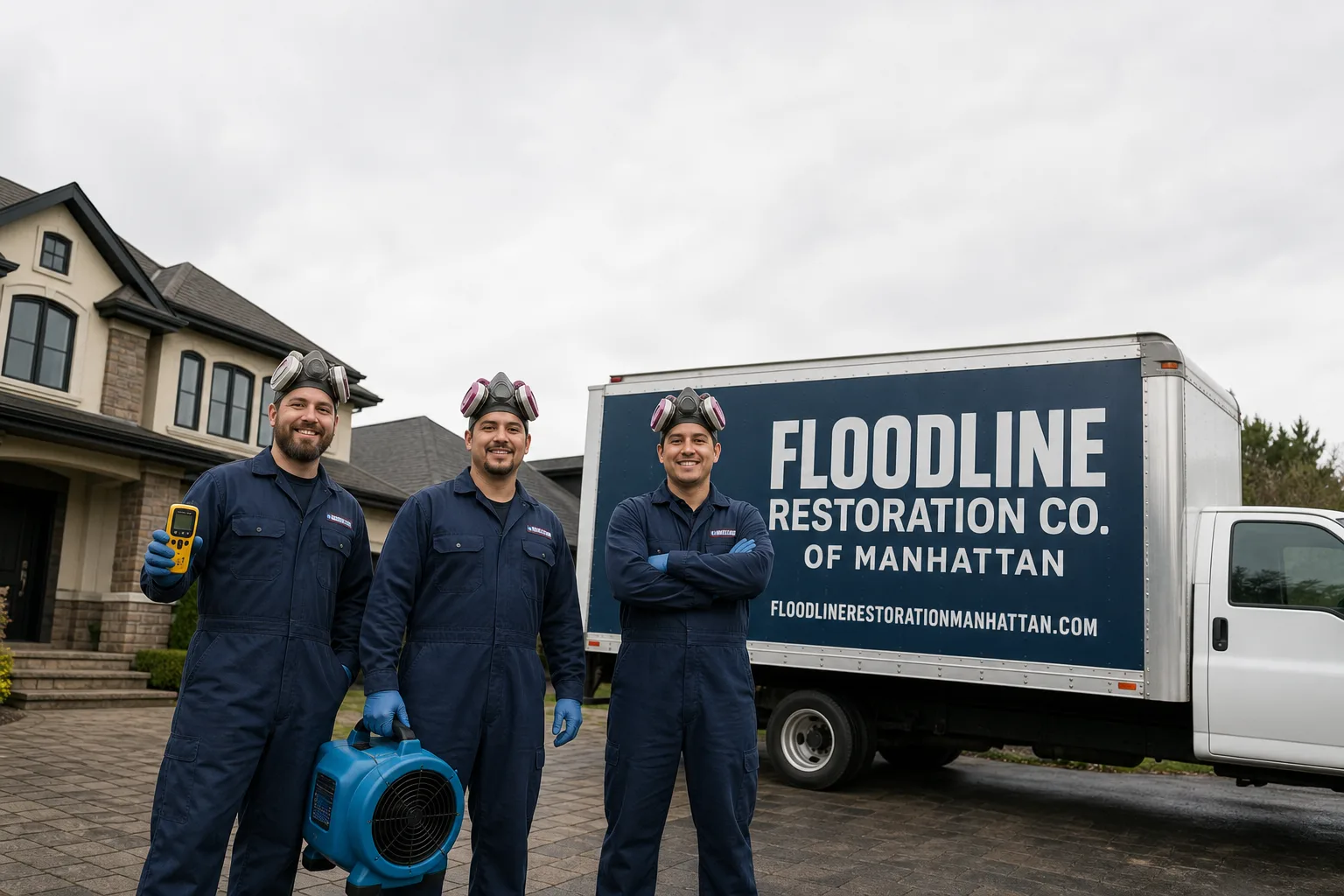
Free visual inspection and a written scope of work before any mitigation begins - photos, moisture readings, and drying logs go in your claim file
The scope we write is the scope we bill. Anything new gets shown to you, in writing, before we touch it.






 Before
 After
After Before
 After
After Before
 After
After24/7 Emergency Water Damage Restoration in Closter
Water damage restoration in Closter typically runs $900 to $5,400 depending on the category of water, square footage affected, and whether structural drying requires opening walls. Most emergency extraction calls we handle in Closter are dispatched within 45 minutes. If you’re standing in water right now, call (917) 924-4221 and a live dispatcher will answer, not a recording.
Closter sits against Tenakill Brook with clay-heavy soils that hold groundwater against foundation walls. When a supply line bursts at 2 a.m. or a sump pump dies during a nor’easter, the water doesn’t drain away on its own. It sits. Every hour that passes moves a clean Category 1 loss toward a Category 2 or 3 contamination problem, and pushes repair costs upward. We answer the phone around the clock and have crews staged within reach of Closter every day of the year. The first hour determines whether you’re drying floors or replacing them.
Understanding Water Damage Restoration Severity in Closter Properties
Water damage gets classified in three categories, and Closter’s housing stock makes the distinction matter more than in most towns. Category 1 is clean water from a supply line or tub overflow. Category 2 carries significant contamination, typically from failed sump pumps or washing machine discharge. Category 3 is grossly contaminated, the kind that comes from sewage backups or Tenakill Brook flooding into basements during heavy rain. Each category changes the drying protocol, the equipment we run, and what gets removed versus restored.
Most homes in Closter were built between the 1950s and 1970s, and that changes the severity math. Finished basements with drywall run directly against block foundation walls, original galvanized plumbing still in service, French drains that silted up decades ago. We see the same failure pattern repeat across Durie Avenue, Vervalen Street, and the streets running west of Knickerbocker Road: water migrates through clay-saturated soil, finds the foundation seam, and wicks into finished lower levels that were never designed to dry. Moisture mapping with thermal imaging tells us where the water actually went, which is rarely where the homeowner thinks it did.
Why Closter Property Owners Choose Floodline Restoration Co. of Manhattan
- 45-minute response commitment – We guarantee a crew is dispatched within 45 minutes of your call to Closter, and our live dispatchers track every truck until it rolls onto your street.
- 24/7 live answer, always a person – No phone trees, no call-back queues. At 2 a.m. you get a human being who knows what questions to ask and can start the process immediately.
- IICRC-certified crews on every job – Our technicians hold WRT and ASD certifications, and we run IICRC S500 standard protocols on every loss we handle in Closter.
- Free visual inspection with every call – We walk the property with you, explain what we’re seeing, and give you a straight answer about what needs to happen before any work begins.
- Direct insurance billing – We bill your carrier directly and document every step the way adjusters expect. You never play messenger between us and your insurance company.
- One team from first extraction to final trim – The certified crew that pulls the water is the same crew that runs drying and handles reconstruction. No handoffs, no inherited crews, no blame-shifting.
Floodline Restoration Co. was founded in 2010 by Curt Bowman around a dispatch board, not a sales desk. Every job we run in Closter carries the 90-Day Done Right Promise, the Keystone Standard. It’s a written guarantee: if the work isn’t done right, we make it right. No arguing, no paperwork battles. We’ve stood behind that promise for over 42 years of combined service across the region, and we plan to be standing behind it in Closter thirty years from now.
Our Water Damage Restoration Process
Inspection & Assessment
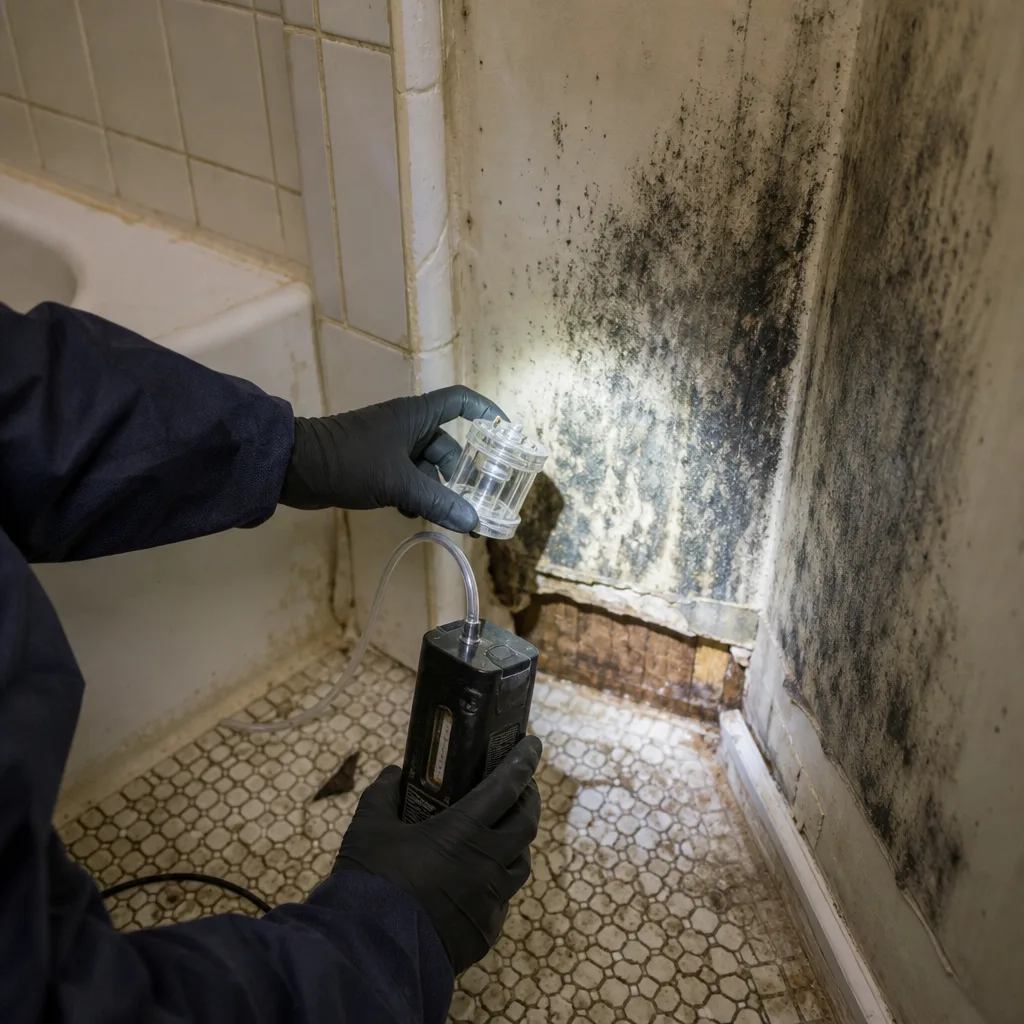
We arrive with thermal imaging cameras and moisture meters, mapping exactly where water traveled. In Closter’s split-levels and finished basements, water hides behind drywall and under vinyl flooring. We find it before it finds mold.
Extraction & Stabilization
Commercial-grade extraction pulls standing water from carpet, pad, and hard surfaces. For Closter homes sitting on clay, we check the sump pit and perimeter drain while extraction runs to identify the water source and stabilize the property.
Drying & Dehumidification
We set Dri-Eaz, Phoenix, and B-Air air movers and dehumidifiers according to a moisture map, not a guess. Daily readings are logged until the dry standard is met. In Closter’s 1960s construction, this often means opening wall cavities that would otherwise stay wet for weeks.
Cleaning & Sanitization
HEPA filtration runs throughout the affected area to capture airborne particulates. For Category 2 and 3 water, we apply antimicrobial treatments according to IICRC protocols before any reconstruction begins.
Specialty Treatment for Closter Basements
Closter homes with finished basements against block foundation walls often need targeted treatment: removing saturated drywall, treating the foundation wall, and in many cases replacing failed French drains or sump pumps before drying completes.
Repairs & Restoration
The same crew that pulled the water rebuilds what needs rebuilding. Drywall, flooring, trim, paint. We leave the property with a moisture log in your hands and the Keystone Standard in writing.
Need Emergency Water Damage Restoration in Closter Now?
Crews minutes away, answering live 24 hours a day. The sooner we start, the less it costs.
Working With Your Insurance Company
Insurance claims for water damage in Closter almost always come down to documentation. Carriers want to see what happened, when it happened, and what you did about it. We start building that file from the first hour: photos of the loss before we touch anything, moisture readings at every stage, daily drying logs, and a line-item scope of work that matches industry estimating standards. When we handle reconstruction, we bill your carrier directly. You don’t get stuck translating between an adjuster and a restoration crew. Our technicians deal with Bergen County adjusters regularly, and we speak their language.
What We Provide Your Insurer
- Thorough documentation of the loss
- Photos of all damage, room by room
- Moisture readings and drying logs
- A detailed, line-item scope of work
- Direct coordination with your carrier
Built for Closter’s Loss Calendar
Closter’s water damage season never really ends. January and February bring deep freezes that burst supply lines in 1960s cape cods where original galvanized plumbing runs through uninsulated crawl spaces. February into March adds freeze-thaw cycles that crack foundation walls, letting groundwater in during the first thaw. April and May bring sustained rain that saturates the clay soils, and we start seeing sump pump failures and French drain backups across the borough. Summer thunderstorms can dump two inches on Closter in an hour, overwhelming the drainage along Knickerbocker Road and pooling against foundation walls. Then come the nor’easters. Bergen County receives 48 to 50 inches of precipitation annually, and a single nor’easter can deliver several inches in 24 hours. Every season in Closter has a water damage failure mode, and we’ve seen all of them enough to know what a home on any given street will likely face.
Water Damage Restoration Across Closter’s Neighborhoods
The homes along Durie Avenue and Vervalen Street are heavily 1950s and 1960s splits and colonials with finished basements, and those finished basements are the first casualty in every water event. We’ve responded to burst supply lines on Durie Avenue and found the original galvanized plumbing had failed during a February freeze-thaw cycle. Using moisture mapping and Dri-Eaz extraction, we removed category 1 water from the finished basement, then ran structural drying with our Phoenix and XPOWER air movers and dehumidifiers, replacing saturated drywall that had been installed directly against the block foundation before mold could take hold.
Over near the Tenakill Brook corridor, properties in FEMA flood zones face a different problem entirely: overland flooding brings Category 3 water into basements and crawl spaces, and the clay soils hold it there for days. Homes west of Knickerbocker Road sit in mapped flood zones where chronic intrusion is the norm, not the exception. The streets off Ruckman Road with 1970s construction have their own failure mode: original sump pumps that died quietly and French drains silted shut years ago. We see groundwater pooling against foundation walls in those neighborhoods after every sustained rain. Each area of Closter has a signature water damage profile, and our crews know them by street.
Specialized Water Damage Restoration Services We Offer in Closter
Emergency Water Extraction
Standing water in a Closter basement needs to come out fast, and we mean the same visit. Our extraction equipment pulls water from carpet, pad, hardwood, and the seams where water hides in split-levels. Every hour of standing water increases the chance that drywall wicks moisture and the damage spreads upward.
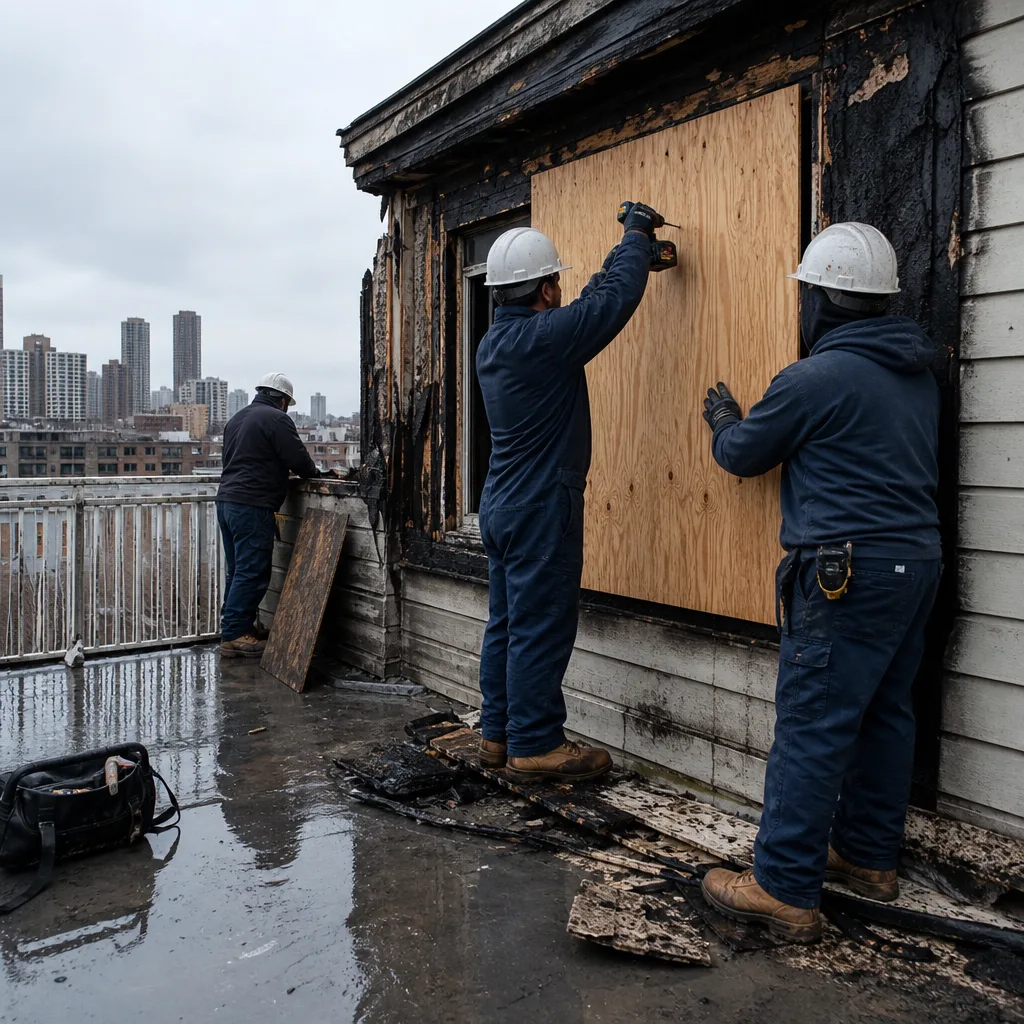
Structural Drying & Dehumidification
Closter homes with drywall against block foundation walls dry poorly on their own. We set professional-grade Dri-Eaz and Phoenix dehumidifiers with XPOWER air movers in a pattern based on moisture readings, not guesswork. Daily readings are logged until the dry standard is met and documented.
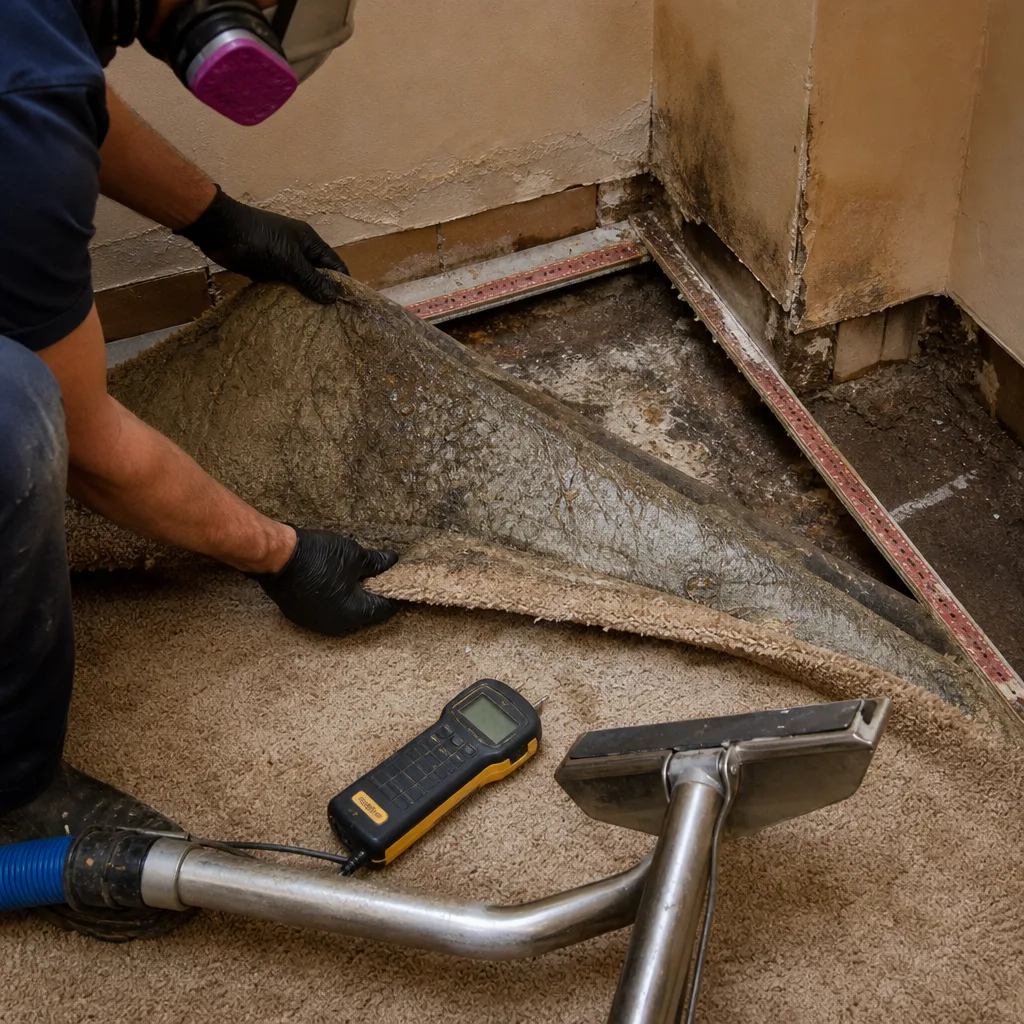
Flood Cleanup
Floodwater isn’t clean water. When Tenakill Brook overflows or storm surge backs up into a Closter basement, the water carries silt, contaminants, and everything it passed through. We remove it, treat the affected surfaces per IICRC Category 3 protocols, and document everything for your carrier.
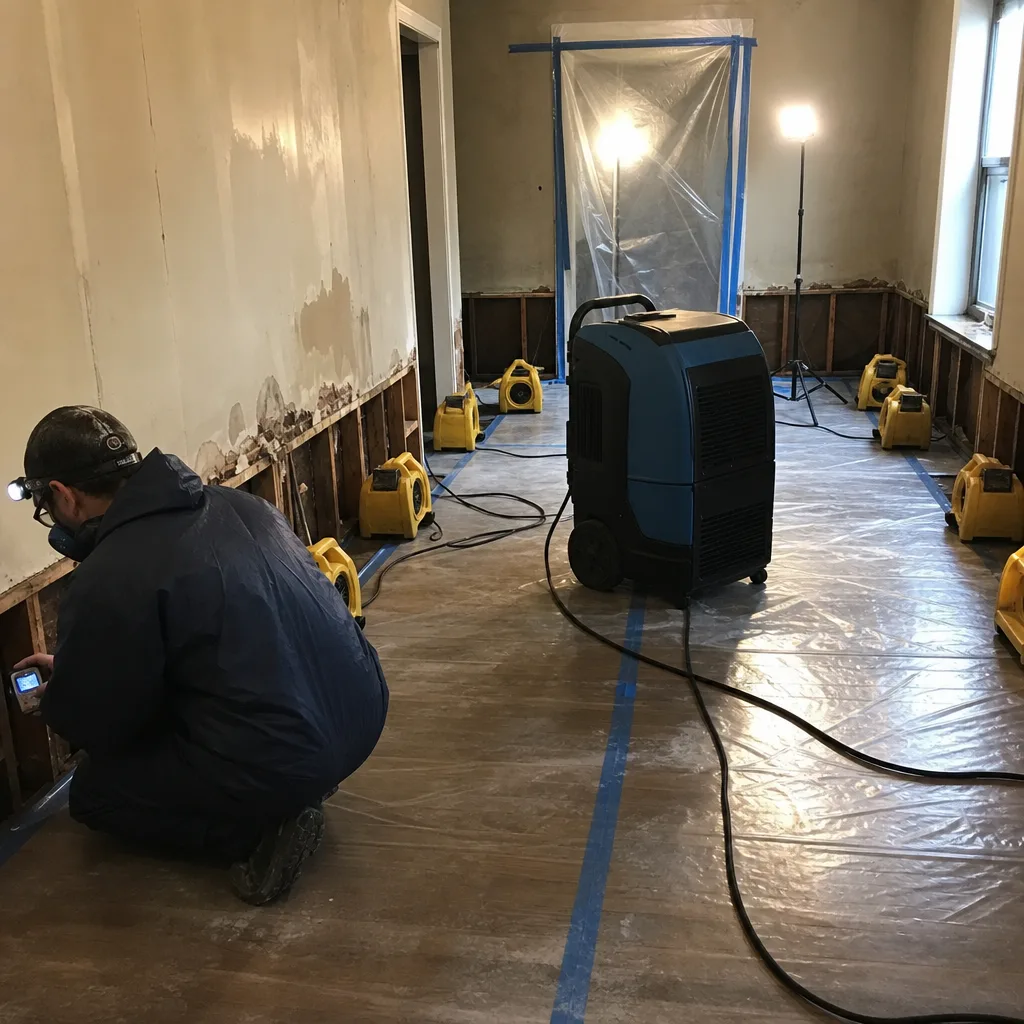
Burst Pipe Restoration
Closter’s older homes with galvanized and cast-iron supply lines fail during freeze-thaw cycles, and the result is Category 1 water soaking through multiple floors. We extract, dry, and restore. The same crew that stabilizes the leak handles the repairs, so you’re not coordinating between a plumber and a restoration company.
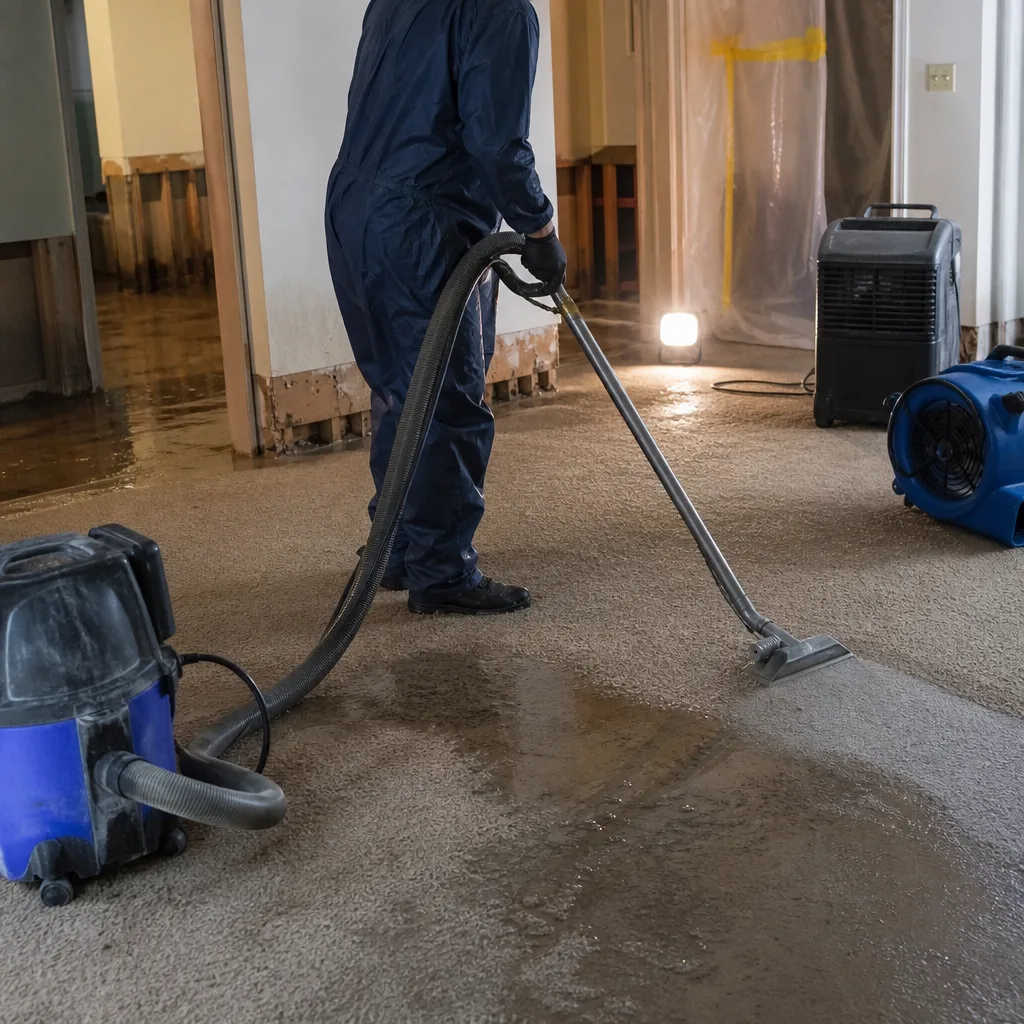
Basement Water Removal
Finished basements in Closter’s 1950s and 1960s homes fail repeatedly if the drainage system underneath them has failed. We remove the water, then identify whether the French drain, sump pump, or foundation seal is the culprit before drying begins. Rebuilding a wet basement without fixing the intrusion source means doing the job twice.
What happens when you call
- 1
A real person answersNo phone trees - you reach a local pro.
- 2
You get an upfront price rangeHonest numbers before anyone is dispatched.
- 3
A background-checked tech heads outLicensed & insured, dispatched right away.
- 4
You approve before work beginsNothing starts until you say go.
Water Damage Restoration Costs in Closter, NJ
Water damage restoration in Closter runs a wide range because two jobs that look identical can be very different underneath. A simple Category 1 extraction from a burst supply line in an unfinished basement typically runs $900 to $1,800. That same loss in a finished basement with drywall wicking and a failed sump pump runs $2,800 to $5,400 once structural drying, drywall removal, and reconstruction enter the scope. Category 3 flood or sewage work in a Closter basement with full containment and material removal runs $4,000 to $9,000 or more depending on square footage and what gets replaced. The free visual inspection is how you get from a guess to a written number. We walk the property, explain what we’re seeing, and put a scope in front of you before any work starts. Insurance typically covers sudden and accidental losses, but not chronic seepage, which is a conversation worth having before the adjuster arrives. Call (917) 924-4221 for an exact quote; estimates are free.
We Also Serve Cities Near Closter
Our crews serve Closter and the surrounding Bergen County communities regularly. We work in Demarest, Norwood, Haworth, and Harrington Park, and our dispatch response times are consistent across the area. If you live a few miles outside Closter, call us; we’re already nearby.
Closter Water Damage Restoration Questions, Answered
Does water damage restoration in Closter require a permit?
Bergen County’s building department enforces permit requirements on structural drying, remediation, and reconstruction work, and Closter follows those rules strictly. Any job that involves opening walls, replacing drywall, or reconstructing affected areas typically requires a permit. We handle the paperwork as part of our scope, and we don’t skip it. Restoration jobs that would be permit-exempt across the border in Rockland County, NY require full inspections in Closter, which adds cost and timeline, and we plan for that from the first visit. Call (917) 924-4221 to talk through what your specific job will need.
How fast can mold start in a Closter basement after water intrusion?
Mold can begin colonizing within 24 to 48 hours in a Closter basement, and the timeline shortens when the basement is finished with drywall directly against a block foundation wall. Clay-heavy soils keep moisture migrating into the wall cavity long after the standing water is gone, creating the warm, dark, damp environment mold needs. Extraction the same day is the difference between drying and demolition. If you notice water in your basement, call (917) 924-4221 immediately; the first hours decide the scope.
What is the difference between Category 1 and Category 3 water in a Closter flood?
Category 1 water is clean, like a burst supply line or tub overflow. Category 3 is grossly contaminated, like sewage or Tenakill Brook floodwater that carries silt and bacteria. Category 3 requires full containment, antimicrobial treatment, and removal of affected porous materials like drywall, carpet pad, and insulation. Category 1 can often be dried in place if we reach it before it degrades. The category drives the protocol, the equipment, and the final cost. We document the category determination in writing for your insurer.
Why do finished basements in Closter’s split-levels fail so often after heavy rain?
Most of Closter’s split-levels were built in the 1950s through 1970s with French drain systems that have silted up, and the interior perimeter was finished with drywall installed directly against the block foundation. When clay-saturated soil pushes water against the foundation, it wicks straight into that drywall. The owner sees no visible damage until the entire lower level has become a mold incubation chamber. We encounter this exact failure mode repeatedly across Durie Avenue, Vervalen Street, and Ruckman Road. The fix involves removing the affected drywall, treating the wall, and often replacing the drainage system before rebuilding.
Can you dry out a Closter basement without removing the drywall if the water was clean?
Sometimes, but not always. If the water was Category 1, we caught it early, and moisture readings show the drywall hasn’t wicked beyond the lower inches, we can often dry it in place with air movers and dehumidifiers. If the drywall was installed against a block wall and groundwater is still migrating through, the wall cavity won’t dry, and we’ll recommend opening it up. The honest answer is that we won’t know for certain until we take moisture readings and monitor drying over a day or two. We’ll show you the readings, not just tell you the plan.
How fast can you actually get to my Closter home?
We commit to 45-minute dispatch on all emergency water damage calls in Closter. A live dispatcher answers when you call (917) 924-4221, and adjacent to Closter in our service coverage means crews are staged close enough to reach most addresses quickly. If you call at 2 a.m. with a burst pipe, you’ll speak with a person, and that person starts the process immediately.
What does water damage restoration cost compared to nearby areas?
Closter’s pricing is in line with Bergen County’s market, typically 10 to 15 percent higher than Rockland County, NY, because of permit requirements and the complexity of drying older construction with finished basements. A typical Category 1 extraction in Closter runs $900 to $1,800, while a finished basement with structural drying runs $2,800 to $5,400. The permit and inspection costs that don’t exist across the border add roughly $400 to $1,000 to some jobs. We give you a written scope before work starts so the number is real, not hypothetical.
What should I do in the first 30 minutes after discovering water damage?
Call us at (917) 924-4221. Then, if you can safely reach the main water shutoff, turn it off. Do not enter standing water if there’s any chance it’s in contact with electrical outlets or appliances. Don’t use a shop vac on sewage or floodwater. Don’t start pulling up carpet yourself; the adhesive and pad will tear and create more work. Take photos from a dry spot if you can. The most important thing is that call; the sooner we start extracting, the less damage spreads.
Serving Closter, NJ - Our Local Coverage Area
We’re based in the Closter area and know this community well. Use the map below to see our service coverage - if you’re nearby, we can almost certainly help.
Water Damage Restoration in Closter, Done Right and Backed in Writing
Water damage in Closter is never just a one-time event. It’s a house built on clay soils, next to a brook, with a finished basement and original plumbing, waiting for the next nor’easter. When that call comes, you want a company that answers with a person, dispatches fast, and stands behind the work with the Keystone Standard and the 90-Day Done Right Promise. That’s the way Curt Bowman built Water Damage Restoration at Floodline Restoration Co., and it’s the way we’ve run it since 2010. Background-checked, uniformed technicians certified to IICRC standards, Closter homes dried and rebuilt by the same crew from first extraction to final trim. Call (917) 924-4221 for a free estimate, day or night. We’ll be there when we say.
Written by Curt Bowman, Owner at Floodline Restoration Co. of Manhattan, serving Closter, NJ and the surrounding Bergen County communities.