
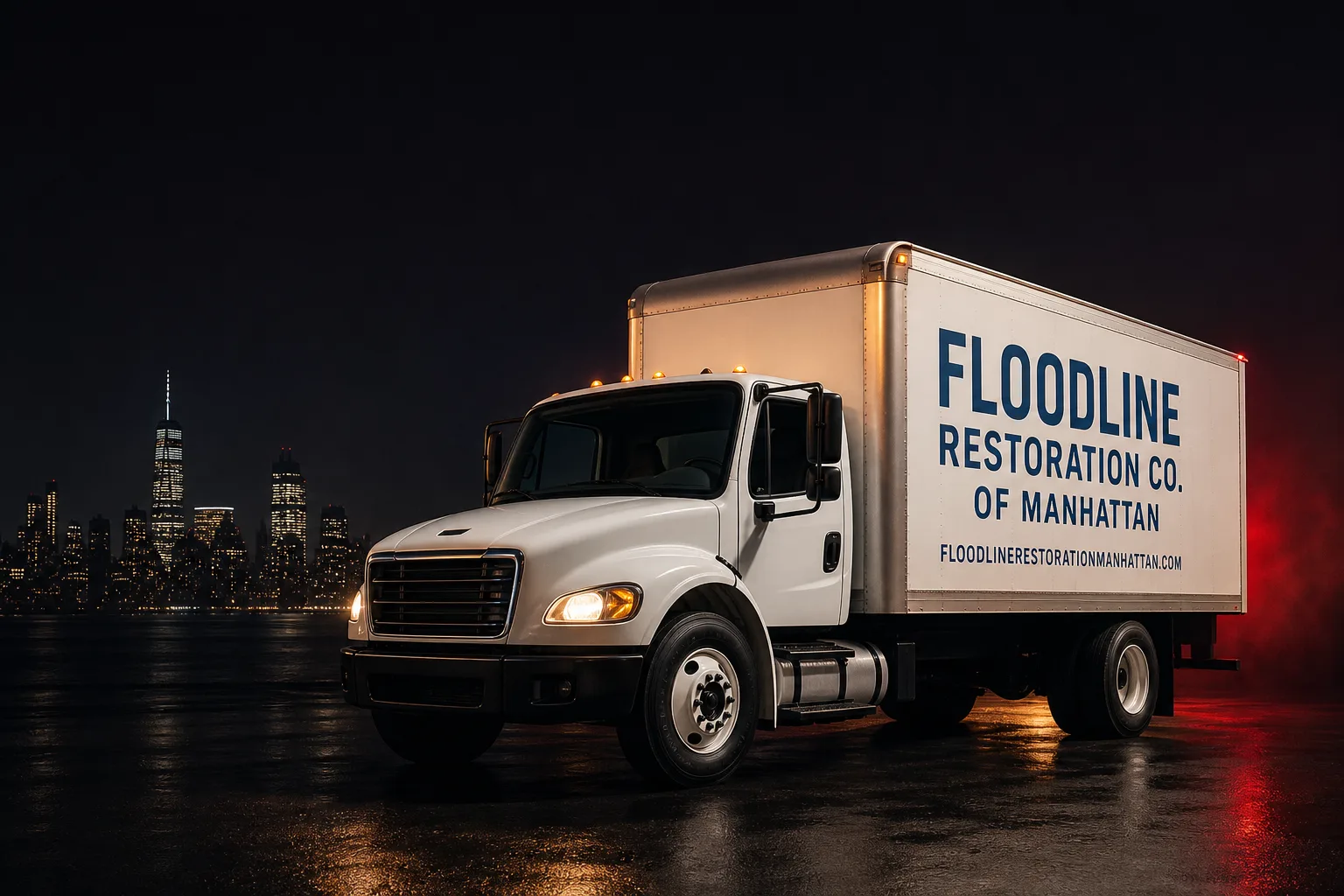
Free visual inspection and a written scope of work before any mitigation begins - photos, moisture readings, and drying logs go in your claim file
The scope we write is the scope we bill. Anything new gets shown to you, in writing, before we touch it.






 Before
 After
After Before
 After
After Before
 After
After24/7 Emergency Water Damage Restoration in East Flatbush
When a sewer line backs up into a basement apartment off Church Avenue at 3 a.m., the water is already Category 3. That means it is carrying sewage, and every minute it sits in your drywall, carpet, and insulation it is doing more damage. Floodline Restoration Co. of Manhattan answers the phone with a live dispatcher at any hour. Not a recording. Not a call center script. A person who can put a certified crew on the road to your East Flatbush block right then. Call (917) 924-4221. The first hour decides whether this is a one-day extraction or a five-day remediation with full antimicrobial treatment and material removal. We start faster because we know what these basements hold.
Understanding Water Damage Restoration Severity in East Flatbush Properties
East Flatbush water damage is rarely the clean kind. Category 1 water comes from a burst supply line: clean, low-risk, mostly a drying job. Category 2 carries detergents or mild contaminants. Category 3 is what we see most on these blocks after a storm: sewage backflow pushing up through floor drains in a combined sewer system. On a flat glacial outwash plain with almost no grade change, that water has nowhere to go. It finds the below-grade spaces, the informal basement apartments, the converted storage rooms. Severity also depends on the building itself. Original plaster-and-lath walls hold water differently than modern drywall. Shared masonry party walls let moisture migrate sideways into a neighbor’s unit. Aging clay-tile and galvanized drain lines crack under pressure. Moisture mapping with hygrometers and thermal imaging tells us the real extent. What looks like a puddle at the base of a wall may already be a wet cavity spanning two rooms and three feet up.
Why East Flatbush Property Owners Choose Floodline Restoration Co. of Manhattan
- 45-minute response commitment: from a live dispatcher to our crew arriving at your East Flatbush address, we honor the clock. Most calls see boots on the ground inside that window.
- 24/7 live answer: call at 2 a.m. and a person answers. Every time. No phone tree, no “leave a message,” no callback in the morning.
- IICRC-certified crews: our technicians hold WRT and ASD certifications and train to RIA and IFA standards. They log moisture readings daily until the dry standard is met.
- Free visual inspection: we walk the loss, map the moisture, and tell you what we find. No charge, no obligation, no scare tactics.
- Direct insurance billing: we coordinate with your carrier directly, document every phase, and you never play messenger between us and the adjuster.
- One team from extraction to reconstruction: the same certified crew that runs the extraction also does the dry-out and the rebuild. No mid-job handoff, no inherited subcontractors.
Our Water Damage Restoration Process
1. Inspection & Assessment
We walk the property with thermal imaging and moisture meters, identify the water category, and map the affected area. In East Flatbush rowhouses, that includes checking adjacent wall cavities and the neighbor’s side of any shared wall.
2. Extraction & Stabilization
Truck-mounted extractors pull standing water fast. We remove saturated porous materials to the flood line when Category 3 is present, set up containment barriers, and stabilize anything that poses immediate risk.
3. Drying & Dehumidification
Dri-Eaz dehumidifiers and Phoenix air movers run in a calculated layout, not a random scatter. We read the moisture map daily, adjusting equipment until the structural dry standard is logged for the insurer.
4. Cleaning & Sanitization
Category 3 losses get full antimicrobial treatment. We clean what can be saved, disinfect the structure, and document everything for your carrier. No shortcuts on sewage-contaminated surfaces.
5. Specialty Treatment
For East Flatbush’s sewer-driven losses, this step is non-negotiable. We apply EPA-registered antimicrobials to affected framing, run HEPA air scrubbers, and confirm containment held before moving to rebuild planning.
6. Repairs & Restoration
The same crew rebuilds drywall, flooring, and finishes. We provide a line-item scope in writing before any repair work begins, so there are no surprises on the bill. The 90-Day Done Right Promise covers the finished job.
Need Emergency Water Damage Restoration in East Flatbush Now?
Crews minutes away, answering live 24 hours a day. The sooner we start, the less it costs.
Working With Your Insurance Company
Most East Flatbush homeowners have never filed a water damage claim before. The process feels unfamiliar, and insurers move on their own timeline. We handle the documentation from the first hour: photos of the standing water, moisture readings from the assessment, drying logs from every day the equipment runs, and a detailed line-item scope for repairs. When you file, we speak directly with your adjuster in their language. Direct insurance billing means the carrier pays us for covered work. You are not fronting thousands of dollars and waiting for reimbursement. On a basement conversion with an unpermitted unit, we document pre-loss condition carefully, because that affects what the claim can support.
What We Provide Your Insurer
- Thorough documentation of the loss
- Photos of all damage, room by room
- Moisture readings and drying logs
- A detailed, line-item scope of work
- Direct coordination with your carrier
Built for East Flatbush’s Loss Calendar
East Flatbush gets hit year-round, but the flavor changes with the season. January and February freeze events burst supply lines in unheated basement utility rooms, sending clean water across concrete slabs. Spring thaw saturates the ground around old foundations, and hydrostatic pressure pushes groundwater through cracks in the original masonry. Summer is the worst for sewer-driven flooding: heavy convective storms drop two inches of rain in an hour on a flat drainage plain, and Brooklyn’s combined sewer system backs up through floor drains and toilets. Nor’easters bring sustained rain with the same result over days. The rowhouse stock from the 1920s to 1950s shares the same aging drain infrastructure, so the loss patterns repeat block by block. We know this calendar. We staff for it.
Water Damage Restoration Across East Flatbush’s Neighborhoods
East Flatbush is big, and the housing stock shifts block to block. Around Church Avenue and Nostrand Avenue, the two- and three-family brick rowhouses are tightly packed with shared party walls, so a sewer backup in one unit often wicks into the plaster on the other side of the wall. Over near Kings Highway, the semi-detached homes on wider lots tend to have deeper basements and more formalized rentals, but the same clay-tile drain lines running to the street. West of Utica Avenue, many basements were converted decades ago without permits, which means no vapor barrier, no waterproofing, and often a bathroom added below sewer grade, a backflow magnet. South toward Flatbush and Farragut, the flat grade means surface water pools after a hard rain and finds any foundation crack within fifty feet. Crews that know East Flatbush route these streets by their drainage patterns, not by a GPS, and that speed matters when the water is rising.
Specialized Water Damage Restoration Services We Offer in East Flatbush
Basement Water Removal
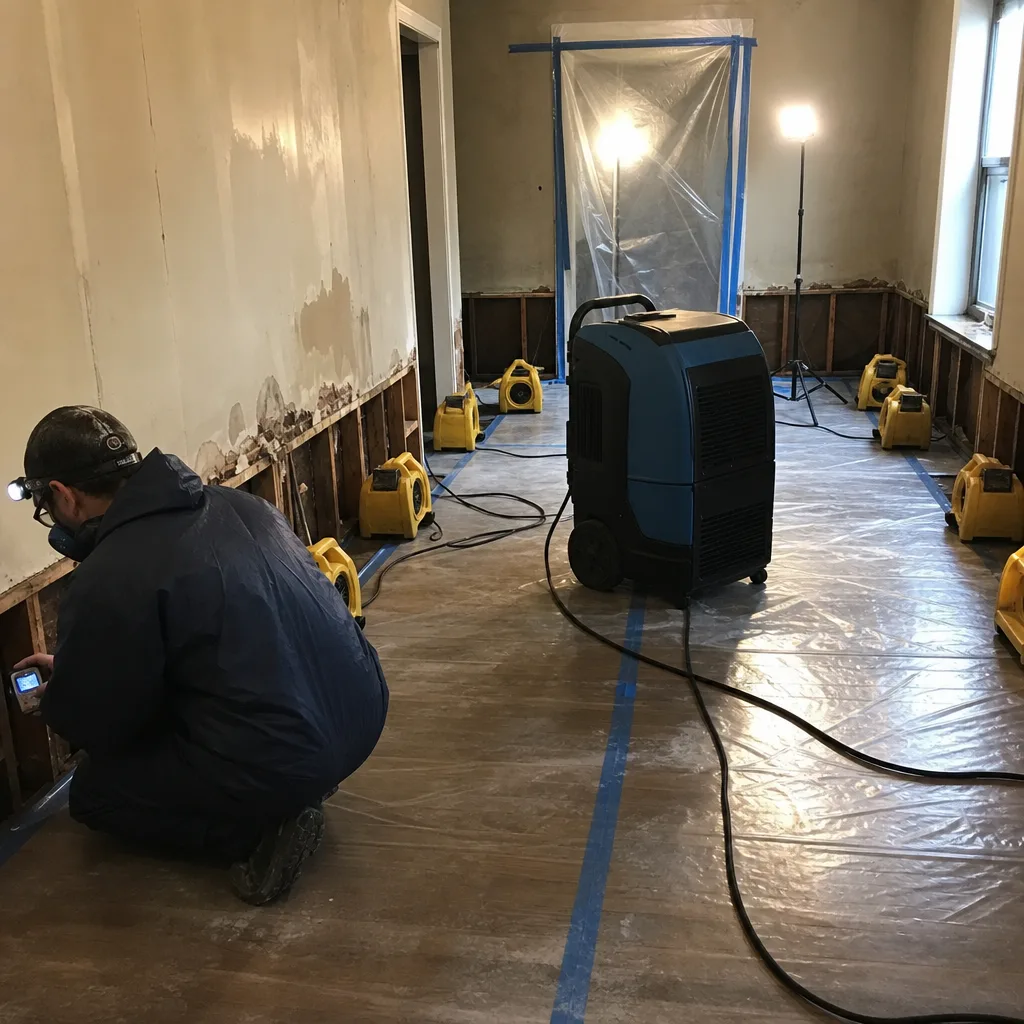
The basement apartments off Church Avenue and Nostrand Avenue flood differently than a finished recreation room. Water gets under vinyl flooring, into drywall, behind paneling. We extract fast, remove saturated materials to the true flood line, and set up drying that accounts for the shared wall. On a 1930s brick rowhouse off Church Avenue, our crew arrived for what the owner called “a little basement water” after a July downpour. The shared clay-tile drain line had backed up through the floor drain, pushing sewage into the informally converted basement apartment. We set up containment, logged Category 3 black water, extracted with a Dri-Eaz truck mount, removed drywall and carpet to the flood line, and applied antimicrobial treatment, turning a one-day dry-out into a five-day mitigation with drying logs for the insurer.
Flood Cleanup
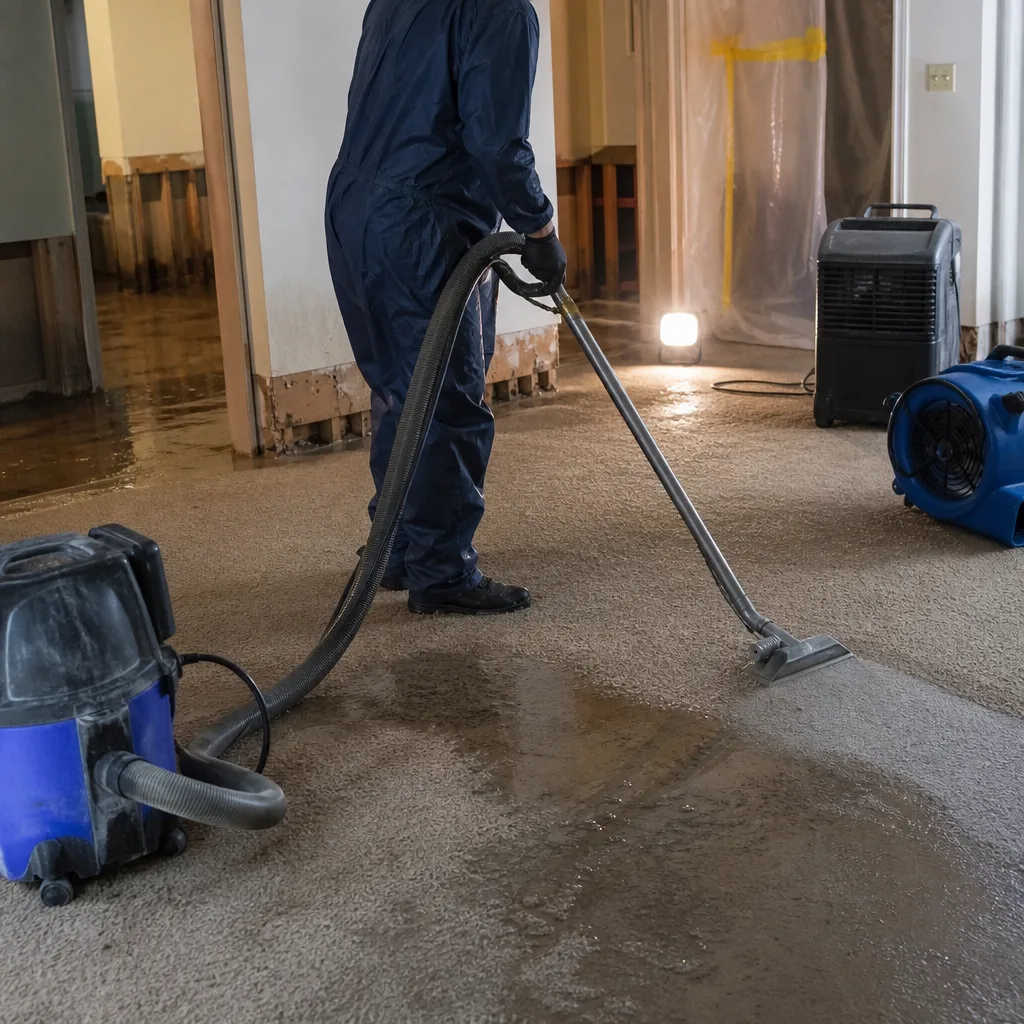
East Flatbush flood cleanup is rarely a mop-and-bucket job. When the combined sewer backs up, every porous surface the water touched has to be treated as contaminated or removed. We follow IICRC standards for Category 3 water: full PPE, containment, removal of wet drywall and insulation, and antimicrobial on all affected framing. The work takes several days because the protocol demands it, not because we stretch the clock.
Structural Drying & Dehumidification
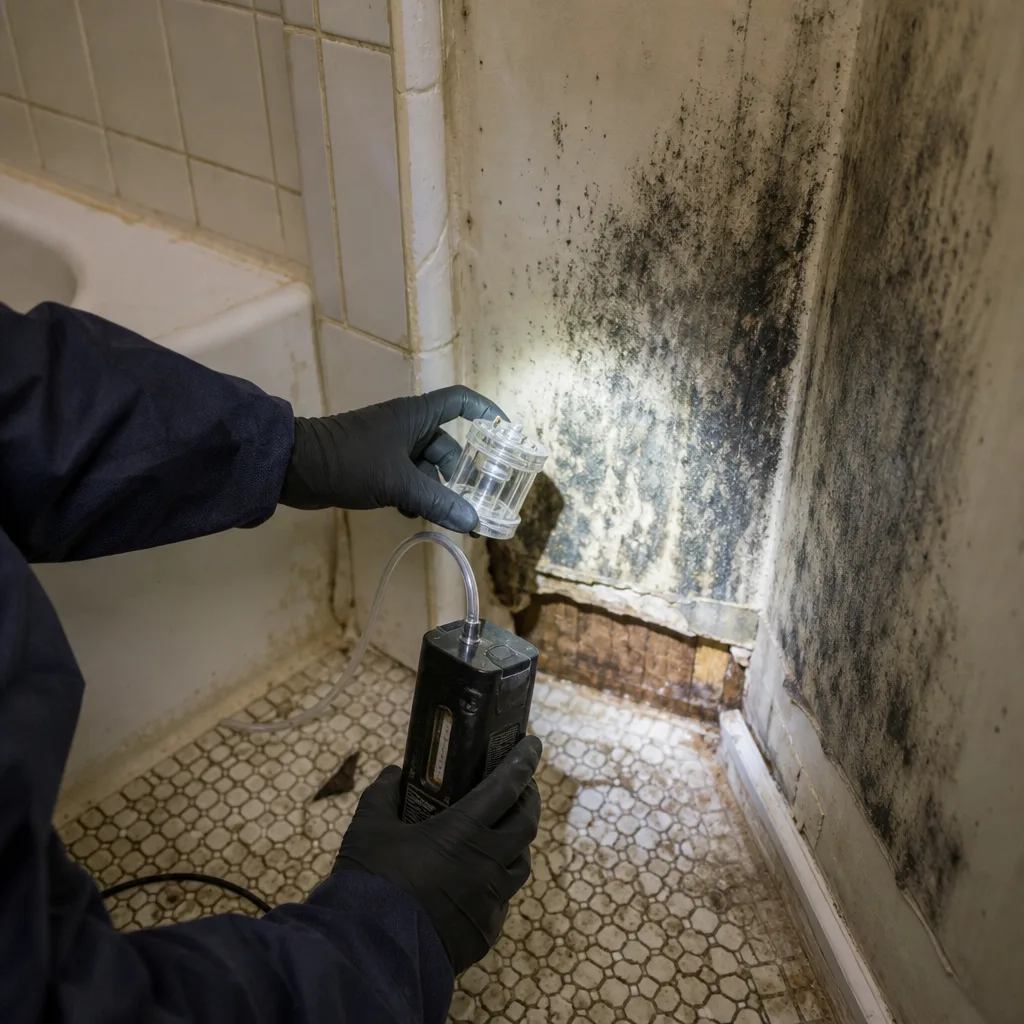
Shared party walls change the drying math. We do not just dry the unit that flooded; we check the neighbor’s side for moisture migration and run equipment accordingly. Dri-Eaz dehumidifiers and Phoenix air movers are positioned based on the moisture map, and we take daily readings until the dry standard is met. The log goes to you and your carrier.
What happens when you call
- 1
A real person answersNo phone trees - you reach a local pro.
- 2
You get an upfront price rangeHonest numbers before anyone is dispatched.
- 3
A background-checked tech heads outLicensed & insured, dispatched right away.
- 4
You approve before work beginsNothing starts until you say go.
Water Damage Restoration Costs in East Flatbush, NY
A standard clean-water extraction and dry-out in East Flatbush runs $2,200 to $4,800 depending on square footage and drying time. A Category 3 sewage backflow loss in a basement apartment is a different range: $5,500 to $14,000 by the time drywall, carpet, insulation, and contaminated possessions are removed, antimicrobial treatment is applied, and the space is dried to standard. The difference is the contamination protocol, and it is non-negotiable. East Flatbush insurance claims for sewer-driven losses typically carry a separate sewer backup rider, which many homeowners only discover after the fact. If the rider is absent, meaningful coverage may not exist. Our free visual inspection tells you exactly what you are facing before any bill arrives. Call (917) 924-4221 and we will do the walk-through, map the moisture, and put a firm number in writing. No pressure, no surprises.
We Also Serve Cities Near East Flatbush
The same certified crews cover Fairview, Harrison, East Bronx, and Hunts Point. If your property sits near the East Flatbush border, call and we will confirm response time. Dispatch is coordinated from our New York City office for all of these areas.
Serving East Flatbush, NY - Our Local Coverage Area
We’re based in the East Flatbush area and know this community well. Use the map below to see our service coverage - if you’re nearby, we can almost certainly help.
East Flatbush Water Damage Restoration Questions, Answered
Why does my East Flatbush basement flood with sewage during heavy rain even though there’s no street flooding?
Because your floor drain is connected to Brooklyn’s combined sewer system, which carries stormwater and sewage in the same pipes. When heavy rain overwhelms that system, pressure pushes sewage back up through the lowest openings, which are almost always floor drains and toilets in below-grade spaces. East Flatbush sits on a flat glacial outwash plain with minimal grade, so the water has nowhere else to go. Call (917) 924-4221 and we will confirm the source and scope the remediation.
Can you dry my basement after sewage backup without replacing the drywall?
Technically, no. Once Category 3 sewage water contacts drywall, the IICRC standard requires removal of that porous material. Drying contaminated drywall leaves bacteria in the wall cavity and creates a health hazard plus a future mold problem. We remove to the flood line, treat the framing, and rebuild. It is more work, and it is the only responsible path.
How do you handle water damage in a shared-wall rowhouse when it spreads from my neighbor’s unit?
We moisture-map both sides of the shared masonry party wall and set up drying in the affected cavities on your side even if the source was your neighbor’s pipe. Insurance and access get complicated. We coordinate with both units, document the migration for your carrier, and run drying until your side meets the dry standard. Call (917) 924-4221 for an assessment.
What makes East Flatbush basement water damage more expensive than a typical leak?
The contamination. A clean supply-line leak is a drying job. A sewer backflow from the combined system is a Category 3 loss requiring full PPE, antimicrobial treatment, removal of all porous materials, and multi-day drying. That doubles the average cost. The standard East Flatbush basement flood falls into the second category more often than not.
Will my insurance cover water damage in an informally converted basement apartment in East Flatbush?
It depends on your policy and the pre-loss condition of the space. Many carriers deny coverage for unpermitted living areas, and documentation of pre-loss condition matters. We take photographs and write a detailed scope before any demolition, which gives you and your adjuster a clear record. We talk directly with your carrier to explain what we found. Call (917) 924-4221 and we will help you understand your position before you file.
How fast can you actually get to East Flatbush?
Our response commitment is 45 minutes from your call to a certified crew at your door. Most nights, the crew on East Flatbush blocks is already in the area because our dispatch routes them by drainage patterns, not just by distance. We answer the phone live at any hour.
How long does structural drying take in an East Flatbush rowhouse?
On a typical Category 3 loss, drying runs three to five days depending on wall density, material saturation, and how quickly we got the equipment running. Plaster-and-lath walls take longer than modern drywall. Shared party walls can extend the timeline if the neighbor’s unit is also saturated. Daily readings tell us when the dry standard is met, not a calendar guess.
What should I do in the first 30 minutes after my basement floods?
Turn off power to the affected area if you can do so without stepping in water. Do not wade into sewage-contaminated water. Call (917) 924-4221. Take photos of the standing water and any visible damage for your insurer. Move nothing that is soaked, and do not run a household fan, which spreads contaminants rather than drying the structure. We will walk you through the rest when we arrive.
Written by Curt Bowman, Owner at Floodline Restoration Co. of Manhattan, serving East Flatbush, NY with certified Water Damage Restoration crews. Every job backed by the 90-Day Done Right Promise, in writing, with no arguing.