
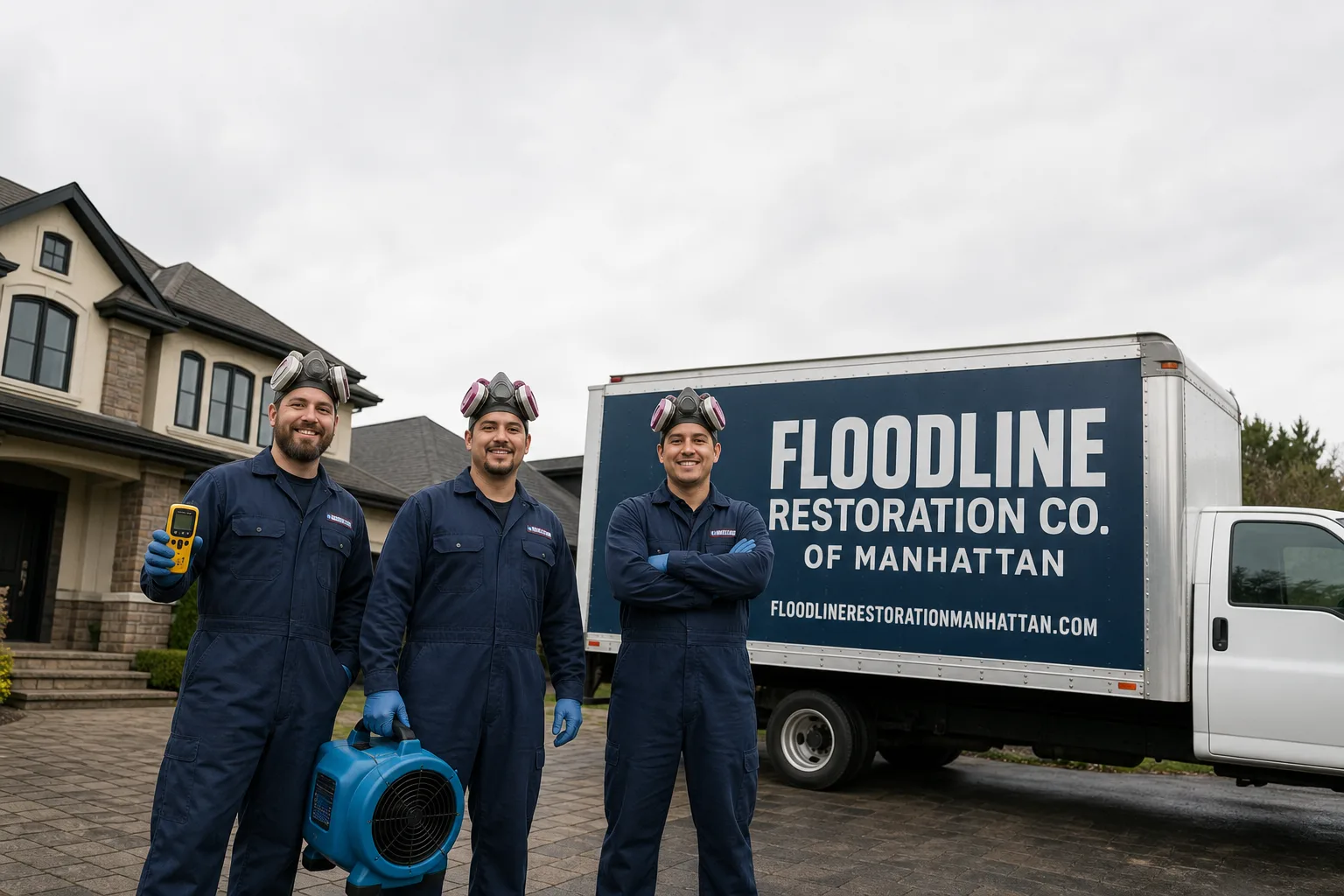
Free visual inspection and a written scope of work before any mitigation begins - photos, moisture readings, and drying logs go in your claim file
The scope we write is the scope we bill. Anything new gets shown to you, in writing, before we touch it.






 Before
 After
After Before
 After
After Before
 After
After24/7 Emergency Water Damage Restoration in Glen Oaks
Water damage restoration in Glen Oaks usually starts with a phone call at an inconvenient hour. A burst supply riser at 2 a.m., a failed drain stack soaking three stacked co-op units, a nor’easter pushing storm water into a garden-level apartment. Our crews answer live around the clock and can be dispatched into Glen Oaks within 45 minutes. The first hour matters because wet drywall, hardwood, and plaster wick moisture fast; what starts as a ceiling stain becomes a structural problem inside a day. Call (917) 924-4221 for a free visual inspection. We do the whole job, extraction through drying and rebuild, with one certified crew.
Understanding Water Damage Restoration Severity in Glen Oaks Properties
Not all water damage is the same. Restoration professionals classify water by contamination level: Category 1 is clean water from a supply line or burst riser; Category 2 carries detergents or biological matter; Category 3 includes sewage, storm backup, or standing water that has sat long enough to grow bacteria. In Glen Oaks’s post-WWII co-op buildings, a Category 1 supply-riser break can become a Category 2 or 3 situation quickly if it passes through aging wall cavities, insulation, or failing cast-iron drain waste before it reaches your ceiling. That’s why we moisture-map every affected room with thermal imaging and hygrometers before we open anything. Structural drying in these mid-century buildings means understanding how brick, plaster, and 1940s framing hold water differently than modern construction. Basement-level and garden-level units, common in Glen Oaks Village, contend with groundwater and storm-drain backup on top of whatever is leaking from above, so we set drying targets per room, not per building, and leave equipment running with daily readings until the dry standard is met.
Why Glen Oaks Property Owners Choose Floodline Restoration Co. of Manhattan
- 45-minute response commitment: Our crews are dispatched from the NYC metro office and arrive fast because we know the local roads, from Union Turnpike to the Grand Central Parkway.
- 24/7 live answer: You reach a real person, not a recording, at 2 a.m. The same live dispatcher sends a certified crew the same visit.
- IICRC-certified crews: Our technicians hold IICRC WRT (Water Restoration Technician) and ASD (Applied Structural Drying) certifications, plus RIA and IFA training.
- Free visual inspection: We assess the loss before anything gets opened. You see the scope in writing before we start.
- Direct insurance billing: We deal with your carrier directly, from first photos to final invoice, so you aren’t playing messenger.
- One team from extraction to reconstruction: The same certified crew that extracts water on day one rebuilds the wall on day ten. No handoff, no inherited contractor.
Our Water Damage Restoration Process
Inspection & Assessment
We start by identifying the water source and its category, then trace migration paths through walls, floors, and ceilings. In Glen Oaks Village, this also means determining whether the affected components are shareholder-owned or co-op corporation-owned before we touch anything. You get a written scope with photo documentation.
Extraction & Stabilization
Commercial extractors pull standing water fast; we use truck-mounted units where access allows and portable Dri-Eaz or Phoenix equipment where it doesn’t. We stabilize the area to stop active spread, remove saturated materials that can’t be saved, and set containment if contaminated water is present.
Drying & Dehumidification
Air movers and dehumidifiers go in based on a room-by-room drying plan, not a generic square-footage formula. We take daily moisture readings with hygrometers and thermal imaging, log them, and adjust equipment until the dry standard is met. In Glen Oaks’s plaster and brick construction, this can take three to five days; drying too fast or too slow both cause problems.
Cleaning & Sanitization
Category 2 and 3 water affect surfaces differently than clean water, so we use HEPA filtration and antimicrobial treatments matched to the contamination level. For clean-water losses, we still clean and deodorize because standing water leaves residue even after visible water is gone.
Specialty Treatment for Water Damage Restoration
Plaster walls in 1948 co-op units need different treatment than modern drywall; we use Injectidry systems to dry wall cavities without opening lath and plaster when possible. For hardwood floors, we use drying mats before considering replacement. Every step is documented for your insurer.
Repairs & Restoration
We rebuild to pre-loss condition: drywall, plaster repair, paint, flooring, trim, and any structural repairs. Because the same crew handled extraction and drying, the rebuild starts without a new contractor re-learning the building’s quirks. The 90-Day Done Right Promise covers the work in writing.
Need Emergency Water Damage Restoration in Glen Oaks Now?
Crews minutes away, answering live 24 hours a day. The sooner we start, the less it costs.
Working With Your Insurance Company
Most water damage claims in Glen Oaks involve two parties with different obligations: the shareholder and the co-op corporation. Your insurer covers what your policy says; the co-op’s master policy covers what it covers, usually the building structure. We document everything from the first hour so both parties get what they need. Our estimate follows industry-standard pricing, and every line item ties to a photo, a moisture reading, or a drying log. We speak directly with your adjuster, provide the documentation they ask for, and handle the messaging so you aren’t the go-between. Curt Bowman’s crews have handled co-op board documentation enough times to know which paperwork matters before a wall gets opened.
What We Provide Your Insurer
- Thorough documentation of the loss
- Photos of all damage, room by room
- Moisture readings and drying logs
- A detailed, line-item scope of work
- Direct coordination with your carrier
Built for Glen Oaks’s Loss Calendar
Glen Oaks gets hit by predictable water damage seasons that track the weather and the building stock. January and February bring deep freezes that burst supply risers in the Village’s aging galvanized pipes; freeze-thaw cycles stress flat roof membranes and parapet walls, so winter roof-leak calls spike. March and April thaw bring snowmelt and spring rain that overwhelm courtyard storm drains and push water into garden-level and basement units. Summer thunderstorms dump an inch of rain in an hour, and the flat northeastern corner of Queens doesn’t shed water fast enough. Nor’easters in fall and winter combine heavy rain with wind-driven water finding its way into parapet flashing and brick joints. We plan for this calendar because we’ve worked Glen Oaks through enough seasons to know what comes next. When a January thaw fails a cast-iron drain stack on 260th Street, we’re already staged for it.
Water Damage Restoration Across Glen Oaks’s Neighborhoods
Glen Oaks Village dominates the neighborhood and sets the restoration pattern for the whole area. The garden apartment co-op complex built by William Levitt between 1947 and 1950 includes hundreds of red-brick buildings arranged around courtyards, and each block has its own plumbing stack configuration, roof condition, and drainage profile. We respond to units along 260th Street, 263rd Street, and the interior courtyards off Union Turnpike. The Garden Apartment section closer to Little Neck Parkway skews toward original cast-iron stacks and galvanized risers, so vertical water migration across stacked units is the common call. The larger apartment blocks near the Glen Oaks Oval see more flat-roof leakage and parapet flashing failures. Single-family pockets along the edges of Glen Oaks, rare but present near the Bellerose line, face the usual basement seepage and supply-line bursts that every Queens homeowner knows. The response route matters: Grand Central Parkway access off Union Turnpike gets us to the Village fast, but courtyard-only access means we carry extractors and drying equipment by hand more than a single-family house would require.
Specialized Water Damage Restoration Services We Offer in Glen Oaks
Emergency Water Extraction
We extract standing water within hours of your call, not days. In a Glen Oaks Village garden-level unit, that means pulling water from carpets, hardwood, and tile before it migrates under walls and into neighboring units. Our truck-mounted extractors handle heavy flooding; portable Dri-Eaz units go where trucks can’t.
Structural Drying & Dehumidification
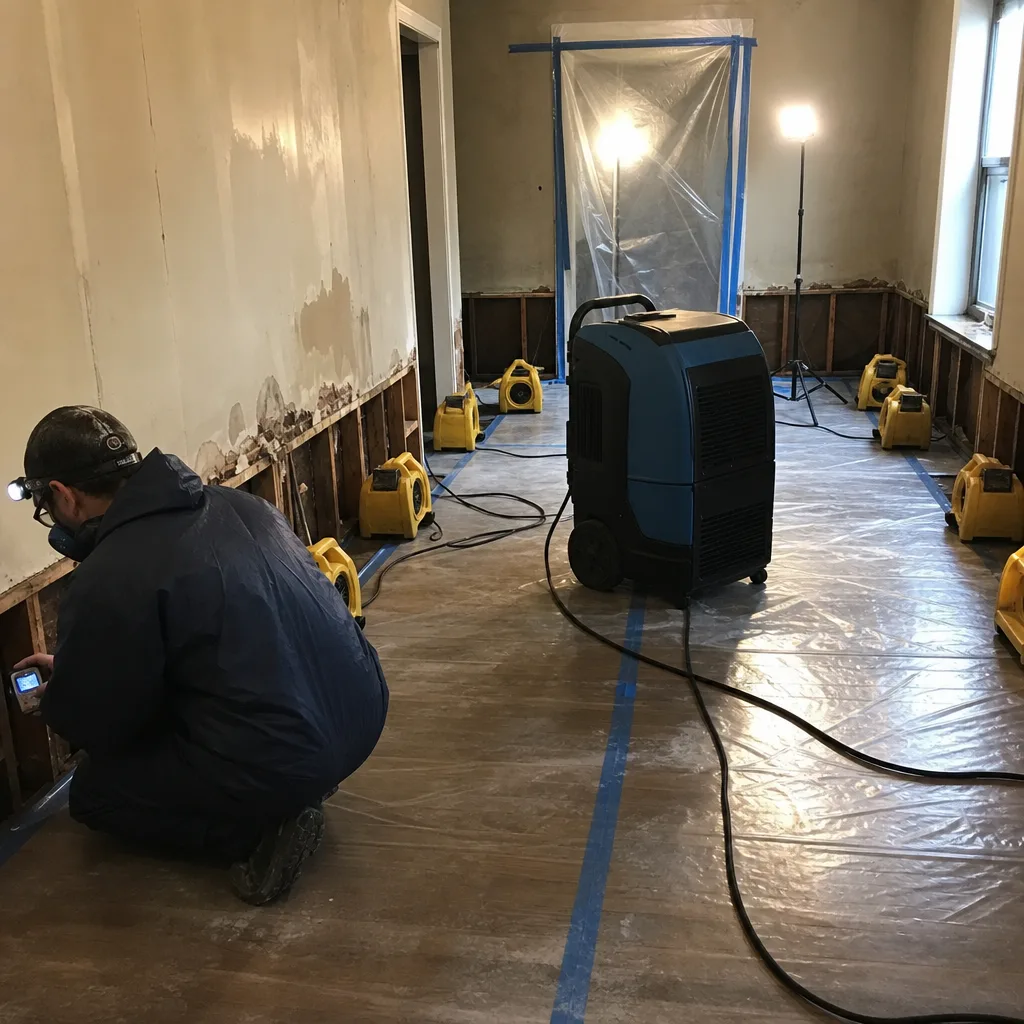
Drying a 1948 co-op unit isn’t the same as drying a modern condo. Plaster holds water differently, brick wicks moisture across cavities, and shared walls mean one unit’s dampness becomes another’s mold risk. We set Phoenix dehumidifiers and XPOWER air movers on a room-by-room drying plan, log daily readings, and keep adjusting until we hit the dry standard. We hand you and your insurer the full moisture log.
Burst Pipe Restoration
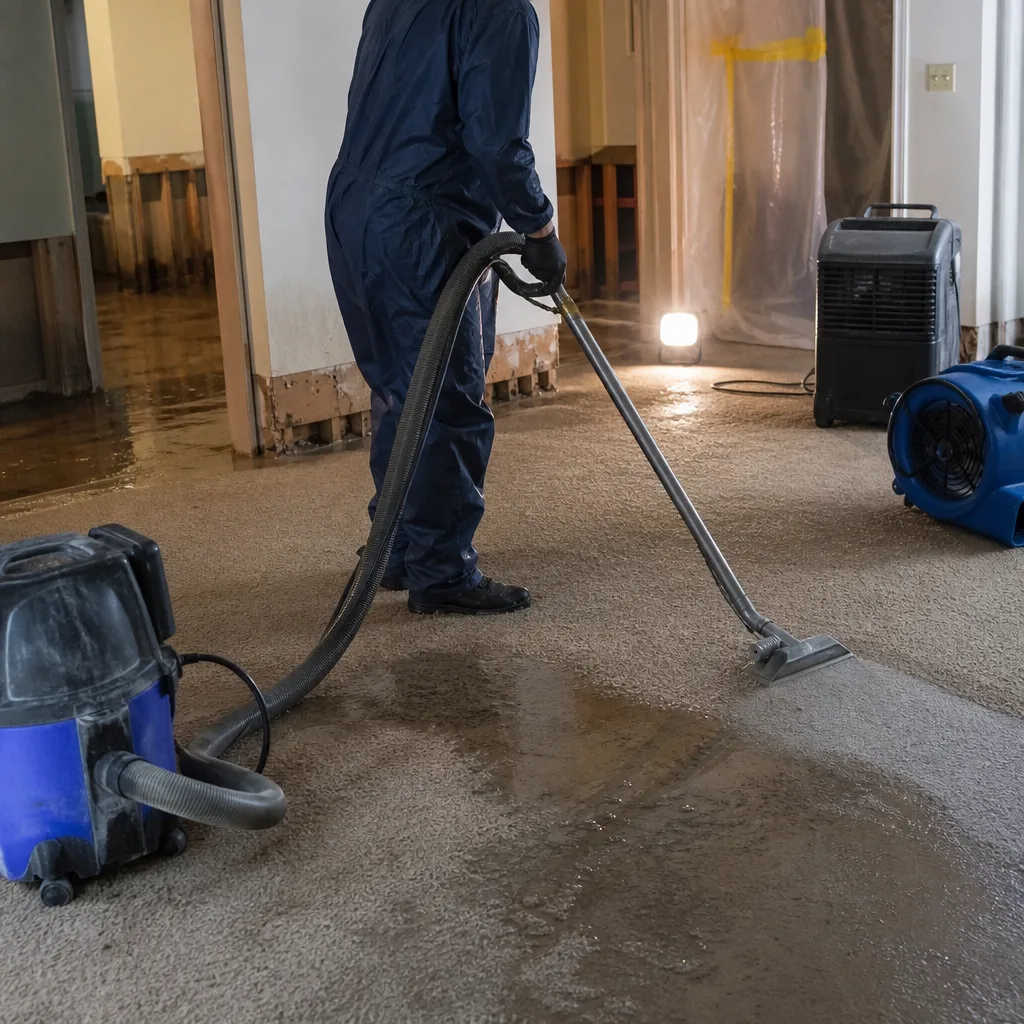
Burst supply risers and frozen galvanized lines are the core of Glen Oaks winter water damage. We stop the source, extract, dry, and rebuild all in one scope. When the pipe belongs to the co-op corporation, we coordinate with the managing agent so the repair and the restoration move together rather than stalling each other.
Flood Cleanup
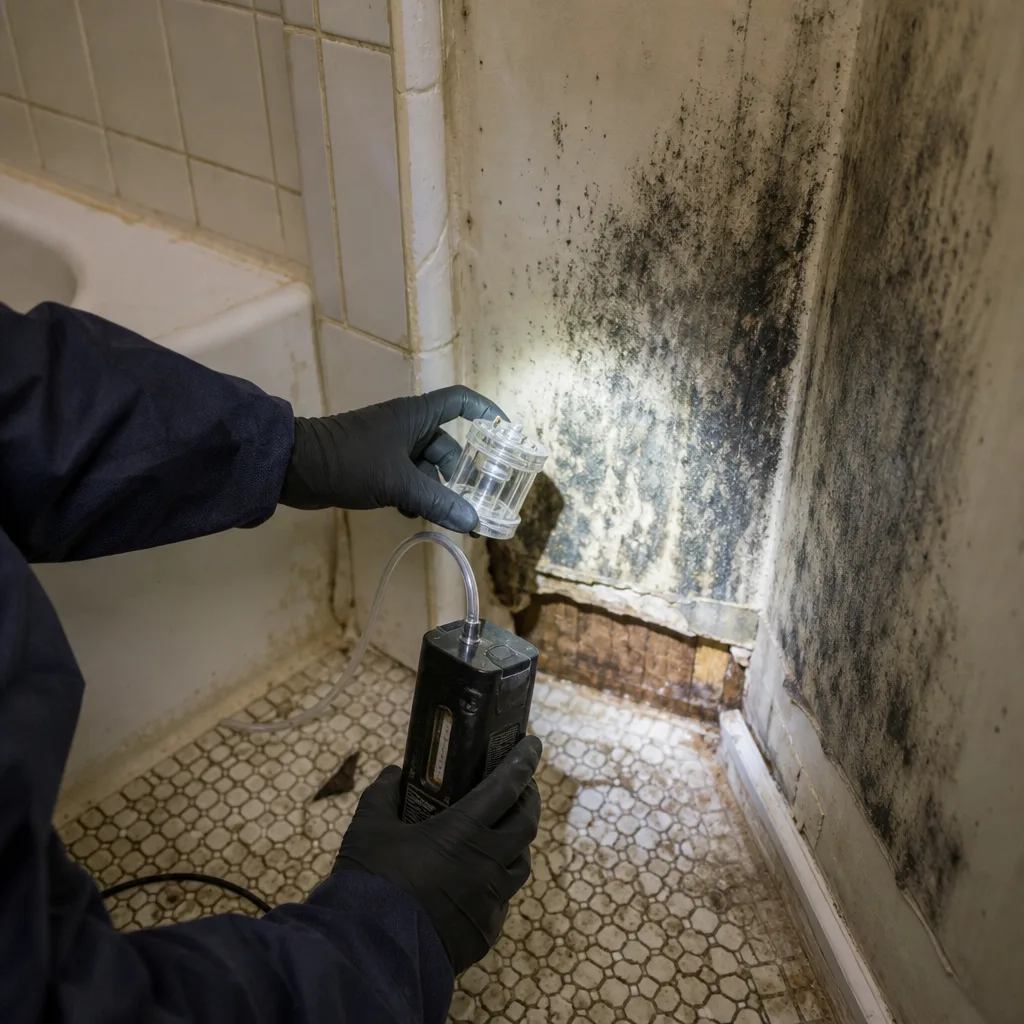
Nor’easters and storm-drain backup in the Village’s courtyards bring Category 2 or 3 water into garden-level units. We handle contaminated water with HEPA filtration, antimicrobial cleaning, and proper disposal. The goal is a unit that’s dry, safe, and back to pre-loss condition, not just drier.
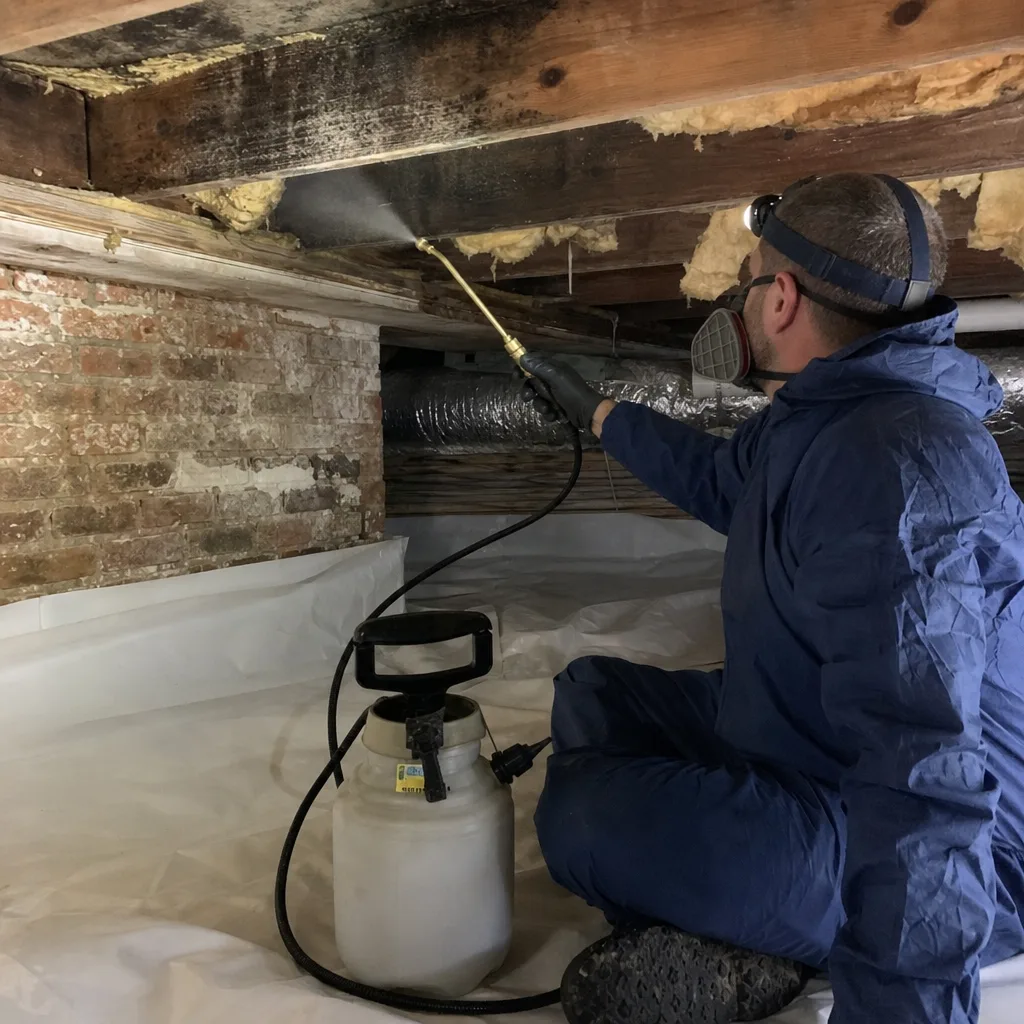
Basement Water Removal
Basement-level Glen Oaks units face a double threat: groundwater rising after heavy rain and stack failures above. We pump, extract, and dry these spaces while coordinating with the co-op on whether the source is a building issue or a shareholder issue. The same crew addresses both, so nothing stalls waiting on a third party to decide who owns the problem.
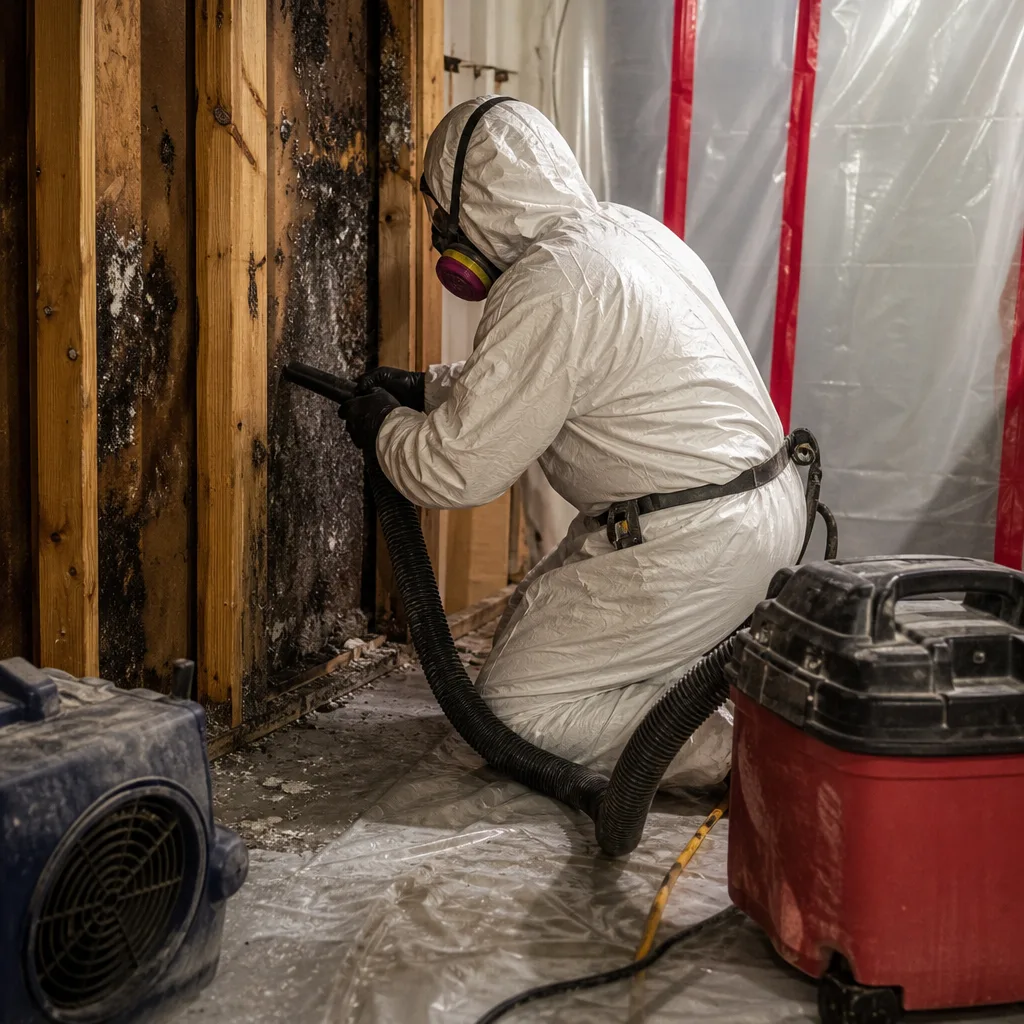
What happens when you call
- 1
A real person answersNo phone trees - you reach a local pro.
- 2
You get an upfront price rangeHonest numbers before anyone is dispatched.
- 3
A background-checked tech heads outLicensed & insured, dispatched right away.
- 4
You approve before work beginsNothing starts until you say go.
Water Damage Restoration Costs in Glen Oaks, NY
Water damage restoration in Glen Oaks runs on honest, scoped pricing, not guesswork. Emergency water extraction for a single room typically costs $800 to $1,600 depending on water volume and accessibility. Structural drying with equipment runs $1,200 to $3,500 for a typical apartment; a multi-room or multi-unit loss goes higher. Burst pipe restoration including extraction, drying, and repair usually lands between $2,500 and $7,000, with co-op authorization steps adding time rather than cost. Flood cleanup with Category 2 or 3 water starts around $1,800 and rises with contamination level and affected square footage. What moves the price: how far water traveled, whether plaster needs opening, how many drying days the building’s construction requires, and whether contaminated water is present. We give you a written scope with line items before work starts; no surprises on the bill, and we bill your carrier directly. Call (917) 924-4221 for a free visual inspection and a firm number.
We Also Serve Cities Near Glen Oaks
Our crews work throughout northeastern Queens and across the Nassau County line. We regularly serve Bellerose, Little Neck, Floral Park, and Great Neck, applying the same certified process and the same 90-Day Done Right Promise on every job. If you’re calling from a neighboring community, we’re already familiar with the local buildings and local boards.
Glen Oaks Water Damage Restoration Questions, Answered
Do I need co-op board approval before you start water extraction in my Glen Oaks Village unit?
Yes, and this is the most Glen Oaks-specific rule in water damage restoration. Any work affecting shared structural elements, plumbing stacks, or common walls requires written authorization from the managing agent before we open anything. We carry proof of insurance that satisfies co-op board requirements and get sign-off from both the shareholder and the managing agent. Call (917) 924-4221 and we’ll explain exactly what your board needs before we start.
If water from a burst supply riser above damaged my unit, who pays for restoration, me or the co-op?
The co-op’s master policy generally covers the building structure, including the riser and common walls; your shareholder policy covers your unit’s interior finishes and personal property. The exact split depends on your co-op’s proprietary lease and insurance language. We document everything with photos and moisture logs so both carriers have what they need, and we bill each directly for their covered portion. Call (917) 924-4221 for guidance on your specific building.
How do you dry a garden-level unit that floods during heavy rain when the courtyard storm drains back up?
We treat courtyard storm-drain backup as Category 2 water and address the drainage problem in the drying plan. Extraction comes first, then containment, then Phoenix dehumidifiers and XPOWER air movers set to the room’s specific conditions. We coordinate with building management on the drainage issue so the same water doesn’t return after we’ve dried the space. Call (917) 924-4221 and we’ll inspect both the unit and the courtyard drainage pattern.
Can you save the original plaster walls in my 1948 Glen Oaks Village apartment after a ceiling leak?
Often, yes. Plaster walls from the Village’s original construction can be dried in place with Injectidry systems that work inside the wall cavity without opening the plaster face. The call we make is based on how long the plaster was wet, the water category, and whether the plaster keys are already failing. We’d rather dry original plaster than replace it; replacement changes the character of a 1948 apartment and costs more. Call (917) 924-4221 for a visual inspection and a verdict on your walls.
What’s the minimum equipment you’d use to dry a small bathroom leak in a Glen Oaks co-op unit?
A small Category 1 bathroom leak typically needs one Dri-Eaz or Phoenix air mover, one dehumidifier matched to the room’s cubic footage, and daily hygrometer readings until the moisture content returns to baseline. Some small leaks resolve in 48 to 72 hours; a leak that soaked through plaster onto a shared wall needs more. We never under-equip a job just because it’s small. Call (917) 924-4221 and we’ll scope it honestly.
How fast can someone actually get to my Glen Oaks unit?
We commit to a 45-minute dispatch into Glen Oaks, and we answer the phone live at any hour. Crews stage from the NYC metro office and know the Grand Central Parkway and Union Turnpike routes into the Village. In a water emergency, that response time is the difference between a dry-in-place repair and a full wall rebuild. Call (917) 924-4221 now and a live dispatcher starts the process.
Do I really need full restoration, or just a cleanup for this water damage?
Honest answer: it depends on the water category, the affected square footage, and how long the water sat. Clean water from a supply line that’s extracted within hours often needs drying and minor repair only. Water that sat overnight, or water from a drain stack or storm backup, needs Category 2 or 3 treatment. We tell you straight which path applies; we don’t upsell full restoration when a cleanup and drying plan is right. Call (917) 924-4221 for a free visual inspection.
What should I do in the first 30 minutes after water damage in my Glen Oaks home?
Shut off the water source if you can safely reach it. Move valuables and furniture out of standing water. Do not use electrical outlets or appliances in wet areas. Call us at (917) 924-4221 while you’re moving things; a live person answers, and we’ll talk you through the next 30 minutes while a crew is dispatched to Glen Oaks. Do not open walls or ceilings yourself; in Glen Oaks Village, that can trigger a co-op work-stop order if unauthorized work touches common elements.
Serving Glen Oaks, NY - Our Local Coverage Area
We’re based in the Glen Oaks area and know this community well. Use the map below to see our service coverage - if you’re nearby, we can almost certainly help.
Book Your Free Glen Oaks Water Damage Inspection
Call Floodline Restoration Co. of Manhattan at (917) 924-4221 any hour. A live dispatcher answers, a certified crew reaches Glen Oaks within 45 minutes, and you get a free visual inspection with a written scope before any work begins. We handle extraction, drying, and rebuild with one certified team, bill your insurer directly, and back the work with the 90-Day Done Right Promise in writing. Done right, and backed in writing. That’s the standard.
Written by Curt Bowman, Owner at Floodline Restoration Co. of Manhattan, serving Queens and the New York metro since 2010.