
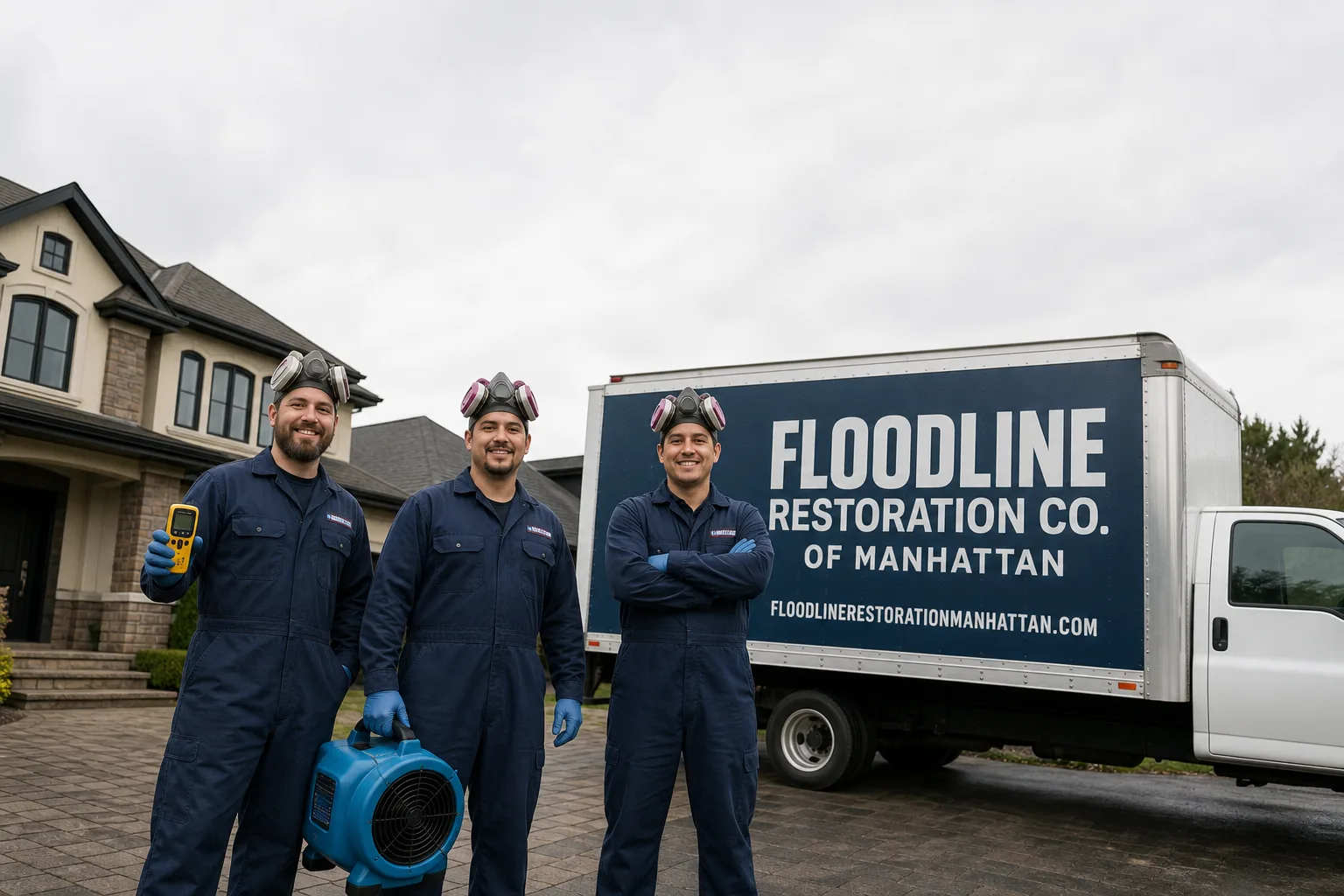
Free visual inspection and a written scope of work before any mitigation begins - photos, moisture readings, and drying logs go in your claim file
The scope we write is the scope we bill. Anything new gets shown to you, in writing, before we touch it.






 Before
 After
After Before
 After
After Before
 After
After24/7 Emergency Water Damage Restoration in Greenwich
Water damage restoration in Greenwich typically runs $2,400 to $6,800 for a standard Category 1 or 2 loss in an older wood-frame farmhouse, with emergency extraction alone starting around $950. Most jobs we handle are completed in a single visit, though structural drying in 18th- and 19th-century homes with rubble-stone foundations often runs three to five days. Call (917) 924-4221 and a live dispatcher answers, day or night. We don’t use recordings, and we don’t make you wait for a callback while water keeps moving through your house.
Greenwich homes along the Battenkill River corridor don’t have the luxury of waiting until morning. When river water or snowmelt breaches a fieldstone foundation, every hour pushes moisture deeper into porous masonry and the lath-and-plaster walls above it. Our crews reach most Greenwich properties within 45 minutes of your call. The first hour matters because that’s the window where extraction keeps a wet basement from becoming a mold problem in the joists overhead.
Floodline Restoration Co. of Manhattan runs a dispatch board, not a sales desk. A certified technician shows up with a moisture meter and thermal imaging camera, not a clipboard and a financing pitch. You’ll get a free visual inspection and a straight answer about what needs to happen next.
Understanding Water Damage Restoration Severity in Greenwich Properties
Greenwich’s housing stock makes water damage restoration a different job than it is in newer construction. Most homes in town are 18th- and 19th-century wood-frame farmhouses and colonials sitting on rubble-stone or fieldstone foundations. Those foundations were never designed to be water-tight. They’re porous by nature, and after 150 or 200 years of groundwater contact, they’ve absorbed organic material that accelerates mold growth once moisture spikes.
We categorize water damage the way the IICRC teaches it: Category 1 is clean water from a supply line or ice dam melt. Category 2 carries biological or chemical contamination, common in washing machine overflows or sump pump failures. Category 3 is grossly contaminated water, typically Battenkill floodwater or sewage backup. Category 3 requires full antimicrobial treatment and often removal of saturated porous materials. In Greenwich, what looks like a Category 1 basement leak often proves to be Category 2 or worse once we trace the source into old organic-laden fieldstone.
Moisture mapping in a pre-1900 Greenwich farmhouse means reading every wall cavity individually, because lath and plaster hold water differently than drywall and hidden saturation is common. We run daily readings with hygrometers and log everything until the dry standard is met. The 90-Day Done Right Promise means we keep coming back until it is, in writing, with no arguing.
Why Greenwich Property Owners Choose Floodline Restoration Co. of Manhattan
- 45-minute response commitment. Live dispatch routes the nearest certified crew to your Greenwich address the moment you hang up.
- A real person answers, 24/7. Two in the morning on a Sunday, you’ll get a live dispatcher. We built the company around that board, and we’ve never changed it.
- IICRC-certified crews. Our technicians hold WRT and ASD certifications and train to IICRC, RIA, and IFA standards. They’re background-checked and uniformed before they walk into your home.
- Free visual inspection. We assess the damage with thermal imaging and moisture meters before any work is authorized. No charge, no obligation.
- Direct insurance billing. We document, we photograph, we talk to your adjuster. You don’t carry papers between us and your carrier.
- One team from extraction to reconstruction. The same crew that reads the moisture map on day one handles the drying log and rebuilds what needs rebuilding. No mid-job handoff, no inherited crew.
Our Water Damage Restoration Process
Inspection & Assessment
We start with thermal imaging and moisture meters to map the extent of the water, including hidden saturation in wall cavities and under flooring. In Greenwich’s older homes, this step catches what a visual check misses.
Extraction & Stabilization
Standing water comes out fast using professional-grade truck-mounted and portable extraction. If the source is a burst pipe or supply line failure, we stop it before extraction begins.
Drying & Dehumidification
We place Dri-Eaz dehumidifiers and XPOWER air movers in a calculated configuration, then monitor daily with hygrometers. In fieldstone basements, we often run Injectidry systems to pull moisture from within porous masonry walls.
Cleaning & Sanitization
Antimicrobial treatment protects your surfaces from mold growth during and after drying. For Category 3 water, we remove saturated porous materials and sanitize remaining structure to IICRC standards.
Moisture Verification
We don’t call it done until daily readings confirm the structure has reached the dry standard. You get a copy of the moisture log, and so does your insurer.
Repairs & Restoration
Trim, drywall, flooring, and structural repairs are handled by the same Floodline crew. The scope of work is agreed in writing before we start, and the 90-Day Done Right Promise stands behind every repair.
Need Emergency Water Damage Restoration in Greenwich Now?
Crews minutes away, answering live 24 hours a day. The sooner we start, the less it costs.
Working With Your Insurance Company
Most Greenwich homeowners carry coverage for sudden and accidental water damage, and we work directly with your carrier from the first hour. That means photo documentation before anything is disturbed, moisture readings logged from day one, and a line-item scope of work written the same way your adjuster expects to see it. You don’t play messenger. We coordinate with the adjuster, answer their questions, and submit the drying log so there’s a clear record of what happened and what it took to fix it.
Curt Bowman founded Floodline Restoration Co. on a simple idea: the homeowner should never stand between the restoration company and the insurance company. We’ve kept that promise for over 42 years of combined team experience, and we keep it in Greenwich today.
What We Provide Your Insurer
- Thorough documentation of the loss
- Photos of all damage, room by room
- Moisture readings and drying logs
- A detailed, line-item scope of work
- Direct coordination with your carrier
Built for Greenwich’s Loss Calendar
Greenwich’s water damage season isn’t one season. It runs the whole year, and the failures shift with the weather. January and February bring deep freezes that drive the freeze-thaw cycles Washington County is known for. Temperatures swing across the freezing mark repeatedly from November through March, and that’s what builds ice dams on the steeply pitched roofs of older Greenwich farmhouses. Meltwater backs up behind the dam, runs under shingles, and soaks wall cavities for weeks before anyone sees a stain on the ceiling.
March and April bring snowmelt from the Adirondack foothills to the north and west. Groundwater levels spike, and fieldstone foundations that held dry all winter suddenly wick water into basements. May through August is thunderstorm season, when short, intense rains can overwhelm drainage around River Street and the flatter lots near the Battenkill, often requiring our Storm & Disaster Restoration in Greenwich. September through November brings the remnants of tropical systems and the first hard freezes, which find every weak point in supply lines that haven’t been insulated since the house was built.
Every season has a signature failure mode in Greenwich. Our crews know them because we’ve answered calls for all of them, year after year.
Water Damage Restoration Across Greenwich’s Neighborhoods
Greenwich is a long town stretched along the Battenkill, and the water damage patterns change as you move through it. Up along River Street and the roads that climb toward the Washington County hills, the homes are older, the roofs are steeper, and ice dams are the recurring villain. These are the 1840s and 1850s farmhouses with wide plank floors and lath-and-plaster walls, the kind of construction that hides water damage until rot or mold forces the issue.
South of Main Street, toward the river corridor, the ground opens up and the water table rises. Homes along South Road and the properties that back up to the Battenkill floodplain deal with hydrostatic pressure more than any other cause. When the river runs high, the ground saturates, and water finds its way through fieldstone walls that have stood for two centuries but were never meant to be waterproof. Out toward the Battenville side and the eastern stretches of town, we see more burst pipes and supply line failures, often in homes that were winterized poorly or left unheated for a stretch.
Near the center of town around Main Street and the older village core, the houses are close-set and the drainage is old. When a neighbor’s downspout fails or a street drain clogs, water finds the low point, and in Greenwich’s older stock, the low point is usually a dirt-floored cellar with a rubble-stone foundation. Knowing each neighborhood’s failure mode means we arrive with the right equipment and the right expectations, which saves time and money.
Specialized Water Damage Restoration Services We Offer in Greenwich
Emergency Water Extraction
Standing water in a Greenwich basement demands immediate removal, whether it came from a supply line, an ice dam, or the Battenkill itself. We run truck-mounted and portable extraction equipment to get water out fast, then set drying equipment the same visit. Most extraction jobs in Greenwich are completed on the first call, with structural drying continuing for days after.
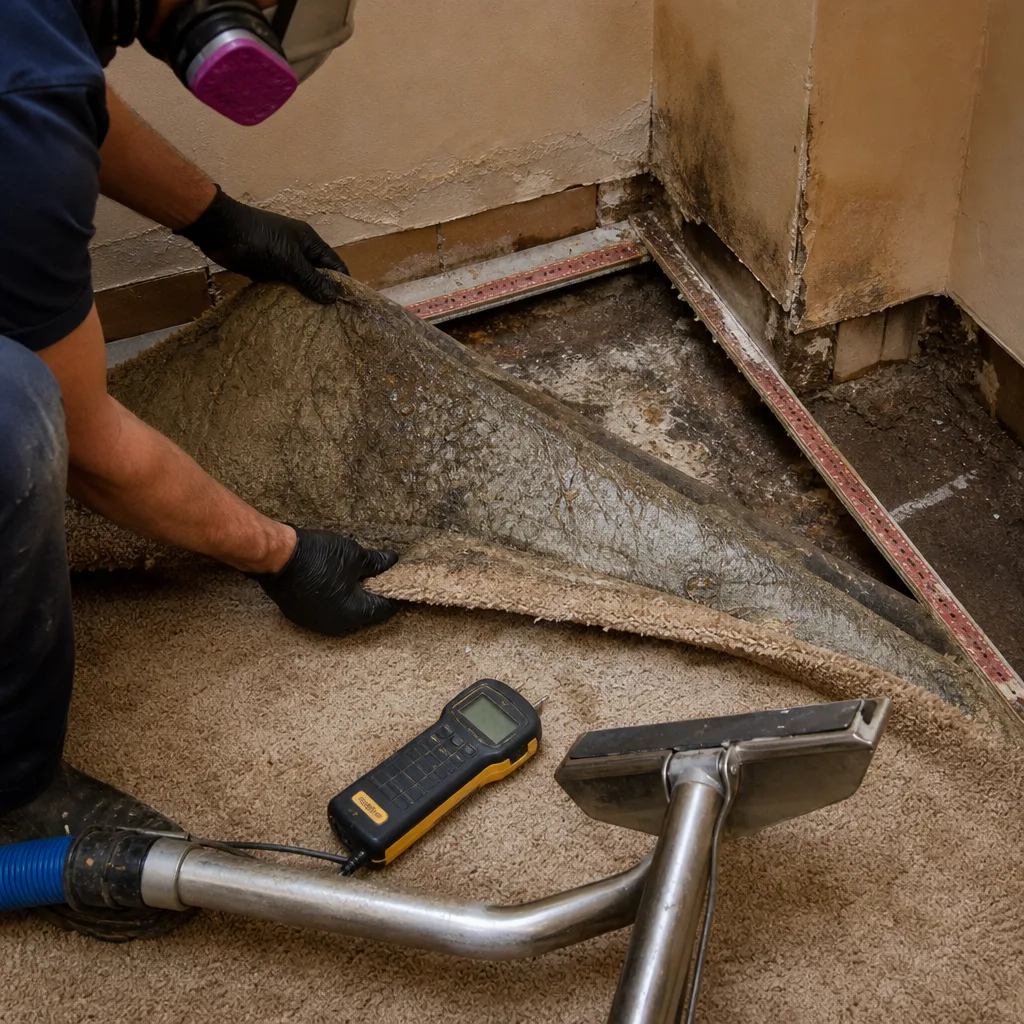
Structural Drying & Dehumidification
This is where older Greenwich homes need a different approach. Porous fieldstone, thick plaster, and wide-board flooring all hold moisture longer than modern materials. We run Dri-Eaz dehumidifiers and XPOWER air movers in calculated configurations, and use Phoenix and Injectidry systems to pull water from inside wall cavities and under subfloors that can’t be reached with surface drying alone.
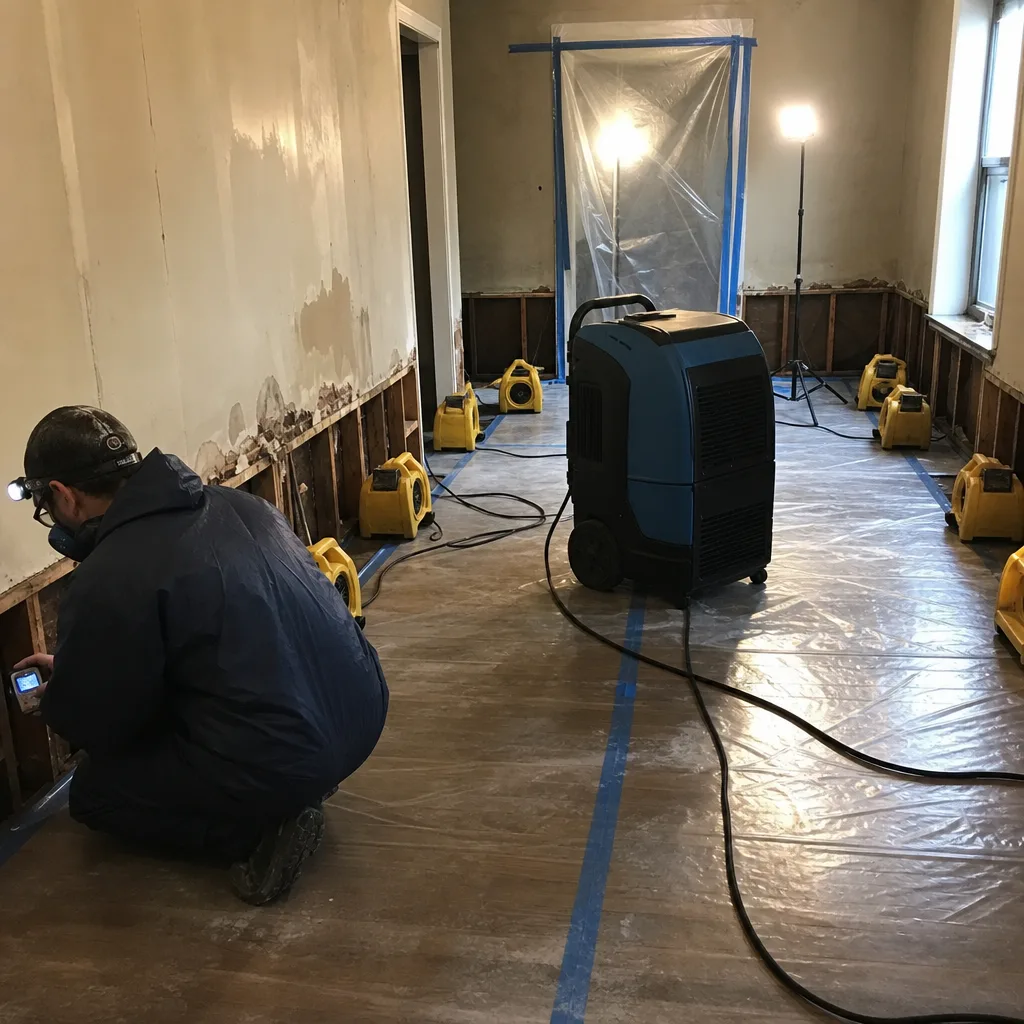
Flood Cleanup
Battenkill floodwater is Category 3 water. It carries river sediment, agricultural runoff from surrounding Washington County farms, and whatever else the current picked up. Flood cleanup in Greenwich means extraction first, then removal of saturated porous materials, antimicrobial treatment of every affected surface, and drying logs that document the process for your insurer. This is not a mop-and-fan job.
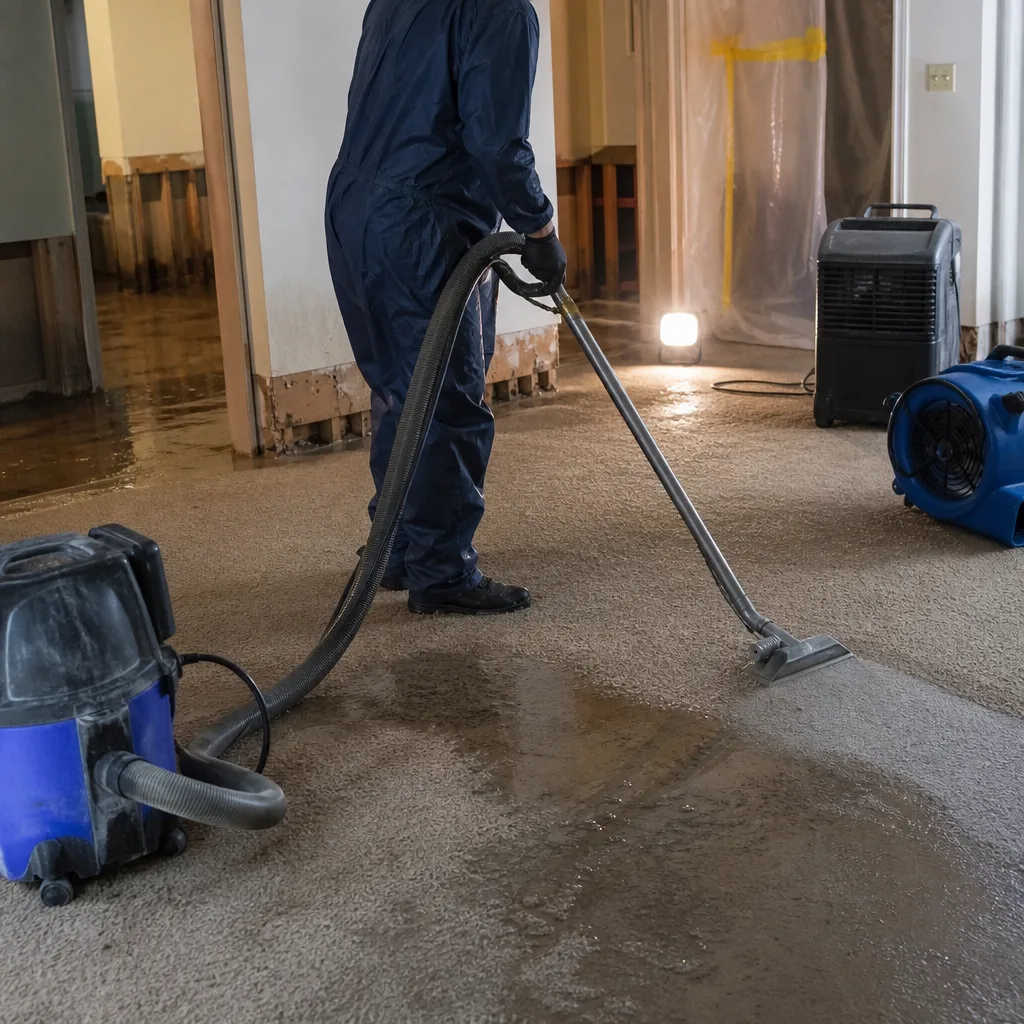
Burst Pipe Restoration
A frozen supply line in a Greenwich farmhouse can release hundreds of gallons an hour into wall cavities, ceilings, and basements before the water’s even visible. We stop the source, extract, dry, and repair. The freeze-thaw cycle that splits these pipes is a Greenwich constant from November through March, and our crews know where the vulnerable lines run in older homes.
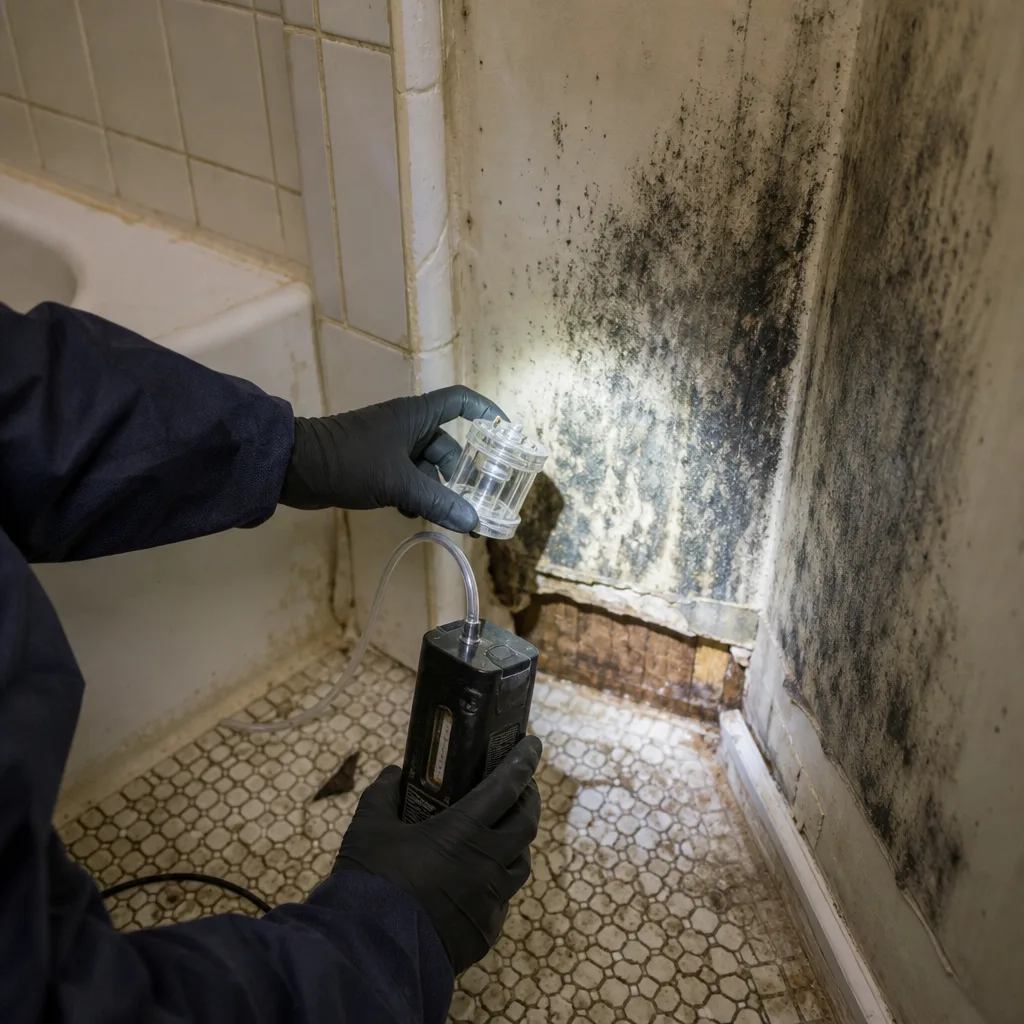
Basement Water Removal
Basements in Greenwich’s pre-1900 homes are rarely finished, but they hold furnaces, water heaters, electrical panels, and decades of stored belongings. When groundwater breaches a fieldstone wall, we extract, dry, and treat the space so the rest of the house stays stable. We also identify whether the water came from the river, the water table, or a plumbing failure, because the fix is different for each.
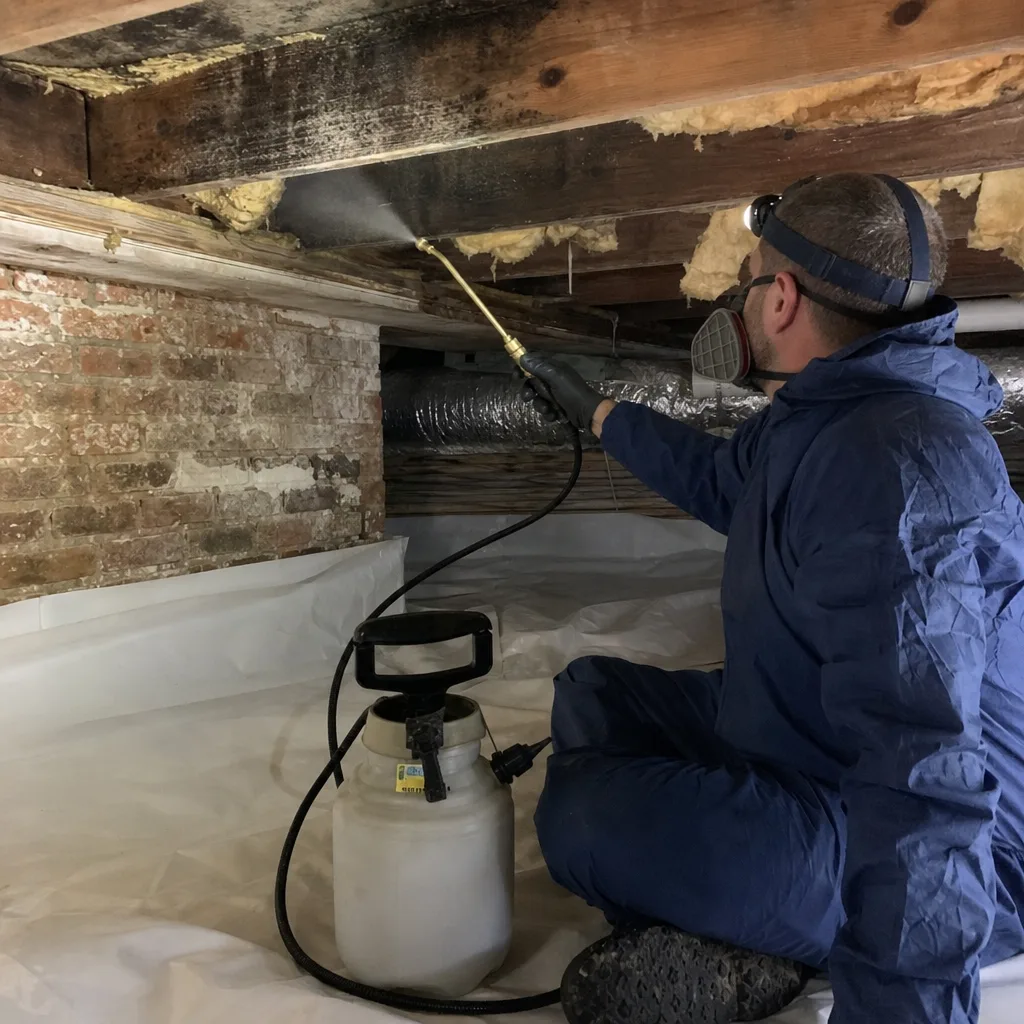
What happens when you call
- 1
A real person answersNo phone trees - you reach a local pro.
- 2
You get an upfront price rangeHonest numbers before anyone is dispatched.
- 3
A background-checked tech heads outLicensed & insured, dispatched right away.
- 4
You approve before work beginsNothing starts until you say go.
Water Damage Restoration Costs in Greenwich, CT
Greenwich’s market reflects the age of its housing stock. A typical emergency water extraction in a basement runs $950 to $2,100. Full structural drying with dehumidification and daily monitoring adds $1,800 to $3,400 depending on the square footage and how many rooms are affected. A complete Category 3 flood cleanup from Battenkill water, with removal of saturated materials and antimicrobial treatment, typically runs $3,800 to $6,800. Burst pipe restoration inside finished walls falls between $2,400 and $5,200 once drywall, insulation, and trim are factored in.
What moves the price is the age of the construction and the water category. A pre-1900 farmhouse with lath-and-plaster walls costs more to dry than a 1990s colonial with drywall. Category 3 water always costs more than Category 1 because it requires removal and sanitization, not just drying. Insurance covers most sudden and accidental losses, and we bill your carrier directly. The free visual inspection gives you a firm scope and a written number before any work begins. Call (917) 924-4221 and we’ll walk the property with you and tell you exactly what you’re looking at.
Properties along Greenwich’s Battenkill River corridor on the south side can see basement water intrusion even when the river hasn’t overflowed. The floodplain’s high water table alone creates enough hydrostatic pressure to breach old fieldstone foundations, a condition local techs must distinguish from plumbing failures. If you’re seeing water in a basement that’s never flooded before, and you live south of Main Street near the river, the source is more likely groundwater than a burst pipe. That changes the drying strategy, the scope, and what insurance will cover. Call us before you start moving things around; we’ll find the source and document it properly.
We Also Serve Cities Near Greenwich
Floodline Restoration Co. of Manhattan serves Greenwich and the surrounding Washington County communities, including Cambridge, Salem, Easton, and Schuylerville. Dispatch and scheduling are coordinated from our Hartford office; certified crews serve Greenwich locally. If you’re within 30 minutes of the village center, our 45-minute response commitment applies.
Serving Greenwich, CT - Our Local Coverage Area
We’re based in the Greenwich area and know this community well. Use the map below to see our service coverage - if you’re nearby, we can almost certainly help.
Greenwich Water Damage Restoration Questions, Answered
Why does my basement on the south side of Greenwich get standing water after heavy rain even when the Battenkill hasn’t overflowed?
Because the water table under the Battenkill floodplain rises high enough during heavy rain to create hydrostatic pressure against your fieldstone foundation walls. Water doesn’t have to come over the riverbank. It pushes up from below and through porous masonry. This is a chronic, seasonal condition on the south side of Greenwich, and it demands a drying strategy that accounts for the water table, not just the water you can see. Call (917) 924-4221 and we’ll map the moisture and confirm the source.
What’s the protocol for water damage in a pre-1900 Greenwich farmhouse with a rubble-stone foundation?
Rubble-stone foundations require moisture mapping that reads each wall section individually, because the stone and mortar hold water unevenly. We run dehumidifiers longer, use Injectidry systems to pull moisture from within the masonry, and log daily readings until the structure reaches the dry standard. The 90-Day Done Right Promise covers the full drying period, in writing.
How fast does mold start after an ice dam leak in a Greenwich colonial, and does the water category matter?
Mold can begin in 24 to 48 hours in the warm, dark wall cavities of an older Greenwich home. The water category matters because Category 1 meltwater degrades quickly once it saturates old plaster and organic-laden framing. Our crews run antimicrobial treatment during drying to prevent colonization, and we document everything for your insurer.
Does water damage restoration in Greenwich’s old farmhouses require special moisture mapping?
Yes. Lath-and-plaster walls, wide plank floors, and post-and-beam framing hold moisture differently than modern construction, and hidden saturation is common. We use thermal imaging and hygrometers to find water that’s not visible on the surface, and we keep daily readings until every cavity meets the dry standard.
Why do I need pack-out and content restoration after a Battenkill flood, not just drying?
Battenkill floodwater is Category 3 water. Anything porous that it touched, including stored belongings, furniture, and textiles, is contaminated and needs professional cleaning or replacement. Pack-out protects your contents while the structure dries, and content restoration with IICRC-standard cleaning gets them back. We document everything for your insurance claim.
How fast can you actually get to a water emergency in Greenwich?
Our commitment is 45 minutes from your call to a Greenwich address. A live dispatcher answers 24/7, routes the nearest certified crew, and extraction starts the same visit. The faster water comes out, the less drying and repair you’ll need.
Will my insurance cover water damage from groundwater or Battenkill flooding?
Most standard homeowners policies cover sudden and accidental water damage, but groundwater and flood losses often require separate flood insurance. We document the source and the loss precisely so your adjuster can see exactly what happened, and we coordinate with them directly. Bring us in early and we’ll advocate for the coverage you paid for.
What should I do in the first 30 minutes after I find standing water in my Greenwich home?
Shut off the water source if it’s a plumbing failure, cut power to affected areas at the breaker, and don’t walk through standing water if you’re unsure whether electricity is live. Then call (917) 924-4221. Don’t use a home vacuum, don’t run extension cords into wet areas, and don’t start moving saturated furniture yourself. The first calls matter more than the first cleanup.
Get a Straight Answer From a Restoration Crew That Stands Behind Its Work
If you’ve got water where it shouldn’t be in Greenwich, call (917) 924-4221. A live person answers, a certified crew arrives within 45 minutes, and you’ll get a written scope before any work starts. We handle Water Damage Restoration and full reconstruction with the same team, same standards, and the same 90-Day Done Right Promise. Serving Water Damage Restoration in Greenwich and surrounding Washington County communities, we stand behind every job, in writing.
Written by Curt Bowman, Owner at Floodline Restoration Co. of Manhattan, serving Greenwich, CT with certified restoration crews and the 90-Day Done Right Promise.