
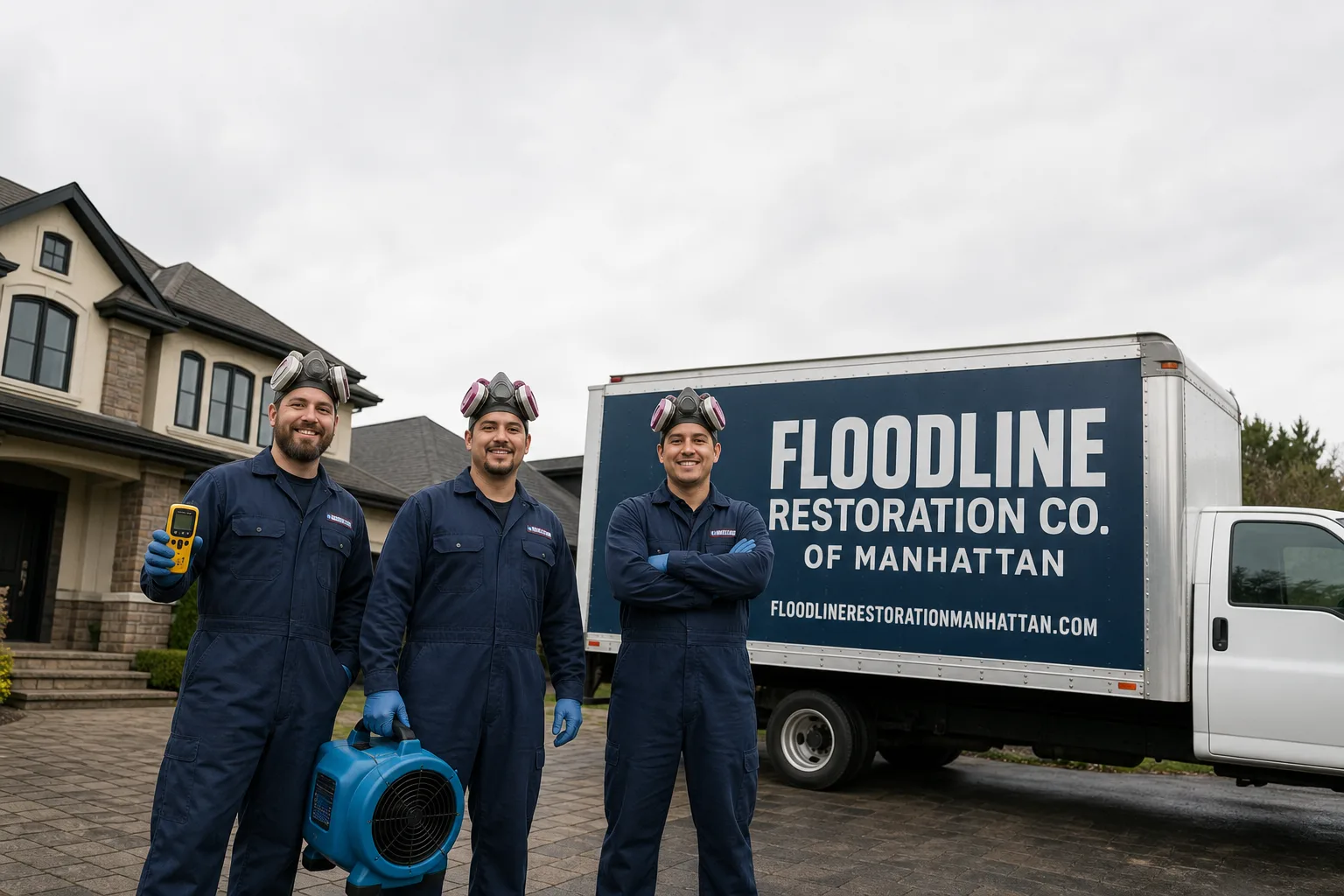
Free visual inspection and a written scope of work before any mitigation begins - photos, moisture readings, and drying logs go in your claim file
The scope we write is the scope we bill. Anything new gets shown to you, in writing, before we touch it.






 Before
 After
After Before
 After
After Before
 After
After24/7 Emergency Water Damage Restoration in Jersey City
Water damage restoration in Jersey City typically costs $1,800-$4,500 for moderate Category 2 incidents, while Category 3 sewage-contaminated basement jobs run $4,000-$8,500 depending on square footage and wall-cavity treatment. Our crews reach most Jersey City neighborhoods within 45 minutes, and extraction starts on the first visit. Call (917) 924-4221 now, and a live dispatcher answers, not a recording.
The first hour matters more than most homeowners realize. Water moves through original plaster walls and shared row-house party walls in minutes, and what starts as a burst pipe in Bergen-Lafayette can become a Category 3 contamination problem before sunrise. We answer live 24 hours a day and keep crews staged for Jersey City’s specific failure modes. When the Water Damage Restoration team rolls up, they carry the moisture meters, air movers, and the written scope of work before any drying begins.
Understanding Water Damage Restoration Severity in Jersey City Properties
Category 1 water comes from a clean source: a supply line break, an overflowing sink, a disconnected appliance hose. Category 2 carries contaminants, usually from a sump pump failure or a washing machine discharge. Category 3 is the one that defines Jersey City’s worst losses. It contains sewage, storm surge, river water, and the pathogens that travel with them. A nor’easter that pushes harbor water up through a floor drain in Paulus Hook is not a drying job. It is a hazmat-grade remediation job.
The distinction matters because Jersey City’s housing stock is unusual. Late-19th and early-20th century brick row houses and brownstones dominate Van Vorst Park, The Heights, and Bergen-Lafayette, many with original plaster walls and shared party wall construction. Water that enters one unit in a three-unit attached row house does not stop at the wall. It travels horizontally through joist cavities and plaster keys, which means moisture mapping must cover adjacent units, not just the room where the water appeared. Our technicians are trained to IICRC standards, including WRT and FSRT codes, and they read the moisture map before they pull a single piece of trim.
Why Jersey City Property Owners Choose Floodline Restoration Co. of Manhattan
- 45-minute response commitment. Live dispatch means a crew is moving toward your neighborhood while the average national franchise is still routing your call. In a Category 3 event, that lost hour costs real money and real wall material.
- 24/7 live answer, every time. A real person picks up at 2 a.m. Not a phone tree. Not a callback request. We run a dispatch board, not a sales desk. The person answering the phone knows what a moisture meter reads in Greenville.
- IICRC-certified crews. WRT and FSRT certifications as standard, plus RIA and IFA training. We train our own techs, background-check every one of them, and put them in uniforms you can identify at the door.
- Free visual inspection before any work. We do not charge to walk a basement in The Heights and tell you honestly whether you need full remediation or a targeted drying plan. You get a written scope of work before we start.
- Direct insurance billing. We carry the claim conversation with your carrier. You never play messenger between our team and an adjuster. We do the estimates, the moisture logs, the photos, and the follow-up.
- One team from extraction to reconstruction. No mid-job handoff to a different crew you never met. The same certified technicians who set containment and run drying are the ones rebuilding the baseboard and re-setting the door frames.
Our Water Damage Restoration Process
Inspection & Assessment
We start with thermal imaging and penetrating moisture meters, not guesswork. On a Jersey City row house, that means reading the party wall, the plaster keys, and the subfloor. We classify the water correctly before anything else happens.
Extraction & Stabilization
Professional-grade Dri-Eaz and Phoenix extraction units pull standing water faster than rentals ever will. We also stabilize any sagging plaster, cut away compromised drywall, and create containment zones to stop cross-contamination before it moves through the house.
Drying & Dehumidification
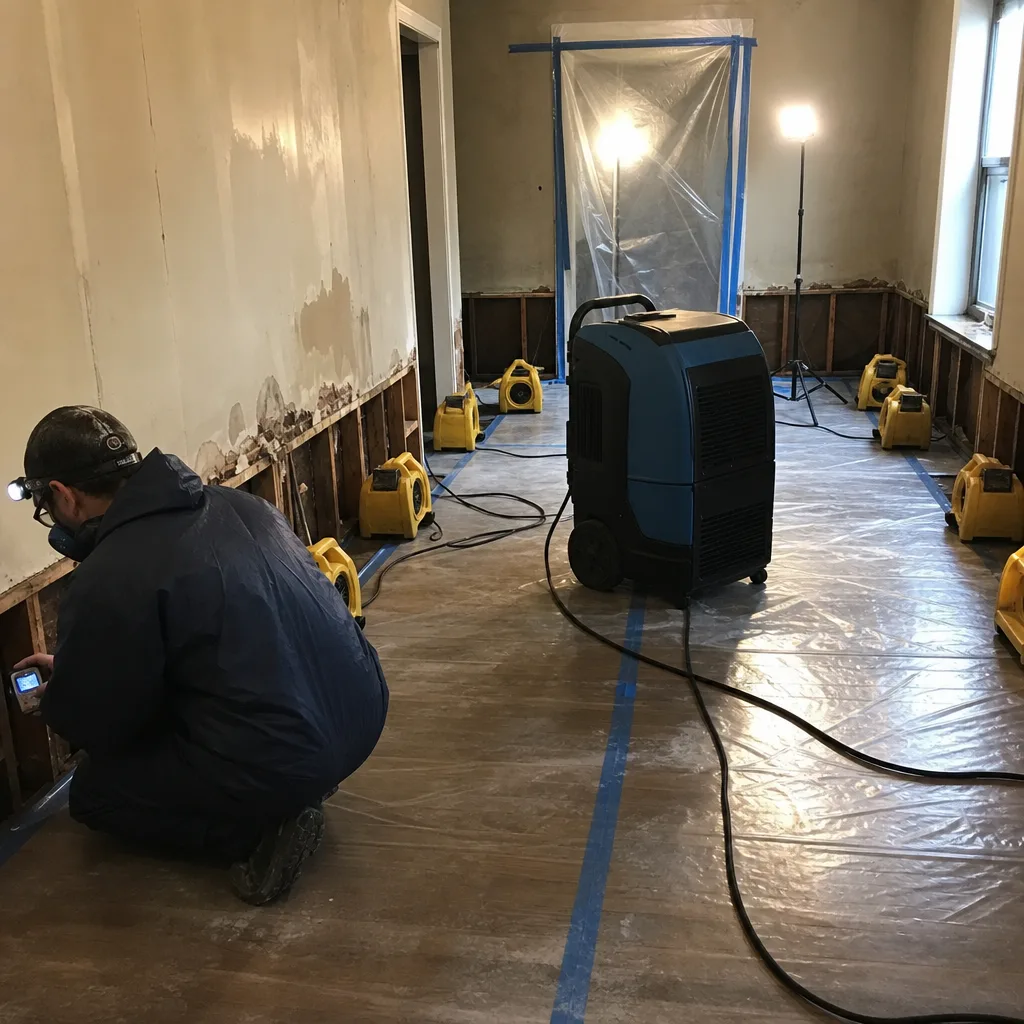
High-capacity Phoenix dehumidifiers and XPOWER air movers run on a moisture map, not a timer. Daily readings are logged and shared with you and your carrier until the dry standard is met. In The Heights, this phase runs longer because the original masonry holds water the way downtown drywall does not.
Cleaning & Sanitization
We apply antimicrobial treatments appropriate to the water classification. Category 3 jobs get full EPA-registered antimicrobial application, not just a wipe-down. HEPA-filtered air scrubbers run during the entire process for Category 2 and 3 classifications.
Specialty Treatment for Water Damage Restoration
When required, we remove affected plaster, wire-brush and treat framing, and inject drying into wall cavities using Injectidry systems. For Category 3 losses, this is where we get aggressive. The alternative is hidden contamination inside shared row-house walls.
Repairs & Restoration
We rebuild to original condition: new drywall, skim-coat plaster, baseboards, doors, flooring. This is the same crew that did the drying. They know exactly where the damage stopped and where the repair starts.
Need Emergency Water Damage Restoration in Jersey City Now?
Crews minutes away, answering live 24 hours a day. The sooner we start, the less it costs.
Working With Your Insurance Company
Most Jersey City homeowners are dealing with insurance on a water loss, whether they filed before or not. We handle the claim documentation from the first hour. Our techs photograph every affected room before demo, log moisture readings daily until dry standard, and produce a line-item scope that matches industry-standard estimating software your adjuster recognizes. We also speak directly to your carrier. No homeowner should be translating a drying log into adjuster-speak at midnight.
What We Provide Your Insurer
- Thorough documentation of the loss
- Photos of all damage, room by room
- Moisture readings and drying logs
- A detailed, line-item scope of work
- Direct coordination with your carrier
Built for Jersey City’s Loss Calendar
Jersey City’s water damage calendar is shaped by geography as much as weather. January and February bring deep freezes that burst supply lines in unheated basements and exterior walls, especially in older row houses with original plumbing. March and April bring spring thaw and sustained rainfall, which pushes groundwater into basements in Greenville and along the bayfront, where the water table sits high year-round. July and August thunderstorms overwhelm combined sewers, sending Category 3 water into basement floor drains across downtown. September through November is nor’easter season, and the storm surge risk along the Hudson River is real. Paulus Hook and Exchange Place flood from the river; The Heights gets ice dams and freeze-thaw damage on brick facades. Different neighborhoods, different failure modes, same outcome: water where it does not belong.
Water Damage Restoration Across Jersey City’s Neighborhoods
In Paulus Hook and Exchange Place, the issue is almost always storm surge or sewer backflow. These blocks sit at or near sea level, and a nor’easter that pushes the Hudson over the bulkhead sends Category 3 water up through floor drains. We set containment immediately, because the water does not stay in one unit. Van Vorst Park row houses share party walls, so a burst pipe in the middle house is a moisture event in the houses on either side. We read the neighbors’ walls too. In The Heights, steep Victorian rooflines and thick original masonry create a completely different problem. Ice dams form, meltwater enters wall cavities, and the masonry holds it for weeks. Standard drying timelines fail there. Greenville and the bayfront sit on historically filled wetland, which means the water table is high and groundwater flooding recurs after sustained rainfall. If we dry the basement without addressing drainage, we will be back in two weeks. We know each of these neighborhoods because our crews work them every week.
Jersey City is home to over 290,000 people across these distinct neighborhoods, and no single drying protocol works for all of them. We treat each one according to what the building actually is, not what the template says.
Specialized Water Damage Restoration Services We Offer in Jersey City
Emergency Water Extraction
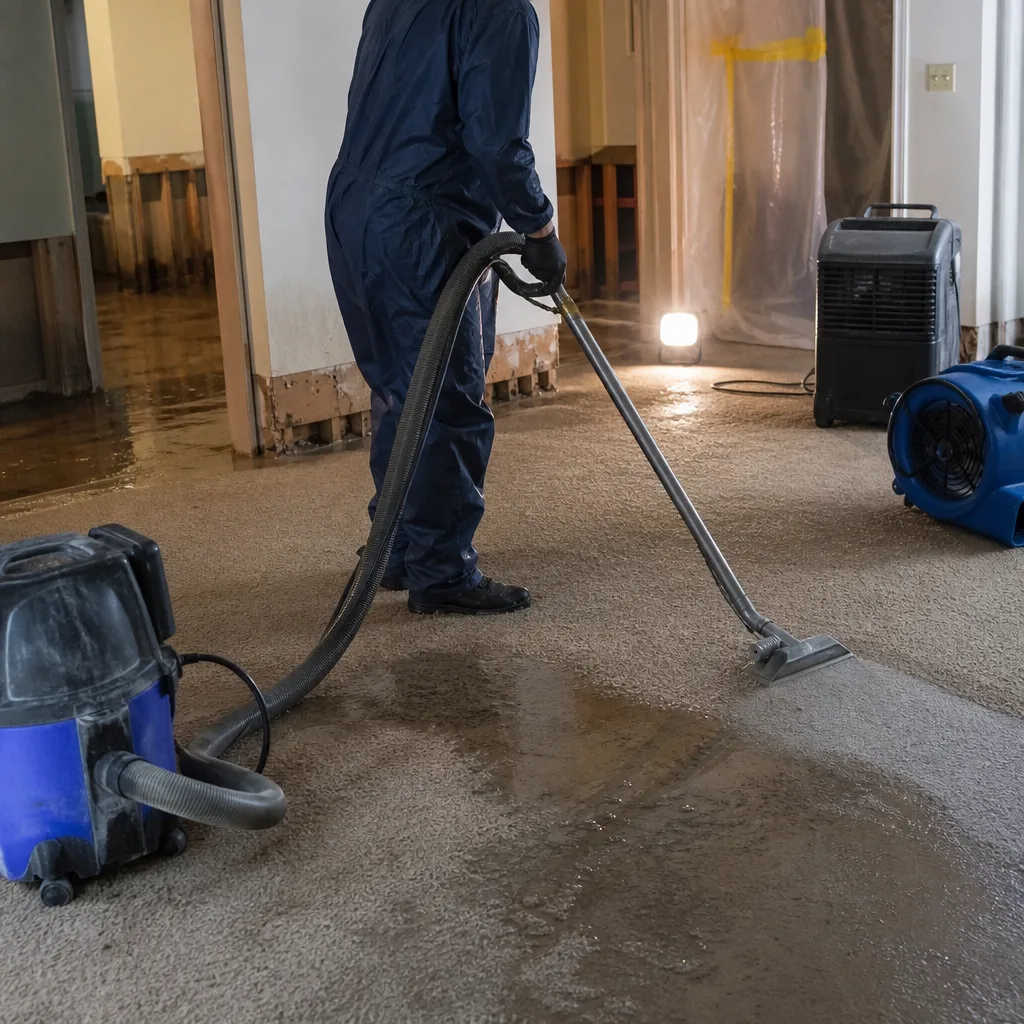
Extraction starts on the first visit for every Jersey City job. We have Dri-Eaz and Phoenix extractors on the truck, not at a warehouse across the river. The faster we pull standing water, the less plaster we have to cut out later.
Structural Drying & Dehumidification
We do not just set fans and leave. Daily moisture readings, logged and shared, until the dry standard is met. In Jersey City’s older masonry buildings, this phase takes longer, and we plan for it honestly. Injectidry systems handle the wall cavities that ordinary air movement cannot reach.
Flood Cleanup
After Superstorm Sandy flooded whole blocks of Paulus Hook and Exchange Place, the entire industry learned hard lessons about Category 3 surge water. We were learning too, and we applied those lessons every nor’easter since. Flood cleanup in Jersey City means sewage and harbor water, not rainwater. Full antimicrobial treatment and containment are standard.
Burst Pipe Restoration
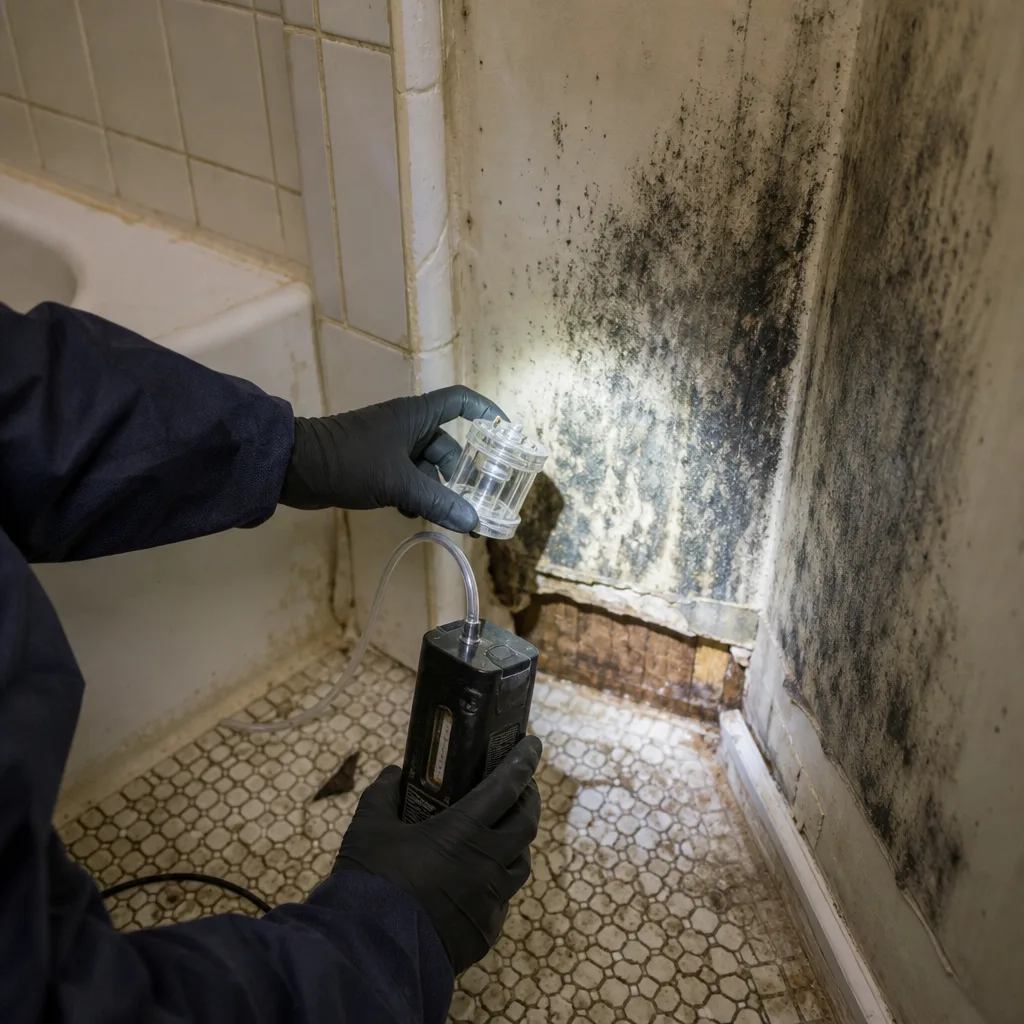
A frozen supply line in a Van Vorst Park brownstone can soak three floors before it is found. We trace the water path through joists, plaster, and floors, then dry and restore everything that got wet, not just the visible puddle.
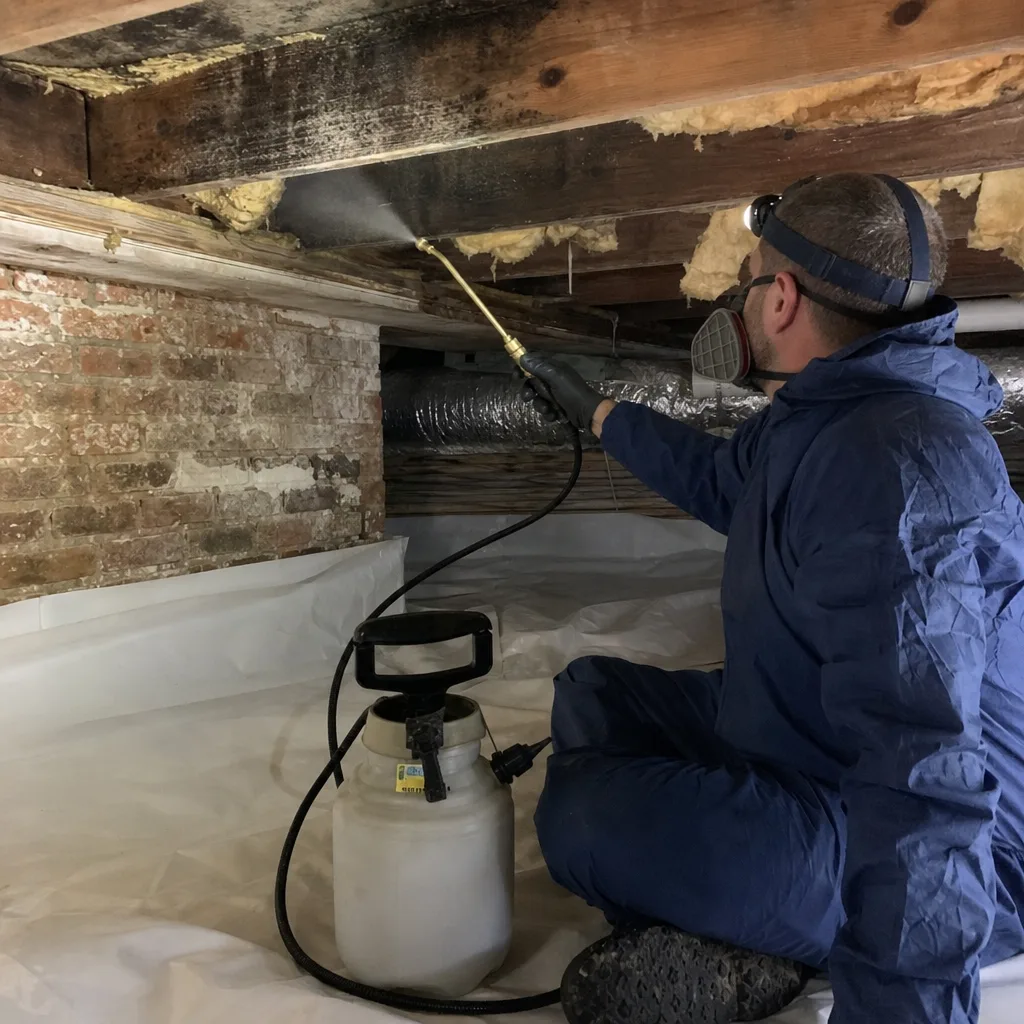
Basement Water Removal
Basements in Greenville and along the bayfront get water from below, not above, because the filled wetland water table is high. We extract, dry, then tell you honestly what drainage improvements will keep it from coming back. Drying alone is not enough there.
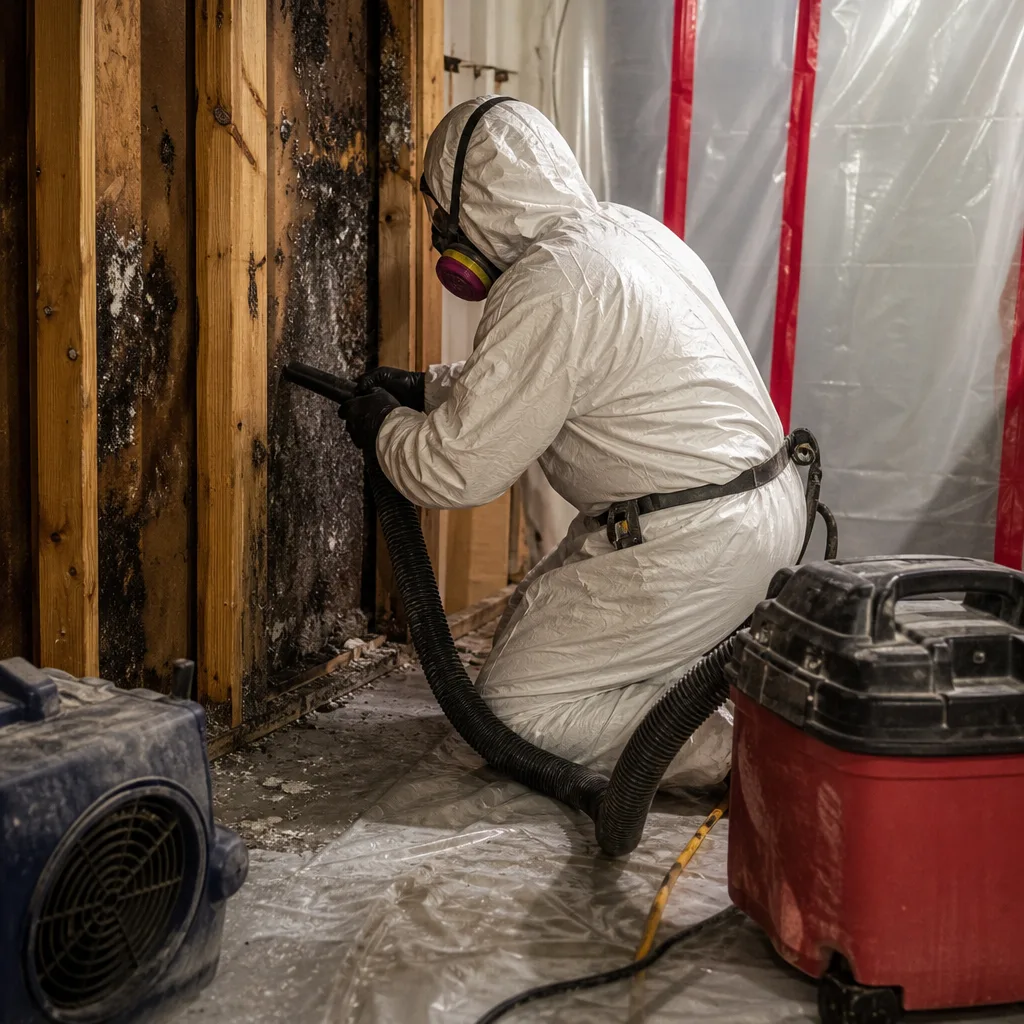
What happens when you call
- 1
A real person answersNo phone trees - you reach a local pro.
- 2
You get an upfront price rangeHonest numbers before anyone is dispatched.
- 3
A background-checked tech heads outLicensed & insured, dispatched right away.
- 4
You approve before work beginsNothing starts until you say go.
Water Damage Restoration Costs in Jersey City, NJ
What you will actually pay depends on the water category and how far it traveled. A small Category 1 kitchen overflow in a downtown high-rise might run $1,200-$2,500. A Category 2 washing machine discharge across a finished basement runs $2,500-$5,000. A Category 3 basement backup in a Greenville row house, with full containment and antimicrobial treatment, runs $4,000-$8,500. A Category 3 storm surge event in Paulus Hook with multiple rooms affected can reach $12,000-$20,000 because the contaminated water gets into wall cavities and under floors. Insurance covers most of these when the cause is sudden and accidental. Gradual groundwater seepage usually is not covered, which is why we are honest about drainage before recommending expensive interior work. The free visual inspection gives you a firm written scope before you spend anything.
| Water Damage Type | Typical Jersey City Cost Range |
|---|---|
| Category 1 (clean water, small area) | $1,200-$2,500 |
| Category 2 (contaminated, finished basement) | $2,500-$5,000 |
| Category 3 (sewage/surge, full basement) | $4,000-$8,500 |
| Category 3 storm surge, multiple rooms | $12,000-$20,000 |
We Also Serve Cities Near Jersey City
Our crews respond daily across the Hudson County corridor, including Hoboken, Union City, Weehawken, and Harrison. If you are in any of these nearby cities, the same live dispatch at (917) 924-4221 and the same written 90-Day Done Right Promise apply.
Serving Jersey City, NJ - Our Local Coverage Area
We’re based in the Jersey City area and know this community well. Use the map below to see our service coverage - if you’re nearby, we can almost certainly help.
Jersey City Water Damage Restoration Questions, Answered
Why is Category 3 water so common in Jersey City basements compared to other New Jersey cities?
Jersey City sits on a peninsula between the Hudson River and Newark Bay, and much of its downtown was built on filled wetland with an aging combined sewer system. When heavy rain overwhelms that system, sewage and stormwater back up through basement floor drains as Category 3 water. Inland New Jersey cities get more burst pipes and appliance failures. Here, the water itself is more dangerous, which is why full antimicrobial treatment and containment are standard on many of our basement jobs.
How do you handle water damage in a shared-wall row house in Van Vorst Park without affecting neighbors?
We set containment zones at the property line and moisture-map the shared party wall before any drying begins. In attached row houses, water moves horizontally through joists and plaster keys, so we check the adjacent units for hidden moisture. Our drying plan is written for the building as a system, not just the room where the water showed up. We also communicate with adjacent owners early so no one is surprised by a wall reading that affects their unit too.
What makes structural drying different in The Heights compared to downtown Jersey City?
The Heights sits on the Palisades, and its Victorian rooflines and thick original masonry hold water in ways the flat waterfront blocks do not. Ice dams send meltwater into wall cavities that stay wet for weeks because the dense brick and plaster trap moisture. Downtown properties tend to be quicker drying, with newer materials and smaller wall sections. In The Heights, we extend drying timelines, use Injectidry to force air into cavities, and write daily moisture logs that reflect the slower evaporation curve of old masonry.
Can you dry a basement in Greenville without removing the groundwater source first?
You can dry it temporarily, but you will fight the water table forever. Greenville and the bayfront were historically filled wetland, and the water table is high there. After sustained rainfall, basements flood from below. We dry the structure, but we also tell you honestly what drainage or sump improvements are needed. If the groundwater source is not addressed, the basement will re-flood, and the next drying job costs more because mold has had time to establish. Call (917) 924-4221 to get a straight answer about your specific block.
How quickly do you respond to a storm surge event in Paulus Hook or Exchange Place?
During nor’easters and surge events, we stage crews in advance near the waterfront and respond within 45 minutes of your call, often faster. In Paulus Hook and Exchange Place, every hour matters because Category 3 surge water moves through shared walls and under floors quickly. Our dispatchers know which blocks flood first and route crews accordingly. The sooner we set containment, the less material we have to remove.
Will my insurance cover a Category 3 basement backup in Jersey City?
Most Jersey City homeowner policies cover sudden, accidental discharge from a sewer or drain backup only if you carry a specific endorsement for it. Standard policies often exclude sewer backup coverage unless added. If hurricane or nor’easter storm surge is involved, flood insurance becomes the relevant policy. We photograph everything from the first hour and work directly with your adjuster. Answering the coverage question correctly is our job too. Call us at (917) 924-4221 and we will walk you through what your policy language actually says.
How long does full water damage restoration take in a Jersey City row house?
A typical Category 2 basement in a downtown row house dries in 3-5 days, with repairs another 3-7 days after that. A Category 3 job with wall-cavity treatment in The Heights or Greenville runs 7-14 days because the original masonry dries slowly and the antimicrobial treatment takes time. We give you a written timeline at the inspection and update it daily with the moisture log. No surprises about when you can move back in.
What should I do in the first 30 minutes after discovering water damage in my Jersey City home?
Shut off the water at the main supply, cut power to the affected area at the breaker, and call us immediately at (917) 924-4221. Do not enter standing water if electricity is nearby. Do not try to vacuum it up with a household vacuum. Move valuables up off the floor if safe to do so. The first 30 minutes determine whether you are looking at a drying job or a full gut. We answer live, and we will talk you through it.
We were called to a brick row house in Van Vorst Park after a nor’easter pushed Category 3 water up through the basement floor drain. Our crew set up containment, used Dri-Eaz air movers and dehumidifiers for structural drying, and performed full antimicrobial treatment on the original plaster walls before moisture readings confirmed pre-loss condition. That is the standard we hold on every job in Jersey City. The 90-Day Done Right Promise, in writing, with no fine print and no arguing. If it is not done right, we make it right. That is the deal. Curt Bowman built this company around a dispatch board, not a sales desk, and we have been answering the phone with a live person ever since. Senior and veteran homeowners in Jersey City always get 5% off, and any repair over $250 takes $50 off right now.
Call (917) 924-4221 for a free visual inspection and a square deal. We stand behind it.
Written by Curt Bowman, Owner at Floodline Restoration Co., servicing Jersey City since 2010.