
Free visual inspection and a written scope of work before any mitigation begins - photos, moisture readings, and drying logs go in your claim file
The scope we write is the scope we bill. Anything new gets shown to you, in writing, before we touch it.






 Before
 After
After Before
 After
After Before
 After
After24/7 Emergency Water Damage Restoration in Lower East Side
A burst supply line or a failed tenement roof doesn’t wait for business hours, and neither do we. Floodline Restoration Co. of Manhattan answers live at (917) 924-4221 around the clock, every day of the year, with a real dispatcher who can have a certified crew moving toward the Lower East Side within 45 minutes. The first hour after water hits horsehair plaster, flooring, and shared walls decides whether you’re looking at drying or demolition. Standing water soaks upward through plaster and wicks laterally into neighboring units fast, and in a pre-war tenement, that means your ceiling stain can become your neighbor’s wall cavity problem before the day is out. We arrive with professional-grade extraction equipment, map the moisture, and get water out the same visit. The inspection is free, the answer is straight, and no one leaves you guessing overnight. Call (917) 924-4221 the moment you see water where it shouldn’t be.
Understanding Water Damage Restoration Severity in Lower East Side Properties
We classify water in three categories, and they mean different things for a 1908 tenement on Rivington Street than they do for a 1960s concrete tower at Baruch Houses. Category 1 is clean water from a supply line or radiator. Category 2 carries detergents, soap residue, or other contaminants from appliances and overflows. Category 3 is the one that matters most near the East River: floodwater, sewage, or anything that came out of a drain line. It carries bacteria and requires disinfection, not just drying.
In Lower East Side buildings, severity is also driven by what the water soaks into. Horsehair plaster acts like a sponge and holds moisture against wood lath for weeks if it isn’t pulled out. Galvanized and cast iron supply lines corroded by decades of salt air develop hidden pinhole leaks inside shared walls, saturating cavity spaces nobody sees until the plaster begins to blister. Moisture mapping with hygrometers and thermal imaging tells us where the water truly went, and that map determines whether we dry in place, open a wall, or contain the area. The earlier we read the moisture, the less we have to cut.
Why Lower East Side Property Owners Choose Floodline Restoration Co. of Manhattan
- 45-minute response commitment - When water is actively spreading, we dispatch a crew toward the Lower East Side immediately, not after a call-back window.
- 24/7 live answer, never an automated system - You call, a person picks up. At 2 a.m., that person is a dispatcher who can actually send a truck.
- IICRC-certified crews - Our technicians hold WRT (Water Damage Restoration Technician) and ASD (Applied Structural Drying) certifications, trained to RIA and IFA standards as well.
- Free visual inspection - We assess the damage, explain what we’re seeing, and give you a written scope before any work begins.
- Direct insurance billing - We coordinate with your carrier, provide the documentation they need, and bill them directly. You never play messenger.
- One team from extraction to reconstruction - The same Floodline crew that pulls the water out rebuilds what needs rebuilding. No mid-job handoff, no inherited strangers.
Our Water Damage Restoration Process
Inspection & Assessment
We walk the affected area, identify the water category, and use thermal imaging and moisture meters to map how far the water has traveled through walls, floors, and cavities. In Lower East Side tenements, this often means checking adjacent units and the airshaft path.
Extraction & Stabilization
Our crew extracts standing water using truck-mounted and portable extraction units. If a pipe is still leaking, we stop the source first. In a shared-wall building, we may set containment to keep moisture from migrating into neighboring apartments.
Drying & Dehumidification
We place Dri-Eaz and Phoenix LGR dehumidifiers and XPOWER air movers positioned for airflow across wet surfaces. For cavities and under floors, Injectidry systems pull water from places standard equipment can’t reach. Daily readings are logged until the dry standard is met.
Cleaning & Sanitization
Category 2 and Category 3 water require antimicrobial treatment after drying. We clean and disinfect affected surfaces, and in tenement walls where a pinhole leak has been soaking horsehair plaster for weeks, we open only what the moisture map tells us must be opened.
Airshaft & Cavity Moisture Verification
In Lower East Side buildings, hidden airshafts and shared wall cavities are where moisture hides. After drying, we verify with hygrometer readings and thermal scans that no wet pocket remains before any reconstruction starts.
Repairs & Restoration
Our own team replaces drywall or plaster, repairs trim, and matches finishes. The 90-Day Done Right Promise covers the work in writing, so if something isn’t right, we make it right.
Need Emergency Water Damage Restoration in Lower East Side Now?
Crews minutes away, answering live 24 hours a day. The sooner we start, the less it costs.
Working With Your Insurance Company
We’ve handled thousands of water damage claims, and we know what adjusters look for because we’ve sat across the table from them for years. From the first hour on site, we document. Photos of the loss room by room, moisture readings taken before and during drying, a line-item scope of work that spells out exactly what we’re doing and why. You’ll get a copy of everything your carrier receives. We talk to adjusters directly, which means you don’t spend your days chasing paperwork or repeating what we already told them. And because we bill the carrier directly on approved claims, the financial side doesn’t sit on your shoulders while the work gets done.
What We Provide Your Insurer
- Thorough documentation of the loss
- Photos of all damage, room by room
- Moisture readings and drying logs
- A detailed, line-item scope of work
- Direct coordination with your carrier
Built for Lower East Side’s Loss Calendar
January and February bring deep freezes that burst uninsulated supply lines in pre-war tenements along Ridge and Pitt Streets, and those pinhole leaks from salt-corroded cast iron don’t freeze at all, they just drip all winter inside shared walls. March and April thaw saturates ground around basements and sub-grade utility rooms, and seepage finds the foundation cracks that been there since the tenement was framed. Summer brings sudden thunderstorms that overwhelm flat roofs built before membrane technology, sending water down airshafts and into the top-floor apartments first. Nor’easters and tropical storm remnants push East River storm surge into FEMA flood zone AE basements, reactivating the same category 3 water patterns Sandy taught this neighborhood in 2012. Every season has a signature loss. We know which one you’re calling about before you finish describing it.
Water Damage Restoration Across Lower East Side’s Neighborhoods
The Lower East Side is not one building type, and our response changes block by block. Along Rivington, Stanton, and Ludlow Streets, the 1880s and 1890s tenements have the narrowest airshafts and the thickest horsehair plaster, which means hidden moisture spreads fast and drying takes longer. Around Baruch Houses and the Wald and Riis developments, mid-century concrete towers channel water through mechanical room penetrations and elevator shafts, often carrying Category 3 water into the electrical rooms below grade. The blocks east of Essex Street toward the East River waterfront sit squarely in FEMA flood zone AE, where any basement call begins with a floodwater conversation, not just a leak conversation. West of Allen Street, the larger 1901-and-later tenements with wider airshafts still share vertical pipe risers that fail on one floor and wet three more before the riser valve can be closed. We know the buildings, the layouts, and the failure patterns from Pulaski Park to the Williamsburg Bridge.
Specialized Water Damage Restoration Services We Offer in Lower East Side
Structural Drying & Dehumidification
In a pre-war LES tenement, structural drying means controlling vapor pressure inside horsehair plaster wall cavities and beneath wood floors, not just blowing air around a room. We use Dri-Eaz LGR dehumidifiers, Phoenix axial air movers, and Injectidry systems for cavity drying, with daily moisture readings logged until hygrometers confirm every layer meets the dry standard. On a recent Rivington Street burst line, this meant running containment and drying in six separate units before we could write a repair scope.
Burst Pipe Restoration
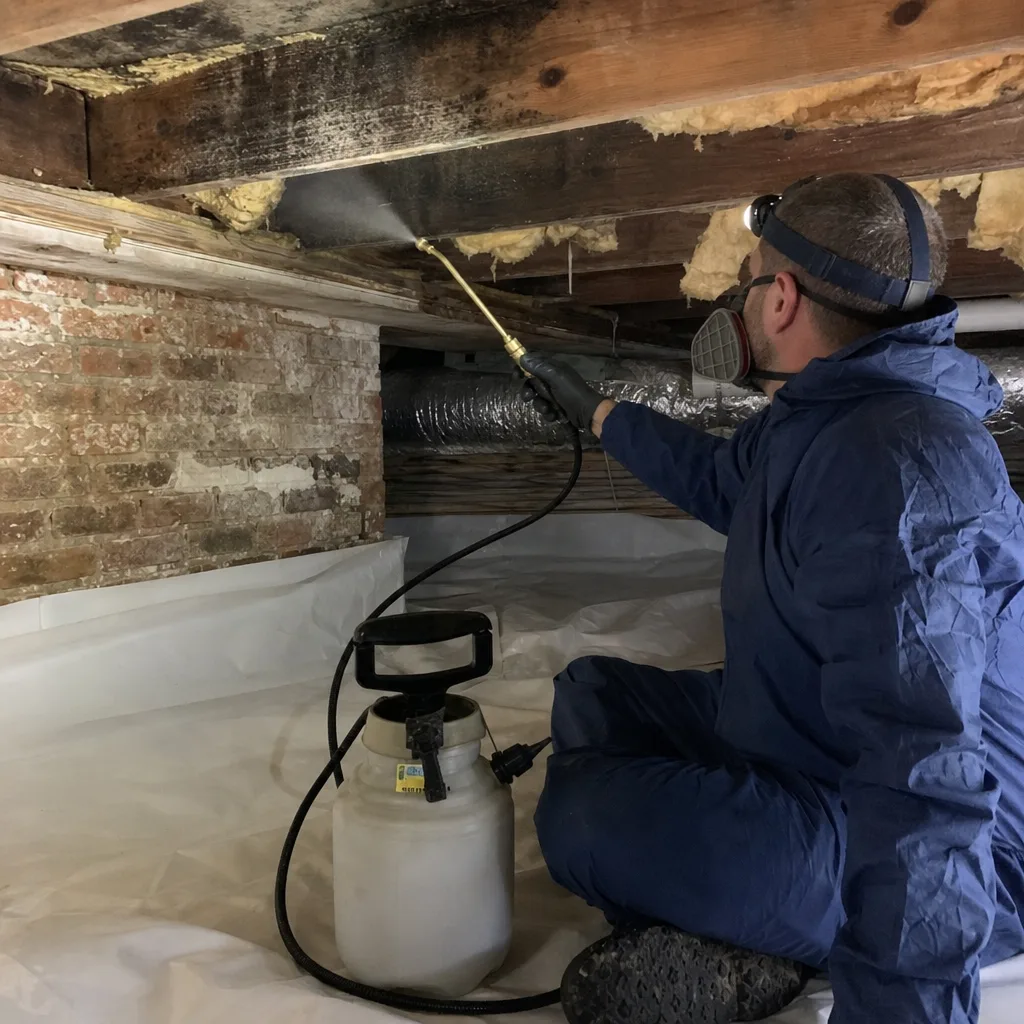
When a supply line lets go in a tenement, the water travels down the riser, across the floor, and into the neighbor’s wall within minutes. We stop the source first, then extract, map the spread, and dry every affected unit. Salt-air corrosion on aging galvanized and cast iron means burst pipes on the Lower East Side are usually not a one-time event; we’ll tell you honestly if your riser is nearing the end.
Flood Cleanup
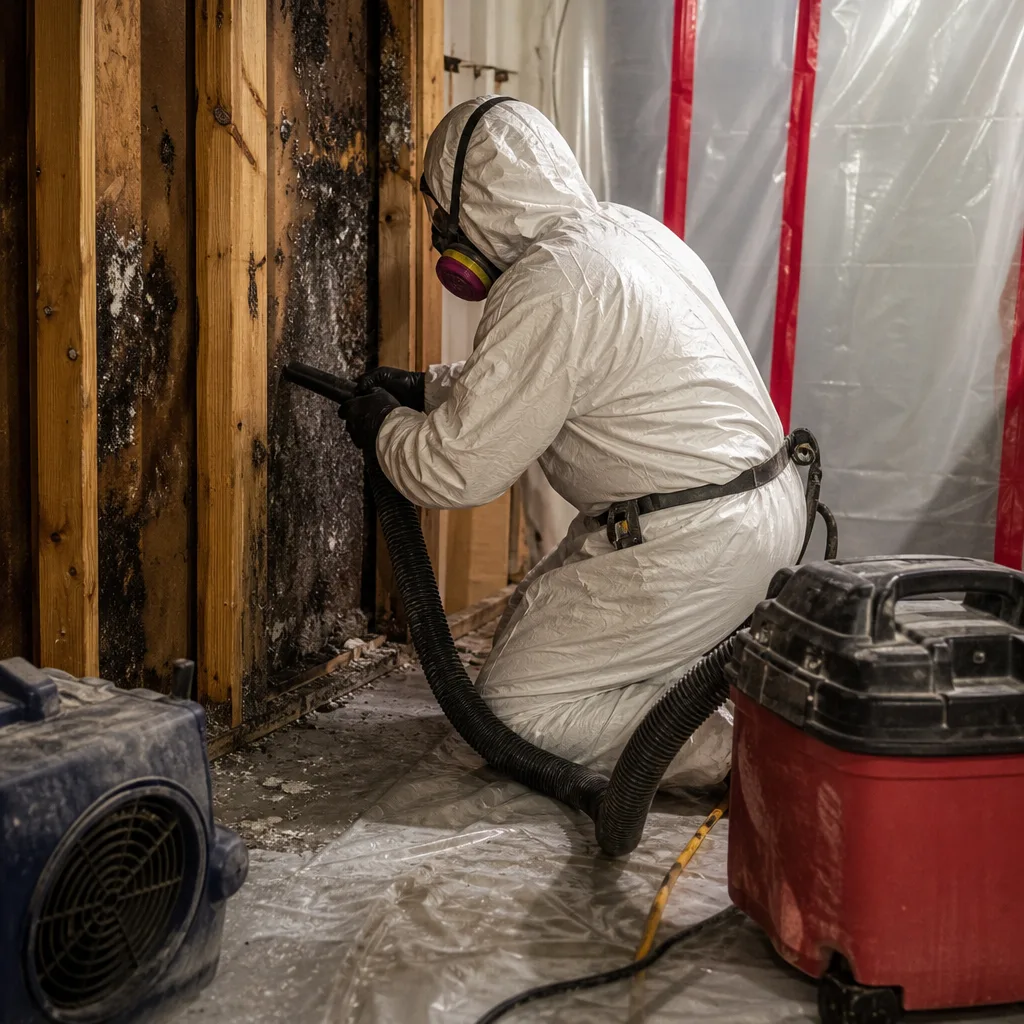
East River storm surge or a failed sump leaves behind Category 3 water that requires extraction, disinfection, and documented drying before any rebuild can start. FEMA flood zone AE basements need special attention to masonry walls that retain salt and moisture long after the water is pumped out. We handle the disinfection and the drying, and the moisture log goes to your carrier so the claim moves forward cleanly.
Basement Water Removal
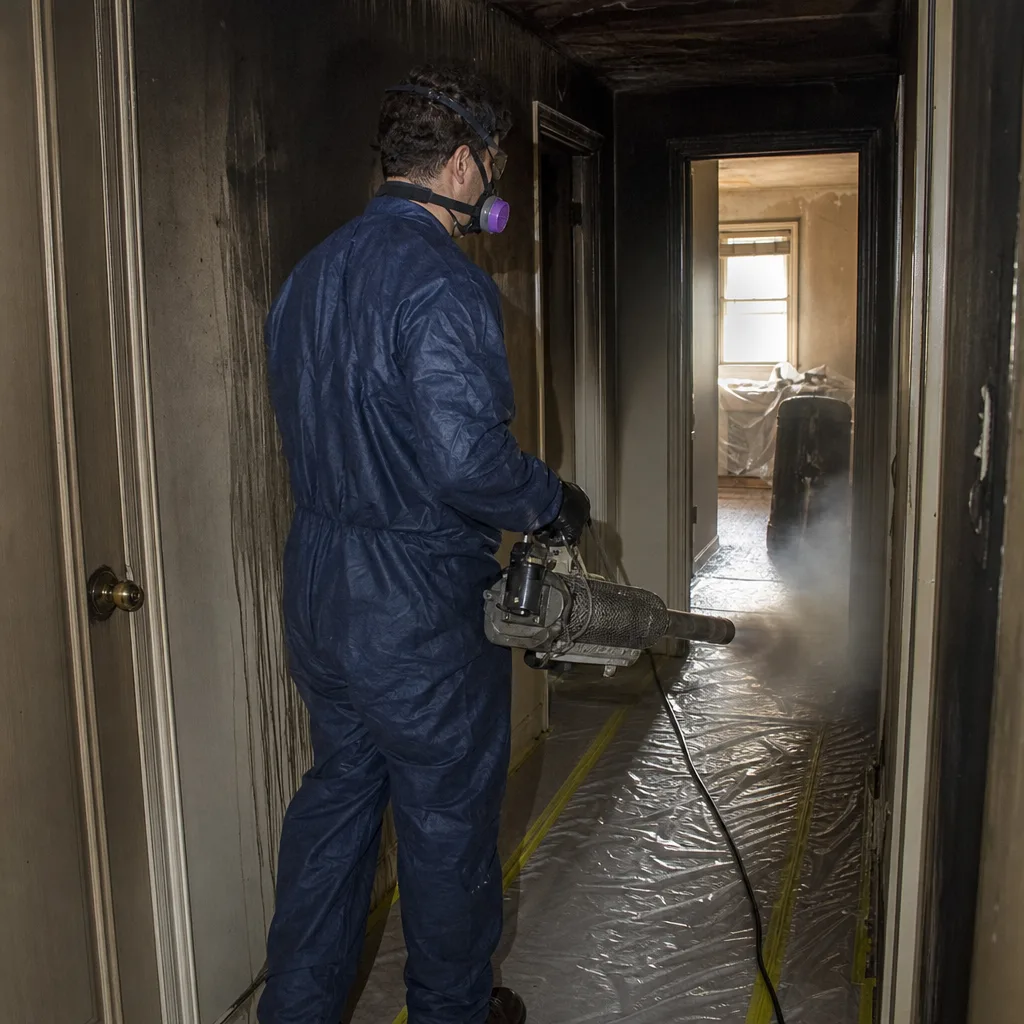
Lower East Side basements often sit below the storm surge line, and they’re reached through narrow entrance ways that limit equipment size. We use portable extraction units and lay-flat hoses that get down the stairwells, then place air movers and dehumidifiers sized for the space. Sub-grade concrete and rubble stone foundations need targeted drying, not just surface airflow.
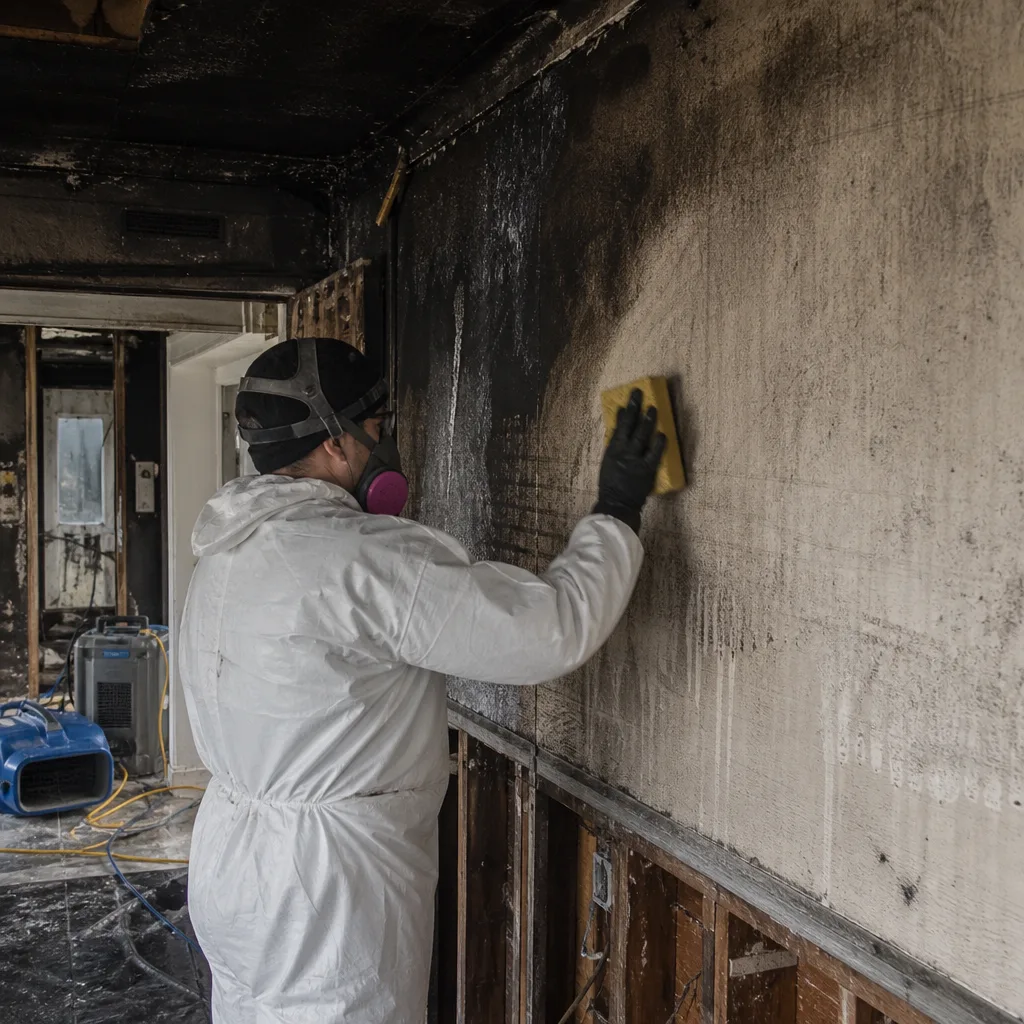
Ceiling & Roof Leak Water Damage
Flat tenement roofs pond water, and when a membrane fails, the water finds the airshaft and runs vertically down the exterior wall, staining ceilings on every floor. What looks like a one-unit ceiling stain is usually a multi-floor cavity moisture job. We map the moisture in every floor, open only what’s needed, and dry the cavity before any ceiling repair.
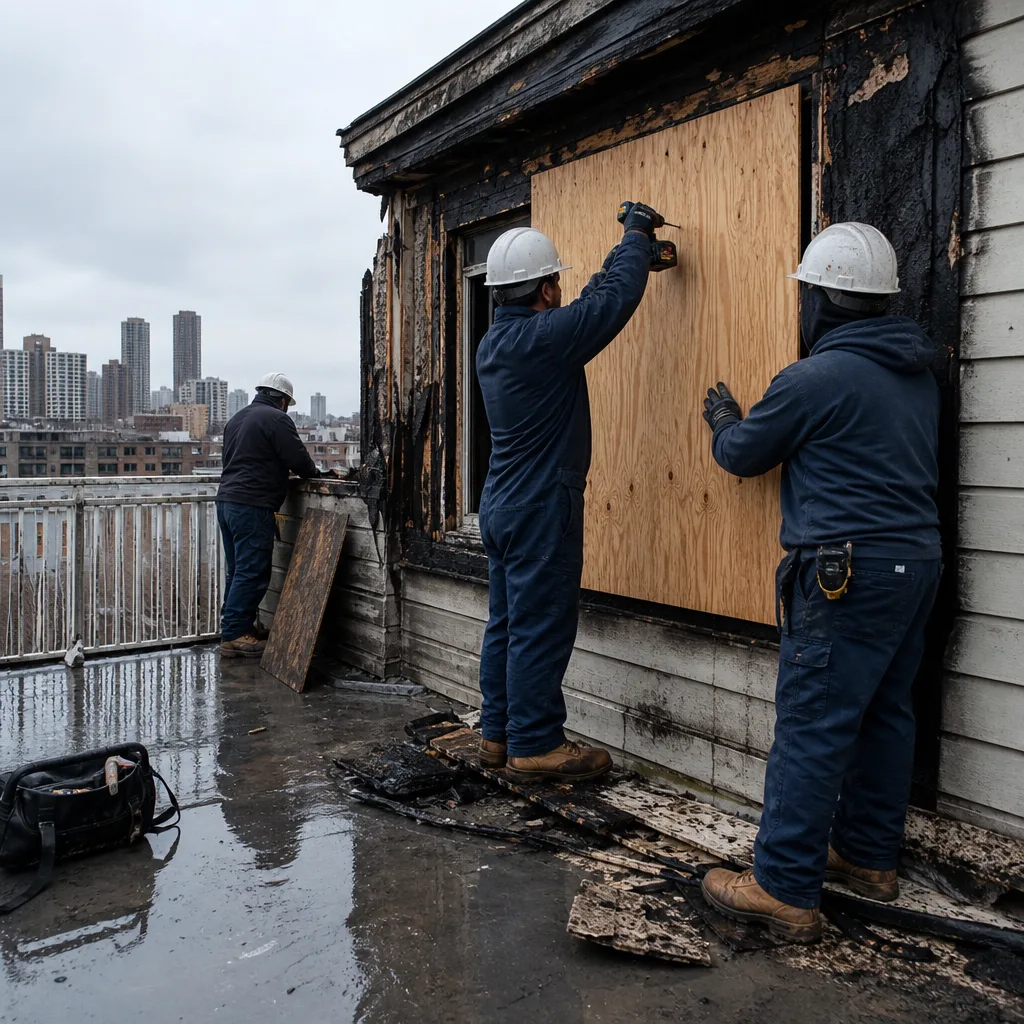
What happens when you call
- 1
A real person answersNo phone trees - you reach a local pro.
- 2
You get an upfront price rangeHonest numbers before anyone is dispatched.
- 3
A background-checked tech heads outLicensed & insured, dispatched right away.
- 4
You approve before work beginsNothing starts until you say go.
Water Damage Restoration Costs in Lower East Side, NY
A single-unit ceiling leak with contained drying in a Lower East Side tenement typically runs $900 to $2,600. A burst supply line affecting multiple units, with extraction, cavity drying, and plaster repair, usually lands between $3,500 and $9,000 depending on how many apartments are wet. Full Category 3 flood cleanup in a flood zone AE basement starts around $4,000 and climbs with square footage and contamination level. Asbestos and lead testing required before any demolition in pre-1920 buildings adds $500 to $1,500, and that’s mandatory, not optional. What moves the number most is time: the longer water sits in plaster and wood, the more we have to open and replace. Our free visual inspection gives you a firm written scope before any dollar is committed, and we bill your carrier directly on covered losses. Call (917) 924-4221 for an exact quote.
We Also Serve Cities Near Lower East Side
Our crews regularly run calls in Fairview, Harrison, East Bronx, and Hunts Point, bringing the same 45-minute response commitment and same live-answer dispatch. If your property sits in a neighboring area, the phone is answered the same way: a real person, any hour, at (917) 924-4221.
Serving Lower East Side, NY - Our Local Coverage Area
We’re based in the Lower East Side area and know this community well. Use the map below to see our service coverage - if you’re nearby, we can almost certainly help.
Lower East Side Water Damage Restoration Questions, Answered
Why does water damage restoration on the Lower East Side require asbestos and lead testing before we start?
Because the overwhelming majority of Lower East Side tenement buildings were built before 1920, and federal and city regulations require testing for asbestos in plaster, pipe insulation, and flooring, and for lead in paints, before any demolition or wall opening begins. Floodline handles this the minute the scope calls for cutting into a wall: we schedule a licensed inspector, and no invasive work starts until the lab results are back. This legal gate protects residents and workers, and it’s a step a generic restoration company may skip, which creates liability down the line. Call (917) 924-4221 if your building’s age is uncertain, and we’ll walk you through what the requirements are for your block.
How does the salt air near the East River affect water damage in LES buildings?
Salt air corrodes galvanized drain lines and cast iron supply pipes far faster than the same materials inland, which means hidden pinhole leaks inside shared tenement walls are a signature Lower East Side failure. The water from these slow leaks saturates horsehair plaster cavities for weeks or months before anyone sees a stain, and by then the moisture has usually spread into adjacent units. That’s why we run moisture mapping across wall cavities even when the visible damage looks small. If you smell mustiness or see paint blistering with no obvious spill, call (917) 924-4221 and we’ll check the walls before the damage compounds.
What happens when a pipe bursts in one LES tenement unit - do neighbors get involved?
Almost always, yes. In shared-wall tenement construction, a burst supply line in one apartment sends water down the riser, through the floor assembly, and into the unit below, while lateral spread through horsehair plaster wets the apartments on either side. We responded to a burst supply line in a 1908 tenement on Rivington Street and found water had traveled down the airshaft into four adjacent units, wicking through horsehair plaster. Our crew set up containment, ran moisture mapping across six apartments, and used Dri-Eaz LGR dehumidifiers and air movers to pull the moisture readings back to pre-loss condition before any antimicrobial treatment. That’s the normal pattern, not the exception, so we always check neighboring units as part of a standard response. Call (917) 924-4221 immediately after a burst and we’ll contain the spread before it becomes a building-wide claim.
How do you handle floodwater from the East River in a basement on the Lower East Side?
East River floodwater is Category 3 water, meaning it carries bacteria, salt, and contaminants that require disinfection after extraction. In FEMA flood zone AE basements, we pump out the standing water, remove contaminated porous materials, disinfect the masonry, and then run a full structural drying cycle with daily moisture readings. Saltwater from Sandy-era floods left long-tail corrosion in many LES foundations, and we treat each coastal flood call with that history in mind. Call (917) 924-4221 as soon as the water is noticed, because the salt and contamination start doing structural damage immediately.
Why do ceiling stains in LES tenements often turn into multi-floor jobs?
Because tenement airshafts, mandated by the 1901 Tenement House Act, act as vertical water highways. A roof leak or condensate runs down the shaft and wicks laterally into the exterior walls of every floor it passes. By the time a stain shows on one ceiling, the moisture behind the plaster often extends through several units above and beside it. We moisture-map the whole shaft path before writing a scope, which is why a call that presents as a single ceiling stain routinely becomes a four-to-six-unit hidden cavity drying job. Call (917) 924-4221 and we’ll trace the water honestly before any wall is opened or any ceiling patched.
How fast can someone actually get to the Lower East Side?
Our dispatch board targets 45 minutes from the time you call (917) 924-4221 to the time a crew is on site in the Lower East Side. Water spreads through plaster and wood in that first hour faster than most people realize, so the 45-minute commitment is not a sales line, it’s how we minimize the final invoice. A live dispatcher picks up at any hour, confirms the address, and sends the nearest available certified crew.
Will my insurance cover this, and who deals with my adjuster?
In most Lower East Side tenement and co-op scenarios, water damage from burst pipes, roof leaks, and storm flooding is covered under the building’s policy or the unit owner’s policy depending on the source and the governing documents. We document the loss from the first hour with photos, moisture logs, and a written scope, then communicate directly with your adjuster so you’re not relaying messages between us and the carrier. We bill the carrier directly on approved claims. Call (917) 924-4221 and we’ll tell you honestly what the coverage picture looks like once we see the damage.
What should I do in the first 30 minutes before your crew arrives?
Shut off the water source if you can do so safely, and kill the power if water is near outlets or the electrical panel. Move small valuables and furniture out of standing water if it’s safe. Don’t use a household vacuum to remove water, and don’t pry open walls or lift carpet that’s soaked through; plaster and wiring in old tenement walls are unpredictable. Take photos of everything for the claim. Then call us at (917) 924-4221 and stay out of the wet area until our crew arrives.
Written by Curt Bowman, Owner at Floodline Restoration Co. of Manhattan. Founded in 2010, we’ve spent over 42 collective years answering water damage calls across New York City and stand behind every job with the 90-Day Done Right Promise.