
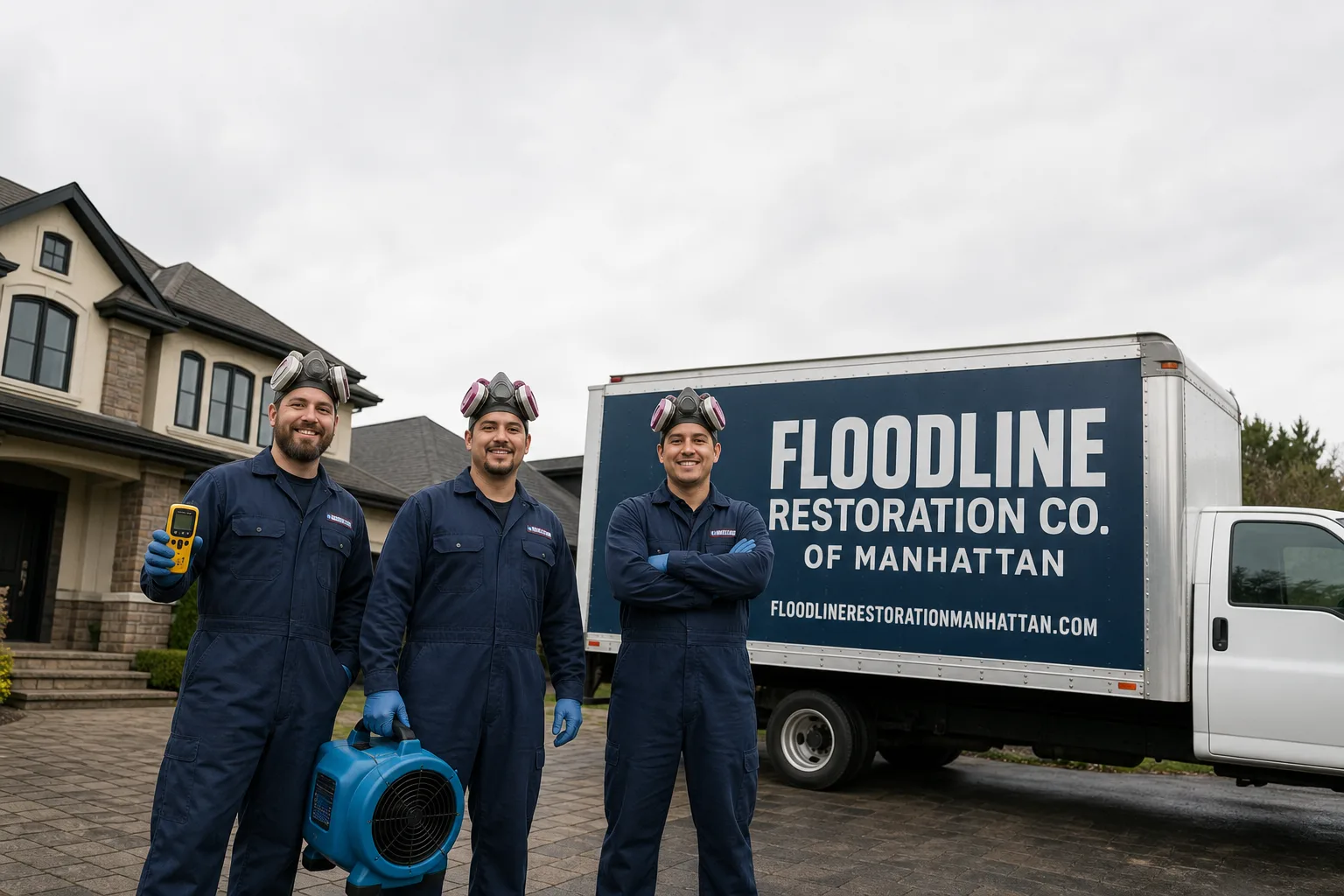
Free visual inspection and a written scope of work before any mitigation begins - photos, moisture readings, and drying logs go in your claim file
The scope we write is the scope we bill. Anything new gets shown to you, in writing, before we touch it.






 Before
 After
After Before
 After
After Before
 After
After24/7 Emergency Water Damage Restoration in New City
Water damage restoration in New City, NY typically runs $2,800-$7,500 for a standard basement extraction with structural drying, and most jobs are started the same day you call. When water is moving through a split-level or colonial off Little Tor Road, every hour it sits adds cost: delamination climbs, drywall wicks higher, and mold colonization begins inside 48 to 72 hours. Floodline Restoration Co. of Manhattan answers live at (917) 924-4221 around the clock, and a certified crew can be dispatched into New City within 45 minutes. The first visual inspection is free. We walk the damage, log the moisture readings, and map the water’s path before a single air mover goes down.
Speed matters here more than in flatter towns. New City’s hilly, wooded lots steer runoff toward foundations, and the clay-heavy glacial soil holds that water against basement walls longer than a homeowner expects. Water does not just sit on the slab; it works into the finished lower tier of a split-level, behind baseboards, and under the vapor barrier before anyone notices the carpet is wet. Getting extraction running the same visit is what stops a $3,000 cleanup from becoming a $15,000 rebuild. Our dispatch is a real person at 2 a.m., not a phone tree.
Understanding Water Damage Restoration Severity in New City Properties
Not all water in a New City basement is the same, and the difference determines everything about how we dry, what we cut out, and whether containment is required. The restoration trade classifies water into three categories. Category 1 is clean water from a burst supply line or an overflowing tub. Category 2 carries significant contamination; think a failed sump pump that has been recirculating groundwater with soil bacteria for days. Category 3 is grossly contaminated: sewer backups, nor’easter storm surge, and any water that has passed through building cavities loaded with decades of rodent or insulation debris. Most New City basements in 1960s and 1970s split-levels and colonials hold mixed conditions by the time we arrive, because finished walls and old vapor barriers hide Category 2 migration that a homeowner reads as just a wet carpet.
Moisture mapping is the step that separates real structural drying from running fans and hoping. We use thermal imaging and penetrating moisture meters to read wall cavities, subfloor, sill plates, and that lower-level family room tier that is partially below grade. In New City’s older stock, original drains are often Orangeburg or clay tile, silted and collapsed. Water does not leave through them; it rises through them. Structural drying means we set equipment based on measured grain depression, not a guess. For a 1960s ranch on a crawlspace off Germonds Road, that means checking the crawlspace vapor barrier and rim joists before the living space is even discussed.
Why New City Property Owners Choose Floodline Restoration Co. of Manhattan
- 45-minute response commitment. Crews dispatched into New City from our metro office arrive fast, with extraction equipment on the truck, not ordered in after the fact.
- Live answer, 24 hours a day, every day. A dispatcher picks up the phone at any hour. You will not leave a message, and a human will tell you when the crew is rolling.
- IICRC-certified crews. Our technicians hold WRT, FSRT, and AMRT certifications from IICRC, RIA, and IFA. Background-checked and uniformed, on every job.
- Free visual inspection. We walk the loss, map the damage, and give you a written scope before any work begins. No obligation.
- Direct insurance billing. We photograph everything, log every reading, and communicate with your adjuster. You do not play messenger between us and the carrier.
- One team from extraction to reconstruction. The same Floodline crew that pulls the water dries the structure and rebuilds what has to come out. No handoff, no inherited crew, no second set of strangers.
Our Water Damage Restoration Process
Inspection & Assessment
We arrive, walk the property, and map moisture across floors, walls, and cavities with thermal imaging and penetrating meters. We classify the water, identify the source, and document everything photographically for you and your carrier.
Extraction & Stabilization
Truck-mounted extraction pulls standing water from floors, carpet, and the lower tier of split-levels where water pools first. We remove saturated materials that cannot be salvaged and stop active inflow at the source when it is accessible.
Drying & Dehumidification
Professional-grade Dri-Eaz dehumidifiers, Phoenix units, and XPOWER air movers are placed according to the moisture map, not scattered by habit. Daily readings are logged until the structure meets drying standard, which we hand to you in writing.
Cleaning & Sanitization
Affected surfaces are cleaned and treated with EPA-registered antimicrobials. For Category 3 water, we establish containment and run HEPA air scrubbers before disturbed materials spread contamination through living spaces.
Mold Prevention & Specialty Treatment
Because New City’s clay soils keep basements damp, we treat framing and sill plates with borate-based inhibitors where readings justify it. Crawlspaces get sealed, and drain issues that caused the loss are flagged for repair rather than ignored.
Repairs & Restoration
The same Floodline crew that dried the structure rebuilds it. Drywall, flooring, trim, paint, and structural repairs are done to match the original. We do not hand you a list of subs and drive away.
Need Emergency Water Damage Restoration in New City Now?
Crews minutes away, answering live 24 hours a day. The sooner we start, the less it costs.
Working With Your Insurance Company
Insurance carriers require proof. From the first hour on site, we build the file your adjuster needs: photos of the loss before anything is moved, moisture readings from the day we arrived, daily drying logs, and a line-item scope that matches industry estimating standards. We send documentation directly to your carrier and speak with the adjuster ourselves. Our crews are trained to the documentation standards carriers expect, and we bill the carrier directly so you are not fronting money waiting on a check. If the cause is a sudden pipe burst or storm, it is typically a covered loss; gradual seepage from a 40-year-old perimeter drain is often not, and we will tell you the difference plainly before a dollar is spent. The 90-Day Done Right Promise, our Keystone Standard, is in writing on every job: if it is not done right, we make it right, no arguing.
What We Provide Your Insurer
- Thorough documentation of the loss
- Photos of all damage, room by room
- Moisture readings and drying logs
- A detailed, line-item scope of work
- Direct coordination with your carrier
Built for New City’s Loss Calendar
New City’s water damage season does not follow one calendar; it follows the freeze-thaw cycles of the Hudson Valley frost corridor. January and February bring deep freezes that split copper supply lines in unheated garage ceilings and crawlspace runs under 1960s ranches off Germonds Road. When the pipe lets go, it flows until a neighbor sees ice in the driveway or the first-floor ceiling starts to sag. February and March are ice-dam season. Steep colonial roofs hold snow, the melt refreezes at the unheated eaves, and the water backs up under shingles into attics and wall assemblies. Homeowners see a ceiling stain and call about a roof leak; we find saturated insulation and a wall cavity that has been wet for three weeks.
April and May bring snowmelt and spring rain that hit New City’s clay-dense glacial soils. Groundwater rises against foundations, overloading perimeter drains that are often original Orangeburg from the Eisenhower era. Sump pumps run continuously, fail, and basements take water. June through August is thunderstorm flash-flood season, where the hilly terrain sends runoff downhill and into foundations faster than drains can move it. September through November is nor’easter season, and Nor’easters are the big one in New City: mature oaks and maples on wooded lots lose limbs, limbs open roofs, and wind-driven rain enters through the breach. We stage drying equipment in the area from November through April, because we know the calls are coming.
Water Damage Restoration Across New City’s Neighborhoods
New City is not one housing type; it is a patchwork of post-war through 1980s development, and each pocket has its own failure signature. Off Phillips Hill Road, the 1970s colonials sit on larger, wooded lots where mature trees crowd the rooflines. Ice dams and gutter blockages are constant there, and finished basements take water when the original sump pits rust through. Along Little Tor Road and the streets running off it toward Zukor Park, split-levels dominate. Those homes flood in the lower-level family room first, below grade on one side, and the water rises through wall-to-wall carpet and paneling that hide the damage until mold is established. Near Germonds Road and the older sections toward Bardonia, 1960s ranches on crawlspaces face a different problem: rim joists and vapor barriers that were never detailed for groundwater, and drain lines that have been silted for years. When we run a call on a crawlspace ranch, we check under the house before we touch a drywall nail.
Around Zukor Park and the neighborhoods off South Mountain Road, stormwater moves fast down the hills, and drainage swales are often undersized for what the weather delivers now. Basements there can take water from three directions: surface runoff at the walkout, groundwater at the rear foundation wall, and a failed sump pump in between. Our response routes in New City are built around these patterns. We know which streets fight groundwater and which fight ice dams.
Specialized Water Damage Restoration Services We Offer in New City
Emergency Water Extraction
When a pipe bursts or a basement floods at midnight, extraction has to start immediately, not in the morning. Our crews arrive in New City with truck-mounted extraction and pump systems, pull the standing water, and set the first drying equipment the same visit. The goal is to stop the wicking line before it climbs into drywall and insulation.
Structural Drying & Dehumidification
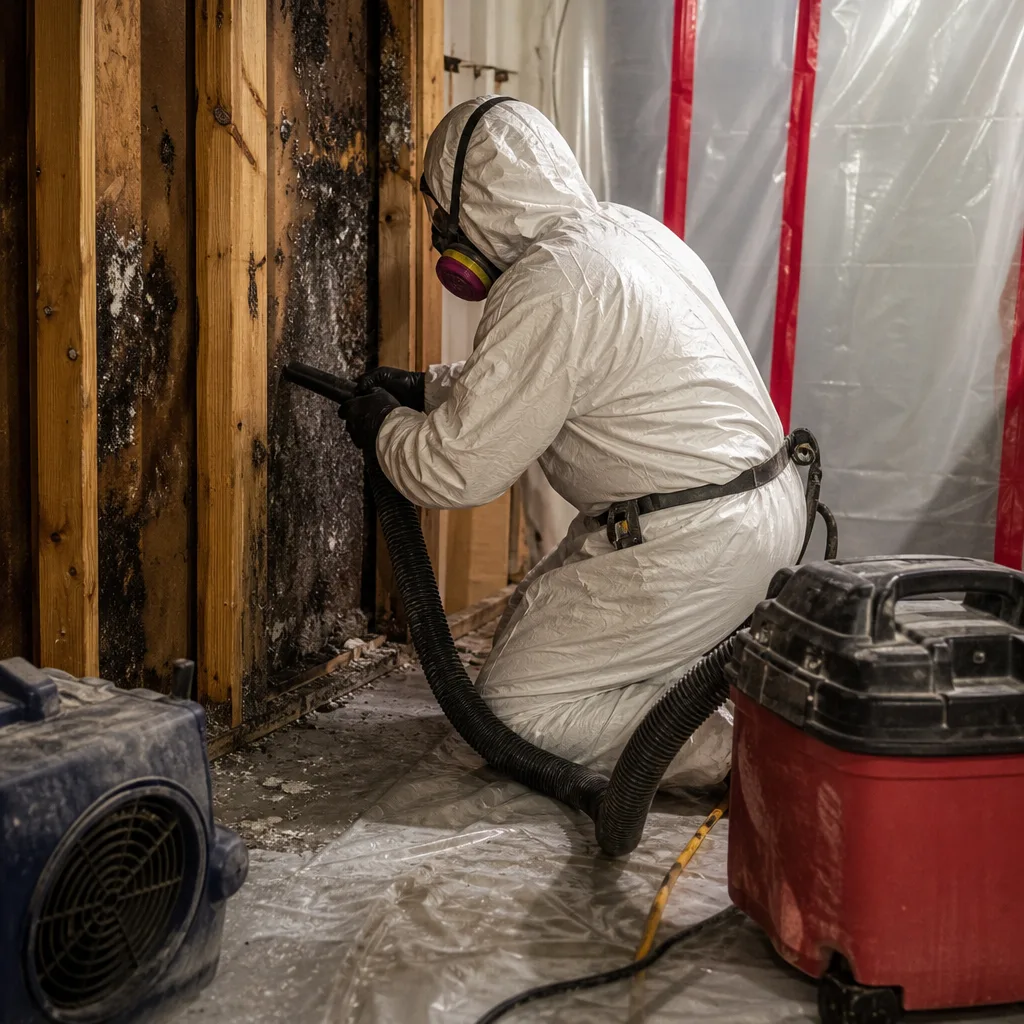
New City’s older homes hide water. A 1970s colonial off Phillips Hill Road can have a soaked wall cavity behind vinyl wallpaper and show nothing on the surface. We build a drying chamber based on a moisture map, use Dri-Eaz and Phoenix dehumidifiers with XPOWER air movers, and log readings daily. You receive the drying log; your carrier receives it too.
Flood Cleanup
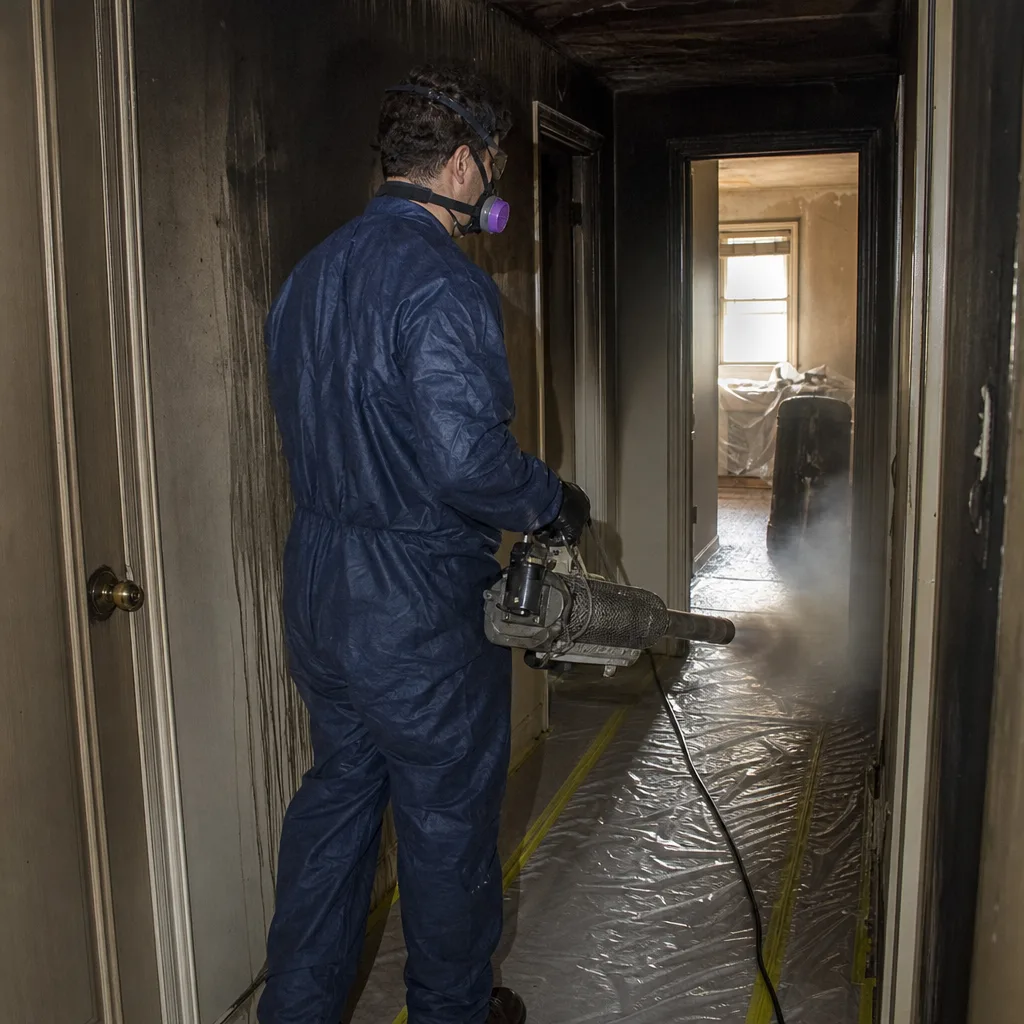
Nor’easter and snowmelt flooding in New City is rarely Category 1. Groundwater picks up soil bacteria, lawn chemicals, and whatever is in the ground before it enters your basement. We treat flood water as contaminated until testing and site conditions say otherwise, which means proper extraction, disposal of saturated porous materials, and sanitization before reconstruction.
Burst Pipe Restoration
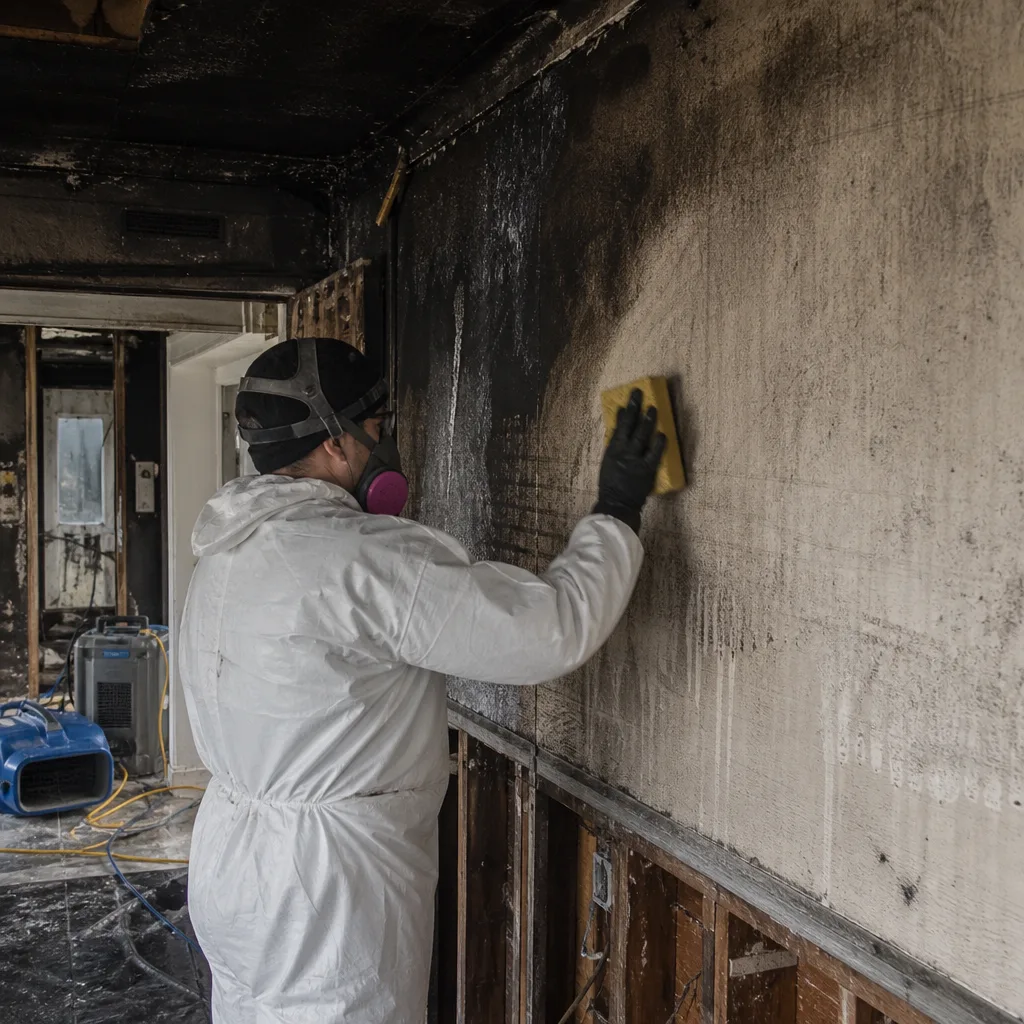
A frozen supply line that lets go inside a wall can run for hours before anyone notices. By then, water has traveled along joists, pooled in the ceiling below, and soaked the insulation. We trace the water path with thermal imaging, open only what has to be opened, dry the cavity, and reconstruct. The fix is not just drying the puddle; it is finding every path the water took.
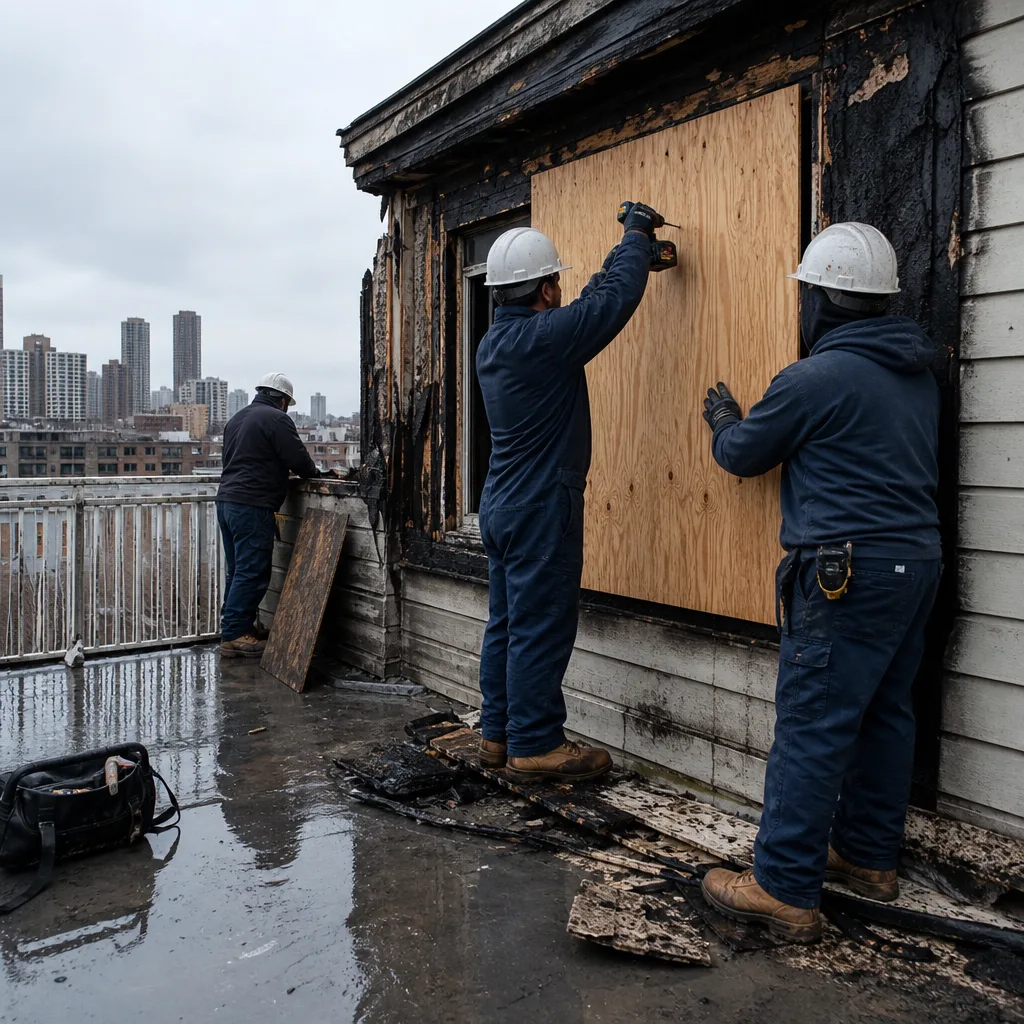
Basement Water Removal
New City basements flood from sump failures, groundwater, and failed drains. The key is knowing what the water is. Clean groundwater from a failed sump pump is Category 1 if caught early. A backed-up sewer is Category 3 and requires full containment. We classify, extract, dry, and then fix the drainage problem so the next storm does not repeat the loss.
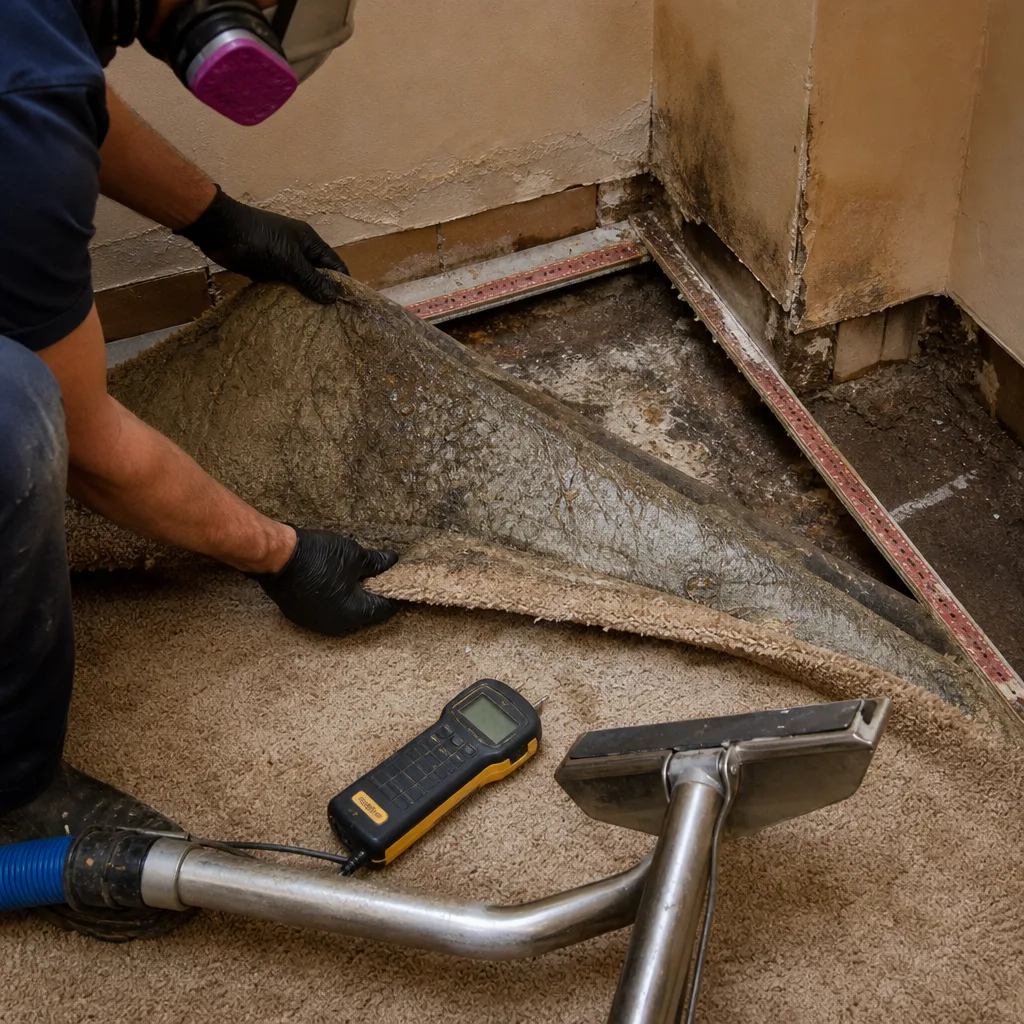
Ceiling & Roof Leak Water Damage
Ice dams and wind-driven rain through storm-damaged roofs push water into New City attics and wall assemblies. The visible ceiling stain is usually days or weeks behind the actual leak. We open the affected area, dry the insulation and framing, and either repair the roof penetration or coordinate with a roofer to close the breach before we rebuild.
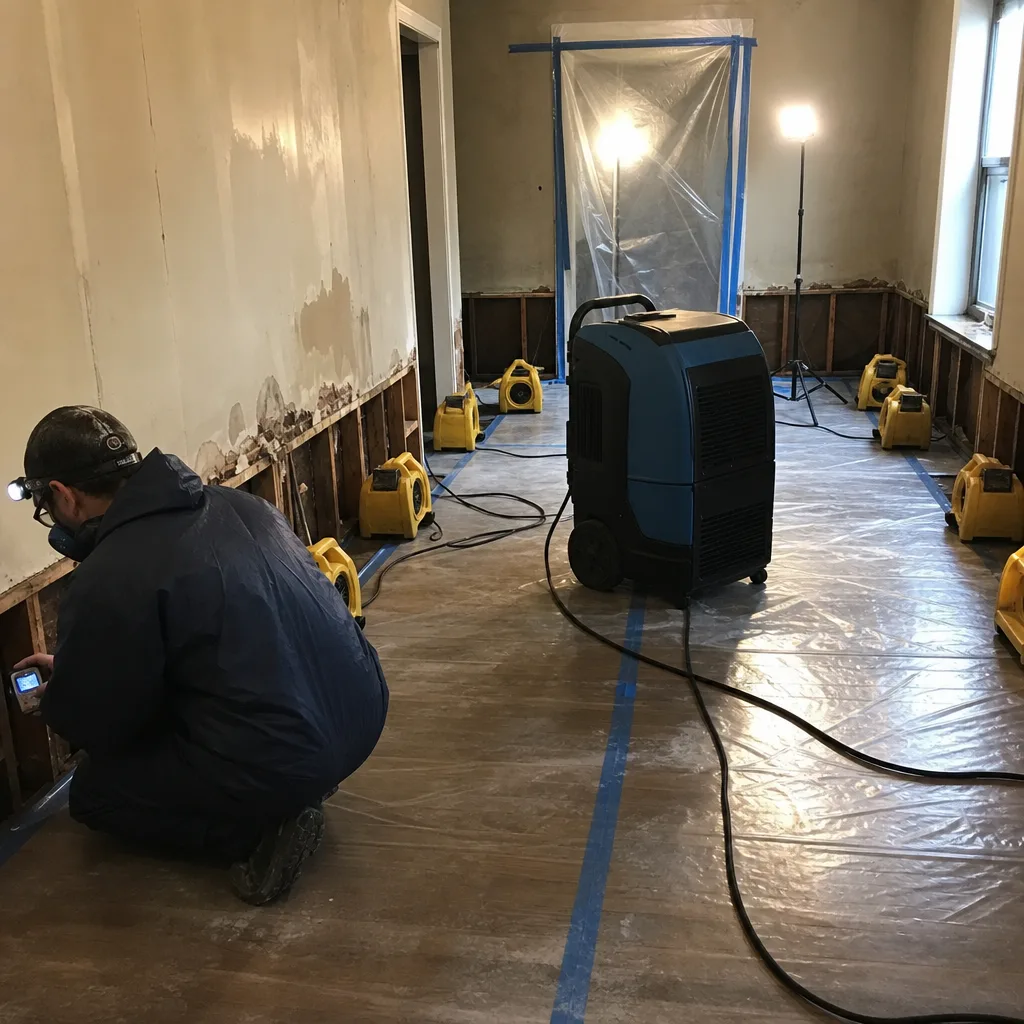
What happens when you call
- 1
A real person answersNo phone trees - you reach a local pro.
- 2
You get an upfront price rangeHonest numbers before anyone is dispatched.
- 3
A background-checked tech heads outLicensed & insured, dispatched right away.
- 4
You approve before work beginsNothing starts until you say go.
Water Damage Restoration Costs in New City, NY
What does water damage restoration cost in New City? For a typical finished basement extraction with structural drying, expect $2,800-$7,500. A simple Category 1 burst pipe cleanup in a bathroom or laundry may run $1,200-$2,500. A full Category 3 sewer backup requiring containment, demolition, drying, and reconstruction can push $10,000-$30,000 depending on square footage and finish level. The variables that move the price: water category, how long the water sat, how much drywall and flooring has to come out, whether mold is already present, and how much of the finished space is below grade. Our free visual inspection gets you a written, line-item scope, not a phone estimate. We bill your carrier directly when coverage applies, and the $50 Off Any Repair Over $250, the $89 Seasonal Tune-Up, and the Senior & Veteran 5% discount are always available. Call (917) 924-4221 for a firm number.
We Also Serve Cities Near New City
Our crews respond throughout Rockland County. In addition to New City, we regularly serve New City neighbors in Congers, Valley Cottage, Spring Valley, and Nanuet. Same live dispatch, same 45-minute response commitment, same written scope before work starts.
Serving New City, NY - Our Local Coverage Area
We’re based in the New City area and know this community well. Use the map below to see our service coverage - if you’re nearby, we can almost certainly help.
New City Water Damage Restoration Questions, Answered
Why do split-level homes in New City flood in the lower-level family room first?
The lower tier of a split-level sits partially below grade, so groundwater and surface runoff enter there before any other room. The family room floor is often two or three feet below the exterior grade, and the original drain tile runs alongside it, not under it. When that drain saturates or collapses, hydrostatic pressure pushes water through the wall and up through the slab at the family room level. By the time water is visible on the upper floors, the lower tier has been wet for hours. We moisture-map that tier first on every split-level call in New City.
What’s the protocol for a flooded basement in New City when the original sump pit is over 40 years old?
Extract first, then evaluate the pit. If the original steel or clay pit has rusted through or collapsed, no pump will keep up with groundwater, and drying the basement is temporary. We remove water, map the moisture, start structural drying, and then quote a sealed basin replacement with a cast-iron check valve where the pit has failed. The drying and the drainage fix have to happen together, or the next storm undoes the first job.
How do ice dams on New City colonial roofs cause indoor water damage that isn’t visible from outside?
Ice dams form when snow melts over the heated attic, runs to the unheated eaves, and refreezes. The dam grows, and water backs up under the shingles. It then travels along the roof deck, soaks the insulation, and runs down inside the wall cavity. The first visible symptom is usually a ceiling stain in a corner, far from the actual entry point. By then the wall cavity has been wet for days. We trace the water path with thermal imaging and moisture meters before opening the wall.
How do they decide whether water in a New City basement is clean, grey, or black?
We identify the source and the water’s path. A fresh burst supply line is Category 1. Water that has sat, or run through a failed sump that has been recirculating groundwater for days, is Category 2. Sewer backup, any water with visible solids, or storm water that entered through a contaminated exterior breach is Category 3. Category 3 requires containment and HEPA air scrubbing because drying equipment does not distinguish contaminants; it spreads them. We classify before we set a single air mover.
What’s the proper drying setup for a crawlspace under a New City ranch built in the 1960s?
A crawlspace under a 1960s ranch is a different drying problem from a finished basement. We remove standing water, then pull the wet vapor barrier back to expose the soil and rim joists. Dri-Eaz LGR dehumidifiers are placed inside the crawlspace with air movers directed at the rim joists and sill plates, not at the open soil. Daily readings on wood moisture content, not just relative humidity, tell us when the structure is dry. Then the barrier gets reinstalled or replaced, and any groundwater entry through the foundation wall is addressed so the crawlspace does not re-saturate.
How fast can someone actually get to my house in New City?
Our commitment is 45 minutes to dispatch into New City, around the clock. A live dispatcher answers at (917) 924-4221, and the crew rolls with extraction equipment on the truck. We do not send a salesperson first and a crew later. The first visit is inspection and extraction in the same trip.
Will insurance cover water damage restoration in New City?
Sudden and accidental losses are typically covered: a burst pipe, a storm-damaged roof, a nor’easter that pushed water through a window. Gradual seepage from an old perimeter drain or a sump pump that has been failing for months is often not covered. We photograph everything from the first hour and document the cause plainly. We also bill the carrier directly and speak to the adjuster ourselves, so you are not interpreting a policy at 3 a.m.
What should I do in the first 30 minutes after I notice water damage in New City?
Call us at (917) 924-4221, shut off the water at the main if the source is a plumbing leak, and do not enter standing water if it is near electrical outlets or appliances. Leave the water alone; moving furniture or pulling carpet can spread contamination and destroy evidence your insurer needs. We will be there fast, and we handle the rest from extraction through Water Damage Restoration and rebuild.
Written by Curt Bowman, Owner at Floodline Restoration Co. of Manhattan. Founded in 2010, serving New City with certified crews, direct insurance billing, and the 90-Day Done Right Promise in writing on every job.