
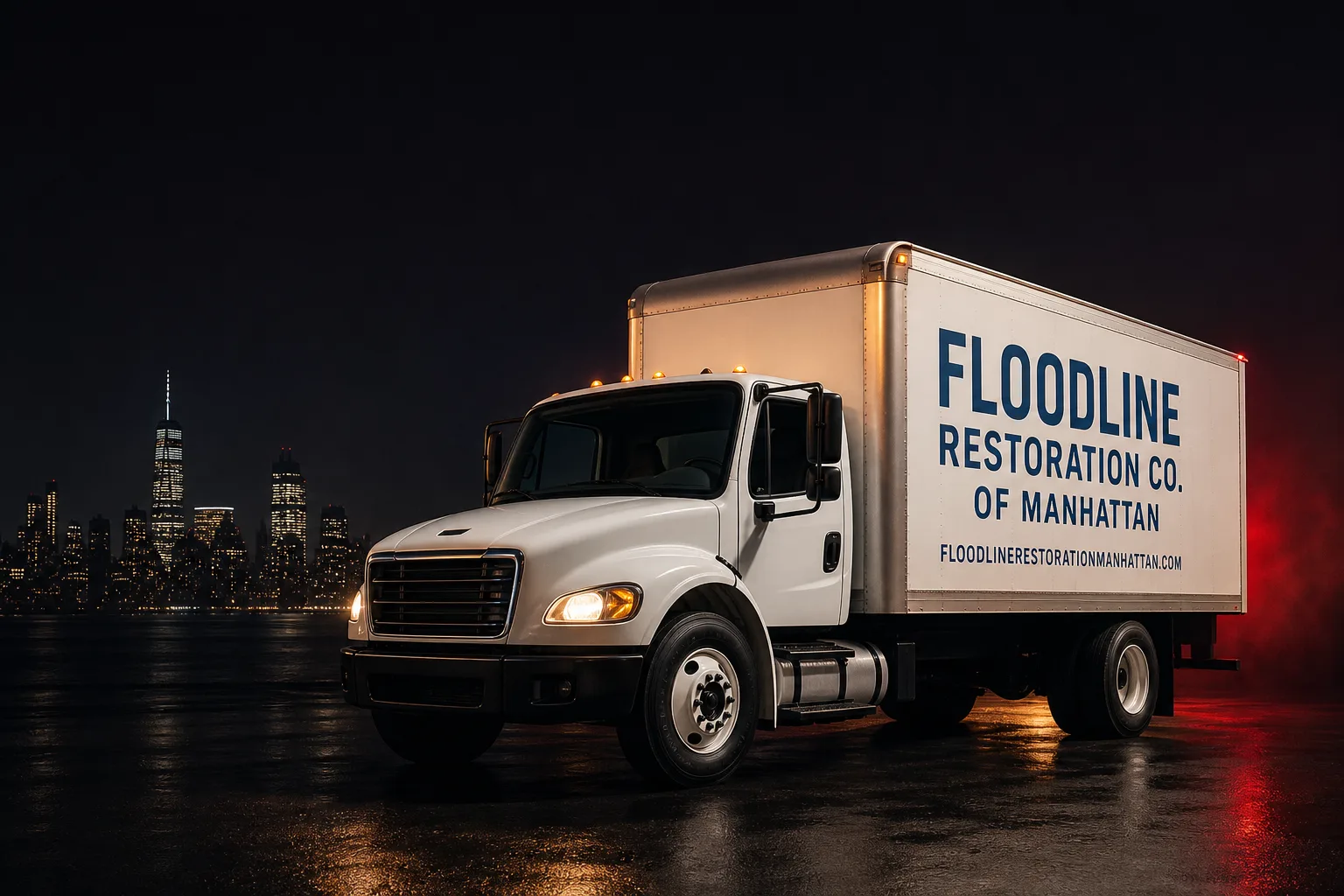
Free visual inspection and a written scope of work before any mitigation begins - photos, moisture readings, and drying logs go in your claim file
The scope we write is the scope we bill. Anything new gets shown to you, in writing, before we touch it.






 Before
 After
After Before
 After
After Before
 After
After24/7 Emergency Water Damage Restoration in Plandome Heights
Water damage restoration in Plandome Heights means acting within the first hour, not the first day. Floodline Restoration Co. of Manhattan answers live at (917) 924-4221 around the clock, every day of the year. A dispatcher picks up at 2 a.m., hears what happened, and gets a certified crew rolling toward Plandome Heights while you’re still on the line. Most jobs get extraction equipment running the same visit. That speed matters on Manhasset Neck, where nor’easter surge and tidal flooding from Manhasset Bay can push Category 3 water into basements and crawlspaces on Bayview Road, Brookwold Drive, and South Drive. We do a free visual inspection, set up containment where it’s needed, and start pulling water before it soaks deeper into plaster, timber, and millwork. Every hour of standing water raises the cost of restoration and the chance that original materials in a 1920s estate home can’t be saved.
Understanding Water Damage Restoration Severity in Plandome Heights Properties
Water damage in Plandome Heights splits into three categories, and the distinction drives every decision our crew makes. Category 1 is clean water from a burst supply line or failed appliance connector. Category 2 carries contaminants, think washing machine overflow or sump discharge. Category 3 is grossly contaminated: bay water, sewage, or ground flooding that’s picked up whatever sat in the soil. Nor’easter surge on Manhasset Neck is almost always Category 3, which means antimicrobial treatment, controlled removal of saturated porous material, and containment before any structural drying begins. We use moisture mapping with thermal imaging and penetrating meters to track water migration through lime-plaster walls, old-growth floor joists, and the stone-and-brick foundations common to the village’s 1920s through 1940s Colonials and Tudor Revivals. Structural drying here is not a setting on a dehumidifier; it’s a daily-readings process run against the dry standard for each material, because forcing plaster dry too fast causes cracking and delamination that’s permanent.
Why Plandome Heights Property Owners Choose Floodline Restoration Co. of Manhattan
- 45-minute response commitment: We’ll be there when we say. Crews dispatch from the metro office and reach Plandome Heights fast, because standing water on a plaster-walled estate does more damage every half hour it sits.
- 24/7 live answer, never an automated system: A real person picks up the phone at any hour. No call trees, no “leave a message and we’ll get back to you.”
- IICRC-certified crews, WRT and ASD trained: Our water damage technicians hold Water Restoration Technician and Applied Structural Drying certifications, plus RIA and IFA training. They understand Category 3 protocols and plaster drying curves.
- Free visual inspection: We look before we quote. You get a written scope of work before anything starts, so there are no surprises on the bill.
- Direct insurance billing: We document from the first hour, talk to your adjuster directly, and bill the carrier. You don’t play messenger between Floodline and the insurance company.
- One team from extraction to reconstruction: The same certified crew that reads the moisture map on day one handles daily readings, hands you and your carrier the log, and rebuilds what needs rebuilding. No mid-job handoff.
Our Water Damage Restoration Process
Inspection & Assessment
We start with a full visual inspection plus moisture mapping using thermal imaging and penetrating meters. This identifies hidden water behind plaster, under cabinetry, and inside wall cavities before we move a single piece of furniture. You get a written scope and a straight answer about what’s salvageable.
Extraction & Stabilization
Submersible pumps and truck-mounted extraction pull standing water fast. For Category 3 floodwater from Manhasset Bay or a sewer backup, we set up containment and remove saturated porous materials like carpet, pad, and damaged plaster courses before drying begins.
Drying & Dehumidification
We position Dri-Eaz and Phoenix air movers, XPOWER fans, and B-Air dehumidifiers based on the moisture map, not guesswork. Daily readings track progress against the dry standard for each material. On lime-plaster walls, we hold the drying curve careful and steady to avoid surface cracking.
Cleaning & Sanitization
HEPA air scrubbers run through the affected space while we clean salvageable surfaces. For Category 3 water, antimicrobial treatment is applied to framing and surviving plaster before anything gets sealed back up. We log every step for your insurer.
Specialty Treatment for Historic Materials
Plandome Heights estate homes have old-growth timber, built-in cabinetry, and bespoke millwork you cannot replace at a lumberyard. We treat these materials with care: slow drying, targeted drying mats for floors, Injectidry systems for wall cavities, and salvage-first decisions on every piece of original wood.
Repairs & Restoration
Once the moisture log shows the dry standard is met, the same crew handles reconstruction. Plaster repair, period trim matching, flooring, painting. We rebuild what was removed and hand you the finished space with the 90-Day Done Right Promise in writing.
Need Emergency Water Damage Restoration in Plandome Heights Now?
Crews minutes away, answering live 24 hours a day. The sooner we start, the less it costs.
Working With Your Insurance Company
Most Plandome Heights water damage claims involve a homeowner who never expected to need flood coverage and an adjuster who’s never seen a lime-plaster wall up close. We handle both. From the first hour on site, we photograph every affected room, log moisture readings, and document the condition of original materials before anything moves. That documentation matters when you’re arguing for salvage of 1930s millwork against an insurer’s default “demo and replace with drywall” math. We write industry-standard, line-item scopes that your carrier can read without a translator. Our office talks to adjusters directly, schedules re-inspections, and pushes the claim forward while you focus on your house. Direct insurance billing means Floodline gets paid by the carrier, and you get the work done right without fronting the full cost.
What We Provide Your Insurer
- Thorough documentation of the loss
- Photos of all damage, room by room
- Moisture readings and drying logs
- A detailed, line-item scope of work
- Direct coordination with your carrier
Built for Plandome Heights’s Loss Calendar
Plandome Heights doesn’t have a flood season so much as a year-round calendar of ways water finds its way in. January and February bring deep freezes that split supply lines inside uninsulated basement walls of 1920s Colonials, then thaw into slow leaks that saturate plaster before anyone notices. Spring thaw pushes groundwater up against the stone-and-brick foundations so common on Manhasset Neck, and basement seepage runs through old mortar joints. Summer convective storms drop inches of rain in an hour, overwhelming drains and sending sheet flow toward the low-lying interior lots off Bayview Road. Fall nor’easters are the big one: storm surge pushed into Manhasset Bay rides inland, and tidal flooding reaches properties that have no water view and no flood history. Winter ice dams form on the steep, multi-gabled rooflines that define the village’s Gold Coast architecture, and when meltwater backs up under original clay or slate tiles, it drips into attic framing and down through ceiling plaster. Every season has a signature loss pattern here, and our crew has seen all of them enough times to know what each one does to these particular houses.
Water Damage Restoration Across Plandome Heights’s Neighborhoods
The homeowners we serve along Bayview Road live closest to the tidal push from Manhasset Bay. Those basements see Category 3 water after a nor’easter, and the 1920s Colonials there often have original stone foundations that seep under hydrostatic pressure even without a storm surge. On Brookwold Drive and the quieter interior streets, burst pipes and appliance failures are the more common call. The housing there skews toward 1930s and 1940s construction, with plaster walls over wood lath, and a supply line break in an unheated crawlspace spreads behind the plaster fast. South Drive runs toward the western edge of the village, where mature tree canopy is densest; summer thunderstorms drop limbs onto slate roofs, puncture the decking, and let rain into attic spaces that never get opened until a ceiling stain appears. Around Plandome Road heading toward the village center, estate lots are larger, and drainage re-routing after a heavy storm sends runoff toward basement stairwells and window wells. Each area has its own rhythm, and the response route on a flooded night uses local road knowledge, not just GPS.
Specialized Water Damage Restoration Services We Offer in Plandome Heights
Emergency Water Extraction
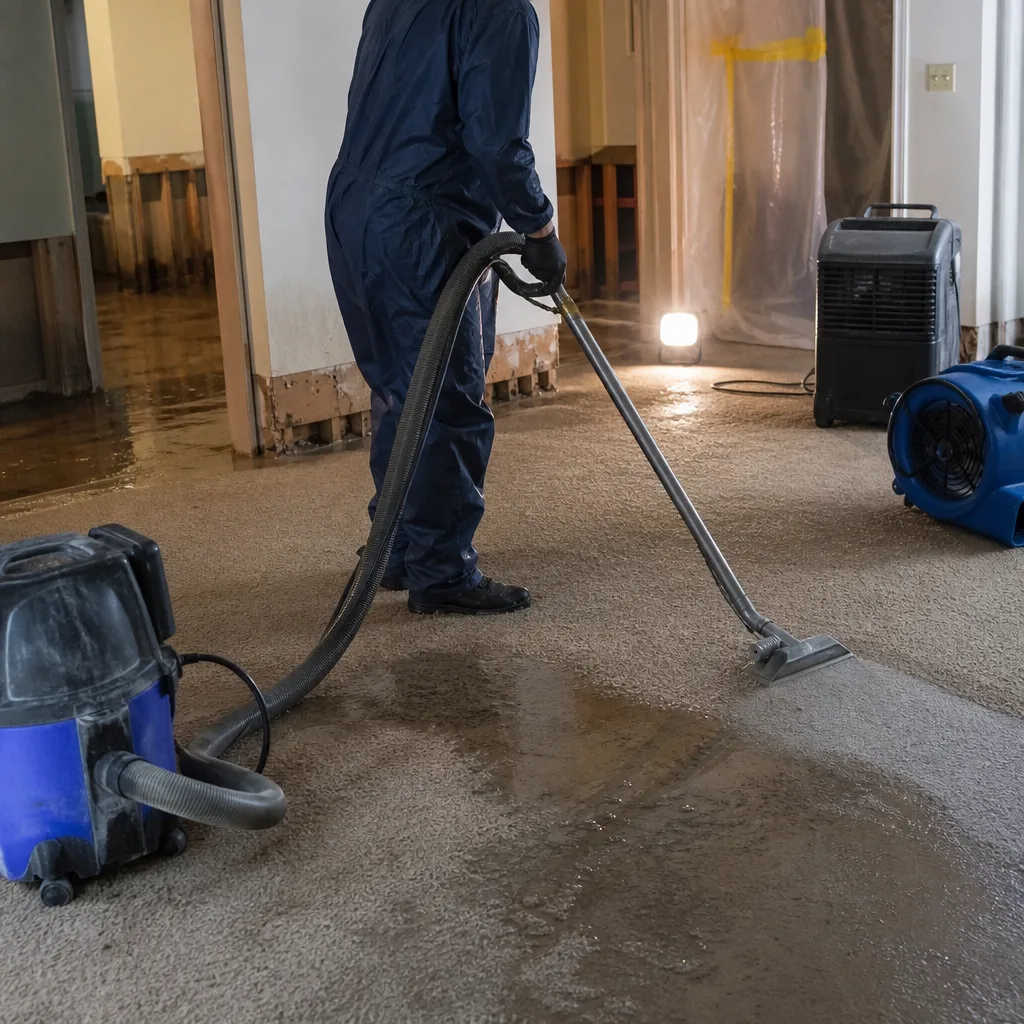
Standing water removal is the first move, and in Plandome Heights it often means pumping Category 3 bay water out of basements on Bayview Road or pulling clean water from a burst supply line before it wicks into plaster walls. We run submersible pumps, truck-mounted extraction, and wet-vac work for tight crawlspaces. The goal is simple: get the water out before it moves deeper into framing and millwork.
Structural Drying & Dehumidification
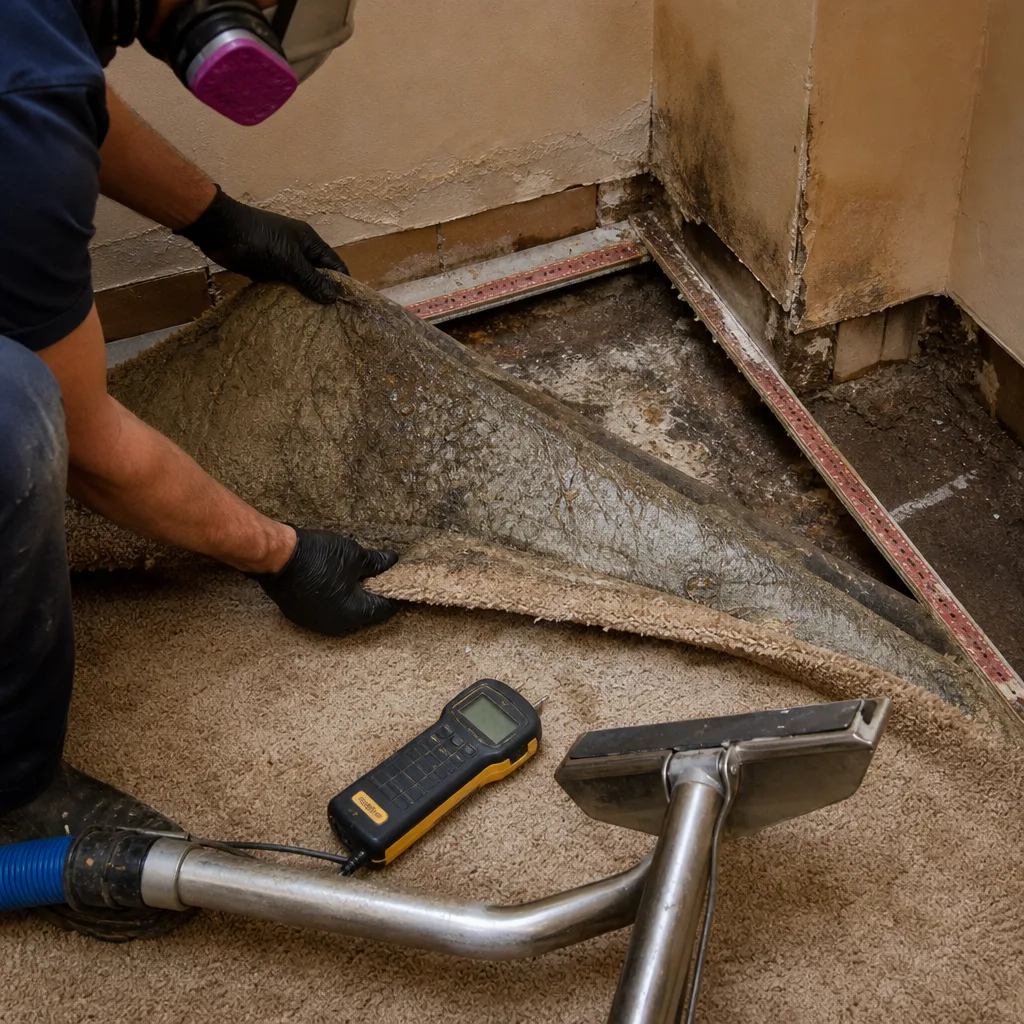
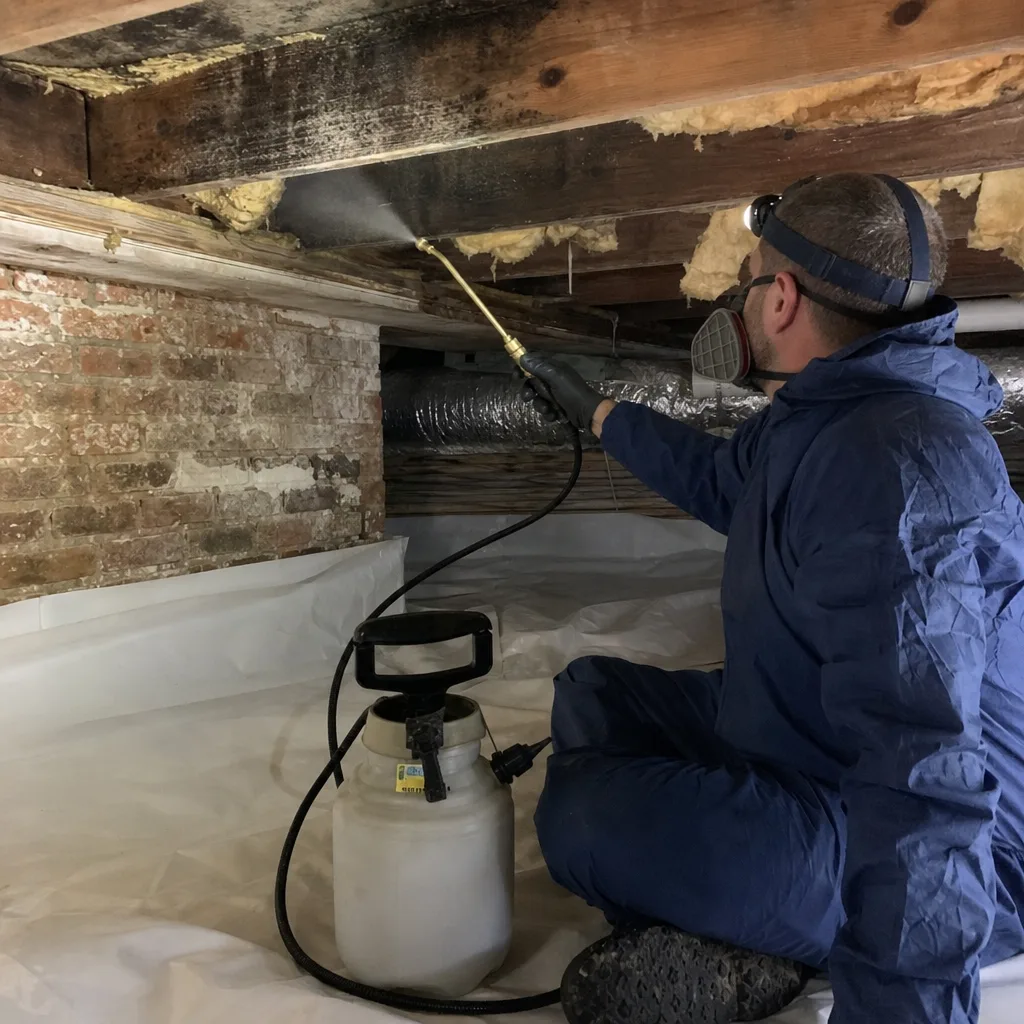
Drying a 1930s Colonial is not the same as drying a sheetrock ranch. We map moisture through plaster, lath, and old-growth joists, then set Dri-Eaz, Phoenix, and B-Air equipment on a drying plan sized to the materials, not the square footage. Daily readings and a written log document progress until the dry standard is met. On lime-plaster walls, we slow the curve so the surface doesn’t crack. Hidden cavities behind built-ins get Injectidry or targeted air movement, because missed moisture there grows mold inside 48 hours.
Flood Cleanup
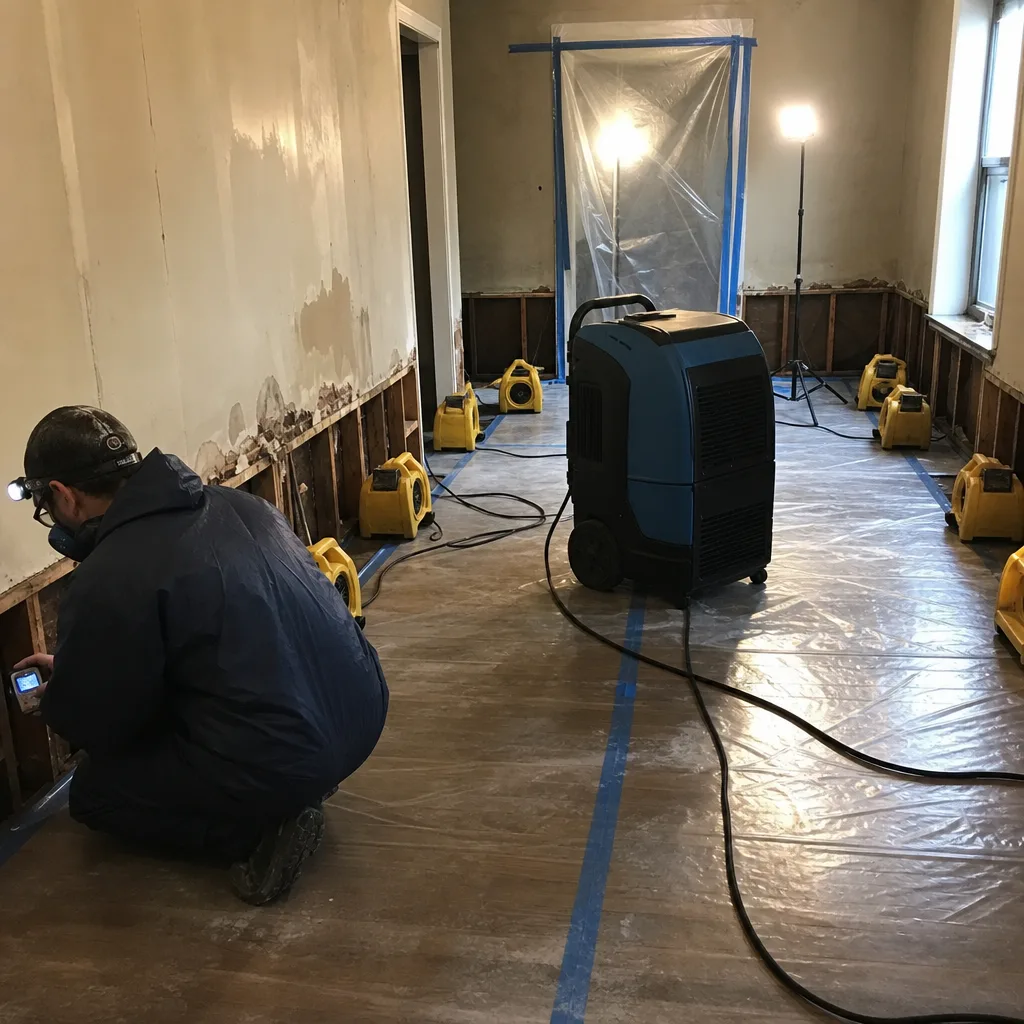
Floodwater from Manhasset Bay or storm-driven runoff is Category 3, and the cleanup protocol reflects that. We contain the affected space, remove saturated porous materials, treat surviving framing and plaster with antimicrobials, and run HEPA air scrubbers while structural drying proceeds. For the Gold Coast-era homes of Plandome Heights, flood cleanup also means a salvage-first eye on every piece of original wood: wainscoting, baseboards, stair treads, and the built-in cabinetry you can’t get from a catalog.
Burst Pipe Restoration
A freeze-split copper line in an unheated crawlspace or an old galvanized supply line that finally let go can dump hundreds of gallons before anyone notices. In Plandome Heights, that water runs under hardwood floors, soaks into plaster, and gets behind kitchen cabinetry fast. We find the source, stop it, extract what’s pooled, and dry the structure without gutting original materials unless they’re truly lost.
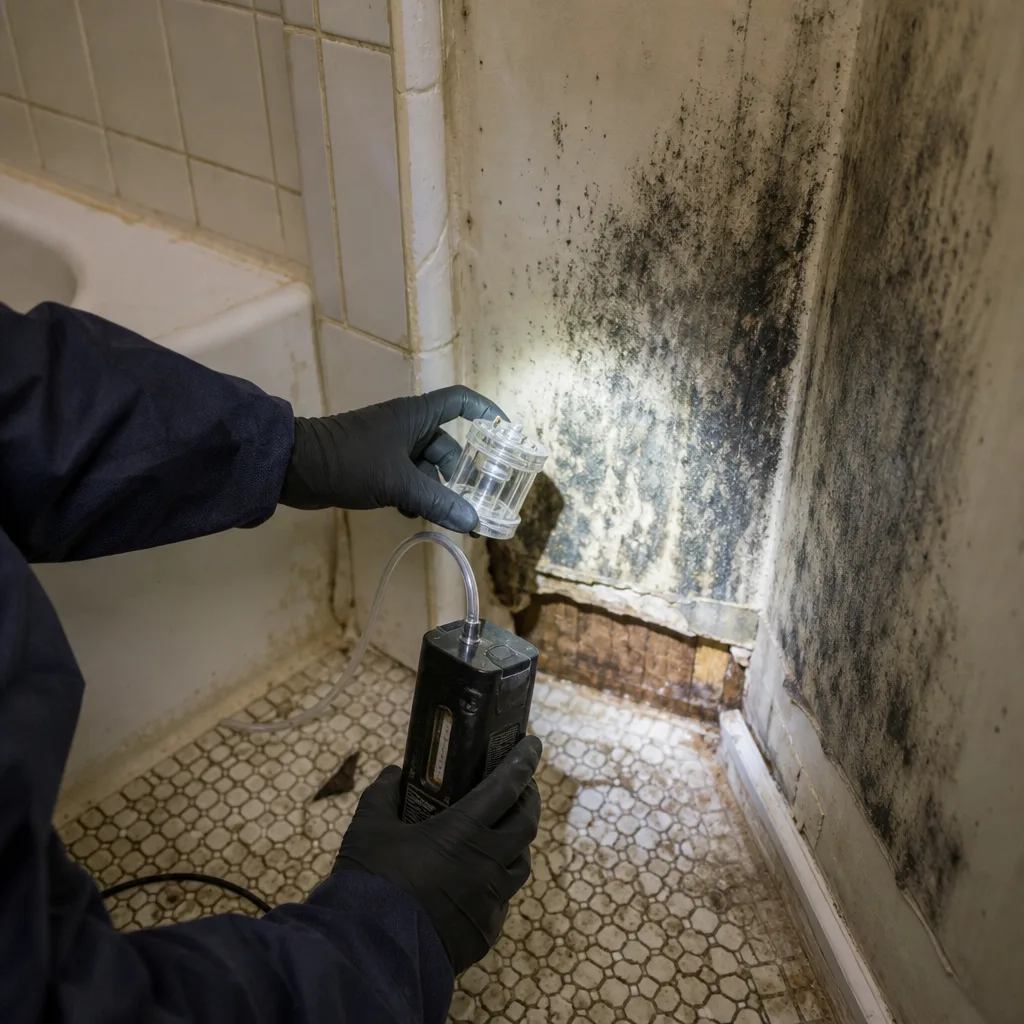
Basement Water Removal
Stone and brick foundations from the 1920s and 1930s breathe, which means groundwater and hydrostatic pressure push moisture through old mortar over time. After a hard rain or a nor’easter, that seep becomes standing water. We pump it out, position drying equipment to hit the wall bases, and give you a straight read on whether a perimeter drain or repointing is part of the fix or a separate conversation.
What happens when you call
- 1
A real person answersNo phone trees - you reach a local pro.
- 2
You get an upfront price rangeHonest numbers before anyone is dispatched.
- 3
A background-checked tech heads outLicensed & insured, dispatched right away.
- 4
You approve before work beginsNothing starts until you say go.
Water Damage Restoration Costs in Plandome Heights, NY
Expect water damage restoration in Plandome Heights to run from about $1,800 for a contained burst-pipe cleanup with extraction and drying to $12,000 or more for a Category 3 flood event that removes plaster courses, treats framing, and rebuilds a finished basement. Emergency water extraction alone typically lands between $600 and $1,500 depending on the volume and access. Structural drying with professional-grade equipment on a single room runs $1,200 to $2,800; a full basement with plaster walls and hidden cavities can exceed $4,500. Flood cleanup involving Category 3 water, containment, antimicrobial treatment, and material removal usually falls between $3,800 and $9,000 in this village, and the high end climbs when original millwork or custom cabinetry needs specialty drying. What moves the price: the category of water, how far it wicked into plaster and flooring, whether salvage materials need matching, and how long it sat before a crew arrived. Insurance covers most sudden-and-accidental losses; flood damage from storm surge only gets covered if you carry a separate NFIP or private flood policy. Our free visual inspection leads to a written scope with line-item pricing, so you know the number before work starts. Call (917) 924-4221 for an exact quote, estimates are free.
We Also Serve Cities Near Plandome Heights
Our crews work throughout the Manhasset Neck area and beyond, including Plandome Heights, Fairview, Harrison, East Bronx, and Hunts Point. If you’re a homeowner or property manager nearby and water is moving where it shouldn’t, call the same live dispatcher at (917) 924-4221.
Serving Plandome Heights, NY - Our Local Coverage Area
We’re based in the Plandome Heights area and know this community well. Use the map below to see our service coverage - if you’re nearby, we can almost certainly help.
Plandome Heights Water Damage Restoration Questions, Answered
How does water damage restoration in Plandome Heights handle the original lime plaster walls in 1920s-1940s estate homes?
We dry lime plaster on a controlled curve, never a forced-air blast. Plaster that dries too fast cracks at the surface and delaminates from its lath, and that damage is permanent. Our crews map moisture through the plaster first, then set Dri-Eaz and Phoenix drying equipment to hold a steady, moderate evaporation rate. In many cases we use Injectidry systems inside wall cavities to pull water out from behind the plaster without wrecking the face. When plaster is saturated to the point of failure, we remove only the affected lower courses and treat the framing, then match the original plaster texture and lime composition during repair. The goal is always to preserve what’s there. Water Damage Restoration on these houses is a different trade than it is on postwar construction, and we plan for that from the first reading. Call (917) 924-4221 to walk through your specific walls.
What makes floodwater in Plandome Heights different from a typical basement sump overflow?
Floodwater in Plandome Heights after a nor’easter is almost always Category 3: bay water, ground runoff, and whatever the storm carried inland. That’s a contamination risk a sump overflow from a failed pump generally doesn’t carry if the pump basin drains clean groundwater. Category 3 water requires containment, antimicrobial treatment on framing and surviving plaster, and controlled removal of saturated porous materials before structural drying. Our crew sets up containment, follows IICRC protocols, and documents every step for your insurer. Call (917) 924-4221 if you suspect bay water reached your basement.
Can my original clay tile roof be dried and repaired after an ice dam, or will I need a new roof?
Often the roof can be repaired, not replaced. Ice dams on the steep, multi-gabled rooflines of Plandome Heights push meltwater under original clay or slate tiles, and the water that reaches your ceiling usually traveled through an insulation cavity or along a rafter before it showed itself. We dry the attic structure, map the framing, and assess whether the leak came from cracked tiles, failed flashing, or overshot heating. Broken tiles can be matched from regional reclaim yards, and we coordinate that sourcing as part of the restoration. If the decking under the tiles is rotted through, that section gets rebuilt. A full roof replacement is only the answer when the field of tiles has failed broadly. Call (917) 924-4221 and we’ll give you a straight read after inspection.
Will your drying process damage the historical millwork or built-in cabinetry in my 1930s Colonial?
No, because we dry with a moisture map, not a timer. Built-in cabinetry and original millwork in Plandome Heights homes hold water behind them, and missing that hidden moisture is what leads to mold growth and unsalvageable material removal within 48 hours. Our technicians use penetrating meters and thermal imaging to find that trapped water, then position air movement and targeted drying mats to pull it out without warping the face of the wood. For wall cavities behind wainscoting or paneling, we use Injectidry systems that dry from the inside. Every piece of original wood gets a salvage-first evaluation before any removal is discussed. If you’re unsure about water that got behind a built-in, call (917) 924-4221.
How quickly do you respond to a burst pipe in a Plandome Heights home with plaster walls and hardwood floors?
We commit to a 45-minute response time, and we answer the phone with a live dispatcher 24 hours a day. A burst supply line in a 1930s Colonial is an emergency because water spreads through wall cavities and under old-growth hardwood floors fast. Plaster acts like a sponge, and once it’s saturated, drying takes days longer than wet drywall would. The faster extraction starts, the less plaster gets cut and the more flooring stays nailed down. Call (917) 924-4221 the moment you see water.
How long does structural drying take on a Plandome Heights estate home?
Most jobs hit their dry standard in three to five days. Plaster walls and old-growth framing hold more water per inch than modern drywall and dimensional lumber, and the steep, multi-gabled attics on these houses create pocketed cavities that dry unevenly. We take daily moisture readings and hand you and your carrier the log. Some Category 3 flood jobs with deep plaster saturation run seven days or more before the structure tests dry and rebuild starts. The honest answer depends on what got wet and how long it sat, and you’ll know the range after our initial moisture map.
Will insurance cover water damage restoration in Plandome Heights?
Most sudden-and-accidental losses, like a burst pipe or an appliance failure, are covered under a standard homeowner’s policy. Storm surge flooding from Manhasset Bay is not covered unless you carry a separate flood policy, and many Plandome Heights homeowners discovered after Sandy that their parcel sits in a revised FEMA flood zone. We document everything from the first hour and work directly with your adjuster, which is often the difference between a denied claim and a paid one. Direct insurance billing means we communicate with the carrier, and you don’t get stuck playing middleman. Call (917) 924-4221 and we’ll help you figure out what your policy actually covers.
What should I do in the first 30 minutes after discovering water in my Plandome Heights home?
Shut off the water at the main if the source is a pipe or appliance. Do not walk through standing water if there’s any chance it touched electrical outlets or appliances. Move small valuables and rugs out of the water if you can do it safely. Do not try to vacuum up the water with a shop vac unless you’re sure it’s clean Category 1 water. Then call (917) 924-4221. A live dispatcher answers, and the sooner our crew arrives, the more of your plaster, flooring, and millwork we can save.
Written by Curt Bowman, Owner at Floodline Restoration Co. of Manhattan, serving Plandome Heights and the surrounding area.