
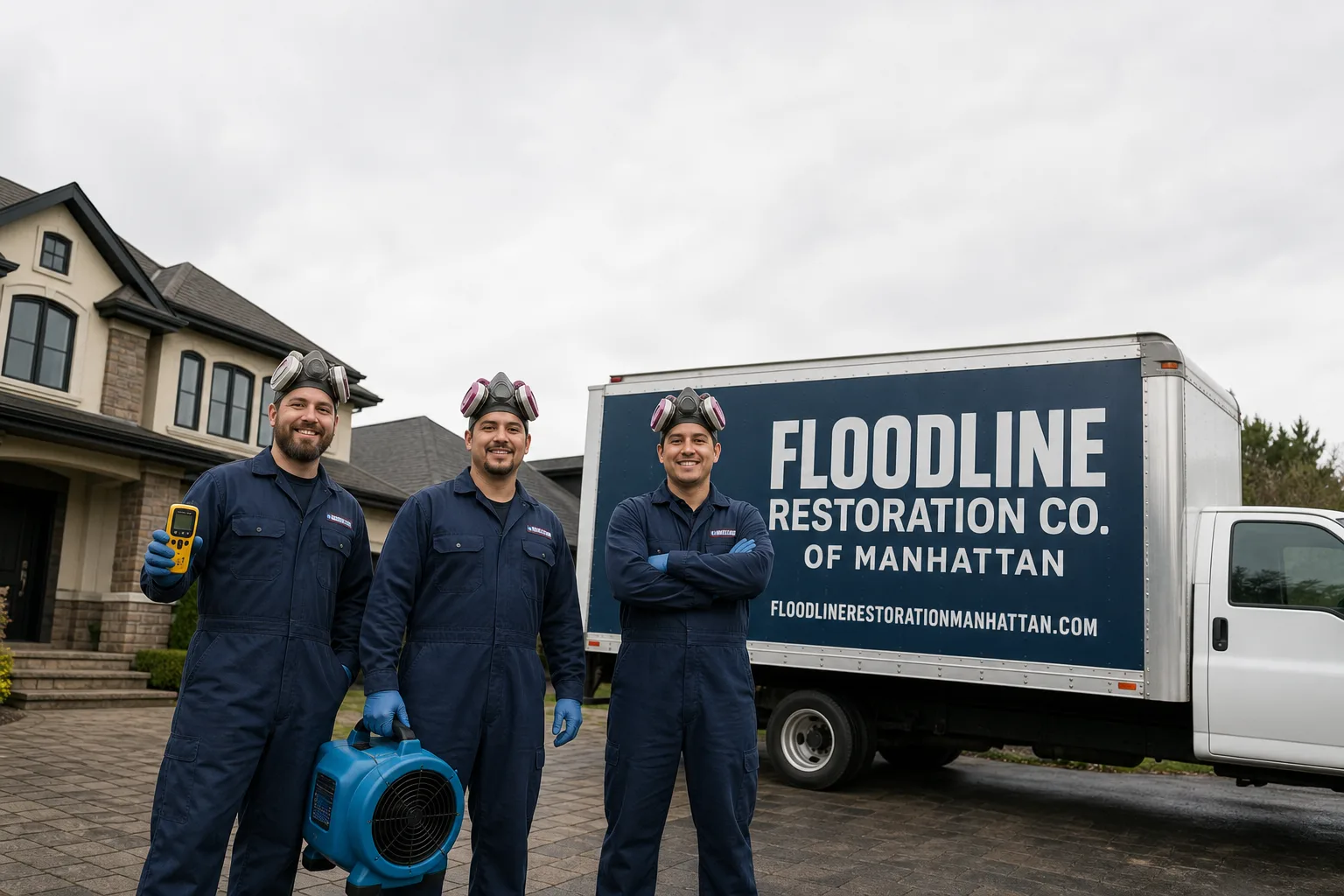
Free visual inspection and a written scope of work before any mitigation begins - photos, moisture readings, and drying logs go in your claim file
The scope we write is the scope we bill. Anything new gets shown to you, in writing, before we touch it.






 Before
 After
After Before
 After
After Before
 After
After24/7 Emergency Water Damage Restoration in Saddle Rock
Water damage restoration in Saddle Rock typically costs between $2,800 and $8,500 depending on how far water has traveled through walls, flooring, and subfloor. Floodline Restoration Co. of Manhattan answers the phone with a live dispatcher at any hour, including 2 a.m. during a nor’easter, and crews reach Saddle Rock typically within 45 minutes. Call (917) 924-4221 the moment you see water where it shouldn’t be. The first hour decides whether plaster-and-lath walls can be dried in place or whether pack-out becomes necessary, and in Saddle Rock’s older custom homes, that hour matters more than most places in Nassau County.
Understanding Water Damage Restoration Severity in Saddle Rock Properties
Saddle Rock’s housing stock runs heavily toward large custom colonials and split-levels built from the 1940s through the 1970s. Those homes carry plaster-and-lath interiors, original hardwood floors, and masonry foundations that have spent decades absorbing the village’s brackish groundwater. When water enters, we classify it by contamination level: Category 1 is clean water from a supply line or tub overflow; Category 2 carries significant contamination from dishwashers, washing machines, or sump failures; Category 3 is grossly contaminated, the reality after storm surge or a sanitary sewer backup. Moisture mapping with thermal imaging and penetrating meters tells us exactly how far water has wicked up plaster, behind baseboards, and under slab edges. In Saddle Rock, the severity question is rarely just about the wet drywall. It’s about whether saltwater has entered the equation, because saltwater wicks deeper through older masonry than freshwater and dries on a different timeline entirely.
Why Saddle Rock Property Owners Choose Floodline Restoration Co. of Manhattan
- 45-minute response commitment. Crews dispatch from the metro office and know the East Shore Road and Bayview Avenue routes into Saddle Rock without a map.
- 24/7 live answer. A real person picks up. No automated tree, no message that gets returned tomorrow morning.
- IICRC-certified crews. Our technicians hold WRT (Water Damage Restoration Technician) and ASD (Applied Structural Drying) certifications, and we train to RIA and IFA standards on top of it.
- Free visual inspection. We walk the property, map the moisture, and give you a written scope before any drying equipment gets plugged in.
- Direct insurance billing. We bill your carrier directly and talk to the adjuster so you aren’t the messenger.
- One team from extraction to reconstruction. The same certified crew that reads the moisture map on day one handles daily readings, hands the log to your insurer, and rebuilds what needs rebuilding.
Our Water Damage Restoration Process
Inspection & Assessment
We arrive, walk the full property, and run thermal imaging plus penetrating moisture meters across every affected surface. In Saddle Rock’s older homes, we pay particular attention to baseboards at the far basement wall, where multi-directional surge pushes water in from two sides.
Extraction & Stabilization
Submersible pumps and truck-mounted extraction units remove standing water the same visit. We contain the affected area to stop airborne moisture from spreading into dry rooms.
Structural Drying & Dehumidification
Dri-Eaz LGR dehumidifiers, Phoenix units, and high-velocity XPOWER air movers run in a calculated layout. Daily moisture readings track progress against a dry standard, and we don’t pull equipment until subfloors and plaster reach pre-loss moisture levels.
Cleaning & Sanitization
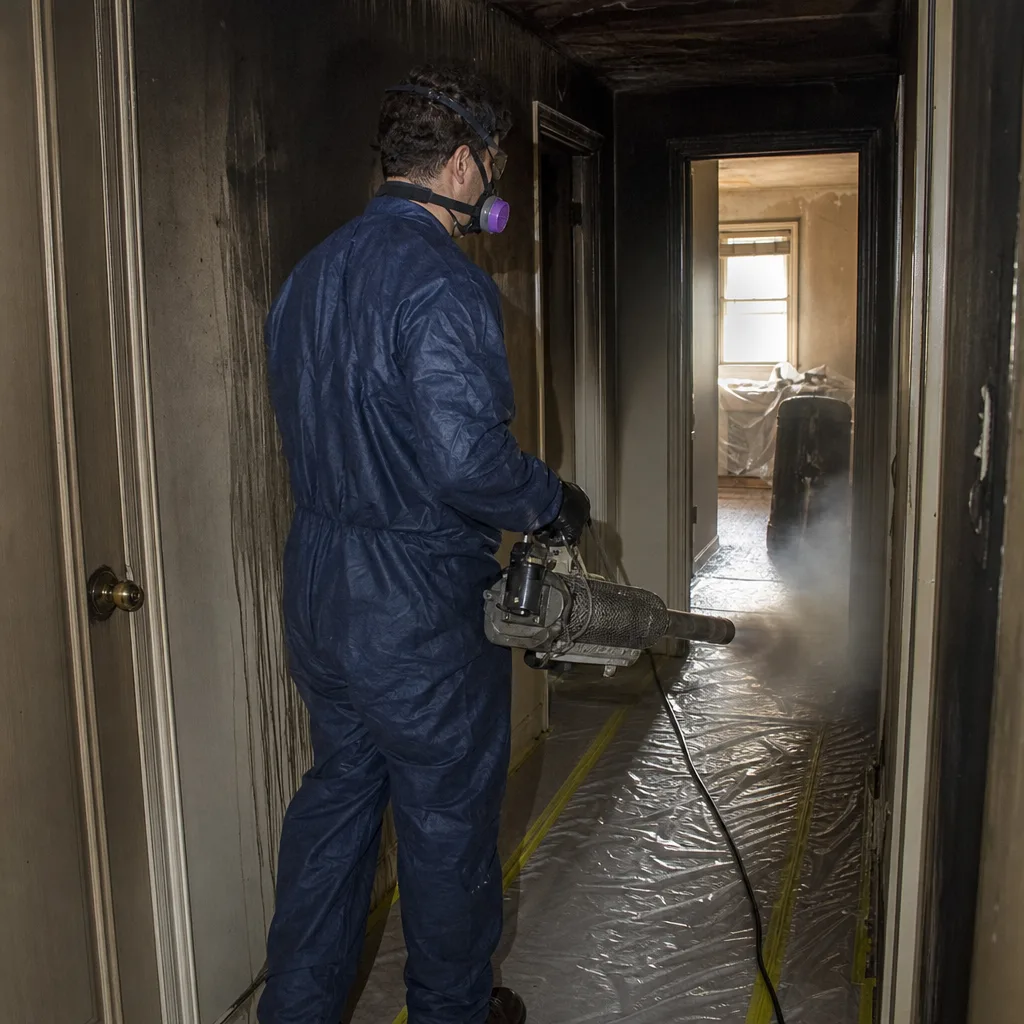
Category 3 water in Saddle Rock carries marine organics and sewage from overtopped sanitary lines. We apply antimicrobial treatments to every affected surface and run HEPA air scrubbers during and after cleanup.
Antimicrobial Treatment & Mold Prevention
Saltwater-driven moisture is the local specialty. Surfaces exposed to brackish intrusion get a broader-spectrum antimicrobial protocol because Saddle Rock’s coastal floodwater leaves behind organic material that freshwater damage doesn’t.
Repairs & Restoration
Plaster patching, hardwood refinishing, baseboard replacement, and full reconstruction when needed, all matched to the home’s original materials and finishes. The Keystone Standard applies here: done right, in writing, no argument.
Need Emergency Water Damage Restoration in Saddle Rock Now?
Crews minutes away, answering live 24 hours a day. The sooner we start, the less it costs.
Working With Your Insurance Company
Most Saddle Rock homeowners carry homeowners insurance that covers sudden and accidental water damage, like a burst supply line or a failed water heater. Flood insurance is a separate policy, and after a nor’easter, coverage questions get answered fastest when documentation is already in hand. We photograph every affected room before we move a single piece of furniture. Moisture readings, drying logs, and a line-item scope of work go directly to your adjuster. You shouldn’t have to argue about what was wet and what wasn’t. That record exists from hour one because we built it that way. Call (917) 924-4221 and we’ll start the file while the crew is still on the road.
What We Provide Your Insurer
- Thorough documentation of the loss
- Photos of all damage, room by room
- Moisture readings and drying logs
- A detailed, line-item scope of work
- Direct coordination with your carrier
Built for Saddle Rock’s Loss Calendar
Saddle Rock sees water damage events on a schedule that inland Nassau County doesn’t quite share. January and February deep freezes burst supply lines in unheated crawl spaces and exterior wall chases, especially in older custom homes where original copper has gone thin after sixty years. March and April bring the thaw, and with it, groundwater push against foundation walls that have been handling water since the Truman administration. Summer thunderstorms drop two inches of rain in an hour, overwhelming footing drains and sending water up through basement slabs. Then comes coastal storm season. Nor’easters off Long Island Sound push storm surge into Manhasset Bay and Little Neck Bay simultaneously, and the village’s near-peninsula geography means some homes take water from more than one direction at once. We keep crews staged for surge response from September through late November because Saddle Rock’s exposure doesn’t follow the inland calendar.
Water Damage Restoration Across Saddle Rock’s Neighborhoods
Saddle Rock is small, but water finds every corner of it. Homes along East Shore Road face direct fetch from Little Neck Bay, and after a significant surge, finished basements there routinely show brackish waterline marks even when the first floor stayed dry. On Palmer Road and the older streets off Bayview Avenue, the pattern runs to 1960s custom colonials with plaster-and-lath walls and original hardwood, where a supply line failure behind a second-floor bathroom finds its way down through ceilings before anyone notices. The properties near Saddle Rock Village Park sit on slightly higher ground but age brings its own problems, original copper risers and cast-iron drain lines that have simply had enough after half a century. And on the approaches from Old Mill Road, homes built into the slope contend with surface runoff during heavy rain, water that enters through foundation cracks and window wells before the sump pump can catch up.
On Palmer Road, our crew responded to a burst supply line in a 1960s custom colonial with plaster-and-lath walls. The category 1 water had wicked up 22 inches of the original plaster. We set up containment in the finished basement, ran Dri-Eaz LGR dehumidifiers and XPOWER air movers for six days, and logged moisture readings daily until subfloors matched their pre-loss condition. The original hardwood floors were saved, and nothing went to a pack-out facility. That is the outcome we aim for on every Saddle Rock job.
Specialized Water Damage Restoration Services We Offer in Saddle Rock
Emergency Water Extraction
Standing water in a Saddle Rock basement doesn’t wait, and neither do we. Pumps and extraction units pull thousands of gallons the same visit, and we start the drying plan before the last of the standing water is gone. Response time matters most here because saltwater from surge events begins degrading drywall and hardwood within hours.
Structural Drying & Dehumidification
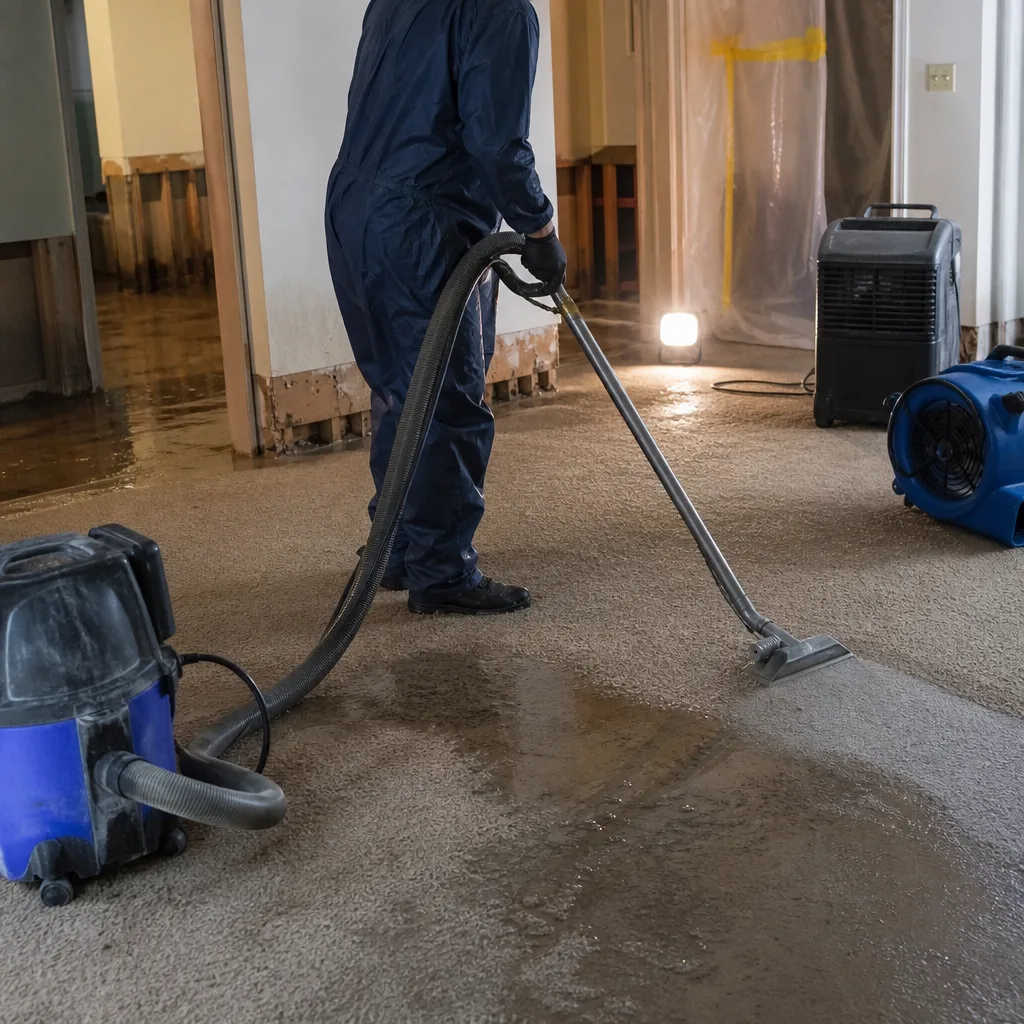
This is the service that separates a restoration job done right from one that looks fine for six months and then grows mold behind the baseboard. In Saddle Rock’s older homes, drying must account for plaster’s moisture capacity and masonry’s slow release curve. Standard freshwater drying assumptions get homeowners into trouble here.
Flood Cleanup
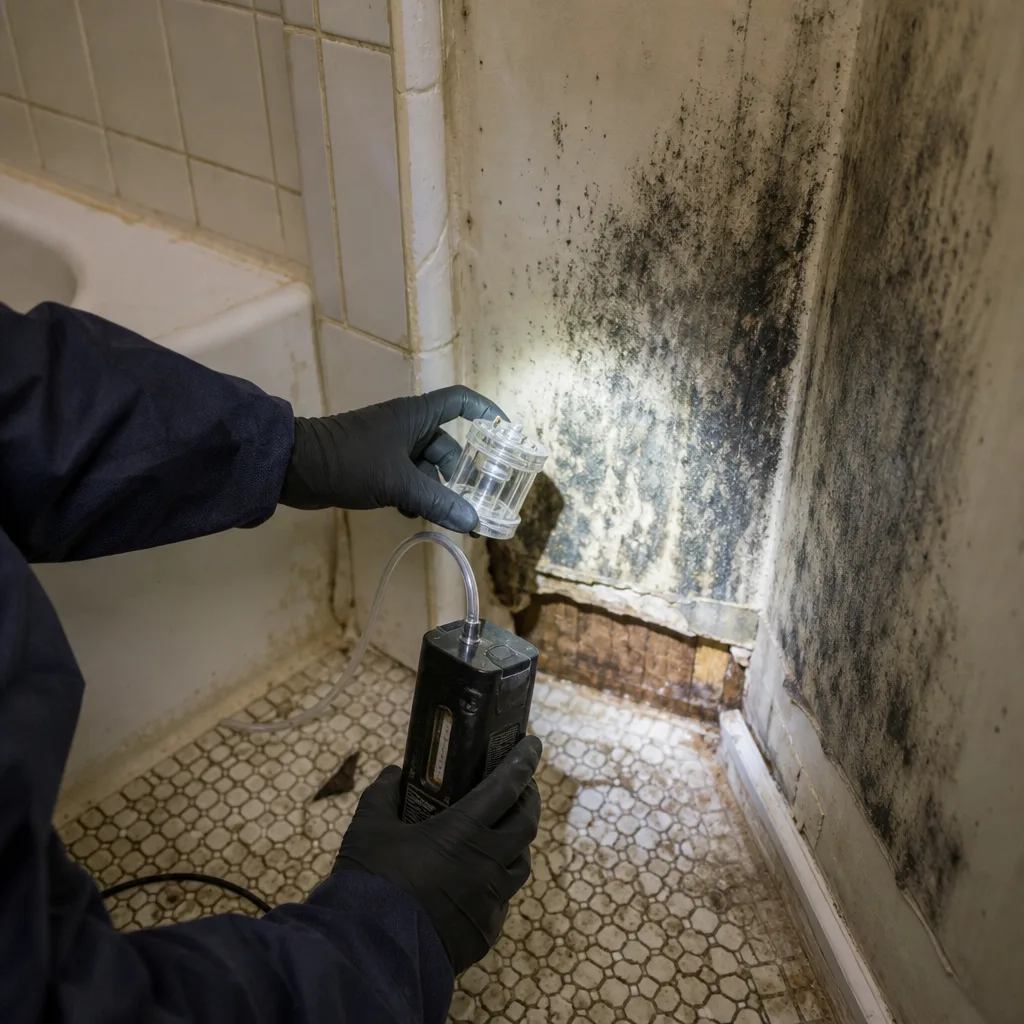
Nor’easter surge, tidal flooding from Manhasset Bay or Little Neck Bay, and wind-driven rain all fall under flood cleanup. Category 3 floodwater in Saddle Rock means sewage from overtopped sanitary lines mixed with marine water. Surfaces get antimicrobial treatment, not just a drying pass, because mold can establish within 24 to 48 hours on organics left behind.
Burst Pipe Restoration
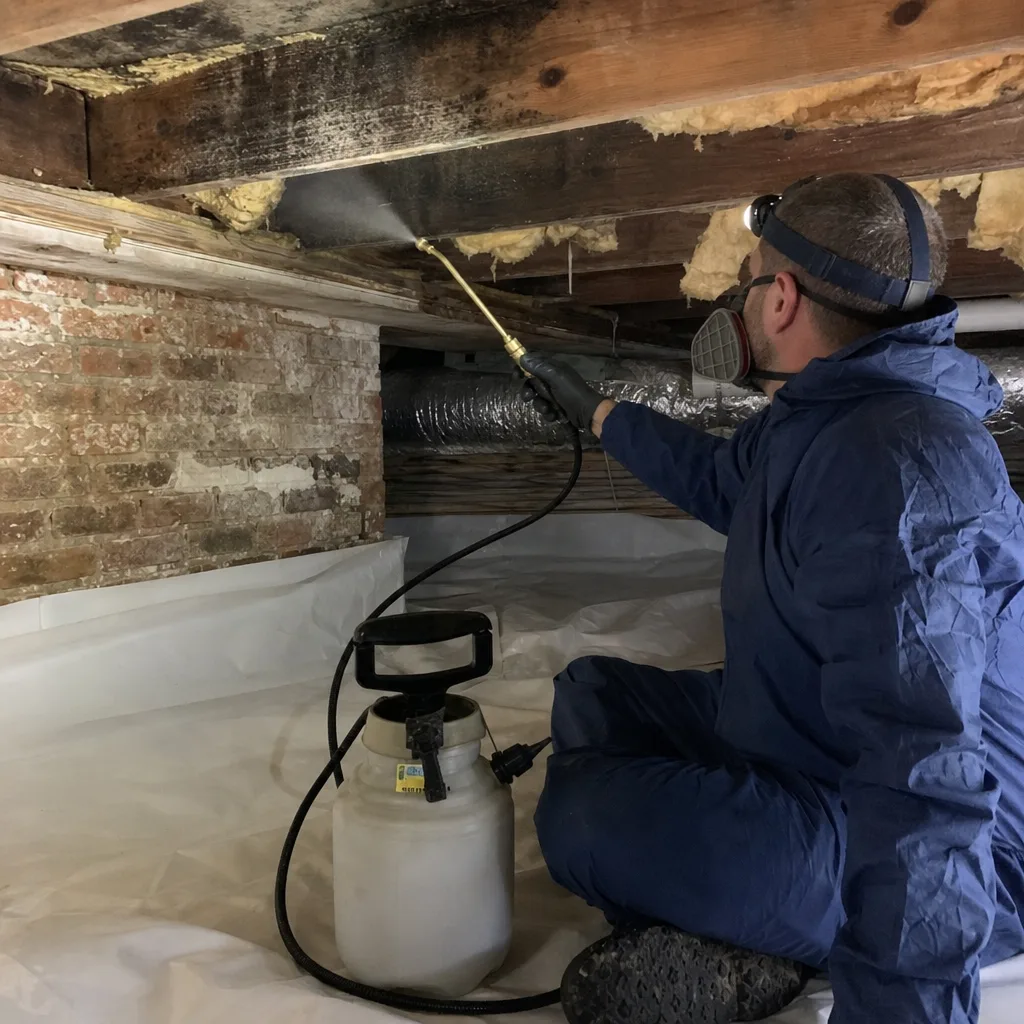
Winter freezes in older custom homes hit supply lines inside exterior walls and unheated crawl spaces. A frozen pipe that splits behind a kitchen wall soaks cabinets, flooring, and whatever room sits below. We trace the full extent of travel, not just the visible puddle.
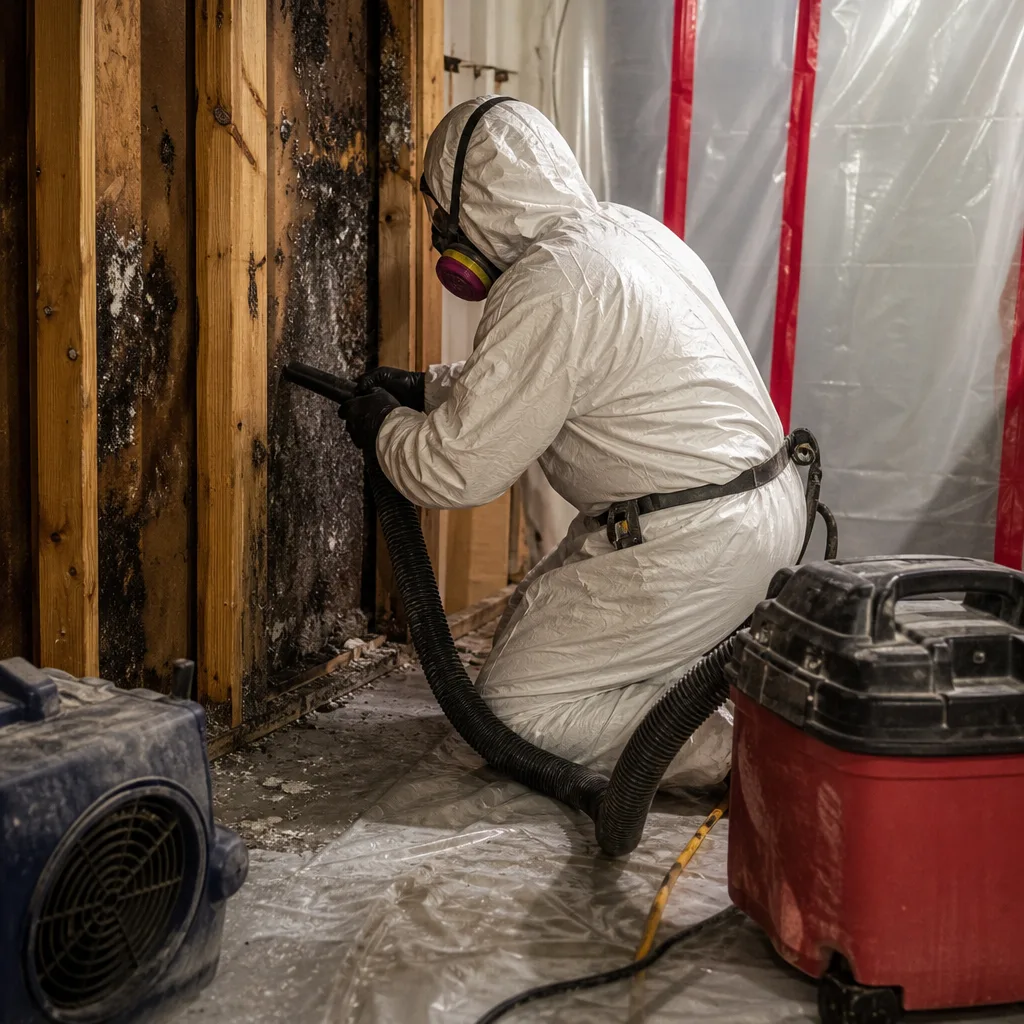
Basement Water Removal
Finished basements are common in Saddle Rock’s larger homes, and they are the first casualty of any surge event. We remove the water, dry the structure, treat for the contaminants that came in with it, and restore the finishes, all with one crew and one written scope. The line the water left is where we start.
What happens when you call
- 1
A real person answersNo phone trees - you reach a local pro.
- 2
You get an upfront price rangeHonest numbers before anyone is dispatched.
- 3
A background-checked tech heads outLicensed & insured, dispatched right away.
- 4
You approve before work beginsNothing starts until you say go.
Water Damage Restoration Costs in Saddle Rock, NY
Pricing in Saddle Rock reflects the age of the housing stock and the saltwater factor. Emergency water extraction alone runs $900 to $1,800 depending on square footage and water depth. Structural drying of a finished basement with plaster walls typically lands between $2,500 and $5,000, including daily monitoring and the moisture log your insurer will want. Full basement water removal with category 3 contamination and antimicrobial treatment runs $4,500 to $8,500 when drywall, baseboards, and flooring require removal. Burst pipe restoration inside walls adds $1,200 to $3,500 beyond extraction, driven by how much plaster and hardwood must come out. Saltwater jobs cost more than freshwater jobs of the same square footage because extended drying times and broader antimicrobial protocols are not optional. A free visual inspection gets you a firm written scope before any work begins, and direct insurance billing means you aren’t financing the claim out of pocket while paperwork grinds through the carrier.
We Also Serve Cities Near Saddle Rock
Our crews respond across the North Shore and into the surrounding metro: Fairview, Harrison, East Bronx, and Hunts Point. If you have water where it shouldn’t be and you’re near Saddle Rock, call (917) 924-4221 and we’ll tell you straight how soon a crew can reach you.
Saddle Rock Water Damage Restoration Questions, Answered
How does saltwater flooding in Saddle Rock affect drying times compared to freshwater damage?
Saltwater wicks deeper through plaster and older masonry than freshwater, so drying times in Saddle Rock run 2 to 4 days longer on average for the same square footage. Salt is hygroscopic, which means it pulls moisture from the air and holds it in the wall, and the village’s brackish surge water leaves those salts behind in the plaster and foundation. Standard freshwater drying assumptions will pull equipment too early and leave hidden pockets of wetness behind the wall cavities and under slab edges, which is exactly where mold starts in a finished basement. Our crews run moisture mapping across the entire affected area before equipment comes off, and we do not sign off until materials meet their pre-loss dry standard, not just “dry enough.”
After a nor’easter, should I worry about basement water intrusion even if I live several blocks from the bay?
Yes. Saddle Rock’s near-peninsula geography means storm surge from Manhasset Bay and Little Neck Bay can push groundwater under slabs and through the older masonry foundations from two directions simultaneously. Even homes several blocks inland show brackish waterline marks in finished basements after a significant surge event. A single moisture reading at the stair landing will miss the brackish intrusion at the far wall, which is why we map the entire slab before writing a drying scope. Call (917) 924-4221 after any coastal storm that brings water up over the shoreline, and we will tell you whether you have a real problem or a damp floor that will resolve on its own.
Do you pack out custom plaster-and-lath walls when they get wet, or can they be dried in place?
Plaster-and-lath walls in Saddle Rock’s older custom homes can often be dried in place when we reach them before the water has saturated through to the lath and framing. The Palmer Road job is a good example: category 1 water had wicked up 22 inches of original plaster, and with containment, Dri-Eaz LGR dehumidifiers, and six days of daily moisture readings, we saved the walls and the original hardwood floors without a pack-out. Category 3 water changes that answer, because sewage and marine organics in the plaster require removal rather than drying. The determining factors are contamination level, how long the water has been present, and how much salt is in the water, not the age of the house.
What is the difference between category 2 and category 3 water in a Saddle Rock basement flood?
Category 2 water is significantly contaminated and can cause illness if ingested, the typical source is a sump pump failure, dishwasher overflow, or washing machine discharge. Category 3 water is grossly contaminated and contains sewage, marine organics, or both, which describes most Saddle Rock storm surge events where sanitary lines have overtopped and tidal water has entered from Manhasset Bay or Little Neck Bay. Category 3 requires full removal of affected porous materials, antimicrobial treatment on everything left behind, and HEPA air scrubbing during and after the work. Category 2 can sometimes be dried in place with aggressive antimicrobial treatment, but we make that call based on moisture mapping and material sampling, not a visual guess.
Will my insurance cover saltwater flood damage in Saddle Rock, and do I need a separate flood policy?
Standard homeowners insurance covers sudden and accidental water damage from a burst pipe, failed appliance, or supply line break, regardless of whether your home is in Saddle Rock or anywhere else in Nassau County. Saltwater flooding from storm surge, tidal water, or overflowing bays is flood damage under most policies, and that requires a separate flood policy, typically through NFIP or a private flood carrier. We document everything from hour one and bill your insurer directly, no matter which policy applies. If you’re unsure what your policy covers after a storm, call (917) 924-4221, and we can walk you through what we’re seeing while the claim gets sorted.
How fast can someone actually get to my Saddle Rock home?
Our commitment is 45 minutes or less to Saddle Rock, and a live dispatcher confirms the ETA the moment you call (917) 924-4221. Crews stage out of the metro office and know the East Shore Road, Bayview Avenue, and Old Mill Road routes. Extraction equipment is on the truck before the crew leaves the yard, so pumping starts the same visit, not on a second trip.
Do I really need full restoration, or can I just dry the carpet and move on?
In a Saddle Rock home with plaster walls, original hardwood, and a finished basement, water almost always travels further than the visible wet spot. Moisture wicks up inside wall cavities, under subfloor, and along the slab edge, and if those pockets aren’t dried, you get mold behind the baseboard within a few weeks. A free visual inspection with thermal imaging and penetrating meters answers the question honestly. If it’s just a damp floor that will dry with fans, we’ll tell you that and leave you with a number for nothing.
What certifications do your technicians hold?
Our crews are background-checked, uniformed, and trained to IICRC standards for Water Damage Restoration, plus RIA and IFA standards for structural drying and forensic restoration. We run Dri-Eaz and Phoenix dehumidifiers, XPOWER air movers, and Injectidry systems for hard-to-reach cavities, exactly the same professional-grade equipment you’d find on the largest commercial losses.
Serving Saddle Rock, NY - Our Local Coverage Area
We’re based in the Saddle Rock area and know this community well. Use the map below to see our service coverage - if you’re nearby, we can almost certainly help.
Contact Floodline Restoration Co. of Manhattan for Water Damage Restoration in Saddle Rock
If you’re standing in water in Saddle Rock right now, call (917) 924-4221. A live dispatcher answers, a crew reaches the village within 45 minutes, and extraction starts the same visit. If the water has been there a day or two already, call anyway. The sooner we map the moisture and start drying, the less material comes out and the lower the final bill. Every job comes with a free visual inspection, a written scope, direct insurance billing, and the 90-Day Done Right Promise in your hands. No surprises on the bill. We’ll be there when we say. We stand behind it.
Written by Curt Bowman, Owner at Floodline Restoration Co., serving Saddle Rock and the surrounding North Shore since 2010.