

Free visual inspection and a written scope of work before any mitigation begins - photos, moisture readings, and drying logs go in your claim file
The scope we write is the scope we bill. Anything new gets shown to you, in writing, before we touch it.






 Before
 After
After Before
 After
After Before
 After
After24/7 Emergency Water Damage Restoration in Sands Point
Water damage restoration in Sands Point typically runs $1,800-$6,500 for a Category 1 or 2 loss and $4,000-$18,000+ for Category 3 saltwater flooding, depending on square footage and how much of the original millwork and plaster is involved. We answer the phone live at (917) 924-4221 around the clock, every day of the year. A certified crew can reach most Sands Point addresses inside 45 minutes, because every hour that saltwater sits against a 1920s oak floor or a stone foundation wall makes the restoration longer and more expensive.
When a nor’easter pushes Long Island Sound onto Lighthouse Road or over the seawall along Cow Neck Road, you need extraction running the same visit, not a recording telling you to leave a message. Our dispatcher picks up at 2 a.m., confirms your address, and gets a crew rolling while you’re still on the line. We’re the Water Damage Restoration company that shows up with Dri-Eaz dehumidifiers and Phoenix air movers on the truck, not a sales estimate and a promise to return next week.
Understanding Water Damage Restoration Severity in Sands Point Properties
Water damage falls into three categories, and the distinction matters more in Sands Point than almost anywhere on the North Shore. Category 1 is clean water from a burst supply line. Category 2 is substantially contaminated water from a washing machine overflow or sump failure. Category 3 is grossly contaminated water, and that’s what a coastal nor’easter delivers: Long Island Sound surge carrying salt, sewage, and whatever else the storm picked up.
In Sands Point’s 1910s through 1930s estate homes, Category 3 water behaves differently than it does in a modern drywall house. Salt water saturates horsehair plaster and lathe, then wicks upward and outward for weeks inside wall cavities. It corrodes knob-and-tube-era electrical connections and copper supply lines. It attacks the lime mortar joints in granite and brick foundations. Moisture mapping with thermal imaging and hygrometer readings isn’t optional here. It’s how we find the water that moved behind the wainscot before it becomes mold and efflorescence.
Why Sands Point Property Owners Choose Floodline Restoration Co. of Manhattan
- 45-minute response commitment: Our dispatch board is built around Sands Point’s geography. A crew is usually on Lighthouse Road or Middle Neck Road before the water has finished settling.
- A live person answers, 24/7: Not an answering service. Not a call tree. A dispatcher who knows our equipment load and which crew is closest to your part of the peninsula.
- IICRC-certified crews: Our technicians hold WRT and ASD certifications and train on the specific failure modes of lath-and-plaster and masonry construction, not just drywall and carpet.
- Free visual inspection: We walk the property, map the moisture, and hand you a written scope before any equipment comes off the truck. No pressure, no surprises.
- Direct insurance billing: We bill your carrier directly, document everything from the first hour, and talk to your adjuster so you don’t have to play messenger.
- One team from extraction to rebuild: The same certified crew that runs extraction and drying also handles the plaster repair, millwork restoration, and finish work. No mid-job handoff.
Our Water Damage Restoration Process
Inspection & Assessment
We walk the property with thermal imaging and moisture meters, mapping water migration through floors, walls, and the foundation. For Sands Point estates, this includes checking the mortar joints and plaster keys for salt saturation. You get a written scope and a straight price before work begins.
Extraction & Stabilization
We run truck-mounted and portable extraction systems to pull standing water off oak floors, out of basement slabs, and from behind baseboards. We also cut power to affected circuits where water has reached wiring, which is common in older Sands Point homes with original electrical systems.
Drying & Dehumidification
We set Dri-Eaz LGR dehumidifiers and Phoenix air movers in a containment zone sized for the room’s cubic footage and the plaster’s absorption rate. Daily moisture readings get logged until the dry standard is met, and you and your carrier receive the log.
Cleaning & Sanitization
We apply antimicrobial treatments appropriate for Category 3 water and the materials involved. On historic millwork and plaster, that means products that kill mold and bacteria without stripping original finishes or leaving residue that traps moisture.
Salt Neutralization & Masonry Treatment
This is the step generic restoration companies skip in Sands Point. We chemically neutralize salt contamination in granite and brick foundation walls before drying is considered complete, preventing efflorescence and ongoing moisture migration months later.
Repairs & Restoration
We source period-matched wood species for flooring and millwork, engage plasterers who work with horsehair and lime plaster, and rebuild what needed rebuilding. The finished wall meets the original wall, and you can’t see the seam.
Need Emergency Water Damage Restoration in Sands Point Now?
Crews minutes away, answering live 24 hours a day. The sooner we start, the less it costs.
Working With Your Insurance Company
We’ve handled hundreds of North Shore water damage claims, and we know what carriers need to see. From the first hour on site, our techs photograph every affected room, log moisture readings with time stamps, and document the condition of original materials before any tear-out happens. We write estimates in the format adjusters expect, and we communicate with your adjuster directly so you’re not relaying messages between a claims desk and our crew. The 90-Day Done Right Promise we put in writing is a guarantee that the restoration holds, and we stand behind it with your carrier as much as with you.
What We Provide Your Insurer
- Thorough documentation of the loss
- Photos of all damage, room by room
- Moisture readings and drying logs
- A detailed, line-item scope of work
- Direct coordination with your carrier
Built for Sands Point’s Loss Calendar
January and February bring deep freezes that split supply lines in unheated basement crawl spaces and along exterior walls of Sands Point’s older estates. February and March thaws send groundwater rising against stone foundations, and the peninsula’s high water table means basement seepage shows up in the lowest-lying homes near the Sound. July and August thunderstorms dump an inch of rain in twenty minutes onto flat roofs and clogged original gutter systems, sending water over flashing and down interior walls.
But the loss that defines Sands Point is the coastal nor’easter. When a storm tracks up Long Island Sound and pushes surge over the seawall, three-sided exposure means salt water enters homes from every direction at once. We plan equipment staging and crew scheduling around tide cycles during storm season, because the difference between a four-hour extraction and a ten-hour extraction on a Category 3 surge is often the difference between saving and losing a hand-milled oak floor.
Water Damage Restoration Across Sands Point’s Neighborhoods
Response routes through Sands Point run north along Middle Neck Road and out along Lighthouse Road toward the tip of the peninsula, where the largest Gold Coast estates sit closest to the Sound. Homes along Cow Neck Road and Hoffstot Lane tend to be set back from the water but still catch surge through low-lying basement entries and original stone foundations. The eastern shore properties facing Hempstead Harbor take wave action differently than the western shore properties facing Manhasset Bay, and that changes how we stage drying equipment.
We also work the interior streets off Sands Point Road, where mid-century builds share the peninsula with the older estates but still deal with the same high water table and salt-laden air. In every part of Sands Point, our crews know which blocks flood first, which foundations hold salt longest, and which original plaster walls need the lowest and slowest drying settings to avoid cracking.
Specialized Water Damage Restoration Services We Offer in Sands Point
Emergency Water Extraction
We run truck-mounted extraction systems and portable units to pull standing water out of finished basements, main floors, and crawl spaces. On Sands Point estate properties, extraction often means lifting saturated carpets off original oak, removing wet horsehair pad, and getting airflow beneath floorboards before cupping becomes permanent. Most extractions start the same visit you call.
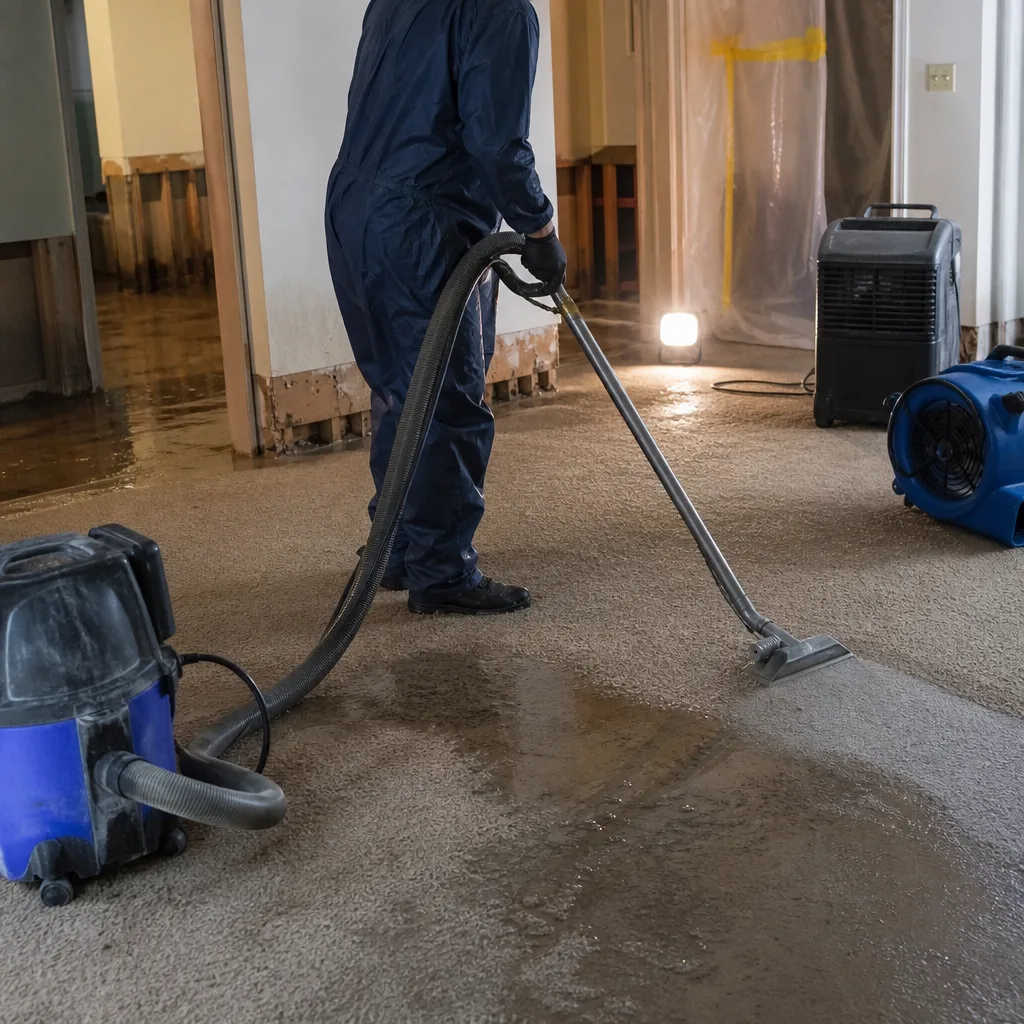
Structural Drying & Dehumidification
Drying a lath-and-plaster wall too fast cracks the plaster. Drying it too slow breeds mold behind the horsehair. We set Dri-Eaz dehumidifiers at settings matched to the material and monitor daily with hygrometers and thermal imaging until the dry standard is met. The moisture log goes to you and your carrier, and it’s what the Done Right Promise is built on.
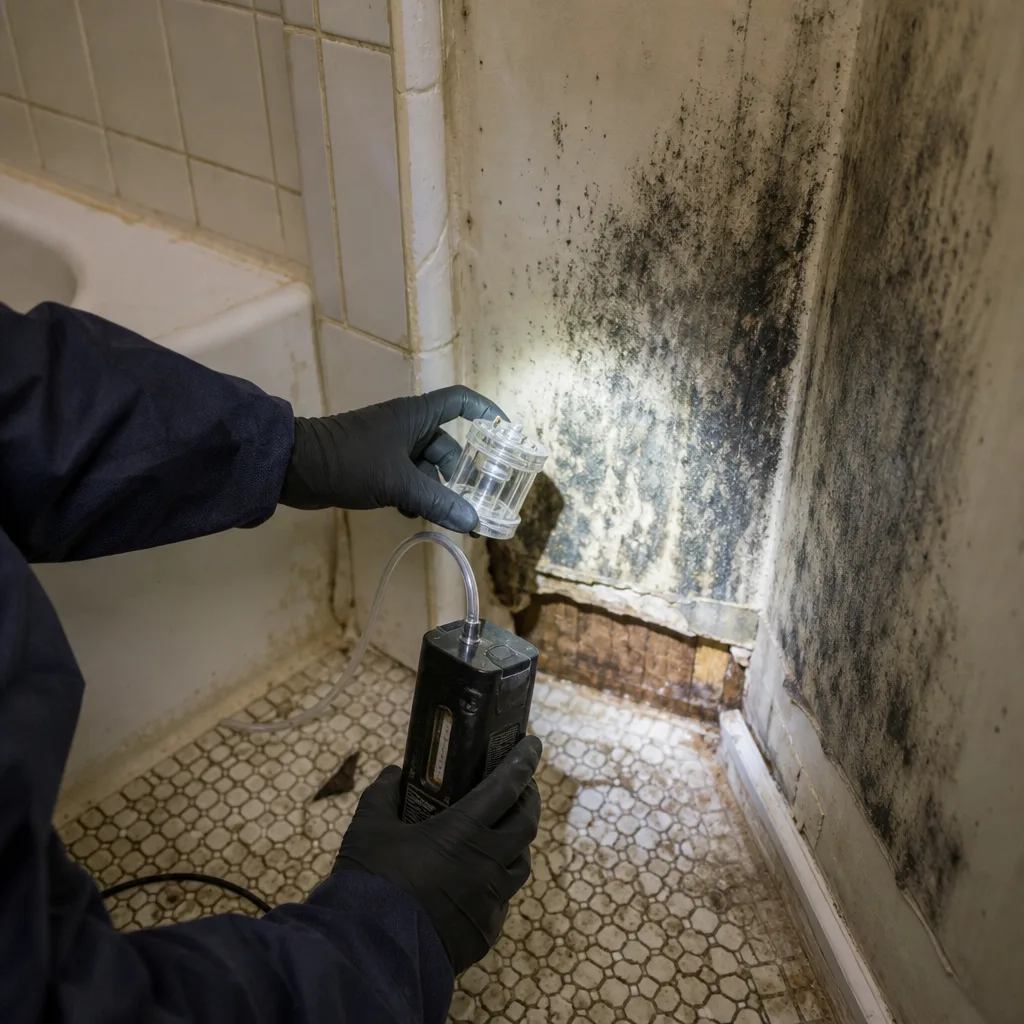
Flood Cleanup
Nor’easter flood cleanup in Sands Point is Category 3 work, every time. Salt water, sewage contamination, and storm debris all get removed under containment. We treat affected surfaces with antimicrobials appropriate for porous historic materials, then neutralize salt before any drying is considered complete. This is the work most restoration companies are not equipped to do correctly on century-old construction.
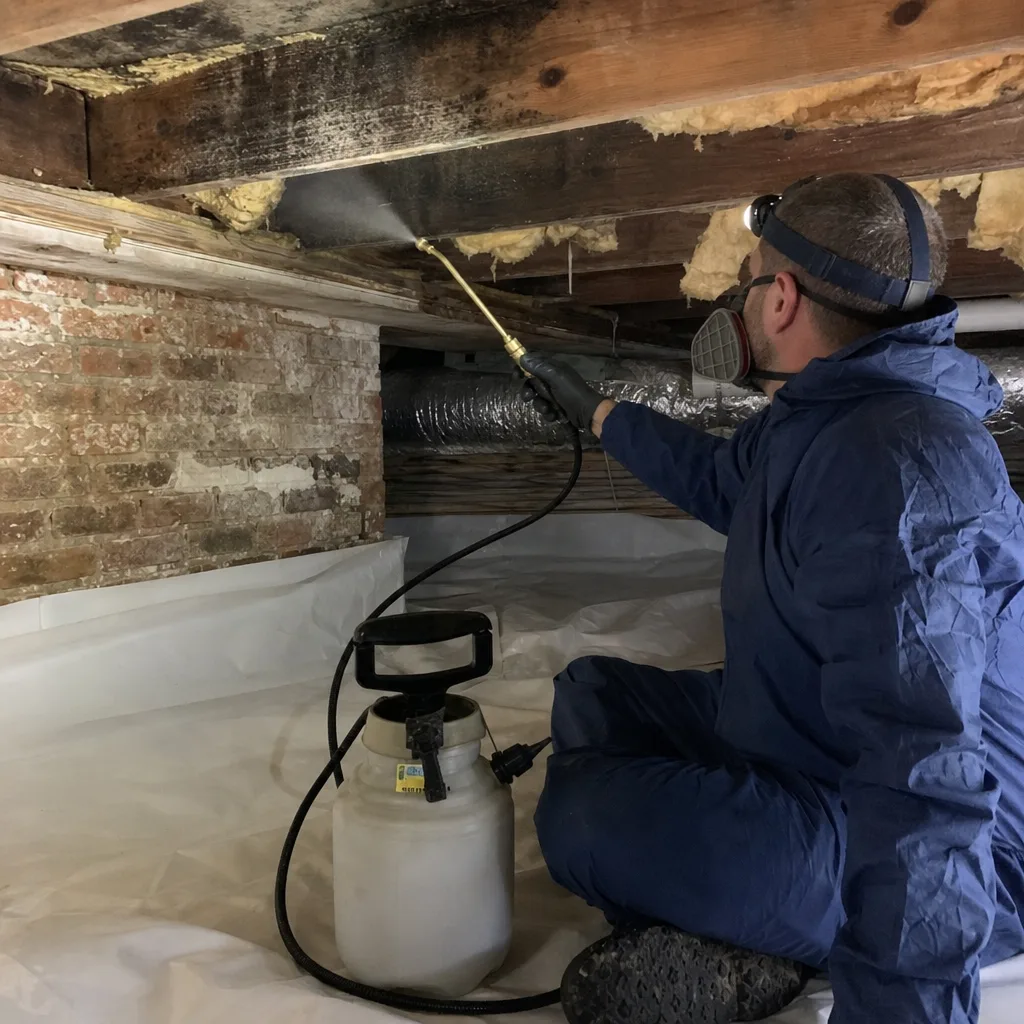
Burst Pipe Restoration
When a supply line freezes and splits inside a wall cavity, the first sign is usually a stain on the ceiling or a soft spot underfoot. We trace the water with thermal imaging, cut access only where needed, and dry the cavity from the inside. On lath-and-plaster walls, that means cutting small access panels rather than tearing whole walls down to studs.
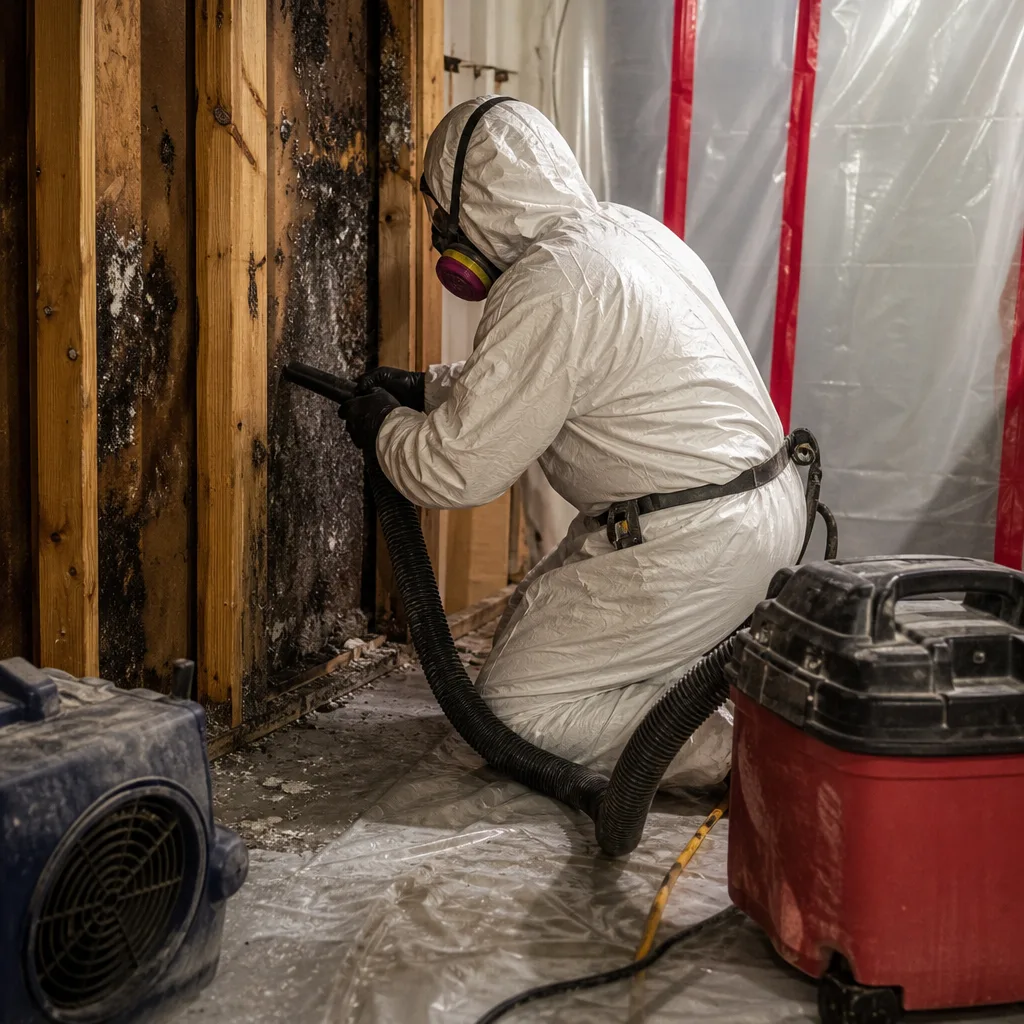
Basement Water Removal
Basements in Sands Point’s older homes are often stone-and-brick spaces with original dirt floors or thin slabs. We pump, extract, and dry these spaces knowing the masonry will keep wicking moisture for weeks if the salt isn’t addressed. We treat the stone, not just the air, then monitor until the readings stay flat.
What happens when you call
- 1
A real person answersNo phone trees - you reach a local pro.
- 2
You get an upfront price rangeHonest numbers before anyone is dispatched.
- 3
A background-checked tech heads outLicensed & insured, dispatched right away.
- 4
You approve before work beginsNothing starts until you say go.
Water Damage Restoration Costs in Sands Point, NY
For a clean-water loss like a burst pipe in a finished area, Sands Point homeowners typically pay $2,200-$5,800 for extraction, drying, and finish repair. A basement seepage event with minor mildew runs $1,800-$4,200. A Category 3 saltwater surge into a 1920s estate with original millwork and plaster is a different job entirely: $8,000-$18,000 or more, depending on how many rooms took water and how much of the finish work is hand-crafted restoration rather than replacement.
What moves the price is the material. Drying a drywall room is fast. Drying horsehair plaster walls, rebuilding lime plaster, and chemically neutralizing salt in a granite foundation takes time and specialty labor. The free visual inspection is how you get a firm number: we map the moisture, show you the readings, and hand you a line-item scope before anything happens. If insurance is involved, we bill the carrier directly.
We Also Serve Cities Near Sands Point
Our crews also respond to water damage calls in Fairview, Harrison, East Bronx, and Hunts Point. If you’re a property owner in one of these communities dealing with the same coastal storm systems and pre-war construction we see in Sands Point, call the same live dispatch line: (917) 924-4221.
Serving Sands Point, NY - Our Local Coverage Area
We’re based in the Sands Point area and know this community well. Use the map below to see our service coverage - if you’re nearby, we can almost certainly help.
Sands Point Water Damage Restoration Questions, Answered
How does saltwater flooding in Sands Point affect the granite and brick foundations of older estate homes differently than freshwater?
Saltwater wicks into the mortar joints and stone itself, and it doesn’t leave when you extract the standing water. The salt stays behind, drawing moisture out of the air and causing efflorescence and ongoing dampness for months if it’s not chemically neutralized. The total drying time is also longer, because saturated masonry releases moisture slowly and evenly, and pushing it too hard with heat causes spalling and joint failure.
Why is water damage restoration on a 1920s Sands Point lath-and-plaster home more complex than on a modern drywall house?
Plaster and lathe absorb water differently than drywall and hold it in layers. The horsehair binder and wood lathe swell at different rates, which means the wall can look dry on the surface while the cavity behind it stays wet. Drying too aggressively cracks the plaster. Drying too slowly invites mold. It takes daily readings and patience, and it takes a crew that has done this on Gold Coast construction many times, not once or twice.
Can antique wood doors and custom millwork be saved after a saltwater flood in Sands Point?
Usually yes, if extraction starts fast and drying is controlled. Original oak, chestnut, and mahogany millwork responds well to slow, steady dehumidification, but it has to start before the wood stays wet long enough to cup, split, or delaminate. We set air movers at low velocity around wainscot and door casings rather than blasting them, and we monitor the moisture content of the wood itself, not just the air in the room. Salt residue gets cleaned off without sanding through the original finish.
What should I do immediately after a nor’easter flood hits my Sands Point estate before a restoration crew arrives?
Call (917) 924-4221 first, while you’re still assessing. Then shut off power at the main panel if water has reached outlets or the panel itself, and do not walk through standing water if the electrical situation is uncertain. Move small valuables and papers off wet floors if you can do it safely. Don’t try to extract the water yourself with a shop vacuum; salt water in a wall cavity needs commercial extraction and controlled drying, and the longer it sits, the more you lose.
Does Floodline Restoration Co. of Manhattan work with insurance adjusters for water damage claims in Sands Point?
Yes. We document everything from the first hour, photograph every affected surface, log daily moisture readings, and write estimates in the format carriers expect. We communicate with your adjuster directly so you’re not the one carrying messages. If your policy covers the loss, we bill your carrier directly, and we stand behind the work with the 90-Day Done Right Promise in writing.
How fast can a crew actually reach Sands Point in an emergency?
We commit to a 45-minute response from the time you call, with a live dispatcher confirming your address and getting a crew rolling immediately. Sands Point’s geography helps us: the peninsula has clear main routes in and out, and our crews are dispatched from the metro office with equipment staged for Nor’easter season. Extraction is running the same visit in most cases.