
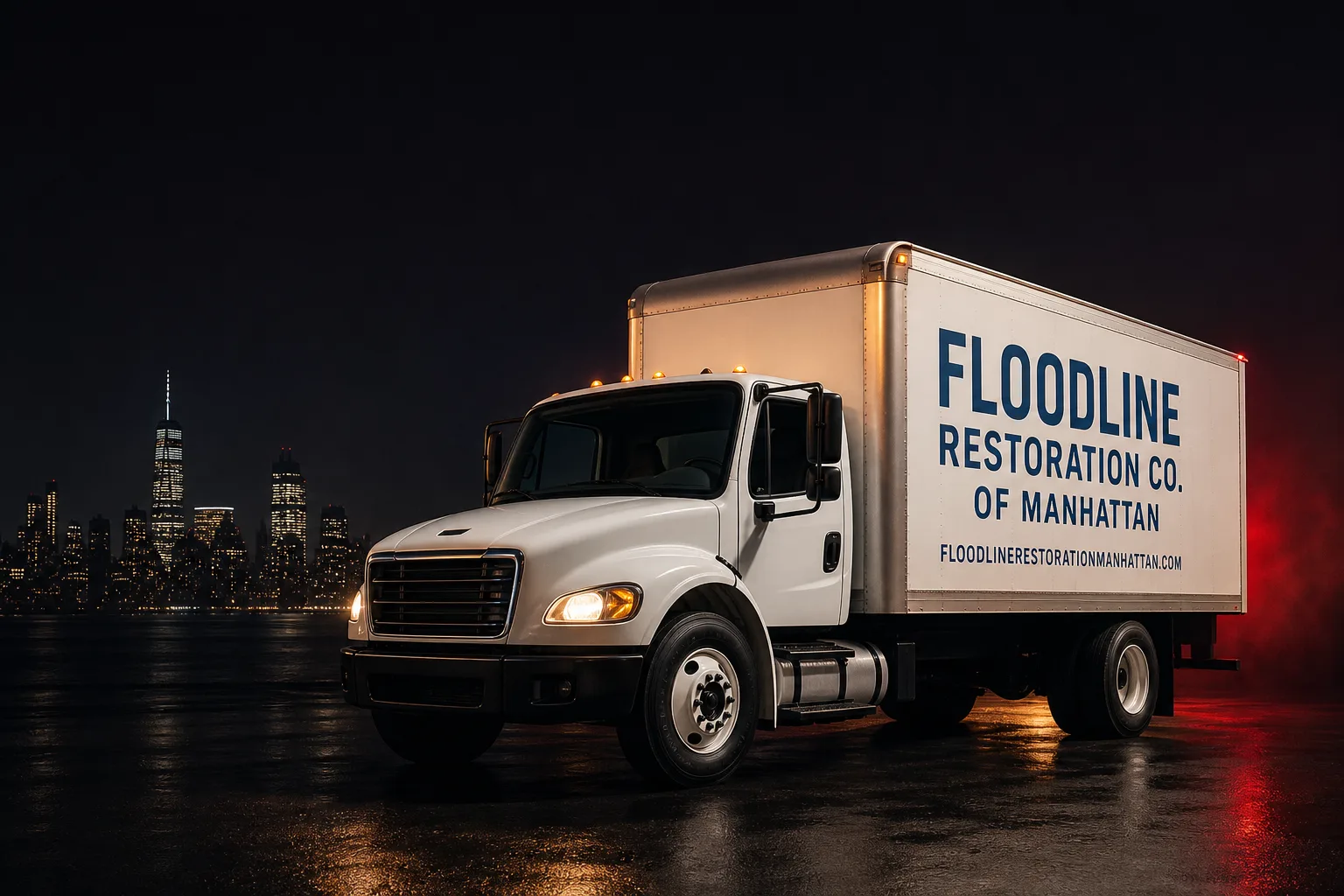
Free visual inspection and a written scope of work before any mitigation begins - photos, moisture readings, and drying logs go in your claim file
The scope we write is the scope we bill. Anything new gets shown to you, in writing, before we touch it.
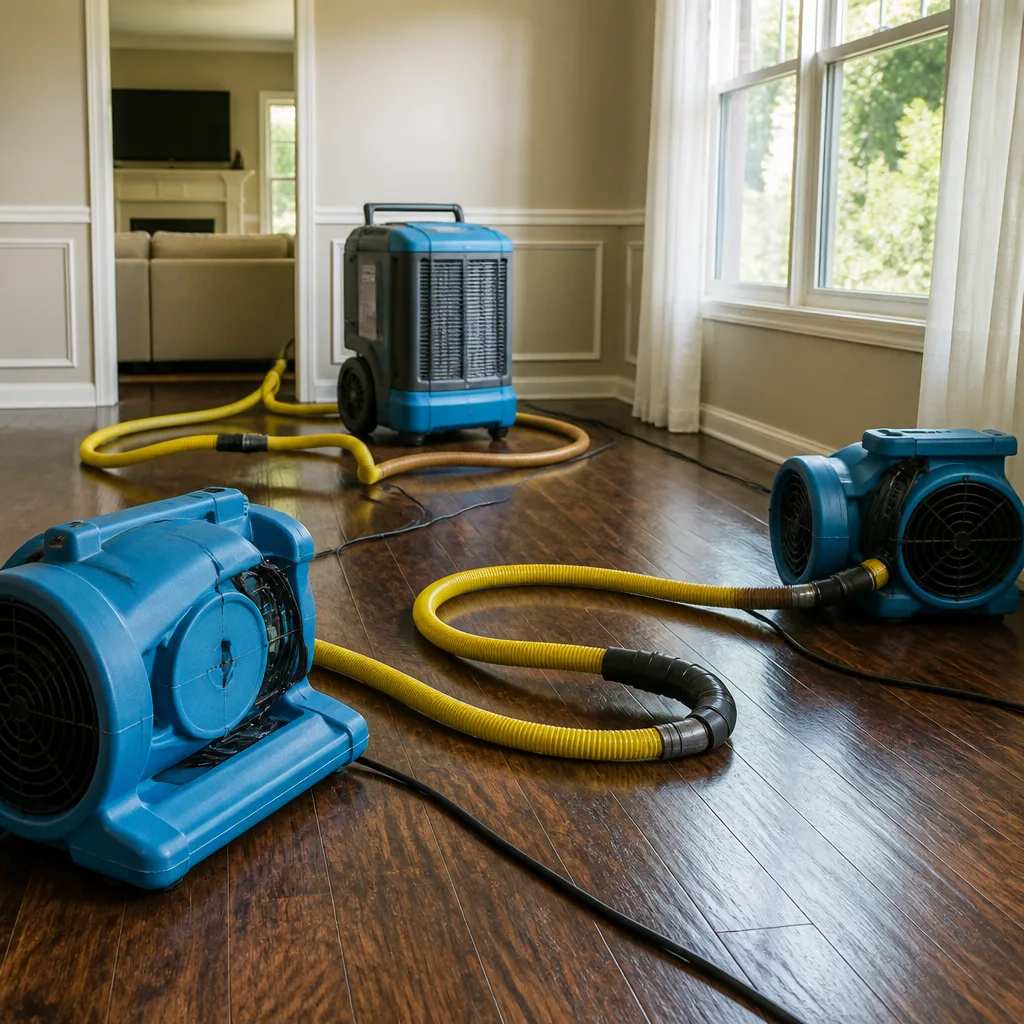

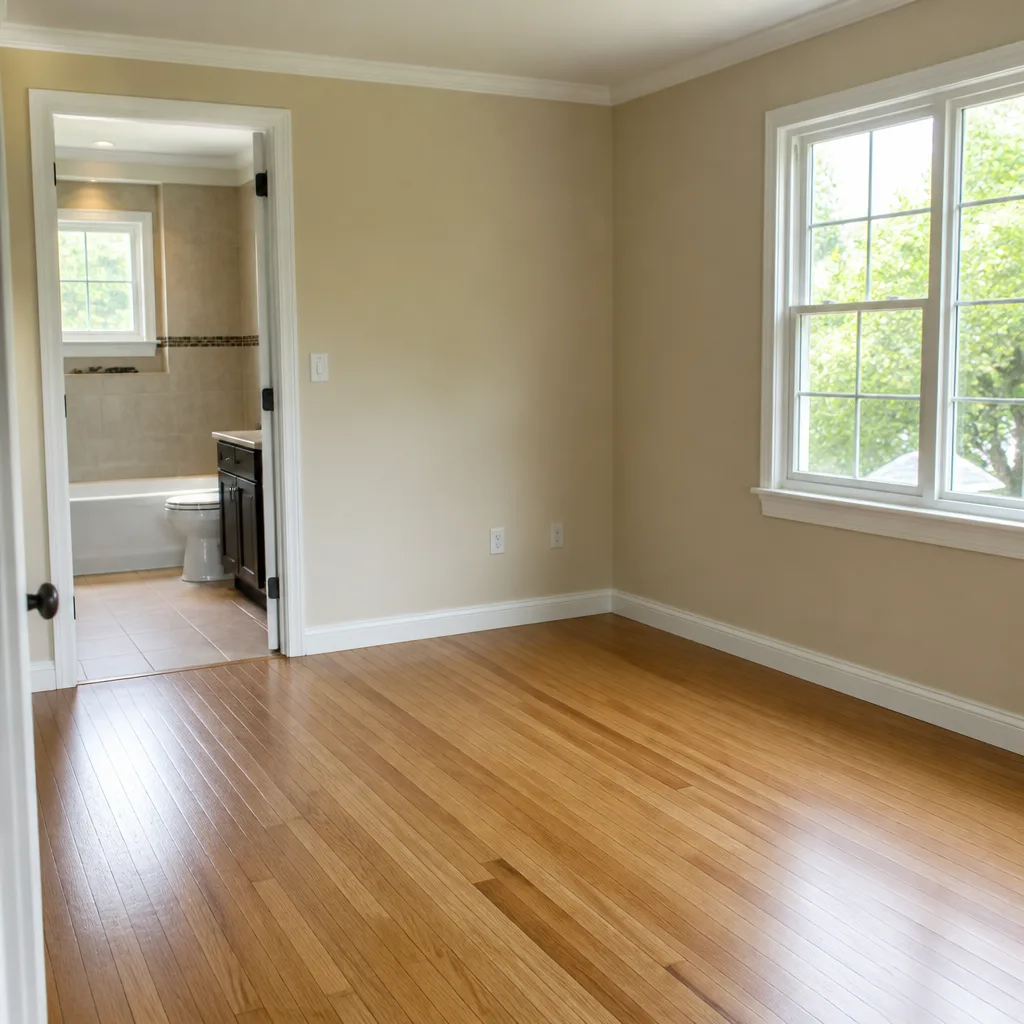
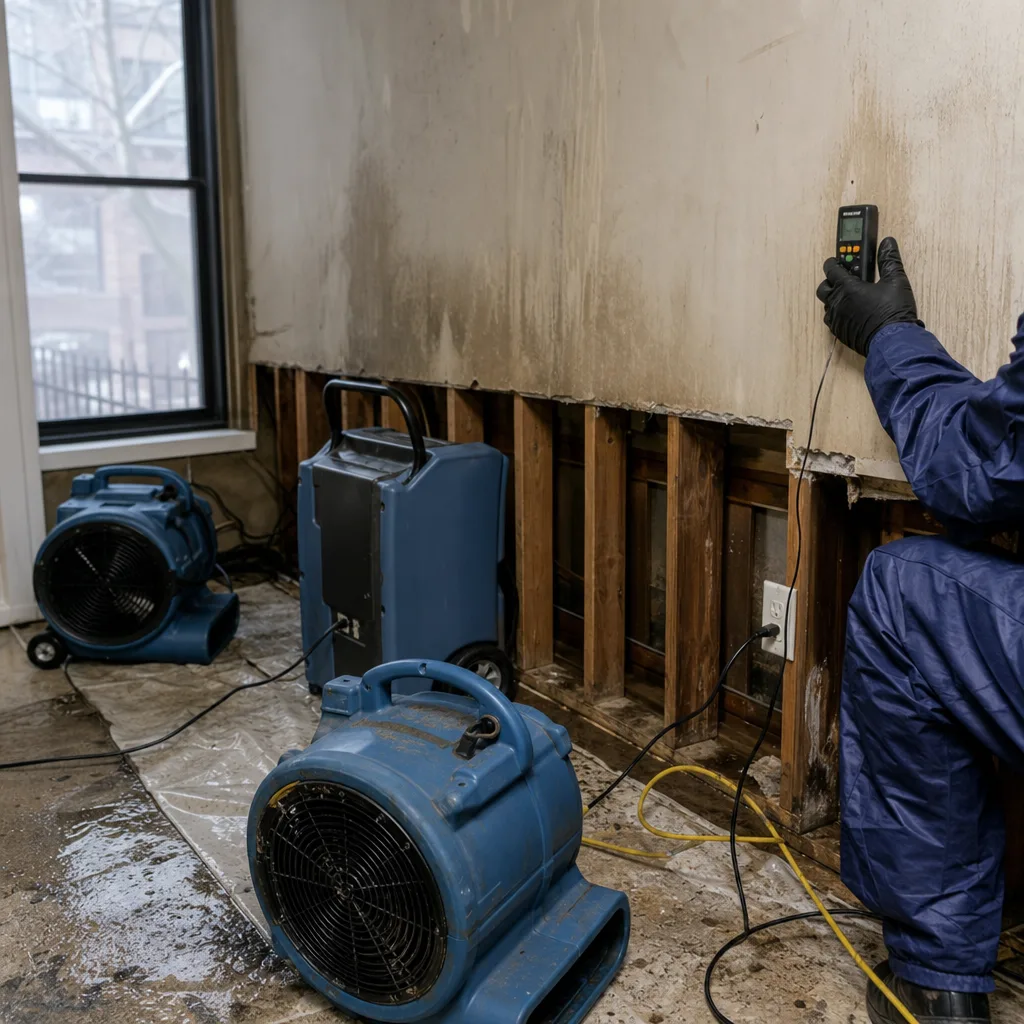 Before
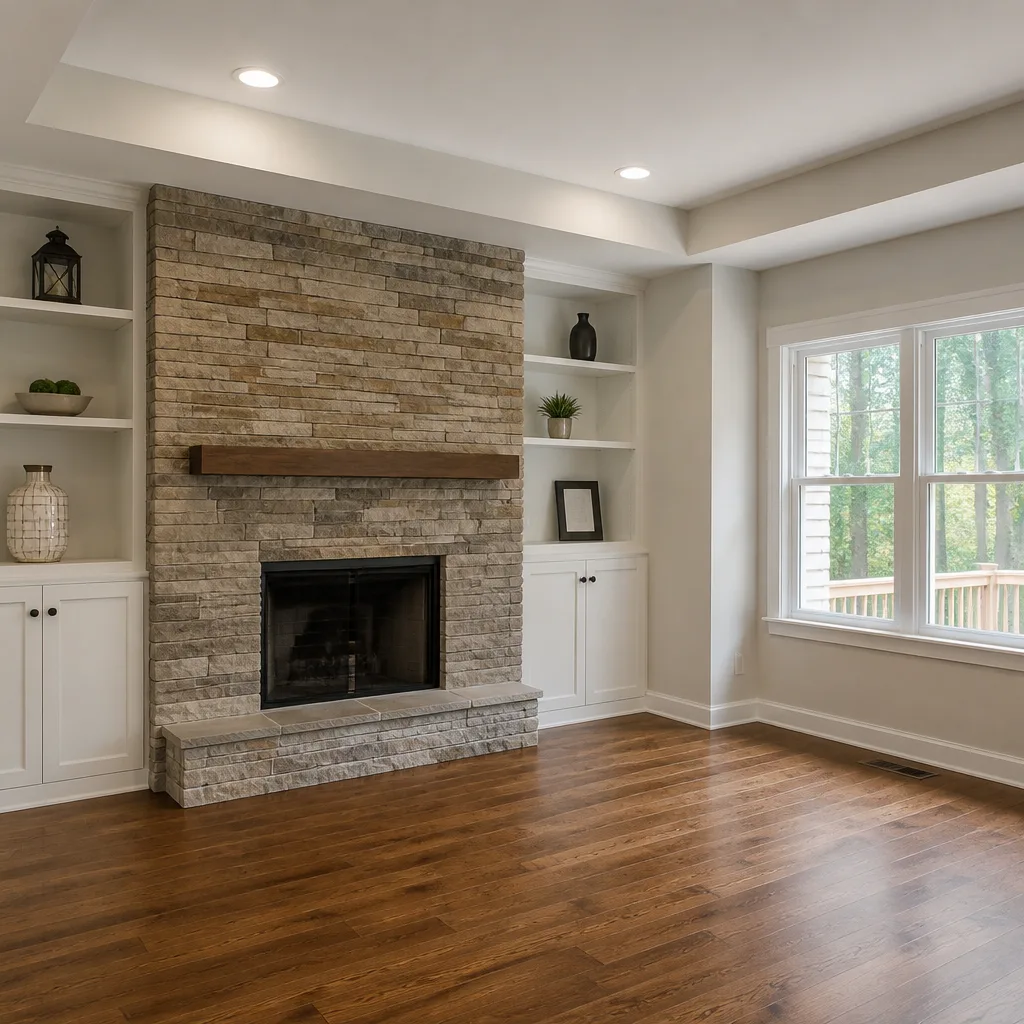
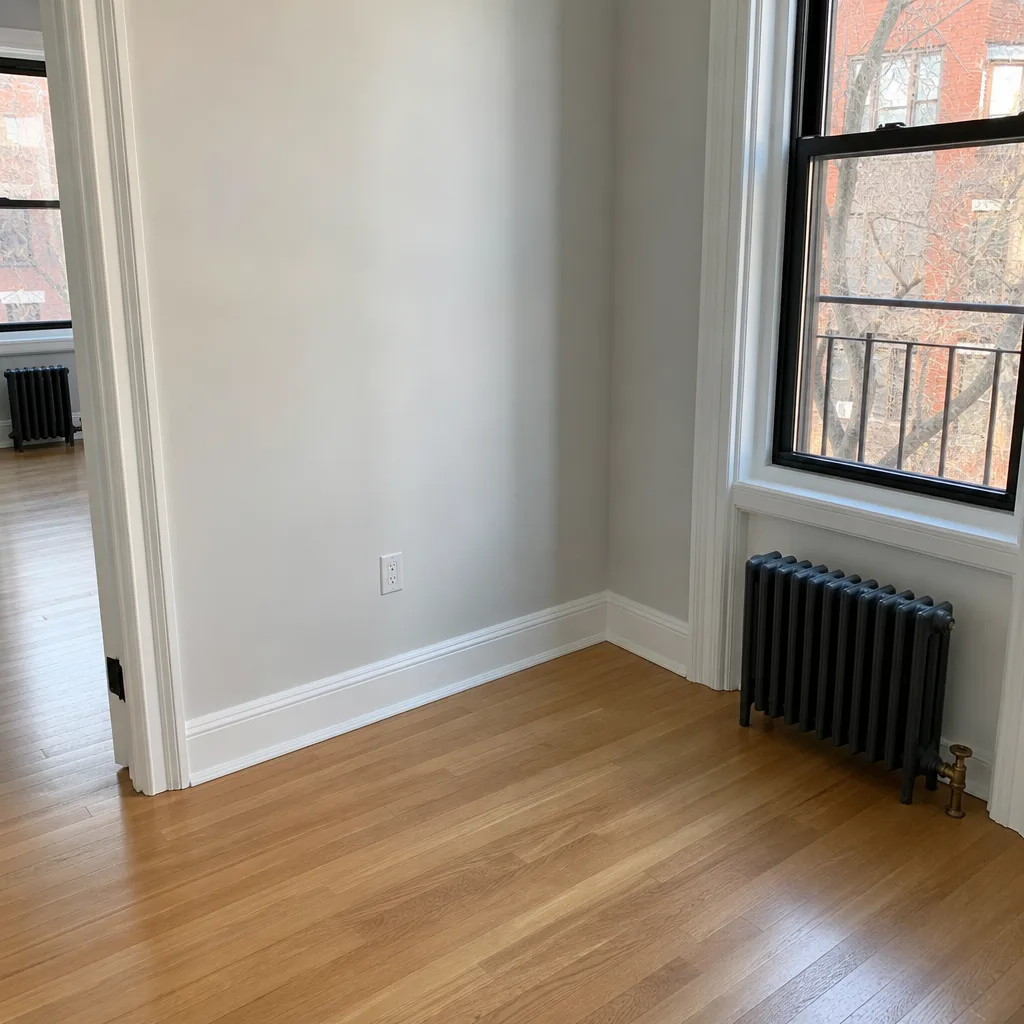 After
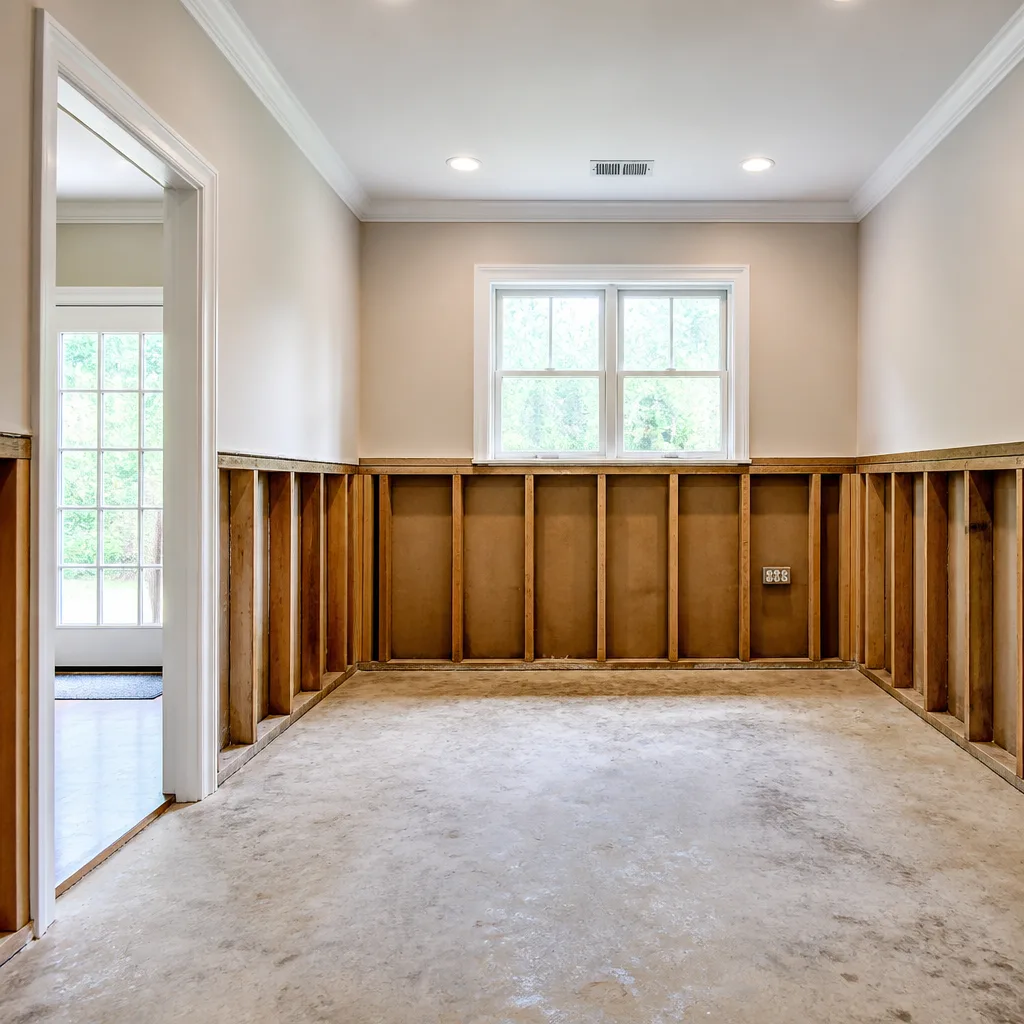
After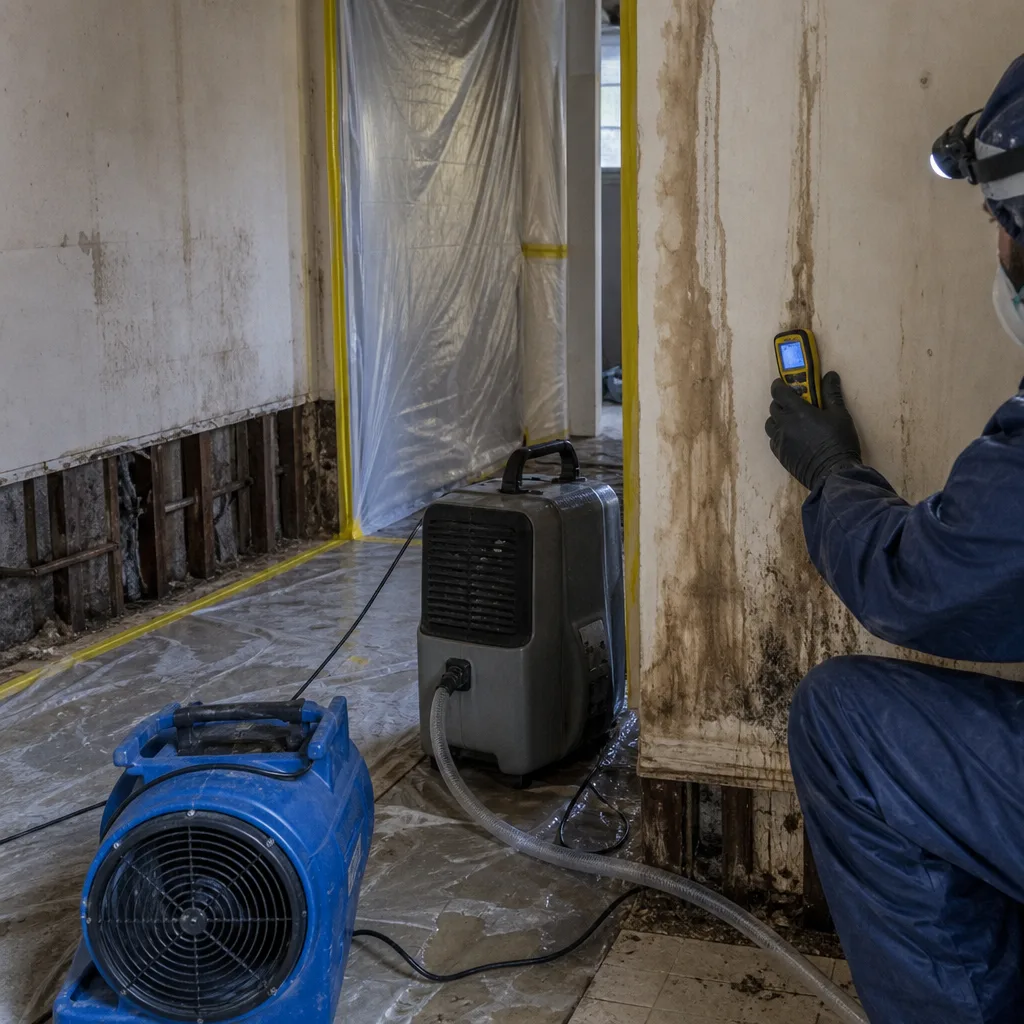 Before
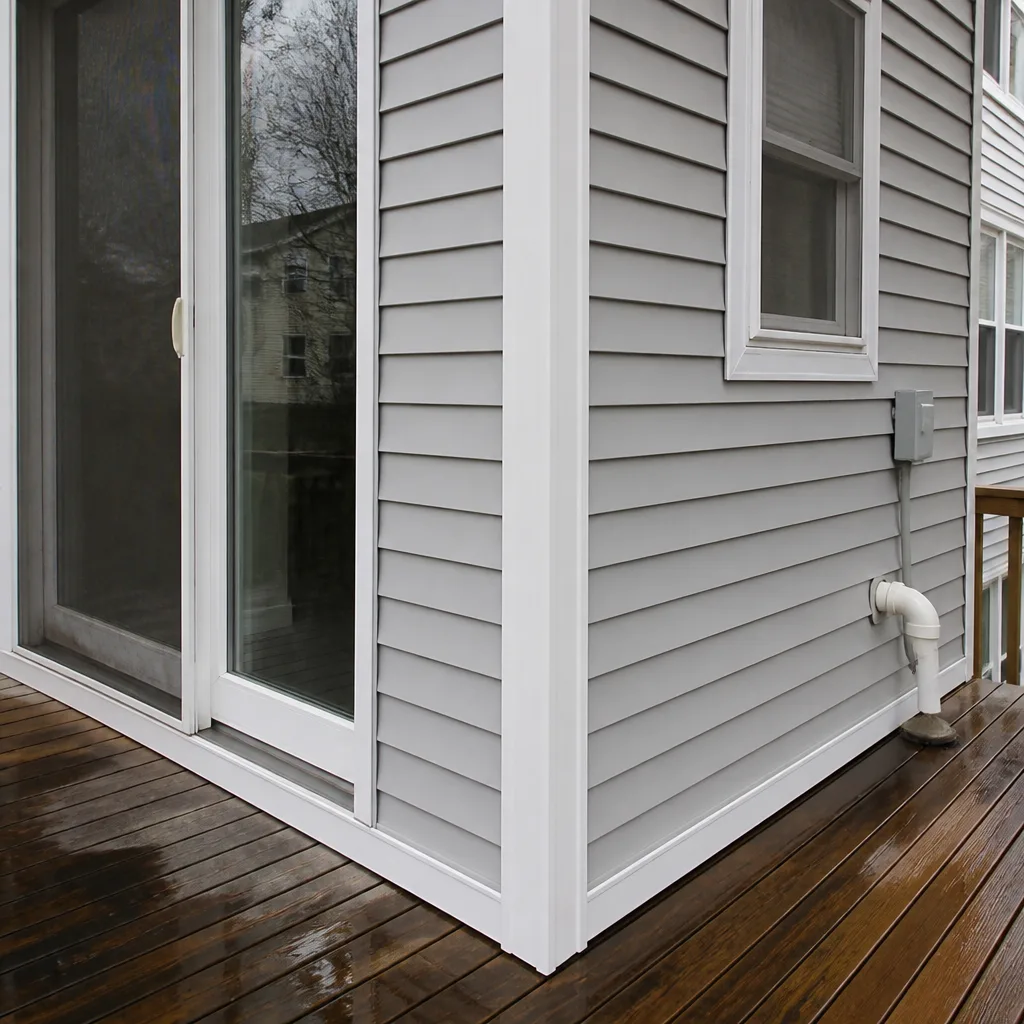 After
After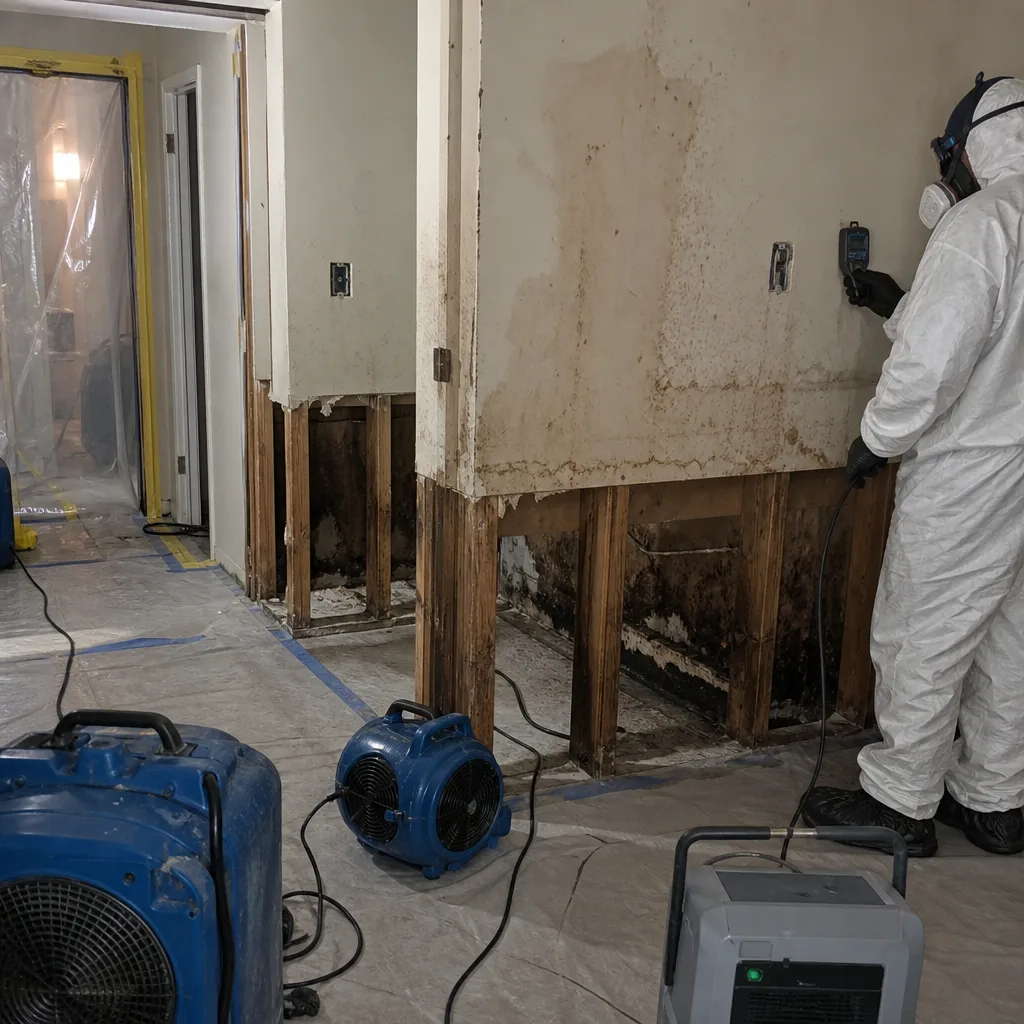 Before
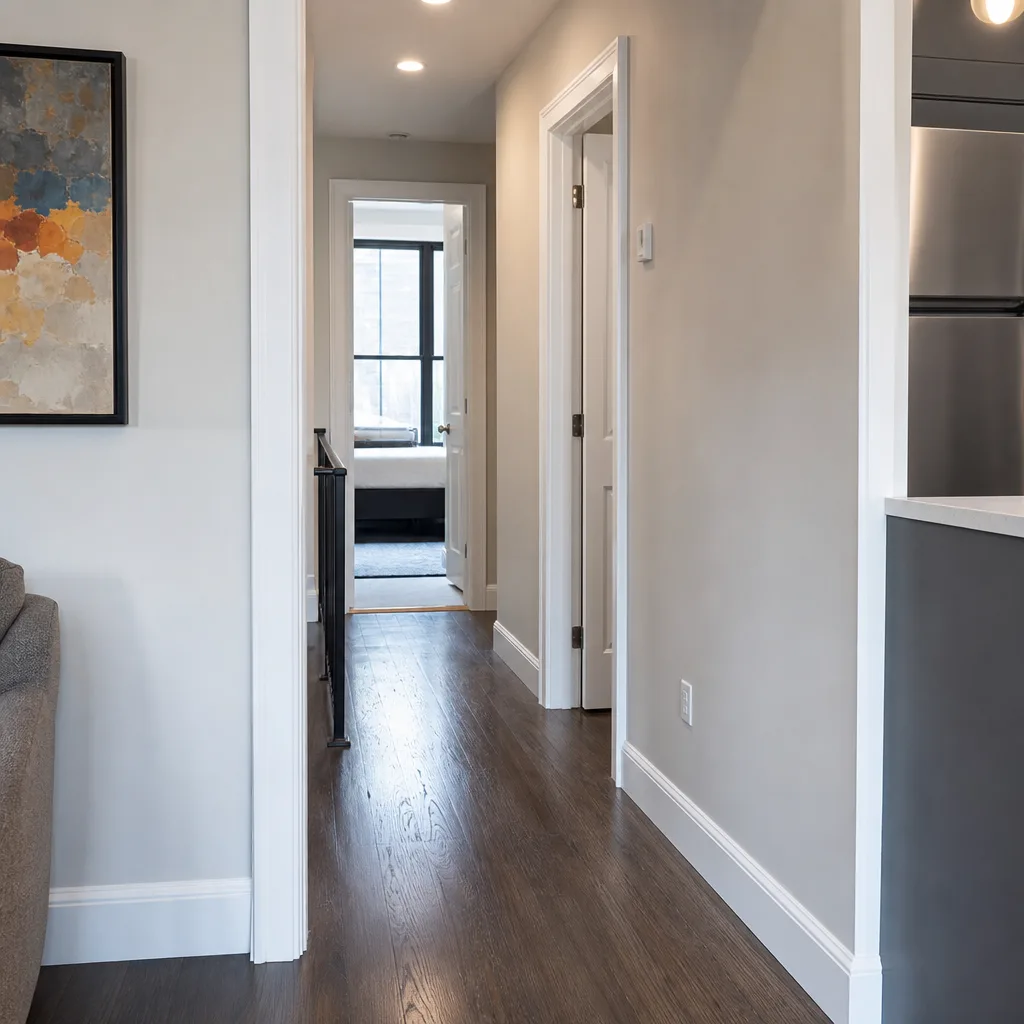 After
After24/7 Emergency Water Damage Restoration in Stuyvesant Town-Peter Cooper Village
Water damage restoration in Stuyvesant Town-Peter Cooper Village typically costs $2,800-$7,500 depending on how many floors the water traveled and whether structural drying is needed inside shared wall cavities. Most jobs start the same day, and our crews arrive within 45 minutes because we know the campus layout and the access protocols. Call (917) 924-4221 now and a live dispatcher will answer, not a recording.
When a steam riser fails on the 9th floor, water wicks down through the identical wet-wall cavity to the 8th, 7th, and 6th floors within hours. The first hour decides whether you dry three rooms or rebuild nine. Our Water Damage Restoration team is staffed around the clock, and we start extraction the same visit. In Stuyvesant Town-Peter Cooper Village, every hour that passes pushes moisture deeper into plaster, oak flooring, and the cast-iron pipe chases that run vertically through all 110 towers.
Understanding Water Damage Restoration Severity in Stuyvesant Town-Peter Cooper Village Properties
Restoration work in Stuyvesant Town-Peter Cooper Village almost always involves Category 2 or Category 3 water by the time we arrive. Clean water from a burst supply line becomes Category 2 within 48 hours as it picks up contaminants from 75-year-old pipe insulation and wall cavity dust. A failed drain line or sewage backup is Category 3 from the first minute. The severity classification drives every decision: what gets dried, what gets removed, and what gets rebuilt.
Moisture mapping matters more here than anywhere else in Manhattan. Because the floor plans are virtually identical across all 110 buildings, a leak on the 7th floor of one Peter Cooper Village tower tells us exactly where to probe on the 6th, 5th, and 4th floors. We use thermal imaging and penetrating moisture meters to read through plaster and lath, because surface dryness means nothing when water is traveling inside a shared chase. The construction is uniform, the failure modes are uniform, and our diagnostic routine is built around that fact.
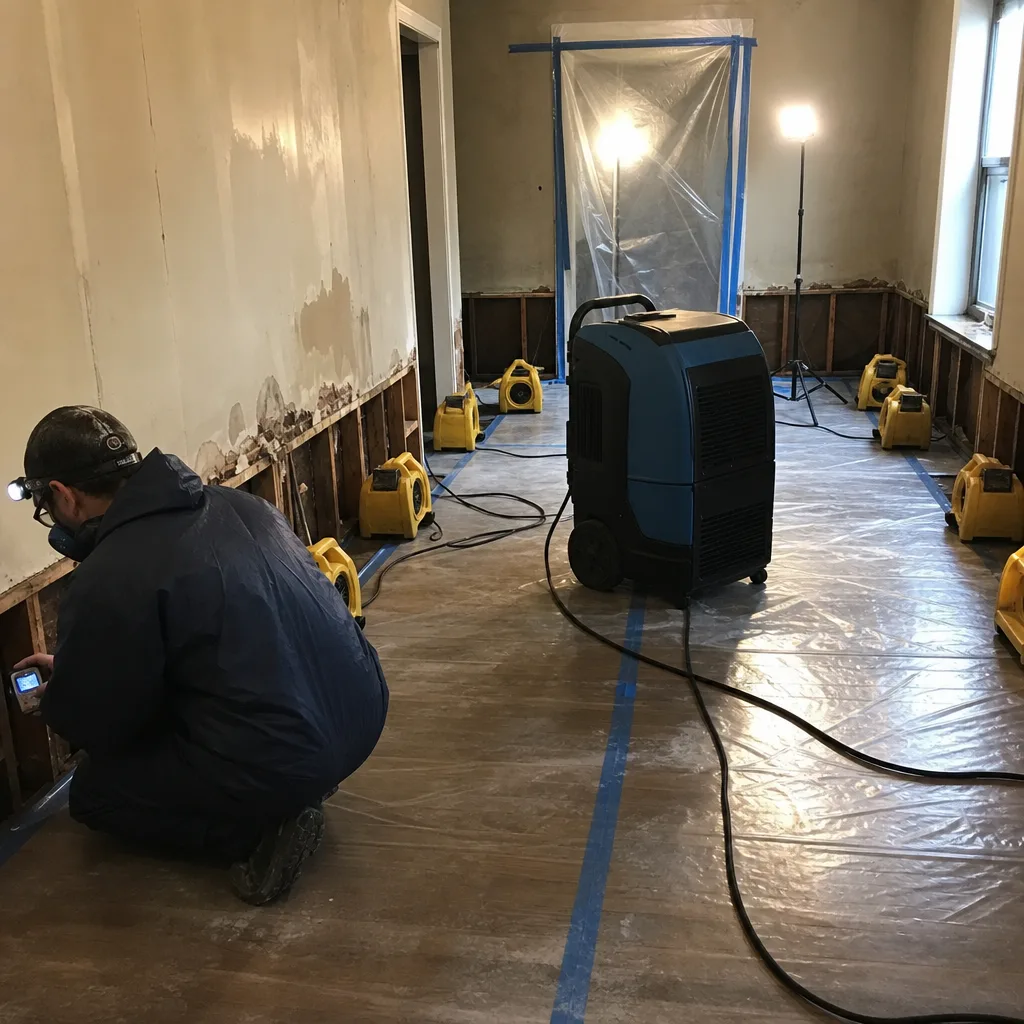
Structural drying in these towers is not a one-room job. The 1947-era masonry construction holds moisture differently than modern drywall. Cast-iron risers condense. Plaster acts as a sponge. Our crews map the vertical path of every leak before placing a single air mover.
Why Stuyvesant Town-Peter Cooper Village Property Owners Choose Floodline Restoration Co. of Manhattan
- 45-minute response commitment to the StuyTown campus. Our dispatch board is built around the neighborhood. When a crew is already on Avenue C or First Avenue, they are at your door fast.
- A live person answers at 2 a.m. Not a phone tree, not a voicemail. A dispatcher who knows the difference between a Peter Cooper Village tower and a StuyTown oval building.
- IICRC-certified crews, trained to WRT and ASD standards. Water damage restoration technicians, applied structural drying specialists, and our rebuild team are the same people from day one to final coat.
- Free visual inspection with a written scope before work starts. No pressure, no inflated estimate. You see the moisture map, you approve the plan, we go to work.
- Direct insurance billing and adjuster coordination. We photograph everything, log every reading, and talk to your carrier so you don’t have to interpret line items.
- One team from extraction to reconstruction. We don’t hand you off to a third-party GC. The same certified crew that pulls the water rebuilds the wall.
Our Water Damage Restoration Process
Inspection & Assessment
We start with a full vertical inspection. If water is on the 7th floor, we check the wet-wall cavity on the 8th and the 6th before writing anything. Thermal imaging and hygrometers give us a moisture map we can show you and your insurance adjuster.
Extraction & Stabilization
Standing water comes out first. We use truck-mounted and portable extraction units, then shut off the source. In StuyTown, that often means coordinating with building management to isolate a riser or a supply branch.
Drying & Dehumidification
Dri-Eaz dehumidifiers and Phoenix air movers are placed by the moisture map, not by guesswork. Daily readings are logged until the dry standard is met, and the log goes to you and your carrier. We also use Injectidry systems for cavities that cannot be opened easily.
Cleaning & Sanitization
Category 2 and 3 water means antimicrobial treatment and HEPA air scrubbing before any rebuild. We treat the cavity, not just the visible surface, because the same cavity serves the units above and below you.
Specialty Treatment for Plaster & Hardwood
StuyTown’s original oak flooring and plaster walls respond differently than modern materials. We use low-grain refrigerant dehumidifiers on hardwood and controlled drying chambers for plaster to prevent cracking and preserve what can be saved.
Repairs & Restoration
The same crew that extracted the water now replaces riser sections, patches plaster, and refinishes floors. We leave a moisture log, a completed scope, and our 90-Day Done Right Promise in your hands.
Need Emergency Water Damage Restoration in Stuyvesant Town-Peter Cooper Village Now?
Crews minutes away, answering live 24 hours a day. The sooner we start, the less it costs.
Working With Your Insurance Company
In Stuyvesant Town-Peter Cooper Village, insurance claims move differently than in a private brownstone. Your policy covers your unit and your contents. The building’s master policy covers the risers, the chases, and the structure. Where one ends and the other begins is a common point of dispute, and that’s where we step in. We document from the first hour: moisture readings, photos room by room, and a line-item scope written in the format adjusters expect.
Curt Bowman founded this company around a simple rule: the homeowner should never play messenger between restoration and the carrier. We talk directly to your adjuster, provide the drying logs and scope, and bill the carrier directly where your policy allows. If you have a $5,000 deductible and a $12,000 loss, we show you exactly what’s covered before we spend a dollar.
What We Provide Your Insurer
- Thorough documentation of the loss
- Photos of all damage, room by room
- Moisture readings and drying logs
- A detailed, line-item scope of work
- Direct coordination with your carrier
Built for Stuyvesant Town-Peter Cooper Village’s Loss Calendar
January and February are steam riser season in Stuyvesant Town-Peter Cooper Village. When outside temperatures drop below 20 degrees, the cast-iron risers that heat all 13 floors contract and shift. Pinhole leaks appear at joints, and because the risers run through shared wall cavities, often the first sign is a stain on the ceiling of the unit below the leak. Our busiest extraction calls come in during cold snaps, and the pattern repeats building after building.
Late summer brings a different risk. The East River side of the campus sits in a FEMA-designated flood zone, and the memory of Hurricane Sandy is not abstract here. Ground-floor units and basement mechanical rooms flooded in 2012, and the same below-grade infrastructure remains vulnerable. When a coastal storm pushes surge up the East River, StuyTown’s ground floors take water first. We stage crews in the neighborhood when the National Weather Service issues a coastal flood watch for the Battery and the East River shoreline.
Spring thaw and summer thunderstorms add a third layer. Aging roof drains and original copper supply branches, now 75 years old, fail sporadically. A heavy April rain can expose a hidden roof drain leak on the top floor that has been seeping into plaster for years.
Water Damage Restoration Across Stuyvesant Town-Peter Cooper Village’s Neighborhoods
Stuyvesant Town and Peter Cooper Village are one campus but two rhythms. The StuyTown side, east of First Avenue and south of 20th Street, centers on the oval park and the Stuyvesant Town Playground. The Peter Cooper Village side runs north of 20th Street along the East River, and its towers sit closer to the flood exposure. Response routes differ: we enter the StuyTown side through the Avenue C loop, while Peter Cooper Village is faster from the 23rd Street side near the East River Greenway.
Along the East River service road and the Asser Levy Recreation Center corridor, ground-floor units are the first to flood during surge events. The towers facing the FDR Drive see the highest wind-driven rain exposure and the most roof drain failures. Units along 14th Street and the southern edge of the campus, near Stuyvesant Square, are older in their systems and see more cast-iron drain line failures. The central courtyards and playground areas are not just amenities; they determine which entrances our crews use and how far equipment must be wheeled to reach a riser.
Zip codes 10009 and 10010 split the campus. A 10009 tower on the StuyTown side and a 10010 tower in Peter Cooper Village may look identical, but the management office routing, the elevator lockout procedures, and the nearest standpipe connections differ. We know both sides.
Specialized Water Damage Restoration Services We Offer in Stuyvesant Town-Peter Cooper Village
Burst Pipe Restoration
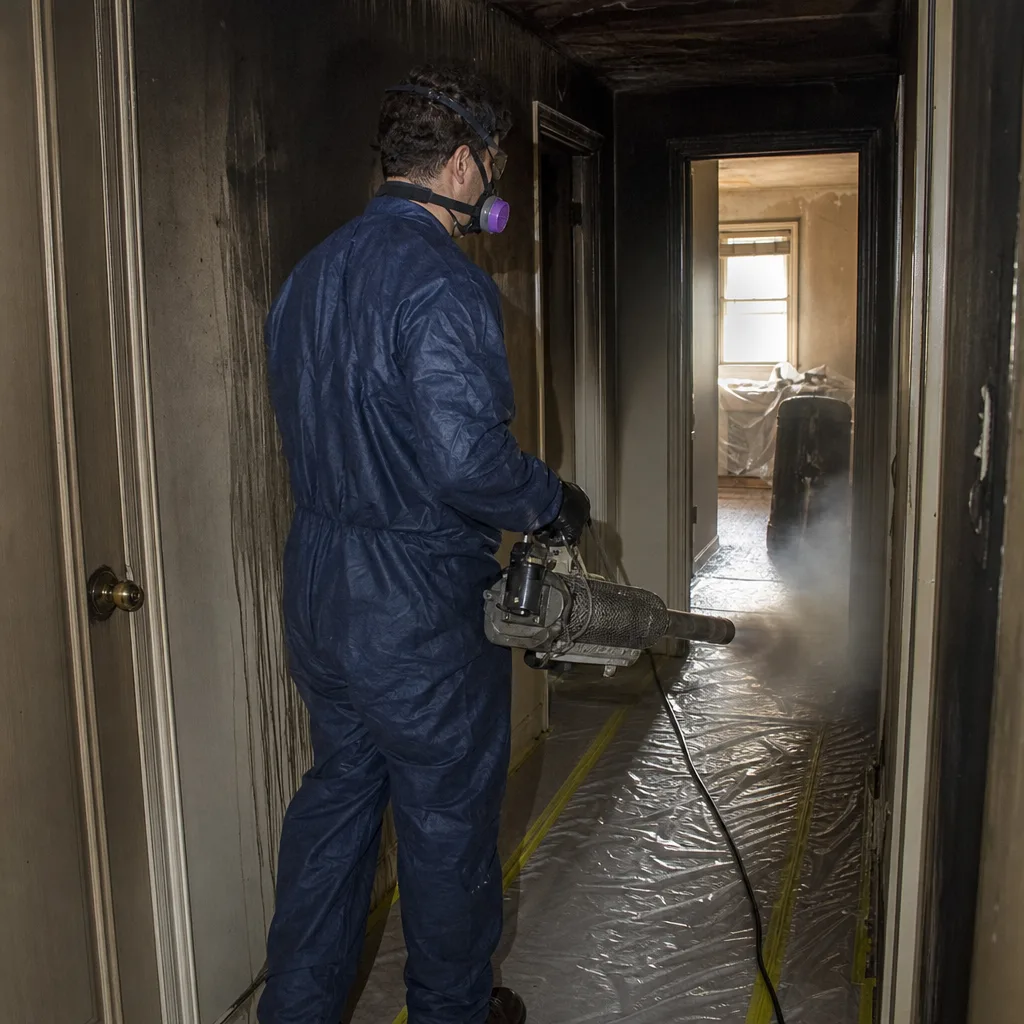
In Stuyvesant Town-Peter Cooper Village, a burst pipe usually means a failed galvanized supply branch or a split cast-iron riser section behind a shared wall. We trace the break, isolate the branch, and extract before the water reaches the unit below. The same visit often includes coordination with building management to shut down the riser and schedule access to adjacent units.
Structural Drying & Dehumidification
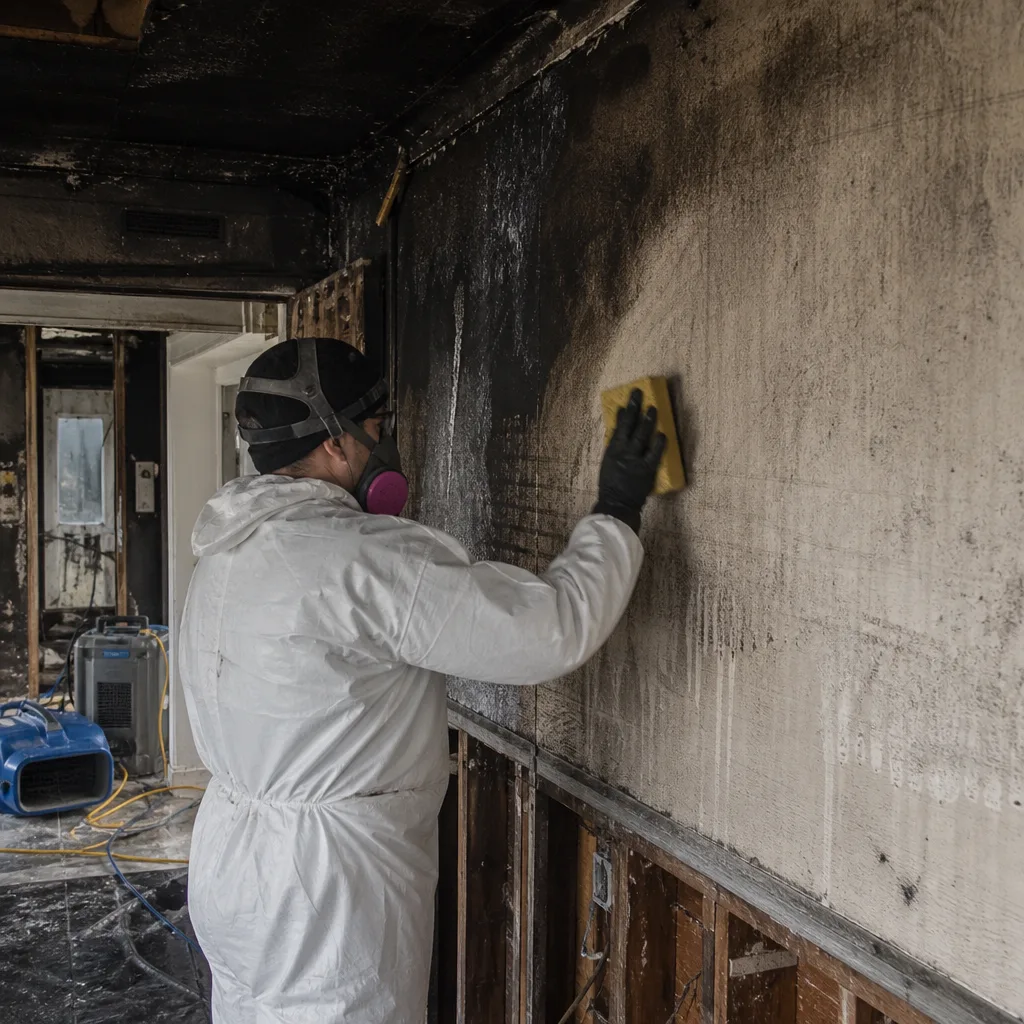
This is the work that prevents a $3,000 extraction from becoming a $30,000 rebuild. We use Dri-Eaz and Phoenix equipment placed by moisture map, with daily readings until the dry standard is met. In these towers, the drying plan must account for the cavity behind the plaster, not just the room air, and we place injection dryers where the cavity cannot be opened.
Ceiling & Roof Leak Water Damage
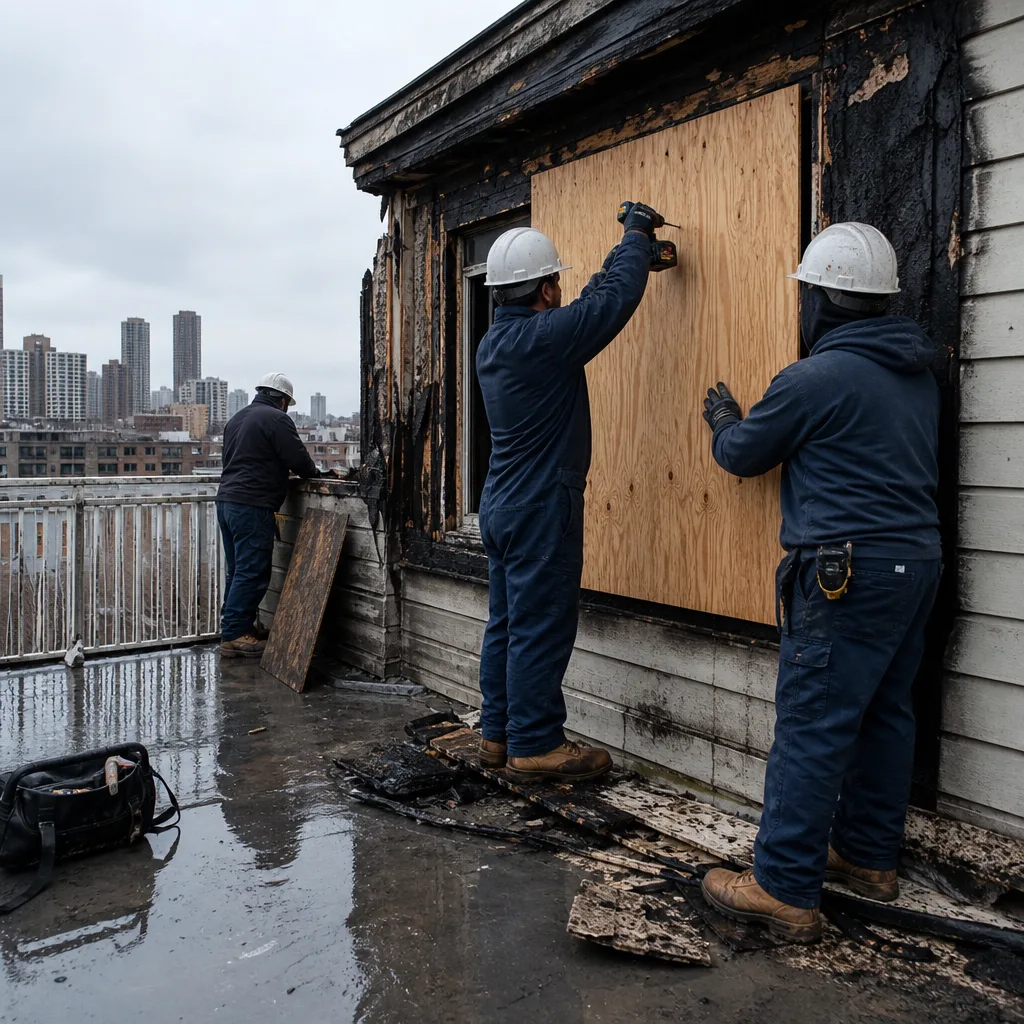
Top-floor units in StuyTown and Peter Cooper Village take water from original roof drains and parapet failures. By the time a stain shows on a 13th-floor ceiling, water has often been traveling through the plaster for weeks. We inspect the full downward path, remove saturated materials, and dry before patching.
Basement Water Removal
The campus’s below-grade mechanical rooms and storage areas flooded during Sandy, and they remain the first spaces to take on water during any East River surge. We bring pumps, extraction wands, and dehumidifiers into low-ceiling mechanical rooms, and we coordinate with building management on power shutoffs and below-grade access.
Flood Cleanup
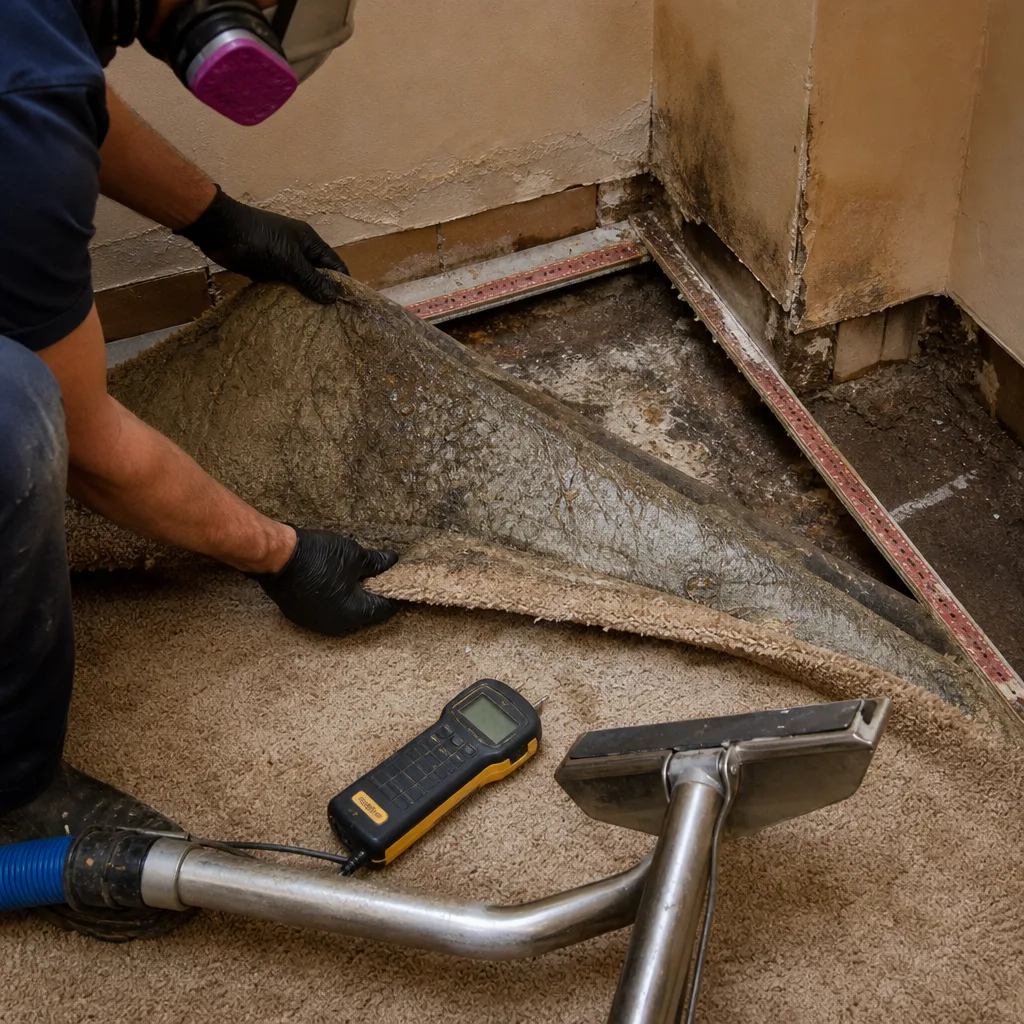
When storm surge or a failed municipal drain sends Category 3 water into ground-floor units, the cleanup is not just drying. It’s contaminated water removal, antimicrobial treatment, HEPA air scrubbing, and structural drying. In StuyTown, it’s also a management coordination job: access, elevators, and standing water in common areas must be addressed in the right order.
What happens when you call
- 1
A real person answersNo phone trees - you reach a local pro.
- 2
You get an upfront price rangeHonest numbers before anyone is dispatched.
- 3
A background-checked tech heads outLicensed & insured, dispatched right away.
- 4
You approve before work beginsNothing starts until you say go.
Water Damage Restoration Costs in Stuyvesant Town-Peter Cooper Village, NY
A single-unit water damage restoration in Stuyvesant Town-Peter Cooper Village runs $2,800-$7,500 for typical riser leaks and supply branch bursts. Extraction alone runs $900-$2,200 when the water is contained to one floor. A vertical riser failure affecting three or more floors pushes the job to $9,000-$18,000, because each affected unit needs its own drying plan, access coordination, and rebuild scope. A Sandy-like surge event that floods ground-floor units and below-grade spaces is a different category entirely: $25,000-$90,000 depending on how many rooms and how much of the mechanical infrastructure is involved.
What moves the price is the vertical spread. A 7th-floor leak that stayed in the bathroom might cost $3,000. The same leak that wicked down to the 4th floor becomes four drying jobs and four rebuild scopes. Insurance typically covers riser failures under the building’s master policy, while your contents and interior finishes fall under your own policy. The free inspection is where you find out which is which. Call (917) 924-4221 and we’ll map the moisture, write the scope, and put a firm number in your hands before any work starts.
We Also Serve Cities Near Stuyvesant Town-Peter Cooper Village
Our crews respond to water damage across the surrounding area, including Fairview, Harrison, East Bronx, and Hunts Point. The same 45-minute response commitment applies, and the same live dispatcher answers the phone day or night.
Stuyvesant Town-Peter Cooper Village Water Damage Restoration Questions, Answered
How does the uniform construction of Stuyvesant Town-Peter Cooper Village change the scope of a water damage inspection?
It makes every inspection a vertical inspection. Because all 110 towers share identical 1947-1949 floor plans, a leak on one floor is a repeatable failure pattern that we check across every floor directly above and below. A 7th-floor bathroom leak means we probe the 6th, 5th, and 4th floors’ wet-wall cavities before we write a scope.
What is the most common source of water damage in StuyTown and Peter Cooper Village units today?
Aging cast-iron steam risers and galvanized supply branches. These 75-year-old pipes run through shared wall cavities in every building, and they now fail at joints and pinholes with regularity. We see the same corrosion pattern in the same location building after building.
Does Floodline Restoration need to coordinate with StuyTown management before starting water extraction?
Yes, and that coordination is part of what we do. Access to risers, elevator lockouts, and standing water in common areas all require a centralized work order. We handle that communication directly so the restoration moves without stalling. Starting without management sign-off can delay claims and final inspection.
After a Sandy-like storm surge floods the ground-floor units, what specialized drying approach does our team use in StuyTown?
We use a combination of low-grain refrigerant dehumidifiers, high-volume air movers, and injection drying in wall cavities. Ground-floor units sit on concrete slabs, so the drying plan must address both the air and the masonry. We also coordinate with management on below-grade power and elevator access, because drying cannot begin until those are safe.
Can old plaster walls in StuyTown units be saved after a riser leak, or do they have to be removed?
Plaster can often be saved if we reach it early. Controlled drying with low-humidity air and cavity injection preserves the plaster’s structural integrity. But if the leak ran for weeks or the plaster is crumbling, removal and replacement with drywall is the more honest repair. We will show you the condition and recommend the option that lasts.
How fast can you actually get here in an emergency?
We commit to 45 minutes for Stuyvesant Town-Peter Cooper Village. Our crews work this campus regularly, and the dispatcher knows which entrance serves which tower. A live person answers at any hour, and the crew is dispatched immediately.
Will my insurance cover water damage from a riser failure?
Typically, the building’s master policy covers the riser and the shared structure. Your individual policy covers your interior finishes and personal property. We document the source, the moisture path, and the scope so your adjuster can separate the two. Call (917) 924-4221 for a free inspection; we will help you understand what’s covered before work begins.
What should I do in the first 30 minutes after discovering water damage?
Shut off the water at the nearest fixture if you can, move valuables out of the path, and call us. Do not try to open the wall cavity yourself, and do not assume a slow drip is harmless. In these towers, a slow drip on the 7th floor has often been wicking down through the 6th, 5th, and 4th floors for days.
Serving Stuyvesant Town-Peter Cooper Village, NY - Our Local Coverage Area
We’re based in the Stuyvesant Town-Peter Cooper Village area and know this community well. Use the map below to see our service coverage - if you’re nearby, we can almost certainly help.
The Wet-Wall Checkpoint: Why a 7th-Floor Leak Is a 6th, 5th, and 4th-Floor Problem
Last winter, our crew responded to a steam-heat riser pinhole leak on the 9th floor of a Peter Cooper Village tower. Using moisture mapping, we traced wicking through the shared wet-wall cavity down to the 6th floor, the same corrosion pattern we see in dozens of sister buildings. We performed structural drying with Dri-Eaz dehumidifiers and air movers, replaced the failed riser section, and coordinated access through the centralized building management office to minimize downtime for the stacked units.
This is not an outlier. Every Stuyvesant Town-Peter Cooper Village tower was built between 1947 and 1949 with the same floor plans, the same cast-iron risers, and the same wet-wall cavities. When a riser drips on the 7th floor, water follows the pipe chase down through the 6th, 5th, and 4th floors. It collects in the same wall cavity, behind the same plaster, in the same location. Our crews know to check every floor directly above and below a reported leak before closing out a job. That is the information-gain difference: anyone can dry a wet room. We check the vertical path that made it wet, because in this campus, the vertical path is predictable.
For homeowners in Stuyvesant Town-Peter Cooper Village, that means a faster diagnosis, a tighter scope, and a lower final bill. The line the water left is where we start. Call Floodline Restoration Co. in Stuyvesant Town-Peter Cooper Village at (917) 924-4221 for a free inspection and a written estimate. We’ll be there when we say.
Written by Curt Bowman, Owner at Floodline Restoration Co. of Manhattan, providing water damage restoration to Stuyvesant Town-Peter Cooper Village and surrounding neighborhoods.