
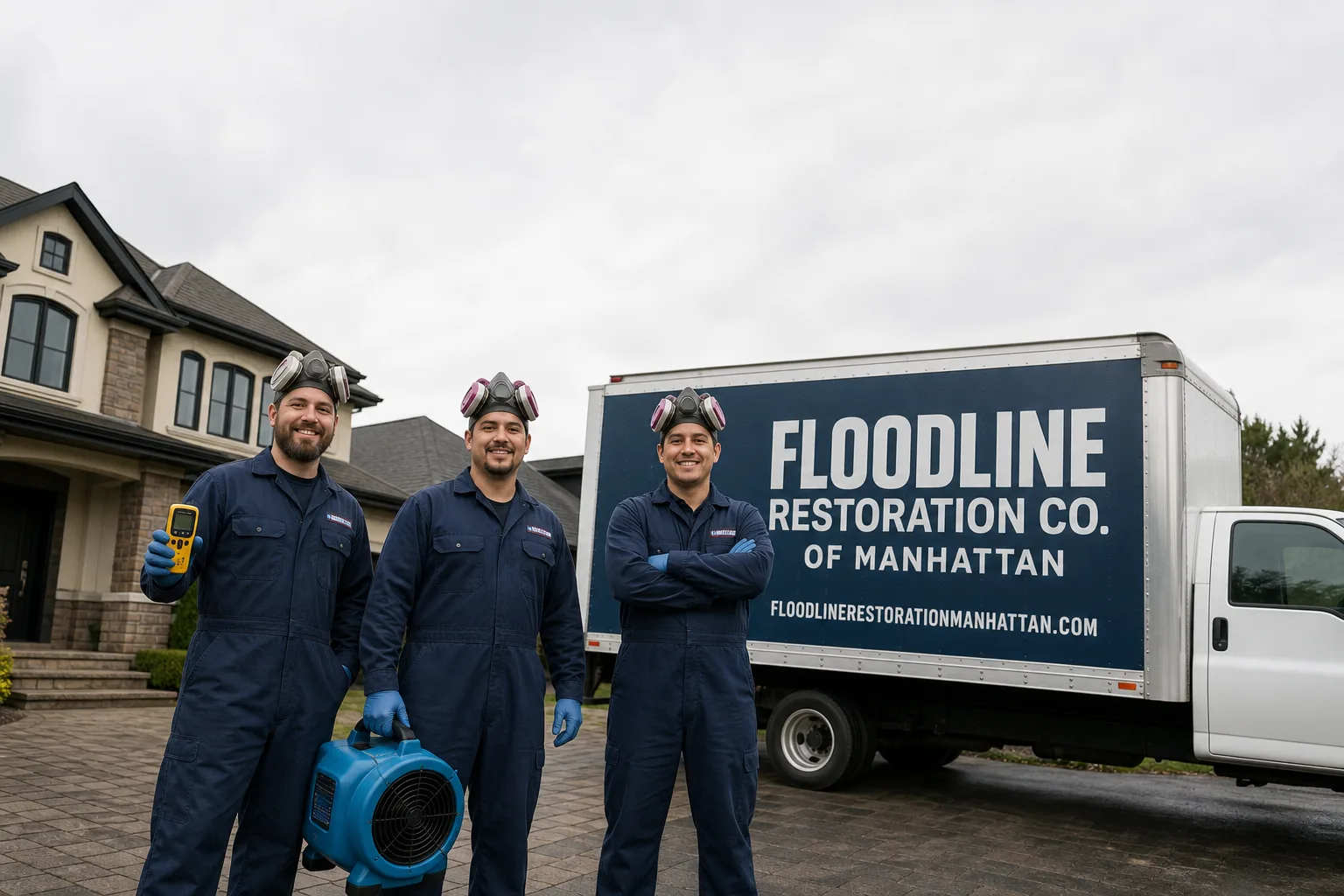
Free visual inspection and a written scope of work before any mitigation begins - photos, moisture readings, and drying logs go in your claim file
The scope we write is the scope we bill. Anything new gets shown to you, in writing, before we touch it.






 Before
 After
After Before
 After
After Before
 After
After24/7 Emergency Storm & Disaster Restoration in Far Rockaway
Storm damage in Far Rockaway moves fast, and so do we. When a nor’easter pushes surge over the bulkhead or wind tears a section of roof off a bungalow on Beach 74th Street, you need a crew that answers the phone at 2 a.m. and gets extraction running the same visit. We dispatch certified technicians across Far Rockaway around the clock, every day of the year. Call (917) 924-4221 and a live dispatcher picks up, not a recording. We’ll be there when we say, and the first hour after water enters your home is when we stop salt intrusion from turning a Category 1 cleanup into a Category 3 gut job.
Understanding Storm & Disaster Restoration Severity in Far Rockaway Properties
Far Rockaway’s housing stock makes storm restoration work different here than anywhere else in Queens. The early-to-mid 20th century summer bungalows that now serve as year-round homes were built with shallow crawl spaces and balloon-frame walls. When Category 3 saltwater from the Atlantic or Jamaica Bay enters those cavities, it wicks upward fast and hides behind intact lath, far past the visible floodline. We classify water by contamination level: Category 1 is clean supply water, Category 2 carries significant contaminants, and Category 3 is grossly unsanitary, including storm surge. Salt-laden Category 3 water doesn’t just dry out; it leaves hygroscopic salts in stud cavities that pull moisture back for months. Our technicians run moisture mapping with thermal imaging and hygrometers to find those hidden columns of moisture before they turn into mold or structural decay. For post-WWII attached two-family homes, we see different failure patterns: shared walls move smoke and water between units, and access to affected framing is often tighter. NYCHA towers like Redfern and Hammel present their own containment and logistics challenges. We read each building type differently, and our scope reflects that.
Why Far Rockaway Property Owners Choose Floodline Restoration Co. of Manhattan
- 45-minute response commitment across Far Rockaway. Crews stage from a metro dispatch point and know the Rockaway Peninsula’s routes, from Beach Channel Drive to Seagirt Boulevard.
- A live person answers 24/7. No automated system, no callback queue. A dispatcher picks up at 2 a.m. during a nor’easter, and a certified crew is moving toward your address.
- IICRC-certified crews trained to WRT and FSRT standards. Our technicians hold Water Damage Restoration and Fire & Smoke Restoration certifications, and work to RIA and IFA protocols where they apply.
- Free visual inspection of storm damage. Before any work begins, we walk the property and give you a straight read on what needs extraction, what needs drying, and what needs a contractor’s rebuild.
- Direct insurance billing. We document everything from the first hour, then handle the claim conversation with your carrier so you don’t play messenger.
- One team from extraction to reconstruction. The same certified crew that sets containment and runs Dri-Eaz and Phoenix equipment is the crew that rebuilds the wall. No mid-job handoff, no inherited crew.
Our Storm & Disaster Restoration Process
Inspection & Assessment
We walk the entire property, including crawl spaces and wall cavities, and map moisture with thermal imaging. In Far Rockaway’s salt-air environment, we look specifically for hidden saltwater columns that visual inspection misses.
Extraction & Stabilization
Standing water comes out immediately. For storm surge, we also begin salt neutralization on affected surfaces because letting salt-laden water sit in framing accelerates corrosion. Emergency board-up and roof tarping happen in this phase if wind damage has opened the envelope.
Drying & Dehumidification
We set professional-grade Dri-Eaz, Phoenix, and XPOWER air movers with dehumidifiers sized to the affected square footage. Daily moisture readings are logged until the dry standard is met, and the log goes to you and your carrier.
Cleaning & Sanitization
All affected surfaces get antimicrobial treatment appropriate for the water category. In Far Rockaway, where salt-air accelerates mold growth between storms, this step is non-negotiable, not optional.
Specialty Treatment for Far Rockaway Conditions
Salt neutralization on framing, wiring, and HVAC components where surge water reached them. We also inspect for the hydrostatic pressure pattern created by post-Sandy elevated homes draining onto unlifted neighbors’ slabs.
Repairs & Restoration
The same crew that read the moisture map on day one rebuilds what needs rebuilding. Wind-rated door and window replacements meet NYC code expectations, and framing repairs account for the chronic salt-air environment. Every job is backed by the 90-Day Done Right Promise in writing.
Need Emergency Storm & Disaster Restoration in Far Rockaway Now?
Crews minutes away, answering live 24 hours a day. The sooner we start, the less it costs.
Working With Your Insurance Company
Storm damage claims in Far Rockaway involve the carrier from the first phone call. We document the loss before we move anything: photos of every affected room, moisture readings, and the visible floodline. Then we write a line-item scope of work using industry-standard estimating formats that adjusters recognize. Curt Bowman built Floodline Restoration Co. in 2010 around a dispatch board, not a sales desk, and that philosophy extends to claims. We talk directly with your adjuster, send documentation the same day it’s created, and bill the carrier directly. You never play messenger between us and the insurance company. If a second inspection is needed, we walk it with the adjuster and show them the on-site evidence.
What We Provide Your Insurer
- Thorough documentation of the loss
- Photos of all damage, room by room
- Moisture readings and drying logs
- A detailed, line-item scope of work
- Direct coordination with your carrier
Built for Far Rockaway’s Loss Calendar
Far Rockaway gets hit from both water and wind, and the loss calendar reflects that. Nor’easter season, roughly October through March, brings the dual-front storm surge problem: Atlantic water to the south, Jamaica Bay to the north, and sometimes both at once. Streets flood even without a named hurricane because the peninsula sits almost entirely within FEMA Special Flood Hazard Zones AE and VE. January deep freezes burst supply lines in the older bungalows, and by spring thaw, those pinhole leaks have been running inside walls for weeks. Summer thunderstorms bring flash flooding over Seagirt Boulevard and Beach Channel Drive, often overwhelming the storm drains faster than the infrastructure can carry it. Then there’s the wind. Loose or warped door frames and older windows fail under nor’easter gusts, letting wind-driven rain breach the envelope while power is out. We plan around this calendar, and we keep crews in the area during high-wind events because we know what’s coming.
Storm & Disaster Restoration Across Far Rockaway’s Neighborhoods
Far Rockaway isn’t one building type and neither is the restoration work. Down near Beach 74th Street and the bay side, we see 1920s and 1930s bungalows with shallow crawl spaces and balloon framing that holds saltwater and hides it behind lath. Our crew was called to a 1930s bungalow off Beach 74th Street after a nor’easter pushed surge over the bulkhead. We found the balloon-frame walls wicked saltwater six feet up, and our moisture mapping showed hidden columns of moisture behind intact lath. We set containment, ran Dri-Eaz and Phoenix air movers with dehumidifiers, and performed full neutralization before structural drying, because in this salt-air environment, waiting 48 hours would have meant replacing framing, not just drying it. Over by Redfern and Hammel Houses, we’re working in larger multi-unit brick buildings where containment is a different job and access to affected common areas requires coordination with building management. Along Seagirt Boulevard and the commercial corridor, mixed-use buildings bring storefront water intrusion plus residential units above. In the post-Sandy elevated-home blocks, we find a pattern you won’t see inland: elevated homes on new piers shed runoff onto unlifted neighbors still on original slabs. That water pools against adjacent foundations and returns as crawl space moisture and hydrostatic pressure that never really goes away. Each area needs a different eye and a different scope.
Specialized Storm & Disaster Restoration Services We Offer in Far Rockaway
Wind Damage Repair
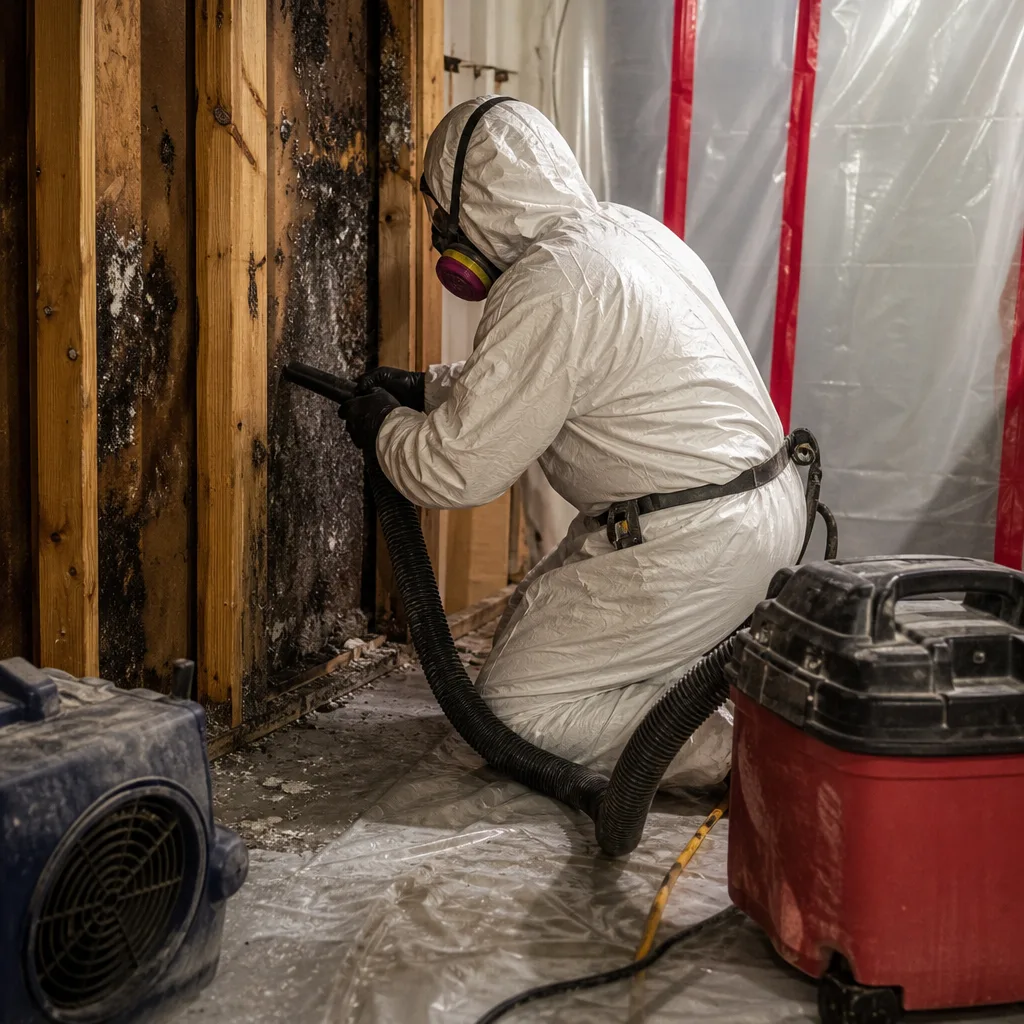
Far Rockaway sits at the end of a barrier peninsula with no natural windbreak. Doors and windows take the brunt of every nor’easter, and a warped or loose door frame before a storm lets wind-driven rain breach the envelope while power is out, turning what would have been a Category 1 water cleanup into a Category 2 job. We repair and reinforce wind-rated doors, replace failed hardware, and check the entire envelope before storm season. After a storm, we fix track damage, warped panels, and broken glass, then check the full run of walls for wind-driven water penetration.
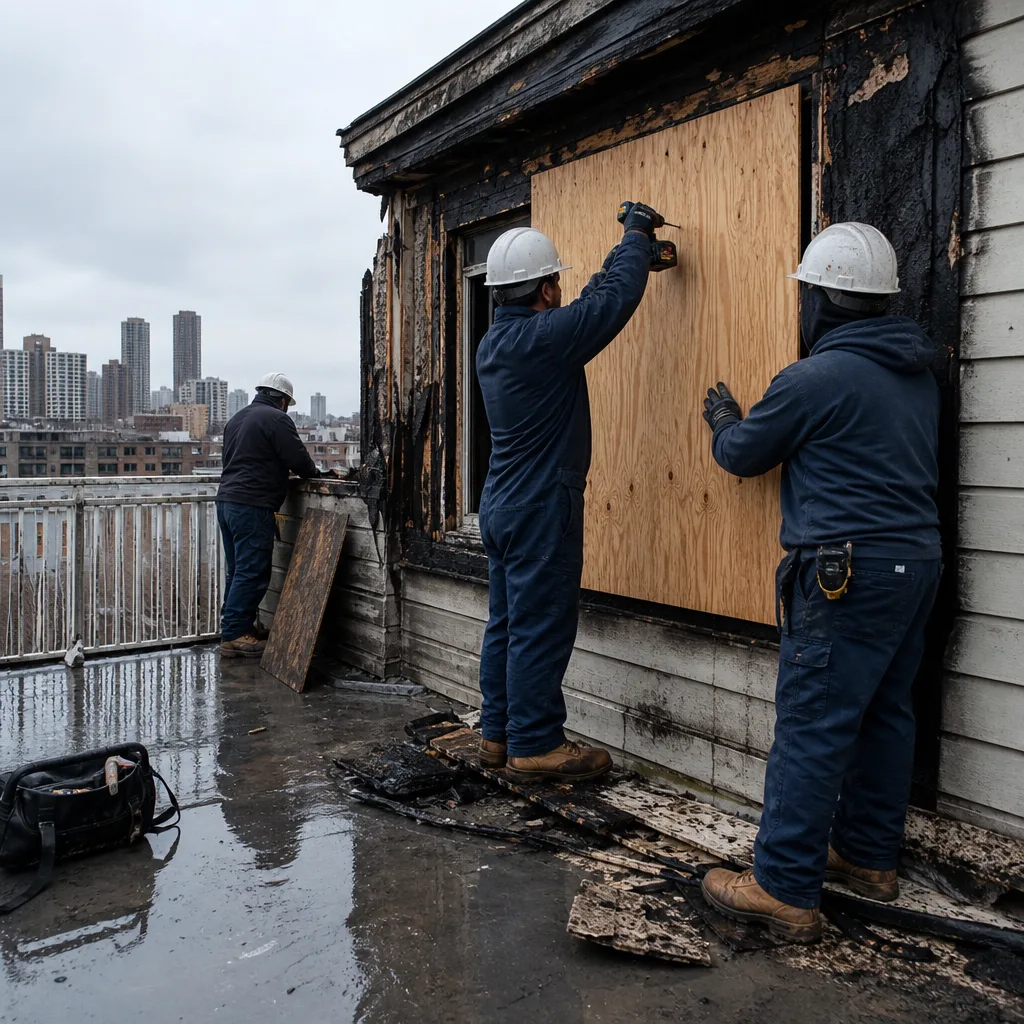
Emergency Board-Up
When a window blows out on Beach Channel Drive or a door fails on a bungalow off Seagirt Boulevard, the opening lets in weather, animals, and people. We board up the same day, using structural-grade plywood and fasteners sized for Far Rockaway’s sustained gusts. The board-up is temporary but it has to hold through the next storm, which in this neighborhood might be a week away.
Flood Damage Restoration
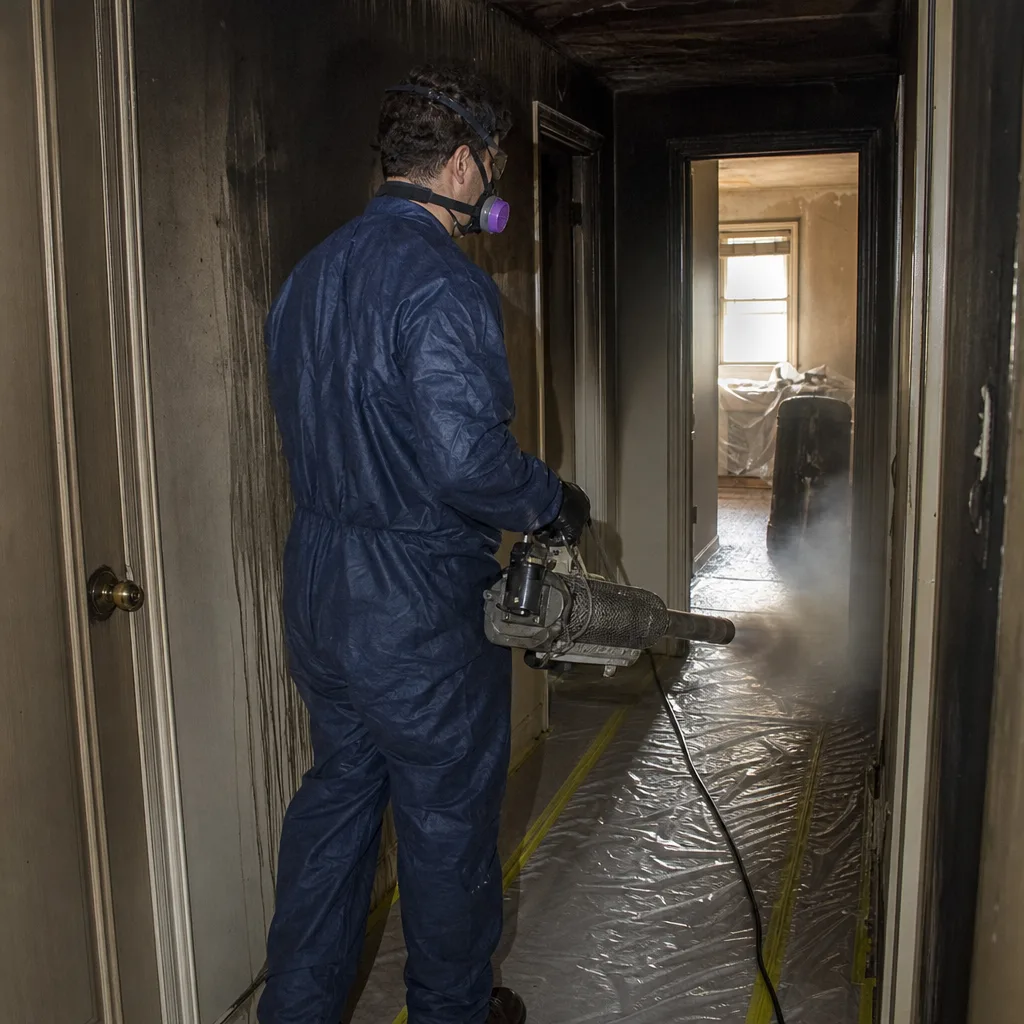
Storm surge in Far Rockaway is different from a broken supply pipe. The water is Category 3, meaning it carries sewage, debris, and whatever the bay or ocean pushed inland. Salt adds another layer. We run full extraction, containment, salt neutralization, structural drying, and antimicrobial treatment, all documented for your carrier. Most flood jobs in Far Rockaway’s bungalows run between $4,000 and $14,000 depending on how far the water traveled and how many wall cavities it reached.
Roof Tarping
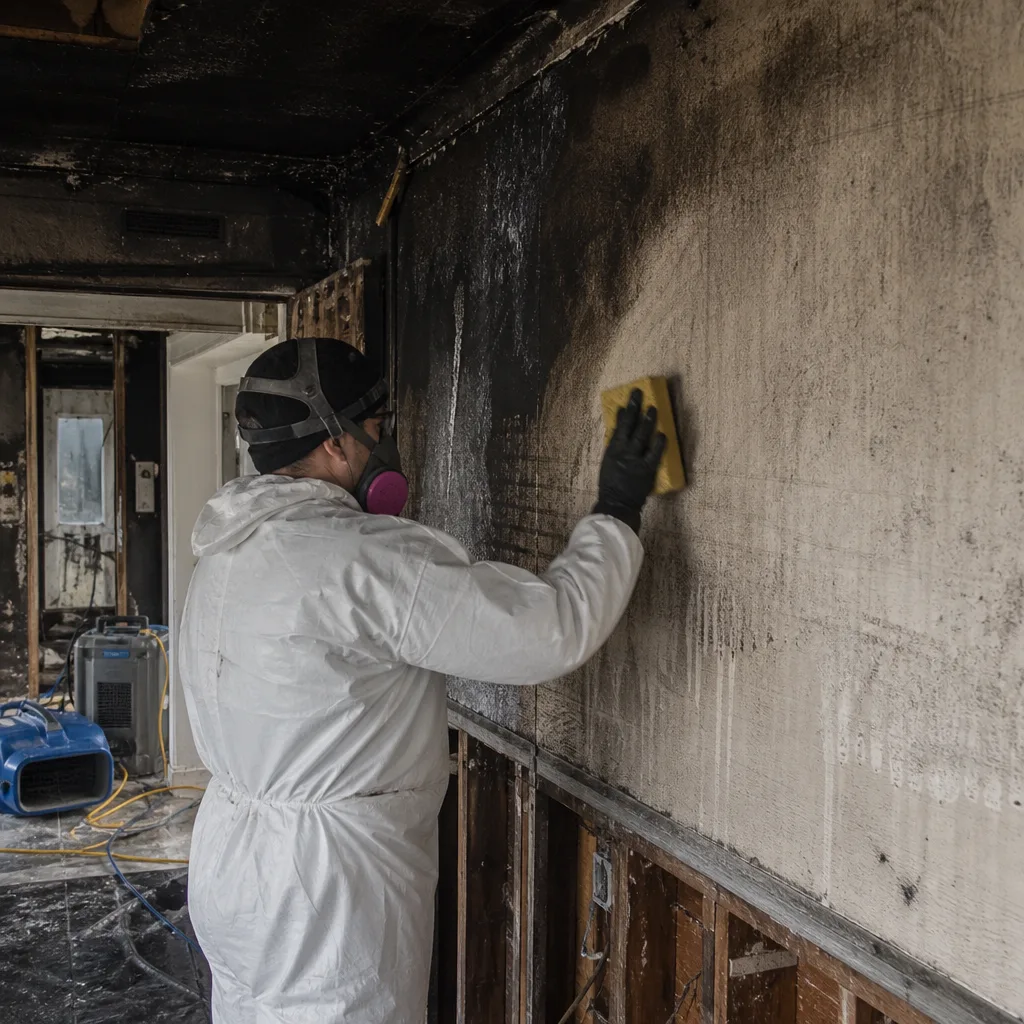
Wind tears sections of shingle off older bungalow roofs and flat commercial roofs alike. We secure a photo-documented tarp the day we arrive, verified against the next wind event. In Far Rockaway, a tarp has to be anchored for real gusts off the Atlantic, not just draped and stapled.
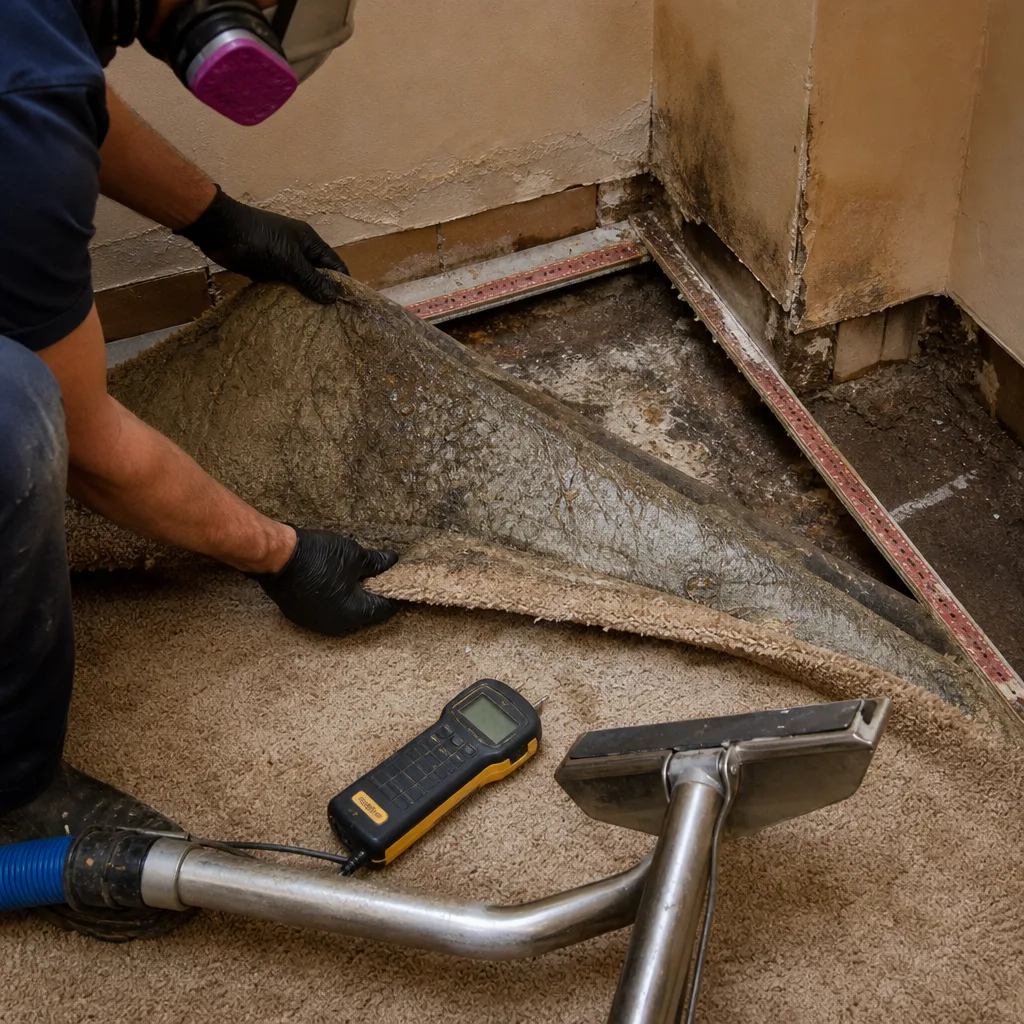
Debris Removal
After a nor’easter or summer storm, yards and driveways along the peninsula fill with broken branches, damaged siding, shingles, and whatever the surge carried in. We clear it, document it, and include it in the insurance scope. Saltwater-soaked debris has to go immediately because it holds moisture against the foundation and feeds the mold cycle that’s already a problem in this climate.
What happens when you call
- 1
A real person answersNo phone trees - you reach a local pro.
- 2
You get an upfront price rangeHonest numbers before anyone is dispatched.
- 3
A background-checked tech heads outLicensed & insured, dispatched right away.
- 4
You approve before work beginsNothing starts until you say go.
Storm & Disaster Restoration Costs in Far Rockaway, NY
Storm damage restoration in Far Rockaway typically runs between $3,000 and $25,000 depending on the water category, affected square footage, and whether framing must be replaced. A straightforward Category 1 water extraction plus drying in a bungalow might run $2,800 to $6,000. Full Category 3 saltwater remediation with containment, neutralization, structural drying, and rebuild of wall cavities in a 1930s balloon-frame home on the bay side typically lands between $12,000 and $30,000. Emergency board-up runs $400 to $1,200 depending on openings. Roof tarping ranges from $500 to $1,800 based on roof area and wind exposure. Wind-rated door replacement runs $900 to $3,500 installed, depending on the rating and whether the frame needs full reconstruction. The free visual inspection gives you a firm number before work begins. Call (917) 924-4221 and we’ll walk the property, write the scope, and hand it to you and your carrier. The 90-Day Done Right Promise means if it’s not done right, we make it right, in writing, no arguing.
We Also Serve Cities Near Far Rockaway
Our storm restoration crews cover Far Rockaway and the surrounding Five Towns and South Shore communities. We run regular response routes through Inwood, Lawrence, Atlantic Beach, and Cedarhurst, with the same live 24/7 dispatch and certified crews. If you’re across the county line and watching water rise, call the same number: (917) 924-4221.
Far Rockaway Storm & Disaster Restoration Questions, Answered
How does Far Rockaway’s dual-front flooding change the way you scope a storm damage restoration?
Dual-front flooding means we scope for two entry points and saltwater from two sources, not one. A nor’easter can push Atlantic surge over the ocean-side foundation while Jamaica Bay water backs up through storm drains and low-lying crawl spaces on the north side. We inspect both exposures, map moisture in both directions, and treat every affected area as Category 3 saltwater, not freshwater. The scope typically runs larger than a single-exposure flood because the contamination and salt load are doubled. Call (917) 924-4221 and our crews will assess both fronts.
My home is still on its original slab, but my neighbor was lifted under Build It Back. Why do I keep getting water in my crawl space?
Elevated post-Sandy homes on new piers shed runoff onto unlifted neighbors’ slabs. The raised home’s downspouts and surface drainage now discharge at a higher grade, and that water pools against your original foundation. It saturates the soil, creates hydrostatic pressure, and pushes moisture up through the slab and into the crawl space. This is a chronic Far Rockaway pattern, not a one-time leak. The fix involves directing runoff away from your foundation and often installing a sump or grading correction, not just drying the crawl space. Call (917) 924-4221 and we’ll map the drainage pattern.
What wind rating should my doors and windows meet for a Far Rockaway nor’easter, and does the city inspect that?
NYC building code requires wind-rated assemblies for new or replacement doors and windows in flood zones, and Far Rockaway is almost entirely within Zone AE or VE. The specific rating depends on your building’s location and exposure, but impact-rated or wind-borne-debris-rated products are the standard for ocean- and bay-facing elevations. The Department of Buildings does inspect permitted replacement work and can require documentation of the wind rating. A door that was installed without a permit or rating may not be insurable after a wind failure. We verify ratings before we replace, and we can tell you what your existing doors meet. Call (917) 924-4221 for an assessment.
After a storm, how quickly do I need to start drying before mold becomes an issue in this salt-air climate?
In Far Rockaway’s salt-air environment, mold colonization can begin within 48 to 72 hours, and salt accelerates it. The chronic humidity off the Atlantic and the bay means materials that would eventually dry in inland Queens stay damp here. We recommend starting professional drying the same day water enters the structure. Our crews are dispatched 24/7 for exactly this reason: extraction running the same visit is the difference between drying framing and replacing it. Call (917) 924-4221 the moment you see standing water or a wet wall.
Do you treat saltwater damage differently from a broken pipe flood?
Yes. Saltwater is chemically different from supply-line water. When storm surge enters stud cavities, the water evaporates but the salt remains. Hygroscopic salts pull moisture back out of the air, keeping wall cavities damp for months and accelerating corrosion of framing, wiring, and HVAC components. We run a neutralization treatment on all affected surfaces before structural drying begins. Freshwater flood protocols do not address this, and skipping it is why mold returns within weeks in bay-side bungalows. Call (917) 924-4221 and we’ll explain what your walls need.
How fast can a crew actually reach my Far Rockaway home during a storm?
We commit to a 45-minute response time across Far Rockaway, including the beach blocks and bay-side streets. Our dispatchers know the peninsula’s routes and stage crews in the area during high-wind and surge events. A live person answers at 2 a.m., and a certified crew is moving toward your address that same visit. Call (917) 924-4221 and give us your cross street; we’ll give you a real ETA.
Can I stay in my home during storm damage restoration?
It depends on the affected area and the contamination category. For Category 1 or 2 water in a contained section of the house, you can usually stay while we run containment and drying. For Category 3 saltwater surge, especially in a bungalow with open wall cavities, we often recommend relocating during demolition and drying because salt-laden dust and microbial activity in the air are not safe to live with. We’ll give you a straight answer at the free inspection, and we’ll document everything for a temporary-housing claim if your policy covers it. Call (917) 924-4221.
What certifications do your storm restoration technicians hold?
Our technicians are certified to IICRC standards including WRT (Water Damage Restoration Technician) and FSRT (Fire & Smoke Restoration Technician), and they work to RIA and IFA protocols where applicable. They’re background-checked and uniformed on every job, and they carry photo documentation of the work from the first hour. Curt Bowman built Floodline Restoration Co. with this standard from day one, and every job is backed by the 90-Day Done Right Promise in writing. Call (917) 924-4221 and we’ll send a certified crew.
Serving Far Rockaway, NY - Our Local Coverage Area
We’re based in the Far Rockaway area and know this community well. Use the map below to see our service coverage - if you’re nearby, we can almost certainly help.
Storm Restoration in Far Rockaway: The Details That Matter
Far Rockaway’s dual-front exposure means storm surge can enter homes from the Atlantic to the south and Jamaica Bay to the north simultaneously, overwhelming standard drainage and forcing restoration crews to treat salt-laden Category 3 water from two directions at once. That condition doesn’t exist in neighboring inland Queens. Add the post-Sandy Build It Back patchwork, where elevated homes on new piers sit next to unlifted neighbors on original slabs, and you get surface drainage patterns that generic storm restoration companies never see coming. The elevated home sheds runoff onto the unlifted neighbor’s foundation. The water pools, saturates the soil, and returns as crawl space moisture. If the crew only cleans gutters and drains, they miss the hydrostatic pressure building under the slab. Our Storm & Disaster Restoration team starts at the floodline, but we also read the grade, the neighbor’s downspouts, and the salt line. That’s what full-scope restoration means on a barrier peninsula like this one.
Wind-rated doors deserve the same attention before the storm as after. A loose striker plate or a warped jamb on an ocean-facing door doesn’t look like a restoration problem. But when a nor’easter hits Far Rockaway, that gap lets wind-driven rain breach the envelope while power is out. The water tracks across the floor into the wall cavity, and by the time the lights come back on, you’ve got Category 2 water behind the baseboard and a mold clock already running. We inspect doors and windows as part of every storm prep and every post-storm assessment. If the frame needs rebuilding, we rebuild it. If the door needs a wind rating upgrade, we tell you exactly what code requires. The same logic applies after the storm: door track and panel damage from wind are not cosmetic issues. They’re the next storm’s entry point.
Salt is Far Rockaway’s slow-moving disaster, and it’s the reason our restoration sequence is different from inland work. You cannot dry salt-laden framing the same way you dry a fresh-water leak. The salt stays behind, pulls moisture back from the air, and eats at the metal connectors and wiring. That’s why we run full neutralization before structural drying on any surge job, and why our moisture logs record readings daily until the dry standard is met, then once more a week later. If the numbers drift back up, we know salt is still working, and we address it before it becomes a recurring mold problem. In this salt-air environment, waiting 48 hours would have meant replacing framing, not just drying it, as we found on that bungalow off Beach 74th Street.
Insurance carriers understand Far Rockaway’s exposure better than most because Sandy taught them. We document everything from the first hour, send photos and logs the same day, and coordinate directly with the adjuster. Our Far Rockaway customers regularly tell us the direct billing and adjuster communication were what kept the claim moving. You shouldn’t have to learn insurance terminology while your walls are open. We handle that part, and we give you the written scope before work starts so you know exactly what’s covered, what’s not, and what we recommend regardless. The 90-Day Done Right Promise applies to every storm job we do in Far Rockaway. If it’s not done right, we make it right, no arguing, no paperwork battles. That’s the Keystone Standard, and it’s been the same since Curt Bowman started the company in 2010.
If you’re in Far Rockaway and watching water rise, or standing in a wet living room after a wind-driven rain, call (917) 924-4221. A live dispatcher answers. A certified crew heads your way. And the line the water left is where we start.
Written by Curt Bowman, Owner at Floodline Restoration Co. of Manhattan, serving Far Rockaway since our founding in 2010.