
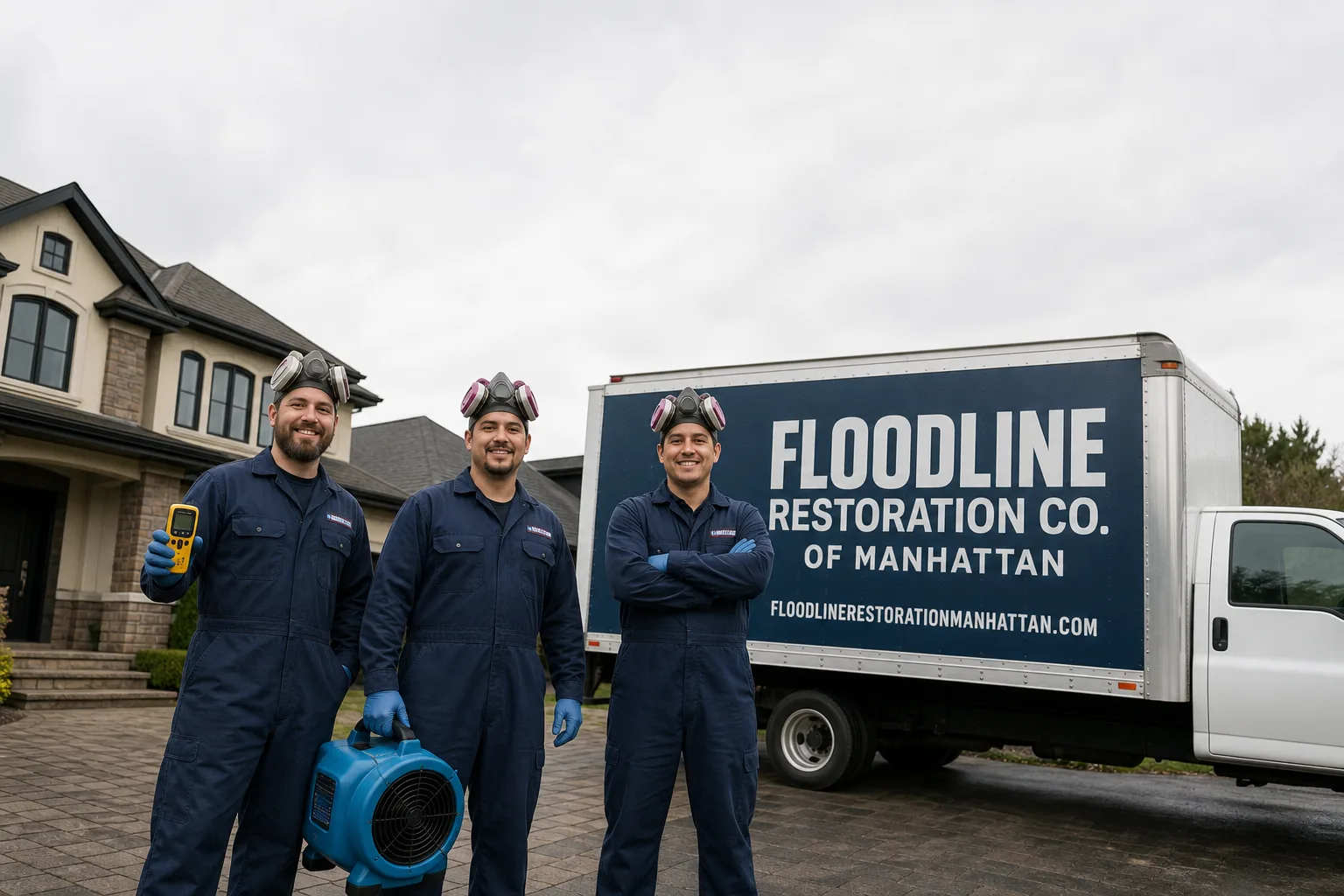
Free visual inspection and a written scope of work before any mitigation begins - photos, moisture readings, and drying logs go in your claim file
The scope we write is the scope we bill. Anything new gets shown to you, in writing, before we touch it.






 Before
 After
After Before
 After
After Before
 After
After24/7 Emergency Storm & Disaster Restoration in Kearny
Storm and disaster restoration in Kearny almost always means water, and usually water that carries more than rainwater. When the Passaic River climbs its banks or a nor’easter stacks tide against outflow, basements across Kearny fill fast and the damage clock starts immediately. If you’re standing in water right now, call (917) 924-4221. A live person answers at any hour, every day of the year, and a crew can be at your door inside the urgent first window. The first hour decides how much drywall, flooring, and personal property survives. At Floodline Restoration Co., we dispatch from our New York City office with crews stationed to serve Kearny locally, so you’re never waiting on a truck from across two counties. Free visual inspection, written scope before any work starts, and the 90-Day Done Right Promise in your hand when the job is finished.
Understanding Storm & Disaster Restoration Severity in Kearny Properties
Kearny’s housing stock makes storm damage behave differently than it does in newer towns. Most homes along Belgrove Drive, Kearny Avenue, and the numbered streets were built between 1910 and 1950 as two-family houses and attached row houses. That means full basements poured on Meadowlands fill, plaster-and-lath walls over wood lath, and shared party walls between units. When water enters, it does not just sit on the floor. It wicks upward into horsehair plaster, saturates the lath, and travels horizontally into the neighboring unit. We classify the water before we touch it: Category 1 is clean water from a supply line or roof leak; Category 2 carries detergents or soil; Category 3 is the serious one, sewage or river backwater, which carries bacteria, viruses, and parasites. In Kearny, the combined sewer reality means what looks like a straightforward basement pump-out is frequently Category 3 from the first reading. That changes the entire job: full containment, HEPA air scrubbing, antimicrobial treatment, and proper PPE. Our moisture mapping uses thermal imaging and penetrating meters to find water hidden inside plaster assemblies, because what you cannot see is what grows mold in the dark.
Why Kearny Property Owners Choose Floodline Restoration Co. of Manhattan
- 45-minute response commitment for Kearny calls. Our local crews know the streets, the bridges, and the flood-prone blocks, so we arrive fast when the Passaic is still rising.
- A real person answers, 24/7. No phone tree, no answering service, no “leave a message after the tone.” A live dispatcher who knows restoration takes your call at 2 a.m. and starts moving trucks.
- IICRC-certified crews, trained in WRT, ASD, and AMRT. Water damage, structural drying, and mold remediation are separate disciplines. Our technicians hold the credentials to match the work.
- Free visual inspection on every storm loss. We walk the property, find the real moisture boundary, and write a scope you can read before you sign anything.
- Direct insurance billing. We talk to the carrier, send the photos, send the drying logs, and handle the paperwork. You do not play messenger.
- One team from first extraction to final rebuild. No handoff to a subcontracted construction crew. The same uniformed, background-checked people who extract the water finish the trim.
Our Storm & Disaster Restoration Process
Inspection and Assessment
We arrive, walk every affected room, and document what we find. Thermal imaging shows us water behind walls and under floors that a visual check misses. We classify the water category, map the moisture boundary, and give you a written scope with clear numbers.
Extraction and Stabilization
Standing water comes out first. On a Kearny basement with Category 3 water, we use Dri-Eaz submersible pumps and truck-mounted extraction units to pull water fast. We also stabilize the structure: emergency board-up, roof tarping, and securing any openings.
Drying and Dehumidification
Plaster-and-lath holds water like a sponge. We set XPOWER air movers and Phoenix dehumidifiers in a calculated layout, then take daily moisture readings with penetrating meters until the structure reaches the documented dry standard. You receive the log. So does your carrier.
Cleaning and Sanitization
Category 3 water from a sewer backup requires antimicrobial treatment and HEPA air scrubbing. We clean salvageable contents, dispose of what cannot be saved, and sanitize every surface that the water touched, including inside wall cavities.
Containment and Biohazard Protocol
When the Passaic backs into Kearny’s combined sewers, the water carries pathogens. We set physical containment with negative air pressure, use HEPA filtration, and follow IICRC S500 standards for sewage remediation. This is not a mop-and-dry job.
Repairs and Restoration
Once the drying log shows the numbers we need, we rebuild. We cut and replace plaster walls, reinstall flooring, rebuild stairs, and restore the space to service. The same crew that extracted the water handles the finish work.
Need Emergency Storm & Disaster Restoration in Kearny Now?
Crews minutes away, answering live 24 hours a day. The sooner we start, the less it costs.
Working With Your Insurance Company
Insurance claims after a storm in Kearny get complicated because the cause matters as much as the damage. A Passaic River overflow may fall under flood insurance, while a sewer backup triggered by the same storm could fall under a different rider, and groundwater seepage often has no coverage at all. Our job is to document everything precisely so your carrier has what it needs to make a decision. From the first hour, we photograph every affected room, record moisture readings, log daily drying progress, and write a line-item scope of work that matches industry estimating standards. We communicate directly with your adjuster, provide the documentation, and answer their questions. You get the 90-Day Done Right Promise in writing regardless of how the claim resolves.
What We Provide Your Insurer
- Thorough documentation of the loss
- Photos of all damage, room by room
- Moisture readings and drying logs
- A detailed, line-item scope of work
- Direct coordination with your carrier
Built for Kearny’s Loss Calendar
Kearny’s worst storm damage follows a pattern that repeats every few years, and sometimes several times in one season. January and February bring deep freezes that burst supply lines in uninsulated basements and crawl spaces of those early 20th-century homes. March and April thaw the ground, and the high water table under Meadowlands fill means groundwater pushes through slabs and foundation walls before the snow even finishes melting. Late summer thunderstorms drop two inches in an hour, overwhelming the combined sewers and sending water backward through basement floor drains. Then come the nor’easters, from October through March, which stack Atlantic storm surge against the Passaic and Hackensack rivers at the same time the sewers are trying to drain. Kearny sits at the bottom of that drainage equation. Every one of these events produces the same pattern: water in the basement, plaster wicking moisture upward, and a mold clock that starts running in 24 to 48 hours if drying does not begin immediately.
Storm & Disaster Restoration Across Kearny’s Neighborhoods
The flood response routes in Kearny follow the town’s geography. The blocks between the Passaic River and Kearny Avenue are on the lowest ground, and they see the first water when the river rises. Homes along Belgrove Drive, an older residential corridor running north-south, tend to be the classic 1930s and 1940s row houses where Category 3 sewer backup hits hardest. Over toward Schuyler Avenue and the commercial stretch, the buildings are a mix of older storefronts with residential units above, and water damage there means protecting inventory on the first floor while drying living space above. The numbered streets running from the river eastward toward the high ground see varying flood depth, which means we stage equipment based on how far each block sits from the floodline. Up near Arlington Memorial Park, the homes are on slightly higher ground, but the water table is still close enough to the surface that hydrostatic pressure pushes water through basement walls after any sustained rain. Each of these areas requires a different extraction plan, a different drying layout, and often a different conversation with the insurance adjuster about what caused the water.
Specialized Storm & Disaster Restoration Services We Offer in Kearny
Flood Damage Restoration
The core of storm restoration in Kearny is water extraction and structural drying done right. We handle river overflow, sewer backup, groundwater seepage, and storm drain failure. Our crews understand that a Kearny basement with a finished floor is not dry when the top of the pad feels dry. We read moisture deep, dry the structure, and give you the log that proves it.
Emergency Board-Up
Storm winds tear off doors, break windows, and leave openings that invite looting, animals, and more weather. Our crews secure openings with plywood and framing that withstands the next wind event. We do it fast, and we do it in a way that your insurance carrier will accept.
Storm Damage Cleanup
Fallen trees, torn siding, shattered glass, and standing water all need to come out before restoration can begin. We handle debris removal with the understanding that hidden hazards, like water-saturated debris or exposed wiring, require a trained eye and proper gear. Our uniformed crews clear the site safely and document what was removed.
Roof Tarping
A storm-damaged roof lets water keep entering the house long after the rain stops. We install heavy-duty tarps anchored against the next wind event. In Kearny, where nor’easter seasons bring repeated storms, a properly secured tarp prevents a small roof breach from becoming a full interior loss.
Debris Removal
After the water recedes, what is left is a saturated mess. Wet drywall, ruined furniture, mud-covered boxes, and building materials that wicked river water. We haul it out, separate what can be saved, and begin the drying process on the structure itself. We also handle the specific problem of Category 3 contaminated debris, which must be bagged and disposed under biohazard protocols, not left at the curb.
Wind Damage Repair
Kearny row houses catch wind off Newark Bay in a way that single-family homes on open lots do not. One damaged roof on the end unit sends water down the shared wall and into the neighboring house. We repair wind damage as a structural issue, not a cosmetic one, and address the water intrusion that follows the wind.
What happens when you call
- 1
A real person answersNo phone trees - you reach a local pro.
- 2
You get an upfront price rangeHonest numbers before anyone is dispatched.
- 3
A background-checked tech heads outLicensed & insured, dispatched right away.
- 4
You approve before work beginsNothing starts until you say go.
Storm & Disaster Restoration Costs in Kearny, NJ
Honest numbers matter, especially when you are already dealing with a flooded basement. In Kearny, a basic storm water extraction with structural drying typically runs $2,800 to $5,500, depending on the square footage and the water category. A Category 3 sewer backup that requires containment, antimicrobial treatment, and disposal of contaminated materials runs $6,000 to $14,000, because the biohazard protocol adds substantial labor and materials. Emergency board-up on a row house with two or three openings runs $450 to $1,200. Roof tarping runs $350 to $800 for a standard access roof. Debris removal after a flood runs $600 to $2,500 depending on volume and contamination level. What moves the price: the water category, the number of floors affected, whether the walls are plaster or drywall, whether mold has already started, and how many units share the affected walls. The free visual inspection gives you a written scope with firm numbers before any work begins, not an estimate that swells after the crew is inside. Insurance covers most storm-related losses except groundwater seepage without a rider, and we bill your carrier directly so you are not financing their delay.
We Also Serve Cities Near Kearny
Our crews handle storm and disaster restoration work across the surrounding region. If you own property in Kearny as well as Harrison, North Arlington, Lyndhurst, or Jersey City, call us. The same live dispatcher, the same certified crews, and the same 90-Day Done Right Promise apply wherever we work. One call covers all of it.
Kearny Storm & Disaster Restoration Questions, Answered
Why does a routine basement pump-out in Kearny often turn into a biohazard job?
Kearny’s combined sewer system ties directly to the Passaic River. When the river rises above flood stage, it reverses flow through municipal lines and comes up through basement floor drains as Category 3 black water. That water contains raw sewage, and treating it as clean flood water is a health risk. We test, document, and treat every Kearny basement flood for potential Category 3 contamination before anything else happens. Call (917) 924-4221 for an assessment.
How fast does mold start in a Kearny plaster-and-lath basement after a flood?
Mold can begin in 24 to 48 hours in a wet plaster-and-lath assembly, and often faster in a warm, humid Kearny basement. Plaster and horsehair lath hold moisture for days or weeks, much longer than modern drywall. That is why we start extraction and air movement the same day we arrive, and why daily moisture readings matter. If you had water in the basement more than a day ago, call us for a free inspection.
Why do Kearny row houses need containment on both sides of a shared wall after a flood?
Water and mold migrate through shared party walls between attached row houses. If the house next door flooded and you did not, the moisture has likely entered your wall assembly. We set containment on both sides to prevent cross-contamination and verify the true moisture boundary with penetrating meters. This is a specific protocol most out-of-area crews skip, and skipping it means mold comes back. Call (917) 924-4221 to have us check.
What does a storm restoration crew in Kearny do differently about groundwater, not just surface water?
The water table under Kearny’s Meadowlands fill sits close to the surface, and after any sustained rain, hydrostatic pressure pushes water through foundation walls and floor slabs. Surface water removal alone leaves this hidden seepage, and moisture readings stay elevated for days. We address groundwater with proper drainage, deep drying, and sometimes baseboard or wall-cavity treatments that a typical franchise crew would miss.
Can you restore a Kearny garage door after salt-air corrosion from a coastal storm?
Yes. Salt spray off Newark Bay corrodes garage-door springs, hinges, rollers, and tracks faster than inland homes experience. After a storm, we inspect the hardware, replace corroded springs with coated or galvanized parts, install stainless hinges and nylon rollers where appropriate, and service the opener chain. If the door itself survived the wind, we can restore the hardware so it opens safely again.
How fast can someone actually get to my Kearny home?
We commit to a 45-minute response for storm and flood calls in Kearny. Our crews are staged locally, we know the bridges and flood-prone streets, and a live dispatcher is on the phone at any hour. When the Passaic is rising, we move fast because the damage worsens by the hour. Call (917) 924-4221 and you will speak to a person who starts dispatch immediately.
Will my insurance cover storm restoration in Kearny, and who deals with the adjuster?
Most storm-related losses are covered, except groundwater seepage, which usually requires a separate rider. Flood insurance and sewer backup coverage are distinct policies with different deductibles. We handle all documentation, photos, drying logs, and direct communication with your adjuster so you do not act as the messenger between your restoration crew and your carrier. We bill the carrier directly for covered work.
What should I do in the first 30 minutes after a storm floods my Kearny basement?
Stay out of the water if there is any chance it came from a floor drain, because Kearny’s combined sewer system means that water may be Category 3 sewage. Shut off electricity at the breaker if you can reach it safely. Do not use a shop vac on contaminated water. Call (917) 924-4221, and our live dispatcher walks you through what to do while the crew is on the way. Do not wait. The mold clock is already running.
Serving Kearny, NJ - Our Local Coverage Area
We’re based in the Kearny area and know this community well. Use the map below to see our service coverage - if you’re nearby, we can almost certainly help.
Ready When the Water Rises: Call Our Storm & Disaster Restoration Team in Kearny
On Belgrove Drive, after a nor’easter pushed the Passaic over its banks, our crew arrived to find a 1930s row house basement under six inches of Category 3 water from the reversed combined sewer. We ran Dri-Eaz extraction pumps, established containment, and cut plaster-and-lath walls two feet above the moisture line because moisture readings showed wicking into the horsehair plaster. Within 48 hours, antimicrobial treatment and structural drying with XPOWER air movers brought the space to a documented dry standard, preventing the mold clock from winning. That is what our Storm & Disaster Restoration team does in Kearny every day. If you have water, sewage, wind damage, or storm debris in your home, do not wait for it to worsen. Call (917) 924-4221 for a free, written estimate. The same certified crew that extracts the water will rebuild the walls, and the 90-Day Done Right Promise will be in your hand when they finish. A square deal, no surprises on the bill, and a name you can hold accountable. That is the Floodline Restoration Co. way.
Written by Curt Bowman, Owner at Floodline Restoration Co., serving Kearny and the surrounding region.