
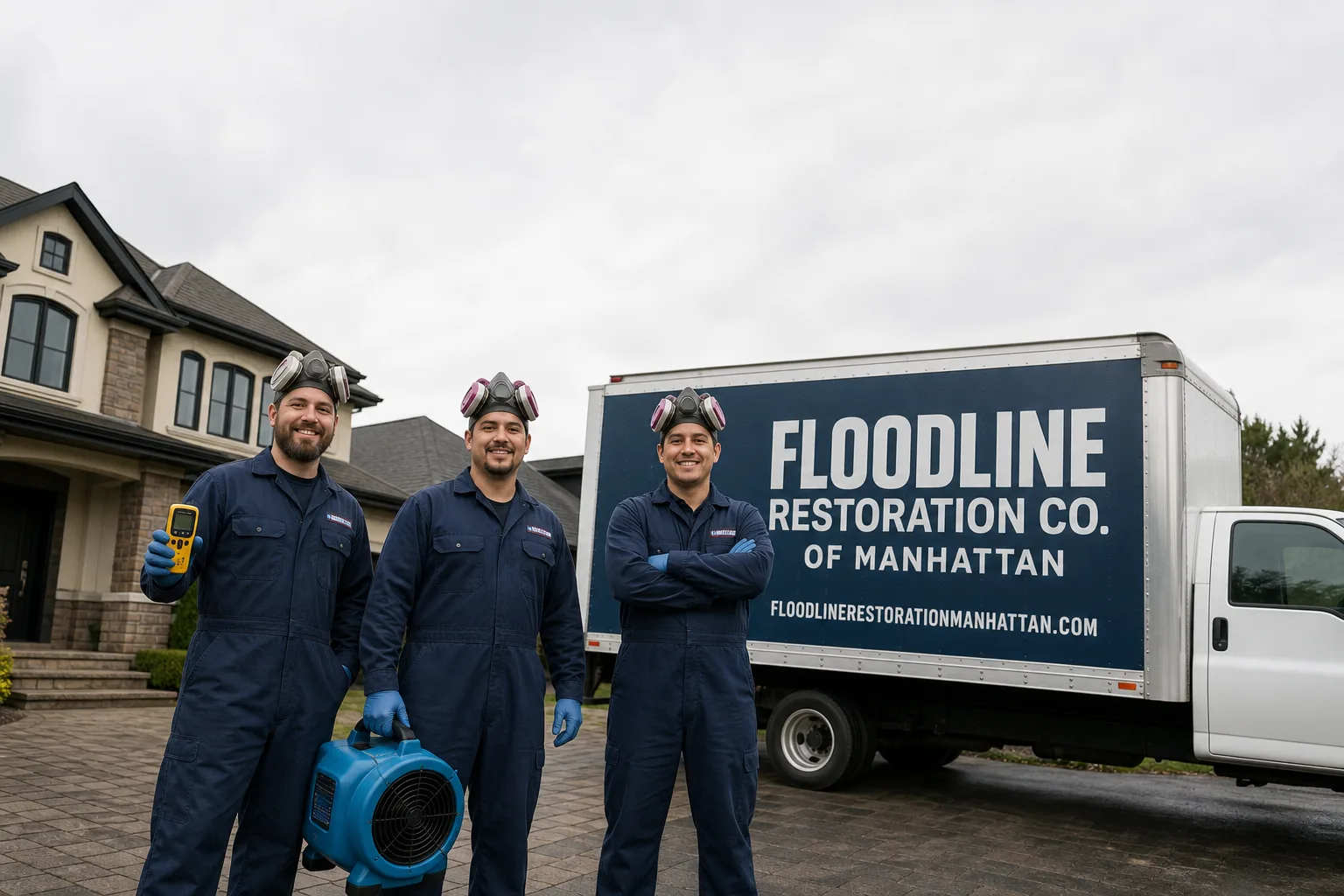
Free visual inspection and a written scope of work before any mitigation begins - photos, moisture readings, and drying logs go in your claim file
The scope we write is the scope we bill. Anything new gets shown to you, in writing, before we touch it.






 Before
 After
After Before
 After
After Before
 After
After24/7 Emergency Reconstruction & Cleanup in Kearny
When a finished basement in Kearny takes on Passaic River backflow or a kitchen fire spreads soot through a 1920s two-family on Kearny Avenue, the cleanup and rebuild can’t wait. Reconstruction & Cleanup is not a next-week job. Floodline Restoration Co. of Manhattan answers the phone live at (917) 924-4221 at any hour, and a certified crew is dispatched into Kearny the same visit. The first hour matters because water and smoke residue keep traveling: into plaster, under original oak floors, through party walls into the attached neighbor’s unit. A free visual inspection tells us what the damage actually is so we can start protecting the structure before the scope grows. We do the full cycle, from first extraction to our Commercial Restoration in Kearny, with the same background-checked crew.
Understanding Reconstruction & Cleanup Severity in Kearny Properties
Kearny’s housing stock was largely built between 1910 and 1950. That changes everything about how damage behaves. Plaster-and-lath walls act like a sponge: they take in water slowly and release it even more slowly. A basement that looks dry after two days can still carry 30% moisture content inside the wall cavity, hidden from the eye but feeding Mold Remediation in Kearny risks for weeks. In a modern drywall-and-framing house, you strip the lower twelve inches of gypsum, run air movers for three days, and you’re done. In a Kearny row house, the original plaster keyed into wood lath holds water at the stud line, and the subfloor beneath tongue-and-groove oak needs its own drying plan. We moisture-map every job with thermal imaging and hygrometers, not by touch. We write daily drying logs until the reading matches the pre-loss standard for that specific material. That’s the only way a Kearny reconstruction works without a callback six months later for latent mold or buckling flooring.
Why Kearny Property Owners Choose Floodline Restoration Co. of Manhattan
- 45-minute response commitment to any Kearny address. Dispatch is a live person, not a call center, and the crew actually rolls from a nearby staging lane.
- A real person answers at 2 a.m. No phone tree, no automated system. You talk to a dispatcher who can order a crew while you’re still on the line.
- IICRC-certified crews trained to WRT and FSRT standards, with AMRT certification for sewage and mold work. Kearny’s combined sewer issue means wet basements here are often Category 3, and we approach them accordingly from the first hour.
- Free visual inspection with no obligation. You get a written, line-item scope before any work starts, so the number on paper matches the number on the bill.
- Direct insurance billing. We document the loss the way carriers want it documented, and we coordinate with your adjuster. You don’t play messenger.
- One team from extraction to reconstruction. No handoff to a separate rebuild crew that never saw the flooded basement. The people who dry it are the people who rebuild it.
Our Reconstruction & Cleanup Process
Inspection & Assessment
We arrive, walk the property, and identify the water category or soot type. In Kearny, we assume a Passaic backflow until proven otherwise, and we test the plaster and subfloor with moisture meters before declaring any area dry.
Extraction & Stabilization
Standing water comes out with truck-mounted extraction or submersible pumps. Structural stabilization happens the same visit: temporary supports where needed, power safety checks, and sealing off unaffected rooms.
Drying & Dehumidification
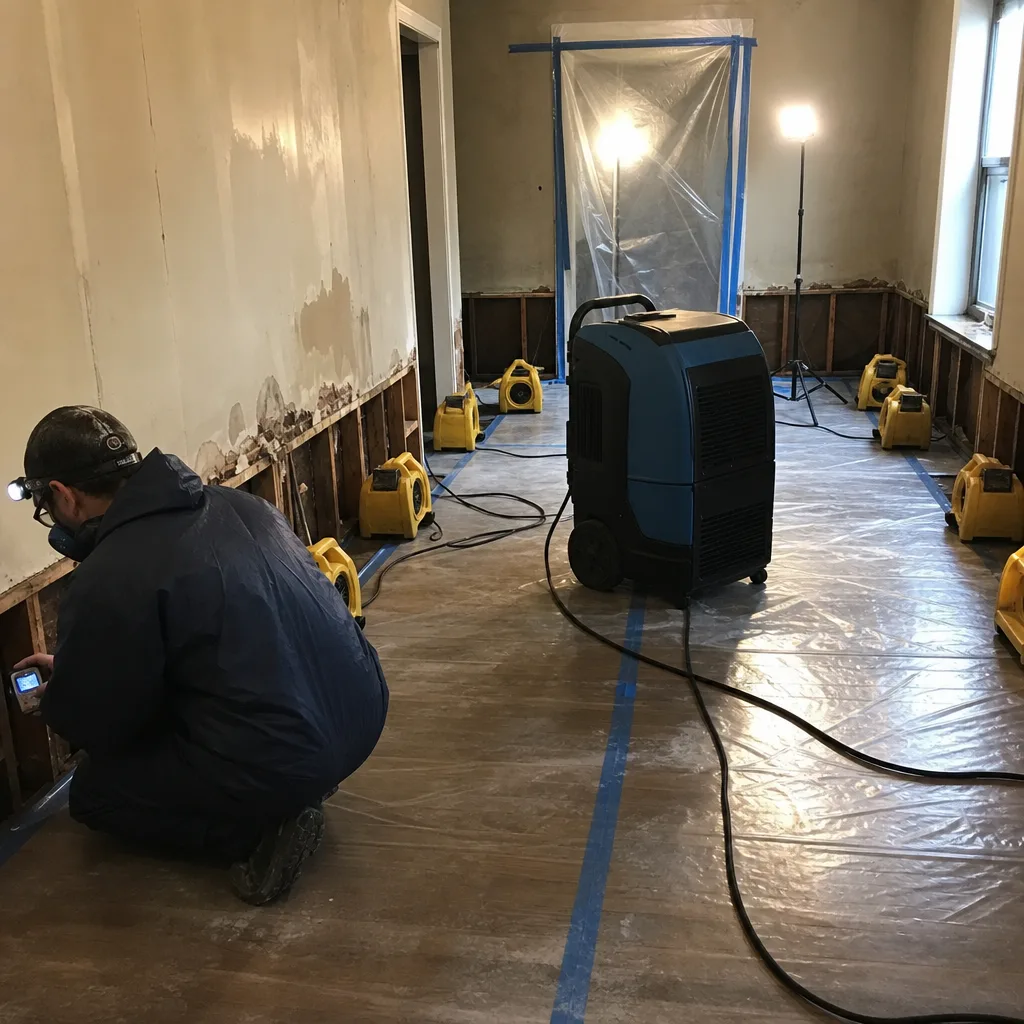
We run professional-grade Dri-Eaz dehumidifiers, Phoenix air movers, and XPOWER equipment sized for the cubic footage, not the square footage. Plaster-and-lath jobs in Kearny take longer by nature, and we set that expectation up front.
Cleaning & Sanitization
HEPA air scrubbers run while we clean. Category 3 water means antimicrobial treatment on every affected masonry surface. Soot from a Kearny kitchen fire means a different chemistry: dry sponge first, then wet cleaning, with special attention to the oily residue that clings to plaster.
Contents Restoration & Pack-Out
We inventory what can be saved and what must go. Porous materials soaked in sewage-backed river water are a health hazard; we’ll tell you plainly which items can be restored and which need disposal, and we document everything for the insurance file.
Repairs & Restoration
Drywall, plaster repair, flooring, paint, trim, and anything else needed to bring the Kearny home back. The final walk-through happens only after the structure passes a moisture verification, not when the cosmetic work is finished.
Need Emergency Reconstruction & Cleanup in Kearny Now?
Crews minutes away, answering live 24 hours a day. The sooner we start, the less it costs.
Working With Your Insurance Company
Flood damage in Kearny gets complicated fast, especially when the Passaic backs up through the combined sewer and turns a standard Water Damage Restoration - Kearny job into a sewage or biohazard claim. We’ve handled enough of these to know what a carrier needs to see. From the first hour, we build the file: photos room by room, moisture readings, drying logs, and a line-item scope with materials and labor separated. We coordinate directly with your adjuster so you don’t spend your evenings on hold. Insurance usually covers the extraction, drying, and reconstruction, but coverage for the contents pack-out and the disposal of Category 3 materials is where Kearny homeowners get stuck. We document it all properly from day one so the claim holds together.
What We Provide Your Insurer
- Thorough documentation of the loss
- Photos of all damage, room by room
- Moisture readings and drying logs
- A detailed, line-item scope of work
- Direct coordination with your carrier
Built for Kearny’s Loss Calendar
Kearny’s damage season isn’t one season. It’s four overlapping ones, each with its own signature. January and February bring deep freezes that split supply lines in unheated basements and exterior wall cavities, and the resulting water pools behind plaster before anyone notices. March and April bring the thaw, along with groundwater pushing up through the high water table beneath the Meadowlands fill, and basements in the northern blocks near the Passaic start seeping even without rain. Summer thunderstorms overload the combined sewer in minutes, and the river’s tidal influence from Newark Bay means a high tide can hold the water in place long enough to back up the drains. Then come the nor’easters, the periodic river surges like Sandy and Irene, and the slow, repeated flooding that has given some Kearny blocks a standing reputation for Category 3 basement water. The same homes flood again. The same walls get wet again. That’s the reality our crews plan for on every call.
Reconstruction & Cleanup Across Kearny’s Neighborhoods
Response routes through Kearny depend on where the damage is. The streets off Kearny Avenue in the Arlington section are mostly 1920s two-families and attached rows; water moves sideways through party walls there, and a single extended drying plan often has to cover two owners’ units. Down toward South Kearny and the industrial edges near the river, the buildings sit lower and the groundwater problem arrives earlier; we’ve been to basements there where the water table alone pushed an inch of water through the slab before any storm reached the street. Over by Schuyler Avenue and the border with North Arlington, the older one-family homes often have semi-finished basements with original cedar closets and built-ins that hold moisture in ways a modern renovation never would. And in the blocks around Kearny High School and the 07032 ZIP, the mix of frame and masonry construction means no two dry-out plans look the same. We schedule daily readings until the log shows every room has met its target.
Specialized Reconstruction & Cleanup Services We Offer in Kearny
Full-Service Reconstruction
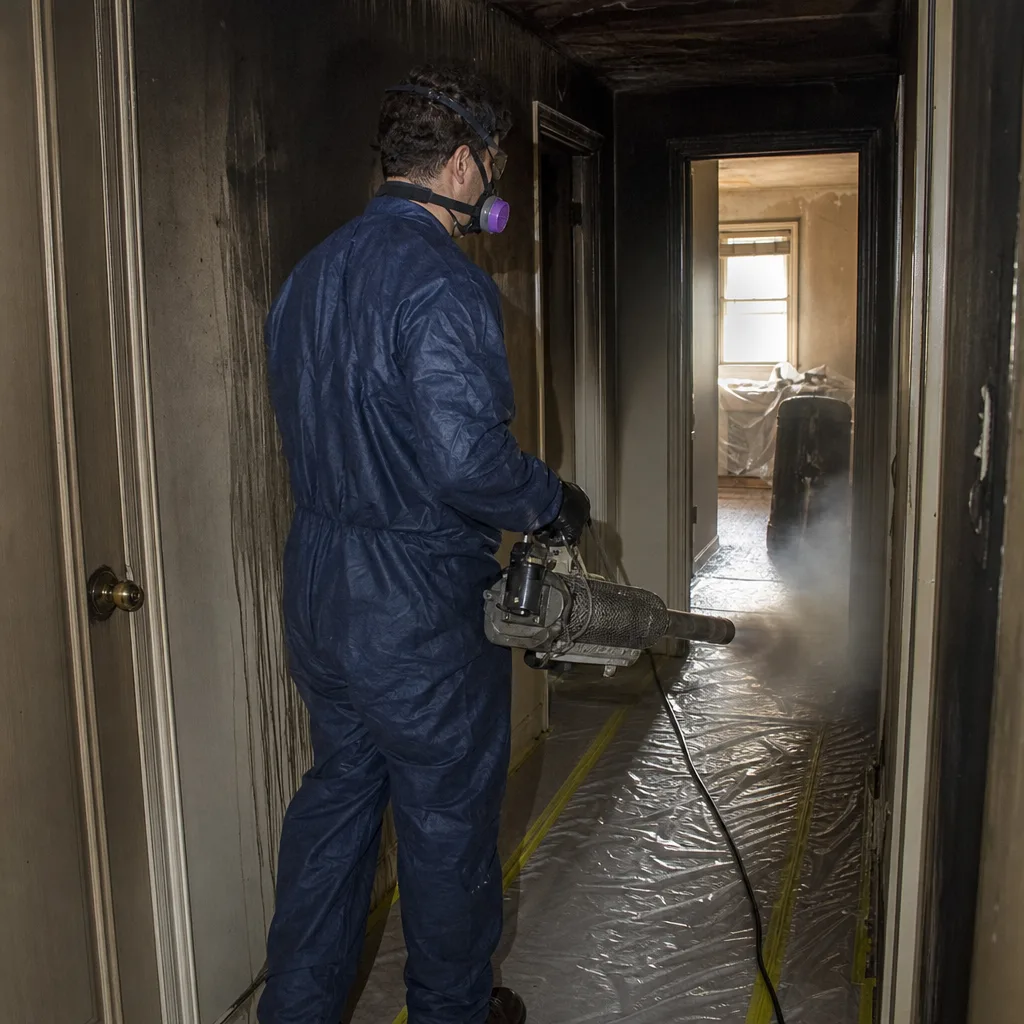
After the dry-out is done, the rebuild starts. In a Kearny two-family from the 1930s, that often means matching plaster profiles to original wall thickness, milling trim to match the existing woodwork, and rebuilding a basement staircase to code. We handle it all, and the same project lead who signed off on the drying log oversees the reconstruction.
Drywall & Flooring Repair
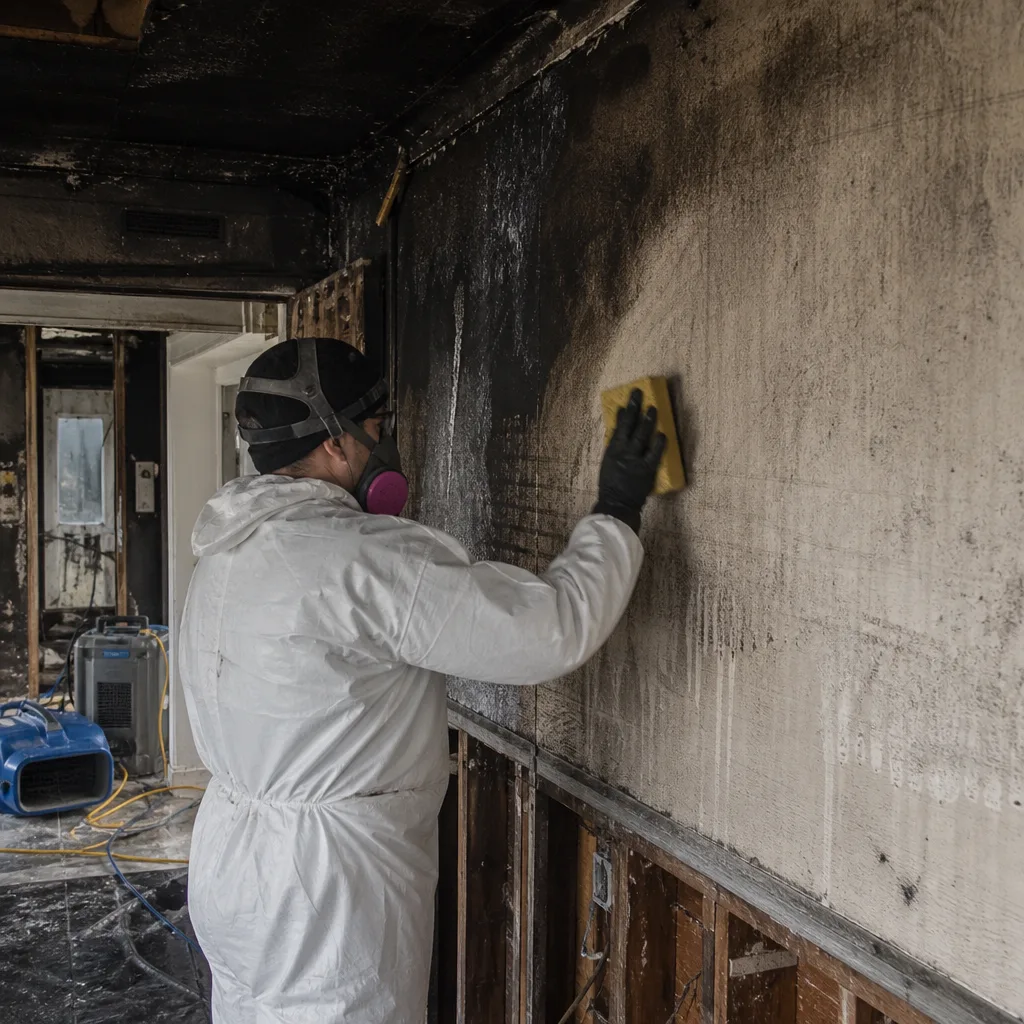
Modern additions get new gypsum and finish; original rooms get plaster repair that keys into the old lath. Hardwood floors that took on water come up, get evaluated for salvage, and go back down only after the subfloor passes a moisture reading. We’re honest about what’s worth saving.
Contents Restoration & Pack-Out
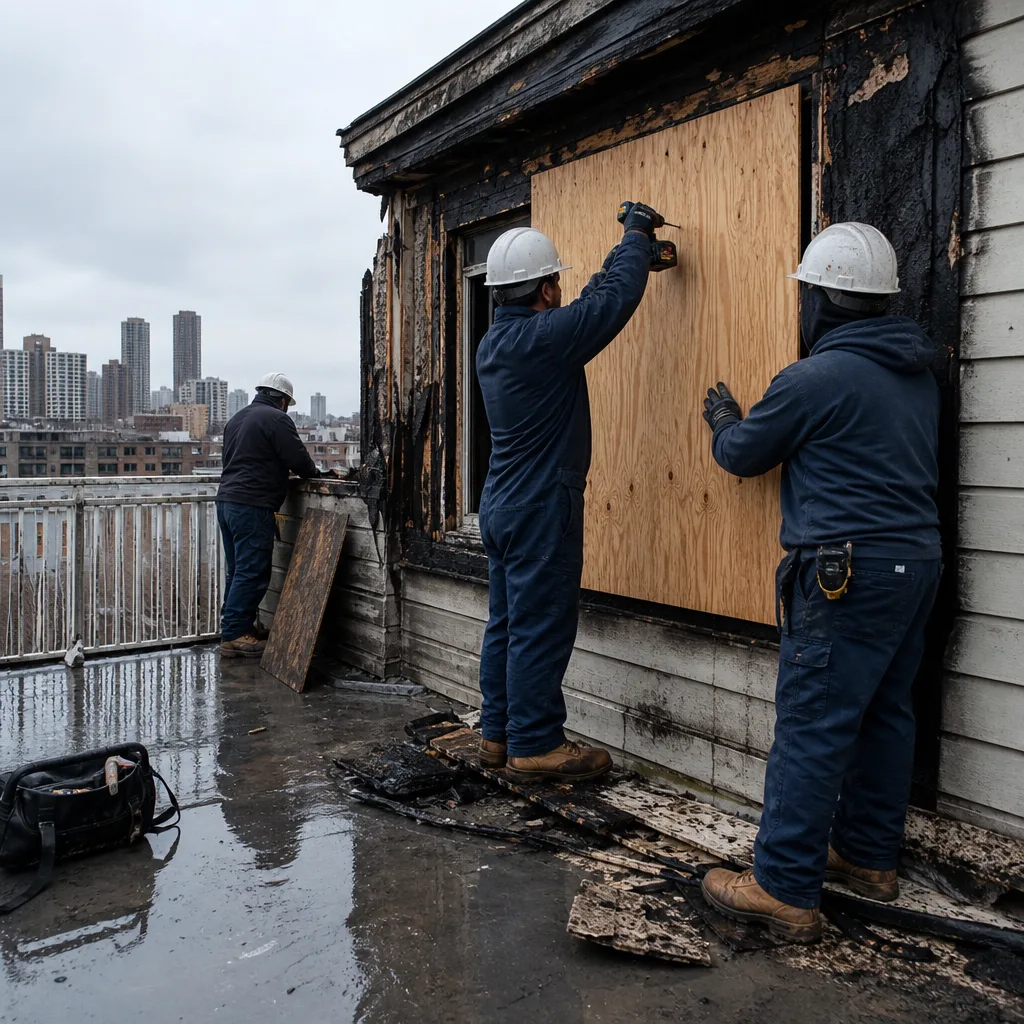
Kearny basements are full of things: photo albums, tax records, holiday decorations, tools. We inventory, document, pack out, clean, and store what can be saved. Porous items that soaked in Passaic backflow water get a straight answer from us: some things can be restored, and some things are a health risk to keep. We never pad a disposal list, and we never quietly discard something saved. It’s all on the inventory for you and the adjuster.
Carpet & Upholstery Cleaning
Carpeting that took clean water from a burst supply line can often be cleaned, extracted, and dried in place. Carpeting that sat in Category 3 sewer backflow comes out and gets disposed. We tell you which is which up front, with the reasoning and the documentation to back it up.
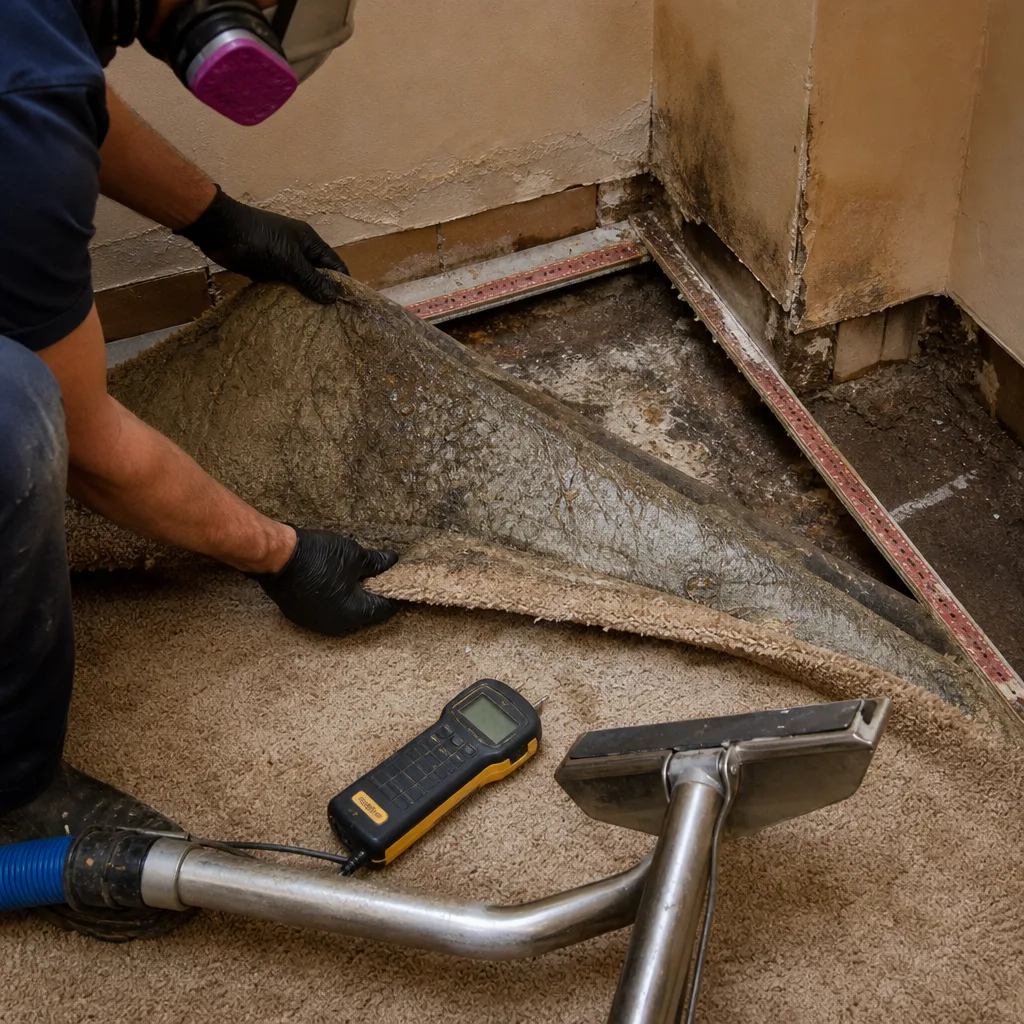
Post-Construction Cleanup
When the rebuild is finished, the last thing a Kearny homeowner wants is a layer of gypsum dust on every surface. We leave the job clean: floors swept and vacuumed, windows wiped, fixtures polished, and the air settling. You can move back in without calling a cleaning crew behind us.
What happens when you call
- 1
A real person answersNo phone trees - you reach a local pro.
- 2
You get an upfront price rangeHonest numbers before anyone is dispatched.
- 3
A background-checked tech heads outLicensed & insured, dispatched right away.
- 4
You approve before work beginsNothing starts until you say go.
Reconstruction & Cleanup Costs in Kearny, NJ
In the Kearny market, drywall and flooring repair after a clean-water basement flood typically runs $3,000 to $8,000 depending on the square footage and how much flooring comes up. A contents pack-out and full reconstruction of a finished basement with plaster walls and original trim runs $15,000 to $40,000, and a full Category 3 sewage-backflow restoration with containment, biohazard disposal, and rebuild commonly lands between $25,000 and $60,000. What moves the price: the water category, how fast we got the call, whether the plaster can be saved or must be demoed, and how much the attached neighbor’s unit wicks moisture. Insurance typically covers the structural work; out-of-pocket usually comes from deductibles and certain contents. A free visual inspection gives you a firm scope before any work begins. Call (917) 924-4221 and we’ll put the number on paper.
We Also Serve Cities Near Kearny
Our crews handle reconstruction and cleanup work in Harrison, North Arlington, Lyndhurst, and Jersey City as well. The same team, the same equipment, the same written promise.
Kearny Reconstruction & Cleanup Questions, Answered
When the Passaic River backs up into Kearny’s combined sewer, is the water in my basement always Category 3?
Not automatically, but it should be treated as Category 3 until testing says otherwise. Kearny’s combined system ties stormwater and sanitary lines together, and when the river rises above flood stage it pushes back through municipal lines. That can carry sewage, and even when it doesn’t, the water has moved through an active sewer. We assume contamination, set containment with 6-mil poly and HEPA scrubbers, and only downgrade the classification with evidence. Call (917) 924-4221 for a free inspection that starts with the worst case, not the best.
My Kearny two-family home has plaster walls from the 1930s. How long does structural drying really take after a flood?
Plan for five to ten days in a vintage Kearny plaster-and-lath house, and sometimes longer in summer humidity. Plaster releases moisture slowly, and the wood lath behind it holds water at the stud line. A modern drywall job might dry in three days with enough air movement. A 1930s Kearny wall cavity will not. We use Dri-Eaz dehumidifiers and Phoenix air movers sized for the cubic footage, and we show you the daily readings so you can see the number coming down. The job is done when the log says done, not when the surface feels dry.
Can contents from a Kearny basement flood be restored, or do they need to be packed out and discarded?
It depends entirely on what the items soaked in. Clean water from a burst supply line: most hard goods and many textiles can be cleaned and restored. Passaic backflow or anything that touched the combined sewer: porous items like upholstered furniture, cardboard boxes, papers with sentimental value but no protective storage, and most carpet padding are typically a loss. Non-porous items like metal tools, glass, and sealed plastics can be cleaned and disinfected. We inventory everything, mark each line item as restorable or non-restorable, and give the list to you and your adjuster. You decide, with our honest recommendation.
How do you handle water migrating from my Kearny row house into the attached neighbor’s unit during reconstruction?
We stop treating the job as one address. Party walls in Kearny’s attached rows are shared structures, and water moves through them laterally. We document every reading on both sides of the wall, write a scope that separates each owner’s responsibility, and coordinate the drying plan so neither unit gets left damp. Sometimes that means two insurance claims and one shared containment plan. We’ve done it enough times on blocks off Kearny Avenue that we can explain the split to both adjusters without either homeowner having to negotiate with the other.
Why did my Kearny basement flood even though it didn’t rain that much, and groundwater wasn’t coming over the top?
Because the water table under Kearny is high, and the ground is Meadowlands fill. When the Passaic rises even moderately, hydrostatic pressure pushes water up through foundation walls and floor slabs from below. You don’t need surface water or a river running through the streets. The water comes in from the bottom, slowly and steadily, and it keeps coming until the river level drops and the pressure equalizes. That’s why our moisture mapping covers the slab and the lower wall assembly, not just the floor surface.
How quickly can a crew reach my Kearny home?
Our response commitment is 45 minutes to any Kearny address. A live dispatcher takes your call, and a certified crew rolls immediately. We answer the phone at (917) 924-4221 at any hour, and the extraction or containment starts the same visit.
Do I need full reconstruction, or just a cleanup?
That’s what the free inspection determines. Some Kearny basements need only extraction, drying, and antimicrobial treatment. Others need walls opened, plaster demoed, flooring pulled, and a full rebuild. We’ll show you the moisture readings, explain what’s salvageable, and write a scope that covers only what the damage actually requires. We don’t upsell reconstruction that isn’t needed, and we won’t call a job clean when hidden moisture says otherwise.
What should I do in the first 30 minutes after discovering the damage?
Cut power to the affected area if you can do so safely without standing in water. Move valuables and papers to a dry upper floor. Do not run a shop vac on water that may have come from the sewer. Do not walk through the space with the same shoes you’ll wear into the rest of the house. Then call (917) 924-4221. A live person answers, and we’ll tell you exactly what to do next for your specific situation in Kearny.
Serving Kearny, NJ - Our Local Coverage Area
We’re based in the Kearny area and know this community well. Use the map below to see our service coverage - if you’re nearby, we can almost certainly help.
Kearny’s Flood Reality Changes the Scope. We Plan for It.
The line the water left is where we start, and in Kearny that line often hides a worse story behind it. This isn’t a town where a wet basement is usually a clean pipe burst or an overflowed washing machine. The Passaic and Hackensack rivers frame a low-lying peninsula, the combined sewer ties directly to the river, and the housing stock was built in an era when basements were storage rooms, not living space. When water arrives, it arrives through old foundation walls, up through floor slabs, and sometimes backward through sewer lines. Out-of-area crews treat it like standard water damage. They dry the surface, miss the Category 3 contamination, skip the plaster-and-lath moisture map, and leave behind a house that smells fine for two months and then blossoms with mold behind the walls. Our Reconstruction & Cleanup team was built for exactly this. We document from day one, we dry to the material standard, and we rebuild with the same crew that saw the water the first time. Curt Bowman founded Floodline Restoration Co. of Manhattan in 2010 around a dispatch board, not a sales desk, and the promise then is the same one we make in Kearny now. Done right, backed in writing, with no arguing. We stand behind it. Call (917) 924-4221 for a free estimate.
Written by Curt Bowman, Owner at Floodline Restoration Co. of Manhattan, serving Kearny and the surrounding Hudson County communities.