
Free visual inspection and a written scope of work before any mitigation begins - photos, moisture readings, and drying logs go in your claim file
The scope we write is the scope we bill. Anything new gets shown to you, in writing, before we touch it.
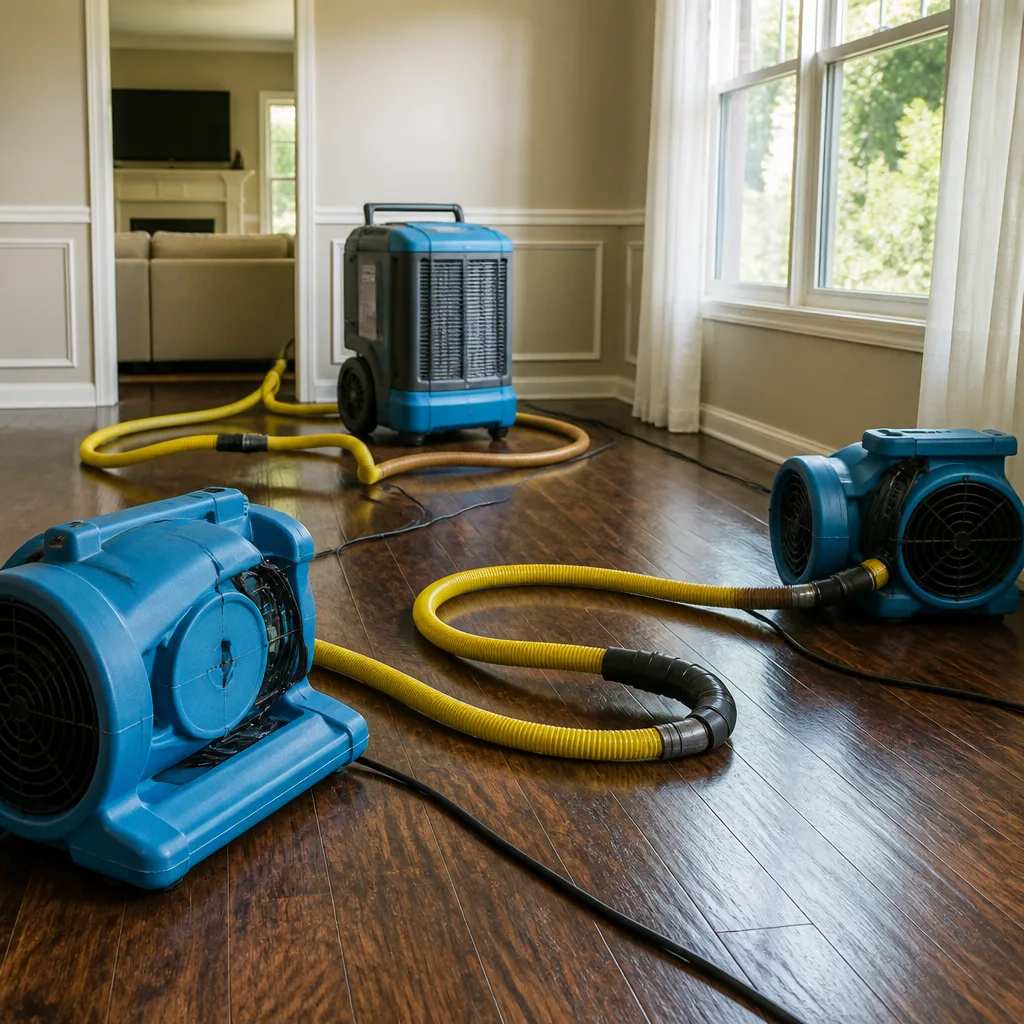
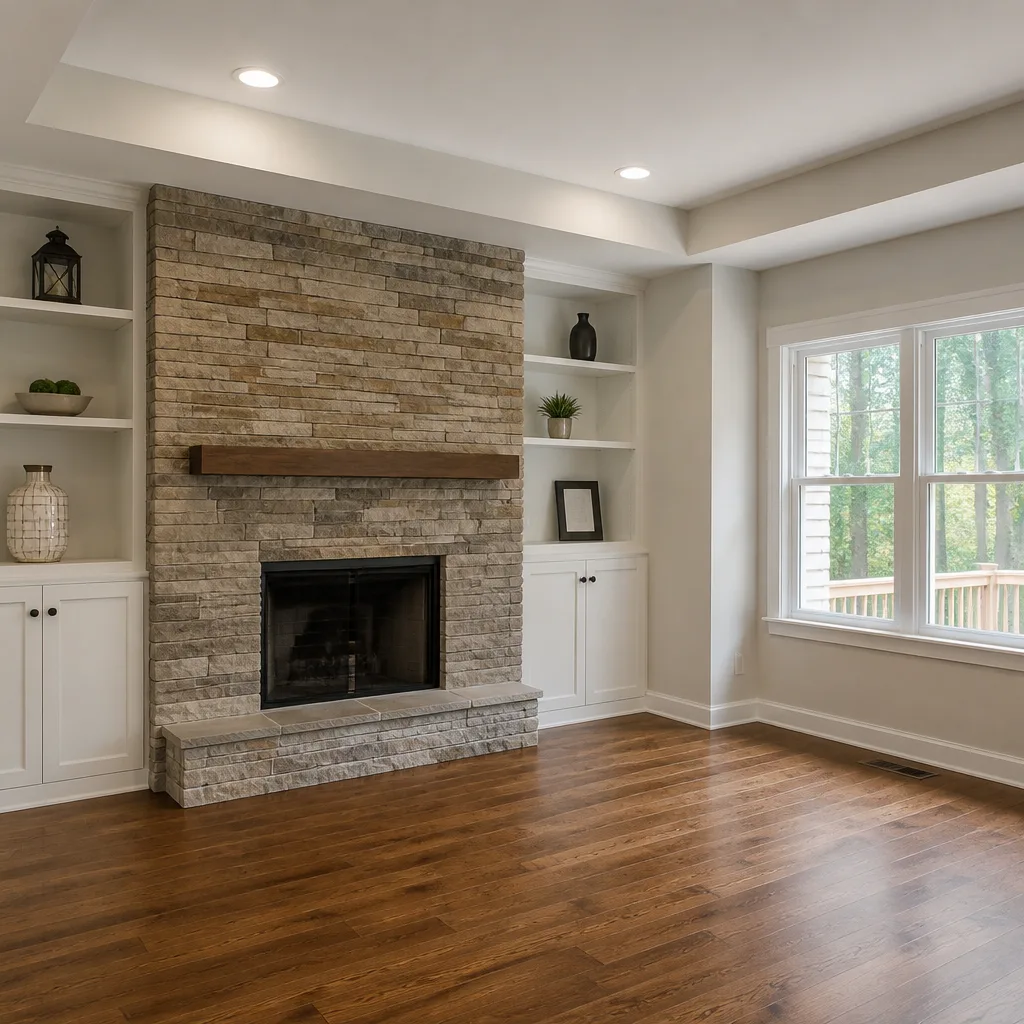
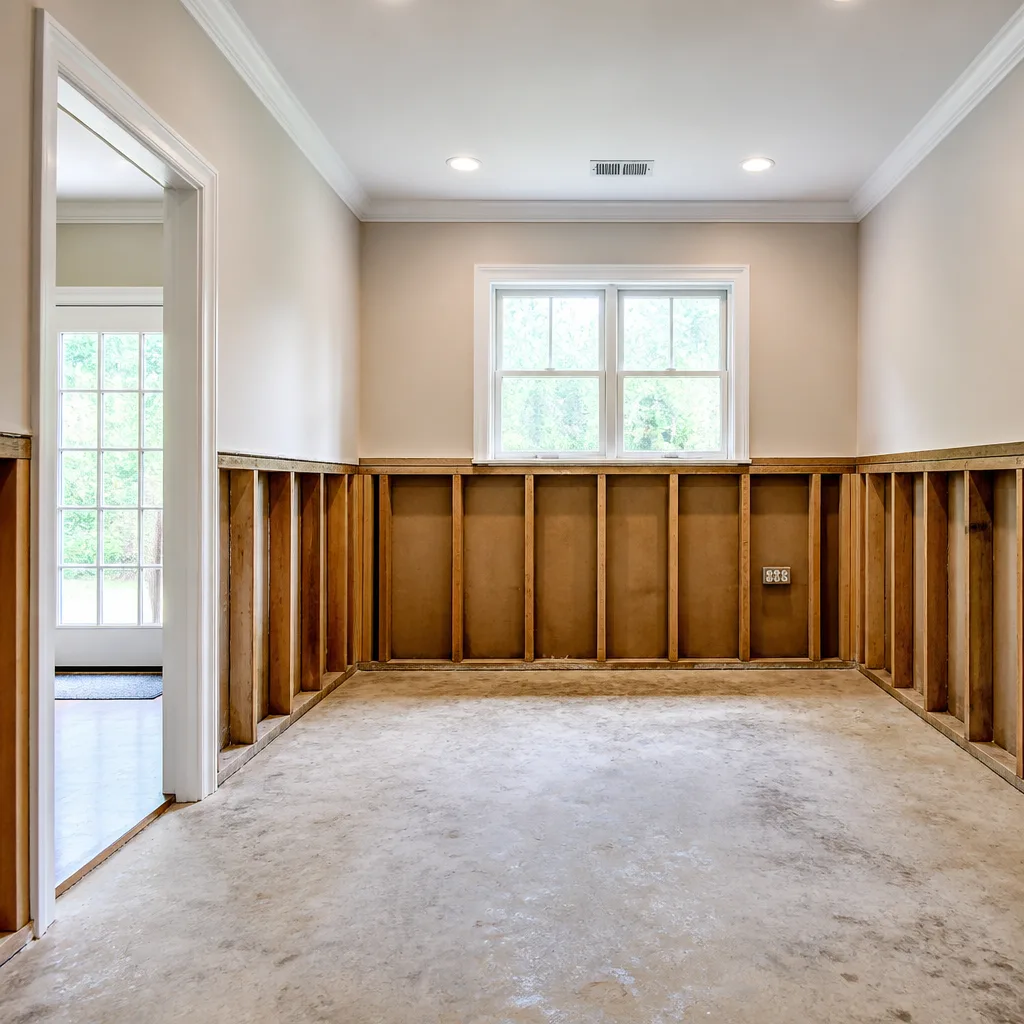

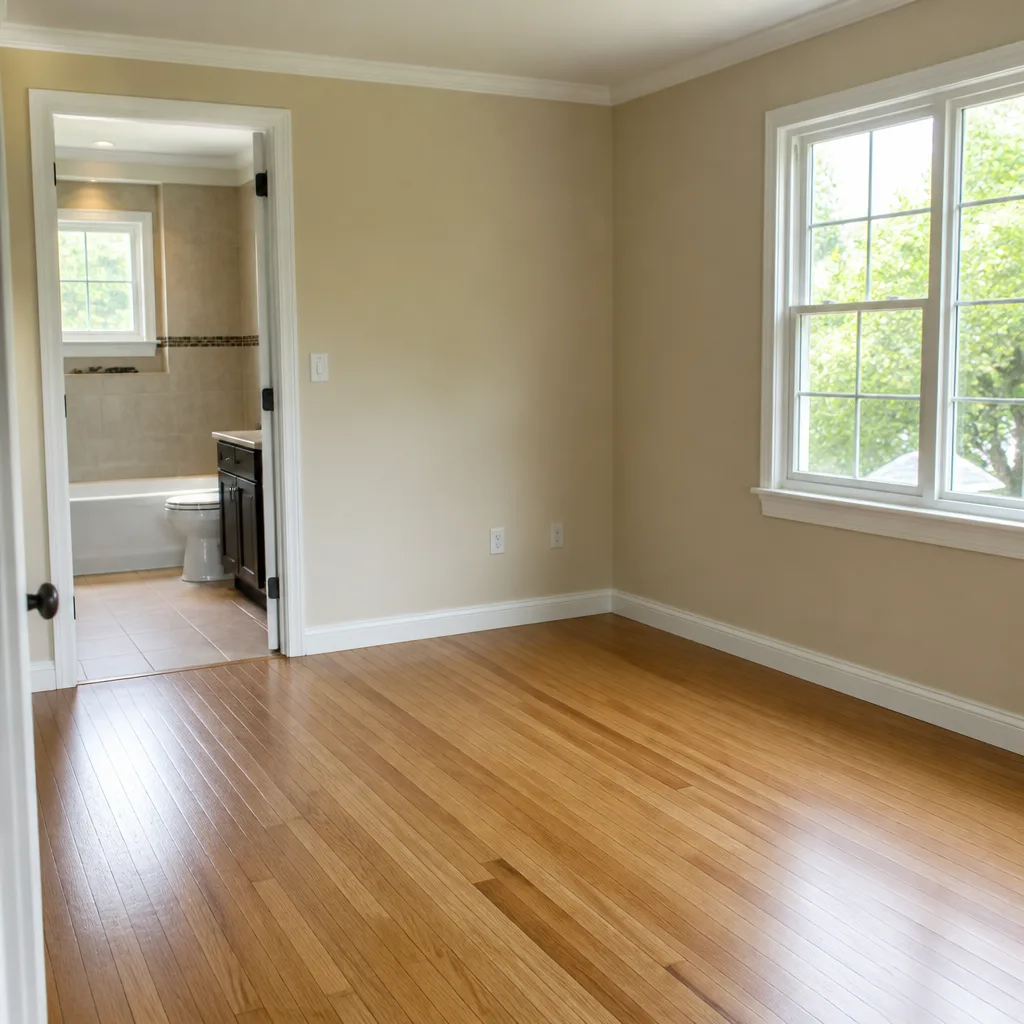
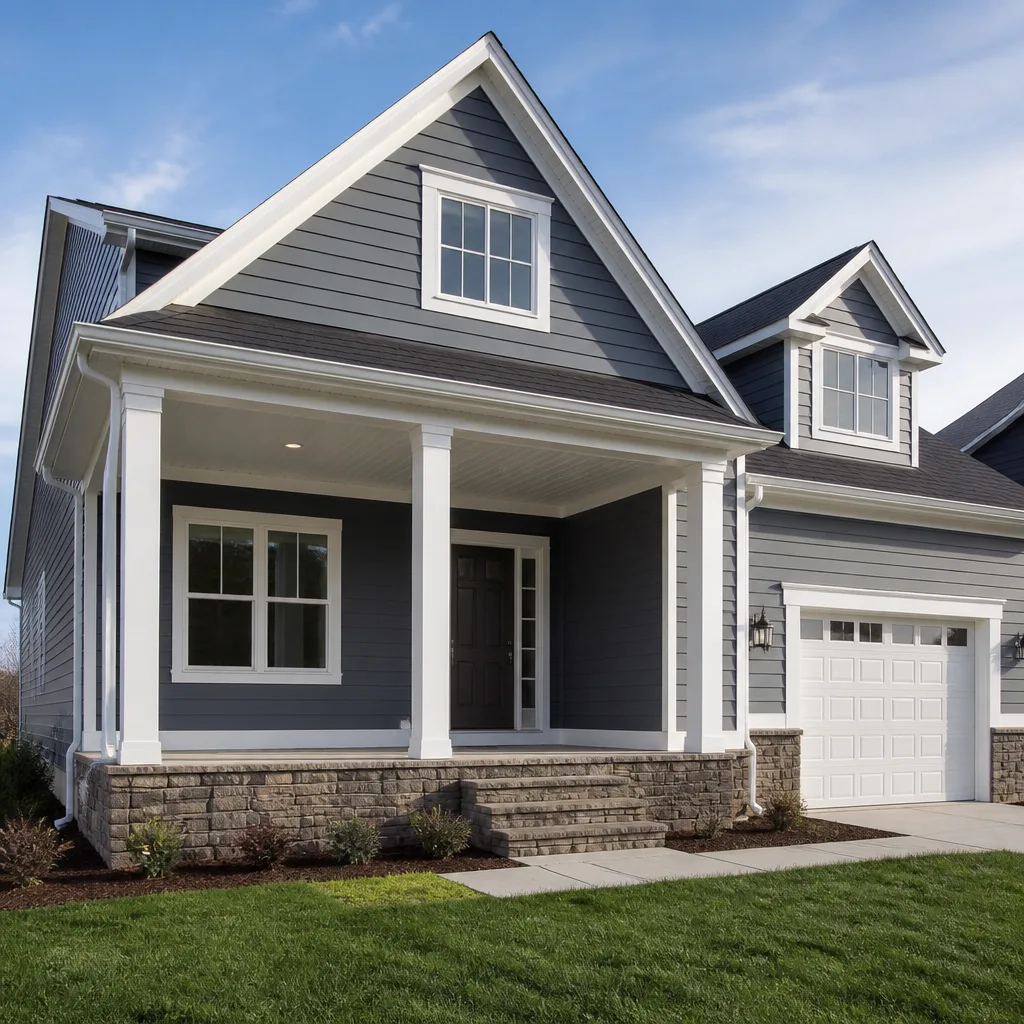
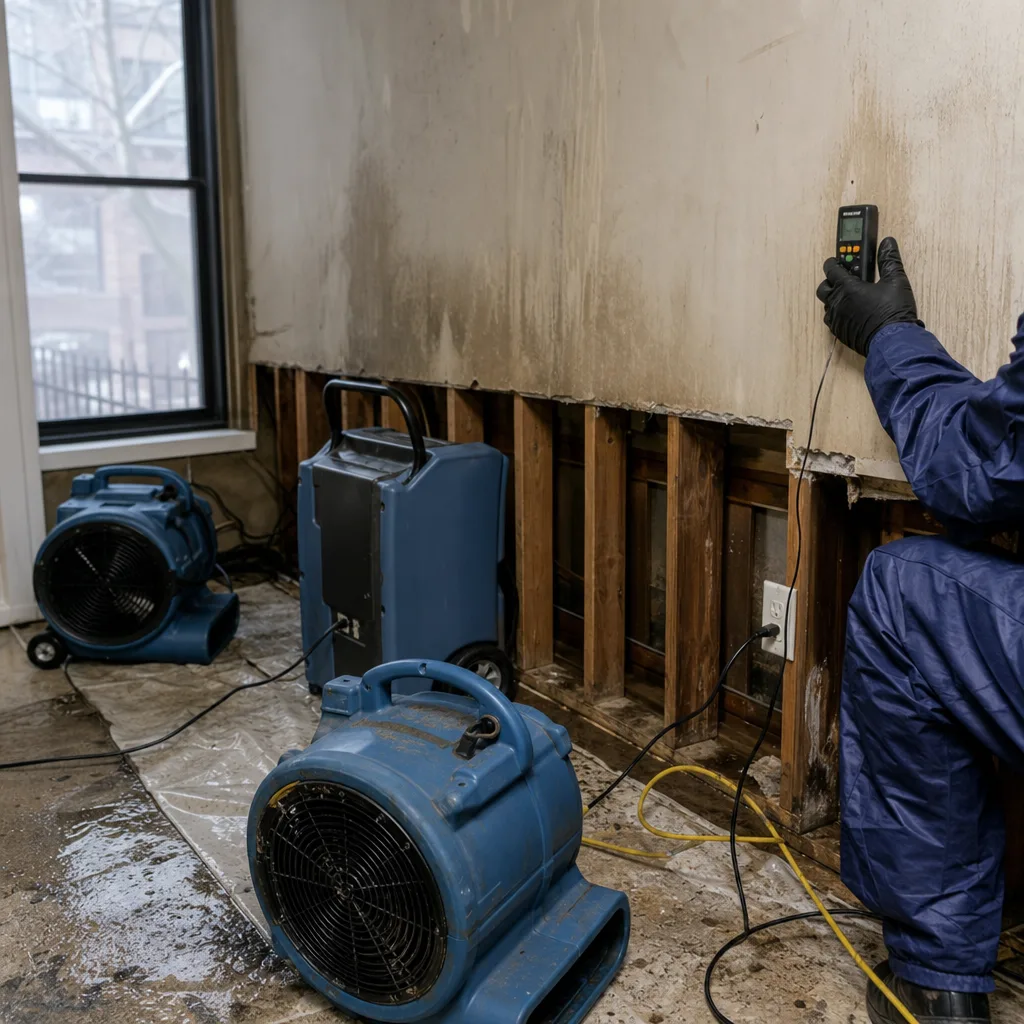 Before
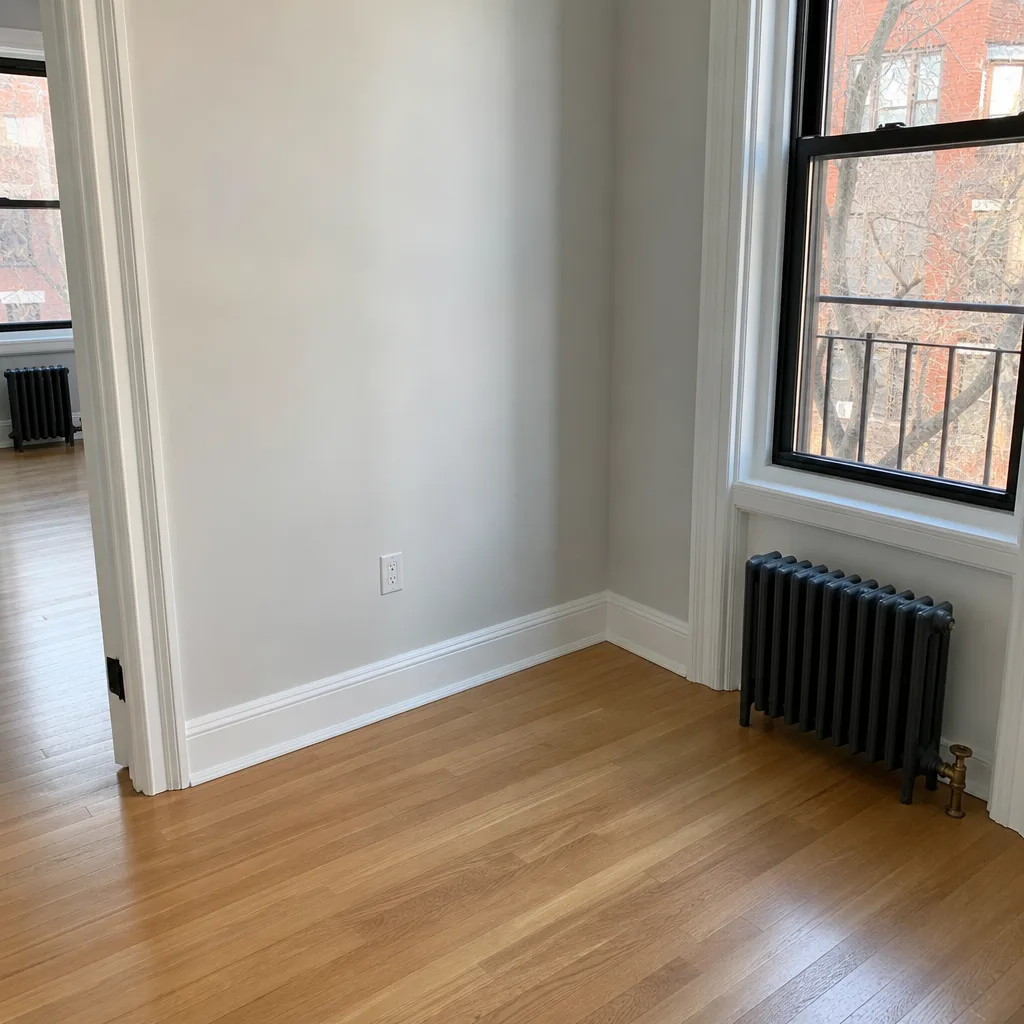 After
After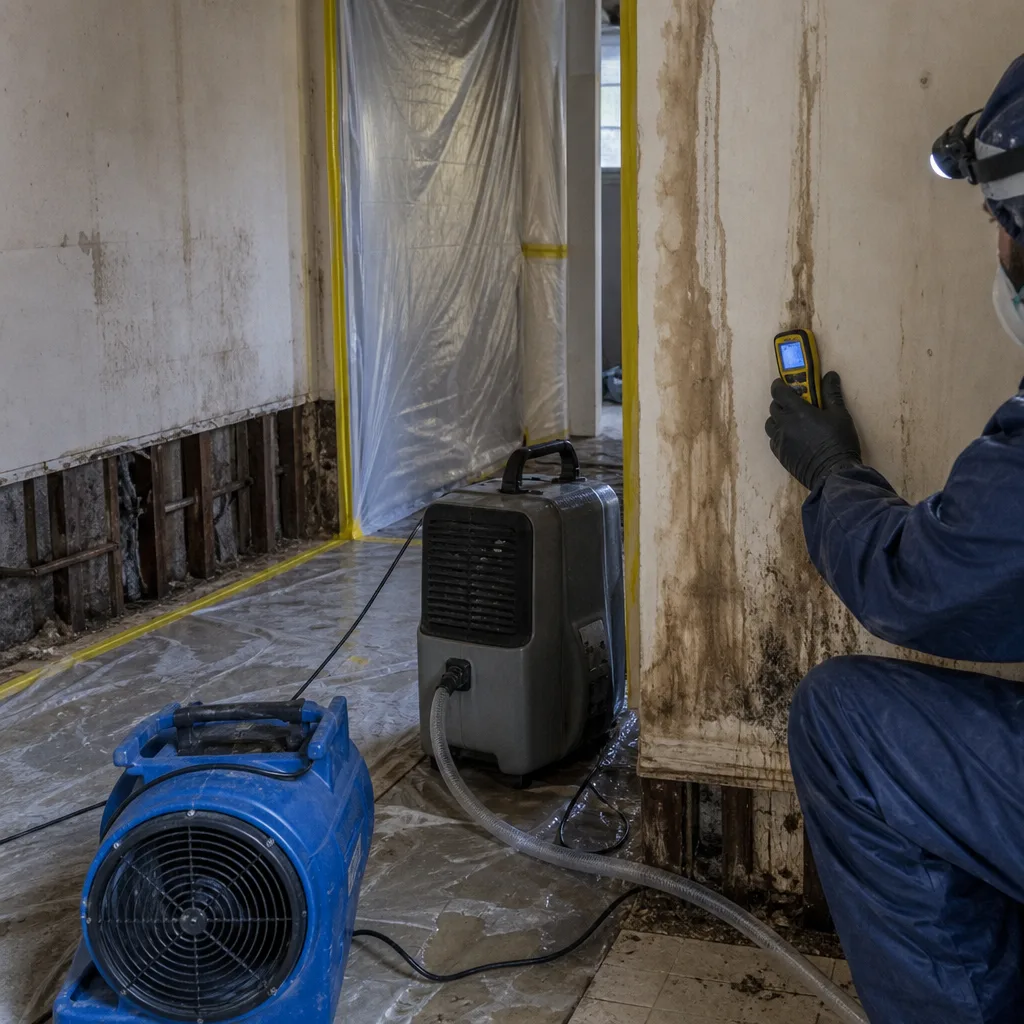 Before
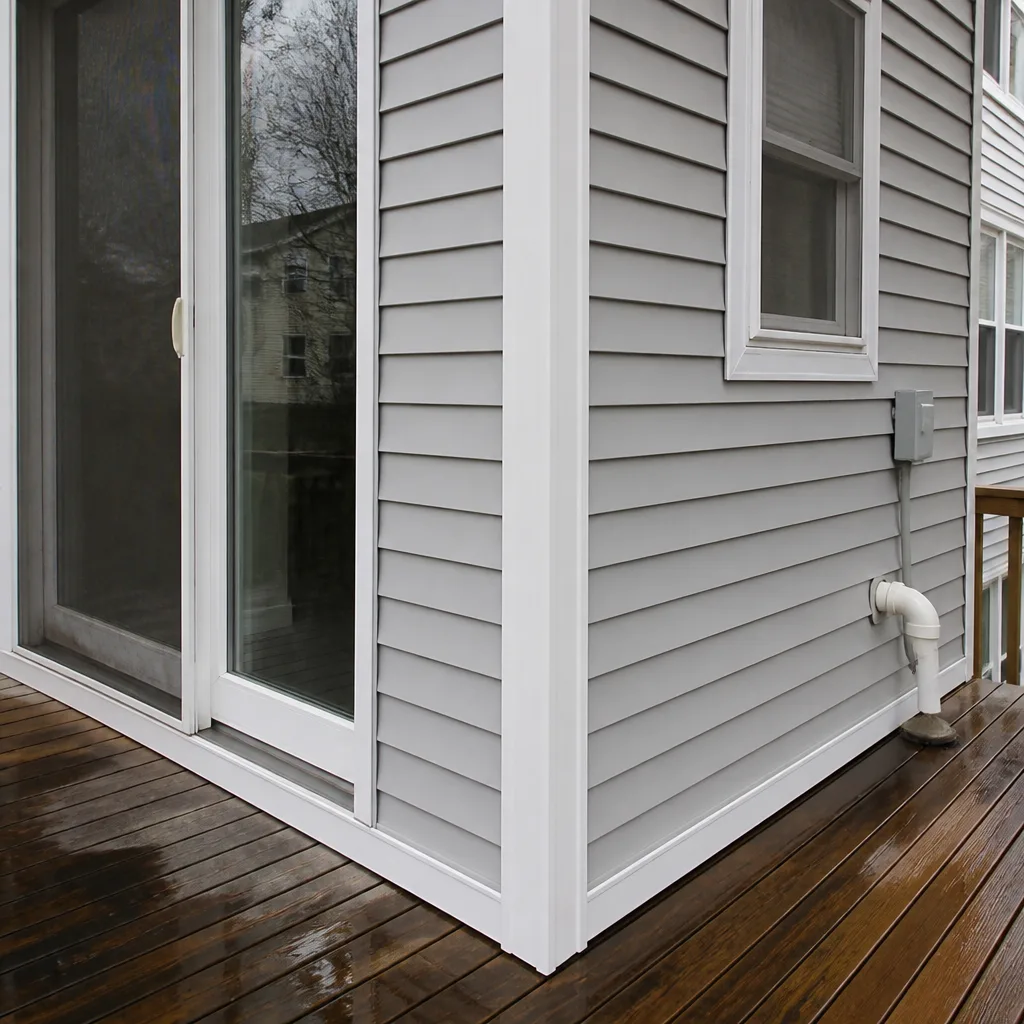 After
After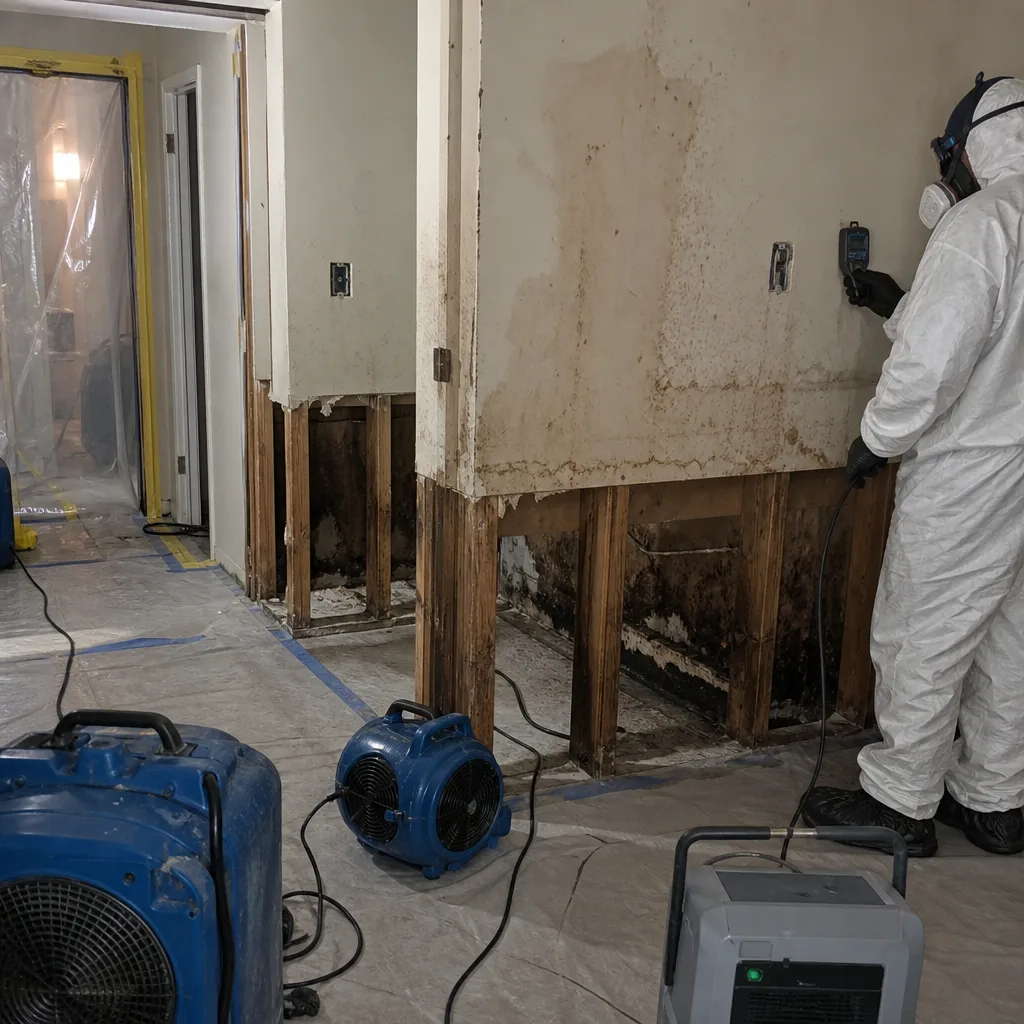 Before
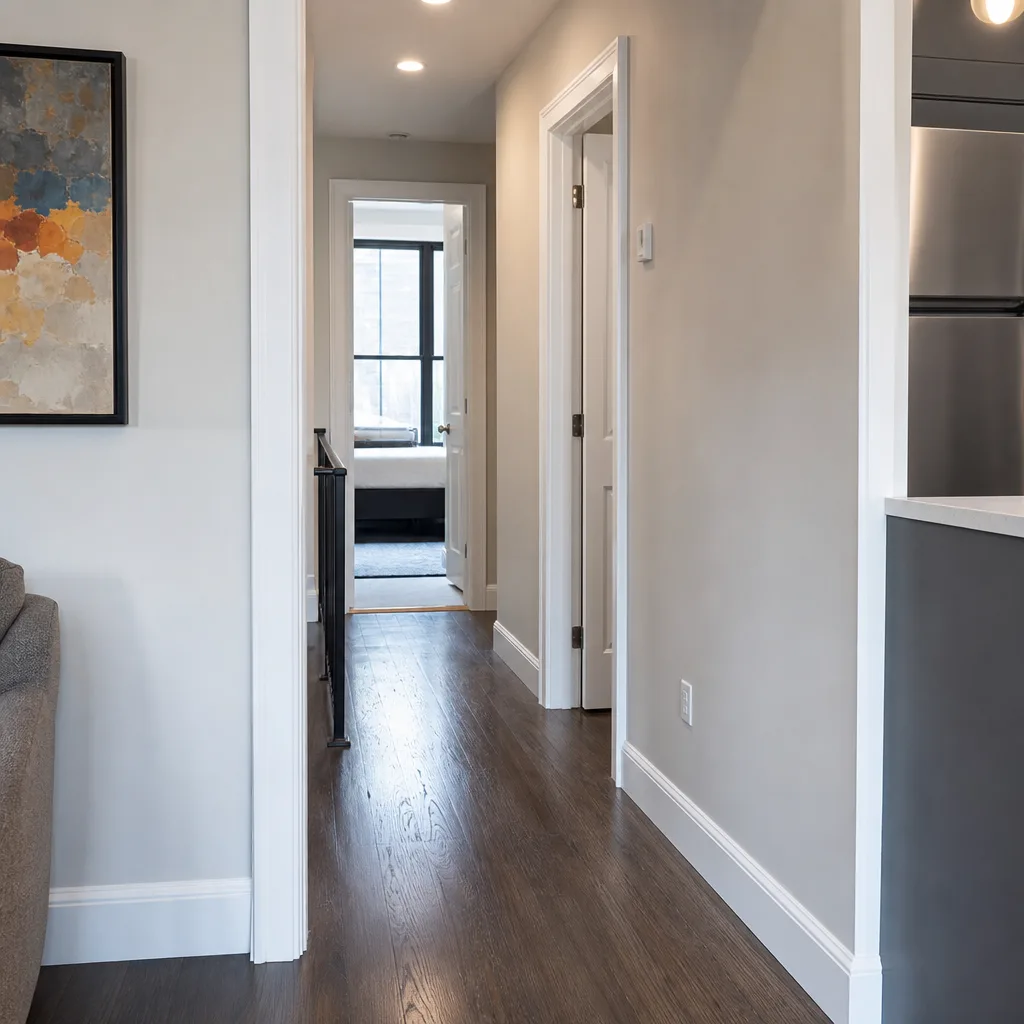 After
After24/7 Emergency Storm & Disaster Restoration in Lower East Side
Storm damage in Lower East Side doesn’t wait for business hours, so neither do we. Floodline Restoration Co. of Manhattan runs live dispatch around the clock, every day of the year. When a nor’easter rips membrane off a flat roof or a January freeze bursts a supply line in a pre-war tenement, a real person answers at (917) 924-4221 and a certified crew starts moving toward your building immediately, not after a recording screens your call. The first hour sets the scope of everything that follows. Water moving through horsehair plaster and across shared tenement walls will migrate floor to floor faster than most property owners believe. A free visual inspection right now tells us what’s wet, what’s threatened, and what we stop before it spreads. We’re already in the neighborhood.
Key Takeaways
- Storm restoration in Lower East Side tenements runs deeper than the visible stain because airshafts and shared walls move water vertically and laterally through multiple units.
- Pre-1920 buildings require asbestos and lead testing before drying or demolition can legally start. We order that early so the job never stalls.
- Emergency board-up and roof tarping in Lower East Side typically runs $450-$1,400 depending on opening size and wind exposure.
- A live dispatcher answers at (917) 924-4221, 24 hours a day. Not a machine. Not a callback service.
Understanding Storm & Disaster Restoration Severity in Lower East Side Properties
Lower East Side housing stock fights storms from a disadvantage. Most of the neighborhood is five-to-seven-story brick tenement walk-ups built between the 1880s and 1920s. The structure is masonry and timber, the walls are horsehair plaster over wood lath, and the roofs are flat, which means ponding water after heavy rain. Add in the narrow airshafts written into the 1901 Tenement House Act, and you get a vertical channel where a roof tear on the top floor feeds moisture down into wall cavities on four, five, sometimes six floors below.
We classify water by category. Category 1 is clean supply-line water. Category 2 carries contaminants. Category 3, what we see after coastal surge or sewage backup, is grossly contaminated and requires containment, antimicrobial treatment, and aggressive structural drying. For storm-driven intrusion, we moisture-map every affected wall plane with thermal imaging and hygrometers before we cut anything. You never want to dry only the unit that called. In a tenement, the unit that called is usually the fourth one the water reached.
Why Lower East Side Property Owners Choose Floodline Restoration Co. of Manhattan
- 45-minute response commitment. When you call with active water intrusion, we commit to having a certified crew at your Lower East Side building within 45 minutes. Extraction starts on the same visit, not the next day.
- A live person answers, 24/7. No phone tree, no voicemail at 2 a.m. A dispatcher picks up, takes the address, and starts the clock.
- IICRC-certified crews. Our technicians hold WRT and ASD certifications and train to IICRC, RIA, and IFA standards. They’re background-checked and uniformed. You’ll know who’s in your hallway.
- Free visual inspection. We assess before we quote. You see the moisture readings, the photos, and the scope before any money changes hands.
- Direct insurance billing. We bill your carrier directly and send them the drying logs and line-item scope they need. You never play messenger between Floodline and your adjuster.
- One team, extraction to reconstruction. The same crew that reads the moisture map on day one handles daily readings, hands you the log, and rebuilds what needs rebuilding. No mid-job handoff to a stranger.
Our Storm & Disaster Restoration Process
Inspection & Assessment
We arrive, walk the affected units, and map moisture across floors and shared walls. In a Lower East Side tenement, that means checking the airshaft, the roof, the basement, and every apartment in the water’s path. We document everything with photos and thermal imaging before we move a single piece of furniture.
Extraction & Stabilization
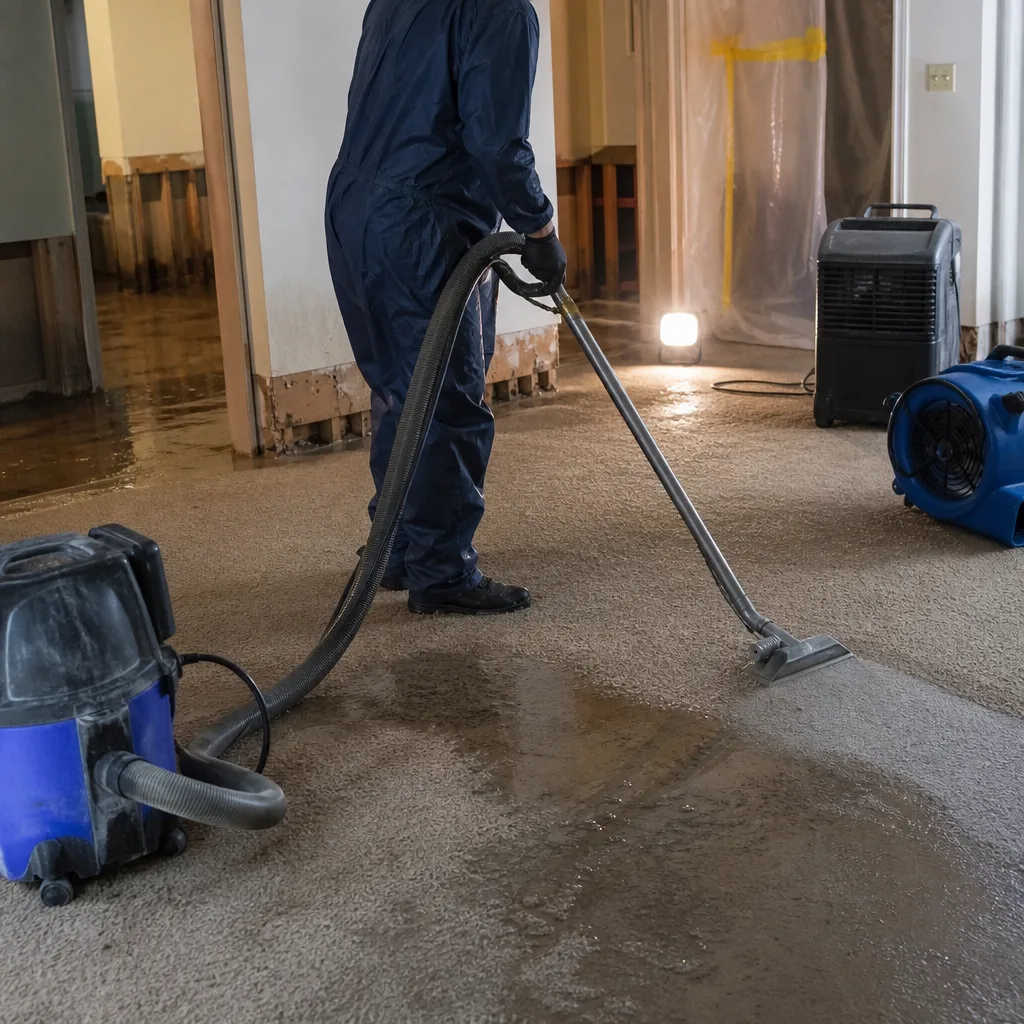
Standing water comes out first, using truck-mounted and portable extraction units. We tarp compromised roof sections and board up blown windows or doors the same visit. The goal is to stop the water’s movement and secure the building envelope before more weather arrives.
Drying & Dehumidification
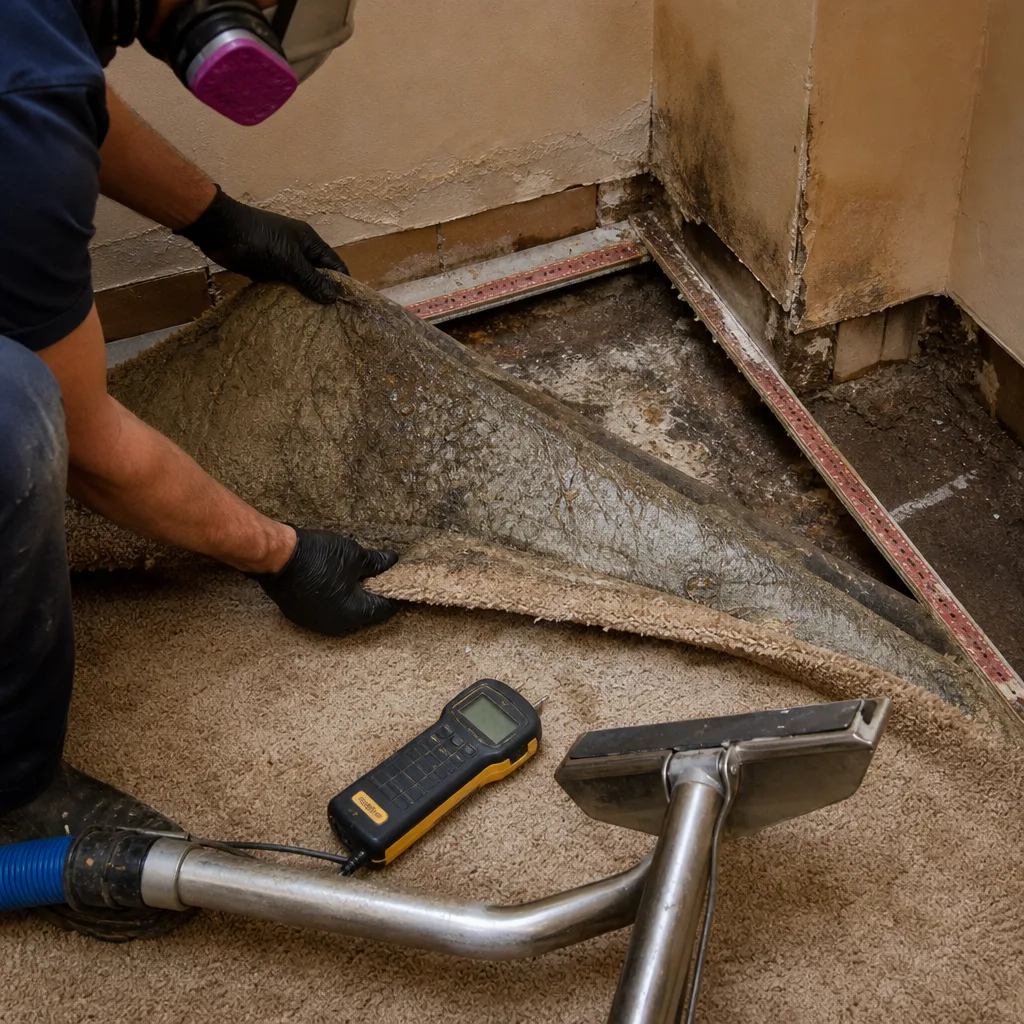
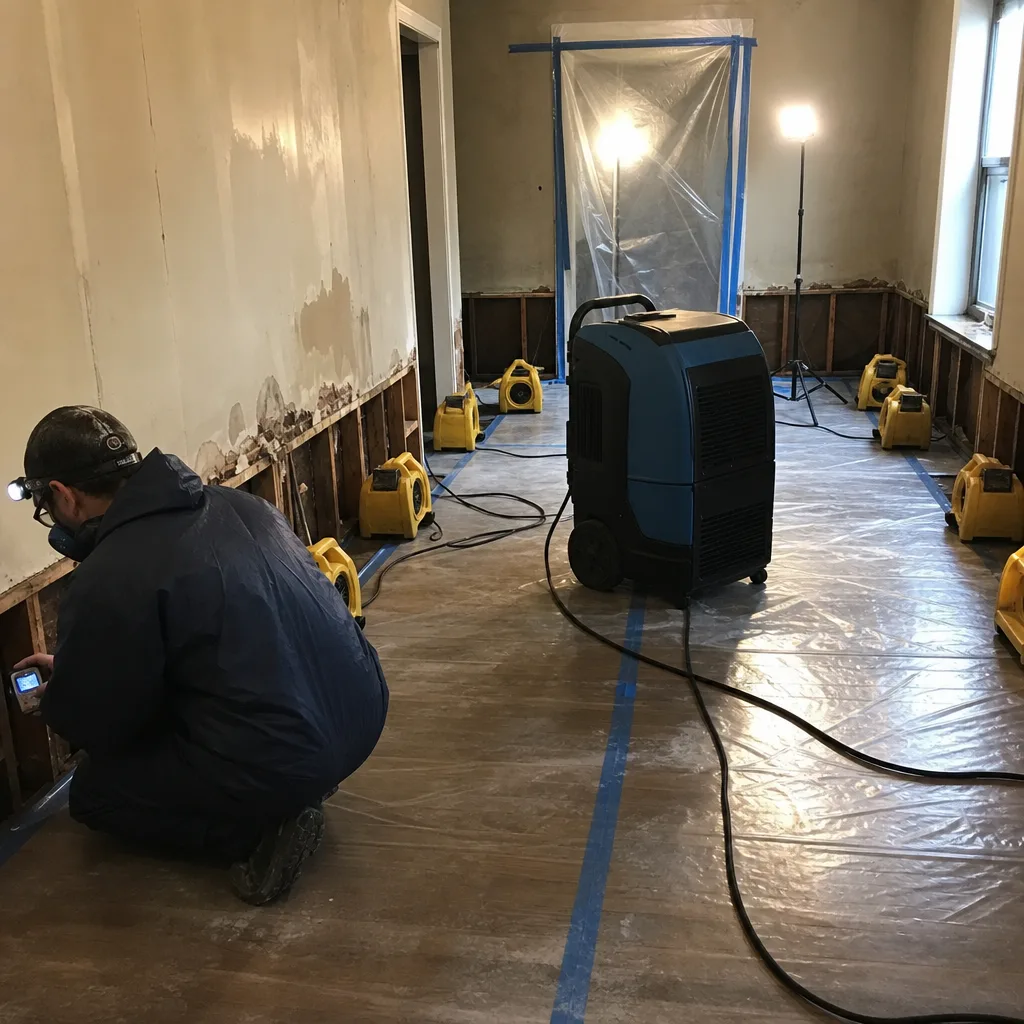
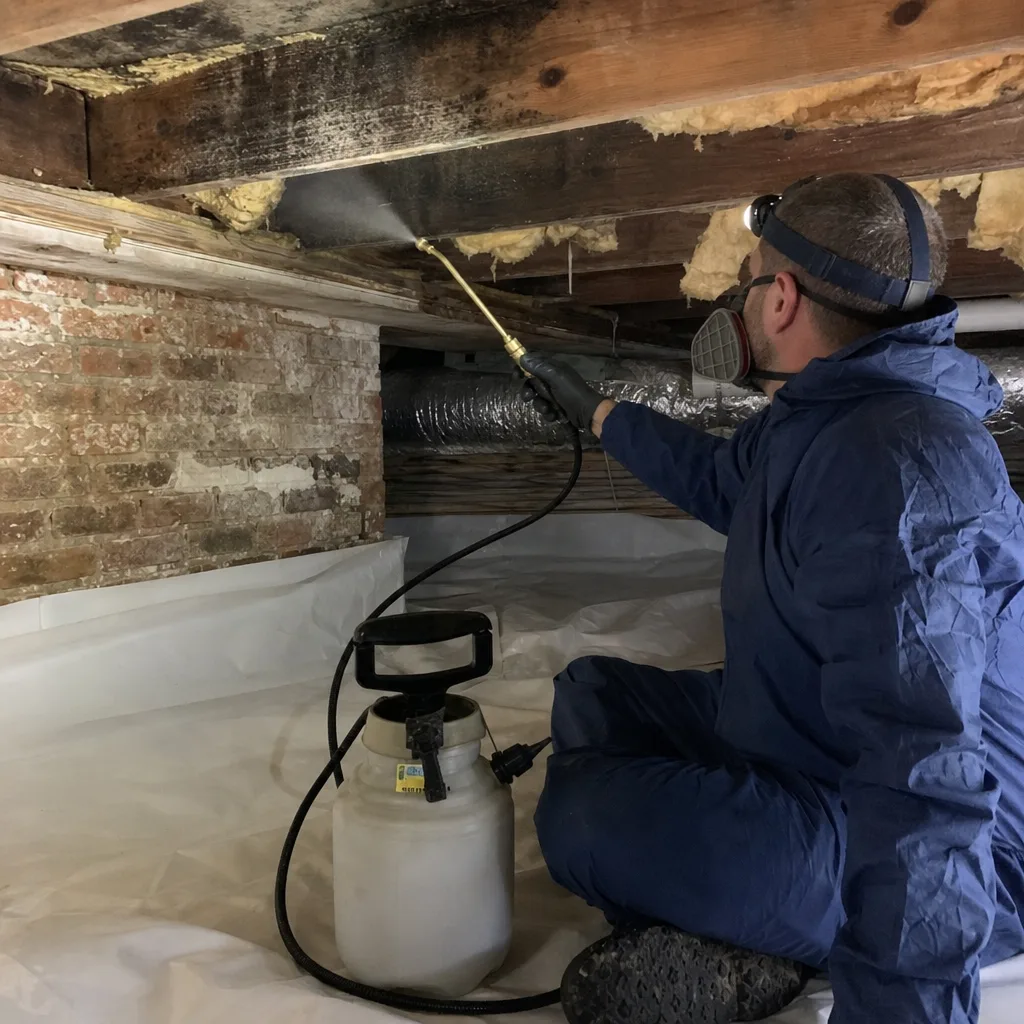
We set commercial-grade dehumidifiers and high-velocity air movers from Dri-Eaz and Phoenix, placed to force air through wall cavities, not just across floors. In tenement construction, we run Injectidry systems to pull water from saturated lath and plaster without gutting walls that can be saved.
Cleaning & Sanitization
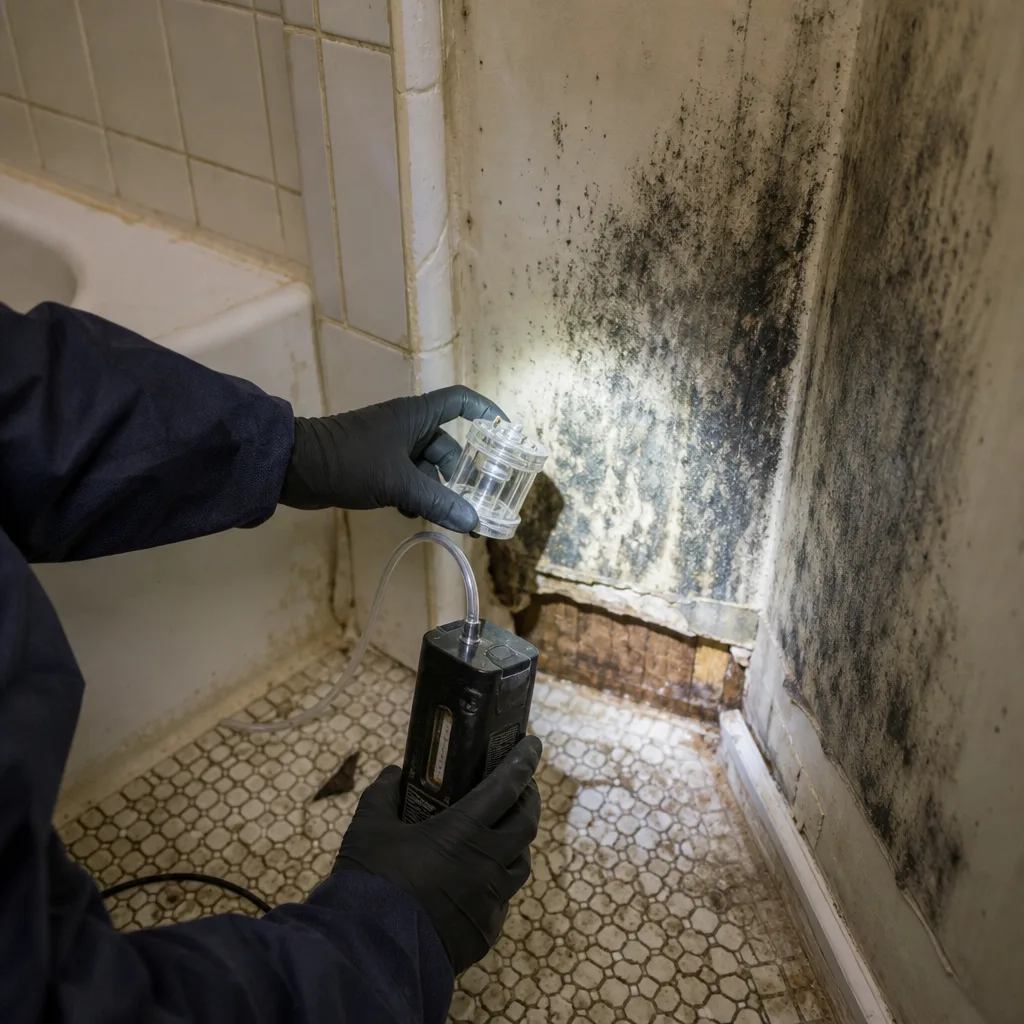
Every surface that contacted Category 3 water gets cleaned with antimicrobial agents. We HEPA-vacuum, scrub, and treat. Contents are sorted as salvageable, restorable, or total loss, and documented for your insurer.
Specialty Treatment for Tenement Storm Damage
This is where Lower East Side work parts ways with generic restoration. We coordinate asbestos and lead testing on pre-1920 plaster before any invasive drying or demolition. We run moisture mapping on every floor served by the affected airshaft. And we set containment with air scrubbers so hidden mold doesn’t spread to adjacent apartments mid-job.
Repairs & Restoration
Once drying logs show the structure has reached its dry standard, we rebuild. Horsehair plaster patching, trim, flooring, paint, and full reconstruction if the storm damage warrants it. One accountable team sees the job from first call to final walkthrough, all backed by the 90-Day Done Right Promise in writing.
Need Emergency Storm & Disaster Restoration in Lower East Side Now?
Crews minutes away, answering live 24 hours a day. The sooner we start, the less it costs.
Working With Your Insurance Company
We handle claim documentation from the first hour because we know what your carrier’s adjuster will ask for before they ask it. Every loss gets photographed room by room, with moisture readings, thermal images, and a line-item scope tied to industry-standard estimating software. Our team communicates directly with your adjuster, sends daily drying logs, and answers their questions so you don’t have to translate restoration jargon into insurance language.
We also know storm and flood claims in Lower East Side carry specific complications. Many policies separate wind damage from flood damage. Coastal surge from a named storm may fall under FEMA or a separate flood policy. We document the cause and the category of water meticulously because the difference between a covered wind loss and a flood exclusion often comes down to the paper trail. Curt Bowman started Floodline Restoration Co. in 2010 around a dispatch board, not a sales desk, and the paperwork discipline runs the same way: thorough, factual, and sent to your carrier without delay.
What We Provide Your Insurer
- Thorough documentation of the loss
- Photos of all damage, room by room
- Moisture readings and drying logs
- A detailed, line-item scope of work
- Direct coordination with your carrier
Built for Lower East Side’s Loss Calendar
Lower East Side sees a distinct storm pattern every year, and we staff around it. January and February bring deep freezes that split aging galvanized and cast-iron supply lines inside uninsulated tenement walls. A burst pipe on the sixth floor of a Baruch or Wald Houses building can wet units on five floors below before anyone notices. Spring thaw pushes groundwater into low-lying basements along the East River side of the neighborhood, especially in the blocks east of Avenue D where landfill sits at or below grade. Summer thunderstorms drop an inch of rain in 40 minutes, and flat tenement roofs with aging drains pond water until it finds the path of least resistance, often down an airshaft. Then come the coastal events. Hurricane Sandy’s 2012 surge put saltwater several feet deep into basements and ground-floor apartments across the neighborhood, and that salt never really left the masonry. Every nor’easter since has reactivated corrosion, efflorescence, and hidden mold in foundations that took years to remediate the first time. We scope coastal storm calls with that template in mind.
Storm & Disaster Restoration Across Lower East Side’s Neighborhoods
The same storm hits different blocks in Lower East Side differently, and we read the route accordingly. In the pre-1920 walk-ups along Rivington, Delancey, and Grand Streets, we’re checking the airshaft before we check the ceiling stain, because that’s where storm water travels. East of Avenue D, in the blocks near Baruch Houses, Wald Houses, and Riis Houses, we’re dealing with mid-century concrete tower stock where elevator shafts and mechanical chases carry water between floors, and where ground-floor inundation after a coastal surge is a recurring event. Along the Houston Street corridor, the newer mixed-use buildings have different failure modes: membrane roofs, rooftop mechanical penetrations, and ground-floor retail entrances that weren’t wind-rated for FEMA flood zone AE. Each response route changes the first tools off the truck. The tenements want moisture meters and Injectidry. The NYCHA towers want lift-shaft inspections and Category 3 containment. The newer builds want roof- and door-grade assessments. Same storm, three different playbooks. We’ve run all three often enough that the dispatch board already knows which one you need when you give us the address.
Specialized Storm & Disaster Restoration Services We Offer in Lower East Side
Storm Damage Cleanup
Storm cleanup in Lower East Side means working around tenants, narrow stairwells, and shared hallways. We remove debris, extract water, and dry structure while keeping access routes clear for the building’s other residents. We also identify what the storm compromised but hasn’t failed yet, like saturated plaster keys or roof membrane lifting at the parapet.
Flood Damage Restoration
Flood water in Lower East Side is rarely clean. Whether it’s East River surge or a backed-up storm drain on Delancey Street, we treat it as potentially contaminated, set containment where needed, and document the water category for your carrier. Saltwater intrusion gets special attention because chloride left in masonry corrodes rebar and keeps wicking moisture for years if not flushed and dried properly.
Emergency Board-Up
After a storm blows out a storefront window on Ludlow Street or a ground-floor apartment window on Avenue B, the opening has to be secured before looters, weather, or rodents get in. We board up with plywood cut to the opening and anchored to the frame, not just wedged in, and we photograph the board-up for your claim. In flood zone AE, we also check whether the failed opening was wind-rated to begin with.
Roof Tarping
A torn roof membrane over a Lower East Side tenement feeds water into the airshaft within minutes of the next rain. We tarp with heavy-duty poly anchored against wind lift, because a loose tarp on a six-story roof becomes a sail in a nor’easter. The tarp buys time for a proper roof repair without five floors of wall cavities getting wetter every week.
Debris Removal
Storm debris on the Lower East Side isn’t just tree limbs. It’s roof gravel, broken glass from skylights and windows, and sometimes masonry spalled loose by freeze-thaw on 120-year-old parapets. We haul it, separate what can be salvaged, and photograph the pile before removal so your claim reflects the full scope of the loss.
What happens when you call
- 1
A real person answersNo phone trees - you reach a local pro.
- 2
You get an upfront price rangeHonest numbers before anyone is dispatched.
- 3
A background-checked tech heads outLicensed & insured, dispatched right away.
- 4
You approve before work beginsNothing starts until you say go.
Storm & Disaster Restoration Costs in Lower East Side, NY
We price honestly because Lower East Side property owners have been burned by contractors who quote a number and then discover the job. Emergency board-up in the neighborhood typically runs $450-$900 for a single window or door opening. Roof tarping on a walk-up roof starts around $800 and runs up to $1,400 depending on the membrane area and how much wind it has to survive. Full storm extraction and structural drying across multiple floors of a tenement can run $3,500-$9,000 when moisture mapping, containment, asbestos and lead testing, and daily monitoring are done properly. Debris removal usually runs $500-$1,800 depending on volume and access.
What moves the price? The number of wall cavities actually wet, not just the size of the stain. The presence of pre-1920 plaster that needs testing before we cut. Whether elevator shafts or airshafts are involved. Most storm damage that begins with wind or roof failure is covered by property insurance. Flood and surge damage depends on your policy. Either way, we give a written scope from the free visual inspection before work starts. No surprises on the bill, no inherited charges. Call (917) 924-4221 and we’ll walk the building with you.
We Also Serve Cities Near Lower East Side
Floodline Restoration Co. of Manhattan runs storm and disaster restoration across the surrounding city. We serve Fairview, Harrison, East Bronx, and Hunts Point with the same live dispatch, certified crews, and 90-Day Done Right Promise. If your building is on the edge of the neighborhood, call and we’ll route the nearest crew to you.
Lower East Side Storm & Disaster Restoration Questions, Answered
Why do storm restoration projects in the Lower East Side require asbestos and lead testing before any drying or demolition can start?
Because so much of the neighborhood’s housing stock predates 1920, and the horsehair plaster in those tenement walls commonly contains both asbestos fibers and lead-based paint. Cutting into storm-soaked plaster without testing can release airborne asbestos and lead dust into adjacent apartments, triggering a stop-work order from the city and a costly abatement you never planned for. We order testing on day one, before invasive drying begins, so the job moves legally and safely. Call (917) 924-4221 and we’ll explain what your building’s age means for your specific scope.
How do tenement airshafts change the scope of a storm damage restoration call in the Lower East Side?
Airshafts, mandated by the 1901 Tenement House Act, are vertical shafts that run between apartment walls to provide light and air to interior rooms. In a storm, they become vertical water highways. A roof leak or failed parapet flashing sends water down the shaft, where it wicks laterally into the exterior walls of every floor it passes. That means a ceiling stain in apartment 2A is frequently just the visible tip of moisture already inside the walls of 3A, 4A, and 5A. We moisture-map all units served by the shaft before writing any scope, because drying only the one that called guarantees hidden mold in the ones that didn’t. If your building has an airshaft, assume the storm found it. Call us and we’ll check.
What wind rating should my ground-floor door have to survive the next nor’easter in FEMA flood zone AE?
Ground-floor entrances in FEMA flood zone AE should carry impact-rated protection, which generally means a wind-rated door assembly tested to ASTM standards for windborne debris and pressure, commonly a design pressure rating of at least DP 40 or higher depending on exposure. The exact requirement for your building depends on its height, location, and the door’s exposure to the East River wind fetch. A standard hollow-core door installed to code minimum is not the same as wind-rated protection. We assess the opening and recommend a door that will still be in its frame after the next storm. Call (917) 924-4221 for a free look at your entryway.
After a coastal storm, how do I know if my apartment’s wall cavity is dry without tearing out all the plaster?
We run non-invasive moisture readings using penetrating and non-penetrating meters, plus thermal imaging to map the moisture profile inside the wall. For saturated lath and plaster, we set an Injectidry vacuum panel system that pulls water out of the cavity without demolishing the wall. If readings stay at or below the dry standard across three consecutive days, the wall is dry and can be restored in place. If not, we show you the numbers and we talk about what needs to open. You always get the log, not a guess. Call (917) 924-4221 and we’ll bring the meters.
Does Floodline Restoration handle the shared-wall water spread that happens when a neighbor’s burst pipe floods multiple Lower East Side apartments?
Yes. We handle water that crosses party walls, floors, and airshafts into multiple units as one connected loss, not four separate jobs. That means we moisture-map every affected apartment, set containment and drying in each unit, and document the whole spread for each owner’s carrier. The shared-wall nature of tenement construction is the reason our Storm & Disaster Restoration team carries extra equipment and logs every unit separately. In a Lower East Side walk-up, a burst pipe on the fourth floor is a four-floor event. We scope it that way from the first hour.
How fast can you actually get to a Lower East Side building after I call?
Our commitment is 45 minutes from your call to a crew at the building. That’s live dispatch, not a scheduling office that calls you back in the morning. A real person answers at (917) 924-4221, takes the address, and the nearest certified crew starts moving. On most storm nights, we have trucks already stationed in the Lower East Side because we know the blocks and the buildings that call first.
Will my insurance cover storm damage restoration in a Lower East Side tenement?
Most storm damage that starts with wind, roof failure, or a burst pipe is covered by property insurance. Flood and surge damage depends on whether you carry a separate flood policy, which matters in this neighborhood because Lower East Side sits in FEMA flood zone AE along the East River. We document the cause of loss, the water category, and the moisture spread so your carrier sees exactly what happened and why the scope is what it is. We also bill your insurer directly. Call (917) 924-4221 and we’ll review what your policy likely covers, honestly, before any money changes hands.
What should I do in the first 30 minutes after storm damage in Lower East Side?
Call a live dispatcher at (917) 924-4221 first. While you’re on the phone, if it’s safe, shut off the water at the main or the affected supply valve. Move small electronics and papers off wet floors. Don’t enter standing water if it might be electrically live. Don’t cut into any pre-1920 plaster wall. Don’t wait to see if it dries on its own, because in tenement construction, the water you can’t see is already moving into the wall cavities above, below, and beside you. The first hour shapes the cost. Call now.
Storm & Disaster Restoration in Lower East Side: The Airshaft Problem, Solved
No national franchise’s template covers what actually happens when a nor’easter hits a Lower East Side tenement. The airshafts mandated by the 1901 Tenement House Act run through the heart of these buildings, and they were never designed to shed water that enters from above. When a roof membrane tears on a walk-up along Rivington or Grand Street, rainwater finds the shaft and rides it down. It wicks laterally into exterior walls at every floor. The tenant on the fourth floor sees a brown stain on the ceiling and thinks it’s a small leak. In reality, the wall cavities on floors two through six are already wet, and mold starts colonizing horsehair plaster within 48 hours.
This is the information you won’t get from a generic restoration company. We know it because we’ve worked these buildings. After a March nor’easter tore a section of roof membrane off a six-story walk-up on Rivington Street, our techs found water tracking down the central airshaft and into horsehair plaster walls across four floors. We ran moisture readings on every affected unit, set containment with the Injectidry system to pull Category 3 water from the saturated wall cavities, and logged daily drying metrics until the plaster reached pre-loss condition. No demolition needed on the lower floors. The building stayed occupied. The claim closed clean.
Restorers who skip mandatory asbestos and lead testing on pre-1920 tenement walls before cutting into storm-soaked plaster risk a stop-work order and cross-contamination of adjacent units. Crews who treat a first-floor ceiling stain as a single-unit leak miss the airshaft-fed moisture already wicked into exterior walls on three or four other floors, which becomes hidden mold within 48 hours. Contractors who install standard doors without checking local wind-rating requirements leave ground-floor entrances vulnerable to the next nor’easter, because FEMA flood zone AE demands impact-rated protection. We don’t skip any of it.
That’s what Storm & Disaster Restoration means on this block, in these buildings. And that’s why we wrote this page specifically for Lower East Side property owners and tenants, not as a template meant for anywhere else.
Serving Lower East Side, NY - Our Local Coverage Area
We’re based in the Lower East Side area and know this community well. Use the map below to see our service coverage - if you’re nearby, we can almost certainly help.
Contact Floodline Restoration Co. of Manhattan
If your Lower East Side building has standing water, a torn roof, a blown-out window, or a stain spreading across a tenement ceiling, call (917) 924-4221. A live dispatcher answers. We send a certified crew. You get a written scope before work starts, direct insurance billing, and the 90-Day Done Right Promise in your hands. Done right, and backed in writing.
Written by Curt Bowman, Owner at Floodline Restoration Co. of Manhattan, serving Lower East Side with storm and disaster restoration since 2010.