
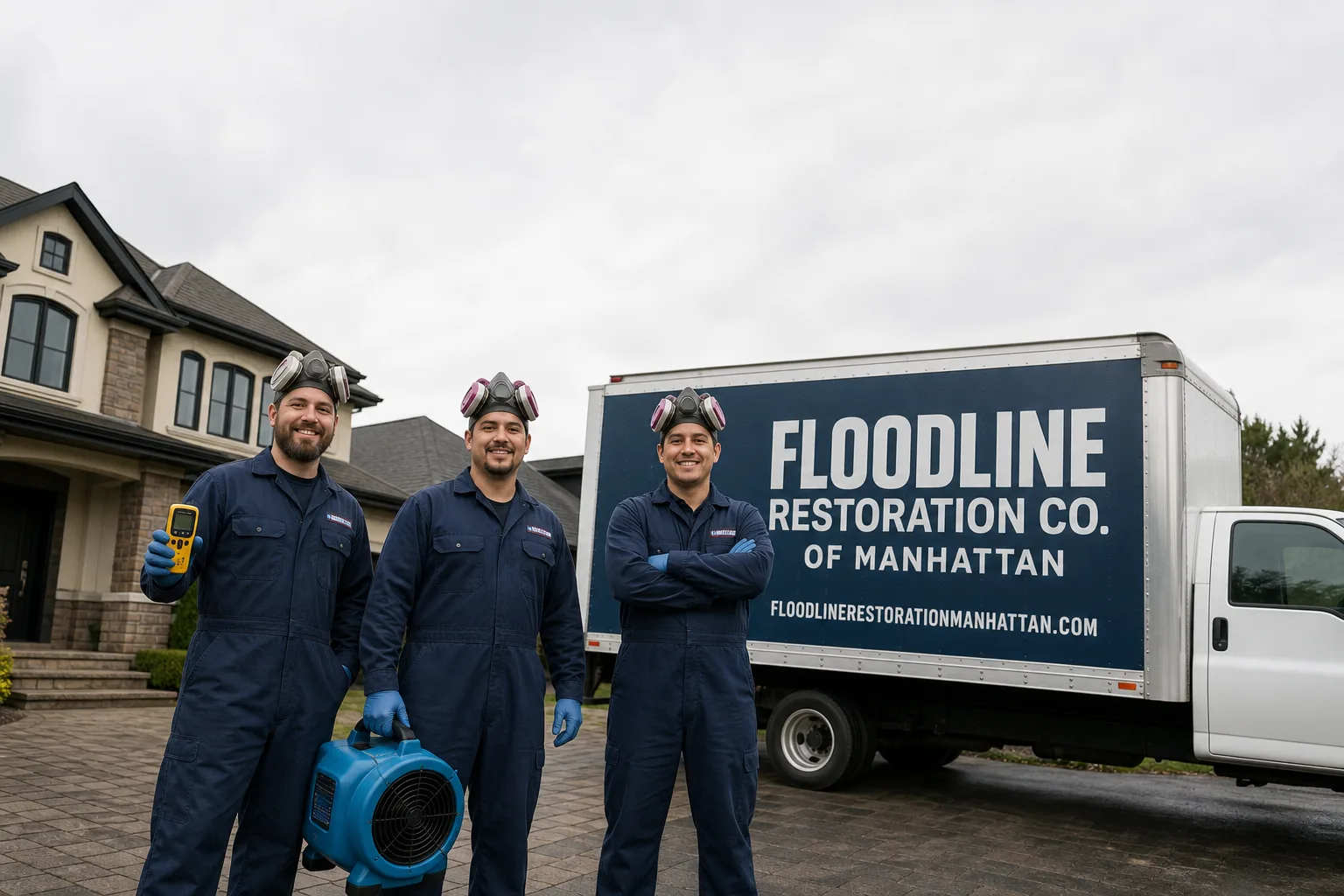
Free visual inspection and a written scope of work before any mitigation begins - photos, moisture readings, and drying logs go in your claim file
The scope we write is the scope we bill. Anything new gets shown to you, in writing, before we touch it.






 Before
 After
After Before
 After
After Before
 After
After24/7 Emergency Storm & Disaster Restoration in Mount Vernon
Storm damage in Mount Vernon moves fast, and so do we. A live dispatcher answers at (917) 924-4221 any hour, day or night, and a certified crew from our Storm & Disaster Restoration team is on the road toward your block within the hour. The first call is the one that stops a roof leak from becoming a wall cavity problem two units over. We do a free visual inspection on arrival, give you a straight answer about what we’re seeing, and start mitigation the same visit when the job calls for it. Water that sits in a pre-war brick row house overnight is water that has already started wicking into party walls, original hardwood, and basement utility chases by morning.
Understanding Storm & Disaster Restoration Severity in Mount Vernon Properties
Storm damage here doesn’t behave the way it does in freestanding suburban homes. In Mount Vernon’s dense grid of 1900-1940 two- and three-family brick row houses, water travels laterally through shared roof decks, common gutter runs, and party walls before it ever shows up on your ceiling. We classify water by category the moment we arrive: Category 1 is clean supply-line water, Category 2 carries contaminants like sump overflow or washer discharge, and Category 3 is grossly contaminated storm and sewer water that requires containment, antimicrobial treatment, and often removal of affected drywall and insulation. Moisture mapping with thermal imaging and hygrometers tells us where the water actually is, not just where you saw it. That matters in Mount Vernon because the source unit and the damaged unit are rarely the same address. Structural drying here means managing air movement and humidity across shared wall cavities, not just open rooms, and we log readings daily until every adjoining surface hits the dry standard.
Why Mount Vernon Property Owners Choose Floodline Restoration Co. of Manhattan
- 45-minute response commitment. Once you’re on the phone with dispatch, our Mount Vernon crew is moving. We commit to being at your door inside 45 minutes for storm emergencies, and we’ll be there when we say.
- A live person answers, 24/7. No answering service scripts, no “leave a message.” You call, a dispatcher picks up, and a crew gets routed while you’re still on the line.
- IICRC-certified technicians. Our water crews hold WRT and ASD certifications; fire and smoke work is FSRT; mold abatement is AMRT. Background-checked, uniformed, and trained to IICRC, RIA, and IFA standards.
- Free visual inspection, always. We walk the property, show you what we’re seeing, and give you a written scope before any equipment gets unloaded. No sales desk pressure, no upselling.
- Direct insurance billing. We bill your carrier directly and talk to your adjuster ourselves. You’re not the messenger, and you’re not stuck reconciling paperwork before we start.
- One crew from extraction to reconstruction. The same technicians who extract and dry are the ones who rebuild. No handoff to a subcontractor you’ve never met and didn’t hire.
Our Storm & Disaster Restoration Process
Inspection & Assessment
We arrive, walk the property, and map the full extent of water intrusion, wind damage, or structural compromise. In Mount Vernon that means checking shared roof lines, gutter systems, party walls, and the adjoining units’ visible surfaces. We take thermal images and moisture readings, then give you a written scope before anything else happens.
Extraction & Stabilization
Standing water comes out first. We run professional-grade Dri-Eaz and Phoenix extraction units, then stabilize the structure: emergency board-up, roof tarping, or temporary shoring where wind or debris has opened the envelope. The goal at this step is to stop the loss from growing.
Drying & Dehumidification
Air movers and dehumidifiers go in, sized to the space and configured for the tight clearances and narrow doorways common in Mount Vernon’s older rowhouses. We place Injectidry mats on original hardwood where warranted. Daily moisture readings track progress until every surface, including shared wall cavities, reaches the dry standard.
Cleaning & Sanitization
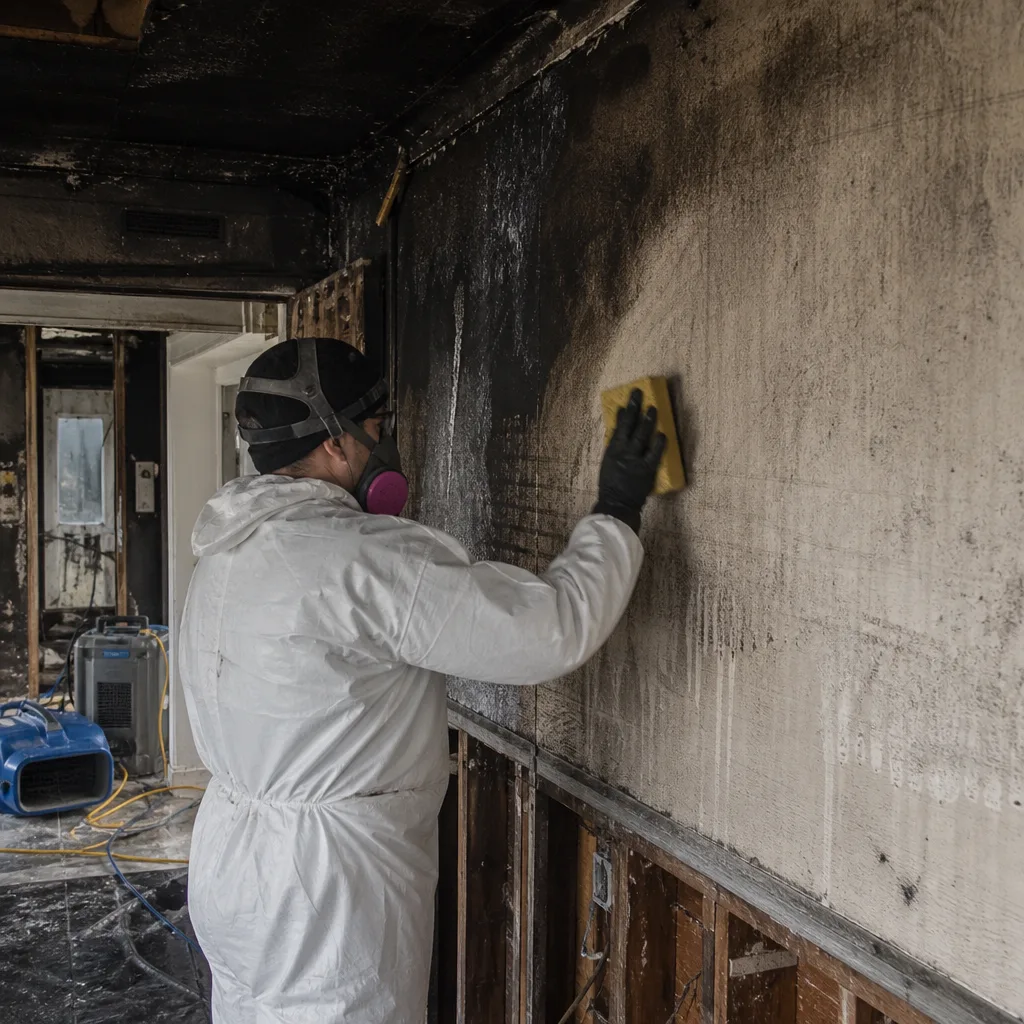
Storm water and sewage backup mean Category 2 or 3 contamination. We clean and sanitize affected surfaces with antimicrobials appropriate to the category, run HEPA air scrubbers where mold or soot is present, and contain work areas with negative air pressure to keep particles from migrating into adjoining units.
Specialty Treatment for Storm Damage
This is where Mount Vernon’s housing stock changes the job. Pre-1940 buildings commonly contain lead paint and asbestos in plaster, siding, and flooring. Before we cut into walls or strip materials, mandatory abatement testing sets the protocol. Skipping this step spreads contamination through the air mover system and creates a legal mess for every owner on the shared structure.
Repairs & Restoration
Once the property is dry and clean, we rebuild: drywall, trim, flooring, paint, and any structural repairs the storm demanded. The same Floodline Restoration Co. crew that pulled the water and logged the readings on day one finishes the job. One name on the work, one warranty at the end.
Need Emergency Storm & Disaster Restoration in Mount Vernon Now?
Crews minutes away, answering live 24 hours a day. The sooner we start, the less it costs.
Working With Your Insurance Company
Storm and flood claims in Mount Vernon get complicated fast, especially when a shared roof line or party wall means two or three carriers are involved. We handle that. From the first hour on site, our crew documents the loss the way adjusters need it documented: photos of every affected room, moisture readings from the day we arrive through the day we hit the dry standard, and a line-item scope of work written to industry estimating standards. We talk to your adjuster directly, answer their questions, and bill your carrier. If your neighbor’s roof or gutter caused the water in your unit, we provide the documentation that traces the path, so the right policy pays. You hired us to restore your home, not manage a three-way paperwork negotiation.
What We Provide Your Insurer
- Thorough documentation of the loss
- Photos of all damage, room by room
- Moisture readings and drying logs
- A detailed, line-item scope of work
- Direct coordination with your carrier
Built for Mount Vernon’s Loss Calendar
Mount Vernon’s storm season isn’t a single season. It’s a cycle that puts different parts of these older buildings under pressure all year. January deep freezes split supply lines in unheated basement utility chases and exterior wall cavities, and that water follows the same gravity paths as storm water. Spring thaw and heavy rain saturate the ground around fieldstone and brick foundations, pushing water through mortar joints and into basements that were never waterproofed when they were built in the 1920s. Summer thunderstorms drop flash volumes that overwhelm the city’s aging combined sewer system, and the lower-lying residential blocks south of Lincoln Avenue and around the Hutchinson River see basement backups and Category 3 water. And then come the nor’easters. Mount Vernon sits at the southern toe of Westchester directly abutting the Bronx, square in the path of coastal systems that drive wind-driven rain into aging brick facades, shared gutter runs, and roof decks spanning three units or more. Each season has its own loss pattern. We know them because we work them every year.
Storm & Disaster Restoration Across Mount Vernon’s Neighborhoods
In the blocks around South 4th Avenue, where row houses step tight to the street and share continuous roof structures, wind-driven rain and clogged gutters are the recurring calls. One owner’s damaged downspout channels water into the wall cavity of a neighbor two addresses down. We’ve built containment and dried units whose owners never saw a drop from the sky. Over near the Fleetwood station off Gramatan Avenue, the housing stock shifts to larger pre-war apartment buildings and high-set homes, where basement flooding from sewer surcharge is the bigger risk during heavy rain events. In the North Side around East Lincoln Avenue, older single-family homes with original clay drain lines see storm saturation and slab seepage that requires injection drying and, often, drain line repair before drying can hold. Down by South Columbus Avenue and the low-lying blocks near the Bronx River, flood calls after a nor’easter are measured in blocks, not houses. Response routes matter here: we stage equipment to keep travel time under the 45-minute commitment no matter which side of the city you’re on.
Specialized Storm & Disaster Restoration Services We Offer in Mount Vernon
Storm Damage Cleanup
Wind-blown debris, downed branches, broken glass, and water-soaked contents all need to come out before drying can begin. In Mount Vernon’s tight rowhouse lots, debris often lands in narrow side alleys and shared courtyard spaces. We clear it, catalog it for your claim, and get the site safe.
Flood Damage Restoration
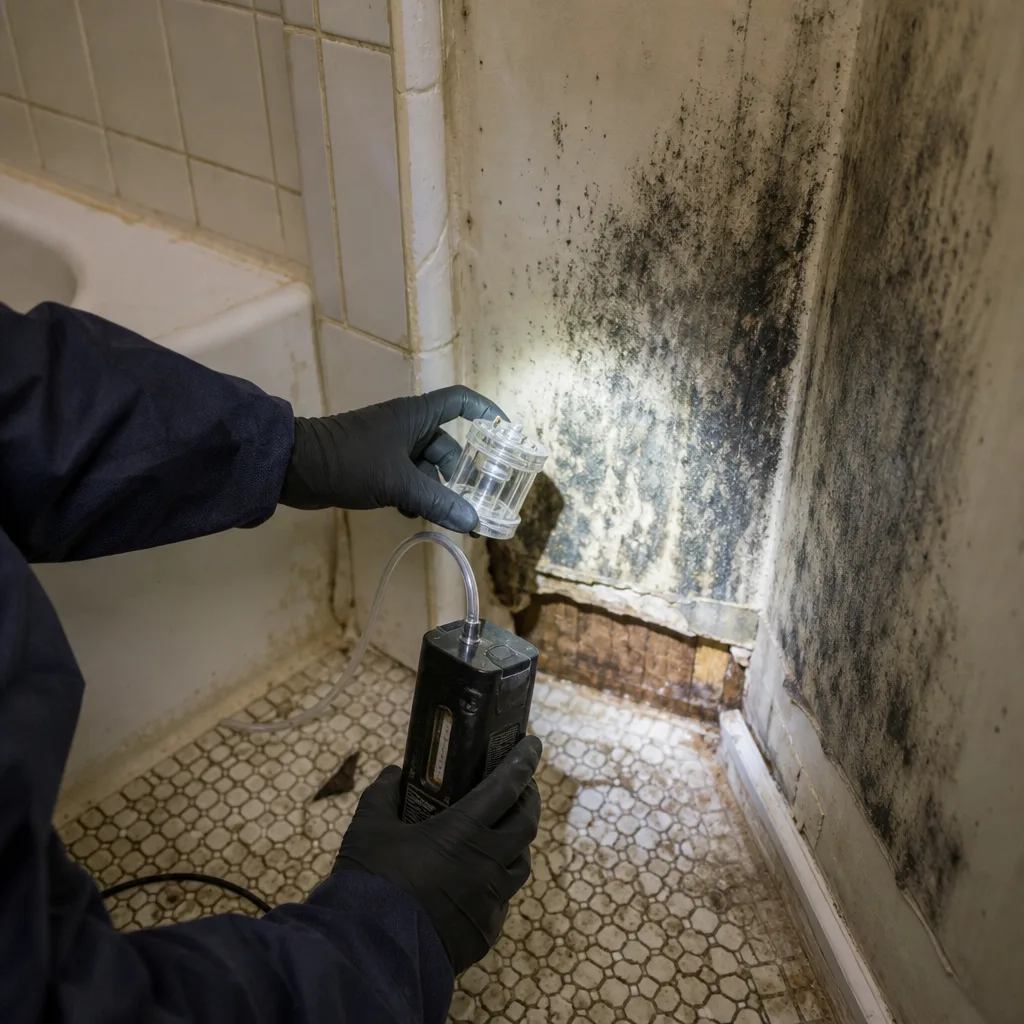
Nor’easter flooding and sewer surcharge in Mount Vernon mean Category 2 and 3 water in basements, crawlspaces, and garden-level units. We extract, contain, treat, and dry using Dri-Eaz and Phoenix equipment sized for the tight clearances these older buildings impose. Drying logs go to your carrier and, when neighbors are involved, to theirs.
Emergency Board-Up
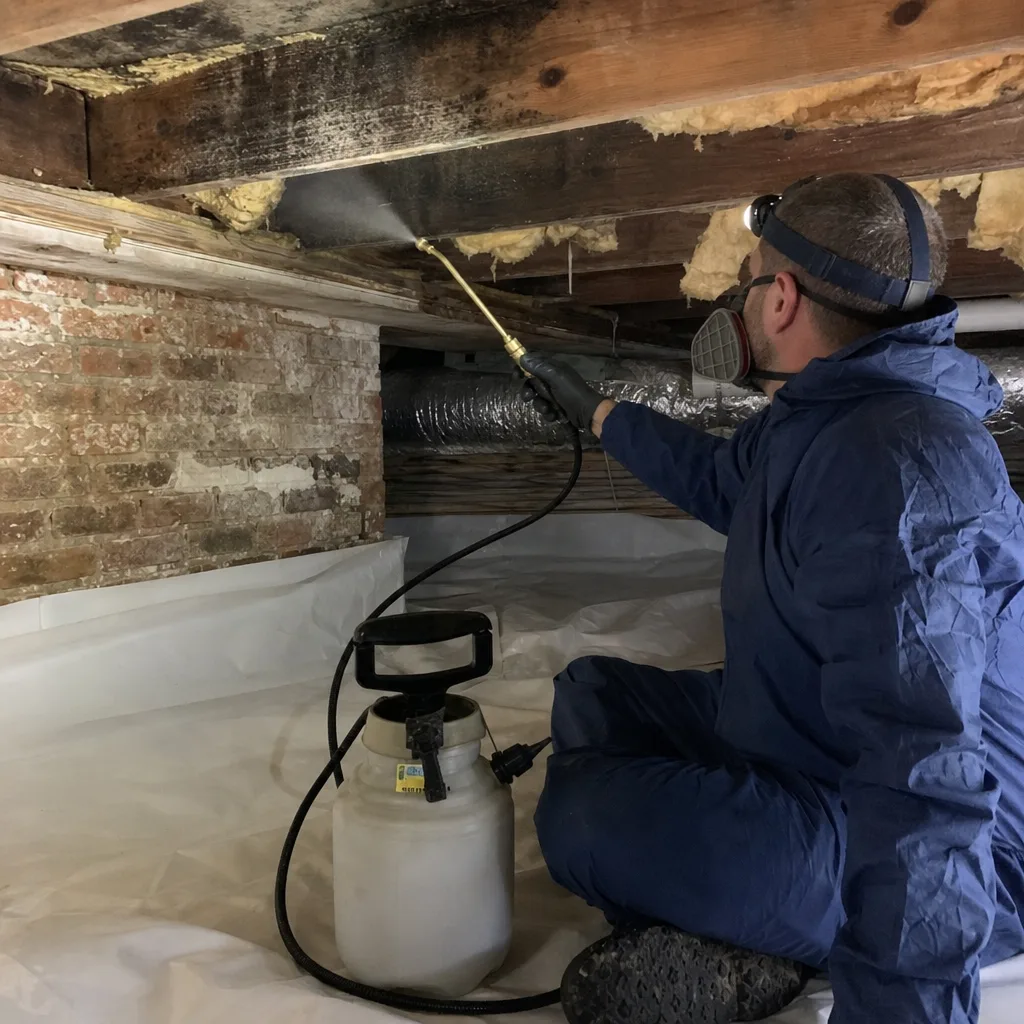
A storm that takes out windows or compromises a door leaves a row house open to weather, theft, and further structural movement. We board up within hours of your call, using materials and fastening that hold through the next storm, not just until morning. The goal is a secure envelope so drying and repair can proceed on schedule.
Roof Tarping
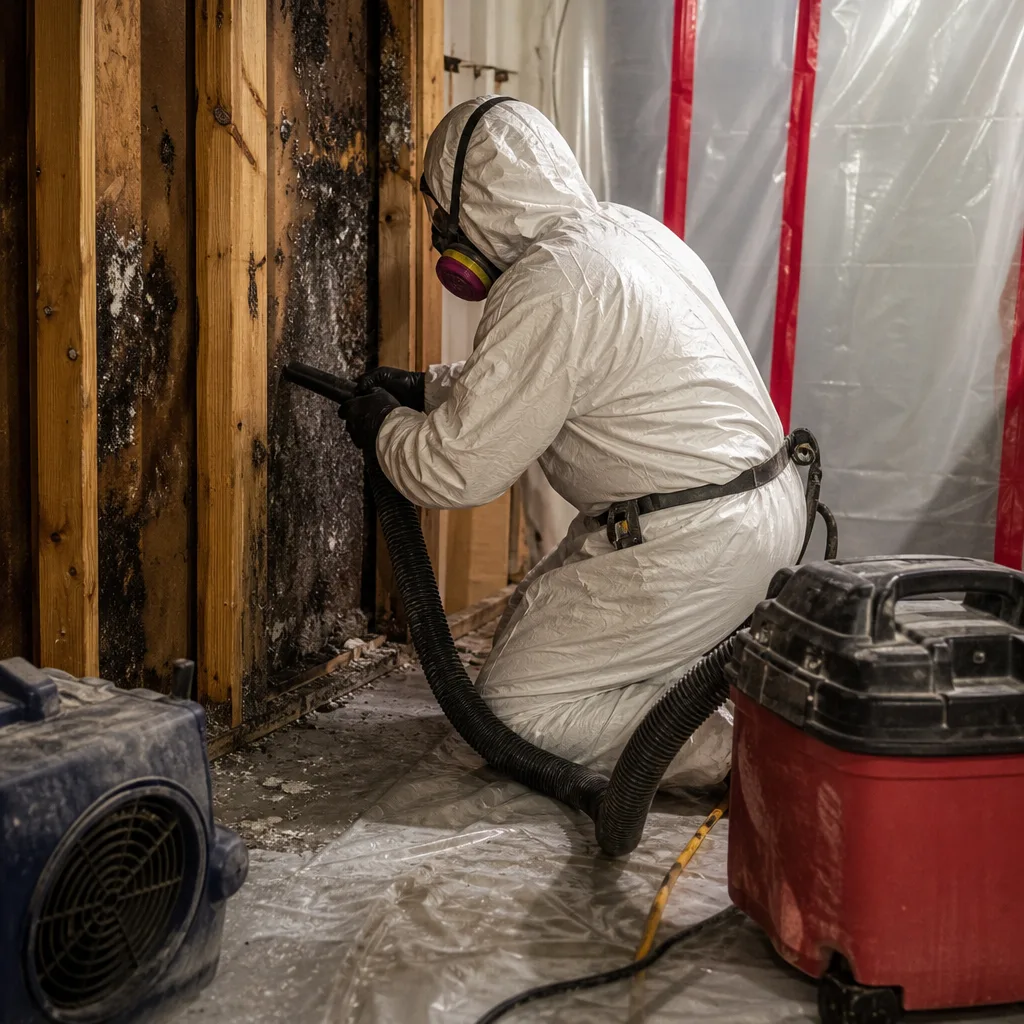
On Mount Vernon’s shared roof decks, a tarp that fails mid-job isn’t just an inconvenience. It’s a reopened loss for two or three units at once. We tarp with proper overlap, anchoring, and slope awareness, and we tell you plainly how long the tarp can hold and when the permanent repair needs to happen.
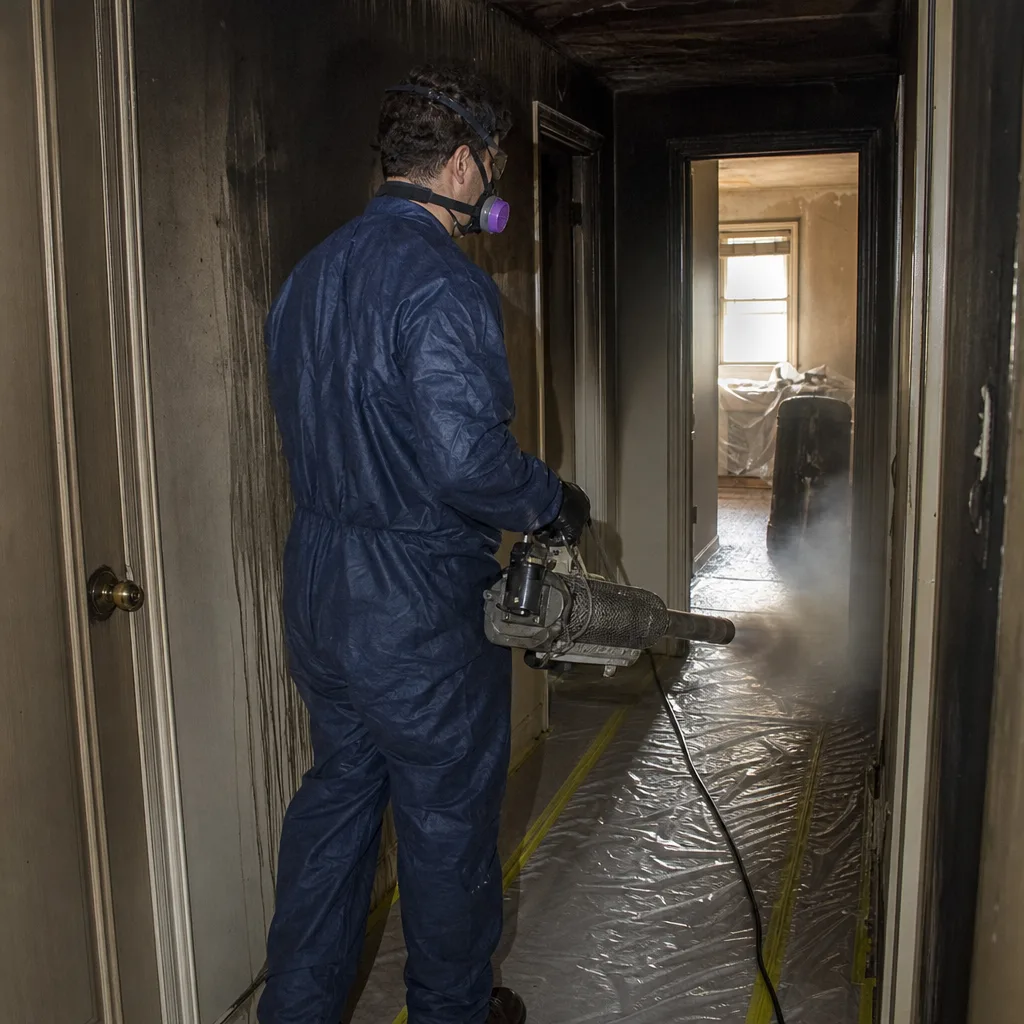
Debris Removal
Storm debris blocks access, hides hazards, and slows the claim. We remove and document everything: fallen limbs, damaged roofing material, broken fencing, saturated contents. If it’s part of the loss, your adjuster needs it documented, not tossed anonymously. We provide the photo record and the line-item list.
What happens when you call
- 1
A real person answersNo phone trees - you reach a local pro.
- 2
You get an upfront price rangeHonest numbers before anyone is dispatched.
- 3
A background-checked tech heads outLicensed & insured, dispatched right away.
- 4
You approve before work beginsNothing starts until you say go.
Storm & Disaster Restoration Costs in Mount Vernon, NY
What you’ll pay in Mount Vernon depends on the category of water, the size of the affected area, and how many units share the damage path. A single-room basement extraction and dry-out after a sewer backup typically runs $2,800-$4,600. A full Category 3 basement flood with containment, antimicrobial treatment, and drywall removal lands between $6,000 and $11,000. Roof tarping for a row house section runs $450-$900, and emergency board-up for one window or door opening is $350-$700. Full storm damage reconstruction, where we rebuild drywall, flooring, and trim across a floor, starts around $9,000 and climbs with square footage and abatement requirements. If your policy covers the loss, you’re typically out only the deductible, and we bill your carrier directly. The free inspection we do before any equipment is loaded gives you a firm written scope in your hands, with every line item priced. No surprises on the bill, no equipment running on an open tab. Call (917) 924-4221 and we’ll give you the number before we start.
We Also Serve Cities Near Mount Vernon
We work across southern Westchester, including Mount Vernon and the surrounding communities. If you’re in Pelham, Bronxville, New Rochelle, or Yonkers and storm damage has hit, the same live-dispatch response and certified crew coverage applies. Call (917) 924-4221 from anywhere in the area and a dispatcher routes the nearest available team.
Serving Mount Vernon, NY - Our Local Coverage Area
We’re based in the Mount Vernon area and know this community well. Use the map below to see our service coverage - if you’re nearby, we can almost certainly help.
Mount Vernon Storm & Disaster Restoration Questions, Answered
When a storm flood hits a Mount Vernon row house, does my neighbor’s insurance have to pay if the water came from their roof or gutter?
If the water path demonstrably originated in your neighbor’s roof, gutter, or drain system and traveled into your unit, their liability coverage may be triggered, but it’s not automatic. You need documentation: moisture mapping that traces the path, photos of the source condition, and a written finding that ties the neighbor’s failure to your loss. We provide that documentation and share it with both carriers directly. If your policy responds first, your insurer may subrogate against the neighbor’s carrier to recover your deductible. Call (917) 924-4221 and we’ll help you document the path before repairs disturb the evidence.
How fast can you start structural drying in a Mount Vernon two-family after a nor’easter flood?
We can be on site within 45 minutes of your call and running extraction the same visit. For a nor’easter flood in a two-family, structural drying equipment like air movers, dehumidifiers, and Injectidry mats is typically installed within two to four hours of arrival, after extraction and stabilisation. In attached buildings we also take baseline moisture readings from adjoining units before we start, so we know the full wicking path from day one. Call (917) 924-4221 now, and we’re on the road.
Do you handle evacuation and pack-out for a category 3 flood in a Mount Vernon basement apartment?
Yes. Category 3 water, which includes storm and sewer backup, means contents in the affected area have to move out for cleaning or disposal. We handle the pack-out, catalog every item for your adjuster, and restore what can be saved. In basement apartments, this often includes furniture, clothing, and appliances that absorbed contaminated water. We don’t leave you to handle it alone, and we don’t throw things away without a documented reason. The adjuster gets the list; you get the answer on what comes back.
Why does a roofer’s tarp on a Mount Vernon row house sometimes fail during the next storm?
Row house roofs in Mount Vernon often span multiple units with low slopes, shared parapet walls, and continuous gutter runs. Tarps fail when they’re not anchored to handle wind uplift along exposed parapet edges, or when water ponds at a low point and tears through the tarp under its own weight. We tarp with slope-aware overlap and anchoring rated for wind, and we tell you honestly how long the tarp will hold. If the next storm is coming, we can return and reinforce before it hits.
Can you dry out only my unit in a Mount Vernon attached three-family, or do you need access to the adjoining homes?
We can start with only your unit, but in an attached three-family we’ll strongly recommend baseline readings in the adjoining units. Water travels through party walls and shared floor systems; if the neighbor’s side is wet and we only dry yours, the moisture wicks back within weeks. We coordinate directly with the other owners or landlords to get access, document everything for their carriers, and keep the drying plan unified so the whole shared structure reaches the dry standard at the same time. Call (917) 924-4221 and we’ll walk you through it.
How long does storm flood drying take in a Mount Vernon pre-war brick building?
Most storm flood drying in Mount Vernon’s brick and plaster buildings takes three to seven days, depending on the category of water and how far it traveled into wall cavities and flooring. Masonry and lath-and-plaster assemblies hold moisture longer than drywall; original hardwood over wood subfloor often needs Injectidry mats to dry in place without cupping. We take daily readings and give you and your insurer the log, so you know exactly where the job stands. When the dry standard is met, we document it and stop the equipment. No running the bill past the point of benefit.
What certifications do your storm restoration crews hold?
Our water restoration technicians hold IICRC WRT and ASD certifications; fire and smoke crews hold FSRT; mold work is handled by AMRT-certified techs. All field personnel are also trained to RIA and IFA standards, under the direction of Curt Bowman, our owner since founding the company in 2010. Every technician on your property is background-checked and uniformed. If you’d like a specific cert number or want to confirm a tech’s standing, ask when we arrive and we’ll show you.
What should I do in the first 30 minutes after storm water enters my Mount Vernon home?
Call us at (917) 924-4221, then shut off power at the breaker if water has reached outlets or the panel, and avoid walking through standing water if there’s any chance it’s sewer backup. Don’t run fans or a shop vac on contaminated water; that spreads what’s already there. Take photos of the water level and any visible damage before anything is moved. Then get to high ground and wait. We’ll handle extraction, containment, and documentation. The first 30 minutes don’t need to be heroic; they need to be safe and documented.
Written by Curt Bowman, Owner at Floodline Restoration Co. of Manhattan. Serving Mount Vernon with a live dispatch desk, certified crews, and the 90-Day Done Right Promise since 2010.