

Free visual inspection and a written scope of work before any mitigation begins - photos, moisture readings, and drying logs go in your claim file
The scope we write is the scope we bill. Anything new gets shown to you, in writing, before we touch it.






 Before
 After
After Before
 After
After Before
 After
After24/7 Emergency Storm & Disaster Restoration in Rock Ridge
When a storm tears through Rock Ridge, the damage doesn’t wait for business hours. Neither do we. Floodline Restoration Co. of Manhattan answers the phone live at 2 a.m., 6 a.m., or any hour in between. Call (917) 924-4221 and a real person picks up, not a recording. A certified crew can be dispatched to your Rock Ridge property right away, with a free visual inspection and a plan that starts the moment someone arrives. The first hour matters because water from a creek overflow or wind-driven rain doesn’t sit still. It wicks into fieldstone, soaks subfloors, and starts feeding mold within 24 to 48 hours. We know Rock Ridge properties. We know the lanes, the driveways, the way water moves across this terrain. And we stand behind every job with the 90-Day Done Right Promise, in writing.
Understanding Storm & Disaster Restoration Severity in Rock Ridge Properties
Storm damage in Rock Ridge breaks into three broad categories, and we treat them differently. The first is wind and debris damage: limbs through roof decking, torn shingles, broken windows, and damaged siding that opens the house to water intrusion. The second is water infiltration: creek overflows, roof leaks, saturated ground pushing moisture through basement walls and fieldstone foundations. The third is secondary damage: water that goes unaddressed long enough to trigger mold, warp floorboards, or compromise structural framing. In Rock Ridge’s older housing stock, much of it pre-war with fieldstone or rubble foundations, water doesn’t drain away from the structure the way it does on newer slab-on-grade builds. It lingers. Clay-heavy soil holds moisture against foundation walls. Post-and-beam additions with shallow crawl spaces trap humidity. We use moisture mapping with Dri-Eaz meters, thermal imaging to locate hidden saturation, and structural drying protocols that account for the specific materials in your walls and floors. Category 3 water from agricultural runoff needs different handling than a clean water pipe break. We classify every loss before we start, so nothing gets overlooked.
Why Rock Ridge Property Owners Choose Floodline Restoration Co. of Manhattan
- We answer live, around the clock. Call (917) 924-4221 at any hour. A dispatcher picks up. A crew gets routed to Rock Ridge. No call centers, no recordings.
- IICRC-certified crews on every job. Our technicians hold WRT (Water Damage Restoration Technician) and FSRT (Fire & Smoke Restoration Technician) certifications. They’re background-checked and uniformed, so you know who’s in your home.
- One team from first extraction to finished rebuild. We don’t hand your job to a subcontractor after mitigation. The same Floodline crew that pumps the water also handles the reconstruction.
- Professional-grade equipment. Dri-Eaz moisture meters, Phoenix dehumidifiers, XPOWER air movers, and truck-mounted extraction units. This is not a shop vac operation.
- Free visual inspection, always. We look first, then give you a written scope. No pressure, no obligation, no surprise charges.
- Direct insurance billing. We handle the carrier communication so you don’t have to play messenger between your adjuster and our crew.
Our Storm & Disaster Restoration Process
Inspection & Assessment
We arrive, walk the property with you, and map every area of damage. Thermal imaging and Dri-Eaz moisture meters locate water that isn’t visible yet. You get a written scope before any work begins.
Extraction & Stabilization
Standing water comes out first. We use truck-mounted extractors and gas-powered pumps for flooded basements. Emergency board-up, roof tarping, and debris removal stop additional water and wind from entering.
Drying & Dehumidification
Phoenix dehumidifiers and XPOWER air movers create the airflow needed for structural drying. We record moisture readings daily and keep a drying log for you and your insurance carrier until your materials hit the dry standard.
Cleaning & Sanitization
Contaminated surfaces receive antimicrobial treatment. We handle soft goods and contents with appropriate cleaning methods. Hard surfaces get disinfected per IICRC standards.
Mold Prevention & Specialty Treatment
Storm water that sits for even 24 hours raises mold risk in Rock Ridge’s older materials. We apply prevention treatments to fieldstone, wood framing, and subflooring before reconstruction starts.
Repairs & Restoration
We rebuild what needs rebuilding. Drywall, flooring, trim, cabinetry, structural repairs. The same crew handles it all, and the 90-Day Done Right Promise covers every part of the job.
Need Emergency Storm & Disaster Restoration in Rock Ridge Now?
Crews minutes away, answering live 24 hours a day. The sooner we start, the less it costs.
Working With Your Insurance Company
Insurance after a Rock Ridge storm can feel like a second disaster, but it doesn’t have to. We document everything from the first hour: room-by-room photos, moisture readings, and the exact condition of materials before we touch them. Our estimates use industry-standard line items that adjusters recognize. We send documentation directly to your carrier and speak with your adjuster on your behalf. You don’t play messenger. You don’t sit on hold wondering what the next step is. Floodline Restoration Co. of Manhattan handles direct insurance billing on every covered storm loss. Our goal is simple: a square deal, no surprises on the bill, and a restoration that stands up to scrutiny.
What We Provide Your Insurer
- Thorough documentation of the loss
- Photos of all damage, room by room
- Moisture readings and drying logs
- A detailed, line-item scope of work
- Direct coordination with your carrier
Built for Rock Ridge’s Loss Calendar
Rock Ridge properties face a rotating schedule of threats through the year. January and February bring deep freezes that burst supply lines in unheated crawl spaces and poorly insulated walls. The water that follows soaks through ceilings and puddles on old floorboards before anyone notices. Spring thaw releases groundwater against fieldstone foundations, and rain on saturated clay-heavy soil pushes moisture through basement walls. Summer thunderstorms roll in fast, dropping enough rain in an hour to push creeks over their banks and flood driveways that slope toward the house. Autumn nor’easters bring wind that tears limbs from old maples and sends them through roof decking. We schedule for the season because we’ve been answering these calls for years. Our Storm & Disaster Restoration team keeps equipment staged and crews on call for exactly what Rock Ridge’s weather brings. When a storm hits, we’re already prepared.
Storm & Disaster Restoration Across Rock Ridge’s Neighborhoods
Rock Ridge’s terrain changes block by block, and our response changes with it. On the back-road properties off unmarked lanes near the old gristmill crossing, driveway grades are steep, gravel is loose, and a truck needs careful routing to reach the house without getting stuck. We know which turns are tight and which lanes flood first. Along the creek-side properties where seasonal overflows happen, water comes up fast and leaves silt behind. Crews working there prioritize extraction and pump-out immediately because the water table doesn’t drop quickly. On the hillside lots with post-and-beam additions, crawl spaces trap humidity and need aggressive drying to prevent warped floorboards months later. The fieldstone foundations common throughout the area hold moisture differently than poured concrete. We read each property individually, and our crews have worked enough jobs in and around Rock Ridge to know what they’re walking into before they knock on the door.
Specialized Storm & Disaster Restoration Services We Offer in Rock Ridge
Storm Damage Cleanup
Wind and rain leave a mess. Broken glass, downed limbs, soaked drywall, and ruined carpet. We remove damaged materials, clear debris, and prepare the property for drying and repair. In Rock Ridge, where mature trees surround many homes, limb damage is a regular part of storm cleanup.
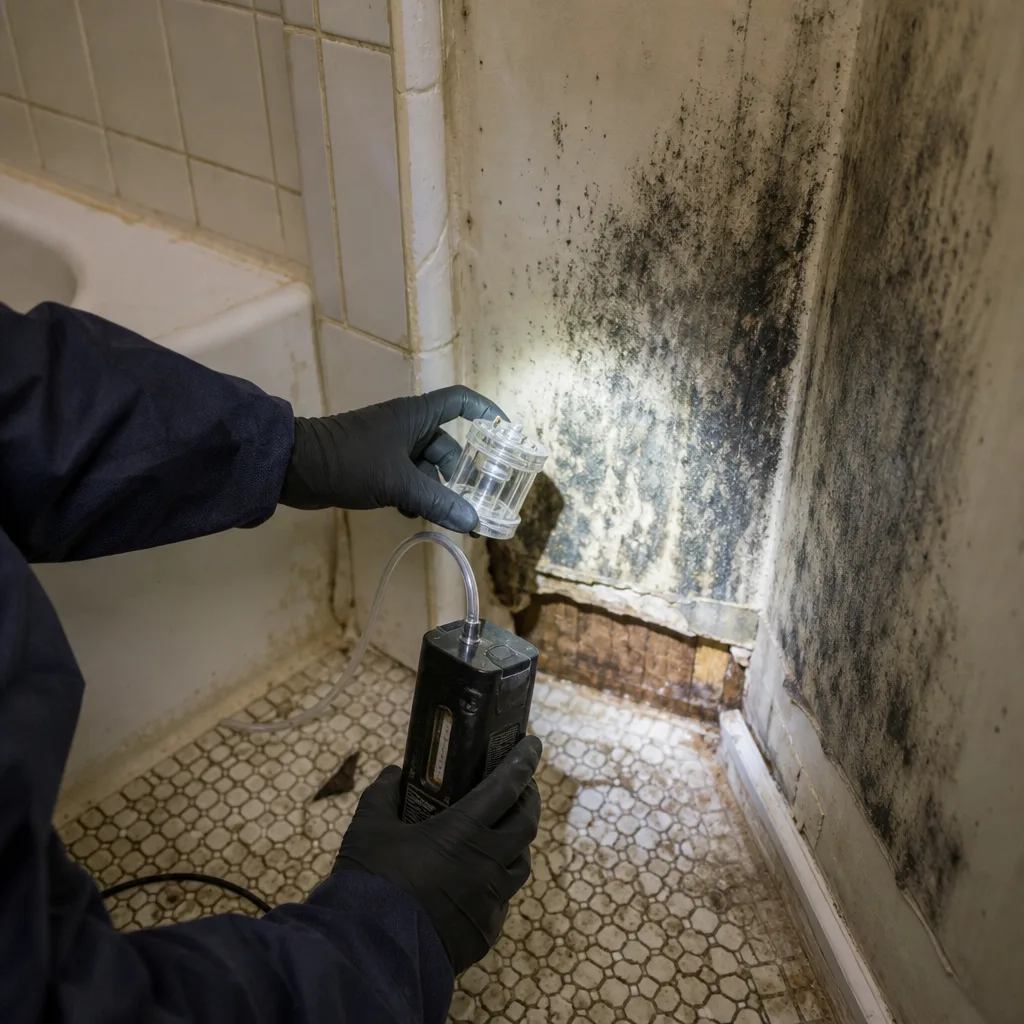
Flood Damage Restoration
Creek overflows and saturated ground send water into basements and crawl spaces. We pump, extract, and dry. Because Rock Ridge’s creeks pick up agricultural runoff, we classify flood water carefully before deciding what gets dried and what gets packed out. Soft goods touched by grey water are usually replaced, not restored.
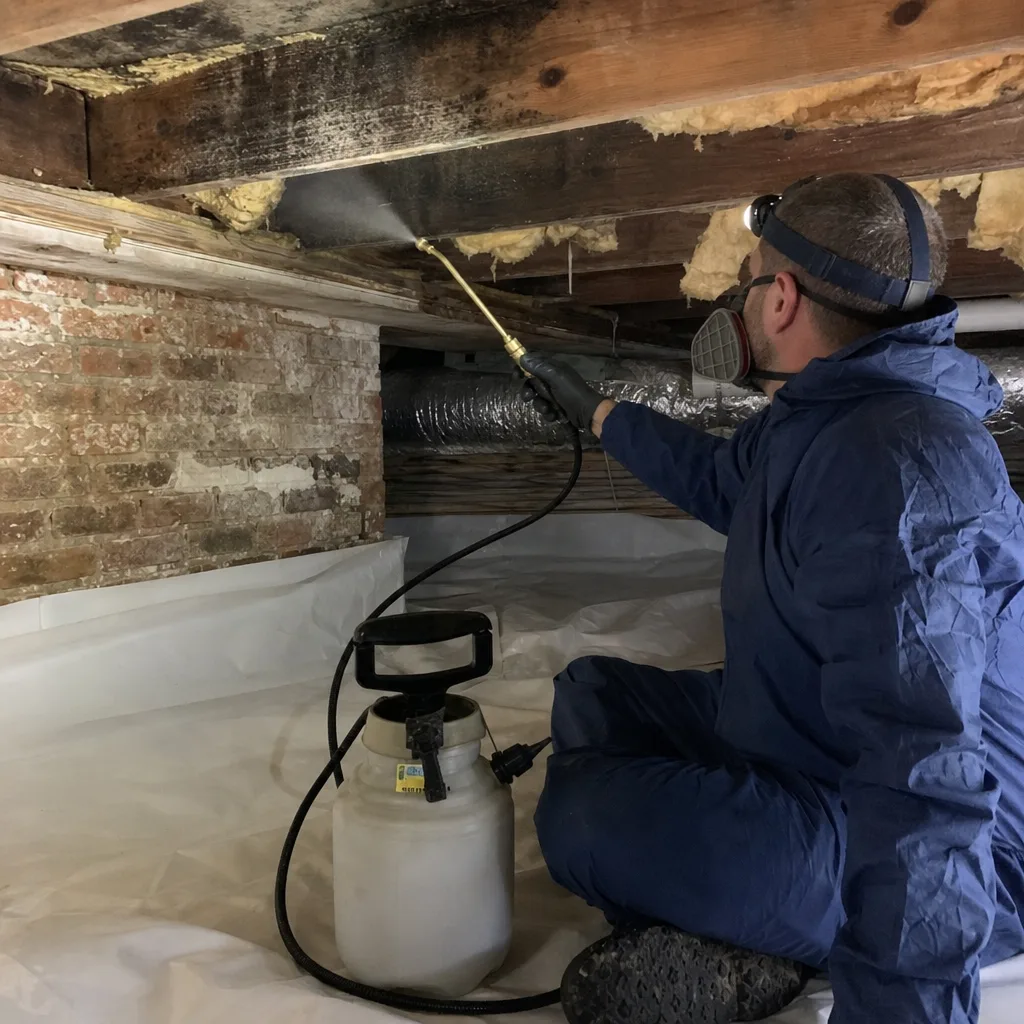
Emergency Board-Up
A broken window or storm-damaged door leaves your home exposed to weather, animals, and unwanted visitors. We secure openings with plywood and fasteners, usually within the first visit. This buys time for insurance and planning without risking more damage.
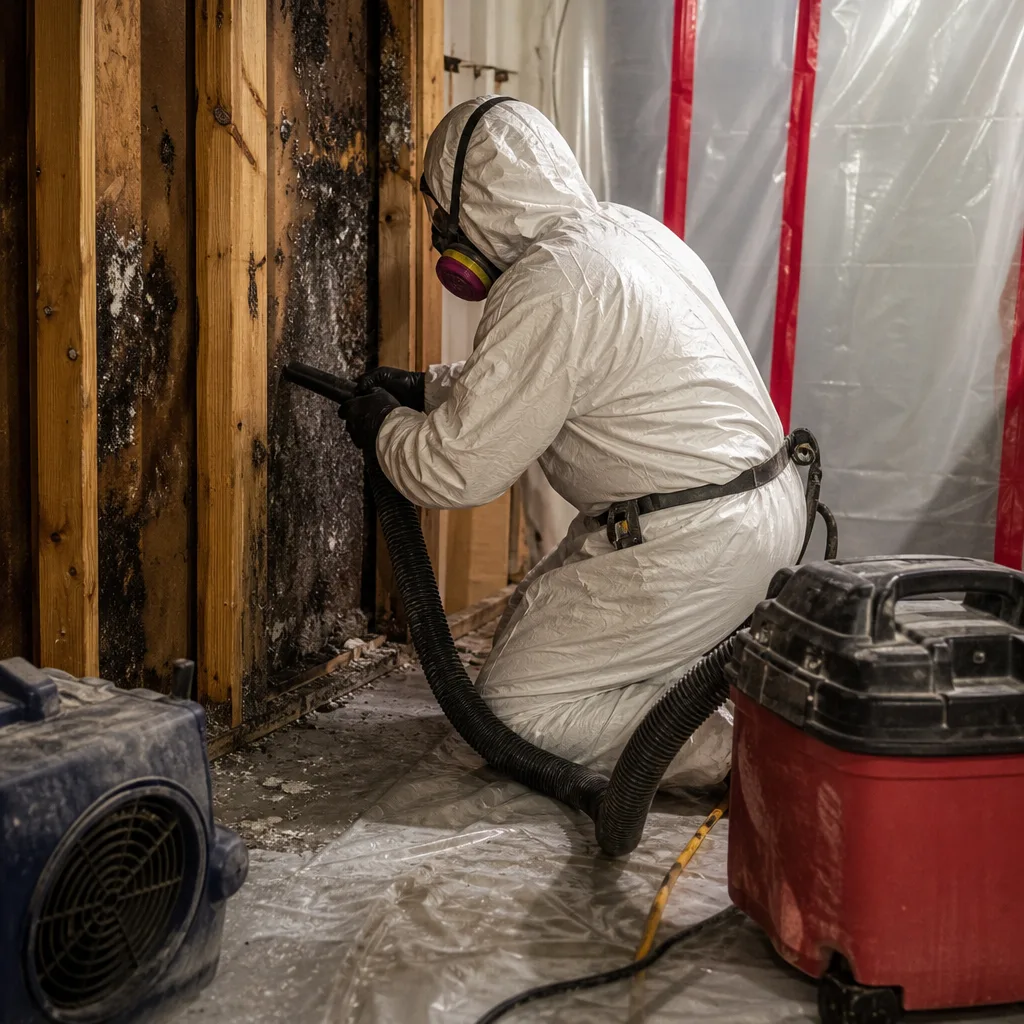
Roof Tarping
Wind tears shingles, limbs puncture decking, and rain keeps coming. We tarp damaged roof areas to stop water intrusion. Tarping is a temporary measure, but done right, it prevents thousands in secondary damage while you work through the repair process.
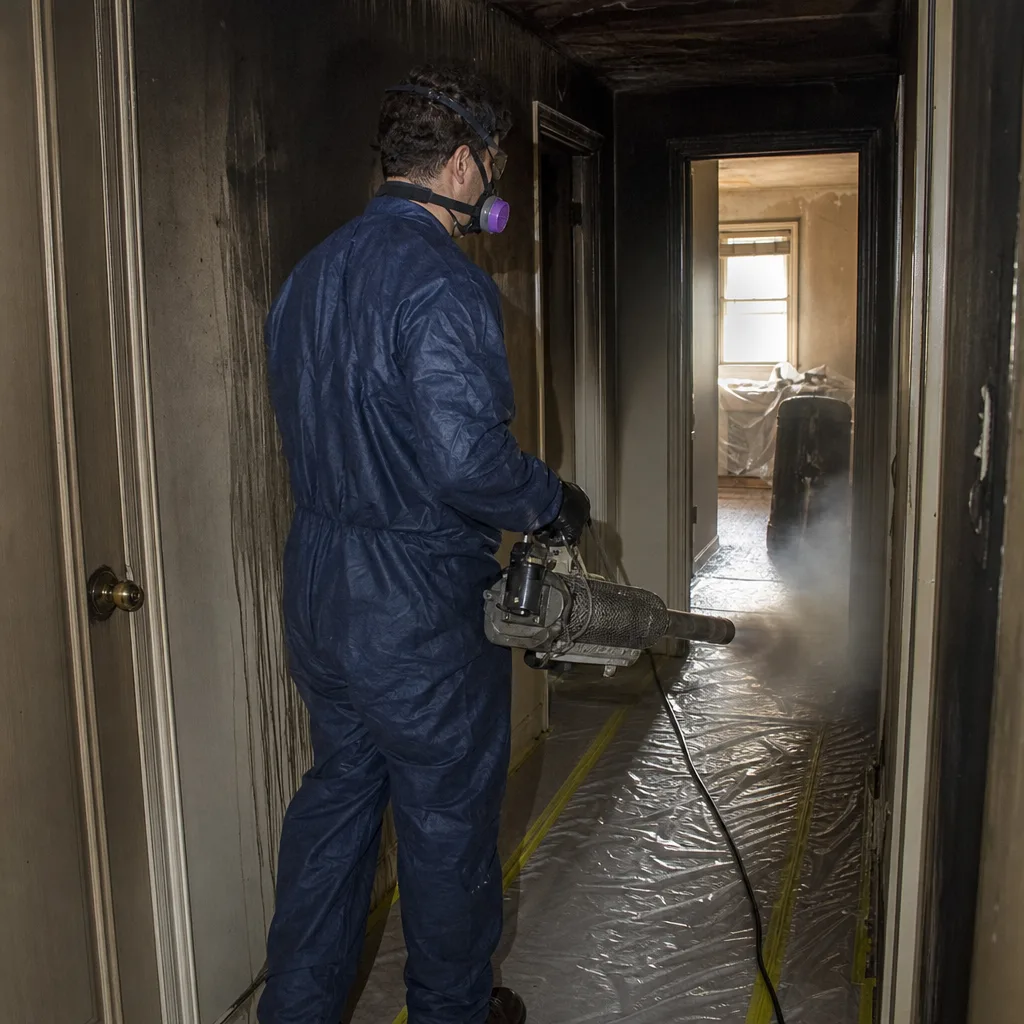
Debris Removal
Storms scatter limbs, leaves, roofing material, and sometimes construction debris. We haul it off. For Rock Ridge properties with tight access or long gravel drives, our crews plan the removal route before they start loading.
What happens when you call
- 1
A real person answersNo phone trees - you reach a local pro.
- 2
You get an upfront price rangeHonest numbers before anyone is dispatched.
- 3
A background-checked tech heads outLicensed & insured, dispatched right away.
- 4
You approve before work beginsNothing starts until you say go.
Storm & Disaster Restoration Costs in Rock Ridge, CT
Honest numbers help you plan. A typical storm damage cleanup in Rock Ridge with water extraction and basic drying runs $2,800 to $5,500. Full basement flood restoration with Category 3 water handling, soft goods removal, and structural drying typically lands between $6,000 and $15,000, depending on square footage and how much material needs replacement. Emergency board-up runs $450 to $1,200. Roof tarping costs $500 to $2,000 depending on roof pitch, access, and the size of the damaged area. Debris removal alone runs $300 to $1,800. What moves the price: how long water sat before we arrived, whether contamination is present, how much drywall and flooring must come out, and whether structural repairs are needed. Insurance covers most storm-related losses. We handle the documentation and direct billing so your out-of-pocket stays as low as possible. Call (917) 924-4221 for a free visual inspection and a written scope before any work starts.
We Also Serve Cities Near Rock Ridge
Our crews regularly run calls to Byram, Glenville, Greenwich, and Indian Field. If you’re in one of those communities and dealing with storm damage, the same live phone answer, same certified crews, and same 90-Day Done Right Promise apply. Storm response doesn’t stop at town borders.
Serving Rock Ridge, CT - Our Local Coverage Area
We’re based in the Rock Ridge area and know this community well. Use the map below to see our service coverage - if you’re nearby, we can almost certainly help.
Rock Ridge Storm & Disaster Restoration Questions, Answered
After a Rock Ridge creek overflows, how quickly should water extraction start before joists in an older fieldstone foundation are compromised?
Extraction should start within the first 24 hours. Joists in older fieldstone foundations in Rock Ridge are often original wood that has already absorbed decades of ambient moisture. When creek water adds more, the wood fibers swell and microbial growth starts quickly. Each additional day of saturation weakens the structural integrity and increases replacement costs. Call (917) 924-4221 immediately. A crew can be on-site within hours, not days.
When a Rock Ridge storm brings runoff from uphill farm fields, does that change how you handle flooded basements?
Yes. Runoff from farm fields carries silt, fertilizers, and bacteria. We classify that as Category 3 water, not clean water. That means porous materials like carpet, padding, and upholstered furniture get packed out and replaced rather than dried and returned to service. Antimicrobial treatment becomes standard, and air scrubbers run during drying to capture airborne contaminants. This affects scope, cost, and timeline. We explain it all in the written scope before we begin.
Can saturated plaster walls over fieldstone in Rock Ridge be dried, or do they always get removed?
Plaster over fieldstone can sometimes be saved if water contact was brief and we start drying quickly. But Rock Ridge’s plaster walls often sit directly on stone that wicks moisture upward. If the plaster base coat has been wet for more than 48 hours, it usually crumbles or separates from the lath. In those cases, removal and replacement with modern materials is the honest recommendation. We never remove more than necessary, but we also don’t pretend a wall is dry when it isn’t.
What’s the biggest mistake homeowners make after a Rock Ridge storm when tree limbs land on the roof?
Waiting for the insurance adjuster to arrive before tarping the roof. Every rain storm that moves through while the roof is open pushes more water into the attic, insulation, and walls. A tarp costs a few hundred dollars and can prevent tens of thousands in secondary damage. Insurance policies require homeowners to mitigate further loss. Tarp it now, document everything, and submit the receipt. We can have a tarp on your roof the same day you call.
How do Rock Ridge’s unmarked lanes and long gravel driveways affect a restoration crew’s response time?
Honestly, they add a few minutes. Our trucks carry equipment that handles gravel and tight turns, but some driveways need careful navigation. We know the area’s tricky spots because we’ve driven them before. When you call, tell the dispatcher if your lane is unmarked, if the drive slopes steeply, or if there’s a low branch that could catch a truck. That one conversation can save 20 minutes getting equipment to your door.
How long does drying and remediation take after a Rock Ridge storm?
Most structural drying completes in 2 to 4 days with commercial equipment running. Fieldstone foundations and plaster walls can extend that to 5 or 6 days because those materials release moisture slowly. We take daily moisture readings so you can watch the numbers come down. We don’t remove equipment until the dry standard is reached and documented. Reconstruction follows, and timelines depend on materials and scope.
Are your Storm & Disaster Restoration crews actually certified?
Yes. Our technicians hold IICRC Water Damage Restoration Technician (WRT) and Fire & Smoke Restoration Technician (FSRT) certifications. They’re also trained to RIA and IFA standards. Every crew member is background-checked and uniformed. You can ask to see credentials at the door. We’d rather you did.
What should I do in the first 30 minutes after storm damage hits my Rock Ridge home?
Call (917) 924-4221. Then, if it’s safe, shut off power to flooded areas at the breaker panel. Don’t enter standing water that may be electrically charged. If the roof is damaged, move valuables out from under leaks and place buckets. Take photos of everything before anything is moved. Don’t try to extract water yourself with a household vacuum. Don’t move heavy furniture off wet carpet. Every action you take before we arrive should be about safety and documentation, not DIY repair. We’ll handle the rest from the first hour on.
Written by Curt Bowman, Owner at Floodline Restoration Co. of Manhattan.