
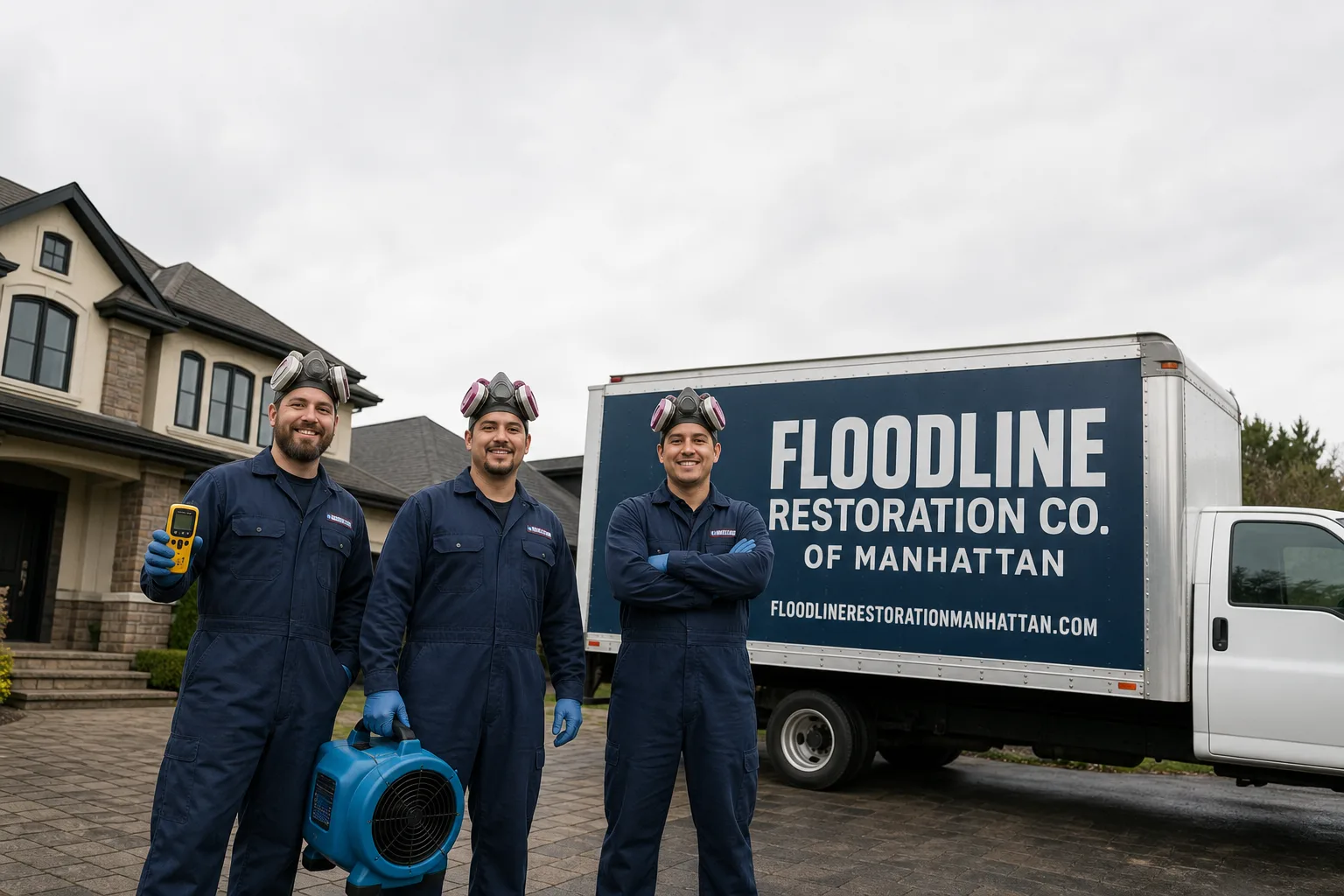
Free visual inspection and a written scope of work before any mitigation begins - photos, moisture readings, and drying logs go in your claim file
The scope we write is the scope we bill. Anything new gets shown to you, in writing, before we touch it.
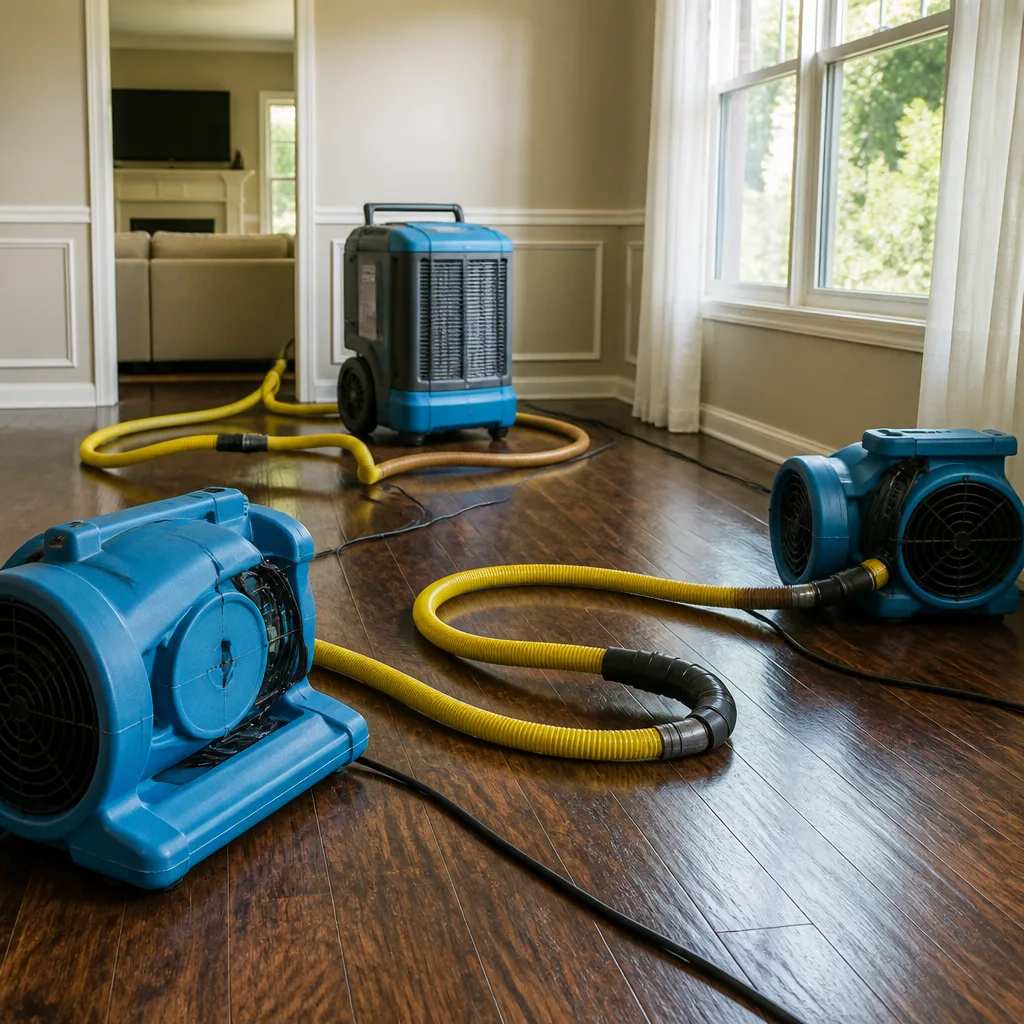




 Before
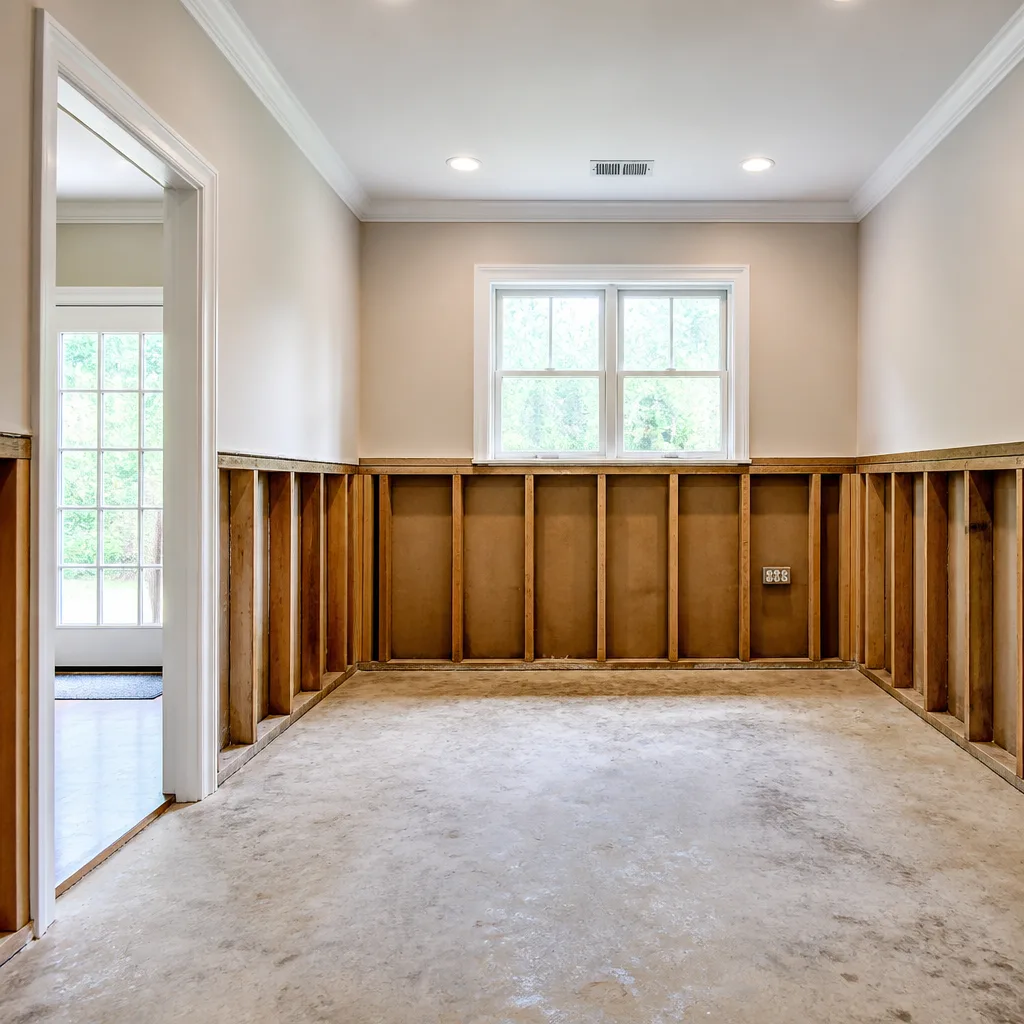
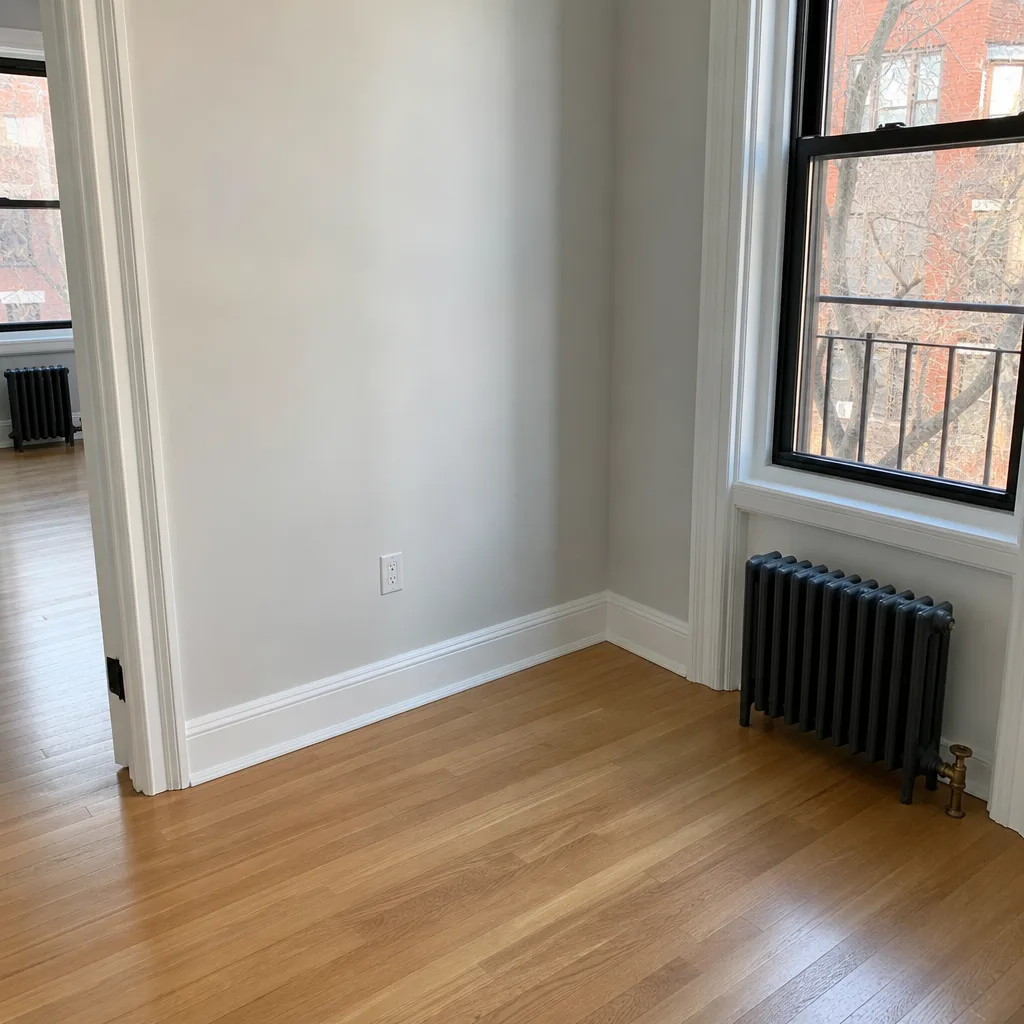 After
After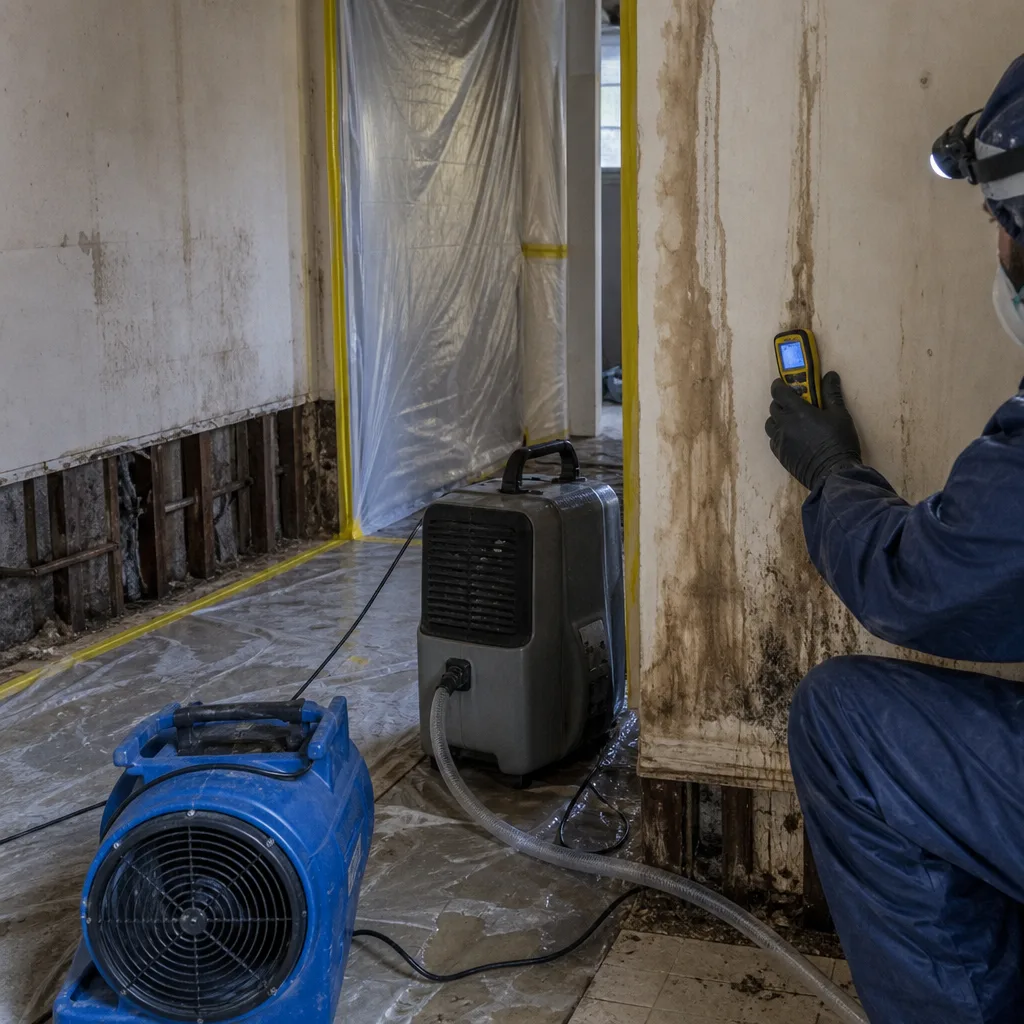 Before
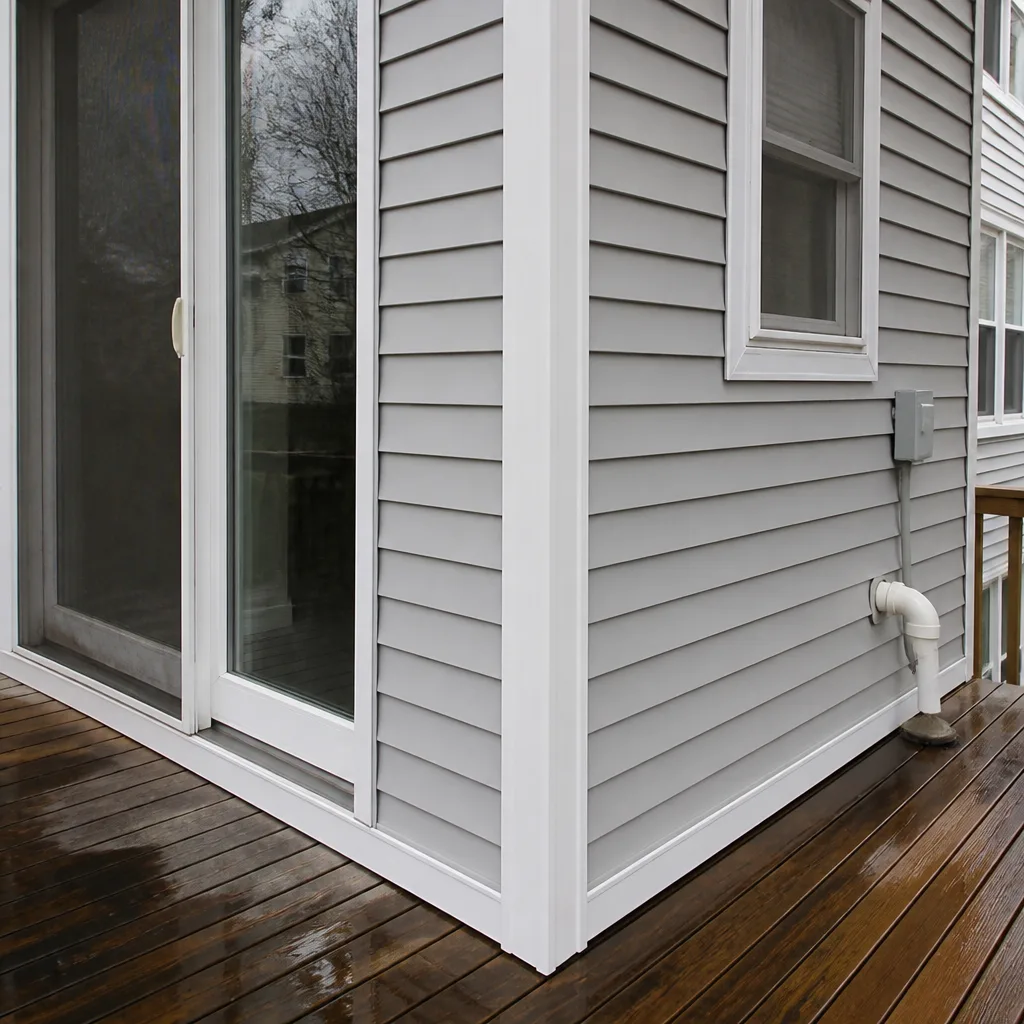 After
After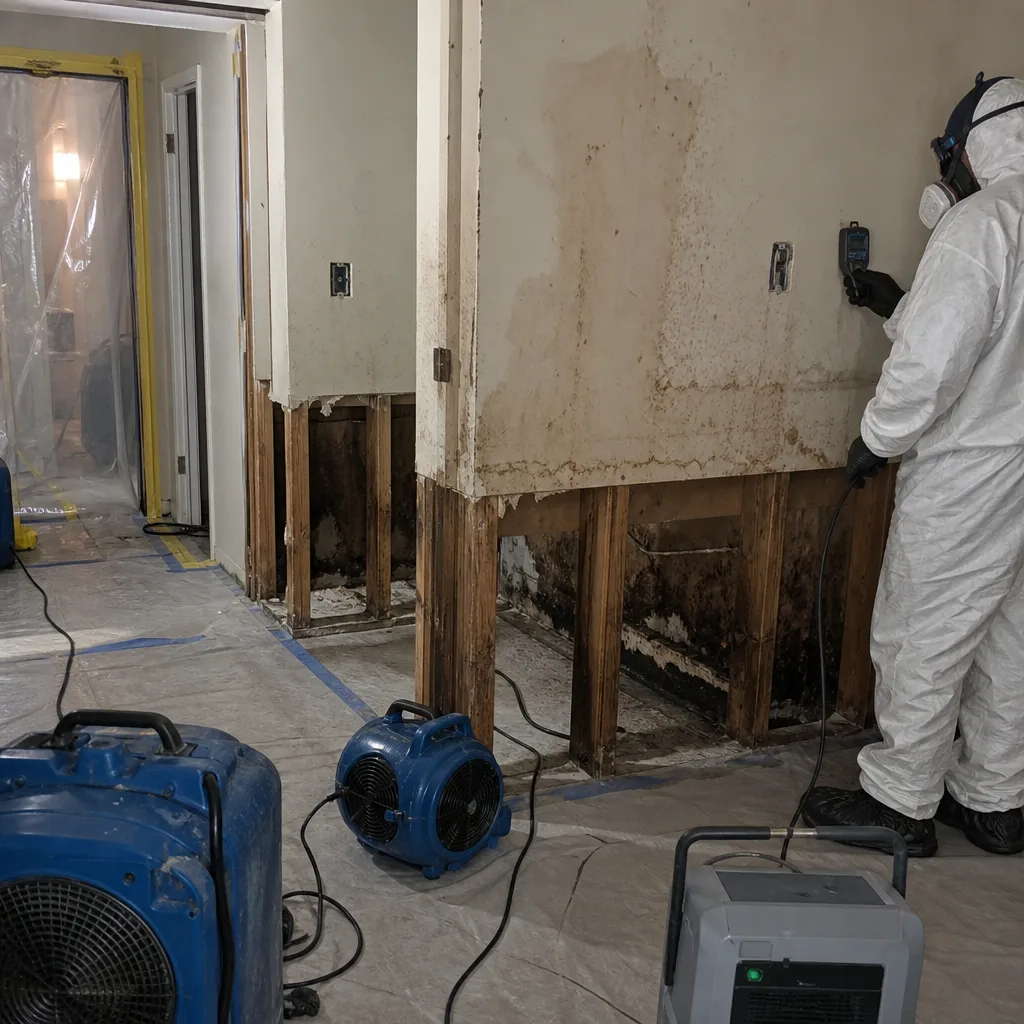 Before
 After
After24/7 Emergency Storm & Disaster Restoration in Indian Field
Storm and disaster restoration in Indian Field, CT means answering the phone at 2 a.m. when a nor’easter has just blown a door in or a burst pipe has been feeding water into a crawlspace since the last freeze. We answer live, 24 hours a day, every day. Call (917) 924-4221 and a dispatcher picks up, not a recording, gets a crew moving toward Indian Field, and starts asking the questions that matter: Is the power on? Is the water off? Where did it enter? The first hour after a storm breach or pipe failure determines whether you’re looking at extraction and drying, or full mold remediation and structural rebuild. In Indian Field, where so many properties sit empty for months at a stretch, that first hour can be the difference between a $3,000 mitigation and a $30,000 remediation. We’re not interested in scaring you. We’re interested in being honest about what storm water does when nobody is there to stop it.
Understanding Storm & Disaster Restoration Severity in Indian Field Properties
Restoration work follows a severity scale, and in Indian Field’s housing stock, severity has a way of escalating before anyone knows there’s a problem. The water categories matter. Category 1 is clean water from a supply line or rainwater that hasn’t touched anything contaminated. Category 2 carries significant biological or chemical contamination, think sump overflow or roof runoff that has washed through bird droppings and rotted leaves. Category 3 is grossly contaminated: storm surge, sewage, standing floodwater from the Peconic Bay side, water that has been sitting for weeks in a closed-up cottage. Here’s what Indian Field owners need to know: a Category 1 pipe break in a winterized home turns into Category 3 damage by the time Memorial Day arrives. The water sat. It wicked into subflooring. Mold moved in. This is why our crews run moisture mapping with Dri-Eaz meters before touching a wall, not after. The older bungalows that make up so much of Indian Field were built on slab and crawl-space foundations with minimal vapor barriers. Water doesn’t just sit on top of a slab. It gets under it, into the sill plates, behind the cedar shingles. Severity here isn’t just about what the water is. It’s about how long it had to travel through a closed house.
Why Indian Field Property Owners Choose Floodline Restoration Co. of Manhattan
We’re a full-cycle restoration company, which means the crew that extracts the water is the same crew that dries the framing and rebuilds the wall. No mid-job handoff. No inherited subcontractor who never saw the moisture map. Here’s what that looks like on the ground:
- A live dispatcher answers at any hour. Not a menu. Not a callback. A person who knows restoration, taking notes, and dispatching a crew toward Indian Field on the same call.
- IICRC-certified technicians, background-checked and uniformed. The water, fire, and mold restoration standards matter. We train to IICRC, RIA, and IFA codes, and we show up in a marked vehicle, not an unmarked pickup.
- Free visual inspection before any work is scoped. You don’t commit to anything until we’ve looked at the damage and told you what we found. The estimate is written, the scope is written, and you approve it before the first air mover is plugged in.
- Direct insurance billing. We talk to your carrier, send the drying logs, the photos, the line-item scope. You don’t become a messenger between our office and your adjuster.
- Professional-grade drying equipment from day one. Dri-Eaz dehumidifiers, Phoenix axial air movers, XPOWER extractors, Injectidry injection drying systems for wall cavities. The same equipment used on the big commercial losses, running in your Indian Field house.
- The 90-Day Done Right Promise. Our work is backed in writing. If it’s not done right, we make it right, no arguing, no paperwork battles. We built our name on the line the water left, and we stand behind everything above it.
Our Storm & Disaster Restoration Process
Inspection & Assessment
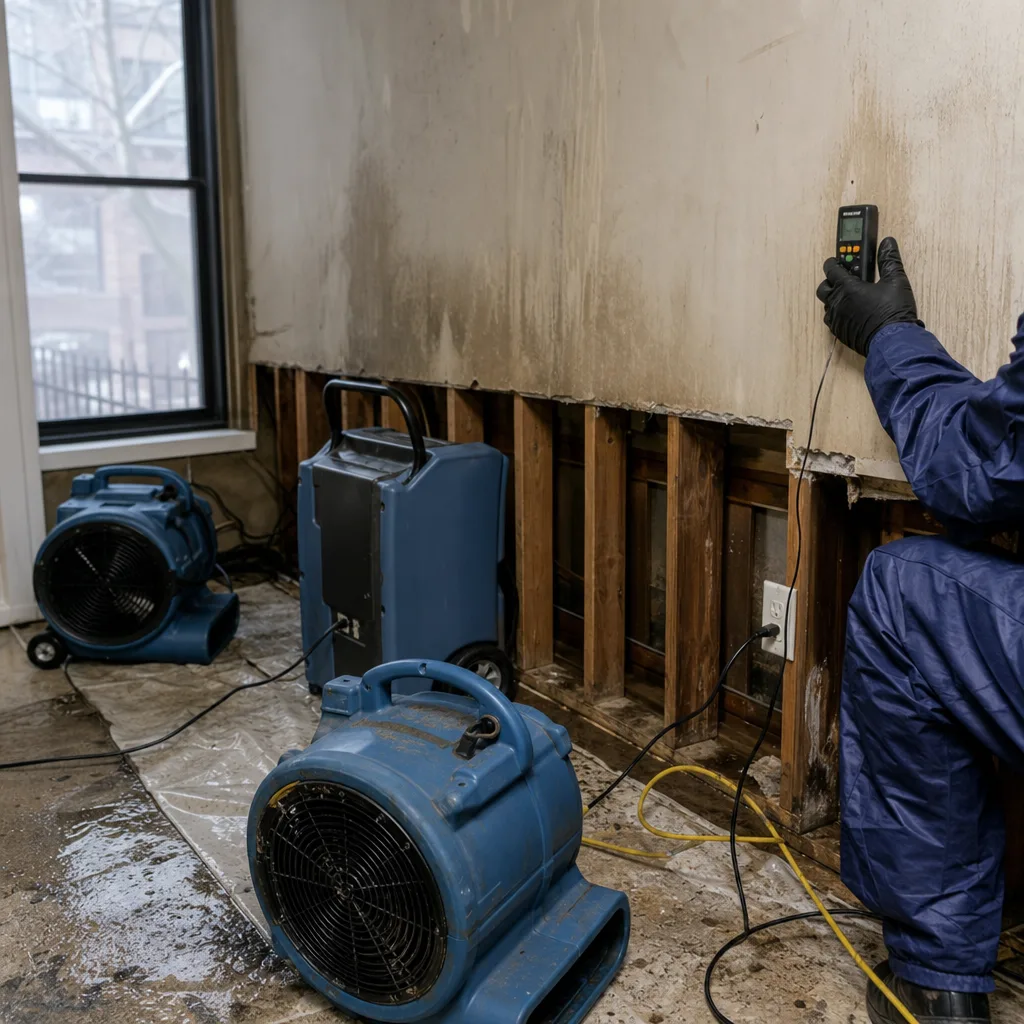
We walk the property with a moisture meter and thermal imaging, marking every affected surface, measuring how far water has migrated through drywall, subfloor, and framing. The assessment is written, photographed, and shared with you before any equipment is unloaded.
Emergency Board-Up & Roof Tarping
If wind has breached the envelope, we make the structure safe first. Board-up for broken windows and doors, roof tarping with proper anchor points. In Indian Field’s salt air, we check fastener condition before trusting an anchor, because corroded anchors fail under load.
Water Extraction & Debris Removal
Truck-mounted and portable extraction units pull standing water from floors, crawlspaces, and wall cavities. Debris that holds water, soaked insulation, ruined carpet pad, damaged drywall, goes out the same visit.
Drying & Dehumidification
Air movers create airflow. Dehumidifiers pull moisture from the air. Injectidry systems dry inside wall and ceiling cavities without tearing out more drywall than necessary. Daily moisture readings are logged until every reading hits the dry standard.
Cleaning, Sanitization & Antimicrobial Treatment
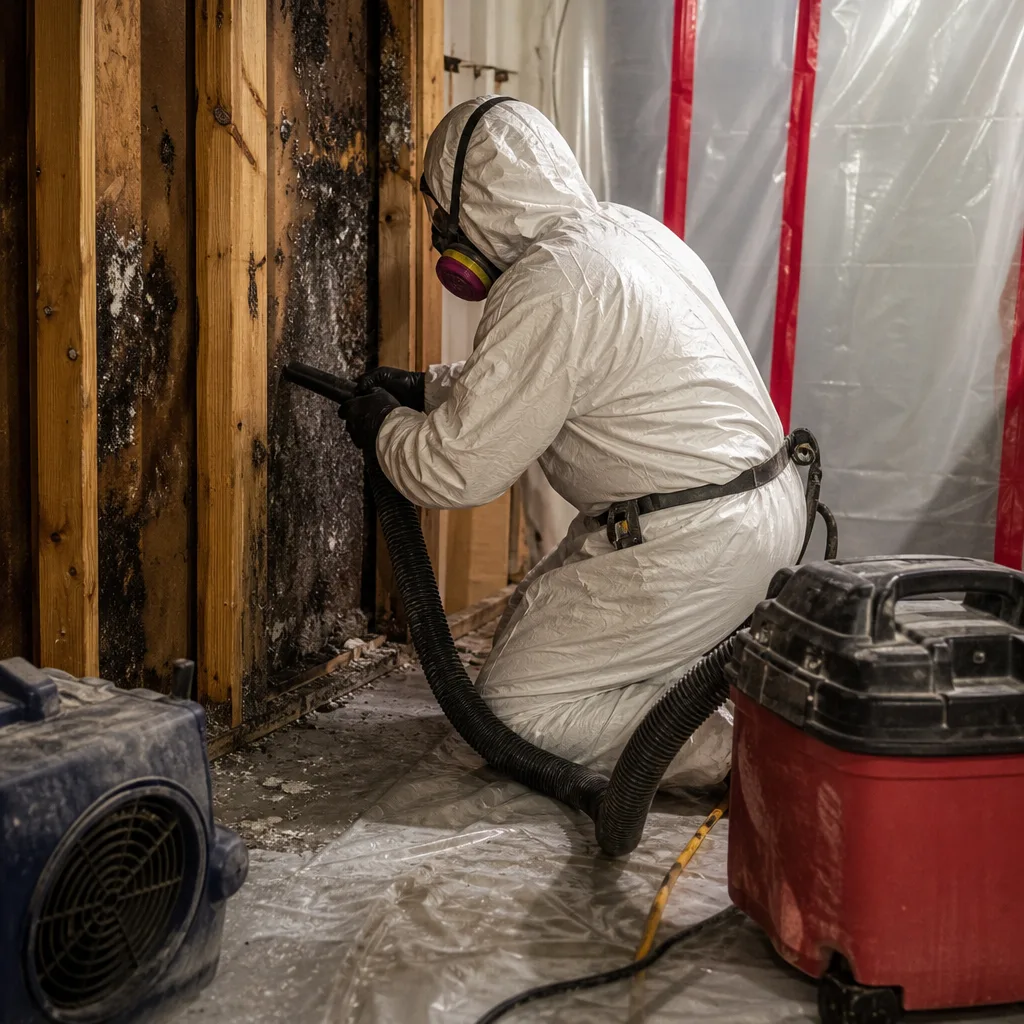
Under pressure, we apply EPA-registered antimicrobial treatments to salvageable framing and structural materials. HEPA air scrubbers run wherever mold or Category 3 water was present. We’re not leaving a house that smells like a flood.
Structural Repairs & Reconstruction
The same crew that read the moisture map on day one handles the rebuild. Drywall, flooring, trim, doors, roof sheathing. One scope, one schedule, one name, the 90-Day Done Right Promise on all of it.
Need Emergency Storm & Disaster Restoration in Indian Field Now?
Crews minutes away, answering live 24 hours a day. The sooner we start, the less it costs.
Working With Your Insurance Company
Insurance claims go smoother when the restoration company documents everything from the first hour. That’s how Floodline Restoration Co. has handled storm and flood losses for years, and it’s one of the reasons adjusters are comfortable working with us. We photograph every room before anything is moved. We log moisture readings daily. We write a line-item scope with the same software your carrier uses. Then we send it all directly to the adjuster, and we talk with them ourselves. You’re not chasing paperwork while your house sits open to the elements. Here’s what we provide your carrier:
What We Provide Your Insurer
- Thorough documentation of the loss
- Photos of all damage, room by room
- Moisture readings and drying logs
- A detailed, line-item scope of work
- Direct coordination with your adjuster
Built for Indian Field’s Loss Calendar
Indian Field doesn’t have one storm season. It has a loss calendar, and the dates repeat every year. January and February bring the deep freeze: supply lines in winterized cottages crack, heating systems fail, and water runs inside a closed house for days or weeks before anyone notices. Owners shut off the water but leave the heat off, and a single cold snap turns a closed-up bungalow into a frozen-pipe greenhouse. March and April bring thaw and the first heavy rains. Groundwater rises against slab foundations and crawl spaces that were never sealed for it. May through September is nor’easter and tropical-storm season. Storm surge pushes Category 3 water into low-lying streets and over bulkheads. October and November bring the big coastal blows: tree limbs through roofs, wind-driven rain through gaps in aging window trim. And because a large share of Indian Field’s homes are seasonal, many losses are discovered weeks or months after the event. The restoration work isn’t a visit. It’s an archaeology dig through the layers of damage that accumulated while nobody was home. That’s the restoration calendar we plan around, and it’s the reason our Storm & Disaster Restoration team keeps equipment staged and crews ready through every month of it.
Storm & Disaster Restoration Across Indian Field’s Neighborhoods
Indian Field’s roads and neighborhoods each carry their own damage patterns, and after years of response calls, we know what to expect before the truck stops. Along Indian Field Lane and the older lanes that branch toward the Peconic Bay side, the cottages are older, often built mid-century on slab foundations, and they take storm surge hard when a nor’easter pushes water up the creeks. The salt air has been working on their fasteners and door hardware for fifty years. Over toward the Greenwich side, the housing shifts to slightly newer construction, but the lay of the land matters more: low lots and poor drainage mean groundwater intrusion through slab edges and crawl-space vents. Homes along the more inland roads, the ones tucked into the tree lines, see the wind damage first: limbs through roofs, broken windows, doors blown in when the wind loads hit. The seasonal properties near the shore sit empty from October to April, and those are the ones we brace for most in January. A cottage that has been winterized and left unattended is a damage claim waiting to happen. We know the response routes, the local permitting requirements for structural repairs, and the fact that Indian Field is a place where the home you’re inspecting in March might have been flooding since December.
Specialized Storm & Disaster Restoration Services We Offer in Indian Field
Storm Damage Cleanup
Storm cleanup in Indian Field means removing what the wind and water left behind: soaked drywall, ruined furniture, tree debris, mud, and silt. We’re careful about what goes in the mold pile and what can be saved. The faster this happens, the better for the framing underneath. We always inspect behind the obvious damage, because storm water in an Indian Field crawlspace hides there longest.
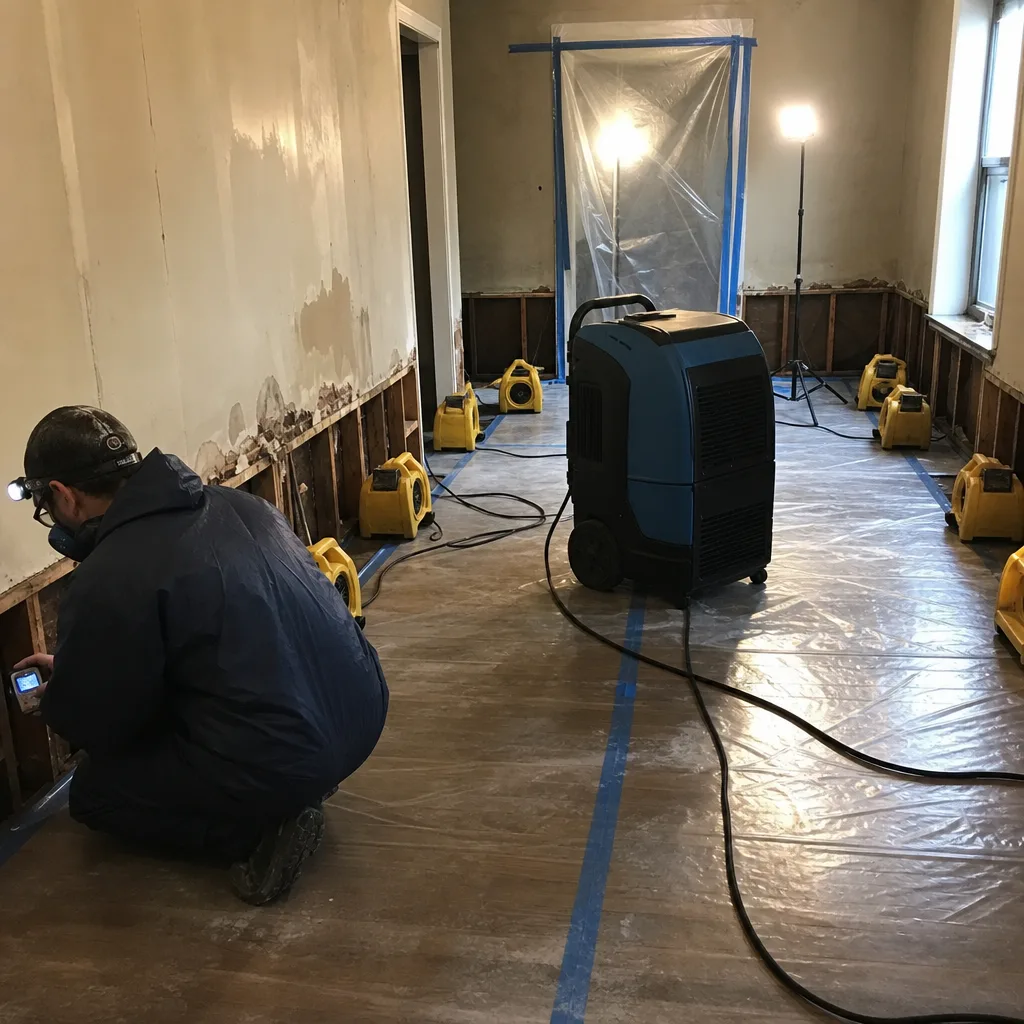
Flood Damage Restoration
Flood restoration here often means Category 3 water from the bay side or from storm surge that has overwhelmed a property’s drainage. That water carries salt, sewage, and whatever else it picked up on the way in. We handle it with containment, extraction, structural drying, and antimicrobial treatment. We don’t dry over contamination and call it clean. The moisture log tells the truth.
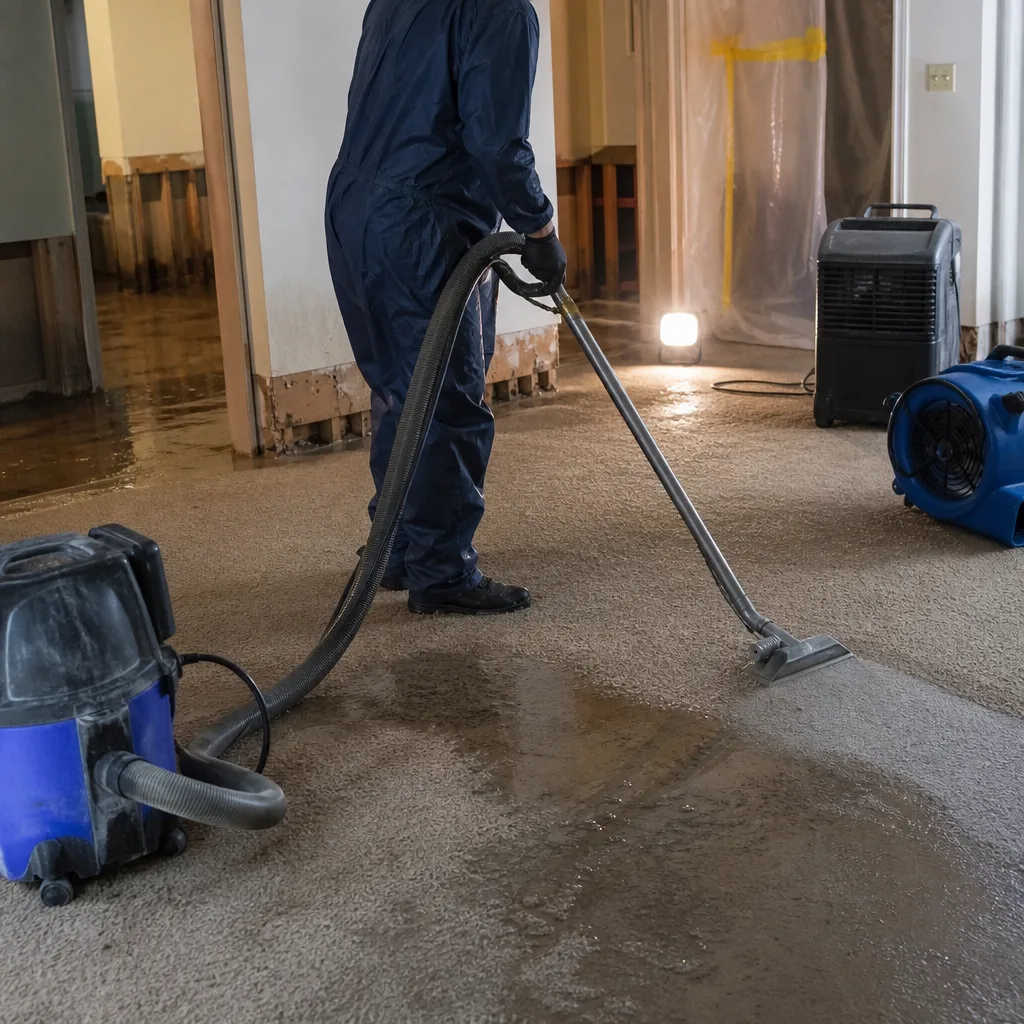
Emergency Board-Up
When a gust blows a door inward or a limb takes out a window in Indian Field, the opening lets weather, animals, and water inside. We board up the breach fast, with plywood cut and anchored for the conditions. We check the hardware. We don’t slap a board over a rotted frame and call it secure. The goal is a sealed envelope until permanent repairs are scheduled.
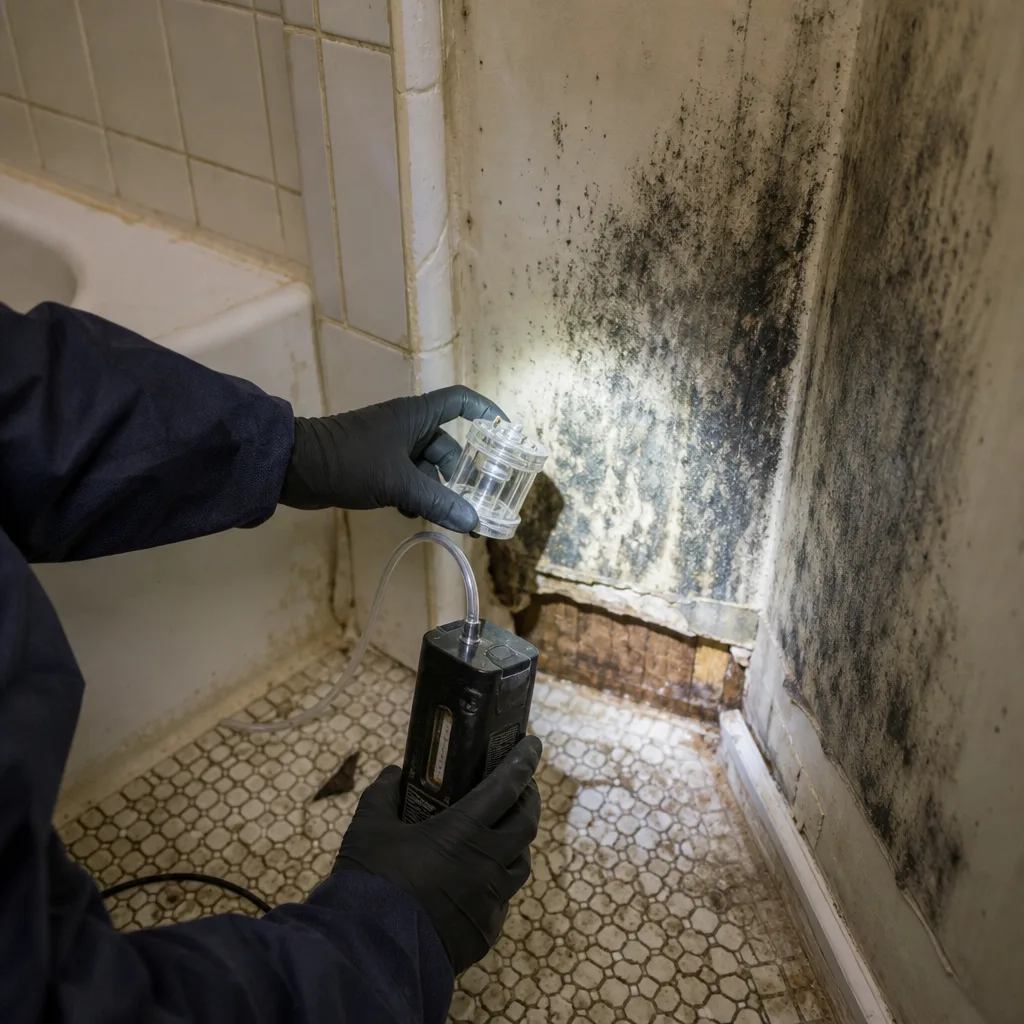
Roof Tarping
Post-storm roof damage on the East End is common, and tarpping a roof in Indian Field has its own challenges. Salt-corroded fasteners mean a tarp anchor can look solid and pull free in the next gust. Our Storm & Disaster Restoration crew checks anchor points before trusting them. We also flag where water has already migrated into the attic or wall cavities, because a tarp stops new water but does nothing for water already inside.
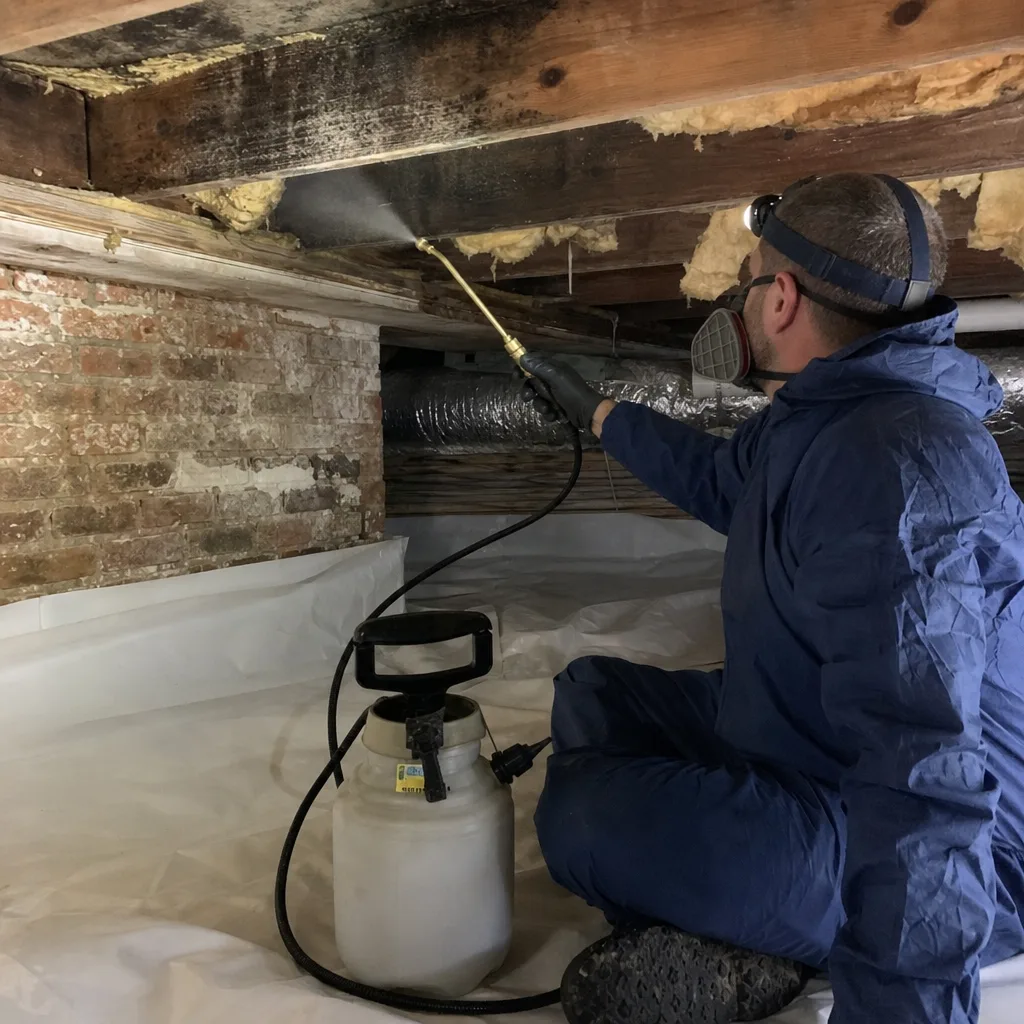
Wind Damage Repair
Wind uplift on older Indian Field bungalows tears at door frames, window surrounds, and roof sheathing. We repair the connection points, not just the surface. Replacement doors get wind-rated hardware. Roof sheathing gets fastened on the proper schedule. Flashing gets sealed. The work is designed to survive the next nor’easter, not just cover this one’s damage.
What happens when you call
- 1
A real person answersNo phone trees - you reach a local pro.
- 2
You get an upfront price rangeHonest numbers before anyone is dispatched.
- 3
A background-checked tech heads outLicensed & insured, dispatched right away.
- 4
You approve before work beginsNothing starts until you say go.
Storm & Disaster Restoration Costs in Indian Field, CT
Storm and disaster restoration in Indian Field runs a wide range because the damage spans from fast cleanup to full structural rebuild. A straightforward Category 1 water extraction with drying in a single room typically runs $1,800 to $3,200. Emergency board-up after a door breach or broken window runs $450 to $1,200 depending on the openings and the anchorage. Labor on roof tarping runs from $400 to $900 for the first section, plus materials. Flood damage restoration involving Category 3 water, containment, and full structural drying commonly lands between $4,500 and $9,500, while a full storm breach with mold remediation and reconstruction can reach $20,000 and up on older Indian Field properties. What moves the price: how long the water sat undiscovered, whether mold has established, and how much of the framing is salvageable. The good news is that a free visual inspection gives you a firm written scope before anything is approved, and most storm and flood losses are covered by standard homeowner policies. Call (917) 924-4221 and we’ll tell you what we see, what it costs, and what your insurance should cover. No guesswork, no pressure.
We Also Serve Cities Near Indian Field
Our storm and disaster restoration crews respond throughout the surrounding area, including Byram, Glenville, Greenwich, and Pemberwick. If your property sits anywhere near Indian Field, we can reach you fast, and we know the local conditions, the local building stock, and the local permit process.
Serving Indian Field, CT - Our Local Coverage Area
We’re based in the Indian Field area and know this community well. Use the map below to see our service coverage - if you’re nearby, we can almost certainly help.
Indian Field Storm & Disaster Restoration Questions, Answered
How do restoration crews handle Category 3 flood water from Peconic Bay storm surge in Indian Field crawlspaces?
Category 3 water from the bay side is handled as grossly contaminated: full containment, extraction, removal of porous materials, and antimicrobial treatment of salvageable framing. In Indian Field crawlspaces, that usually means pulling out soaked insulation and vapor barrier, treating the structure, and running drying equipment until moisture readings hit the dry standard. It’s not a mop-and-dry job.
What wind rating should replacement entry doors meet in Indian Field to survive a nor’easter?
Replacement entry doors in Indian Field should meet at least the coastal wind-load requirements for the Suffolk County building code, typically a design pressure rating sufficient for the exposure. We specify wind-rated doors and impact-rated hardware on any East End property, because a failed door in a nor’easter is the breach that lets Category 3 water into the slab.
Why do winterized Indian Field homes often need full structural drying instead of simple water extraction?
Winterized homes sit closed for months, so water from a January pipe break has time to wick through subflooring, drywall, and wall cavities before anyone finds it. By arrival, you’re not extracting a puddle, you’re drying a structure. We use Injectidry cavity drying and daily moisture logs to bring the framing back to the dry standard without gutting the whole house unnecessarily.
What does a failing exterior door look like before a storm in Indian Field’s salt-air environment?
Look for corrosion on the hinges, gaps at the threshold, a latch that doesn’t seat fully, or wood rot where the frame meets the slab. In Indian Field’s salt air, a door frame can look fine from the outside and be compromised where the fasteners have rusted inside the jamb. A door that rattles in a strong gust is telling you something.
How soon after a nor’easter should a vacant Indian Field cottage be inspected for hidden water damage?
Immediately, if you can arrange it. The wind and rain will have found any weak point in the envelope, and a vacant cottage has no one to notice a leak until the mold has established. We recommend an inspection within 48 hours of any major storm on the East End, and we’ll send a technician to check the crawlspace, the attic, and the door and window seals.
How fast can a restoration crew actually reach an Indian Field property after I call?
In most cases, we can have a certified crew on site within 45 to 90 minutes of your call, depending on road conditions. Our dispatcher is live 24 hours a day, and we keep crews staged across the region precisely because Indian Field’s seasonal properties need fast response. Call (917) 924-4221 and we’ll tell you exactly when we’ll be there.
Does homeowner’s insurance cover storm and flood damage in Indian Field?
Most standard homeowner policies cover storm damage from wind, rain, and burst pipes. Flood coverage from river or bay surge often requires a separate flood policy. We work directly with your carrier and document everything from the first hour, so your claim has the photos, drying logs, and written scope it needs. Bring us the loss, and we’ll help carry the paperwork.
Can we stay in our Indian Field home during the restoration work?
It depends on the scope and the category of water. A small Category 1 extraction in a single room often doesn’t require you to leave. Category 3 water, mold remediation, or structural repairs typically do. We’ll tell you plainly during the inspection, and we’ll give you a written scope so you know exactly what’s happening in your house before it happens.
If storm or disaster damage has hit your Indian Field property, don’t wait for the calendar to make it worse. Call Floodline Restoration Co. of Manhattan at (917) 924-4221. A live dispatcher answers, a certified crew gets moving, and the work is done right, done in writing, and backed by the 90-Day Done Right Promise. Free visual inspection. Direct insurance billing. One crew from the first extraction to the final trim board.
Written by Curt Bowman, Owner at Floodline Restoration Co. of Manhattan, serving Indian Field and surrounding communities.