
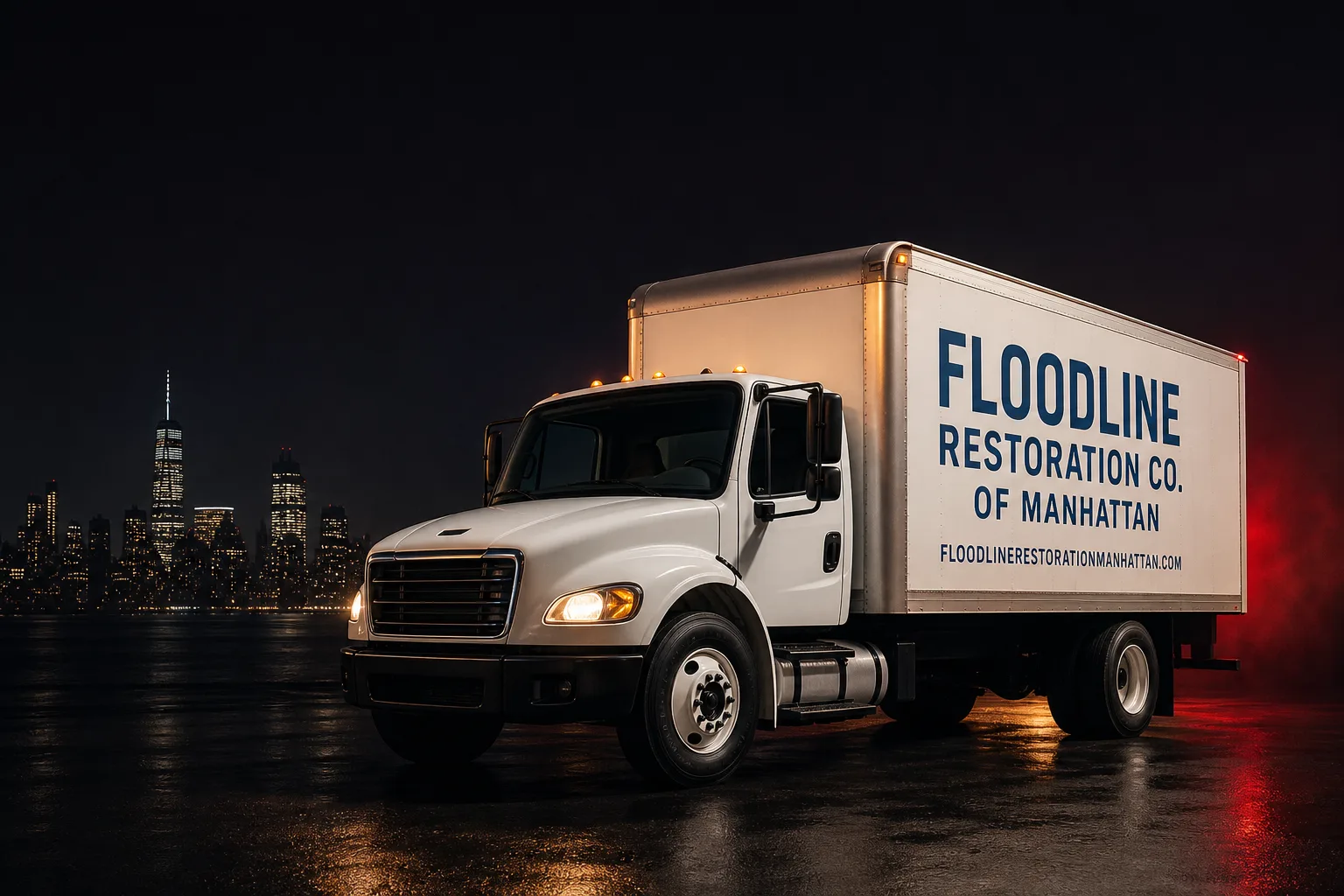
Free visual inspection and a written scope of work before any mitigation begins - photos, moisture readings, and drying logs go in your claim file
The scope we write is the scope we bill. Anything new gets shown to you, in writing, before we touch it.






 Before
 After
After Before
 After
After Before
 After
After24/7 Emergency Storm & Disaster Restoration in SoHo
Storm damage in SoHo moves fast, and the first hour usually decides whether you’re looking at a cleanup or a rebuild. Our crews answer live at (917) 924-4221 around the clock, every day of the year, and we dispatch into the SoHo area within 45 minutes of your call. A nor’easter ripping through lower Manhattan can push water under a cast-iron facade or send a tree limb through a landmarked window before you’ve finished your coffee. The faster we get extraction running and the structure stabilized, the less you lose. We arrive in uniform, with professional-grade Dri-Eaz and Phoenix equipment on the truck, and we start with a free visual inspection so you know exactly what you’re facing before any work is authorized.
Understanding Storm & Disaster Restoration Severity in SoHo Properties
SoHo’s building stock is not like the rest of Manhattan. The cast-iron loft buildings from the 1860s through 1890s hold water differently than modern construction, and the damage sequence is different too. Category 2 water – the kind that comes from a failed waste line or storm surge backing up through a drain – carries contamination that requires containment and sanitizing, not just extraction. Category 3 water, which includes floodwater from the street, demands full personal protective equipment and disposal of porous materials. Moisture mapping with thermal imaging shows us where water has traveled behind wainscoting, under wide-plank floors, and into the voids behind cast-iron columns. In a 4,000-square-foot open loft with no interior walls to slow it down, water spreads to the full footprint before anyone notices. SoHo’s low elevation, exposed during Hurricane Sandy’s 2012 surge, means below-grade spaces flood again whenever a serious nor’easter coincides with high tide. We read the building’s age into every scope of work.
Why SoHo Property Owners Choose Floodline Restoration Co. of Manhattan
- 45-minute response commitment: We dispatch from the New York City office the moment you call, and a uniformed crew reaches SoHo within 45 minutes, extraction equipment ready to run.
- 24/7 live answer, every time: A real person picks up at 2 a.m., not a recording. You speak to a dispatcher who can send a crew, not a voicemail box.
- IICRC-certified crews on site: Our technicians hold WRT (Water Damage Restoration Technician), FSRT (Fire & Smoke Restoration Technician), and AMRT (Applied Microbial Remediation Technician) certifications, plus RIA and IFA training.
- Free visual inspection first: We look before we quote. You get a straight read on the damage and a written scope before any work begins.
- Direct insurance billing: We bill your carrier directly and coordinate with the adjuster so you never play messenger.
- One team from first extraction to finished rebuild: The same crew that reads the moisture map on day one handles daily readings, logs everything, and rebuilds what needs rebuilding. No handoffs, no inherited strangers.
Our Storm & Disaster Restoration Process
Inspection & Assessment
We walk the entire affected area with thermal imaging cameras and hygrometers to map where water has actually traveled, not just where it’s visible. In SoHo lofts, that often means checking behind wainscoting, under flooring, and inside wall cavities around cast-iron columns. You get a written scope and a firm number before work begins.
Extraction/Stabilization
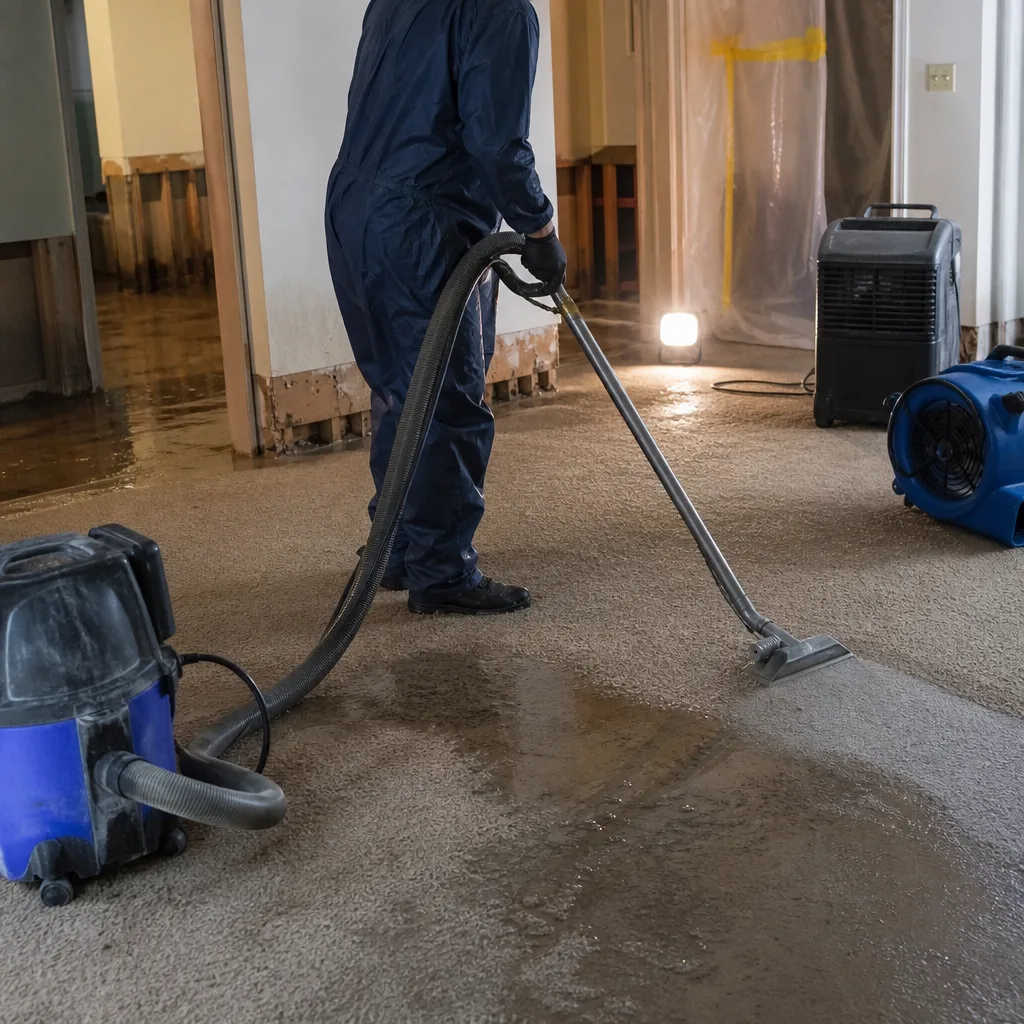
We pull standing water with truck-mounted and portable extraction units, then stabilize the structure. For storm damage, that means board-up and roof tarping where needed, plus cutting off water sources, before we touch anything else. The goal in hour one is stopping the spread.
Drying & Dehumidification
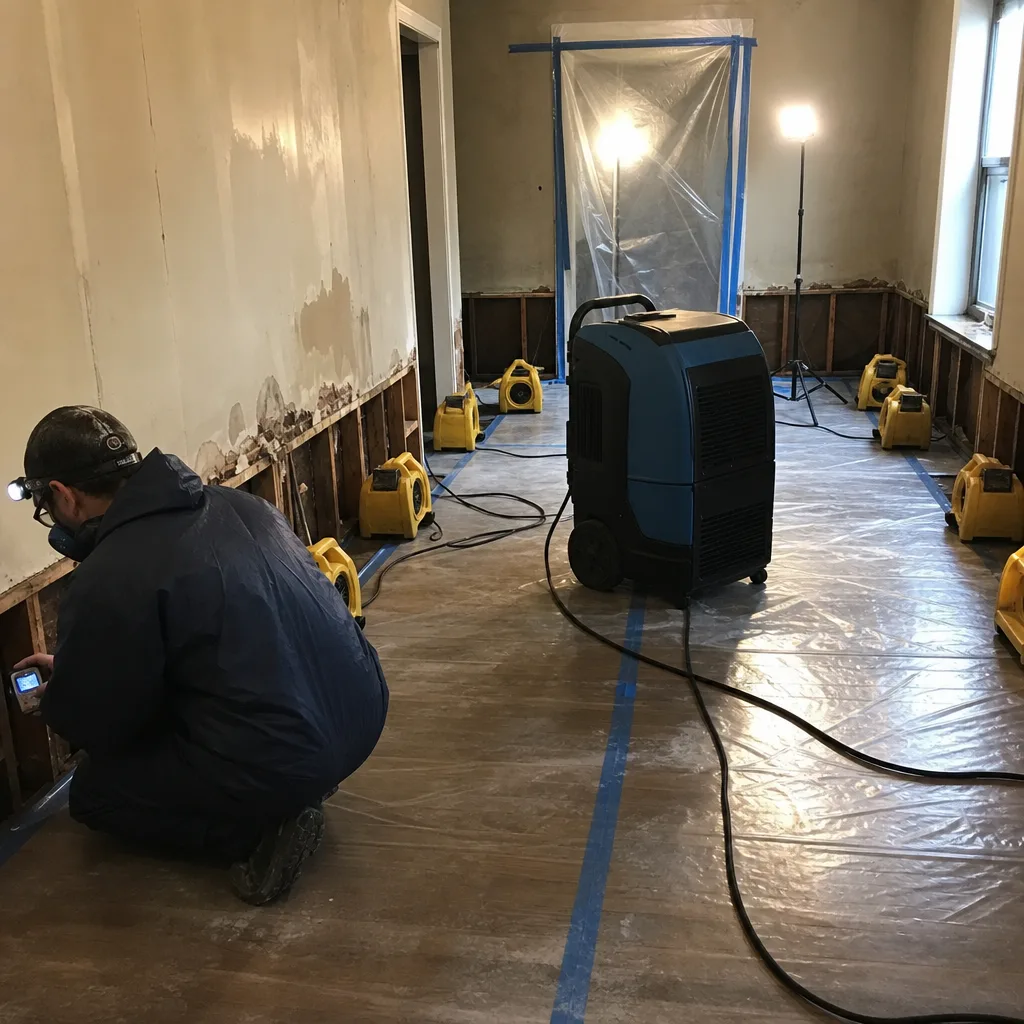
We set professional-grade air movers and LGR dehumidifiers – Dri-Eaz and Phoenix units – and monitor moisture daily until the dry standard is met. In SoHo’s dense street canyons, trapped humidity against aging brick and cast iron makes this phase slower than in open air. We log every reading and hand the log to you and your carrier.
Cleaning & Sanitization
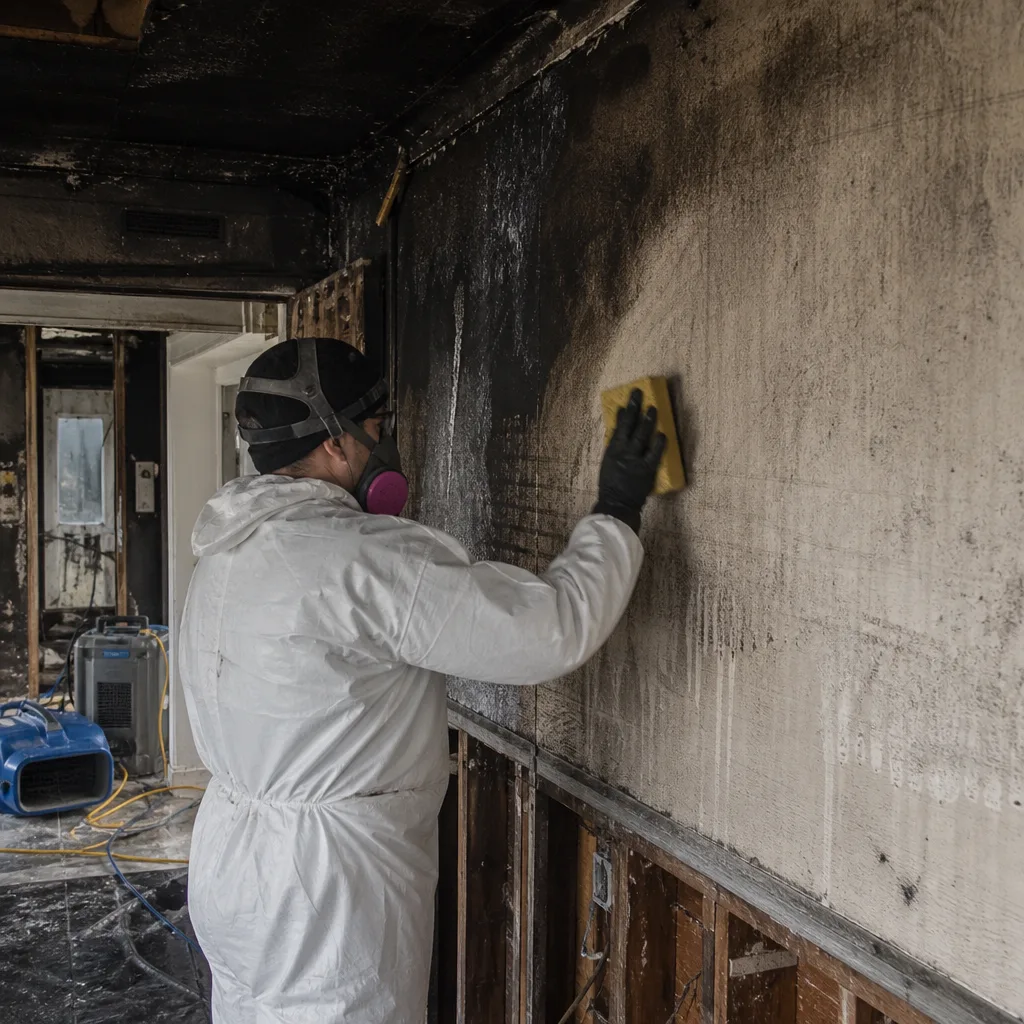
Contaminated water leaves more than visible muck. We clean and sanitize with appropriate antimicrobial treatments, HEPA vacuuming, and air scrubbing where Category 2 or 3 water was present. Porous materials that can’t be dried and sanitized get cut out and replaced.
Specialty Treatment for Storm & Disaster Restoration
SoHo’s historic fabric demands specialty work: LPC-compliant material matching for damaged facade elements, anti-microbial treatment behind cast-iron panels, and documentation of every step for the Landmarks Preservation Commission. We handle the paperwork and the craftwork.
Repairs & Restoration
We rebuild what the storm took: drywall, flooring, wainscoting, window surrounds, and any structural repairs needed. The same certified crew handles extraction through finish work, and everything is backed by the 90-Day Done Right Promise, in writing.
Need Emergency Storm & Disaster Restoration in SoHo Now?
Crews minutes away, answering live 24 hours a day. The sooner we start, the less it costs.
Working With Your Insurance Company
Storm damage claims in SoHo are rarely simple, especially in landmarked buildings where the carrier’s standard adjuster may not know a cast-iron facade from a steel one. We document everything from the first hour: photos room by room, moisture readings, drying logs, and a line-item scope of work in the format insurers recognize. Our team coordinates directly with your adjuster, so you’re not relaying messages between a carrier’s phone tree and a contractor’s crew. If the adjuster questions a scope item, we have the documentation to back it. If the unit carries a JLWQA zoning designation, we flag it early so the insurer doesn’t stall the claim on a technicality.
What We Provide Your Insurer
- Thorough documentation of the loss
- Photos of all damage, room by room
- Moisture readings and drying logs
- A detailed, line-item scope of work
- Direct coordination with your carrier
Built for SoHo’s Loss Calendar
SoHo sees storm losses all year, but the pattern shifts with the season. January deep freezes burst supply lines in the ad-hoc plumbing that was retrofitted into these buildings during the 1970s manufacturing-to-residential conversion – a chronic weak point that keeps us busy every winter. Spring thaw and heavy March rains push water into below-grade cellars along Broadway and Greene Street, where Sandy’s 2012 surge already proved how fast those spaces flood. Summer thunderstorms overwhelm the neighborhood’s narrow street drains, sending Category 3 water into ground-floor retail and residential entrances. Autumn nor’easters are the big one: wind-driven rain forces water behind cast-iron facade panels and through aging brick joints, accelerating rust expansion and masonry deterioration that requires LPC-approved repair. Every season here has a signature failure mode. We plan for all of them.
Storm & Disaster Restoration Across SoHo’s Neighborhoods
SoHo’s response corridors matter when every minute counts. Along Broadway, the heavier commercial traffic and wide storefronts mean board-up crews often need to protect large plate-glass openings fast, while the residential lofts above wait for water extraction. Over on Greene Street and Mercer Street, the narrow, landmarked facades require careful roof tarping that doesn’t stress ornamental cornices. West Broadway’s ground-floor galleries and retail spaces flood through cellar stairwells during flash downpours, and the cast-iron frontage on Wooster Street traps moisture behind facade panels during nor’easters. East of Crosby Street, the smaller loft buildings with 19th-century rear extensions tend to hold water in courtyard-facing walls that never fully dry without mechanical help. Each block has its own rhythm, and the crew that reads the moisture map on day one is the crew that knows this neighborhood’s floor plans.
Specialized Storm & Disaster Restoration Services We Offer in SoHo
Flood Damage Restoration
A nor’easter surge or a failed waste line in a SoHo loft can put Category 2 or 3 water across thousands of square feet before anyone notices. We extract, contain, dry, and sanitize, with daily moisture readings logged until the dry standard is met. Every job is backed by the 90-Day Done Right Promise, in writing.
Emergency Board-Up
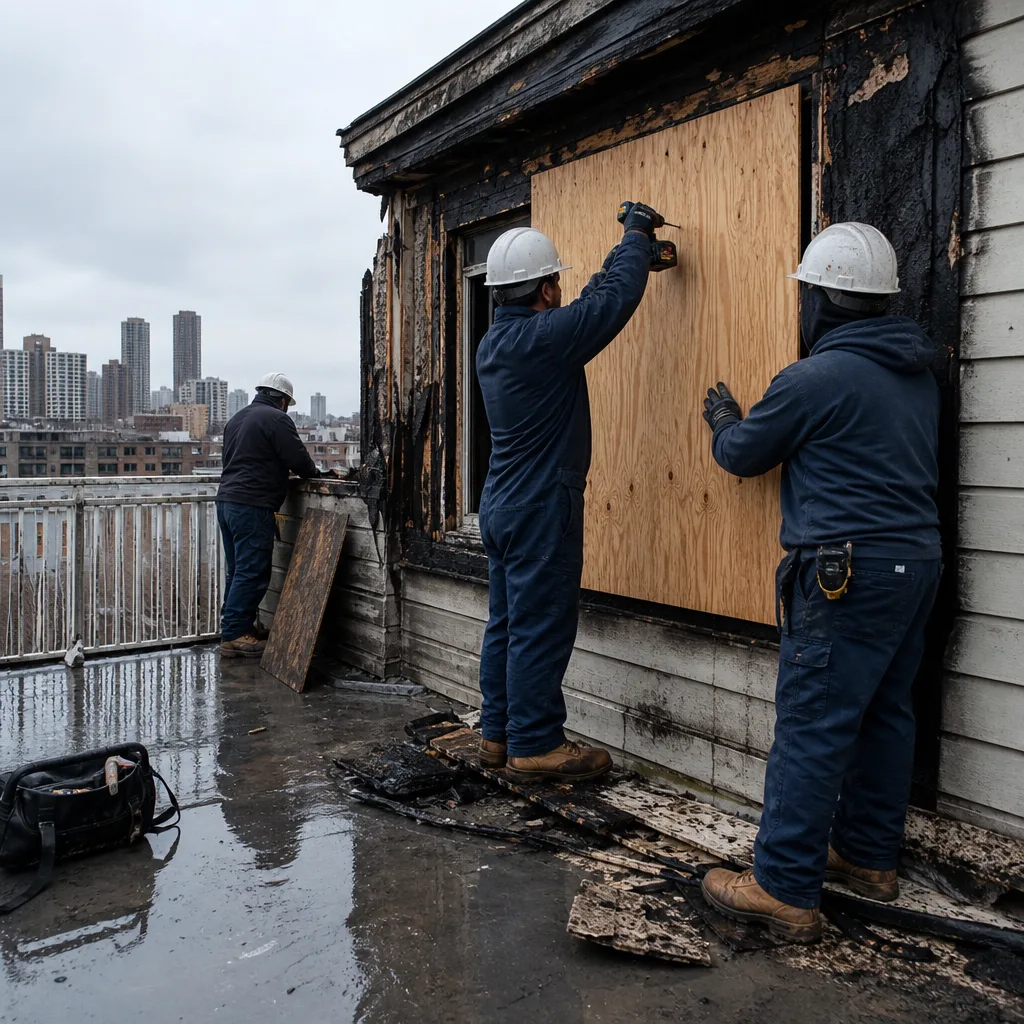
Broken windows and forced doors in the SoHo-Cast Iron Historic District can’t be boarded with plywood and nails. Landmarks Preservation Commission rules require care with every exterior touch, and we handle the board-up plus the LPC documentation. Our Storm & Disaster Restoration team secures the opening the same visit, then files the paperwork to keep the building legal.
Roof Tarping
A storm-damaged roof on an 1860s loft building leaks through multiple floors if it’s not tarped fast. We anchor tarps to prevent wind lift without damaging parapets or cornices, and we coordinate with the LPC when the tarping affects visible rooflines. The same crew that tarps the roof handles the interior drying below.
Storm Damage Cleanup
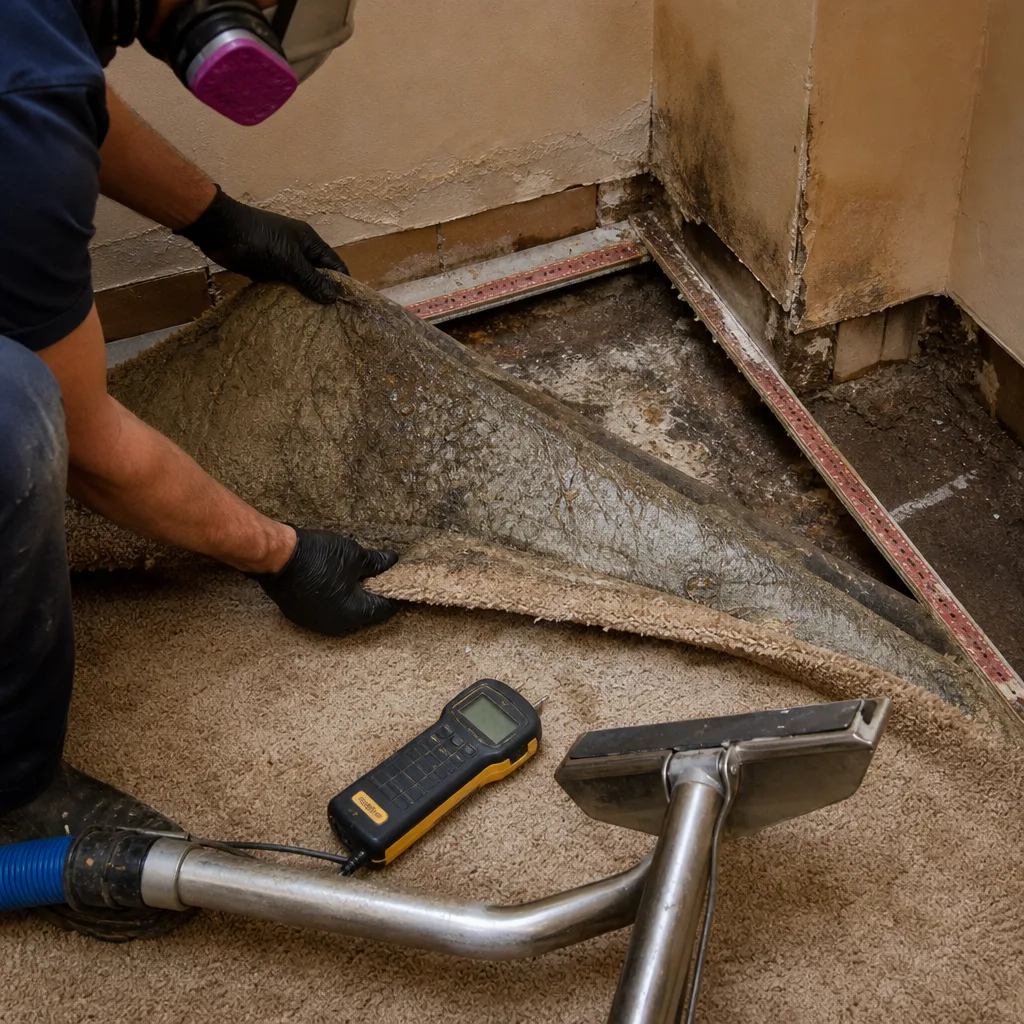
Debris, downed limbs, and wind-driven glass on SoHo’s narrow streets create hazards before the rain even stops. We clear debris, secure openings, and start extraction. For SoHo property owners, our full service page covers the complete Storm & Disaster Restoration process from first response to final rebuild.
Debris Removal
Storm debris in SoHo often includes construction materials from damaged facades, broken glass from landmarked storefronts, and waterlogged interior finishes. We haul it legally, separate what’s salvageable, and document disposal for your insurance claim. No mess left behind, no shortcuts on the street.
What happens when you call
- 1
A real person answersNo phone trees - you reach a local pro.
- 2
You get an upfront price rangeHonest numbers before anyone is dispatched.
- 3
A background-checked tech heads outLicensed & insured, dispatched right away.
- 4
You approve before work beginsNothing starts until you say go.
Storm & Disaster Restoration Costs in SoHo, NY
SoHo pricing runs higher than outer-borough rates because the buildings are older, the LPC review adds time and documentation, and the open floor plans mean damage spreads farther before it’s caught. A typical flood damage restoration on a SoHo loft runs $4,200 to $18,000 depending on square footage and water category. Emergency board-up on a ground-floor retail opening runs $650 to $2,400, with LPC documentation adding documentation time but not markup. Roof tarping for a storm-damaged loft building runs $850 to $3,200 depending on roof access and wind exposure. Debris removal for a typical storm event runs $500 to $3,500. The free visual inspection gives you a firm number before you authorize any work, and we bill your carrier directly on covered claims. For an exact quote, call (917) 924-4221.
We Also Serve Cities Near SoHo
Our crews cover the wider lower Manhattan and Bronx corridor, including Fairview, Harrison, East Bronx, and Hunts Point. If you’re across the bridge or uptown slightly, the same SoHo team is on call 24/7.
SoHo Storm & Disaster Restoration Questions, Answered
Does Storm & Disaster Restoration on a SoHo cast-iron loft always require Landmarks Preservation Commission approval?
If the work touches any exterior element – facade masonry, ornamental ironwork, window surrounds, cornices – then yes, LPC review and period-appropriate material matching are required before work can proceed. Interior-only work like water extraction, drying, and interior wall repair does not require LPC review, though DOB permits may still apply. We determine the trigger on inspection and file the paperwork.
Why is mold remediation different in a SoHo loft with 14-foot ceilings and no interior walls?
Mold spreads through air currents, and a 14-foot ceiling with an open floor plate means spores travel the full footprint before settling. Containment has to enclose the entire affected volume, not just a room, and air scrubbing needs higher CFM than a standard apartment job. We size the containment and air-scrubbing plan to the cubic footage, not the square footage.
What happens when water gets behind a historic cast-iron facade panel during a nor’easter?
Trapped moisture accelerates rust expansion on the iron, which can destabilize the ornamental panel and the masonry anchors holding it. Remediation requires LPC-approved metal stabilization before structural drying can be fully effective. On a Greene Street job, we ran moisture mapping with Dri-Eaz infrared cameras, set containment around the entire floor plate, and coordinated with the LPC before removing water-damaged wainscoting that ran behind a landmarked cast-iron column.
Can you board up a broken window on a landmarked SoHo building without violating historic district rules?
Yes, emergency board-up is permitted to secure a damaged opening, but the materials and method have to be reversible and documented. Plywood is generally accepted for temporary emergency use, and we file the LPC documentation the same day. Permanent window repair then follows LPC material-matching requirements.
Does the ‘Joint Living-Work Quarters for Artists’ (JLWQA) zoning affect my flood damage insurance claim?
It can. Some insurers unfamiliar with JLWQA classifications stall claims while they sort out whether the unit is residential or commercial, which affects coverage limits and deductible application. We flag the unit’s legal use on the first visit and provide documentation to your adjuster so the claim moves.
How fast can a crew actually reach SoHo?
We commit to 45-minute dispatch from the New York City office. In practice, crews already working in SoHo often arrive faster. The dispatcher who answers your call is the one coordinating the truck, so there’s no middle step. Call (917) 924-4221 and a crew is on the way.
Will insurance cover storm damage to a landmarked SoHo building?
Most policies cover storm damage, but the LPC-required period-appropriate materials can exceed the carrier’s standard material pricing. We document the LPC requirement in the scope of work and bill the difference directly to the carrier, with photo evidence and LPC correspondence attached. The key is documentation from hour one.
What should I do in the first 30 minutes after storm damage in SoHo?
Call a restoration company first, before you move anything or touch standing water. Shut off power if water is near outlets or panels. Don’t walk on wet flooring you can’t see the underside of. Then call (917) 924-4221 and describe what you see – our dispatcher will tell you what’s safe to do while the crew is rolling. Estimates are free, and the sooner we start extraction, the less you lose.
Serving SoHo, NY - Our Local Coverage Area
We’re based in the SoHo area and know this community well. Use the map below to see our service coverage - if you’re nearby, we can almost certainly help.
Call Floodline Restoration Co. of Manhattan for SoHo Storm & Disaster Restoration
Storm damage in a landmarked SoHo loft is not a generic cleanup job. The cast-iron facade, the LPC review, the open floor plate, the 1860s plumbing – all of it changes the sequence and the stakes. Curt Bowman founded Floodline Restoration Co. in 2010 around a dispatch board, not a sales desk, and the company has answered the phone with a live person every day since. Our crews are background-checked, uniformed, and certified to IICRC, RIA, and IFA standards. Every job carries the 90-Day Done Right Promise in writing. Call (917) 924-4221 for a free estimate, day or night. We’ll be there when we say, and the line the water left is where we start.
Written by Curt Bowman, Owner at Floodline Restoration Co. of Manhattan, serving SoHo and lower Manhattan since 2010.