
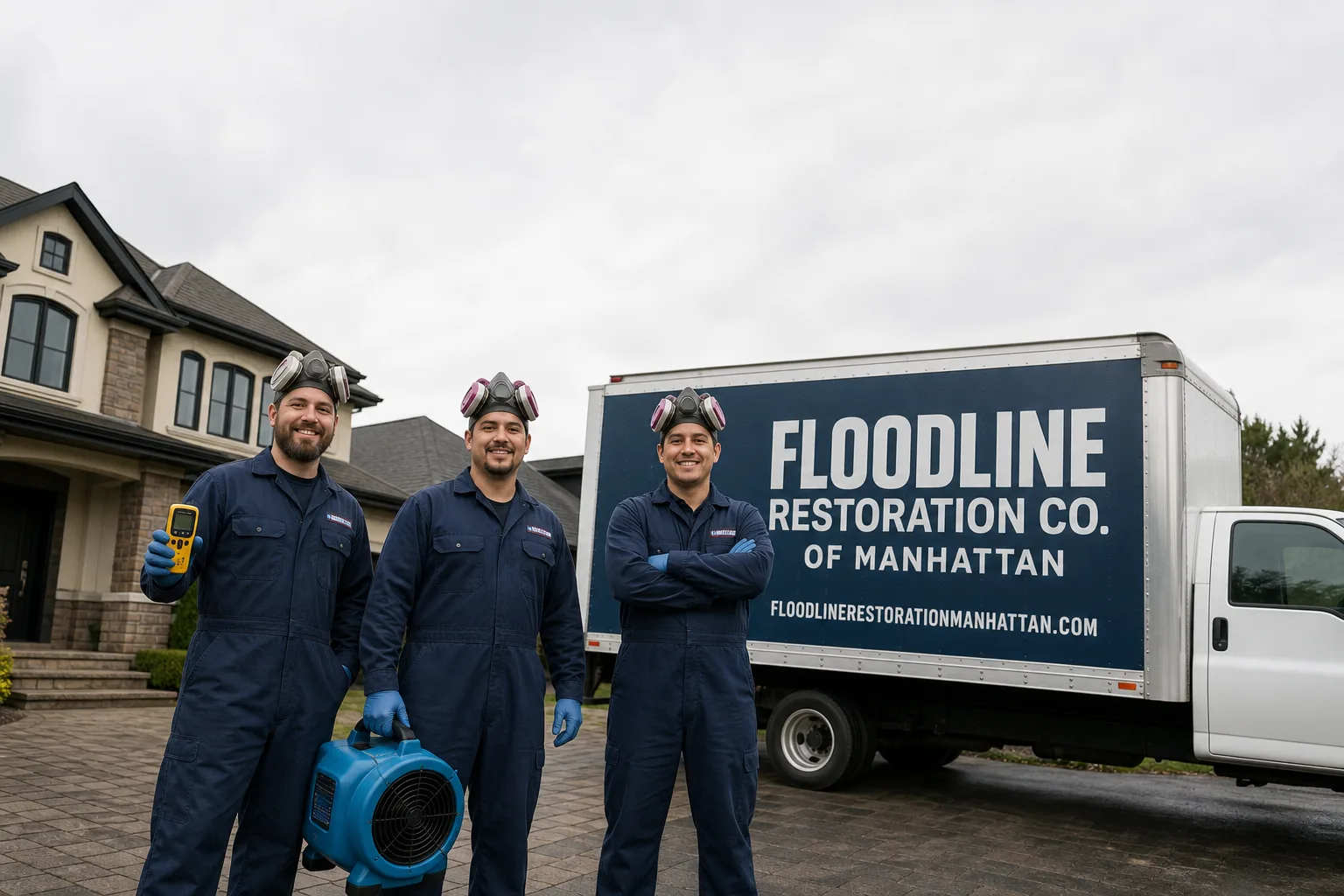
Free visual inspection and a written scope of work before any mitigation begins - photos, moisture readings, and drying logs go in your claim file
The scope we write is the scope we bill. Anything new gets shown to you, in writing, before we touch it.






 Before
 After
After Before
 After
After Before
 After
After24/7 Emergency Storm & Disaster Restoration in Sparkill
Storm damage doesn’t wait for business hours in Sparkill, and neither do we. When wind tears a door off its hinges on Depot Square or Sparkill Creek jumps its banks after a nor’easter, you need a crew that answers the phone at 2 a.m. and gets extraction running the same visit. Floodline Restoration Co. of Manhattan dispatches certified Storm & Disaster Restoration crews to Sparkill around the clock, every day of the year. Call (917) 924-4221 right now and you’ll speak with a live dispatcher, not a recording, who can have a background-checked crew at your door within 45 minutes. The first hour after storm water enters a home determines whether you’re looking at drying or full tear-out. We bring professional-grade Dri-Eaz dehumidifiers, Phoenix air movers, and Injectidry mats on the first truck, because waiting until morning lets silty Hudson-tributary sediment settle deeper into floor joists and wall cavities.
Understanding Storm & Disaster Restoration Severity in Sparkill Properties
Storm damage in Sparkill rarely presents as clean rainwater. When the Palisades escarpment funnels wind and runoff down into the hamlet, and Sparkill Creek backs up against a Hudson River surge, the water entering basements and crawlspaces is Category 3: heavily contaminated with creek sediment, soil, and whatever the surge carried upstream. That classification matters because it changes the entire restoration protocol. Category 3 water requires full containment, antimicrobial treatment, and removal of porous materials that absorbed it. Our crews use thermal imaging and hygrometers to moisture-map every affected surface, because Sparkill’s Depression-era frame houses and Victorian cottages hide moisture behind horsehair plaster and under original hardwood long after surface readings look dry. We log daily readings against a dry standard, not a guess. The silty sediment itself is the second problem. It packs into joist bays and wall cavities, holding water like a sponge and forcing structural drying timelines that can extend from days to weeks when the dehumidification isn’t aggressive enough. In a 1920s bungalow near Depot Square, we recorded subfloor readings over 40% a full week after the creek receded, simply because the clay-heavy debris had sealed moisture into the framing. That’s the difference between restoration done by someone who knows Sparkill’s water and someone working from a national playbook.
Why Sparkill Property Owners Choose Floodline Restoration Co. of Manhattan
- 45-minute response commitment: We dispatch crews from staging points around Rockland County specifically so Sparkill homeowners aren’t waiting on a truck from deep in the city. Live dispatch means the clock starts when you call, not when someone gets around to checking messages.
- 24/7 live answer, always a person: At 3 a.m. during a nor’easter, you get a dispatcher who knows the Sparkill drainage issues and can tell you what to do in the first 30 minutes. No menus, no voicemail, no callbacks.
- IICRC-certified restoration crews: Our technicians hold WRT (Water Damage Restoration), FSRT (Fire & Smoke Restoration), and AMRT (Applied Microbial Remediation) certifications. They’re trained to IICRC, RIA, and IFA standards, and they arrive in uniform with identification.
- Free visual inspection: Before any work starts, we document the damage and walk you through what we found. You get a written scope of work so you can see exactly what’s needed and why. No pressure, no vague hand-waving.
- Direct insurance billing: We bill your carrier directly and coordinate with your adjuster from the first moisture reading to the final rebuild. You don’t carry paperwork between us and the insurance company.
- One team from extraction to reconstruction: The same crew that pulls category 3 water out of your basement also handles the structural drying, the rebuild, and the final walkthrough. No mid-job handoff to a subcontractor you’ve never met.
Our Storm & Disaster Restoration Process
Inspection & Assessment
We walk every affected area with thermal imaging and moisture meters. For Sparkill homes with stone foundations and horsehair plaster walls, this means checking cavity spaces and subfloor framing, because hidden moisture drives mold and structural rot. We document everything for your insurer before any equipment gets set up.
Extraction & Stabilization
Truck-mounted extraction units pull standing water fast, including the silty sediment that Sparkill Creek leaves behind. If wind damage has compromised doors, windows, or roof sections, we install emergency board-up and roof tarping immediately so the property is secure and no more water gets in.
Drying & Dehumidification
We position Injectidry mats under affected flooring and place Phoenix or Dri-Eaz air movers and dehumidifiers according to a calculated drying chamber. Daily moisture readings are logged until the dry standard is met. In Sparkill’s high water table conditions, we don’t pull equipment early: the data decides, not the calendar.
Cleaning & Sanitization
Category 3 water means everything touched by flood water gets cleaned, sanitized, or removed. We HEPA-vacuum exposed framing, apply antimicrobial treatments where needed, and run air scrubbers to capture airborne particulates from dried sediment.
Wind-Load Reinforcement & Structural Stabilization
In Sparkill, storm restoration isn’t finished when the standing water is gone. We assess exterior doors, windows, and roof edges for wind-load integrity, especially on Victorian-era frame houses where original construction predates modern wind standards. Impact-rated doors and reinforced track systems get specified where the escarpment funnels gusts.
Repairs & Restoration
From subfloor replacement to plaster repair to full door and window reinstallation, the same Floodline crew handles the rebuild. We leave the property buttoned up, dry, and backed by the 90-Day Done Right Promise: if it’s not done right, we make it right, in writing.
Need Emergency Storm & Disaster Restoration in Sparkill Now?
Crews minutes away, answering live 24 hours a day. The sooner we start, the less it costs.
Working With Your Insurance Company
Storm damage claims in Sparkill get complicated when the loss involves both wind damage and creek backup. Some policies treat those as separate coverages, and your adjuster needs documentation that distinguishes one from the other from day one. We provide exactly that: photos of every affected room, moisture readings taken before and during drying, and a line-item scope that separates wind-driven damage from flood water intrusion. Our project managers speak directly with your adjuster, so you’re not relaying technical questions about subfloor drying rates or wind-load ratings between two parties. We’re not public adjusters, but we’re not shy about advocating for the restoration work your policy covers. Direct billing means the claim paperwork moves faster, and you’re not financing a full rebuild out of pocket while the carrier processes a check. Call (917) 924-4221 and we’ll walk you through what your policy language means for your specific loss before any work begins.
What We Provide Your Insurer
- Thorough documentation of the loss
- Photos of all damage, room by room
- Moisture readings and drying logs
- A detailed, line-item scope of work
- Direct coordination with your carrier
Built for Sparkill’s Loss Calendar
Storm season in Sparkill doesn’t follow a simple calendar. January brings deep freezes that burst supply lines in unheated basements and crawlspaces under Depression-era frame houses. March and April bring snowmelt combined with spring rain, saturating the already-high water table near Sparkill Creek and driving seepage through stone foundations. Summer thunderstorms roll off the Palisades with startling speed, and the escarpment’s grade turns a heavy downpour into a flash flooding event in the hamlet below. Fall brings nor’easters, the events that cause the most severe losses here because Sparkill Creek loses its outflow to the Hudson at the same moment the storm surge pushes upstream. Each season produces a different damage profile, and our crews arrive already knowing which one they’re facing. That’s why we don’t run a generic playbook. The water behavior, the wind patterns, the building materials: Sparkill has its own loss calendar, and we’ve learned to read it.
Storm & Disaster Restoration Across Sparkill’s Neighborhoods
Response routes in Sparkill follow the creek. Properties along Sparkill Creek near Depot Square and Valentine Avenue see the worst of the compound flooding, with silty creek water and storm surge entering basements through floor drains and foundation cracks simultaneously. The older Victorian-era cottages along Main Street and Piermont Avenue have stone or brick foundations with fieldstone rubble, which means water doesn’t just enter through one visible crack; it seeps through the entire wall assembly. Craftsman bungalows up toward Tweed Boulevard and Ferdon Avenue sit higher, but wind damage is the bigger threat there, because the escarpment’s grade accelerates gusts that test aging wood-frame windows and original entry doors. Homes along Clausland Mountain Road and Route 340 see debris-driven wind damage during nor’easters, when branches and flying material slam into siding, windows, and roof edges. Wherever the damage finds you in Sparkill, our trucks run the same routes your neighbors do, and we know where the water pools before it ever reaches your foundation.
Specialized Storm & Disaster Restoration Services We Offer in Sparkill
Wind Damage Repair
The Palisades escarpment doesn’t just create rain; it creates wind. When gusts funnel down the ridge and hit Sparkill, they hit older frame construction hard. We repair wind-damaged siding, sheathing, and trim, and we rebuild door and window openings to current wind-load standards. A Victorian-era door that survived one storm may be one panel failure away from full replacement in the next. We assess the frame, the track system, the jambs, and the hardware, not just the visible panel.
Flood Damage Restoration
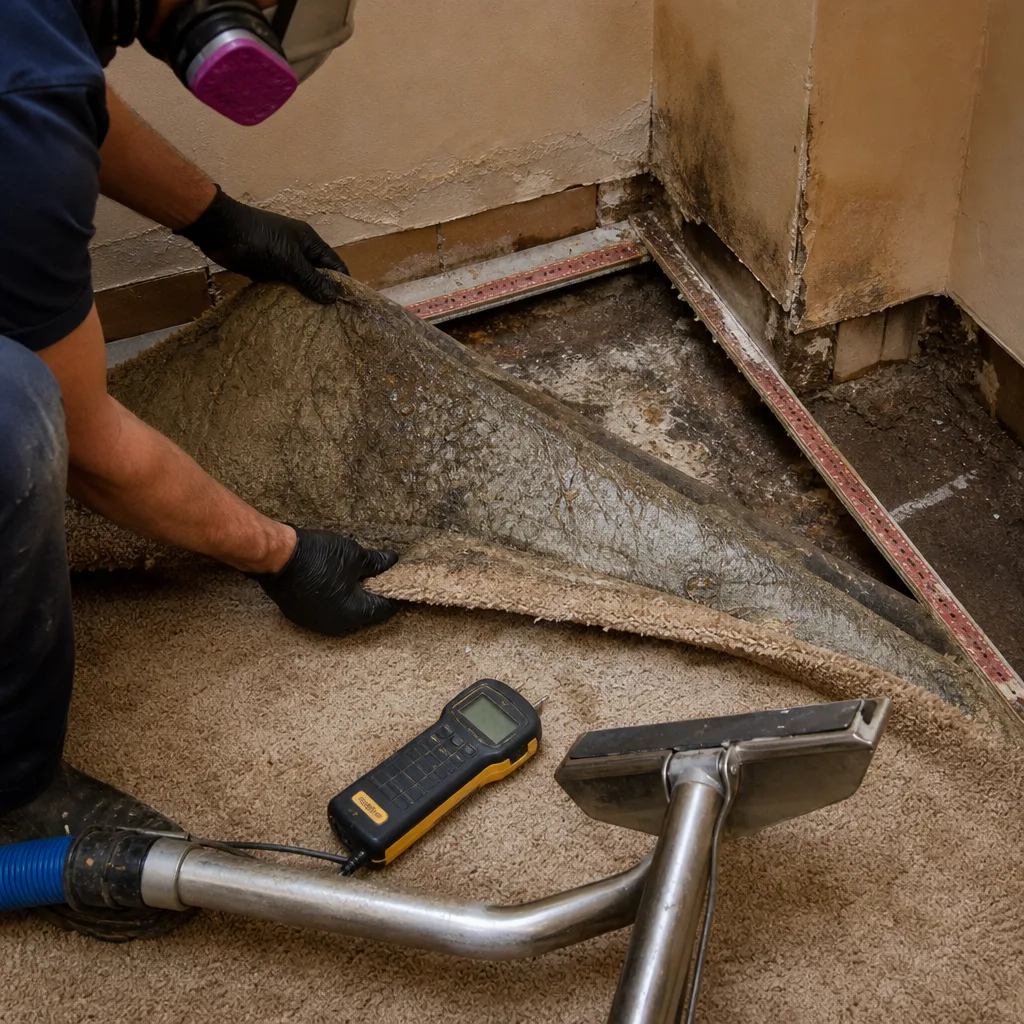
Sparkill Creek flooding is not clean water. It carries clay-heavy sediment from the Hudson tributary system that packs into joist bays and wall cavities, holding moisture long after the surface looks dry. Our flood restoration protocol in Sparkill accounts for that sediment load from the first extraction pass. We don’t just remove standing water; we remove the waterlogged debris that’s already embedded in your framing, because skipping that step is how mold starts behind horsehair plaster.
Emergency Board-Up
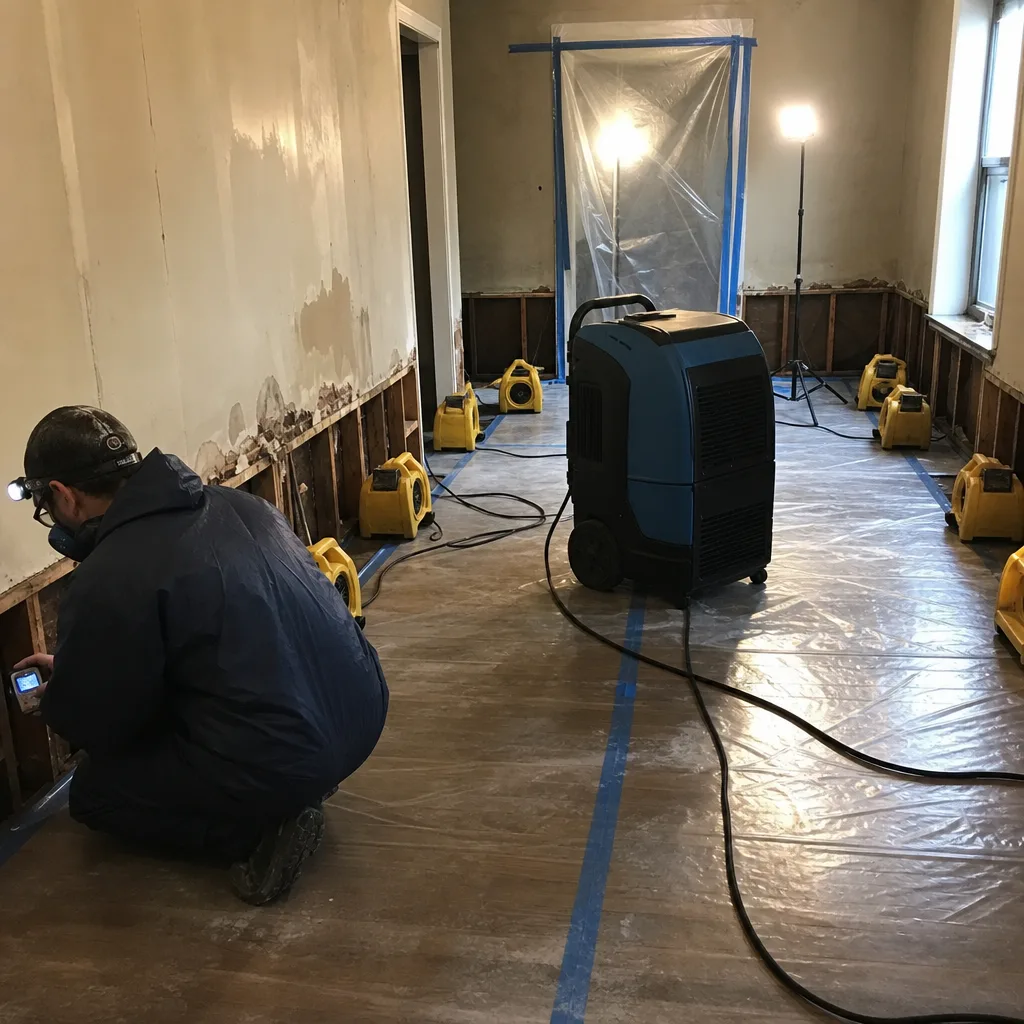
After a storm blows out a window or tears a door off its hinges, the property is open to weather, animals, and anyone walking by. We install temporary board-up within the same visit using plywood and fastening systems rated to hold against the next squall, not just the current calm. When wind damage is the issue, we use wind-rated temporary doors rather than a flat sheet of plywood, because Sparkill’s gap winds will test a weak board-up overnight.
Roof Tarping
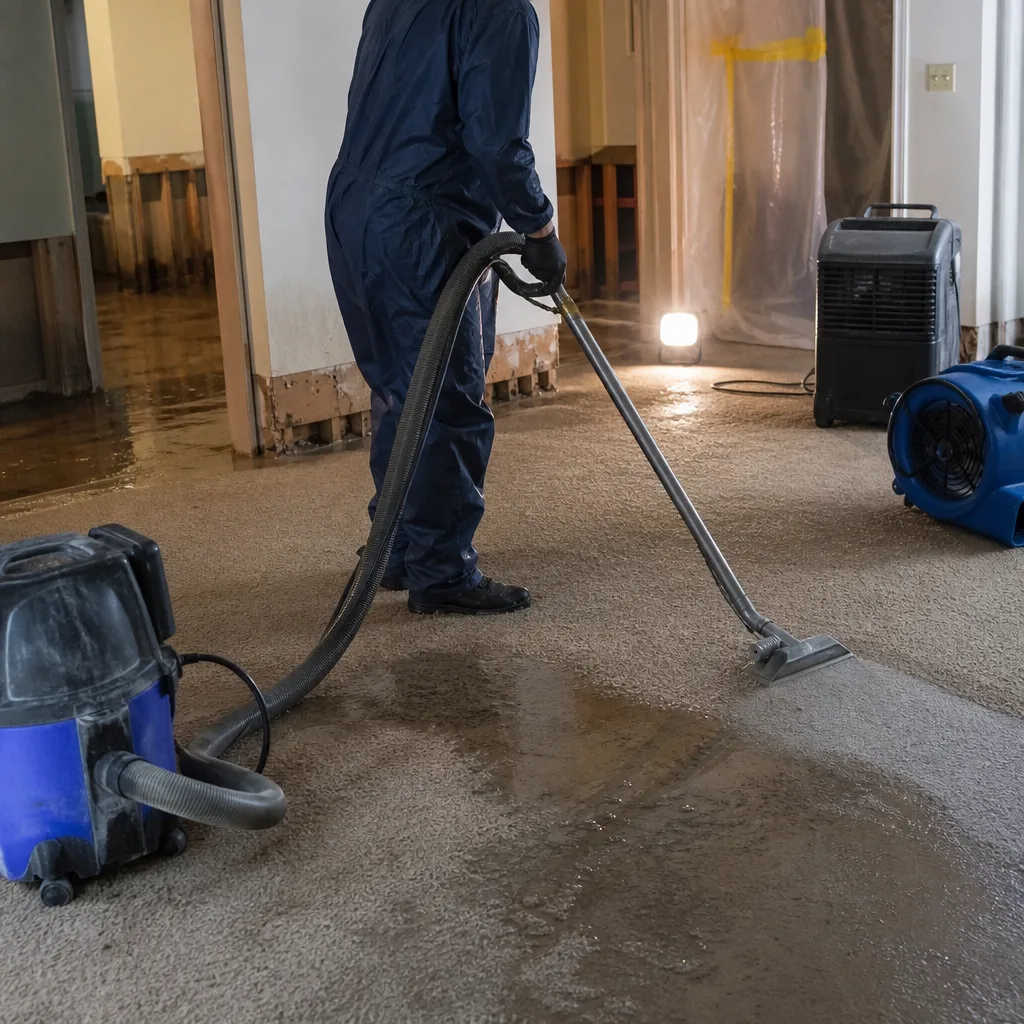
Wind-driven debris and heavy rain expose roof failures fast in Sparkill. We tarp damaged roof sections immediately to stop active water intrusion, then document the damage for the rebuild. The tarp is temporary, but it has to be done right or the next storm turns a patchable problem into a full roof replacement. We secure tarps to the roof deck with furring strips and cap nails, not just tied-down corners.
Debris Removal
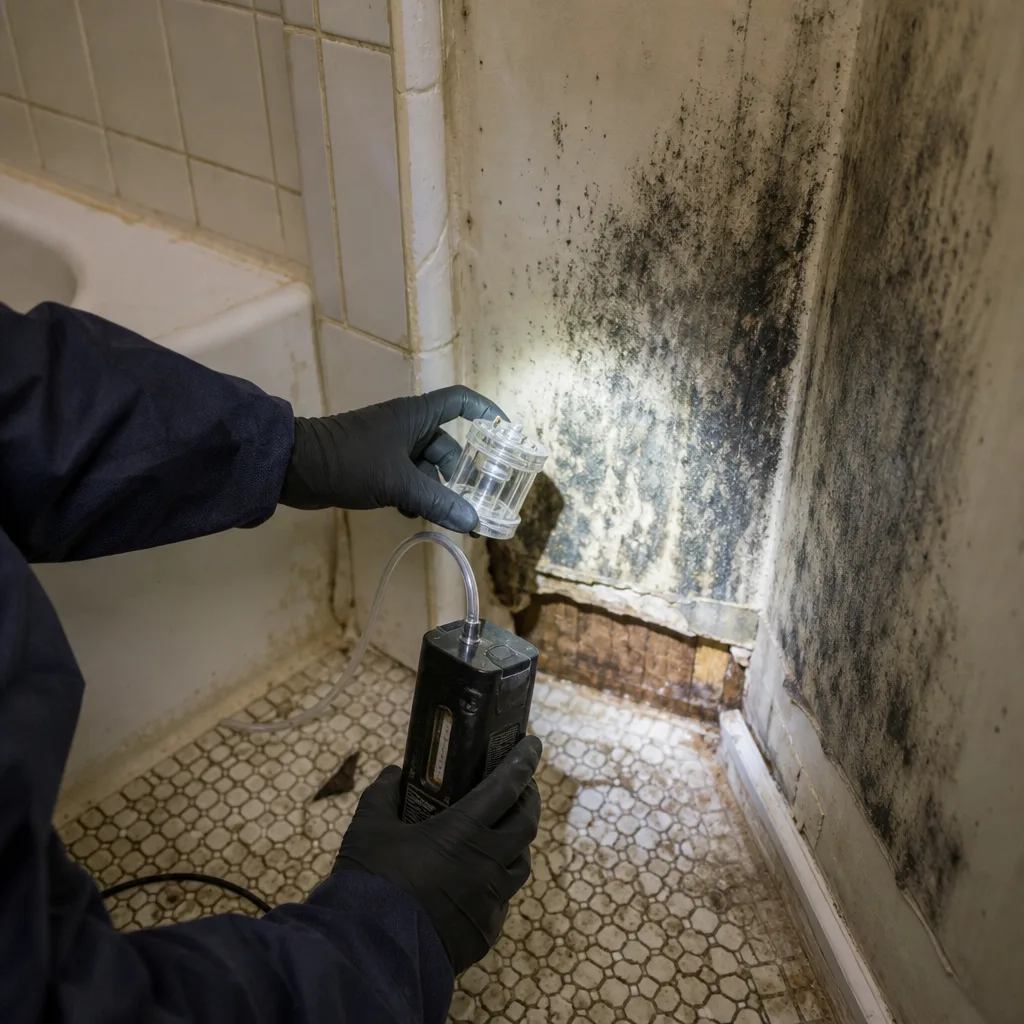
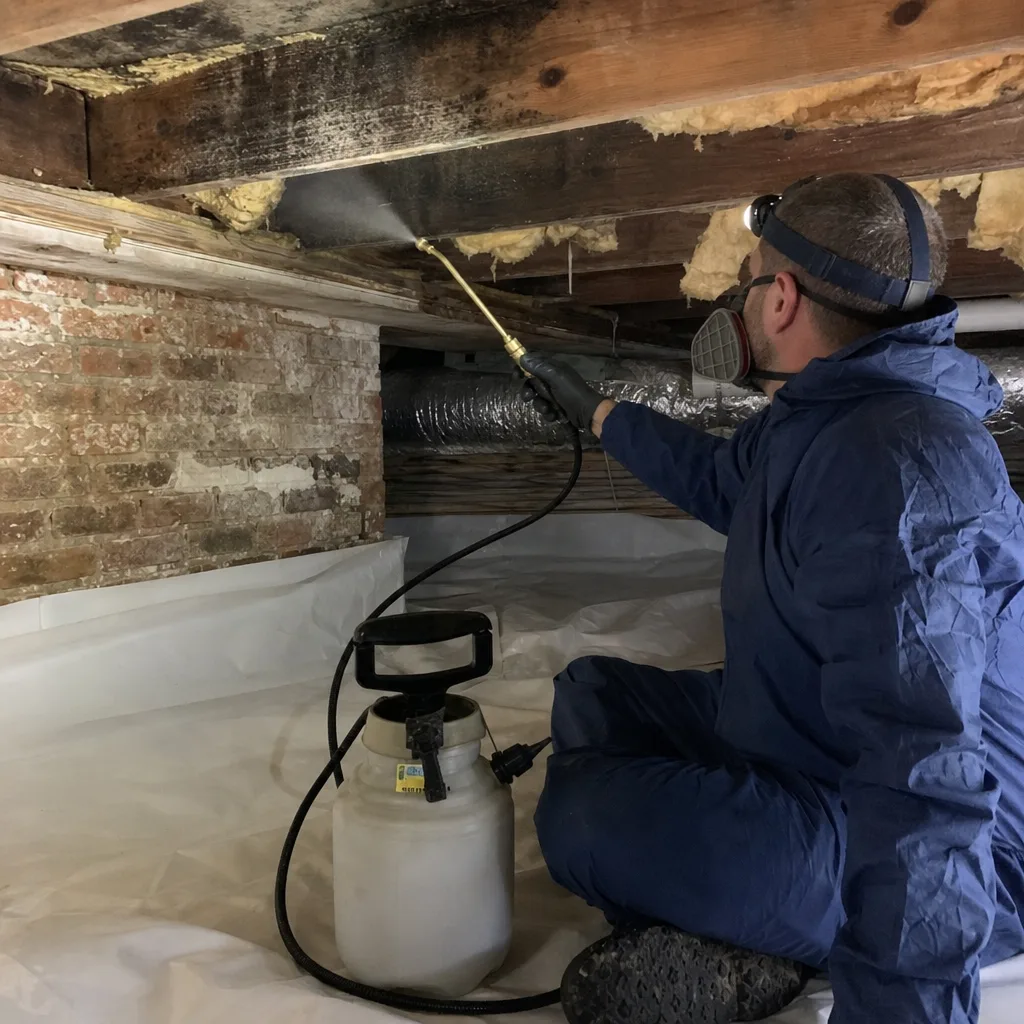
Nor’easters drop limbs, construction material, and creek-borne debris onto Sparkill properties. We clear it safely and sort it for disposal, but we also photograph everything before removal because your insurer wants a record of what hit the house and where it came from. Storm debris removal in Sparkill often means handling waterlogged material that’s already begun to decompose, so we suit up and treat it as contaminated until proven otherwise.
What happens when you call
- 1
A real person answersNo phone trees - you reach a local pro.
- 2
You get an upfront price rangeHonest numbers before anyone is dispatched.
- 3
A background-checked tech heads outLicensed & insured, dispatched right away.
- 4
You approve before work beginsNothing starts until you say go.
Storm & Disaster Restoration Costs in Sparkill, NY
Storm restoration pricing in Sparkill depends on how much water got in, where it went, and how long it sat before we arrived. Here’s what we see in this market: emergency board-up runs $250 to $700 per opening depending on size and wind-load requirements. Roof tarping runs $450 to $1,200 for most residential applications. Flood water extraction with sediment removal runs $1,800 to $5,500 for an average basement with category 3 water. Full structural drying with daily monitoring adds $2,500 to $7,000 depending on square footage and how aggressive the drying needs to be given Sparkill’s high water table. Wind damage door replacement, including the frame and hardware, starts around $1,500 and goes up from there when impact-rated units are required. We give you a written scope before any work starts, so there are no surprises on the bill. Call (917) 924-4221 and we’ll come out, look at the damage, and hand you a line-item estimate you can take to your insurer.
We Also Serve Cities Near Sparkill
Our crews run the same Rockland County routes every day, so we’re never far when the weather turns. We provide the same live-dispatch storm and disaster restoration service to homeowners in Piermont, Tappan, Orangeburg, and Dobbs Ferry. If you’re in one of those communities and standing in water right now, the phone number is the same: (917) 924-4221.
Serving Sparkill, NY - Our Local Coverage Area
We’re based in the Sparkill area and know this community well. Use the map below to see our service coverage - if you’re nearby, we can almost certainly help.
Sparkill Storm & Disaster Restoration Questions, Answered
How does Sparkill Creek backup during a nor’easter affect storm restoration compared to other Rockland County hamlets?
When a nor’easter pushes Hudson River surge upstream, Sparkill Creek loses its outflow outlet and backs up into creek-side properties, creating a compound flood that other hamlets like Pearl River or Tappan don’t face. That means the water entering your basement is riverine backup mixed with orographic runoff, carrying silty sediment into floor joists and wall cavities. Restoration here requires sediment removal and longer drying timelines than a standard rainwater flood. Call (917) 924-4221 if you’re dealing with creek backup right now.
What wind rating should a storm-damaged exterior door meet in Sparkill?
A storm-damaged exterior door in Sparkill should meet a minimum wind-load rating consistent with current New York building code for the Hudson Valley corridor, typically a design pressure rating sufficient for the escarpment’s accelerated gusts. For a Victorian-era frame house that predates modern wind standards, we specify impact-rated or reinforced doors rather than a like-for-like replacement, because the Palisades funnels wind into the hamlet in a way that punishes underbuilt openings. Our team documents the existing frame condition and specifies the door accordingly.
Why does moisture mapping show elevated readings in Sparkill basements even a week after storm water is extracted?
Sparkill’s high water table near the creek keeps groundwater pressing against foundations long after surface water is gone, while the hamlet’s older homes hide moisture behind horsehair plaster and original hardwood. Silty Hudson-tributary sediment packed into joist bays also holds water like a sponge. That’s why we run daily moisture readings and keep dehumidification running until the dry standard is met, not until the calendar says it’s been a week. Call (917) 924-4221 and we’ll bring a moisture meter rather than a guess.
What are the biggest obstacles when restoring a Victorian-era Sparkill home after wind and water damage?
The age of the construction. Victorian-era cottages in Sparkill often have knob-and-tube wiring, galvanized plumbing, horsehair plaster walls, and stone foundations that complicate every phase of restoration. Drying protocols have to account for cavity spaces behind the plaster, and rebuild work routinely uncovers code issues that need correction before the drywall goes back up. Our crews are trained to work with these systems rather than around them, and we scope for those conditions from the first inspection.
How quickly should I get storm damage mitigation started in Sparkill before mold becomes an issue?
Mold can begin colonizing damp building materials within 24 to 48 hours in Sparkill’s climate, especially with the high water table keeping basements humid. Extraction and air movement need to start as soon as it’s safe for a crew to enter, which is why we commit to a 45-minute response time for storm emergencies. The longer the sediment and water sit, the more demolition the final scope requires. Call (917) 924-4221 immediately if water has been in the house for more than a few hours.
Will my insurance cover storm damage from Sparkill Creek flooding?
That depends on your policy. Standard homeowners insurance typically covers wind damage and roof leaks, but creek flooding or riverine backup often requires separate flood insurance or a water backup endorsement. We document the loss carefully to distinguish wind-driven rain entry from creek flood water, which matters for how your adjuster processes the claim. We bill your carrier directly and coordinate with your adjuster, so the coverage question gets answered with documentation, not guesses. Call (917) 924-4221 and we’ll help you sort it out.
Can I stay in my Sparkill home during storm restoration?
It depends on the scope. If the damage is contained to a basement or a single room and the structure is sound, you can often stay while we work, especially after containment is set up. If category 3 water affected living areas, if the electrical system needs to be shut down, or if wind damage compromised the building envelope, we’ll tell you to vacate until the property is safe and sealed. We make that call honestly in the first inspection, not after you’ve already spent a night in a house that’s still drying out.
What should I do in the first 30 minutes after storm water gets into my Sparkill home?
Shut off power to the affected area if you can do so safely without standing in water, move valuables and important documents to a dry floor, and call (917) 924-4221. Don’t run household fans or try to vacuum up creek water with a shop vac; that spreads contaminated sediment and aerosols through the house. Our dispatcher will walk you through what to do while the crew is en route. The first 30 minutes determine whether we’re doing restoration or full reconstruction.
Written by Curt Bowman, Owner at Floodline Restoration Co. of Manhattan, serving Sparkill and surrounding Rockland County communities.