
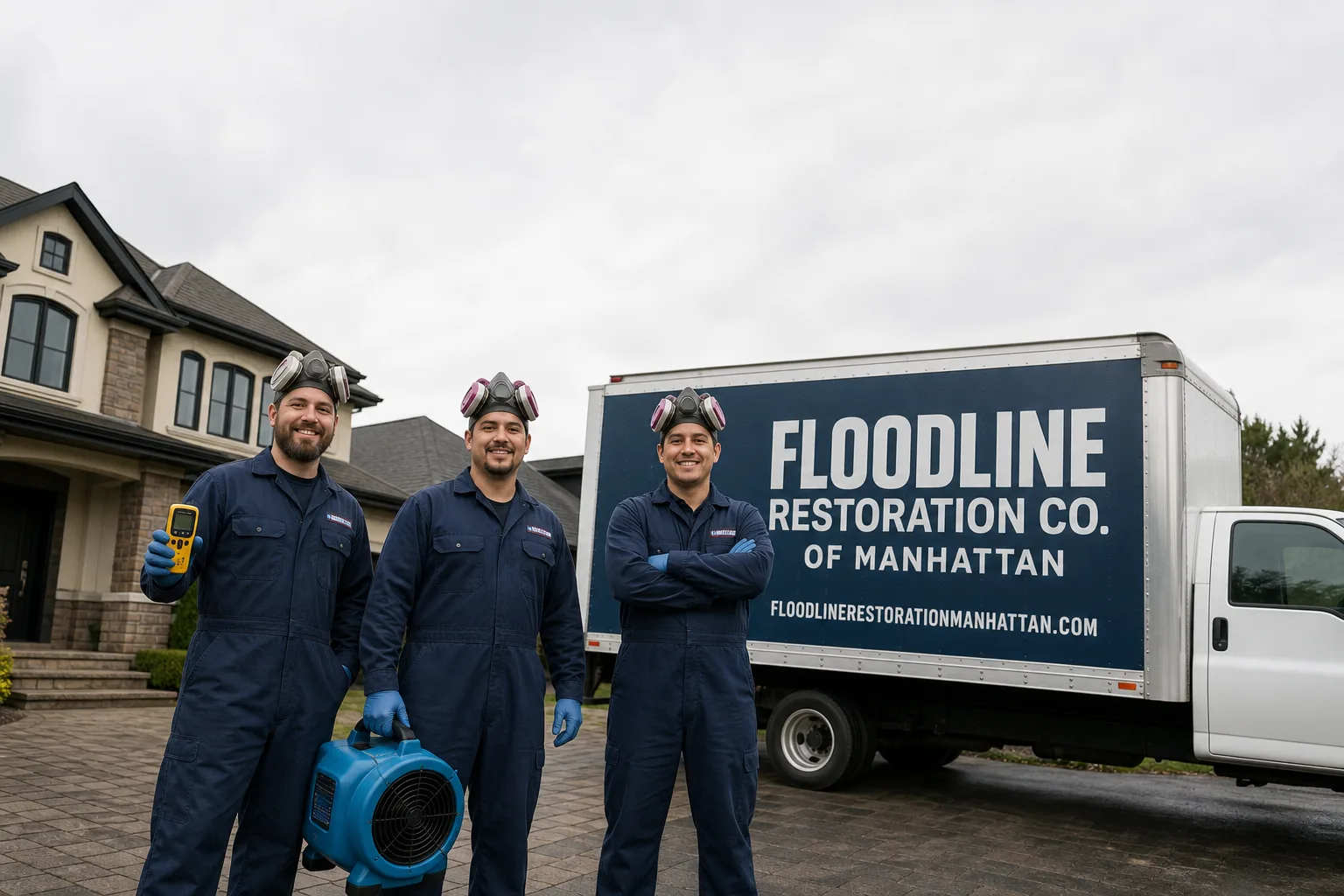
Free visual inspection and a written scope of work before any mitigation begins - photos, moisture readings, and drying logs go in your claim file
The scope we write is the scope we bill. Anything new gets shown to you, in writing, before we touch it.






 Before
 After
After Before
 After
After Before
 After
After24/7 Emergency Storm & Disaster Restoration in Tarrytown
Storm damage in Tarrytown moves fast, and so do we. When a nor’easter drives Hudson River surge up onto Main Street or wind tears a section of roof off a Victorian on Neperan Road, you need a crew that answers the phone at 2 a.m. and gets extraction running the same visit. Call (917) 924-4221 and a live dispatcher picks up, every time. No recording, no callback queue. We dispatch certified crews into Tarrytown’s riverfront blocks and hillside neighborhoods within 45 minutes, because the first hour after water intrusion determines whether you’re drying a basement or rebuilding one. The free visual inspection tells you exactly what you’re facing, in plain terms.
Understanding Storm & Disaster Restoration Severity in Tarrytown Properties
Tarrytown’s housing stock makes storm damage work different here than it is in most of Westchester. The late-Victorian and Edwardian wood-frame homes that dominate the village, built between the 1870s and 1920s, carry original horsehair plaster walls, balloon-frame construction, and galvanized supply lines that have been in service since before indoor plumbing was standardized. When Category 3 floodwater enters a fieldstone basement near the waterfront, the water is not the only problem. Horsehair plaster acts like a wick, pulling moisture up into wall cavities where it hides for weeks. Balloon framing means there is no fire blocking between floors, so stormwater from a roof leak can travel three stories down inside a wall cavity and pool in the first-floor sill plate without ever showing a stain on the ceiling below. Moisture mapping with thermal imaging and hygrometer readings is not optional here. It is the only way to know where the water actually went. Structural drying protocols for Tarrytown properties have to account for original plaster, fieldstone foundation walls that hold moisture differently than poured concrete, and the Hudson River’s persistent valley humidity that slows evaporation. A standard dry-down that works on a 1980s split-level in Elmsford will not hit the dry standard in a Tarrytown riverfront Victorian unless the crew knows what they’re reading.
Why Tarrytown Property Owners Choose Floodline Restoration Co. of Manhattan
- 45-minute response commitment. When storm-surge water is rising in a fieldstone basement, the clock is the whole game. Our crews reach most Tarrytown addresses within 45 minutes of your call, ready to start extraction that same visit.
- 24/7 live answer. A real dispatcher picks up at 2 a.m. on a Sunday. Not a machine, not a triage service that calls you back. You tell us what happened, and we tell you who’s coming and when.
- IICRC-certified crews. Our technicians hold IICRC certifications including WRT for water damage and FSRT for fire and smoke, and they are background-checked and uniformed before they walk through your door.
- Free visual inspection. We assess the damage, document it, and give you a written scope before any work begins. You know what we found, what we recommend, and what it costs.
- Direct insurance billing. Floodline Restoration Co. of Manhattan bills your carrier directly. You never play messenger between us and the adjuster.
- One team from extraction to reconstruction. The same crew that reads the moisture map on day one handles daily readings, hands the log to your insurer, and rebuilds what needs rebuilding. No mid-job handoff to a subcontractor you never met.
Our Storm & Disaster Restoration Process
Inspection & Assessment
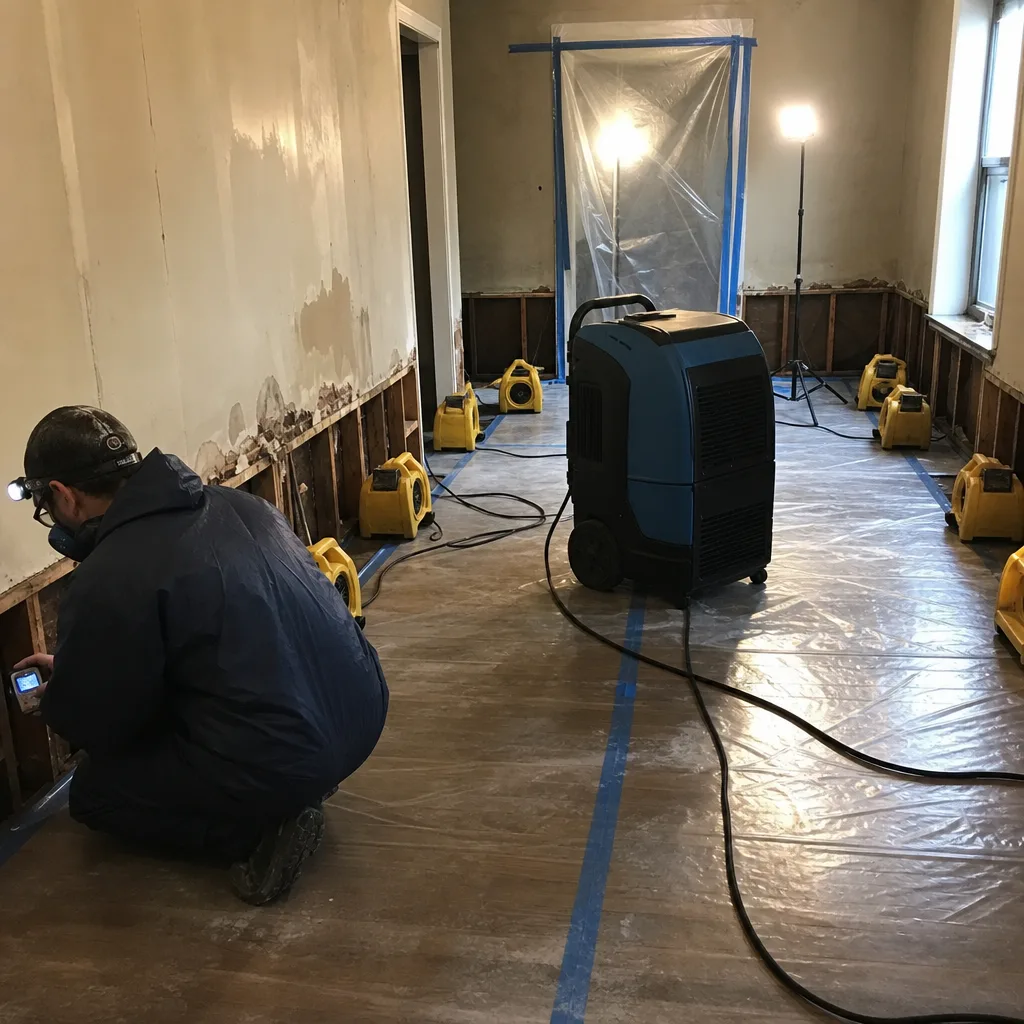
We arrive, walk the property inside and out, and map the full extent of water, wind, or structural damage. Thermal imaging cameras and hygrometers show us what the eye can’t. You get a written scope and a straight answer about what’s urgent and what can wait.
Extraction & Stabilization
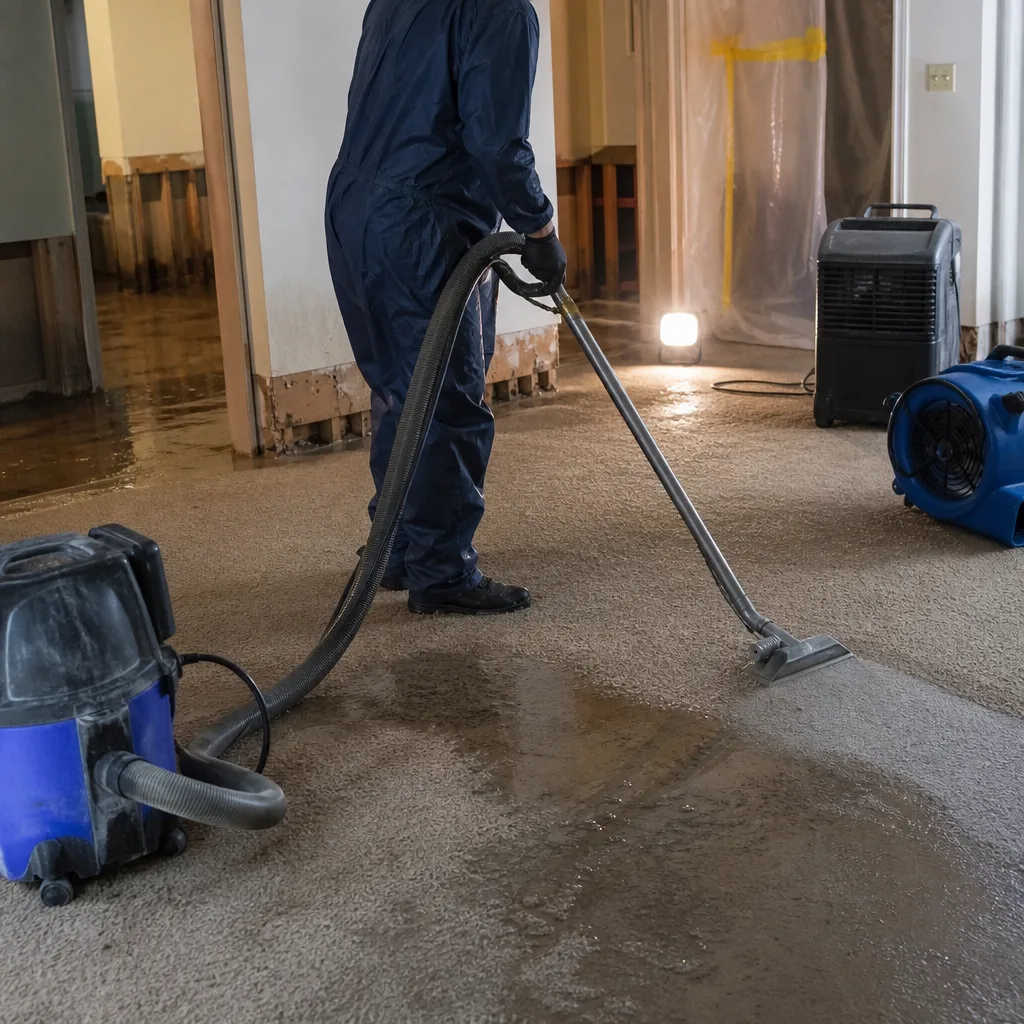
If water is standing, we extract it immediately using truck-mounted and portable extraction units. For wind-broken windows or compromised roofs, we install emergency board-up and roof tarping to stop further water from entering. The goal in hour one is simple: stop the loss from getting worse.
Drying & Dehumidification
We place Dri-Eaz and Phoenix air movers and dehumidifiers in a calculated pattern, not a random one. In Tarrytown’s humid riverfront air, drying takes longer than inland, so we take daily moisture readings and adjust equipment placement until the dry standard is actually met, not assumed.
Cleaning & Sanitization
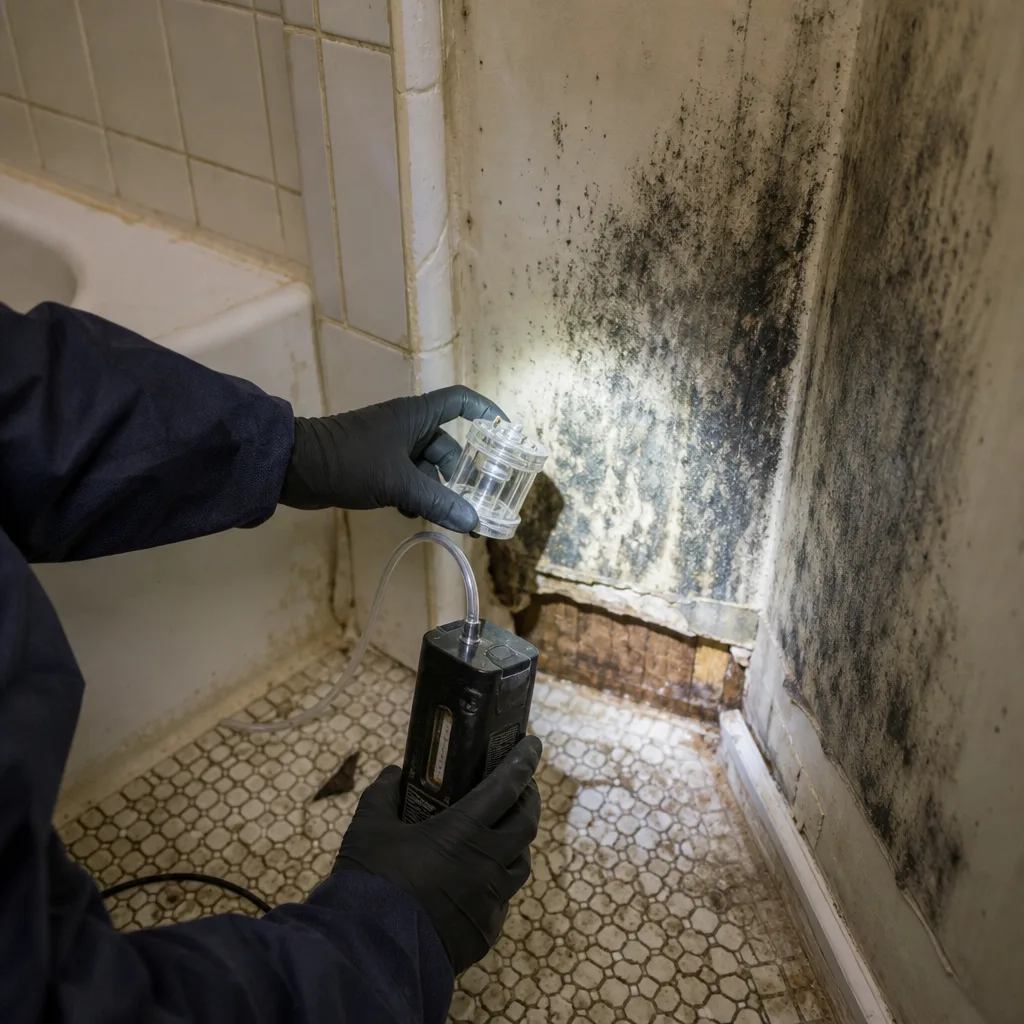
Storm surge is Category 3 water, which means contaminants. We use EPA-registered antimicrobial treatments and HEPA air scrubbers on every affected surface. Contents that can be saved are cleaned, dried, and logged. Contents that can’t are documented for your insurer.
Specialty Storm Treatment
Tarrytown Victorians need extra care: historic plaster stabilization, fieldstone foundation inspection and drying, and coordination with Westchester County historic-district reviewers when protected materials are involved. We handle that so you don’t have to chase permits.
Repairs & Restoration
Once the structure is dry and stable, we rebuild. Drywall, plaster, flooring, trim, roof repairs, whatever the scope calls for. The same Floodline Restoration Co. of Manhattan crew that started the job finishes it. That is the point of the whole thing.
Need Emergency Storm & Disaster Restoration in Tarrytown Now?
Crews minutes away, answering live 24 hours a day. The sooner we start, the less it costs.
Working With Your Insurance Company
Storm damage claims in Tarrytown can get complicated, especially on riverfront properties with FEMA flood-zone requirements and historic-district overlays. We document everything from the first hour: photos of every room before and during mitigation, moisture readings with timestamps, a line-item scope of work that speaks your adjuster’s language. Curt Bowman and our team know how carriers evaluate storm and flood losses. We send documentation directly to your adjuster, answer their questions, and push the claim forward while you focus on getting your house back. Direct insurance billing means we deal with the carrier on the money side. You get a square deal: no surprises on the bill, and a written 90-Day Done Right Promise behind every phase of the work.
What We Provide Your Insurer
- Thorough documentation of the loss
- Photos of all damage, room by room
- Moisture readings and drying logs
- A detailed, line-item scope of work
- Direct coordination with your carrier
Built for Tarrytown’s Loss Calendar
Tarrytown’s storm losses follow the Hudson River’s moods. Winter nor’easters tracking up the river corridor drive wind-driven rain into aging window frames and rooflines with unusual intensity, soaking plaster walls and peeling back flashing on Victorians that have stood since before the railroad came through. January deep freezes burst galvanized supply lines in unheated crawl spaces and fieldstone basements, sending clean water through floors before anyone notices. Spring thaw swells the Hudson and saturates the riverfront blocks near the Metro-North station, where storm drains back up and basements take on water from below as much as from above. Summer thunderstorm downpours hit the hillside neighborhoods hardest: runoff from the slopes above funnels into mid-elevation basements on streets like Neperan Road and Benedict Avenue, where 100-year-old drainage was never designed for modern rainfall intensity. Our Storm & Disaster Restoration teams in Tarrytown keep this calendar in mind year-round. We know what fails first in each season and we arrive already knowing what to look for.
Storm & Disaster Restoration Across Tarrytown’s Neighborhoods
Tarrytown’s geography splits its storm losses into two distinct patterns, and our crews read the block before they read the room. Down near the waterfront, the flat blocks between Main Street and the Hudson, homes sit low and close to the river. Storm surge pushes water up Greene Street and into the basements of homes that have been in families for generations. These are full flood events, not seepage, and they bring sediment, fuel residue, and saltwater into original 1890s fieldstone foundations that were never waterproofed. The hillside streets above Broadway, along Benedict Avenue and Neperan Road, face a different problem: runoff velocity. Rain that falls on the steep yards above these homes channels down driveways and stairwells, hitting foundations with enough force to enter through mortar joints that have been slowly failing for a century. The east side of the village, up toward Sleepy Hollow, catches wind exposure from the river corridor that other neighborhoods miss, which means roof damage and siding blow-offs after nor’easters concentrate there. Each zone gets a different playbook from our crews, because the building stock and the water behavior are different on every block. Our Storm & Disaster Restoration team has walked these blocks for years, and we know which corners flood first, which foundations hold water, and which Victorians have the original plaster ceilings that will come down if drying isn’t done right.
Specialized Storm & Disaster Restoration Services We Offer in Tarrytown
Flood Damage Restoration
When the Hudson surges or a hillside basement floods, our flood damage work starts with extraction and ends with a dry, rebuilt space. We specialize in the Tarrytown-specific problems: saltwater contamination in riverfront basements, fieldstone foundation moisture that re-wets finished walls years later, and plaster drying protocols that preserve historic materials. Category 3 water means antimicrobial treatment is standard on every flood job we do here.
Emergency Board-Up
A broken window or blown-out door on a Tarrytown street can’t wait until Monday. We board up openings with plywood and fasteners that hold in high wind, securing the property from weather, animals, and the kind of opportunistic damage that follows storms. On historic homes, we fasten to trim and framing without damaging the original materials underneath.
Roof Tarping
Wind-driven rain through a torn roof destroys a house from the top down. We install heavy-duty tarpaulins over damaged roof sections, secured with a method that won’t tear shingles or slate when the next wind hits. On Tarrytown’s Victorians, where slate and cedar shingles are historic materials, we anchor tarps to framing points that preserve what’s left of the original roof until permanent repair can be scheduled.
Storm Damage Cleanup
Fallen trees, wind-scattered debris, and flooded yards need to be cleared before restoration can begin. We remove storm debris, pump out standing water, and secure the property so the real work can start. Our cleanup crews work alongside restoration technicians, so nothing gets cleared away that your insurer needed documented.
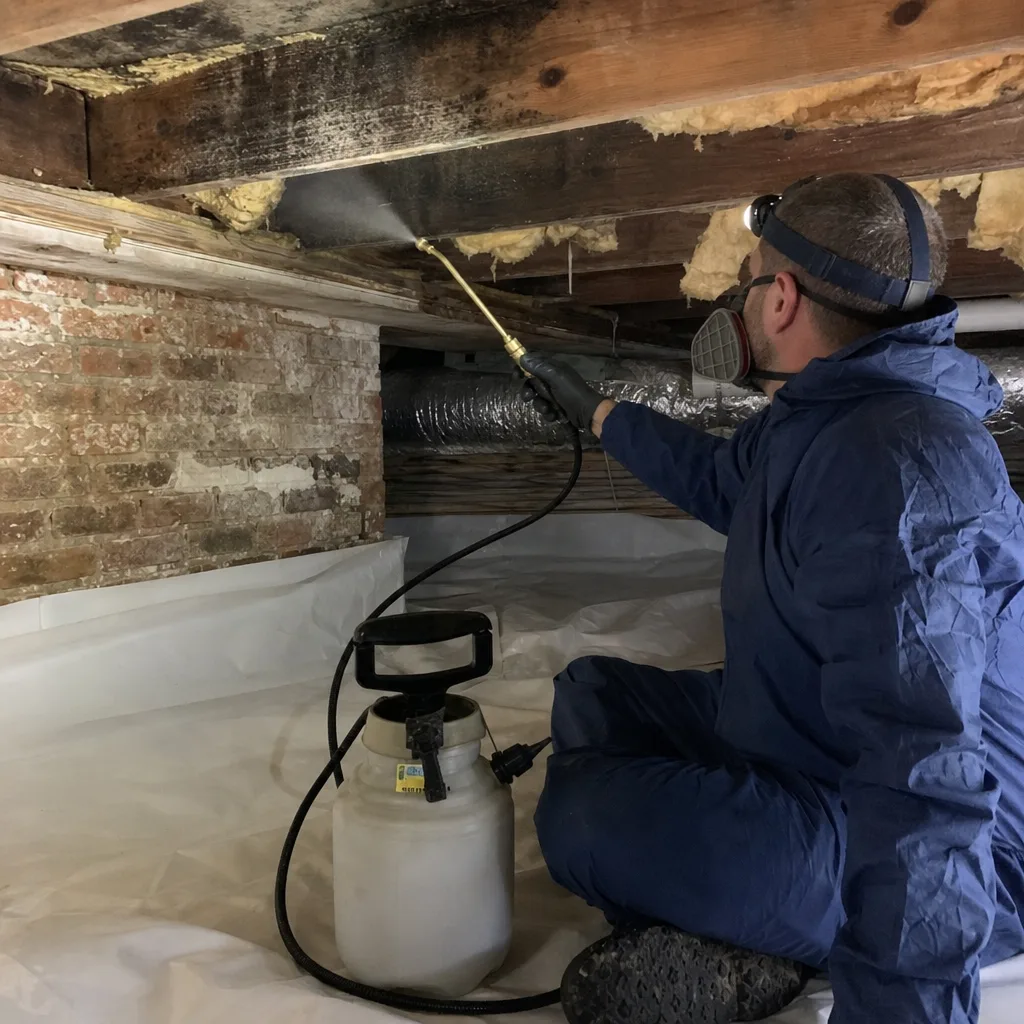
Debris Removal
Waterlogged drywall, ruined insulation, collapsed plaster, and storm-blown debris all have to go before drying can work. We remove demolition debris safely, bag it, and dispose of it according to Westchester County rules. If you need a dumpster on-site for a large loss, we coordinate it.
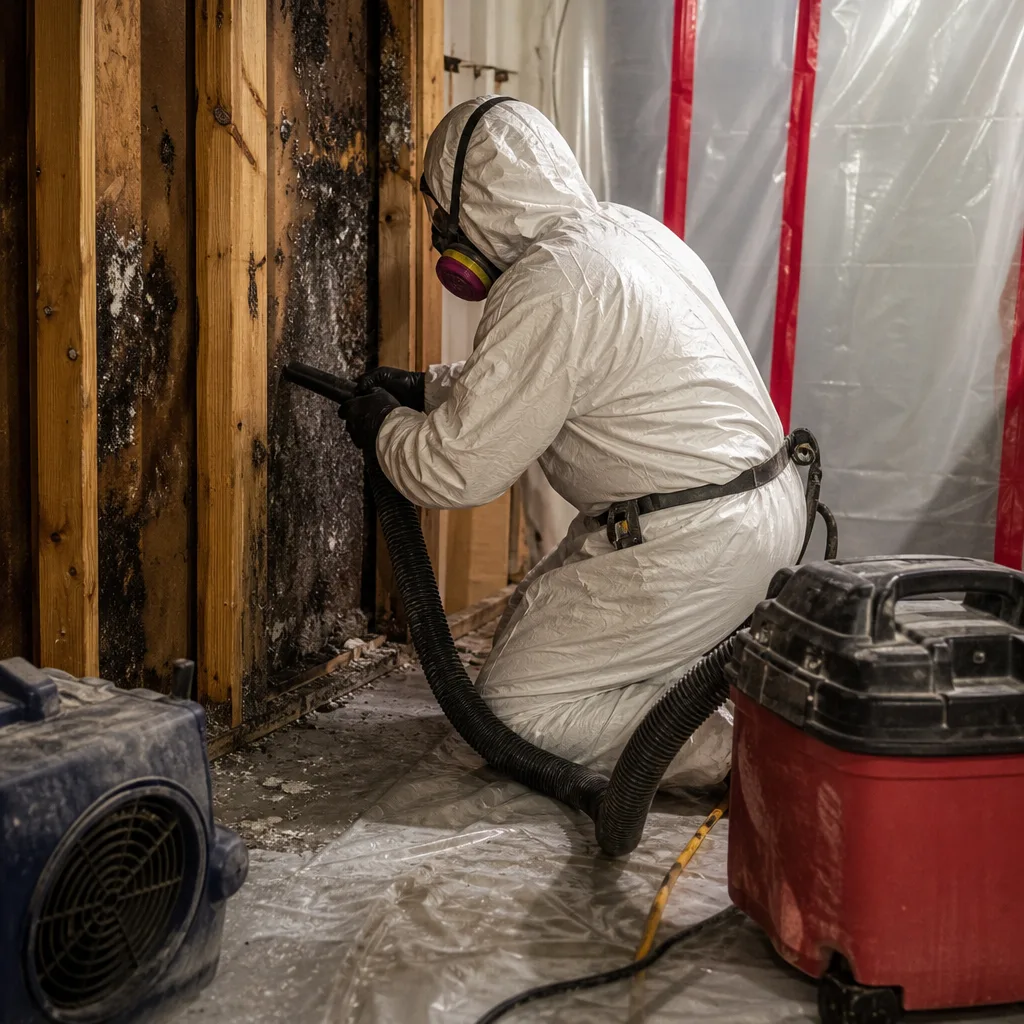
Wind Damage Repair
Nor’easter winds peel back flashing, lift shingles, and tear gutters off fascia boards. We repair wind damage from the roof down, including siding blow-offs, broken windows, and structural damage to porches and trim. On Tarrytown’s historic homes, we match existing materials wherever possible and coordinate with village preservation guidelines.
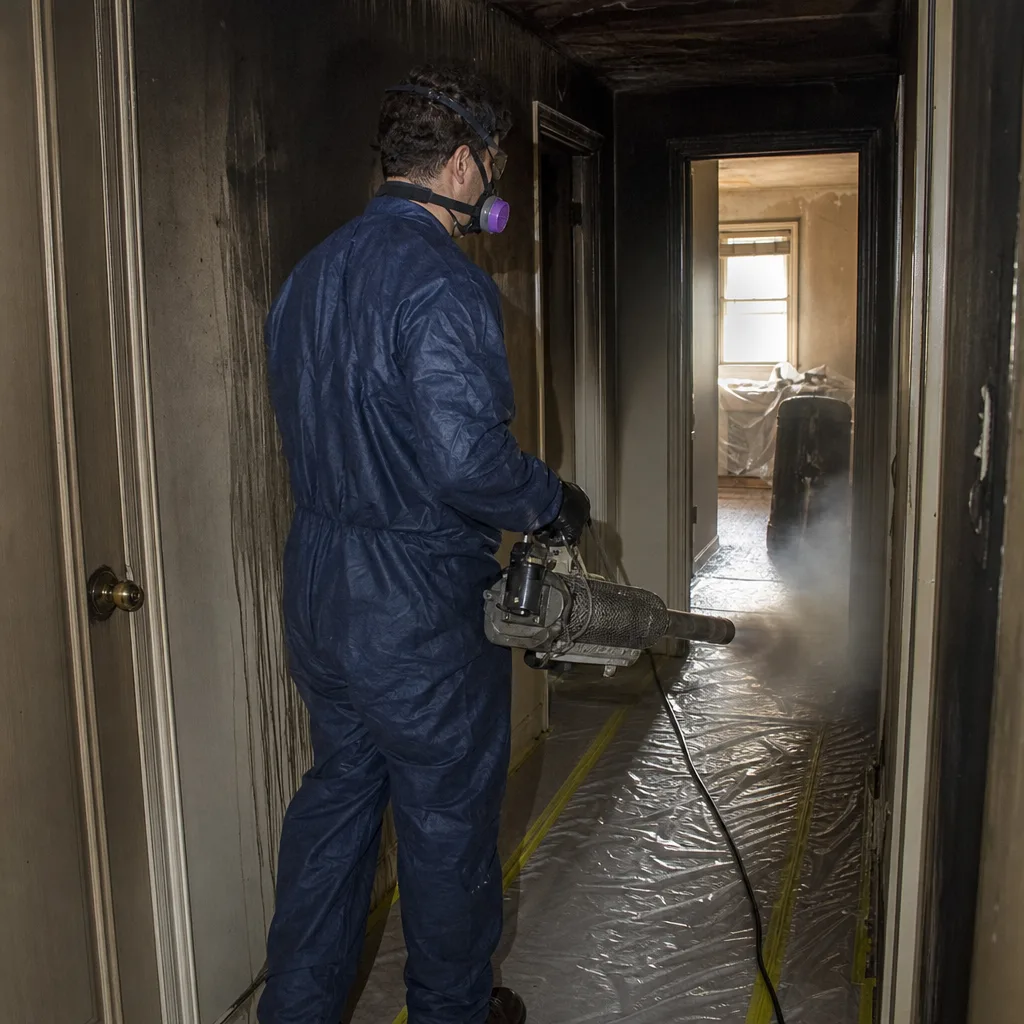
What happens when you call
- 1
A real person answersNo phone trees - you reach a local pro.
- 2
You get an upfront price rangeHonest numbers before anyone is dispatched.
- 3
A background-checked tech heads outLicensed & insured, dispatched right away.
- 4
You approve before work beginsNothing starts until you say go.
Storm & Disaster Restoration Costs in Tarrytown, NY
Storm damage restoration in Tarrytown is priced by the scope, not by the square foot, because a Victorian basement with horsehair plaster and a fieldstone foundation costs more to dry correctly than a 1970s finished basement in Elmsford would. As a working guide: emergency board-up typically runs $300 to $800 per opening, roof tarping runs $400 to $1,200 depending on roof pitch and access, and full flood damage restoration for a Tarrytown riverfront basement, including extraction, drying, antimicrobial treatment, and rebuild, most often lands between $8,000 and $35,000. What moves the price: how long water sat before we arrived, whether Category 3 contamination is present, whether historic plaster has to be preserved or removed, and whether asbestos or lead-paint abatement is triggered on older homes. Insurance covers a significant portion of covered storm losses, especially on riverfront properties with flood policies. The free visual inspection gives you a firm written scope before any work starts, so you know exactly where you stand. Call (917) 924-4221 for an exact quote. Estimates are free, and a live person answers.
We Also Serve Cities Near Tarrytown
Floodline Restoration Co. of Manhattan handles storm and disaster restoration for Tarrytown and the surrounding villages, including Storm & Disaster Restoration in Tarrytown coverage that extends to Elmsford, Hawthorne, Valhalla, and Irvington. Same live dispatch, same certified crews, same 90-Day Done Right Promise on every job.
Serving Tarrytown, NY - Our Local Coverage Area
We’re based in the Tarrytown area and know this community well. Use the map below to see our service coverage - if you’re nearby, we can almost certainly help.
Tarrytown Storm & Disaster Restoration Questions, Answered
How soon after a Hudson River storm-surge event can mold start in a Tarrytown Victorian basement?
Mold can begin colonizing within 48 to 72 hours after storm-surge water enters a Tarrytown Victorian basement, and the Hudson River’s persistent valley humidity on the waterfront blocks shortens that window even further compared to inland Westchester. Horsehair plaster and original fieldstone foundations hold moisture long after visible water is removed, which is why we start antimicrobial treatment during extraction, not after drying. If you suspect water has been sitting more than a day, call (917) 924-4221 immediately for a free inspection.
Does Floodline Restoration handle FEMA flood-zone compliance for Tarrytown riverfront homes during a storm cleanup?
Yes. We review FEMA flood-zone elevation and compliance requirements before we start emergency board-up, debris removal, or structural work on Tarrytown riverfront properties between Main Street and the Hudson. Non-permitted emergency repairs can complicate an existing flood insurance claim or trigger issues at closing years later, so we document the compliance picture up front and coordinate repairs to match what the flood zone requires. Call (917) 924-4221 and we’ll walk you through what applies to your block.
What do you do about original 1890s fieldstone foundations that re-wet after Hurricane Sandy?
We treat them as a known Tarrytown pattern, not a mystery. The blocks between Main Street and the waterfront include homes that flooded during Sandy in 2012, were remediated at the time, but never had the moisture migration out of their original fieldstone foundations fully addressed. We perform structural drying with moisture readings taken directly on the stone, document what’s saturated, and recommend a waterproofing or drainage scope that addresses the foundation itself, not just the finishes in front of it. This is decade-old work being finally done right. Call (917) 924-4221 for an assessment.
Can you tarp a roof on a Tarrytown Victorian without damaging historic slate or cedar shingles?
Yes. We tarp over damaged roof sections on Tarrytown’s Victorians using anchoring methods that fasten to framing members, not through the historic slate or cedar shingles themselves. The tarp is secured to prevent wind lift and secondary water intrusion, but it never gets nailed through the roofing material you’re trying to preserve. When permanent repair is scheduled, we coordinate with Westchester County historic-district preservation guidelines where they apply. Call (917) 924-4221 for emergency tarping any hour.
How do you classify floodwater from the Hudson versus storm runoff in Tarrytown hillside basements?
Hudson storm-surge water is Category 3, meaning it carries silt, fuel residue, salt, and microbial contamination and requires full antimicrobial treatment and content disposal protocols. Storm runoff in hillside basements above Broadway is usually Category 2 or clean Category 1 depending on whether it flowed across yards and driveways first. We classify the water on-site during inspection and document the classification for your insurer, because it changes the scope of cleaning, sanitization, and what can be saved. Call (917) 924-4221 if you’re not sure what came into your basement.
How fast can you actually get to a storm job in Tarrytown?
Our response commitment for Tarrytown is 45 minutes for most addresses. Crews are dispatched from a live call, not a voicemail, and the dispatcher knows the village’s layout well enough to route around flooded underpasses and downed trees. On nights when a nor’easter is hammering the whole river corridor, response may stretch slightly, but we prioritize active water intrusion and structural instability first. Call (917) 924-4221 and we’ll give you a straight arrival window.
Can we stay in the house during storm damage restoration?
Depends on what we find. If water touched Category 3 floodwater, if mold is present, or if structural damage leaves rooms unsafe, we’ll tell you plainly and recommend temporary relocation while we work. In many wind-damage and clean-water cases, you can stay in the unaffected parts of the house while drying runs. The free inspection gives you a clear answer based on what’s actually there, not a blanket policy. Call (917) 924-4221 to find out where you stand.
What should I do in the first 30 minutes after storm damage hits my Tarrytown home?
Call (917) 924-4221 first. Then, if it’s safe: shut off electricity to affected areas, move valuables and small furniture to higher ground, and take photos of the damage before anything gets moved. Do not enter standing water if you can’t see the floor under it, and do not touch electrical panels or outlets that may have been wet. Keep children and pets out of damaged rooms. Our crew will handle the rest from the moment we arrive. The first hour of documentation and extraction is the most valuable hour in the whole claim.
Written by Curt Bowman, Owner at Floodline Restoration Co. of Manhattan, serving Tarrytown with certified storm and disaster restoration crews dispatched live 24 hours a day.