
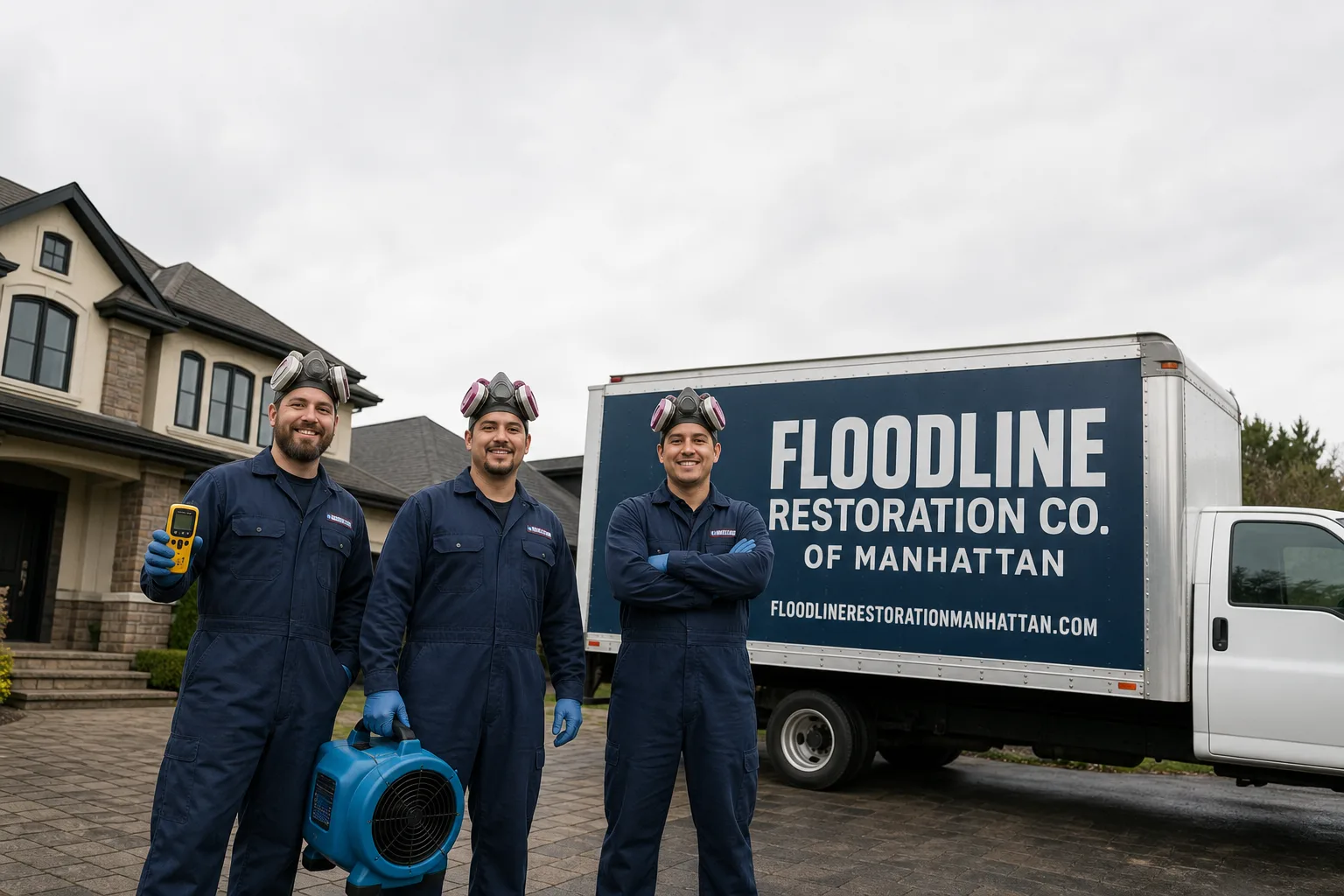
Free visual inspection and a written scope of work before any mitigation begins - photos, moisture readings, and drying logs go in your claim file
The scope we write is the scope we bill. Anything new gets shown to you, in writing, before we touch it.






 Before
 After
After Before
 After
After Before
 After
After24/7 Emergency Storm & Disaster Restoration in Tribeca
Storm damage in Tribeca moves fast, and the first hour sets the entire scope. We answer live at (917) 924-4221 any hour of any day and dispatch certified crews into Tribeca immediately. A free visual inspection tells you what you’re facing before any work is authorized. Water from a storm-surge event or wind-driven rain enters through loading-dock entrances, skylights, and roof membranes within minutes, and in a converted warehouse loft with original timber framing, that water is already wicking into materials that have been drying for 150 years. We get extraction running the same visit, not the next morning. Call (917) 924-4221 and a real person picks up.
Understanding Storm & Disaster Restoration Severity in Tribeca Properties
Tribeca’s building stock changes the math on storm damage severity. Most of the neighborhood is converted 19th-century masonry warehouse construction: unreinforced brick party walls up to 24 inches thick, heavy timber floor systems, and ground-floor loading docks that have been finished into lobbies or live-work space. When category 2 or 3 water enters through those legacy openings, it saturates wood that will hold that moisture for weeks unless drying is aggressive and monitored daily. We classify water by source: category 1 (clean water from supply lines or rain infiltration), category 2 (gray water with contaminants), and category 3 (sewage, river surge, or storm drain back-flow). In Tribeca, post-storm ground-floor flooding almost always lands category 2 or 3 because street-level surge carries whatever the city streets collected. Moisture mapping with thermal imaging and hygrometers gives us exact readings inside those thick masonry walls. Without daily drying logs until the dry standard is met, hidden pockets of moisture rot original wide-plank subfloors from below. That’s why our crews run Dri-Eaz and Phoenix equipment zones sized for 3,000 to 5,000 square foot open floor-throughs, not a standard residential layout. This is a full-cycle restoration from first extraction to finished rebuild, done by the same certified crew.
Why Tribeca Property Owners Choose Floodline Restoration Co. of Manhattan
- 45-minute response commitment. We dispatch from a board, not a sales desk. A crew reaches your Tribeca block quickly because we keep trucks staged for this service area.
- A live person answers, 24/7. You reach a dispatcher on the phone at 2 a.m., not a recording. The same goes for the follow-up call.
- Certified to IICRC standards, including WRT and FSRT. Our technicians are background-checked, uniformed, and trained to handle category 2 and 3 water, soot residue, and microbial contamination.
- Free visual inspection. Before any scope is written, we assess the loss and tell you straight what needs to happen. No charge, no obligation.
- Direct insurance billing. We bill your carrier directly and keep documentation from the first hour. You never play messenger between us and the adjuster.
- One team from extraction to reconstruction. The same crew that sets up drying equipment handles the rebuild. No mid-job handoff, no inherited crew reading someone else’s notes.
Our Storm & Disaster Restoration Process
Inspection & Assessment
We arrive, document the loss, and perform moisture mapping with thermal imaging and hygrometers. In Tribeca’s converted warehouses, we check inside masonry party walls and below original subfloors where hidden moisture travels.
Extraction & Stabilization
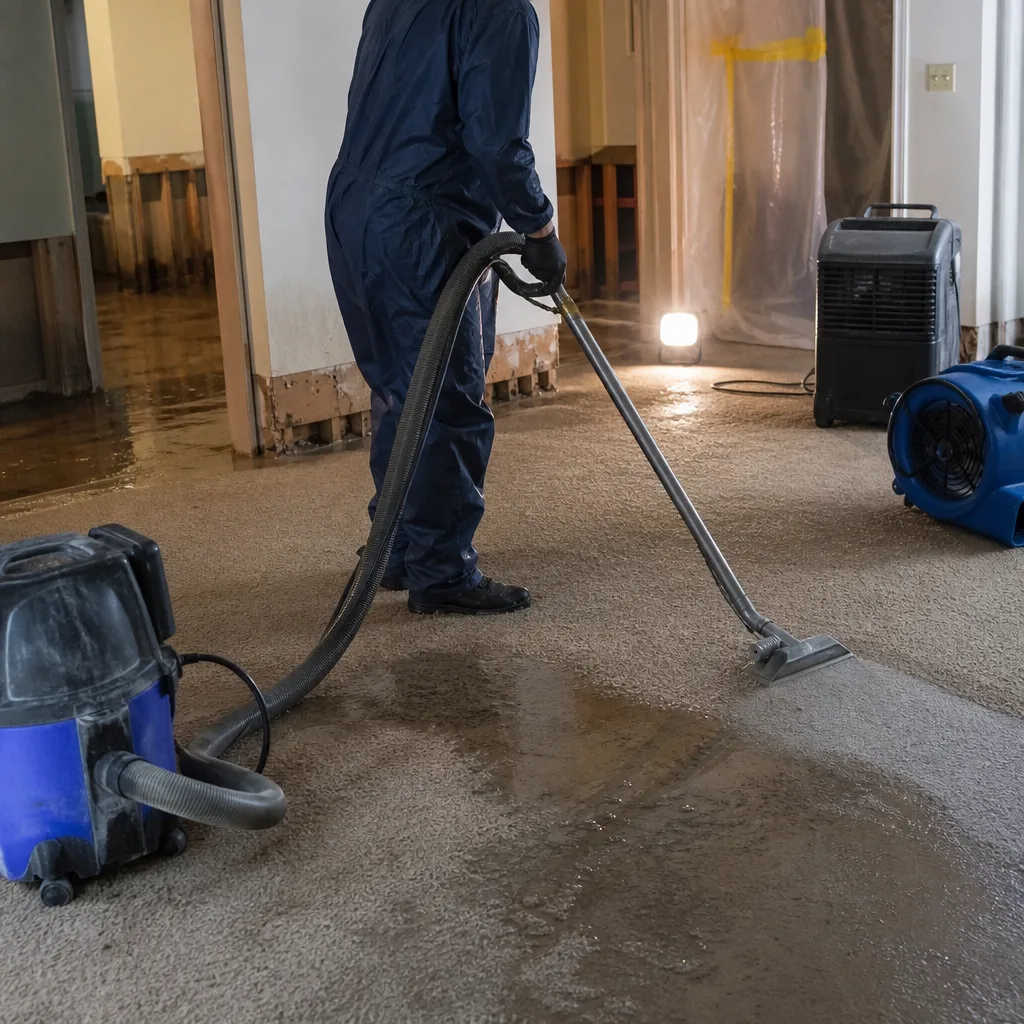
Standing water comes out first, including from below-grade loading-dock areas that flood above the slab. We set containment where category 2 or 3 water has spread, keeping contaminants out of finished living space.
Drying & Dehumidification
We position Dri-Eaz and Phoenix air movers and dehumidifiers in zones sized for open floor-throughs, not standard rooms. Daily readings are logged until the dry standard is met. In thick masonry walls, this takes discipline.
Cleaning & Sanitization
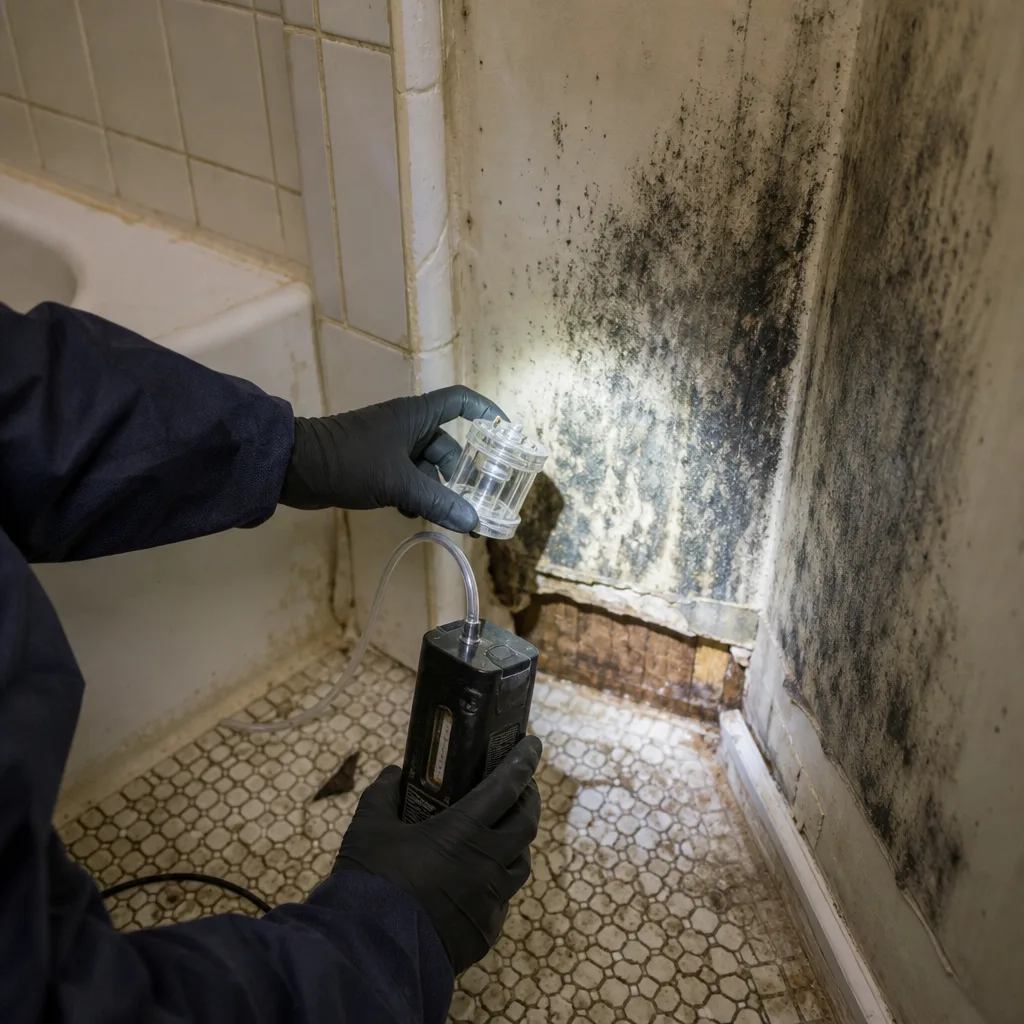
HEPA air scrubbing and antimicrobial treatment address what storm water carried in. We work around what stays and remove what cannot be saved, including saturated plaster on exposed brick.
Storm-Specific Treatment
Emergency board-up and roof tarping happen early, often before drying starts. We secure openings in cast-iron facades and skylights with materials sized to the opening, not a generic sheet.
Repairs & Restoration
The same crew rebuilds what needs rebuilding: subfloor sections, thresholds, wall assemblies. We hand you a moisture log and our 90-Day Done Right Promise in writing when the job is closed.
Need Emergency Storm & Disaster Restoration in Tribeca Now?
Crews minutes away, answering live 24 hours a day. The sooner we start, the less it costs.
Working With Your Insurance Company
Most Tribeca storm and flood events involve a claim, and the paper trail decides how smoothly it goes. We document the loss from the first hour: photos of every room, moisture readings from day one through the final dry standard, and a line-item scope of work written in the pricing language adjusters accept. Our team communicates directly with your carrier so you don’t have to interpret drying logs or defend equipment charges on a phone call at 9 p.m. The claim moves faster when the documentation is unambiguous. That’s the standard we’ve kept for years on storm and disaster restoration jobs throughout this neighborhood.
What We Provide Your Insurer
- Thorough documentation of the loss
- Photos of all damage, room by room
- Moisture readings and drying logs
- A detailed, line-item scope of work
- Direct coordination with your carrier
Built for Tribeca’s Loss Calendar
Tribeca’s storm damage calendar runs on the Hudson River and the Atlantic, not just the calendar year. Late-summer hurricane season brings storm surge that pushes up through street drains and over bulkheads, and those events get into ground-floor loading docks first. Nor’easters from November through March drive wind and heavy rain against cast-iron facades and older roof assemblies, testing flashing and skylight seals that have been on the building since before the conversion. A January deep freeze follows a wet spell, and supply lines inside unheated former freight areas freeze and split. Spring thaw saturates the soil around those rubble-stone and unreinforced-brick foundations, and below-grade floors seep for days even without rain falling. Each season in Tribeca has a signature loss, and each one responds better to crews who know the difference before they open the truck.
Storm & Disaster Restoration Across Tribeca’s Neighborhoods
Tribeca’s restoration geography changes block by block. Along Hudson Street and Greenwich Street, the former textile and produce warehouses have deep below-grade loading docks that back up with storm surge, and our crews regularly set extraction and drying zones in ground-floor lobbies where gallery-hung art and custom kitchens sit within feet of the original entry. Over by West Broadway and Church Street, the loft conversions are more heavily finished above the ground floor, so wind-driven rain through skylights and roof membranes becomes the dominant path, threatening original wide-plank subfloors two or three levels up. Streets near Duane Park and Washington Market Park sit within FEMA Zone AE, where the 2012 Sandy inundation gave property owners a clear picture of what riverine flooding does to century-old foundations. On the low blocks closest to the river, storm drain back-flow pushes through basement drains before street water even reaches the door. Our dispatch board accounts for these differences on every call to Storm & Disaster Restoration in Tribeca, because the right response on one block is the wrong one three blocks away.
Specialized Storm & Disaster Restoration Services We Offer in Tribeca
Flood Damage Restoration
Tribeca’s flood profile is riverine and storm-surge driven, not the interior pipe-burst pattern of a midtown tower. We extract category 2 and 3 water from below-grade loading docks, ground-floor lobbies, and basement spaces, then run drying zones sized for heavy timber and masonry. Our Storm & Disaster Restoration team tracks moisture in 24-inch party walls daily until readings return to pre-loss levels.
Storm Damage Cleanup
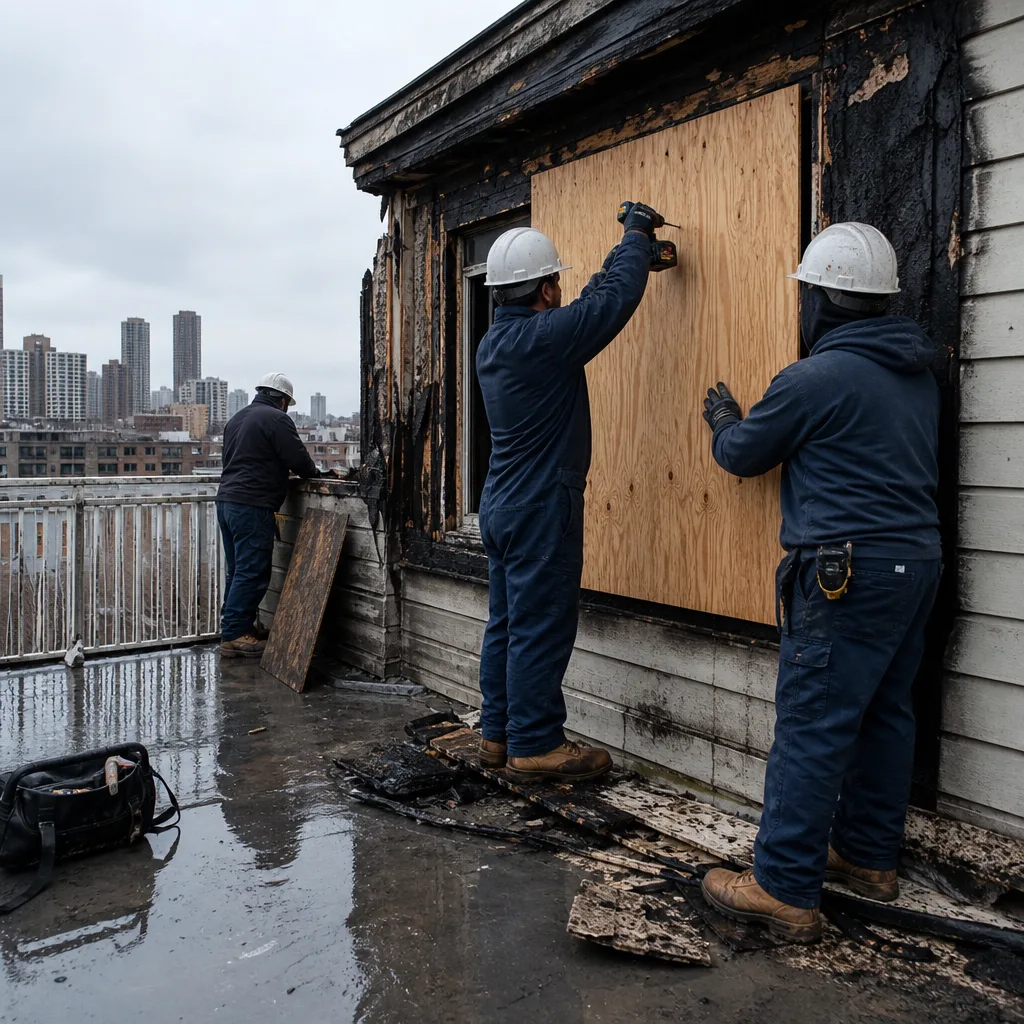
After high winds and heavy rain, Tribeca buildings collect debris in odd places: rooftop chimneys drop brick onto lower roofs, and cast-iron facade elements loosen. We clean and secure the envelope, remove storm debris, and address the water that entered before cleanup even started. Every job gets a documented scope before work begins.
Emergency Board-Up
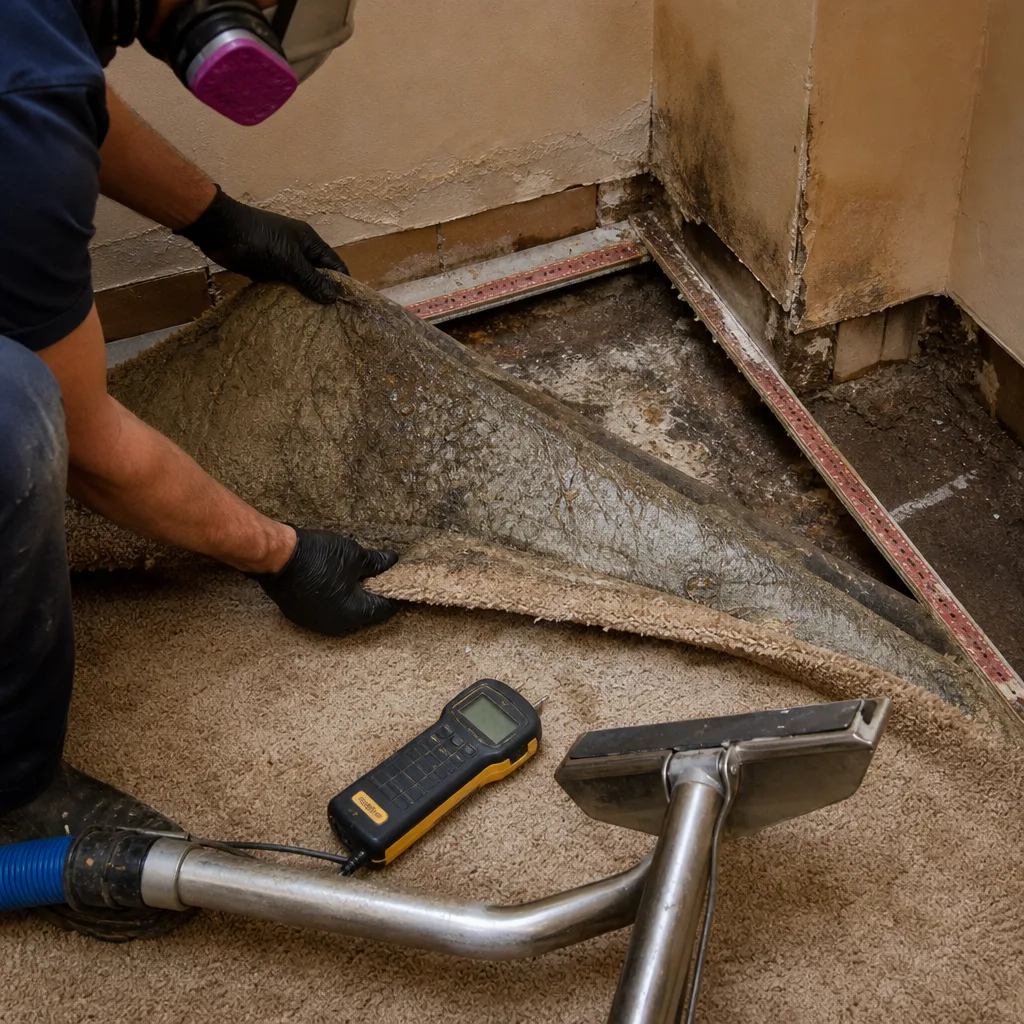
Broken ground-floor windows on a former loading-dock entry are an open invitation to damage and intrusion. We board openings with materials cut to the actual opening, not a generic sheet, and secure them so the building is weather-tight and safe. Board-up is often the first step on a storm-damaged Tribeca loft, before drying can even be planned.
Roof Tarping
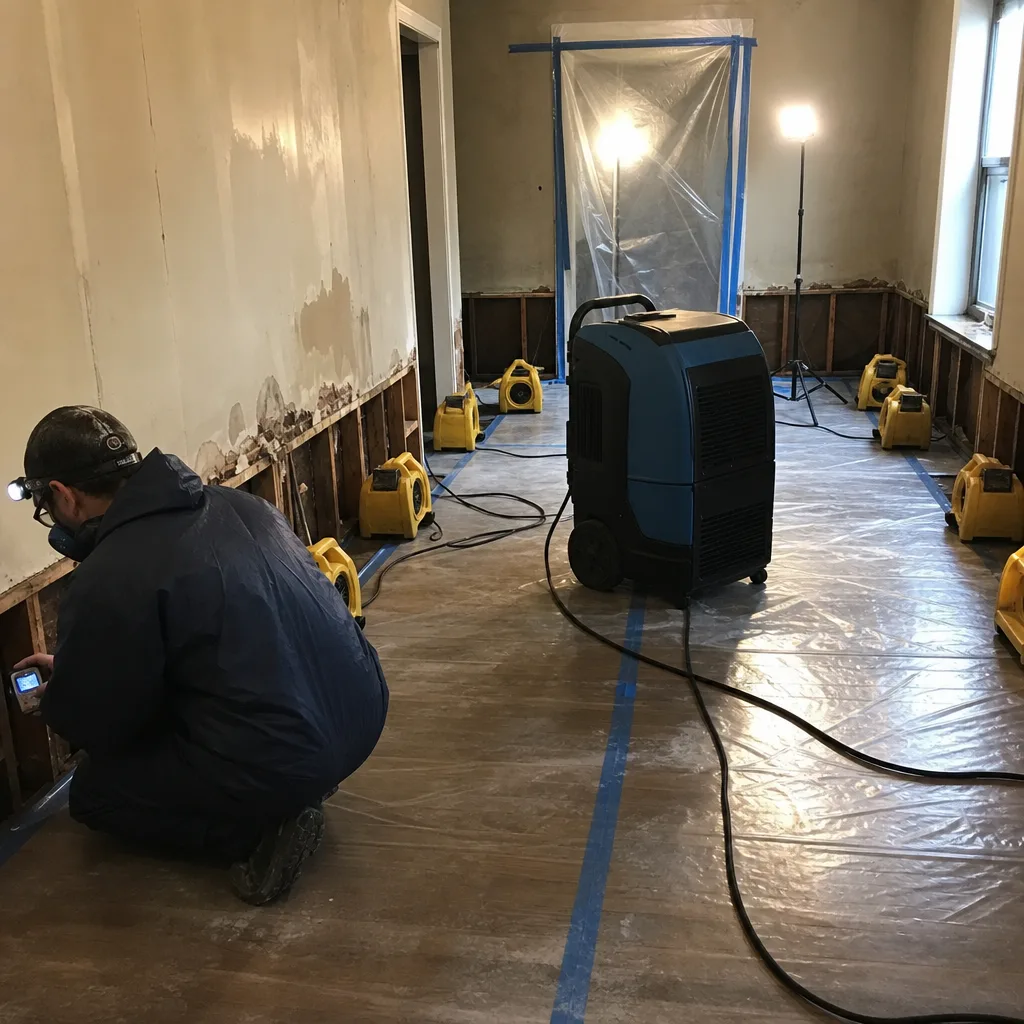
Tribeca’s older roofs often feature parapet details and skylight wells that fail in nor’easters. We tarp damaged roof areas with weight and tie-down patterns that hold in wind, buying time for a proper roofing scope. Tarping stops the active leak so interior drying can begin without fighting new water.
Debris Removal
Storm debris in a Tribeca loft is not yard waste. It’s saturated plaster, timber fragments, broken glass, and material that belongs to a 150-year-old building. We remove what cannot be saved, document everything for the claim, and work around the finishes that remain, including high-value kitchens and installed art.
What happens when you call
- 1
A real person answersNo phone trees - you reach a local pro.
- 2
You get an upfront price rangeHonest numbers before anyone is dispatched.
- 3
A background-checked tech heads outLicensed & insured, dispatched right away.
- 4
You approve before work beginsNothing starts until you say go.
Storm & Disaster Restoration Costs in Tribeca, NY
Storm restoration pricing in Tribeca runs higher than the metro average because the work is slower and more exacting. A typical emergency board-up for a ground-floor loading-dock entry runs $400 to $900, depending on the opening and access. Roof tarping for a nor’easter breach typically lands between $600 and $1,400. Flood damage restoration on a ground-floor lobby with category 3 water and masonry wall drying commonly runs $6,500 to $18,000, and an open floor-through with saturated wide-plank subfloor and multiple drying zones can reach $30,000 to $50,000 before reconstruction begins. What moves the price: whether the water is category 1 or 3, how much of the floor-through is affected, and whether original timber and plaster require selective demolition versus full removal. Direct insurance billing keeps the homeowner out of the payment middle. A free visual inspection gives you a firm written scope before any work is authorized. Call (917) 924-4221 and we’ll walk the loss with you.
We Also Serve Cities Near Tribeca
Our crews also respond to storm and disaster restoration calls in nearby areas, including Fairview, Harrison, East Bronx, and Hunts Point. If you’re just outside Tribeca and water is moving, call (917) 924-4221 and we’ll tell you straight whether we can reach you this hour.
Serving Tribeca, NY - Our Local Coverage Area
We’re based in the Tribeca area and know this community well. Use the map below to see our service coverage - if you’re nearby, we can almost certainly help.
Tribeca Storm & Disaster Restoration Questions, Answered
How do you dry out a Tribeca loft with 150-year-old timber beams without damaging the original wide-plank subfloor?
We dry heavy timber and wide-plank subfloors slowly and deliberately, using daily moisture readings from probes set into the wood, not just surface meters, so the material stabilizes without cupping or splitting. In a Tribeca loft, that means running Dri-Eaz and Phoenix dehumidifiers and air movers in zones for seven to fourteen days, not the two to three days a drywall-and-plywood apartment needs.
Why does Tribeca’s ground-floor flooding from the Hudson River require different containment than a typical Manhattan high-rise pipe burst?
Riverine surge brings category 3 water with sewage, street contaminants, and debris into a space that sits inches above grade. A high-rise pipe burst is often category 1. Containment for Tribeca ground-floor flooding has to isolate contaminated water from the rest of the open floor-through, including the air, so we set negative-pressure HEPA zones immediately.
Can you restore a flooded Tribeca basement with unreinforced rubble-stone foundation walls that predate modern waterproofing?
Yes, but the drying is managed around the wall, not against it. Rubble-stone and unreinforced brick foundations hold moisture in mortar joints and irregular cavities. We map moisture through the wall thickness with thermal imaging, set dehumidification to pull humidity out of the air, and keep daily logs until the dry standard is met, which can take two to four weeks in a below-grade Tribeca basement.
What is the right way to handle storm debris removal from an open-plan Tribeca loft with $80,000 custom kitchens?
We section off the wet zone with containment and remove debris without carting it through finished areas. The custom kitchen stays in place, wrapped and protected. Debris leaves through the nearest exterior access, often the original loading-dock entry, and all removal is documented for your carrier.
How soon after a Tribeca storm flood do you need to start water extraction to save the original timbers?
The first 24 hours determine much of the outcome, and the first hour most of all. Original timber that has been saturated before starts wicking moisture into end grain and along grain within minutes. Extraction the same visit, not the next day, is the difference between drying and demolition.
How fast can someone actually get here after I call?
We commit to a 45-minute response for crews dispatched into Tribeca. A live dispatcher answers at (917) 924-4221, confirms the address, and sends a crew immediately. Most emergency mitigation begins the same visit.
Will my insurance cover storm and flood restoration in Tribeca?
Most storm-related water damage is covered under standard homeowner policies, but riverine flood surge often requires a separate flood policy, especially inside FEMA Zone AE where much of Tribeca sits. We document the loss and bill your carrier directly, and our line-item scope is written to match adjuster pricing language.
What should I do in the first 30 minutes after storm water gets into my Tribeca property?
Call (917) 924-4221 first, then if it’s safe, shut off power to the wet area at the panel and move what you can lift to higher ground. Do not enter standing water that may be in contact with electrical systems or that may be category 3 water from street surge. We handle extraction, containment, and the documented scope.
Written by Curt Bowman, Owner at Floodline Restoration Co. of Manhattan, serving Tribeca and the surrounding area since 2010.