
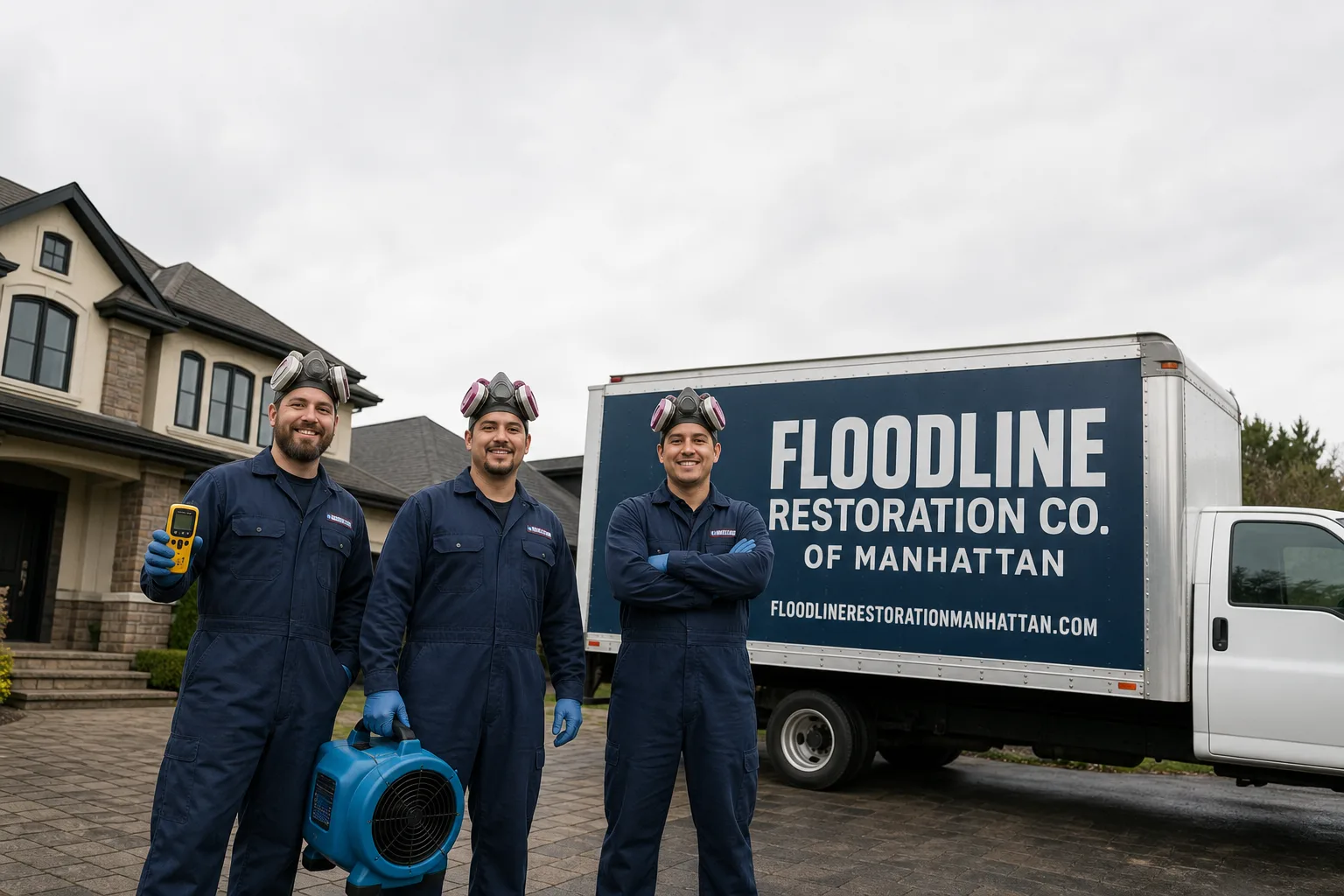
Free visual inspection and a written scope of work before any mitigation begins - photos, moisture readings, and drying logs go in your claim file
The scope we write is the scope we bill. Anything new gets shown to you, in writing, before we touch it.






 Before
 After
After Before
 After
After Before
 After
After24/7 Emergency Reconstruction & Cleanup in Tribeca
When a Tribeca loft takes on water from a backed-up loading dock or a nor’easter pushes the Hudson over its bulkhead, the first call you make should reach a live person. Floodline Restoration Co. of Manhattan answers the phone 24 hours a day, every day, and our crews are minutes from Tribeca’s warehouse-converted buildings. Call (917) 924-4221 the moment you see water or fire damage. A free visual inspection happens the same day, and we’ll tell you honestly whether you need full reconstruction or a targeted cleanup. The first hour matters more in Tribeca than almost anywhere else in Manhattan. Water moving through a former loading-dock entrance saturates 150-year-old timber joists quickly, and every hour of delay pushes moisture deeper into unreinforced masonry walls that can hold it for weeks. We start extraction the same visit, not the next day.
Understanding Reconstruction & Cleanup Severity in Tribeca Properties
Not all reconstruction jobs in Tribeca are equal. We classify water by its source. Category 1 is clean water from a supply line. Category 2 carries contaminants from appliances or sump failures. Category 3, the most serious, is black water from street flooding, sewage backup, or the Hudson itself. In Tribeca, Category 3 is the one we see most often on ground floors because former loading docks sit inches above sidewalk grade. When that water hits original wide-plank subfloors laid over 1880s joists, it wicks sideways into joist bays and upward into slow-drying timber ceiling beams. Standard air movers cannot reach moisture trapped inside 24-inch-thick masonry party walls. We use moisture mapping with penetrating meters, thermal imaging, and daily hygrometer readings to find hidden saturation behind exposed brick. The goal is a dry standard measured in writing, not a guess. Without that, you get mold bloom behind brick walls months after the surface feels dry. Severity in Tribeca is driven by building age, open floor plates up to 5,000 square feet, and the neighborhood’s position inside FEMA Zone AE, the Special Flood Hazard Area.
Why Tribeca Property Owners Choose Floodline Restoration Co. of Manhattan
- 45-minute response commitment. We dispatch from our New York City office with crews staged to reach Tribeca fast. The truck rolls when we hang up.
- 24/7 live answer, never an automated system. A live dispatcher picks up at 2 a.m. on a Sunday. Not a recording. Not a callback service.
- IICRC-certified crews. Our technicians hold WRT, FSRT, and AMRT certifications. They also train to RIA and IFA standards. Background-checked and uniformed on every job.
- Free visual inspection. We assess the damage, take moisture readings, and tell you what you actually need. No pressure. A written scope follows.
- Direct insurance billing. We communicate with your adjuster, provide the documentation they ask for, and bill the carrier directly when coverage applies.
- One team from extraction to reconstruction. The same certified crew that reads the moisture map on day one handles daily readings, dries the structure, and rebuilds what needs rebuilding. No mid-job handoff to a stranger.
Our Reconstruction & Cleanup Process
Inspection & Assessment
We walk the affected areas with thermal imaging and penetrating moisture meters. We map saturation across floors, walls, and joist bays. You get a written scope of work and a firm price before we start, agreed in writing.
Extraction & Stabilization
We remove standing water using professional-grade extraction units. We set containment where needed to protect unaffected areas. Galleries, kitchens, and finished lobbies are protected before dirty equipment ever enters.
Drying & Dehumidification
This is where Tribeca lofts demand more than standard Water Damage Restoration - Tribeca equipment staging. Open floor-throughs up to 5,000 square feet require multiple Dri-Eaz desiccant dehumidifiers and Phoenix air movers positioned to reach distant corners. We take daily readings and log them until the dry standard is met.
Cleaning & Sanitization
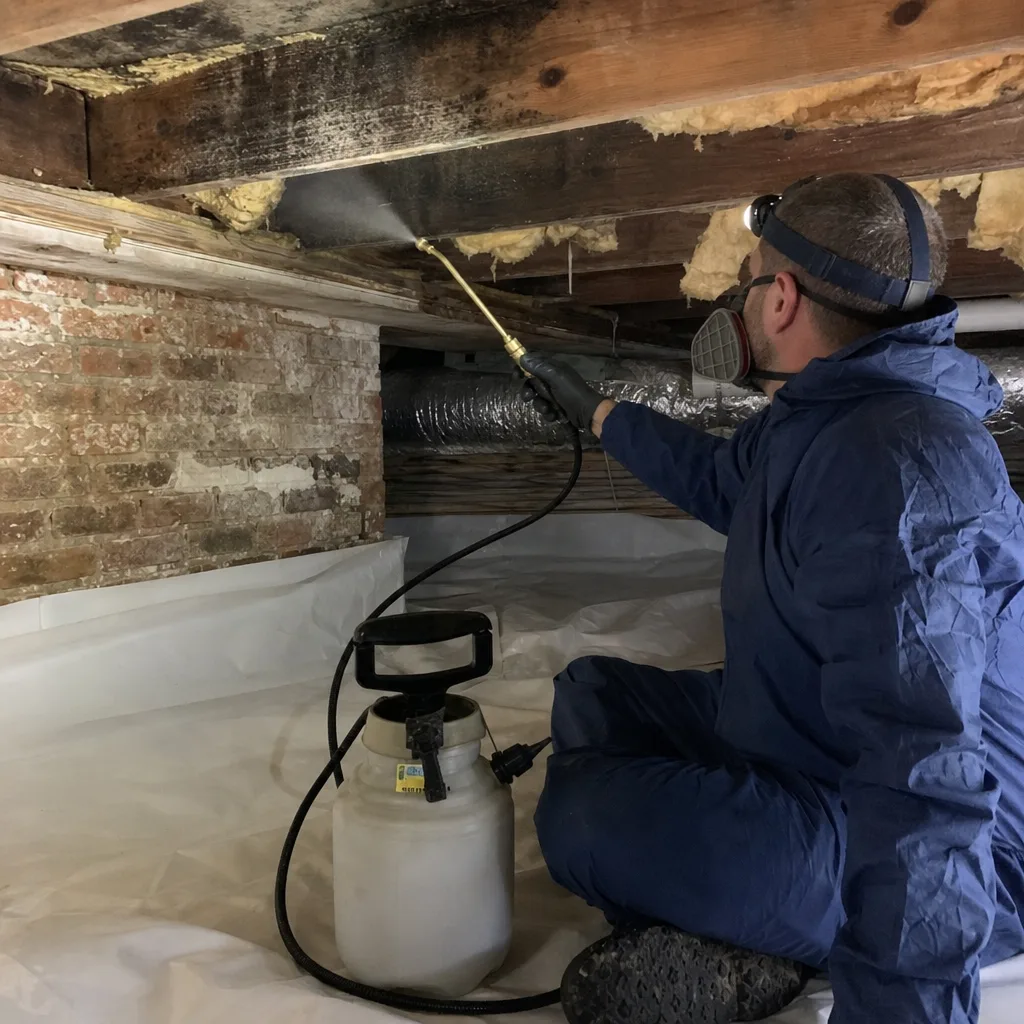
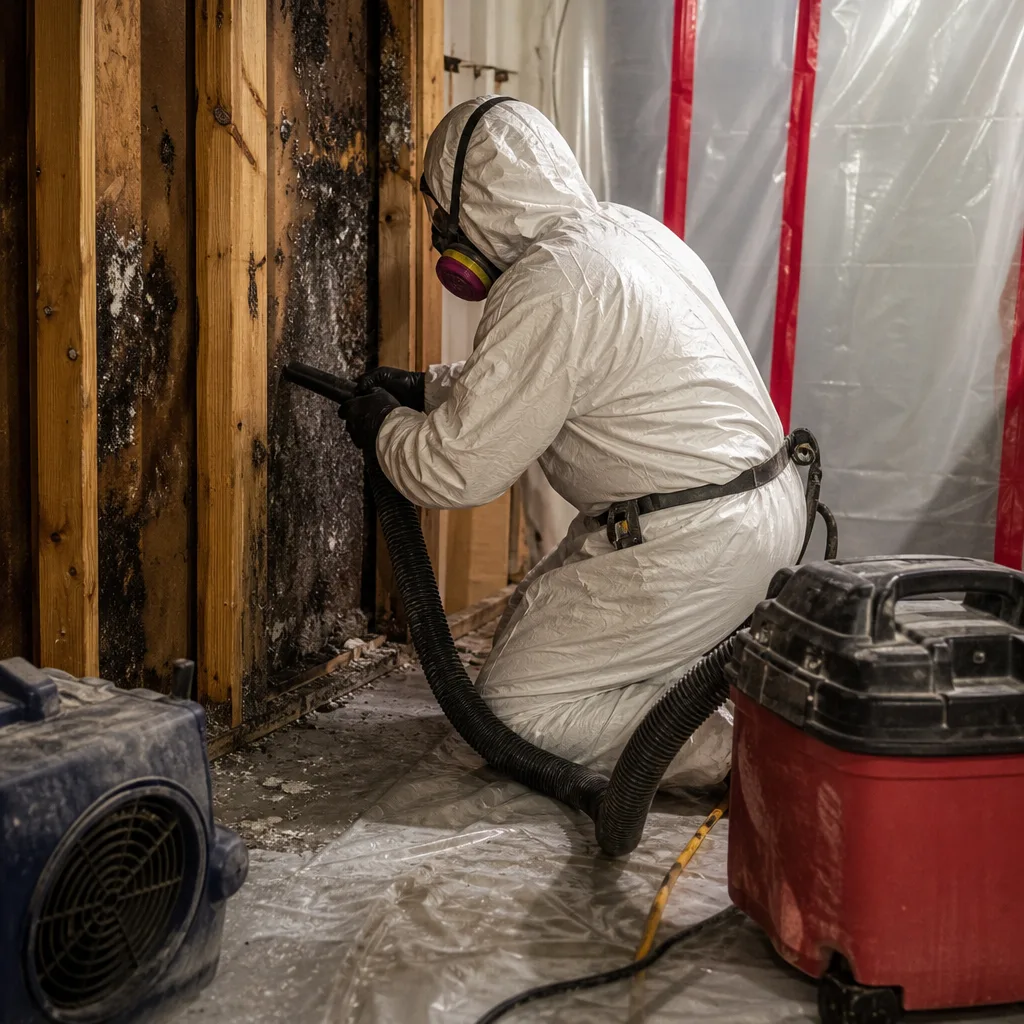
We clean salvageable surfaces, sanitize affected areas, and run HEPA air scrubbers to capture airborne particulates. On Category 3 losses, we treat surfaces with EPA-registered antimicrobials as part of our Mold Remediation in Tribeca, appropriate for the materials.
Contents Restoration & Pack-Out
We document, pack, and move salvageable contents to a secure staging area while reconstruction proceeds. Gallery-hung artwork gets crated individually. Custom millwork and furniture get wrapped and protected. Everything is photo-documented before it moves.
Repairs & Restoration
We rebuild what needs rebuilding. In Tribeca that often means Tribeca Commercial Restoration work like matching original wide-plank subfloors, repairing lime-plaster walls, and reinstalling finishes over dried, structurally sound framing. The work ends with a clean, walkable, documented result and our 90-Day Done Right Promise in writing.
Need Emergency Reconstruction & Cleanup in Tribeca Now?
Crews minutes away, answering live 24 hours a day. The sooner we start, the less it costs.
Working With Your Insurance Company
Insurance claims on Tribeca loft losses live and die by documentation. Floodline Restoration Co. starts building the claim file from the first hour. We photograph every affected room before we move anything. We log moisture readings daily and hand those logs to both you and your adjuster. We write line-item scopes in the estimating format carriers recognize, and we talk directly with your adjuster so you never play messenger. When your building leaks through a 24-inch masonry wall or a loading dock backs up, the adjuster wants proof of cause, extent, and drying progress. We provide all three. Direct billing means the carrier pays us directly for covered work. You see the same documentation the adjuster sees. No surprises on the bill, and no arguing over what was actually done.
What We Provide Your Insurer
- Thorough documentation of the loss
- Photos of all damage, room by room
- Moisture readings and drying logs
- A detailed, line-item scope of work
- Direct coordination with your carrier
Built for Tribeca’s Loss Calendar
Tribeca’s damage season does not match the rest of Manhattan. The defining trigger here is water, and it follows a pattern. Late summer brings the thunderstorm season, when a fast-moving cell drops water faster than aging drainage can carry it away. Former loading docks at sidewalk grade back up first, flooding finished ground-floor lobbies and live-work studios in minutes. Fall and winter bring nor’easters, and when storm surge pushes the Hudson past bulkhead height, entire blocks in FEMA Zone AE take water from the river side as well as the street side. January deep freezes burst supply lines in converted warehouse buildings where original cast-iron risers have never been replaced. Spring thaw saturates below-grade loading-dock basements through century-old rubble-stone foundations. The loss calendar in Tribeca is not a theory. It repeats every year, and the owners who plan ahead are the ones whose claims settle faster. We maintain response readiness for all of it, every season, around the clock.
Reconstruction & Cleanup Across Tribeca’s Neighborhoods
Tribeca runs from roughly Canal Street down to Chambers and Worth, with the Hudson River on one side and Broadway on the other. In the historic core around Harrison Street, Greenwich Street, and Jay Street, we work inside 19th-century cast-iron-fronted lofts with original wide-plank floors and slow-drying timber beams. Response routes through Hudson Street and West Broadway matter when you are moving equipment into a converted warehouse with a freight elevator. Around Bogardus Plaza and the side streets off Beach Street, we see ground-floor retail and live-work studios that flood through former loading docks during every hard rain. North of Canal in the transition blocks, mixed postwar infill buildings share walls with 1880s masonry structures, and water moving through a common party wall does not respect property lines. East toward Baxter Street and the civic-center blocks, below-grade mechanical rooms sit below the water table and fight seepage year-round. In each area, the building age and the floor plate size determine how we stage drying equipment. A 3,000-square-foot floor-through on Harrison Street needs a different layout than a 5,000-square-foot loft on Greenwich Street, and we set both based on moisture mapping, not habit.
Specialized Reconstruction & Cleanup Services We Offer in Tribeca
Full-Service Reconstruction
When a Tribeca loft needs reconstruction, you want one Reconstruction & Cleanup team that owns the whole job. We handle structural drying, subfloor replacement, wall repair, trim, painting, and finish work. The same certified crew that extracted the water rebuilds the space. No handoff, no inherited crew, no finger-pointing. That matters when the structure is 150 years old and the finishes are bespoke.
Drywall & Flooring Repair
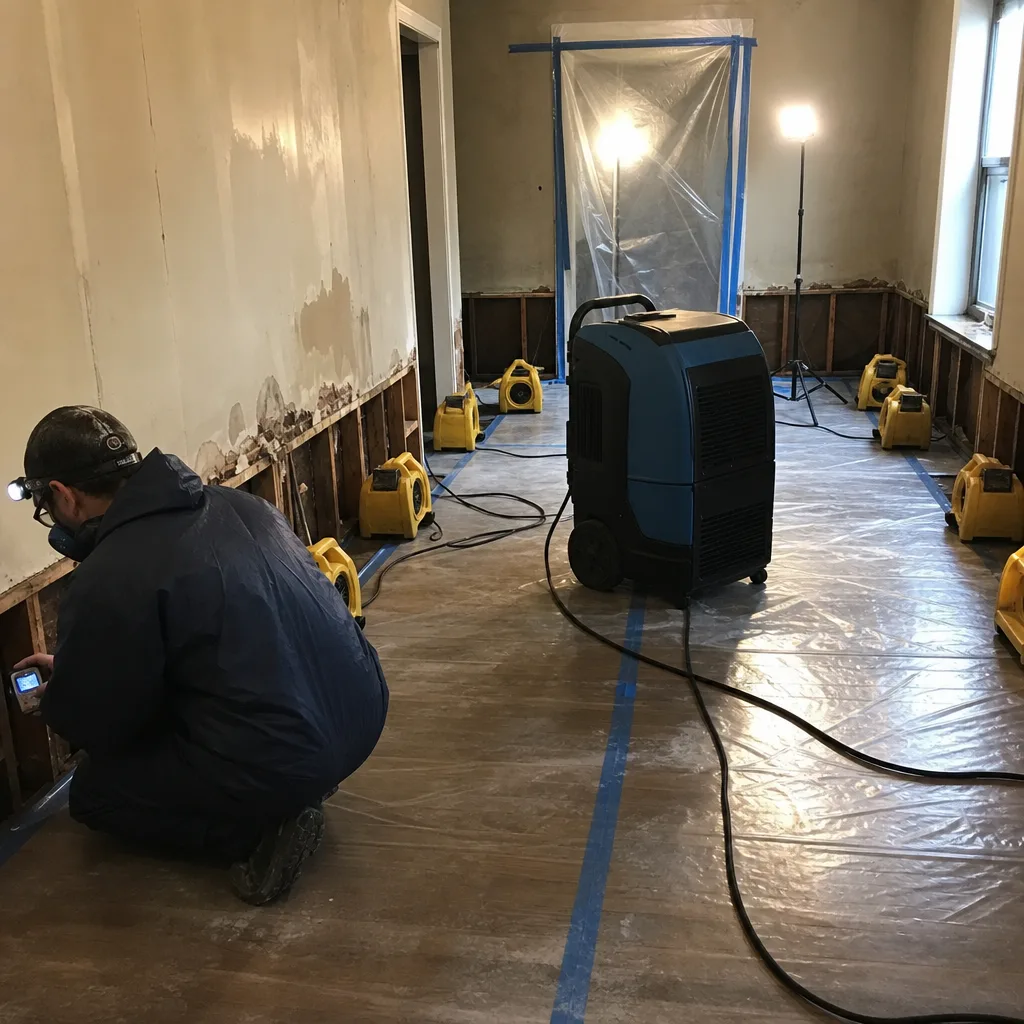
Flooded Tribeca lofts often need selective replacement, not full gutting. We open only what moisture mapping says is wet. Original wide-plank subfloors get dried, cleaned, and re-secured where salvageable. Where warping or rot has set in, we replace with new oak matched to the original width and thickness. Plaster walls get patched and refinished. Drywall gets cut to a clean line, replaced, taped, and painted.
Contents Restoration & Pack-Out
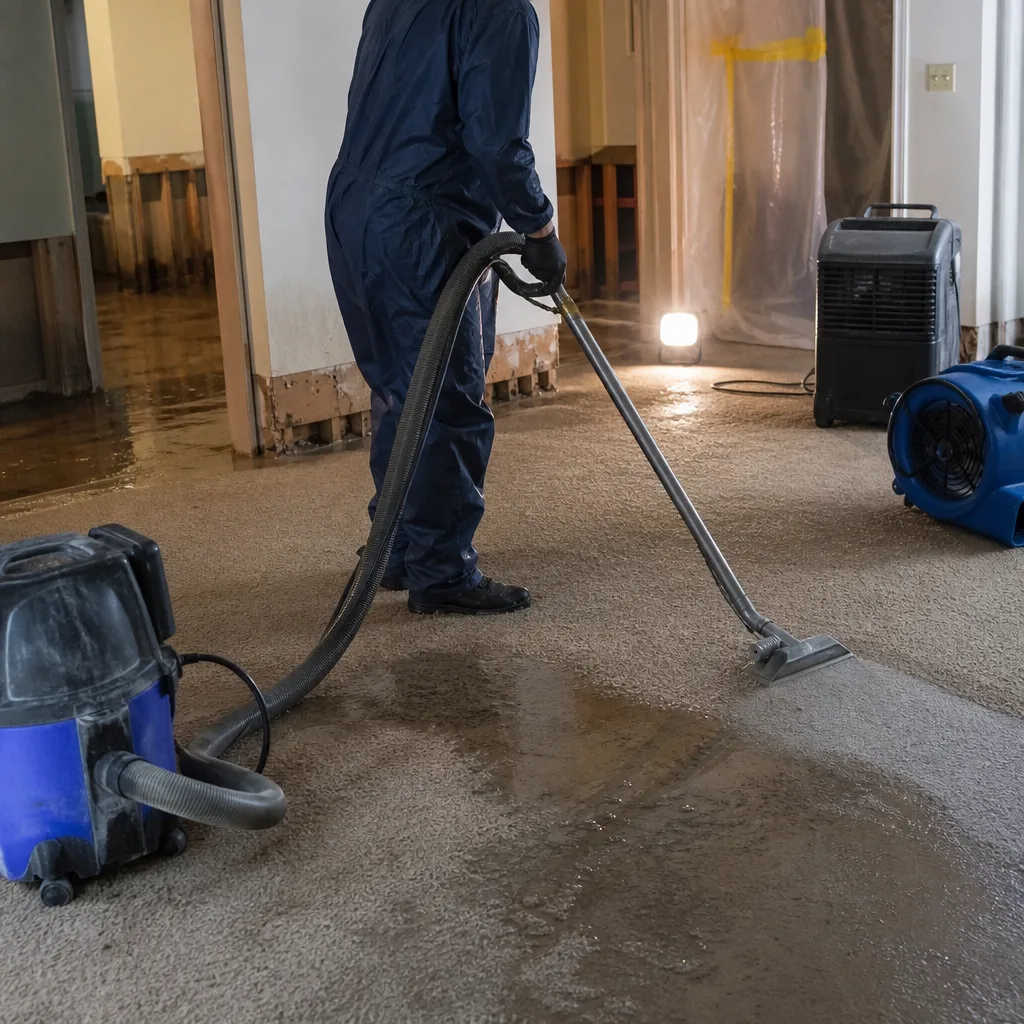
We pack out contents before reconstruction starts and pack them back when the space is dry and finished. In Tribeca lofts, that means handling gallery-hung artwork, custom furniture, books, clothing, and personal archives. Every item is photo-documented at the start. High-value pieces get custom crating. The pack-back happens on schedule so you are not living around boxes for months.
Carpet & Upholstery Cleaning
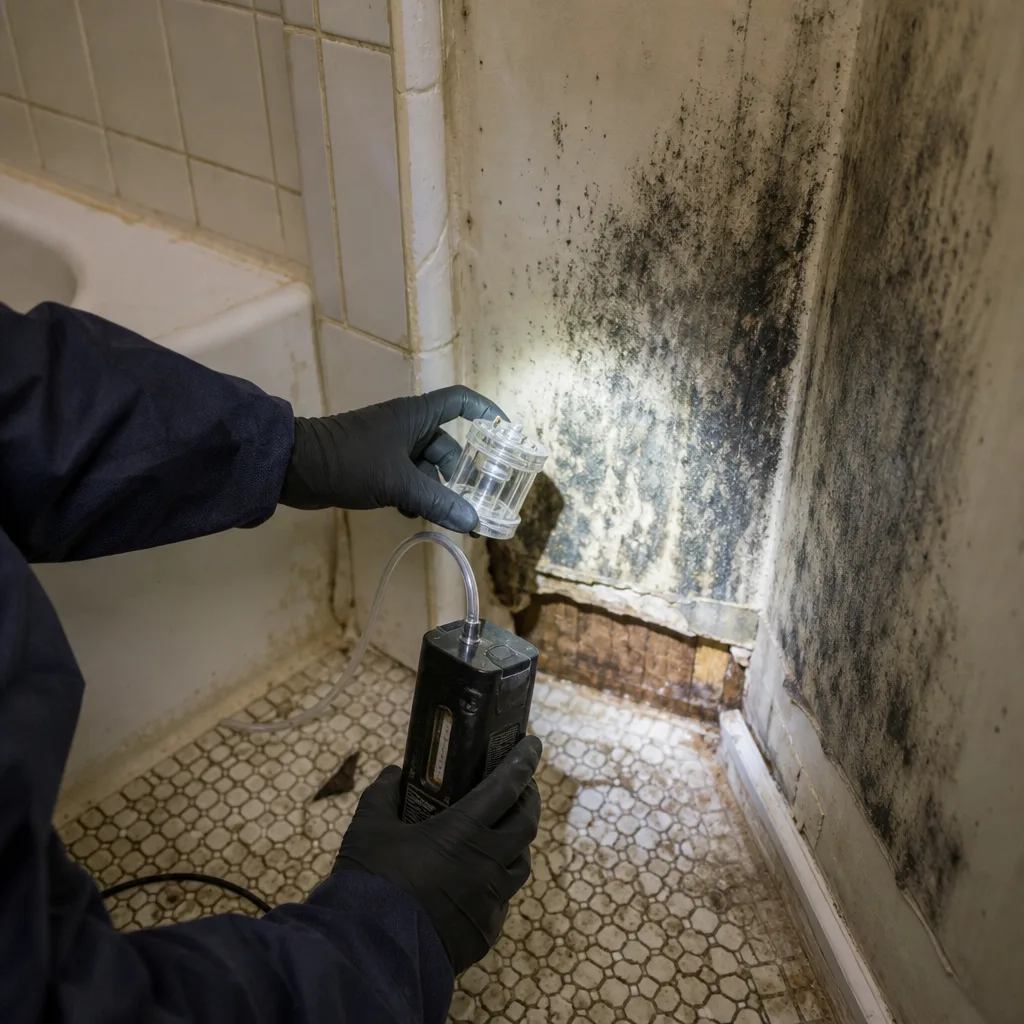
After a flood or fire, soft goods need professional cleaning or they hold odors and particulate matter you cannot see. We clean salvageable carpet and upholstery using professional extraction and deodorizing processes appropriate for the fiber and the degree of soiling. On Category 3 losses, salvageable soft goods get treated with EPA-registered antimicrobials. What cannot be cleaned safely gets documented and recommended for disposal.
Post-Construction Cleanup
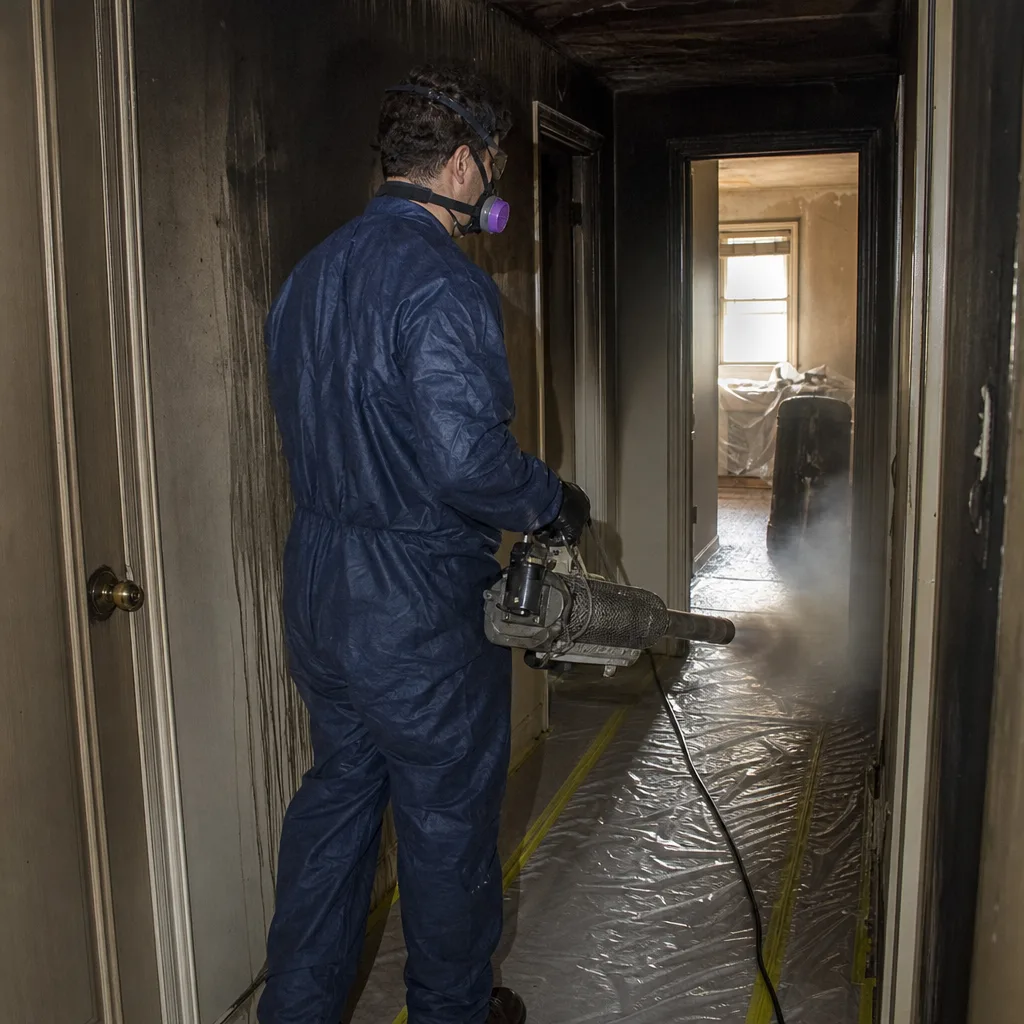
After reconstruction in a converted warehouse loft, dust settles into every exposed beam and brick pocket. Our post-construction cleanup includes HEPA air scrubbing, wipe-down of every finished surface, and removal of construction debris through freight elevators and service entrances. We leave the space clean enough for a gallery opening, because in Tribeca that is often exactly what the space is for.
Insurance Claim Documentation
We build the claim file as we work. Detailed photos from the first hour. Moisture logs from every reading. A line-item scope with material and labor costs. Direct communication with your adjuster. Owners in Tribeca carry high-value contents and finishes, and adjusters expect proof of condition before, during, and after. We give them exactly what they ask for so your claim moves.
What happens when you call
- 1
A real person answersNo phone trees - you reach a local pro.
- 2
You get an upfront price rangeHonest numbers before anyone is dispatched.
- 3
A background-checked tech heads outLicensed & insured, dispatched right away.
- 4
You approve before work beginsNothing starts until you say go.
Reconstruction & Cleanup Costs in Tribeca, NY
Honest numbers: for a flooded ground-floor loft in Tribeca, water extraction and structural drying on a 1,500-square-foot space typically runs $4,500 to $9,000. Full reconstruction after a Category 3 flood on a finished loft runs $35,000 to $90,000 depending on finishes. Selective subfloor replacement of original wide-plank flooring that has warped after saturation runs $15 to $30 per square foot including materials and labor. Drywall replacement and repainting runs $5 to $12 per square foot. Contents pack-out and pack-back for a whole floor-through runs $2,500 to $7,000 depending on volume and art handling. Post-construction cleanup after a rebuild runs $1,800 to $5,000. The price moves with the age of the structure, the accessibility of the space, and the finishes being restored. The free visual inspection converts those ranges into a firm written scope. We never start work without your sign-off on a line-item price.
We Also Serve Cities Near Tribeca
Our crews respond to Reconstruction & Cleanup in Tribeca and surrounding areas. That includes Fairview, Harrison, East Bronx, and Hunts Point. If you own property in one of those neighborhoods and need a certified crew, call the same number and you will reach the same live dispatcher.
Tribeca Reconstruction & Cleanup Questions, Answered
How fast can you actually get to a Tribeca loft after a flood?
We commit to a 45-minute response to Tribeca addresses. Our New York City dispatch center has crews staged to reach Greenwich Street, Harrison Street, Jay Street, and the surrounding blocks quickly. Call (917) 924-4221 and a live person starts the dispatch.
How do you handle moisture trapped in the thick 24-inch masonry party walls of Tribeca loft buildings?
Penetrating moisture meters and thermal imaging show us where saturation sits inside the wall mass. We do not rely on air movers alone. We use desiccant dehumidification to lower the vapor pressure in the room, which pulls moisture from the masonry over days, not hours. Daily readings prove the wall is drying toward the dry standard. If necessary, we drill small injection ports at the base of the wall and run Injectidry systems to accelerate drying inside the wall cavity. The reading log goes to you and your adjuster.
Can you restore original wide-plank subfloors in a Tribeca loft without gutting the entire floor?
Often yes. We take moisture readings across the floor to find the actual wet footprint. We remove only the boards that are saturated and warped, then dry the joist bays below. Replacement oak gets milled to match the original width, thickness, and profile. Sanding and finishing blend the patch into the surrounding floor. You keep the original floor where it was never damaged.
What documentation do you provide for an insurance claim on a Tribeca loft that flooded from a backed-up loading dock?
Photos of every affected area before work starts, moisture readings and drying logs from every day on site, a line-item scope of work with material and labor pricing, and direct communication with your adjuster. We also photograph the damage cause, like the backed-up loading drain or the failed bulkhead seal, so coverage is not denied on a technicality. Call (917) 924-4221 and we will start the file the same visit.
How do you protect gallery-hung artwork and $80,000 custom kitchens during reconstruction in a flooded Tribeca loft?
Artwork comes down first, gets photographed, and gets individually wrapped or crated. Custom kitchens get protected with rigid containment barriers and layered sheeting before any demolition or dirty work starts. If the kitchen itself needs work, we document the condition of every finish and coordinate with the cabinetmaker when necessary. The goal is to protect what is undamaged and keep a clear record of what was touched.
Is category 3 floodwater from a Tribeca street flood different from a clean-water pipe burst in terms of reconstruction?
Yes. Category 3 water carries sewage, chemicals, and biological contaminants. That means more demolition: saturated drywall and insulation come out regardless of appearance. Porous surfaces like unsealed wood and carpet usually get replaced. We treat remaining surfaces with EPA-registered antimicrobials. A clean-water pipe burst allows more drying in place. The line-item scope reflects the difference, and your adjuster sees the same classification we document.
How long does full reconstruction take on a flooded Tribeca loft?
Typical reconstruction on a Category 3 ground-floor loft takes four to twelve weeks from extraction to finish. Drying alone often runs seven to fourteen days because of the masonry walls and timber joists. Demolition, subfloor replacement, wall repair, painting, and finish work follow. We give you a written schedule with the scope, and we log progress against it. Most jobs are completed in a single visit by the same crew, not in scattered appointments.
Will my insurance cover reconstruction after a Tribeca street flood?
It depends on your policy and whether flood coverage is included. Standard homeowners policies usually cover sudden pipe bursts but not surface-water flooding. Many Tribeca owners with ground-floor units carry separate flood policies because the neighborhood sits in FEMA Zone AE. We document the cause of loss accurately, and we talk with your adjuster directly. Call (917) 924-4221 for a free inspection and help understanding what your policy covers. Estimates are free.
Serving Tribeca, NY - Our Local Coverage Area
We’re based in the Tribeca area and know this community well. Use the map below to see our service coverage - if you’re nearby, we can almost certainly help.
Call Floodline Restoration Co. of Manhattan for Tribeca Reconstruction & Cleanup
When a Tribeca loft floods through a former loading dock or a century-old party wall gives way, you need a company that knows the buildings and stands behind the work. Floodline Restoration Co. of Manhattan has served this neighborhood for over 42 years with live 24/7 dispatch, certified crews, professional-grade Dri-Eaz and Phoenix equipment, and a 90-Day Done Right Promise in writing. We handle the full job from first extraction to finished reconstruction, we bill your carrier directly, and we never leave you playing messenger. Current offers: $50 off any repair over $250, an $89 seasonal tune-up, and a Senior & Veteran 5% discount, always. Call (917) 924-4221 now. A live person answers, and the truck rolls toward Tribeca the same visit.
Written by Curt Bowman, Owner at Floodline Restoration Co., serving Tribeca since 2010.