

Free visual inspection and a written scope of work before any mitigation begins - photos, moisture readings, and drying logs go in your claim file
The scope we write is the scope we bill. Anything new gets shown to you, in writing, before we touch it.






 Before
 After
After Before
 After
After Before
 After
After24/7 Emergency Storm & Disaster Restoration in University Gardens
When a nor’easter drops a 40-year-old oak limb through your roof at 2 a.m., you need a crew that answers the phone and gets moving. Storm & Disaster Restoration in University Gardens starts with a live dispatcher, every hour of every day. Call (917) 924-4221 and a certified team is dispatched immediately. The first hour matters because wind-driven rain keeps wicking into original plaster-and-lath walls, through custom millwork, and under period hardwood floors long after the limb is off the roof. Our crews arrive with a written scope started, moisture meters in hand, and the experience to stabilize your home before the damage spreads further.
Understanding Storm & Disaster Restoration Severity in University Gardens Properties
Storm damage in University Gardens operates on different rules than the rest of Nassau County. The homes here were largely built between the 1920s and 1950s as custom residences, and their original plaster-and-lath walls and ceilings behave differently than modern drywall. When a tree limb punctures a roof and rain enters, you’re not just dealing with wet drywall. Water migrates through the plaster key system, soaks the wooden lath behind it, and can saturate mineral wool insulation that has been sitting there for seventy years. We classify that water immediately: category 1 is clean rainwater before it touches building materials. Category 2, what most University Gardens storm losses become, means water has picked up contaminants from the attic, the old insulation, or the roof deck. That determines whether we dry in place or remove and replace. The low-pitch rooflines common to this village promote ice dams in late winter, and when meltwater backs up under aging shingles, it often hides inside plaster ceilings for weeks before a stain appears. Thermal imaging and moisture mapping are not extras here; they’re the minimum standard, because the original oak flooring beneath can be wicking water while the ceiling above still looks dry.
Why University Gardens Property Owners Choose Floodline Restoration Co. of Manhattan
- 45-minute response commitment. When you call from University Gardens, our crews are dispatched from the New York City office with a real ETA, and we keep it. A live dispatcher tracks every truck.
- 24/7 live answer, never an automated system. At 2 a.m. you get Curt’s dispatch board, not a recording. The number is (917) 924-4221, and a person picks up.
- IICRC-certified crews. Our technicians hold WRT and FSRT certifications, trained to IICRC, RIA, and IFA standards. The crew that reads your moisture map on day one handles daily readings until the dry standard is met.
- Free visual inspection. Before any work begins, we walk the damage with you, explain what we’re seeing, and prepare a line-item scope. No work starts without your approval in writing.
- Direct insurance billing. We document everything from the first hour and coordinate directly with your adjuster. You don’t play messenger between Floodline and the carrier.
- One team from extraction to reconstruction. The same crew that tarped your roof also handles the plaster repair, the millwork matching, and the final coat of paint. No mid-job handoff to a subcontractor you’ve never met.
Our Storm & Disaster Restoration Process
Inspection & Assessment
We arrive with thermal imaging cameras and moisture meters, then map every affected surface. In a University Gardens colonial, that means checking plaster keys, lath integrity, subfloor readings, and wall cavities behind custom millwork. You get a written condition report before any equipment is unloaded.
Extraction & Stabilization
Standing water comes out first. Roof tarping and emergency board-up happen in the same visit, using materials that won’t further damage aging shingles or original trim. We secure the envelope so no more water enters.
Drying & Dehumidification
Professional-grade Dri-Eaz dehumidifiers and XPOWER air movers are placed according to the moisture map, not guesswork. Our crews hand-carry equipment through narrow side entrances and tight stairwells because we know University Gardens lots don’t allow driveway staging.
Cleaning & Sanitization
Once the drying standard is met, we clean all affected surfaces and apply antimicrobial treatments where category 2 water has contacted porous materials. We test before we call it done.
Preservation-Grade Specialty Treatment
This is where Floodline separates itself in University Gardens. Original plaster ceilings get lime-based patching matched to texture, not joint compound. Custom crown molding and period trim are replicated, not replaced with stock profiles. Original oak flooring is dried in place when readings support it, sanded and refinished only if necessary.
Repairs & Restoration
We rebuild to match the pre-loss condition of the untouched rooms around the damage. The 90-Day Done Right Promise covers every phase, in writing. If it’s not done right, we make it right.
Need Emergency Storm & Disaster Restoration in University Gardens Now?
Crews minutes away, answering live 24 hours a day. The sooner we start, the less it costs.
Working With Your Insurance Company
Most University Gardens storm claims involve the original structure of the home, and your insurer will want documentation that matches the reality of the building. We know what adjusters look for on plaster-and-lath homes, and we provide it from the first hour. Our estimator prepares a line-item scope that reflects preservation-grade materials and specialty labor, not the drywall-and-paint pricing that adjusters default to when they see “ceiling repair.” We photograph every phase, log moisture readings daily, and hold the drying log open until the standard is met. When the adjuster calls, we answer. You never sit on hold with your carrier trying to explain why the plaster texture doesn’t match.
What We Provide Your Insurer
- Thorough documentation of the loss
- Photos of all damage, room by room
- Moisture readings and drying logs
- A detailed, line-item scope of work
- Direct coordination with your carrier
Built for University Gardens’s Loss Calendar
Here’s what actually drives storm restoration calls in this village, month by month. January and February bring the deep freezes that trigger ice dams on low-pitch roofs. Meltwater runs under the aging shingles, follows the roof deck, and soaks plaster ceilings from above. You won’t see the stain for weeks. March nor’easters are the biggest single source of calls: wind-driven rain and limbs through roofs, often on the same night. April thaw brings basement seepage as frozen ground releases and water finds the old stone or block foundations common to 1920s construction. July and August bring violent thunderstorms. A 15-minute downpour can overwhelm the small, shallow lots here and push water through window wells and basement bulkhead doors. September and October bring the remnants of tropical systems, and with dense mature tree canopies, a single event can block every road in the village with debris. November and December are the shoulder months where slow leaks in aging galvanized supply lines finally show themselves, often during holiday temperatures when frozen pipes were not on anyone’s mind. Floodline’s live dispatch tracks this calendar, and our University Gardens crews are staged accordingly.
Storm & Disaster Restoration Across University Gardens’s Neighborhoods
University Gardens is compact, but the damage patterns shift block by block. Along the streets closest to Long Island Sound, wind-driven rain is the dominant problem. Homes here catch the full fetch of a nor’easter, and original wood windows with period storms often leak at the head jamb, soaking plaster below the sill line. Over toward the southern edge near Northern Boulevard, the housing stock shifts slightly younger, early 1950s colonials and ranches, but the legacy tree canopy is just as dense. Limbs through roofs are the primary call type. In the blocks built around the village’s 1920s development era, including the original Tudor and Colonial Revival clusters, plate lines and cornice returns are custom. When wind separates a gutter and fascia board, the water that follows can undermine the plaster inside before anyone notices. The narrow lots throughout the village mean our crews frequently hand-carry equipment from the street, through a gate, and into a rear door that hasn’t been used for anything wider than a wheelbarrow since the house was built. We plan for that. Our Storm & Disaster Restoration team knows the alleys and side entrances here, and we dispatch accordingly.
Specialized Storm & Disaster Restoration Services We Offer in University Gardens
Roof Tarping
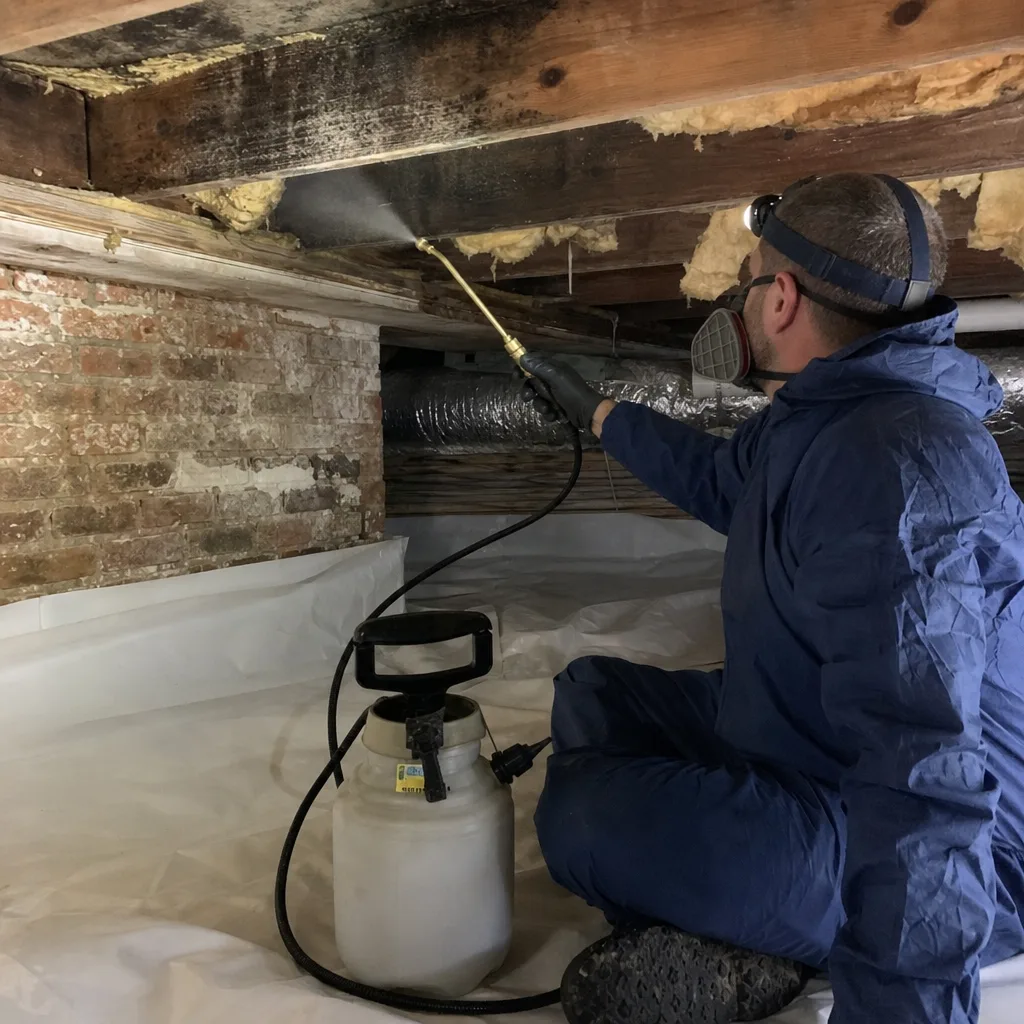
When a limb punctures a low-pitch roof in University Gardens, the tarp has to go on fast and it has to stay on without causing more damage. We use fastening methods that don’t strip the remaining shingle edges, on roofs that may be original or near-original. The tarp is temporary, but it must hold through the next nor’easter while your claim is processed and a permanent repair is scheduled.
Emergency Board-Up
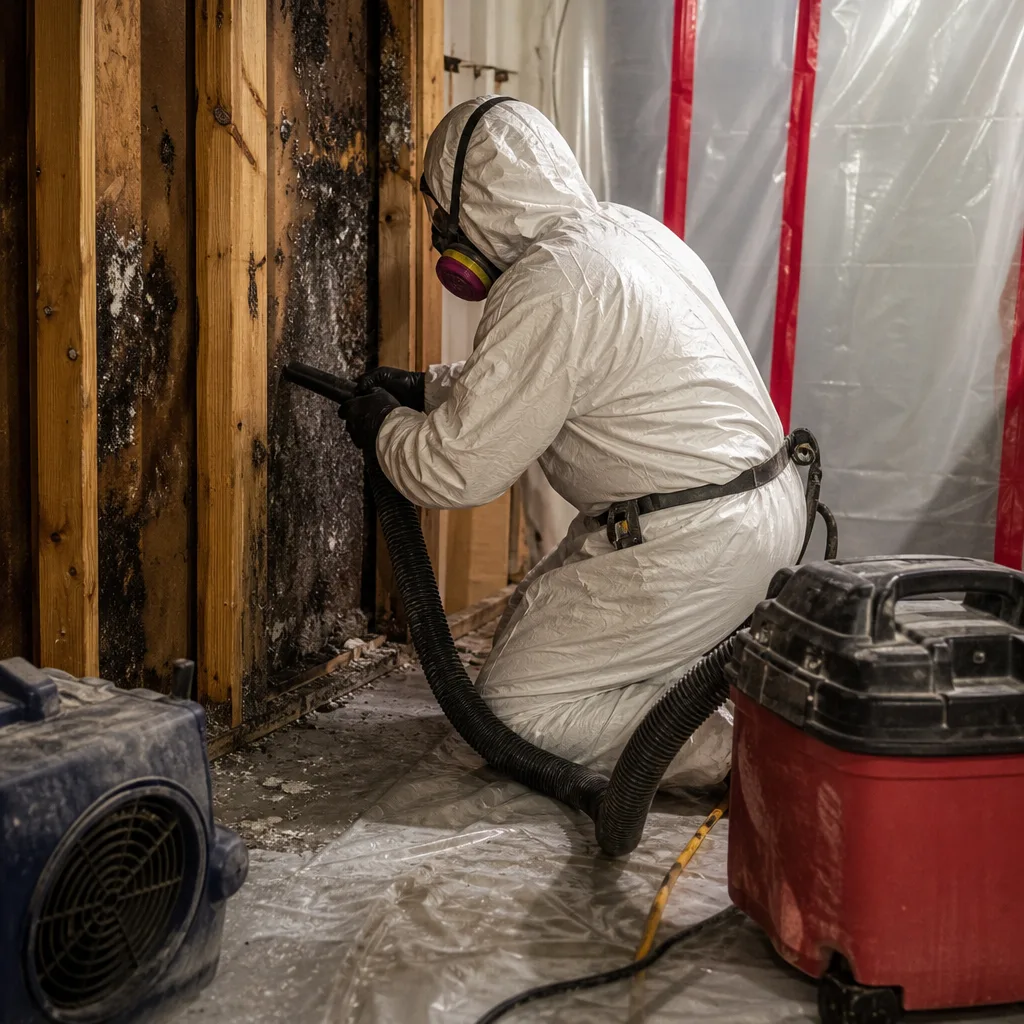
Broken windows from flying debris, or a limb that came through the gable end, leave your home open. We board up immediately, using materials sized to the opening and fastened without further damaging original window casings. Security matters, and so does keeping the weather out while the restoration scope is prepared.
Storm Damage Cleanup
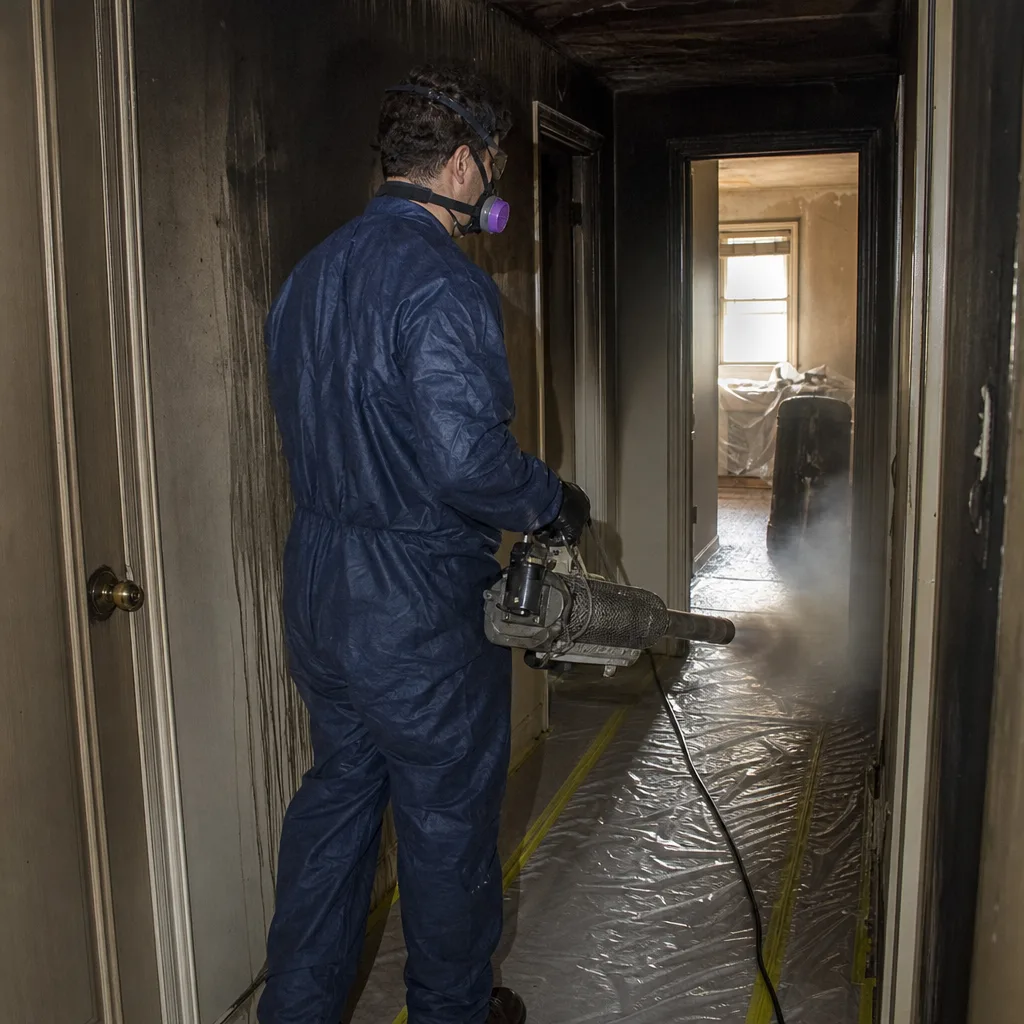
When trees come down, the scene is chaotic. We remove storm debris from the structure, the yard, and the access areas, then separate what your insurer will want photographed from what can be hauled. If a limb is still on the roof, we stabilize it before any interior work starts.
Flood Damage Restoration
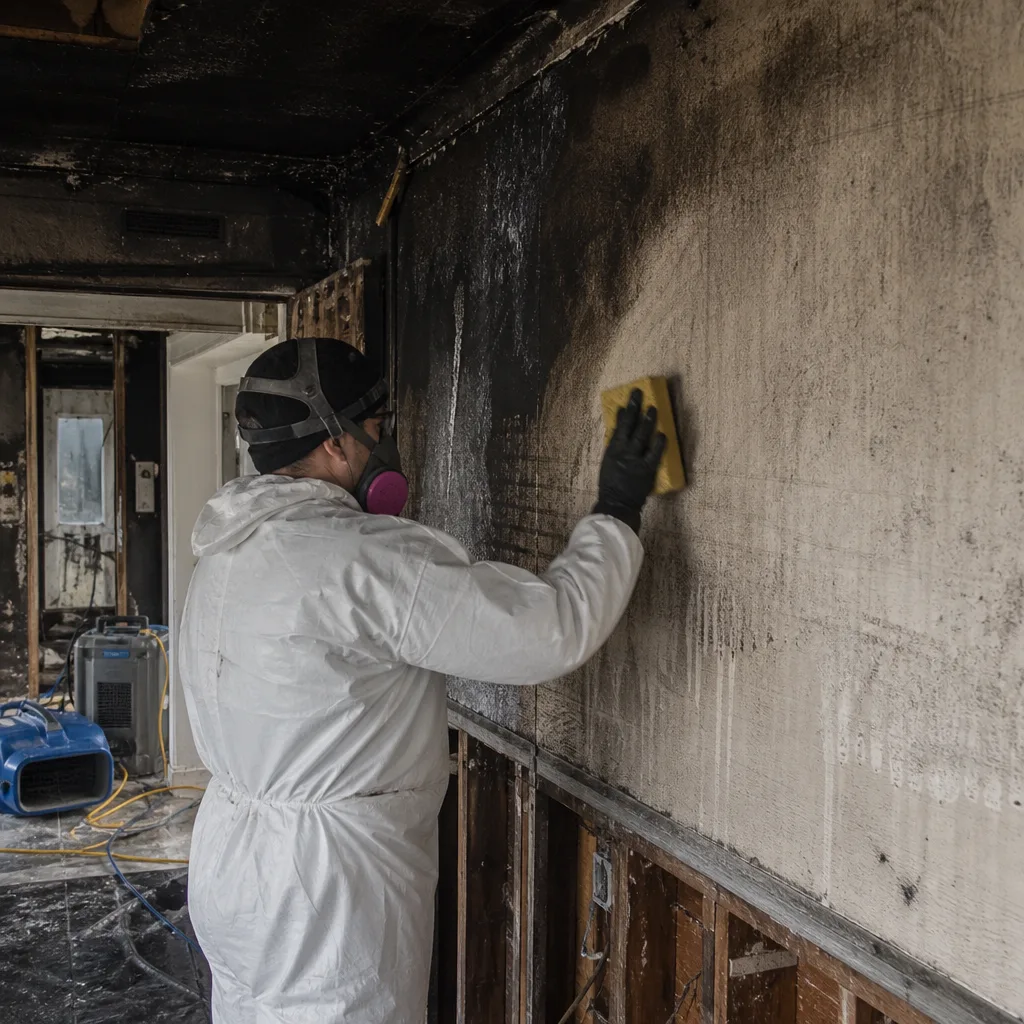
Coastal flooding and flash flooding affect the low-lying streets of University Gardens differently than the upland blocks. We pull standing water, map the moisture in every affected surface, and dry in place whenever the material can be saved. Original oak flooring responds to professional-grade Phoenix and Dri-Eaz drying when the response is fast enough.
Debris Removal
After the storm passes, the limbs, tiles, and torn shingles still need to go. We coordinate removal with your claim and keep what the adjuster needs to see. Nothing leaves the property without your sign-off.
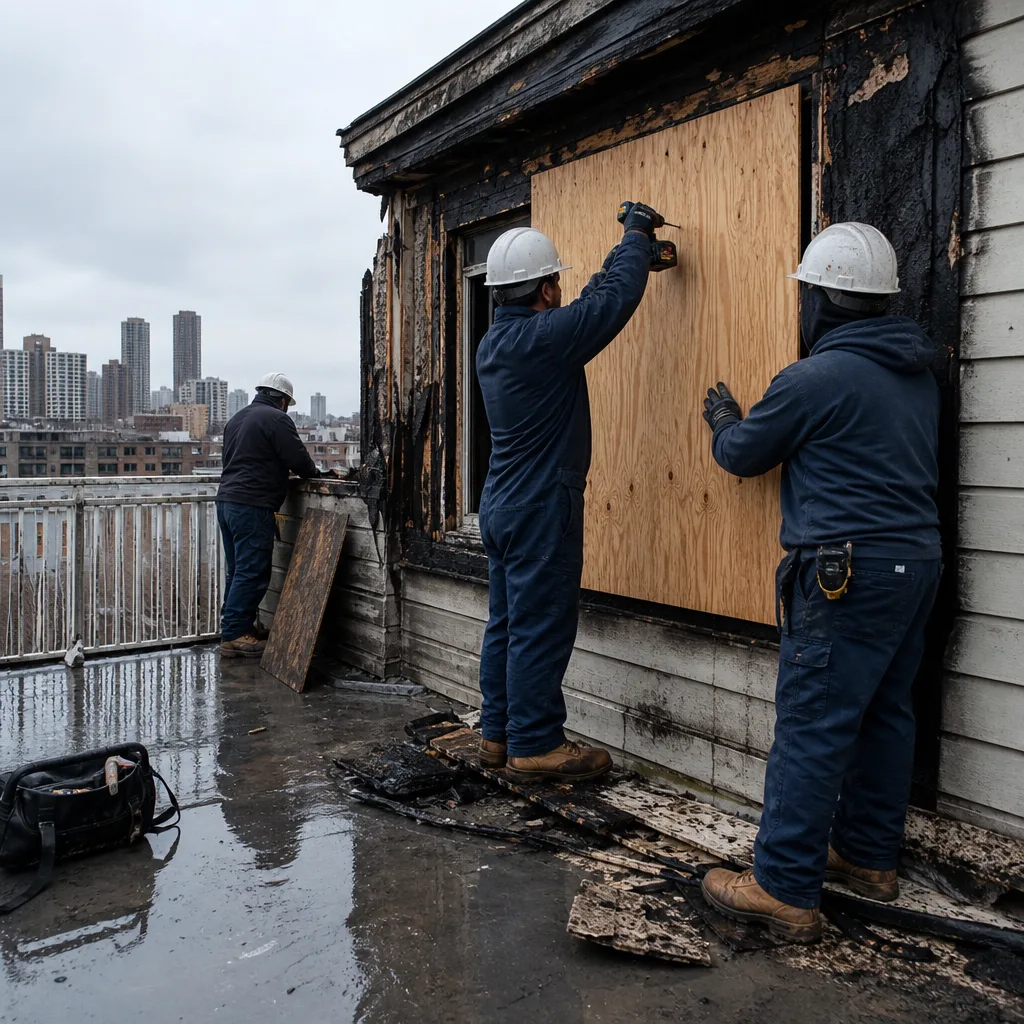
Wind Damage Repair
Soffits, fascia, gutters, and flashing all take wind damage. We repair or replace to match the original profiles and materials, whether that’s copper flashing on a 1930s Tudor or period cedar fascia on a pre-war Colonial.
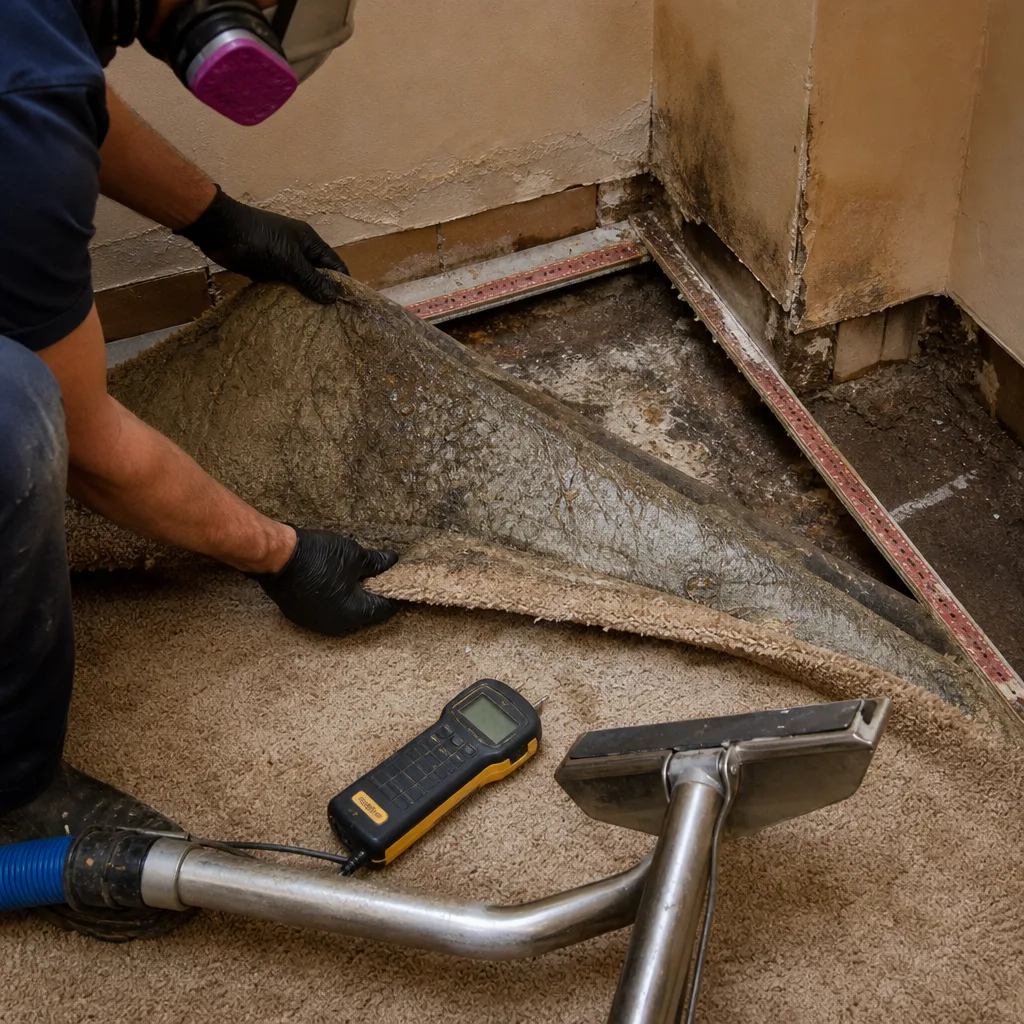
What happens when you call
- 1
A real person answersNo phone trees - you reach a local pro.
- 2
You get an upfront price rangeHonest numbers before anyone is dispatched.
- 3
A background-checked tech heads outLicensed & insured, dispatched right away.
- 4
You approve before work beginsNothing starts until you say go.
Storm & Disaster Restoration Costs in University Gardens, NY
Honest numbers for this market. A full roof tarping in University Gardens typically runs $400-$900 depending on the roof pitch and the size of the opening. Emergency board-up for a broken window or door runs $300-$700 per opening, including materials. Storm damage cleanup, including debris removal from a single tree event, typically runs $1,200-$3,800 depending on how much material is on the structure versus the ground. For a limb through a plaster ceiling, the full restoration including water extraction, drying, plaster repair matched to texture, and custom millwork replacement runs $6,000-$18,000. That range is wider than neighboring towns because original lath, period plaster, and custom trim are in play, and the labor to match them is specialty work. Most University Gardens storm claims are covered by homeowners insurance, and we bill your carrier directly. The free visual inspection gives you a firm line-item scope before any work starts, so you know exactly where the number lands.
We Also Serve Cities Near University Gardens
Floodline Restoration Co. of Manhattan covers the communities around University Gardens, including University Gardens itself, Fairview to the west, Harrison to the east, and the East Bronx and Hunts Point corridors to the south. Wherever storm damage finds you, we answer live and dispatch fast.
Serving University Gardens, NY - Our Local Coverage Area
We’re based in the University Gardens area and know this community well. Use the map below to see our service coverage - if you’re nearby, we can almost certainly help.
University Gardens Storm & Disaster Restoration Questions, Answered
Will your crew really match the original plaster texture and custom millwork in my University Gardens home, or will I get a drywall patch that shows?
We match it. That’s the standard we bring to every University Gardens job, because the re-inspection is real and the difference between a drywall patch and a lime-based plaster repair matched to the original texture is visible the day the work is done. Our crews have worked on homes across this village’s 1920s-1950s stock, and we bring specialty plasterers and millwork matching to the job, not just a drywall sub. Call (917) 924-4221 for a free inspection and we’ll show you what the repair will look like.
How fast can you get a tarp on a roof that was just punctured by a tree limb in University Gardens, and does the tarp itself cause more damage to old shingles?
We aim to have a tarp on within hours of your call, not days. The tarp is fastened with methods that don’t strip the remaining original shingle edges, and we size it to the opening so it doesn’t flap and tear. The damage from leaving the roof open is always worse than a properly installed tarp. Call (917) 924-4221 and a live dispatcher gets a crew moving.
What does ‘category 2 water’ mean for my 1930s plaster walls after a nor’easter pushed rain through a window in University Gardens?
Category 2 water is water that has picked up contaminants from building materials, insulation, or the attic space. When rain enters through a window or a roof puncture and soaks the lath and mineral wool behind your plaster, it carries organic material and becomes category 2. That means we set containment before opening the wall or ceiling and handle the removed material with care. The plaster itself can often be saved if we dry fast enough, but the contaminated insulation behind it typically has to come out. Call (917) 924-4221 for an exact assessment.
Can your equipment actually fit through the narrow side entrance and down the tight stairwell of my University Gardens colonial?
Yes. We hand-carry every air mover, dehumidifier, and pack-out bin through the narrow side entrances and tight stairwells that are common in University Gardens homes. Our crews are used to 30-inch service doors and basement stairs with a turn at the bottom. Equipment placement follows the moisture map, and we plan access before we unload anything.
If a limb punctures my roof and soaks the original hardwood floors in University Gardens, will you try to dry them in place or tear them out?
We dry in place whenever the readings support it. Original oak flooring in these homes has survived ninety years of seasons, and tearing it out should be the last resort, not the first. We run moisture readings on the floor, the subfloor, and the joists before making that call. If the floor can be saved, professional-grade Phoenix and Dri-Eaz drying equipment gets it there. If not, we tell you why with numbers in hand.
How much does storm damage restoration cost in University Gardens compared to other Nassau County towns?
University Gardens runs higher than neighboring tract developments because the work is preservation-grade. A plaster ceiling repair that runs $2,000 in a 1980s drywall home can run $6,000 or more here, because the plaster, lath, custom millwork, and texture matching are all specialty work. The free inspection gives you a firm line-item scope before any work starts, and we bill your carrier directly. Call (917) 924-4221 for an exact quote.
How long does storm damage drying actually take in a University Gardens home?
Most University Gardens storm losses dry in three to five days when we’re called within the first 24 hours and the material is responsive to drying. But plaster and oak hold water differently than drywall and carpet. We use daily moisture readings and won’t call it dry until the log shows the standard has been met. The drying log goes to you and your adjuster.
What should I do in the first 30 minutes after a tree limb comes through my roof in University Gardens?
Call (917) 924-4221, then if it’s safe, shut off power to the affected room and move valuables out from under the opening. Don’t climb onto the roof or try to pull the limb yourself; a limb under tension can spring. Don’t go into a sagging ceiling room. We’ll have a tarp crew on the way and walk you through everything else on the phone. Call now.
Written by Curt Bowman, Owner at Floodline Restoration Co. of Manhattan, serving University Gardens and the surrounding North Shore communities.