
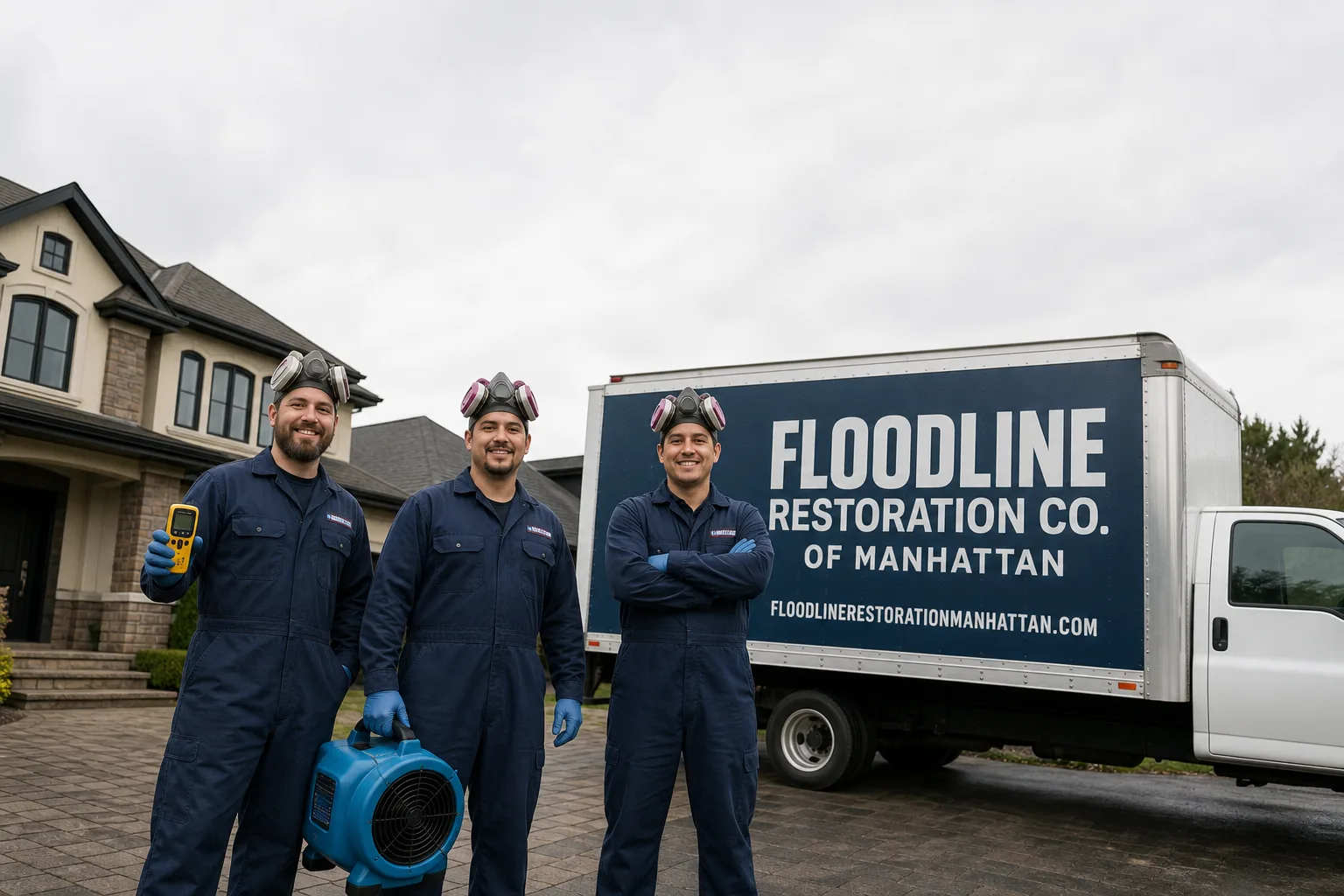
Free visual inspection and a written scope of work before any mitigation begins - photos, moisture readings, and drying logs go in your claim file
The scope we write is the scope we bill. Anything new gets shown to you, in writing, before we touch it.






 Before
 After
After Before
 After
After Before
 After
After24/7 Emergency Storm & Disaster Restoration in Valhalla
Storm damage in Valhalla moves fast, and so do we. Floodline Restoration Co. of Manhattan answers live around the clock, and our Storm & Disaster Restoration crews reach homes across the Valhalla area within 45 minutes of your call. When the Kensico Reservoir watershed sends water into your basement or a nor’easter tears a section of roofing loose, the first hour determines how much of your home can be saved. Call (917) 924-4221 now. We dispatch immediately, and the visual inspection is free.
We’re not a franchise call center routing work to whoever picks up the phone. Curt Bowman founded this company in 2010 around a dispatch board, not a sales desk, and the same holds true today. A live person answers at two in the morning. A certified crew arrives in marked trucks. And the work starts that same visit, not a week later.
Understanding Storm & Disaster Restoration Severity in Valhalla Properties
Storm restoration in Valhalla is different from the elevated towns around it because of the water itself. When Kensico Reservoir tributaries back up and runoff enters a home, that water has already moved across streets, lawns, and drainage swales. It is not clean. We classify floodwater as Category 1, 2, or 3, and most basement flooding in Valhalla arrives as Category 2 or Category 3 water, meaning it carries contaminants that require containment and full antimicrobial treatment, not just extraction and a few fans.
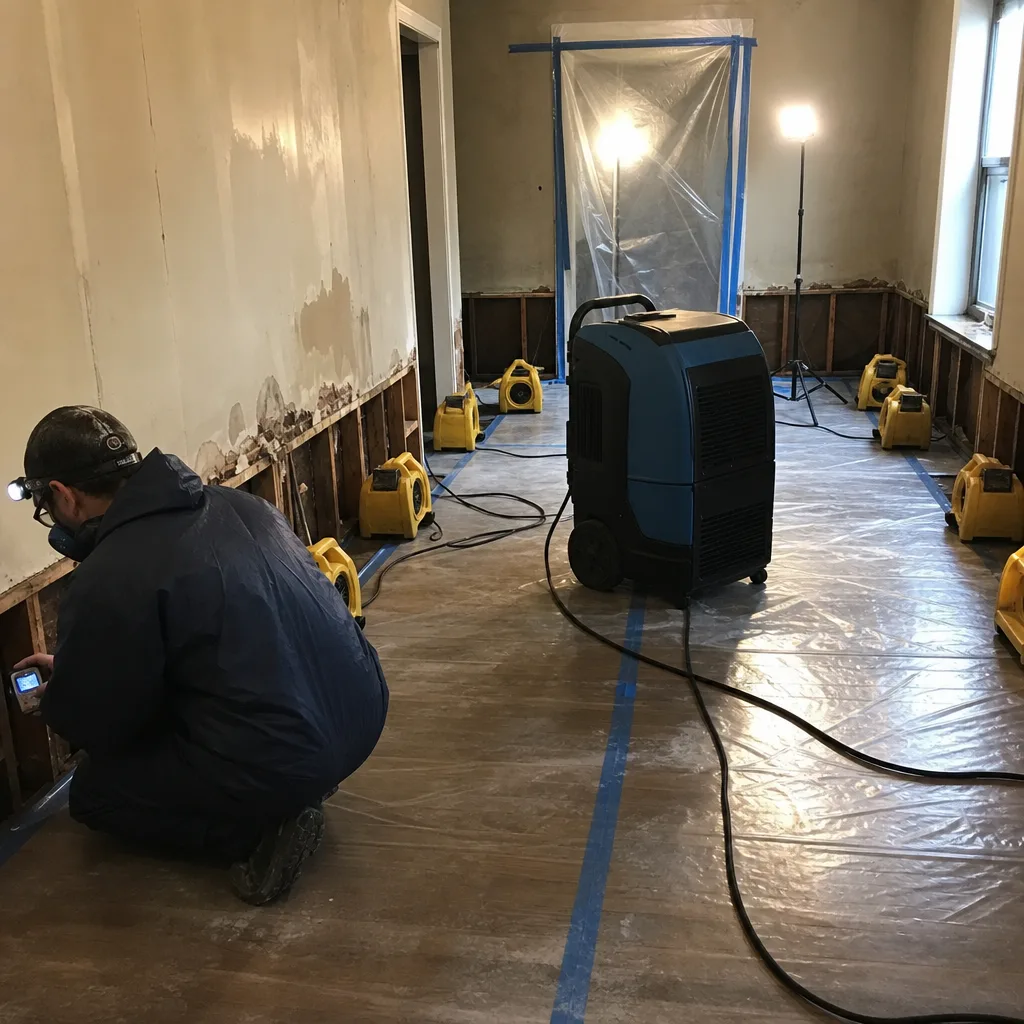
What makes severity assessment harder here is the age of the housing. Homes built between the 1920s and 1960s near the Metro-North Harlem Line station have plaster-and-lath walls that wick water upward far beyond the visible line on drywall. The unfinished basements common in these colonials and capes rarely have modern waterproofing membranes, so water moves laterally through foundation block and into wall cavities. We moisture-map every affected surface with thermal imaging and pin-type meters before extracting, because guessing at drying boundaries in a plaster-and-lath home is how hidden mold colonies get a foothold behind finished surfaces.
Why Valhalla Property Owners Choose Floodline Restoration Co. of Manhattan
- 45-minute response commitment to Valhalla. Our nearest crews stage from the Metro-North corridor, and we commit to on-site arrival within 45 minutes of dispatch for emergency storm work.
- A live person answers 24/7. No automated tree. A dispatcher picks up at 2 a.m., takes your address, and starts routing a crew while you’re still on the phone.
- IICRC-certified crews on every job. Our technicians hold WRT, FSRT, and AMRT certifications and train to RIA and IFA standards. Background-checked, uniformed, and accountable to Curt Bowman’s standards.
- Free visual inspection before any work begins. We assess the damage, take moisture readings, and hand you a written scope. No charge, no obligation.
- Direct insurance billing. We document from the first hour, bill your carrier directly, and coordinate with adjusters so you are not the messenger.
- One team from first extraction to final rebuild. The same Floodline crew that sets up drying equipment on day one returns each day for readings, then handles the reconstruction when drying is complete. No mid-job handoff.
Our Storm & Disaster Restoration Process
Inspection & Assessment
We walk the property inside and out, trace water migration, and document every affected room with photos and moisture readings. For storm claims, we’re specifically looking for roof breaches, water intrusion points, and hidden pockets behind plaster-and-lath walls.
Extraction & Stabilization
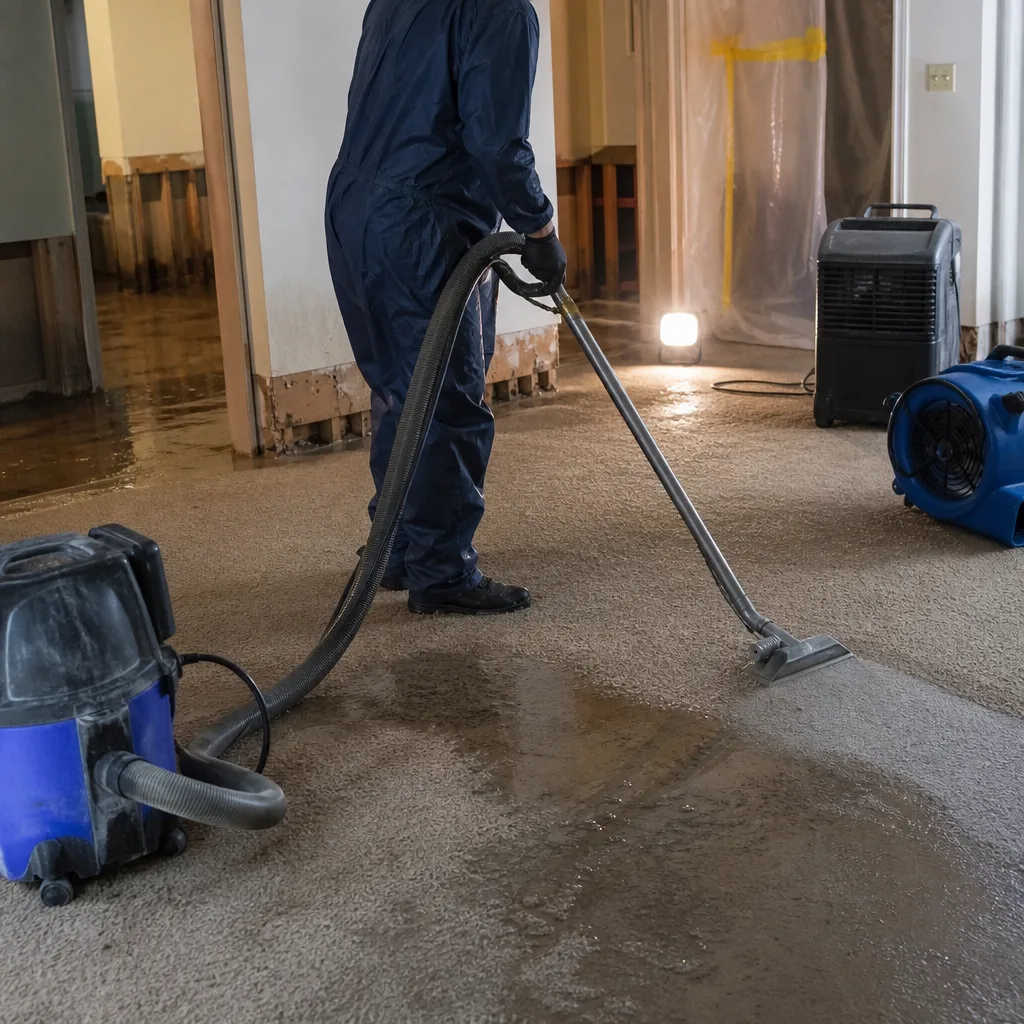
Standing water comes out first. We set up emergency board-up and roof tarping where wind or debris breached the structure. Dri-Eaz and Phoenix extraction units pull water from floors, carpets, and wall cavities before it spreads further.
Drying & Dehumidification
Air movers and dehumidifiers run continuously, sized for the square footage and the moisture load in your specific walls and floors. Daily readings are logged until the dry standard is met, not until the equipment rental period ends.
Cleaning & Sanitization
For Category 2 and 3 water, we sanitize all affected surfaces with EPA-registered antimicrobials. Containment is established before any demolition so that disturbed mold spores and contaminants do not move through the rest of the house.
Structural Drying Verification & Specialty Treatment
Plaster-and-lath walls from Valhalla’s older homes get monitored for longer than drywall because they hold water deeper. We verify dryness with hygrometers and thermal imaging, then address any mold growth found behind surfaces, with air scrubbing where needed.
Repairs & Restoration
Our rebuild crews replace damaged drywall, flooring, trim, and structural lumber. The same Floodline team that extracted the water now puts your home back together, and the entire job is covered by our 90-Day Done Right Promise.
Need Emergency Storm & Disaster Restoration in Valhalla Now?
Crews minutes away, answering live 24 hours a day. The sooner we start, the less it costs.
Working With Your Insurance Company
Storm damage claims in Valhalla get approved faster when the carrier receives documentation from a restoration company they recognize. From the first hour on site, we photograph every room, take moisture readings, and build a line-item scope of work using industry-standard pricing software. Our team communicates directly with your adjuster, answers their questions, and provides the drying logs and containment records they ask for. You do not sit on hold with the insurance company. We handle it, and we bill the carrier directly.
What We Provide Your Insurer
- Thorough documentation of the loss
- Photos of all damage, room by room
- Moisture readings and drying logs
- A detailed, line-item scope of work
- Direct coordination with your carrier
Built for Valhalla’s Loss Calendar
Valhalla takes hits at predictable times of year, and the damage patterns are consistent. January and February bring deep freezes that burst original cast-iron and galvanized supply lines in homes near the station district, sending water through ceilings and into old plaster walls before homeowners even know a pipe failed. March brings the thaw, and with it, basement seepage as frozen ground releases meltwater directly into foundation block. The valley topography around Kensico Reservoir means that meltwater and spring rain both concentrate on low-lying residential streets instead of draining away.
Summer deluges and nor’easters are the flash flood events. When the Kensico watershed’s feeder tributaries exceed capacity, runoff sheets down residential streets and finds every basement stairwell, window well, and foundation crack in its path. Homes between the Valhalla station and Kensico Dam Plaza flood repeatedly, and we know to look for prior waterlines and pre-existing mold colonies on every single claim there. Fall hurricane remnants bring wind damage, downed trees, and roof breaches that let water into attic spaces and wall cavities, where it migrates unnoticed for days before staining a ceiling.
Storm & Disaster Restoration Across Valhalla’s Neighborhoods
The area around the Valhalla Metro-North station, built up in the 1920s and 1930s, has the highest concentration of colonials and capes with original plaster-and-lath walls and unfinished basements. These homes are the ones we see most often after a nor’easter, with water pushing up through old fieldstone foundations and wicking into wall cavities. Response routes are easy from the station, and we know the one-way streets and tight driveway clearances that slow down crews unfamiliar with the area. We do not lose time getting lost.
The residential streets running toward Kensico Dam Plaza sit lower in the valley and take the runoff concentration hardest. Homes there flood fast in heavy rain, and many show multiple historical waterlines on foundation walls, meaning the claim in front of us is rarely the whole story. Up toward the Mount Pleasant side, the mid-century ranches and capes have different issues: low-slope roofs, under-insulated attics, and ice dam damage every winter. The Kensico Reservoir and its surrounding watershed influence every part of this town, and our moisture-mapping protocols account for that.
Specialized Storm & Disaster Restoration Services We Offer in Valhalla
Flood Damage Restoration
Basement flooding from Kensico watershed runoff is the single most common emergency call we take in Valhalla. We extract standing water, remove saturated materials, and run structural drying until moisture readings confirm the space is dry. In repetitive-flood basements, we also inspect behind finished walls for pre-existing mold that prior floods left behind.
Storm Damage Cleanup
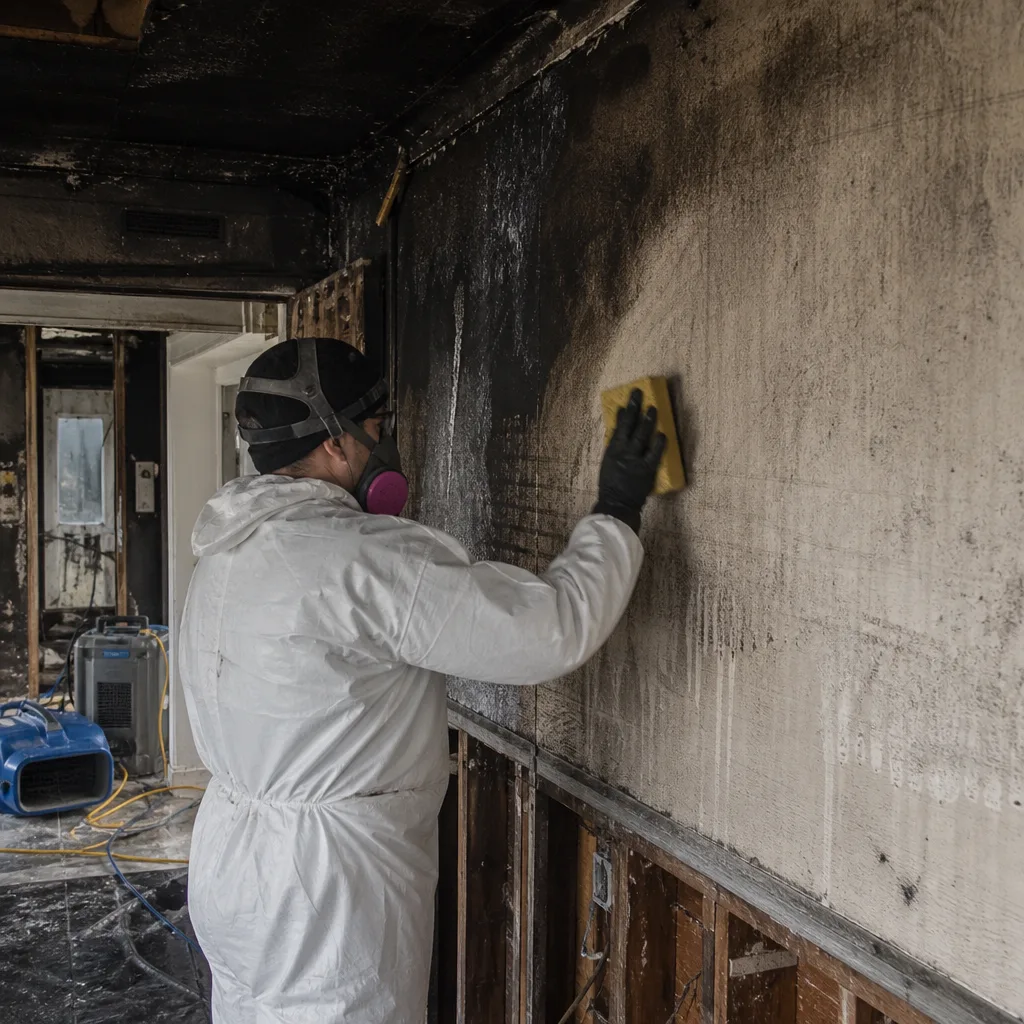
Downed trees, wind-blown debris, and water intrusion all come as a package in a Valhalla storm. We clear debris from entryways and driveways first so the home is accessible, then move inside to water extraction and cleanup. Our crews come prepared with HEPA air scrubbers for homes where standing water sat long enough to grow mold.
Roof Tarping
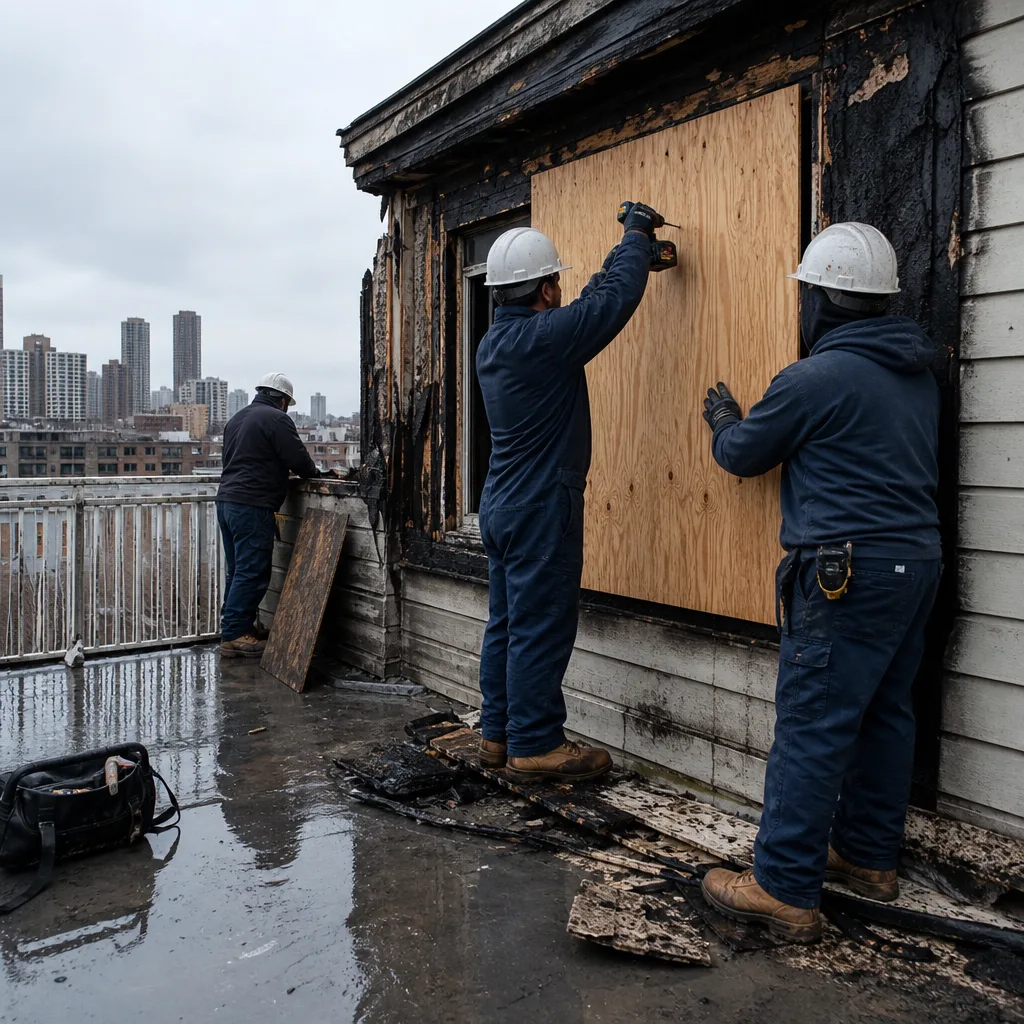
When wind peels back shingles or a tree limb punctures the roof deck, water gets inside fast. We secure the breach with professional-grade tarping the same day we arrive, then document the damage for your carrier. Tarping is not a repair, but it stops water intrusion so drying can begin inside while the rebuild is scheduled.
Emergency Board-Up
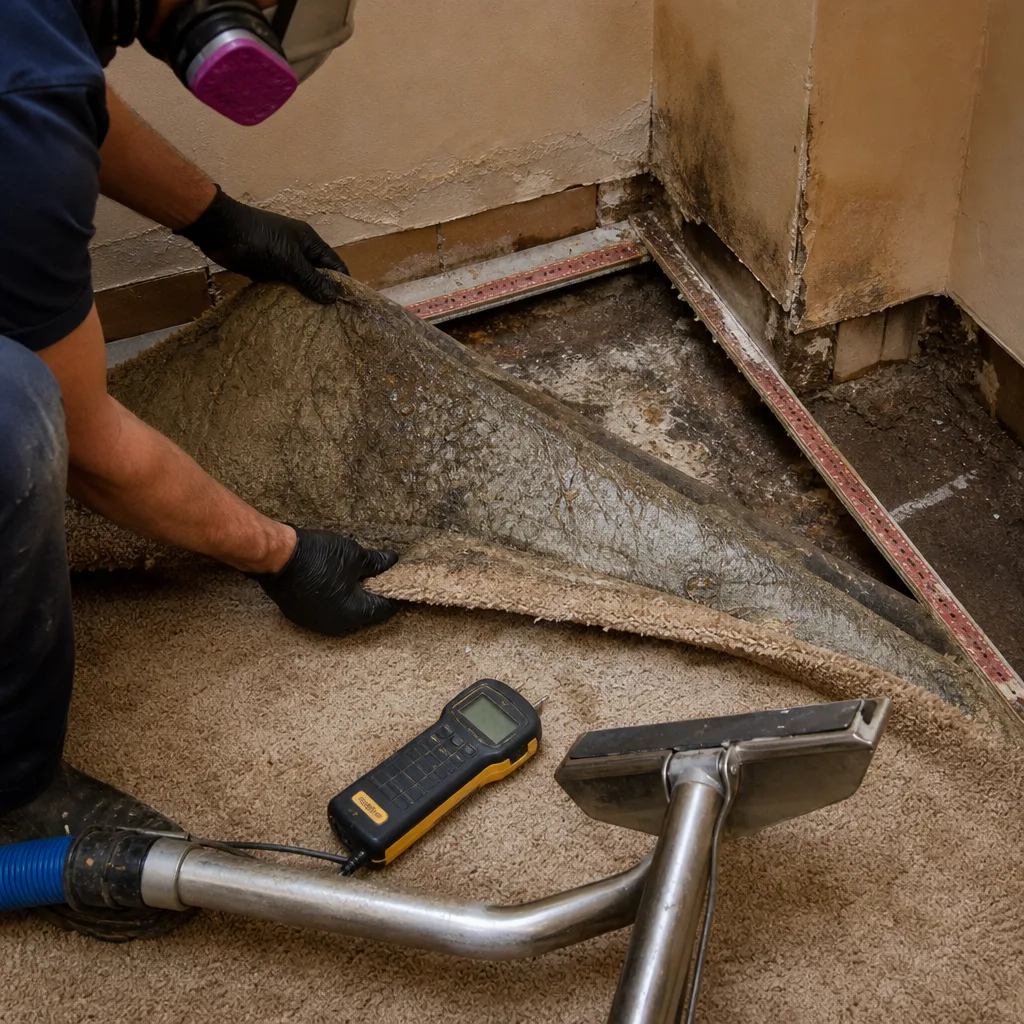
A broken window or compromised door after a storm leaves your Valhalla home exposed to weather, animals, and people. We board up and secure openings with plywood and fasteners rated for the job, photographed and documented for the insurance claim.
Debris Removal
Tree limbs, wet insulation, torn carpet, and water-damaged drywall all leave the property. Our crew hauls it, and we coordinate with your carrier on the disposal line items. You are not left with a dumpster in the driveway and no clear plan for what happens next.
What happens when you call
- 1
A real person answersNo phone trees - you reach a local pro.
- 2
You get an upfront price rangeHonest numbers before anyone is dispatched.
- 3
A background-checked tech heads outLicensed & insured, dispatched right away.
- 4
You approve before work beginsNothing starts until you say go.
Storm & Disaster Restoration Costs in Valhalla, NY
Storm restoration costs in Valhalla run a predictable range once we see the scope. Water extraction alone typically falls between $400 and $900 for a standard basement of 800 to 1,200 square feet. Structural drying adds $1,000 to $3,000 depending on the moisture load and how many rooms are affected. Flood-damaged basement rebuilds, including drywall, flooring, and trim, commonly land between $5,000 and $15,000 in this market, with higher numbers when original plaster or asbestos tile is present and requires abatement. Roof tarping runs $300 to $700 for a standard single-family home. Most storm claims in Valhalla are insurance-covered, and we bill the carrier directly, which means your out-of-pocket is often just the deductible. Call (917) 924-4221 for a free inspection and a written scope before any work begins.
We Also Serve Cities Near Valhalla
Our crews cover the full Mount Pleasant and Westchester corridor, including Hawthorne, Thornwood, Elmsford, and Pleasantville. If you’re in one of those communities and watching water rise, call the same number: (917) 924-4221.
Valhalla Storm & Disaster Restoration Questions, Answered
Why do Valhalla basements flood so fast in heavy rain compared to Hawthorne or White Plains?
Valhalla sits in a bowl-shaped valley where Kensico Reservoir tributaries and storm drains concentrate runoff into low-lying residential streets, so water collects and enters basements much faster than in neighboring elevated communities. Hawthorne and parts of White Plains drain away more quickly because of grade. In Valhalla, the water comes to you.
Does my Valhalla home’s older plaster-and-lath construction change how you dry it after a storm?
Yes. Plaster-and-lath walls hold water deeper and release it slower than drywall, so we dry them with lower heat and longer monitoring periods, using moisture meters and thermal imaging to verify dryness at depth. Rushing structural drying on original 1920s to 1960s plaster creates hidden moisture pockets that turn into mold behind your walls.
How do you handle a Valhalla basement that has flooded in past storms but was never properly dried?
We assume hidden mold is present until proven otherwise. In repetitive-flood basements, we inspect behind finished walls, check for historical waterlines on foundation surfaces, and run air quality testing where indicated. If we find pre-existing mold from prior floods, we scope containment and remediation so your current claim is not built on top of an older problem.
What does Category 3 water mean for my Valhalla flood cleanup?
Category 3 water is grossly contaminated, carrying sewage, chemicals, or heavy silt from outside runoff. In Valhalla, floodwater that has moved across streets and yards before entering your basement is typically Category 3. We set up containment, remove affected porous materials, and sanitize all surfaces before drying, because normal extraction alone does not make the space safe.
Why do ice dams keep causing water intrusion in my Valhalla roof after winter storms?
Valhalla’s mid-century capes and colonials often have low-slope roofs with limited insulation, which lets heat escape and melt snow from underneath. The meltwater refreezes at the cold eaves and forms an ice dam, backing water up under shingles and into wall cavities. We address the water intrusion and document the roof condition for your claim, and we can also recommend construction fixes that reduce ice dam formation in future winters.
How fast can you actually get to my Valhalla home in a storm emergency?
We commit to 45 minutes from dispatch to on-site for emergency storm work in Valhalla. Our crews stage along the Metro-North corridor and know the local streets, including the tight driveways and one-way routes near the station. Call (917) 924-4221 and a live person starts routing a crew immediately.
Will my Valhalla homeowners insurance cover storm and flood damage?
Most standard homeowners policies in Valhalla cover wind damage, roof breaches, water intrusion from storm openings, and ice dam damage. Coverage for basement flooding from surface water runoff is often separate, depending on your policy. We document every detail from the first hour and bill your carrier directly, so you are not left negotiating with an adjuster on your own.
What should I do in the first 30 minutes after storm water enters my Valhalla home?
Call us at (917) 924-4221 first. Then, if it is safe to do so, shut off power to the affected area at the breaker and move valuables to higher ground. Do not enter standing water you cannot see through, and do not attempt to remove saturated plaster or drywall yourself. We will be there fast, and the earlier we start extraction, the less damage remains to repair.
Serving Valhalla, NY - Our Local Coverage Area
We’re based in the Valhalla area and know this community well. Use the map below to see our service coverage - if you’re nearby, we can almost certainly help.
Storm Restoration Done Right, Backed in Writing
Valhalla’s flood history means that the restoration company you choose matters more here than almost anywhere else in Westchester. Repeated water events, older homes, legacy materials, and the Kensico watershed’s drainage patterns all combine to make storm recovery harder. We know this town’s specific problems because we have worked them, mapped them, and documented them for adjusters on claim after claim.
Every job we complete carries the 90-Day Done Right Promise in writing. If it’s not done right, we make it right, no paperwork battles, no arguing. That’s the Keystone Standard, and Curt Bowman has stood behind it since 2010. Call (917) 924-4221 now for a free inspection and a firm scope of work. A live person answers. A certified crew arrives. And the line the water left is where we start.
Written by Curt Bowman, Owner at Floodline Restoration Co., serving Valhalla and the surrounding Westchester communities.