
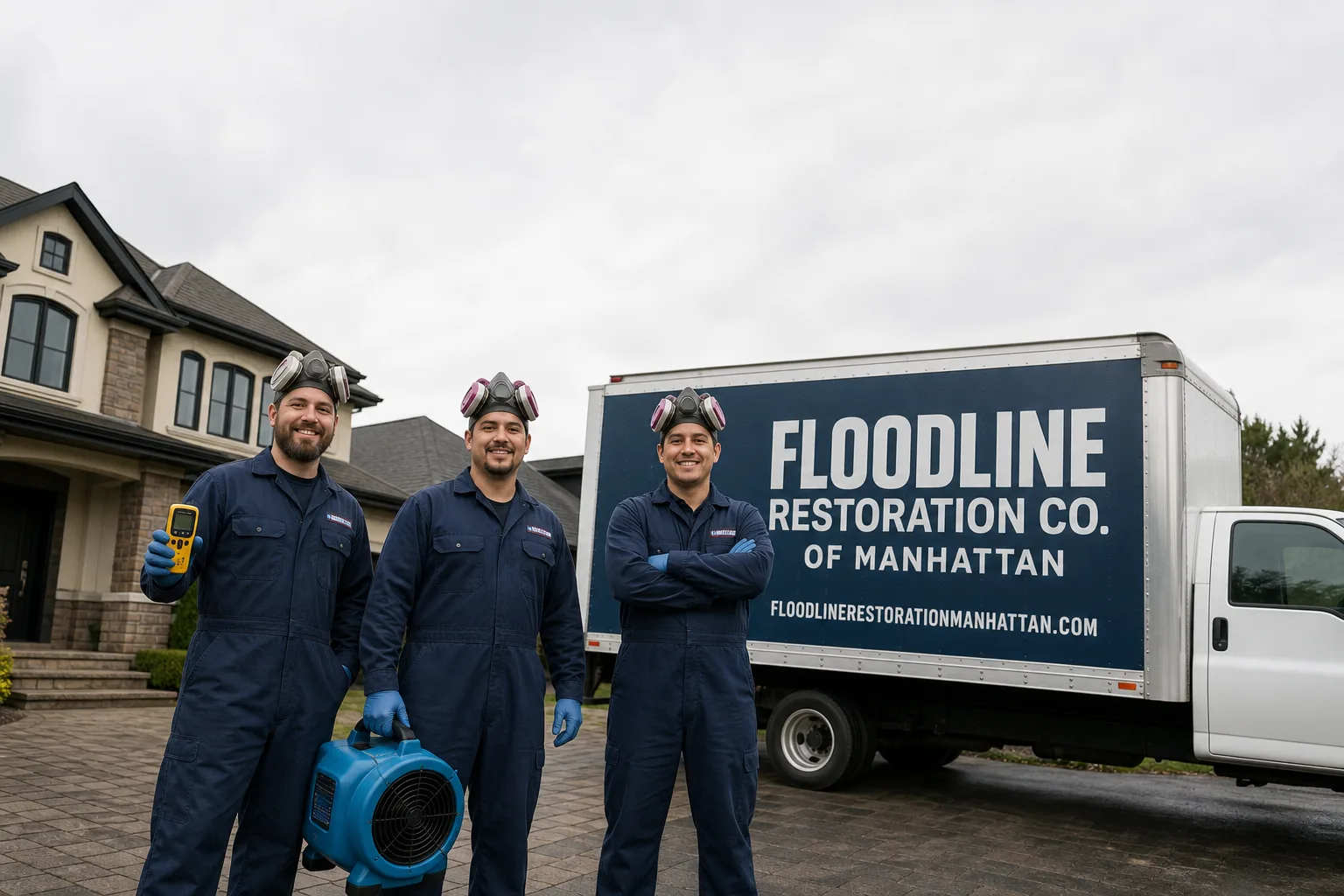
Free visual inspection and a written scope of work before any mitigation begins - photos, moisture readings, and drying logs go in your claim file
The scope we write is the scope we bill. Anything new gets shown to you, in writing, before we touch it.






 Before
 After
After Before
 After
After Before
 After
After24/7 Emergency Water Damage Restoration in Cedarhurst
Water damage in Cedarhurst doesn’t wait for business hours, and neither do we. A burst pipe in a 1920s Colonial on Cedarhurst Avenue or a flooded basement off Peninsula Boulevard needs extraction running within the first hour, not a promise to call back Monday. We answer live, 24 hours a day, 7 days a week, and we dispatch a certified crew to Cedarhurst the moment you call (917) 924-4221. Our team arrives with professional-grade Dri-Eaz extraction units and Phoenix dehumidifiers on the truck, ready to start pulling water while you’re still on the phone with your carrier.
But in Cedarhurst specifically, the urgent job often isn’t just the water you can see. Our Water Damage Restoration team knows that what’s behind the walls matters more. If you had repairs done after Superstorm Sandy and never confirmed the cavity dried, the water event you’re dealing with today may be only half the story. We inspect for trapped moisture from day one, because this village is ground zero for re-remediation work that othercompanies miss entirely.
Understanding Water Damage Restoration Severity in Cedarhurst Properties
Water damage is categorized by contamination level, and the difference changes the entire scope. Category 1 water comes from a clean source, a supply line or a tub overflow. Category 2 carries significant contamination, think washing machine discharge or sump pump failure. Category 3 is grossly contaminated, floodwater from Jamaica Bay storm surge, sewage backups, and nor’easter groundwater pushing up through your slab. In Cedarhurst, where coastal flooding has historically brought Category 3 water into basements and crawl spaces, the severity assessment is critical because improperly classified water leaves pathogens behind.
The housing stock here adds another variable. Cedarhurst’s 1920s-1950s Colonials and Cape Cods have plaster-and-lath walls and shallow basements that sit close to the water table. Plaster is porous and holds moisture long after the surface feels dry. That’s why we don’t trust a single surface reading. We moisture-map wall cavities, sill plates, and subflooring with thermal imaging and hygrometers, and we log daily readings until every affected material hits its dry standard. A proper structural drying protocol on a Cedarhurst Colonial takes longer than a modern drywall home. Anyone who says otherwise is guessing.
Why Cedarhurst Property Owners Choose Floodline Restoration Co. of Manhattan
- 45-minute response commitment in Cedarhurst. We’re local enough to be on Cedarhurst Avenue, Rockaway Turnpike, or West Broadway fast, and we hold ourselves to a 45-minute dispatch-to-door target for emergency calls.
- 24/7 live answer, never an automated system. A live dispatcher picks up at 2 a.m. on a Saturday with the same urgency as 2 p.m. on a Tuesday. You speak to a person who can dispatch a crew immediately.
- IICRC-certified technicians with the right codes for the job. Our crews hold WRT (Water Restoration Technician) and FSRT (Fire & Smoke Restoration Technician) credentials. For flooded Cedarhurst basements with potential mold, we also carry AMRT (Applied Microbial Remediation Technician) certification on the team.
- Free visual inspection, always. We look first, explain what we find, and give you a written scope before any work starts. No pressure, no vague hand-waving about what might be wrong.
- Direct insurance billing. We work with your carrier from the first call, provide daily moisture logs and photo documentation, and bill them directly. You don’t play messenger.
- One team from extraction to reconstruction. Floodline Restoration Co. handles the full cycle. The same background-checked, uniformed technician who pulls the water on day one is part of the team that rebuilds the wall on day ten.
Our Water Damage Restoration Process
Inspection & Assessment
We start with a full walkthrough, moisture mapping with Dri-Eaz thermal imaging, and classification of the water. We look inside wall cavities and under baseboards, because in Cedarhurst, the water that matters is often hiding behind a surface that reads dry.
Extraction & Stabilization
We pull standing water using truck-mounted and portable extraction units. For Cedarhurst basements with cast-iron drain stacks, we also scope the plumbing to rule out an active leak that would undo the work.
Drying & Dehumidification
Professional-grade Phoenix dehumidifiers and high-volume air movers run continuously. We place equipment to force dry air across wall cavities, not just the room. Daily moisture readings get logged and shared with your carrier.
Cleaning & Sanitization
We apply antimicrobial treatments to affected framing and surfaces. For Category 2 or 3 water in Cedarhurst’s older homes, we follow IICRC protocols for sanitization before any rebuilding begins.
Coastal-Specific Cavity Verification
This is the step that separates Cedarhurst re-remediation from routine drying. We open verification points in areas that were ‘repaired after Sandy’ and confirm cavity moisture is actually gone, not just hidden. If we find trapped moisture or mold, we document it and expand the scope with your carrier.
Repairs & Restoration
We rebuild what needs rebuilding. Drywall, plaster, trim, flooring, and paint. The same team that dried your home finishes it, with a moisture log and the 90-Day Done Right Promise in writing before we leave.
Need Emergency Water Damage Restoration in Cedarhurst Now?
Crews minutes away, answering live 24 hours a day. The sooner we start, the less it costs.
Working With Your Insurance Company
Insurance claims in Cedarhurst have a particular texture. Many policies still carry Sandy-era exclusions, flood damage riders, and specific limits on water damage from groundwater or storm surge. We know how those claims get approved and how they get stalled. Our team documents from the first hour: photos of every affected area, daily moisture readings, a line-item scope of work, and direct communication with your adjuster so you aren’t translating technical details across the phone.
For Cedarhurst homeowners who had a claim after Sandy and are now dealing with water damage again, we help distinguish what your current policy covers versus what the carrier may argue is pre-existing. That distinction matters in the Five Towns, and we know how to present the evidence clearly.
What We Provide Your Insurer
- Thorough documentation of the loss
- Photos of all damage, room by room
- Moisture readings and drying logs
- A detailed, line-item scope of work
- Direct coordination with your carrier
Built for Cedarhurst’s Loss Calendar
Water damage in Cedarhurst follows the seasons, and each season leaves a different signature. January deep freezes are the busiest time for burst supply lines, especially in older Colonials with pipes running through unheated garages, crawl spaces, and exterior walls. The freeze-thaw cycle along the South Shore means supply lines that survived five winters finally let go on the sixth. February brings the same, with the addedcomplication of radiators and boiler leaks in homes that still run original steam systems.
Spring brings groundwater. Cedarhurst sits at near-sea-level elevation, and when the water table rises after a wet March, basements that stayed dry all winter suddenly show seepage through the foundation. By summer, warm, humid air from Jamaica Bay and the Atlantic inlets means any slow leak becomes a mold incubator within days. Fall is nor’easter season. Coastal flooding, wind-driven rain through aging window flashes and roof edges, and storm surge that pushes groundwater laterally through masonry. None of this is a surprise to us. It’s the local calendar we’ve been reading for years.
Water Damage Restoration Across Cedarhurst’s Neighborhoods
Cedarhurst is compact, but the loss patterns shift block by block. Homes along Cedarhurst Avenue and the older residential streets north of the LIRR station tend to be 1920s Colonials with original cast-iron stacks and shallow basements. These properties are the ones we most often find pinhole leaks that other companies scoped as condensation. The water damage presents as a musty wall with no visible source. By the time we open it, the studs are already wet.
Properties closer to Peninsula Boulevard and the commercial corridor see different issues. Mixed-use buildings, some townhouse-style, with flat roofs and older parapet flashing. Water enters from the roof edge, travels down the wall cavity, and shows up on the second floor ceiling days after the rain. Over in the blocks near Central Avenue and the Cedarhurst Park area, we see more crawl space moisture from the high water table. The groundwater doesn’t flood, it just keeps the relative humidity high enough that subflooring never fully dries. We treat each of these differently, and our crews know Cedarhurst well enough to route quickly whether you’re off Rockaway Turnpike or on the quieter residential streets near the Five Towns border.
West Broadway and the neighborhoods between it and the bay side carry the heaviest Sandy legacy. This is where storm surge came through hardest in 2012, and where we still open walls that were ‘mitigated’ a decade ago only to find Penicillium thriving in the wall cavity. The real story of water damage restoration in Cedarhurst isn’t the new loss events. It’s the old ones that were never truly finished.
Specialized Water Damage Restoration Services We Offer in Cedarhurst
Emergency Water Extraction
Standing water in a Cedarhurst basement or a burst supply line in a second floor bathroom needs extraction immediately. We arrive with truck-mounted extraction units, submersible pumps for deep water, and the same team handles the entire job from first water pulled to final walkthrough.
Structural Drying & Dehumidification
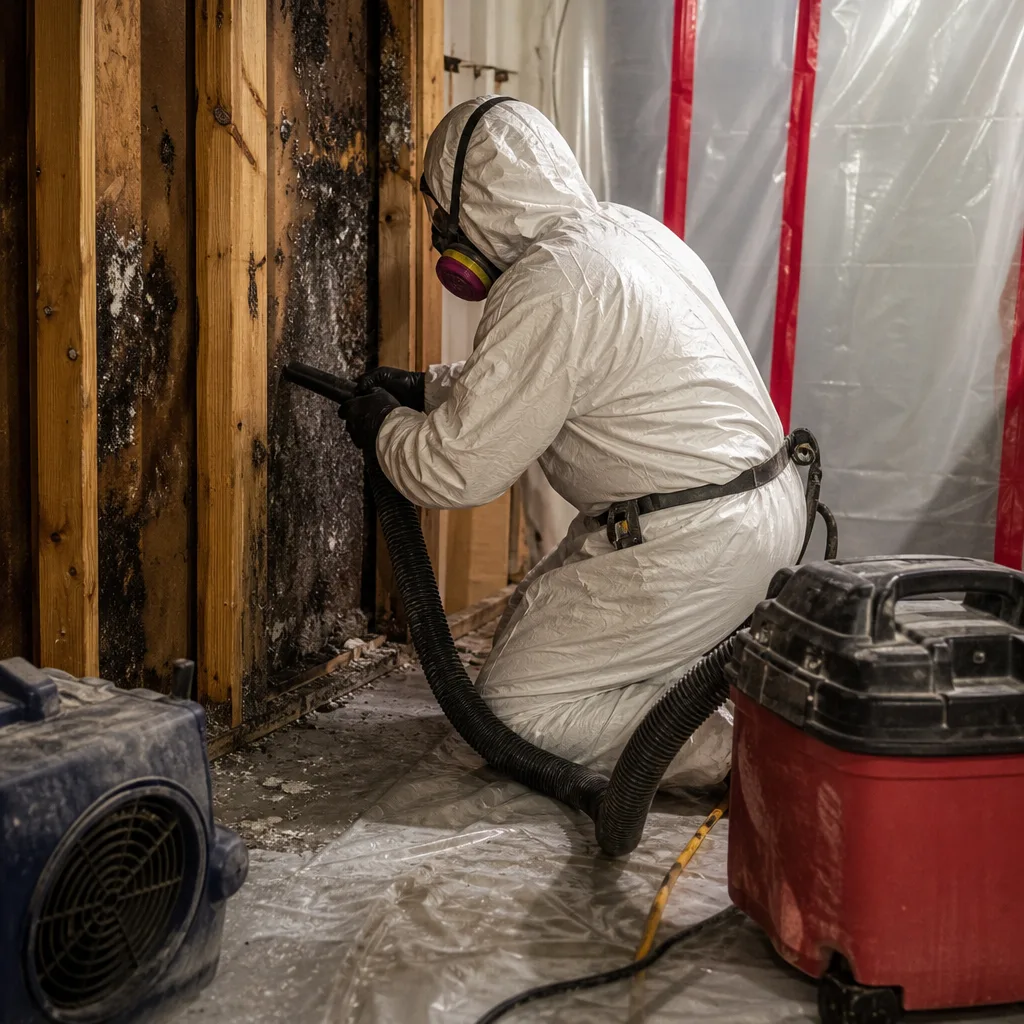
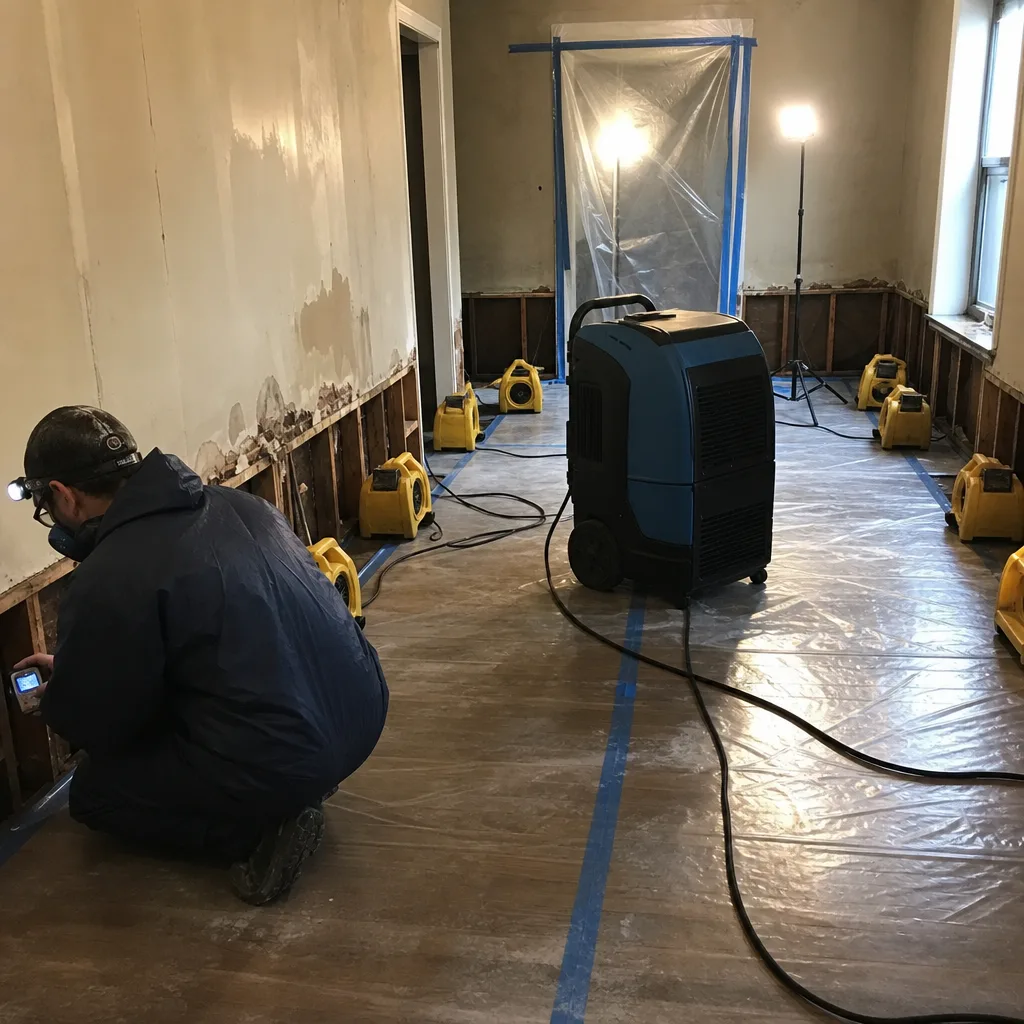
This is the service that defines our work in Cedarhurst. Proper structural drying on a plaster-and-lath Colonial with a shallow basement requires cavity-focused drying, not just room-level dehumidification. We set containment where needed, run Phoenix dehumidifiers and air movers, and log daily readings until studs, sill plates, and plaster all hit the dry standard.
Flood Cleanup
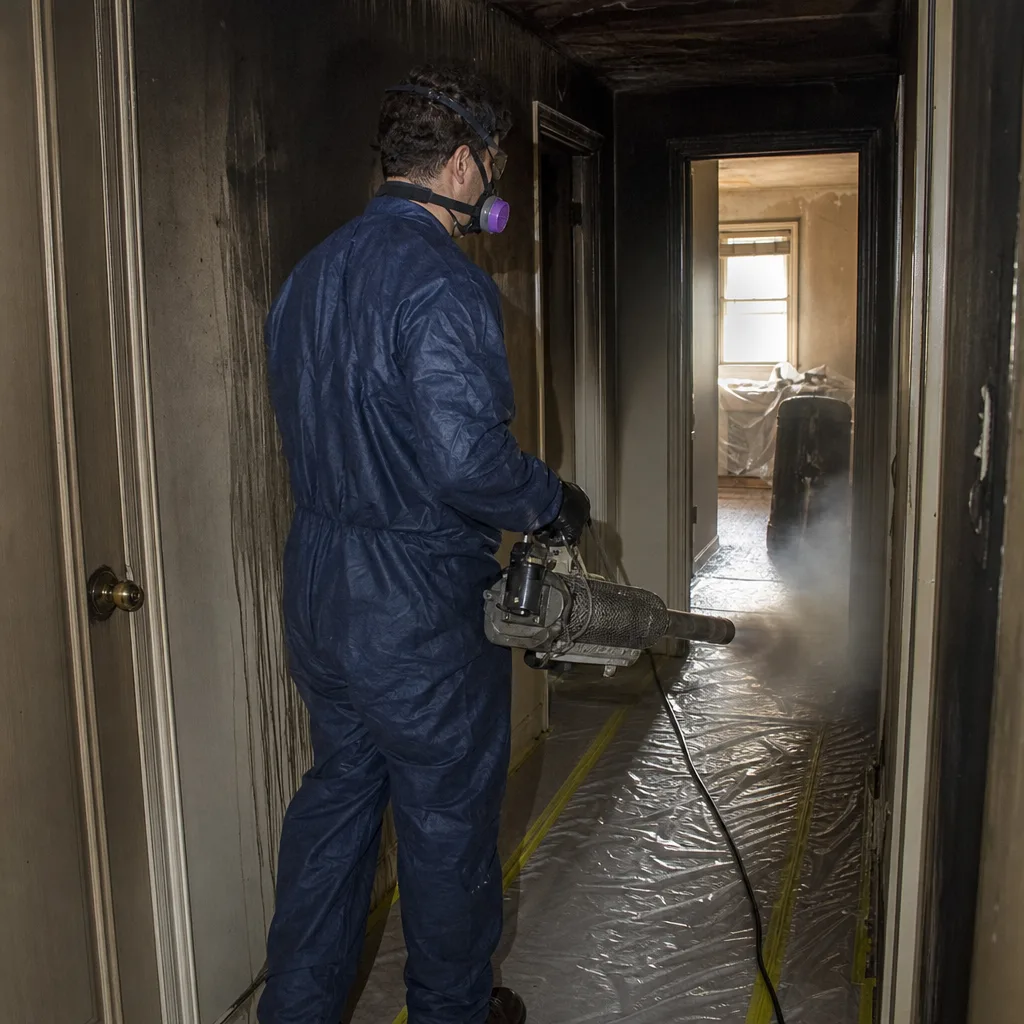
Nor’easter flooding and groundwater seepage bring Category 2 and 3 water into Cedarhurst basements and crawl spaces. We handle contaminated material removal, substrate sanitation, and the structural drying that follows. Coastal water leaves salt residue, which we address before closing any wall.
Burst Pipe Restoration
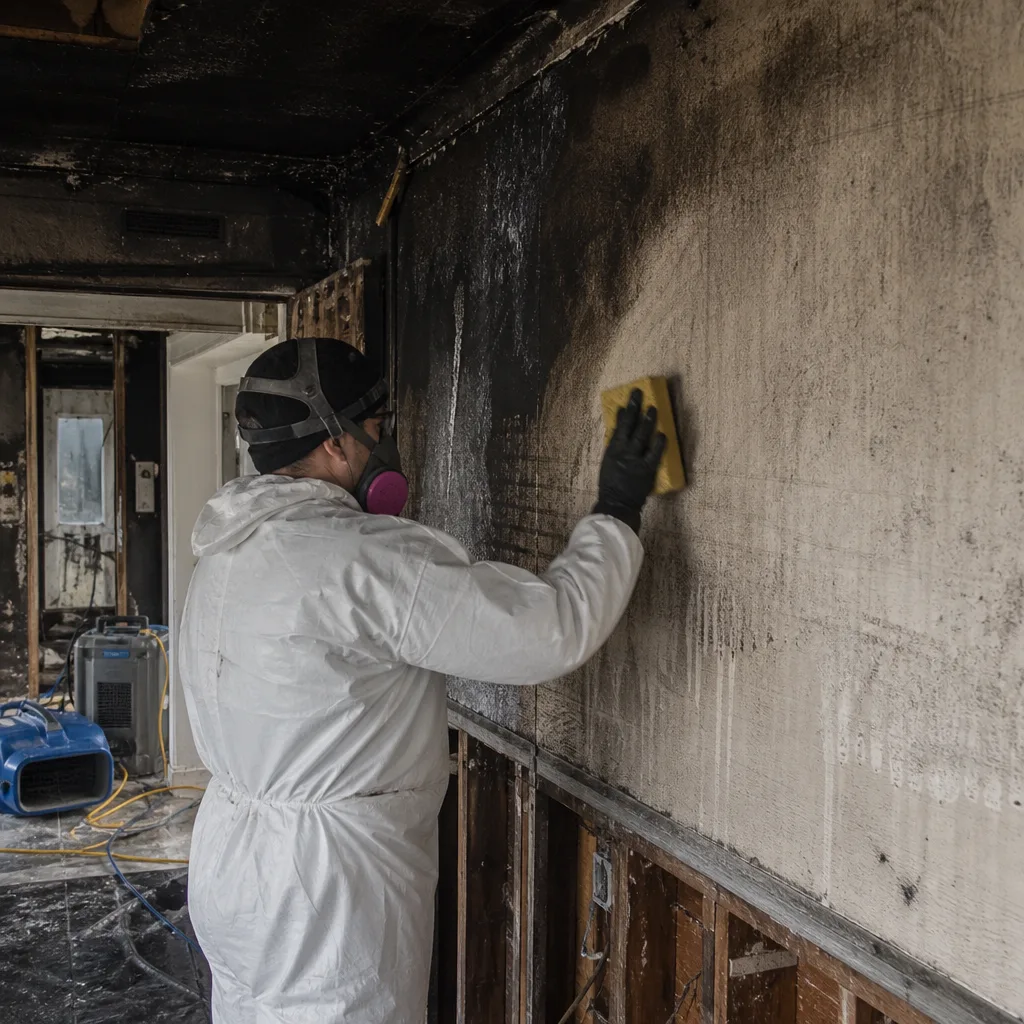
Deep freezes on the South Shore burst pipes in place, and a burst pipe in an older Cedarhurst home often means water behind plaster and under original oak flooring. We handle the plumbing repair coordination, the water extraction, the cavity drying, and the restoration. One team, one point of accountability.
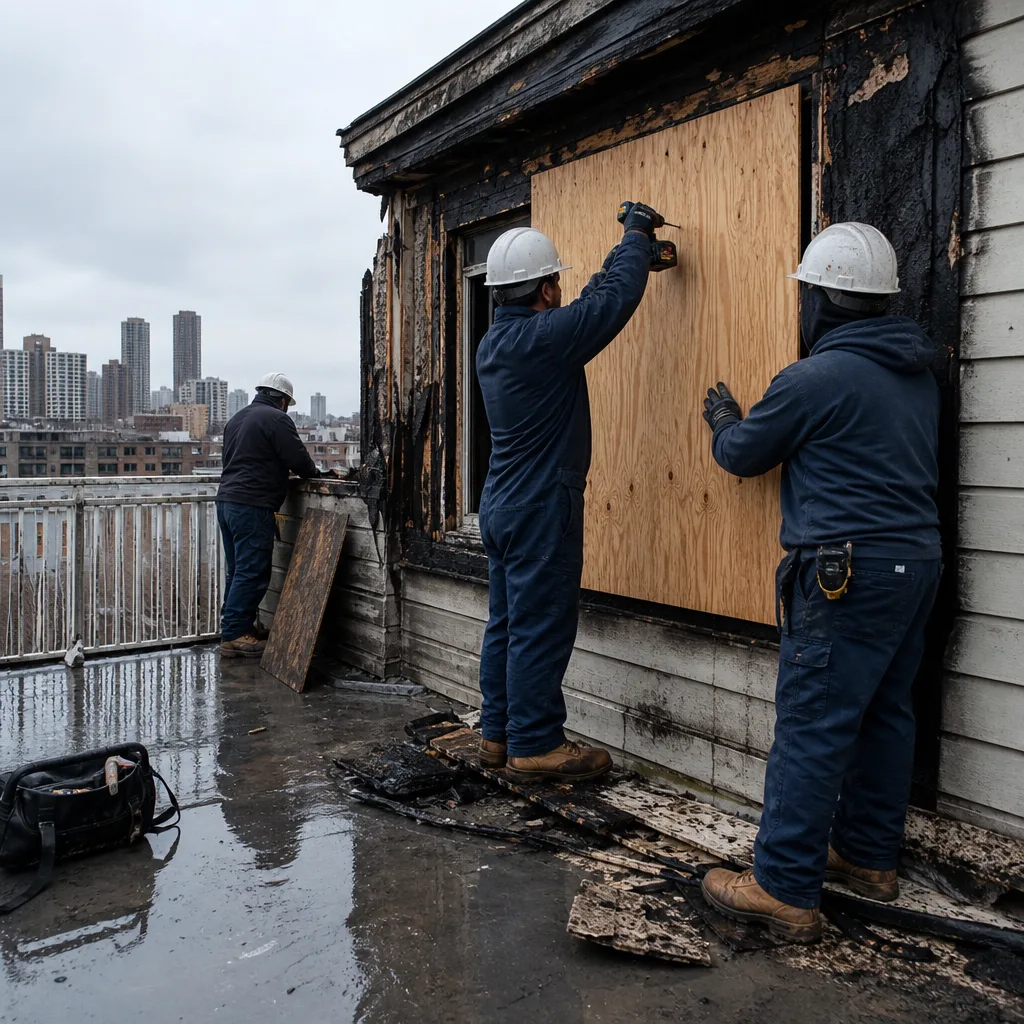
Basement Water Removal
Cedarhurst basements sit near the water table, so groundwater intrusion is a recurring problem. We remove the water, check the cast-iron and galvanized supply lines for the active leak, dry the space properly, and rebuild with materials that tolerate South Shore humidity.
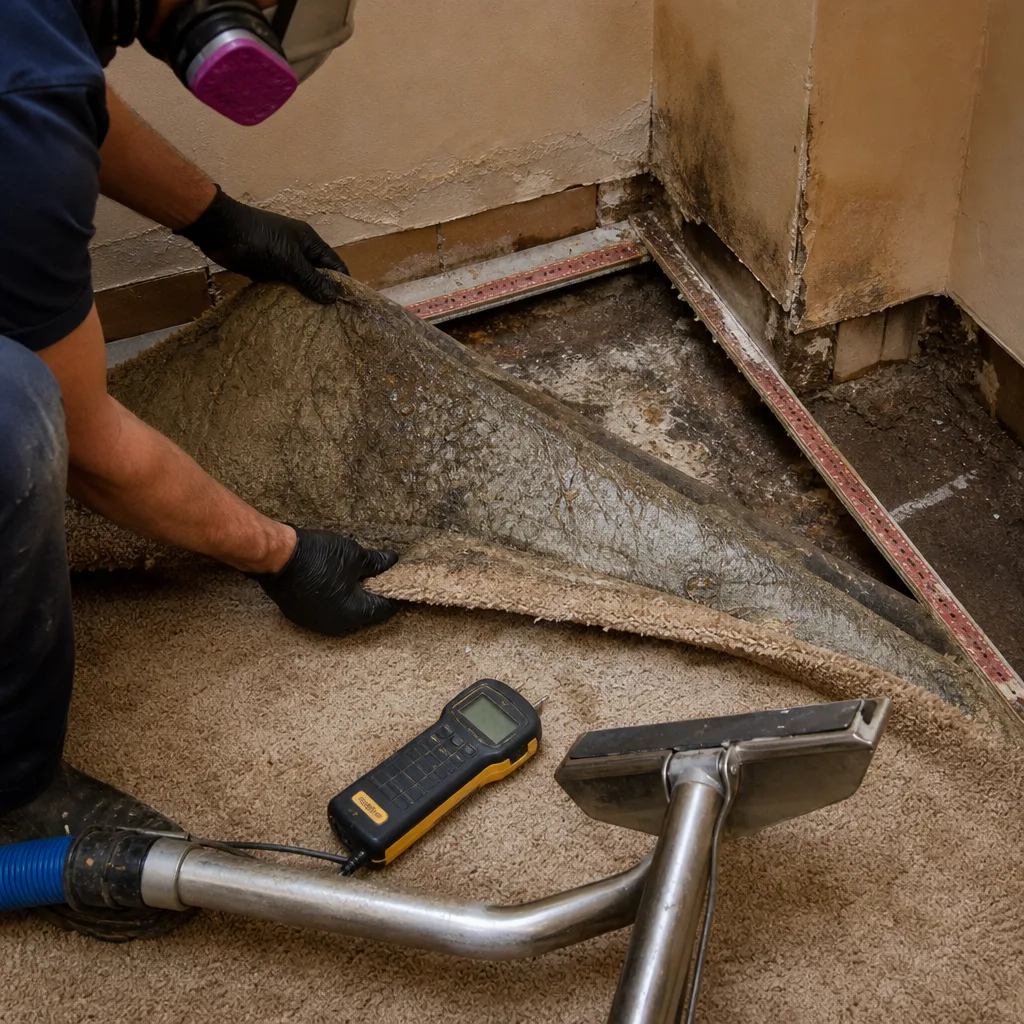
Mold Remediation
Re-remediation is a defining part of our Cedarhurst work. Hidden Aspergillus and Penicillium colonies behind Sandy-era drywall require full containment, air scrubbing with HEPA filtration, antimicrobial treatment of framing, and clearance testing before we rebuild. We don’t paint over mold. We remove it and document it for your carrier.
What happens when you call
- 1
A real person answersNo phone trees - you reach a local pro.
- 2
You get an upfront price rangeHonest numbers before anyone is dispatched.
- 3
A background-checked tech heads outLicensed & insured, dispatched right away.
- 4
You approve before work beginsNothing starts until you say go.
Water Damage Restoration Costs in Cedarhurst, NY
A typical emergency water extraction in Cedarhurst runs $400-$900, depending on water volume and whether we’re dealing with a clean supply line or contaminated floodwater. Structural drying for a single room or a modest basement typically falls in the $1,200-$2,500 range, including equipment, daily moisture readings, and the drying log we hand to your carrier.
Full-scope restoration after a burst pipe or flood event, including drywall removal, cavity treatment, and rebuild, commonly runs $4,000-$9,000 in Cedarhurst. Re-remediation of a previously ‘dried’ wall where mold has colonized behind the surface typically starts around $3,500 and moves up from there, depending on how far the mold has spread and whether containment is needed. These are honest ranges for this village, not national averages. Your free visual inspection gets you a firm scope, a written price, and no surprises.
We also offer straightforward standing discounts: $50 off any repair over $250, an $89 seasonal tune-up for proactive plumbing and moisture checks, and a 5% discount for seniors and veterans. Always, no fine print. Call (917) 924-4221 and we’ll walk through what your specific job looks like.
We Also Serve Cities Near Cedarhurst
Our crews work throughout the Five Towns and southern Nassau County. If you’re in Lawrence, Woodmere, Inwood, or Far Rockaway, the same live 24/7 dispatch and 45-minute response commitment applies. We know the housing stock, the water table, and the insurance environment in these neighborhoods the same way we know Cedarhurst.
Serving Cedarhurst, NY - Our Local Coverage Area
We’re based in the Cedarhurst area and know this community well. Use the map below to see our service coverage - if you’re nearby, we can almost certainly help.
Cedarhurst Water Damage Restoration Questions, Answered
Why do so many Cedarhurst homes need water damage work more than a decade after Superstorm Sandy?
The 2012-2013 repair window was compressed by enormous demand, and many contractors dried to surface readings only. They confirmed the drywall face was dry but never verified the wall cavity or sill plate. Behind those walls, trapped moisture became mold colonies, and the village is now seeing a second wave of full-scope remediation. Call (917) 924-4221 to have us check your cavities before the problem spreads.
How do floodwaters in Cedarhurst differ from a typical pipe leak in terms of cleanup?
Floodwater from nor’easters and surge is Category 3 water, grossly contaminated with sewage, salt, and debris. Typical pipe leaks are usually Category 1 or 2. Category 3 requires full material removal, sanitation, and often containment. The salt residue from coastal water also accelerates corrosion in framing, which changes the drying and treatment protocol. We handle this difference every week in Cedarhurst.
What does it take to properly dry a 1920s-era Colonial with plaster-and-lath walls after a flood?
Plaster holds moisture long after it feels dry, so we use thermal imaging and cavity readings to confirm what’s actually happening inside the wall. We run Phoenix dehumidifiers and air movers positioned to force dry air through wall cavities, and we log daily readings until every stud and sill plate hits the dry standard. In Cedarhurst’s humid climate, this typically takes five to eight days, not the two or three a surface-only drying would suggest.
What makes Cedarhurst basements so prone to persistent dampness even without a storm?
Cedarhurst sits at near-sea-level elevation on the South Shore, and the water table is very close to the surface. Groundwater moves laterally through aging masonry foundations, keeping basements and crawl spaces at high relative humidity even in dry weather. Interior-only dehumidification can’t break that cycle. We address the foundation-level moisture source first, then dry the interior.
How do you know if a Cedarhurst home was properly dried after Sandy, or if it needs re-remediation?
We use Dri-Eaz moisture mapping to read wall cavities, not just surfaces. Our techs recently opened a wall in a Cedarhurst Colonial on Chestnut Street that had been ‘mitigated’ after Sandy and found the cavity still reading high moisture. Behind the new drywall, Penicillium had colonized the paper backing and the original plaster was spongy. If your home was repaired in 2013 and you never saw cavity readings, call us for a free inspection. We’ll verify it properly.
How fast can a crew actually get to my Cedarhurst home?
Our dispatch desk is live 24/7, and we commit to a 45-minute dispatch-to-door target for emergency calls in Cedarhurst. We’re local, we know the shortcuts off Rockaway Turnpike and Peninsula Boulevard, and we don’t put you on a list for the next available time slot. Call (917) 924-4221 and a real person starts moving a crew immediately.
Will insurance cover water damage restoration in Cedarhurst, including re-remediation?
It depends on the source of the water and your specific policy. Flood and groundwater damage generally require flood insurance, while burst pipes and supply line failures fall under standard homeowners coverage. Re-remediation is often covered if we can document that the original drying was incomplete and the mold is new growth. We provide the documentation your adjuster needs and bill your carrier directly.
What should I do in the first 30 minutes after discovering water damage in my Cedarhurst home?
Shut off the water source if you can identify it. Cut power to affected areas if water is near outlets or wiring. Move valuable items to dry ground. Then call us at (917) 924-4221 and let us start the clock. Do not try to dry behind walls yourself, especially in older Cedarhurst homes where hidden moisture is the real problem. The sooner we read the moisture map, the less damage spreads.
Written by Curt Bowman, Owner at Floodline Restoration Co. of Manhattan, serving Cedarhurst and the Five Towns since 2010.