
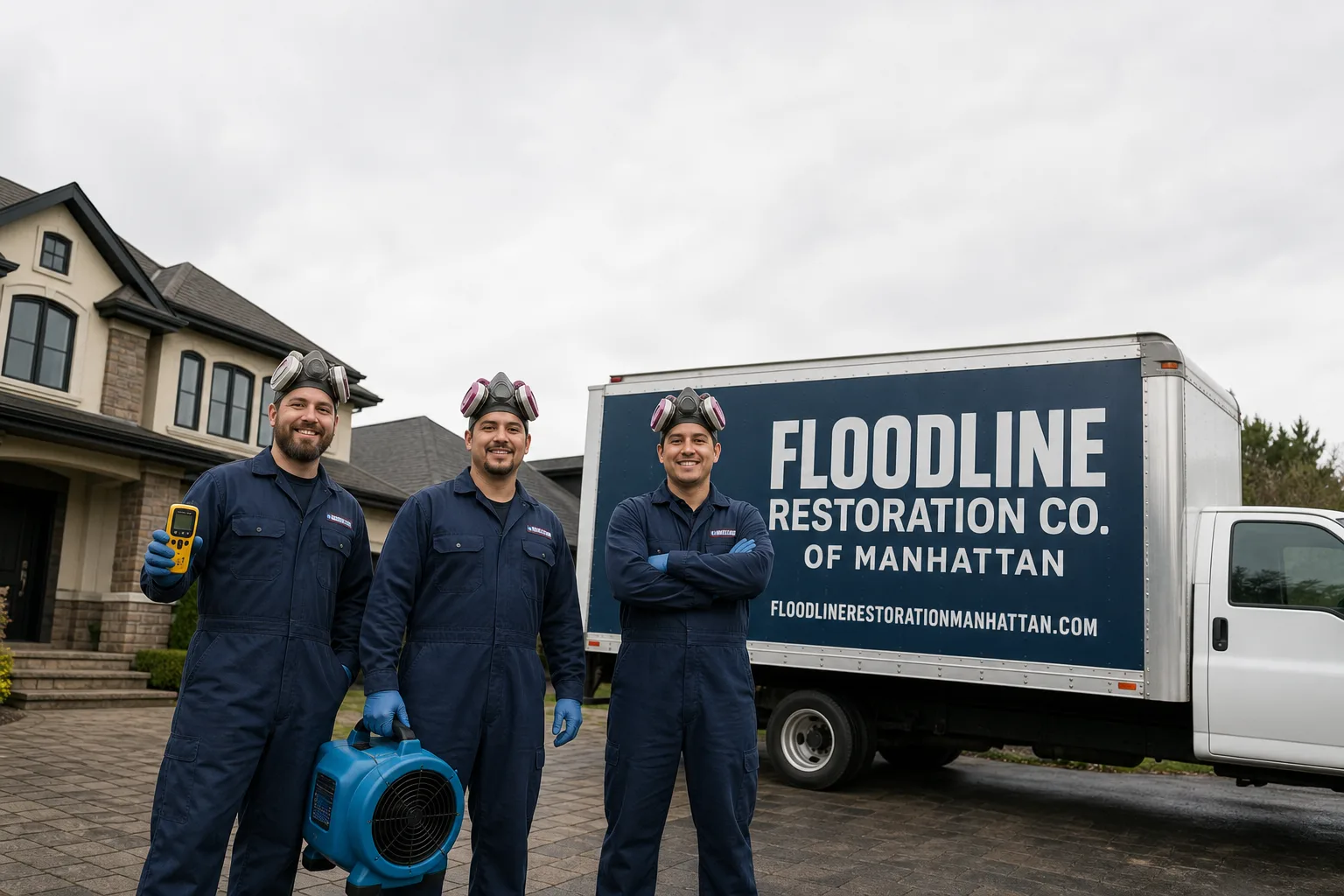
Free visual inspection and a written scope of work before any mitigation begins - photos, moisture readings, and drying logs go in your claim file
The scope we write is the scope we bill. Anything new gets shown to you, in writing, before we touch it.






 Before
 After
After Before
 After
After Before
 After
After24/7 Emergency Water Damage Restoration in Lawrence
Water damage restoration in Lawrence moves fast because the water here is almost never just water. When a nor’easter pushes Jamaica Bay over Rockaway Turnpike or a supply line lets go in a 1930s colonial on Washington Avenue, the first call should be to a crew that knows the difference between a freshwater mop-up and a saltwater extraction. Our live dispatch answers at 2 a.m., and a certified crew starts the same visit. Call (917) 924-4221 the moment you see standing water, because every hour that salt sits in wall cavities and wiring, the scope gets bigger and the re-open permit gets harder.
Understanding Water Damage Restoration Severity in Lawrence Properties
Lawrence homes respond to water differently than inland houses, and the severity scale reflects that. Category 1 water is a clean supply-line break from a PEX line or copper pipe. Category 2 carries contaminants from washing machines or sump failures. Category 3 is what Lawrence sees most often after coastal events: saltwater mixed with bay sediment, sewage, and whatever the surge carried in. That Category 3 water saturates plaster-and-lath walls, wicks upward through masonry foundations, and leaves chloride residues that keep pulling moisture for months. Moisture mapping on a Lawrence Tudor off Broadway will often show readings holding at 20 percent or higher inside walls that look dry on the surface. We run thermal imaging and hygrometers on every wall cavity below the floodline, not just the visible drywall, because what you cannot see is what fails the re-open inspection.
Homes built between the 1920s and 1960s account for much of Lawrence’s stock. Plaster crown molding, hardwood parquet floors, and custom millwork are common, and those materials do not behave like modern gypsum board. Plaster can look stable while salts corrode the keys holding it to the lath. Hardwood absorbs saltwater fast and cups irreversibly if drying starts too late. Structural drying here means drying the assembly, not the surface, and documenting it daily until the dry standard is met. That is the log your adjuster and the Nassau County building department expect to see.
Why Lawrence Property Owners Choose Floodline Restoration Co. of Manhattan
- 45-minute response commitment. Dispatch is coordinated from our New York City office, and crews serving Lawrence are on the road immediately. A live person answers, not a recording.
- 24/7 live answer, every day. You will never leave a voicemail at 3 a.m. and hope someone calls back. Our dispatcher picks up and a crew is rolling.
- IICRC-certified crews. Our technicians hold WRT and ASD certifications through the IICRC, and we train to RIA and IFA standards. They read the moisture map on day one and log readings until the dry standard is met.
- Free visual inspection. The first look costs you nothing. You get a straight assessment of what is wet, what is salvageable, and what the saltwater replacement standard requires.
- Direct insurance billing. We deal with your carrier. You are not the messenger. We document the loss, photograph every room, and coordinate with the adjuster directly.
- One team from extraction to reconstruction. The same certified crew that pulls the water also repairs the plaster, matches the trim, and rebuilds the basement. No mid-job handoff. No inherited crew.
Our Water Damage Restoration Process
Inspection & Assessment
We start where the water stopped. Thermal imaging, moisture meters, and a room-by-room survey tell us how far the water traveled. In Lawrence, that means checking every wall below the first-floor ceiling for saltwater contact, because the replacement standard is not a suggestion.
Extraction & Stabilization
Truck-mounted extraction pulls standing water from basements, crawlspaces, and floor assemblies. XPOWER air movers are staged while extraction runs, and containment goes up where Category 3 water has touched finished living space.
Drying & Dehumidification
Dri-Eaz dehumidifiers and Phoenix air movers run against a daily moisture log. We do not stop when surfaces feel dry. We stop when readings inside walls, under cabinets, and behind baseboards hit the dry standard. Plaster-and-lath assemblies in Lawrence take longer than drywall, and we plan for that.
Cleaning & Sanitization
Salt residue is not just unsightly. It is corrosive. We flush chloride contamination from masonry, treat affected framing, and apply antimicrobials where organic material was present. HEPA scrubbing on an air scrubber keeps demolition dust from migrating into clean rooms.
Saltwater-Specific Treatment
This step is not standard in freshwater restoration, and it is where Lawrence jobs differ. We test for salinity in wall cavities and flooring. Any wiring or panel below the first-floor ceiling that shows saltwater exposure is flagged for replacement, not remediation, and a licensed electrician is brought in before drying logs close.
Repairs & Restoration
The same crew that pulled the water now matches the plaster, reinstalls the millwork, refinishes the floors, and rebuilds the basement. We leave you with a moisture log, a written scope of work, and the 90-Day Done Right Promise in hand.
Need Emergency Water Damage Restoration in Lawrence Now?
Crews minutes away, answering live 24 hours a day. The sooner we start, the less it costs.
Working With Your Insurance Company
Most Lawrence homeowners are in the room with an adjuster at some point after a flood or pipe break, and the difference between a full claim and a partial denial often comes down to documentation. We photograph everything from the first hour, before demolition starts. We log moisture readings daily and hand that log to your carrier. Our line-item scope matches what insurers in this market expect, and we speak to the adjuster in their language so you do not have to. When saltwater is involved, we document the chloride exposure in writing, because that is what triggers the replacement coverage rather than a repair settlement. The goal is simple: your carrier pays for the work your house actually needs, and you never play messenger between us and them.
What We Provide Your Insurer
- Thorough documentation of the loss
- Photos of all damage, room by room
- Moisture readings and drying logs
- A detailed, line-item scope of work
- Direct coordination with your carrier
Built for Lawrence’s Loss Calendar
Lawrence gets hit from two sides, and the loss calendar reflects that. January and February bring deep freezes that burst supply lines in unheated basements and crawlspaces, especially in older homes where original copper runs through uninsulated rim joists. Those are Category 1 freshwater events, but they often go unnoticed for days because homeowners are away or the leak is behind a wall. By the time the water finds the kitchen ceiling, mold has a head start.
March and April bring thaw and spring rain, pushing groundwater up through masonry foundations and into basements on streets like Ocean Avenue and Ridge Drive. Summer thunderstorms drop inches in an hour, overwhelming old storm drains and flashing into basements through bulkheads and window wells. August through October is nor’easter season, and this is where Lawrence’s dual exposure matters. Surge from Jamaica Bay meets heavy rain, and drainage slows because the village sits under 10 feet above sea level with nowhere for the water to go. Sandy proved the point in 2012, and every nor’easter since has kept the lesson fresh. Saltwater intrusion is the defining restoration challenge here, and the scope of work must reflect it.
Water Damage Restoration Across Lawrence’s Neighborhoods
Lawrence is small but its housing stock shifts street by street. Off Central Avenue, the village core is a mix of 1920s and 1930s homes, many with plaster-and-lath walls, original hardwood, and basements that have been wet more than once. These are the jobs where material matching matters. You cannot patch a plaster crown with drywall compound and call it done. Our techs recently handled a water damage restoration in the Lawrence village core off Central Avenue where a nor’easter drove saltwater surge through a basement bulkhead. Using Dri-Eaz dehumidifiers and XPOWER air movers after extraction, we found moisture readings spiking behind plaster-and-lath walls from the 1930s; the salt had already begun corroding early Romex wiring. We contained the basement, removed affected materials, and coordinated with a licensed electrician to comply with the saltwater replacement mandate before drying logs could be closed.
North of Broadway toward Jamaica Bay, homes sit closer to the water and closer to the FEMA flood zones. Surge is the threat here, and basements on these blocks see the worst of it. South toward Rockaway Turnpike and the Cedarhurst line, the housing mix includes larger colonials and estates where high-end finishes and custom woodwork raise the stakes on any restoration. A flooded parquet floor on a million-dollar colonial is not a tear-out-and-replace job; it is a salvage decision that requires experience with hardwood cupping thresholds and sand-and-refinish options. West toward Far Rockaway, more homes have been through multiple flood cycles, and some already have prior restoration work that we have to assess before starting our own.
Specialized Water Damage Restoration Services We Offer in Lawrence
Emergency Water Extraction
Standing water is the enemy of every material in your home. We run truck-mounted extraction units that pull hundreds of gallons per hour, far faster than a wet vac, and we start as soon as the crew arrives. In a Lawrence basement after a nor’easter, extraction may mean pumping out two feet of saltwater before we even see the floor.
Structural Drying & Dehumidification
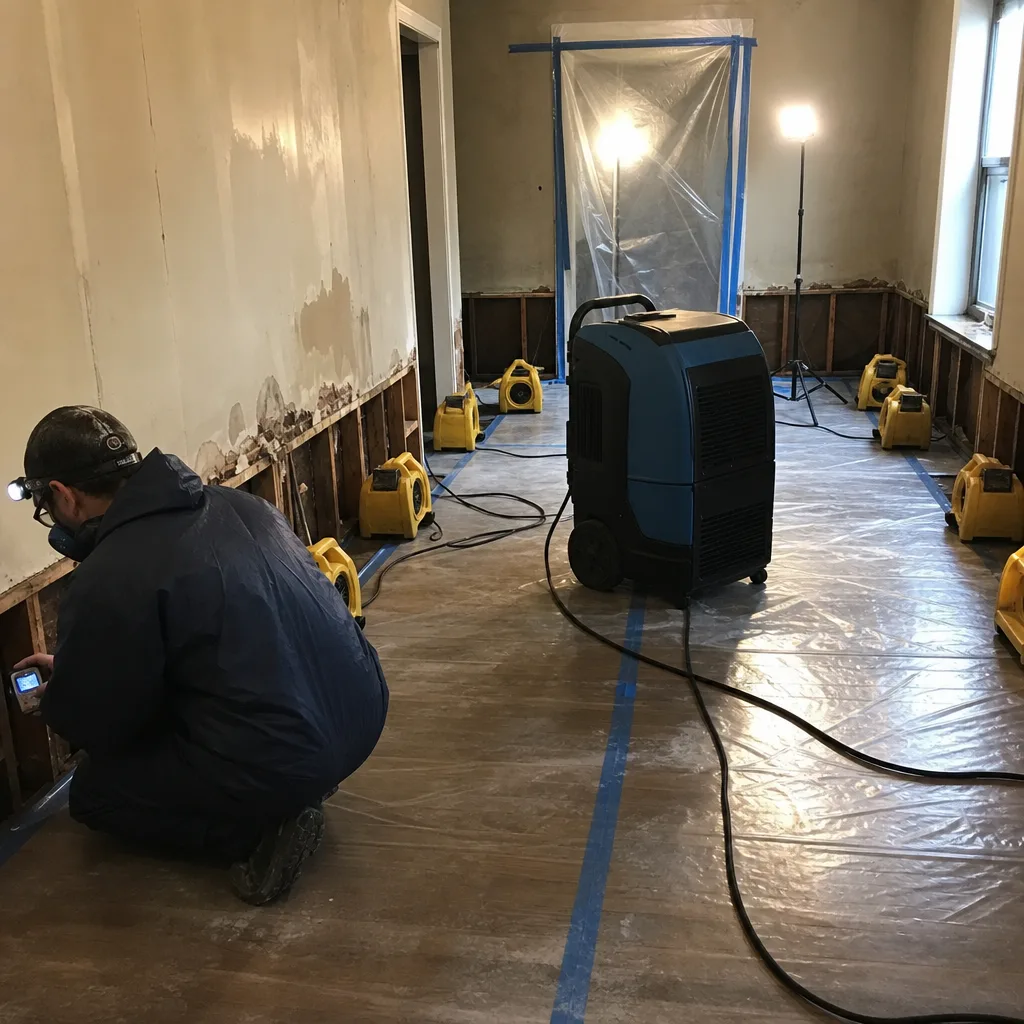
Saltwater changes the drying math. Plaster holds water longer than drywall, and chloride residue keeps pulling moisture back out of the air. We run Dri-Eaz and Phoenix equipment against a daily log, and we do not stop until the assembly is dry, not just the surface. That is the difference between clearing an inspection and getting a mold bloom in April.
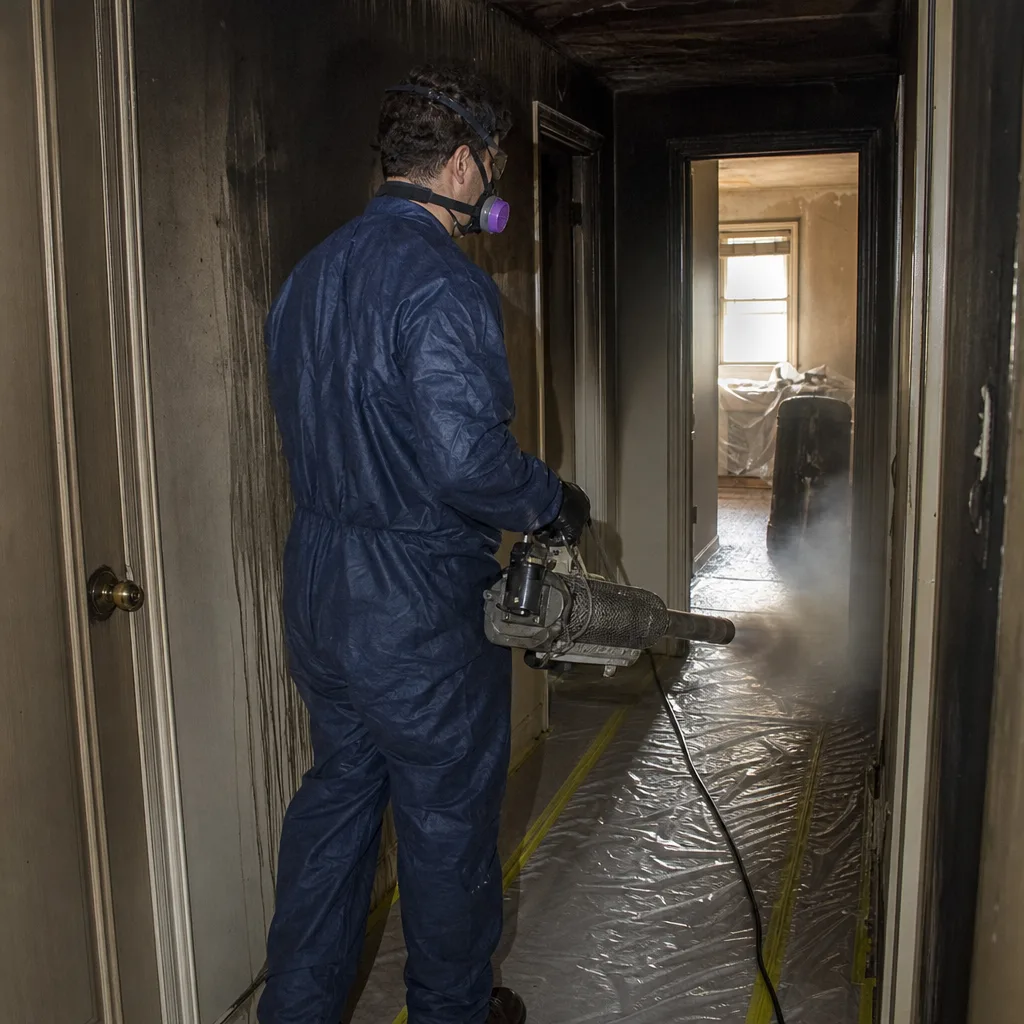
Flood Cleanup
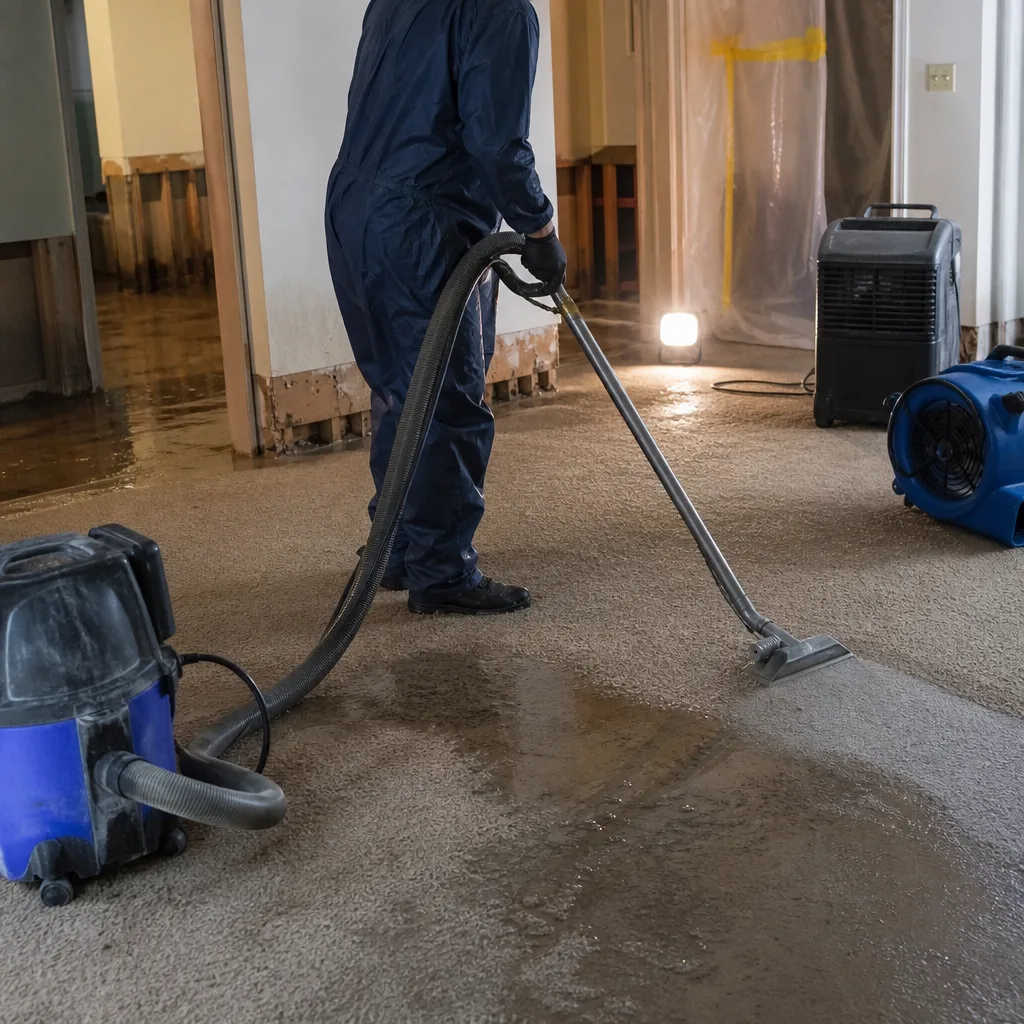
Flood cleanup in Lawrence means dealing with Category 3 water: salt, sediment, and whatever the bay carried in. We remove affected materials, flush masonry, treat framing, and run HEPA air scrubbers to keep contaminated dust out of your living space. Containment goes up before demolition starts, every time.
Burst Pipe Restoration
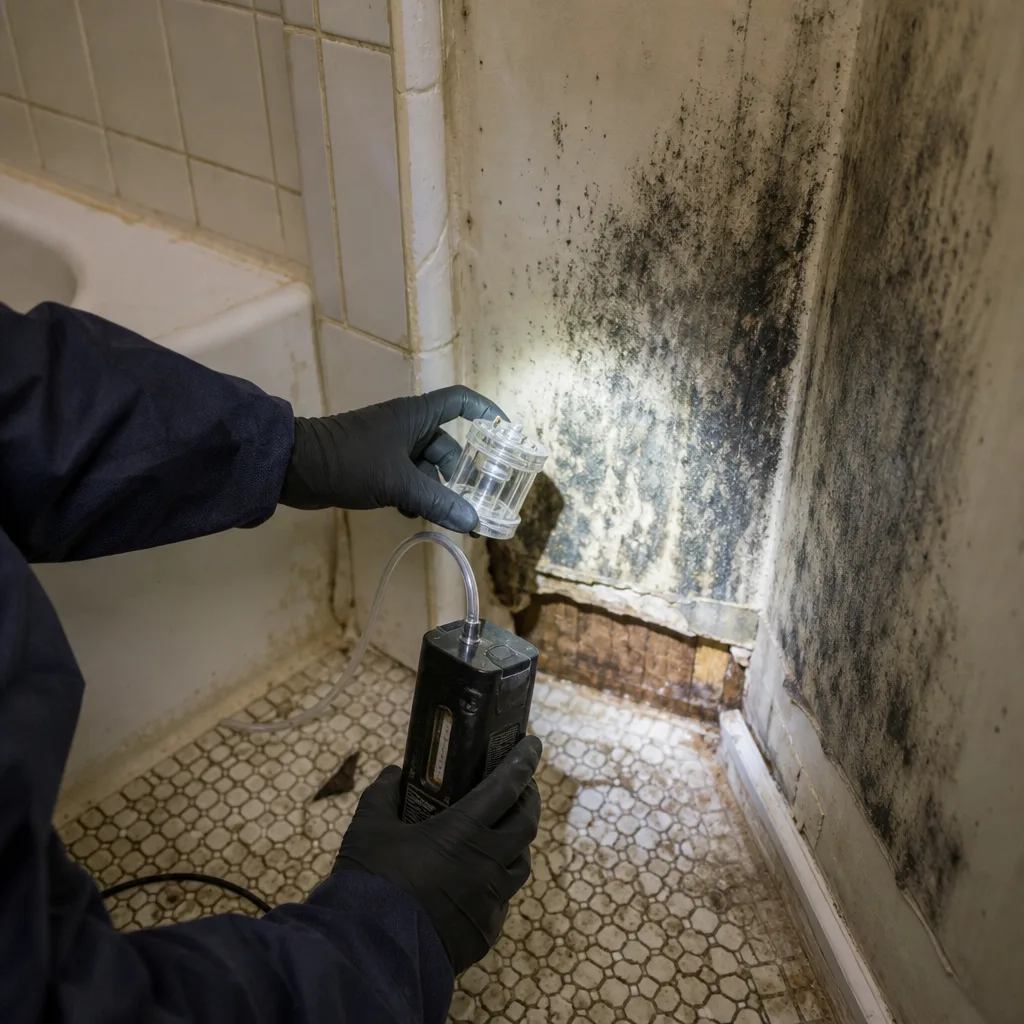
A frozen pipe on the north wall of a Lawrence colonial can run for hours before anyone sees the water. These are usually Category 1 events, which is good news, but the damage behind plaster walls is still significant. We map the moisture, open what needs opening, and dry the rest in place where possible.
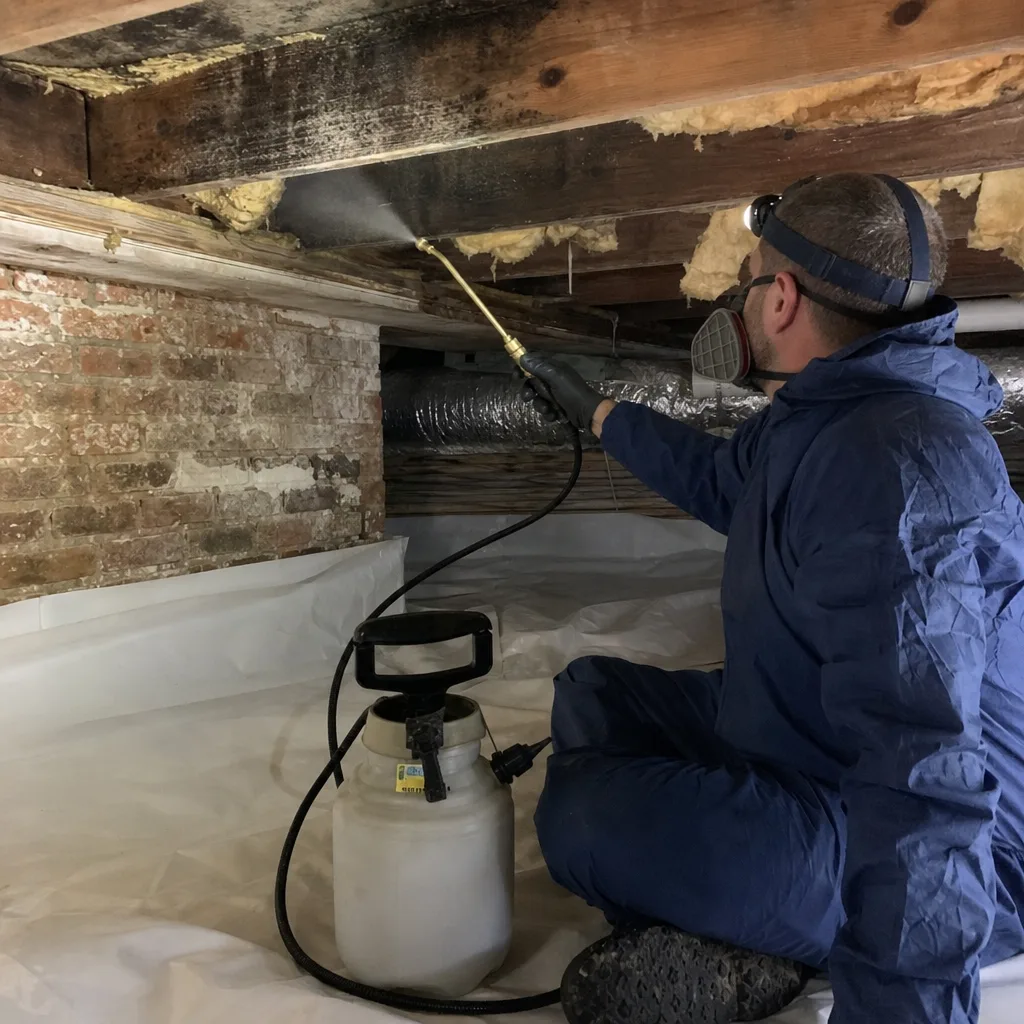
Basement Water Removal
Lawrence basements flood through bulkheads, window wells, and floor drains that back up when the storm system is overwhelmed. We pump the water, check the salinity, and then make hard decisions about what stays and what goes. Flood-damaged wiring below the first-floor ceiling gets replaced, not dried, and we coordinate with a licensed electrician as part of the scope.
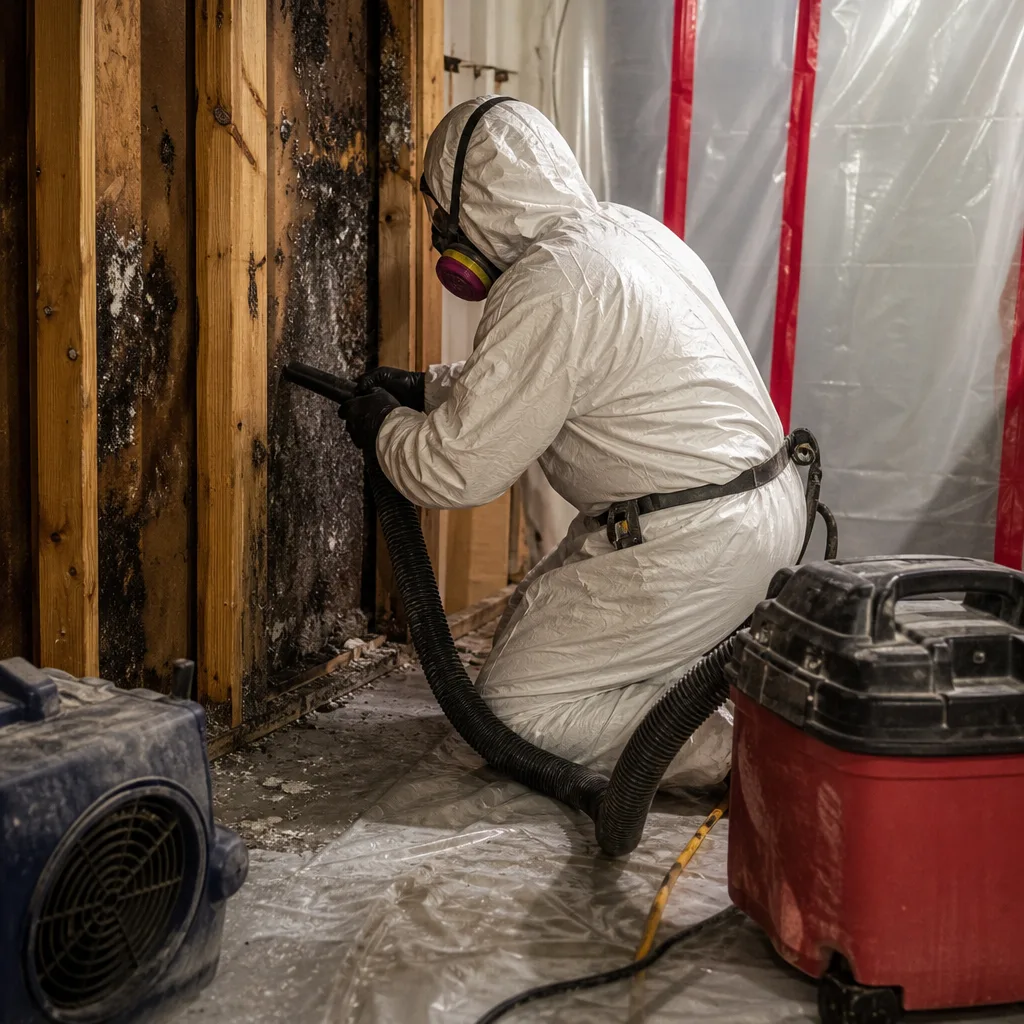
Ceiling & Roof Leak Water Damage
Roof leaks in Lawrence often run inside wall cavities before they show up as a stain on the second-floor ceiling. We trace the water path with thermal imaging, open the affected area, and dry the assembly from both sides. Plaster ceilings in older homes need careful cutting and matching, and we handle that in-house.
What happens when you call
- 1
A real person answersNo phone trees - you reach a local pro.
- 2
You get an upfront price rangeHonest numbers before anyone is dispatched.
- 3
A background-checked tech heads outLicensed & insured, dispatched right away.
- 4
You approve before work beginsNothing starts until you say go.
Water Damage Restoration Costs in Lawrence, NY
Lawrence pricing runs higher than inland Long Island towns for a reason: saltwater restoration requires more invasive work, more replacement, and more documentation. A straightforward Category 1 pipe break with extraction and structural drying typically runs $1,800 to $4,500, depending on how many rooms are affected and how long the water ran. Basement water removal after a nor’easter starts around $2,500 and can reach $8,000 or more when saltwater replacement of wiring, panel work, and material removal are in the scope. Flood cleanup on a finished basement with plaster walls, custom millwork, and hardwood flooring commonly lands between $7,000 and $20,000. Saltwater jobs almost always cost more than freshwater jobs of the same square footage, because the replacement standard forces scope that would be optional inland. The free visual inspection is the path to a firm number. You get a written line-item scope before any work starts, a square deal with no surprises on the bill, and direct billing to your carrier where coverage applies.
We Also Serve Cities Near Lawrence
Floodline Restoration Co. of Manhattan serves Lawrence and the surrounding communities, including Cedarhurst, Inwood, Far Rockaway, and Woodmere. Our crews know these streets and the flood patterns that come with them.
Serving Lawrence, NY - Our Local Coverage Area
We’re based in the Lawrence area and know this community well. Use the map below to see our service coverage - if you’re nearby, we can almost certainly help.
Lawrence Water Damage Restoration Questions, Answered
How does saltwater flooding in Lawrence affect what restoration work is required compared to inland water damage?
Saltwater restoration requires more invasive work than freshwater restoration because chlorides corrode metals, wick through masonry, and keep pulling moisture into materials for months. The Nassau County post-Sandy standard requires replacement of any wiring or panel below the first-floor ceiling that shows saltwater exposure, not remediation. Inland freshwater jobs rarely trigger that scope. Additionally, plaster and hardwood saturated with saltwater must be tested for chloride content before drying can be signed off, and materials that fail the test come out.
What restoration timeline should I expect for a Lawrence home with plaster-and-lath walls after a Jamaica Bay storm surge?
Plaster-and-lath assemblies in Lawrence homes built from the 1920s through the 1960s take meaningfully longer to dry than modern drywall. Expect structural drying on a saltwater-saturated plaster wall to run 5 to 10 days, sometimes longer on north-facing walls or in basements with poor air movement. Demolition, salt flushing, electrical replacement, and finish work may stretch the full restoration to 2 to 4 weeks. We commit to a written timeline in the scope, and we update it in writing if conditions change.
Does Floodline Restoration Co. handle the electrical replacement required by Lawrence code after saltwater flooding?
We handle the restoration scope and coordinate the electrical work through a licensed electrician as part of the same job. We document saltwater exposure with photographs and moisture readings, flag the affected panels and wiring in our scope, and bring the electrician in before drying logs close. You do not have to hire a separate contractor or act as the go-between. One team, one scope, one bill to your carrier.
What does a typical basement water removal job in Lawrence look like after a nor’easter?
After a nor’easter, a Lawrence basement water removal job usually starts with two feet of saltwater and bay sediment on a concrete floor. We pump it out with truck-mounted extraction, then test the salinity of the remaining water and the wall cavities. Affected drywall, insulation, and baseboards below the floodline come out. Masonry walls get flushed to remove chlorides. Wiring exposed to saltwater is flagged for replacement, and the electrician follows our demo. Then Dri-Eaz dehumidifiers run against a logged dry standard. It is aggressive, and it has to be.
How does the dual-exposure geography of Lawrence affect how long my home stays wet after a hurricane or nor’easter?
Lawrence sits between Jamaica Bay and the Atlantic, with much of the village under 10 feet above sea level. When a hurricane or nor’easter pushes surge from both directions, the community effectively traps water, and drainage slows dramatically. Homes stay saturated longer, which accelerates mold colonization and pushes water deeper into masonry foundations and plaster assemblies. The practical result is longer drying times, more demolition, and a higher likelihood that saltwater replacement standards come into play. The sooner extraction starts, the less that saturation window matters.
How fast can someone actually get to my Lawrence home?
Our response commitment is 45 minutes for emergency water damage calls in Lawrence, because we staff live dispatch around the clock and crews are positioned to serve the Five Towns area. A real person answers the phone at 3 a.m., and the crew is rolling before you hang up. Speed matters here because saltwater gets more destructive by the hour. Call (917) 924-4221.
Will my insurance cover saltwater flood damage in Lawrence?
That depends on your policy. Homeowners insurance generally covers pipe breaks, supply-line failures, and roof leaks, but flood damage from a storm surge typically requires a separate flood policy, often through NFIP or a private carrier. What we do, regardless of coverage, is document everything from the first hour so your claim has the evidence it needs. We coordinate directly with your adjuster and bill your carrier where coverage applies. The free visual inspection includes a straight conversation about what your policy is likely to cover.
What should I do in the first 30 minutes after I find water in my Lawrence home?
Shut off the water source if you can do so safely, and do not enter standing water if there is any chance it is in contact with electrical outlets, appliances, or the panel. Call (917) 924-4221 immediately. Do not use a household vacuum to remove water. Do not wait to see if it dries on its own. In Lawrence, the water is often saltwater, and the longer it sits, the more invasive the scope becomes. Our dispatcher will walk you through the first steps while the crew is on the road.
Written by Curt Bowman, Owner at Floodline Restoration Co. of Manhattan. Floodline Restoration Co. provides Water Damage Restoration throughout Lawrence, NY with live 24/7 dispatch, certified crews, and the 90-Day Done Right Promise in writing.