
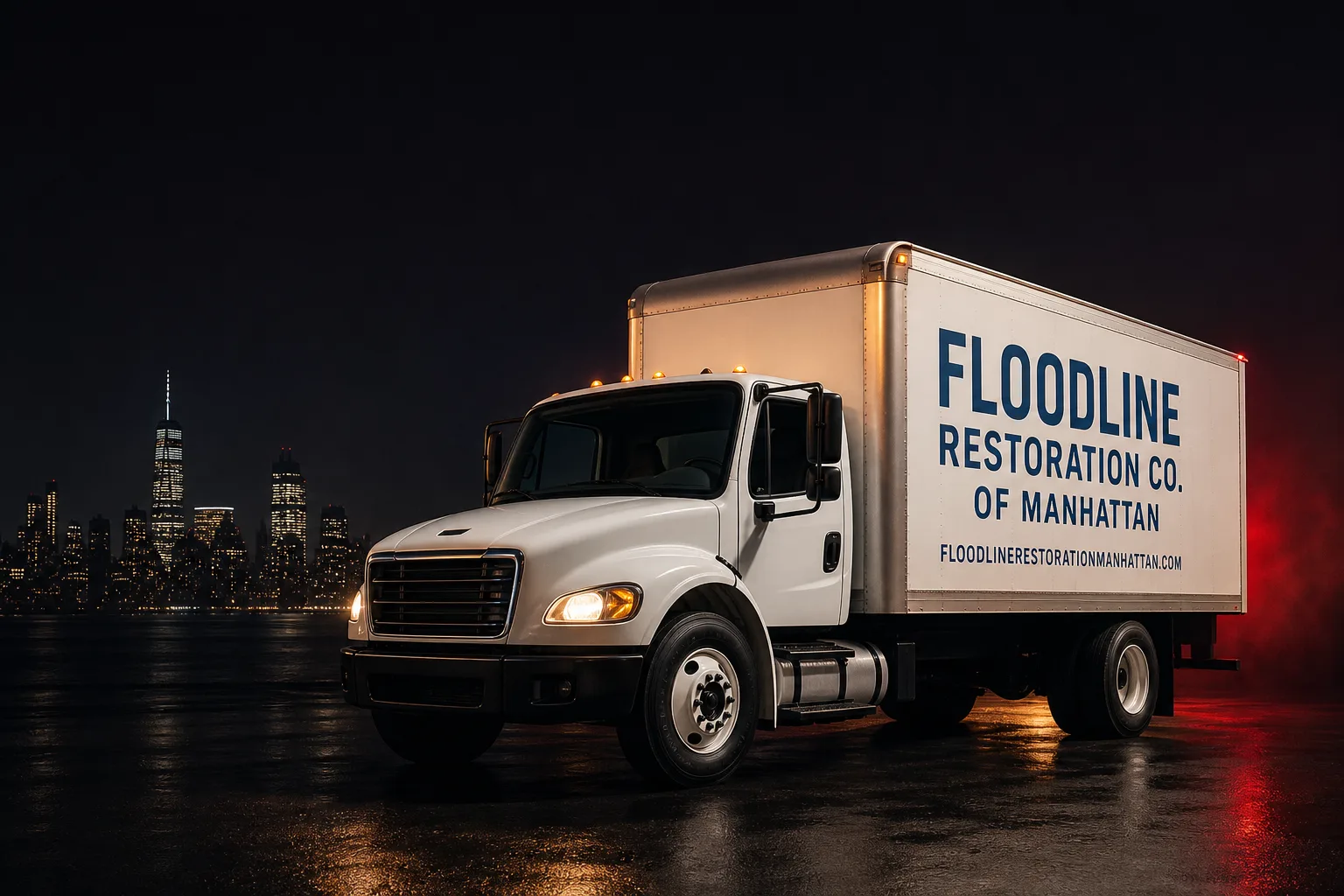
Free visual inspection and a written scope of work before any mitigation begins - photos, moisture readings, and drying logs go in your claim file
The scope we write is the scope we bill. Anything new gets shown to you, in writing, before we touch it.






 Before
 After
After Before
 After
After Before
 After
After24/7 Emergency Water Damage Restoration in Central Harlem
Water damage in a Central Harlem brownstone or pre-war apartment building moves fast. If a cast iron stack lets go on the fourth floor, water is in the third floor ceiling within twenty minutes and in the basement by morning. Our crews answer live at any hour and can be on-site with extraction equipment running the same visit. Call (917) 924-4221 the moment you see standing water, a sagging plaster ceiling, or a brown stain spreading across a wall. The first hour decides whether you’re drying out or tearing out. We’re Floodline Restoration Co. of Manhattan, and we work Central Harlem every day and every night.
Understanding Water Damage Restoration Severity in Central Harlem Properties
Not all water behaves the same way, and Central Harlem’s building stock makes the distinctions matter more than in most of the city. Category 1 water comes from a clean supply line, like a burst pipe under a kitchen sink. Left sitting for more than 48 hours, it degrades into Category 2, carrying detergents and biological contaminants. Category 3 is sewage, storm backflow, or floodwater crossing a basement floor drain, and it is a live health hazard that requires full PPE, extraction, disposal, and antimicrobial treatment. In Central Harlem’s 1890s to 1930s tenements and brownstones, we see all three in a single job when a clean-water pipe break runs down through ceilings and picks up decades of accumulated debris inside plaster cavities. Moisture mapping with thermal imaging tells us where water has wicked behind lath and plaster, beneath original wood flooring, and into shared party walls. Structural drying in these buildings is slower than in modern construction because the materials are denser and hold water longer. Terra cotta block and solid masonry walls don’t give up moisture the way gypsum board does. That’s why daily moisture readings are non-negotiable here: we log every reading until the dry standard is actually met, not just estimated.
Why Central Harlem Property Owners Choose Floodline Restoration Co. of Manhattan
- 45-minute response commitment in Central Harlem. Our crews stage from the city dispatch office and know the fastest routes up Adam Clayton Powell Jr. Blvd, Malcolm X Blvd, and Frederick Douglass Blvd at any hour. We tell you when we’ll be there. Then we’re there.
- Live answer, 24/7, no phone tree. A dispatcher picks up at 2 a.m. Not a recording. You’ll speak to a person who can move a crew immediately.
- IICRC-certified technicians (WRT and ASD). Our water restoration and applied structural drying crews are trained to industry standards and do this work every week in Central Harlem buildings.
- Free visual inspection before any work begins. We assess the damage, map the moisture, and tell you what we found. No charge, no obligation, no pressure.
- Direct insurance billing, done by us. We coordinate with your carrier, send them what they need, and handle the adjuster conversation. You don’t play messenger.
- One crew from extraction to rebuild. We don’t hand you off to a different company after drying. The same Floodline Restoration crew that extracts water also handles reconstruction when needed.
Our Water Damage Restoration Process
Inspection & Assessment
We arrive with thermal imaging cameras and moisture meters, map every wet surface, and identify the water source. On Central Harlem jobs, we also check party walls and the floors below, because water in these buildings rarely stays in one unit.
Extraction & Stabilization
Standing water comes out first using truck-mounted and portable extraction units. We stabilize what can be saved and stop the spread while we set up containment and drying zones.
Drying & Dehumidification
Dri-Eaz LGR dehumidifiers and XPOWER air movers run continuously, placed according to the moisture map. We log readings daily and adjust the setup until structural wood, plaster, and masonry hit the dry standard.
Cleaning & Sanitization
Affected surfaces get cleaned and treated. For Category 2 or 3 water, we apply antimicrobials and follow containment protocols. Items that can’t be cleaned properly get documented and removed.
Specialty Treatment for Central Harlem Buildings
This is where we check original plaster and lath, cast iron piping, and terra cotta block for hidden water retention. We dry what can be dried, recommend replacement only where it’s genuinely required, and document everything for your insurer and, where needed, the Landmarks Preservation Commission.
Repairs & Restoration
Once the moisture log shows dry, we rebuild. Same crew, same company. Plaster repair or sensitive replacement, flooring, cabinetry, and paint, all finished to a standard you can hold us to for 90 days in writing.
Need Emergency Water Damage Restoration in Central Harlem Now?
Crews minutes away, answering live 24 hours a day. The sooner we start, the less it costs.
Working With Your Insurance Company
Most Central Harlem water damage claims involve a slow leak that finally surfaced, a burst pipe in freezing weather, or a sewage backflow event the carrier treats as sudden and accidental. We’ve handled thousands of these claims and we’ve learned one thing: documentation in the first 48 hours determines whether the claim pays out fully. We photograph every affected surface before demolition starts. We record moisture readings on day one and every day after. We write a line-item scope of work that matches carrier expectations. And we talk to your adjuster directly, so you don’t have to translate trade language over the phone. Floodline Restoration Co. of Manhattan bills the carrier directly on approved claims. You see the scope before work starts, in writing, with no surprises on the final bill.
What We Provide Your Insurer
- Thorough documentation of the loss
- Photos of all damage, room by room
- Moisture readings and drying logs
- A detailed, line-item scope of work
- Direct coordination with your carrier
Built for Central Harlem’s Loss Calendar
Central Harlem sees the same water damage calendar year after year, and the pattern is tied directly to 1890s-1930s construction. January and February deep freezes crack copper supply lines and burst radiators in uninsulated top-floor units across pre-war brownstones. The freeze-thaw cycle also works on soft brownstone and limestone masonry facades, opening hairline cracks that let in snowmelt. March and April bring thaw plus spring rain, and those masonry gaps start moving water into interior walls. May through September is thunderstorm season, and Central Harlem’s aging combined sewer system surcharges, pushing Category 3 sewage backup through basement floor drains in low-lying corridors. October and November nor’easters test tar-and-gravel flat roofs all across the neighborhood, and the leaks usually announce themselves as brown stains on top-floor ceilings. When the water does show up, it has usually been moving behind plaster for days or weeks. That’s why we tell Central Harlem property owners the same thing every year: if you see a small stain, call. It is not small.
Water Damage Restoration Across Central Harlem’s Neighborhoods
We work every part of Central Harlem, and the building types shift block by block. In the Mount Morris Park Historic District, the brownstones on West 120th through West 124th Streets near Marcus Garvey Park have original plaster medallions and millwork that require Landmarks Preservation Commission review before any restoration. The St. Nicholas Historic District, better known as Strivers’ Row on West 138th and 139th Streets between Adam Clayton Powell Jr. and Frederick Douglass Boulevards, is even stricter: a contractor who tears out a water-damaged original plaster ceiling without an emergency LPC permit faces a stop-work order and mandatory reinstatement of historic finishes. Along Lenox Avenue and the 125th Street corridor, we see mixed-use buildings with commercial space on the ground floor and residential units above, so a single pipe failure affects a store and three apartments at once. The five- and six-story tenement walk-ups between Malcolm X Blvd and St. Nicholas Avenue run on original cast iron drain stacks, and when those crack, water cascades down inside walls and into the apartments below. Each of these requires a different drying strategy and a different insurance conversation.
Specialized Water Damage Restoration Services We Offer in Central Harlem
Emergency Water Extraction
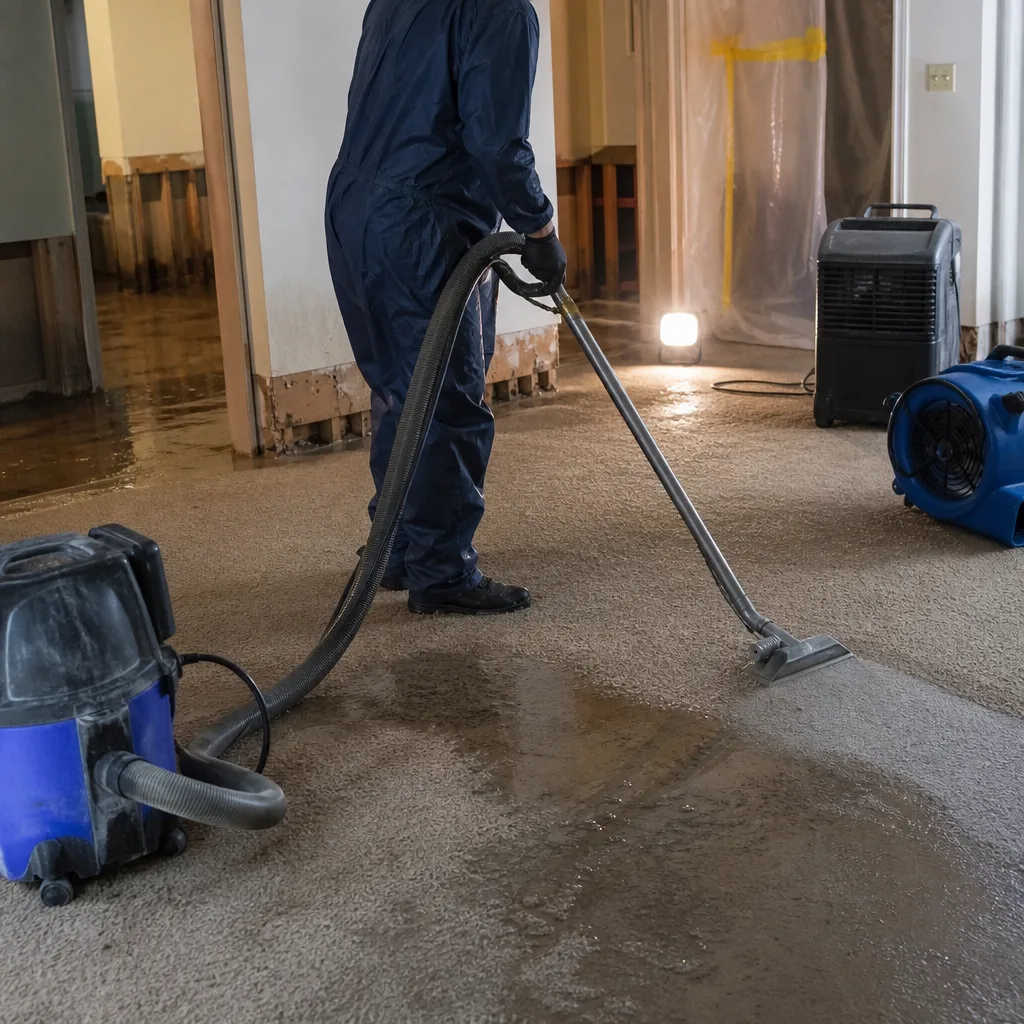
Standing water in a Central Harlem basement or fourth-floor apartment can’t wait for business hours. Our crews arrive with truck-mounted and portable extraction units, pull the water out, and stop the damage from spreading into floors below or through party walls. We’ve pulled water out of brownstone basements, tenement hallways, and Strivers’ Row parlor floors. The equipment runs the same visit we get the call.
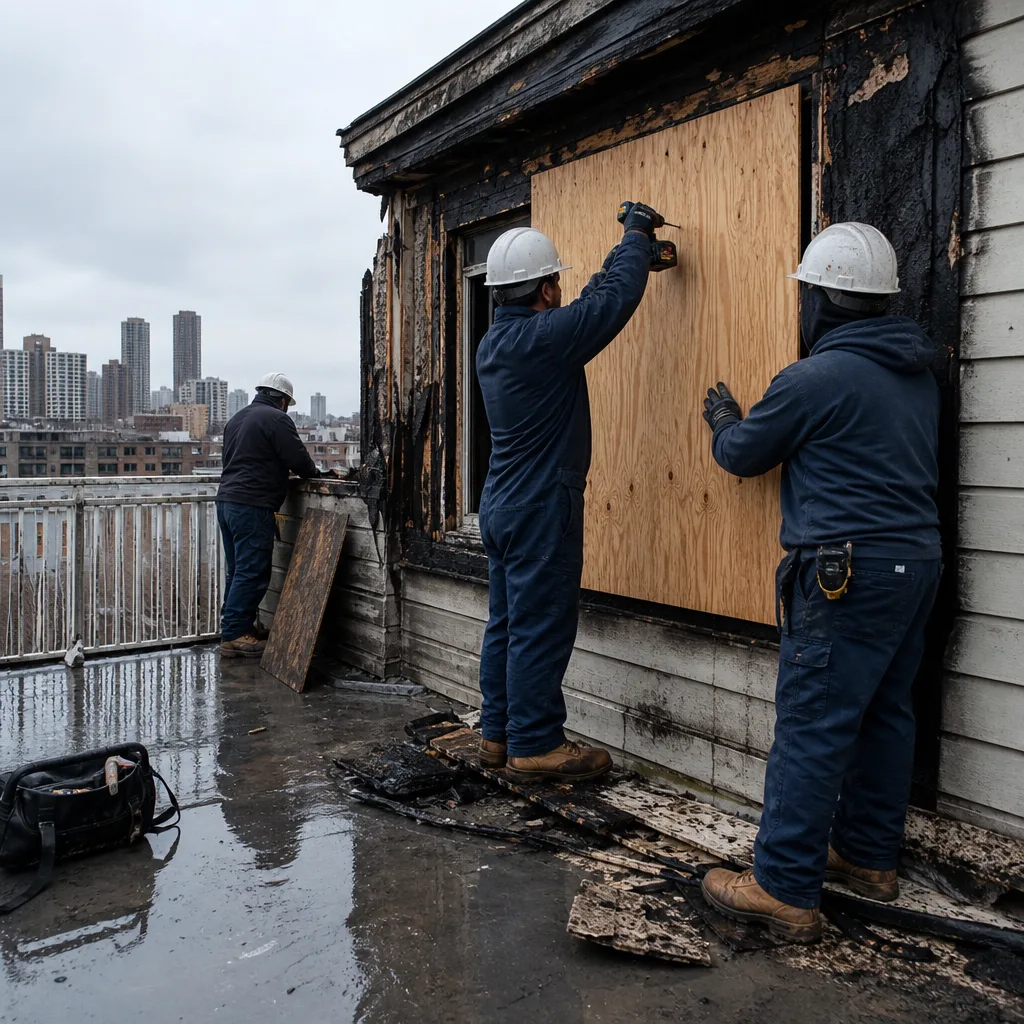
Structural Drying & Dehumidification
Drying a pre-war Central Harlem building is different from drying a modern house. Plaster and lath hold water. Terra cotta block holds water. Solid masonry party walls hold water. We run Dri-Eaz LGR dehumidifiers and XPOWER air movers on a moisture-mapped plan, and we read every surface daily until the dry standard is met. On a recent West 139th Street job in the Strivers’ Row Historic District, our crew was called to a brownstone where a failed original tar-and-gravel flat roof had been leaking for weeks. Water had saturated the plaster-over-lath ceilings on the top two floors and wicked laterally through the shared party wall into the neighboring brownstone. We set up containment, ran Dri-Eaz LGRs and XPOWER air movers, and documented every inch with moisture mapping before filing an emergency Landmarks Preservation Commission application. The landlord had already torn out one ceiling without a permit, so we halted work, photographed the exposed original millwork, and coordinated with LPC to reinstate the historic plaster rather than substitute drywall, avoiding a stop-work order and mandatory restoration at our client’s expense.
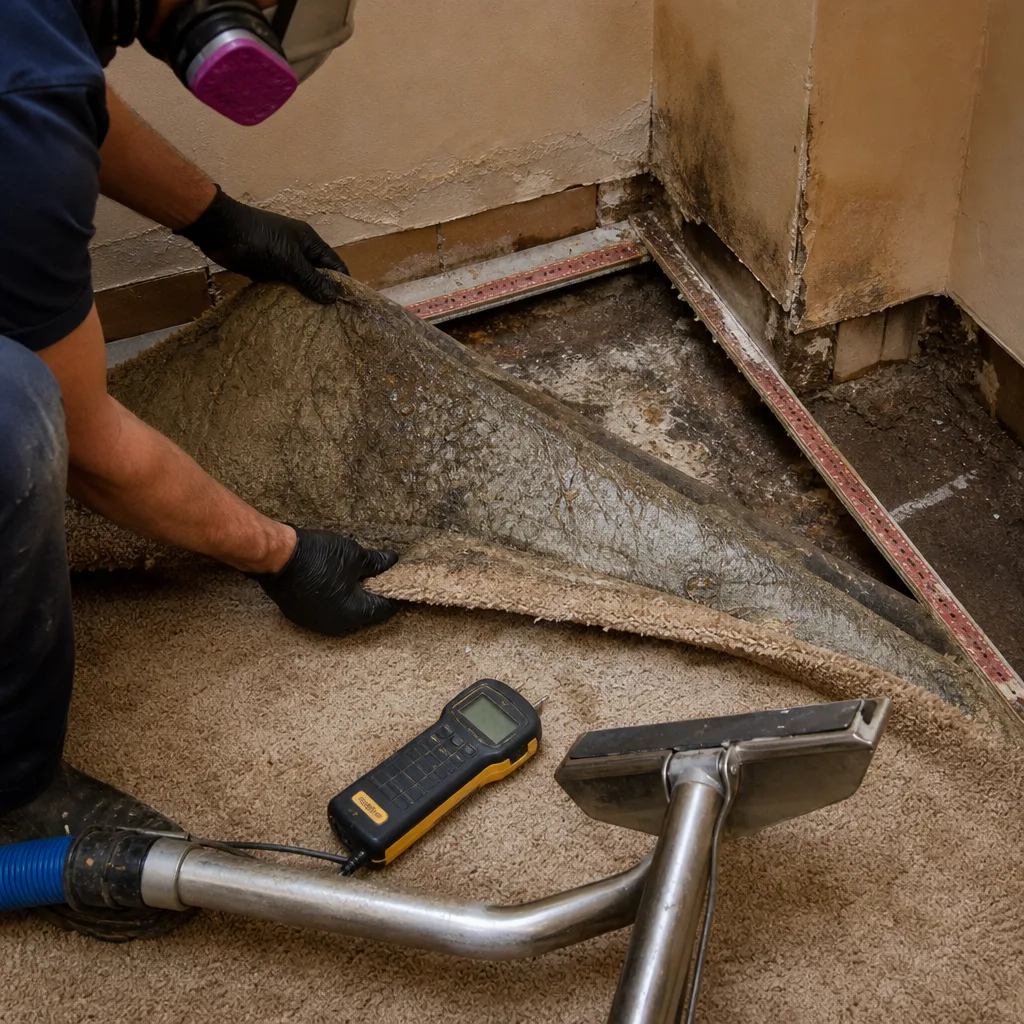
Flood Cleanup
Thunderstorm-driven sewage backflow in Central Harlem basements is Category 3 water. If it came up through a floor drain, it is contaminated, and it needs more than a mop. We contain the area, remove the water with dedicated extraction equipment, dispose of affected porous materials, and sanitize what remains. The basement might be storage today, but if it’s not handled correctly, the odor and mold become a building-wide problem within a week.
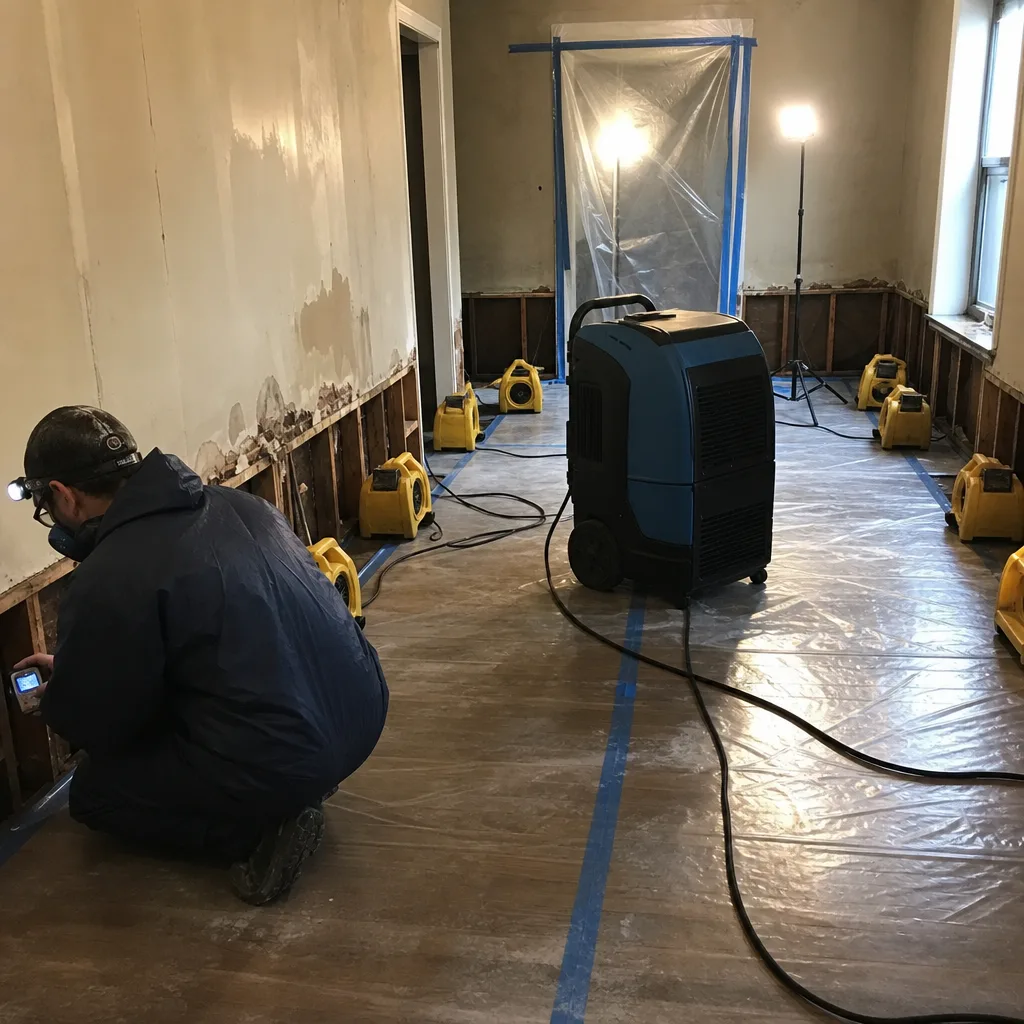
Burst Pipe Restoration
January deep freezes in Central Harlem crack copper supply lines and old radiator pipes in top-floor apartments and uninsulated tenant spaces. A burst pipe at 3 a.m. on Malcolm X Blvd means water moving down through five floors of apartments by sunrise. We shut the supply, extract, map the spread, and coordinate with the owner and the carrier on a restoration scope that covers everyone affected.
Basement Water Removal
Central Harlem basements flood from three main sources: sewer backflow during summer storms, foundation seepage after heavy rain, and bursts from shared plumbing lines above. We remove the water, dry the structure, and treat the surfaces. Where original cast iron pipes are involved, we flag conditions for your plumber so the next storm doesn’t repeat the same event.
What happens when you call
- 1
A real person answersNo phone trees - you reach a local pro.
- 2
You get an upfront price rangeHonest numbers before anyone is dispatched.
- 3
A background-checked tech heads outLicensed & insured, dispatched right away.
- 4
You approve before work beginsNothing starts until you say go.
Water Damage Restoration Costs in Central Harlem, NY
A typical emergency water extraction and initial drying setup for a single room in a Central Harlem brownstone runs $1,200-$3,500, depending on how far the water has moved and how many floors are involved. Structural drying for a basement that took Category 3 sewer water through a floor drain usually lands between $3,500-$8,000 because of containment, antimicrobial treatment, and disposal of affected porous materials. A burst pipe that affects two floors of a tenement apartment with plaster ceiling damage and cabinetry repairs can run $7,000-$18,000 by the time surfaces are dried and rebuilt. A multi-unit party wall loss on a Strivers’ Row brownstone or a Mount Morris Park building with LPC review can exceed $25,000 when historic plaster and millwork are involved. Insurance covers most sudden and accidental losses; the difference between a covered claim and an out-of-pocket fight is almost always documentation. We provide a free visual inspection and a written scope before any work begins, and we bill the carrier directly on approved claims. Call (917) 924-4221 and we’ll give you real numbers for your building, not a national average.
We Also Serve Cities Near Central Harlem
Floodline Restoration Co. of Manhattan serves the neighborhoods and towns just outside Central Harlem, including Fairview, Harrison, East Bronx, and Hunts Point. If your property is in one of those areas and you’re seeing water where it shouldn’t be, call the same live line at (917) 924-4221 and we’ll get a crew moving.
Serving Central Harlem, NY - Our Local Coverage Area
We’re based in the Central Harlem area and know this community well. Use the map below to see our service coverage - if you’re nearby, we can almost certainly help.
Central Harlem Water Damage Restoration Questions, Answered
How fast can you get to Central Harlem for a water emergency?
We commit to a 45-minute response in Central Harlem, and most calls see a crew on-site faster than that because our dispatch is local and our crews know the neighborhood routes. Call (917) 924-4221 any hour and a live person answers.
Do I need Landmarks Preservation Commission approval before restoring water-damaged plaster ceilings in a building on Strivers’ Row or Mount Morris Park?
Yes, on designated blocks in the St. Nicholas Historic District and the Mount Morris Park Historic District, you need LPC review before replacing original plaster ceilings, millwork, or masonry finishes. Emergency work can proceed under an LPC emergency application, but that application needs to be filed immediately and documented correctly. We file these applications on behalf of our clients and photograph everything before, during, and after the work. Contractors who skip this step create a stop-work order and mandatory historic-finish reinstatement at the contractor’s expense.
How do I handle water damage that has spread from my neighbor’s brownstone through our shared party wall in Central Harlem?
First, document the damage in your unit with photos. Then call your insurance company and ours. In Central Harlem’s party-wall brownstones, water from one unit routinely moves laterally through masonry and affects the adjacent ownership. We coordinate the restoration across both units, work with both carriers, and provide the documentation each owner needs. The earlier containment starts, the less plaster and flooring you lose. Call (917) 924-4221 and we’ll walk through the situation with you.
Is Category 3 sewage backup common in Central Harlem basements, and what should I do immediately?
Yes, during summer thunderstorms, Central Harlem’s combined sewer system surcharges and backflows into basement floor drains. This is Category 3 water, meaning it carries sewage and is a health hazard. Do not enter the area without protective gear. Do not run fans or HVAC systems. Shut off power to the affected area if it’s safe to do so, then call (917) 924-4221. We extract, contain, treat, and document the entire event for your insurer.
Why do water-damaged ceilings in older Harlem brownstones often show brown stains or sagging months after a ‘repair’?
Because the water wasn’t dried out properly in the first place. In plaster-over-lath construction, water wicks deep into the lath and masonry above the ceiling. If a contractor just patches the surface and repaints, the underlying wood stays wet, mold develops, and the stain returns within months. We dry the structure to a moisture standard with a logged reading, not a guess, before any patching or painting happens.
Can you dry out original plaster and lath walls in a Central Harlem building instead of replacing them?
In most cases, yes. Original plaster and lath can be dried and saved if the moisture is addressed before the plaster begins to spall or collapse. We use heat-assisted drying where needed, log moisture readings daily, and only recommend removal where the lath is rotted or the plaster is structurally failing. On landmark-designated blocks, saving original plaster is also the option that keeps you out of an LPC fight.
Will my insurance cover this water damage?
Most sudden and accidental water damages are covered by standard homeowners and building policies, including burst pipes, sewer backflow if you have the endorsement, and storm-driven flooding if your policy includes it. The claim outcome depends on documentation and on the carrier’s confidence that the scope of work matches the actual damage. We provide the first-hour photos, the moisture logs, and the line-item scope that carriers need to move. Call (917) 924-4221 and we’ll review your policy with you and coordinate directly with the adjuster.
What should I do in the first 30 minutes after discovering water damage in Central Harlem?
Shut off the water source if you can do so safely. Kill power to the affected area at the breaker. Move valuables out of standing water. Photograph everything before anyone touches anything. Then call (917) 924-4221. The sooner extraction starts, the less damage spreads through floors, walls, and party walls, and the lower the final restoration cost.
If water is moving through your Central Harlem building right now, don’t wait for a callback. Call (917) 924-4221 and speak to a live dispatcher. We’ll tell you what we’re seeing, when we’ll be there, and what it will take to make it right. Floodline Restoration Co. of Manhattan serves Central Harlem with extraction, drying, and full reconstruction, all backed by our 90-Day Done Right Promise in writing. The line the water left is where we start.
Written by Curt Bowman, Owner at Floodline Restoration Co. of Manhattan, serving Central Harlem and the surrounding city with full-cycle Water Damage Restoration from first extraction to finished rebuild. Learn more about our Water Damage Restoration in Central Harlem coverage and response area.