
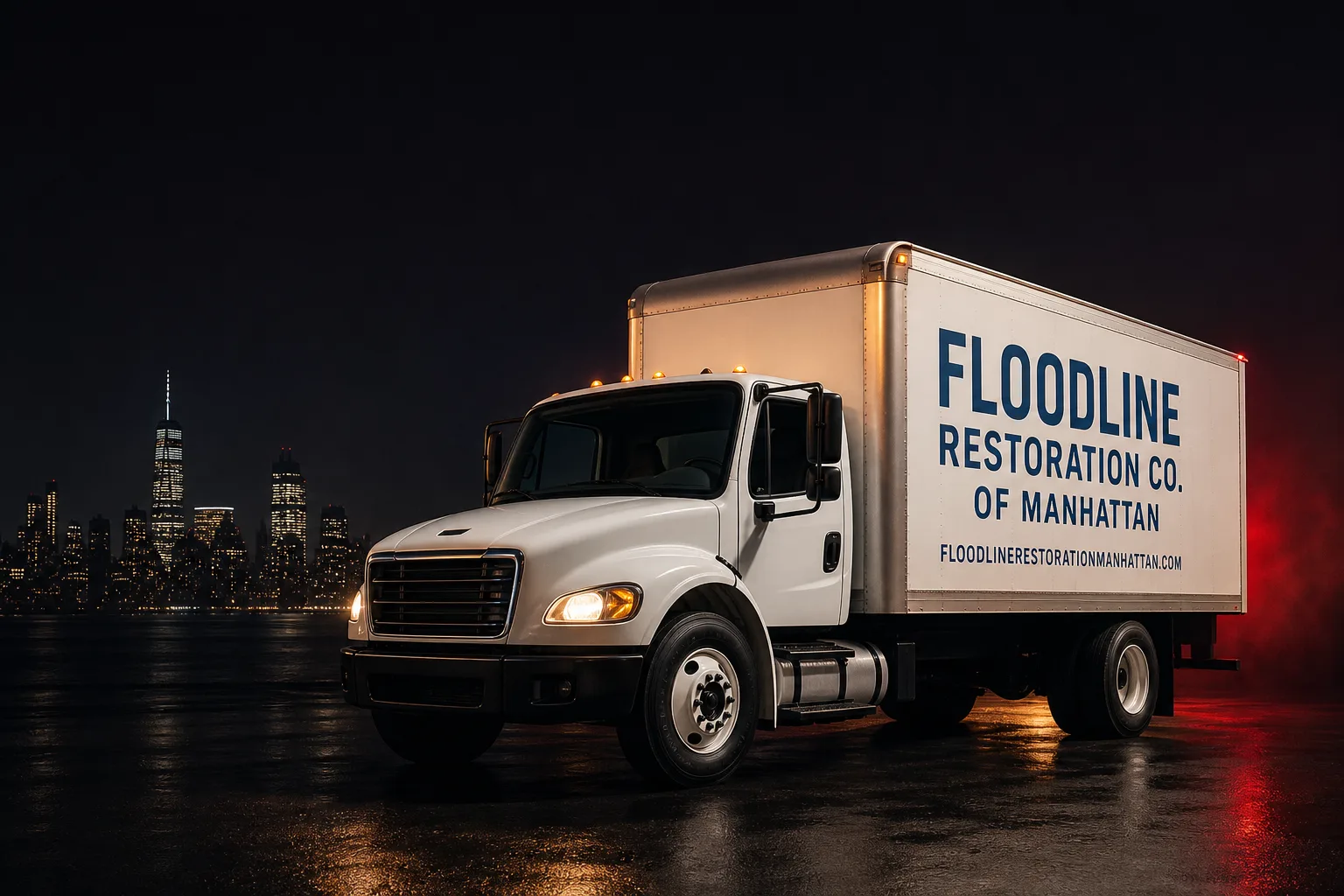
Free visual inspection and a written scope of work before any mitigation begins - photos, moisture readings, and drying logs go in your claim file
The scope we write is the scope we bill. Anything new gets shown to you, in writing, before we touch it.






 Before
 After
After Before
 After
After Before
 After
After24/7 Emergency Sewage Cleanup in Central Harlem
When a sewage backup hits a Central Harlem brownstone or pre-war apartment building, the clock starts before you even make the call. Floodline Restoration Co. of Manhattan answers live, 24 hours a day, every day. A dispatcher picks up the phone at (917) 924-4221, not a recording, and a certified crew reaches your block in Central Harlem within 45 minutes. The first hour matters because Category 3 water, the black water from a sewer line, is pathogenic. It carries bacteria, viruses, and parasites that sink into porous surfaces. The longer it sits in a basement or behind a baseboard, the more material becomes unsalvageable. In Central Harlem’s older buildings, where cast iron stacks and terra cotta blocks hide behind plaster and decades of renovation, that first hour decides whether you’re cleaning a floor or rebuilding a wall. We start with a free visual inspection and a written scope, so you know exactly what you’re facing before any work begins.
Understanding Sewage Cleanup Severity in Central Harlem Properties
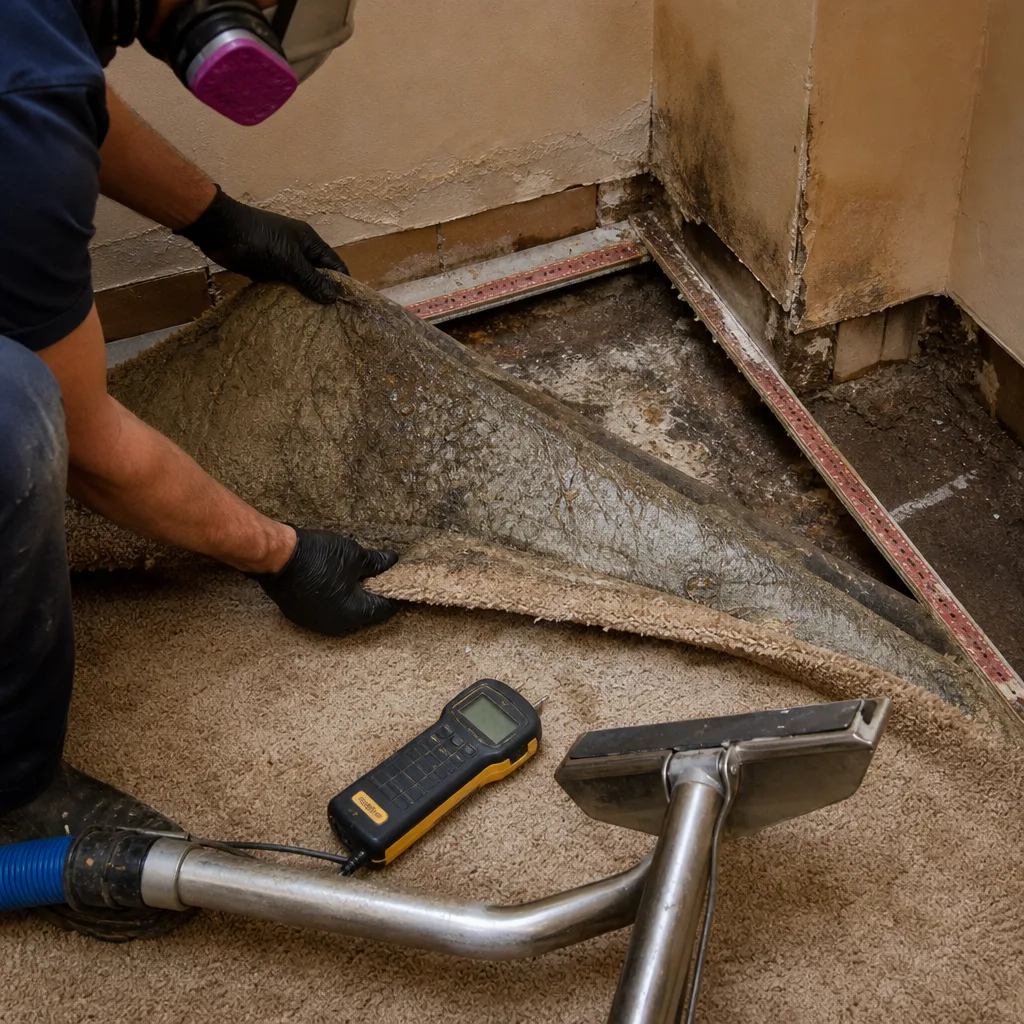
Sewage damage is classified by the IICRC into three categories of water. Category 1 is clean water, a supply line break. Category 2 is gray water, from washing machines or sump pumps. Category 3 is black water, the classification for sewage, and it is the one that turns a cleanup into a controlled remediation. In Central Harlem, we see Category 3 more often than most of the city because the area is served by New York City’s combined sewer system. When a summer thunderstorm or a nor’easter overwhelms the system, the sewers surcharge, and what comes back up through the basement floor drains in Central Harlem is not rainwater. It is untreated waste. We treat every Category 3 loss with full containment, HEPA air scrubbers, and disposal of any porous material that absorbed the water. Carpet, padding, drywall below the waterline, and sometimes original plaster and lath, have to go. Non-porous surfaces get cleaned, then disinfected with EPA-registered antimicrobials. The goal is not to mask the smell. It is to return the building to a condition that passes clearance testing.
Why Central Harlem Property Owners Choose Floodline Restoration Co. of Manhattan
- 45-minute response commitment. We dispatch crews from our New York City office, and we are on-site in Central Harlem within 45 minutes of your call. Not a salesperson. An extraction crew.
- 24/7 live answer, always a person. You will never reach a voicemail or an automated tree at 2 a.m. A live dispatcher answers, every time, and stays on the line until the crew is rolling.
- IICRC-certified technicians. Our crews hold WRT, FSRT, and AMRT certifications, and they are trained to RIA and IFA standards. The person reading the moisture map is the same person doing the work.
- Free visual inspection. We look, we measure, we write the scope. You approve it before we start. No surprises on the bill, and no work you did not authorize.
- Direct insurance billing. We bill your carrier directly and send photo documentation and drying logs to the adjuster, so you never play messenger.
- One team from extraction to reconstruction. If a Central Harlem basement needs new framing, flooring, or a rebuilt partition, the same Floodline Restoration Co. crew handles it. No mid-job handoff to an inherited subcontractor.
Our Sewage Cleanup Process
Inspection & Assessment
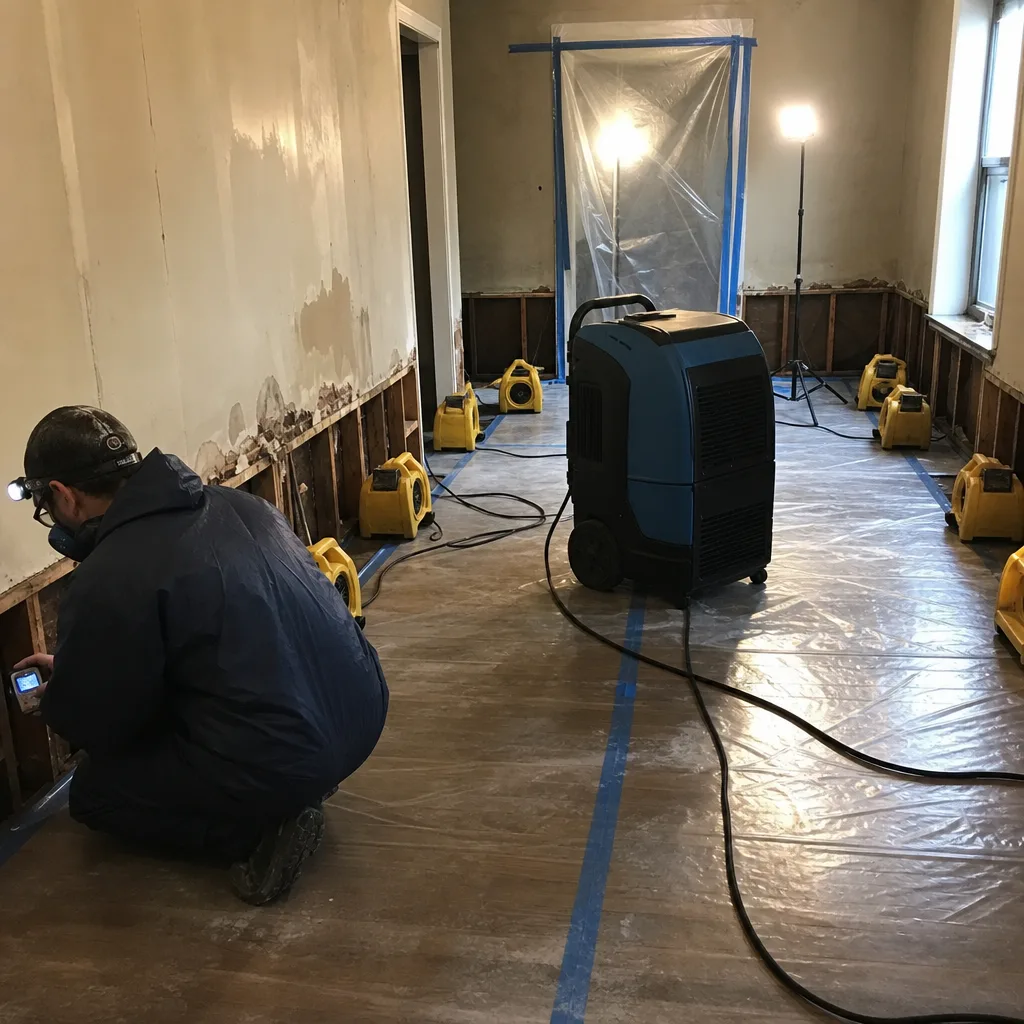
We map the full extent of the loss with thermal imaging and moisture meters, not just what’s visible. In Central Harlem pre-war buildings, sewage migrates under slab floors and through party walls, so we trace it before we touch anything.
Extraction & Stabilization
We remove standing Category 3 water using truck-mounted extraction units and portable extractors. In tight Central Harlem basements and crawl spaces, we run smaller XPOWER units where larger equipment cannot reach.
Drying & Dehumidification
We place Dri-Eaz dehumidifiers and Phoenix air movers to dry the structure to a documented dry standard. Daily moisture readings are logged and shared with you and your insurer until the standard is met.
Cleaning & Sanitization
Every affected surface is cleaned and disinfected with EPA-registered antimicrobials. We HEPA-vacuum, air-scrub, and wipe down all salvageable hard surfaces.
Specialty Sewage Treatment
For Central Harlem’s older stock, this includes cutting and removing contaminated plaster and lath, treating exposed masonry and terra cotta block, and addressing odor migration through shared wall cavities.
Repairs & Restoration
We rebuild what we removed, matching original dimensions and materials where required. On designated landmarks, such as blocks in the Mount Morris Park Historic District or on Strivers’ Row, we restore original plaster, not drywall.
Need Emergency Sewage Cleanup in Central Harlem Now?
Crews minutes away, answering live 24 hours a day. The sooner we start, the less it costs.
Working With Your Insurance Company
Most Central Harlem homeowners and co-op boards file an insurance claim for sewage cleanup, and the carrier wants documentation from the first hour. We provide it. We photograph every affected room before we move anything, log moisture readings daily, and write a line-item scope in the format adjusters expect. Our team talks to your carrier directly, so you are not relaying questions between a desk adjuster and a crew chief. We have handled multi-unit claims in Central Harlem where sewage moved through shared party walls into adjacent buildings, which means coordination with multiple owners, multiple carriers, and sometimes NYC’s HPD on tenant habitability. We know that process. We also know what your policy is likely to cover and what it will not, and we will tell you straight before work begins.
What We Provide Your Insurer
- Thorough documentation of the loss
- Photos of all damage, room by room
- Moisture readings and drying logs
- A detailed, line-item scope of work
- Direct coordination with your carrier
Built for Central Harlem’s Loss Calendar
Sewage damage in Central Harlem follows a rhythm. Summer thunderstorms hit hardest, because the aging combined sewer system under the neighborhood surcharges and pushes black water back through basement floor drains. It happens fast, often in the middle of the night, and it is not rare. It is a recurring seasonal event, and seasoned Central Harlem superintendents and owners know to watch the drains when the first heavy rain of July arrives. Winter brings a different problem: freeze-thaw cycles open cracks in the soft brownstone facades and limestone lintels, letting water into wall cavities that then fails to freeze and drains into basements, where it mixes with whatever is already in the floor system. Spring thaw fills the same cavities and finds its way down. In older buildings with original cast iron stacks, any one of these events can trigger a stack failure that sends Category 3 water into not one, but two or three adjacent units. We plan for all of it, and we keep crews staged near Central Harlem during storm season.
Sewage Cleanup Across Central Harlem’s Neighborhoods
Central Harlem stretches from 110th Street up to 155th Street, and the building stock changes block by block. Along Lenox Avenue and Adam Clayton Powell Jr. Boulevard, you see the brownstones and five-story walk-ups that define the neighborhood, many built between the 1890s and the 1930s, with original cast iron drain stacks that have outlived their service life. Around St. Nicholas Avenue and West 138th and 139th Streets, the St. Nicholas Historic District, known as Strivers’ Row, has landmarked brownstones where a sewage backup in one basement can push contaminated water through shared party walls into the building next door, and where Landmarks Preservation Commission rules govern what you can replace. The Mount Morris Park Historic District, centered on Marcus Garvey Park, has similar constraints and similar cast iron problems. East of Fifth Avenue, we see more tenement-style buildings with five or six units sharing a single stack, which means a backup in a garden-level apartment often affects the entire line. Our crews know the alley routes, the basement clearances, and the building management contacts along each of these corridors.
Specialized Sewage Cleanup Services We Offer in Central Harlem
Black Water Extraction
Black water extraction in Central Harlem means more than pumping out a flooded basement. The water is Category 3, and it has already begun moving through whatever porous materials it touched. We extract it with truck-mounted and portable units, then remove and dispose of any contaminated material down to the structural deck, including old carpet, fiberboard underlayment, and plaster that has wicked water up the wall. In a brownstone basement with a dirt floor, that means excavation and disposal of contaminated soil before drying begins.
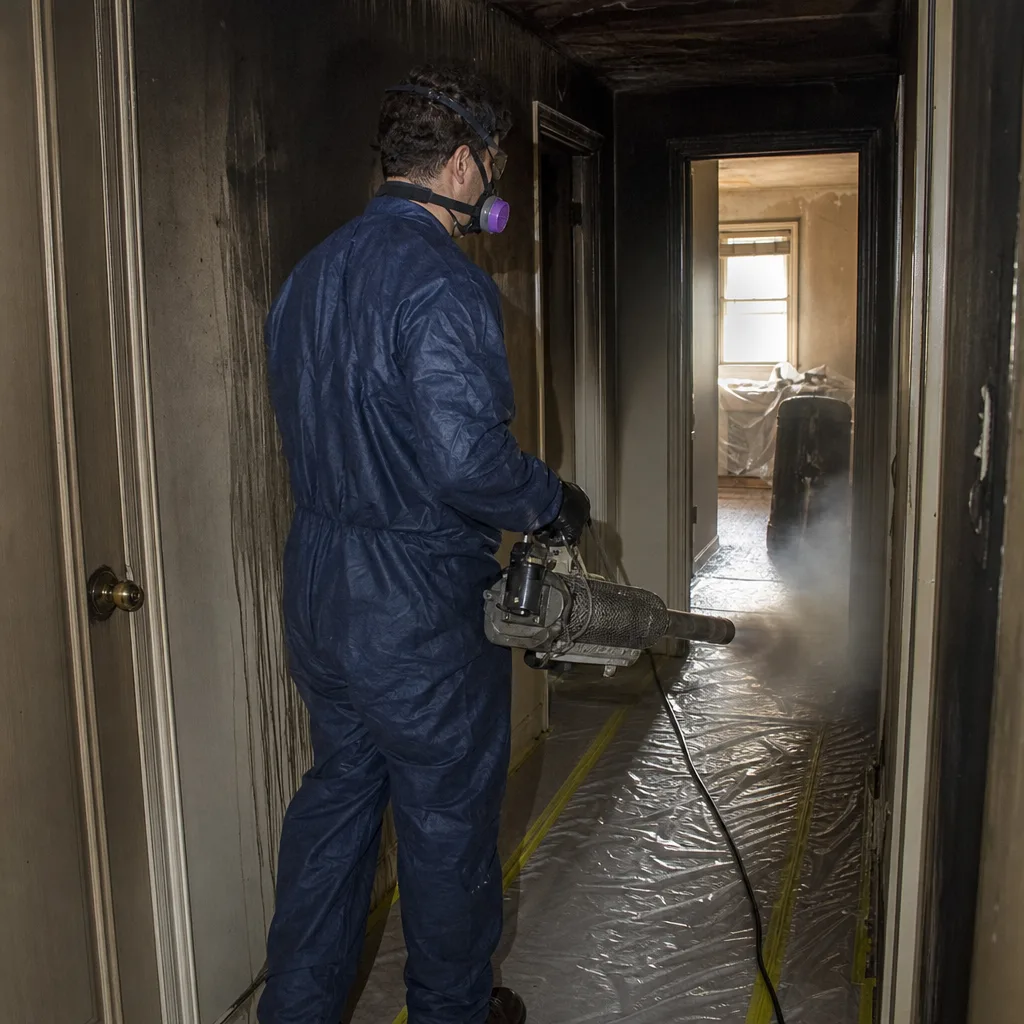
Sanitization & Disinfection
After extraction and demolition, every remaining surface gets cleaned and disinfected with EPA-registered antimicrobials. We treat exposed joists, masonry walls, concrete floors, and any salvageable framing. In Central Harlem pre-war buildings, original wood joists and terra cotta block are often salvageable if we reach them within hours, and that is why we answer the phone at 3 a.m.
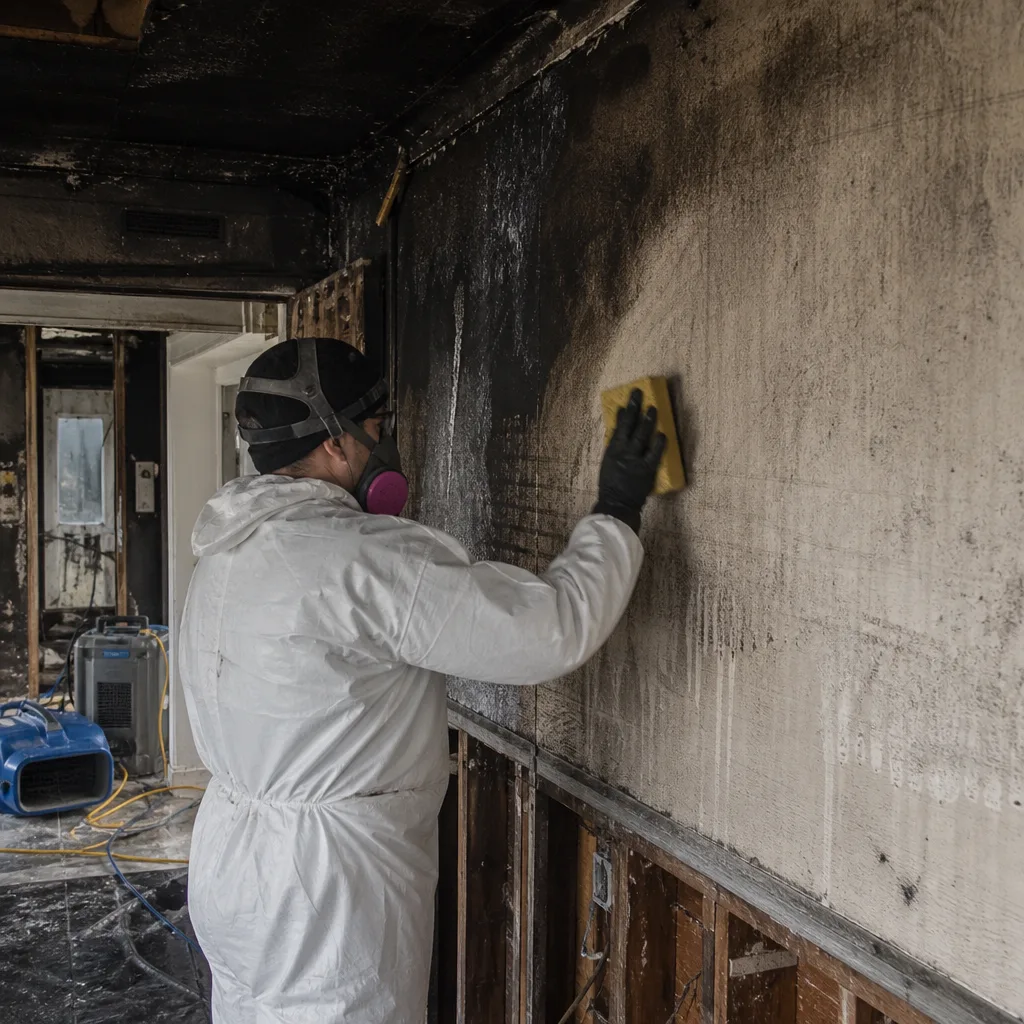
Crawl Space Sewage Removal
Many older Central Harlem rowhouses have shallow crawl spaces under the parlor floor or beneath a rear extension. When a waste line fails, sewage pools there and goes unnoticed until the odor rises through the floorboards. We enter those spaces with proper PPE, remove the contaminated material, and dry the cavity with Injectidry vacuum-drying systems. We document everything for the insurer before, during, and after.
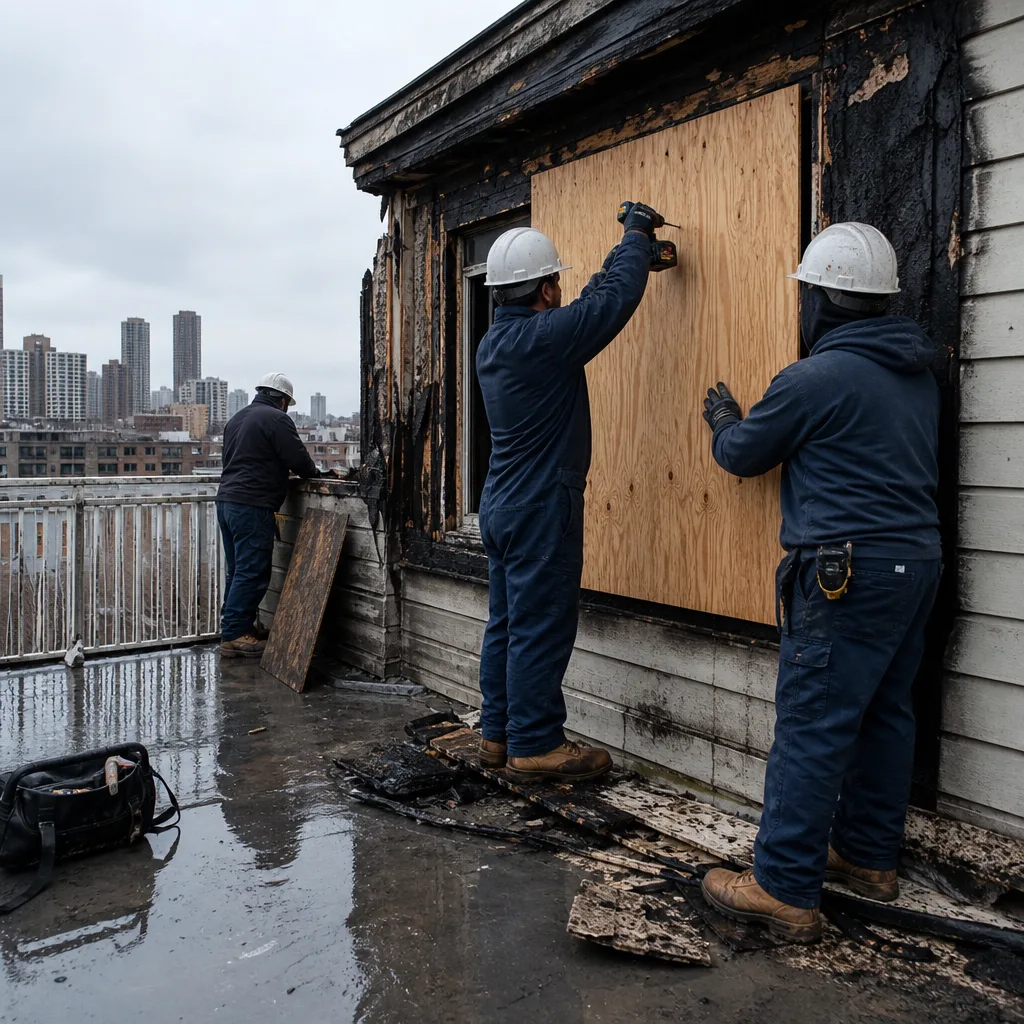
Sewage Backup Cleanup
A sewage backup from a combined sewer surcharge usually recedes on its own, but the contamination left behind is just as dangerous as standing water. We clean the floor, the walls, and every item the water touched, and we apply an antimicrobial that prevents the bacteria from reactivating. In Central Harlem basements that flood seasonally, we also recommend and install backwater valves where the plumbing configuration allows.
Toilet Overflow Cleanup
Toilet overflows vary widely. A clean-water overflow from a supply line is Category 1 and calls for extraction and drying. A clogged waste line that overflows is Category 3 and calls for full containment and disinfection. We assess the source, classify the water correctly, and treat it accordingly, always with a written scope so you know which one you are dealing with.
What happens when you call
- 1
A real person answersNo phone trees - you reach a local pro.
- 2
You get an upfront price rangeHonest numbers before anyone is dispatched.
- 3
A background-checked tech heads outLicensed & insured, dispatched right away.
- 4
You approve before work beginsNothing starts until you say go.
Sewage Cleanup Costs in Central Harlem, NY
Costs in Central Harlem run higher than the outer boroughs because of access, building age, and the frequency of landmark or HPD involvement. A toilet overflow cleanup in a single Central Harlem apartment typically runs $800 to $1,800. A full basement sewage backup with extraction, demolition, containment, drying, and disinfection in a pre-war brownstone generally runs $3,500 to $8,500. When sewage migrates through party walls into adjacent units, the combined scope often reaches $15,000 to $30,000 or more across owners. Crawl space sewage removal in a narrow Central Harlem rowhouse typically runs $2,000 to $4,500. The biggest cost drivers are how much porous material must be removed, whether original plaster must be restored, and whether Landmarks Preservation Commission review is required. We provide a free visual inspection and a fixed written scope before we start, so the number never shifts mid-job. Call (917) 924-4221 for an exact quote.
We Also Serve Cities Near Central Harlem
Our crews cover Central Harlem and the surrounding communities, including Fairview, Harrison, East Bronx, and Hunts Point. If you’re in one of those areas and you’re looking for Sewage Cleanup work done by a crew that answers the phone, call us. We dispatch locally and we arrive fast.
Central Harlem Sewage Cleanup Questions, Answered
How does Central Harlem’s combined sewer system affect sewage cleanup in brownstone basements?
Central Harlem’s combined sewer system carries both stormwater and sanitary waste in the same pipes, so a heavy rain can surcharge the system and force raw sewage back up through basement floor drains. That means what looks like a simple flood is often Category 3 sewage, requiring full containment, disinfection, and disposal of porous materials rather than just drying.
Do I need Landmarks Preservation Commission approval before sewage cleanup on a landmarked block like Strivers’ Row?
If your building is on a landmarked block, such as the St. Nicholas Historic District on West 138th and 139th Streets or the Mount Morris Park Historic District, you generally need LPC approval before replacing original plaster ceilings, millwork, or masonry finishes, even after sewage damage. We photograph the pre-loss condition, file an LPC emergency application the same day, and restore original materials rather than substituting drywall.
Why does sewage damage in Central Harlem often spread to neighboring units?
Central Harlem brownstones and tenements share party walls, so when a cast iron stack fails or a basement drain backs up, contaminated water follows the path of least resistance through shared wall cavities into adjacent buildings. That creates multi-owner, multi-insurance-claim restorations, and we are experienced in coordinating with all the parties, including NYC’s HPD on tenant habitability.
What hidden hazards are common when stripping finishes in Central Harlem pre-war buildings after sewage backup?
Decades of disinvestment followed by rapid reinvestment mean we often strip newer finishes and find undisclosed prior mold colonization, failed waterproofing, and piecemeal amateur repairs over the original materials. We document every layer as we uncover it, so the scope of work is clear to you and your insurer, not a surprise at the end.
How do winter freeze-thaw cycles affect sewage cleanup in Central Harlem brownstones?
Freeze-thaw cycles accelerate spalling in the soft brownstone and limestone facades of Central Harlem’s older buildings, opening new water-intrusion pathways. By spring, that water has drained through wall cavities into basements where it mixes with whatever is in the floor system, often turning a simple leak into a Category 3 cleanup.
How fast can a crew actually get to my Central Harlem building?
We commit to a 45-minute response time from your call. A live dispatcher answers 24/7, and crews are staged near Central Harlem, especially during summer storm season when combined sewer surcharges are most likely.
Will my insurance cover sewage cleanup in Central Harlem?
Most homeowners and co-op policies cover sudden and accidental sewage backup, subject to your policy’s specific terms and any sub-limits. We bill your carrier directly, provide the photo documentation and drying logs adjusters require, and we will tell you straight what is likely covered before work begins.
Can we stay in the home during sewage cleanup?
For anything more than a contained toilet overflow, we recommend you vacate the affected area during extraction, demolition, and disinfection. Category 3 water is pathogenic, and we run HEPA air scrubbers and negative air to keep contaminants from spreading. We will tell you exactly when the space is safe to reoccupy based on clearance testing and drying logs.
Serving Central Harlem, NY - Our Local Coverage Area
We’re based in the Central Harlem area and know this community well. Use the map below to see our service coverage - if you’re nearby, we can almost certainly help.
Call Floodline Restoration Co. of Manhattan for Sewage Cleanup in Central Harlem
When sewage backs up into your Central Harlem building, call (917) 924-4221. A live person answers, day or night, and a certified crew is on the way within 45 minutes. We stand behind the work with the 90-Day Done Right Promise, our Keystone Standard, given to you in writing. No arguing, no paperwork battles, no mid-job handoff. One team, from first extraction to finished rebuild. That is the way it should be, and that is the way we do it, on every block from 110th Street to 155th Street.
Written by Curt Bowman, Owner at Floodline Restoration Co. of Manhattan. Our crews serve Central Harlem and the surrounding communities, answering live 24 hours a day.