
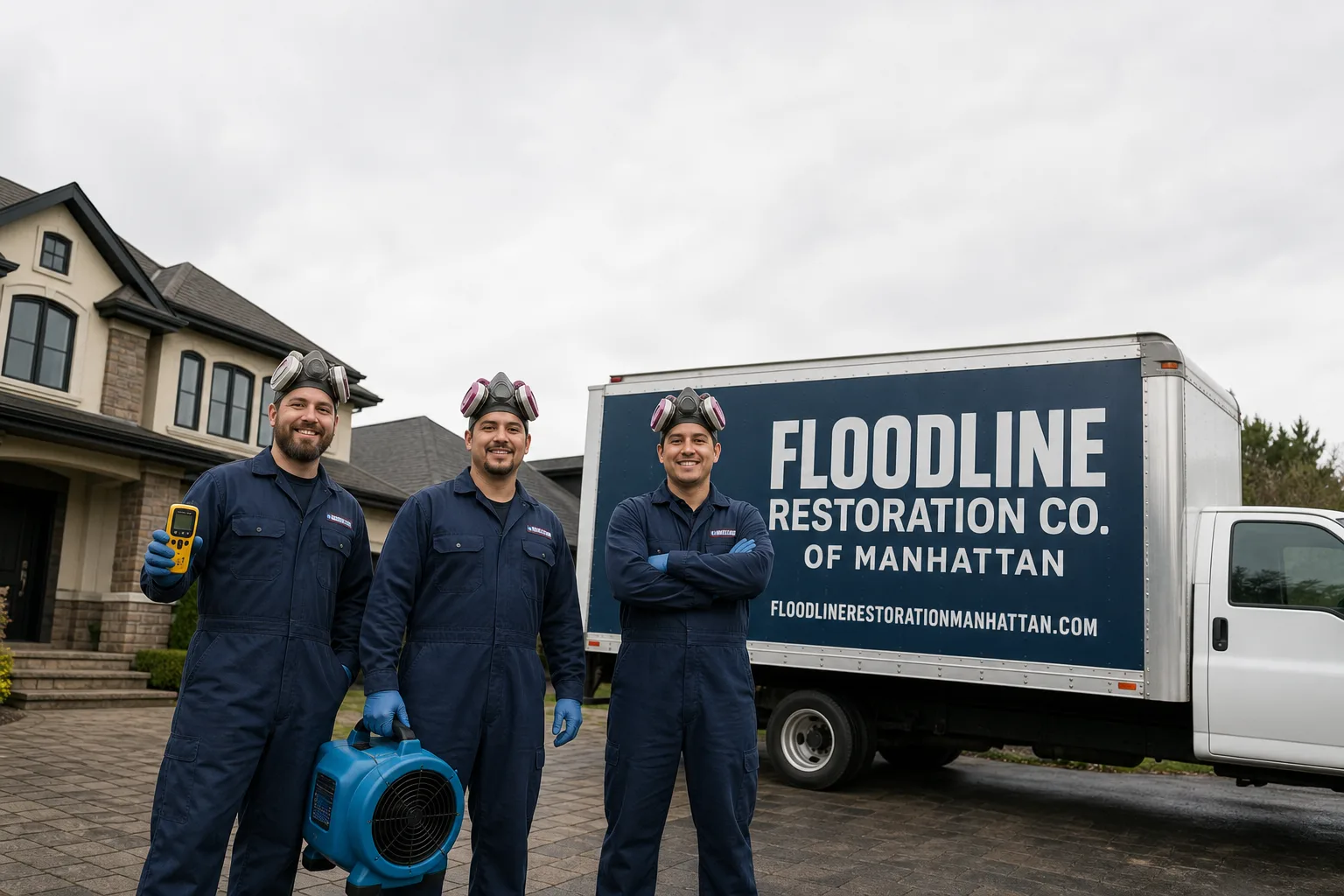
Free visual inspection and a written scope of work before any mitigation begins - photos, moisture readings, and drying logs go in your claim file
The scope we write is the scope we bill. Anything new gets shown to you, in writing, before we touch it.






 Before
 After
After Before
 After
After Before
 After
After24/7 Emergency Water Damage Restoration in Chelsea
When water is rising in a Chelsea basement or pouring through a ceiling on West 23rd Street, you need a crew that answers the phone and moves now. Floodline Restoration Co. of Manhattan runs live dispatch around the clock, every day of the year. A real person picks up at 2 a.m., and a certified crew is routed into Chelsea within 45 minutes. The first hour decides how much gets saved: how far water wicks up century-old brick, whether Category 3 contamination sets into original wood framing, and whether your insurance claim is straightforward or a fight. Call (917) 924-4221 the moment you see standing water. Our visual inspection is free, and we will hand you a written scope before any work begins.
Understanding Water Damage Restoration Severity in Chelsea Properties
Water damage splits into three categories, and Chelsea’s housing stock makes that classification matter more than in most of Manhattan. Category 1 is clean water from a burst supply line or failed water heater. Category 2 carries contaminants from washing machines or sump failures. Category 3 is black water: sewage, Hudson River surge, or anything that has sat long enough to grow bacteria. In Chelsea’s pre-war walk-ups and tenement conversions, Category 3 water doesn’t just soak floorboards. It infiltrates the original brick party walls and cast iron drain stacks that run through every unit, and those materials hold moisture for weeks after the visible water is gone. That’s why we moisture-map every affected surface with thermal imaging and hygrometers, not just the floor. Structural drying in a five-story West 20s walk-up means tracking moisture migration across four neighboring units, because water travels down and sideways through original masonry long after extraction is finished.
Why Chelsea Property Owners Choose Floodline Restoration Co. of Manhattan
- 45-minute response commitment: When you call with water coming in, we route the nearest crew to Chelsea immediately. The clock starts on your call, not on paperwork.
- 24/7 live answer, always a person: No answering service, no automated menu. A live dispatcher picks up at any hour and starts coordinating your response.
- IICRC-certified crews: Our technicians hold WRT and ASD certifications for water damage and structural drying, and we train to RIA and IFA standards as well. The crew that arrives knows Chelsea’s building types, not just textbook procedure.
- Free visual inspection: We assess the damage on-site, explain what we found in plain terms, and give you a written scope and price before any work starts. No obligation, no pressure.
- Direct insurance billing: We bill your carrier directly and handle adjuster communication. You should not be the messenger between your insurer and your restoration crew.
- One team from extraction to reconstruction: The same Floodline crew that pulls the water out runs the drying and handles the rebuild. No mid-job handoff, no inherited subcontractors.
Our Water Damage Restoration Process
Inspection & Assessment
We start with a full walkthrough of the affected areas in your Chelsea property, using thermal imaging and moisture meters to find water you can’t see. We classify the water category, map the affected building materials, and determine whether NYC DEP lead or asbestos protocols apply before work begins.
Extraction / Stabilization
We run truck-mounted and portable extraction units to pull standing water out fast. In Category 3 scenarios, we set up containment and negative air immediately so contaminated air doesn’t spread through connected units in your building.
Drying & Dehumidification
We place Dri-Eaz and Phoenix LGR dehumidifiers and XPOWER air movers in a calculated layout, not scattered at random. Daily moisture readings are logged until the dry standard is met, and that log goes to you and your carrier.
Cleaning & Sanitization
We clean and treat affected surfaces to stop microbial growth before it starts. In Chelsea basements, where original brick holds moisture, this step is non-negotiable. HEPA air scrubbers run during the entire cleaning phase.
Specialty Treatment for Chelsea Properties
For pre-war walk-ups and converted lofts, we coordinate directly with co-op boards on tenant notification, asbestos and lead protocols, and access schedules. For galleries and art spaces in the West 20s, we document drying conditions to climate-control standards and work alongside licensed art handlers when needed.
Repairs & Restoration
We rebuild what water took out: drywall, flooring, trim, and paint. Because the same crew that handled extraction runs the reconstruction, there’s no gap between drying and rebuild, and no disputes about whose fault a problem is.
Need Emergency Water Damage Restoration in Chelsea Now?
Crews minutes away, answering live 24 hours a day. The sooner we start, the less it costs.
Working With Your Insurance Company
Insurance claims for water damage in Chelsea move differently than they do in single-family suburbs. Co-op and condo policies have layers, and your carrier will want documentation from the first hour. We provide that. Our crews photograph every affected room before we touch anything, log moisture readings daily through the entire drying cycle, and produce a line-item scope of work your adjuster can actually follow. We talk to your carrier directly so you don’t spend your days playing phone tag. When the claim is approved, we bill the insurer directly. When a carrier pushes back, we have the documentation to push back harder. That’s how the 90-Day Done Right Promise works in practice: if it’s not done right, we make it right, and we put that in writing.
What We Provide Your Insurer
- Thorough documentation of the loss
- Photos of all damage, room by room
- Moisture readings and drying logs
- A detailed, line-item scope of work
- Direct coordination with your carrier
Built for Chelsea’s Loss Calendar
Chelsea’s water damage season doesn’t follow the same calendar as the rest of the city. January and February deep freezes burst supply lines in unheated basement mechanical rooms, and freeze-thaw cycling chews at the unreinforced brick facades along 9th and 10th Avenues, sending water through parapet walls and window lintels. March and April bring spring thaw, which finds the leaks that winter hid. Summer thunderstorm flash flooding overwhelms the storm drains along the West Side Highway corridor and sends water into the lowest-elevation basements among the West 20s. And from September through November, nor’easter season pushes Hudson River surge up into the western blocks, where ground floors sit inside FEMA-designated flood zones. We plan our crews around Chelsea’s specific loss calendar, not a generic Manhattan average. When a nor’easter is forecast, our dispatchers already know which buildings along 10th Avenue are most likely to call.
Water Damage Restoration Across Chelsea’s Neighborhoods
The response routes and building types change block by block in Chelsea. The west side, from the Hudson River to 10th Avenue, is where storm surge and tidal flooding do their work. Buildings here sit in active flood zones, and basements take on river water during nor’easters. The West 20s corridor between 10th and 11th Avenues is the gallery district, where a water event threatens not just drywall but artworks worth more than the building unit itself. The central residential blocks between 7th and 9th Avenues hold the bulk of Chelsea’s five- and seven-story walk-ups, dense with original plumbing and cast iron stacks that fail in winter. East of 7th, toward the Flatiron side, sits a mix of older tenements and newer conversions, where a single burst pipe on an upper floor cascades down through four or five units. Each of these zones demands a different extraction layout, a different drying plan, and a different coordination sequence with boards and managing agents.
Specialized Water Damage Restoration Services We Offer in Chelsea
Emergency Water Extraction
When standing water is spreading through a Chelsea basement or ground-floor unit, extraction has to start immediately. We run truck-mounted extraction units where access allows and portable units for upper-floor walk-ups and narrow tenement stairwells. We pull the water, not just push it around. Then we map where the water went inside the walls and under the flooring, because in pre-war construction that’s where the real damage hides.
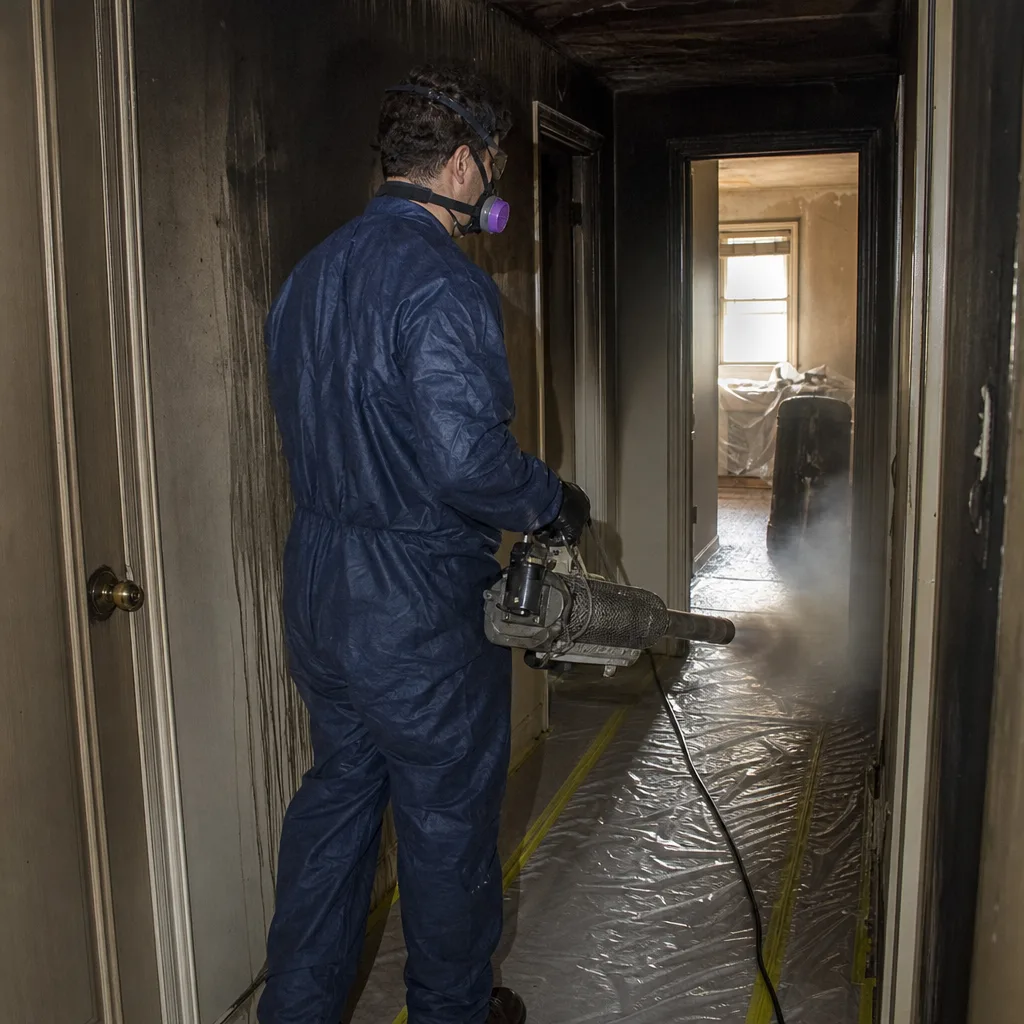
Structural Drying & Dehumidification
Chelsea’s century-old brick and original wood framing dry differently than modern drywall. Brick wicks moisture and releases it slowly, which means drying takes longer and requires different equipment placement. We run Dri-Eaz and Phoenix LGR dehumidifiers with XPOWER air movers in calculated layouts, and we take moisture readings daily until the wood, brick, and plaster hit the dry standard. You get the log. So does your carrier.
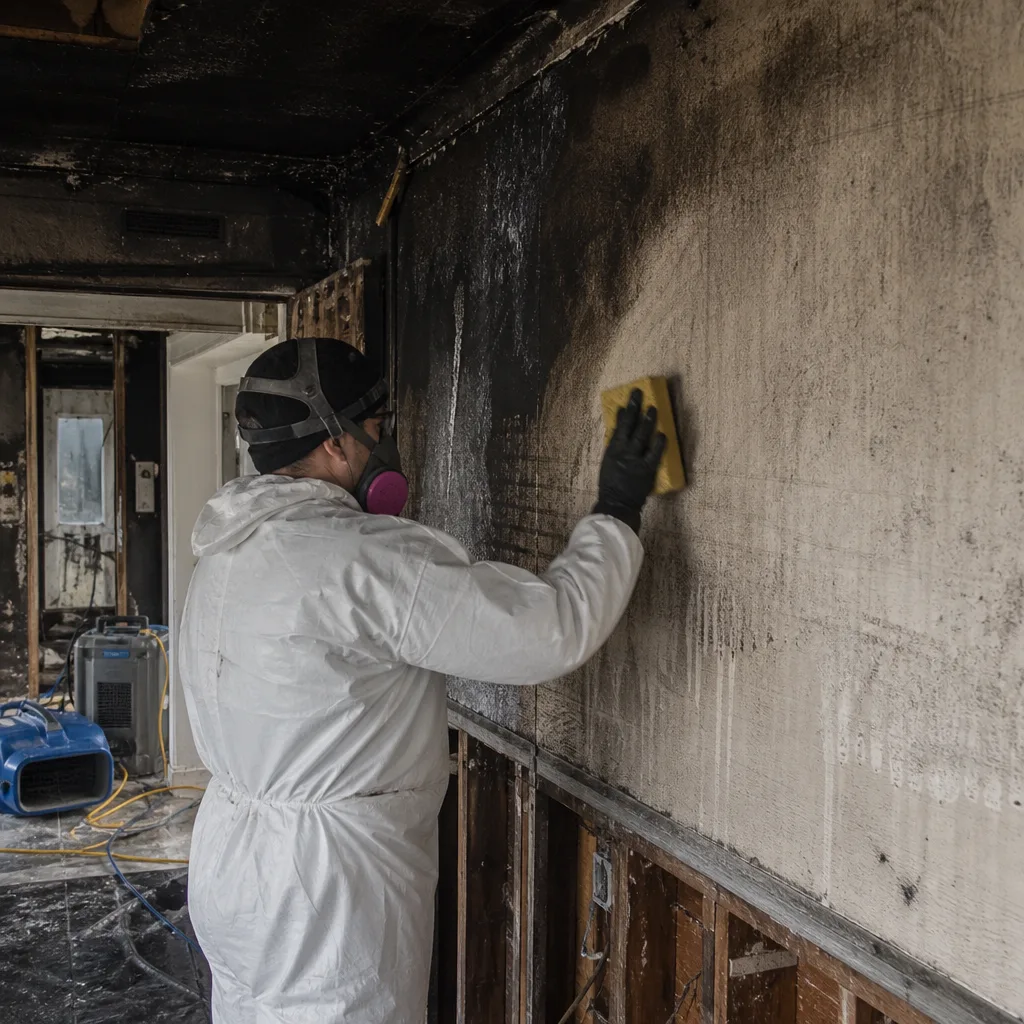
Flood Cleanup
Hudson River surge is Category 3 water. It carries sewage, oil, and whatever else the river brought. Cleaning it up properly means containment, negative air, full removal of contaminated porous materials, and sanitization of the structure that remains. In Chelsea’s flood-zone blocks west of 10th Avenue, this is the service we run most often. Cutting corners here leaves sewage-borne pathogens in brick that keeps wicking moisture for weeks.
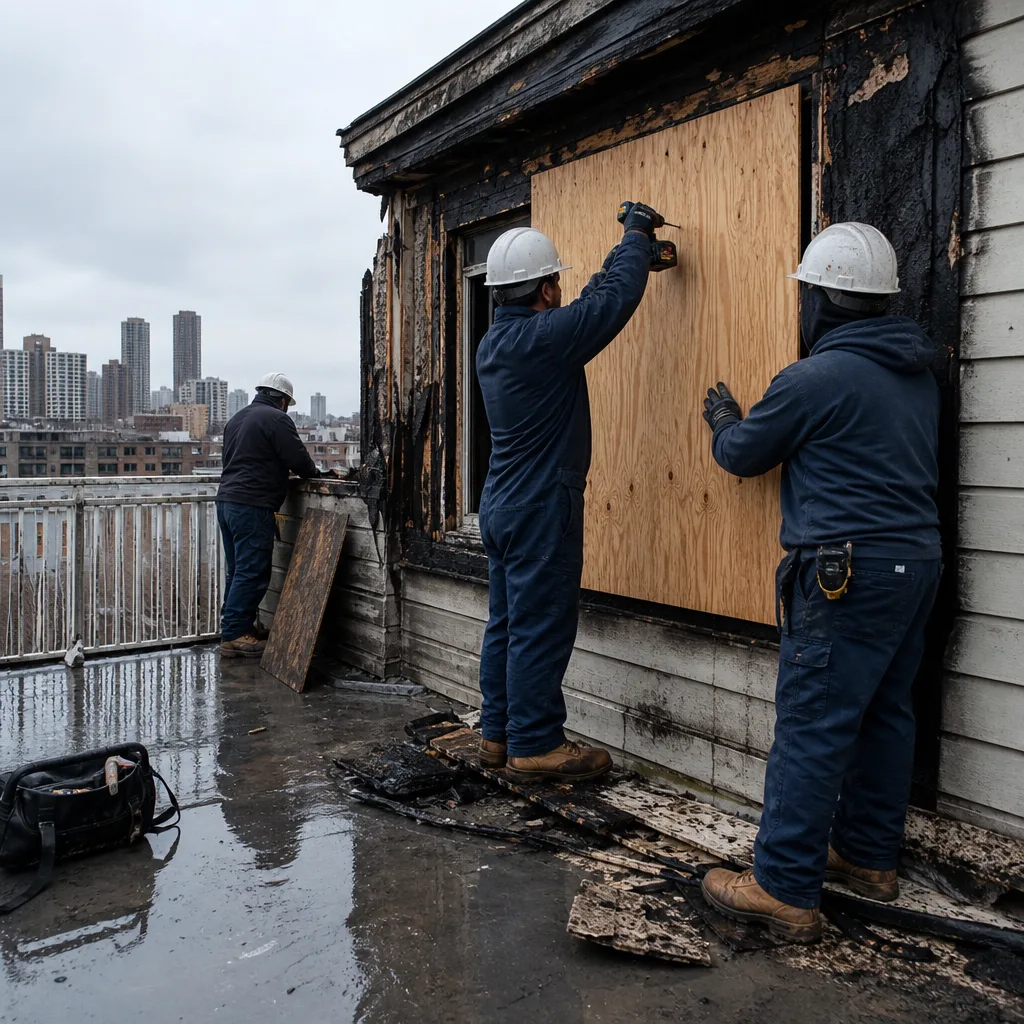
Burst Pipe Restoration
January in Chelsea means frozen supply lines and burst pipes in unheated basements and mechanical closets. The water is usually Category 1 or 2, which is good news, but it still spreads through original flooring and down into neighboring units fast. We extract, dry, and restore the affected areas, and we coordinate with the building if the break originated in a shared riser or main.
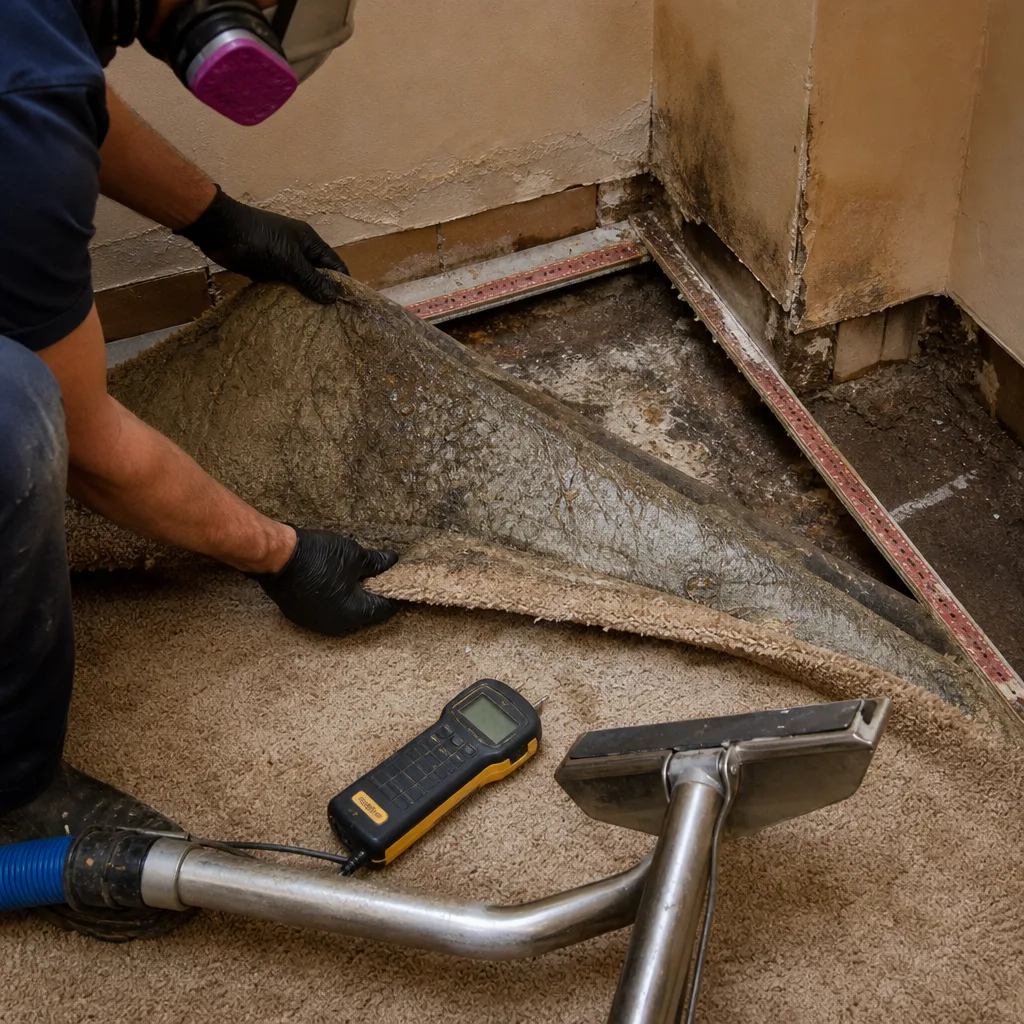
Basement Water Removal
Chelsea basements hold mechanicals, storage, and in many buildings, co-op common areas. When river water or a failed sump pump floods a basement, the damage reaches furnaces, boilers, electrical panels, and original foundation walls. We remove the water, assess what equipment survived, dry the masonry, and rebuild the finishes. The work is done by our own crew, start to finish.
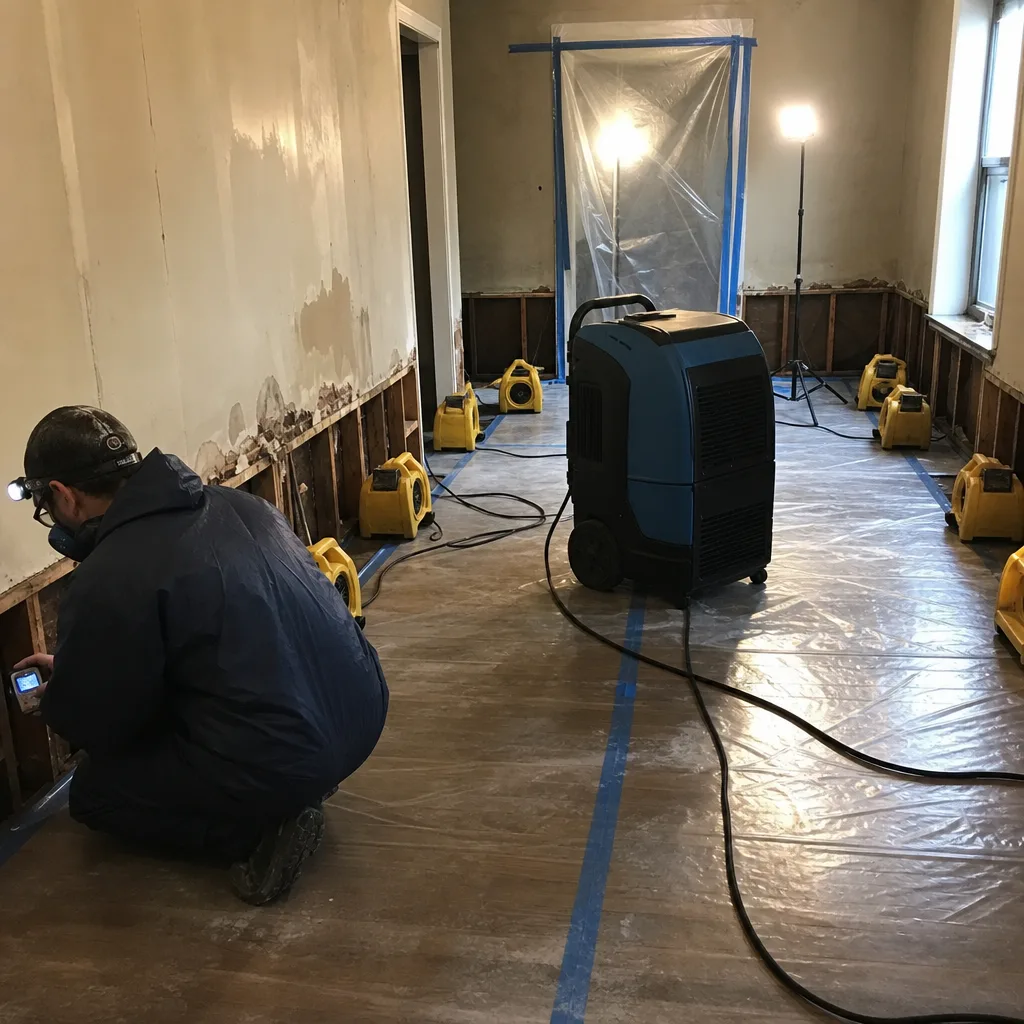
Ceiling & Roof Leak Water Damage
Freeze-thaw cycling along Chelsea’s parapet walls and aging roof membranes sends water into top-floor units every winter. Water travels down through the building, staining ceilings on its way. We track the full path of the leak, dry the affected framing and plaster, and rebuild what was damaged. We also document recurring leak patterns so you can show your board what needs fixing to stop it for good.
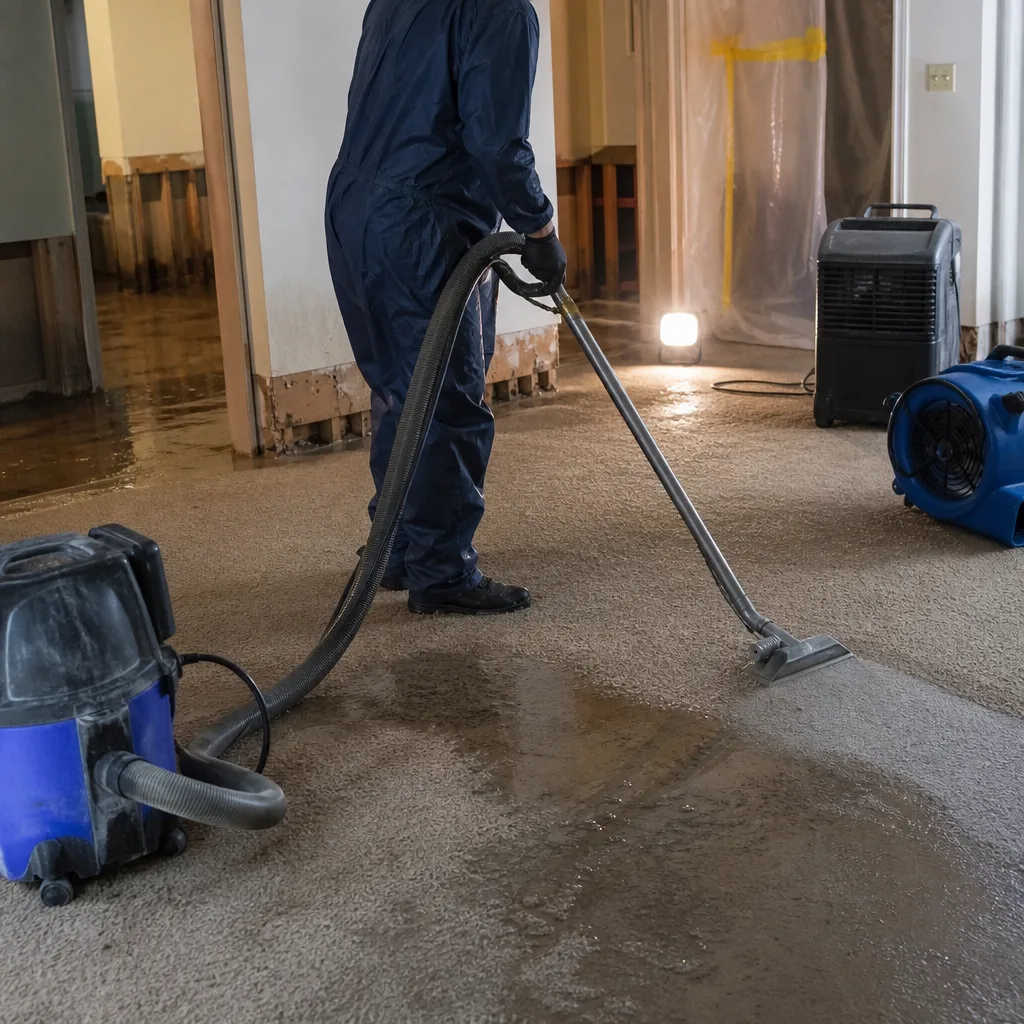
What happens when you call
- 1
A real person answersNo phone trees - you reach a local pro.
- 2
You get an upfront price rangeHonest numbers before anyone is dispatched.
- 3
A background-checked tech heads outLicensed & insured, dispatched right away.
- 4
You approve before work beginsNothing starts until you say go.
Water Damage Restoration Costs in Chelsea, NY
Water damage restoration in Chelsea typically runs between $2,800 and $7,500 for most residential losses, but the range is wide because Chelsea’s building types are so varied. Emergency water extraction alone generally costs $1,200 to $3,800. Structural drying and dehumidification runs $1,800 to $4,600 depending on how many units are involved and whether we need containment. Basement water removal in a flood-zone building west of 10th Avenue often lands between $4,000 and $9,000 when Category 3 water is involved. Burst pipe restoration in a typical pre-war walk-up unit ranges from $2,500 to $6,000. The big variables are water category, square footage of wet materials, ceiling height, and whether NYC DEP lead or asbestos protocols add coordination time. Every job starts with a free visual inspection and a written scope. You’ll know the price before any work starts, and we bill your carrier directly when coverage applies.
We Also Serve Cities Near Chelsea
Our crews handle water damage restoration in Chelsea and the surrounding Hudson Valley communities. We serve Shrub Oak, Crompond, Peekskill, and Shenorock with the same live 24/7 dispatch and the same 90-Day Done Right Promise. If you’re in one of those towns and water is rising, call (917) 924-4221.
Chelsea Water Damage Restoration Questions, Answered
How does storm surge from the Hudson River affect water damage restoration in Chelsea compared to other Manhattan neighborhoods?
Storm surge from the Hudson River introduces Category 3 black water into Chelsea’s western blocks, which means sewage, oil, and river-borne contaminants. That requires containment, negative air, and full removal of porous materials. The 2012 Sandy surge reached over 14 feet above mean lower low water and pushed flooding as far east as 10th Avenue. Most of Manhattan never deals with that kind of contamination profile.
What special protocols are required for water damage in Chelsea’s pre-war walk-ups and converted industrial lofts?
Pre-war walk-ups and converted lofts often contain asbestos spray insulation and lead paint, which trigger NYC DEP protocols before any demolition or drying work can begin. We handle that coordination directly. We also work with co-op boards on tenant notification requirements and access schedules, which adds a coordination layer that single-family homes never face.
How do art galleries in Chelsea’s West 20s change water damage restoration timelines?
Galleries in the West 20s hold artworks worth millions, and drying those spaces requires climate-controlled documentation and coordination with licensed art handlers. We document temperature and humidity conditions throughout the drying process, which protects both the art and the insurance claim. If you dry a gallery like a standard apartment, you risk voiding the gallery’s coverage.
Why does mold appear so fast after water damage in Chelsea basement units?
Chelsea basement units sit against original brick and stone foundations that hold moisture, creating the warm, damp conditions mold needs within 24 to 48 hours. The brick keeps wicking water even after visible standing water is removed. That’s why we run containment and HEPA air scrubbers early, and why daily moisture readings matter more here than in modern drywall construction.
What causes recurring water damage along Chelsea’s parapet walls and lintels each winter?
Freeze-thaw cycling in Chelsea’s aging unreinforced brick facades causes spalling and cracking along parapet walls and window lintels. Water gets in during winter precipitation, freezes, expands, and opens bigger cracks. Every winter, the same apartments see the same leaks until someone rebuilds the parapet or repoints the brick properly.
How fast can a crew get to Chelsea when I call?
We commit to a 45-minute response time within Chelsea. Our dispatch is live around the clock, and we route the nearest available certified crew. When water is actively flowing, we treat it as an emergency and move accordingly. Call (917) 924-4221 and a real person starts coordinating right then.
Will my insurance cover water damage restoration in Chelsea?
Most homeowner and co-op policies cover sudden and accidental water damage, like burst pipes or storm surge, but not long-term seepage or neglect. We document everything from the first hour and bill your carrier directly. If you’re in a co-op, your building’s master policy and your individual policy both apply in different layers, and we help sort that out.
What should I do in the first 30 minutes after discovering water damage?
Call us and shut off the water source if you can do so safely. Don’t walk through standing water in a basement unless you know the electricity is off. Don’t try to vacuum up Category 3 water with a shop vac. Document what you can with photos, then let our crew handle the rest. The first hour determines how much gets saved.
Storm Surge and Hudson River Flooding: What Chelsea Property Owners Need to Know
In Chelsea, water damage restoration is disproportionately driven by Hudson River storm surge and tidal flooding rather than burst pipes. Superstorm Sandy’s surge reached over 14 feet above mean lower low water and inundated basements as far east as 10th Avenue. Nor’easters can still push ground-floor flooding into the West 20s even without a named hurricane. The neighborhoods west of 10th Avenue sit inside FEMA-designated flood zones, and when the river rises, those basements fill. This changes the restoration playbook entirely. It means Category 3 contamination protocols on day one, longer drying cycles for saturated original brick, and coordination with buildings that may have multiple flooded units at once. If your property sits west of 10th Avenue, you are not just dealing with a plumbing failure. You’re dealing with the Hudson River, and that demands a crew that knows the difference.
After a nor’easter drove Hudson River surge into the basement of a pre-war co-op on West 24th Street near 10th Avenue, our crew arrived to find three feet of black water standing above century-old cast iron drain stacks. We set up containment and negative air, ran Dri-Eaz LGR dehumidifiers with moisture mapping across the original brick masonry, and coordinated with the co-op board on NYC DEP lead and asbestos protocols before restoring the basement to pre-loss condition. That’s a Tuesday for us in Chelsea. The crews that skip Category 3 protocols and just mop it out leave sewage-borne pathogens in brick that keeps wicking moisture weeks later.
Serving Chelsea, NY - Our Local Coverage Area
We’re based in the Chelsea area and know this community well. Use the map below to see our service coverage - if you’re nearby, we can almost certainly help.
The Chelsea Playbook: Why Generic Restoration Fall Short Here
Most water damage restoration companies treat Chelsea like any other Manhattan zip code. That’s the mistake. Standard pipe burst crews see river surge and skip Category 3 containment, leaving pathogens in porous brick. Restoration teams show up to a gallery on West 21st Street and dry the space without climate-controlled documentation, voiding the insurance claim and creating liability for the owner. Contractors ignore NYC tenant-notification and asbestos rules in pre-war walk-ups, trigger stop-work orders from DEP, and leave units uninhabitable longer than necessary. Floodline Restoration Co. of Manhattan was built for this neighborhood’s specific conditions. We train our crews on Chelsea’s building stock, Chelsea’s flood zones, and Chelsea’s regulatory requirements. Our Water Damage Restoration team handles every phase in-house, and our dispatchers know the Chelsea blocks by name. That’s not a marketing line. It’s the difference between a dry home and a recurring problem.
If you’re dealing with water damage in Chelsea right now, call (917) 924-4221. A live person answers, a certified crew heads your way, and you get a written scope before any work starts. Done right, and backed in writing. That’s the 90-Day Done Right Promise, and it’s how we’ve done business from day one. We’ll be there when we say.
Written by Curt Bowman, Owner at Floodline Restoration Co. of Manhattan, serving Chelsea with certified restoration crews and live 24/7 dispatch.