
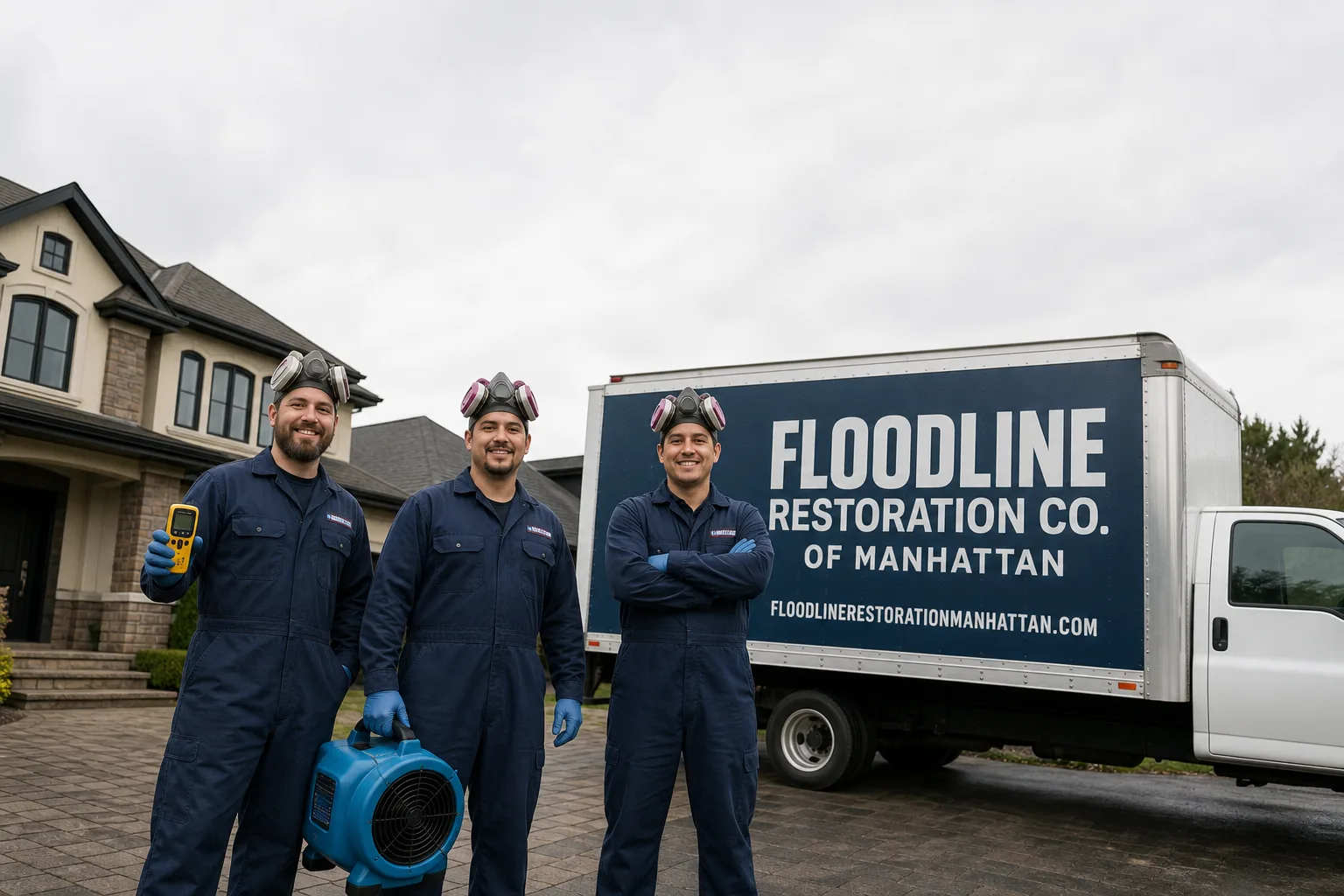
Free visual inspection and a written scope of work before any mitigation begins - photos, moisture readings, and drying logs go in your claim file
The scope we write is the scope we bill. Anything new gets shown to you, in writing, before we touch it.
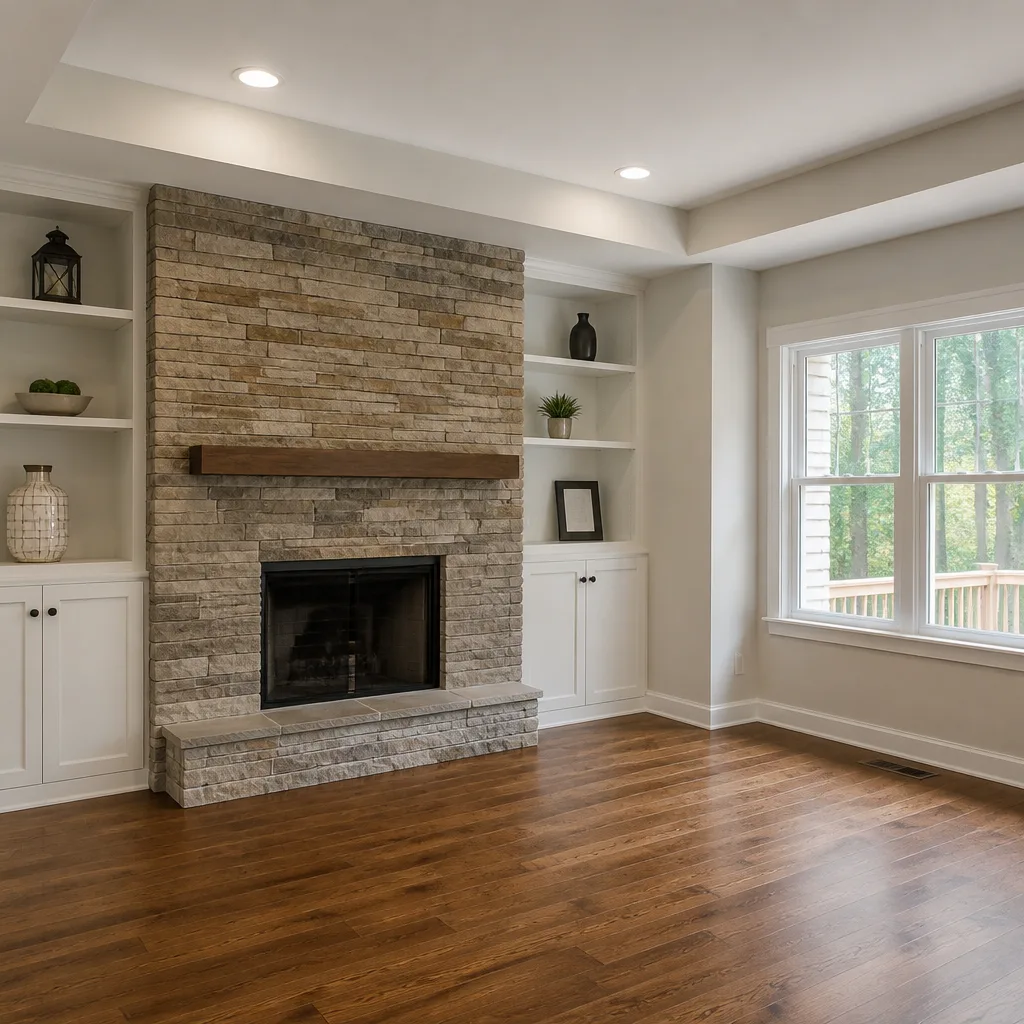
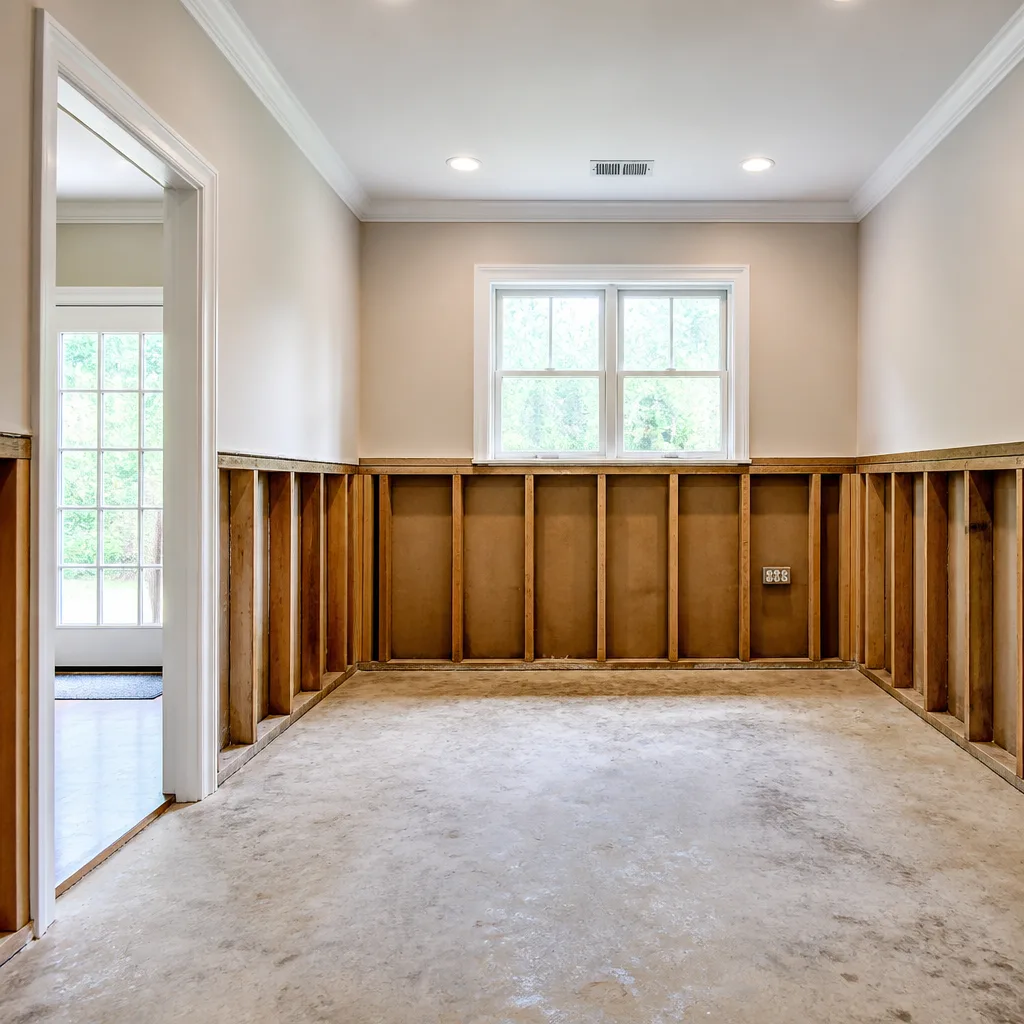

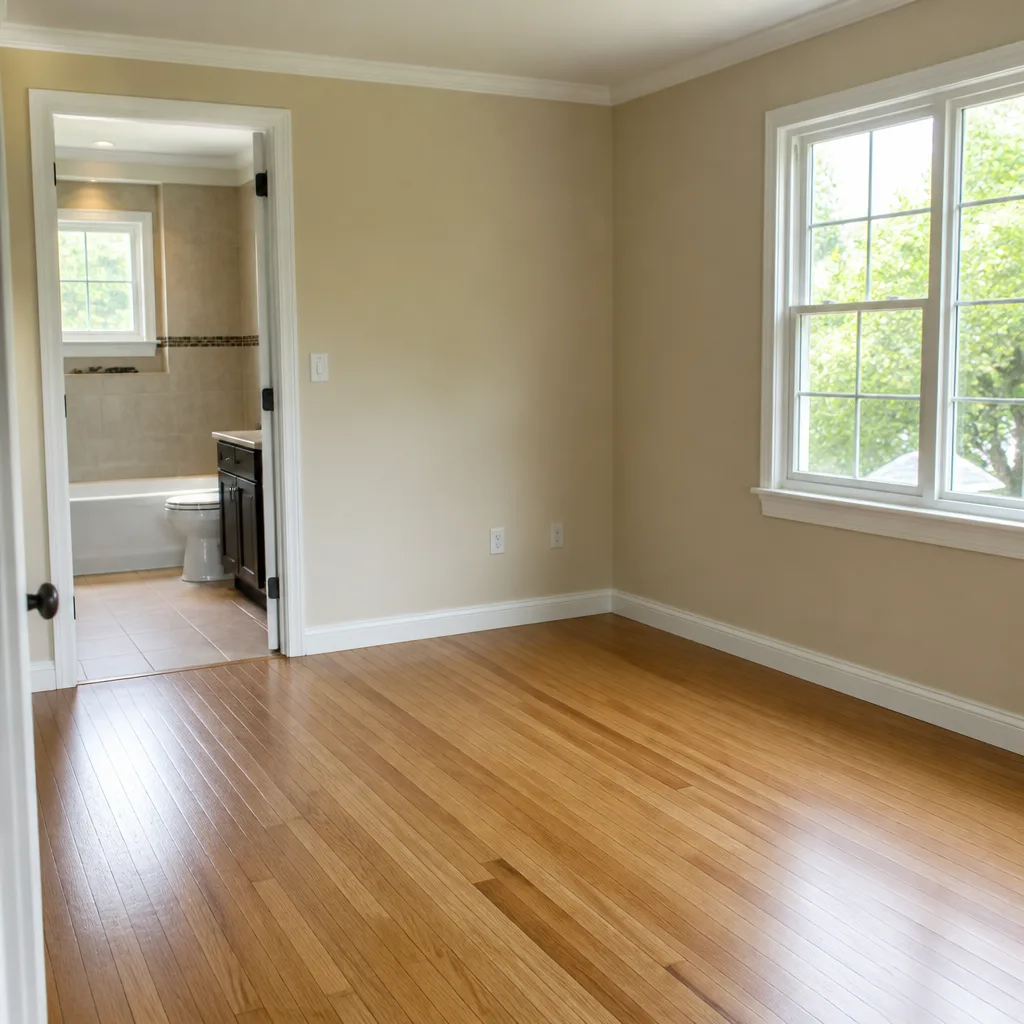
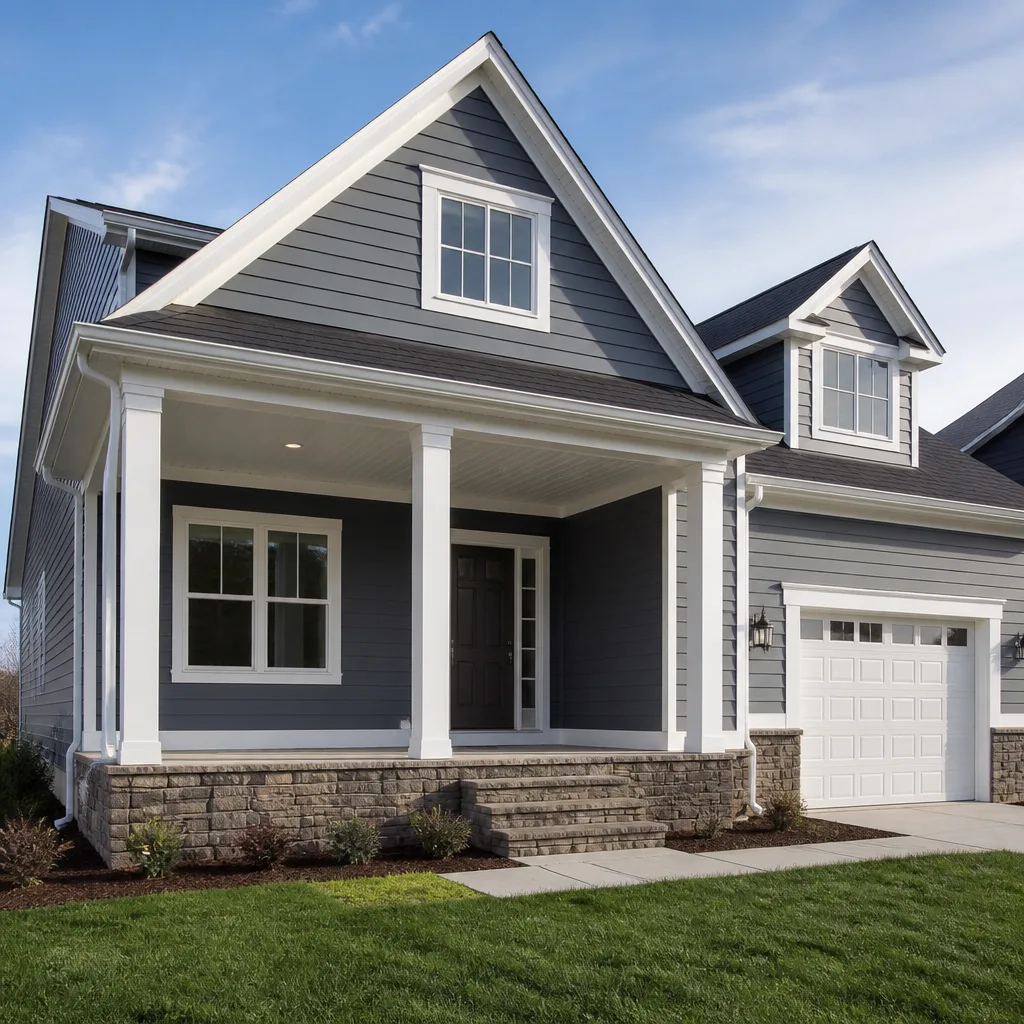
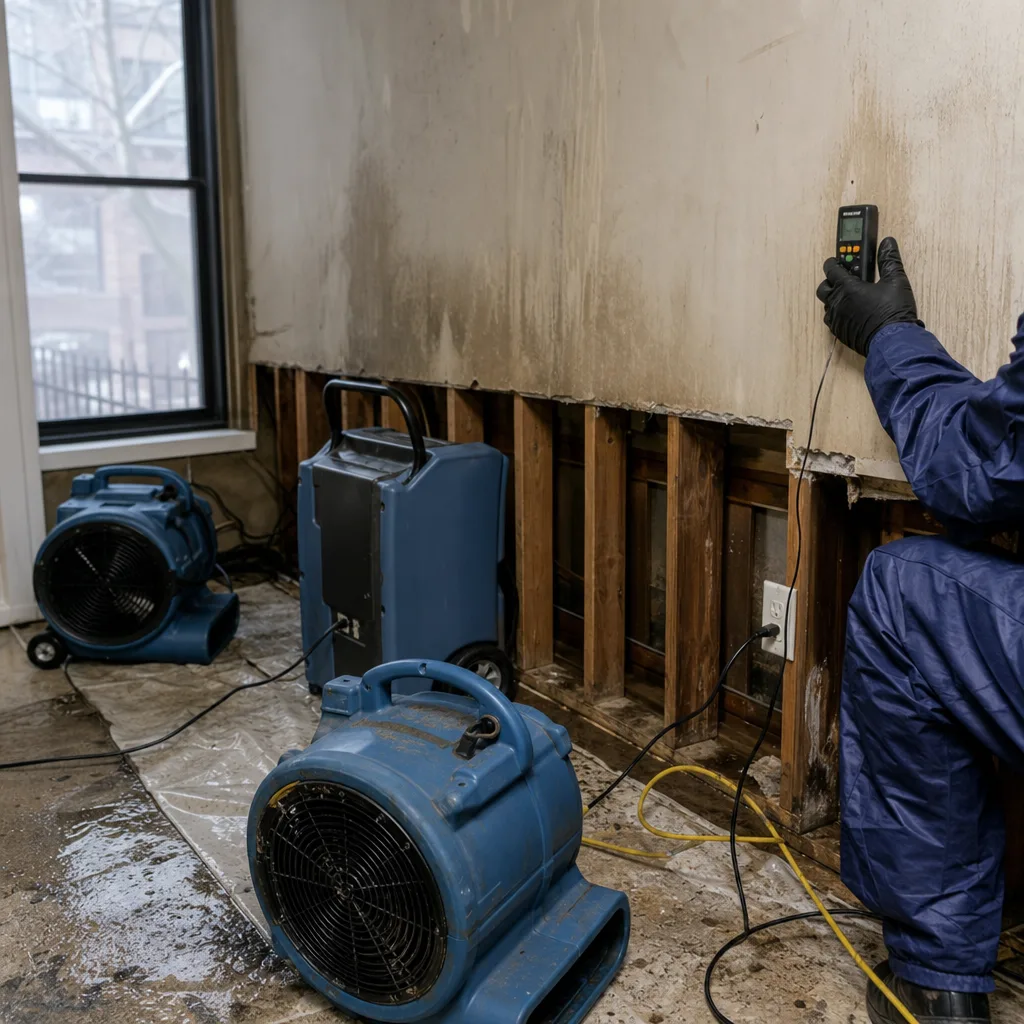 Before
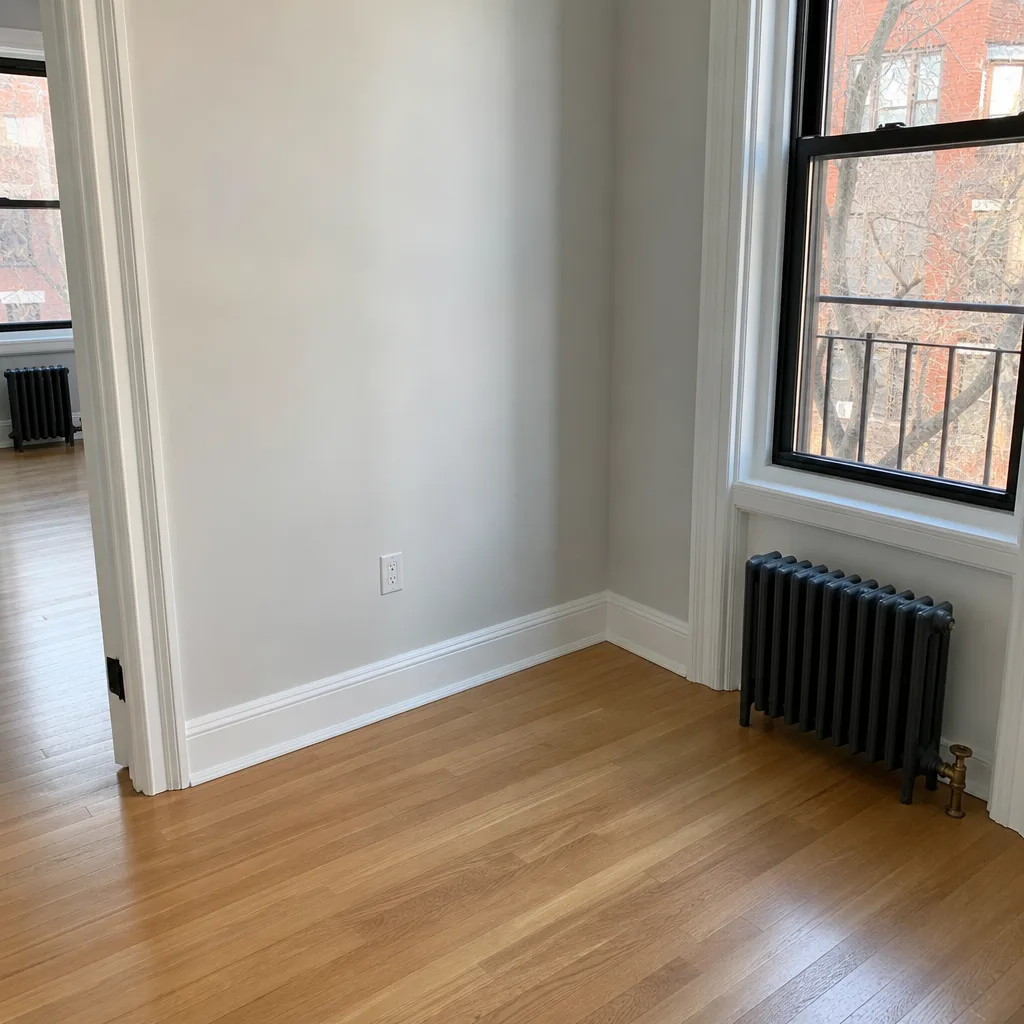 After
After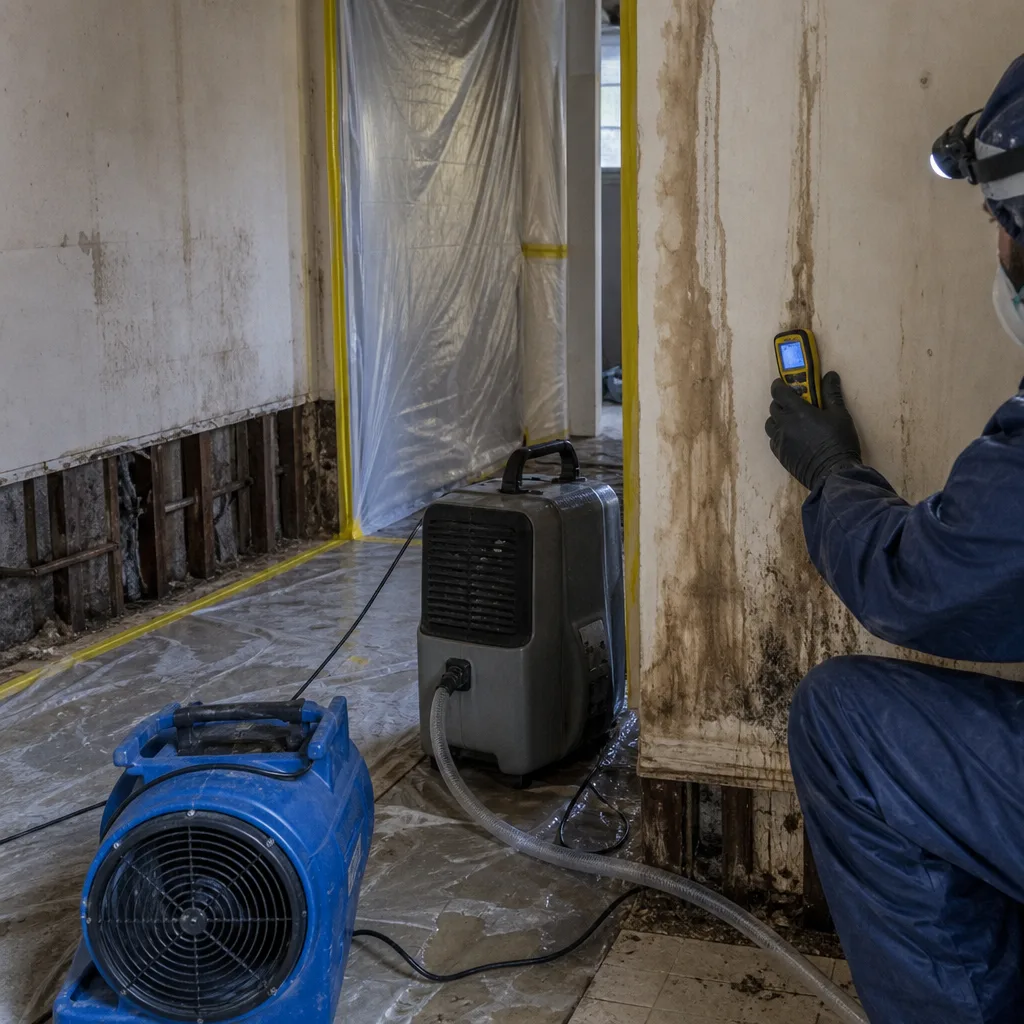 Before
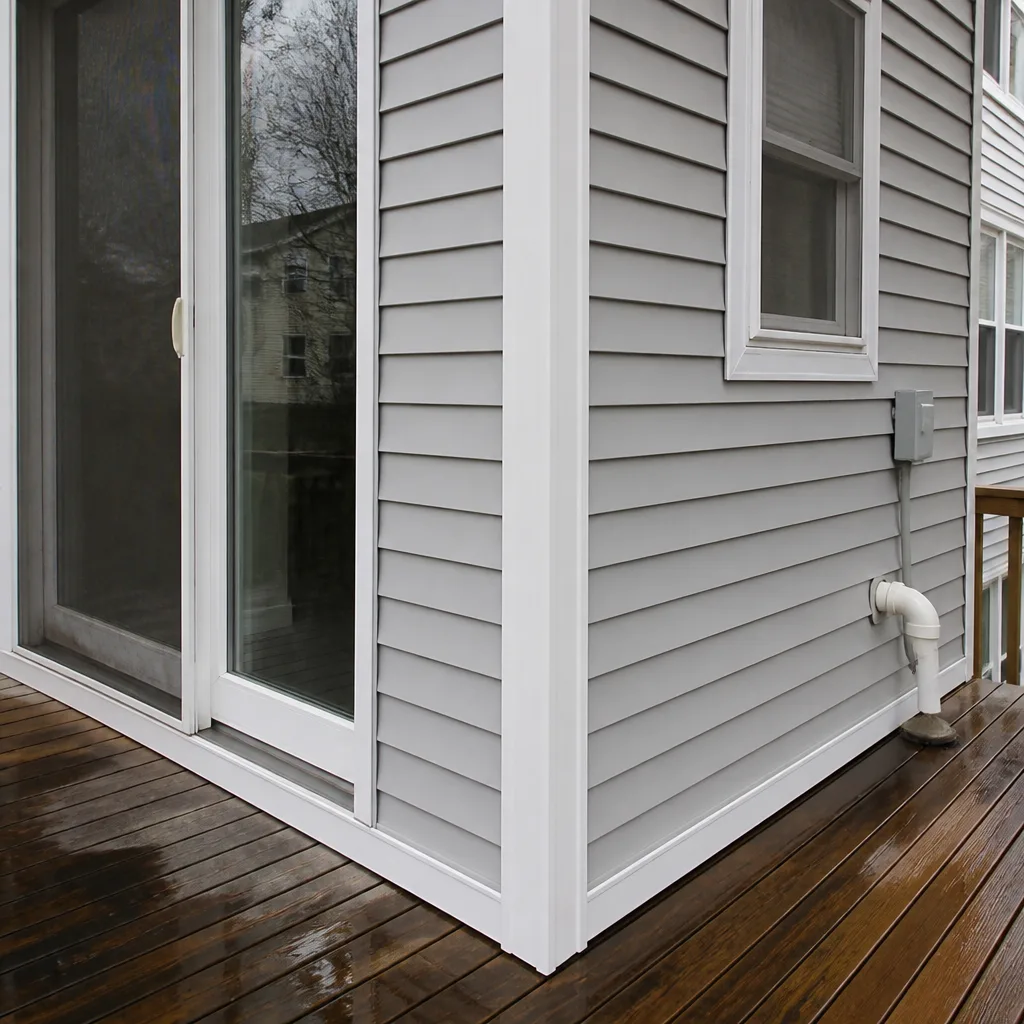 After
After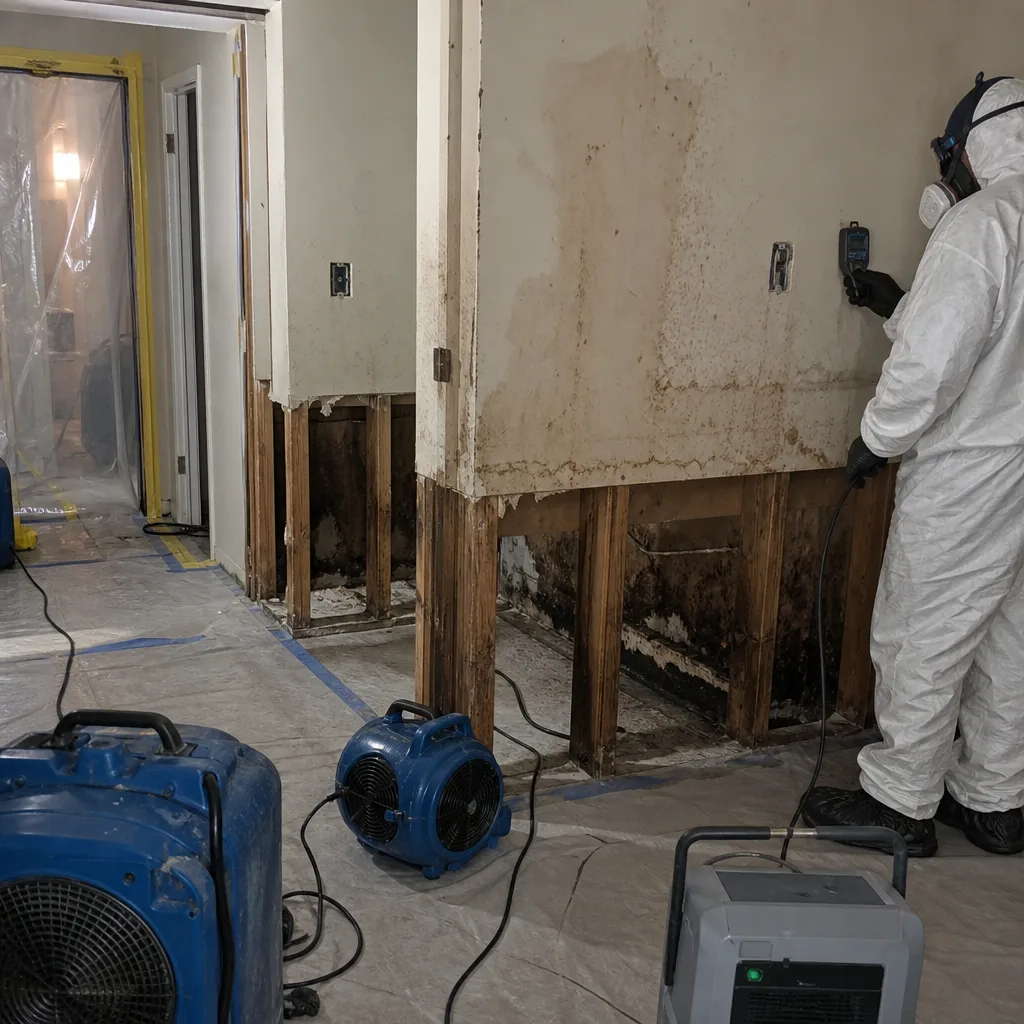 Before
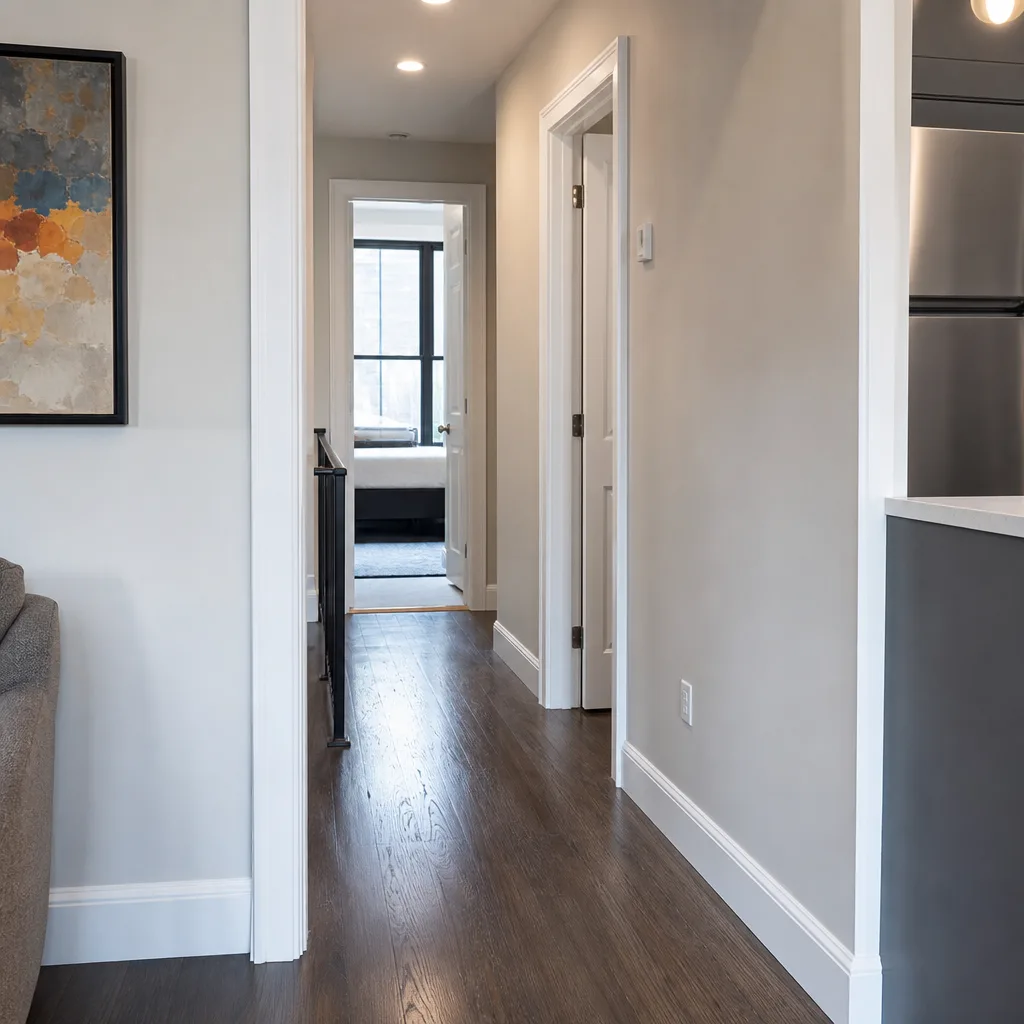 After
After24/7 Emergency Water Damage Restoration in Haworth
Water damage restoration in Haworth typically costs $1,850-$4,200 for a standard Category 2 basement or ceiling event, and emergency extraction usually starts within 45 minutes of your call. When water is moving through a 1960s split-level off Sunset Avenue or a colonial near Haworth Avenue, every hour it sits means more drywall to cut, more plaster to dry, and more money out of pocket. Our crews answer live at (917) 924-4221 around the clock, every day of the year, and we dispatch into Haworth the same visit. The first hour decides whether a burst pipe is a three-day dry-out or a two-week rebuild, so call the moment you see standing water, a bulging ceiling, or a garage door that let the storm in.
Understanding Water Damage Restoration Severity in Haworth Properties
Not all water is the same. Category 1 water comes from a clean supply line, a burst pipe in the wall, or an overflowing tub. Category 2 carries significant contamination: sump pump discharge, washing machine overflow, or rainwater that has run across a garage floor. Category 3 is sewage and floodwater, and it demands full containment, disposal of affected materials, and a stricter drying standard. Haworth’s housing stock makes this classification matter more than in newer towns. Most homes here were built between the 1940s and 1970s, with plaster-over-lath walls that hold water differently than modern drywall. Plaster absorbs moisture slowly and releases it even more slowly, which means a Category 2 event behind a Haworth living room wall can take four to six days to reach dry standard, not the three days a drywall home might need. We moisture-map every affected room with thermal imaging and hygrometers before we ever place a fan, then log daily readings until the structure hits dry standard.
Why Haworth Property Owners Choose Floodline Restoration Co. of Manhattan
- 45-minute response commitment - our Haworth dispatch routes from the nearest available certified crew, not a call center queue. You get a real arrival window, and we hit it.
- A live person answers, 24/7 - no automated system, no “press 2 for emergencies.” A dispatcher picks up at 2 a.m. and starts the truck rolling.
- IICRC-certified technicians - our crews hold WRT and ASD certifications, plus AMRT where mold is involved, and every tech is background-checked and uniformed.
- Free visual inspection - we assess the loss, map the moisture, and tell you plainly what needs doing before any work is authorized.
- Direct insurance billing - we bill your carrier directly and document every reading, every cut, and every dried cavity so the claim moves without you as the messenger.
- One team from extraction to reconstruction - the same certified crew that pulls the water also hangs the new drywall and sets the new door. No mid-job handoff, no inherited strangers in your house.
Our Water Damage Restoration Process
Inspection & Assessment
We arrive, map the affected area with thermal imaging and hygrometers, and identify the water category, the migration path, and the structural materials involved. In Haworth homes, we pay special attention to plaster-over-lath walls and original basement drainage, because both hide moisture that drywall homes do not.
Extraction & Stabilization
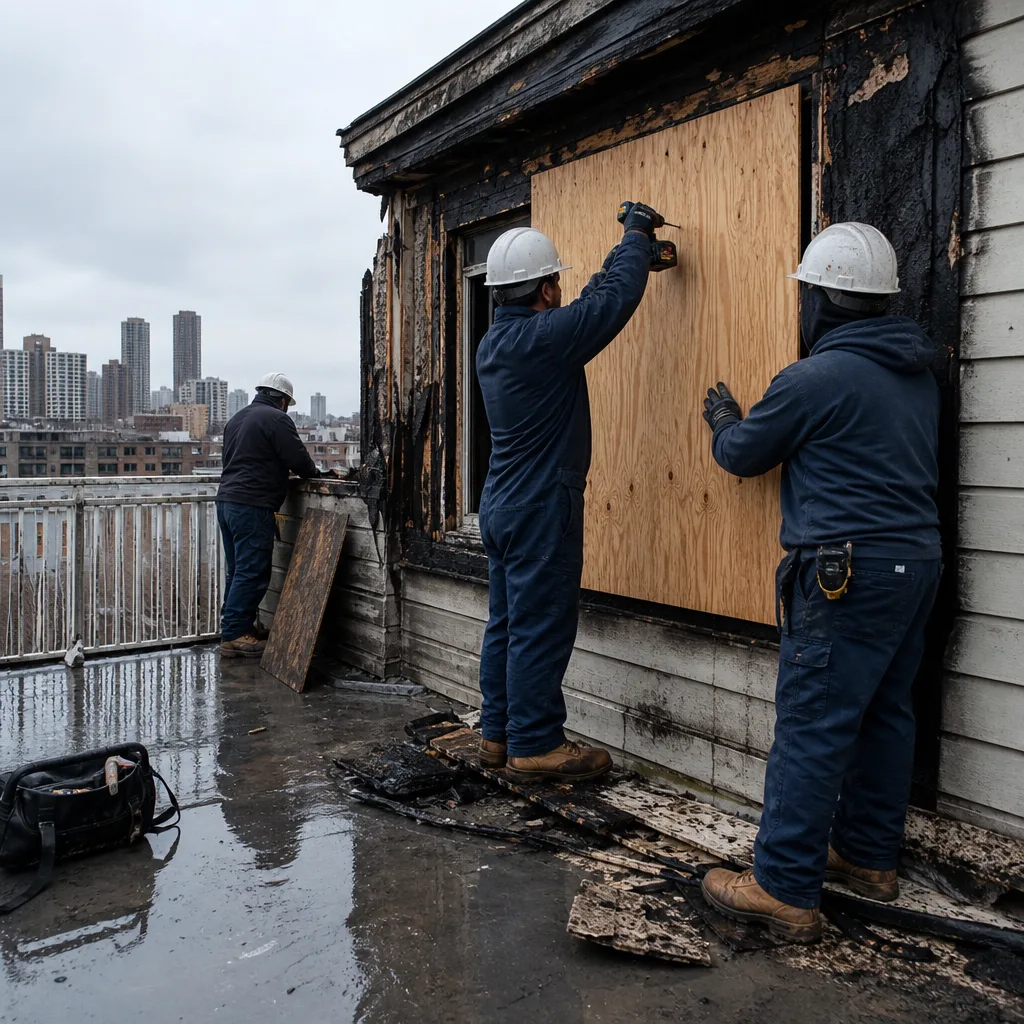
We remove standing water with truck-mounted and portable extraction units, then stabilize the area to stop migration. If a wind-damaged garage door or failed patio door is the entry point, we seal or board it the same visit to prevent re-intrusion.
Drying & Dehumidification
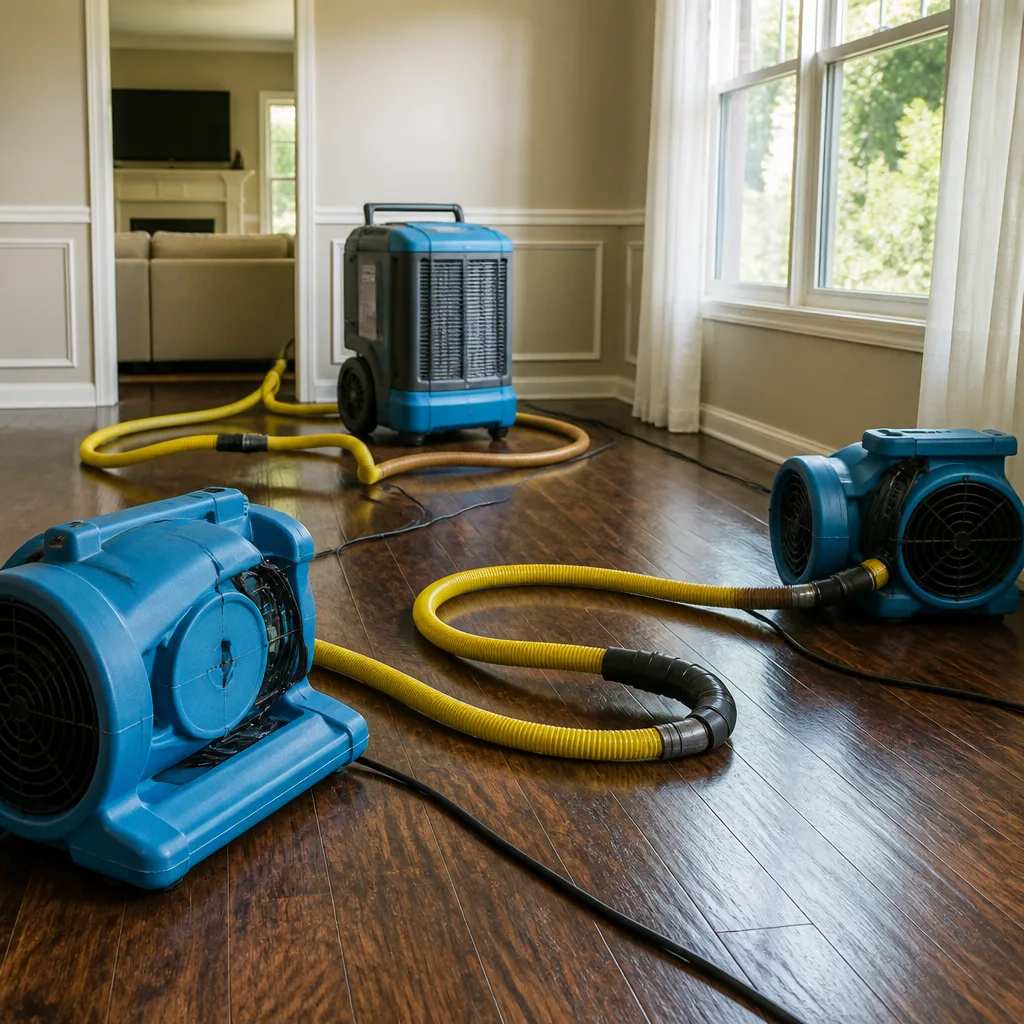
We place Dri-Eaz and Phoenix dehumidifiers and high-velocity air movers according to the moisture map, not by guesswork. Daily readings are logged and shared with you and your carrier until every affected material reaches dry standard.
Cleaning & Sanitization
Affected surfaces are cleaned, and Category 2 or 3 water means antimicrobial application to prevent mold and bacteria from establishing. HEPA air scrubbers run where air quality is a concern.
Structural Drying Verification
We do not pack up when the surface feels dry. We verify with moisture meters and thermal imaging that wall cavities, subflooring, and sill plates have reached the dry standard your insurer requires, then hand you the log.
Repairs & Restoration
Because we are a full-cycle restoration company, the same crew handles the rebuild: drywall, trim, paint, flooring, and door replacement. The 90-Day Done Right Promise covers the completed work in writing. If it’s not done right, we make it right.
Need Emergency Water Damage Restoration in Haworth Now?
Crews minutes away, answering live 24 hours a day. The sooner we start, the less it costs.
Working With Your Insurance Company
Haworth homeowners tend to carry premium policies, and those carriers expect premium documentation. From the first hour, we photograph the loss room by room, record moisture readings, and write a line-item scope that matches industry estimating standards. We talk directly with your adjuster so you are not relaying messages between a restoration crew and a claims office. The written scope is agreed before work starts, and the bill goes to your carrier where coverage applies. No surprises on the invoice, no arguing about what was done.
What We Provide Your Insurer
- Thorough documentation of the loss
- Photos of all damage, room by room
- Moisture readings and drying logs
- A detailed, line-item scope of work
- Direct coordination with your carrier
Built for Haworth’s Loss Calendar
Haworth’s water damage season runs on a rhythm most national franchises never learn. January and February bring deep freezes that split copper supply lines in unheated basements and crawlspaces, and the freeze-thaw cycle puts pressure on every joint in a 1960s original plumbing system. Late winter and early spring are the ice dam months: nor’easters drop heavy snow onto mature oak and maple limbs, snowpack builds on low-pitched colonial roofs, and meltwater backs up behind the ice, forcing water through the roof deck into attics and second-floor ceilings. March and April bring snowmelt and spring rain, and Haworth’s clay-heavy subsoil does not drain quickly, so hydrostatic pressure pushes groundwater through basement slab cracks and footing drains that were undersized when the house was built. Summer is thunderstorm season, when wind-load failures on overhead garage doors and patio doors become the leading water entry point, not flooding. Fall leaves clog gutters on tree-lined streets all over town, and the first hard rains find the water in. We schedule our Haworth work around this calendar because we have watched it repeat for years.
Water Damage Restoration Across Haworth’s Neighborhoods
Haworth is small, roughly 2.2 square miles, but the loss patterns change block by block. Homes east of Sunset Avenue, toward the Oradell Reservoir, sit lower and on wetter ground, and we see more basement hydrostatic seepage there in spring than anywhere else in town. The streets off Haworth Avenue, with their tighter lots and older split-levels, produce a steady run of burst-pipe calls in January because original copper lines run through unheated attached garages. The colonial-heavy blocks near the Haworth Public School and Valley Road corridor are the ice-dam territory, with low-pitched roofs and mature trees close enough to drop limbs onto the structure. Up on the northern end near the Demarest border, where lots open up a bit, we still see wind-driven rain intrusion through garage doors that are not wind-rated, because the prevailing storm track funnels right through those wider driveways. The narrow, tree-lined streets everywhere mean we stage trucks carefully, often parking equipment on the apron rather than the street, so we do not block a neighbor’s driveway or a fire lane.
Specialized Water Damage Restoration Services We Offer in Haworth
Emergency Water Extraction
When a supply line lets go at midnight or a nor’easter pushes rain through a buckled garage door, the first priority is removing standing water before it wicks into drywall, flooring, and the sill plate. Our Haworth crews use truck-mounted extraction units and submersible pumps to pull water out fast, often over 200 gallons from a single basement event. The faster the extraction, the less demolition and the lower the final bill.
Structural Drying & Dehumidification
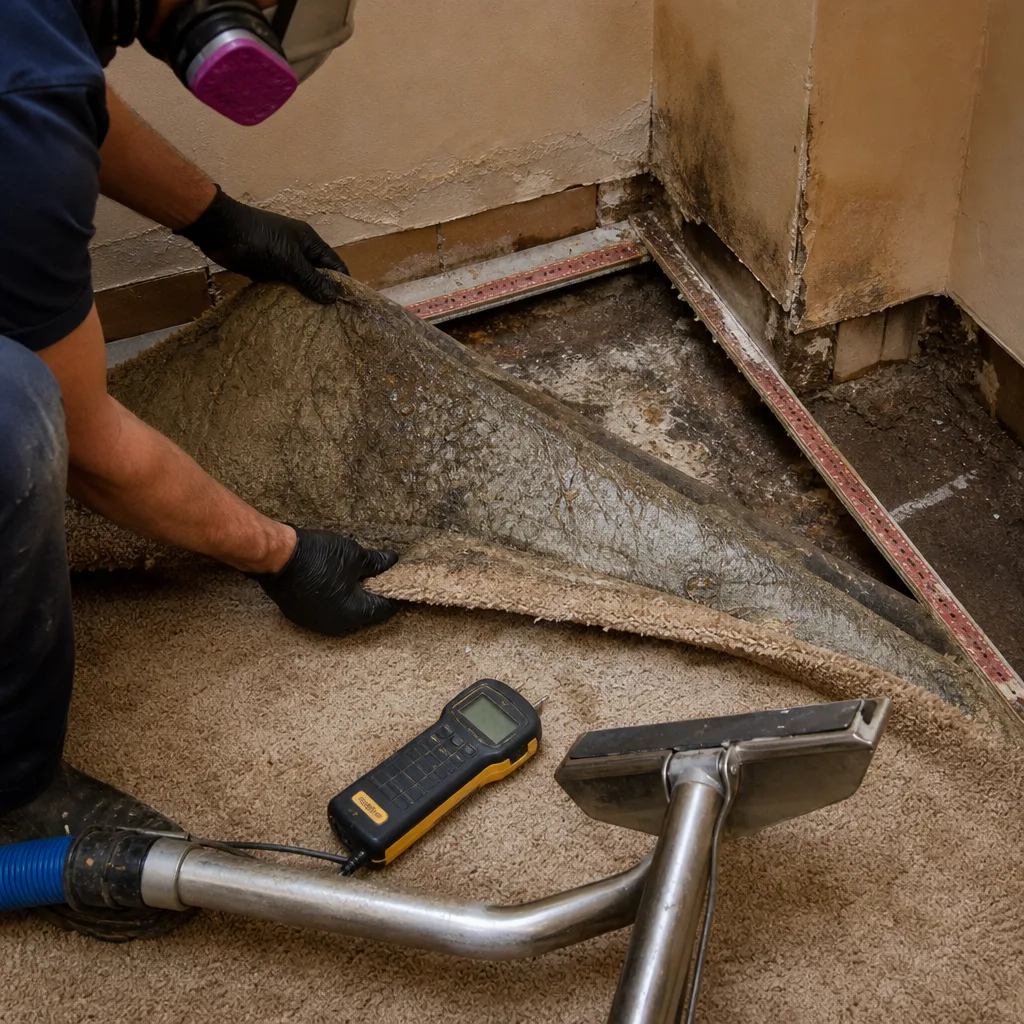
Haworth’s older homes need drying plans built around plaster-over-lath and dimensional lumber, not modern engineered materials. We place Dri-Eaz and Phoenix dehumidifiers and XPOWER air movers according to a moisture map, then verify daily with hygrometers and thermal imaging. In a colonial with plaster walls, we may cut small vent holes behind baseboards to get airflow into wall cavities, because those cavities hold moisture that will bloom into mold if left alone.
Flood Cleanup
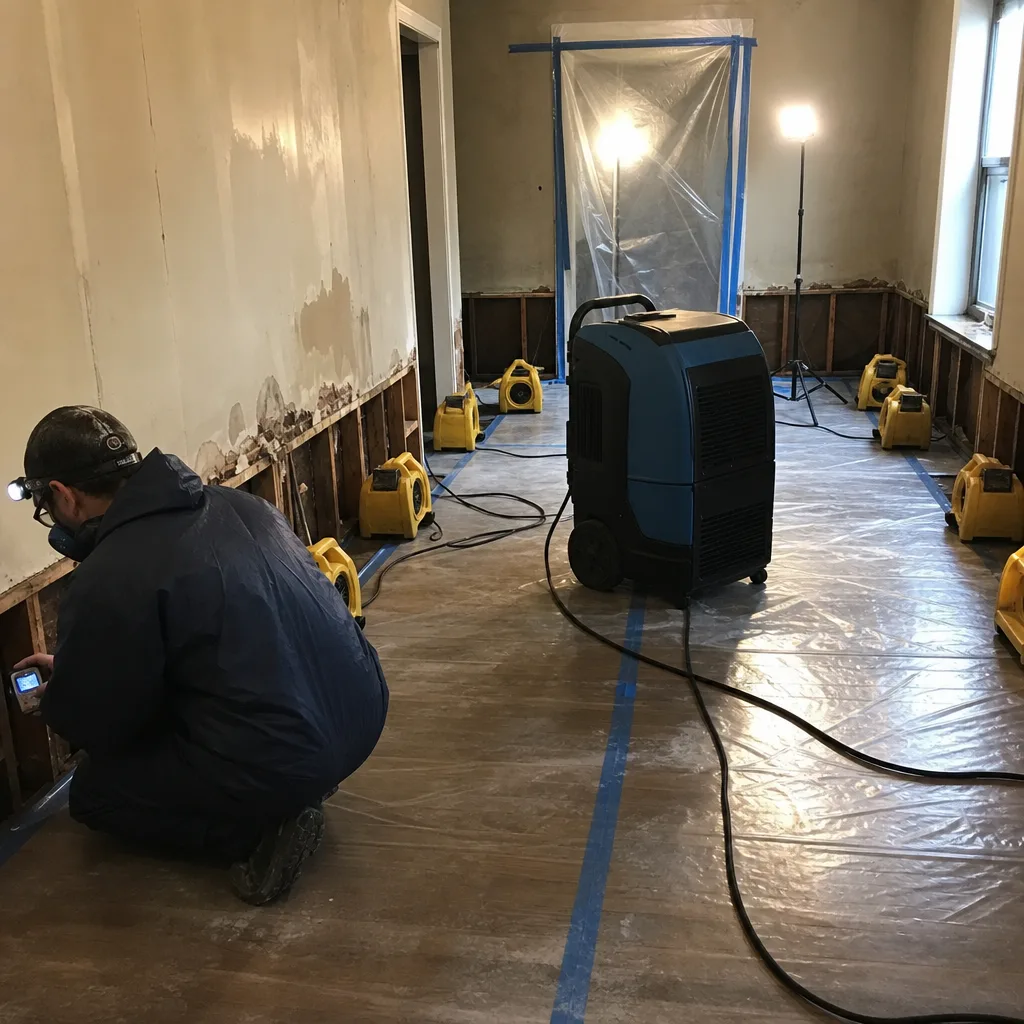
Floodwater in Haworth is almost always Category 2 or 3, whether it is stormwater, reservoir-adjacent groundwater, or a sewer backup. Our flood cleanup includes extraction, removal of saturated materials that cannot be salvaged, antimicrobial treatment, and structural drying. The Keystone Standard covers this work in writing: if it is not done right, we make it right, no arguing.
Burst Pipe Restoration
A burst pipe behind a Haworth kitchen wall can run for hours before anyone notices the ceiling stain or the warping baseboard. We locate the break, stop the source, extract the water, and then dry the affected cavities from inside, with minimal demolition where possible. We also document the pipe age and condition for your carrier, because most Haworth policies cover the resulting water damage even when they exclude the pipe repair itself.
Basement Water Removal
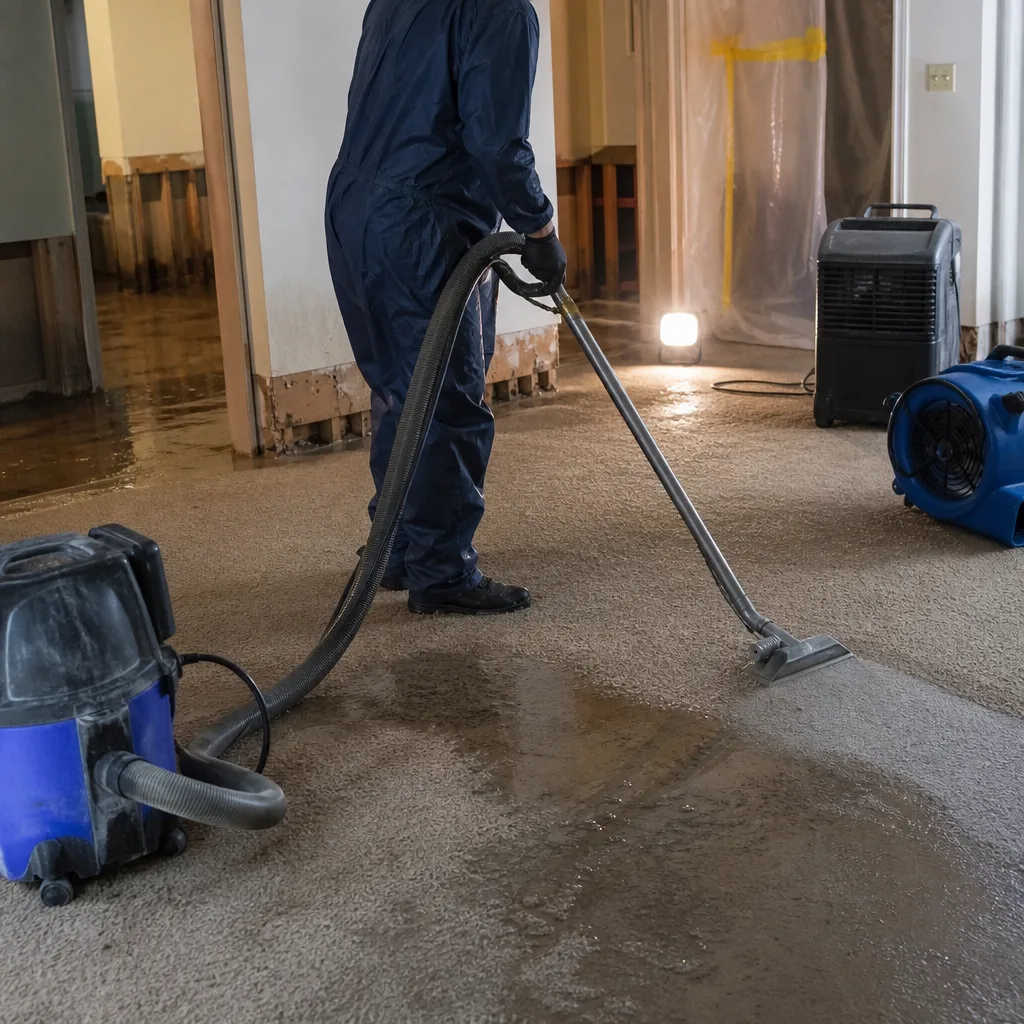
Haworth’s clay-heavy subsoil and older footing drains make basement water intrusion a spring ritual in the lower-lying blocks. Our basements are often finished, which raises the stakes: wet carpet, soaked drywall, and the distinct risk of mold behind paneling within 48 hours. We remove the water, pull affected finishes, dry the structure, and tell you plainly whether the cause is plumbing, groundwater, or a failed drain, because that changes your claim and your next step.
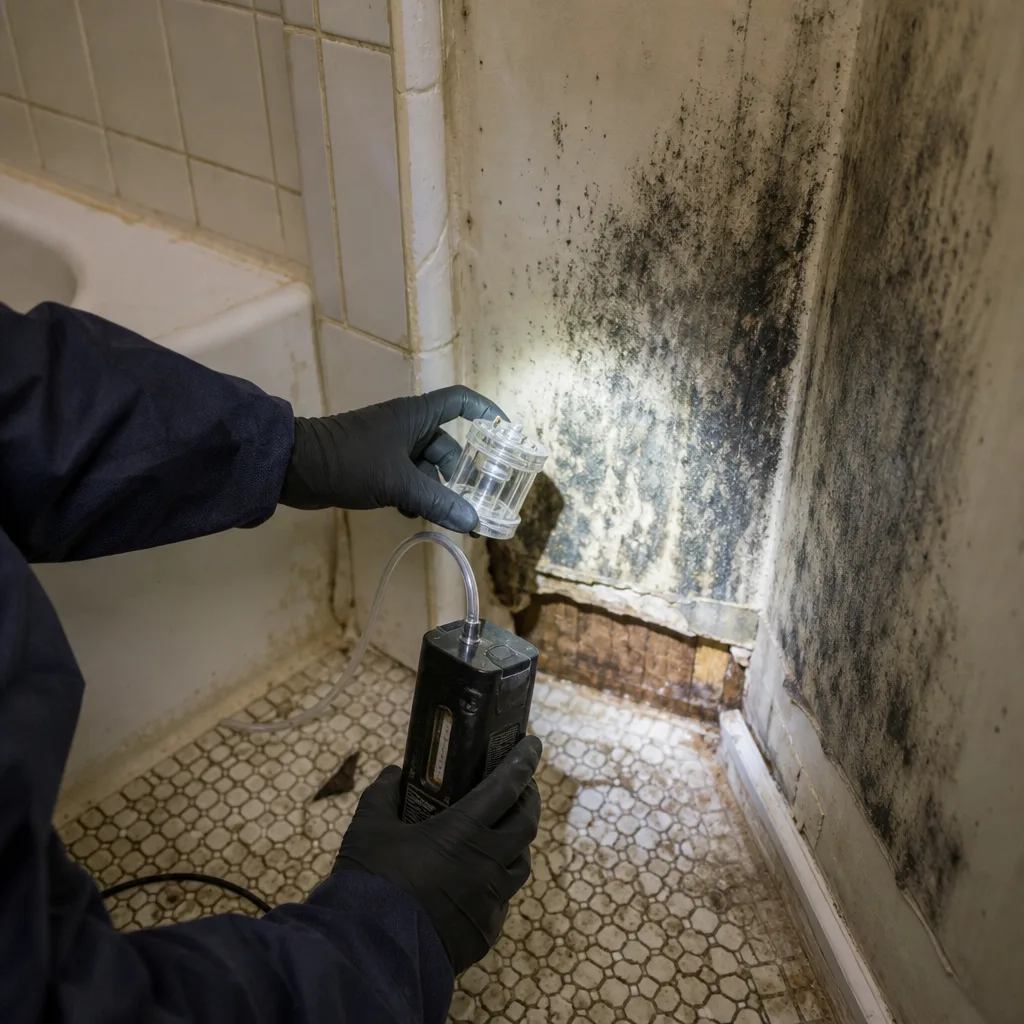
Ceiling & Roof Leak Water Damage
Roof leaks from ice dams and fallen limbs are the most common upper-floor water loss in Haworth. Water travels down through the attic, along joists, and into ceilings, often pooling in places far from the original entry point. We trace the migration path with thermal imaging, dry the attic and ceiling cavities, and coordinate roof tarping or repair so the interior work is not undone by the next storm.
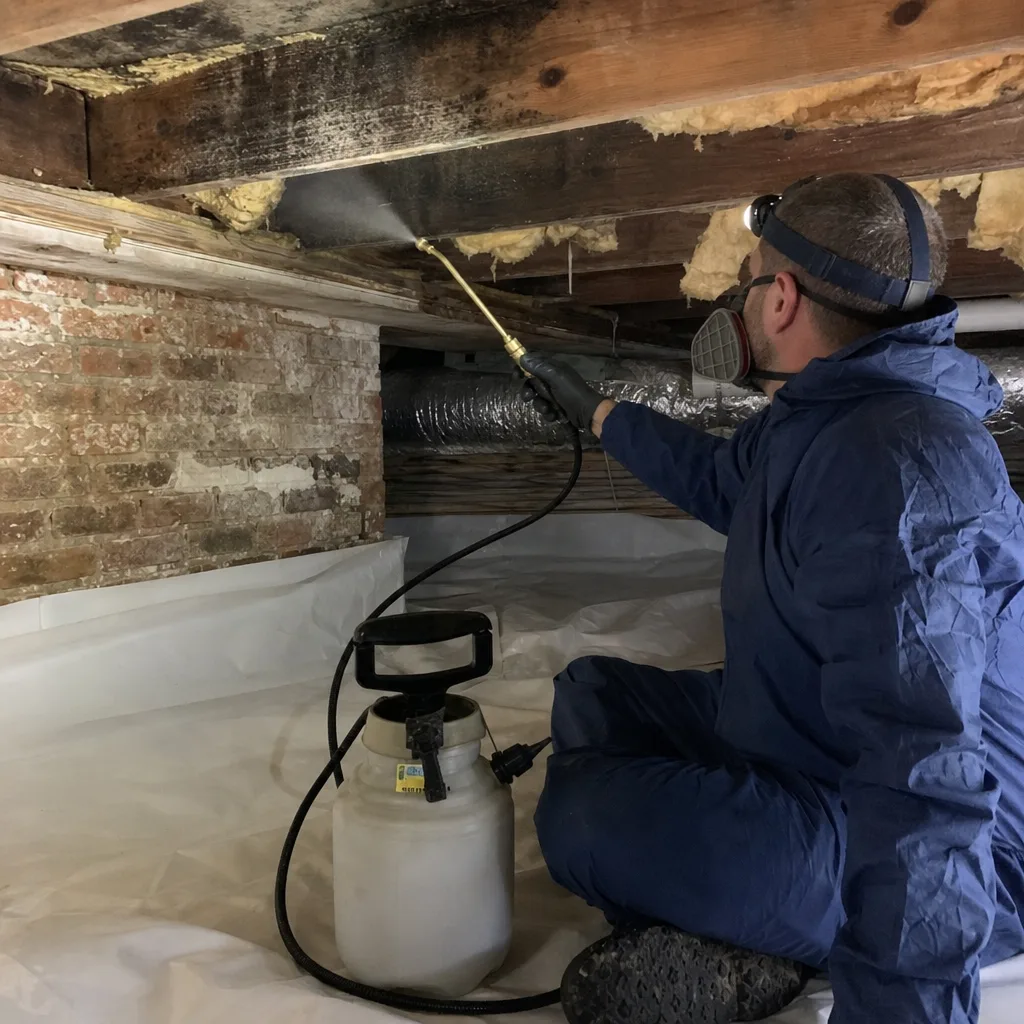
What happens when you call
- 1
A real person answersNo phone trees - you reach a local pro.
- 2
You get an upfront price rangeHonest numbers before anyone is dispatched.
- 3
A background-checked tech heads outLicensed & insured, dispatched right away.
- 4
You approve before work beginsNothing starts until you say go.
Water Damage Restoration Costs in Haworth, NJ
A typical Category 2 basement extraction and structural dry-out in Haworth runs $1,850-$3,400 when caught within the first 24 hours. Ceiling and roof leak restoration, including attic drying and plaster repair, usually lands between $2,200 and $4,200 depending on how far the water traveled and how much ceiling had to come down. Full flood cleanup with Category 3 water, containment, and material removal starts around $4,000 and can reach $9,000 on a finished basement. What moves the price: the water category, how long the water sat, whether plaster walls require cavity drying, and how much flooring or drywall must be removed. Most Haworth homeowner policies cover these costs minus deductible, and we bill your carrier directly. The free visual inspection is how you get a firm, written scope instead of a guess. Call (917) 924-4221 and we will send a certified tech to assess the loss at no charge.
We Also Serve Cities Near Haworth
In addition to our work throughout Haworth, our crews respond daily to water damage calls in Haworth‘s neighboring communities, including Dumont, Demarest, Closter, and Cresskill. If you are in one of those towns and water is moving through your house right now, call the same live line and we will route the nearest certified crew.
Serving Haworth, NJ - Our Local Coverage Area
We’re based in the Haworth area and know this community well. Use the map below to see our service coverage - if you’re nearby, we can almost certainly help.
Haworth Water Damage Restoration Questions, Answered
Does Haworth require a permit to repair a wind-damaged garage door before I can file a water damage claim?
Yes, Haworth generally requires a construction permit for structural garage door replacement, and the Borough enforces wind-load ratings on new installations. Your water damage claim is not blocked by the permit process, but your carrier will want to see that the failed door was replaced with a code-compliant, wind-rated unit so the loss is not repeated. We coordinate the permit path and the rebuild, so you file once and we handle the paperwork with the Borough and your adjuster. Call (917) 924-4221 to get the process started.
How do I know if water in my Haworth basement is from the storm drain backup or from a failed wind-rated door?
The water’s entry point tells you. Storm drain backup rises from the floor drain or sump pit and carries a sewage odor and discoloration, making it Category 3. A failed overhead or patio door lets wind-driven rain in at the wall line, usually pooling near the door opening and running along the floor toward the interior. Our moisture mapping distinguishes the two in minutes, and the classification drives both the drying plan and the claim. A free visual inspection settles it.
What wind rating should a replacement patio door have in Haworth to prevent water intrusion during a nor’easter?
For Haworth’s wind exposure, a patio door should meet at least Design Pressure 40 (DP40) and, on exposed elevations where the prevailing storm track hits, DP50 is the better standard. Doors rated below that buckle under nor’easter wind load, and once the panel separates from the track, water enters the wall. We verify wind-load ratings on every post-storm door replacement we touch and specify the right rating for the elevation before we order.
Why does Haworth’s clay-heavy soil make my basement flood in spring even without a storm?
Clay drains slowly, and when Haworth’s snowpack melts into already-saturated clay soil, hydrostatic pressure builds against your foundation walls and slab. Water pushes through cracks, cold joints, and the gaps around utility penetrations, filling your basement from below with no storm overhead. The fix is usually drainage improvement and sealing, not a plumbing repair, and we can tell you which one your basement needs during the inspection.
How fast does mold really start after a roof leak in a Haworth colonial with plaster walls?
Mold colonizes in 48 to 72 hours under the right conditions, and plaster-over-lath walls in Haworth’s older colonials make the risk worse because the materials hold moisture longer than drywall. The leak may have started days before you noticed the ceiling stain, which means the clock may already be running. We treat every roof leak in a Haworth colonial as a potential mold event, drying cavities aggressively and verifying with moisture meters before we close anything up.
How fast can you actually get to my Haworth house in an emergency?
Our live dispatcher answers immediately and our Haworth crews typically arrive within 45 minutes of your call. We stage equipment on the apron of your street, not the road, because we know Haworth’s narrow, tree-lined blocks and we are not going to block your neighbor’s driveway. Call (917) 924-4221 and the clock starts right then.
Will my insurance cover water damage from a failed garage door during a storm?
Most Haworth homeowner policies cover the resulting water damage, meaning the drywall, insulation, flooring, and contents, even when the door replacement itself is a separate line item or excluded wear-and-tear. The key is documentation: we photograph the failed door, the entry point, and every affected room, then write the moisture log and scope in the format your carrier expects. We bill your insurer directly and talk to your adjuster, so you are not the middleman.
Can we stay in our home during water damage restoration in Haworth?
For Category 1 and most Category 2 events confined to a basement or single room, yes, you can usually stay. The drying equipment is loud, and we will tell you plainly what the air quality situation is. For Category 3 sewage losses or when mold remediation is required, we may recommend temporary relocation, and your carrier typically covers that under loss-of-use coverage. We will give you a straight answer during the free inspection.
Written by Curt Bowman, Owner at Floodline Restoration Co. of Manhattan.