
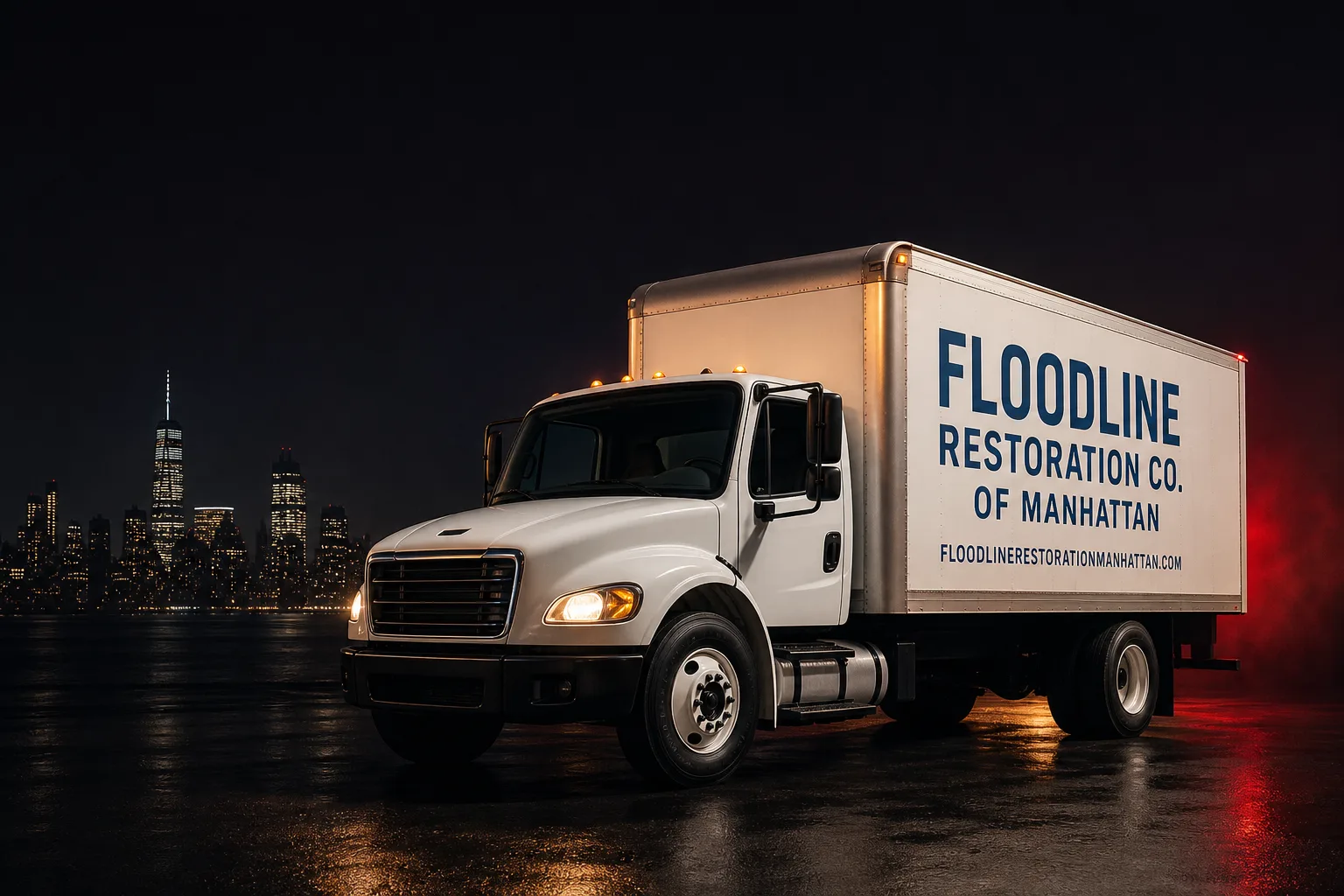
Free visual inspection and a written scope of work before any mitigation begins - photos, moisture readings, and drying logs go in your claim file
The scope we write is the scope we bill. Anything new gets shown to you, in writing, before we touch it.






 Before
 After
After Before
 After
After Before
 After
After24/7 Emergency Water Damage Restoration in Hell’s Kitchen
Water damage restoration in Hell’s Kitchen typically costs $900-$4,800 for a single-unit response, with multi-floor pre-war claims running higher depending on how far water has traveled through the joist bays. A live dispatcher answers at (917) 924-4221 around the clock, and our crews reach most addresses in Hell’s Kitchen within 45 minutes. The first hour matters because water in an uninsulated or steam-heated building begins wicking into plaster, lath, and wood subfloor almost immediately. Our Water Damage Restoration team arrives with thermal imaging and moisture meters, does a free visual inspection, and starts extraction on the same visit whenever conditions allow. You won’t get a recording, and you won’t wait until morning to talk to someone who can actually send a truck.
Understanding Water Damage Restoration Severity in Hell’s Kitchen Properties
We classify water by its source: Category 1 is clean supply-line water, Category 2 carries some contamination from washing machines or dishwashers, and Category 3 is sewage or floodwater that requires full containment and sanitization. In Hell’s Kitchen, the building stock changes how fast a Category 1 event becomes something worse. The neighborhood’s 5-6-story pre-war walk-ups, mostly built between the 1890s and 1920s, have wood-joist floors and original unlined interior pipe chases. When a supply line lets go on the fourth floor, water flows through open joist bays and drops two or three stories before anyone sees a stain. By the time a tenant on the second floor notices a wet ceiling, the source apartment has already soaked its subfloor, and the chase itself may have channeled water into the basement. Steam radiators compound the problem: residual heat after the water is shut off keeps the air in those wall cavities warm and humid, which accelerates mold colonization. We make Category and class determinations on every job, then set up containment and drying targets appropriate to the actual affected area, not just the visible puddle. Moisture mapping matters here more than in newer buildings because the path of water travel is rarely straight down.
Why Hell’s Kitchen Property Owners Choose Floodline Restoration Co. of Manhattan
- 45-minute response commitment for Hell’s Kitchen addresses. Our dispatchers keep crews staged within the area, and a real person coordinates the call, not an answering service script.
- Live answer, 24/7, every day of the year. At two in the morning you get a person who can send a certified crew, not a voicemail tree.
- IICRC-certified technicians with WRT, FSRT, and AMRT credentials. Background-checked and uniformed, trained to RIA and IFA standards as well.
- Free visual inspection before any work is authorized. We document what we find, explain the scope, and put numbers in writing before a single fan is placed.
- Direct insurance billing. We prepare industry-standard estimates and communicate with your adjuster so you don’t carry messages between parties.
- One team from first extraction to finished rebuild. The crew that reads the moisture map on day one handles daily readings and rebuilds the wall at the end. No mid-job handoff to a subcontractor you’ve never met.
Our Water Damage Restoration Process
Inspection & Assessment
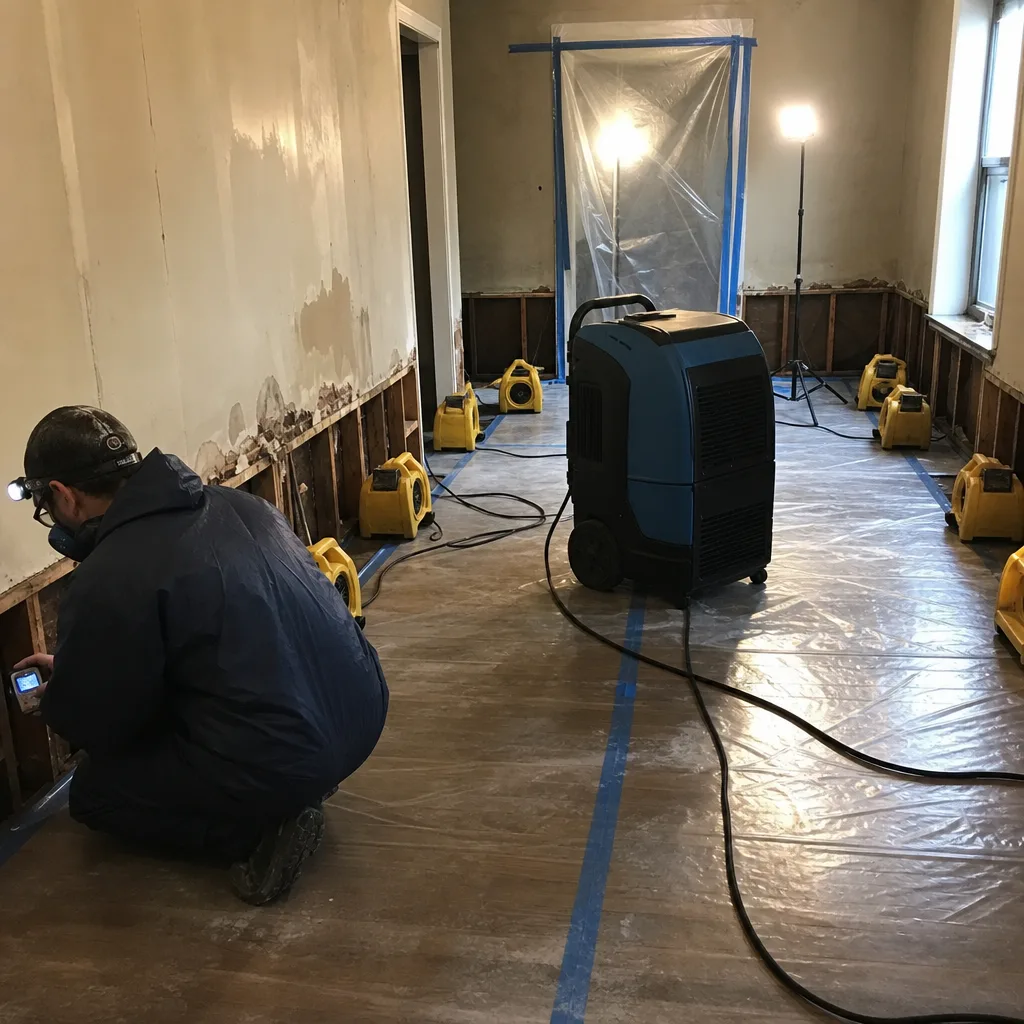
We map the affected area with thermal imaging and penetrating moisture meters. In a Hell’s Kitchen walk-up this means checking the unit above, the unit below, and the pipe chase itself, because water rarely stays in one apartment. We document every affected room with photos before we move equipment in.
Extraction & Stabilization
Truck-mounted and portable extraction units pull standing water from floors, and we open saturated drywall or baseboard only where the moisture map says the cavity is wet. Our goal is to stop the spread of water before it reaches the next floor’s ceiling.
Drying & Dehumidification
Dri-Eaz and Phoenix air movers paired with low-grain refrigerant dehumidifiers pull moisture from the air and structure. We take daily moisture readings and adjust equipment placement until materials reach their dry standard, not just until the surface feels dry. In steam-heated buildings, we account for the radiator’s effect on wall-cavity humidity.
Cleaning & Sanitization
For Category 2 or 3 water, we contain the affected area under negative air pressure with HEPA air scrubbers, remove contaminated materials, and sanitize remaining surfaces. We don’t treat a Category 2 loss with a mop and a fan.
Specialty Treatment for Pre-War Building Assemblies
Original wood joists, lath-and-plaster walls, and shared party-wall cavities require targeted drying that modern drywall doesn’t. We use Injectidry systems to dry wall cavities and subfloors in place where possible, preserving original plaster and trim that would otherwise have to be torn out and rebuilt. The aim is to dry the building, not demo it.
Repairs & Restoration
The same crew that extracted and dried now rebuilds: insulation, drywall or plaster, trim, flooring, and paint. We sign off only when the moisture log meets the dry standard and the 90-Day Done Right Promise is in writing. If something isn’t right, we make it right.
Need Emergency Water Damage Restoration in Hell’s Kitchen Now?
Crews minutes away, answering live 24 hours a day. The sooner we start, the less it costs.
Working With Your Insurance Company
We have handled hundreds of water claims in Hell’s Kitchen, many of them multi-unit losses where the source was a restaurant on the ground floor and the claimant lived two floors up. Our job on day one is to build a claim file that your adjuster can act on without a fight: photos of the source line, photos of every affected room, moisture readings from day one through the final dry standard, and a line-item scope of work that reflects industry-standard pricing for this market. We communicate directly with your carrier, and you get a copy of everything we send them. The Keystone Standard applies here too: the 90-Day Done Right Promise is in writing, and if a covered repair isn’t done right, we return and make it right without a paperwork battle.
What We Provide Your Insurer
- Thorough documentation of the loss
- Photos of all damage, room by room
- Moisture readings and drying logs
- A detailed, line-item scope of work
- Direct coordination with your carrier
Built for Hell’s Kitchen’s Loss Calendar
The damage pattern in Hell’s Kitchen follows the seasons, but it doesn’t look like the rest of Manhattan. January and February bring hard freeze-thaw cycles that hit the neighborhood’s uninsulated exterior pipe chases in pre-war walk-ups with particular force. A galvanized supply line or a steam riser against an outside wall freezes, splits, and lets go, and within minutes water is running down the interior of a hundred-year-old wall. Spring brings basement seepage as the water table rises and thawing ground releases water against original mortared foundations. Summer thunderstorms overwhelm the combined sewer system, and basement restaurants or prep areas along 9th Avenue take on Category 3 water even when the street above looks barely wet - a scenario that calls for Hell’s Kitchen Storm & Disaster Restoration. Fall is when we see the aftermath of deferred maintenance, as the first heating season start puts pressure on original radiator shut-off valves and ancient packing nuts. In every season, Hell’s Kitchen’s mixed-use verticality plays a role: a ground-floor commercial loss becomes a second-floor residential claim, and a third-floor supply-line break becomes a fourth-floor restoration project with a basement drainage question.
Water Damage Restoration Across Hell’s Kitchen’s Neighborhoods
Response routes and building types change block by block in Hell’s Kitchen. On W. 46th Street, Restaurant Row’s ground-floor commercial kitchens sit directly beneath occupied apartments, so what starts as a modest grease-fire sprinkler activation routinely becomes a multi-unit water claim on the second and third floors, making Fire & Smoke Damage Restoration in Hell’s Kitchen essential for full recovery. Along 9th Avenue’s International Food District corridor, retrofitted restaurant plumbing shares original floor assemblies with residential units above, and we regularly find water that has entered second-floor apartments through channels that were never firestopped or waterstopped. In the 10036 ZIP code around the Theater District’s edge, many buildings have been converted to condominium use, but the plumbing chases and joist bays are still original, which means water travels as freely as it did in 1910. On the side streets off 10th and 11th Avenues, basement-level units and restaurant prep areas take the brunt of summer sewer-backup events. Wherever the call comes from, our crews treat each building as its own set of questions: how old is the plumbing, what’s the floor assembly, and how many units share this cavity?
Specialized Water Damage Restoration Services We Offer in Hell’s Kitchen
Emergency Water Extraction
Standing water in a pre-war walk-up doesn’t just sit; it finds the joist bay, the pipe chase, and the party wall. Our Water Damage Restoration team brings truck-mounted and portable extraction units sized for three-story vertical travel on narrow stairs or through a fourth-floor window. Extraction starts on the first visit, because every hour of standing water widens the claim.
Structural Drying & Dehumidification
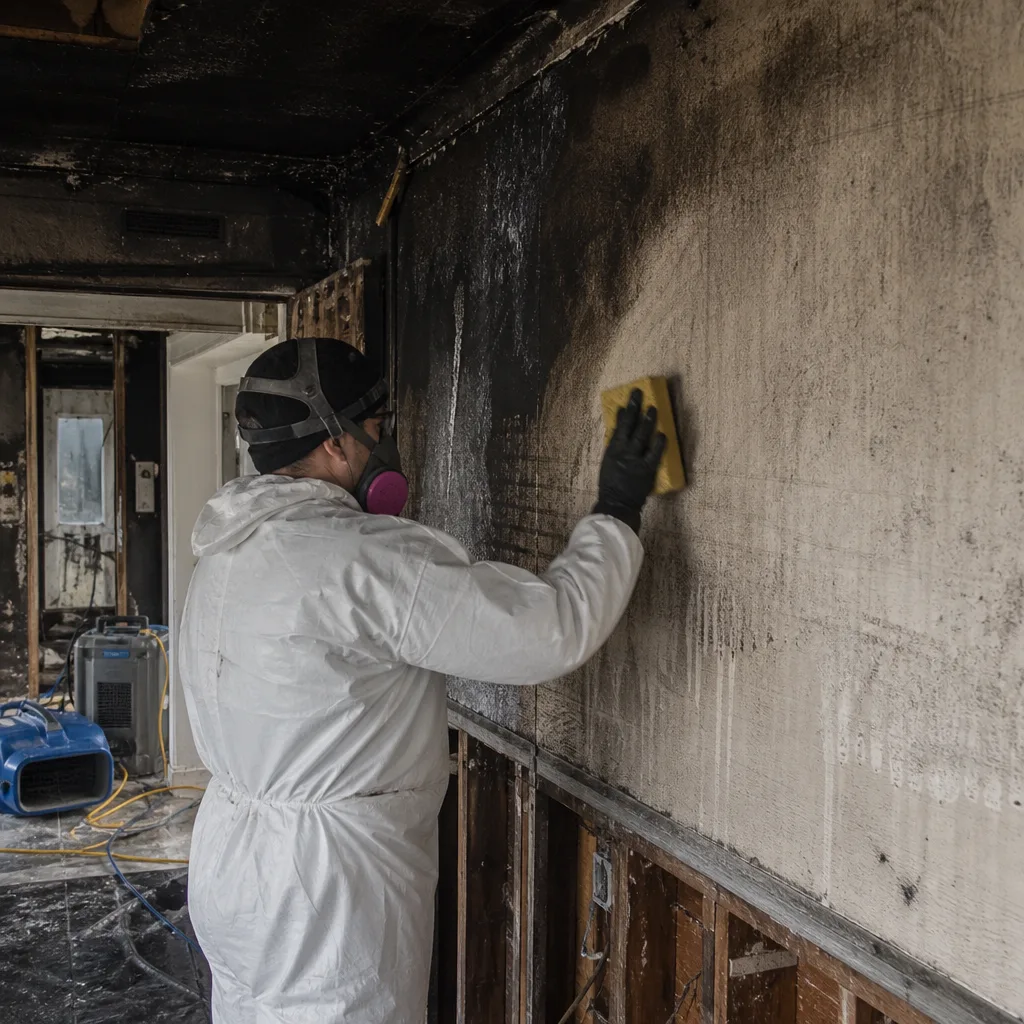
Steam-heated buildings in Hell’s Kitchen need a drying protocol that treats the wall cavity, not just the room air. We use Dri-Eaz and Phoenix air movers, low-grain refrigerant dehumidifiers, and Injectidry cavity-drying systems to pull moisture from wood joists, lath, and plaster behind still-finished walls. Daily moisture logs go to you and your carrier until the dry standard is met.
Burst Pipe Restoration
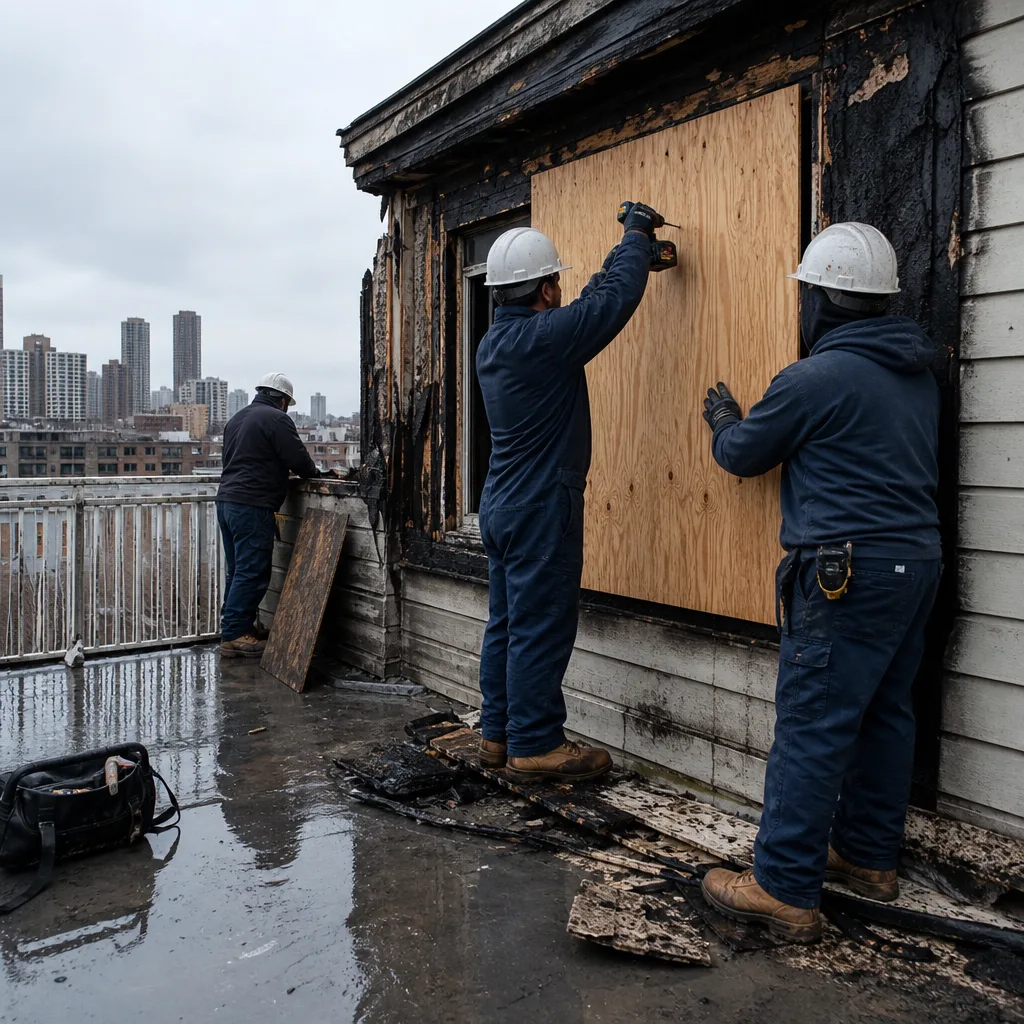
Original cast-iron and galvanized supply lines in uninsulated exterior chases are the single most common winter failure we see in Hell’s Kitchen. The water itself is usually Category 1, but by the time it reaches a lower unit through a 100-year-old floor assembly, the scope has grown. We trace the full water path, dry what can be saved, and rebuild what can’t.
Basement Water Removal
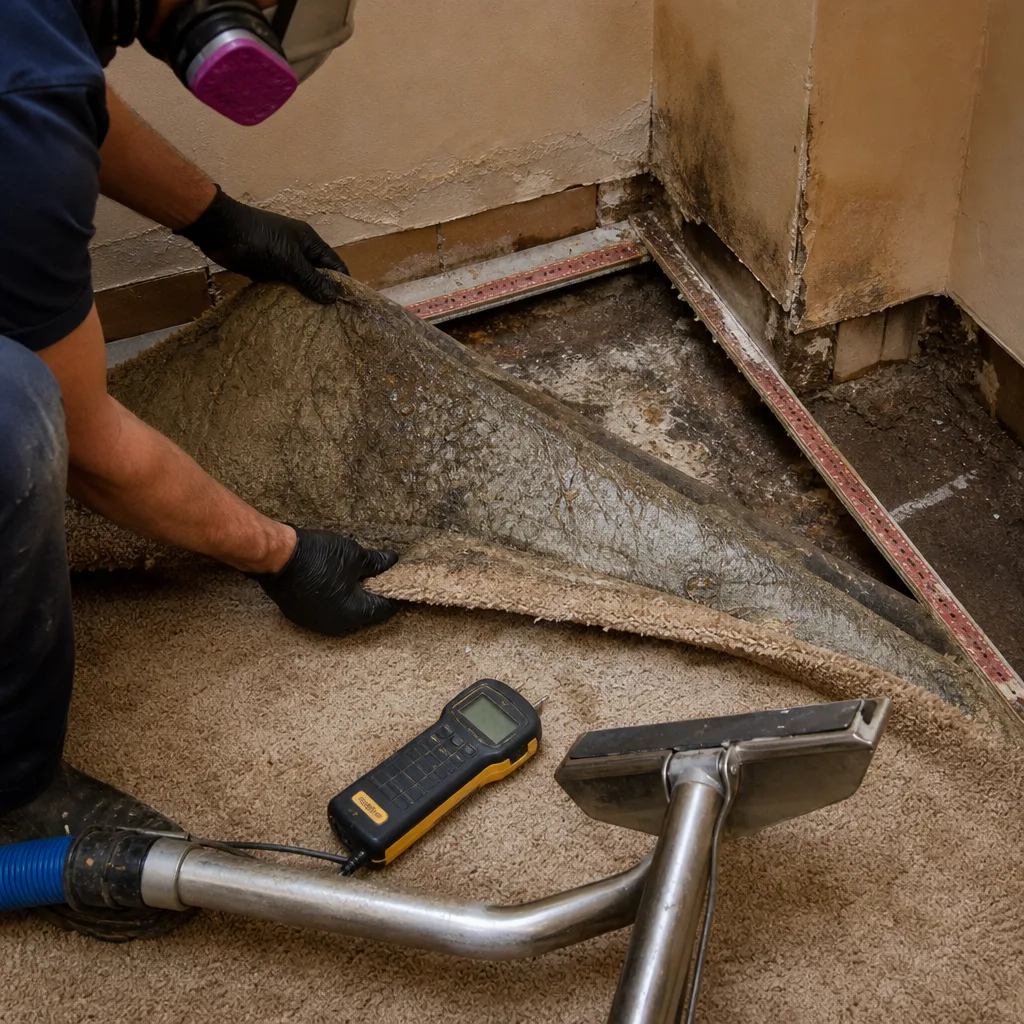
Basement units and restaurant prep areas in Hell’s Kitchen flood during summer downpours even when the street above is barely wet, because the neighborhood’s impervious streetscape sends runoff into combined sewers that back up into the lowest point of the building. We handle Sewage Cleanup - Hell’s Kitchen, including Category 3 extraction, containment, sanitization, and rebuild with full documentation for your carrier.
What happens when you call
- 1
A real person answersNo phone trees - you reach a local pro.
- 2
You get an upfront price rangeHonest numbers before anyone is dispatched.
- 3
A background-checked tech heads outLicensed & insured, dispatched right away.
- 4
You approve before work beginsNothing starts until you say go.
Water Damage Restoration Costs in Hell’s Kitchen, NY
A straightforward single-unit water extraction and drying job in Hell’s Kitchen generally runs $900-$2,500. When structural drying of wall cavities and subfloors is needed, which is the norm in pre-war buildings where water traveled through joist bays, expect $2,500-$4,800. Multi-floor claims that involve restaurant-sprinkler activation or a burst supply line feeding multiple units commonly land between $5,000 and $15,000 depending on the floor area affected and whether lath-and-plaster must be opened. What moves the price in this neighborhood specifically is the building’s age: original plaster is more expensive to cut and repair than drywall, and drying behind a 1920s party wall takes longer than drying a modern partition. Insurance covers the overwhelming majority of sudden and accidental water losses, and we bill your carrier directly. The free visual inspection produces a written scope with firm numbers before any work begins, so you decide with the actual cost in hand, not an estimate built on hope.
We Also Serve Cities Near Hell’s Kitchen
Floodline Restoration Co. of Manhattan also serves Fairview, Harrison, East Bronx, and Hunts Point with the same 24-hour live dispatch, certified crews, and written guarantee. If you live in one of those areas and need water damage restoration in Hell’s Kitchen or your own neighborhood, call (917) 924-4221.
Serving Hell’s Kitchen, NY - Our Local Coverage Area
We’re based in the Hell’s Kitchen area and know this community well. Use the map below to see our service coverage - if you’re nearby, we can almost certainly help.
Hell’s Kitchen Water Damage Restoration Questions, Answered
Why do Hell’s Kitchen restaurants on W. 46th Street so often produce water damage in apartments two or three floors above them?
Because the buildings along Restaurant Row are pre-war tenements where original wood-joist bays run continuously between floors, and the retrofit of commercial kitchens into those shells did not include vertical firestopping or waterstopping. When a sprinkler head activates or a kitchen drain line fails, water flows straight through those open bays into the units above, not just the unit where the event occurred. A basement or ground-floor loss routinely becomes a second- and third-floor residential claim by the time we arrive. Call (917) 924-4221 if you’re above or beside a commercial space that has just had an event.
How does the 24-36 hour mold window in Hell’s Kitchen differ from the standard 24-48 hour guideline?
The national guideline says mold colonization generally begins within 24-48 hours of saturation, but in Hell’s Kitchen the window compresses to 24-36 hours because the building’s own steam radiators keep wall cavities and joist bays warm while the water is present. Warm, humid, dark conditions accelerate mold growth. That’s why we treat extraction and structural drying in this neighborhood as time-critical even for a Category 1 supply-line break. The sooner we start, the smaller the remediation scope.
What does ‘Category 2 water’ mean for a burst radiator line in a pre-war walk-up on 9th Avenue?
Category 2 water contains significant contamination, and in the case of a steam radiator line, that means rust, sediment, and mineral scale accumulated over decades inside the original cast-iron system. The water may not look dirty at first, but it’s not clean. For a 9th Avenue walk-up, this means we set up containment, remove saturated porous materials that cannot be fully sanitized, and treat remaining surfaces with an antimicrobial before drying. Treating a Category 2 loss like a clean-water break would leave contamination behind.
Why do basement restaurants and prep areas in Hell’s Kitchen flood during summer rain, even when the street above is barely wet?
Hell’s Kitchen’s impervious streetscape sends stormwater directly into a combined sewer system that also carries wastewater. During intense summer rain events, the system surges, and the lowest point of any building is the basement. A restaurant prep area or basement unit at the bottom of a 100-year-old building becomes the relief point. That water is typically Category 3 and requires full containment, extraction, sanitization, and documentation for what is almost always a covered insurance loss.
How do pre-war party walls in Hell’s Kitchen change the way you set up drying containment?
Original party walls in Hell’s Kitchen are often double-wythe brick or wood-lath assemblies shared between two buildings, not two units in the same building. That means water can migrate laterally into a neighbor’s property, and the drying plan may need to include the far side of a wall you don’t own. We set containment and place injection-dryers based on the moisture map of the entire cavity, coordinate access with the neighboring property if needed, and log readings from both sides of the wall until the dry standard is met.
How fast can someone actually get to my Hell’s Kitchen apartment?
Our dispatch commitment for Hell’s Kitchen is 45 minutes, and it’s common for crews to arrive faster when they’re already in the neighborhood. A live person answers at (917) 924-4221, confirms your address, and sends the nearest certified crew. We don’t book a window or tell you to wait until morning; extraction starts the same visit whenever conditions allow.
Will insurance cover water damage from a restaurant below me in Hell’s Kitchen?
In nearly all cases, yes, if the source was sudden and accidental rather than long-term seepage. Your own policy will typically respond, and subrogation against the restaurant’s policy may follow. We photograph the source, document every affected room, and work directly with your adjuster. You receive the same documentation we send your carrier, and we bill the carrier directly.
Do I need full restoration or just a cleaning after a small leak in a Hell’s Kitchen walk-up?
It depends on where the water traveled, not just how much you can see. In these buildings, a small leak at a radiator valve on the fourth floor can saturate the joist bay above a third-floor ceiling without showing a stain for a week. We use thermal imaging and moisture meters to determine whether the cavity is wet. If it is, drying and likely opening the surface is necessary to prevent mold and structural damage. The free inspection answers this question with evidence, not a sales pitch. Call (917) 924-4221 to schedule it.
Written by Curt Bowman, Owner at Floodline Restoration Co. of Manhattan, serving Hell’s Kitchen’s pre-war buildings and mixed-use properties for over 42 years of combined team experience.