
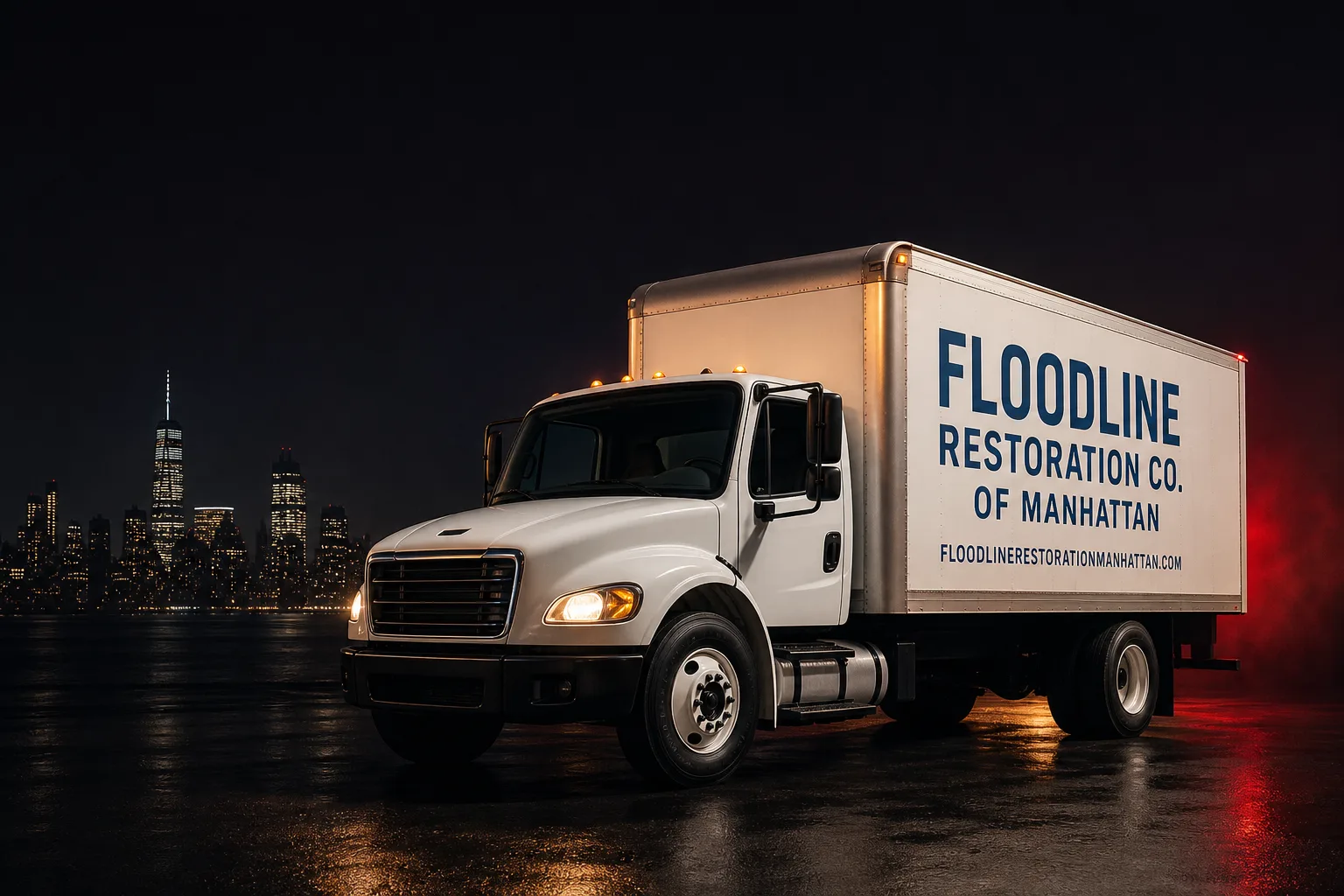
Free visual inspection and a written scope of work before any mitigation begins - photos, moisture readings, and drying logs go in your claim file
The scope we write is the scope we bill. Anything new gets shown to you, in writing, before we touch it.






 Before
 After
After Before
 After
After Before
 After
After24/7 Emergency Water Damage Restoration in Inwood Manhattan
Water damage in Inwood Manhattan moves fast, and the first hour often decides whether you’re drying a room or rebuilding a wall. At Floodline Restoration Co. of Manhattan, we answer live around the clock, every day of the year. No phone tree, no answering service. A real dispatcher picks up at 2 a.m. and a certified crew starts rolling toward your building while you’re still on the line. If you’re standing in water from a burst pipe, a failed riser, or a backed-up drain near Dyckman Street right now, call (917) 924-4221. We’ll walk you through the first steps, tell you what to shut off, and give you an honest read on the damage before our truck even parks.
Understanding Water Damage Restoration Severity in Inwood Manhattan Properties
Water damage is classified in three categories, and the distinction matters a lot in Inwood’s pre-war buildings. Category 1 is clean water from a supply line or a failed water heater. Category 2 carries contaminants; think washing machine overflow or sump pump failure. Category 3 is grossly contaminated, the stuff that comes up through a sewage backup or floodwater carrying whatever the Harlem or Hudson River brought in. Inwood’s older apartment stacks complicate the whole equation. Water from one unit’s clean-water pipe break becomes Category 2 or worse by the time it passes through a century of cast iron drain stacks, old floor cavities, and pipe insulation. That’s why we run moisture mapping and thermal imaging scans floor by floor, not just where the water is visible. The water you don’t see in the ceiling cavity below is the water that keeps damaging the building after we leave.
Why Inwood Manhattan Property Owners Choose Floodline Restoration Co. of Manhattan
- 45-minute response commitment. Our crews stage from the New York City office and know the fastest routes through Inwood’s streets at any hour, including the Dyckman Street corridor and routes up Broadway and Nagle Avenue.
- 24/7 live answer, no exceptions. You get a person on the phone at 2 a.m., not a recording. The dispatcher who answers is the same person coordinating your crew.
- IICRC-certified crews. Our technicians hold WRT and ASD certifications and receive ongoing training in the structural drying methods older buildings require.
- Free visual inspection. We assess the scope at no cost, with no pressure. You see what we see, including thermal imaging results.
- Direct insurance billing. We communicate with your adjuster, submit the documentation, and keep the claim moving. You don’t play messenger.
- One team, extraction to reconstruction. The same Floodline crew that extracts the water reads the moisture log daily and rebuilds what needs rebuilding. No mid-job handoff.
Our Water Damage Restoration Process
Inspection & Assessment
We arrive, walk the affected areas, and run thermal imaging along with moisture meters and hygrometers to map the full extent of the loss. This includes scanning the units and floors above and below the visible damage, because Inwood’s pre-war construction hides water migration behind plaster, under original flooring, and inside old pipe chases.
Extraction & Stabilization
Standing water comes out first using truck-mounted and portable extraction units. The goal is to stop migration and reduce the amount of water that has to evaporate through building materials. Where water has saturated flooring or subfloor, we may need to remove it to reach the structure beneath.
Drying & Dehumidification
We set professional-grade air movers and dehumidifiers sized to the cubic footage of each affected space. In Inwood’s pre-war buildings, we also account for plaster walls and old framing that dry more slowly than modern sheetrock. Daily readings get logged until every surface reaches the dry standard.
Cleaning & Sanitization
Contaminated water requires more than drying. We clean, disinfect, and apply antimicrobial treatments where the water classification calls for it. This matters especially in basements and ground-floor units where river water or sewer backups have entered the building envelope.
Asbestos & Lead Coordination
In Inwood’s 1920s-to-1940s elevator buildings, disturbing walls, ceilings, or floors can uncover asbestos pipe wrap or lead paint. We coordinate with licensed abatement professionals before cutting into suspect materials, so the job proceeds legally and without stop-work orders.
Repairs & Restoration
Once the structure reads dry, the same Floodline crew rebuilds what was removed: baseboards, drywall or plaster, flooring, cabinetry, and paint. The work is scoped in writing before it starts, and it’s covered by our 90-Day Done Right Promise, the Keystone Standard.
Need Emergency Water Damage Restoration in Inwood Manhattan Now?
Crews minutes away, answering live 24 hours a day. The sooner we start, the less it costs.
Working With Your Insurance Company
We handle insurance claims the way we’d want our own handled. Documentation starts during the first phone call and continues through final repair. Our crews photograph every affected room before, during, and after extraction. We keep a written moisture log with daily readings, which most adjusters specifically request on water claims. When your carrier sends an adjuster, we walk the building together and explain what we found, floor by floor. Curt Bowman built Floodline around the idea that homeowners shouldn’t have to translate between a restoration company and an insurance carrier. We do that translation. Direct billing means your claim gets processed without you chasing paperwork.
What We Provide Your Insurer
- Thorough documentation of the loss
- Photos of all damage, room by room
- Moisture readings and drying logs
- A detailed, line-item scope of work
- Direct coordination with your carrier
Built for Inwood Manhattan’s Loss Calendar
Water damage in Inwood Manhattan follows a seasonal rhythm that any local property owner learns, often the hard way. January and February bring deep freezes. Galvanized supply lines in old service risers are especially vulnerable; when one bursts on the sixth floor of a 1920s elevator building, gravity does the rest. By the time the building super shuts the riser valve, water has traveled down five or six floors through original cast iron waste stacks and steam chase cavities. March and April bring thaw and spring rain; basement seepage picks up in low-lying buildings near the Harlem River, where groundwater pressure against old foundation walls finds the path of least resistance. Summer means sudden heavy thunderstorms. The flat roofs on many pre-war Inwood buildings shed water through roof drains that may not have been cleared in years; a clogged roof drain sends water down interior walls and into top-floor units. September and October are nor’easter and hurricane season. Inwood’s nearly three-sided water exposure means storm surge can push up from the Harlem River and the Hudson simultaneously, flooding basements and ground-level units in ways that surprise even long-time residents. Our crews know this calendar. We stage equipment and people accordingly all year.
Water Damage Restoration Across Inwood Manhattan’s Neighborhoods
The water damage profile varies block by block, and our crews have worked every part of the neighborhood. Along Dyckman Street and the blocks just east of it, ground-floor commercial spaces and older tenement-style buildings sit on low-lying fill near the Harlem River. These are the first spaces to flood during tidal surge events. Sherman Creek and the waterfront blocks around it have seen some of the worst surge flooding in upper Manhattan, with water entering through basement entrances, areaways, and old coal chute openings. Up along Broadway and the brick apartment rows around Isham Park, the topography rises. Water losses there skew toward upper-floor failures: burst risers, failed supply lines, and roof drain problems that cascade downward. In the pre-war elevator buildings around Fort Tryon and Payson Avenue, our crews routinely find what starts as one unit’s water problem becomes a multi-floor event. The cast iron drain stacks run vertically through every floor, and water follows the pipe chases. Park Terrace and the co-ops near the Cloisters have their own quirks: extensively renovated units sit above original plumbing infrastructure, so a pinhole leak in a 90-year-old riser can soak a renovated kitchen or bathroom below. Knowing these patterns means we don’t stop the inspection at the unit that called us.
Specialized Water Damage Restoration Services We Offer in Inwood Manhattan
Emergency Water Extraction
Standing water in an Inwood apartment or rowhouse needs to come out immediately. We arrive with truck-mounted extraction units and portable wands that pull hundreds of gallons per hour from floors, carpet, and structural cavities. The faster the standing water goes, the less damage remains behind.
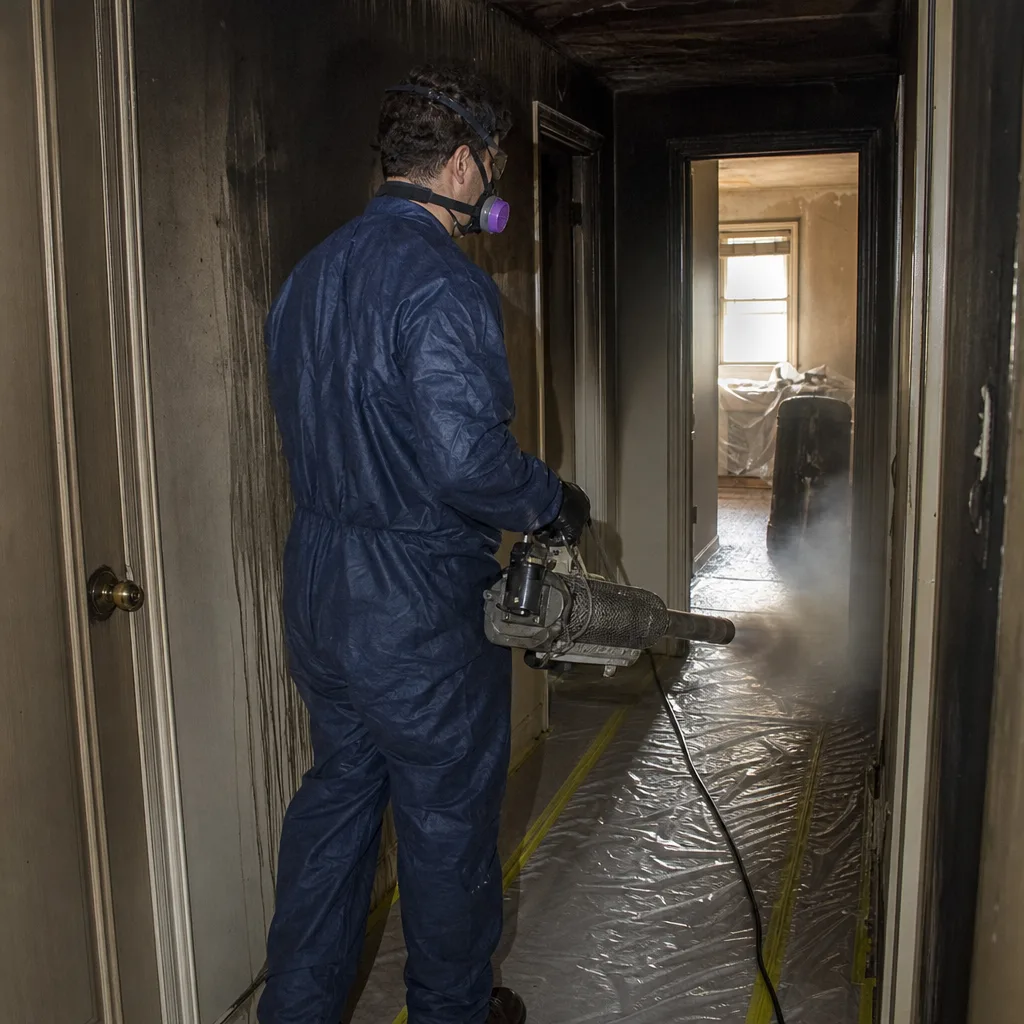
Structural Drying & Dehumidification
This is the core of what makes Inwood jobs different from anywhere else. Pre-war plaster walls absorb moisture differently than modern drywall, and old-growth framing holds water longer. We run Dri-Eaz and Phoenix dehumidifiers with XPOWER air movers sized to the actual cubic footage, and we log daily moisture readings until the dry standard is met. No guessing.
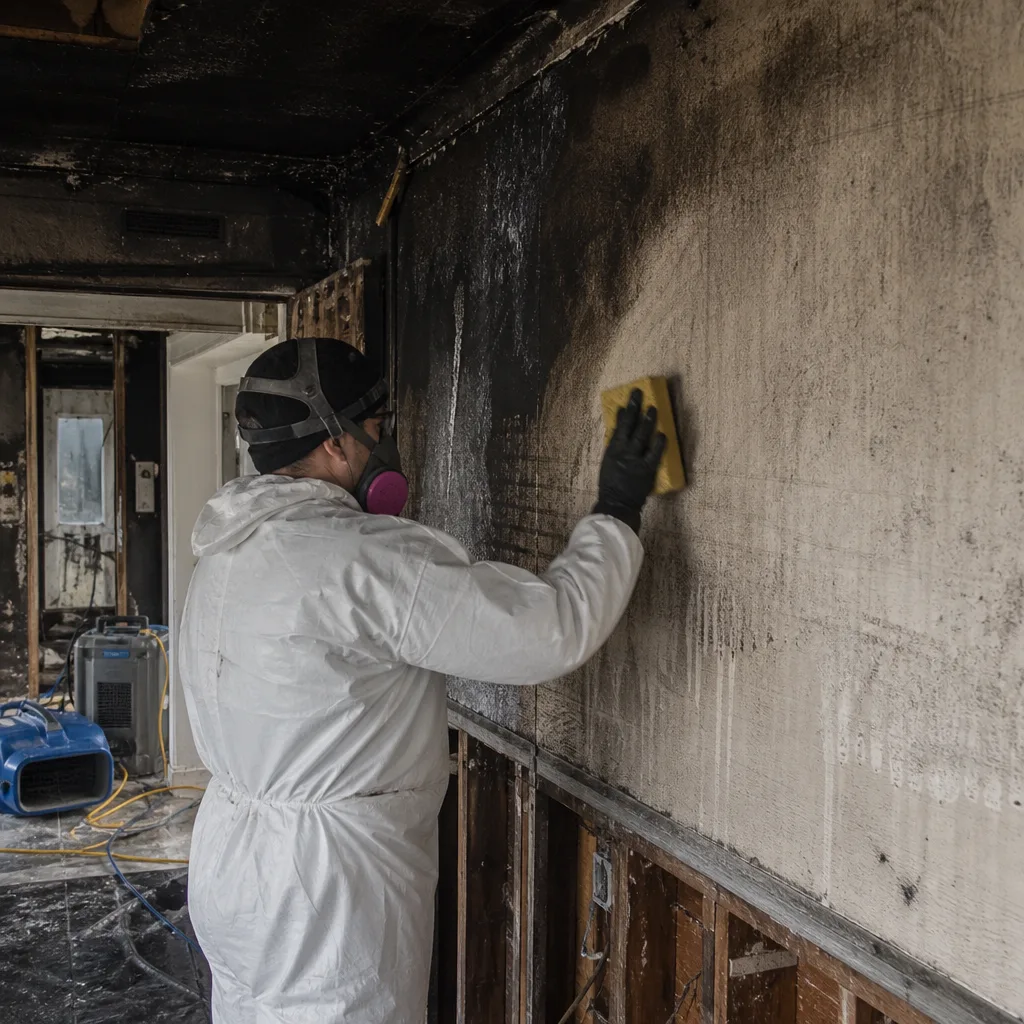
Flood Cleanup
Floodwater from the Harlem River or a storm sewer backup carries silt, sewage, and contaminants. Cleanup includes contaminated material removal, antimicrobial treatment, and structural drying. The flooding near Sherman Creek and Dyckman Street during tidal events is not clean water, and treating it like clean water causes long-term problems.
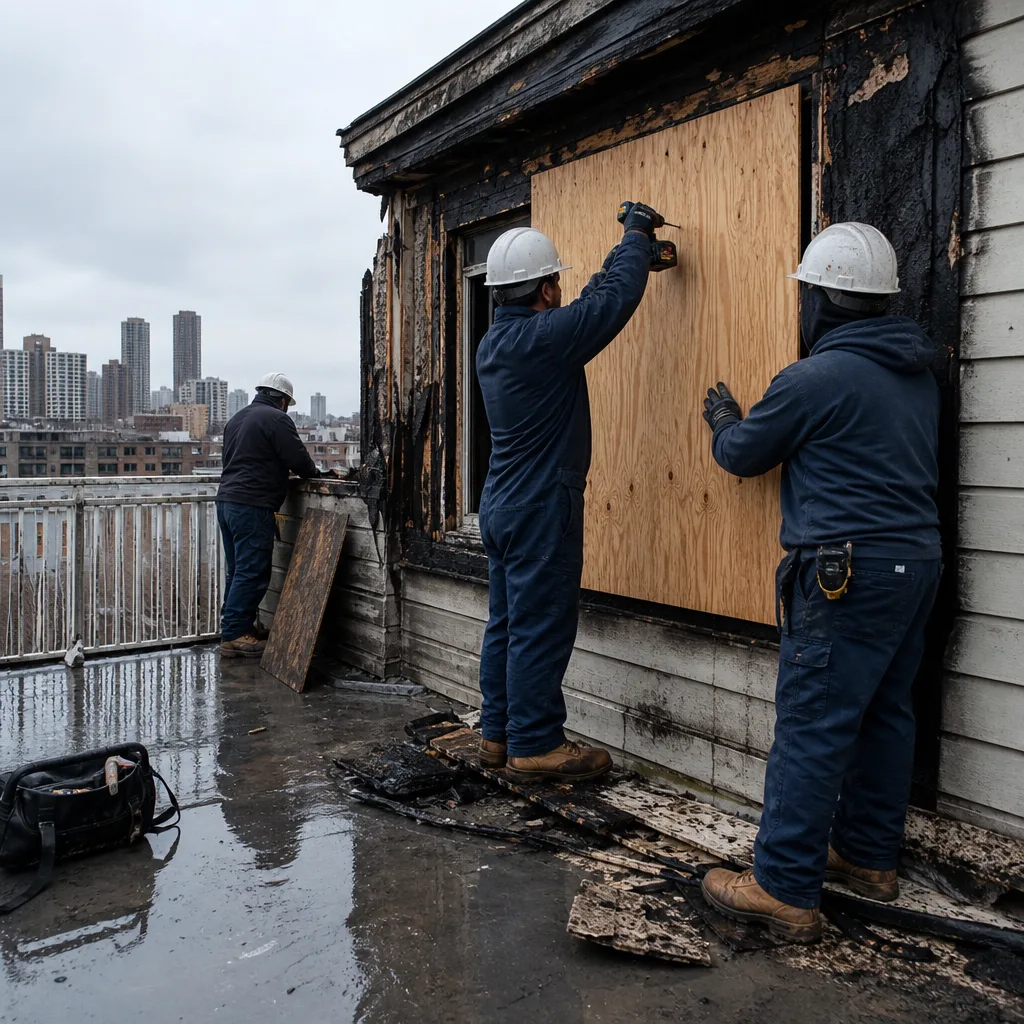
Burst Pipe Restoration
A burst supply line in an Inwood pre-war building is rarely a one-unit loss. We extract the water, map where it went, dry the affected structure, and rebuild what was removed. The restoration work is scoped in writing before it starts, with no surprises on the bill.
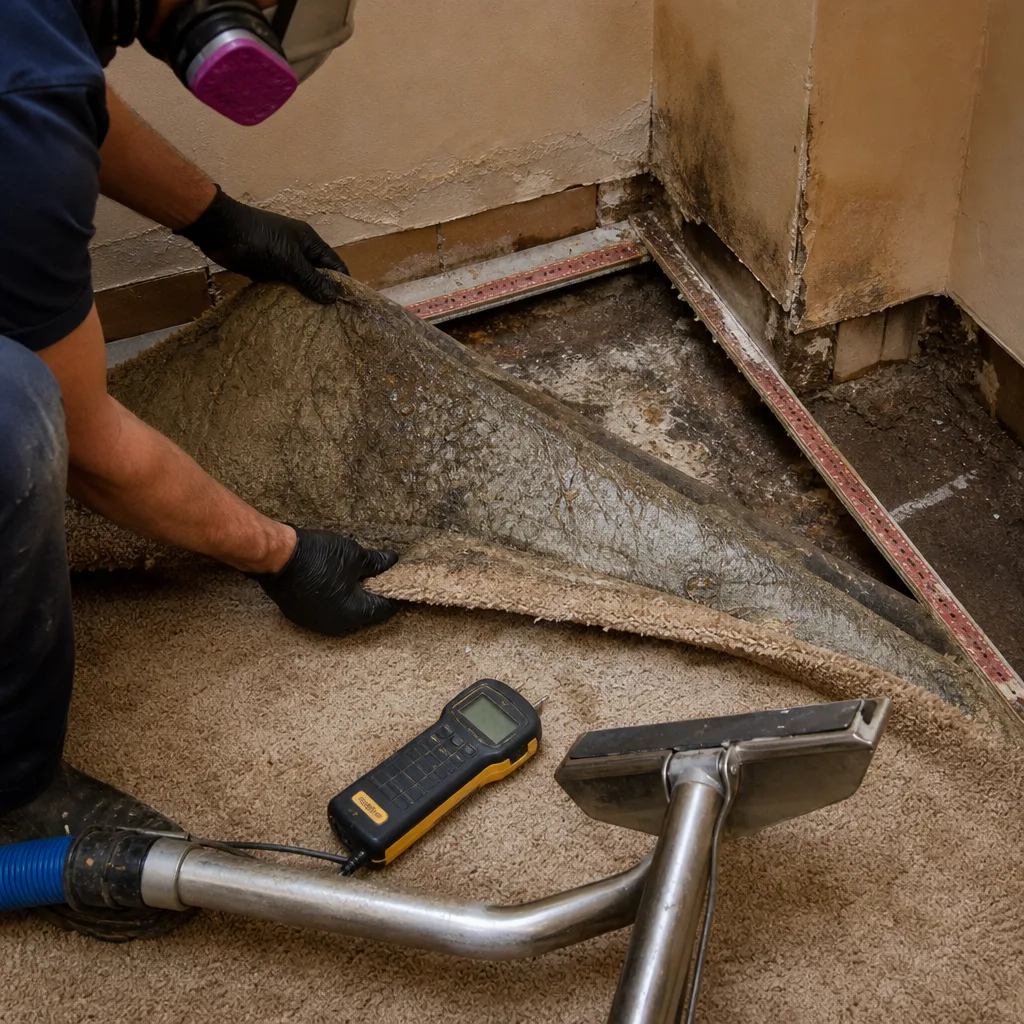
Basement Water Removal
Basements near the Harlem River waterfront and along Dyckman Street are the most flood-prone spaces in the neighborhood. We remove the water, dry the space, and look honestly at what caused the water entry in the first place. If the entry point is structural, we tell you before we dry anything, so you can make an informed decision.
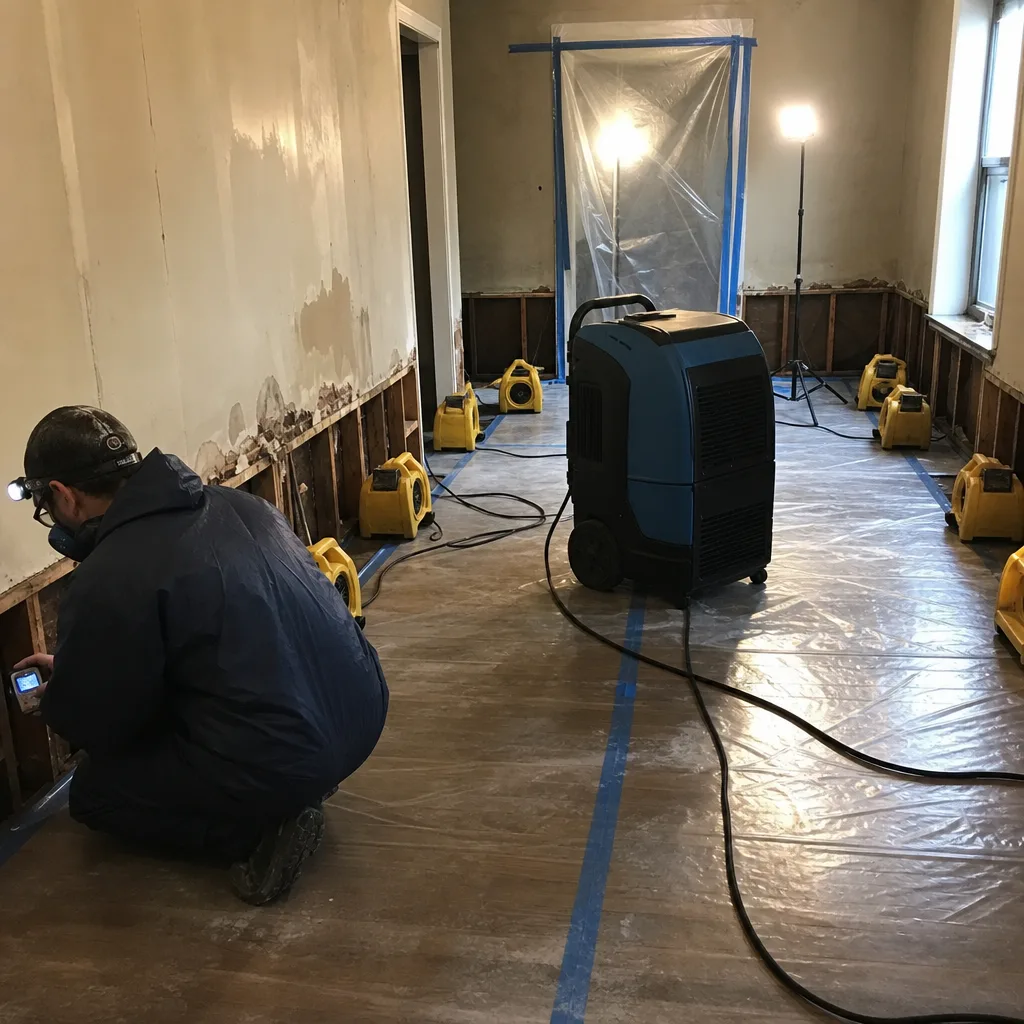
What happens when you call
- 1
A real person answersNo phone trees - you reach a local pro.
- 2
You get an upfront price rangeHonest numbers before anyone is dispatched.
- 3
A background-checked tech heads outLicensed & insured, dispatched right away.
- 4
You approve before work beginsNothing starts until you say go.
Water Damage Restoration Costs in Inwood Manhattan, NY
Honest numbers matter. In Inwood Manhattan, emergency water extraction and initial structural drying for a single-unit loss typically runs $1,800 to $4,200, depending on how far the water traveled and how much material must be removed. A multi-floor loss in a pre-war elevator building, which is common here, usually lands between $6,000 and $18,000, with costs driven by containment needs, pack-out, abatement coordination, and extended drying time. Basement flood cleanup from tidal surge or sewer backup in low-lying blocks near the Harlem River often costs $2,500 to $7,500 before reconstruction, and that figure rises sharply if contaminated materials require removal and replacement. Burst pipe restoration for a single riser failure caught early may come in at $3,000 to $8,000, but the same failure found after water has migrated three or four floors can exceed $25,000. Insurance covers most of these losses under standard homeowners and co-op policies, though flood damage from storm surge requires separate flood insurance, which many Inwood owners near the water already carry. Call (917) 924-4221 for a free visual inspection and a written scope. You’ll know the number before any work begins.
We Also Serve Cities Near Inwood Manhattan
Our crews regularly respond to calls in surrounding communities along the Harlem River and beyond: Fairview, Harrison, East Bronx, and Hunts Point. Response times are similar to Inwood Manhattan, and the same certified technicians and equipment handle every job.
Inwood Manhattan Water Damage Restoration Questions, Answered
Why does water damage in Inwood pre-war buildings often spread to multiple floors?
Inwood’s 6-to-7-story elevator buildings were mostly built between the 1920s and 1940s with original cast iron drain stacks and steam risers that run vertically through every floor. Water from a burst pipe or failed fixture follows those pipe chases downward, wicking through floor cavities and behind plaster walls into the units below. By the time the visible water is noticed, the loss often already spans several floors, which is why we thermal-scan above and below every affected unit as standard practice.
How does tidal surge affect basement flooding near the Harlem River in Inwood?
Inwood sits on a peninsula with the Hudson River to the west and the Harlem River and Spuyten Duyvil Creek to the north and east. During coastal storms, surge can push water in from two directions at once. Basements and ground-floor units near Dyckman Street and Sherman Creek flood not just from rainfall but from tidal water rising through the drainage system, which complicates both cleanup and drying timelines because the water doesn’t recede until the tide does.
Do most Inwood water damage jobs require asbestos or lead paint coordination?
Yes, many do. The apartment buildings that define Inwood’s housing stock were built during an era when asbestos pipe insulation and lead paint were standard materials. When a water loss requires cutting into walls, ceilings, or floors to dry or rebuild, there’s a meaningful chance we’ll encounter these materials. Disturbing them without a survey is a legal violation. We coordinate with licensed abatement professionals before cutting when suspect materials are present, which keeps the job legal and avoids stop-work orders.
Why is scope of work a common billing dispute in Inwood?
Because Inwood’s pre-war buildings routinely turn what looks like a one-unit water loss into a multi-floor event. A contractor quoting only what’s visible will either leave hidden water in the building or return with a supplement claim after the job starts. Floodline’s practice is to scan first, then quote, so the written scope reflects the actual loss rather than what was visible on arrival. That’s why we give a written scope before work begins, and it’s why our team is led by Curt Bowman, a builder who believes a square deal starts with an honest look at the building, not just the puddle.
How fast should I act after a water event in Inwood’s humid peninsula climate?
Immediately. Inwood’s position among three tidal waterways means ambient humidity stays higher than in most of Manhattan, which slows natural evaporation and speeds mold growth. Wood framing and plaster that stay wet for more than 48 to 72 hours begin supporting microbial growth. Call (917) 924-4221 the moment you see water. We’ll talk you through shutting off supply valves and power where it’s safe to do so, and a crew will head your way.
How long does drying take in an Inwood pre-war building?
Most structural drying jobs in Inwood run three to seven days, but multi-floor losses with plaster walls and old framing can take longer. We log moisture readings daily and don’t call the structure dry until every affected surface meets the IICRC dry standard. The building’s age and the original materials used in construction mean drying takes more time than a modern sheetrock renovation; rushing it leaves hidden moisture behind.
What should I do in the first 30 minutes after discovering water damage?
Shut off the water at the nearest supply valve or the building’s riser shutoff if you can safely access it. Turn off electricity to the affected area if water has reached outlets or appliances. Don’t use a wet-dry vacuum on contaminated water. Call us at (917) 924-4221 while you’re still assessing the scene. The dispatcher will tell you what to move, what to photograph for insurance, and when to expect our crew.
Does Floodline Restoration Co. of Manhattan work with co-op and condo boards in Inwood?
We do, regularly. Many Inwood water losses originate in building systems, like risers and roof drains, which means the co-op or condo corporation is often the responsible party for repairs while the unit owner handles interior finishes. We document the loss clearly enough that boards, unit owners, and insurance carriers can see exactly where the damage started and how far it traveled. That documentation tends to make the money conversation shorter and less painful for everyone.
Serving Inwood Manhattan, NY - Our Local Coverage Area
We’re based in the Inwood Manhattan area and know this community well. Use the map below to see our service coverage - if you’re nearby, we can almost certainly help.
Call Floodline Restoration Co. of Manhattan for Water Damage Restoration in Inwood Manhattan
If there’s water where it shouldn’t be in Inwood Manhattan, call (917) 924-4221 now. We answer live, we arrive fast, and we tell you the truth about what we find. The line the water left on the wall is where we start, and we don’t stop until the job is done right and backed in writing. That’s the 90-Day Done Right Promise, the Keystone Standard, and it’s been the bedrock of our work since Curt Bowman founded Floodline Restoration Co. in 2010. Whether you’re dealing with a burst pipe near Isham Park, tidal flooding near Sherman Creek, or a failed riser anywhere in the neighborhood, we’ll be there when we say, with a written scope, background-checked technicians, and a live person on the phone every step of the way. Call for a free visual inspection. We’ll tell you what we would do if it were our building.
Written by Curt Bowman, Owner at Floodline Restoration Co. of Manhattan, serving Inwood Manhattan and surrounding communities since 2010.