
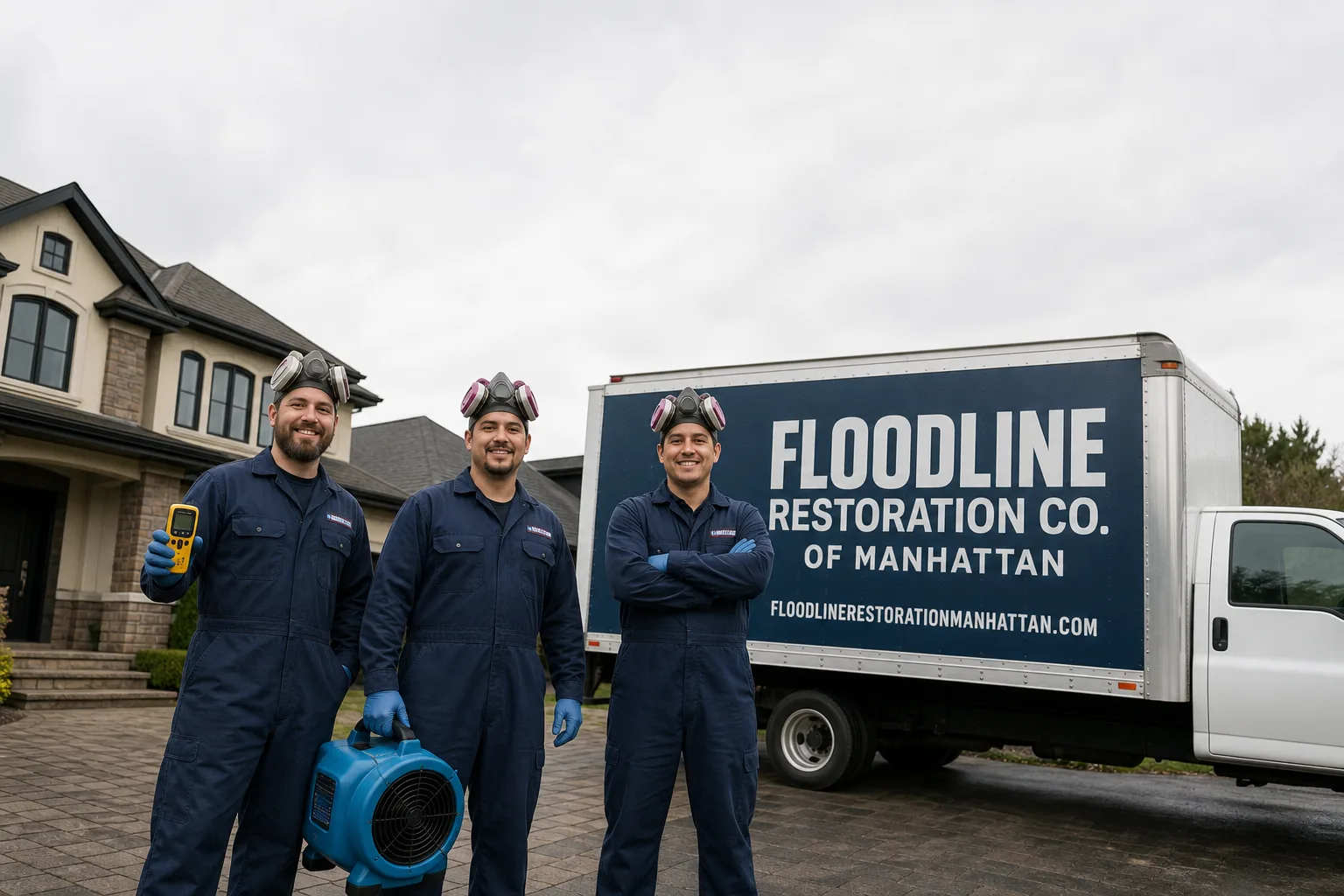
Free visual inspection and a written scope of work before any mitigation begins - photos, moisture readings, and drying logs go in your claim file
The scope we write is the scope we bill. Anything new gets shown to you, in writing, before we touch it.






 Before
 After
After Before
 After
After Before
 After
After24/7 Emergency Water Damage Restoration in New Hyde Park
Water damage restoration in New Hyde Park typically costs $1,200-$4,800 for a standard basement dry-out, and $3,500-$12,000 when finished walls, flooring, and framing are involved. The sooner extraction starts, the lower the final number. We answer the phone with a live person at 2 a.m., every day, and a crew can be rolling toward your block within 45 minutes. Call (917) 924-4221 right now and describe what you’re seeing. We’ll tell you honestly whether you need us tonight or whether a first step at dawn makes sense. In New Hyde Park, where finished basements sit on some of the highest water table ground in Nassau County, the first hour usually decides whether you’re drying drywall or tearing it out.
Understanding Water Damage Restoration Severity in New Hyde Park Properties
Not all water is the same, and the difference matters more in New Hyde Park than almost anywhere else on Long Island. We classify water three ways. Category 1 is clean: a burst supply line, an overflowing tub. Category 2 carries contaminants: sump pump discharge, washing machine overflow, rainwater that sat on a floor. Category 3 is grossly contaminated: sewage, storm surge, groundwater that backed up through a floor drain. The problem with New Hyde Park’s housing stock is that water rarely stays category 1 for long. A 1950s ranch on a flat lot sends groundwater through 60-year-old parging, across a poured-concrete slab, and into finished space where paneling and fiberglass insulation hold moisture like a sponge. Within 48 hours, category 2 water turns a finished basement into a mold incubation chamber. The postwar Cape Cods off Hillside Avenue and Lakeville Road were built tight and low, with finished basements added over decades to buy back square footage. That construction history means moisture mapping and structural drying have to account for cavities a previous owner framed out by hand, not what the original blueprints show. We read the moisture map first, then we dry. That order is not negotiable.
Why New Hyde Park Property Owners Choose Floodline Restoration Co. of Manhattan
- 45-minute response commitment. We dispatch from a live board, not a call center queue. When you call New Hyde Park, a certified team moves toward your address within the hour.
- A real person answers, 24/7. No automated system, no “leave a message.” A live dispatcher picks up at 2 a.m. and stays on the line until a crew is assigned.
- IICRC-certified crews, WRT and ASD trained. Water damage restoration techs trained in Water Damage Restoration Technician and Applied Structural Drying standards. They carry the meters, the documentation, and the experience to do it right the first time.
- Free visual inspection with every call. We look before we recommend. If you need a full scope, you’ll see it in writing before any work begins.
- Direct insurance billing. We bill your carrier directly and handle adjuster calls so you never have to play messenger between a restoration company and an insurance desk.
- One team from extraction to rebuild. The same certified crew that runs extraction also handles the drying, the demo, and the reconstruction. Nobody hands your house off to strangers mid-job.
Our Water Damage Restoration Process
Inspection & Assessment
We arrive, walk the damage with you, and run thermal-imaging with a Dri-Eaz camera to find water you can’t see. We check the foundation walls, the floor slab, and any finished spaces a previous owner may have altered. You get a written scope and a straight answer before anything gets torn out.
Extraction & Stabilization
Standing water leaves first. We run truck-mounted and portable extractors, pull saturated carpet pad, and remove only what’s truly unsalvageable. In New Hyde Park basements with finished walls, that often means cutting drywall four inches above the waterline and pulling wet insulation the same visit.
Drying & Dehumidification
We set professional-grade air movers and dehumidifiers sized to the square footage and the moisture load. Phoenix desiccant units handle New Hyde Park’s high-humidity basements, and XPOWER air movers drive airflow into wall cavities. Daily moisture readings are logged and shared with you and your carrier until the dry standard is met.
Cleaning & Sanitization
After drying, we clean exposed surfaces and apply antimicrobial treatment where the water category demands it. On 60-year-old block foundations that have seen repeated groundwater, this step is not optional. Hidden mold behind 1940s paneling blooms fast if you skip it.
Moisture Verification
Drying isn’t done until the numbers say it’s done. We verify with penetrating moisture meters, compare against baseline readings from unaffected areas, and only then sign off on the drying log. You and your insurer get the full record.
Repairs & Restoration
Everything that came out goes back in: drywall, insulation, flooring, trim, paint. Because our crew handles reconstruction too, there’s no handoff to a different contractor and no gap between dry-out and rebuild. The 90-Day Done Right Promise covers the whole scope, in writing.
Need Emergency Water Damage Restoration in New Hyde Park Now?
Crews minutes away, answering live 24 hours a day. The sooner we start, the less it costs.
Working With Your Insurance Company
Most New Hyde Park homeowners call us the day after a flood, not the day of, and by then the adjuster is already asking for documentation. We handle that. From the first hour, we photograph every affected area, room by room, before anything moves. We log moisture readings on day one and every day after until the structure tests dry. We write a line-item scope of work that matches the loss, not a padded estimate that stalls the claim. Then we talk to your adjuster directly, in their language, with the logs and photos to back it up. You don’t carry paperwork between us and your carrier. You don’t argue about what was wet and what wasn’t. The highest-intent question we hear is “Will insurance cover this?” Our answer: we’ll document it so the carrier can’t dodge what’s real.
What We Provide Your Insurer
- Thorough documentation of the loss
- Photos of all damage, room by room
- Moisture readings and drying logs
- A detailed, line-item scope of work
- Direct coordination with your carrier
Built for New Hyde Park’s Loss Calendar
New Hyde Park’s water damage season runs on a schedule, and it’s not the one most people expect. January and February bring deep freezes that split copper supply lines in unheated crawlspaces and outside-wall chases. March and April thaw the ground, and snowmelt against flat Hempstead Plains lots has nowhere to go except down against foundation walls. June through August is thunderstorm season: short, violent downpours that overwhelm the municipal storm drains along Jericho Turnpike and push sheet water across zero-lot-line properties straight into basement stairwells and window wells. September and October bring nor’easters with the same effect, slower and wetter. Then the cycle repeats. Hurricane Sandy taught Nassau County a hard lesson in 2012, and the emergency remediation work done hastily that year is now resurfacing as secondary mold intrusion in some of the same New Hyde Park homes we respond to today. Homes that flooded once and were pump-dried without proper structural drying or waterproofing are the repeat calls on our dispatch board. We know the addresses before we see the street sign.
Water Damage Restoration Across New Hyde Park’s Neighborhoods
New Hyde Park is small by Nassau County standards, but the flood patterns shift block by block. Up near the Lakeville Road corridor, the 1960s ranches sit slightly higher, and we see more interior supply-line breaks than groundwater intrusion. Down around the residential streets off Hillside Avenue, the grade flattens out, and finished basements take water after a hard summer storm. Near the Herricks border and the blocks around Memorial Park, older Cape Cods with owner-added dormers send water into wall cavities that don’t show on any floor plan. On the streets south of Jericho Turnpike, the housing is dense and tight, with downspouts discharging onto walkways, and every neighbor’s runoff eventually finds the lowest point. We work them all, and we know which blocks flood and which don’t. That local pattern recognition is part of why our dispatch call times are short: we already know the route.
Specialized Water Damage Restoration Services We Offer in New Hyde Park
Emergency Water Extraction
Standing water in a finished New Hyde Park basement is measured in gallons, not puddles. We bring truck-mounted and portable extractors sized to the job. The goal is simple: get water out before it wicks up drywall and into insulation. Extraction runs the same visit as the inspection.
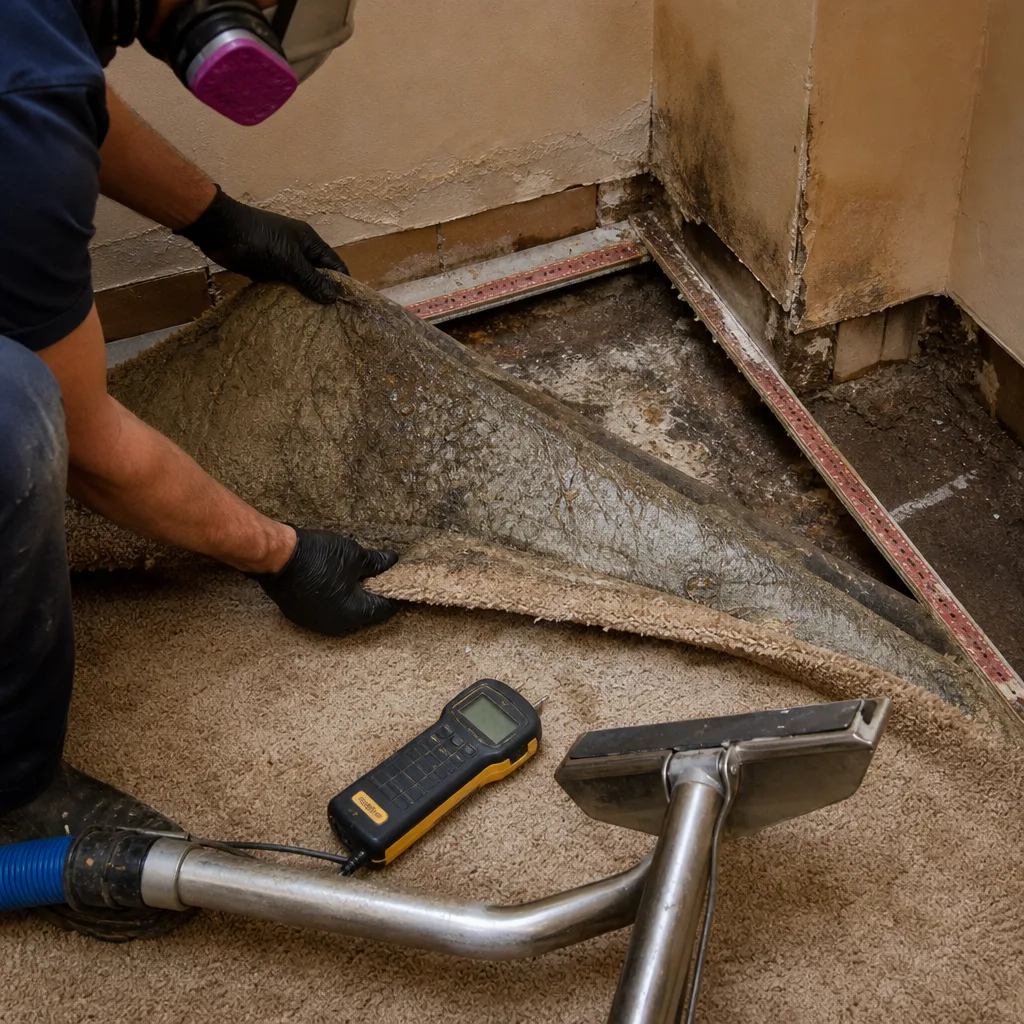
Structural Drying & Dehumidification
New Hyde Park’s high water table means basements stay humid even after the standing water is gone. We set Phoenix desiccant dehumidifiers and XPOWER air movers in a calculated layout, not scattered at random. Daily moisture readings go into a log that you keep, your insurer gets, and we use to decide when the structure is actually dry.
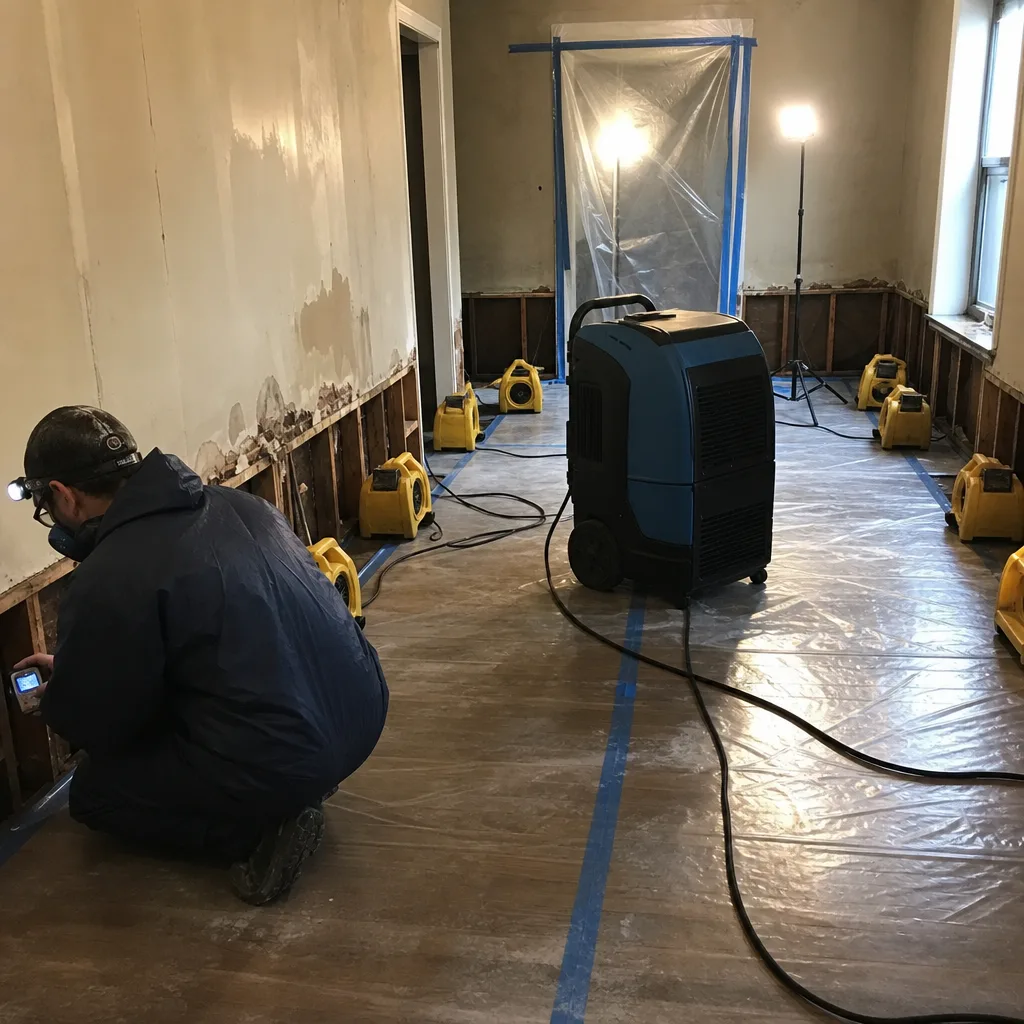
Flood Cleanup
Storm flooding in New Hyde Park carries whatever was on the ground: lawn chemicals, driveway oil, silt, and sometimes sewage backup from an overwhelmed municipal line. That’s category 2 or 3 water, and it requires more than mopping. We remove contaminated materials, sanitize what can stay, and document everything for your carrier.
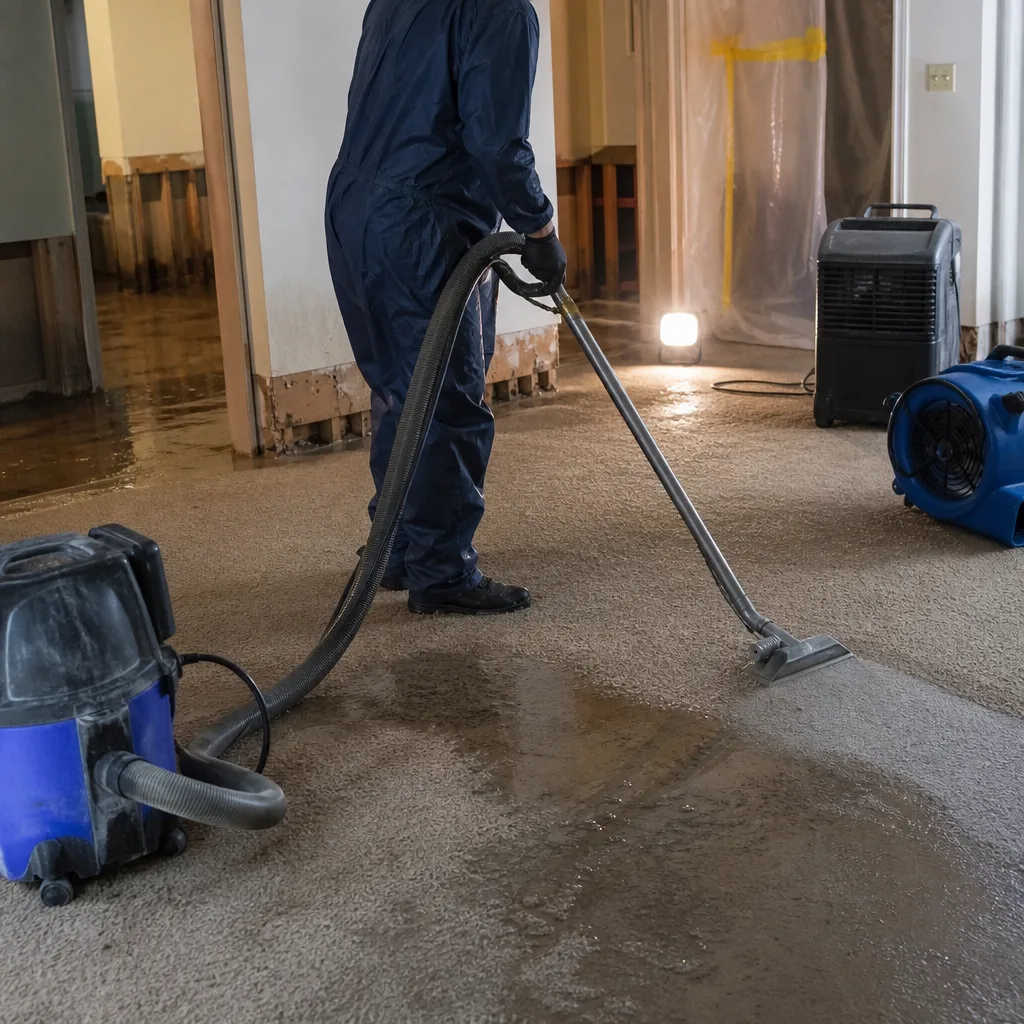
Burst Pipe Restoration
When a supply line lets go in a New Hyde Park Cape Cod, water traces the path of least resistance: down through floor cavities, behind kitchen cabinets, into the basement. Category 1 water becomes category 2 by the time it reaches a finished basement floor. We chase the full path, not just the visible puddle.
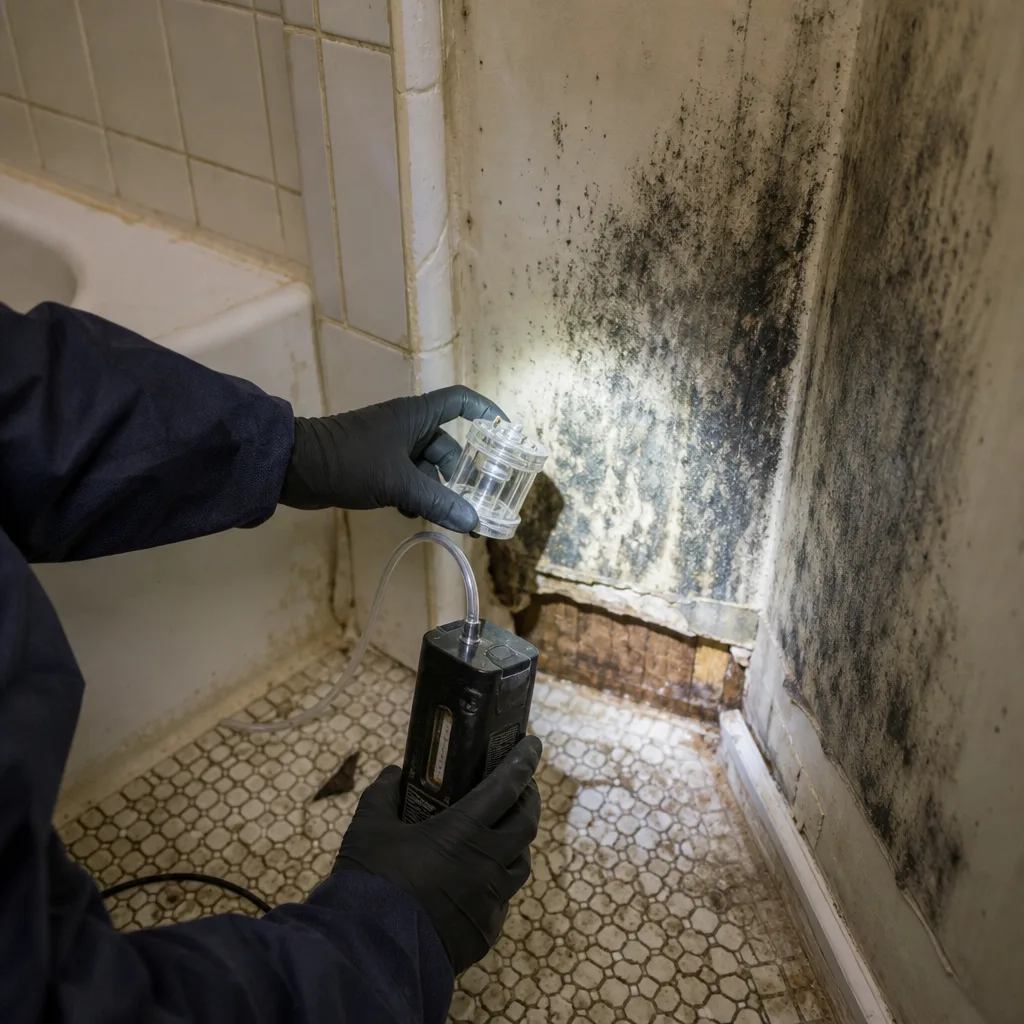
Basement Water Removal
The signature call in New Hyde Park. A finished basement takes water, and the homeowner wants to know three things: how fast can you get here, will the paneling need to come down, and will insurance cover it. We answer all three honestly, then start extraction. The same visit, every time.
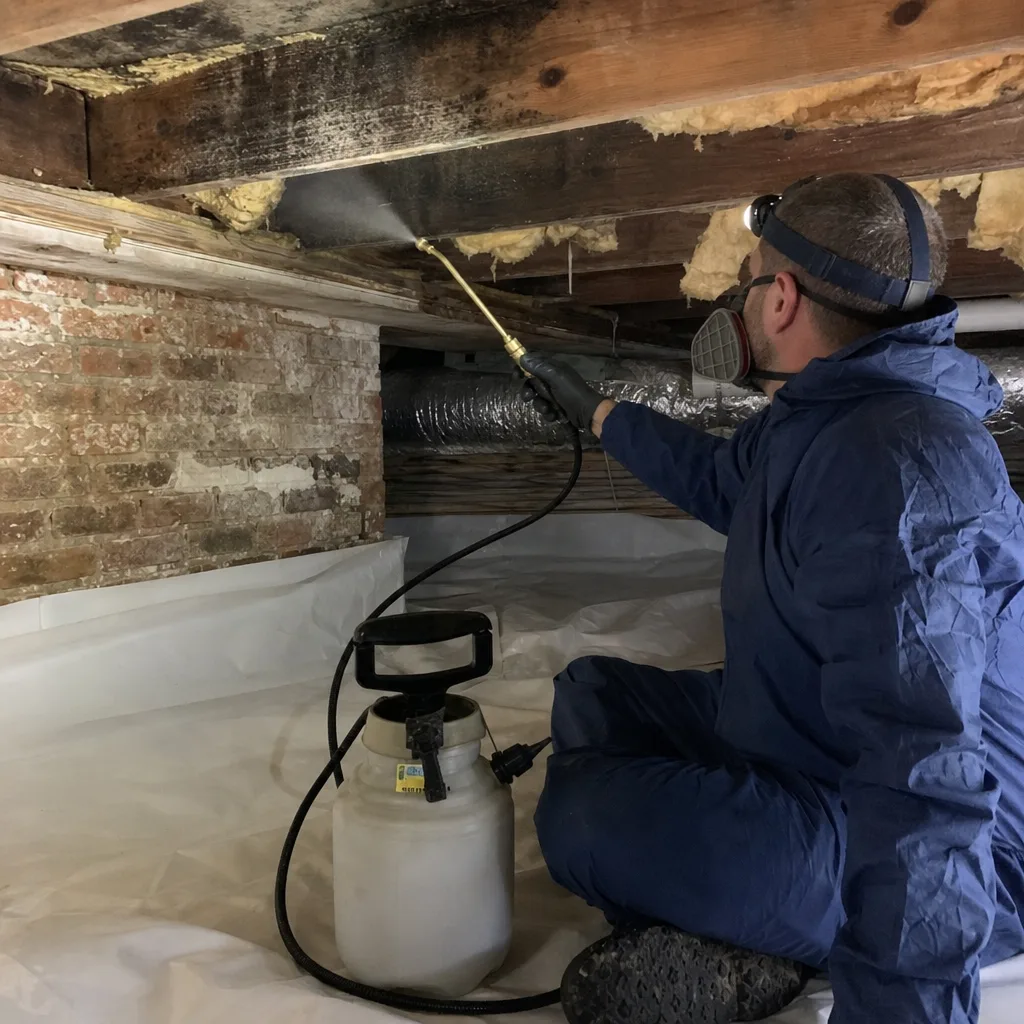
Ceiling & Roof Leak Water Damage
Dormer additions on postwar Cape Cods are notorious for leaking at the roofline. Water follows rafters, pools above ceilings, and eventually drops through. We dry the ceiling cavity from below, stop the interior damage, and document the scope so your carrier sees exactly where the water traveled.
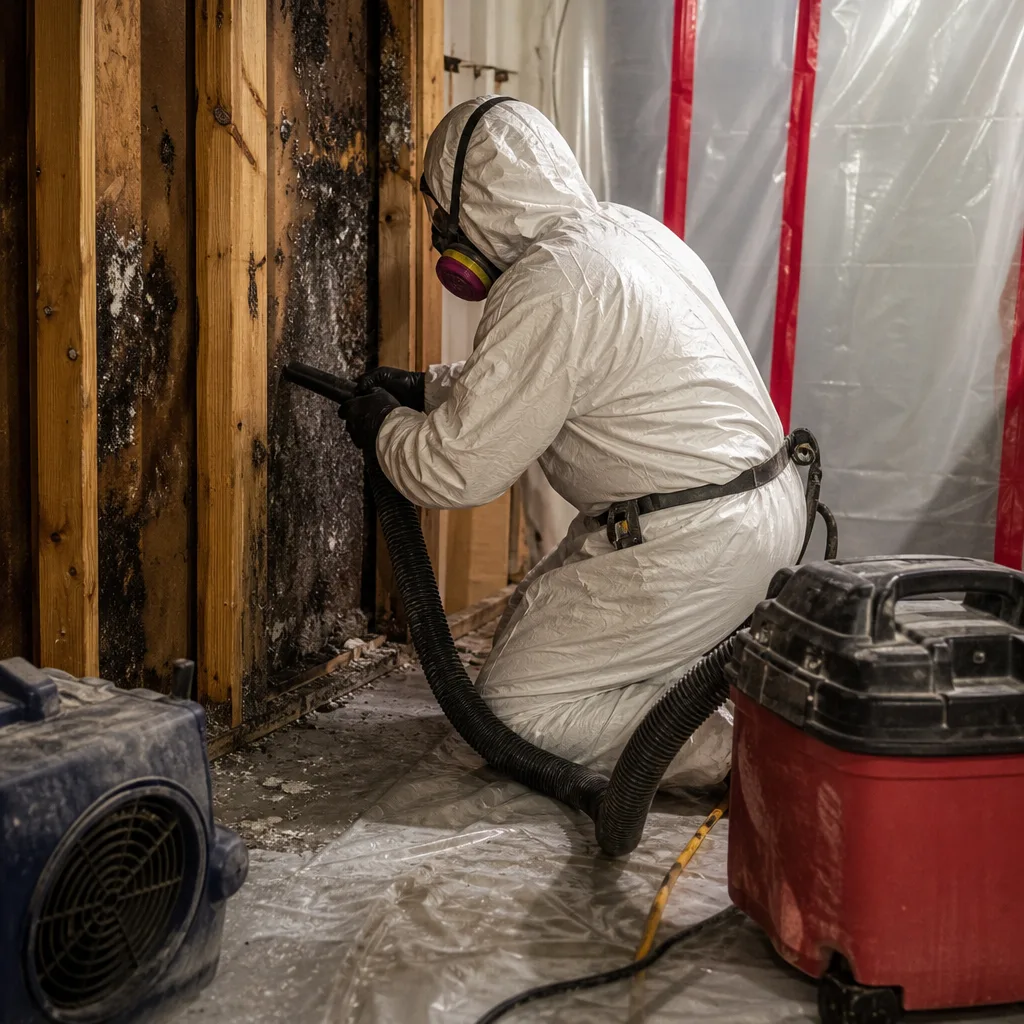
What happens when you call
- 1
A real person answersNo phone trees - you reach a local pro.
- 2
You get an upfront price rangeHonest numbers before anyone is dispatched.
- 3
A background-checked tech heads outLicensed & insured, dispatched right away.
- 4
You approve before work beginsNothing starts until you say go.
Water Damage Restoration Costs in New Hyde Park, NY
In New Hyde Park, a straightforward category 1 basement extraction with drying on bare concrete runs $1,200-$2,500. Add finished walls and a finished ceiling, and the number moves to $3,500-$7,500, because drywall comes out, insulation gets pulled, and the drying setup grows. A full basement rebuild after category 2 or 3 water, including flooring, drywall, trim, and paint, lands between $8,000 and $14,000 depending on square footage and finishes. What moves the price: how long the water sat, whether the space was finished by the original builder or a previous owner, and whether antimicrobial treatment and containment are required. Insurance typically covers sudden plumbing failures and storm-related intrusion. Chronic groundwater seepage through a failing foundation is usually a maintenance issue, not a covered loss, unless you carry a separate endorsement. The free visual inspection is how you find out where your situation falls before you spend a dollar.
We Also Serve Cities Near New Hyde Park
For homeowners in the surrounding area, our Water Damage Restoration team covers the same ground. If you live in Floral Park, Glen Oaks, Bellerose, or Elmont, you’re inside our normal dispatch area and we’ll get to you just as fast. The same crews, the same equipment, the same written guarantee.
New Hyde Park Water Damage Restoration Questions, Answered
Why does my finished basement in New Hyde Park flood after even a moderate rainstorm?
Your house sits on the flat, nearly impermeable glacial outwash of the Hempstead Plains, with one of the highest water tables on Long Island. The ground simply doesn’t absorb water fast enough during a downpour, and with zero lot-line spacing, your neighbor’s runoff is your problem too. The water finds the path of least resistance, which is usually a crack in 60-year-old foundation parging or the joint where the floor slab meets the wall. A pump-out fixes the symptom. Exterior waterproofing and grading fixes the cause. Call (917) 924-4221 and we’ll show you which one your basement needs.
How quickly do you respond to a burst pipe or sump pump failure in New Hyde Park?
We answer live 24/7 and commit to a 45-minute dispatch window for water emergencies in New Hyde Park. A burst pipe is category 1 water that degrades fast once it picks up floor contaminants, and a failed sump pump in a high-water-table basement means groundwater is rising. Call (917) 924-4221. We’ll have a certified crew headed your way while you’re still on the phone.
Do I need to worry about mold behind finished basement walls after a flood if the water looked clean?
Yes, and more so in New Hyde Park than in drier towns. Category 1 water becomes category 2 quickly once it contacts a finished basement floor, and within 48 hours in a humid, high-water-table basement, mold starts establishing behind paneling and drywall. If the water came from groundwater, never assume it’s clean. We test, we treat, and we document what we find. The free visual inspection includes a moisture check that tells us whether mold remediation is part of the scope.
Can you dry out my basement without removing the finished walls a previous owner added?
Sometimes, but less often in New Hyde Park than homeowners hope. When water wicks into the cavity behind paneling or drywall, air movers on the outside can’t touch it. We use thermal imaging to map what’s actually wet. If the framing is dry but the surface materials are wet, selective removal and in-place drying may work. If the cavity is saturated, the wall comes down. We’ll show you the thermal images before we cut anything, and the scope is written and agreed before work starts.
What’s the best way to stop the cycle of flooding in my New Hyde Park Cape Cod basement for good?
You need waterproofing, not another pump-out. The cycle we see on dispatch boards across New Hyde Park is a recurring one: flood, pump, dry, repeat after the next nor’easter. Full waterproofing means addressing grading and drainage outside, sealing and parging foundation walls, and often adding or upgrading a sump system designed for the local water table. We coordinate the waterproofing with the reconstruction so you’re not paying twice for the same wall. Call (917) 924-4221 to schedule the free inspection that starts the conversation.
How long does structural drying take in a New Hyde Park basement?
Bare concrete floors and block walls in a New Hyde Park basement with professional dehumidification typically dry in 3-5 days. Finished spaces with drywall, insulation, and paneling take longer, usually 5-10 days, because the cavity has to dry before the surface is closed back up. We take daily moisture readings and don’t sign off until the structure meets the dry standard. Your log is your proof.
Will my homeowner’s insurance cover water damage restoration in New Hyde Park?
Sudden and accidental water damage, like a burst pipe or a storm that pushes water in, is typically covered. Gradual groundwater seepage through a foundation is usually not, unless you carry a specific endorsement. The claim hinge is documentation: how the water entered, what it touched, and how long it sat. We photograph everything, log every reading, and communicate directly with your adjuster so the loss is documented from hour one. Call (917) 924-4221 and we’ll help you understand your specific situation before you file.
What should I do in the first 30 minutes after I discover water in my New Hyde Park basement?
Call us at (917) 924-4221 first. Then, if you can do it safely, shut off the water supply if the source is a plumbing failure, and turn off electricity to the basement if the water is anywhere near outlets or appliances. Don’t enter standing water unless you’re certain the power is off. Don’t start ripping out carpet or paneling, and don’t run a shop vac on a flooded basement with finished walls. Wait for the crew. We’re already moving.
Serving New Hyde Park, NY - Our Local Coverage Area
We’re based in the New Hyde Park area and know this community well. Use the map below to see our service coverage - if you’re nearby, we can almost certainly help.
Floodline Restoration Co. of Manhattan Serves New Hyde Park
We’re not from a franchise playbook. Floodline Restoration Co. of Manhattan has been answering the phone with a live person since 2010, and the call board still runs the company. Every job in New Hyde Park gets background-checked, uniformed technicians trained to IICRC, RIA, and IFA standards. We use Dri-Eaz thermal imaging, Phoenix desiccant dehumidifiers, XPOWER air movers, and professional-grade extraction equipment on every job. And every restoration, from the first extraction to the final coat of paint, is backed by the 90-Day Done Right Promise in writing. We call it the Keystone Standard: done right, every time, your home first, standing behind it. If it’s not right, we make it right. No paperwork battles, no arguing.
We build our estimates honestly, we bill your carrier directly, and we never hand your job off to a different contractor mid-scope. The line the water left is where we start. Call (917) 924-4221 now and talk to a real person who can get a crew moving.
Written by Curt Bowman, Owner at Floodline Restoration Co. of Manhattan, serving New Hyde Park and Nassau County.