
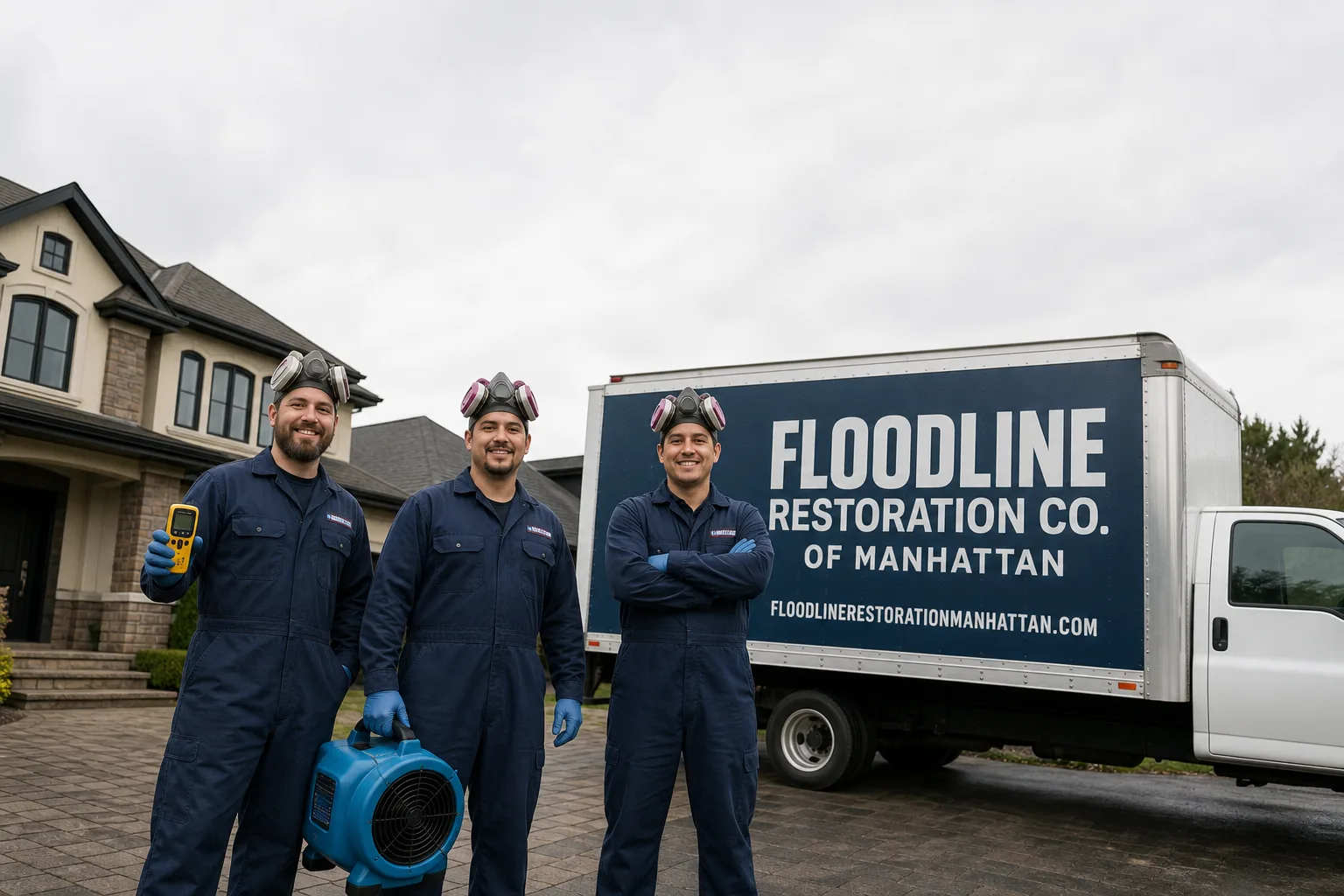
Free visual inspection and a written scope of work before any mitigation begins - photos, moisture readings, and drying logs go in your claim file
The scope we write is the scope we bill. Anything new gets shown to you, in writing, before we touch it.






 Before
 After
After Before
 After
After Before
 After
After24/7 Emergency Water Damage Restoration in Pomona
Water damage restoration in Pomona typically runs $2,800-$6,500 for a standard basement extraction and dry-out, and we answer the phone live at (917) 924-4221 any hour of the day or night. When a supply line lets go at 2 a.m. or the sump pit overflows during a March thaw, the first hour decides whether you’re dealing with a cleanup or a reconstruction. Our crews dispatch from the New York City office and reach Pomona homes fast, walking the property with a moisture meter before a single fan gets plugged in. The longer water sits against Pomona’s block foundations, the deeper it wicks into drywall, framing, and rim joists, which is why we treat every call as time-sensitive and send a certified crew the same visit.
Understanding Water Damage Restoration Severity in Pomona Properties
Water damage comes in three categories, and Pomona’s housing stock makes the distinctions matter more than in most towns. Category 1 is clean water from a burst supply line or failed appliance hose. Category 2, often called gray water, carries biological or chemical contaminants; think sump overflow, washing machine discharge, or meltwater that has run across a garage floor. Category 3 is black water from sewage backups or exterior floodwater, and it requires full containment, antimicrobial treatment, and disposal of saturated porous materials. We classify every loss on arrival, because treating a Category 2 flooded basement on South Mountain Road as if it were Category 1 is how mold gets sealed into a wall cavity. Most Pomona losses we see start as Category 1 or 2 but become worse fast when the shallow water table keeps moisture pressed against aging concrete block long after the standing water is gone. We use moisture mapping with penetrating and non-penetrating meters, thermal imaging to find hidden wet pockets, and daily drying logs until the structure meets the dry standard; not just until the carpet feels dry.
Why Pomona Property Owners Choose Floodline Restoration Co. of Manhattan
- 45-minute response commitment: We dispatch a crew toward Pomona the moment you hang up. You’ll know who’s coming and when.
- Live answer, 24/7: A real person picks up at 2 a.m., not a recording, and schedules a certified crew the same visit.
- IICRC-certified technicians: Our crews hold WRT, FSRT, and AMRT certifications and train to RIA and IFA standards. Background-checked and uniformed, every time.
- Free visual inspection: We assess the damage, map the moisture, and hand you a written scope before any work begins.
- Direct insurance billing: We document the loss, bill your carrier directly, and talk to the adjuster so you don’t have to play messenger.
- One team from extraction to reconstruction: The same crew that runs the Dri-Eaz air movers on day one handles the trim work and paint when drying is done. No mid-job handoff.
Our Water Damage Restoration Process
Inspection & Assessment
We walk the property with hygrometers, thermal imaging, and moisture meters to identify every wet surface, including inside wall cavities and beneath flooring. The scope is written down, priced, and agreed to before we start.
Extraction & Stabilization
Standing water comes out with truck-mounted and portable extraction units. We remove saturated carpet, pad, and drywall that cannot be saved, and we set up containment if the water is Category 2 or 3.
Drying & Dehumidification
Professional-grade Dri-Eaz and Phoenix air movers and dehumidifiers run continuously, with daily moisture readings until the structure hits the dry standard. We log every reading and share the log with you and your insurer.
Cleaning & Sanitization
Affected surfaces are cleaned and treated with antimicrobial agents, especially in the rim-joist and stud cavities where Pomona’s prolonged foundation moisture invites mold. HEPA air scrubbers run during the process.
Mold Prevention & Clearance
Because Pomona’s perched water table keeps foundations damp for weeks, we focus on drying behind and beneath the obvious surfaces. If mold is present, we contain it, remove affected material, and verify clearance before rebuild starts.
Repairs & Restoration
We rebuild what was removed: drywall, insulation, trim, flooring, and paint. The same crew handles it, and the finished job is backed by the 90-Day Done Right Promise in writing.
Need Emergency Water Damage Restoration in Pomona Now?
Crews minutes away, answering live 24 hours a day. The sooner we start, the less it costs.
Working With Your Insurance Company
Most Pomona water damage claims we handle are covered losses, but the way the claim is documented in the first 48 hours determines whether the settlement covers the full scope or leaves you with a gap. We photograph everything before demolition starts, log moisture readings daily, and write a line-item estimate in the format your carrier expects. We talk to the adjuster directly, walk them through the drying log, and answer their questions in their language. You don’t chase paperwork, and you don’t get caught between us and the insurer.
What We Provide Your Insurer
- Thorough documentation of the loss
- Photos of all damage, room by room
- Moisture readings and drying logs
- A detailed, line-item scope of work
- Direct coordination with your carrier
Built for Pomona’s Loss Calendar
Pomona’s damage season doesn’t follow a simple calendar; it follows the bedrock. In January and February, deep freezes split copper supply lines in uninsulated exterior walls of 1960s and 1970s ranches, and the water runs through ceilings before anyone notices. March and April bring snowmelt off the Ramapo slopes and weeks of saturated ground; sump pumps run constantly and fail quietly, and by the time a homeowner checks the basement, the water has been there for days. Summer thunderstorms drop inches in an hour, overwhelming downspouts and window wells, and the water has nowhere to go but against the foundation. Autumn nor’easters with heavy canopy bring branches through roofs and siding, letting rain follow the path into wall cavities. Each season produces a different failure, but the common thread in Pomona is that the water stays pressed against block foundations longer than it should, which means drying takes longer and cutting corners on the dry standard is how you guarantee a mold problem next spring. We plan every Pomona scope around that reality.
Water Damage Restoration Across Pomona’s Neighborhoods
Pomona is not one housing type; response routes and loss patterns shift neighborhood to neighborhood. The homes off South Mountain Road and along Summit Road sit closest to the Ramapo slope, where lateral groundwater movement is strongest and basements take on water during every wet spell. The ranches and split-levels around Old Route 202 and the village’s central corridor are older, with parged block foundations that have been patched and repatched; we find chronic seepage in the cove joint where floor meets wall. On the eastern side toward Thiells and Mount Ivy, the terrain flattens a little, but the water table stays high, and finished basements there are just as vulnerable. Homes in the wooded lots near Ladentown Road see more roof and siding damage from overhanging limbs, which turns into interior water damage after a nor’easter. A crew running a call near Summit Road and a crew running one near Willow Grove Road are responding to different versions of the same Pomona problem: water that gets in and can’t get out.
Specialized Water Damage Restoration Services We Offer in Pomona
Emergency Water Extraction
Standing water in a Pomona basement is an emergency because every hour it sits, it wicks higher into drywall and deeper into the slab-to-wall joint. We arrive with truck-mounted extraction to remove the bulk of the water fast, then follow with extraction mats and portable units to pull what’s trapped under flooring and behind baseboards. The goal is to stop the migration before it reaches the rim joists.
Structural Drying & Dehumidification
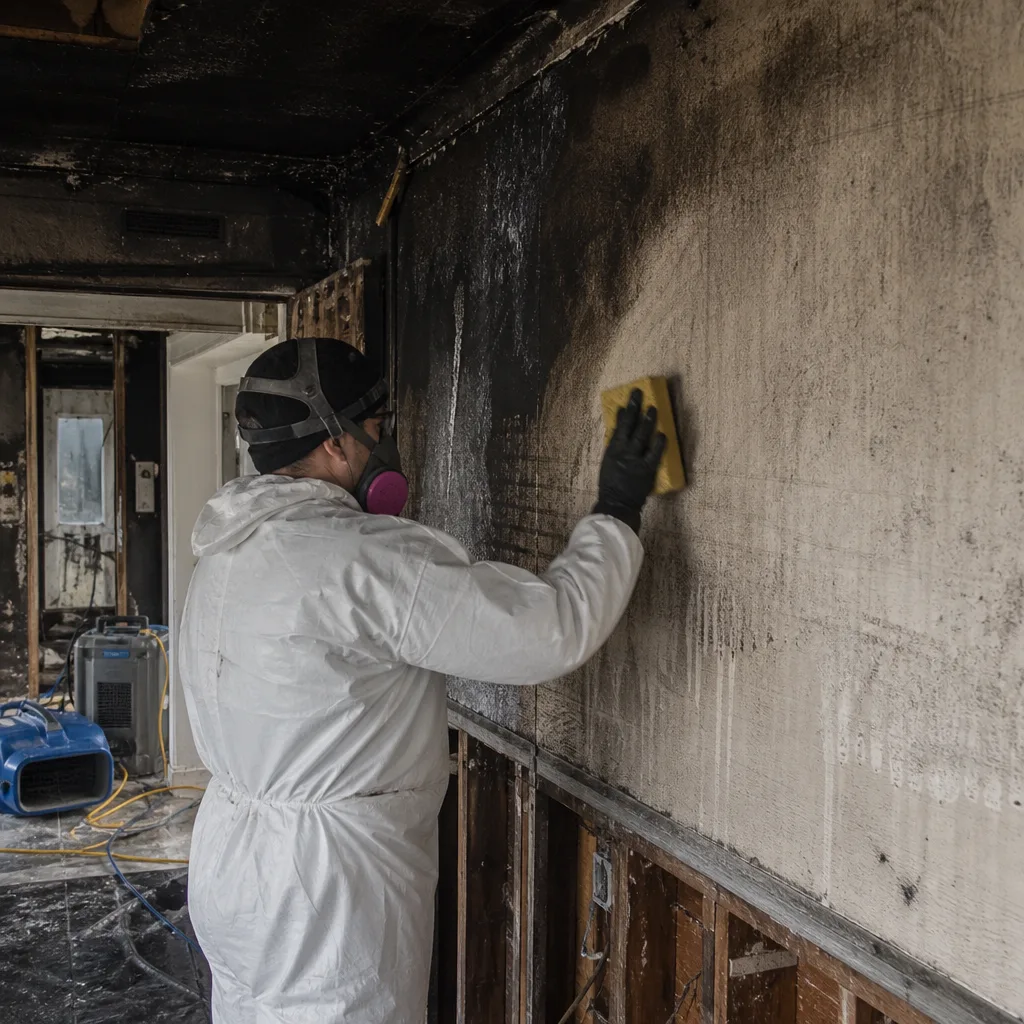
Drying a Pomona home takes longer than drying a home in Nanuet or Spring Valley because the shallow bedrock keeps soil moisture high, and the block foundation keeps releasing humidity back into the space. We size the drying system to the actual moisture load, using Dri-Eaz air movers and Phoenix dehumidifiers with daily readings until the structure is dry; not just dry to the touch. That extension in drying time is exactly why we never cut the process short.
Flood Cleanup
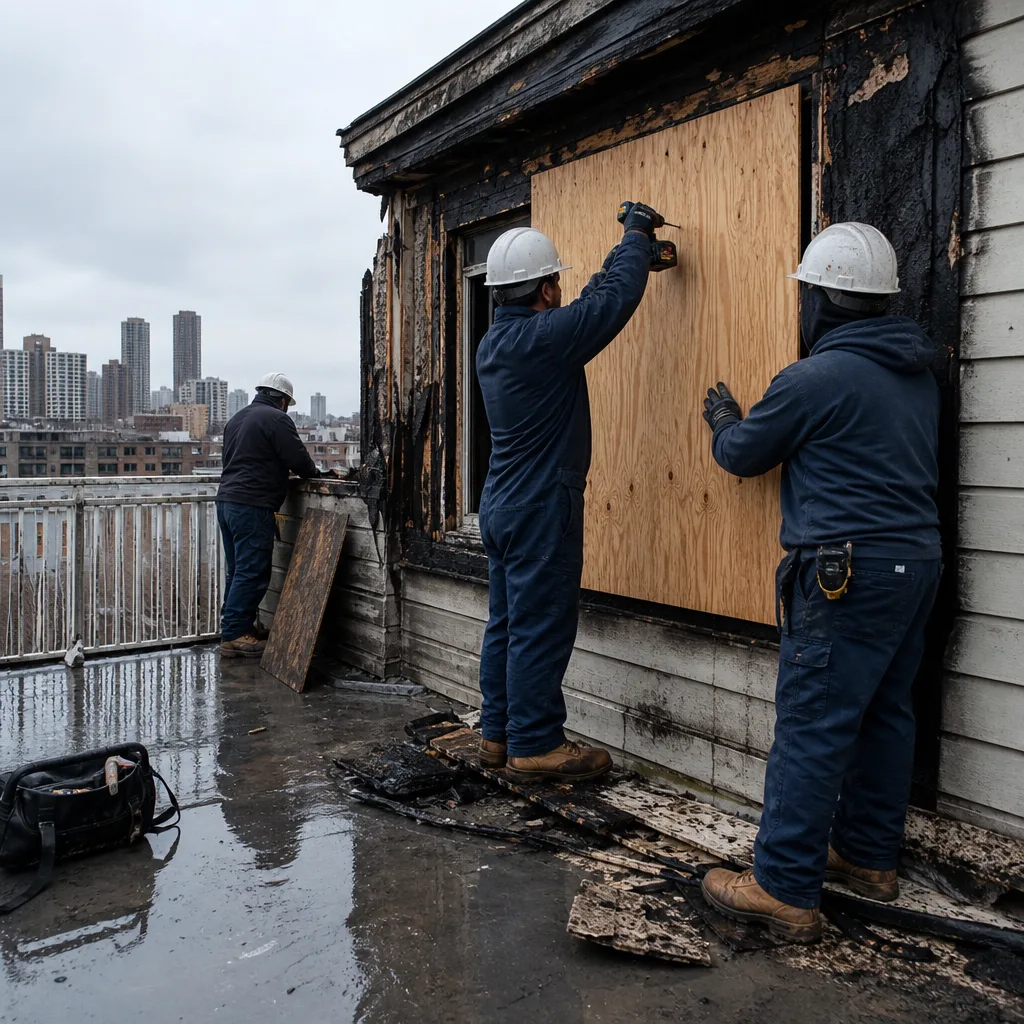
When the sump failure goes unnoticed and the water sits, flood cleanup in Pomona almost always involves mold cleanup too. We contain the affected area, remove saturated materials, and treat the framing with antimicrobial agents in the rim-joist and stud cavities where Pomona’s water table guarantees mold growth. The cleanup isn’t done until the air scrubbing clears the space.
Burst Pipe Restoration
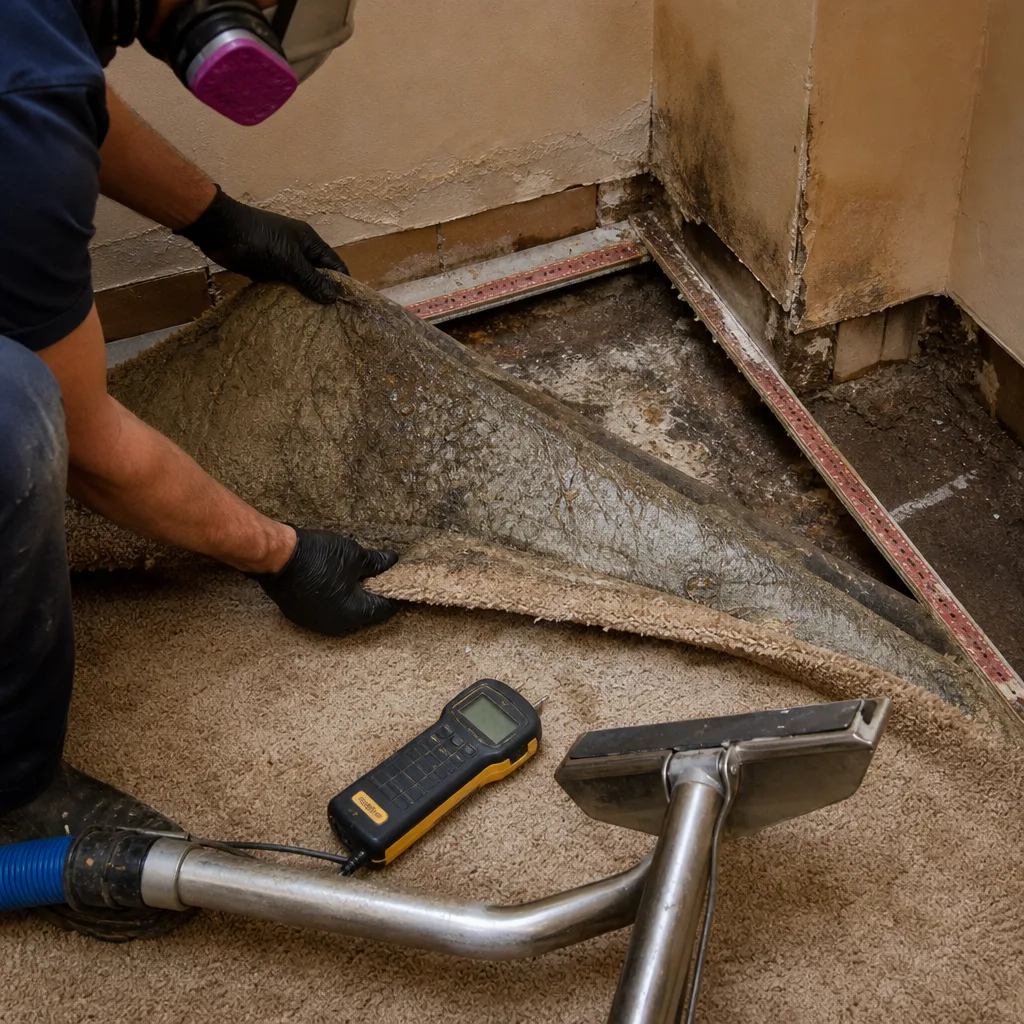
A frozen pipe that lets go can send water through a ceiling and into the floor below in minutes. We stop the source, extract from the affected rooms, and map the water’s path so we dry what’s actually wet, including wall cavities that look dry from the outside. Then we rebuild: drywall, insulation, paint, and trim, all by the same crew.
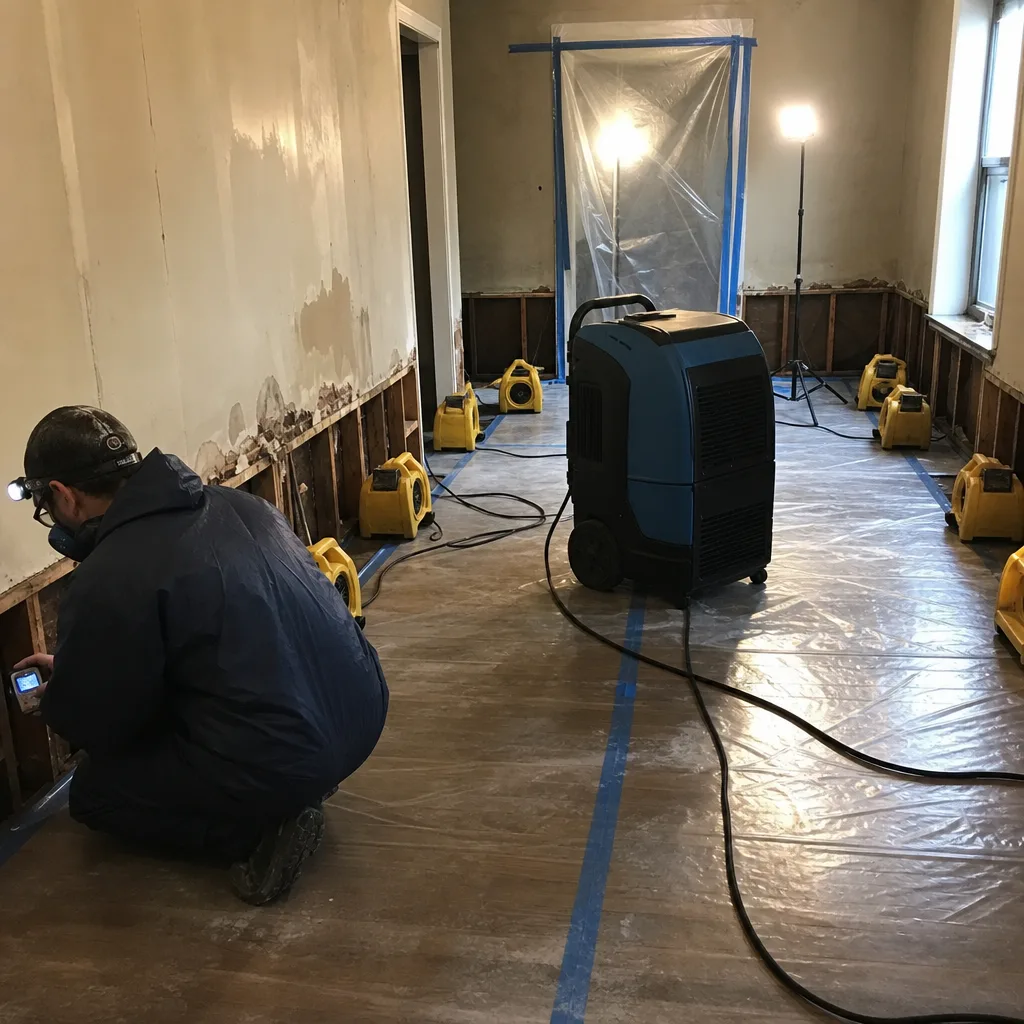
Basement Water Removal
Pomona’s block-and-parged foundations are the primary entry point for chronic seepage, and basement water removal here often means more than pumping the floor. We identify where the water entered, dry the cove joint and the sill plate, and treat the organic materials that the water soaked. If the parging has failed, we address that as part of the rebuild so the same corner doesn’t flood with the next storm.
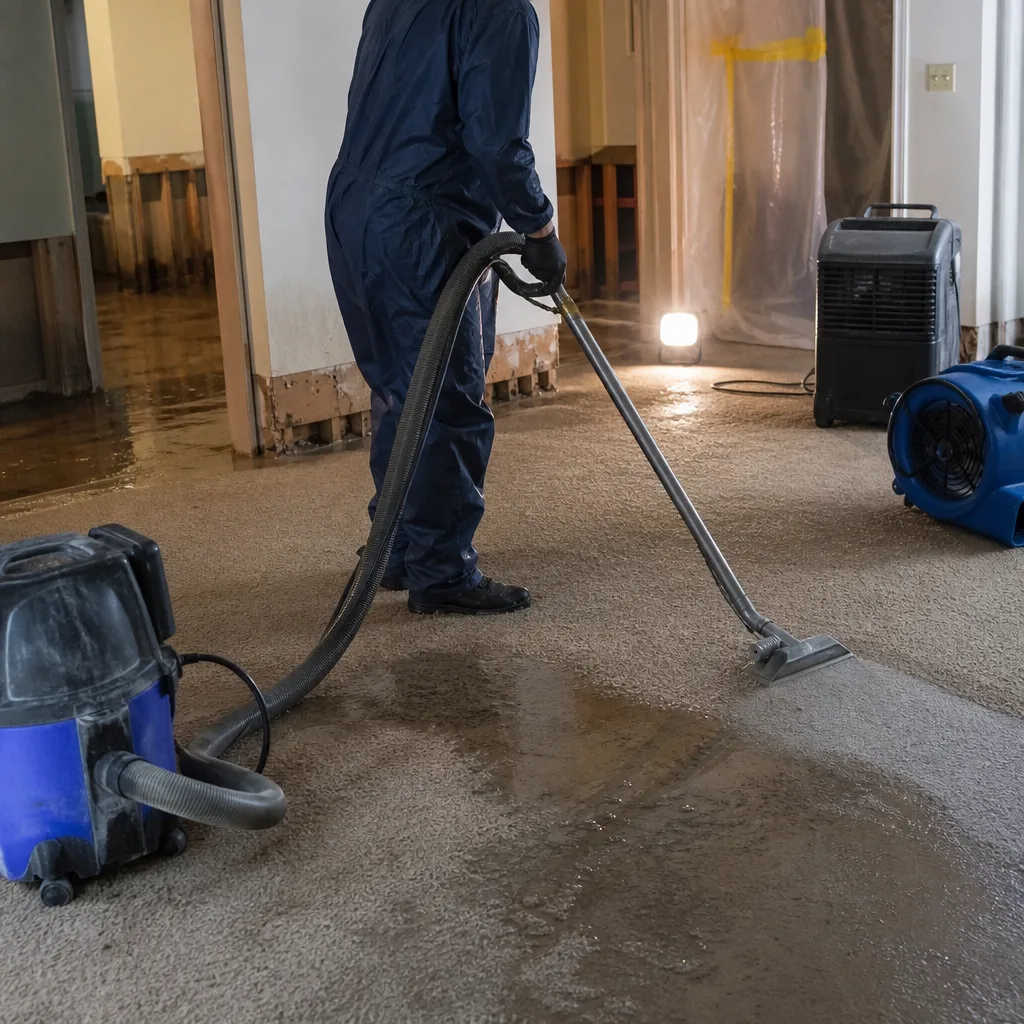
What happens when you call
- 1
A real person answersNo phone trees - you reach a local pro.
- 2
You get an upfront price rangeHonest numbers before anyone is dispatched.
- 3
A background-checked tech heads outLicensed & insured, dispatched right away.
- 4
You approve before work beginsNothing starts until you say go.
Water Damage Restoration Costs in Pomona, NY
Pomona water damage restoration costs run predictable once the scope is written. A basic one-room extraction and dry-out with no structural removal runs $1,800-$3,200. A full finished-basement loss with partial drywall removal and antimicrobial treatment typically lands between $4,000 and $8,000. A Category 3 sewage or floodwater loss with containment, disposal, and advanced drying can exceed $10,000. What moves the price is the category of water, the square footage affected, how long the water sat, and whether mold is already present in the cavities. Insurance covers most of these losses, and we bill the carrier directly; you’re responsible for the deductible, not the claim. Before any work begins, you get a written scope with line-item pricing, so nothing gets added to the bill you didn’t agree to in writing. Call (917) 924-4221 for a free visual inspection and a firm number.
One more thing worth knowing if you’re comparing bids: the $50 Off Any Repair Over $250 and the Senior & Veteran 5% discount both apply in Pomona, and we’ll always apply whichever saves you more. The 90-Day Done Right Promise is in writing, no arguing.
We Also Serve Cities Near Pomona
Our crews serve Pomona and the surrounding Rockland County communities, including Thiells, West Haverstraw, Stony Point, and New City. If you’re in any of these areas, the same live-answer dispatch, the same certified crews, and the same written scope apply. Learn more about our Water Damage Restoration services or see how we work across the region on our Pomona page.
Pomona Water Damage Restoration Questions, Answered
Why do Pomona basements flood even when it hasn’t rained in days?
Pomona sits on shallow Precambrian bedrock, and storm or snowmelt water that can’t percolate downward migrates laterally into the block foundations of the village’s 1960s-1980s homes. The perched water table stays high for weeks after a storm, so basements keep taking on water long after the rain stops. If you’re seeing water on a dry day, call (917) 924-4221; it’s a foundation-drainage issue, not a one-time overflow.
How fast can mold grow in a flooded Pomona basement?
Mold can establish in 48 to 72 hours in a flooded Pomona basement, and the village’s prolonged high water table means the rim joists and stud cavities stay damp longer than they do in nearby towns. By the time a homeowner notices the standing water has receded, mold is often already growing inside the wall. We dry to the IICRC dry standard and treat the cavities, not just the visible surfaces.
What does Category 2 water mean for my Pomona flood cleanup?
Category 2 water means the floodwater carries biological or chemical contaminants, so the cleanup requires containment, antimicrobial treatment, and removal of saturated porous materials, not just drying. Sump overflows and washing machine discharges are common Category 2 sources in Pomona. A Category 2 loss handled as a Category 1 clean-water loss is how mold gets sealed behind new drywall.
Why do restoration scopes take longer to complete in Pomona than in nearby towns?
Pomona’s shallow bedrock keeps the water table pressed against foundations long after storms pass, which prolongs structural drying times compared with flatter, better-draining areas like Nanuet or Spring Valley. The moisture doesn’t leave the block walls quickly, so we run the drying equipment longer and monitor daily readings until the dry standard is met. Cutting that corner is how you get a callback for mold next season.
Can a failed garage door spring lead to water damage in a Pomona home?
Yes, and we’ve seen it happen. Our crew responded to a ranch on Summit Road where a failed spring on the original one-piece garage door left a gap for snowmelt, while a sump pump overwhelmed by the perched water table left 3 inches of Category 2 water in the finished basement. The gap let the meltwater in, and the geology kept it there. Any opening in the envelope, even a garage door, becomes a water entry point during Pomona’s thaw cycles.
How fast can a crew reach a Pomona home?
We answer live 24/7 and commit to a 45-minute response for water damage calls in Pomona. A certified crew reaches the property the same visit, starts extraction, and has drying equipment running before the day is out. The first hour matters most; call (917) 924-4221 and a live dispatcher schedules the crew.
Will my insurance cover Pomona water damage restoration?
Most sudden and accidental water losses, like a burst pipe or a failed appliance supply line, are covered under standard homeowners policies. Gradual seepage through a block foundation may be excluded, which is why we document the cause clearly from the first visit. We bill your carrier directly and talk to the adjuster on your behalf.
What should I do in the first 30 minutes after discovering water damage in my Pomona home?
Shut off the water source if you can do so safely, turn off electricity to the affected area, and call (917) 924-4221. Don’t walk through standing Category 2 or 3 water, and don’t lift saturated carpet yourself. The first 30 minutes decide the scope; a fast response limits how much drywall, insulation, and framing has to come out.
Serving Pomona, NY - Our Local Coverage Area
We’re based in the Pomona area and know this community well. Use the map below to see our service coverage - if you’re nearby, we can almost certainly help.
Done Right, and Backed in Writing
Floodline Restoration Co. has built its name on the principle that the line the water left is where the job starts, and it doesn’t end until the house is dry, the rebuild is finished, and the paperwork is in your hands. Curt Bowman founded this company in 2010 around a dispatch board, not a sales desk, and every Pomona job gets the same standard: background-checked, uniformed technicians, a written scope before work starts, and the 90-Day Done Right Promise in writing. We stand behind it. Call (917) 924-4221 for a free estimate, and we’ll be there when we say.
Written by Curt Bowman, Owner at Floodline Restoration Co., serving Pomona and the surrounding Rockland County communities.