
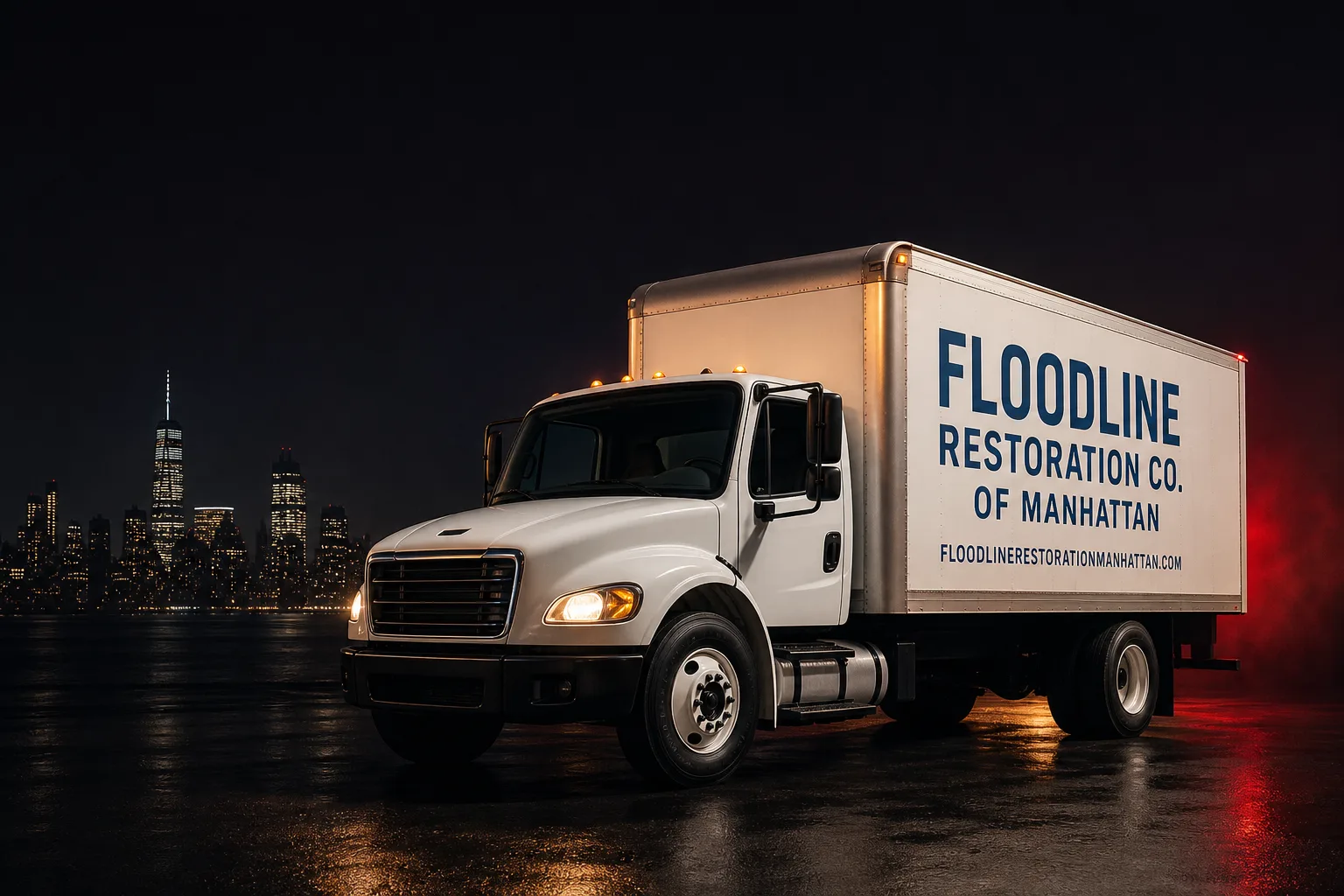
Free visual inspection and a written scope of work before any mitigation begins - photos, moisture readings, and drying logs go in your claim file
The scope we write is the scope we bill. Anything new gets shown to you, in writing, before we touch it.






 Before
 After
After Before
 After
After Before
 After
After24/7 Emergency Water Damage Restoration in SoHo
Water damage in a SoHo loft moves fast, and so do we. A burst supply line in a 4,000 sq ft open-plan unit can reach every corner of the floor before you even notice the first drip. Call (917) 924-4221 right now and a live dispatcher answers, day or night. We send a certified crew into SoHo immediately, because the first hour determines whether your heart-pine floors and cast-iron columns get dried in place or torn out. The sooner extraction starts, the less this costs you. No recordings, no call centers. A real person picks up at 2 a.m., and a uniformed technician is on the way with professional-grade Dri-Eaz and Phoenix equipment.
Understanding Water Damage Restoration Severity in SoHo Properties
Not all water is the same. Restoration professionals classify water into three categories, and that classification drives every decision after the first inspection. Category 1 comes from a clean source like a burst supply line or an overflowing tub. Category 2 carries contaminants from washing machines, dishwashers, or sump failures. Category 3 is grossly contaminated, from sewage backups or floodwater off the street. In SoHo, the building stock complicates this picture. A Category 1 leak from a kitchen island on Greene Street can sit against an 1870s heart-pine subfloor for hours and wick up into a brick party wall, turning a clean-water event into a Category 2 or 3 situation behind finished surfaces. Moisture mapping with thermal imaging and hygrometers tells us what we’re actually dealing with, not what it looks like from the surface. Structural drying in these 12-15 ft ceiling lofts requires more air movement and more dehumidification capacity than a standard apartment, because cubic footage is enormous and interior walls, which normally stop lateral spread, barely exist. When left unaddressed for 24-36 hours, trapped moisture behind cast-iron facades accelerates rust expansion, which is exactly the kind of problem that turns a two-day dry-out into a Landmarks Preservation Commission review.
Why SoHo Property Owners Choose Floodline Restoration Co. of Manhattan
- 45-minute response commitment to SoHo. We know the streets, the loading zones, and the freight elevator buildings. Our dispatch board gets a crew moving toward you within minutes, not hours.
- A live person answers, 24/7. No automated system. No “leave a message.” A real dispatcher picks up at 2 a.m. and coordinates the response while you’re still on the line.
- IICRC-certified crews. Our technicians hold WRT (Water Restoration Technician), FSRT (Fire & Smoke Restoration Technician), and AMRT (Applied Microbial Remediation Technician) certifications, trained to IICRC, RIA, and IFA standards.
- Free visual inspection. We assess the damage, explain what we’re seeing in plain language, and give you a written scope before any work starts. No pressure. Just facts.
- Direct insurance billing. We document everything from the first hour, submit directly to your carrier, and coordinate with your adjuster. You never play messenger.
- One team from extraction to reconstruction. The same crew that extracts the water, runs the dehumidifiers, and logs the moisture readings is the crew that rebuilds what needs rebuilding. No handoffs, no inherited crews.
Our Water Damage Restoration Process
Inspection & Assessment
We arrive, identify the water source, and classify the water category. Thermal imaging and moisture meters map the full extent of the damage, including what’s hidden behind walls and under floors. You get a written scope of work before anything else happens.
Extraction/Stabilization
We remove standing water using truck-mounted and portable extraction units, then stabilize the structure. For SoHo lofts, this means checking for water that has run into elevator shafts, down interior column chases, or through floor penetrations into lower units.
Drying & Dehumidification
We deploy Dri-Eaz and Phoenix air movers and dehumidifiers sized to the cubic footage, not the square footage. In a 4,000 sq ft loft with 14 ft ceilings, that’s a different calculation than a standard apartment. Daily moisture readings are logged until the dry standard is met.
Cleaning & Sanitization
All affected surfaces get cleaned and treated with antimicrobial products appropriate for the water category. For Category 3 events, we run HEPA air scrubbers and contain the affected zone before any work begins.
Specialty Treatment
In SoHo’s cast-iron buildings, this is where we address what others miss. Brick party walls saturated from a leaking drainage stack need specific drying protocols. Heart-pine subfloors require moisture mapping to determine if they can be saved in place. Exterior ironwork showing rust expansion gets flagged early so LPC review can begin without delaying interior work.
Repairs & Restoration
We rebuild what needs rebuilding, matching period-appropriate materials where Landmarks Preservation Commission review applies. The same crew that did the extraction completes the reconstruction. You get a final moisture log and the 90-Day Done Right Promise in writing.
Need Emergency Water Damage Restoration in SoHo Now?
Crews minutes away, answering live 24 hours a day. The sooner we start, the less it costs.
Working With Your Insurance Company
Insurance claims for water damage in SoHo can get complicated fast. A standard policy covers sudden and accidental discharge, like a burst pipe. A flood from storm surge or a sewer backup may require separate coverage. What matters most is documentation. We photograph every affected area room by room, log moisture readings each day, and build a line-item scope of work that matches industry-standard estimating software. Our team talks directly with your adjuster, so you’re not the one explaining why a cast-iron loft with 14 ft ceilings needs more drying time than a standard unit. Curt Bowman has spent years dealing with carriers on behalf of homeowners, and the approach is simple: document thoroughly, communicate directly, and stand behind the work.
What We Provide Your Insurer
- Thorough documentation of the loss
- Photos of all damage, room by room
- Moisture readings and drying logs
- A detailed, line-item scope of work
- Direct coordination with your carrier
Built for SoHo’s Loss Calendar
Water damage in SoHo follows a pattern, and we’ve learned it over the years. January and February bring deep freezes that burst supply lines in unheated stairwells and against exterior walls, especially in older cast-iron buildings where pipe insulation was never updated. March and April bring spring thaw, when saturated ground pushes water into below-grade cellar spaces and ground-floor retail conversions that never got proper waterproofing. Summer thunderstorms hit fast and hard, overwhelming the aging combined sewer system and sending Category 3 water into basements on Crosby, Mercer, and Greene Streets. Nor’easters in the fall drive wind-driven rain into facade joints and around window surrounds, saturating brick behind cast-iron panels. Hurricane Sandy taught this neighborhood a permanent lesson about below-grade flood risk, and every heavy storm since has kept restoration crews busy in SoHo’s cellars and sub-cellars.
Water Damage Restoration Across SoHo’s Neighborhoods
SoHo is small, roughly 25 blocks, but the building stock shifts noticeably from corridor to corridor. The Broadway corridor runs heavy with converted commercial lofts and retail at grade, which means we’re often coordinating with building management, freight elevator schedules, and ground-floor tenants while running extraction upstairs. Greene Street and Wooster Street hold some of the neighborhood’s finest cast-iron facades, and water that gets behind those panels from a leaking interior stack or a roof drain failure carries real urgency because the rust expansion threatens the ornamental ironwork itself. Mercer Street and Crosby Street have narrower buildings with shared party walls, so a pinhole leak in one unit’s original cast-iron drainage stack will saturate the adjacent brick and show up in the neighbor’s wall before the homeowner even sees it. The blocks around Broome, Spring, and Prince Streets include many JLWQA-designated units, and we flag the legal use record before filing any permit paperwork because an unpermitted conversion discovered mid-mitigation can stall the entire scope.
Specialized Water Damage Restoration Services We Offer in SoHo
Emergency Water Extraction
Standing water in a SoHo loft is a race against gravity. We use truck-mounted extraction units at the street level and portable equipment for upper floors, pulling water from open floor plans that can cover thousands of square feet before you discover the leak. Every minute of extraction reduces drying time and protects original flooring.
Structural Drying & Dehumidification
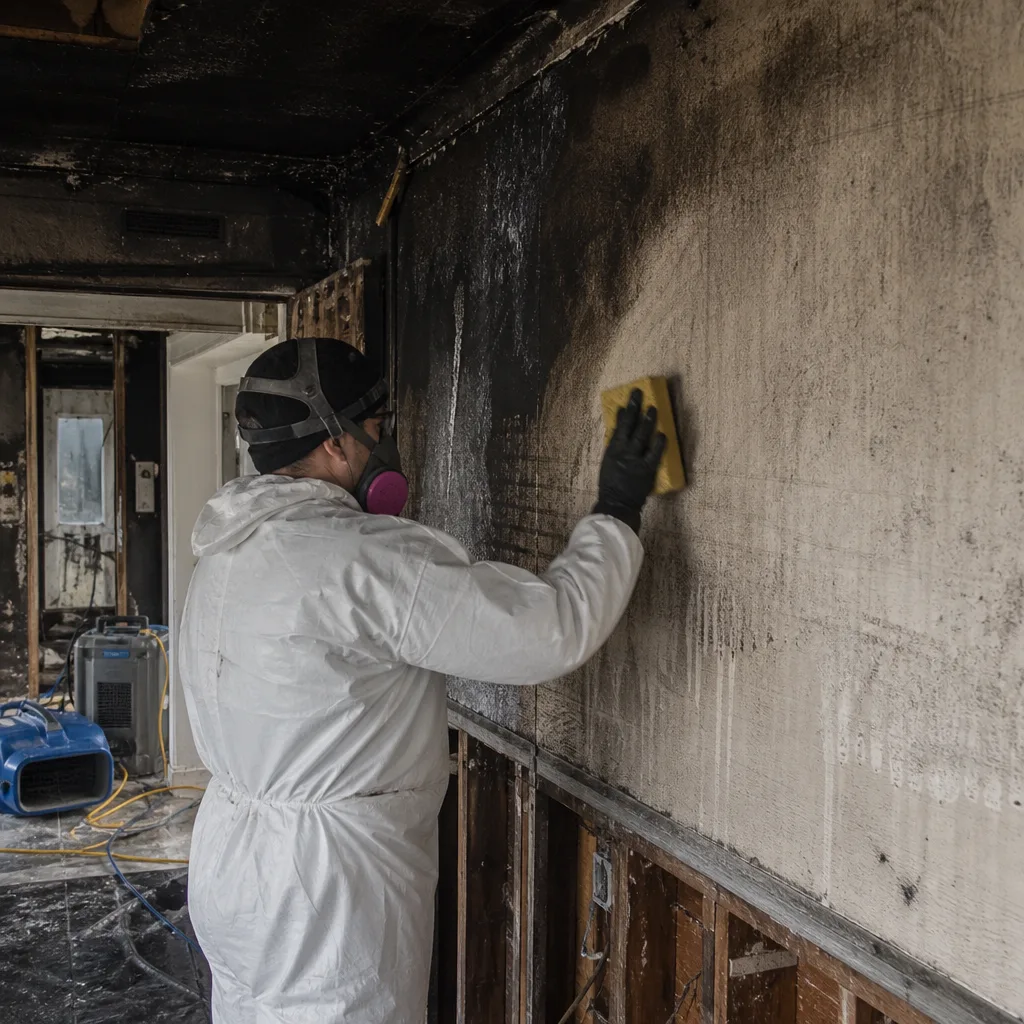
Drying a loft with 12-15 ft ceilings and minimal interior walls requires calculating cubic footage, not just square footage. We size Phoenix and Dri-Eaz dehumidifiers to the volume of the space and run air movers in patterns that account for the building’s original construction. Daily moisture logs document progress until we hit the dry standard.
Flood Cleanup
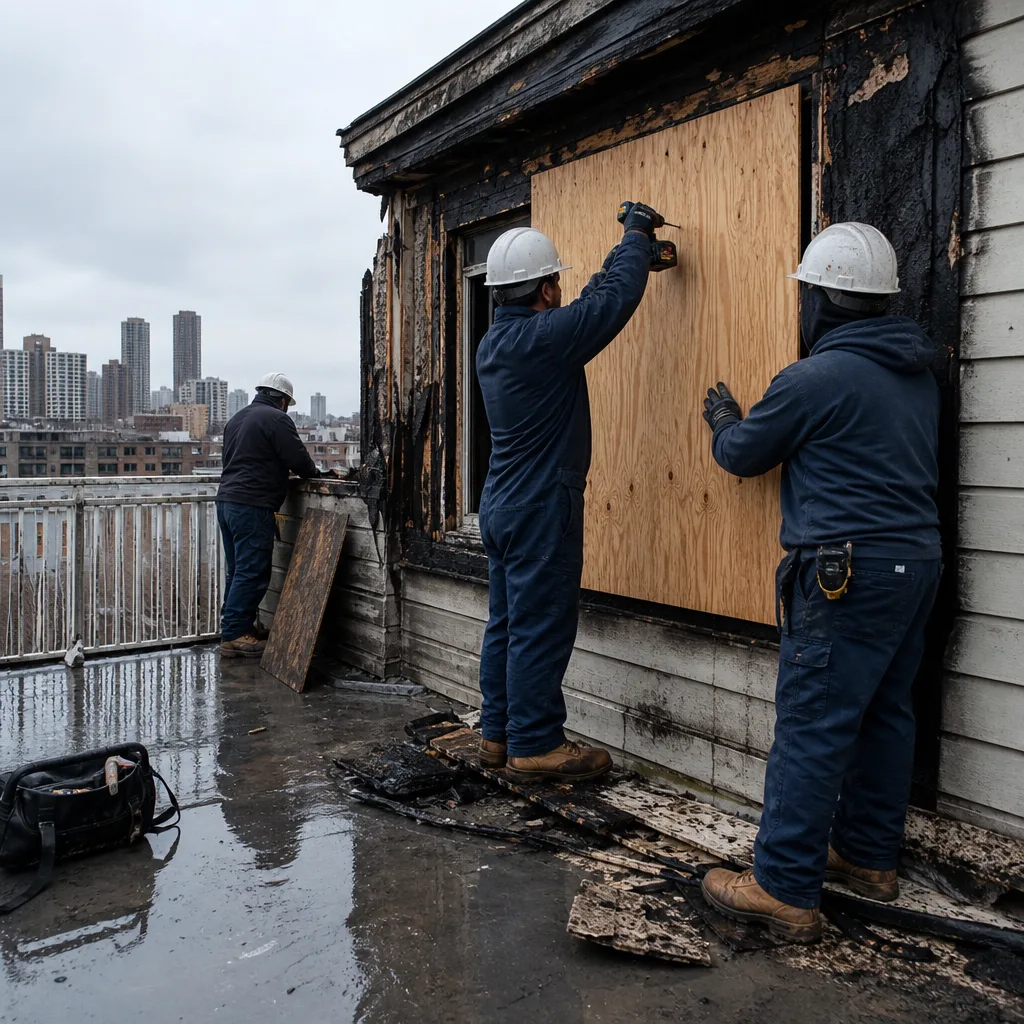
Nor’easter storm surge and heavy rain events bring Category 3 water into SoHo’s ground-floor and cellar spaces. We handle contaminated water with full containment, HEPA air scrubbing, and antimicrobial treatment, coordinating with your insurer on the documentation that makes the claim clean.

Burst Pipe Restoration
January deep freezes and aging plumbing from the manufacturing-to-residential conversions of the 1970s keep burst pipe calls coming all winter. We extract, dry, and rebuild, including the sheetrock chases and wall assemblies that hide the original cast-iron stacks.

Basement Water Removal
SoHo basements and sub-cellars sit low in a neighborhood that Sandy taught us to respect. We pump, extract, dry, and then rebuild with materials chosen for below-grade performance, not just standard drywall that will fail again at the next high-water event.

What happens when you call
- 1
A real person answersNo phone trees - you reach a local pro.
- 2
You get an upfront price rangeHonest numbers before anyone is dispatched.
- 3
A background-checked tech heads outLicensed & insured, dispatched right away.
- 4
You approve before work beginsNothing starts until you say go.
Water Damage Restoration Costs in SoHo, NY
Emergency water extraction in SoHo typically runs $3.50-$5.50 per square foot of affected area, with a minimum charge around $600-$800 for smaller incidents. Structural drying and dehumidification adds $1,500-$3,500 depending on the cubic footage of the space and how long the water sat. A full Category 3 basement or cellar cleanup with containment and antimicrobial treatment generally lands between $4,500 and $9,000. Ceiling and roof leak repairs, once the damage is dried, run $800-$2,500 for typical SoHo loft scope. What moves the price is access (freight elevator buildings cost more to service), water category, and whether the drywall can be dried in place or must be cut out. Many policies cover most of the cost for sudden pipe bursts, while flood and sewer backups often require additional coverage. Call (917) 924-4221 for a free visual inspection and a firm, written scope before any work begins.
We Also Serve Cities Near SoHo
Our crews serve the area around SoHo every day. If you’re in Fairview, Harrison, East Bronx, or Hunts Point, we can dispatch a certified team to you quickly. The same live 24/7 answer and the same 90-Day Done Right Promise apply.
SoHo Water Damage Restoration Questions, Answered
Does water damage restoration in SoHo require approval from the Landmarks Preservation Commission?
Only if the work touches an exterior element: facade masonry, ornamental ironwork, window surrounds, or anything visible from the street. Our team identifies LPC requirements during the initial inspection and flags them immediately. Interior drying, extraction, and most repairs proceed without LPC review, but if the damage extends to a cast-iron facade panel or exterior brick, we start the LPC coordination early so interior work isn’t held up waiting for exterior approvals. Call (917) 924-4221 to have us assess your specific situation.
How does the JLWQA zoning designation affect a water damage claim in SoHo?
Joint Living-Work Quarters for Artists designation means the unit’s legal use is both residential and work space. Some insurers are unfamiliar with this classification and may question coverage limits or depreciation standards. We pull the legal use record before filing permit paperwork and document the unit’s classification in our insurance submission. An unpermitted conversion discovered mid-mitigation can stall the scope of work and force a re-file with DOB, so getting this right on day one matters. Call (917) 924-4221 if you have questions about your specific unit.
What is different about drying out a SoHo cast-iron loft after a burst pipe compared to a standard apartment?
Three things. First, the open floor plan means water runs across thousands of square feet with no interior walls to slow it. Second, the cubic footage of a 3,000-6,000 sq ft loft with 12-15 ft ceilings demands significantly more dehumidification capacity than a standard apartment. Third, the original materials, heart-pine subfloors, brick party walls, cast-iron columns, absorb water and release it differently than modern construction. We moisture-map all of it and set drying targets specific to these materials. Call (917) 924-4221 for an assessment of your loft.
Can you dry out a pre-war SoHo loft in place, or does the drywall always need to be removed?
It depends on the water category, how long the water sat, and what the moisture readings show. Water that’s discovered within a few hours and is Category 1 can often be dried in place using air movers, dehumidifiers, and injection drying behind finished walls. Water that sat for 24-36 hours, or any Category 3 water, usually means cutting out wet drywall because the material has already absorbed too much moisture to dry reliably. We show you the readings and explain the decision clearly. Call (917) 924-4221 for a free inspection.
Why do SoHo basements and ground-floor spaces need special attention after heavy rain or nor’easters?
SoHo sits at low elevation in lower Manhattan, and Hurricane Sandy’s 2012 storm surge flooded ground-floor and cellar spaces across the neighborhood. That event, plus the aging combined sewer system, means below-grade spaces here face real flood risk every time a nor’easter or heavy thunderstorm hits. Ground-floor and cellar spaces also sit below the water table’s seasonal high mark, so groundwater intrusion through foundation cracks is common. We treat these spaces with Category 3 protocols and recommend below-grade-appropriate materials when rebuilding. Call (917) 924-4221 to discuss your space.
How fast can a crew actually get to my SoHo loft?
Our commitment is 45 minutes from dispatch to arrival in SoHo. That’s from a live dispatcher who answers your call at any hour, every day. Access can add time if you’re in a freight elevator building with doorman protocols, but our crews know these buildings and their loading requirements. Call (917) 924-4221 and we’ll give you a real arrival window, not a vague promise.
Will my insurance cover water damage restoration in SoHo?
Most standard homeowner policies cover sudden and accidental water damage like a burst pipe or an overflowing tub. Sewer backups and storm surge flooding typically require separate or additional coverage. We document everything from the first hour, submit directly to your carrier, and coordinate with your adjuster so the claim moves cleanly. Call (917) 924-4221 and we’ll help you understand your specific coverage.
What should I do in the first 30 minutes after discovering water damage in SoHo?
First, stop the water source if you can do so safely. Shut off the main supply valve or the fixture valve. Second, cut power to the affected area at the breaker panel if water is near outlets or appliances. Third, call (917) 924-4221. Do not try to extract large volumes of water yourself, and do not enter standing water in a cellar or basement if you can’t verify the power is off. Take photos of everything before we arrive if you can do so safely. These first steps protect both your safety and your claim.
The SoHo Cast-Iron District: What It Means for Restoration
SoHo sits entirely within the SoHo-Cast Iron Historic District. That’s a legal reality, not architectural trivia. Any water damage that touches an exterior element, facade masonry, ornamental ironwork, window surrounds, triggers Landmarks Preservation Commission review before the work can proceed. Period-appropriate material matching is required, which means you cannot simply replace a damaged cast-iron panel with a modern aluminum equivalent or patch brick with contemporary mortar. When water infiltrates behind a cast-iron facade panel, a common failure mode in these 1860s-1890s buildings, the trapped moisture drives accelerating rust expansion that can destabilize the ornamental ironwork itself. That turns a water damage job into an architectural preservation issue with legal requirements attached. Our crews understand this dynamic because we’ve worked on these buildings for years. We flag LPC requirements early, document everything the commission will need, and keep the interior drying work moving while the exterior scope gets reviewed. That’s the difference between a restoration contractor who knows SoHo and one who just happens to be nearby.
A Field Report From Greene Street
We responded to a burst supply line in a 4,200 sq ft loft on Greene Street between Broome and Grand. The open floor plan let Category 1 water run from the kitchen island to the far cast-iron column line before the leak was discovered. By the time we arrived, water had spread across most of the main floor. Our techs set up containment around the affected zone, deployed Dri-Eaz air movers and a Phoenix dehumidifier, and used moisture mapping to confirm that the original 1870s heart-pine subfloor was still within salvageable range. That single reading, early in the process, saved the client a full pack-out and days of displacement. The job was dried in place, the logs were handed to the adjuster, and the 90-Day Done Right Promise went home with the owner. That’s the whole job, start to finish, handled the way it should be.
JLWQA Zoning: The Paperwork Problem Nobody Warns You About
A large share of SoHo residential units retain their original NYC-specific Joint Living-Work Quarters for Artists zoning designation. That classification, created in 1971 to legalize the artist lofts that had been quietly occupying these former manufacturing buildings, still governs use and occupancy permits for many units today. What most homeowners don’t know is that JLWQA designation can trigger additional DOB scrutiny when pulling restoration permits, and some insurers are unfamiliar with the classification entirely, which can create coverage disputes at exactly the wrong time. We pull the unit’s legal use record before we file any paperwork. If there’s an unpermitted conversion or a use mismatch, we flag it immediately so it doesn’t stall the scope of work after structural drying has already begun. No national franchise thinks about JLWQA zoning. We do, because in SoHo it’s part of nearly every water damage claim we handle.
Serving SoHo, NY - Our Local Coverage Area
We’re based in the SoHo area and know this community well. Use the map below to see our service coverage - if you’re nearby, we can almost certainly help.
Honest Advice for SoHo Homeowners
If you own a loft in one of these buildings, know your water shutoff valve. Many of the original plumbing assemblies from the 1970s conversions were never properly labeled, and when a pipe bursts at 3 a.m., the person standing in the dark needs to know exactly where the main valve is, not which wall it’s probably behind. Have someone test it once a year. Check your insurance policy for sewer backup and flood coverage, because standard policies in lower Manhattan often exclude both, and Sandy showed us what that gap costs. And if you ever see water staining on a ceiling, a wall, or around a window surround, call us. A small stain in a SoHo loft is never just a small stain. It means water is traveling somewhere you can’t see, and it’s moving toward something original. Our phone number is (917) 924-4221. A live person answers, and the first inspection is free. We’ll tell you honestly what we’re looking at, and we’ll stand behind the work in writing.
Written by Curt Bowman, Owner at Floodline Restoration Co. of Manhattan, serving SoHo and the surrounding area. Serving local communities for over 42 years.