
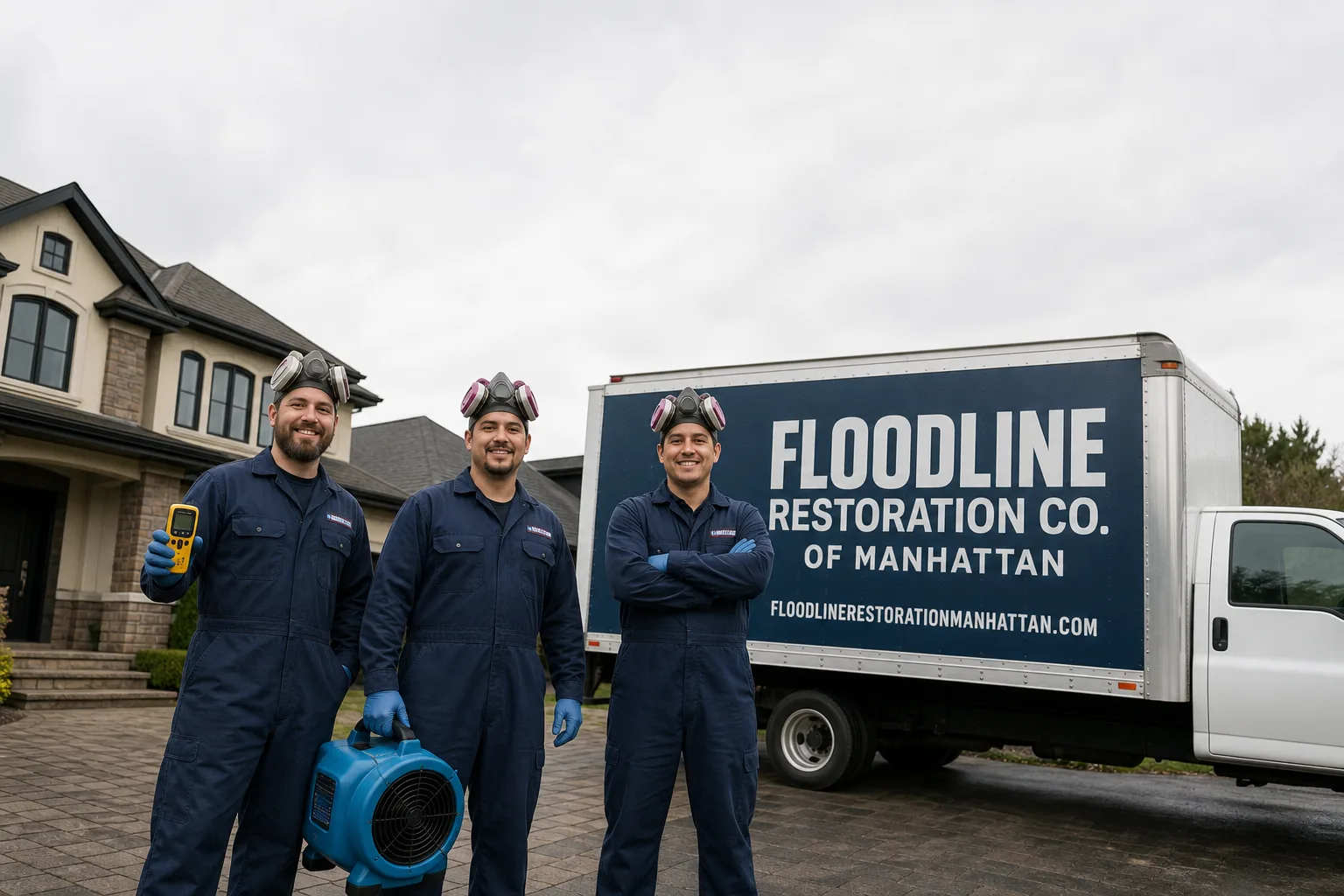
Free visual inspection and a written scope of work before any mitigation begins - photos, moisture readings, and drying logs go in your claim file
The scope we write is the scope we bill. Anything new gets shown to you, in writing, before we touch it.






 Before
 After
After Before
 After
After Before
 After
After24/7 Emergency Water Damage Restoration in Sunnyside
Water damage restoration in Sunnyside typically runs $2,800 to $9,500 depending on the source and extent of the loss, and we can have a certified crew on-site within 45 minutes, any hour of any day. Whether it’s a January steam-pipe failure in a Sunnyside Gardens row house, a sewer backup on Skillman Avenue, or a roof leak in a pre-war walk-up off Queens Boulevard, call (917) 924-4221 and a live dispatcher answers. Not a recording. The first hour decides how much of your home can be saved rather than stripped and rebuilt. Our team extracts, maps moisture, and starts drying the same visit.
We’re Floodline Restoration Co. of Manhattan. We work in Sunnyside every week, and we know what failure looks like in the attached brick row houses, the 1920s plaster-and-lath walls, and the low-lying basement floors along Greenpoint Avenue and Barnett Avenue. The line the water left on the wall is where we start. The work that follows is documented, direct-billed to your insurer, and backed by our 90-Day Done Right Promise in writing.
Understanding Water Damage Restoration Severity in Sunnyside Properties
Water damage lands in one of three categories, and the differences matter more in Sunnyside than almost anywhere else because of how old these buildings are and how close they sit to one another. Category 1 is clean water from a supply line or radiator. Category 2 is gray water, meaning it carries contaminants from a washing machine, dishwasher, or a slow pipe leak that has been brewing in a wall cavity. Category 3 is blackwater: sewage, stormwater that came up through the combined sewer system, or any standing water left beyond 48 hours. In Sunnyside, Category 3 is the routine kind because this part of western Queens sits low and flat, and heavy rain backs up NYC’s aging combined sewer into basements on streets like 43rd and 45th Avenue.
Any restoration plan starts with moisture mapping before a wall is opened. In 1920s and 1930s row houses, water hides in the uninsulated cavity between plaster and brick. The plaster looks fine. The back side of it is wet. Our crews use thermal imaging and penetrating moisture meters to find that hidden load. Structural drying in a Sunnyside party-wall assembly is slower than in a modern framed house. Brick holds moisture, and heat from steam radiators in an adjoining unit can keep reintroducing vapor into the cavity. That’s why we log daily readings and do not call a room dry until the dry standard is met, not when the carpet feels dry to the hand.
Why Sunnyside Property Owners Choose Floodline Restoration Co. of Manhattan
- 45-minute response commitment. When you call, a crew in the Sunnyside area is dispatched immediately. On a January pipe freeze, we know 45 minutes is the difference between one wall and three rooms.
- 24/7 live answer, always. A real person picks up at 2 a.m. Not an answering service, not a call-back queue. That’s how Floodline has run since Curt Bowman founded it in 2010 around a dispatch board, not a sales desk.
- IICRC-certified crews. Our technicians hold WRT (Water Restoration Technician) and OSHA-site safety credentials, and the field leads carry the extra training needed for structural drying on historic assemblies.
- Free visual inspection. Before any money changes hands, we walk the loss with you, map the moisture, and write a scope. No surprises on the bill.
- Direct insurance billing. We bill your carrier directly, and we do the talking with the adjuster. You never carry messages between us and your insurer.
- One team, extraction to reconstruction. The same flood-certified crew that sucks out the water on day one handles the daily drying readings, the drywall, and the finish carpentry. No mid-job handoff.
Our Water Damage Restoration Process
Inspection & Assessment
We walk the property with a thermal camera and moisture meter, checking not just the visible stain but the cavity behind the plaster. In Sunnyside, we also check the shared party wall on both sides. You get a written scope before any work starts.
Extraction & Stabilization
We use truck-mounted and portable extraction units to pull standing water. For a basement sewer backup on 45th Avenue, extraction is the difference between Category 3 contamination in one room or the whole ground floor.
Drying & Dehumidification
Air movers from Dri-Eaz and Phoenix, dehumidifiers sized to the cubic footage, and Injectidry panels for cavity drying behind plaster and tile. Daily moisture readings logged until the dry standard is met, with a copy for you and your insurer.
Cleaning & Sanitization
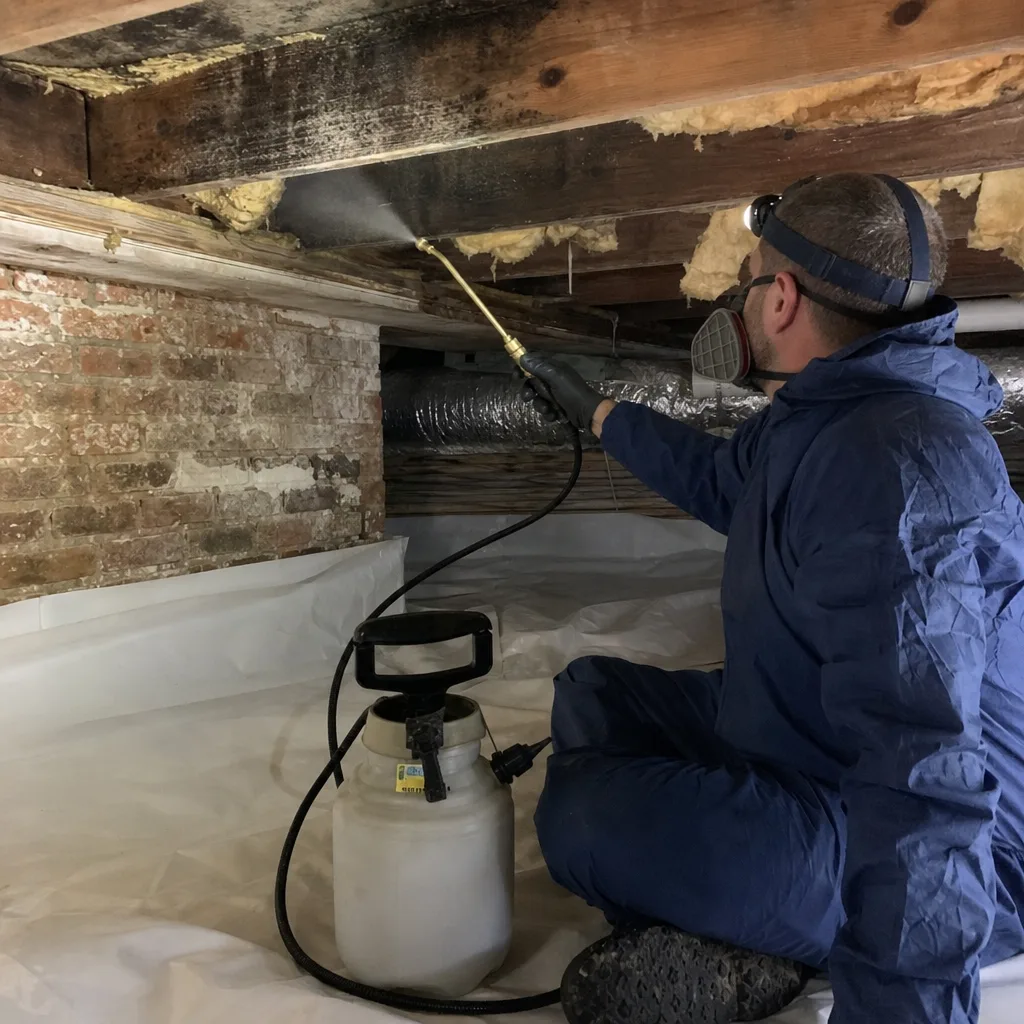
HEPA vacuuming, antimicrobial application, and air scrubbing where the water category calls for it. For Category 3 losses, we set up containment before we move any material so spores do not reach the living space.
Historic-Material Assessment
This is the Sunnyside-specific step. Before opening any wall in a 1920s-1940s building, we confirm asbestos content in the plaster and lead paint on trim, and we file for LPC approval when the building sits in the Sunnyside Gardens Historic District.
Repairs & Restoration
Once the structure is dry, our same crew hangs new drywall, rebuilds lath and plaster for historic applications, replaces trim, and repaints. The 90-Day Done Right Promise covers the whole job, from extraction through final coat.
Need Emergency Water Damage Restoration in Sunnyside Now?
Crews minutes away, answering live 24 hours a day. The sooner we start, the less it costs.
Working With Your Insurance Company
We document the loss from the first hour and hand the carrier a complete file: photos before we touch anything, moisture readings on day one and every day after, the drying log, and a line-item scope with no lump sums. When the adjuster has questions, we answer them directly. If your policy includes code upgrade or ordinance-and-law coverage, we flag that for the claim. In Sunnyside, where LPC review can add delay to a rebuild, that clause often means the difference between a full restoration and a partial one. You do not manage this process. We do it with you, alongside the carrier.
What We Provide Your Insurer
- Thorough documentation of the loss
- Photos of all damage, room by room
- Moisture readings and drying logs
- A detailed, line-item scope of work
- Direct coordination with your carrier
Built for Sunnyside’s Loss Calendar
Sunnyside gets hit with the same four or five patterns every year, and a competent restoration shop knows the calendar. January and February bring deep freezes that split cast-iron supply lines in unheated pre-war basements and along exterior walls. Steam radiator systems in the 1920s-1940s housing stock add their own failure mode: when a radiator pipe lets go on the second floor of a row house, it puts water through the floor and into the unit below. March and April bring snowmelt and spring rain, and ground floors near the low-lying blocks around Skillman Avenue start seeing seepage. July and August are thunderstorm season, and nothing floods a western Queens basement faster than a two-inch rain in ninety minutes when the combined sewer is already backed up. September through November bring nor’easter-driven roof leaks on flat-roofed brick buildings, especially where gutters and drains were not cleaned. We plan our equipment staging around this calendar, and we dispatch to Sunnyside knowing what month it is and what is likely failing that week.
Water Damage Restoration Across Sunnyside’s Neighborhoods
Sunnyside is not one building type, and the work changes block by block. The heart of the neighborhood, the Sunnyside Gardens Historic District, runs roughly between 39th and 50th Streets, south of Skillman Avenue. This is the 1920s planned community of attached row houses with shared masonry party walls and interior courtyard drainage. A burst pipe on one side of a party wall is almost never contained to one property, and exterior work faces NYC Landmarks Preservation Commission review, which means planning restoration time around an LPC calendar, not just a drying schedule. North of Queens Boulevard, between the elevated 7 line and the Sunnyside Yard, are the four-to-six-story walk-up apartment buildings from the same 1920s-1940s era, with cast-iron stacks, plaster-over-lath walls, and basement boiler rooms. South of the Boulevard, you find the smaller brick attached houses, some with converted basements that flood from the rear yard slope during heavy rain. Along Skillman Avenue and 43rd Avenue, the ground-floor commercial spaces share walls with residential units above, so a burst overhead pipe in a storefront sends water down into the apartments. We route our crews to all of it.
Specialized Water Damage Restoration Services We Offer in Sunnyside
Emergency Water Extraction
Standing water in a Sunnyside basement or a second-floor hall needs to be gone within the first hour, and not with a shop vac. Our truck-mounted extraction pulls hundreds of gallons out the same visit. We get to the sewer backups on the low blocks near Greenpoint Avenue and the pipe failures in the row houses fast, because every extra hour pushes the loss category upward and the rebuild cost with it.

Structural Drying & Dehumidification
Extraction only removes what is standing. The real damage in a 1920s row house is the moisture now held inside the brick party wall and the uninsulated plaster cavity. We run Dri-Eaz and Phoenix air movers, low-grain dehumidifiers, and Injectidry panels that pull air physically through wall cavities without gutting the plaster. That matters in Sunnyside because you cannot just strip every wall to the studs: in the historic district you may need LPC approval to open one, and in any pre-war building you have to contend with asbestos and lead-paint rules.

Flood Cleanup
When heavy rain overtakes the combined sewer system, Sunnyside basements take in blackwater, not stormwater. That means Category 3 contamination: pathogen risks, containment before material removal, antimicrobial treatment, and disposal governed by IICRC standards. We set up containment and run HEPA air scrubbers while we work, and we document every phase for your carrier. You should not be doing this cleanup yourself. The contamination is not visible, but it is real.

Burst Pipe Restoration
A cold-January freeze splits the old cast-iron supply line in a pre-war basement, or a radiator valve on a top floor fails while everyone is at work. Either way, the outcome is the same: water moving downward and sideways into shared walls and floors. We shut off the source, extract, map the migration path across the party wall, and set up drying before mold can take hold. The earlier we start, the less of the wall comes down.
Basement Water Removal
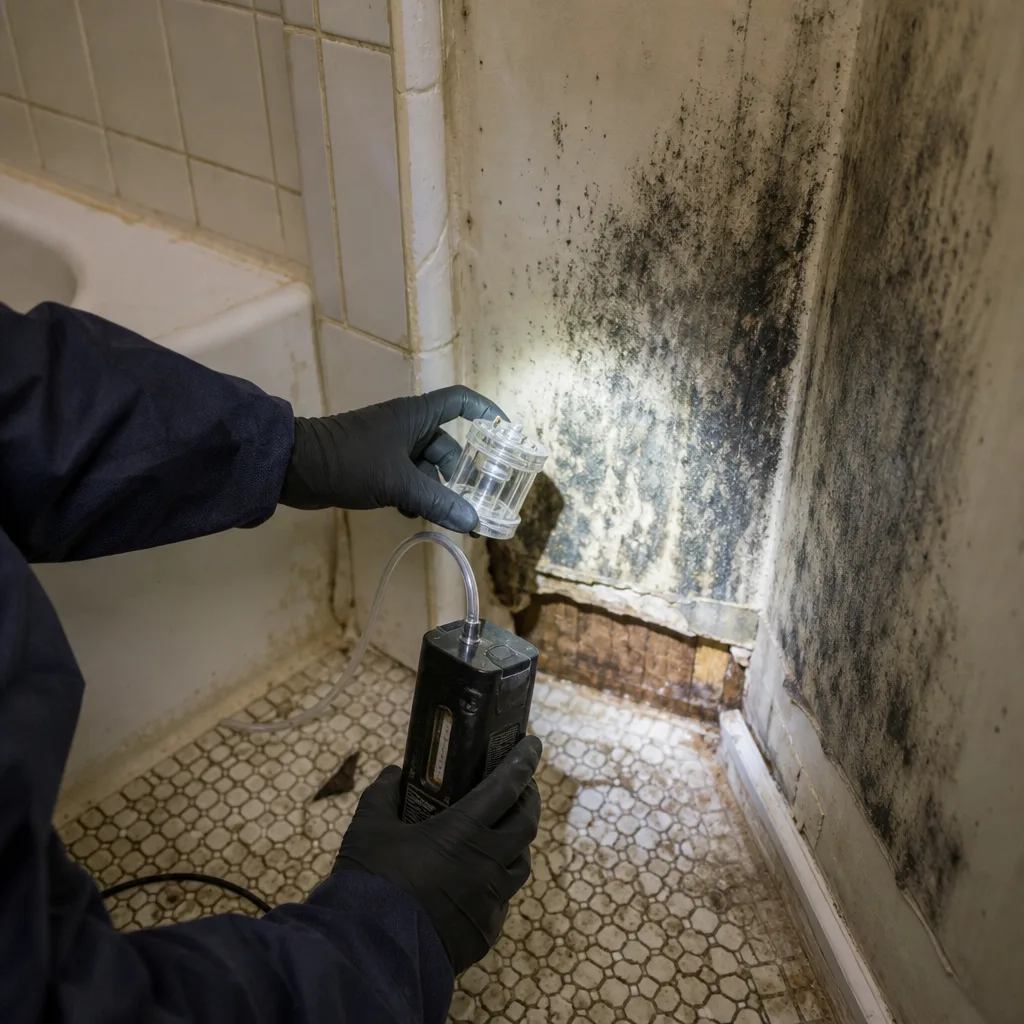
Basements in Sunnyside run the gamut from dirt-floor crawl spaces under 1920s row houses to finished rental units in converted buildings. When the water comes up through the floor drain during a storm, that’s blackwater and needs full remediation. When it comes from a water heater failure, it’s Category 1 and often recoverable. We assess the source, the water category, and the finish level of the space before writing the scope.
What happens when you call
- 1
A real person answersNo phone trees - you reach a local pro.
- 2
You get an upfront price rangeHonest numbers before anyone is dispatched.
- 3
A background-checked tech heads outLicensed & insured, dispatched right away.
- 4
You approve before work beginsNothing starts until you say go.
Water Damage Restoration Costs in Sunnyside, NY
What you’ll actually pay depends on the water category, the square footage, and how deep the moisture went into your walls. Here’s the Sunnyside range as we see it on real jobs:
- Emergency water extraction, single room: $800 - $1,800
- Structural drying, full basement (600-900 sq ft): $2,200 - $4,500
- Category 3 blackwater sewer backup remediation: $4,500 - $9,500, including containment, disposal, and antimicrobial treatment
- Party-wall cavity drying in a Sunnyside Gardens row house: $1,800 - $3,800, depending on how many adjoining units are involved
- Linoleum or tile floor removal with water damage, per room: $400 - $1,100
Most of these jobs are covered by a standard homeowners policy, and we bill the carrier directly. The out-of-pocket piece is usually just the deductible. Call (917) 924-4221 and we’ll do a free visual inspection, map the moisture, and put a firm number in writing before any work begins. That’s the square deal: no surprises on the bill, whether insurance is paying or you are.
We Also Serve Cities Near Sunnyside
Our crews run restoration calls in Sunnyside and the surrounding neighborhoods every week, including Long Island City, Woodside, Maspeth, and Astoria. If your property sits on the border or you have family nearby, the same live-answer dispatch and direct insurance billing applies. Our Water Damage Restoration team covers the full cycle from extraction to rebuild across the whole area.
Serving Sunnyside, NY - Our Local Coverage Area
We’re based in the Sunnyside area and know this community well. Use the map below to see our service coverage - if you’re nearby, we can almost certainly help.
Sunnyside Water Damage Restoration Questions, Answered
How do you handle water damage that spreads through the shared party walls of attached row houses in Sunnyside Gardens?
We moisture-map both sides of the party wall and establish communication with the adjoining owners early. On a job last winter on 39th Avenue, a steam-pipe failure saturated a shared brick party wall and Category 2 water wicked into the adjoining unit’s plaster-over-lath wall within hours. We used Injectidry panels to dry the cavity without opening finished walls, and we scheduled daily readings across three owners’ units. The key is treating the wall as a shared assembly, not a property line. If your neighbor is slow to respond, we document that and coordinate with the carrier so the claim does not stall.
What special permits or reviews are required for water damage restoration in the Sunnyside Gardens Historic District?
Any exterior repairs, and any interior work that alters protected fabric, may require review and approval from the NYC Landmarks Preservation Commission. That includes opening a landmarked party wall, replacing windows, or modifying exterior drainage. We file the paperwork and sequence the rebuild so drying is not held up while LPC review runs its course. Plan for that review to add time, especially when the building is one of the original Clarence Stein and Henry Wright row house groups.
Why does basement flooding in Sunnyside during heavy rain often involve Category 3 blackwater instead of just stormwater?
Sunnyside sits low and flat in western Queens, and when heavy rain hits, NYC’s combined sewer system surcharges and sends sewage-tainted water up through floor drains. That is Category 3 blackwater by the IICRC definition, requiring full containment, antimicrobial treatment, and controlled disposal. Treating it like stormwater is a mistake. We set up negative-air containment and run HEPA scrubbers while we work, and we document everything for the carrier. Call (917) 924-4221 if you’re standing in it now.
How quickly can mold start in a Sunnyside row house after a hidden pipe leak behind plaster walls?
In 48 to 72 hours, and quicker when a steam radiator on the same wall is still running. Warmth plus moisture equals germination. In a 1920s row house, the hidden leak behind plaster gives mold exactly what it wants: dark, unventilated, and damp. By the time a stain shows on the paint, the colony under the surface has usually been there for a week or more. That’s why we do not trust visual dryness. We trust the moisture meter.
Do you need to test for asbestos before opening plaster walls in 1920s-1940s Sunnyside buildings?
Yes. Plaster installed before the 1980s often contains asbestos fibers, and the lath system itself is often covered in lead paint. NYC regulations require testing before any demolition or wall opening that disturbs those materials. We confirm the test, file the abatement if needed, and do not open a wall in a pre-war Sunnyside building until that is settled. It protects you and our crew, and it keeps a stop-work order from landing on your door.
How fast can you get to my house in Sunnyside?
We commit to a 45-minute response inside the Sunnyside area. A live dispatcher answers the phone at any hour, and the nearest certified crew is directed to you immediately. In the middle of the night on a winter freeze, that is the difference between one soaked room and a three-unit party-wall claim.
Can I stay in my home during water damage restoration?
It depends on the water category and the floor plan. Category 1 losses in a contained area are often compatible with staying. Category 3 blackwater losses require containment and sometimes vacating the affected rooms until antimicrobial treatment is complete. We are clear about this on the first visit, not after the work starts.
What should I do in the first 30 minutes after discovering water damage in my Sunnyside home?
Shut off the water source if you can reach it safely. Then call (917) 924-4221. Do not enter standing water if there is any chance it came up through a drain. Do not run your own fans or try to dry wet plaster with heat. Do not move affected materials into another room. Our team will guide you through the first hour on the phone and then show up in person. That first call is the cheapest thing you’ll do all day.
Written by Curt Bowman, Owner at Floodline Restoration Co. of Manhattan, answering to a live dispatcher and a 90-Day Done Right Promise on every job in Sunnyside.