

Free visual inspection and a written scope of work before any mitigation begins - photos, moisture readings, and drying logs go in your claim file
The scope we write is the scope we bill. Anything new gets shown to you, in writing, before we touch it.






 Before
 After
After Before
 After
After Before
 After
After24/7 Emergency Water Damage Restoration in Throggs Neck
Water damage restoration in Throggs Neck typically costs between $900 and $4,200, with most basement flood events in the neighborhood running $1,800 to $2,800 after insurance adjustment. Our crews reach Throggs Neck homes within 45 minutes of your call, any hour, any day. Call (917) 924-4221 and a live dispatcher picks up. Not a recording. Not a call-back service. A person who knows which crew is closest to Pennyfield Avenue right now.
The first hour after water enters a Throggs Neck basement matters more than most homeowners realize. Brackish water from Throggs Bay wicks upward through drywall at roughly an inch per hour in the first 24 hours. Wood framing behind 1940s plaster walls starts absorbing that salt water immediately. The faster extraction starts, the less demolition you’re looking at. In Harding Park, where original 1930s framing is common, a two-hour delay can mean the difference between drying out sheathing and replacing entire sill plates.
Understanding Water Damage Restoration Severity in Throggs Neck Properties
Water damage gets classified into three categories, and in Throggs Neck the distinctions matter more than most places. Category 1 is clean water from a burst supply line or failed water heater. Category 2 carries contaminants, like washing machine overflow or sump pump discharge. Category 3 is grossly contaminated water: East River storm surge, Throggs Neck Bay backflow, sewage-tainted sewer backups. That last category is the one we see most often in this neighborhood, and misclassifying it is a serious error. A contractor who treats Category 3 floodwater like Category 2, skipping proper containment and antimicrobial treatment, risks cross-contaminating the entire home.
Throggs Neck’s housing stock makes this worse. The post-WWII brick and wood-frame homes built between the 1940s and 1960s almost all have finished basements. Those basements sit below grade on a peninsula with a high water table, so hydrostatic pressure pushes water through foundation cracks and cove joints during every significant storm. The bungalows in Harding Park, some dating to the 1920s and 1930s, have shallower footings and drainage systems that were never engineered for modern storm-surge levels. Moisture mapping in these structures requires more probes and longer drying windows than a typical inland Bronx job.
Why Throggs Neck Property Owners Choose Floodline Restoration Co. of Manhattan
- 45-minute response commitment. Crews dispatch from near the neighborhood, not from another borough. We know the Hutchinson River Parkway bottlenecks and the Cross Bronx delays, and we route around them.
- Live answer, 24/7, every single call. A dispatcher picks up at 2 a.m. the same way they do at 2 p.m. You tell us what happened, we tell you who’s coming and when they’ll arrive.
- IICRC-certified crews. Our technicians hold WRT (Water Restoration Technician) and ASD (Applied Structural Drying) certifications. We know the dry standard, and we hit it, with logged readings to prove it.
- Free visual inspection. A technician walks the damage, explains what he sees in plain language, and gives you a written scope before any work starts. No pressure, no upselling.
- Direct insurance billing. We deal with the carrier, the adjuster, and the FEMA paperwork. You don’t play messenger. You get the 90-Day Done Right Promise in writing.
- One team from first extraction to final trim. The crew that pulls the water is the crew that re-hangs the drywall. No mid-job handoff, no inherited strangers, no lost information.
Our Water Damage Restoration Process
Inspection & Assessment
We arrive, walk the property, and start with eyes and a thermal imaging camera. In Throggs Neck homes we check for salt-corrosion on electrical panels before anything else. Then we map moisture levels across every affected surface using hygrometers and penetrating probes, identifying hidden pockets behind 1940s plaster walls and under vinyl flooring.
Extraction & Stabilization
Dri-Eaz submersible pumps and truck-mounted extraction units pull standing water fast. In Harding Park bungalows with narrow stairwells and tight basements; we use smaller extraction wands and portable units to reach what big equipment can’t. Stabilization includes shutting off compromised circuits and isolating contaminated water with containment barriers.
Drying & Dehumidification
Phoenix low-grain refrigerant dehumidifiers run alongside XPOWER air movers positioned to create negative pressure that draws moisture out of wall cavities and under flooring. We take daily readings, adjust equipment placement, and log everything. The dry standard isn’t a guess; it’s a number we prove with documentation.
Cleaning & Sanitization
Category 3 water demands more than drying. We apply EPA-registered antimicrobials to prevent mold colonization, run HEPA air scrubbers to capture particulates, and dispose of contaminated porous materials like wet insulation and carpet pad. In saltwater events, we wipe down metal surfaces and treat exposed framing for corrosion.
Specialty Assessment for Salt Exposure
Throggs Neck’s salt-air environment means floodwater is rarely the whole story. We inspect sill plates for salt saturation, check anchor bolts for corrosion, and open electrical panels that look fine from the outside. If we find salt-damaged wiring or compromised fasteners; it’s written into the scope with photos, not discovered later behind fresh drywall.
Repairs & Restoration
The same crew rebuilds what came out. Drywall, trim, flooring, base cabinets, whatever was lost. The job isn’t done until the space is back to pre-loss condition and the moisture log is in your hand. That’s the standard, and it’s backed by the 90-Day Done Right Promise, in writing, no arguing.
Need Emergency Water Damage Restoration in Throggs Neck Now?
Crews minutes away, answering live 24 hours a day. The sooner we start, the less it costs.
Working With Your Insurance Company
Insurance claims in Throggs Neck carry extra weight, because so many properties sit inside FEMA flood zones. If your policy includes NFIP coverage, the adjuster will need documentation that meets federal standards, not just a contractor’s word. We’ve handled hundreds of these files. From the first hour, we photograph every damaged surface, log moisture readings daily, and build a line-item scope of work that matches industry-standard estimating software. Our team communicates directly with your adjuster, sends documentation to your carrier, and answers their questions so you don’t have to. If FEMA’s Increased Cost of Compliance program applies to your claim, we’ll walk you through what that means for your rebuild. The claim moves faster when the paperwork is airtight from day one.
What We Provide Your Insurer
- Thorough documentation of the loss
- Photos of all damage, room by room
- Moisture readings and drying logs
- A detailed, line-item scope of work
- Direct coordination with your carrier
Built for Throggs Neck’s Loss Calendar
Throggs Neck doesn’t have one flood season. It has several, and they hit differently. January and February bring deep freezes that burst supply lines in uninsulated crawl spaces and exterior-wall plumbing, a pattern we see repeatedly in 1940s and 1950s brick homes along East Tremont Avenue and the side streets running down toward the water. March and April bring thaw and spring rain, which saturate the clay-heavy soil and push groundwater through foundation cracks and floor drains, flooding finished basements that stayed dry all winter. Summer thunderstorms dump two inches in an hour, and because the peninsula drains slowly, street water backs up into basements through floor drains and sump pits. Then come the nor’easters, usually between October and December, funneling down the East River and pushing Eastchester Bay water over bulkheads in Harding Park and along Pennyfield Avenue. We staff and stock equipment accordingly, so when the inevitable hits, we’re already minutes from your door.
Water Damage Restoration Across Throggs Neck’s Neighborhoods
Throggs Neck isn’t one uniform grid. The response routes and loss patterns change block by block. Harding Park, sitting low on its sheltered spit, floods during coastal events when the bay rises and drains slowly, leaving brackish water standing in bungalow basements for hours. The streets off Pennyfield Avenue and Schurz Avenue slope down toward the water, so storm surge and heavy rain both collect at the bottom of the grade. Homes along East Tremont Avenue and around the Throggs Neck Shopping Center deal with different problems: older cast-iron sewer laterals that crack under temperature swings and let groundwater infiltrate the line. Up near the bridge, the housing stock shifts toward larger brick homes from the 1950s and 1960s, where finished basements with paneled walls trap moisture behind vinyl and create hidden mold conditions that go unnoticed until a musty smell gives it away. We’ve worked every one of these blocks, and we know which failure mode to expect before we even ring the bell.
Specialized Water Damage Restoration Services We Offer in Throggs Neck
Emergency Water Extraction
Standing water in a Throggs Neck basement gets worse by the hour. We arrive with truck-mounted and portable extraction equipment sized for the job, whether it’s a finished basement off a tight Harding Park alley or a full sub-level in a larger brick home near Baisley Avenue. Category 3 floodwater gets extracted under containment protocols, never just pumped out and forgotten.
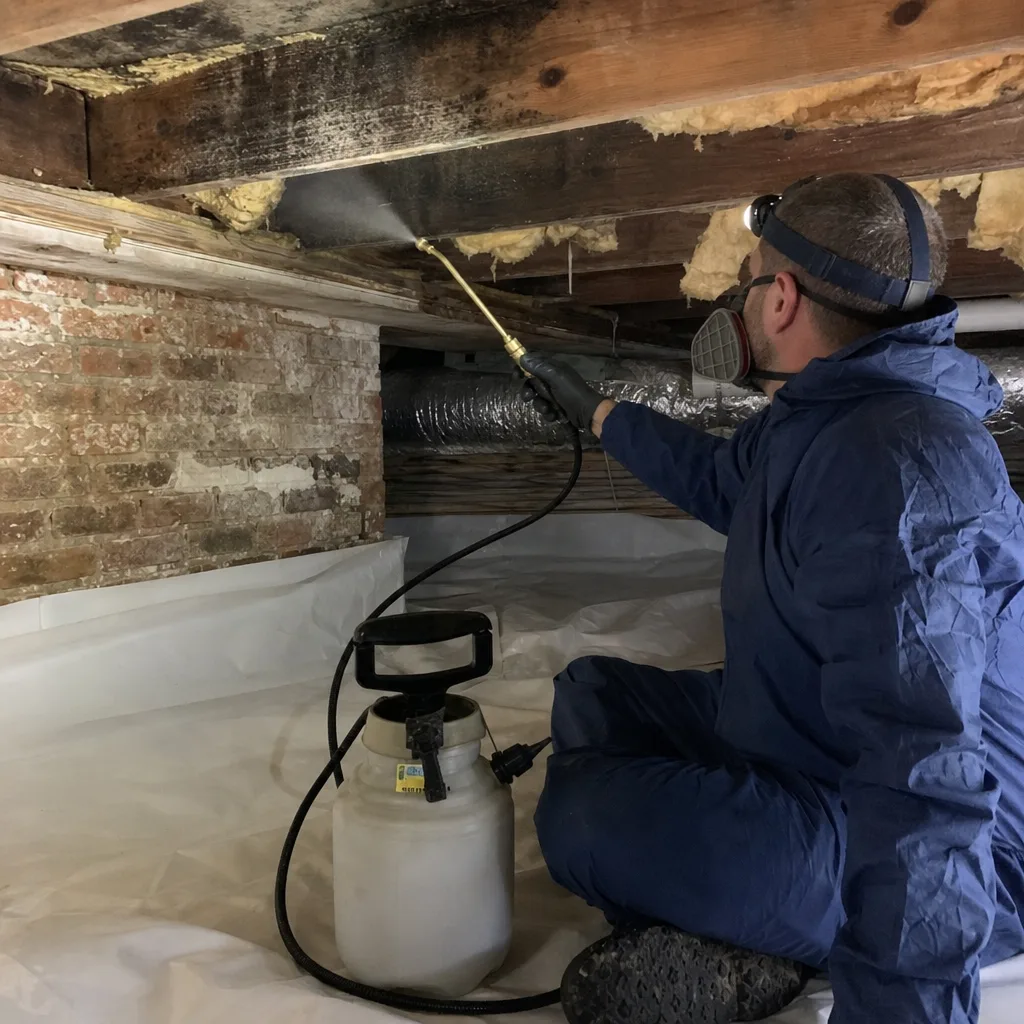
Structural Drying & Dehumidification
Extraction is only the first step. Phoenix dehumidifiers and XPOWER air movers run around the clock, pulling moisture from wall cavities, subflooring, and framing. In Throggs Neck’s older homes, where plaster walls hold water stubbornly, we extend drying times rather than rush the process. Daily readings document progress until we hit the dry standard.
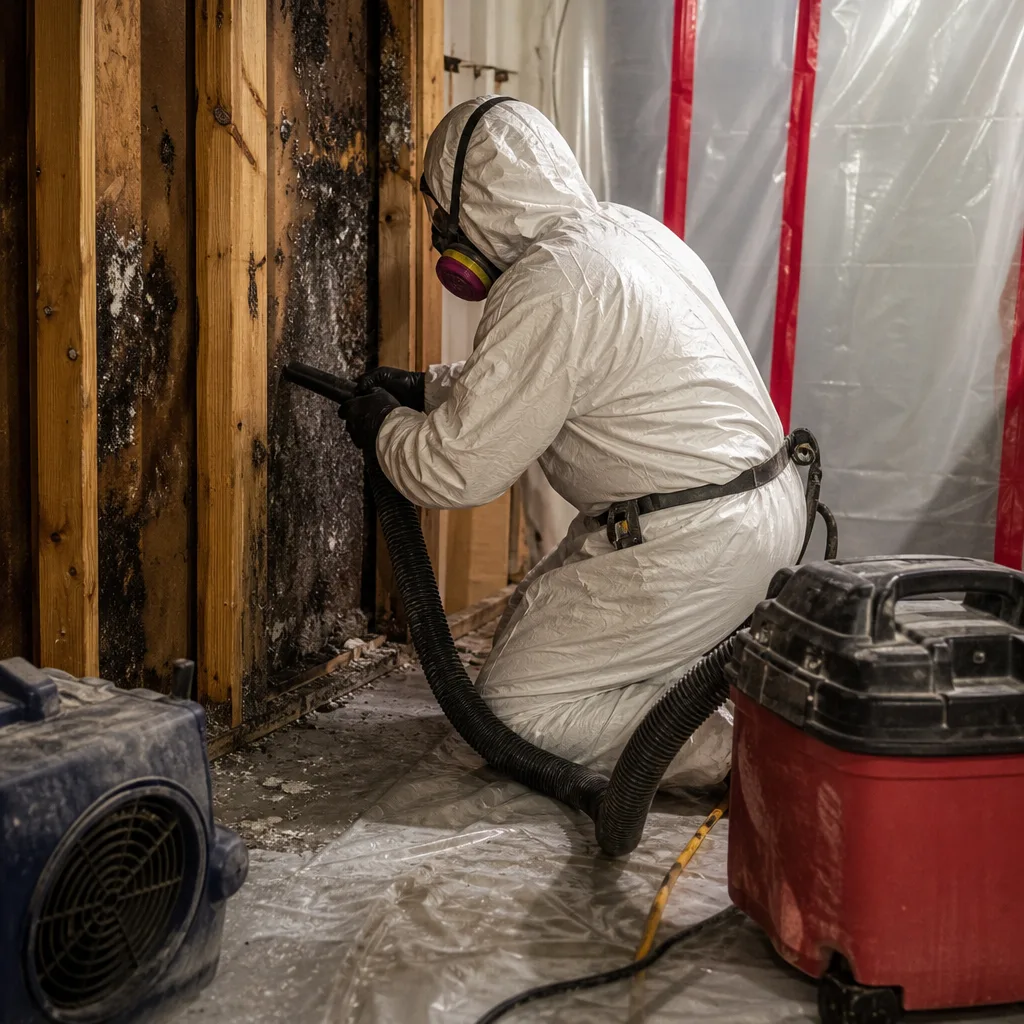
Flood Cleanup
When Throggs Bay or Eastchester Bay water enters a home, it carries salt, silt, and sewage. We remove contaminated materials, sanitize hard surfaces, and treat exposed framing with antimicrobial agents. Saltwater poses a special corrosion risk we address specifically, checking electrical panels, outlets, and fasteners throughout the affected area.
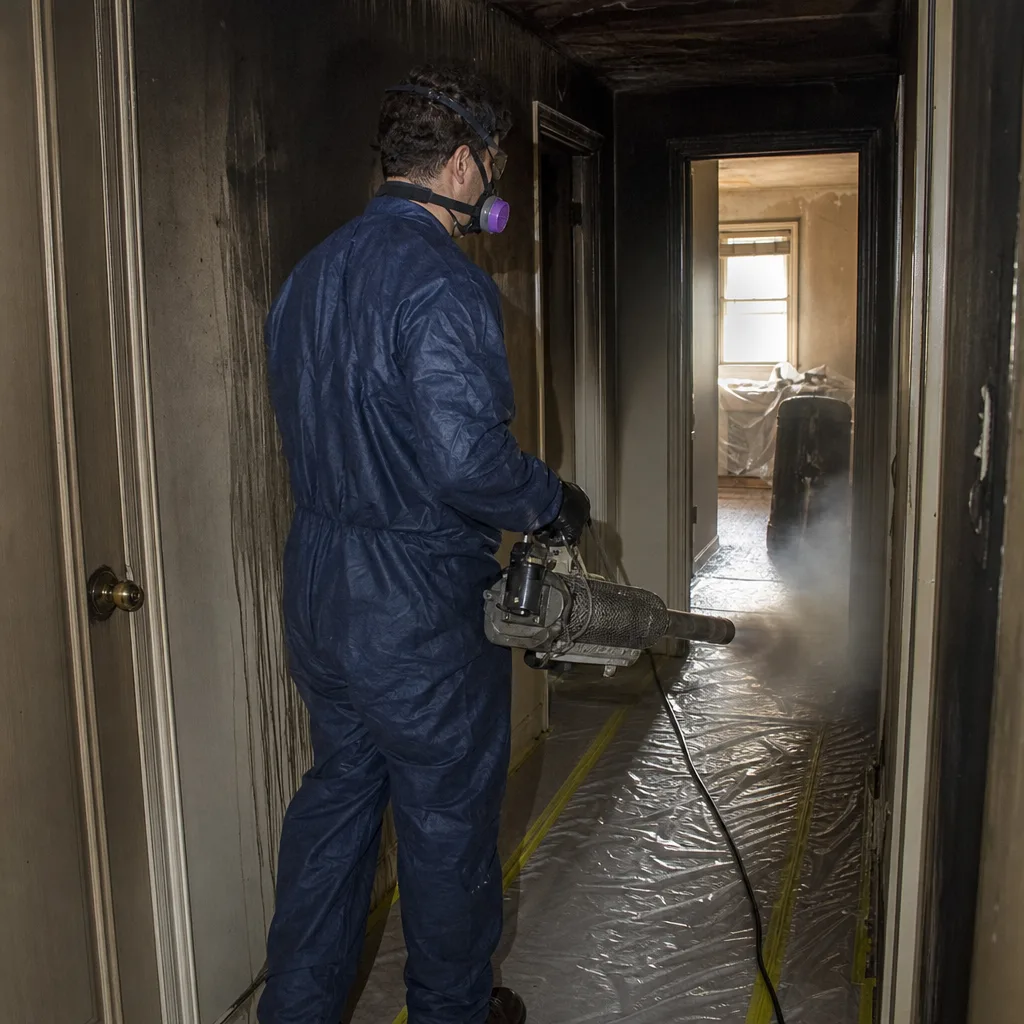
Burst Pipe Restoration
A ruptured supply line in a Throggs Neck home sends Category 1 water through walls and ceilings fast, and because many homes still have original 1950s plumbing, the failures cluster in winter. We stop the source quickly, extract the water, dry the structure, and repair the pipe. The goal is getting you back in the room, not camping out in a hotel.
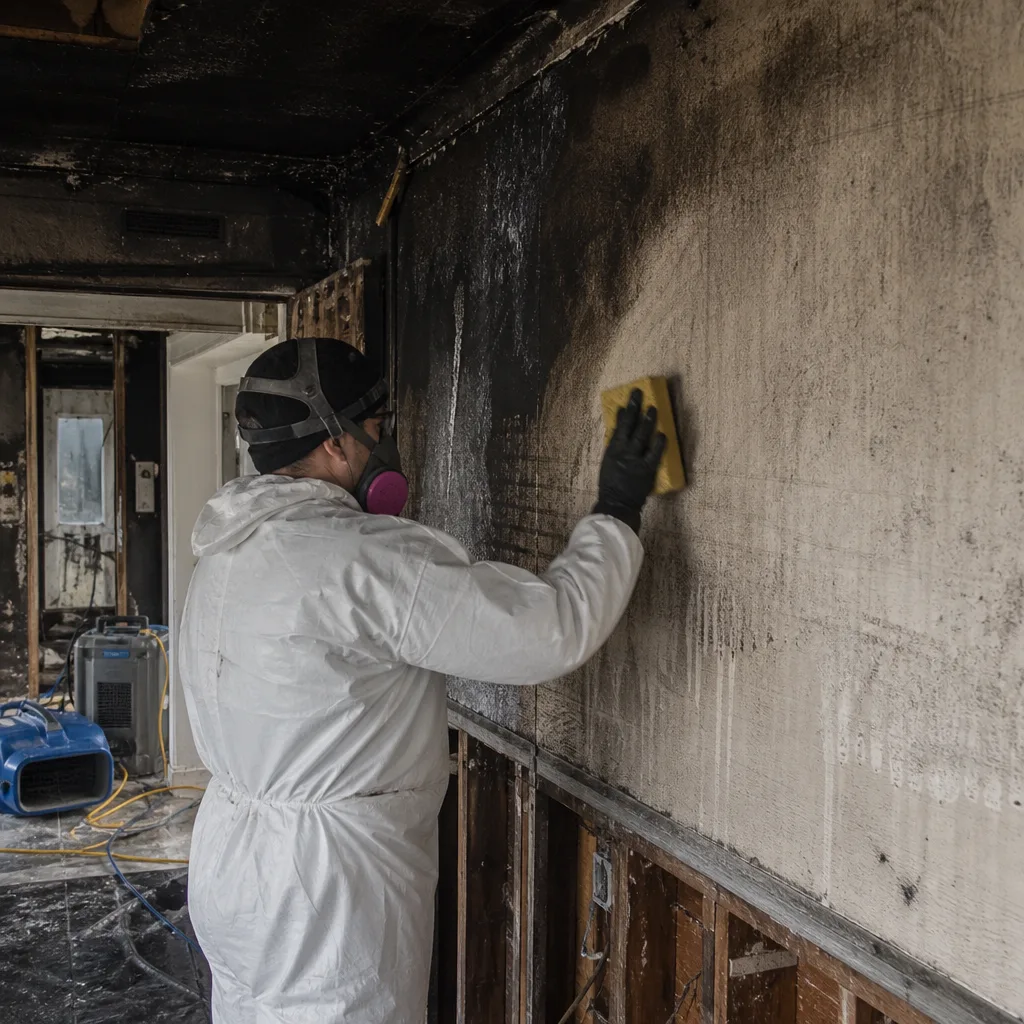
Basement Water Removal
Basement flooding is the most common call we answer in Throggs Neck, and it’s the one where fast response matters most. Finished basements with drywall, carpet, and furniture suffer irreversible damage in days, not weeks. We remove the water, strip what can’t be saved, dry what can, and give you a written scope for restoration before any rebuild begins.
What happens when you call
- 1
A real person answersNo phone trees - you reach a local pro.
- 2
You get an upfront price rangeHonest numbers before anyone is dispatched.
- 3
A background-checked tech heads outLicensed & insured, dispatched right away.
- 4
You approve before work beginsNothing starts until you say go.
Water Damage Restoration Costs in Throggs Neck, NY
A typical basement water removal job in Throggs Neck runs $900 to $2,200 when it’s clean Category 1 water and extraction starts within hours. Flood cleanup involving Category 3 water, containment, and antimicrobial treatment generally lands between $2,500 and $5,000. Full structural drying with equipment placement for five to seven days adds another $1,200 to $2,800 depending on square footage and how much demolition is needed. Repair work, which might include drywall, flooring, trim, and paint, varies widely by finish level: a basic basement re-drywall runs $3,500 to $7,000; a full custom restoration with cabinetry and flooring can exceed $15,000.
What moves the price most in Throggs Neck? Water category, square footage affected, how long the water sat, and whether salt exposure requires panel or fastener replacement. Many of our jobs are covered substantially by insurance, especially NFIP flood claims in the AE and VE zones. If you’re paying out of pocket, we wrote the scope in plain language before work starts and you sign off on a number. No surprises on the back end. Call (917) 924-4221 for a free inspection and firm estimate, or read more about how our Water Damage Restoration team handles full-cycle recovery from first extraction to final trim.
We Also Serve Cities Near Throggs Neck
Our crews answer calls across the southeastern Bronx and into lower Westchester. Beyond Throggs Neck, we regularly serve property owners in Fairview, Harrison, East Bronx, and Hunts Point. If you’re nearby and water’s rising, call. We’ll route the nearest available crew to you.
Serving Throggs Neck, NY - Our Local Coverage Area
We’re based in the Throggs Neck area and know this community well. Use the map below to see our service coverage - if you’re nearby, we can almost certainly help.
Throggs Neck Water Damage Restoration Questions, Answered
What FEMA paperwork should I have ready for water damage restoration in Throggs Neck?
If your home sits in a FEMA AE or VE flood zone, keep your NFIP policy declaration page, your Elevation Certificate if you have one, and any prior claim correspondence in one folder. We’ll document everything from the first visit and provide the mitigation report, drying logs, and photo records your carrier and FEMA will request. If an Increased Cost of Compliance claim applies, we’ll help you understand what retrofitting or elevation work might be covered. Call (917) 924-4221 and we’ll walk you through what to gather.
Does saltwater flooding in Harding Park require different restoration than a standard burst pipe?
Yes, substantially different. Saltwater from Throggs Bay or Eastchester Bay is corrosive, and it carries contaminants that classify it as Category 3 water. Beyond extraction and drying, saltwater restoration requires treating framing with corrosion inhibitors, inspecting electrical panels and wiring for salt damage, and checking anchor bolts and sill plates. Homes that skip this step often hide corrosion behind new drywall until it becomes a fire hazard or a structural failure. We specifically check for these conditions on every Harding Park flood job.
My finished basement flooded from a sewer backup during high tide. What category of water is that?
That’s Category 3 water, the most contaminated classification. Sewer-tainted water contains bacteria, viruses, and parasites. We treat it with full containment protocols, removal of contaminated porous materials, and EPA-registered antimicrobial application. If a contractor tries to treat it as Category 2, that’s a red flag, because it means you’re not getting proper sanitation and you’re risking cross-contamination of the rest of your home.
How do you handle limited street parking and tight alley access on Throggs Neck?
Throggs Neck’s narrow side streets and Harding Park’s tight alleyways are exactly why we send smaller crews with portable equipment when the job calls for it. We stage equipment efficiently, respect your neighbors’ driveways, and coordinate with you on access points. Our techs have worked these blocks enough to know where the challenges are, which is something a franchise crew from Manhattan often discovers on arrival.
Can wet drywall in a Throggs Neck basement be saved if it was only wet a few hours?
Sometimes, if the water was clean Category 1 and extraction starts within a couple of hours. Drywall wicks water upward quickly, and once it’s saturated above the baseboard line, it usually requires cutting out the bottom four feet and replacing it. In Throggs Neck’s older basements, drywall often sits directly against masonry, which slows drying and makes mold growth more likely. We’ll tell you honestly what’s salvageable after seeing it, and free inspection means that conversation costs you nothing.
How fast can someone actually get to my Throggs Neck house?
We commit to 45-minute response times for Throggs Neck addresses. Our crews stage from within the surrounding area, so even at 3 a.m. on a holiday, a live dispatcher picks up and a crew is rolling immediately. Delayed response on flood damage and burst pipes is where the bill doubles and the demo spreads. Call (917) 924-4221 now if water is rising.
What certifications do your water damage technicians hold?
Our field crews are certified to IICRC standards, including WRT (Water Restoration Technician) and ASD (Applied Structural Drying), and trained to RIA and IFA guidelines. Every technician is background-checked and uniformed. The person in your home at 2 a.m. carries the same credentials as the person who’d walk a job at noon on a Tuesday.
What should I do in the first 30 minutes after water appears in my Throggs Neck home?
First, shut off power to the affected area at the breaker if you can safely reach it without stepping in water. Second, call (917) 924-4221. Third, if it’s from a burst pipe, shut off your main water valve. Don’t use electrical outlets in the affected area, don’t run fans on wet wiring, and don’t attempt Category 3 water cleanup yourself. Get our crew en route, then move valuables upstairs if you can do so safely.
Floodline Restoration Co. of Manhattan dispatches crews into Throggs Neck around the clock from our New York City office. When the water’s rising in your basement, call (917) 924-4221. A live person answers. We’ll be there when we say. The line the water left is where we start.
Written by Curt Bowman, Owner at Floodline Restoration Co. of Manhattan, serving Throggs Neck and the Bronx since 2010.