
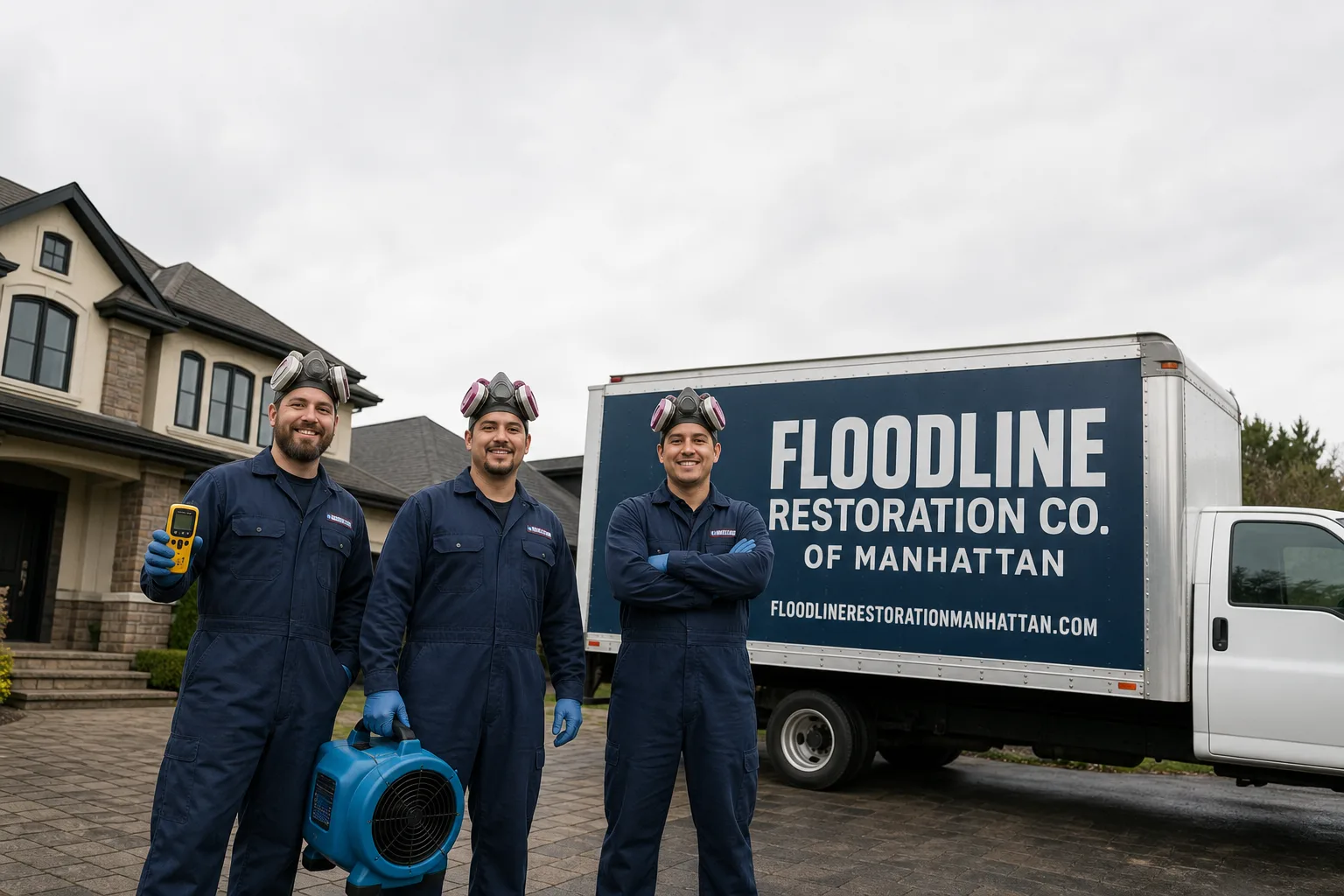
Free visual inspection and a written scope of work before any mitigation begins - photos, moisture readings, and drying logs go in your claim file
The scope we write is the scope we bill. Anything new gets shown to you, in writing, before we touch it.






 Before
 After
After Before
 After
After Before
 After
After24/7 Emergency Water Damage Restoration in White Plains
Water damage restoration in White Plains typically costs between $1,800 and $6,500 depending on how far the water traveled and what it soaked, and true emergency extraction is usually running the same day you call. Most of the work we handle in White Plains starts with a burst supply line, a failed water heater, or a roof leak that got into a ceiling cavity before anyone noticed. If you’re standing in water right now, call (917) 924-4221. A live dispatcher answers at two in the morning, not a recording, and a certified crew reaches your building fast enough that the water hasn’t finished migrating through walls and subfloor.
The first hour decides how much of your home has to be torn out. Water moves sideways through drywall, wicks up through baseboards, and follows wiring and pipe chases into rooms that never touched the original leak. In White Plains’s older towers and prewar homes, that migration is faster and harder to track, because original materials hide it. The sooner extraction starts, the less demolition you’re looking at. That’s why we run crews in the White Plains area around the clock, with a free visual inspection before any work begins.
Understanding Water Damage Restoration Severity in White Plains Properties
The water you’re looking at isn’t all the same, and the way we treat it depends on what category it falls into. Category 1 water is clean, usually from a supply line or a tub overflow. Category 2 carries some contamination, think washing machine discharge or an HVAC condensate line that’s been sitting. Category 3 is what we call grossly contaminated: sewage backup, river water from a Bronx River flood event, or storm water that’s run across pavement. Each category changes what gets removed and what can be dried in place.
In White Plains specifically, the building stock makes severity harder to assess from the surface. The city’s downtown high-rises, most built between the 1970s and 1990s, have drop-ceiling assemblies that hide a leaking riser or condensate line for weeks. By the time a tenant reports staining on a ceiling tile, the water has usually saturated the drywall above, run down inside the wall cavity, and crept into floor assemblies a floor or two below. The pre-WWII single-family neighborhoods like Battle Hill and the Highlands hide leaks differently: plaster walls hold water against lath, and cast-iron drains crack at the scale level, leaking slowly into wall cavities behind finishes that still look fine. We moisture-map with thermal imaging and pin-type meters before we ever touch a wall, because in White Plains the visible stain is rarely the full footprint.
Why White Plains Property Owners Choose Floodline Restoration Co. of Manhattan
- 45-minute response commitment for emergency calls in the White Plains area. We’ll be there when we say.
- 24/7 live answer. A real dispatcher picks up at any hour, every day. You’ll never wait on a call tree.
- IICRC-certified crews trained to WRT and ASD standards, with RIA and IFA continuing education. Uniformed and background-checked.
- Free visual inspection before you commit to anything. You’ll know what you’re dealing with, written down in plain English.
- Direct insurance billing. We document from the first hour and talk to your adjuster so you don’t have to play messenger.
- One team from extraction to reconstruction. The crew that reads the moisture map on day one is the crew that rebuilds the wall on day ten.
Our Water Damage Restoration Process
Inspection & Assessment
We start with moisture mapping across the affected area and the spaces below and beside it. Thermal imaging shows us where water has migrated inside wall cavities and under flooring. You get a written scope of work before any equipment goes in.
Extraction & Stabilization
Standing water is removed with professional-grade extraction units. We isolate the source, shut off water where needed, and set containment to keep water from spreading into dry rooms. This is the step that saves your floors and lower cabinets.
Drying & Dehumidification
Dri-Eaz and Phoenix air movers and dehumidifiers are set to a drying plan built from the moisture map. In White Plains towers with concrete decks and tight floor assemblies, we add Injectidry floor mats to pull water from carpet, pad, and hardwood. Daily moisture readings are logged until we hit the dry standard.
Cleaning & Sanitization
Every affected surface is cleaned and treated according to the water category. Category 2 and 3 losses get antimicrobial treatment on structural materials that can be saved. HEPA air scrubbers run during this phase where needed.
Mold Prevention Treatment
Before any drywall or trim goes back, we treat wall cavities and framing with a residual antimicrobial. In White Plains’s older plaster-and-lath homes, this is the step that keeps a hidden leak from becoming a mold problem six months later.
Repairs & Restoration
Once the moisture log shows the structure is dry, our same crew handles demo, drywall, paint, trim, flooring, and any rebuild work needed. You don’t get a handoff to an outside contractor you’ve never met.
Need Emergency Water Damage Restoration in White Plains Now?
Crews are minutes away and a live dispatcher answers 24 hours a day. The sooner we start, the less it costs.
Working With Your Insurance Company
Most water damage claims in White Plains are covered by homeowners or condo policies, but the difference between a smooth claim and a denied one usually comes down to documentation in the first 48 hours. We start documenting at the first visit: photos of every affected room, moisture readings taken with calibrated meters, and a written record of the water category on arrival. That record matters when the adjuster asks whether the water was clean or not, and when it started.
Our team has worked claims in dozens of White Plains high-rise units where multiple carriers were involved. We produce separate documentation packets for each insurer when a stack failure hits several owners at once. We talk directly to adjusters, provide line-item scopes, and bill the carrier directly when the policy allows. You get the summary, not the back-and-forth.
What We Provide Your Insurer
- Thorough documentation of the loss from the first hour
- Photos of all damage, room by room, before and during work
- Moisture readings and daily drying logs
- A detailed, line-item scope of work
- Direct coordination with your carrier and adjuster
Built for White Plains’s Loss Calendar
White Plains’s inland valley position in central Westchester shapes almost every restoration call we run here. The Bronx River runs through the lower-lying sections of the city, and heavy rainfall funnels into predictable flood corridors near Mamaroneck Avenue and the river’s edge. After a nor’easter or a late-summer convective storm, basement and ground-floor water intrusion calls spike. Homeowners near the river corridor know the pattern: it starts with seepage at the cove joint, and within hours there’s standing water on the slab.
Then there’s the freeze-thaw cycle. From November through March, White Plains gets hard valley cold snaps that do the most damage in older single-family homes where plumbing runs through exterior chases that were never properly insulated. We’ve cut open walls in Battle Hill and Highlands homes to find copper supply lines frozen solid, split along a seam, and waiting to rain into the finished basement the moment the thaw hits. Downtown, the high-rise towers face a different seasonal issue: aging HVAC condensate lines and original plumbing risers finally failing, sending water down through stacked floors during the busiest heating season of the year. Burst pipe calls are a near-seasonal restoration category here.
Water Damage Restoration Across White Plains’s Neighborhoods
Response times and restoration approaches differ block by block in White Plains, because the housing stock changes that fast. Downtown, around Mamaroneck Avenue and the central business district, we’re working in 1970s to 1990s residential towers where every job starts with the building superintendent. A single riser failure in one of these properties is never a one-unit job. We coordinate access through the property manager, set containment floor by floor, and often present scopes of work to five or more different unit owners, each with a different insurer, for what is physically one contiguous loss.
Up in the Highlands, we see pre-war and postwar single-family homes with plaster walls, original cast-iron drains, and basements that have been refinished once or twice since the 1950s. Water in these houses tends to be slower and more hidden, seeping behind plaster keys and rotting lath before paint blisters. Battle Hill homes, many built in the 1920s and 1930s, share the same profile. The drain lines are at or past their service life, and a slow crack will leak for months inside a wall. Over near the Bronx River’s lower sections, we’re called most often for seasonal flooding and groundwater intrusion. Each area gets the same drying standard, but the approach changes based on what’s behind the wall and under the floor.
Specialized Water Damage Restoration Services We Offer in White Plains
Emergency Water Extraction
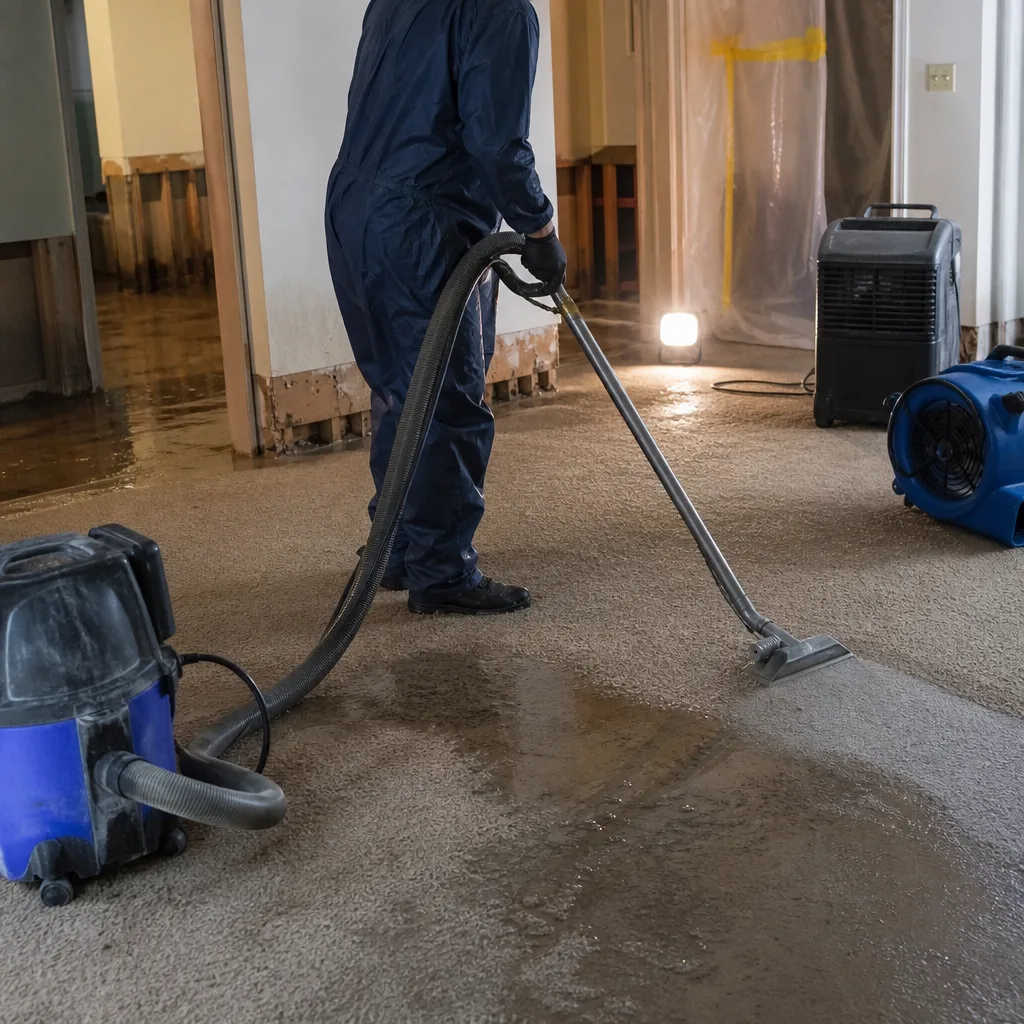
Standing water is removed with truck-mounted and portable extraction units before it can wick up drywall and under baseboards. In White Plains high-rise units, speed matters more because concrete decks hold water against flooring. Our crews run extraction the same visit as the call.
Structural Drying & Dehumidification
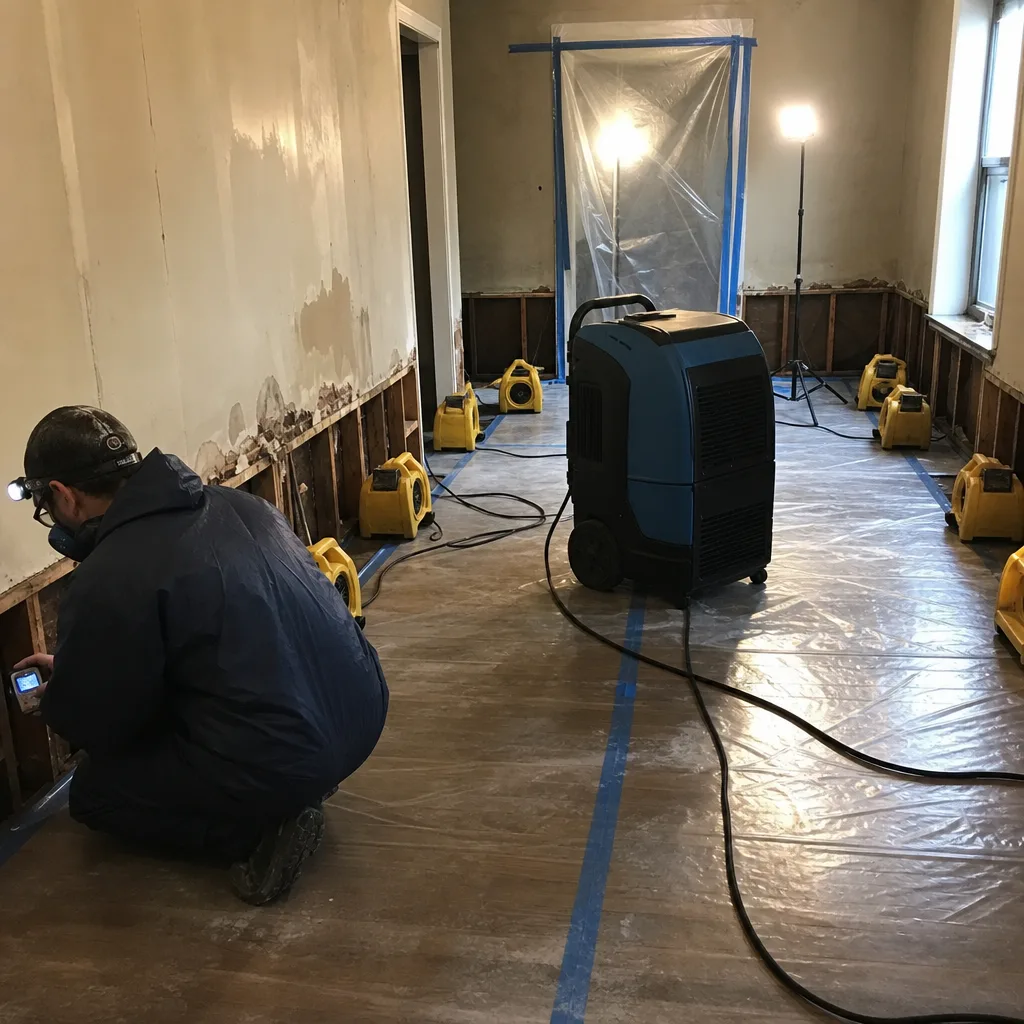
We build a drying plan from the moisture map, not a guess. Dri-Eaz and Phoenix dehumidifiers run continuously with daily readings until the structure hits the dry standard. In older White Plains homes with plaster walls, we dry slower and more deliberately, because rushing plaster causes cracking that becomes a second project.
Burst Pipe Restoration
Freeze-thaw bursts are the most common winter emergency we handle in White Plains. The pipe is usually in an exterior chase, an unheated basement, or a garage ceiling. We stop the source, extract, dry, and then repair the wall, ceiling, or floor the water damaged. This is the sub-service our Water Damage Restoration team handles start to finish.
Flood Cleanup
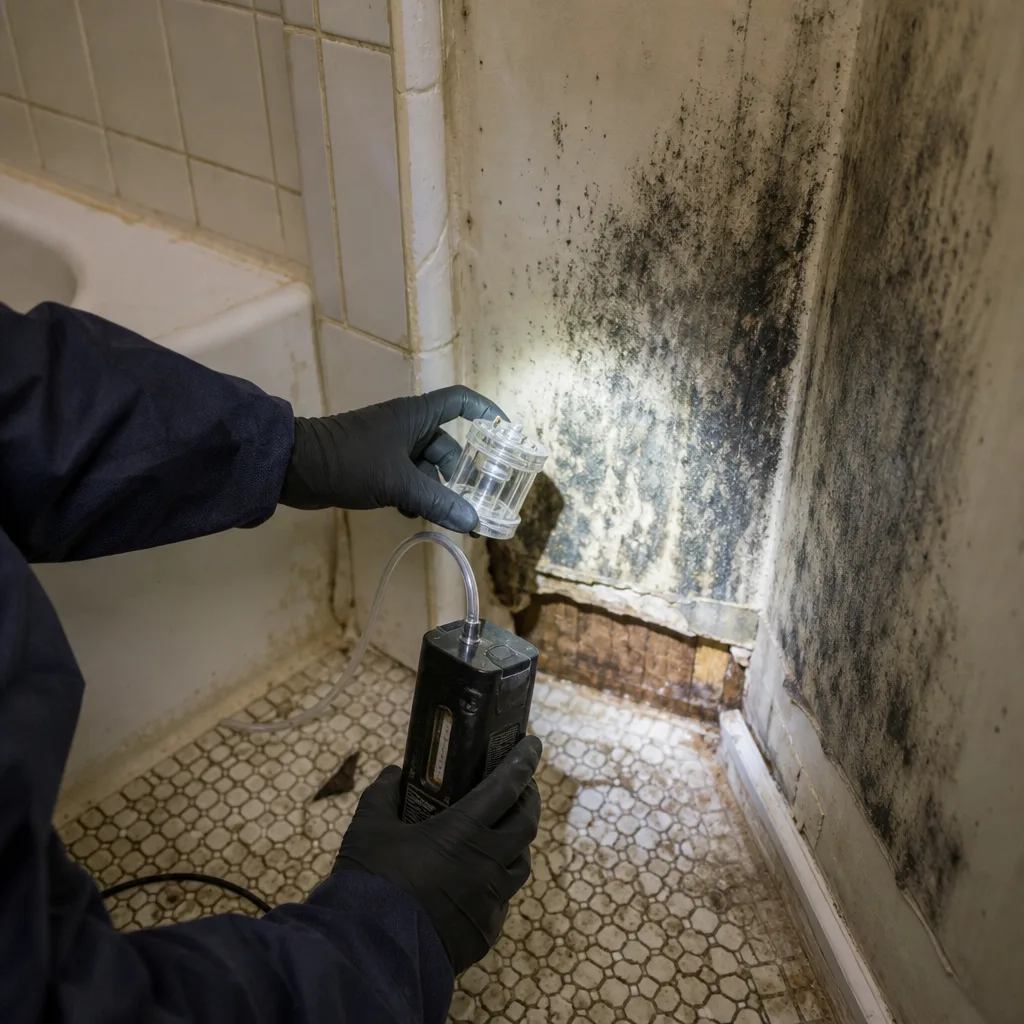
Storm water and river water are Category 3. That means contaminated water, which changes what gets removed versus dried in place. Flood cleanup in White Plains near the Bronx River corridor includes proper disposal of saturated porous materials, antimicrobial treatment on salvaged framing, and containment to keep contaminants from spreading through the HVAC system.
Basement Water Removal
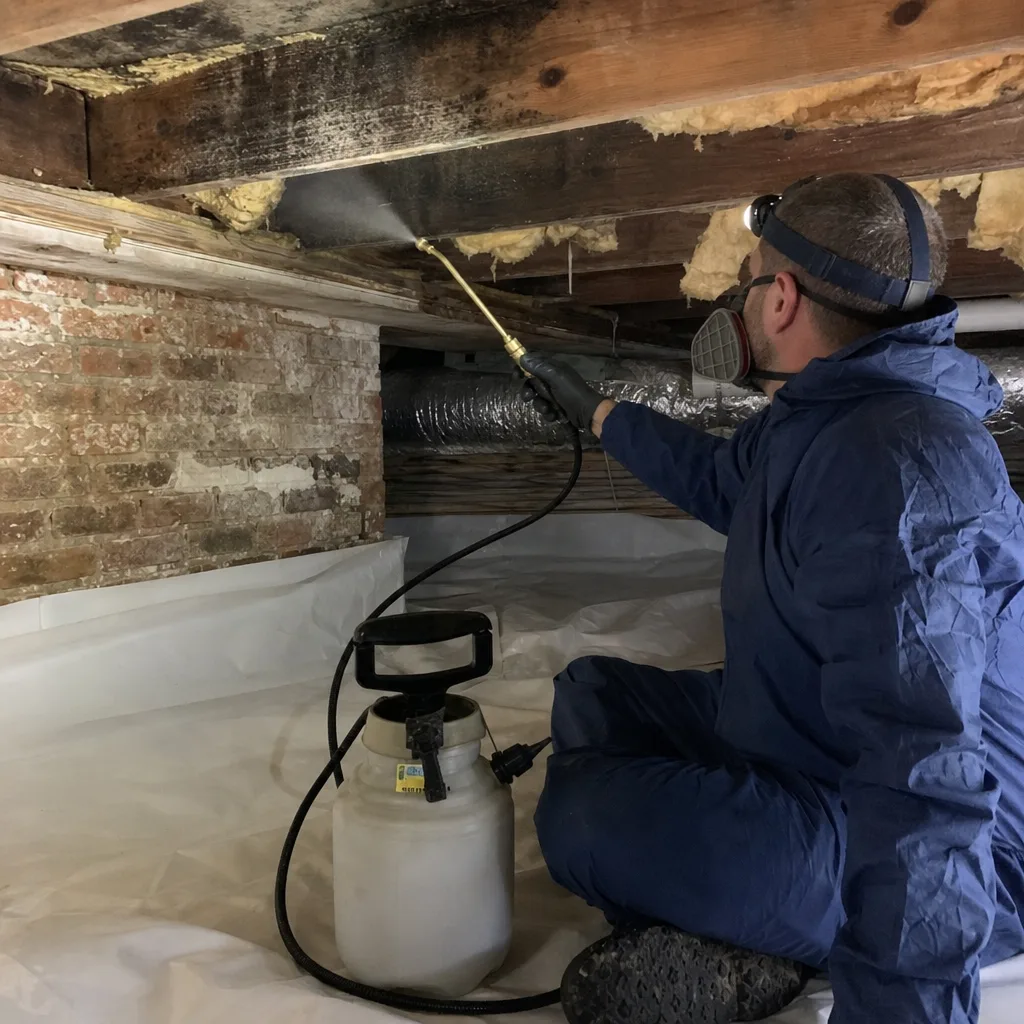
Finished basements in White Plains’s older neighborhoods take the worst of it during heavy rain and thaw cycles. We remove standing water, pull wet carpet and pad, check behind paneling and drywall for hidden migration, and dry to the standard. The goal is to keep the basement you use, not have to gut it.
What happens when you call
- 1
A real person answersNo phone trees - you reach a local pro.
- 2
You get an upfront price rangeHonest numbers before anyone is dispatched.
- 3
A background-checked tech heads outLicensed & insured, dispatched right away.
- 4
You approve before work beginsNothing starts until you say go.
Water Damage Restoration Costs in White Plains, NY
A single-room water damage restoration in White Plains, think a bathroom supply line leak caught the same day, typically runs $1,800 to $3,400. A multi-room basement loss from a failed sump pump or freeze-burst pipe usually lands between $3,500 and $6,500. When a downtown high-rise riser fails and hits five to ten stacked units, per-unit costs can range from $2,000 for a contained ceiling leak to $15,000 or more for a unit with Category 2 migration through walls, floors, and lower cabinets.
What moves the price: water category, how many rooms are affected, whether hardwood needs to be pulled or can be dried in place with Injectidry mats, and how much demolition is required to reach wet cavity material. Most White Plains homeowners pay their insurance deductible and the carrier covers the rest. We offer direct insurance billing and a free visual inspection so you get a firm scope in writing before any money changes hands. Current offers apply: $50 off any repair over $250, a $89 seasonal tune-up for homeowners who want to catch problems before they leak, and a 5% senior and veteran discount, always.
We Also Serve Cities Near White Plains
Our crews regularly run restoration jobs in White Plains and the surrounding Westchester communities. The same 24/7 dispatch, IICRC-certified crews, and 90-Day Done Right Promise apply in Hartsdale, Elmsford, Scarsdale, and Valhalla. If you’re in a neighboring town and you’ve got water coming in, call the same number, (917) 924-4221.
White Plains Water Damage Restoration Questions, Answered
How does White Plains’s high-rise housing stock change the water mitigation process compared to single-family homes?
In a White Plains high-rise, water mitigation is a coordination job as much as a drying job. A riser failure or condensate line break sends water through multiple stacked units, so we work through the building superintendent for access and set containment floor by floor. Each unit often has a different insurer, so we produce separate drying logs, scope documents, and photo packages for each carrier. The drying itself is also different: concrete decks hold water against flooring and require more aggressive dehumidification, and wall cavities in 1970s to 1990s towers are tight and hard to inspect with anything less than thermal imaging.
What should I do if my White Plains apartment has water damage from the unit above before the property manager arrives?
Call (917) 924-4221 first, then call your property manager. Move anything valuable up off the floor, take photos of the water as it is right now, and do not touch electrical fixtures or anything plugged in. Don’t try to puncture the ceiling to drain the water, because that can cause a larger and more expensive release, and in a multi-unit building it can push water into structural cavities below. If water is near light fixtures, shut off the breaker for that room if you can reach the panel safely. A restoration crew can set containment and start extraction while the property manager sorts out access and insurance questions.
Why are burst pipes so common in White Plains during winter, and how should a restoration company respond?
White Plains sits in an inland valley that gets hard freeze-thaw cycling from November through March, and the older housing stock is built with plumbing in exterior chases that were never insulated to modern standards. Supply lines freeze, split, and then release water the moment the thaw hits, often flooding basements and finished lower levels before the main shutoff is located. A proper response starts with finding and stopping the source, then extracting and moisture-mapping before the water migrates into wall cavities and subfloor. Rushing to dry before the full footprint is mapped in a plaster-and-lath house leads to hidden moisture and mold later.
How quickly does mold start in a water-damaged White Plains home with older drywall or plaster?
Mold can begin in as little as 24 to 48 hours in a warm, humid environment, but older materials complicate the picture. Plaster and lath hold moisture longer than modern drywall, and a slow leak inside an exterior wall in a White Plains Highlands home can already be growing mold before any staining shows on the painted surface. If you suspect a leak has been running for more than a day or two, we treat it as a potential microbial issue and run drying equipment that addresses cavity humidity, not just surface moisture. The EPA mold guidance is clear: dry wet materials within 24 to 48 hours to prevent mold growth.
Does White Plains require any special permits or approvals for water restoration work in multi-unit buildings?
Most emergency water extraction and drying work does not require a city permit in White Plains. Structural repairs, drywall replacement, and any electrical or plumbing work that goes beyond the scope of restoration may need permits through the White Plains Building Department. In multi-unit buildings, the property manager or condo board typically has their own approval process before any structural work begins in a unit or common area. We handle that coordination as part of the scope of work, and our documentation follows the IICRC standard for water damage restoration so your insurer and building management get consistent, defensible records.
How fast can Floodline actually get to a water damage emergency in White Plains?
We commit to a 45-minute response for emergency calls in the White Plains area. Our dispatch is run from the brand’s New York City office, with crews stationed to serve White Plains locally, so you’re not waiting for a truck to come from another county. A live dispatcher answers 24 hours a day, seven days a week, and extraction equipment goes in the door the same visit. When the water is still running, that response window is the difference between drying a room and rebuilding it.
Will my insurance cover water damage restoration, and who handles the adjuster?
Most standard homeowners and condo policies in New York cover sudden and accidental water damage, like a burst pipe or an overflow. They typically do not cover slow leaks that ran for weeks, or flood water from the Bronx River unless you carry a separate flood policy. We document from the first hour and talk directly to your adjuster, providing the photos, moisture readings, drying logs, and line-item scope they need. You don’t play messenger between us and your carrier. Call (917) 924-4221 for a free inspection and we’ll help you understand what your specific policy covers before you spend anything.
Do I need full restoration, or can I just dry it out and clean up myself?
For a small, clean-water spill caught immediately on tile or concrete, a homeowner can often dry it with fans and a dehumidifier. The problem is that what you can see is rarely the whole footprint, especially in White Plains homes with plaster walls, drop ceilings, or finished basements. Water that’s wicked behind baseboards or into wall cavities will stay damp for weeks and grow mold even after the surface looks dry. Our free visual inspection with thermal imaging shows you the full extent of the water before you decide. If it’s something you can handle yourself, we’ll tell you that plainly. If it isn’t, you’ll know what a firm scope looks like.
Serving White Plains, NY - Our Local Coverage Area
We’re based in the White Plains area and know this community well. Use the map below to see our service coverage - if you’re nearby, we can almost certainly help.
Done Right, and Backed in Writing
We’ve been at this a long time, and the thing that matters most to us is that you never have to think about the same leak twice. Floodline Restoration Co. was founded in 2010 by Curt Bowman around a dispatch board, not a sales desk, and every job we run in White Plains is tied to the 90-Day Done Right Promise. That’s the Keystone Standard: if it’s not done right, we make it right. No arguing, no paperwork battles, just a written guarantee we stand behind.
If you’ve got water in your White Plains home or building right now, call (917) 924-4221. You’ll reach a live person who can send a certified crew. If you want to get ahead of a problem before it leaks, ask about the $89 seasonal tune-up or the senior and veteran 5% discount. Estimates are free, and the line the water left is where we start.
Written by Curt Bowman, Owner at Floodline Restoration Co. of Manhattan, serving White Plains and Westchester County with 24/7 live dispatch.