
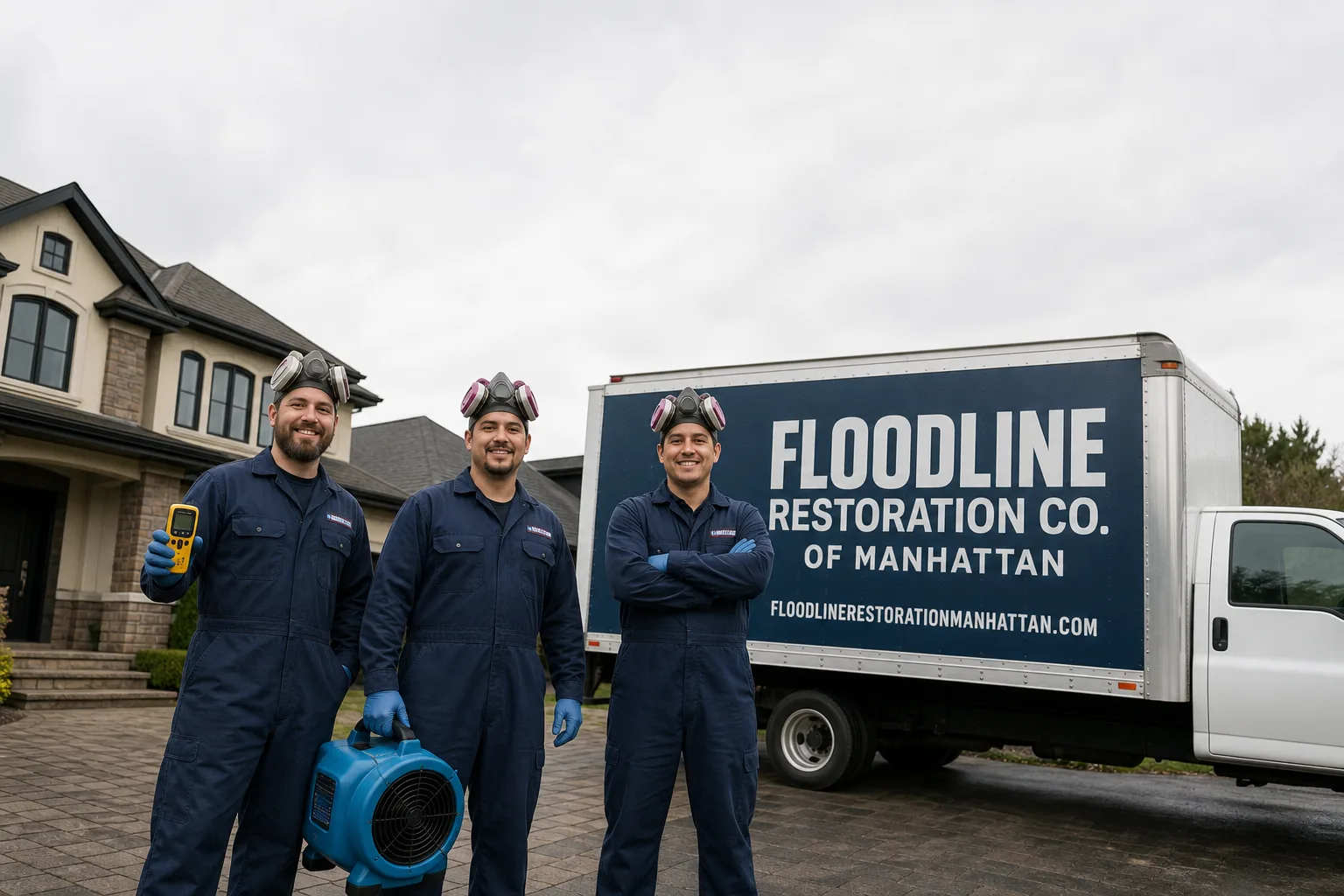
Free visual inspection and a written scope of work before any mitigation begins - photos, moisture readings, and drying logs go in your claim file
The scope we write is the scope we bill. Anything new gets shown to you, in writing, before we touch it.






 Before
 After
After Before
 After
After Before
 After
After24/7 Emergency Biohazard & Crime Scene Cleanup in Edgewater
Biohazard and crime scene cleanup in Edgewater requires a crew that understands one thing most inland restoration companies never learn: the Hudson River changes the biology of every water loss it touches. A flooded pre-war basement on River Road that looks like ordinary stormwater is often carrying coliform bacteria and combined sewer overflow, which legally elevates the job to Category 3 black water remediation. That changes the scope, the safety protocols, and the price. If you’re standing in a contaminated basement or facing a trauma scene right now, call (917) 924-4221. A live dispatcher answers around the clock, and a certified crew can be dispatched to Edgewater within 45 minutes.
Understanding Biohazard & Crime Scene Cleanup Severity in Edgewater Properties
Severity in this line of work breaks into clear categories, and Edgewater’s housing stock makes those categories move faster than most towns. A Category 1 water loss is clean water from a supply line. Category 2 carries biological contamination from detergents, urine, or sump-pump discharge. Category 3 is the serious one: sewage, river water, blood, bodily fluids, or any floodwater that has entered a living space. Here’s where Edgewater gets specific. The Hudson carries combined sewer overflow from upstream municipalities. When tidal surge pushes that water into an unlined stone foundation on a pre-war riverview street, the contamination isn’t theoretical. It’s in the silt, the plaster, and the pores of the stone itself. We test it. We document what we find. We build the remediation plan from that data, not from a generic checklist.
Older Edgewater homes also present a wall-cavity problem. Balloon-frame construction, common in this stretch of the Hudson corridor, runs wall cavities from basement to attic without fire-blocking. Contaminated moisture in a basement can wick upward into plaster, lathe, and framing. Antimicrobial treatment has to reach those cavities, not just the visible surface. That means containment, negative air pressure, and air scrubbing with HEPA filtration while work proceeds. Cutting corners here leaves a mold reservoir behind the walls that nobody sees until the smell gives it away months later.
Why Edgewater Property Owners Choose Floodline Restoration Co. of Manhattan
- 45-minute response commitment. We dispatch crews from our New York City office directly into Edgewater, and we tell you when to expect the truck. No waiting on a regional call center.
- 24/7 live answer, every time. A real person picks up the phone at two in the morning. Not a recording. Not a voicemail. A dispatcher who can set a crew in motion while you’re still on the line.
- IICRC-certified technicians. Our crews hold WRT, FSRT, and AMRT certifications. They know Category 3 protocols, antimicrobial treatment standards, and how to keep a contaminated zone contained.
- Free visual inspection. We assess the scene, explain what we see in plain terms, and give you a written scope before any billable work starts. No pressure. No vague promises.
- Direct insurance billing. We bill your carrier directly and handle adjuster communication. You never play messenger between us and your insurance company.
- One team from first extraction to final rebuild. The same certified crew that handles the biohazard remediation also dries the structure and rebuilds what needs rebuilding. No handoff. No inherited sub. No arguments about who’s responsible.
Our Biohazard & Crime Scene Cleanup Process
Inspection & Assessment
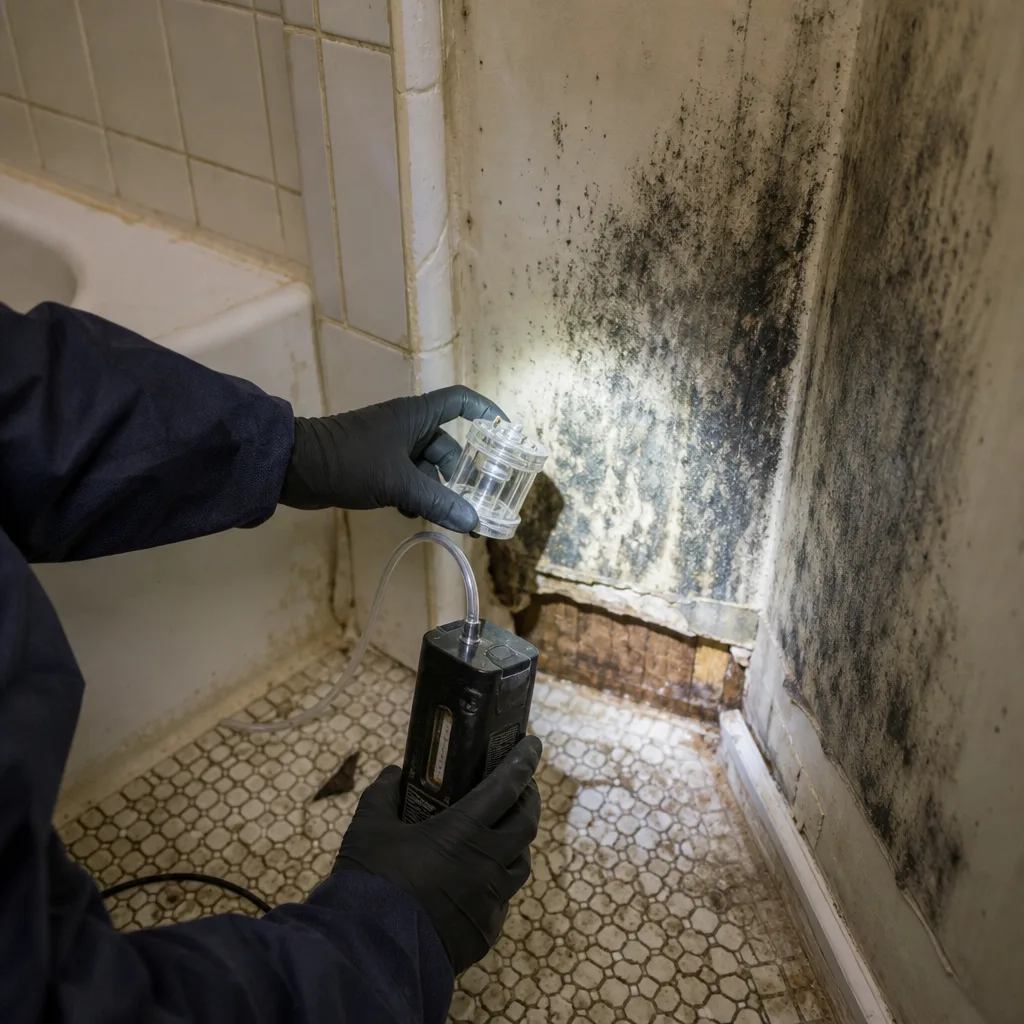
We arrive, walk the scene, and document everything: visible contamination, suspected spread patterns, moisture readings, and air quality concerns. For Edgewater river flooding, we test for coliform and other biological indicators before we classify the job. That classification drives the entire plan.
Containment & Stabilization
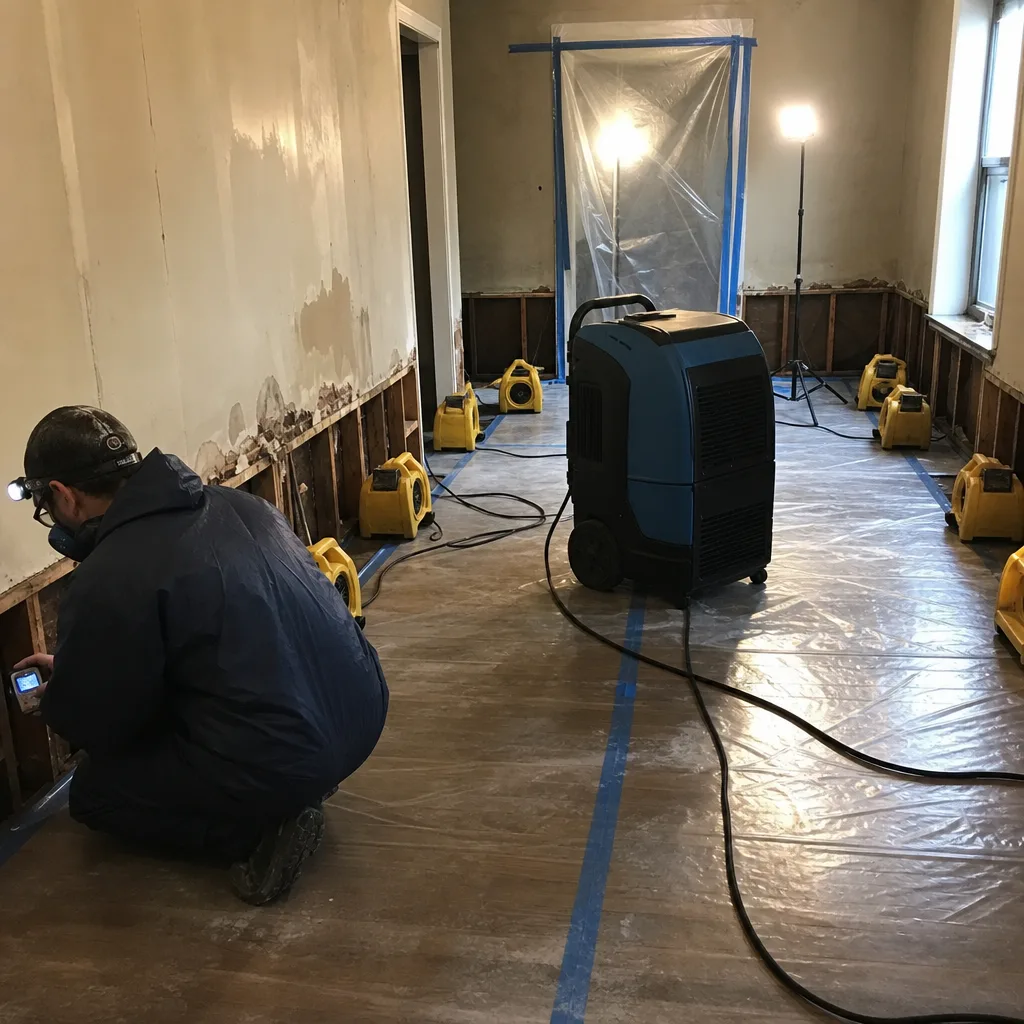
We seal the contaminated area with 6-mil poly barriers, establish negative air pressure with HEPA air scrubbers, and remove loose debris. Stabilization means stopping the spread: no cross-contamination to clean rooms, no airborne pathogens moving through the house.
Extraction & Removal
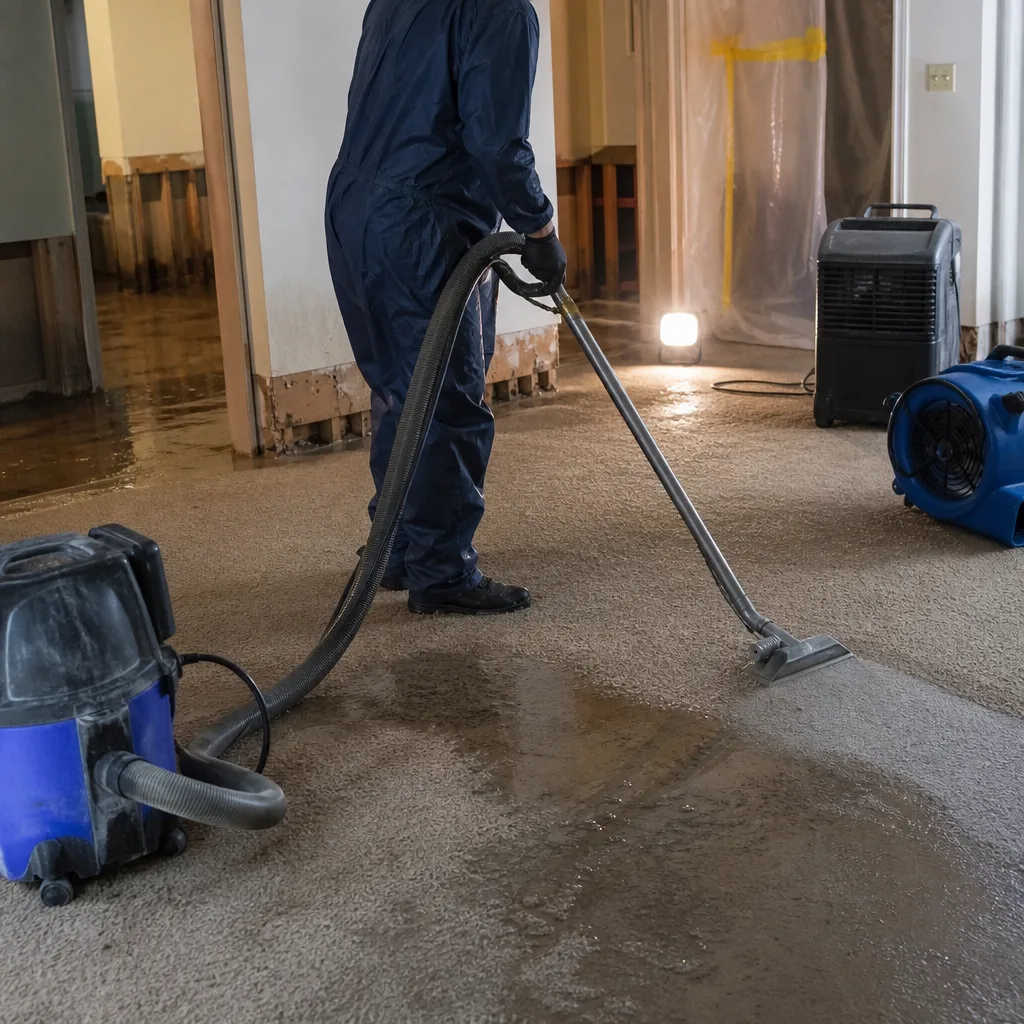
Truck-mounted Dri-Eaz extraction units remove standing water and contaminated sludge. For Category 3 work, we remove saturated porous materials: carpet, pad, drywall, lathe, insulation. Edgewater’s older plaster-and-lathe walls often require selective demolition to reach contaminated cavities.
Structural Drying & Dehumidification
We set Phoenix and XPOWER air movers and commercial dehumidifiers, then track progress with daily moisture readings. Thermal imaging and hygrometers locate hidden pockets of moisture in stone foundations and wall cavities. We hand you the drying log. Your insurance carrier gets a copy too.
Cleaning, Sanitization & Antimicrobial Treatment
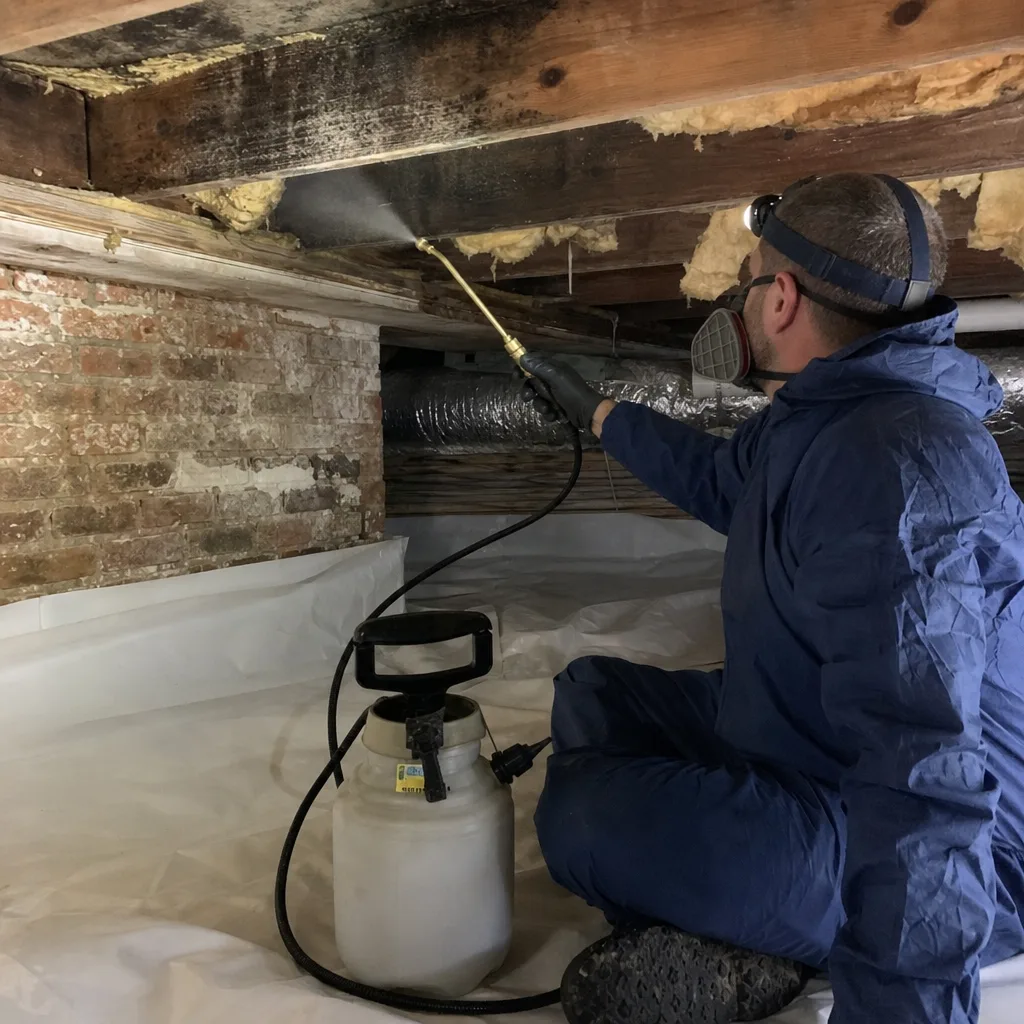
We apply hospital-grade antimicrobial and disinfectant agents to every affected surface, including the inside of wall cavities. For crime scene and trauma work, we follow OSHA bloodborne pathogen standards, removing all biohazardous material and decontaminating the space to safe levels. This step is non-negotiable for Category 3 water and any blood or bodily fluid cleanup.
Repairs & Restoration
Our own reconstruction crew handles the rebuild: new framing, drywall, plaster repair, flooring, paint. We don’t hand the job to a general contractor who never saw the contamination. We know exactly what was removed and why, and we rebuild to the 90-Day Done Right Promise standard, in writing.
Need Emergency Biohazard & Crime Scene Cleanup in Edgewater Now?
Crews minutes away, answering live 24 hours a day. The sooner we start, the less it costs.
Working With Your Insurance Company
Most Edgewater biohazard claims are covered by standard homeowners policies, but the amount depends on the source, the classification, and how quickly the loss was mitigated. A Hudson tidal flood that sat for two days before anyone found it is a bigger claim than a pipe burst caught in the first hour. We document everything from the first inspection: photos, videos, moisture readings, coliform test results, and a line-item scope of work. Our team communicates directly with your adjuster, so you don’t spend hours on hold explaining what a Category 3 water loss means. If the carrier pushes back, we provide the technical documentation to support every line item. We’ve handled hundreds of these claims. We know what the adjusters need to see.
What We Provide Your Insurer
- Thorough documentation of the loss
- Photos of all damage, room by room
- Moisture readings and drying logs
- A detailed, line-item scope of work
- Direct coordination with your carrier
Built for Edgewater’s Loss Calendar
Edgewater’s biohazard season doesn’t run on a single clock. It runs on the Hudson. Late winter brings ice-jam flooding, when broken river ice pushes inland with almost no warning, and lower side streets between River Road and the shoreline take the hit. Spring thaw and heavy rain saturate the soil, and those older unlined stone foundations start weeping groundwater. Summer thunderstorms dump an inch an hour, overwhelming drainage and pushing combined sewer overflow into riverside basements. Nor’easters in fall and winter drive tidal surge several feet above normal, flooding homes that have stayed dry for decades. Each of these events carries the same risk: water that looks ordinary but tests positive for coliform and fuel residue. Our team of specialists performing Biohazard & Crime Scene Cleanup knows the seasonal patterns here because we respond to them every year. When the water hits a Category 3 classification, you need a crew that treats it as a biohazard from the first minute, not one that discovers the problem mid-job.
Biohazard & Crime Scene Cleanup Across Edgewater’s Neighborhoods
Edgewater’s shoreline stretches along the Hudson from the George Washington Bridge south toward the old quarry line, and the building stock changes block by block. In the Independence Harbor area, condo buildings sit at or near flood elevation, and tidal surge gets into lower-level parking and storage rooms before anyone notices. The pre-war homes along River Road and the side streets toward Undercliff Avenue sit on stone and rubble foundations that soak up contaminated water like a sponge. Higher on the bluff, near the old quarry line and Memorial Park, the soil drains faster, but the gas lines and steam-heat systems in older buildings create their own risk profile: unattended-death cleanup in a steam-heated apartment runs hotter and moves decomposition faster than in a newer forced-air building. When you call us from Edgewater, we know which streets flood first, which building types hold moisture longest, and where contamination is most likely to hide. That’s not in any national franchise’s training manual.
Specialized Biohazard & Crime Scene Cleanup Services We Offer in Edgewater
Crime Scene Cleanup
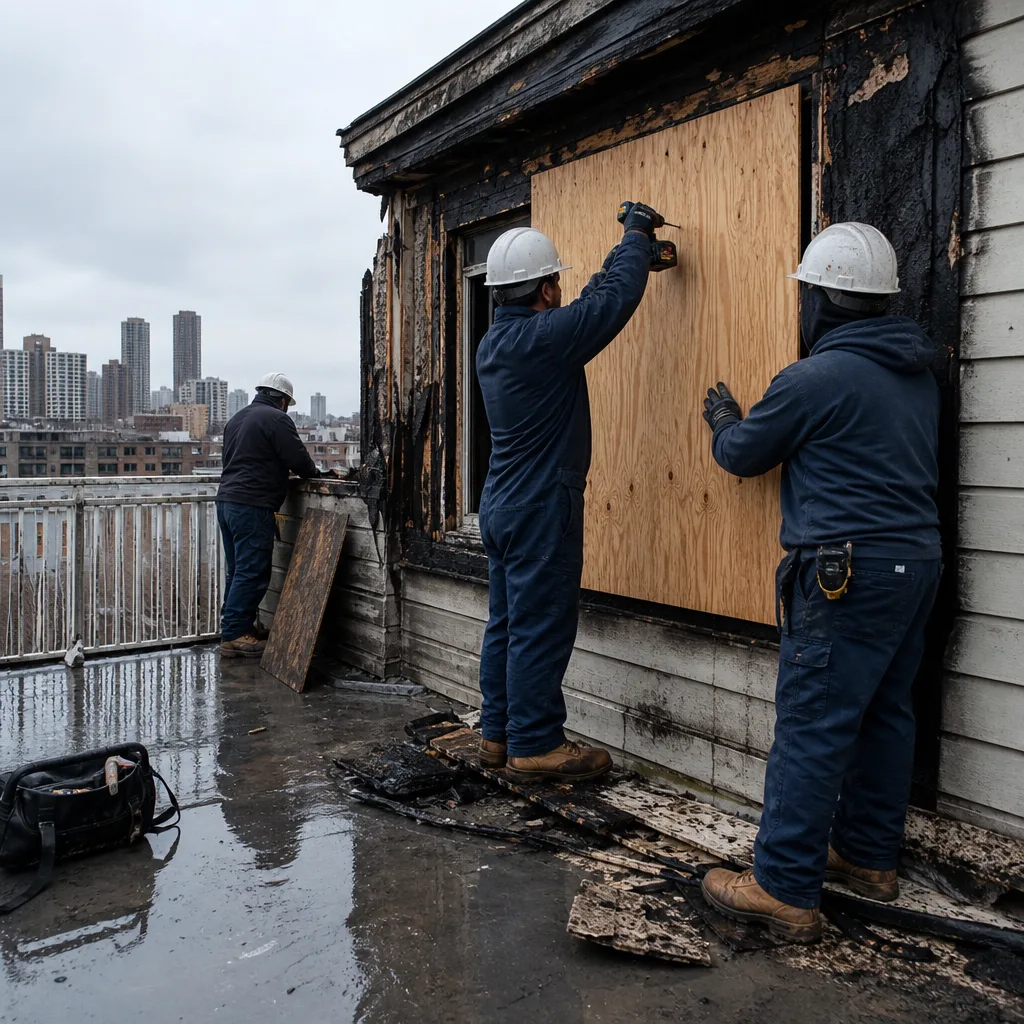
We respond to crime scenes in Edgewater with the same discretion and thoroughness you’d expect from a company that’s been doing this for over a decade. Our crews follow OSHA bloodborne pathogen standards, remove all biohazardous material, and decontaminate the space so no trace remains on surfaces, subflooring, or wall cavities. We work with law enforcement and property managers to make sure we enter only after the scene is released, and we document everything for your insurance claim.
Trauma & Unattended Death Cleanup
An unattended death in an Edgewater apartment, especially in a steam-heated pre-war building, requires fast and thorough remediation. Decomposition fluids penetrate porous surfaces: hardwood, plaster, grout, subfloor. Cleaning the visible area isn’t enough. We remove affected materials, treat the structural framing, and run air scrubbers until the space tests clean. We handle this work with respect for the family and the neighbors, and we never rush a scene that deserves care.
Hoarding Cleanup
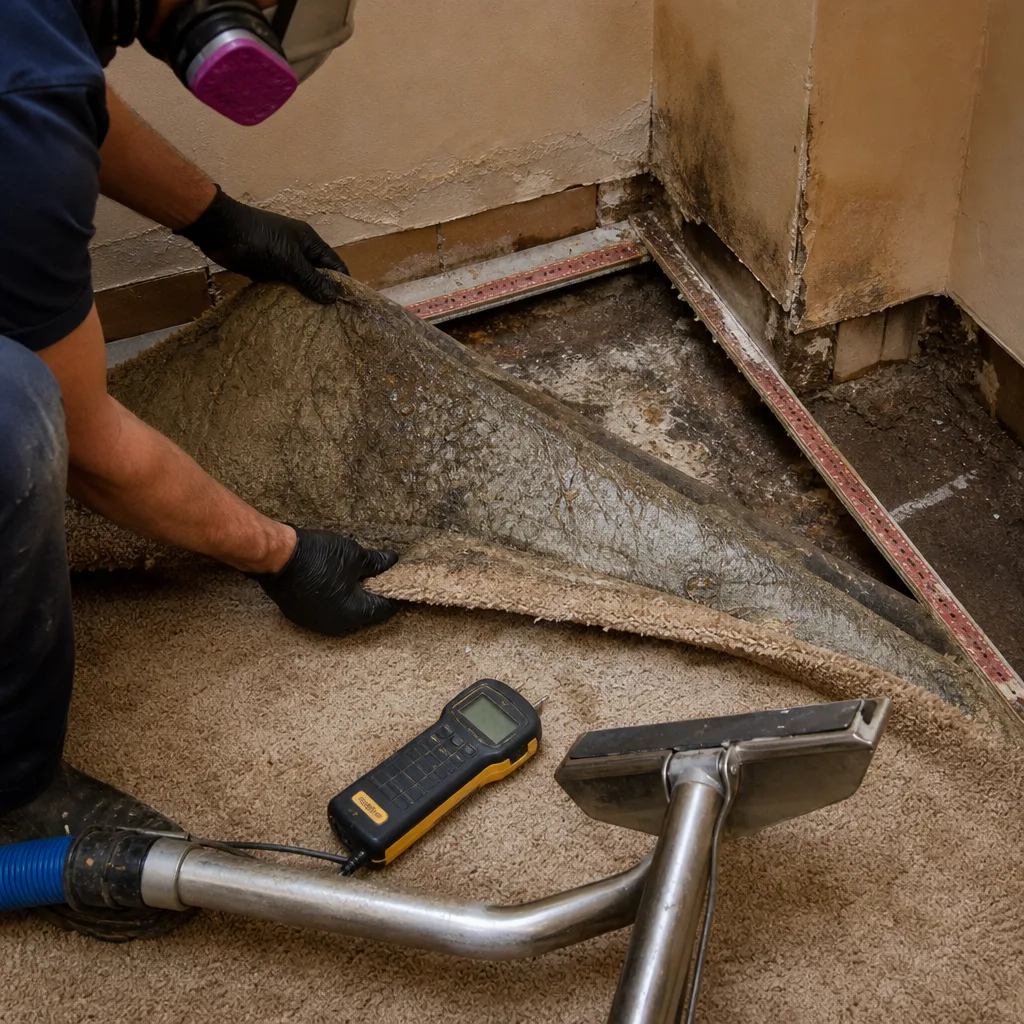
Hoarding situations often combine multiple hazards: animal waste, rotting food, mold, pests, and sometimes sharps or decomposed material. In Edgewater condos, the challenge is containment: keeping contamination from spreading through shared hallways and vertical plumbing chases. We work with building management to seal the unit, remove debris systematically, and sort salvageable items according to the family’s instructions. If the hoard has led to Category 3 water damage, we handle that too, in the same visit.
Blood & Bodily Fluid Cleanup
Blood and bodily fluids are regulated medical waste under New Jersey law. Cleaning them properly means more than bleach and paper towels. Our crews wear full personal protective equipment, follow OSHA bloodborne pathogen protocols, and dispose of contaminated materials through licensed medical waste channels. We treat the visible area, the surrounding surfaces, and the air itself. In Edgewater’s older apartments and single-family homes, that often means addressing contamination that soaked into hardwood flooring or plaster walls.
Infectious Disease Disinfection
After any biohazard event, we offer full infectious disease disinfection using hospital-grade products and application methods. This service matters in Edgewater specifically because of the density of multi-unit buildings. A contaminated hallway or lobby in a riverfront building with shared HVAC can spread airborne pathogens faster than a detached house. We fog, wipe, and treat all touchpoints, then test to confirm the space is clean. Many building owners call us for this service after a flood or when a resident has been hospitalized with a communicable illness.
Category 3 Water Biohazard Cleanup
When the Hudson floods an Edgewater basement, even clear-looking water often tests positive for coliform from combined sewer overflow. That’s a Category 3 water loss, and it requires full biohazard remediation: containment, antimicrobial treatment, and selective demolition of contaminated materials. We responded to a biohazard cleanup in the Independence Harbor neighborhood after a nor’easter pushed tidal Hudson water into a pre-war stone foundation basement, leaving several inches of sewage-contaminated silt. Our crew set full containment, extracted the Category 3 water with truck-mounted Dri-Eaz units, performed antimicrobial treatment on all affected plaster walls, and used moisture mapping daily to confirm structural drying before demolition of saturated lathe and plaster. That’s the standard every Edgewater flood job should meet.
What happens when you call
- 1
A real person answersNo phone trees - you reach a local pro.
- 2
You get an upfront price rangeHonest numbers before anyone is dispatched.
- 3
A background-checked tech heads outLicensed & insured, dispatched right away.
- 4
You approve before work beginsNothing starts until you say go.
Biohazard & Crime Scene Cleanup Costs in Edgewater, NJ
Edgewater biohazard pricing runs higher than inland Bergen County because the work is more complex and the contamination is legally classified as more dangerous. A straightforward unattended death cleanup in an apartment typically runs $2,500 to $5,000. Crime scene cleanup usually falls between $3,500 and $10,000 depending on the extent of contamination and the surfaces involved. Hoarding jobs range widely, from $4,000 for light clutter with some biohazard to $25,000 or more for severe cases with structural damage and Category 3 water. A Hudson tidal flood that requires full Category 3 remediation and antimicrobial treatment in a pre-war basement commonly runs $8,000 to $20,000 before reconstruction. What moves the price: the volume of contaminated material, whether demolition reaches wall cavities, whether HVAC systems need cleaning, and how long the damage sat before our crew arrived. Many of these jobs are covered by homeowners or flood insurance. The fastest way to a firm number is a free visual inspection and a written scope. Call (917) 924-4221 and we’ll put a certified tech on the road.
We Also Serve Cities Near Edgewater
Floodline Restoration Co. of Manhattan handles biohazard and crime scene cleanup across the Hudson River corridor, including Cliffside Park, Fort Lee, Ridgefield, and Palisades Park. If you own property in any of these towns, our Edgewater crews can reach you just as fast, with the same certifications and the same 90-Day Done Right Promise in writing.
Serving Edgewater, NJ - Our Local Coverage Area
We’re based in the Edgewater area and know this community well. Use the map below to see our service coverage - if you’re nearby, we can almost certainly help.
Edgewater Biohazard & Crime Scene Cleanup Questions, Answered
Does a flood in Edgewater from the Hudson always require biohazard cleanup, even if the water looks clean?
In most cases, yes. The Hudson carries combined sewer overflow from upstream municipalities, which means tidal floodwater in Edgewater frequently tests positive for coliform bacteria even when the water appears clear. When we confirm contamination, the loss is legally classified as Category 3 and requires biohazard remediation with full containment and antimicrobial treatment. If your basement flooded from the river, call us for coliform testing before you or anyone else handles the cleanup yourself.
How fast does mold start on wet plaster walls in Edgewater’s riverside pre-war homes?
Mold can begin colonizing in 48 to 72 hours on saturated plaster and lathe, and Edgewater’s river-valley humidity accelerates the process. The real risk is hidden: moisture trapped in balloon-frame wall cavities can feed mold for months behind intact plaster. Our crews use thermal imaging and hygrometers to find those hidden pockets before they become a problem, and we run Phoenix dehumidifiers and XPOWER air movers until the structure tests dry.
What hidden biohazard risks exist after an ice-jam flood on Edgewater’s lower streets?
Ice-jam flooding on the Hudson pushes river water, silt, and combined sewer overflow into streets and basements with almost no warning. The hidden risk is fuel residue and biological contamination absorbed into stone foundations and soil under the house. Treating the surface isn’t enough: contaminated groundwater can keep wicking into the structure for weeks after the standing water is gone. We test for coliform, extract the contaminated material, and treat the foundation itself before rebuilding.
Can an unattended death in an Edgewater apartment with steam heat create a worse cleanup than a newer building?
Yes. Steam heat keeps an apartment warmer and more humid than forced-air systems in newer buildings, which accelerates decomposition. Fluids penetrate into hardwood flooring, plaster, and grout more deeply, and the warmer air spreads odors through wall cavities and shared plumbing chases. We handle these jobs with containment and air scrubbing from the first hour, and we remove affected materials rather than trying to mask the problem with deodorizers.
Does Floodline Restoration Co. handle hoarding cleanup in Edgewater condos that also have category 3 water damage?
We do, and we handle both problems in a single visit. Many hoarding situations in Edgewater condos involve years of deferred plumbing maintenance, which eventually leads to sewage backups or supply-line failures. That creates a combined biohazard: the hoard itself plus Category 3 water. Our crew removes the debris, extracts the contaminated water, treats the underlying structure, and works with building management to keep the contamination contained to the unit.
How fast can a crew actually reach Edgewater for a biohazard emergency?
We commit to a 45-minute dispatch window for Edgewater jobs. The call comes into our live dispatcher, not an answering service, and the nearest certified crew is on the road while you’re still on the phone. For active crime scenes, we coordinate with law enforcement to make sure we enter only when the scene is released, and we can stage nearby so we’re ready the moment that happens.
Will my insurance cover biohazard cleanup in Edgewater?
Most standard homeowners policies cover biohazard remediation when it results from a covered peril, like a burst pipe, a storm, or a crime on the property. Flood damage from the Hudson requires a separate flood policy in most cases, but many Edgewater homeowners carry one because of the flood elevation. We bill your carrier directly, document everything from the first inspection, and work with your adjuster to get the claim approved at the scope we recommend. Call (917) 924-4221 to talk through your specific policy.
What should I do in the first 30 minutes after discovering a biohazard situation in my Edgewater home?
Do not enter the affected area, do not attempt cleanup yourself, and do not disturb any contaminated material. Blood, bodily fluids, sewage, and floodwater can carry pathogens that make you sick. Close doors to the affected room if you can do so without entering, turn off the HVAC system if the contamination is in a shared duct space, and call (917) 924-4221. We’ll walk you through the next steps on the phone and get a crew moving toward your Edgewater address immediately.
Written by Curt Bowman, Owner at Floodline Restoration Co. of Manhattan, serving Edgewater with certified biohazard and crime scene cleanup crews.