
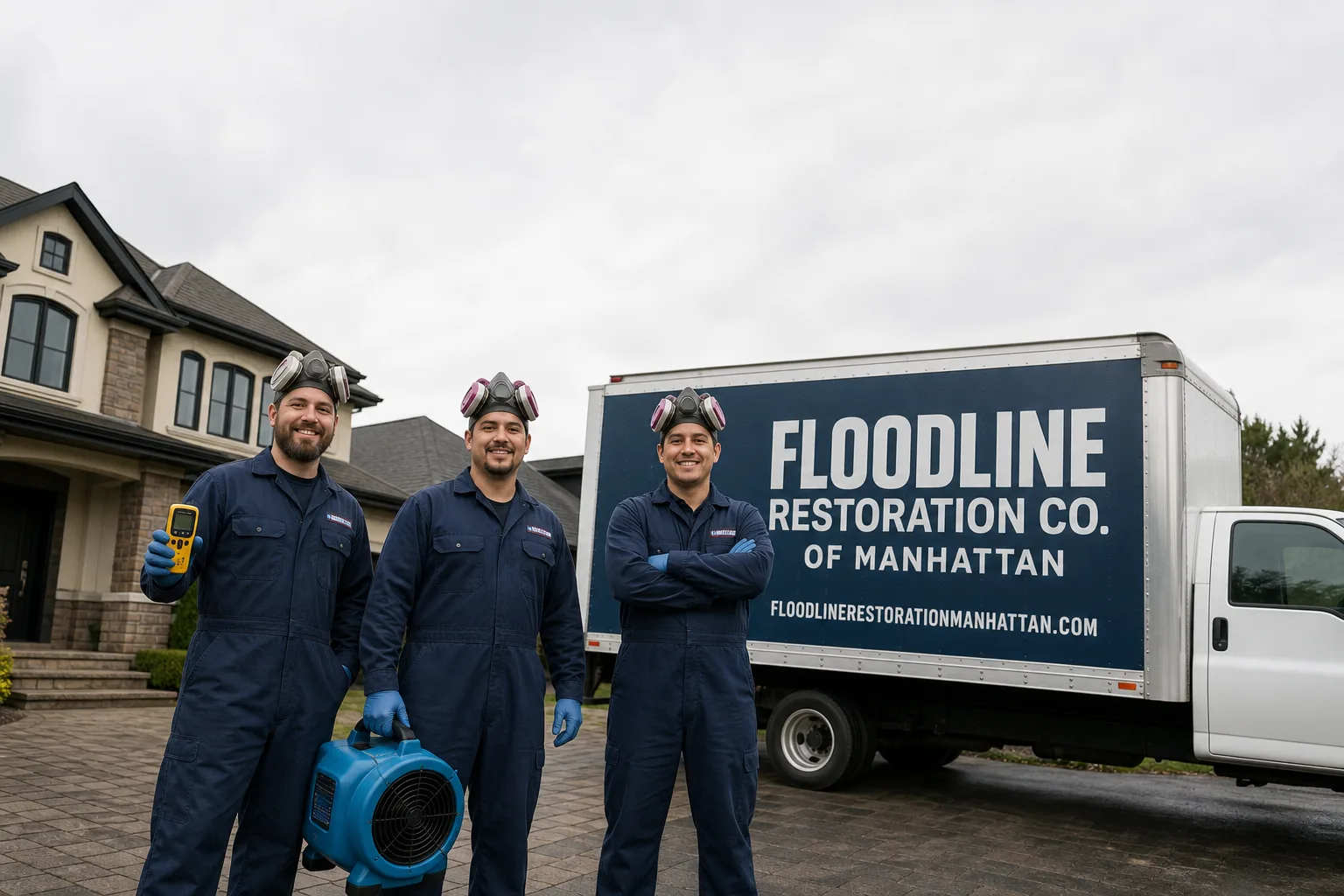
Free visual inspection and a written scope of work before any mitigation begins - photos, moisture readings, and drying logs go in your claim file
The scope we write is the scope we bill. Anything new gets shown to you, in writing, before we touch it.






 Before
 After
After Before
 After
After Before
 After
After24/7 Emergency Commercial Restoration in Garfield
Commercial restoration in Garfield starts with a live answer, any hour, from a dispatcher who can have a certified crew rolling toward your property within 45 minutes. Call (917) 924-4221 and you’ll reach a person, not a recording, whether it’s 2 p.m. or 2 a.m. The first hour after a pipe burst, sewage backup, or roof leak determines how much flooring, drywall, inventory, and business revenue you lose before we even arrive.
Garfield’s older commercial buildings don’t forgive delay. A slow Category 2 leak through a flat roof can soak insulation and spawn mold above a drop ceiling for weeks before anyone sees a stain. A freeze-split cast-iron drain line under a strip mall slab can push grey water into office spaces overnight. Floodline Restoration Co. of Manhattan runs these calls through one dispatch board with crews serving Garfield locally, so extraction starts the same visit and your doors reopen faster. Every job comes with the 90-Day Done Right Promise in writing: if it’s not done right, we make it right. No paperwork battles, no arguing.
Understanding Commercial Restoration Severity in Garfield Properties
Water damage in Garfield runs the full IICRC scale, but the building stock here skews the pattern. Category 1 water, clean supply-line water from a burst copper run or split fitting, is what most owners first notice. Left unaddressed for even a few hours against Garfield’s mid-century framing, it degrades to Category 2 grey water as it dissolves adhesives, carries dust and soil, and saturates cellulose materials. Category 3 water, the black water from sewer laterals and clay-line backups under commercial slabs, is the one that forces full containment, antimicrobial treatment, and often structural drying of wall cavities.
Moisture mapping tells us what a visual inspection cannot. In Garfield’s post-war Cape Cods converted to storefronts and offices, we routinely find 98% relative humidity inside rear stockroom cavities where a stone-and-mortar foundation has wicked groundwater for years. The visible puddle was never the whole story. That’s why we run thermal imaging and hygrometer readings before any drying plan is written, and why daily moisture logs go to you and your carrier until the dry standard is met. Smoke and fire losses in older wood-frame commercial units add another layer: soot residues migrate through shared wall cavities into neighboring tenant spaces, and odor control requires true air scrubbing, not masking.
Why Garfield Property Owners Choose Floodline Restoration Co. of Manhattan
- 45-minute response commitment. A live dispatcher confirms a crew and an ETA on the first call. We’ll be there when we say.
- 24/7 live answer, never an automated system. You call, a person picks up. At 2 a.m. on a Sunday, that person can dispatch. No prompts, no callbacks.
- IICRC-certified crews. Our technicians carry WRT, FSRT, and AMRT certifications and follow IICRC standards on every water, fire, and mold job. Background-checked and uniformed on every site.
- Free visual inspection. We assess the visible damage, map the moisture, and give you a written scope before any work begins. A square deal: no surprises on the bill.
- Direct insurance billing. Floodline coordinates with your adjuster and bills the carrier directly. You never play messenger between us and the insurance company.
- One team from extraction to reconstruction. The same crew that reads the moisture map on day one handles daily readings, remediation, and rebuild. No mid-job handoff, no inherited crew.
Our Commercial Restoration Process
Inspection & Assessment
We arrive, walk the entire affected area, and document everything photographically. Thermal imaging and moisture probes locate hidden water in wall cavities, under vinyl flooring, and above ceilings. You get a written scope and a straight answer on what’s restorable and what isn’t.
Extraction & Stabilization
For water losses, we pull standing water with truck-mounted and portable extractors, then set up interim containment if needed. For fire or smoke, we board up openings, contain soot migration, and remove charred debris. The goal: stop the spread in the first visit.
Drying & Dehumidification
We place Dri-Eaz and Phoenix dehumidifiers with XPOWER air movers in a calculated layout based on the moisture map. Daily readings are logged, graphed, and shared with you and your carrier. We dry to the IICRC dry standard, not to a calendar date.
Cleaning & Sanitization
Category 2 and 3 water require antimicrobial application to affected surfaces. Soot and smoke losses get HEPA vacuuming, sponge cleaning, and odor treatment. Mold remediation includes full containment, negative air pressure, and HEPA air scrubbing.
Specialty Treatment for Garfield’s Older Stock
In buildings with stone-and-mortar foundations, we inspect and treat the foundation wall itself, not just the interior. Freeze-thaw damage to clay laterals, cast-iron drain scale, and chronic seepage get documented and addressed so the same loss doesn’t return next spring.
Repairs & Restoration
The same Floodline crew that extracted and dried rebuilds what needs rebuilding: drywall, flooring, base plates, framing, paint, and trim. If you need a full Commercial Restoration scope, we handle it from first extraction to final walkthrough, backed by the 90-Day Done Right Promise.
Need Emergency Commercial Restoration in Garfield Now?
Crews minutes away, answering live 24 hours a day. The sooner we start, the less it costs.
Working With Your Insurance Company
Insurance covers most commercial water, fire, and storm restoration in Garfield, but only if the loss is documented correctly from the first hour. We photograph everything before we move it. We log moisture readings daily. We write a line-item scope in the format carriers and adjusters expect, and we send it directly to your carrier. You don’t translate between us and your adjuster. Curt Bowman, who founded Floodline Restoration Co. in 2010, built the company around a dispatch board, not a sales desk, and direct insurance billing is part of that: no homeowner or business owner should have to argue a claim while their floors are delaminating.
What We Provide Your Insurer
- Thorough documentation of the loss
- Photos of all damage, room by room
- Moisture readings and drying logs
- A detailed, line-item scope of work
- Direct coordination with your carrier
Built for Garfield’s Loss Calendar
Garfield’s damage calendar is predictable if you’ve run restoration calls here through enough Hudson Valley winters. January and February bring deep freezes that split supply lines and cast-iron drain stacks in older commercial buildings. The freeze-thaw cycles that define this corridor crack old clay sewer laterals under slabs, and those slow Category 3 backups often go unnoticed until flooring delaminates in spring.
March and April are when the snowmelt hits. Clay-heavy soils around the hamlet saturate, groundwater rises against stone-and-mortar foundations, and chronic seepage becomes visible for the first time. That’s when we see stores and offices where a ‘one-time’ water event turns out to be years of hidden moisture. Summer brings thunderstorm flash flooding that overwhelms aging storm drains, and the occasional nor’easter puts flat commercial roofs under standing water for days. Ice dams on those flat roofs drip into drop ceilings all winter, soaking insulation and spawning mold long before anyone spots the first ceiling stain.
Commercial Restoration Across Garfield’s Neighborhoods
Response time in Garfield depends on where you are. The commercial strip along Passaic Street and the blocks near the Saddle Brook line are straight shots for our crews coming up from the dispatch corridor, and we typically reach those units fastest. The mixed retail and residential buildings around Midland Avenue and the older storefronts near Lanza Avenue have their own failure pattern: post-war frame construction over shallow basements, where a burst supply line in an upstairs apartment turns a ground-floor retail unit into a Category 2 loss within the hour.
Near Outwater Lane and along the Passaic River side of the borough, the ground is wetter and the foundations older. Stone-and-mortar basement walls wick groundwater readily during the spring melt, and commercial tenants there often report musty odors for months before a restoration crew is called. The apartment buildings and converted houses around Willow Street and Semel Avenue bring multi-unit complications: one leak migrates through shared framing into adjacent units, and containment planning has to account for occupied neighboring spaces. Our crews know these buildings because we’ve worked them. Commercial Restoration in Garfield is not a brand-new problem for us.
Specialized Commercial Restoration Services We Offer in Garfield
Office & Retail Restoration
A burst pipe above a Garfield storefront or office means inventory, electronics, and finished surfaces all need triage in the same visit. We pack out what’s salvageable, extract and dry the structure, and coordinate cleanup around your business hours where possible. Photo documentation starts before anything moves, so your insurance claim is built on evidence, not estimates.
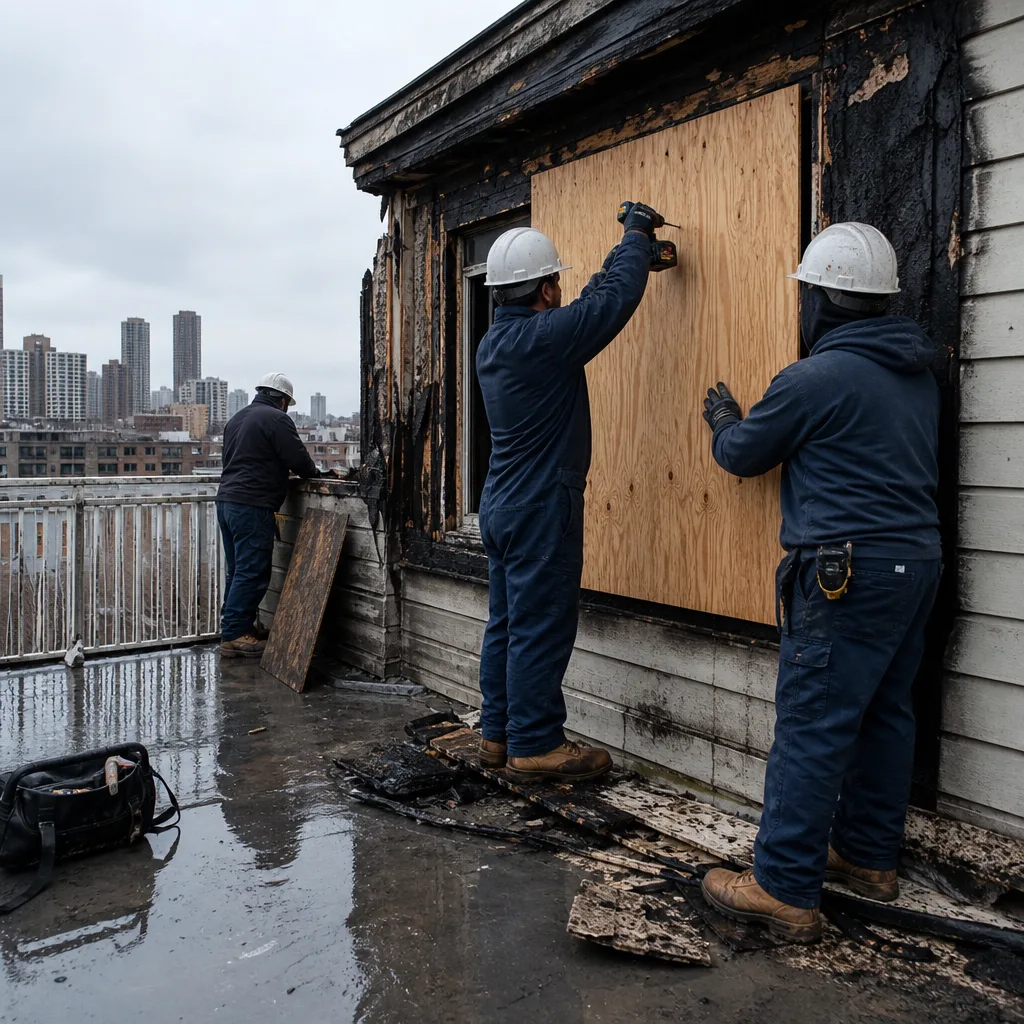
Multi-Unit & HOA Restoration
Garfield’s mix of converted houses, garden apartments, and small commercial condos means water and fire losses rarely stay contained to one unit. We handle common-area drying, shared wall-cavity inspection, and phased containment so occupied neighboring units can stay occupied. HOA boards and property managers get one point of contact, one moisture log, and one written scope for the whole affected building.
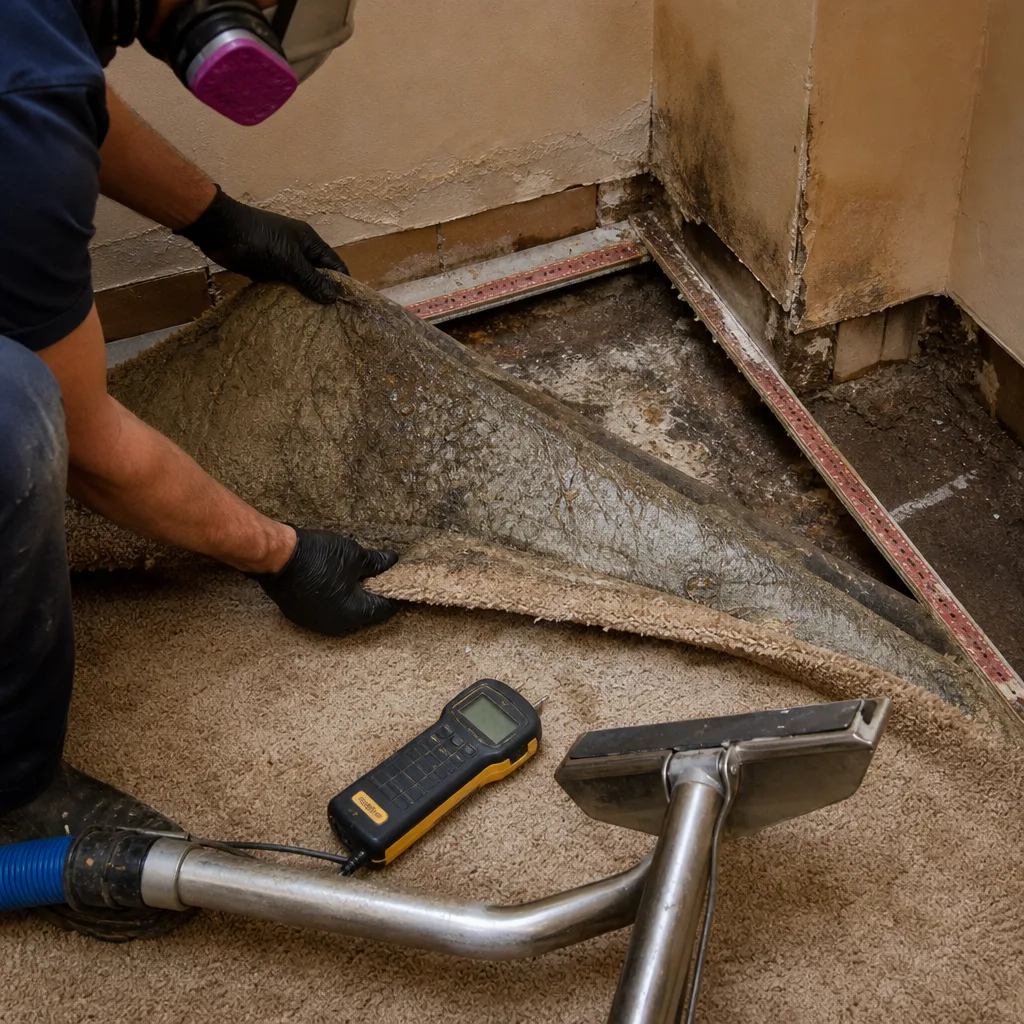
Industrial Facility Cleanup
Warehouse and light-industrial spaces along the rail corridor and near the Saddle Brook border need high-capacity extraction and drying layouts. We run larger dehumidifier banks and more air movers per square foot, and we manage the scheduling so production lines or loading docks can keep running where safe.
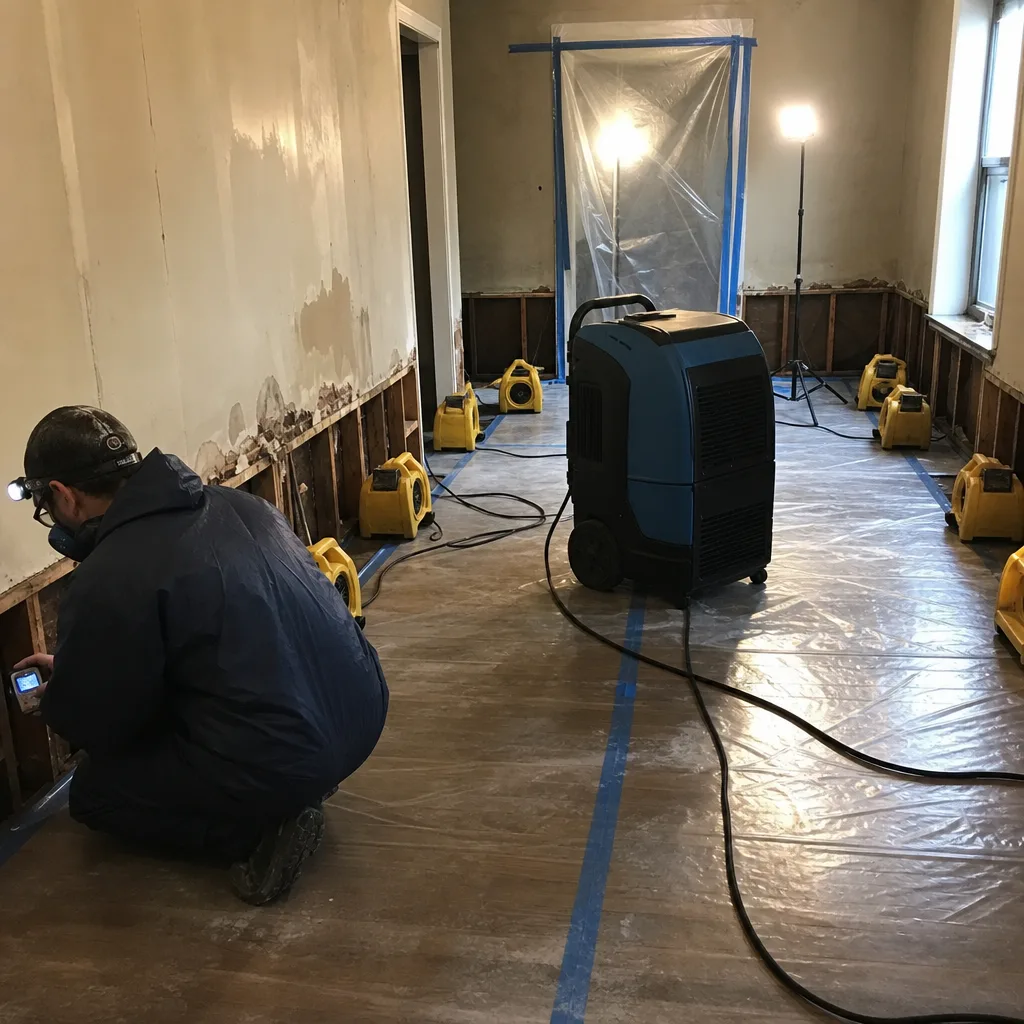
Large-Loss Response
When a strip mall, office building, or multi-tenant property takes a major water or fire loss, the first 24 hours set the cost curve. We mobilize multiple crews, set up command-and-control documentation, and get extraction running in every affected unit the same day. Direct coordination with your carrier starts immediately.
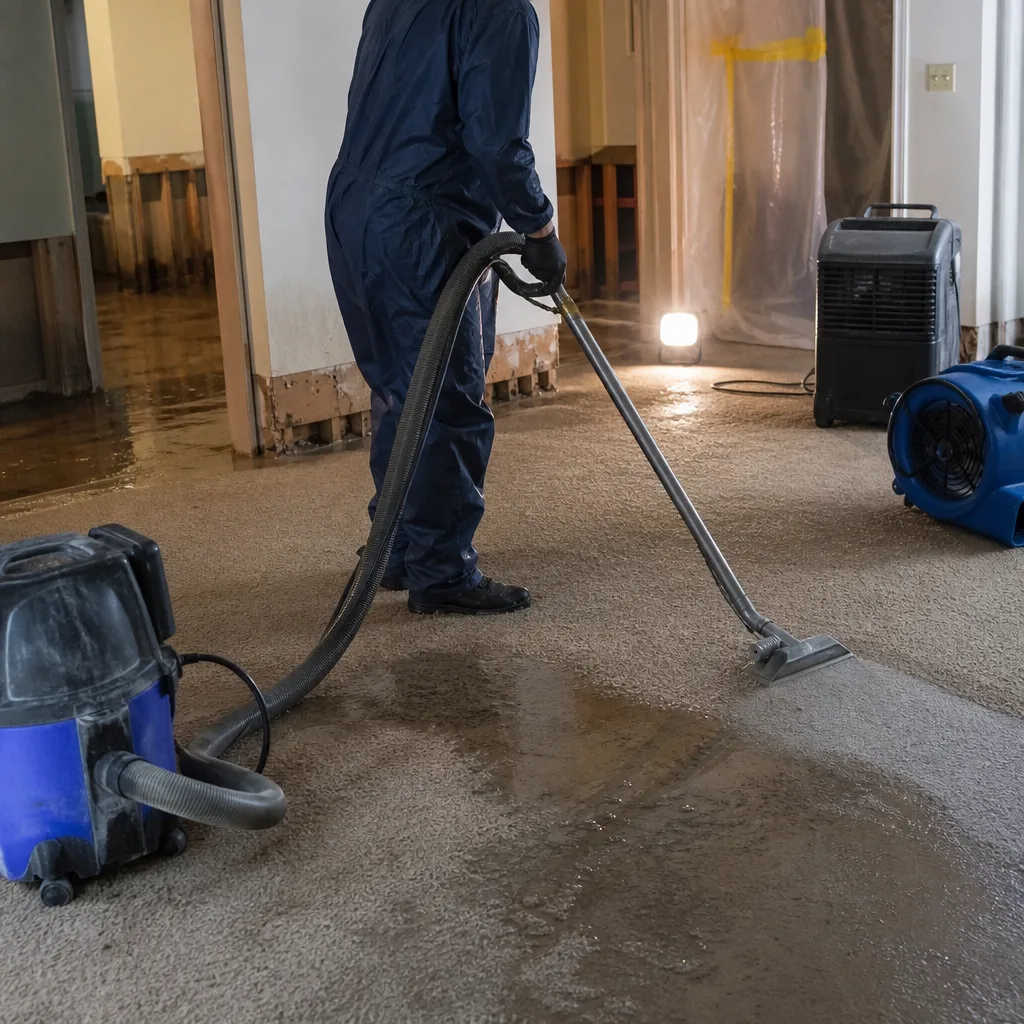
Business Interruption Minimization
The goal is not just drying the building. It’s keeping your business running. For a Garfield auto repair shop with a flooded bay, that means isolating the wet area, rerouting foot traffic, and working in phases so the front counter stays open while the back bay dries. For a retail store, that means containment walls and odor control so you don’t lose a week of sales. We plan around your revenue stream, not just your floor plan.
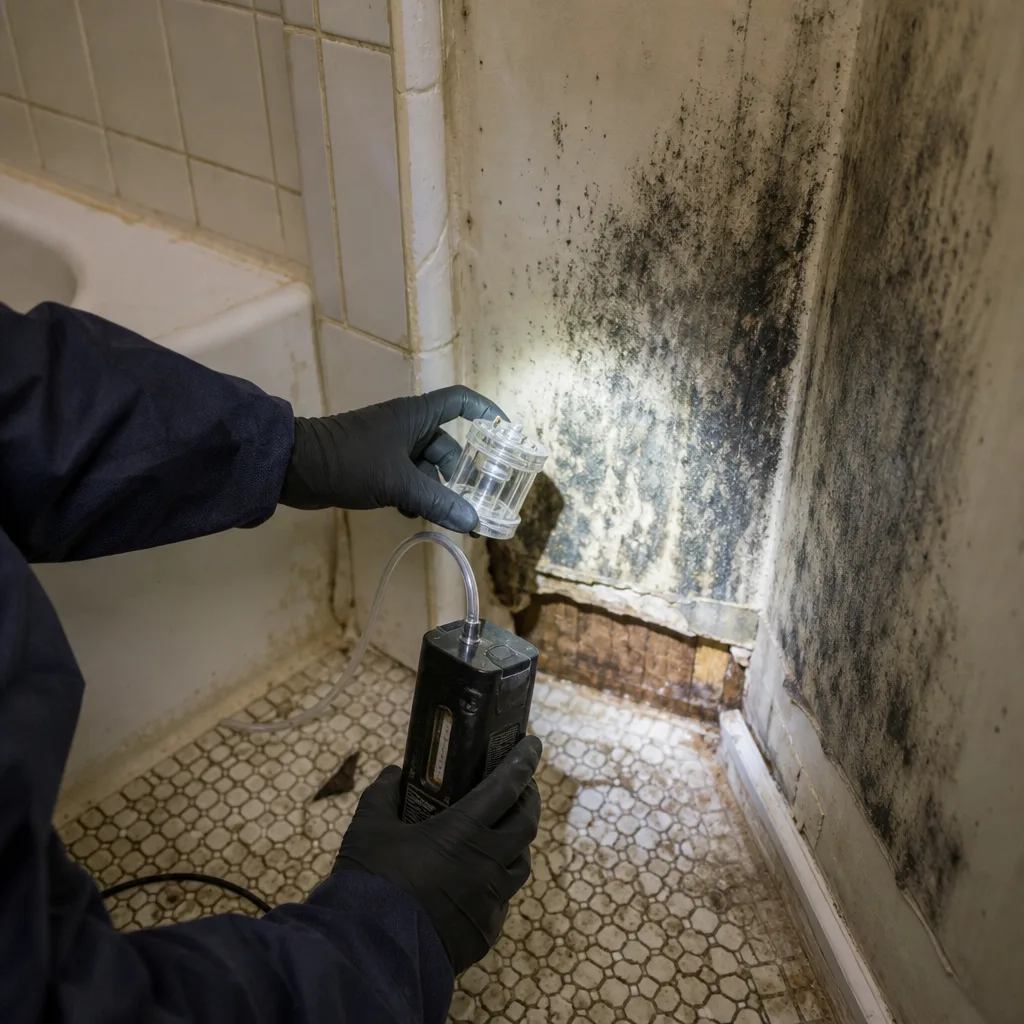
What happens when you call
- 1
A real person answersNo phone trees - you reach a local pro.
- 2
You get an upfront price rangeHonest numbers before anyone is dispatched.
- 3
A background-checked tech heads outLicensed & insured, dispatched right away.
- 4
You approve before work beginsNothing starts until you say go.
Commercial Restoration Costs in Garfield, NJ
Commercial water extraction and drying in Garfield typically runs $3.50 to $7.00 per square foot for a standard Category 2 office or retail loss, assuming structural drying is achievable without full reconstruction. A small pipe-burst cleanup in a single storefront often lands between $2,800 and $6,500. A multi-unit event with containment, pack-out, and reconstruction can push past $25,000 depending on finishes and structural replacement.
Category 3 sewage losses cost more because of containment, antimicrobial treatment, and disposal: expect $7 to $12 per square foot for full remediation. If foundation wall sealing or lateral repair is required, that adds $4,000 to $15,000 depending on access and depth. Most commercial policies in Garfield cover these losses, minus your deductible. The free visual inspection is how you find out what’s restorable and what your carrier will cover before you commit. Call (917) 924-4221 and we’ll walk you through it on site, in writing.
We Also Serve Cities Near Garfield
Floodline Restoration Co. of Manhattan runs commercial restoration crews throughout this part of Bergen County. Beyond Garfield, we regularly answer calls in Garfield‘s neighboring communities: Lodi, Passaic, Wallington, and Saddle Brook. Same dispatch board, same 45-minute response commitment, same written scope before work starts.
Garfield Commercial Restoration Questions, Answered
How does Garfield’s clay soil affect drying time in a commercial basement after a snowmelt event?
Clay soil holds water against foundation walls and slows the natural drying process, so a snowmelt seepage event in Garfield often requires longer dehumidifier run times and additional inspection for hidden wall-cavity moisture. We plan for extended drying curves on any below-grade space in this soil type and monitor daily until the dry standard is met.
What’s the biggest hidden risk in older Garfield storefronts with stone-and-mortar foundations?
Chronic seepage that has been wicking groundwater into wall cavities for years before any visible stain appears. By the time a musty odor or bubbling paint shows up, mold has often been feeding inside the cavities for a long time. Moisture mapping and thermal imaging are the only ways to see it.
Can you keep our Garfield office open during a Category 2 water cleanup?
In most cases, yes. We set up containment barriers, run dehumidifiers and air movers within the contained area, and phase the work so non-affected zones stay usable. If the contamination has spread into HVAC ducting or shared wall cavities, a partial closure may be unavoidable, and we’ll tell you that upfront in the written scope.
How soon can you start water extraction in a Garfield strip mall after a pipe burst?
Our commitment is a crew on site within 45 minutes of your call in Garfield. Extraction begins the same visit, not the next day. The first hour determines how much flooring, inventory, and drywall can be saved. Call (917) 924-4221 and a live dispatcher confirms the ETA immediately.
What does business interruption minimization look like for a Garfield auto repair shop with a flooded bay?
We isolate the flooded bay with containment, extract and dry it independently, and schedule the work so the front counter and other bays stay open. If the water came from a Category 3 sewer backup, the affected bay is closed until remediation and clearance, but the rest of the shop can often keep operating behind containment.
Will my commercial insurance cover a slow seepage loss in Garfield?
Most commercial policies cover sudden and accidental water damage, but chronic seepage is a gray area some carriers dispute. That’s why we document everything from the first hour: photos, moisture maps, daily logs, and a line-item scope that shows exactly when and how the damage occurred. Direct adjuster coordination is standard. We bill the carrier directly.
What certifications do your commercial restoration crews carry?
Our technicians are background-checked, uniformed, and certified to IICRC standards, including WRT for water damage, FSRT for fire and smoke, and AMRT for mold remediation. We also follow RIA and IFA standards, and we use Dri-Eaz, Phoenix, and XPOWER equipment on every commercial job.
What should I do in the first 30 minutes after a commercial water loss in Garfield?
Call us. Then kill the water source if you can do so safely. Don’t walk through standing water, especially in older Garfield buildings where electrical panels may be below grade. Don’t move inventory into dry areas without documenting where it came from; insurance claims need that record. We’ll handle the rest from the moment the crew arrives.
Serving Garfield, NJ - Our Local Coverage Area
We’re based in the Garfield area and know this community well. Use the map below to see our service coverage - if you’re nearby, we can almost certainly help.
The Garfield Foundation Problem Most Contractors Miss
Garfield’s post-war Cape Cods and colonials sit on clay-heavy soils that push groundwater into stone-and-mortar foundations every spring melt. That’s a housing fact, but it becomes a commercial restoration fact the moment one of those converted houses is a storefront, an office, or a mixed-use building. Chronic seepage in a residential basement is a nuisance. In a commercial space with inventory, drywall, electrical runs, and daily foot traffic, the same seepage is a recurring loss that shuts down revenue every March.
We see this weekly. Freeze-thaw cycles crack old clay sewer laterals under commercial slabs, causing slow Category 3 backups that go unnoticed until flooring delaminates. Ice dams on flat commercial roofs drip into drop ceilings for weeks, soaking insulation and spawning mold before anyone sees a stain. Cast-iron drain lines in mid-century buildings scale and split during cold snaps, flooding offices with Category 1 water that turns grey within hours. On a Main Street retail unit, our techs traced a musty odor to a 1940s foundation wall where spring snowmelt had wicked through the stone-and-mortar for years. Moisture mapping showed 98% relative humidity inside a rear stockroom cavity, and our pack-out team found Category 2 water had soaked original oak flooring. We set up containment, ran Dri-Eaz dehumidifiers and air movers after structural drying, and replaced the compromised base plates with pressure-treated lumber before rehanging drywall to pre-loss condition.
That chronic-seepage pattern, hidden mold, and cold-weather building failure is the spine of commercial restoration work in Garfield. It’s why we inspect the foundation wall itself on every below-grade loss, and why we document the full moisture history, not just the puddle you called about. The line the water left is where we start.
Written by Curt Bowman, Owner at Floodline Restoration Co., serving Garfield since 2010.
For commercial restoration in Garfield, call (917) 924-4221 any hour, any day. A live person answers. A certified crew comes. Done right, and backed in writing.