
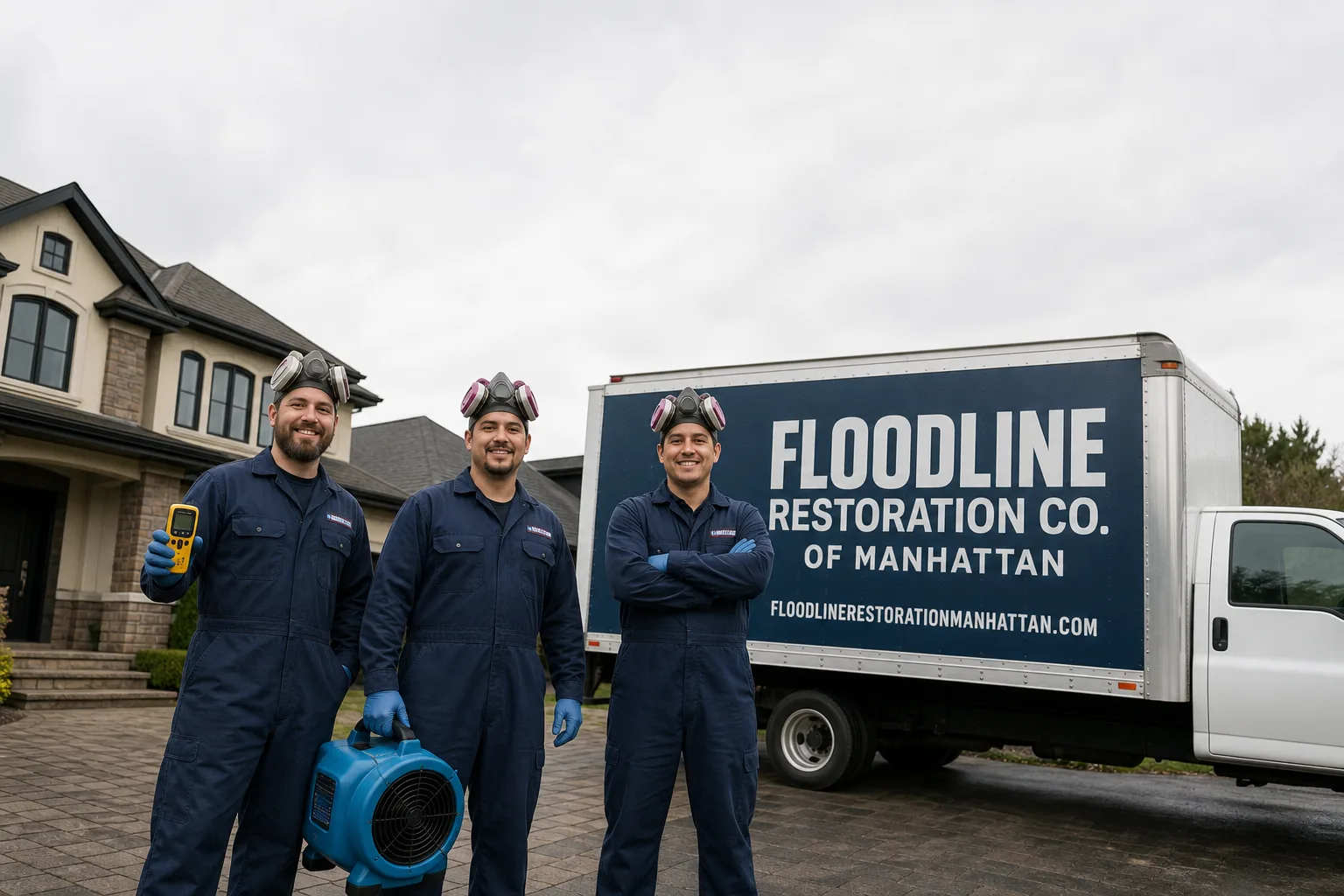
Free visual inspection and a written scope of work before any mitigation begins - photos, moisture readings, and drying logs go in your claim file
The scope we write is the scope we bill. Anything new gets shown to you, in writing, before we touch it.






 Before
 After
After Before
 After
After Before
 After
After24/7 Emergency Fire & Smoke Damage Restoration in College Point
Fire and smoke damage in College Point rarely starts as a simple burn. Because this low-lying peninsula sits inside FEMA Flood Zone AE, storm surge and tidal backflow often arrive first, soaking basements and ground floors with Category 3 water before soot ever settles. Our crews start with the water, then move to the fire. Call (917) 924-4221 any hour, day or night. A live dispatcher answers in Queens, and a certified crew reaches College Point fast, usually within 45 minutes. The first hour matters because smoke residue turns acidic as it sits, etching glass, corroding metal fixtures, and driving odor deeper into plaster and framing.
Understanding Fire & Smoke Damage Restoration Severity in College Point Properties
College Point’s housing stock runs heavy on 1930s to 1960s Cape Cods, brick semi-detached homes, and modest colonials with full or semi-finished basements. Those original plaster walls and old-growth framing hold smoke differently than modern drywall. Dry smoke residue from a fast, hot fire leaves a fine powdery soot that spreads on air currents. Wet smoke from a smoldering fire creates a sticky, malodorous film that bonds to surfaces. Protein residue from a kitchen fire is nearly invisible but seals in rancid odor. Each type requires a different cleaning chemistry and a different dwell time. And in College Point, there is a fourth variable almost no generic restoration guide covers: saltwater from Flushing Bay. When Category 3 surge water mixes with fire debris, the contamination profile changes. We treat those jobs as dual-loss events, not standard fire cleanups.
Why College Point Property Owners Choose Floodline Restoration Co. of Manhattan
- 45-minute response commitment - our crews stage from the New York City office and reach College Point through the Whitestone Expressway or College Point Boulevard, not across the East River.
- Live answer, 24/7 - a real person picks up at 2 a.m., not a recording, not a call center in another state. The dispatcher knows Queens geography.
- IICRC-certified crews - our technicians carry FSRT (Fire & Smoke Restoration Technician), WRT (Water Damage Restoration Technician), and AMRT (Applied Microbial Remediation Technician) certifications. The certification matters here because fire and flood loss overlap on nearly every College Point job.
- Free visual inspection - no charge, no obligation, no pressure. We walk the damage, write the scope, and hand you the price before any work starts.
- Direct insurance billing - we bill your carrier directly and handle the adjuster conversation. You sign the work order. We handle the paperwork.
- One team from start to finish - the crew that extracts the water on day one is the same crew that removes soot, runs dehumidifiers, and rebuilds the wall. No mid-job handoff, no inherited subcontractors.
Our Fire & Smoke Damage Restoration Process
Inspection & Assessment
We walk every room, not just the burn site. Thermal imaging finds heat migration inside walls. Moisture meters map the surge water that came in before or during the fire. We identify the smoke type and contamination class, then write the scope.
Extraction & Stabilization
In College Point, this often means pumping Category 3 water from the basement first, then boarding up broken windows or tarping roof damage. We stabilize the structure before any smoke work begins.
Drying & Dehumidification
Dri-Eaz dehumidifiers and Phoenix air movers run on a moisture map, not a guess. Daily readings get logged until the dry standard is met. Saltwater jobs take longer. We do not rush it.
Cleaning & Sanitization
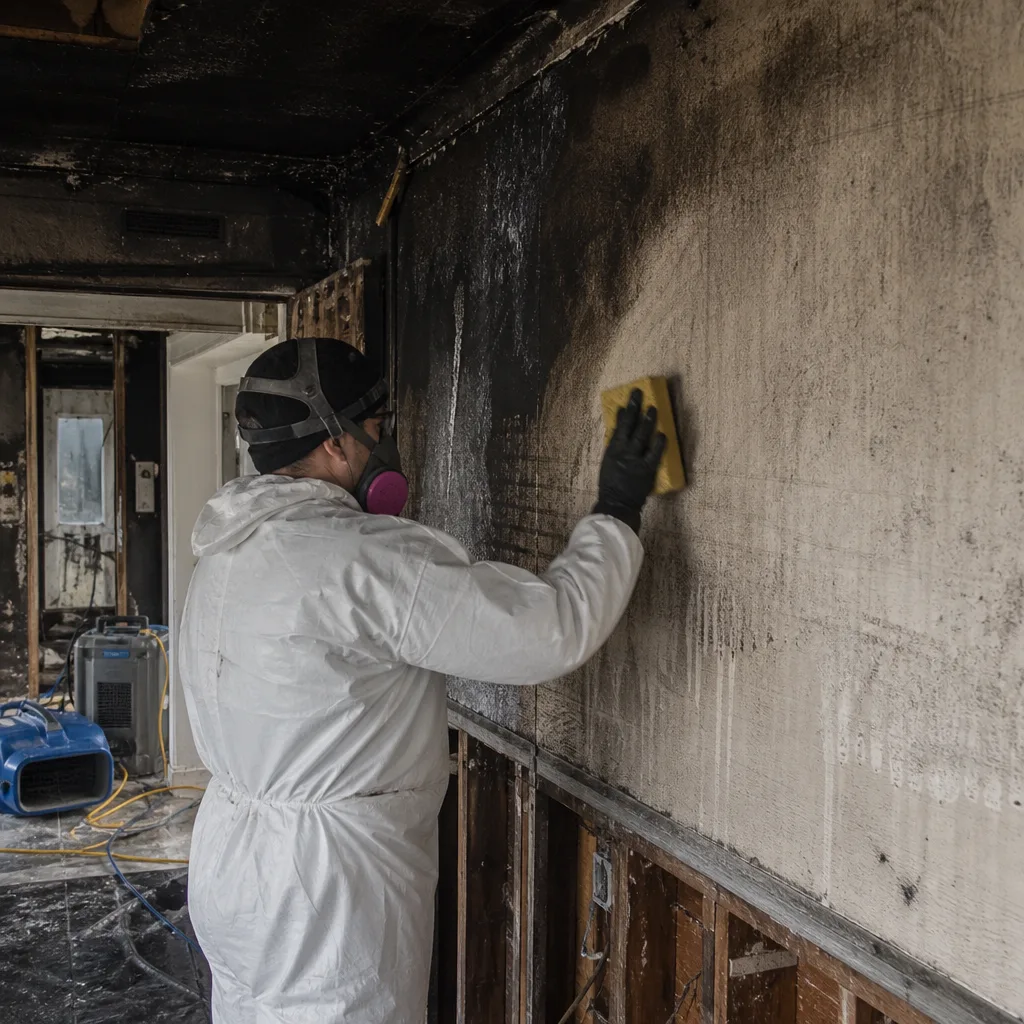
Soot is removed room by room with HEPA vacuums, dry chemical sponges, and appropriate wet cleaning agents. We sanitize surfaces with antimicrobial treatments rated for post-fire contamination.
Odor Removal & Deodorization
Smoke odor lives in porous materials. We use thermal fogging, ozone treatment, and hydroxyl generators as the situation demands. In College Point basements, we check for mold behind finished walls before deodorizing, because post-Sandy renovations often hide legacy microbial growth.
Repairs & Restoration
The same crew that dried the framing now replaces it. Drywall, paint, trim, flooring, cabinetry. Structural fire repair is done to code, with written documentation at every stage.
Need Emergency Fire & Smoke Damage Restoration in College Point Now?
Crews minutes away, answering live 24 hours a day. The sooner we start, the less it costs.
Working With Your Insurance Company
Most College Point homeowners file a claim after a fire. The process works better when the restoration company documents everything from hour one. We photograph every room before touching anything. We log moisture readings daily and provide drying charts your adjuster can read without a translator. Our scopes are written in standard insurance language so the estimate matches what the carrier expects to see. We talk to your adjuster directly, on the phone and on site. You do not carry messages between us. That alone removes most of the stress from a fire claim. And because many College Point homes carry flood insurance through FEMA’s NFIP in addition to homeowners coverage, we know how to separate the fire damage from the surge damage so each policy pays what it owes.
What We Provide Your Insurer
- Thorough documentation of the loss
- Photos of all damage, room by room
- Moisture readings and drying logs
- A detailed, line-item scope of work
- Direct coordination with your carrier
Built for College Point’s Loss Calendar
The fire season in College Point follows the weather, and the weather here comes off Flushing Bay. Winter nor’easters push surge water into basements along 14th Avenue and 23rd Avenue, shorting electrical panels and igniting furnace rooms that were never supposed to stand in saltwater. Deep freezes burst supply lines in unheated Cape Cod additions. Summer thunderstorms overwhelm the old combined sewers, backing water up through basement drains and creating the same short-circuit risk. Then there is the aging wiring in pre-1960s construction, often original to the house, that fails quietly until it doesn’t. A fire in College Point is rarely just a fire. It is water plus fire plus salt plus time. That is the calendar we work from, and it is why our crews carry both flood and fire equipment on every dispatch.
Fire & Smoke Damage Restoration Across College Point’s Neighborhoods
The neighborhood splits into distinct bands, each with its own restoration profile. Down near MacNeil Park and along the waterfront edges of 119th Street, homes face the worst surge exposure. Basements there flood first and deepest, and fire jobs always start with flood extraction. Up along College Point Boulevard near the commercial corridor, apartment buildings and attached storefronts share walls, which means smoke migrates sideways into neighboring units within hours. Around 14th Avenue and 18th Avenue, the sea of 1930s brick semi-detached homes produces tight alleyways and shared driveways, so our crews stage equipment carefully and coordinate with neighbors on parking. Over by Powell’s Cove Park, the newer construction has better drainage, but the wind off the bay pushes smoke farther and faster through open windows and unsealed roof vents. The ZIP codes 11356 cover all of it. We know the blocks, the access routes, and the places where FDNY response patterns affect how long a fire smolders before full suppression.
Specialized Fire & Smoke Damage Restoration Services We Offer in College Point
Emergency Board-Up & Tarping
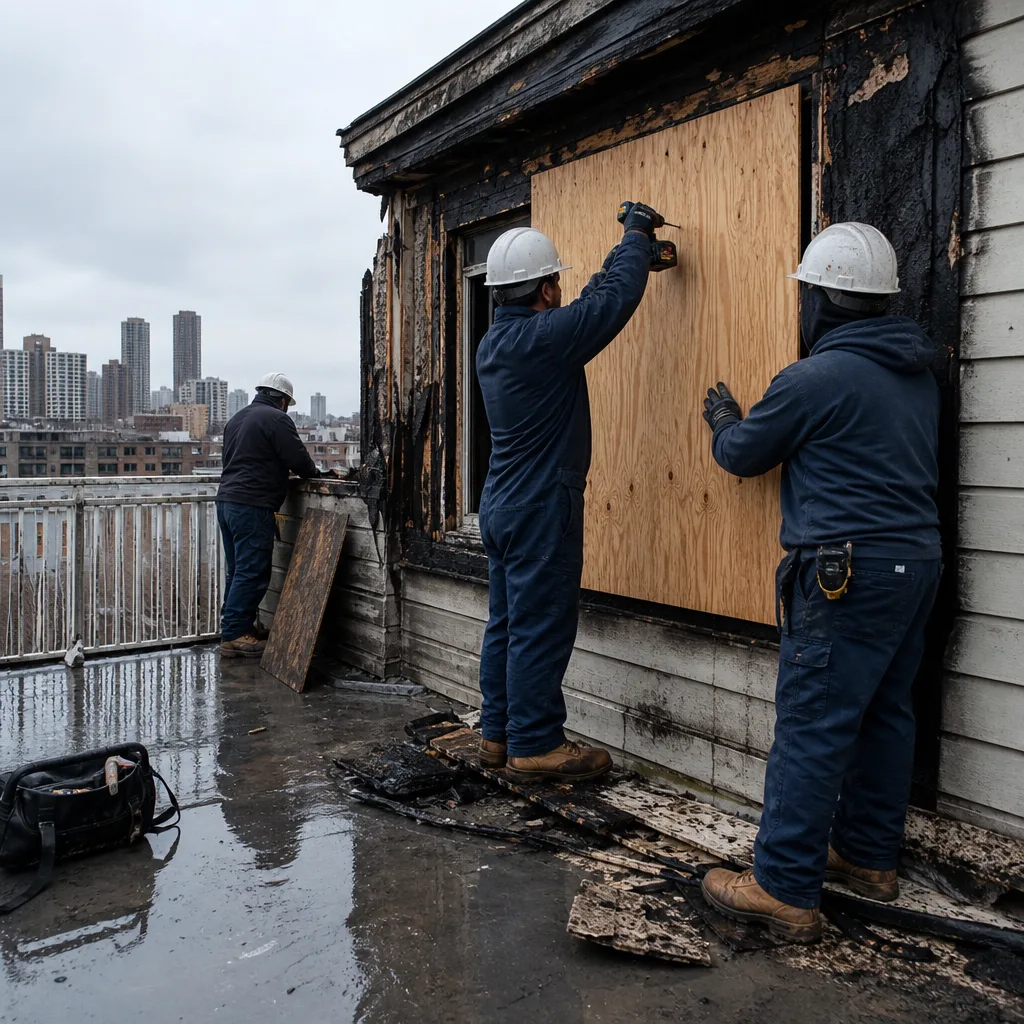
After a fire, a College Point home sits open to Flushing Bay weather within the hour. Broken windows on the bay side invite salt spray and rain into charred framing. We board and tarp immediately, securing the structure against both weather and unauthorized entry. On the peninsula, this step is more urgent than in Flushing or Whitestone because the three-sided water exposure means the next tide is never far away.
Fire Damage Cleanup
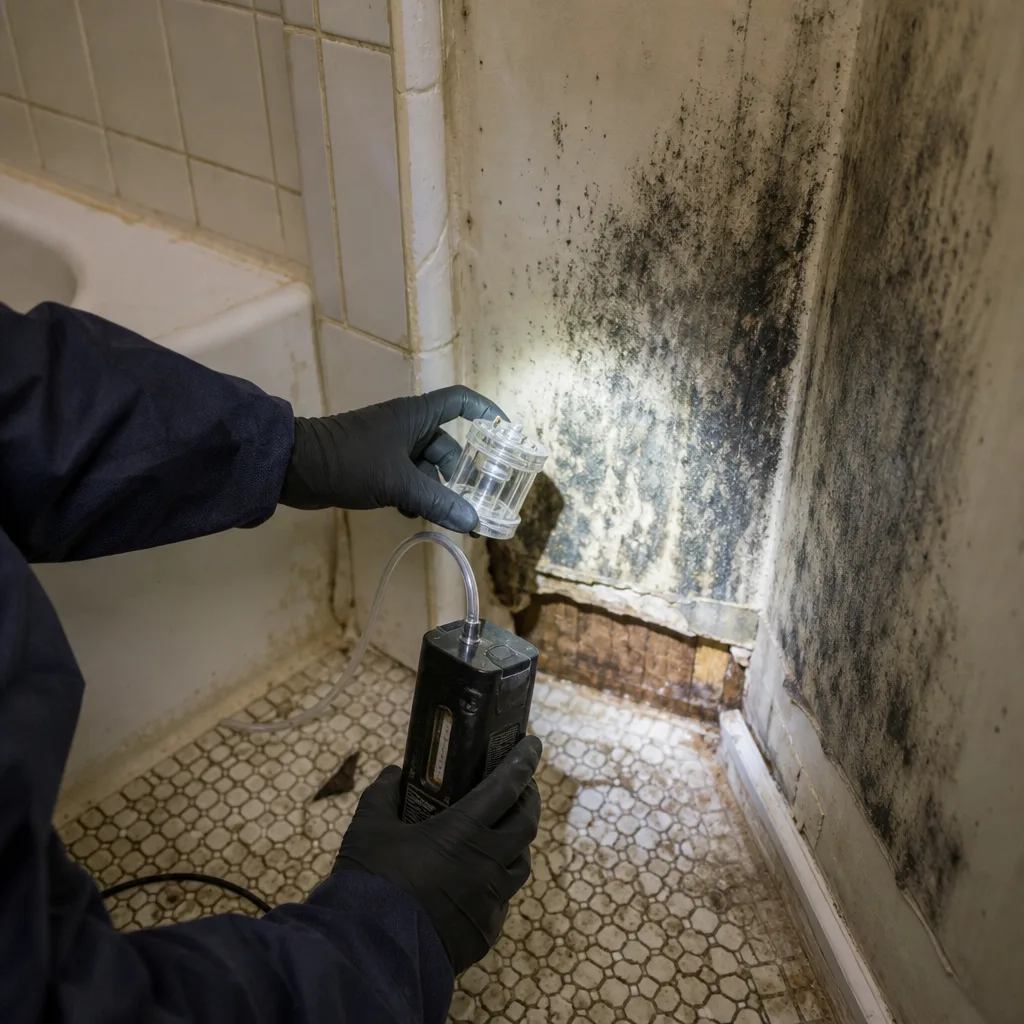
We remove charred debris, HEPA-vacuum soot from every horizontal surface, and clean what can be saved. In College Point basements, this often means pulling saturated insulation and cutting out drywall before any smoke cleaning happens. The fire damage cleanup cannot begin properly until the water is gone.
Smoke & Soot Removal
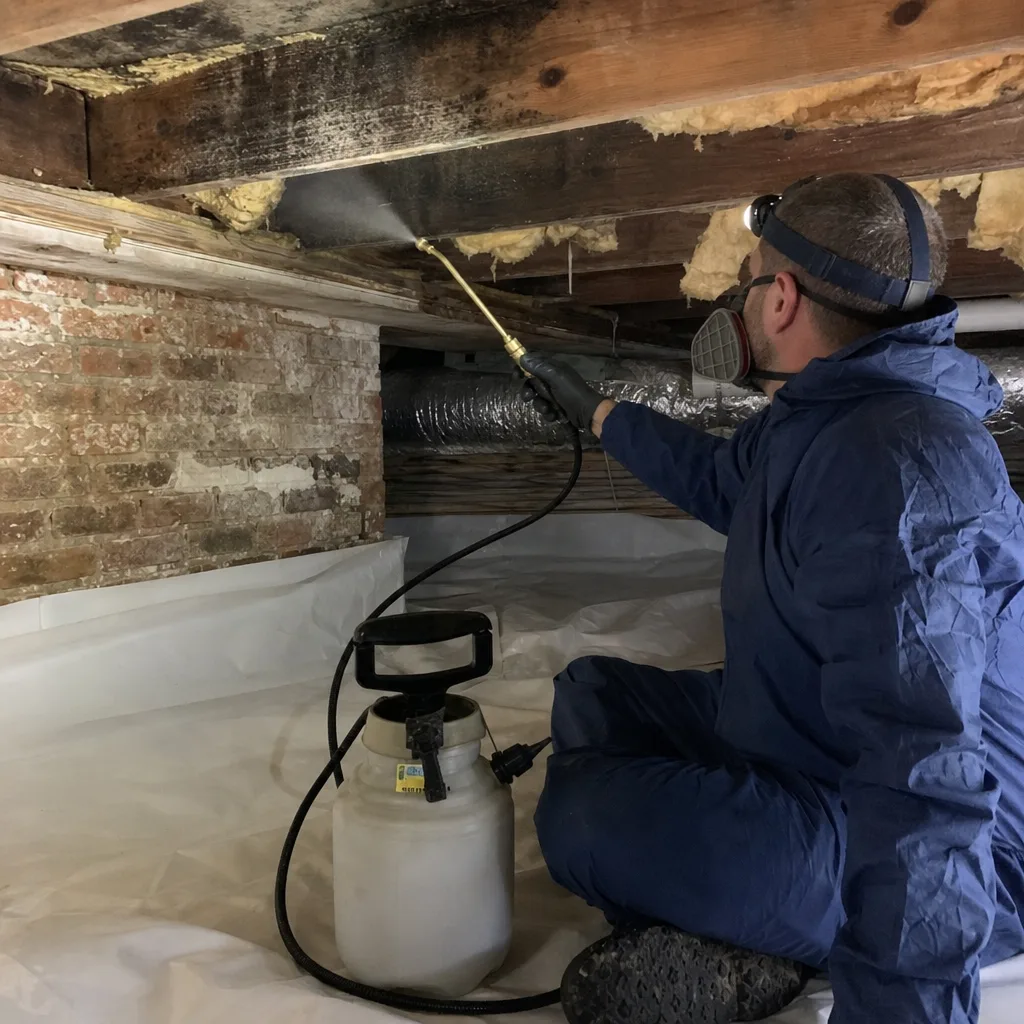
Soot clings to original plaster walls and old wood trim in College Point homes differently than it does on modern painted drywall. The porous surfaces absorb it. We clean with dry chemical sponges first, then wet methods, then seal with an odor-blocking primer where necessary. Rushing this step guarantees odor rebound in six months.
Odor Removal & Deodorization
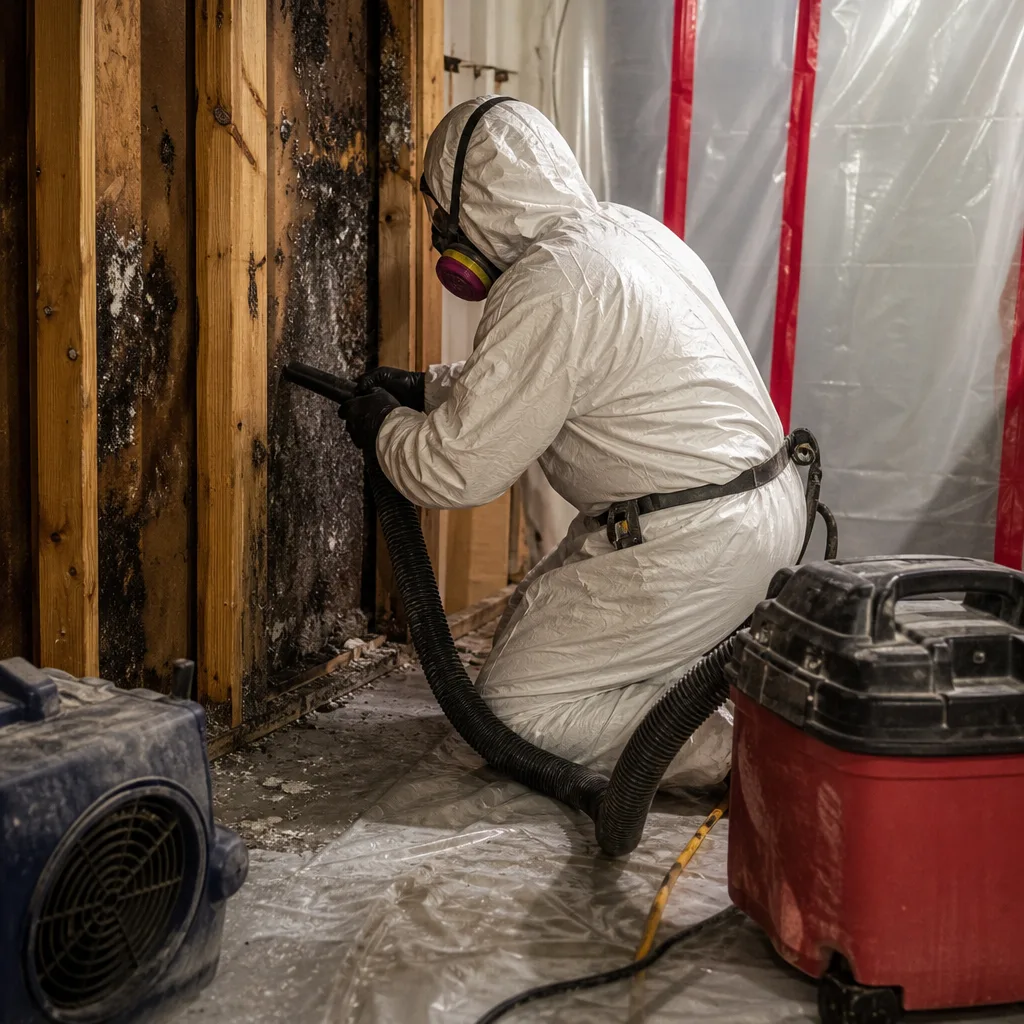
Smoke odor is a gas, not a stain. It migrates through wall cavities, under baseboards, into closet clothing and upholstered furniture. We treat it with thermal fogging and hydroxyl generation, not just air fresheners. In post-Sandy Build It Back basements, we check for hidden mold before deodorizing, because the two problems feed each other and masks do not solve either one.
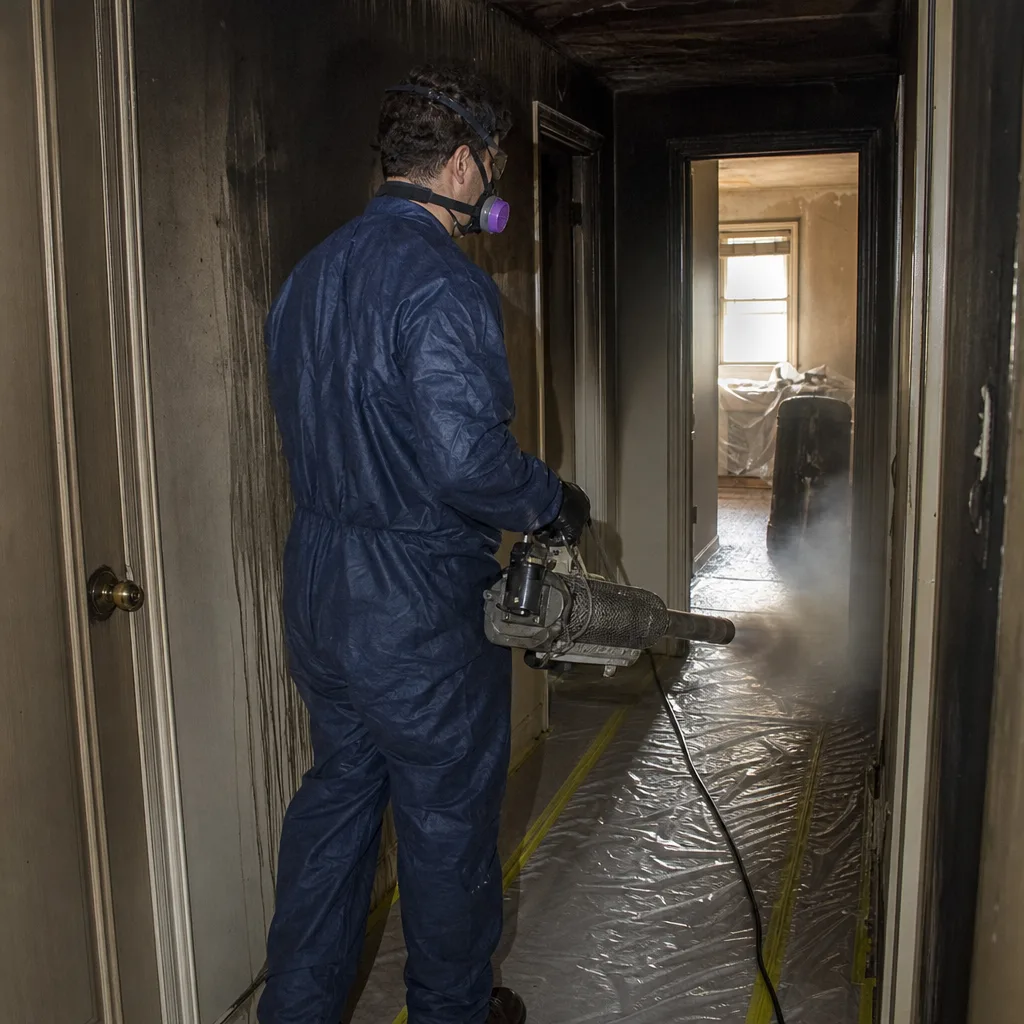
Contents Cleaning & Pack-Out
Furniture, clothing, dishes, books. If it can be cleaned, we clean it. If it needs off-site treatment, we pack it out with a documented inventory and bring it back when the house is ready. For older College Point homeowners who have lived in their house twenty or thirty years, those contents are not replaceable at a store. We treat them accordingly.
Structural Fire Repair
Burned joists, charred studs, damaged roof decking. We repair to code with permits pulled where required. The 90-Day Done Right Promise applies here just as it does to extraction. If the repair fails within 90 days, we make it right. In writing.
What happens when you call
- 1
A real person answersNo phone trees - you reach a local pro.
- 2
You get an upfront price rangeHonest numbers before anyone is dispatched.
- 3
A background-checked tech heads outLicensed & insured, dispatched right away.
- 4
You approve before work beginsNothing starts until you say go.
Fire & Smoke Damage Restoration Costs in College Point, NY
Fire damage restoration in College Point runs in layers. A small kitchen fire with no water involvement might cost $2,800 to $5,500 for soot cleanup, odor treatment, and repainting. Add water extraction from a surge event and the bill moves to $7,000 to $18,000 depending on how much drywall and insulation we pull. A full basement fire with structural repair and contents pack-out commonly lands between $25,000 and $60,000. These are real ranges for this neighborhood, not national averages. The free visual inspection gives you a firm line-item scope before any money changes hands. Most fire claims are covered by insurance. Flood claims go through FEMA’s NFIP if you carry it. Either way, the estimate we write is what we stand behind. No surprises on the bill, no games with the adjuster. Call (917) 924-4221 for an exact quote.
We Also Serve Cities Near College Point
Our crews serve College Point and the surrounding neighborhoods: Fire & Smoke Damage Restoration in College Point is our home base here, and we also run calls in Flushing, Whitestone, East Elmhurst, and Corona. Same live dispatch, same certified crews, same 90-Day Done Right Promise.
College Point Fire & Smoke Damage Restoration Questions, Answered
Why do Fire & Smoke Damage Restoration crews in College Point start with water extraction before touching soot?
Because in College Point, the water got there first. This peninsula sits inside FEMA Flood Zone AE, and storm surge from Flushing Bay enters basements before, during, or immediately after many structure fires. Category 3 saltwater is contaminated and must be extracted and the structure dried before soot removal. If you clean soot on top of saturated drywall, the odor and mold come back. Call (917) 924-4221 and we will explain the sequence on your specific job.
How does the saltwater from Flushing Bay surge change the fire damage restoration process in College Point?
Saltwater changes everything. It corrodes metal framing, wicks into old-growth wood faster than freshwater, and requires different antimicrobial treatment and a longer structural drying timeline. Freshwater drying logs do not apply on a Category 3 surge job. Our crews run Dri-Eaz dehumidifiers and Injectidry panels on moisture maps specific to saltwater intrusion, and we document daily readings for the carrier.
What should I check if my College Point home had a post-Sandy Build It Back renovation before a recent kitchen fire?
Check what is behind the finished walls. Many Build It Back renovations after 2012 addressed structural elevation and basic repairs but did not fully remediate mold or dry wall cavities. When fire-damaged framing is opened, legacy mold can re-release mycotoxins. Our technicians inspect for that before starting smoke work. If you are unsure whether your basement was properly remediated, call us at (917) 924-4221 for a free inspection.
Is emergency board-up more urgent in College Point than in neighboring Flushing or Whitestone?
Yes. College Point’s three-sided Flushing Bay exposure means wind-driven rain and salt spray enter broken windows and roof breaches faster than in more sheltered neighborhoods. The next tide is always close. We board and tarp quickly, and we do it to hold against real wind load, not just to cover the opening.
Why do you run dehumidifiers and air movers longer in College Point basements after a fire?
Because the building stock is old and the water is saltwater. Original plaster walls and 1930s to 1960s framing hold moisture deeper than modern materials, and saltwater wicks further and evaporates slower. Hitting dry standard takes longer. We measure with moisture meters, not calendars, and we do not shut the equipment down until the numbers say we are done.
How fast can a crew actually get to my College Point home?
Usually within 45 minutes. Our dispatchers are live around the clock and know the quickest routes through College Point, the Whitestone Expressway, and local streets near 14th Avenue and College Point Boulevard. Call (917) 924-4221 and a real person will tell you exactly who is on the way.
Will my insurance cover fire damage restoration in College Point?
Most homeowners policies cover fire and smoke damage. Flood surge damage requires a separate NFIP flood policy, which many College Point homeowners carry because of the Zone AE designation. We document both damage types separately, bill carriers directly, and talk to adjusters on your behalf. The estimate we write is the one the insurance company sees.
Can we stay in our home during fire damage restoration?
Sometimes. A small kitchen fire with no structural damage may only require keeping out of one room for a day or two. A fire involving electrical systems, extensive smoke, or Category 3 water often means relocation while we work. We advise honestly. Smoke particles embed in soft furnishings and lungs alike. If the air is not safe, we tell you plainly.
Serving College Point, NY - Our Local Coverage Area
We’re based in the College Point area and know this community well. Use the map below to see our service coverage - if you’re nearby, we can almost certainly help.
Fire & Smoke Damage Restoration Built for College Point’s Reality
Here is what the national franchise pages won’t tell you about fire damage in College Point: it is almost never just fire. This neighborhood sits on a low-lying peninsula that juts into Flushing Bay on three sides. Large swaths of the 11356 ZIP code are inside FEMA Special Flood Hazard Zone AE. When a fire breaks out during or shortly after a nor’easter, the same surge that filled your basement may have been the thing that shorted your panel in the first place. Our Fire & Smoke Damage Restoration team works the job in the correct order: water first, structure second, smoke third. On a 1950s brick semi-detached home near 14th Avenue, our crew stabilized a post-storm kitchen fire where wave-driven surge had already soaked original plaster walls with black water. We set negative air containment, pulled saturated drywall under moisture mapping, then ran Injectidry panels and Dri-Eaz dehumidifiers to hit dry standard before starting smoke and soot removal, because the hidden saltwater wicking into old-growth framing was the real driver of the scope of work. That is the job. That is every job here.
A high percentage of College Point homeowners went through NYC’s Build It Back program after Sandy. Many of those basements were structurally repaired but not fully remediated for mold or cavity-dried. When fire-damaged framing gets opened, that legacy moisture and microbial growth becomes active again. Experienced local restoration techs treat any pre-2015 basement renovation as potentially carrying hidden mold before starting new work. We do not assume the last contractor finished the job. We check.
Floodline Restoration Co. of Manhattan has been doing this work for over 42 years, founded by Curt Bowman and built around a dispatch board, not a sales desk. The 90-Day Done Right Promise, the Keystone Standard, applies to every job in College Point, in writing, no arguing. K.E.Y.S.: Krafted right, Every time, Your home first, Standing behind it. That is the whole deal. Senior and veteran discounts of 5% always apply. $50 off any repair over $250. $89 seasonal tune-up. We answer the phone with a person at 2 a.m. and we show up when we say we will. Call (917) 924-4221 for a free estimate and a straight answer.
Written by Curt Bowman, Owner at Floodline Restoration Co. of Manhattan, serving College Point with certified fire and water restoration since 2010.