
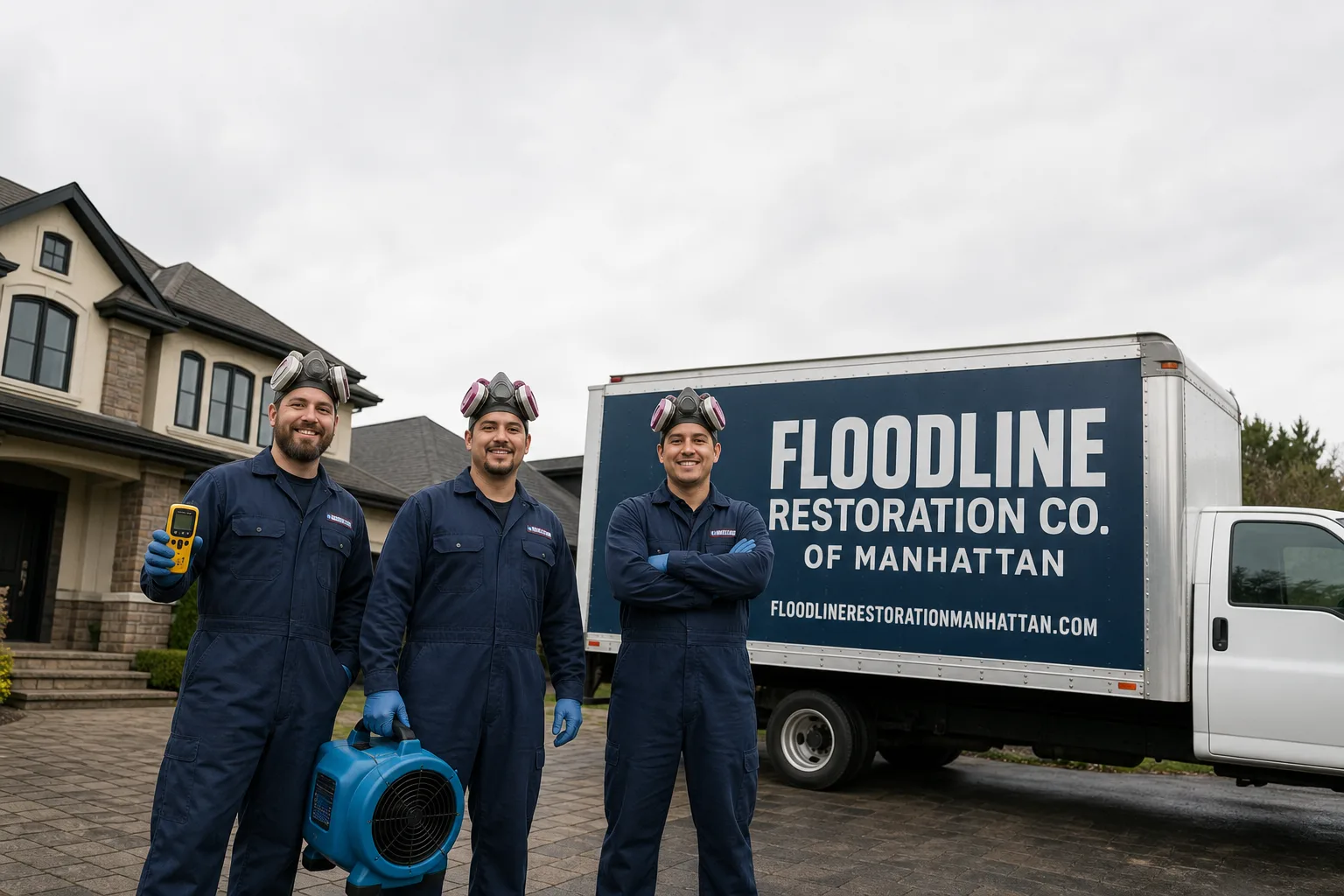
Free visual inspection and a written scope of work before any mitigation begins - photos, moisture readings, and drying logs go in your claim file
The scope we write is the scope we bill. Anything new gets shown to you, in writing, before we touch it.






 Before
 After
After Before
 After
After Before
 After
After24/7 Emergency Fire & Smoke Damage Restoration in Corona
Fire and smoke damage in Corona moves fast. Soot etches porcelain and metal within 48 hours, and smoke odor sets into plaster, drywall, and fabric the longer it sits. If you’ve had a kitchen fire, an electrical burn, or a small blaze in a converted cellar unit, our crews are on call right now at (917) 924-4221. We answer live, 24 hours a day, and dispatch crews into Corona neighborhoods including LeFrak City, North Corona, and the blocks off Roosevelt Avenue. The first hour determines whether we clean surfaces or replace them. Call now for a free visual inspection and a straight answer on what needs to happen next.
Understanding Fire & Smoke Damage Restoration Severity in Corona Properties
Corona’s housing stock is mostly attached two- and three-family brick row houses built between 1915 and 1945. Those buildings share party walls, which means smoke does not stop at your side of the wall. We regularly find light-to-moderate smoke residue inside a neighbor’s closet or stairwell after a contained kitchen fire, because smoke travels through unsealed chase ways, joist bays, and gaps around old plumbing stacks. Soot in Corona row houses tends to be dry protein soot from cooking fires or oily fuel soot from electrical and furnace burns. On original plaster-and-lath, dry soot sits on the surface but oily soot binds and requires dry-ice blasting or chemical sponges, never water-based wet cleaning. Wet cleaning on plaster pushes contaminated runoff into wall cavities where it feeds odor and mold for months. Severity also depends on whether the fire touched a below-grade cellar apartment, where ventilation is poor and smoke lingers in ceiling bays and the underside of the first-floor framing. Those spaces need aggressive HEPA air scrubbing, thermal fogging or ozone treatment, and often controlled demolition of charred lath rather than surface cleaning.
Why Corona Property Owners Choose Floodline Restoration Co. of Manhattan
- 45-minute response commitment: When you call about fire or smoke damage in Corona, we give you a firm arrival window and keep it. A live dispatcher tracks the crew from our New York City office to your block.
- 24/7 live answer, never a recording: At 2 a.m. after a stove fire off Junction Boulevard, a real person picks up. We do not route you to a voicemail or a call center script.
- IICRC-certified fire and smoke technicians: Our crews hold IICRC Fire & Smoke Restoration Technician (FSRT) and Odor Control Technician (OCT) credentials, and they train to RIA and IFA standards on soot chemistry and containment.
- Free visual inspection with a written scope: Before any work begins, we walk the affected rooms, document the damage, and hand you a line-item scope with prices. You approve it before we touch anything.
- Direct insurance billing: We bill your carrier directly and document the loss from the first hour, so you are not the messenger between us and the adjuster.
- One team from first response to final repair: The same certified crew that scrubs soot handles the board-up, pack-out, structural repair, and final walkthrough. No mid-job handoff to a different subcontractor.
Our Fire & Smoke Damage Restoration Process
Inspection & Assessment
We begin with a room-by-room inspection using thermal imaging and hygrometers to map heat migration, hidden char, and moisture from fire suppression. On Corona row houses, we specifically check shared wall cavities and the joist bays above cellar units, where smoke hides and re-contaminates cleaned rooms later. You get a written scope with a firm price before any work starts.
Extraction & Stabilization
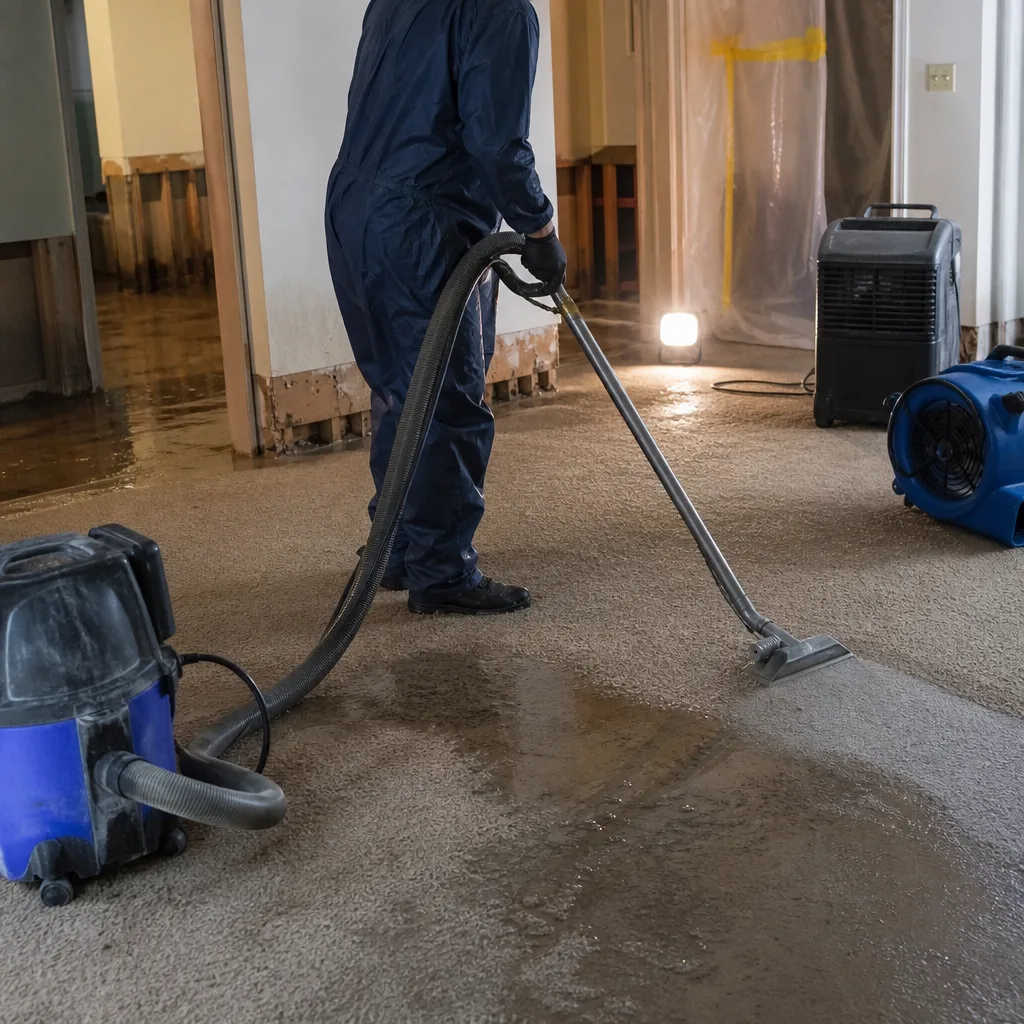
We remove standing water from firefighting efforts using professional-grade Dri-Eaz and Phoenix extraction units. We cut off and bag charred drywall or plaster that cannot be saved, secure the property with board-up or tarping, and contain the affected area with negative air pressure so soot does not migrate into clean rooms or a neighbor’s unit.
Drying & Dehumidification
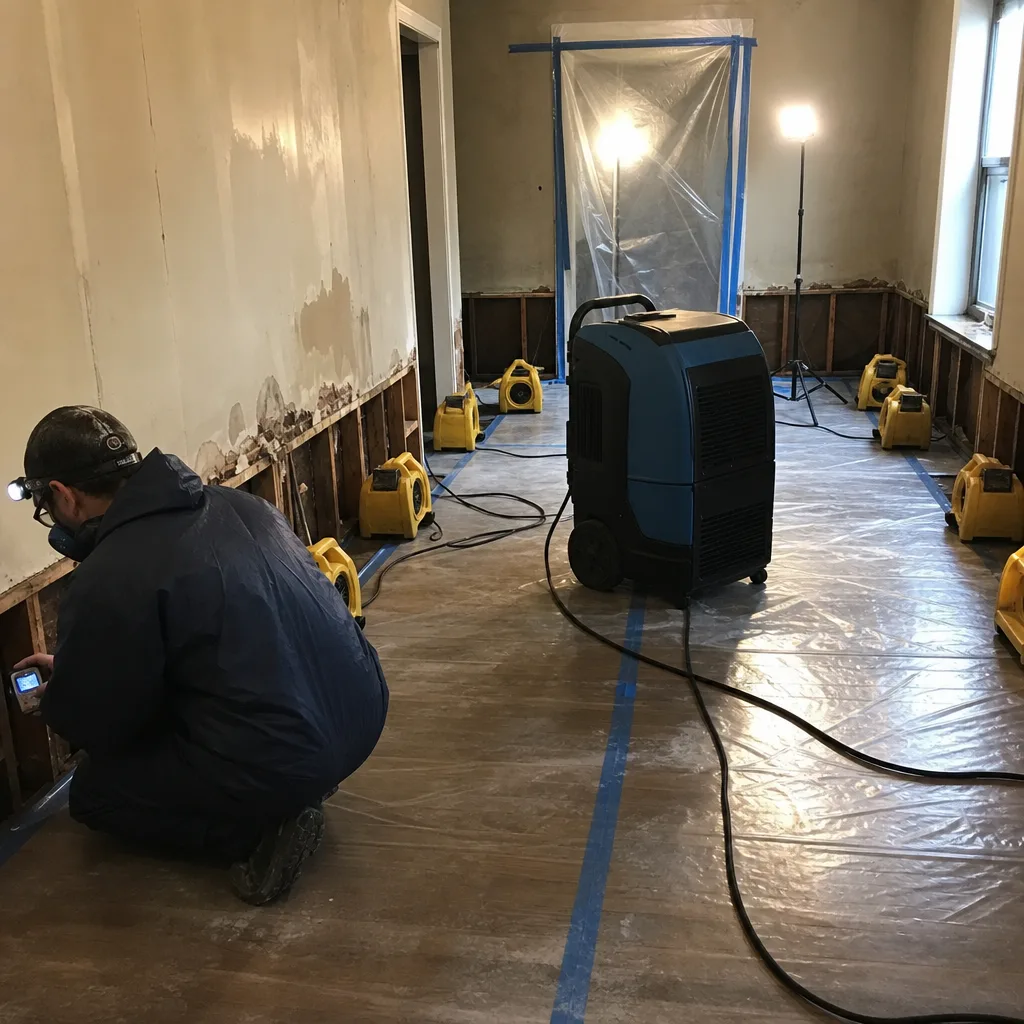
Fire suppression water soaks into subflooring, baseboards, and plaster. We set Phoenix dehumidifiers and XPOWER air movers, take daily moisture readings, and keep a drying log until materials reach the dry standard. In Corona’s tight row houses, we monitor adjoining spaces too, because shared floor systems pass moisture laterally.
Cleaning & Sanitization
Soot removal is chemistry-specific. Dry protein soot responds to dry-ice blasting and chemical sponges. Oily soot from electrical fires requires hot water extraction with proper containment, never open wet wiping. We run HEPA air scrubbers throughout the cleanup and apply an antimicrobial treatment to all affected surfaces to stop odor-causing residue at the source.
Specialty Fire & Smoke Treatment
For smoke odor in Corona row houses, we use thermal fogging that penetrates the same path smoke took into plaster, wood, and fabric. In attached homes, we may also seal the party wall cavity after cleaning to prevent odor transfer back into your living space from a neighbor’s side. Contents cleaning happens here too, on-site when possible, or at our pack-out facility with an itemized inventory.
Repairs & Restoration
We rebuild what fire or water destroyed: framing, drywall, plaster, flooring, paint, and trim. For pre-war Corona homes, that often means matching original plaster profiles, replacing sections of old lath, and coordinating with the NYC Department of Buildings when the fire affected a converted cellar apartment that cannot legally return to its prior occupancy. The 90-Day Done Right Promise covers every repair in writing.
Need Emergency Fire & Smoke Damage Restoration in Corona Now?
Crews minutes away, answering live 24 hours a day. The sooner we start, the less it costs.
Working With Your Insurance Company
Most Corona homeowners and landlords carry fire coverage that includes smoke damage, soot cleanup, and structural repair. The claim succeeds or fails on documentation. If you wait and the adjuster sees only cleaned surfaces, you eat the cost of hidden smoke damage that shows up months later as odor or staining behind walls. Our team photographs the loss room by room, logs moisture readings daily, and writes a line-item scope your adjuster can match against their estimating software. We talk to the carrier directly. You do not chase the claim, and you do not argue about whether thermal fogging was necessary. If coverage questions come up about an illegal cellar unit, we can explain what the policy will and will not touch before you spend a dollar.
What We Provide Your Insurer
- Thorough documentation of the loss
- Photos of all damage, room by room
- Moisture readings and drying logs
- A detailed, line-item scope of work
- Direct coordination with your carrier
Built for Corona’s Loss Calendar
Corona’s fire losses follow a pattern we have watched for years. January and February bring electrical fires from overloaded circuits and space heaters in older row houses, where wiring has not been upgraded since the Roosevelt era. April and May are no better, as spring rains push groundwater into basement units and short out aging panels in converted cellars along 108th Street and Northern Boulevard. Summer cooking fires spike as families use portable stoves and deep fryers in small kitchens; grease fires in tight galley kitchens extend fast into common walls. Then comes the holiday season, with candle fires, space heater fires, and older electric systems carrying more load than they were designed for in attached brick homes off Roosevelt Avenue. Whatever month it is, backup power, wiring, and smoke detector placement matter as much in a Corona row house as the fire itself. Our crews know which blocks have the tightest access and where parking constraints slow a truck, so we plan our response accordingly.
Fire & Smoke Damage Restoration Across Corona’s Neighborhoods
Response routes and building conditions vary block to block in Corona. In North Corona, the two-family brick houses near Northern Boulevard sit tight to the street, and fire apparatus access often requires board-up crews to work from the sidewalk side while protecting the neighboring stoop. We have run containment lines there that wrapped around shared cornices, because smoke traveled along the roofline and into the adjoining unit’s top floor.
LeFrak City’s large multi-building complexes present a different set of constraints: long elevator runs, freight elevator scheduling, and HOA rules about air scrubber placement. We coordinate with building management before hauling equipment through lobbies, and our crews wheel in low-profile Phoenix units that do not block hallways.
The blocks around 44th Avenue and 108th Street, where our team worked a kitchen fire in an attached brick row house, show why party walls matter. Smoke from that fire pushed through the common wall and into a neighbor’s closet before either owner realized it. We worked both sides of the wall, not just the unit of origin.
Down by Roosevelt Avenue and the 7 line, mixed-use buildings put residential units above commercial storefronts. Fire in a deli or restaurant below forces smoke up through floor penetrations into apartments, and structural repair often requires coordinating with the commercial tenant’s insurer as well. We handle that coordination so the owner is not stuck between two claims, two adjusters, and two scopes of work.
Specialized Fire & Smoke Damage Restoration Services We Offer in Corona
Fire Damage Cleanup
We remove charred materials, clean salvageable surfaces, and bag debris safely. In Corona’s attached houses, containment is non-negotiable. We set negative air from the first hour so soot and demolition dust cannot travel into a neighbor’s home through shared wall cavities or open windows across an air shaft.
Smoke & Soot Removal
Smoke residue in pre-war Corona row houses settles into original plaster, wood trim, and built-in cabinetry. We use dry-ice blasting for plaster and chemical sponges for trim, then run HEPA scrubbing for the air. On oily soot from electrical fires, we work with controlled wet extraction only inside sealed containment, never open wet wiping that drives contamination deeper.
Odor Removal & Deodorization
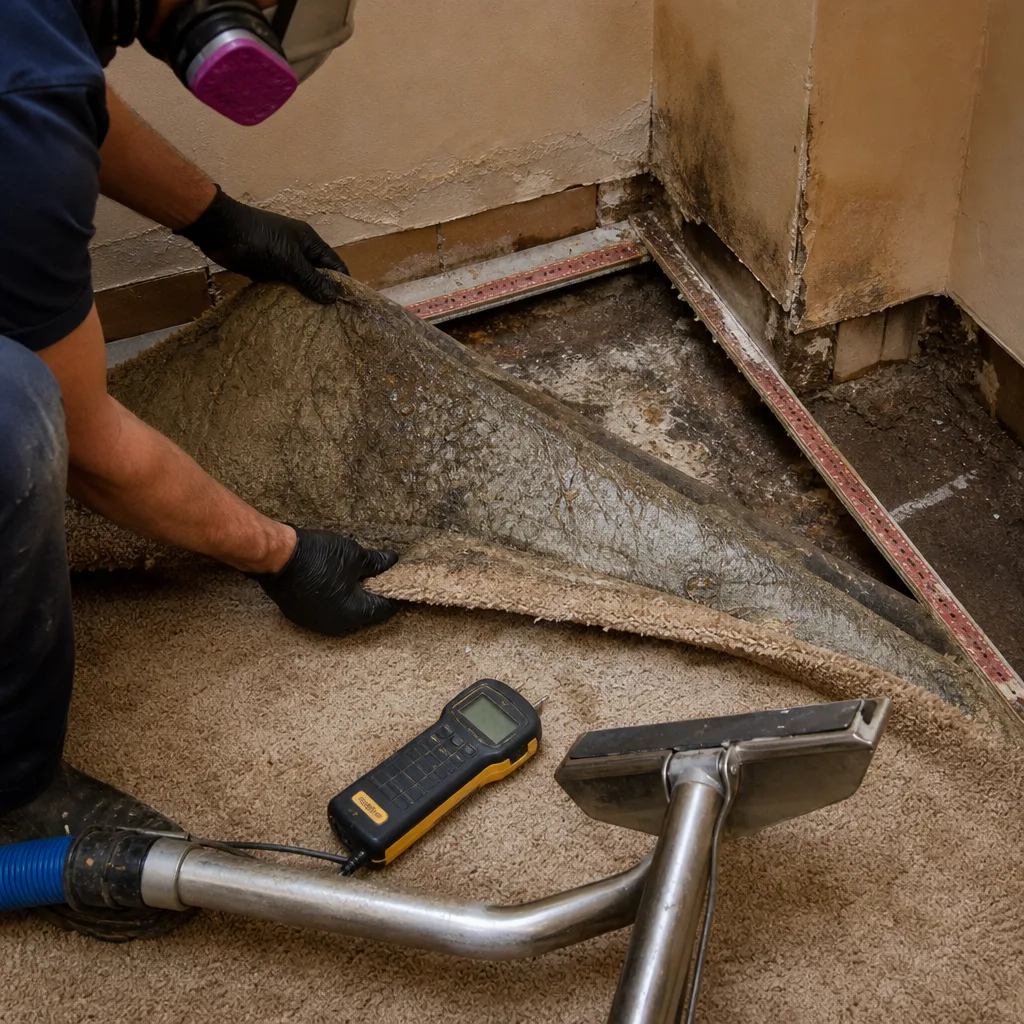
Smoke odor in a Corona row house does not air out. It sits in the wall cavities, the joist bays, the underside of stair treads. We use thermal fogging to follow the same path the smoke took, plus ozone or hydroxyl treatment where appropriate, and we seal the source surfaces after cleaning so the odor does not return with the first humid stretch of July.
Contents Cleaning & Pack-Out
Acidic soot etches metal and stains soft goods within 48 hours. In tight Corona rooms, that clock runs faster because contents are packed close together. We pack out salvageable contents with an itemized inventory, clean them at our facility using the right method for each material, and return them labeled and organized. The pack-out happens early, not after the adjuster visits.
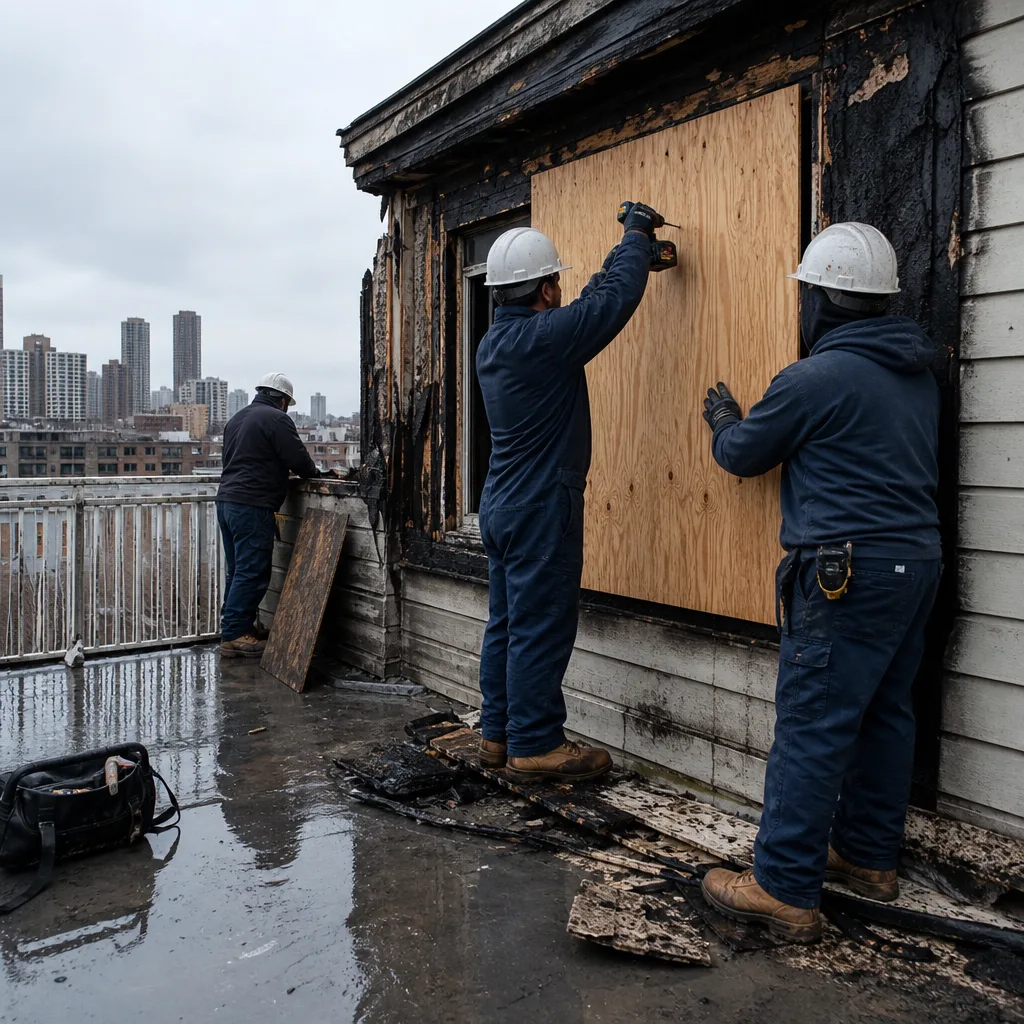
Emergency Board-Up & Tarping
After a fire, broken windows and holes in the roof invite weather, squatters, and pests. We board and tarp same-day in Corona, using high-quality materials that hold through nor’easter winds and summer downpours. Our board-up also protects the neighbor’s side of a shared air shaft or roofline when the fire breached a common wall.
What happens when you call
- 1
A real person answersNo phone trees - you reach a local pro.
- 2
You get an upfront price rangeHonest numbers before anyone is dispatched.
- 3
A background-checked tech heads outLicensed & insured, dispatched right away.
- 4
You approve before work beginsNothing starts until you say go.
Fire & Smoke Damage Restoration Costs in Corona, NY
A small contained kitchen fire in a Corona apartment typically runs $2,800 to $6,500 for soot cleanup, odor treatment, and minor paint. Full smoke damage restoration in an attached row house, where smoke moved through party walls and into a neighbor’s unit, commonly lands between $9,000 and $24,000. Structural fire repair with rebuilding, especially in a converted cellar apartment with NYC DOB involvement, starts around $18,000 and can exceed $60,000 depending on how much framing, plaster, and electrical must be replaced. What moves the price: whether plaster can be cleaned or must be replaced, whether the fire affected shared walls, whether asbestos pipe insulation gets uncovered, and whether the unit has legal occupancy status. Insurance typically covers fire and smoke damage when the space is lawful. An illegal cellar apartment complicates the claim, and we will tell you that before any work begins. Call (917) 924-4221 for a free visual inspection and a firm written scope. Estimates are free.
We Also Serve Cities Near Corona
Our crews respond throughout the surrounding Queens neighborhoods, including Elmhurst, Rego Park, Jackson Heights, and East Elmhurst. If you live just outside Corona’s boundaries, the same live dispatch and 45-minute response commitment still apply.
Serving Corona, NY - Our Local Coverage Area
We’re based in the Corona area and know this community well. Use the map below to see our service coverage - if you’re nearby, we can almost certainly help.
Corona Fire & Smoke Damage Restoration Questions, Answered
How does smoke damage spread between attached brick row houses in Corona?
Smoke spreads between attached Corona row houses through unsealed gaps in shared party walls, especially around old plumbing chases, joist bays, and ceiling cavities that were never fire-stopped. We routinely find soot on the neighbor’s side of the wall even when the fire never breached the masonry. That is why we inspect and contain both sides of the party wall on every row house loss, not just the unit where the fire started.
If my basement apartment in Corona had a fire, can I restore it to living space?
Only if the unit has a legal Certificate of Occupancy for residential use. Many of Corona’s below-grade cellar apartments were converted without permits, and after Hurricane Ida, New York City increased enforcement of Local Law 49 and related rules against illegal cellar conversions. If your cellar apartment does not have legal occupancy status, we cannot rebuild it as living space without a stop-work order from the NYC Department of Buildings. We can clean, dry, and secure the space, and we will coordinate with the DOB and your landlord before any structural repair begins.
Why does smoke odor linger in Corona row houses even after cleaning?
Because in a pre-war row house, smoke does not just sit on surfaces. It travels inside wall cavities, under stair treads, and into the joist bays between floors. Cleaning the visible surfaces does not reach those hidden reservoirs. We use thermal fogging that follows the same path the smoke took, plus sealing and sometimes cavity injection to lock down residual odor. Without that step, the smell returns when humidity rises in July and August.
Do I need emergency board-up after a fire in a Corona row house even if windows are intact?
Yes. Even when windows survive, the roof, eaves, or shared air shaft often have openings from fire or firefighting efforts. Board-up also keeps rain, birds, and people out of a compromised structure, and it protects your neighbor’s property when damage crosses the property line. We board and tarp same-day in Corona, and your insurer generally covers it as part of the fire claim.
What are the first steps for contents cleaning after a kitchen fire in a Corona apartment?
Get the pack-out started fast. Soot from a kitchen fire is acidic and will permanently etch metal fixtures, appliances, and glass within 48 hours if left untouched. We photograph everything for your insurer, inventory what can be salvaged, and move those items to our cleaning facility while we handle the structure. We do this in the first visit, not after the adjuster has time to drive out from Brooklyn.
How fast can a fire and smoke crew actually reach my Corona address?
We commit to a 45-minute response window for Corona calls. Our dispatch is live 24/7, and our crews know the local street grid, including where parking a box truck is possible near 108th Street and where loading zones end on Northern Boulevard. Call (917) 924-4221 and we will give you a real arrival time, not a range of hours.
Will my insurance cover fire and smoke damage restoration in Corona?
In most lawful residential spaces, yes. Standard fire policies cover smoke cleanup, soot removal, odor treatment, board-up, pack-out, and structural repair. The claim hinges on documentation. We photograph everything from the first hour, write a line-item scope your adjuster can verify, and bill your carrier directly. If the affected unit is an illegal cellar conversion, coverage gets complicated, and we will explain exactly what your policy will and will not pay before you approve any work.
What should I do in the first 30 minutes after a fire in my Corona home?
Get everyone out and call 911 if you have not already. Then call us at (917) 924-4221. Do not wipe soot, do not run fans, do not turn on the HVAC, and do not open windows more than needed. Soot wiped into plaster or drywall becomes permanent. Air movement pushes smoke deeper into wall cavities and the neighbor’s unit. Keep movement minimal; the first hour sets the ceiling on what can be cleaned versus what must be replaced.
Written by Curt Bowman, Owner at Floodline Restoration Co., serving Corona and the surrounding Queens neighborhoods.