
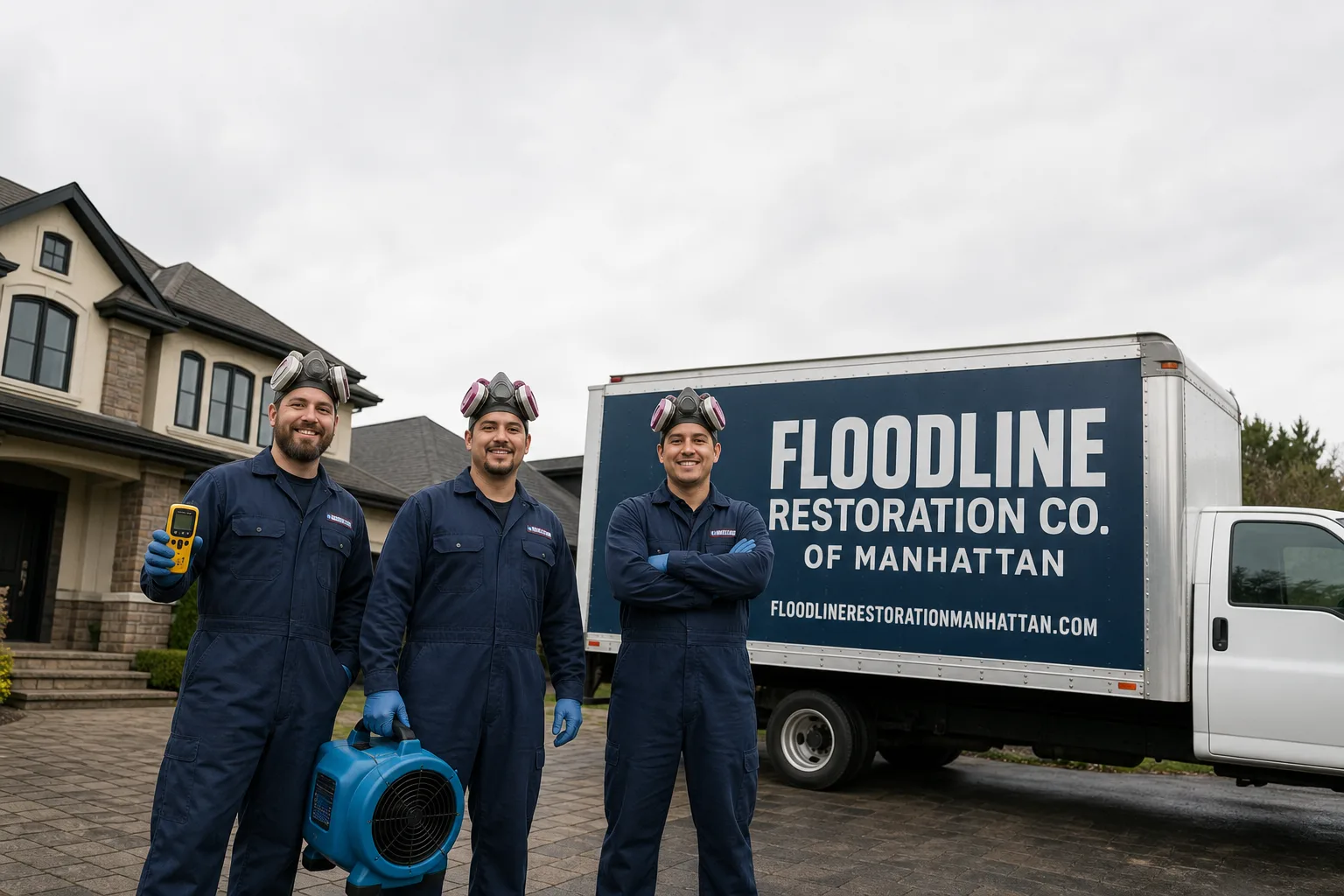
Free visual inspection and a written scope of work before any mitigation begins - photos, moisture readings, and drying logs go in your claim file
The scope we write is the scope we bill. Anything new gets shown to you, in writing, before we touch it.






 Before
 After
After Before
 After
After Before
 After
After24/7 Emergency Fire & Smoke Damage Restoration in Flatbush
Fire and smoke damage in Flatbush needs an immediate response, and our crews are dispatched from a New York City office directly into the neighborhood, 24 hours a day. If you’re standing in a soot-covered living room off Flatbush Avenue or Church Avenue right now, call (917) 924-4221. A live dispatcher answers, not a recording, and we’ll have a certified technician on site faster than any national franchise can route a subcontracted crew. The first hour matters because smoke continues migrating through plaster walls, ductwork, and shared party walls long after the flames are out. Every minute of delay pushes soot deeper into porous surfaces and makes odor removal harder. We complete a free visual inspection, document the damage for your insurer, and start containment the same visit. Flatbush rowhomes don’t forgive hesitation.
Understanding Fire & Smoke Damage Restoration Severity in Flatbush Properties
Fire damage in Flatbush presents differently than in newer construction because of what these buildings are made of. The neighborhood’s pre-war attached rowhomes, most framed before 1940, carry plaster-on-lath walls, cast-iron radiators, and original wood joists that absorb smoke differently than modern drywall. Soot residue ranges from light surface dusting after a small kitchen fire to a heavy, oily coating after a protein fire or burned plastics, which etches into plaster and requires chemical sponge treatment rather than simple wiping. Smoke migrates upward and outward through wall cavities, cornice gaps, and shared attic spaces; in attached homes it crosses property lines through party-wall voids. Severity also depends on whether water from fire suppression saturated flooring and plaster below. A second-floor burn in a Flatbush rowhouse typically leaves three zones to address: the fire room itself, the water-damaged floor below, and the smoke-impacted adjacent unit. Flatbush’s early 20th-century housing stock means nearly every assessment must account for lead paint protocols and possible asbestos in floor tiles or pipe wrap before demolition begins.
Why Flatbush Property Owners Choose Floodline Restoration Co. of Manhattan
We’ve earned our standing in Flatbush the slow way, job by job, block by block. Here’s what that means when you call:
- 45-minute response commitment to Flatbush. We stage crews near the neighborhood so a certified team reaches your door fast, day or night.
- A live person answers the phone, always. No voicemail tree at 2 a.m. You’ll speak with a dispatcher who knows Flatbush and can tell you exactly when the crew arrives.
- IICRC-certified technicians. Our crews hold FSRT and WRT certifications and train to RIA and IFA standards. We send background-checked, uniformed professionals, not day labor.
- Free visual inspection with a written scope. Before any work starts, you’ll get a line-item plan in writing. No surprises on the bill, and no pressure to sign for more than the job requires.
- Direct insurance billing. We document the loss, photograph everything, and coordinate with your adjuster so you’re never the messenger between us and the carrier.
- One team from extraction to reconstruction. The same crew that runs containment on day one handles drying, cleaning, and the rebuild. No mid-job handoff to strangers.
Our Fire & Smoke Damage Restoration Process
Inspection & Assessment
We map the fire zone, test for soot type and smoke migration paths, and take moisture readings through plaster and flooring. In attached Flatbush rowhomes, this includes checking the adjoining unit’s party wall. You get a written scope and a firm plan.
Board-Up & Tarping
We secure windows, doors, and roof openings the same visit. Flatbush storefronts and basement entries get non-damaging anchoring methods that protect original brick and masonry.
Water Extraction & Structural Drying
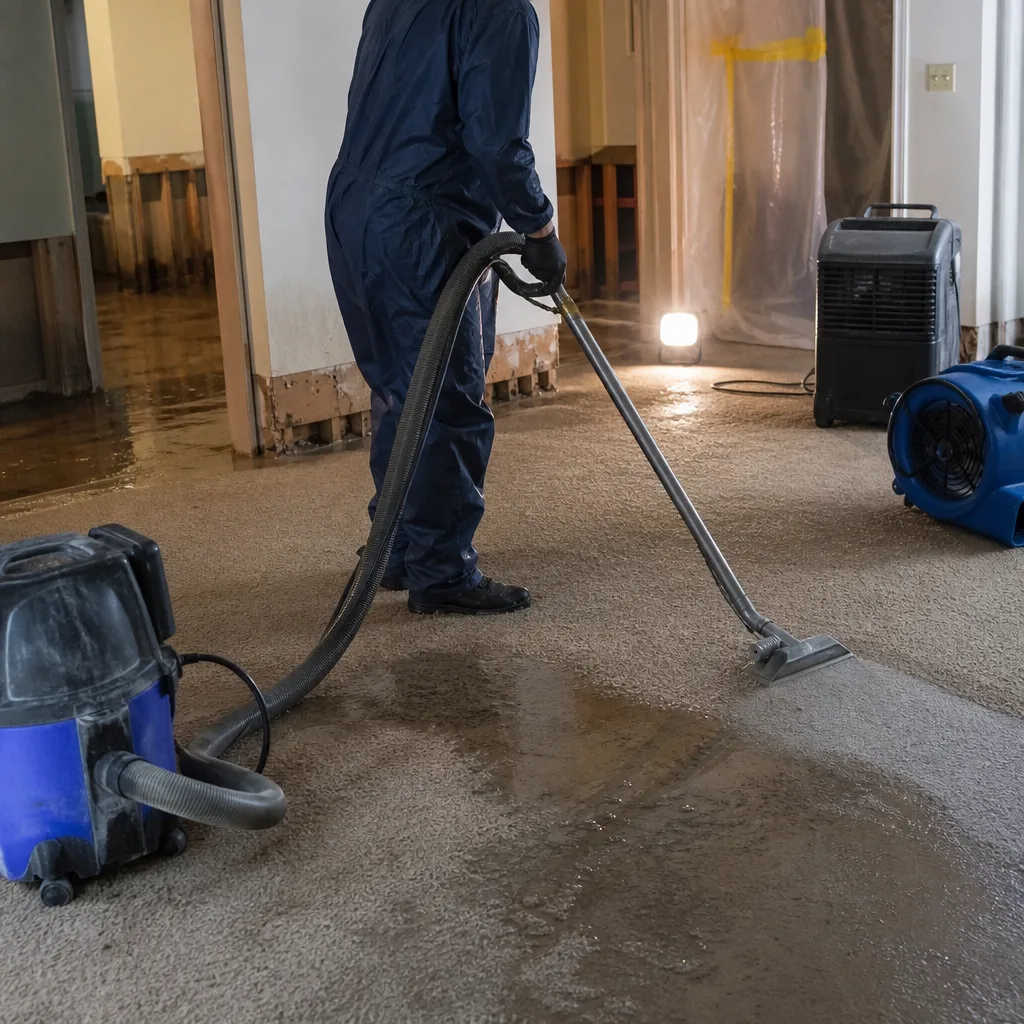
Fire suppression leaves water behind. We extract standing water, then set Dri-Eaz dehumidifiers and XPOWER air movers to a moisture map. Daily readings are logged until the dry standard is met, and we hand the log to you and your insurer.
Soot & Smoke Removal
Surface soot comes off with dry sponge and chem-sponge methods suited to plaster and cast iron. Heavier residues need HEPA vacuuming and wet cleaning. We treat every surface smoke touched, including inside ducts and behind radiators.
Odor Removal & Deodorization
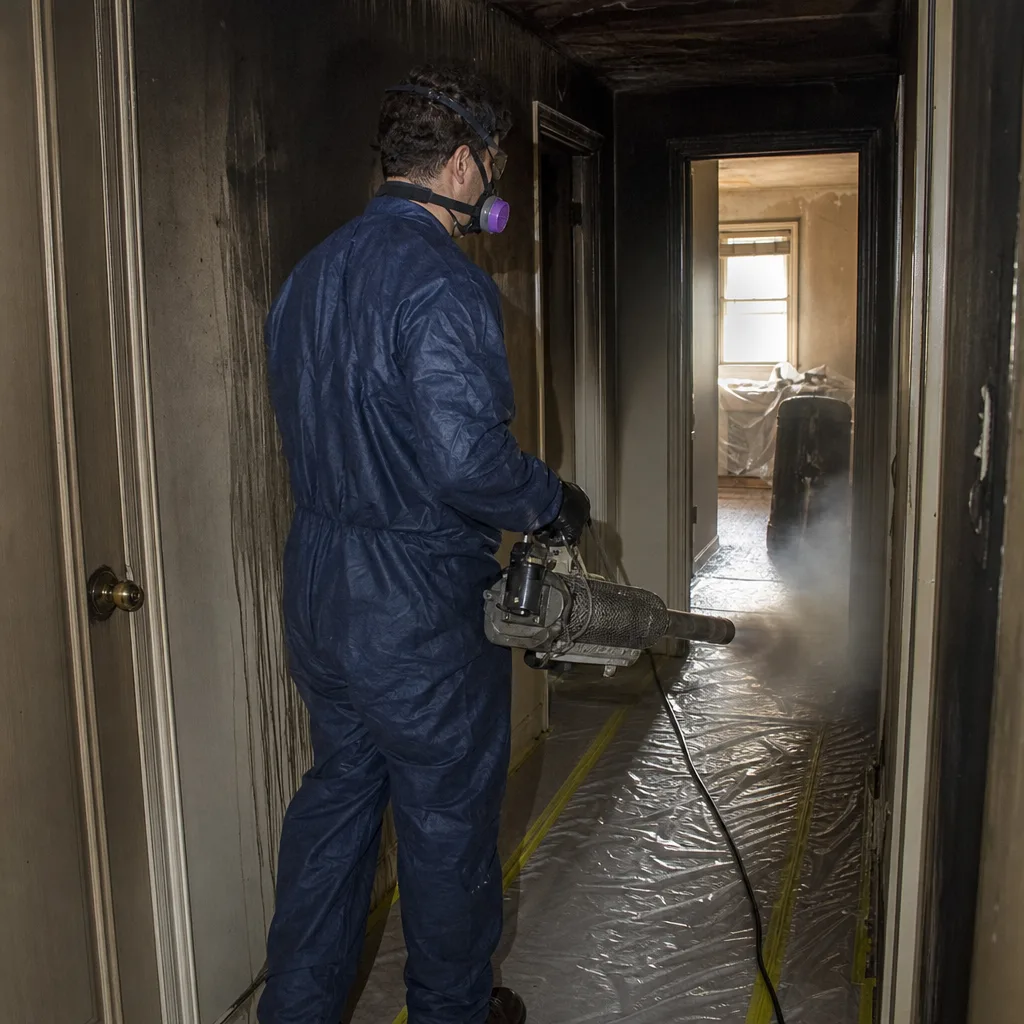
Smoke odor in Flatbush rowhomes lives in plaster, joists, and shared cavities. We use thermal fogging, hydroxyl generators, and sealants to neutralize odor at the source, not mask it. This step is where cheap contractors fail.
Repairs & Restoration
From drywall and plaster repair to full kitchen rebuilds, our crew handles reconstruction without swapping in a third party. Work is backed by the 90-Day Done Right Promise, in writing.
Need Emergency Fire & Smoke Damage Restoration in Flatbush Now?
Crews minutes away, answering live 24 hours a day. The sooner we start, the less it costs.
Working With Your Insurance Company
Most Flatbush fire losses are covered under standard homeowners policies, including smoke damage to attached neighbor units when your policy includes liability coverage for shared-wall losses. The claim succeeds or fails on documentation, and we build that file from the first hour. Every photo is timestamped. Every moisture reading is logged. The scope we write matches the damage we document, nothing inflated and nothing missed. We speak directly with your adjuster, submit the claim package, and bill the carrier directly so you’re not floating costs for weeks. For Flatbush property owners with basement rental units, we also document tenant-relocation requirements and multi-unit loss classification, which is exactly the detail that prevents a denied claim later.
What We Provide Your Insurer
- Thorough documentation of the loss
- Photos of all damage, room by room
- Moisture readings and drying logs
- A detailed, line-item scope of work
- Direct coordination with your carrier
Built for Flatbush’s Loss Calendar
Flatbush fire losses follow the seasons, and our crews plan for them. November through February brings space heaters running hard in pre-war apartments, overtaxed wiring behind original plaster walls, and holiday cooking fires in tight galley kitchens. The steam-heat systems in these old buildings push bone-dry air through cast-iron radiators, and anything combustible left against a radiator is a fire waiting to happen. Spring and summer aren’t fire-free either: window AC units plugged into ungrounded 1920s circuits trip breakers and arc, and summer grill fires on back porches of wood-frame two-families spread fast through shared eaves. Then there’s the water side of every fire: firefighting water saturates lath-and-plaster and pools in below-grade basement units, and if the building sits on a block with aging cast-iron sewer laterals, extraction water can back up during heavy rain. We schedule around all of it because we’ve worked these blocks for years, and there is no month without a job.
Fire & Smoke Damage Restoration Across Flatbush’s Neighborhoods
Flatbush is not one housing type, and we respond to each part of the neighborhood differently. Around Prospect Park South, the large Victorian wood-frame homes off Albemarle Road and Rugby Road have generous floor plans, but their original pocket doors and wide stair halls act as smoke chimneys during a fire; odor reaches the third floor even when flames stay in the kitchen. In Ditmas Park, the detached Victorians have some clearance, but aging knob-and-tube wiring behind original wood paneling means electrical fires start inside walls and smolder for hours before they’re caught. Flatbush Gardens and the larger apartment complexes near Nostrand Avenue bring multi-unit concerns: a single unit’s kitchen fire forces smoke into common hallways, and we run containment at the unit door while coordinating with building management on shared stairwells and elevator shafts. Along Church Avenue, storefront fires above basement-level shops create a different challenge: board-up must secure the retail front while leaving basement apartment access safe, and smoke typically penetrates the floor assembly between the shop and the living space above. Response routes matter here. We stage crews to approach from Ocean Avenue, Flatbush Avenue, or Bedford Avenue depending on the block and time of day, because a wrong turn during afternoon traffic off the Prospect Expressway adds twenty minutes to a smoke-mitigation call.
Specialized Fire & Smoke Damage Restoration Services We Offer in Flatbush
Fire Damage Cleanup
We remove charred debris, strip damaged plaster and flooring to stable structure, and clean every surface the fire touched. In Flatbush rowhomes, that means disassembling affected areas carefully enough to preserve original millwork and moldings where salvageable, while cutting out what’s gone. Each day’s debris is bagged and removed; we don’t leave a dumpster pile in your front yard for a week.
Smoke & Soot Removal
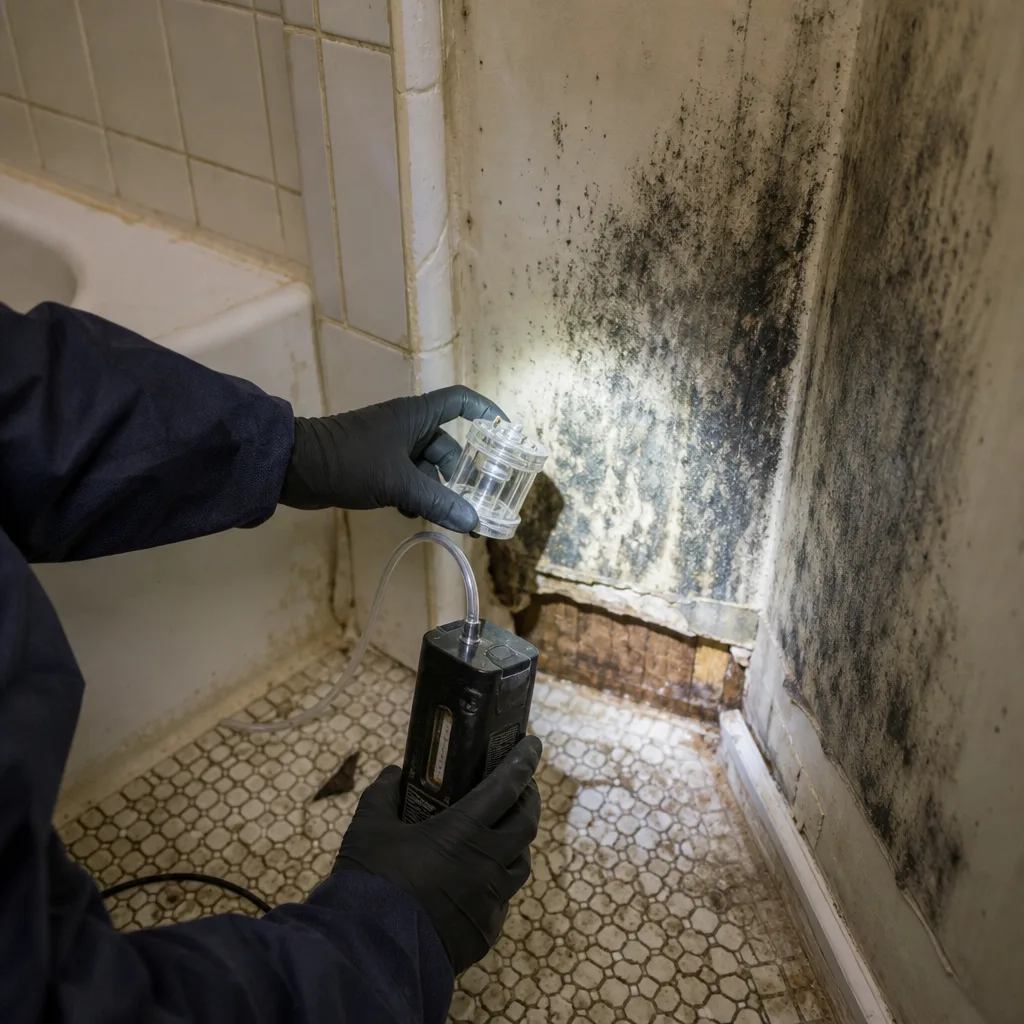
Flatbush’s plaster walls trap soot in the finish coat, and cast-iron radiators hold it in every crevice. We use dry sponge methods on plaster and cast iron, HEPA vacuuming on fabrics and wood, and wet cleaning where residues are heavy. In attached homes, we test the adjoining unit’s air and surfaces even when the neighbor’s apartment looks fine, because smoke travels through party-wall voids and cornice chases without leaving visible signs.
Odor Removal & Deodorization
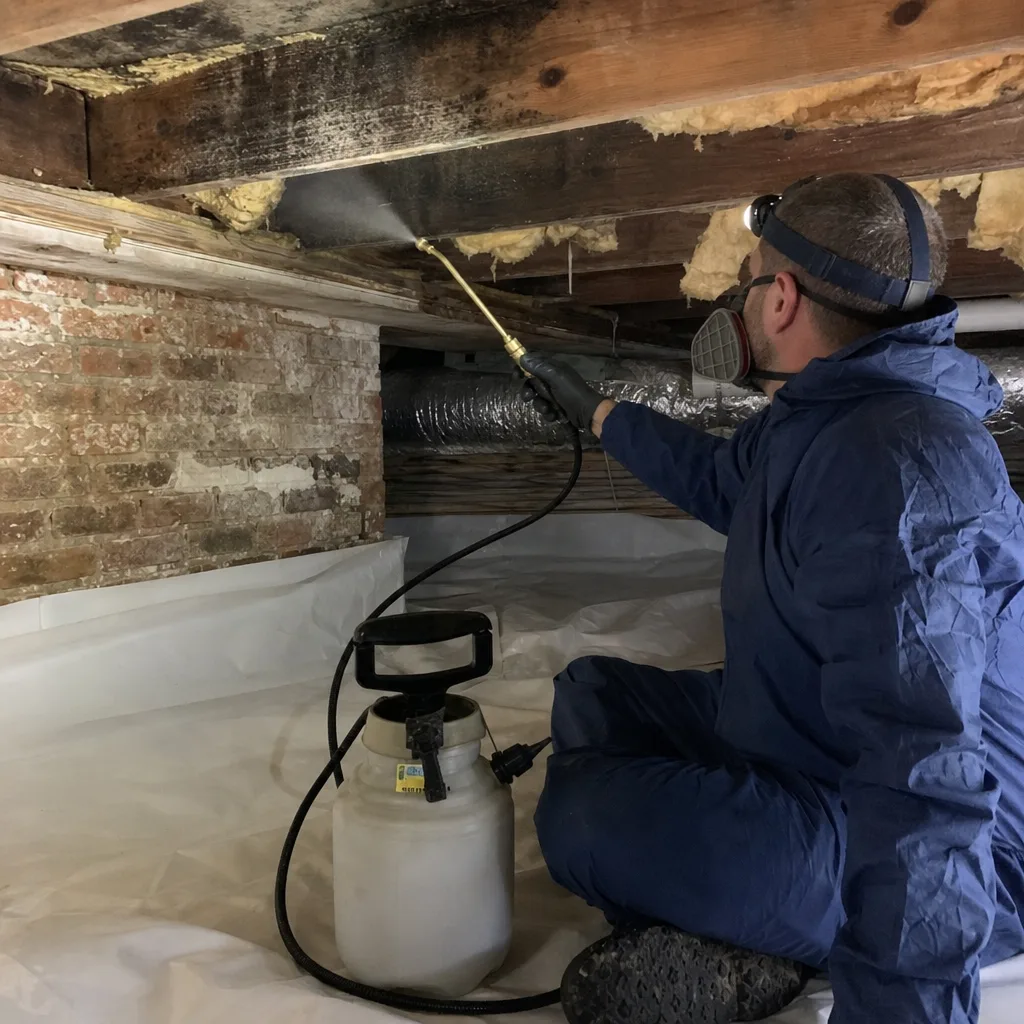
Odor is the complaint we hear most often even after cleanup looks complete. Smoke molecules embed in plaster, floor joists, and ductwork, and Flatbush’s shared cavities mean the smell can return from a neighbor’s side months later. We run thermal fogging and hydroxyl generators and apply sealants to the surfaces that hold odor. This is the step that separates a restoration company from a cleaning crew.
Contents Cleaning & Pack-Out
Clothes, books, furniture, and kitchenware absorb smoke fast. We inventory, pack out, and clean salvageable contents at our facility, then return them after the space is restored. For pre-war Flatbush homes with original furnishings and family papers going back generations, we document every item with photos before it moves, so nothing is lost or claimed vaguely.
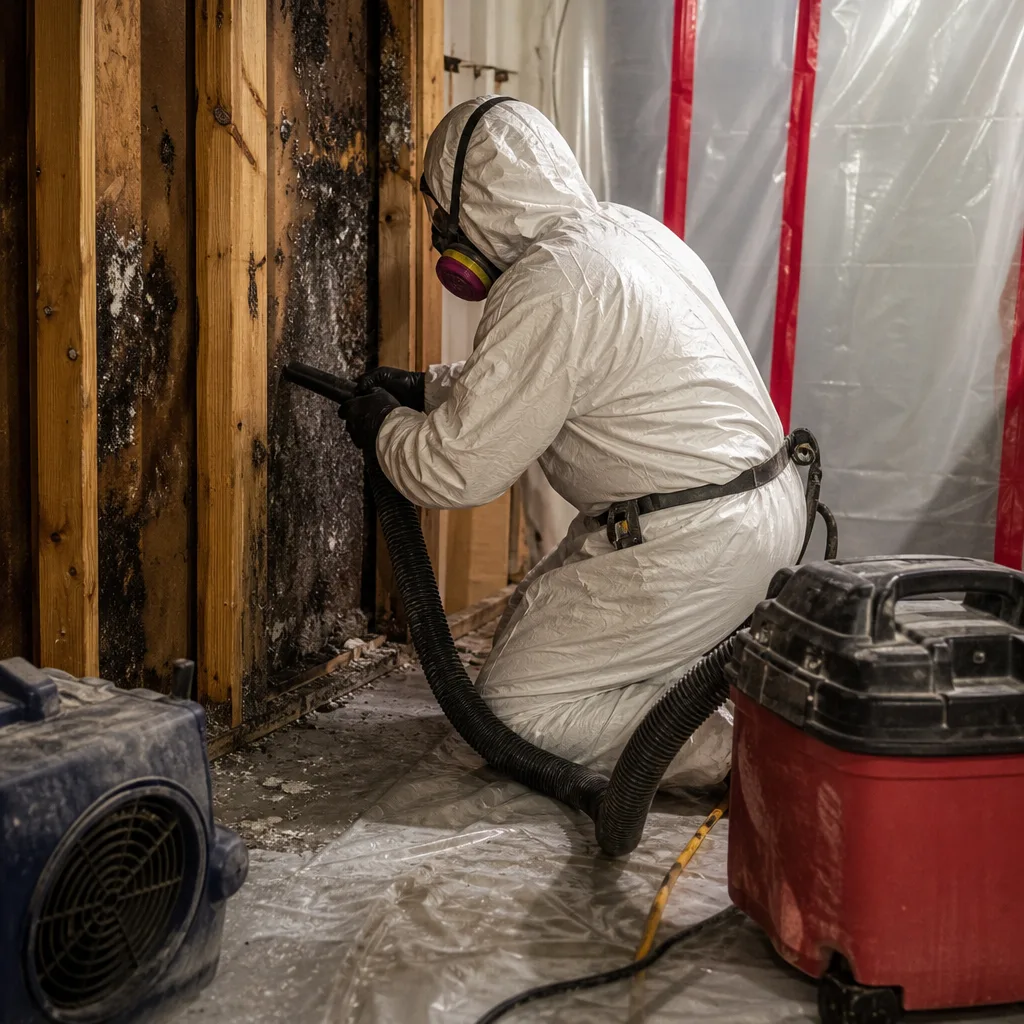
Emergency Board-Up & Tarping
A burned window on a Flatbush rowhouse is an invitation to weather and intruders. We board openings the same visit, anchoring plywood to masonry without drilling holes through original brick wherever possible. Flatbush storefronts with basement entries get ground-floor security plus safe tenant access. Tarps go over roof damage until permanent repair is scoped.
What happens when you call
- 1
A real person answersNo phone trees - you reach a local pro.
- 2
You get an upfront price rangeHonest numbers before anyone is dispatched.
- 3
A background-checked tech heads outLicensed & insured, dispatched right away.
- 4
You approve before work beginsNothing starts until you say go.
Fire & Smoke Damage Restoration Costs in Flatbush, NY
Flatbush pricing is shaped by housing age and density. A small kitchen fire cleanup with surface soot removal typically runs $1,800 to $3,600. Smoke and odor removal affecting an entire rowhouse floor runs $4,000 to $9,000, including containment, cleaning, and deodorization. A full fire loss with water extraction, structural drying, and reconstruction starts around $12,000 and commonly reaches $40,000 to $70,000 on multi-room burns in pre-war homes, because of lead-paint protocols, potential asbestos testing, and the shared-wall testing that Flatbush attached rowhomes require. What moves the price: the soot type (protein fires coat surfaces in a greasy film that’s slow to remove), how far smoke traveled through shared cavities, whether basement units got water, and whether original plaster must be saved or replaced. Most fire losses are covered by insurance; our free visual inspection gives you a firm written scope before any deductible math. Call (917) 924-4221, and we’ll tell you exactly what the job needs and what it costs.
We Also Serve Cities Near Flatbush
Our crews respond across the neighborhood and into the surrounding areas, including Fairview, Harrison, East Bronx, and Hunts Point. If you’re on the edge of Flatbush or just outside, call us. We’ll tell you honestly whether we’re the right crew for your block.
Flatbush Fire & Smoke Damage Restoration Questions, Answered
Why is fire damage restoration in Flatbush slower than in newer neighborhoods?
Because Flatbush’s pre-war plaster walls, shared party walls, and potential asbestos or lead paint add steps that newer drywall construction doesn’t require. Plaster holds moisture behind its surface, so drying takes longer and demands invasive moisture readings. Shared walls mean testing the neighbor’s unit. Lead-paint compliance and possible asbestos testing add time before demolition. It’s not slow work; it’s thorough work, and skipping those steps is how you get a latent mold claim or an HPD violation. Call (917) 924-4221 and we’ll explain the timeline for your specific building.
My attached rowhouse neighbor had a fire. Do I need testing even though my unit looks fine?
Yes. Smoke travels through party-wall voids, cornice gaps, and shared roof cavities, and it can enter your unit without leaving visible soot on your side. Odor and fine particulate can be present inside your walls, and if moisture from fire suppression crossed the shared wall, you could have hidden damp conditions. We can test your unit, document findings for both insurance policies, and tell you honestly whether remediation is needed or you’re in the clear.
Can you board up a Flatbush storefront or basement entry without damaging the original brick?
Yes. We anchor plywood at mortar joints or use compression fitting rather than drilling a grid of holes through face brick. For older Flatbush masonry, especially the softer clay brick common in pre-war construction, this matters. We’ll secure the opening the same visit, and we’ll do it in a way that doesn’t leave you with anchor scars to repair later.
I have a basement rental unit that had a small cooking fire. What extra steps apply in Flatbush?
Under NYC housing law, a fire loss in a basement rental unit may classify as a multi-unit residential loss, which brings tenant-notification and possible relocation obligations alongside the cleanup. We document the unit’s occupancy status, include tenant communication in the claim file, and coordinate with your adjuster on coverage for relocation expenses. The physical work also matters differently: drying a below-grade unit takes longer, and combustion byproducts from the fire can be pulled into the rental space by standard drying equipment if we don’t account for it. We stage equipment and moisture mapping to prevent cross-contamination.
Do I need asbestos testing before you remove smoke-damaged floor tiles in my pre-war Flatbush home?
In most cases, yes. Floor tiles and pipe wrap in homes built between 1900 and 1940 in Flatbush commonly contain asbestos, and disturbing those materials during fire restoration triggers testing requirements. We won’t start demolition on suspect materials until testing clears them. If testing comes back positive, we follow abatement protocols before restoration continues. It adds time, but ignoring it creates a far bigger liability.
How fast can someone actually get to my Flatbush address?
We commit to 45 minutes for emergency response in Flatbush, and most of the time we’re faster. Our crews are staged near the neighborhood, and a live dispatcher confirms your address and the fire zone while the team rolls. For non-emergency inspections, we schedule around your day, including evenings and weekends. Call (917) 924-4221 for a true arrival time, not a promise.
Will insurance cover smoke damage to my attached neighbor’s unit?
Usually yes, under the liability portion of your homeowners policy or the neighbor’s own policy depending on the circumstances. What matters is documentation: we test the neighbor’s unit, record the findings, and submit a scope that shows exactly where smoke traveled and what remediation was done. Without that, the neighbor’s insurer may deny the claim as speculative. We’ve handled enough Flatbush rowhouse losses to know what adjusters accept.
What should I do in the first 30 minutes after a fire in my Flatbush home?
Get everyone out and call 911 if you haven’t already. Then call us at (917) 924-4221. Don’t touch surfaces, don’t run HVAC or fans, don’t try to clean soot yourself, and don’t enter a water-damaged basement if the power is still connected. The less you move, the more evidence remains for the claim and the less soot gets ground into the plaster. We’ll handle the rest from the moment we arrive.
Serving Flatbush, NY - Our Local Coverage Area
We’re based in the Flatbush area and know this community well. Use the map below to see our service coverage - if you’re nearby, we can almost certainly help.
A Flatbush Fire Loss, Handled the Way It Should Be
On East 21st Street near Avenue H, our crew responded to a second-floor fire in a 1920s brick rowhome. We ran containment and negative air in the front parlor before touching the plaster-on-lath walls, pulled soot from the cast-iron radiators with dry sponge methods, and set up three Dri-Eaz dehumidifiers and six air movers after water extraction. Because the building shares a wall with an identical rowhome, we extended moisture mapping into the adjoining unit and documented moisture readings in both spaces to prevent a latent mold claim. That’s the difference between a crew that knows Flatbush and a crew that just knows fire. When the shared party wall is part of the job, the neighbor’s unit is part of the job.
Flatbush’s early 20th-century attached rowhomes share common walls and roof cavities. A kitchen fire in one unit routinely pushes smoke and soot into the adjacent home through party-wall voids and cornice gaps. You can’t just mitigate the burned unit; you have to test and treat the neighbor’s space too. In detached suburban markets, that scope reality doesn’t exist. In Flatbush, it’s the rule, and any restoration plan that ignores it will fail in about six months when the neighbor’s apartment still smells like smoke. We don’t skip that step, and we don’t charge you for a “surprise” discovery when we knew about it from the start.
Our Fire & Smoke Damage Restoration team has worked the attached rowhomes and basement rentals of Flatbush long enough to know what pre-war construction does to smoke, water, and time. If you’ve had a fire, call (917) 924-4221 now. A live person will answer, and a certified crew will be on the way. We handle the testing, the documentation, the drying, the cleaning, and the rebuild, with the 90-Day Done Right Promise in your hand before we leave. No mid-job handoff. No surprises on the bill. Done right, and backed in writing.
Written by Curt Bowman, Owner at Floodline Restoration Co. of Manhattan, serving Flatbush and the surrounding boroughs.