
Free visual inspection and a written scope of work before any mitigation begins - photos, moisture readings, and drying logs go in your claim file
The scope we write is the scope we bill. Anything new gets shown to you, in writing, before we touch it.
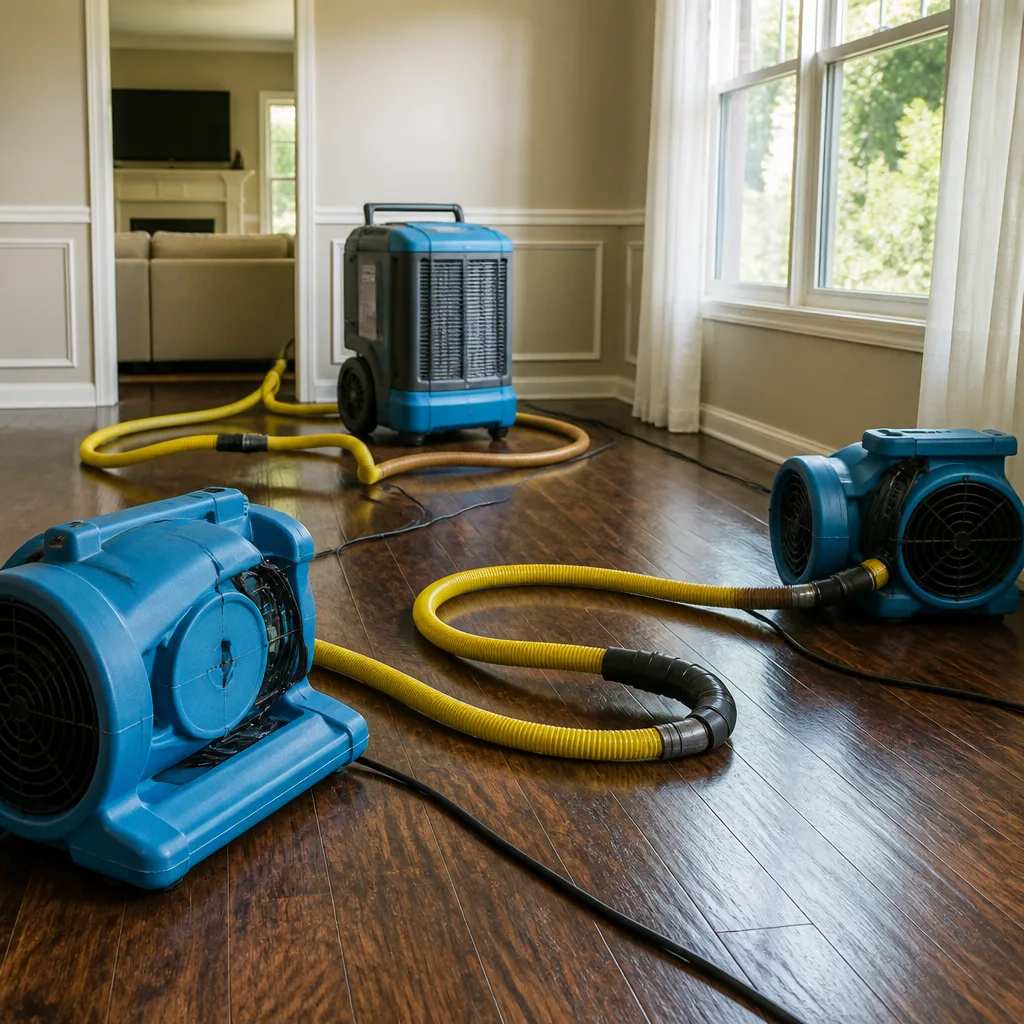

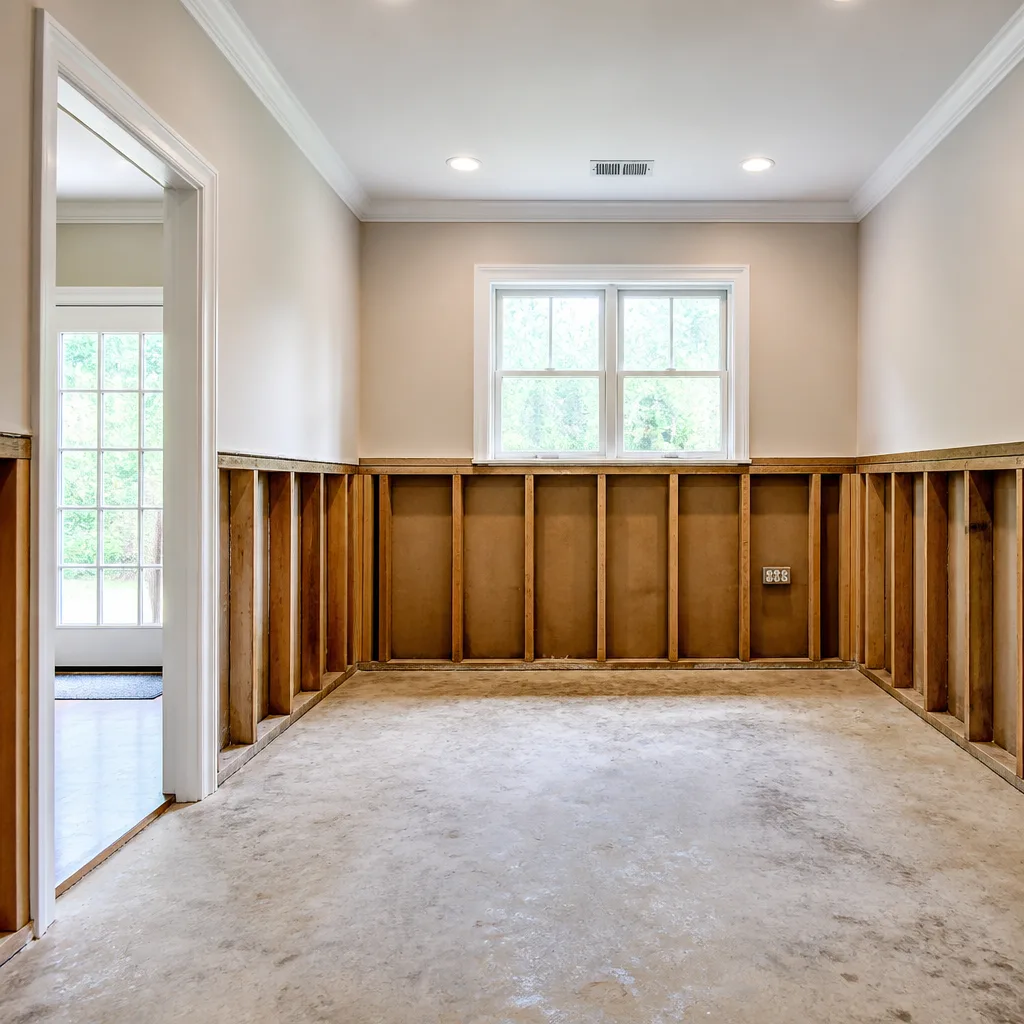

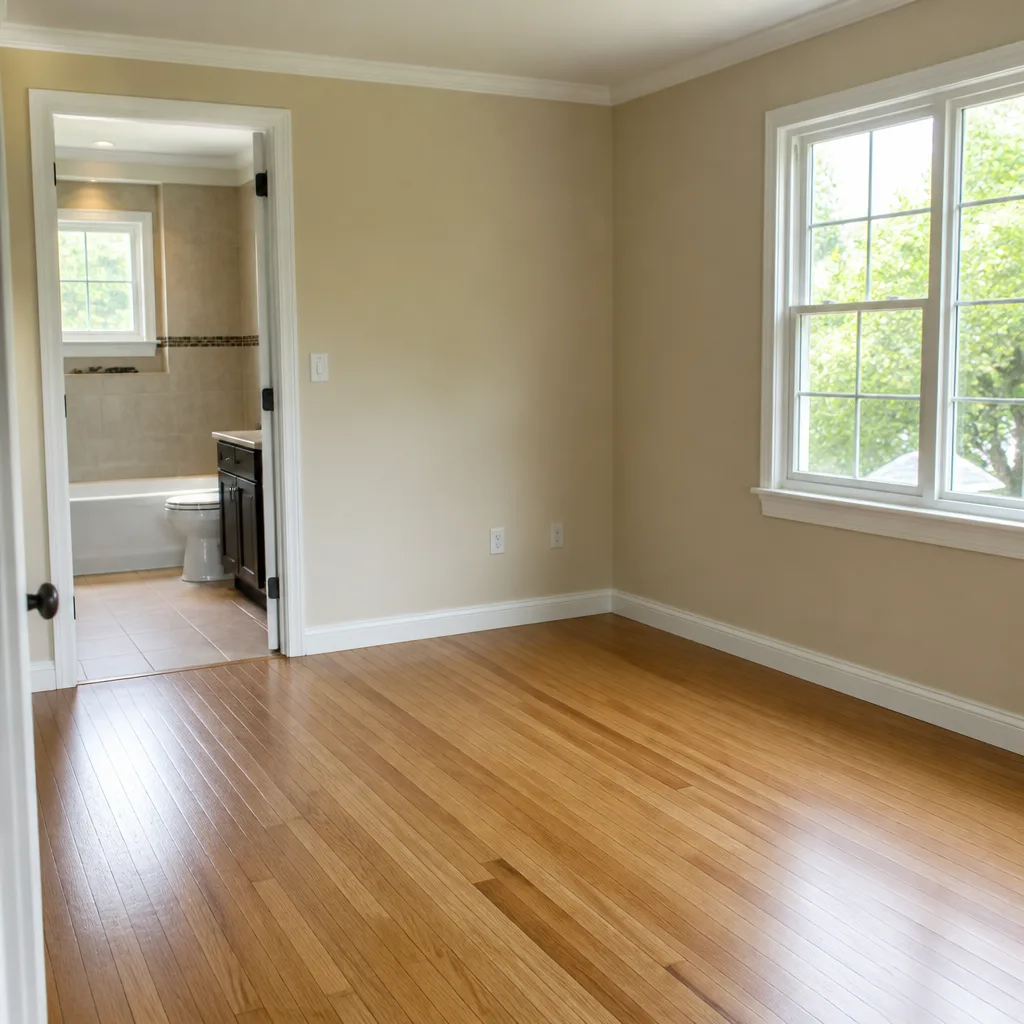

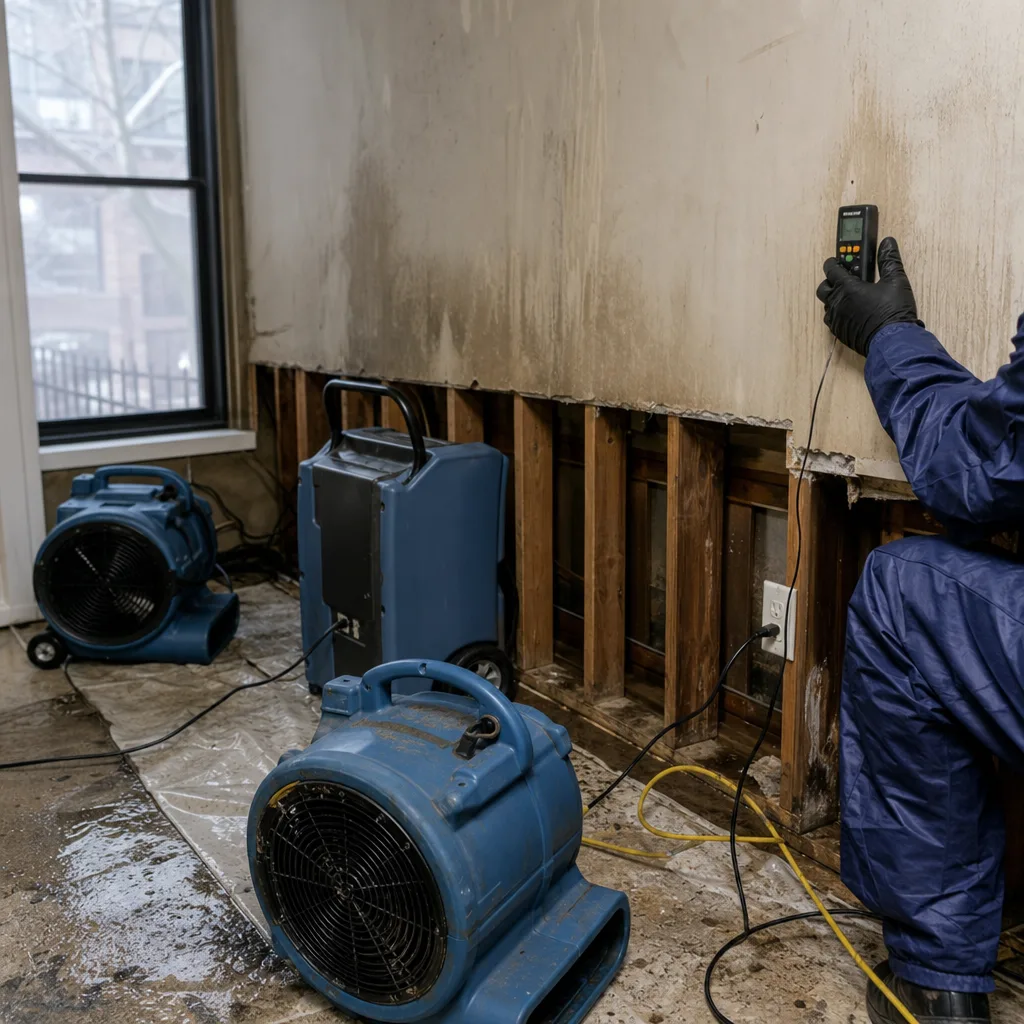 Before
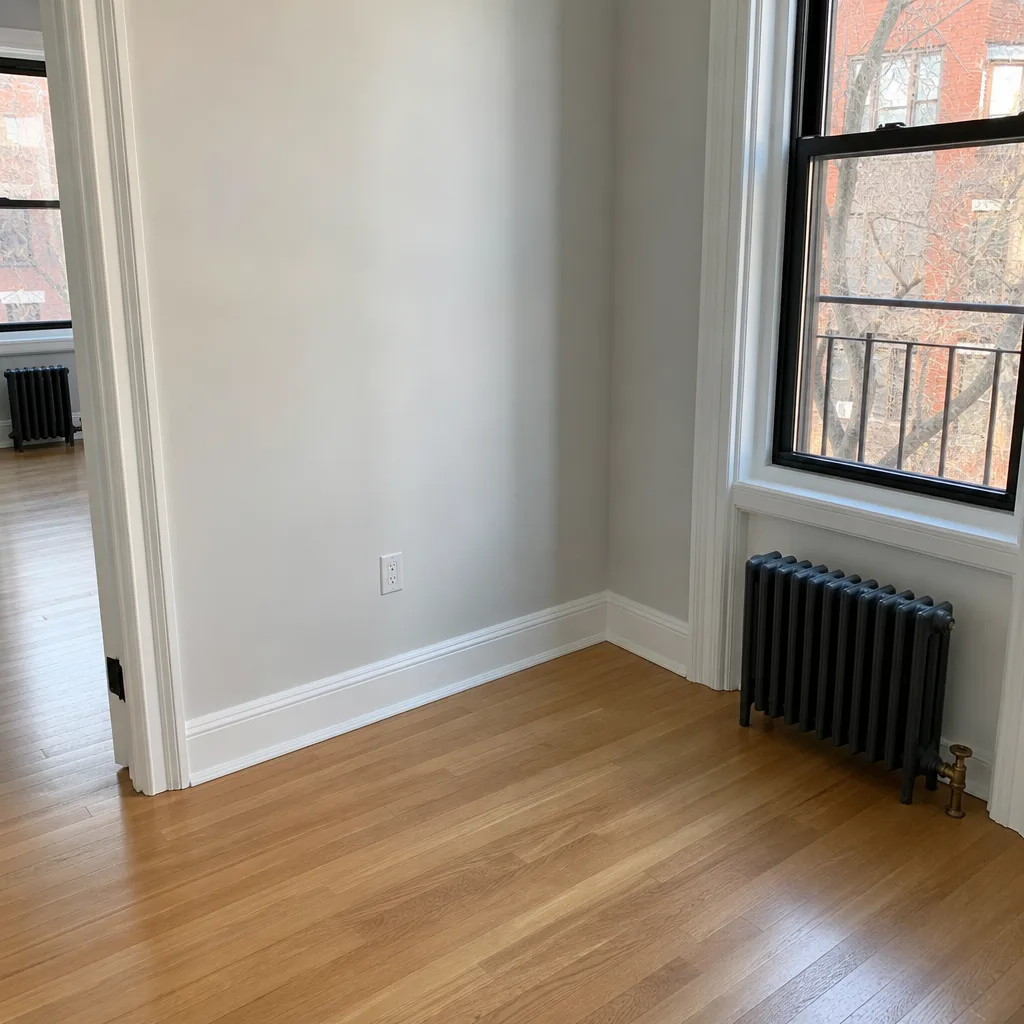 After
After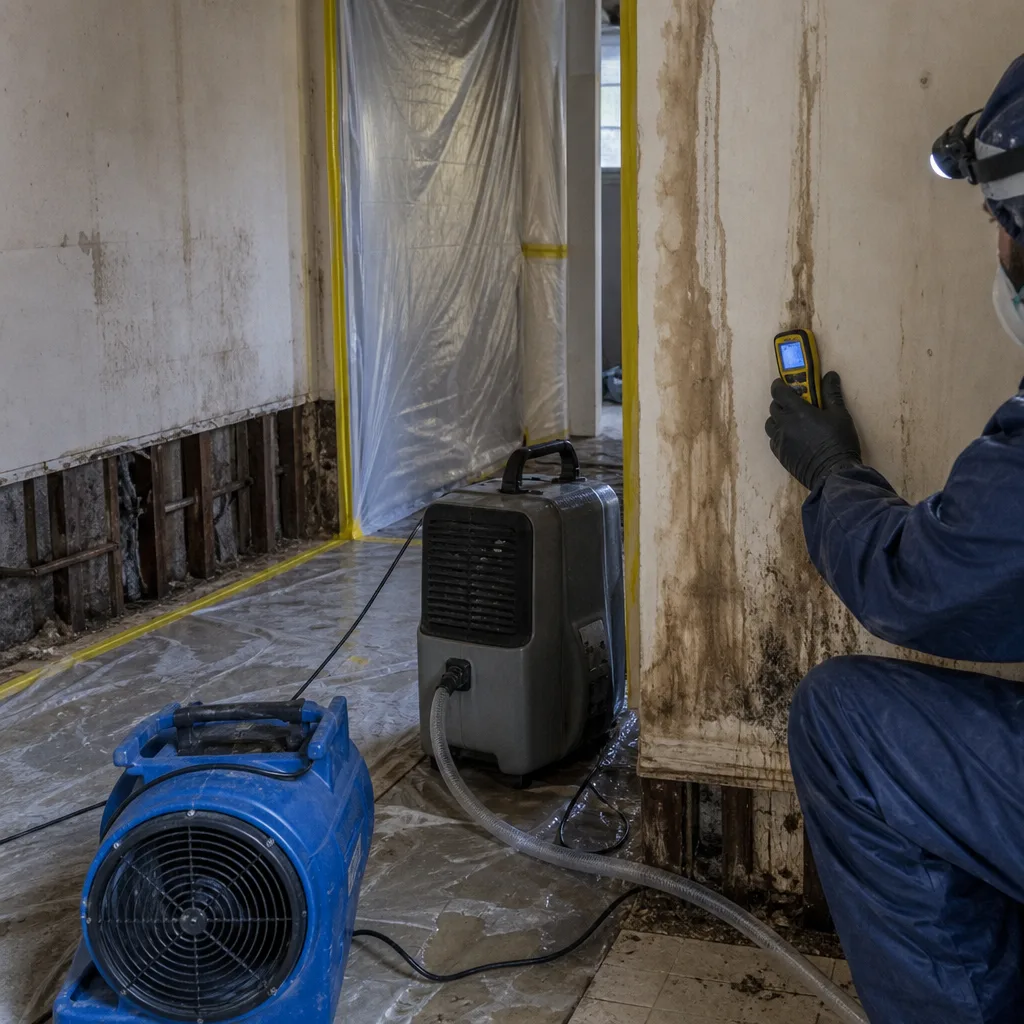 Before
 After
After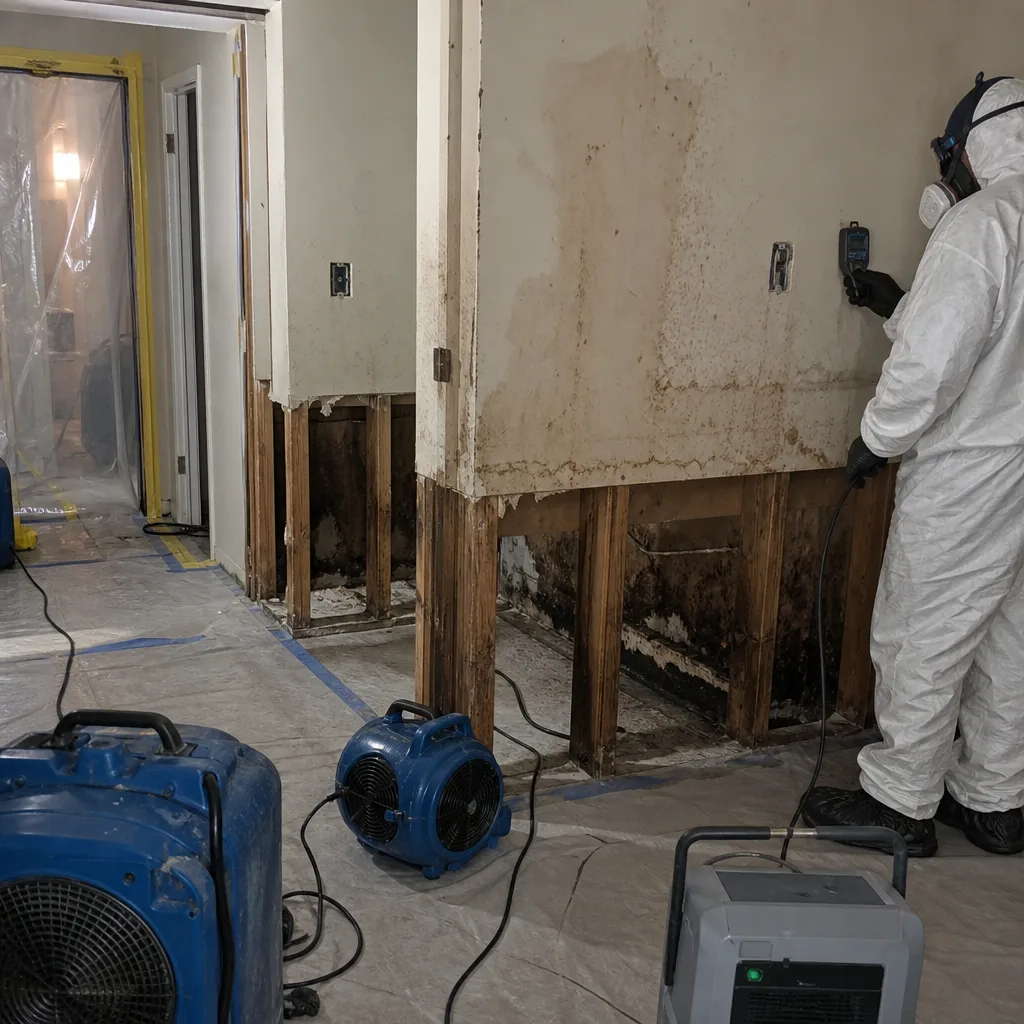 Before
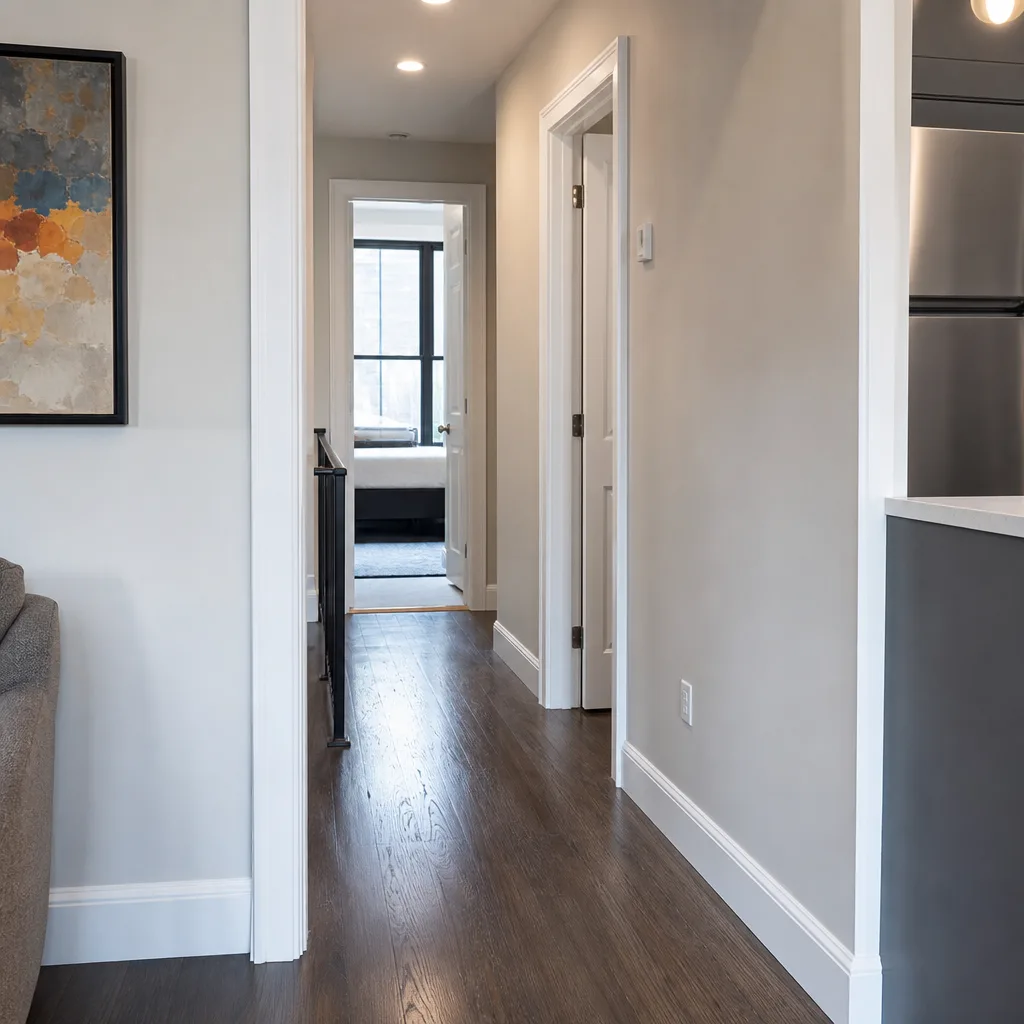 After
After24/7 Emergency Fire & Smoke Damage Restoration in Flushing
A fire in a Flushing row house is not just a fire. It is often a sewage exposure event, because Flushing sits on filled-in tidal marshland and shares a combined sewer system that backs up into basements during firefighting. Floodline Restoration Co. answers live at (917) 924-4221 around the clock, dispatches a certified crew into downtown Flushing, Murray Hill, and East Flushing within 45 minutes, and starts containment, board-up, and water extraction on the first visit. We have been doing this since 2010 under Curt Bowman’s direction, and we do not hand your job to a subcontractor. The first hour decides how much of your 1920s brick home survives, because smoke migrates into wall cavities while Category 3 water sits in the basement. Call now. We answer. We come.
Understanding Fire & Smoke Damage Restoration Severity in Flushing Properties
Fire damage in Flushing almost never stops at fire damage. The neighborhood’s combined sewer system, built when Flushing was a tidal marsh, backs raw sewage into basement drains when fire suppression water overwhelms the pipes. That means what looks like a kitchen fire on the first floor is often a Category 3 black-water contamination event in the basement below it. Soot, meanwhile, is not one substance. Dry protein soot from a stove fire behaves differently than oily hydrocarbon soot from burning plastics or synthetics, and both migrate through balloon-framed walls common in Flushing’s 1920s attached brick rows within hours. Moisture from fire hoses and suppression systems wicks behind plaster and lath, where it will feed mold colonization for weeks if nobody opens the wall to check. That is why our crews run moisture mapping with thermal imaging and hygrometers on every Flushing fire job, even when the homeowner sees no standing water. Skipping that step is how a four-day mitigation becomes a full gut rehab.
Why Flushing Property Owners Choose Floodline Restoration Co. of Manhattan
- 45-minute response commitment: Our Flushing dispatch radius is short, so a live crew reaches most blocks near Northern Boulevard, Kissena Boulevard, and Main Street inside 45 minutes.
- 24/7 live answer, never a recording: A real dispatcher picks up at 2 a.m. on Roosevelt Avenue the same way they do at noon. You speak to a person, not a phone tree.
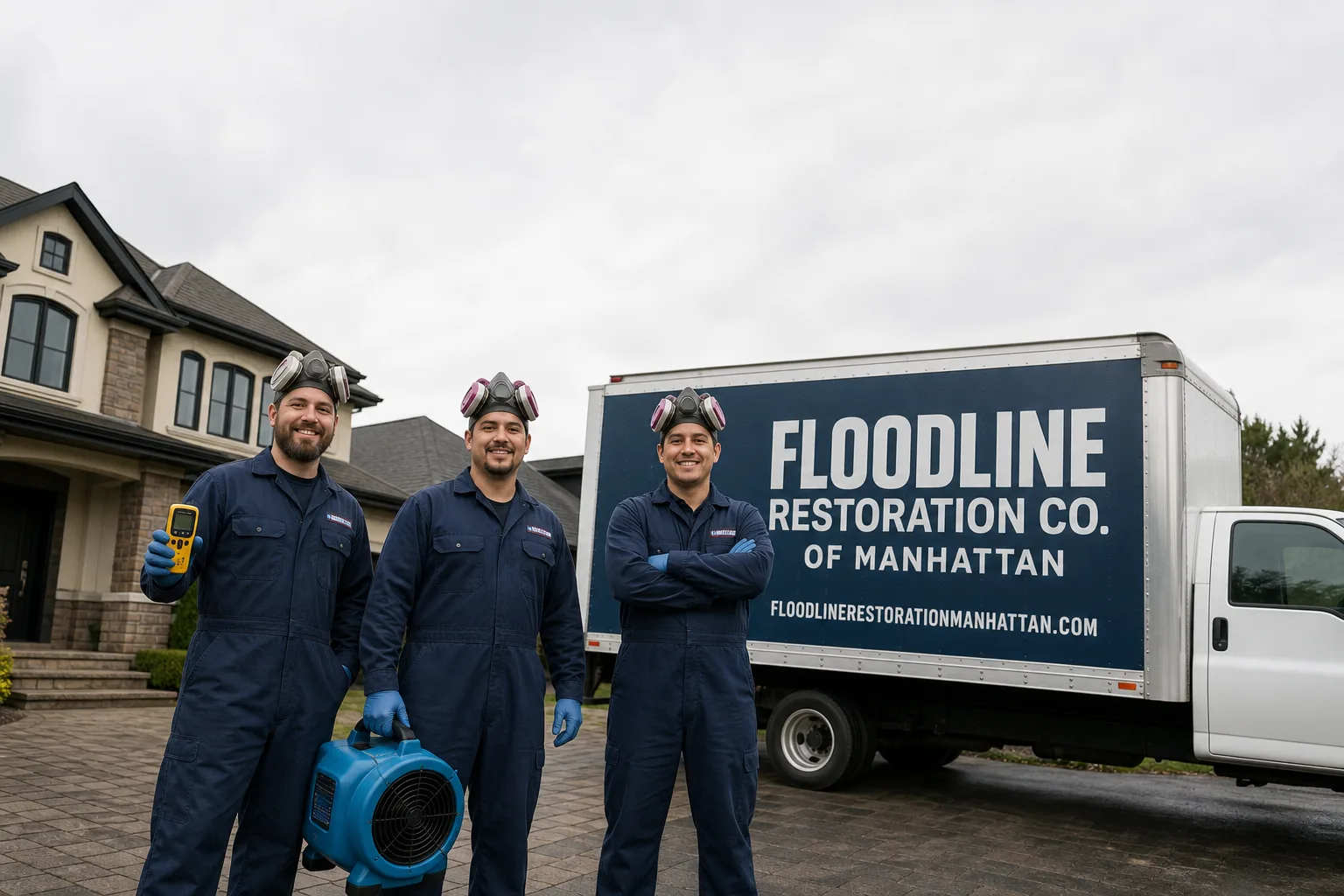
- IICRC-certified crews: Our technicians hold WRT and FSRT certifications and are trained to RIA and IFA standards. Background-checked and uniformed on every job.
- Free visual inspection: We assess the damage with no charge and no obligation, then put a written scope in your hands before any work begins.
- Direct insurance billing: We document from the first hour, bill your carrier directly, and talk to your adjuster so you do not have to.
- One team from extraction to reconstruction: The same Floodline crew that tears out damaged drywall rebuilds it. No mid-job handoff to a stranger.
Our Fire & Smoke Damage Restoration Process
Inspection & Assessment
We walk the property with a thermal camera and moisture meter, mapping soot residue types, water categories, and smoke migration paths. In Flushing’s attached row houses, that means checking party walls, the basement floor drain, and the roofline for penetration points.
Extraction & Stabilization
If the fire suppression left water, we extract it immediately with truck-mounted and portable units. Sewage-mixed water triggers Category 3 protocol: full PPE, containment, and disposal of contaminated porous materials.
Drying & Dehumidification
Dri-Eaz dehumidifiers and XPOWER air movers run until the dry standard is met. We log moisture readings every 12 hours and hand the log to you and your carrier. Behind plaster walls in a 1930s Flushing row house, that drying time matters, because trapped moisture is how hidden mold starts.
Cleaning & Sanitization
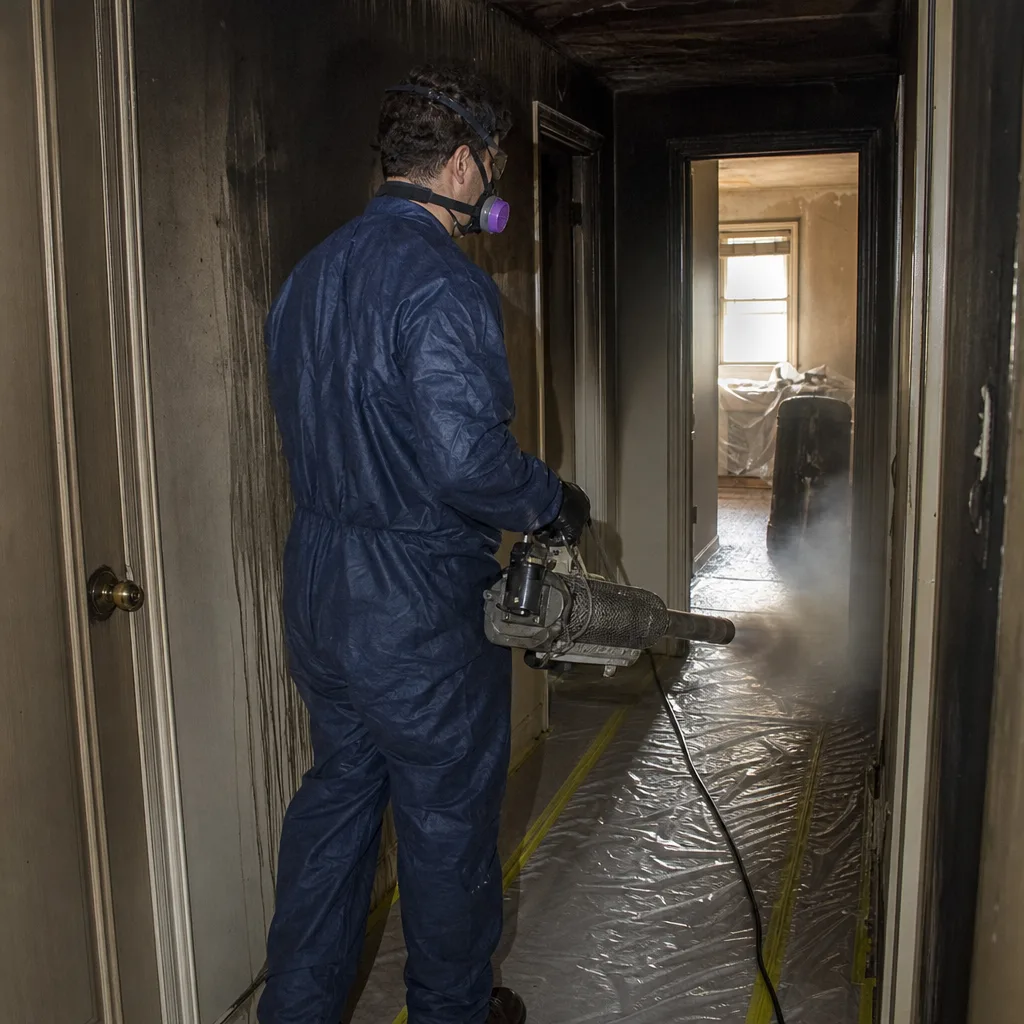
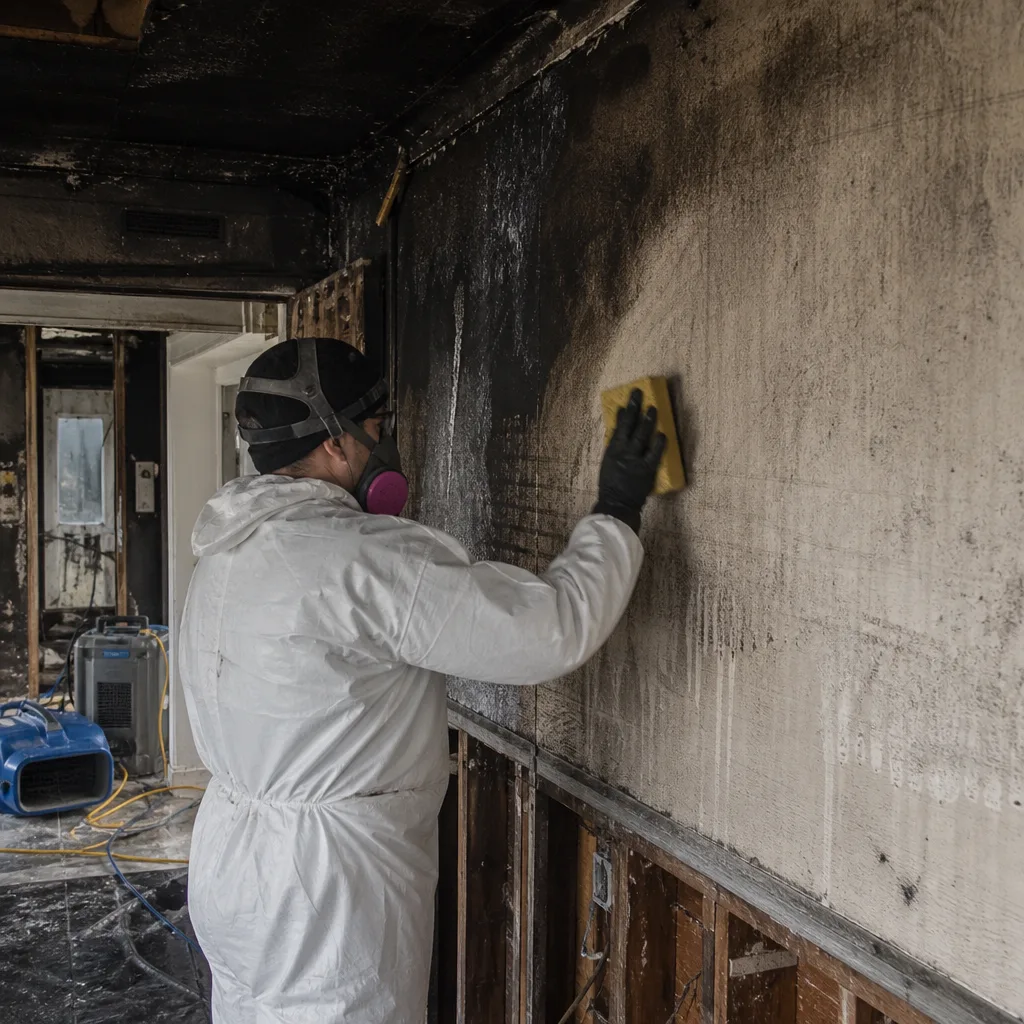
HEPA air scrubbers run continuously to pull soot particulates from the air. Surfaces get cleaned with the appropriate method for the soot type: dry sponge for protein soot, wet cleaning with degreaser for oily hydrocarbon soot, and antimicrobial fogging where Category 3 water was present.
Odor Removal & Deodorization
Smoke odor lives in porous materials, not in the air. We treat wall cavities, joists, and subfloor with thermal fogging and hydroxyl generators after the source is removed, because masking odor in a Flushing basement apartment just means it comes back with the next humid summer.
Repairs & Restoration
The same crew rebuilds what we tore out: drywall, trim, flooring, and paint. If the fire damaged structure, we repair it to code and document everything for your insurer. You get one name to hold accountable from first call to final walkthrough.
Need Emergency Fire & Smoke Damage Restoration in Flushing Now?
Crews minutes away, answering live 24 hours a day. The sooner we start, the less it costs.
Working With Your Insurance Company
Most Flushing homeowners have never filed a fire claim, and the process is slower than the damage is. Smoke keeps migrating while an adjuster schedules a visit. That is why we document from the first hour: photos room by room, moisture readings with timestamps, a line-item scope of work written the same week. We send that package directly to your carrier and talk to the adjuster ourselves. You are not the messenger. If the carrier asks for a second opinion, we walk the property with them and show the readings. If they push back, we push back harder, because we stand behind the work in writing. The 90-Day Done Right Promise covers every Flushing job we do, and it is not a sales phrase. It is a piece of paper you keep.
What We Provide Your Insurer
- Thorough documentation of the loss
- Photos of all damage, room by room
- Moisture readings and drying logs
- A detailed, line-item scope of work
- Direct coordination with your carrier
Built for Flushing’s Loss Calendar
Fires do not follow a season in Flushing, but the conditions that make them worse do. January freezes snap old supply lines in unheated basements, and when a space heater or overloaded circuit starts a fire in a 1940s attached brick row, the fire department has to pour water into a structure surrounded by attached homes. That water has nowhere to drain because Flushing is flat and low, so it pools and then backs up through floor drains as sewage. Spring and summer bring nor’easter-driven storm surge up Flushing Creek and Flushing Bay, pushing the combined sewer past capacity, so any fire during a heavy rain event automatically becomes a Category 3 water job underneath the smoke damage. Fall is when we see the most kitchen fires in converted basement apartments, because aging gas lines and crowded cooking spaces meet. No matter the month, the protocol is the same: treat every Flushing fire as a potential sewage exposure until proven otherwise, and start mitigation the same visit.
Fire & Smoke Damage Restoration Across Flushing’s Neighborhoods
Downtown Flushing around Main Street and Roosevelt Avenue runs on dense attached housing and converted basement units. When a kitchen fire happens there, smoke migration through shared walls and floor assemblies sends odor into neighboring units, so containment and air scrubbing have to start before the fire department clears the block. Murray Hill, with its brick row houses along 41st and 45th Avenues, presents the classic 1930s balloon-framed walls where smoke travels from a first-floor fire straight up into a second-floor bedroom and attic. East Flushing, further from the creek, still sits on filled marshland, and its two-family homes often have the same below-grade basement apartments. Over near Kissena Park and the blocks west of Flushing Creek, storm-surge flooding during nor’easters is the loudest factor, and any fire that happens during one becomes a mixed fire-and-black-water job. Queens College area housing, built slightly later, has different wall assemblies, but the combined sewer underneath is the same. Our dispatchers know these routes, and our crews know which building types hide damage where.
Specialized Fire & Smoke Damage Restoration Services We Offer in Flushing
Emergency Board-Up & Tarping
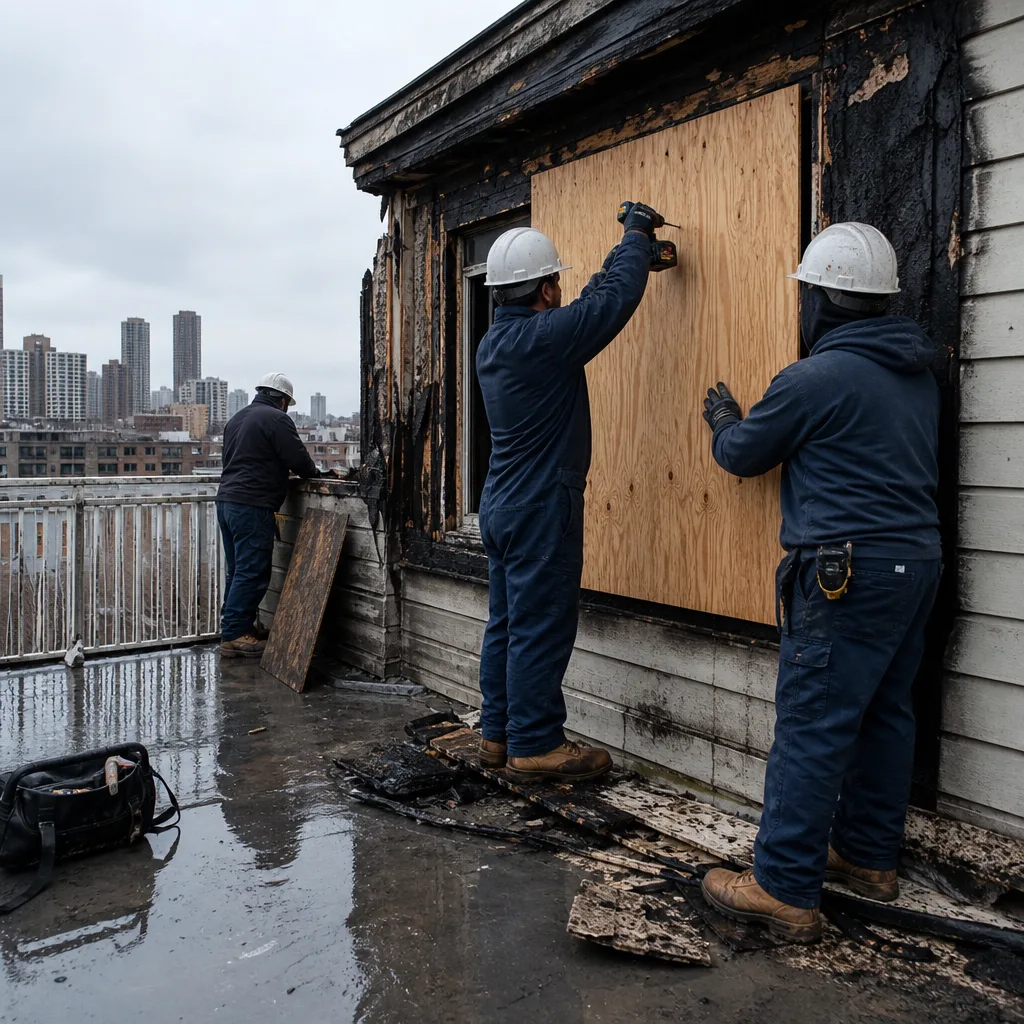
After a fire, an open window or burned roof section invites rain, squatters, and animals into a Flushing row house within a night. We board up and tarp on the same visit, securing every opening with plywood and heavy-duty polyethylene, and we document it for your insurer. For attached homes, we also check the party wall and roofline where fire spread from a neighbor’s unit.
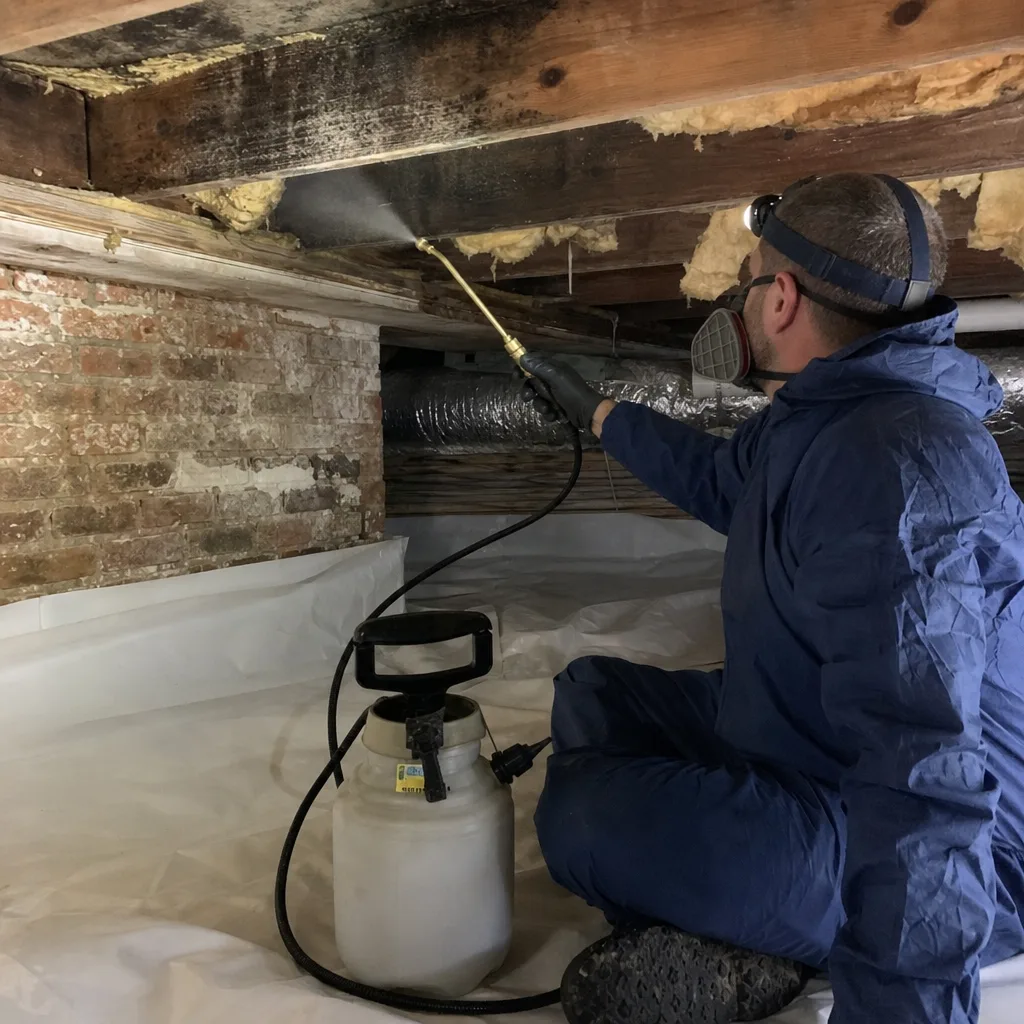
Contents Cleaning & Pack-Out
Smoke does not respect property lines or door thresholds. Furniture, clothing, documents, and keepsakes in a Flushing home absorb soot and odor even if the fire never entered the room. We inventory, pack out, and clean contents at our facility, returning them when the structure is restored. For tenants in converted basement apartments, we coordinate pack-out around the landlord’s repair schedule so renters are not left without their belongings.
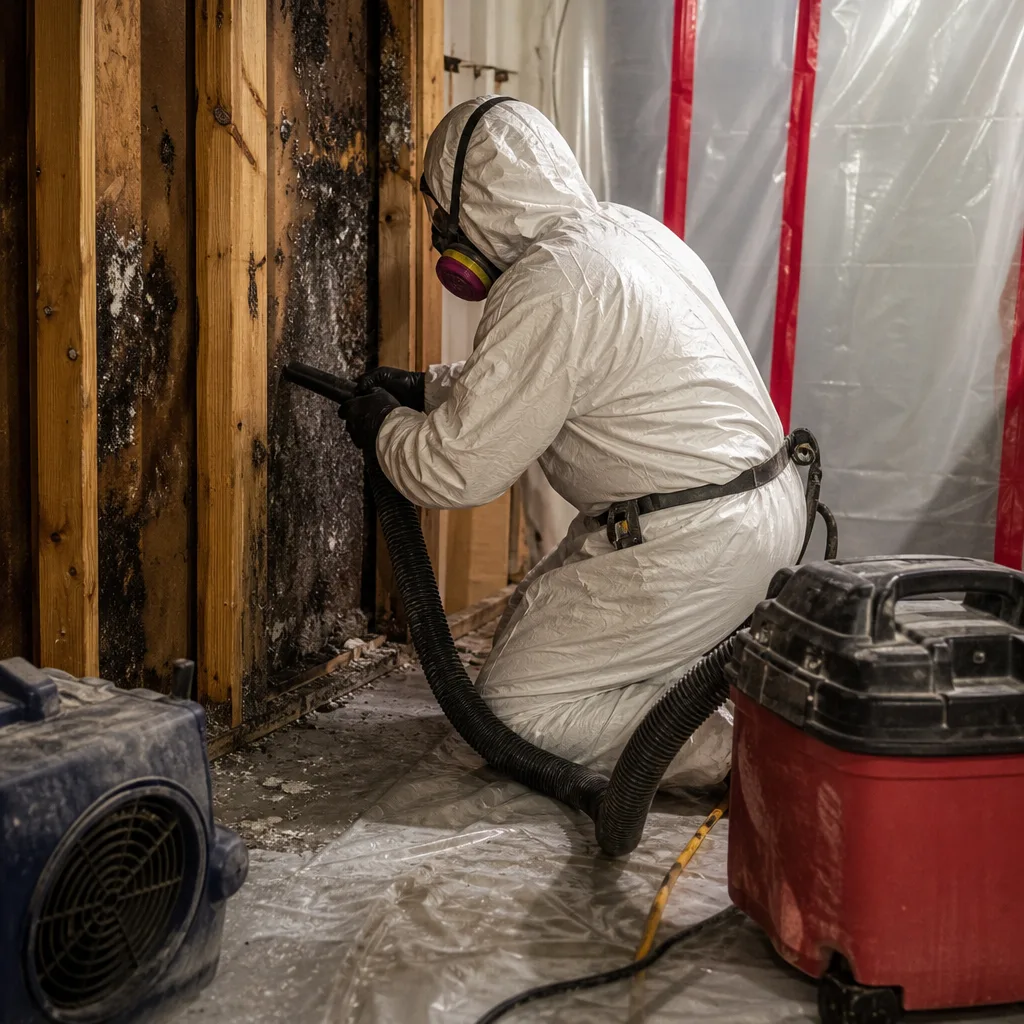
Odor Removal & Deodorization
Odor removal in Flushing fails when the source of the smell stays in the walls. We remove charred materials, chase smoke migration with thermal fogging, and run hydroxyl generators for days, not hours, treating cavities and subfloor, not just air. In basement apartments near Flushing Creek, we also treat for sewage odor, because those two smells combine and return with humidity if not addressed at the source.
Fire Damage Cleanup
Soot and char removal follows a specific order in Flushing’s older homes: protect unaffected areas with containment, remove charred debris, vacuum loose soot with HEPA-filtered machines, then clean surfaces according to soot type. Dry protein soot from a burner fire needs dry sponging first; wet cleaning it smears. Oily soot from burning synthetics needs degreaser. Our crews are trained to tell the difference by look and touch.
Smoke & Soot Removal
Smoke migration through a 1920s row house follows the balloon framing. We check the wall cavities between studs, the space behind plaster, and the joist bays under floors. In attached homes, we also inspect the party wall and any gaps where utilities pass through, because that is how smoke from a neighbor’s fire becomes your odor problem. Soot removal without checking those paths guarantees a callback.
What happens when you call
- 1
A real person answersNo phone trees - you reach a local pro.
- 2
You get an upfront price rangeHonest numbers before anyone is dispatched.
- 3
A background-checked tech heads outLicensed & insured, dispatched right away.
- 4
You approve before work beginsNothing starts until you say go.
Fire & Smoke Damage Restoration Costs in Flushing, NY
In Flushing, a small contained kitchen fire with light smoke cleanup runs $1,800 to $4,500 when no structural repairs are needed. Content pack-out and cleaning adds $800 to $3,000 depending on volume. A basement fire with sewage-mixed water, drywall tear-out to the studs, antimicrobial fogging, and rebuild typically lands between $9,000 and $28,000. What moves the number: the size of the water contamination zone, the number of rooms affected by smoke, the age of the plaster and whether it contains asbestos, and whether contents need off-site storage. Insurance usually covers most of this, subject to your deductible and policy limits, and we bill the carrier directly. The free visual inspection is how you get a firm, written scope instead of a phone estimate. Call (917) 924-4221 and we will look at the damage before quoting anything.
We Also Serve Cities Near Flushing
Our crews cover Flushing and the surrounding Queens communities the same day: College Point, Whitestone, East Elmhurst, and Corona. If your fire happened in one of those neighborhoods, the same Floodline Restoration Co. of Manhattan team handles it with the same 45-minute response and the same written guarantee. Call the same number: (917) 924-4221.
Serving Flushing, NY - Our Local Coverage Area
We’re based in the Flushing area and know this community well. Use the map below to see our service coverage - if you’re nearby, we can almost certainly help.
Flushing Fire & Smoke Damage Restoration Questions, Answered
How does living near Flushing Creek affect the way you handle a fire-damaged basement?
Living near Flushing Creek means a basement fire is rarely just a fire. The combined sewer system backs up into floor drains during fire suppression, turning the water in the basement into Category 3 black water. We treat it as a biohazard job: containment, PPE, drywall tear-out past the water line, antimicrobial fogging, and drying logs before rebuilding.
My 1930s row house on 41st Avenue has smoke damage but no visible water. Do you still need to open the walls?
Yes, usually. Smoke travels through balloon-framed wall cavities and behind plaster, even when no fire department water reached the room. Moisture from the fire or from the humidity of a Flushing basement can wick into the lath and feed mold that is not visible. We check with a moisture meter and thermal camera before deciding what to open.
Can you clean smoke-damaged furniture in the basement while you tear out drywall?
Yes. We set containment first so the tear-out dust does not add to the soot problem, then pack out contents and clean them off-site while the structural work proceeds. Furniture, clothing, and documents all get inventoried, photographed, and returned when the space is ready.
The fire was in the first-floor kitchen but the basement apartment smells like smoke. Why?
Smoke sinks and migrates. In a Flushing attached brick row house, the floor assembly between units has gaps around pipes and wiring, and smoke follows those gaps downward, especially when the fire department ventilates from above. The basement also collects soot that falls out of the air after the fire is out. We treat floor cavities, joists, and the basement air itself with air scrubbers and thermal fogging.
Do I need to leave my Flushing home during fire & smoke damage restoration?
For a small contained cleanup, you can often stay in the unaffected floors. For a basement sewage-exposure fire or extensive smoke migration, we recommend leaving until containment, drying, and air scrubbing are complete, because soot particulates and antimicrobial fogging are not for occupied spaces. We will tell you straight either way, and the insurer usually covers temporary lodging when the damage supports it.
How fast can you get to a fire in downtown Flushing?
We commit to 45 minutes for most Flushing blocks near Main Street, Roosevelt Avenue, and Northern Boulevard. Dispatch is live 24/7, so a crew starts rolling while you are still on the phone. The same visit includes board-up, water extraction if needed, and the start of containment.
Will my insurance cover fire and smoke damage in a Flushing rental basement?
Most homeowners policies cover fire damage to the structure, and your landlord’s policy likely covers the building, while the tenant’s renters policy covers personal contents. The sewage component is another line item, and we document it separately so the adjuster sees the Category 3 classification clearly. We bill the carrier directly and talk to them throughout.
What should I do in the first 30 minutes after a fire in my Flushing home?
Call (917) 924-4221 first. Then, if it is safe, shut off electricity at the panel and avoid walking through wet areas. Do not touch anything wet if there is any chance sewage backed up. Do not turn on HVAC or fans, which spread soot. Wait for our crew. We will secure the property and start the written scope that same visit.
Written by Curt Bowman, Owner at Floodline Restoration Co., serving Flushing and Queens with fire, smoke, and water restoration since 2010.