
Free visual inspection and a written scope of work before any mitigation begins - photos, moisture readings, and drying logs go in your claim file
The scope we write is the scope we bill. Anything new gets shown to you, in writing, before we touch it.






 Before
 After
After Before
 After
After Before
 After
After24/7 Emergency Fire & Smoke Damage Restoration in Garment District
Fire and smoke damage in a Garment District loft building needs immediate attention, and we answer the phone live at any hour. Call (917) 924-4221 and a real dispatcher picks up, not a recording, then a certified crew heads your way from our New York City office into the district right away. The first hours after a fire matter because soot residue is acidic and etches into fabric, metal trim, and finished surfaces the longer it sits. In a neighborhood where pre-season samples and wholesale inventory are the business itself, every hour of delay costs money. We arrive for a free visual inspection, walk the affected floor with you, and start stabilizing the space so smoke migration stops spreading through open floor plates and shared corridors.
Understanding Fire & Smoke Damage Restoration Severity in Garment District Properties
Fire damage in the Garment District rarely stops at the unit of origin. These 10-to-20-story pre-war loft buildings have open floor plates, high ceilings, and central stairwells and elevator shafts that act as chimneys for smoke, pushing soot into showrooms two and three floors above a fire. We classify soot residue by type: dry protein soot from burned fabrics and paper, oily soot from plastics and synthetics, and wet soot from smoldering fires with high moisture content. Each requires a different cleaning method and chemical agent, and using the wrong one sets stains permanently. The severity picture also includes the smoke’s migration path – because many Garment District buildings share wet-column systems and original standpipe risers, smoke travels through pipe chases and conduit openings that were never fire-stopped to modern code. That means your showroom can have significant soot deposition even when the actual fire never touched your floor. We inspect those hidden pathways with thermal imaging and moisture mapping before we ever open a cleaning bucket, because a surface wipe-down on a pre-war loft with exposed brick and old wood joists leaves residue behind that reactivates odor for years.
Why Garment District Property Owners Choose Floodline Restoration Co. of Manhattan
- 45-minute response commitment: From the moment you call, a crew is dispatched toward the Garment District. In a stacked loft building, forty-five minutes is the difference between one affected showroom and three.
- 24/7 live answer, always a person: No phone tree, no answering service that promises a callback. A dispatcher who knows restoration picks up at two in the morning and starts the process right then.
- IICRC-certified crews: Our technicians carry FSRT (Fire and Smoke Restoration Technician) and OCT (Odor Control Technician) certifications, trained to the standards set by the IICRC, plus RIA and IFA protocols. Curt Bowman built the company around certified work, not sales scripts.
- Free visual inspection: Before any work starts, we walk the affected areas with you, document what we see, and tell you plainly what needs doing and what can wait.
- Direct insurance billing: We deal with the adjuster, the carrier, and the paperwork. You do not carry messages between us and your insurer.
- One team from first extraction to rebuild: The same background-checked, uniformed crew that does the pack-out does the structural repair. No mid-job handoff to a subcontractor you never met.
Our Fire & Smoke Damage Restoration Process
Inspection & Assessment
We document the affected floor with photos and thermal imaging, map soot deposition across open floor plates and shared vertical shafts, and produce a line-item scope. In Garment District buildings, this includes checking every floor above and below the fire for smoke migration through pipe chases and elevator shafts.
Emergency Board-Up & Stabilization
We secure broken windows, tarp openings, and seal off affected zones so soot stops traveling. In a multi-tenant loft building, this containment protects showrooms that were never touched by flame from inheriting a smoke problem.
Soot Removal & Surface Cleaning
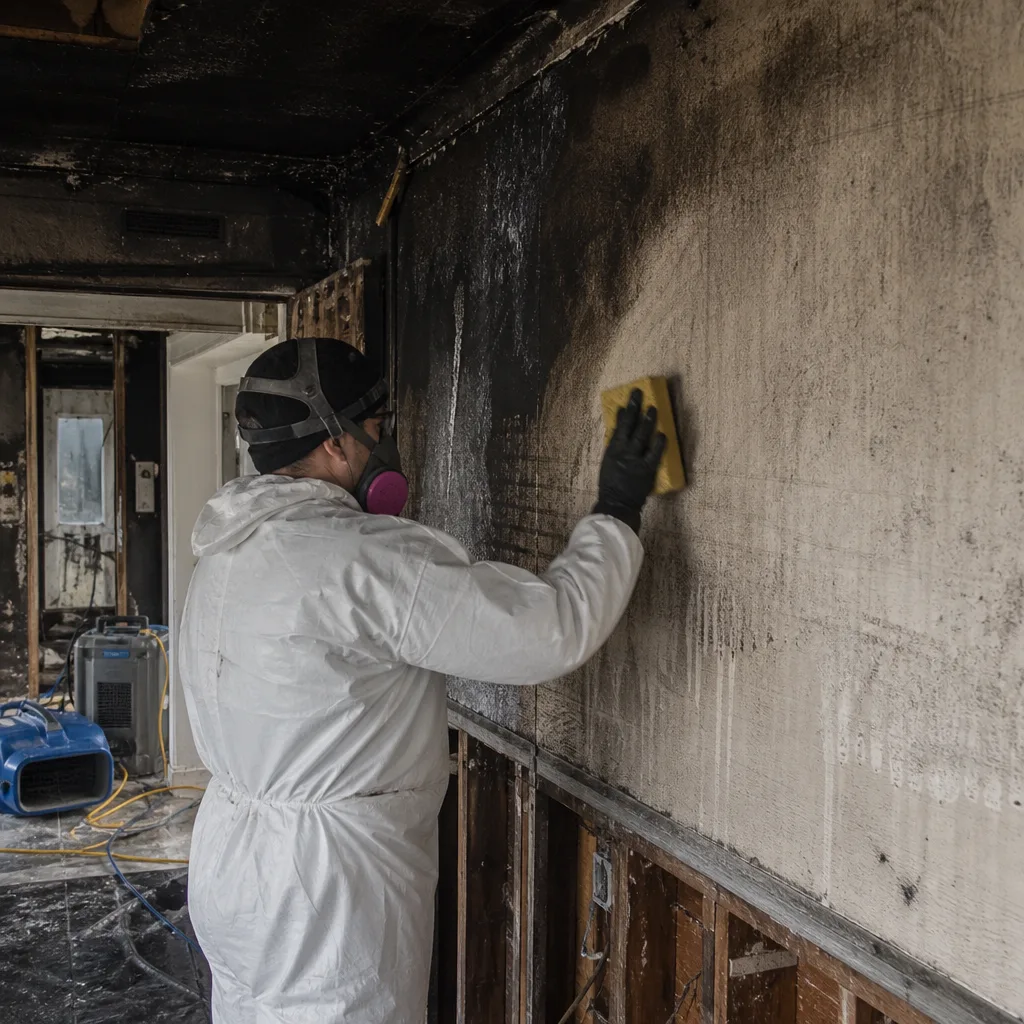
Using professional-grade HEPA air scrubbers, dry sponges, and chemical agents matched to the soot type, we remove residue from walls, ceilings, fixtures, and floors. Soot on original pre-war surfaces like tin ceilings and cast iron columns needs a different hand than drywall.
Contents Cleaning & Pack-Out
Fabric bolts, garments, pattern archives, and wholesale samples get cataloged individually, stabilized, and moved to our cleaning facility if the floor is too heavily affected to work in place. Each item is logged with its location so restoration returns it to the right rack or shelf.
Odor Removal & Deodorization
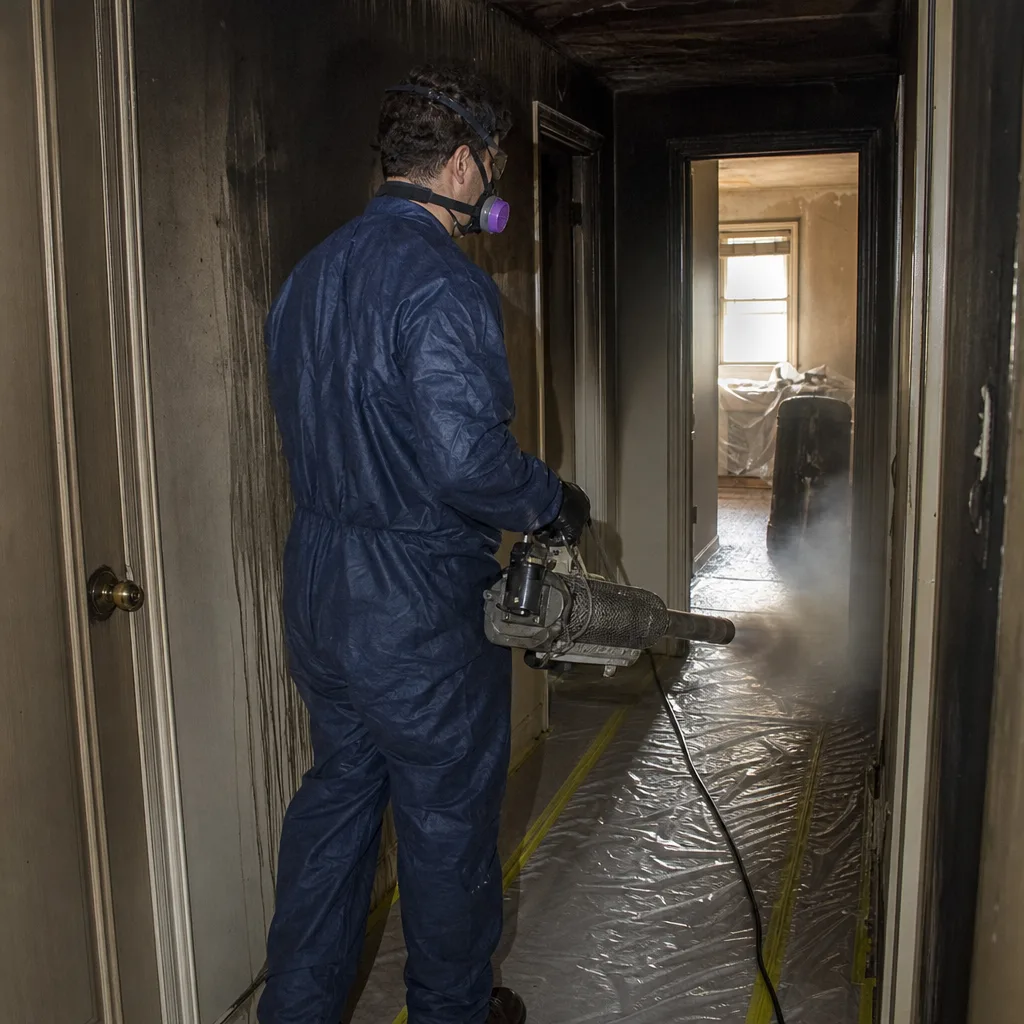
Smoke odor in a high-rise loft with restricted ventilation does not air out on its own. We run HEPA negative-air machines, hydroxyl generators, and thermal fogging through the space, treating the cavity air inside walls and above ceilings where smoke migrated.
Structural Repair & Restoration
Charred framing, damaged flooring, electrical affected by heat, and finishes get rebuilt by our own crew. The goal is a showroom that opens for buyers on schedule and looks like the fire never happened, with the 90-Day Done Right Promise in writing behind it.
Need Emergency Fire & Smoke Damage Restoration in Garment District Now?
Crews minutes away, answering live 24 hours a day. The sooner we start, the less it costs.
Working With Your Insurance Company
We have handled hundreds of fire claims in pre-war Manhattan loft buildings, and we know what carriers need before they release payment. The process starts with documentation: photos from the first hour, a room-by-room inventory, and a line-item scope written to industry standards. Our project managers communicate directly with your adjuster, answer their questions about soot type and cleaning method, and push the claim forward without you acting as the middleman. We bill the carrier directly for covered work, and you get a written scope before anything starts. That means no surprises on the bill and no arguments about what was authorized. When a Garment District fire affects multiple showrooms in one building, we coordinate the restoration plan across unit lines so your claim does not get blamed for another tenant’s damage.
What We Provide Your Insurer
- Thorough documentation of the loss
- Photos of all damage, room by room
- Moisture readings and drying logs
- A detailed, line-item scope of work
- Direct coordination with your carrier
Built for Garment District’s Loss Calendar
Fire and smoke losses in the Garment District follow the building stock and the business cycle more than the weather. January and February bring frozen-pipe bursts on exterior-facing plumbing in pre-war lofts, and when water hits electrical panels or energized equipment, the result is often a small fire with heavy smoke migration through the floor. Spring market weeks and the run-up to September Fashion Week are the busiest seasons for showroom fires because spaces are being rearranged, lighting installed, and temporary electrical run through aging conduits. Lightning storms in summer can overload the district’s original electrical infrastructure, and any fire in a shared riser pushes smoke through multiple floors. The throughline is the same: older buildings, dense occupancy, and a business calendar that turns a two-day restoration into a season-defining emergency. We schedule our emergency response capacity around these patterns, which means a crew is available when your building’s worst day happens.
Fire & Smoke Damage Restoration Across Garment District’s Neighborhoods
The Garment District runs roughly from West 34th to West 42nd, between Sixth and Ninth Avenues, and the loss patterns shift block by block. On Seventh Avenue and Broadway, the fashion showrooms dominate and a fire means fabric and sample salvage first, structural repair second, with the buyer calendar setting the deadline. West 38th Street between Seventh and Eighth is the fabric and trim corridor, where bolts of silk and wool stacked floor to ceiling burn hot and produce a heavy, oily soot that requires aggressive chemical cleaning and aggressive odor treatment. The blocks around Penn Station on West 34th see mixed-use buildings with residential conversions above commercial floors, so a fire there means coordinating restoration across tenants with different insurers and different tolerance for disruption. Over on the Ninth Avenue side, the buildings run older and smaller, with original wooden floors and tin ceilings that respond differently to thermal fogging than modern drywall. Our crews route through these corridors daily enough to know which buildings have narrow freight elevators that limit equipment access and which have roof access for HEPA exhaust ducting.
Specialized Fire & Smoke Damage Restoration Services We Offer in Garment District
Fire Damage Cleanup
We remove charred debris, damaged drywall, and compromised finishes from the affected showroom or loft, working carefully around original pre-war elements like tin ceilings and cast iron columns. The cleanup includes HEPA vacuuming of all horizontal surfaces and sealed waste transport out of the building, because leaving debris in a shared freight area spreads soot to every other floor.
Smoke & Soot Removal
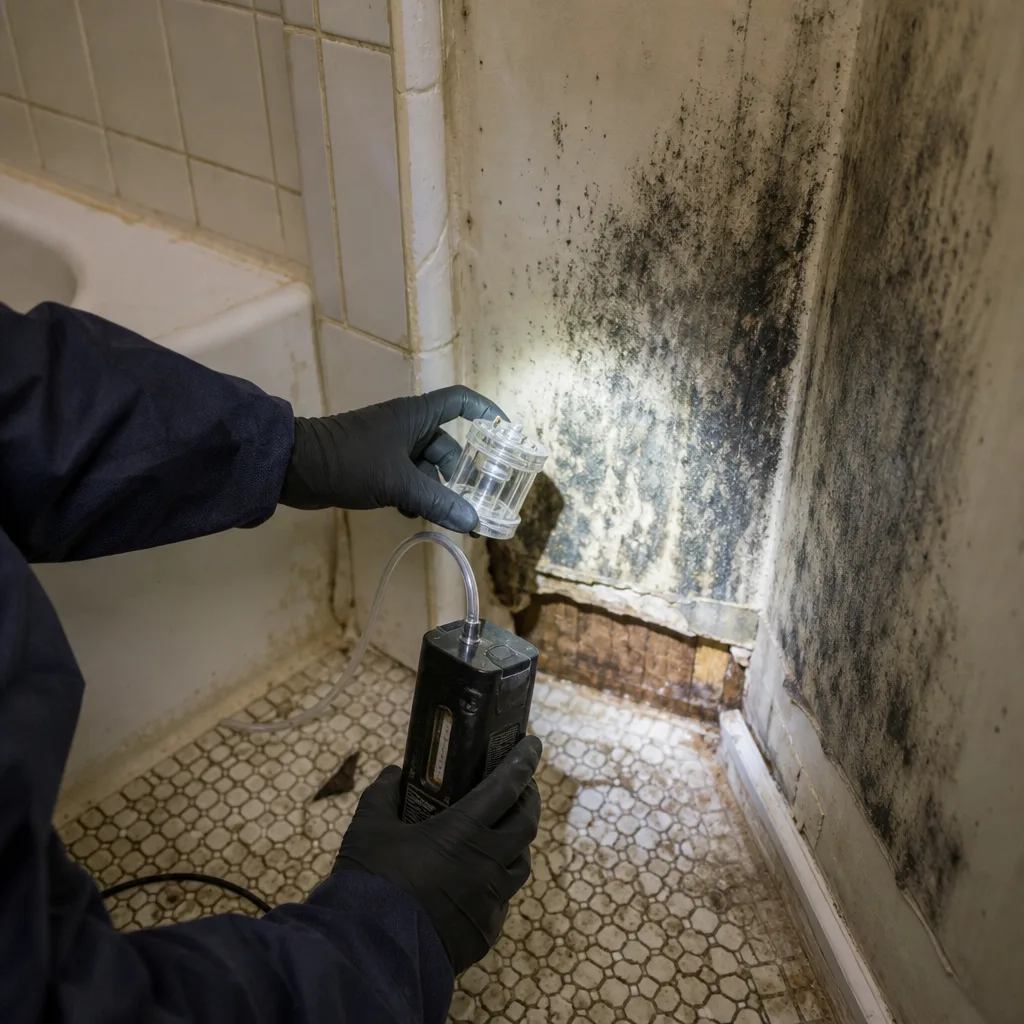
Soot in a Garment District loft settles into fabric, on top of door frames, inside light fixtures, and across every exposed surface. Our crew uses dry chemical sponges, wet-cleaning methods, and HEPA-equipped vacuums matched to the soot type, treating shared corridors and stairwells because smoke does not respect your unit line.
Odor Removal & Deodorization
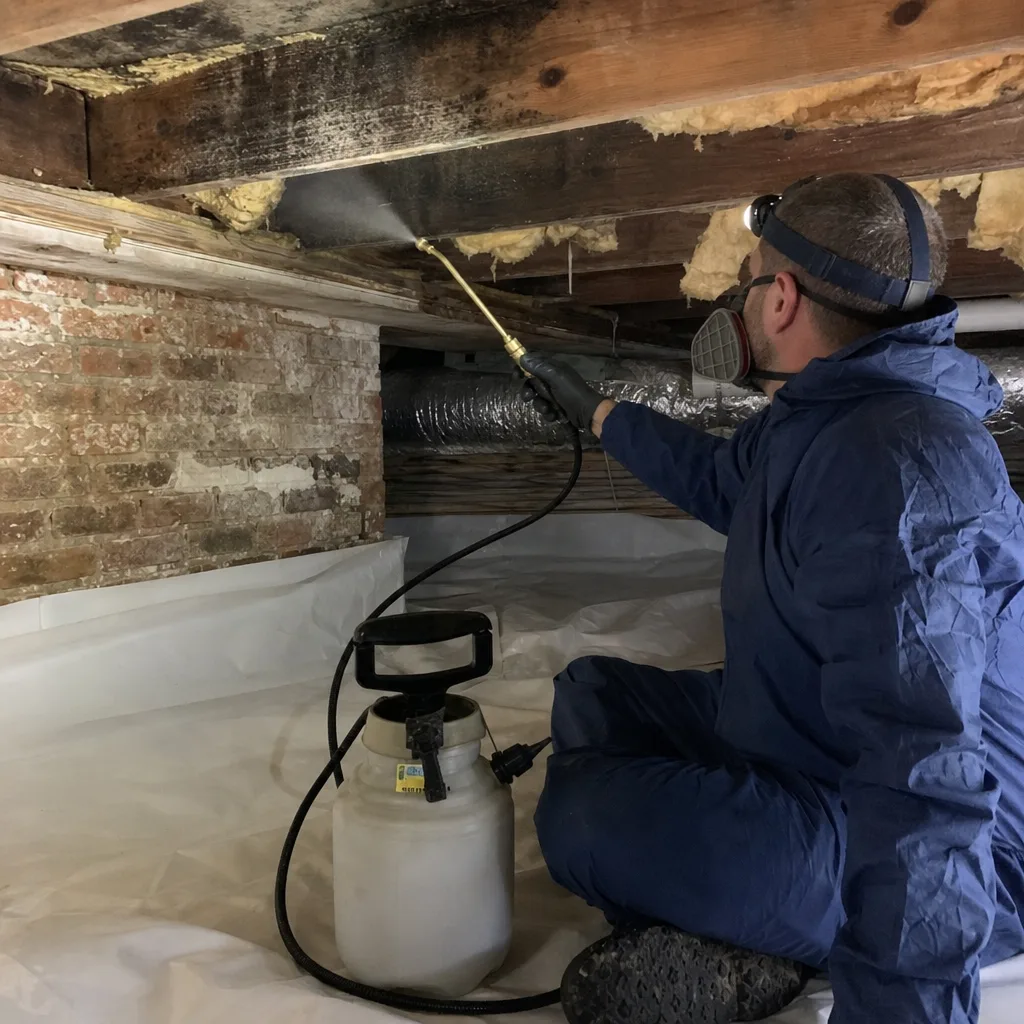
Showroom buyers can smell smoke residue even when they cannot see it, and a lingering odor kills a sale faster than a visible stain. In high-rise lofts where opening windows is not enough to ventilate, we run negative-air HEPA units and hydroxyl generators through the space, treating the air inside wall cavities and above dropped ceilings where smoke traveled. This is specialized work in dense pre-war buildings because the only ventilation path is often the same shaft that spread the smoke in the first place.
Contents Cleaning & Pack-Out
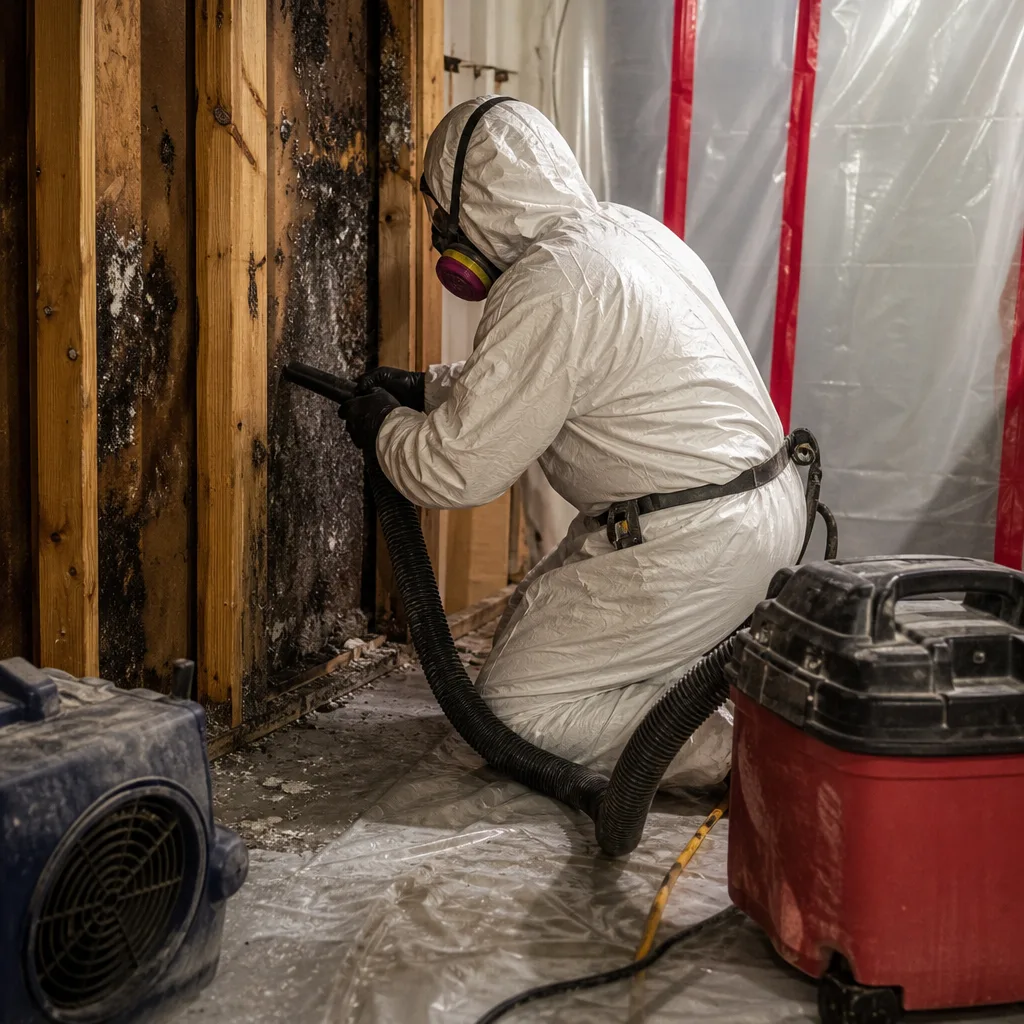
This is the service that matters most in the Garment District. Fabric bolts, pre-season samples, designer inventory, and pattern archives cannot be replaced by a check from the insurance company. We catalog every affected item, clean what can be restored on site, and pack out the rest to our facility for ozone treatment, hand cleaning, and stabilization. Last January, our crew responded to a frozen-pipe burst on West 38th Street that sent Category 2 water through three floors of a 1920s loft building. We set up containment on each floor and used our Dri-Eaz air movers and dehumidifiers for structural drying, but the real challenge was the pack-out: we cataloged and stabilized over 400 garments and 120 linear feet of fabric bolts before mold could set in. Working around the clock ahead of Fashion Week, we got the showroom back to pre-loss condition in 72 hours.
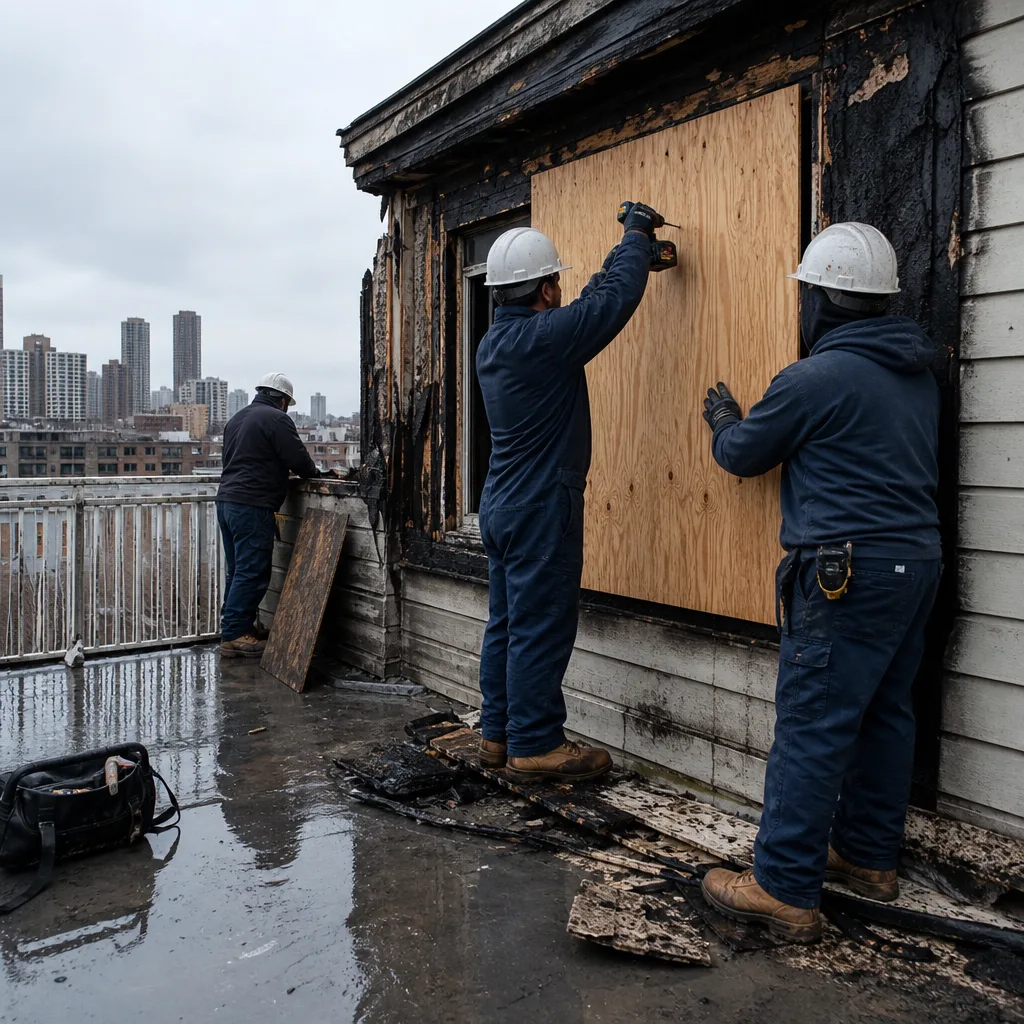
Emergency Board-Up & Tarping
Broken windows, burned openings, and water-damaged skylights get boarded and tarped immediately, keeping the weather out and the remaining heat in during winter months. In a multi-tenant loft building, an open window on one floor pulls smoke into neighboring showrooms; we seal the envelope fast.
Structural Fire Repair
Burn-damaged joists, scorched columns, compromised flooring, and affected electrical systems get repaired or replaced by our own crew, not a subcontractor. In pre-war buildings, this often means matching original materials and working around still-active steam pipes, which requires a different repair standard than a modern drywall build-out.
What happens when you call
- 1
A real person answersNo phone trees - you reach a local pro.
- 2
You get an upfront price rangeHonest numbers before anyone is dispatched.
- 3
A background-checked tech heads outLicensed & insured, dispatched right away.
- 4
You approve before work beginsNothing starts until you say go.
Fire & Smoke Damage Restoration Costs in Garment District, NY
Most Garment District fire and smoke restoration projects land between $2,400 and $9,800, depending on how far the smoke traveled and whether contents cleaning is involved. Odor removal in a restricted-ventilation loft runs $800 to $2,600 for a single showroom, and a full contents pack-out with cataloging and off-site cleaning on a fabric-heavy floor typically costs $3,000 to $12,000. Structural fire repair starts around $3,500 for minor framing and drywall and moves up from there based on what burned. Insurance covers the majority of fire losses, and our direct billing means you are not fronting the money while the claim processes. The free inspection gives you a firm, written scope before any work begins, so the number you approve is the number you pay. For an exact quote on your building, call (917) 924-4221 – estimates are free and a live person picks up.
We Also Serve Cities Near Garment District
Our crews respond to fire and smoke losses throughout the surrounding area, including Fairview, Harrison, East Bronx, and Hunts Point. If your building sits on the edge of the Garment District or just outside the core, call us and we will route the nearest certified crew to you, same as if you were on Seventh Avenue.
Garment District Fire & Smoke Damage Restoration Questions, Answered
How fast can you respond to a fire in a Garment District showroom with pre-season samples?
We commit to a 45-minute on-scene response for Garment District calls, and during Fashion Week run-up periods we staff extra crews specifically for the district. The faster we arrive, the sooner we can start separating smoke-affected fabrics from clean inventory and stop soot from setting into the weave. Call (917) 924-4221 and a dispatcher starts the process immediately.
Can you restore fabric bolts and garments after a smoke or fire event?
Yes. We catalog every bolt, garment, and sample, then clean using methods matched to the fiber type and soot residue. Some items need ozone treatment or hand cleaning off-site, and we log every item so it returns to the right rack. The goal is preserving wholesale inventory that insurance cannot replace at cost.
How do you handle odor removal in a high-rise loft where ventilation is restricted?
We run HEPA negative-air machines and hydroxyl generators that treat the air without needing open windows, pulling smoke-laden air through activated carbon filtration. We also fog inside wall cavities and above ceilings where smoke traveled through pipe chases. This works in the Garment District’s dense pre-war buildings where natural airflow is limited by the street canyon effect.
What does structural fire repair include for a pre-war loft building?
Structural fire repair covers charred joists, damaged columns, scorched flooring, and affected electrical, repaired by our own crew to match the original pre-war construction. We work around active steam pipes, preserve tin ceilings and cast iron where possible, and document the repair for your insurer and the building’s management.
Do you coordinate with other showrooms in the same building during a fire restoration?
Yes. In multi-tenant Garment District loft buildings, we contain affected zones so soot does not spread to neighboring showrooms, and we communicate directly with building management and other tenants’ insurers about shared shafts, stairwells, and freight elevators. Your restoration does not become someone else’s claim problem, and vice versa.
Will insurance cover fire and smoke restoration in a commercial loft?
Most commercial policies cover fire, smoke, and the resulting contents damage, but the claim is smoother when documentation starts on day one. We photograph every affected area, inventory every damaged item, and bill your carrier directly so you are not carrying the cost during the claim.
How long does fire and smoke restoration take in a Garment District showroom?
A standard single-showroom fire with soot and odor cleanup typically takes 2 to 5 days. When contents pack-out and structural repair are involved, the full process may run 1 to 3 weeks. During Fashion Week crunches, we bring extra crews and run overnight shifts to hit your buyer schedule.
What should I do in the first 30 minutes after a fire in my loft?
Call (917) 924-4221 first, then if it is safe, shut off power to the affected area and open no windows unless the fire department tells you to. Leave soot untouched – wiping it with a household cleaner can set the stain permanently. Do not enter areas where the structure or electrical is compromised. Our dispatcher will walk you through the first steps while the crew is en route.
Serving Garment District, NY - Our Local Coverage Area
We’re based in the Garment District area and know this community well. Use the map below to see our service coverage - if you’re nearby, we can almost certainly help.
Your Fire & Smoke Damage Restoration Team in Garment District
Floodline Restoration Co. has handled fire and smoke restoration in the Garment District long enough to know that the job is never just about the building. It is about the fabric, the samples, the pattern archives, and the buyer calendar. Our Fire & Smoke Damage Restoration team works the way the district works: fast when speed matters, careful when the inventory is irreplaceable, and always with a written guarantee. We are the Fire & Smoke Damage Restoration in Garment District crew that answers live, shows up in uniform, and stands behind the work with the 90-Day Done Right Promise in writing. If you have a fire or smoke emergency in a showroom or loft, call (917) 924-4221 now for a free estimate and a straight answer.
Written by Curt Bowman, Owner at Floodline Restoration Co. of Manhattan, serving the Garment District since 2010.