
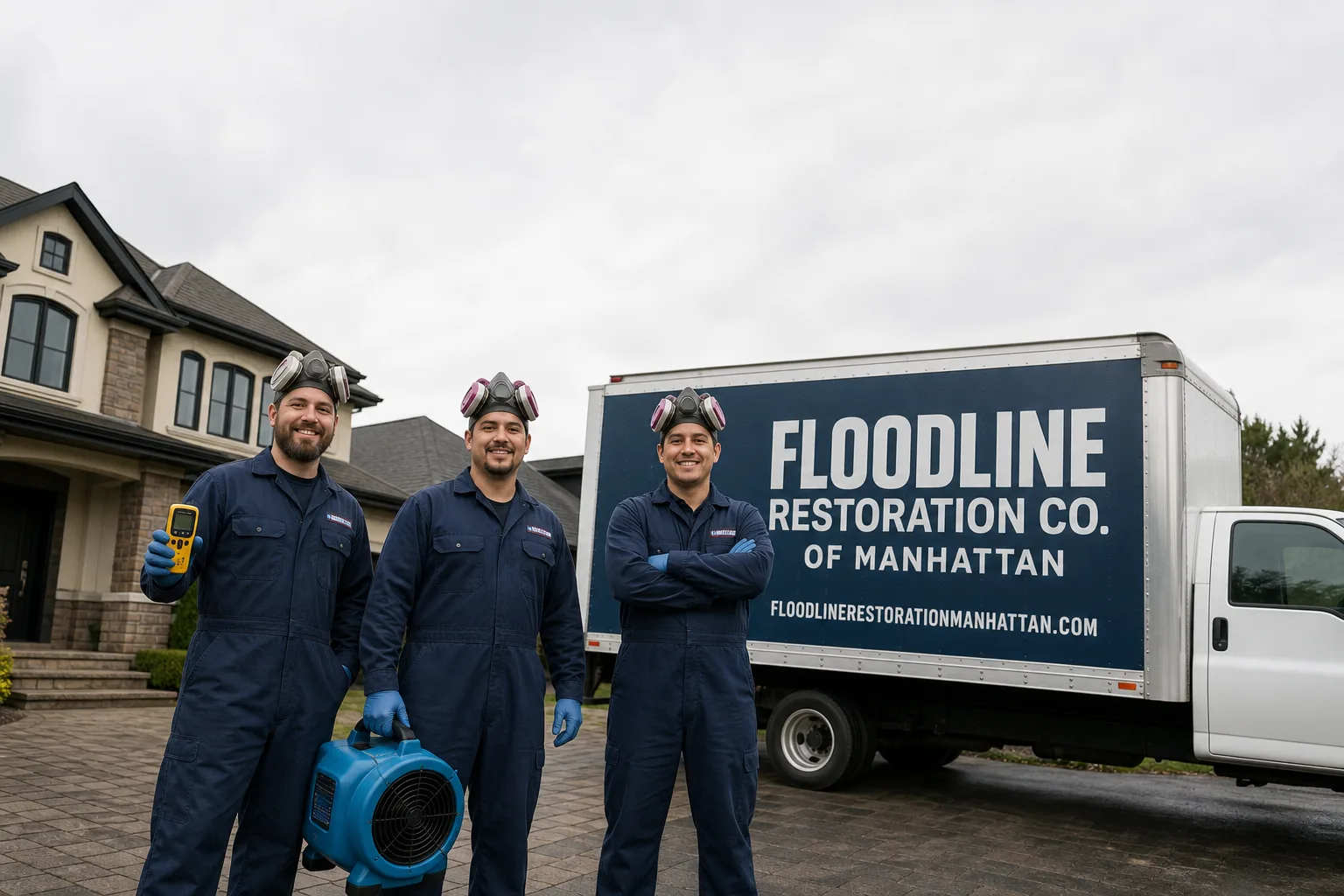
Free visual inspection and a written scope of work before any mitigation begins - photos, moisture readings, and drying logs go in your claim file
The scope we write is the scope we bill. Anything new gets shown to you, in writing, before we touch it.






 Before
 After
After Before
 After
After Before
 After
After24/7 Emergency Fire & Smoke Damage Restoration in Great Neck
Fire and smoke damage in Great Neck moves fast, and so do we. Soot settles into plaster and fabric within hours. Odor bonds to every porous surface. Water from fire suppression starts wicking into flooring before the trucks leave your street. Calling (917) 924-4221 gets you a live dispatcher, not a recording, and a crew dispatched toward your neighborhood right then. Our Fire & Smoke Damage Restoration team handles board-up, water extraction, soot removal, and contents triage in a single first visit. The first hour decides whether your home gets cleaned or gets gutted. We’d rather it be the first one.
Understanding Fire & Smoke Damage Restoration Severity in Great Neck Properties
Not all smoke is the same, and Great Neck’s older homes make that distinction matter more than it does in a newer build. A grease fire in a 1940s Colonial Revival off Middle Neck Road produces wet, sticky soot that smears if you touch it wrong. A furnace puffback in a 1920s Tudor off East Shore Road sends fine, dry soot into every crack of horsehair plaster and behind custom millwork. Protein fires leave a residue you can’t see but can smell for months. Each type demands different chemistry, different agitation, and a different drying strategy. Add in lathe-and-plaster walls that hold moisture like a sponge, and you’re dealing with conditions no suburban McMansion will ever present. We read smoke migration the way a mason reads mortar, room by room and surface by surface.
Why Older Great Neck Houses Make Smoke Damage Worse
Horsehair plaster isn’t just a surface. It’s two coats of lime and sand over wood lath, laced with horsehair for tensile strength. When soot lands on it, the carbon works into the pores. When water from a suppression line soaks it, the keys that hold the plaster to the lath soften and degrade. Blow in drywall-grade dehumidification and you accelerate cracking and delamination. Blast it with the wrong cleaning agent and you pull lime out of the wall. These details are why fire and smoke restoration in Great Neck can’t be run from a national checklist. The stock of homes here, from the Gold Coast estates above Shore Road to the mid-century ranches south of Northern Boulevard, needs a crew that respects what it’s working on.
Key Takeaways
- Saltwater electrical corrosion is common in Great Neck after bay flooding and directly affects fire-safety restoration scope.
- Horsehair plaster and custom millwork need soot-specific cleaning, not drywall replacement framing.
- Every job gets a written scope and direct insurance billing, with photo documentation from the first hour.
- One crew handles board-up through rebuild. No handoffs, no new faces at the finish line.
Why Great Neck Property Owners Choose Floodline Restoration Co. of Manhattan
- 45-minute response commitment for Great Neck addresses. When you call, the truck rolls. Our dispatch board is built around getting extraction and air scrubbers running fast.
- A live person answers at 2 a.m. No phone tree, no “leave a message after the tone.” You explain once, to a human, and that’s who routes the crew.
- IICRC-certified crews in FSRT and WRT. Fire & Smoke Restoration Technician and Water Restoration Technician certifications are the baseline. Not an add-on.
- Free visual inspection with a written scope. You see every line item before any work begins. No surprises on the bill, ever.
- Direct insurance billing and adjuster coordination. We document, photograph, and submit. You don’t carry papers between us and your carrier.
- One team from the first board-up to the final coat of paint. The people who dry your plaster are the people who rebuild your stair rail. Continuity matters on old houses.
Our Fire & Smoke Damage Restoration Process
Inspection & Assessment
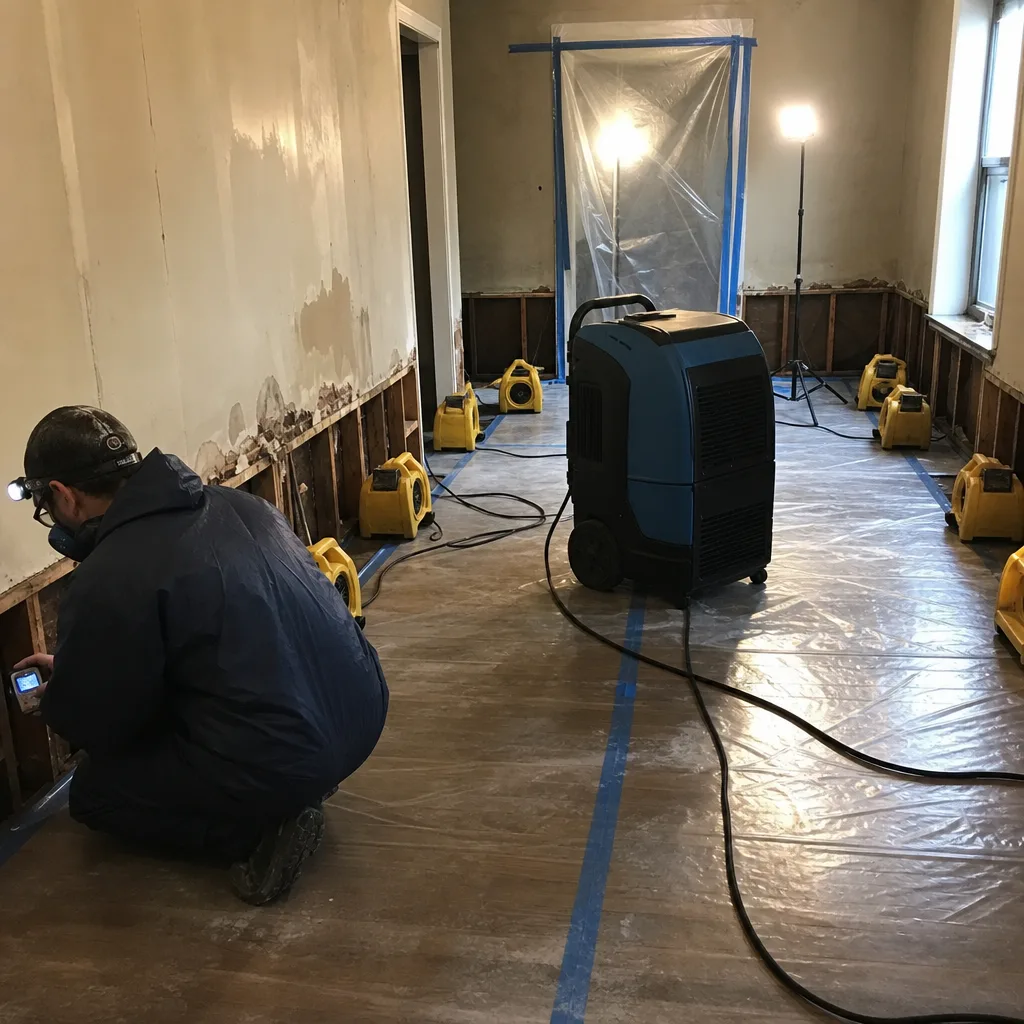
We walk the full structure with thermal imaging and moisture meters. Soot type, smoke path, water migration, and electrical condition get documented before a single tool comes out. You get a written scope after this walkthrough, not before.
Stabilization: Board-Up & Tarping
We secure openings with plywood and weatherproof coverings the same visit. Great Neck’s salt air accelerates rust on exposed framing, so sealing the envelope fast is not optional.
Water Extraction & Structural Drying
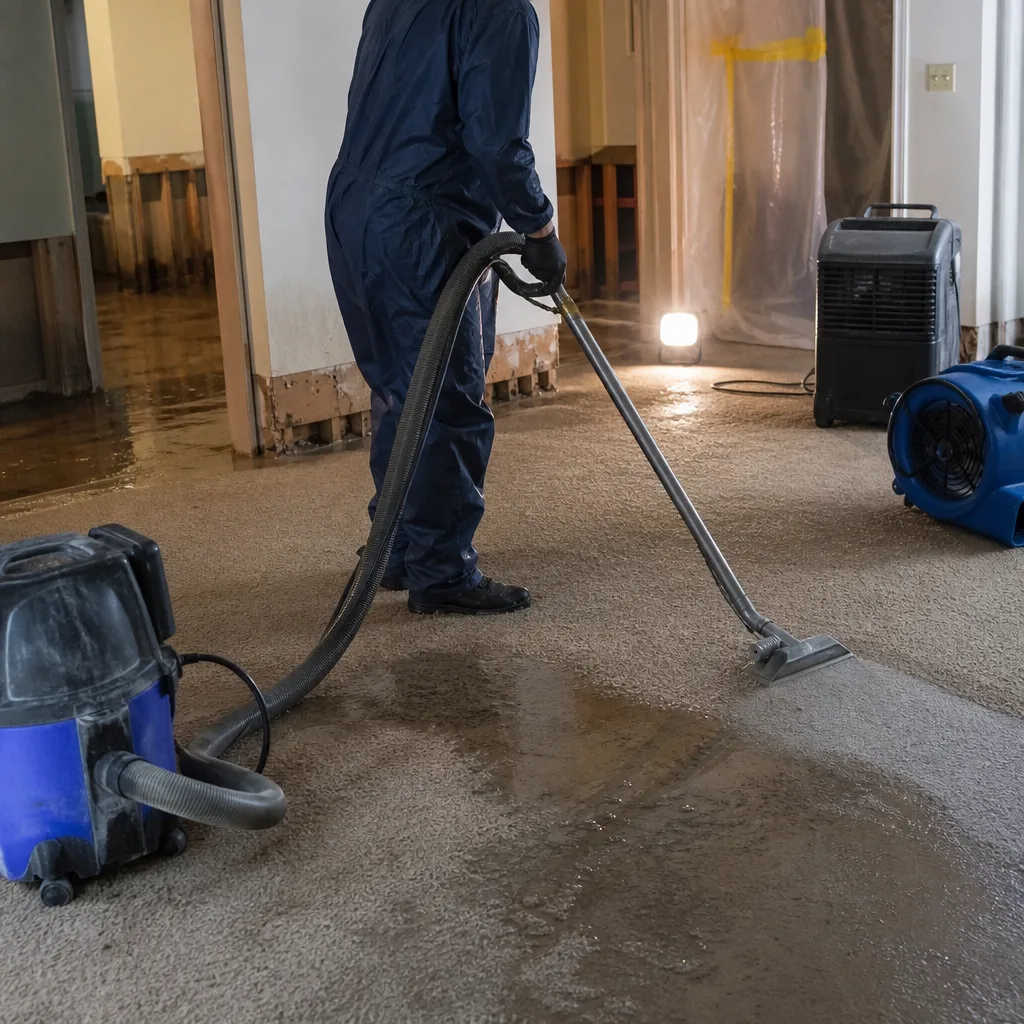
Fire suppression water gets extracted with truck-mounted units and professional-grade Dri-Eaz and Phoenix equipment. Hygrometers and daily moisture logs track drying until the dry standard is met on paper, not by feel.
Soot & Smoke Cleaning
HEPA air scrubbers run continuously. Dry sponges lift soot off plaster without smearing. Millwork gets cleaned with soot-specific sponges and solvents matched to the finish. This is the step where Great Neck’s period woodwork either survives or gets ruined, and it’s a matter of technique.
Odor Removal & Deodorization
Thermal fogging and hydroxyl generators neutralize smoke odor at the molecular level. Masking agents are for car rentals. We treat the source so smell doesn’t return with the first humid August week.
Structural Repair & Restoration
Damaged framing gets sistered or replaced. Plaster gets repaired with lime-based materials, not drywall patches. Trim and millwork get matched to the original profile. The 90-Day Done Right Promise applies to every repair we make, in writing, no argument.
Need Emergency Fire & Smoke Damage Restoration in Great Neck Now?
Crews are minutes away and answering live 24 hours a day. The sooner we start, the less it costs.
Working With Your Insurance Company
Insurance is always in the room after a fire, and we work directly with your carrier so you don’t have to. From the first hour, we photograph every room, log every moisture reading, and document every item we pack out. Our estimates follow the same line-item format your adjuster expects, which keeps the claim moving and cuts down on back-and-forth. If your adjuster questions a scope item, we handle that conversation. You’re not the messenger. For storm-surge and flood-related fire damage on Great Neck’s bay side, the claim often runs through NFIP Write Your Own policies, and we know that documentation standard including elevation certificate requirements. It’s a different claims world than an inland kitchen fire, and we’ve been through it enough times to anticipate the friction points before they slow your rebuild.
What We Provide Your Insurer
- Thorough documentation of the loss
- Photos of all damage, room by room
- Moisture readings and drying logs
- A detailed, line-item scope of work
- Direct coordination with your carrier
Built for Great Neck’s Loss Calendar
The fire calls in Great Neck don’t come evenly. Late January through February, we see furnace overloads in homes where original heating systems were never designed for the additions tacked on over decades. A puffback from an oil-fired boiler in a pre-war house off Baker Hill Road sends soot through plaster walls and ductwork in a way newer construction never would. Spring brings basement sump failures and wiring corrosion after the thaw, especially in waterfront vintage houses where salt has eaten at the panel. Summer thunderstorms blow transformers on the peninsula’s overhead lines and lightning strikes take out older electrical systems. Nor’easter seasons stack the risk on bay-side streets where flooded basements meet aging panels and the damage isn’t just wet, it’s a fire waiting to happen. We keep crews staged for all of it, because Great Neck’s calendar doesn’t negotiate.
Fire & Smoke Damage Restoration Across Great Neck’s Neighborhoods
Great Neck is small by population but split into distinct pockets, and each one shows us different loss patterns. Along the water in Kings Point, where the Gold Coast estates sit above the bay, saltwater intrusion after a surge event corrodes panels, disconnects, and HVAC controls far faster than freshwater. Smoke restoration here often has to wait for the electrical replacement before charred or sooted areas can be safely cleaned. Over on the peninsula’s east side in Saddle Rock and along East Shore Road, the Tudor Revivals from the 1920s and 1930s show the heaviest horsehair plaster and original millwork, which changes how we clean and what we can reclaim. Near Kensington and north of Middle Neck Road, the mid-century homes with early drywall respond to more standard techniques, but the charred framing still hides behind layers of remodel. And through the village center off Northern Boulevard, older commercial-residential mixed builds present the tightest access, which is exactly where our smaller extraction rigs and staged crews earn their keep.
Specialized Fire & Smoke Damage Restoration Services We Offer in Great Neck
Fire Damage Cleanup
We remove charred contents, demo unsalvageable materials, and clean the building envelope before moisture spreads further into the structure. In Great Neck’s older stock, this often means selective demo rather than wholesale gutting, so original surfaces get saved wherever they can be.
Smoke & Soot Removal
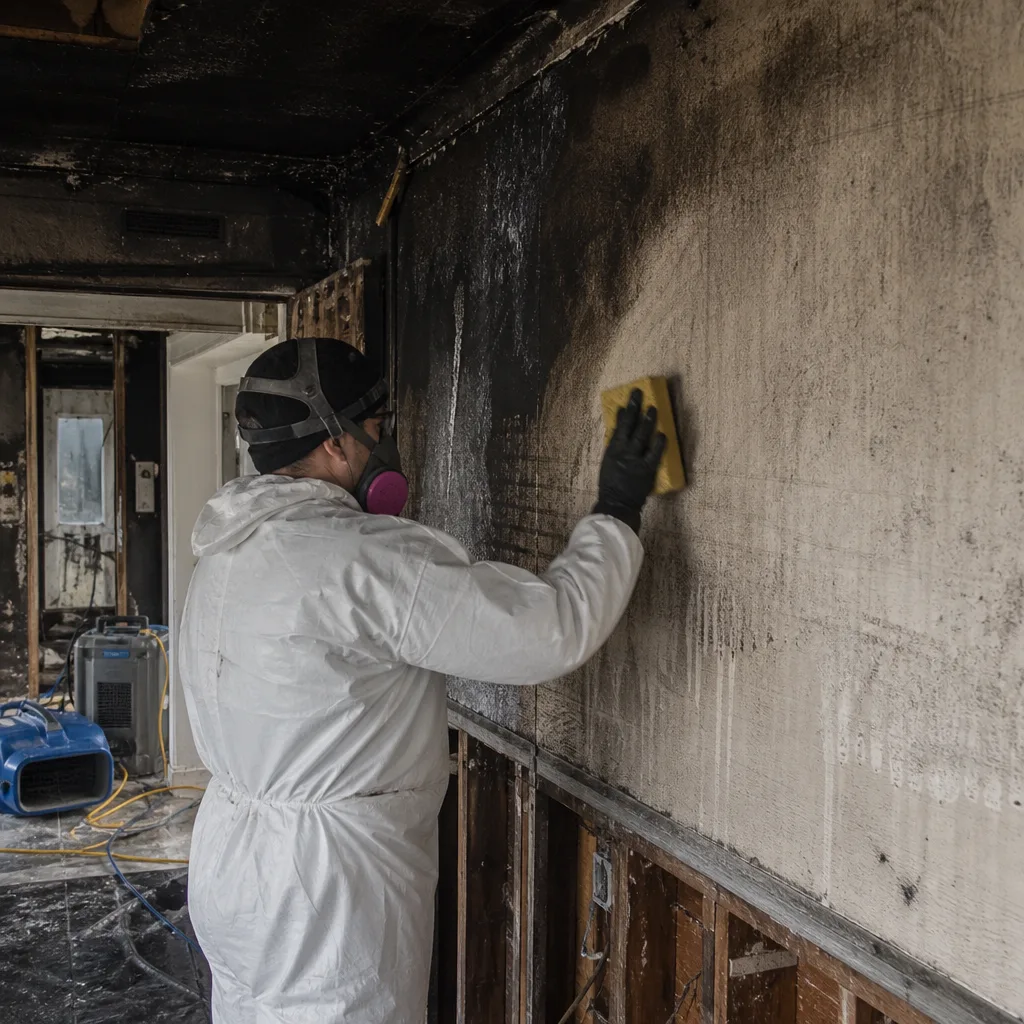
The technical heart of the job. We match cleaning chemistry to soot type, which means dry sponges for oil-fired puffbacks and alkaline cleaners for plastic or protein residues. On horsehair plaster, the technique is slow and deliberate because one wrong pass shoves carbon deeper into the pores.
Odor Removal & Deodorization
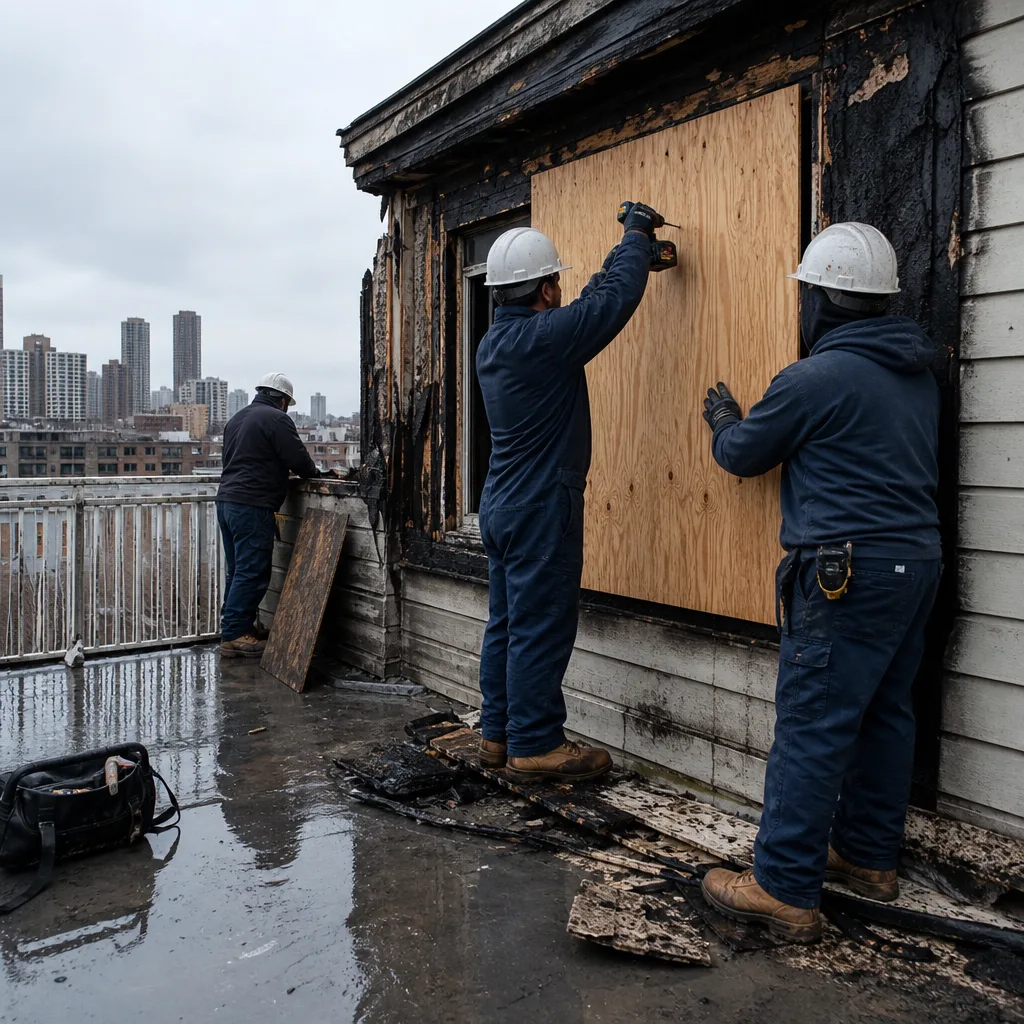
Thermal fogging and hydroxyl or ozone treatments break down odor molecules rather than covering them. This is the service we lean on hardest in Great Neck’s older homes, because smoke smell hides in lath cavities, behind built-ins, and inside old-growth floorboards. Half-measures fail in a humid summer.
Contents Cleaning & Pack-Out
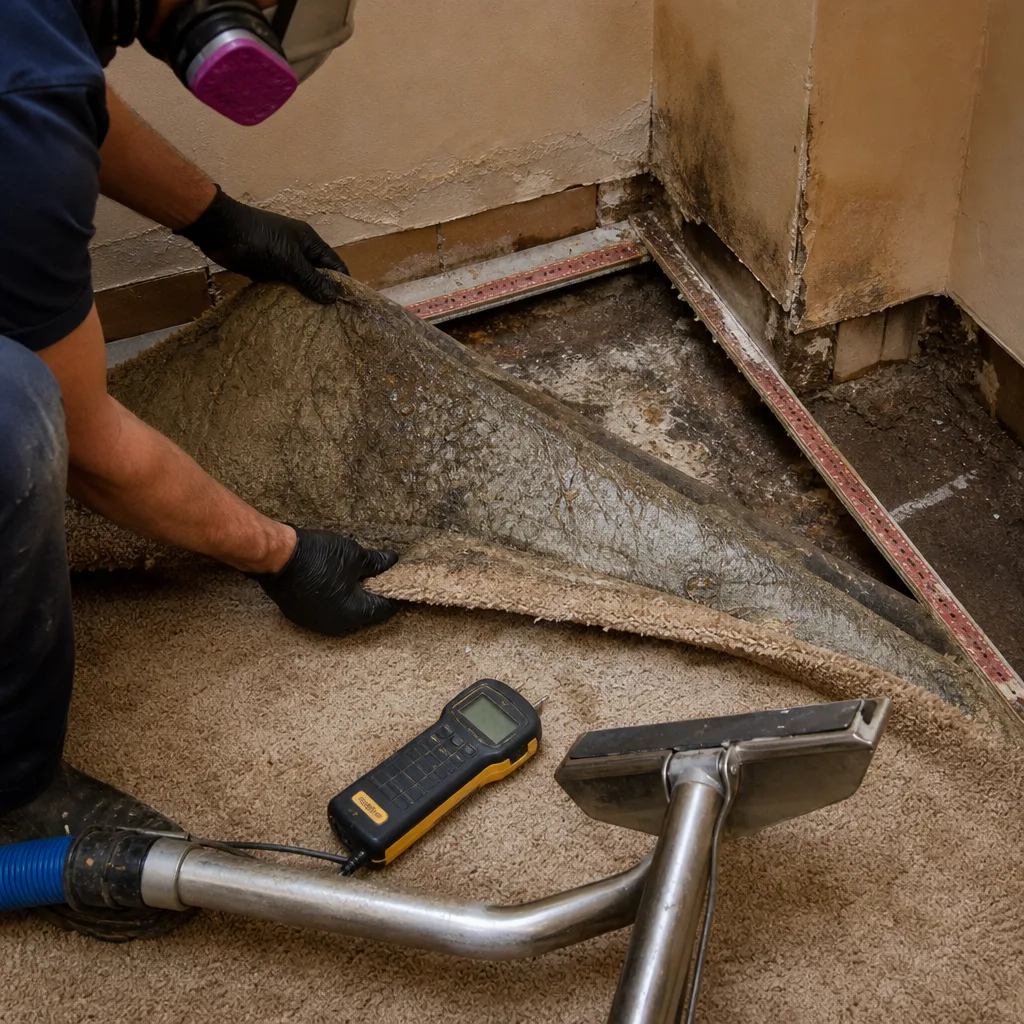
We inventory, photograph, and crate contents for off-site cleaning when the damage requires it. In Gold Coast-era estates, this includes antiques, books, and art, each handled with the same chain-of-custody care we’d use on a commercial loss. The inventory doubles as your insurance documentation.
Emergency Board-Up & Tarping
We secure openings immediately after the fire department clears the scene. On Great Neck’s salt-exposed streets, the weather breaks are more important than inland, because one week of salt-laced rain through a broken window turns a recoverable room into a tear-out.
What happens when you call
- 1
A real person answersNo phone trees - you reach a local pro.
- 2
You get an upfront price rangeHonest numbers before anyone is dispatched.
- 3
A background-checked tech heads outLicensed & insured, dispatched right away.
- 4
You approve before work beginsNothing starts until you say go.
Fire & Smoke Damage Restoration Costs in Great Neck, NY
Nobody wants to hear “it depends” while their house is still cooling. Here are the honest numbers for Great Neck’s market. A basic smoke odor treatment in one or two rooms runs $1,200-$2,800. Full smoke and soot removal across a mid-sized home, including HEPA scrubbing, contents cleaning, and thermal fogging, typically lands between $4,500 and $11,000. Structural fire repair, where framing, plaster, and millwork get replaced or restored, starts around $8,000 and climbs with the square footage and the age of the finish work. Salt-corroded panel replacement from a bay flood adds $2,500-$6,000 depending on amperage and access. The variables are real: soot type, water volume, whether the fire hit the original section or an addition, and what your policy covers. Call us for a free visual inspection and we’ll put your specific numbers on paper before any work begins. Estimate is free. The clarity is worth more.
We Also Serve Cities Near Great Neck
Our crews respond from staging points that cover the whole North Shore corridor, including Little Neck, Glen Oaks, Manhasset, and Bellerose. If you’re just outside the Great Neck village boundary, call and we’ll have a truck rolling toward you within the same 45-minute window.
Great Neck Fire & Smoke Damage Restoration Questions, Answered
How does saltwater damage from a Great Neck bay flood affect fire and smoke restoration?
Saltwater accelerates corrosion in electrical panels, HVAC wiring, and structural steel, so a fire or smoke event after bay flooding often requires full mechanical replacement before surface restoration can begin safely. On Kings Point and other bay-side streets, we regularly replace panels that look intact from the outside but have corroded busses inside. Call (917) 924-4221 and we’ll inspect before anything gets cleaned.
Can you restore smoke-damaged horsehair plaster in a 1920s Great Neck home without replacing it?
Yes, and that’s the preferred path. Dry-sponge cleaning with soot-specific methods lifts carbon without smearing it deeper, and lime-based patching preserves the original material. Replacement is the last resort. Our crew has done exactly this on Tudor Revivals off East Shore Road and it holds.
Do you need to pack out contents from a Gold Coast-era estate after a fire?
Not always. If the fire was contained and soot is light, we clean in place. When damage is heavy, we inventory, photograph, crate, and clean off-site with full chain-of-custody documentation. The inventory doubles as your insurance schedule.
How soon can mold start after a fire-suppression water event in Great Neck?
Within 48 to 72 hours in Great Neck’s humid summers. Older homes with horsehair plaster and dense framing hold moisture longer, which speeds things up. Our extraction and drying starts the same visit and continues with daily moisture logs until the dry standard is met in writing.
What’s the right way to remove smoke odor from custom millwork in an older Great Neck home?
Wood-specific soot sponges lift soot from finished surfaces, then we apply thermal fog that reaches the same cavities and grain the smoke did. Masking sprays fail. The fog neutralizes the molecules, which is the only way the smell stays gone through a Nassau County summer.
How fast can you get to a fire in the Great Neck area?
Our 45-minute response commitment applies across Great Neck and the surrounding peninsula area. A live dispatcher answers at any hour and the crew rolls immediately. Call (917) 924-4221 and the clock starts.
Will my insurance cover fire and smoke restoration in Great Neck?
Most homeowners policies cover fire and smoke damage from sudden events. Flood-related fire damage on bay-side streets may fall under NFIP coverage instead. We document everything from hour one, coordinate directly with your adjuster, and submit in the line-item format carriers expect.
What should I do in the first 30 minutes after a fire?
Get clear of the structure, call 911 if you haven’t, then call us. Don’t touch surfaces. Don’t turn on the HVAC. Soot on your hands becomes soot ground into fabric and plaster. The less traffic through the space, the more we can restore.
Serving Great Neck, NY - Our Local Coverage Area
We’re based in the Great Neck area and know this community well. Use the map below to see our service coverage - if you’re nearby, we can almost certainly help.
Call Floodline Restoration Co. of Manhattan for Great Neck Fire & Smoke Restoration
Fire damage doesn’t politely wait for business hours, and neither do we. A live person answers at (917) 924-4221 any hour of any day. We’ll send a certified crew to your Great Neck address, inspect the damage, and hand you a written scope before any work begins. The 90-Day Done Right Promise backs every repair, in writing, no argument. One team, from first board-up to finished trim. Call now for a free estimate.
Written by Curt Bowman, Owner at Floodline Restoration Co. of Manhattan, serving Great Neck and the North Shore with fire and smoke restoration done right, and backed in writing.