
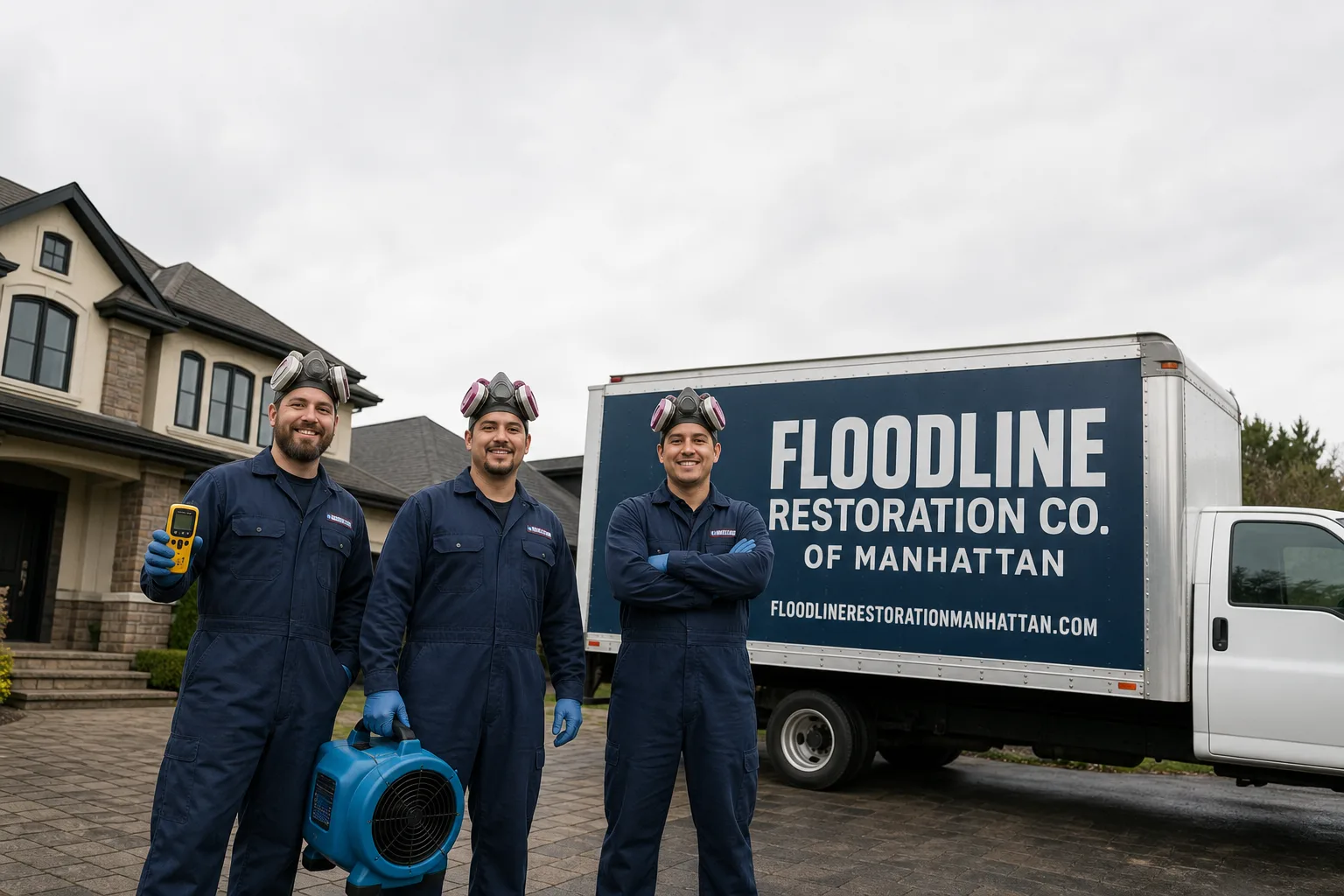
Free visual inspection and a written scope of work before any mitigation begins - photos, moisture readings, and drying logs go in your claim file
The scope we write is the scope we bill. Anything new gets shown to you, in writing, before we touch it.






 Before
 After
After Before
 After
After Before
 After
After24/7 Emergency Biohazard & Crime Scene Cleanup in Great Neck
Biohazard and crime scene cleanup in Great Neck typically runs between $1,500 and $8,000 depending on the scope, with trauma and unattended death cleanup on the higher end and infectious disease disinfection or hoarding cleanup often falling between $2,000 and $6,000. We dispatch crews to Great Neck streets within 45 minutes of your call, day or night. Call (917) 924-4221 now and a live dispatcher answers, not a recording.
Every hour that passes after a trauma, unattended death, or sewage-and-storm-surge contamination event in Great Neck lets biological material penetrate deeper into plaster, wood, and concrete. On the bay side, where saltwater intrusion from Manhasset Bay and Little Neck Bay complicates half the jobs we see, waiting means contaminated surfaces wick moisture and pathogens upward through original walls. Our Biohazard & Crime Scene Cleanup team arrives with containment, HEPA air scrubbers, and professional-grade cleaning agents, and we start the moment we have a signed scope. Free visual inspection, honest pricing, and direct insurance billing. That’s how we’ve handled Great Neck homes for years, and that’s the only way we work.
Understanding Biohazard & Crime Scene Cleanup Severity in Great Neck Properties
Biohazard severity in Great Neck homes breaks down by what’s contaminated, how far it’s traveled, and what the house is made of. The 1920s through 1950s Tudor Revivals and Colonial Revivals that line streets like Old Mill Road and Middle Neck Road were built with horsehair plaster, unsealed oak flooring, and balloon framing that leaves open channels between floors. Blood, bodily fluids, and floodwater-borne pathogens move through those channels in ways a modern drywall-and-vinyl house simply doesn’t see. We classify scenes by contamination type: bloodborne pathogen risk (BBP), Category 3 water contamination (sewage, storm surge, or groundwater mixing with biological material), and aerosolized infectious disease exposure. In Great Neck’s shallow-water-table neighborhoods around Kings Point and the village waterfront, storm-surge saltwater carries bacteria and viruses into basements, then wicks into plaster and millwork. That’s a biohazard scene that also happens to be a structural drying job. Treating it as either one alone is how homes get condemned later for mold or hidden corrosion.
The age of Great Neck’s housing stock adds a second layer most national franchises miss. Horsehair plaster holds moisture differently than drywall; it’s slower to dry but also slower to release pathogens once decontaminated. Antique millwork, clawfoot tubs, and original wood floors need specialty cleaning agents that won’t strip finishes the way industrial-grade oxidizers do. We test salinity on every bay-side job because salt-contaminated blood or bodily fluid cleanup requires a different protocol than a freshwater scene. If your home sits on a crawlspace with a high water table, we treat the entire envelope as contaminated until containment and testing prove otherwise.
Why Great Neck Property Owners Choose Floodline Restoration Co. of Manhattan
- 45-minute response commitment. Our Great Neck crews stage locally and we hold to a 45-minute arrival window for emergencies, not a four-hour one.
- 24/7 live answer, every call. A real dispatcher picks up at 2 a.m. That’s the job. No phone tree, no “leave a message,” no call center script.
- IICRC-certified crews, background-checked. Our technicians hold IICRC credentials in biohazard and trauma scene cleanup, water damage restoration (WRT), and applied microbial remediation (AMRT), and every crew member is background-checked and uniformed.
- Free visual inspection. We come out, we look, we tell you what the scope is and what it costs before any work starts. Written, line-item, no pressure.
- Direct insurance billing. We handle the NFIP Write Your Own carrier paperwork and elevation-certificate documentation that Great Neck claims almost always require, and we deal with your adjuster directly.
- One team from first extraction to final rebuild. The same certified crew that sets containment on day one handles every day after, including any structural repair. No mid-job handoff.
Our Biohazard & Crime Scene Cleanup Process
Inspection & Assessment
We walk the scene with you, test salinity and moisture levels, identify contamination pathways through plaster and framing, and document everything room by room with photos. The written scope you sign is the price you pay.
Containment & Stabilization
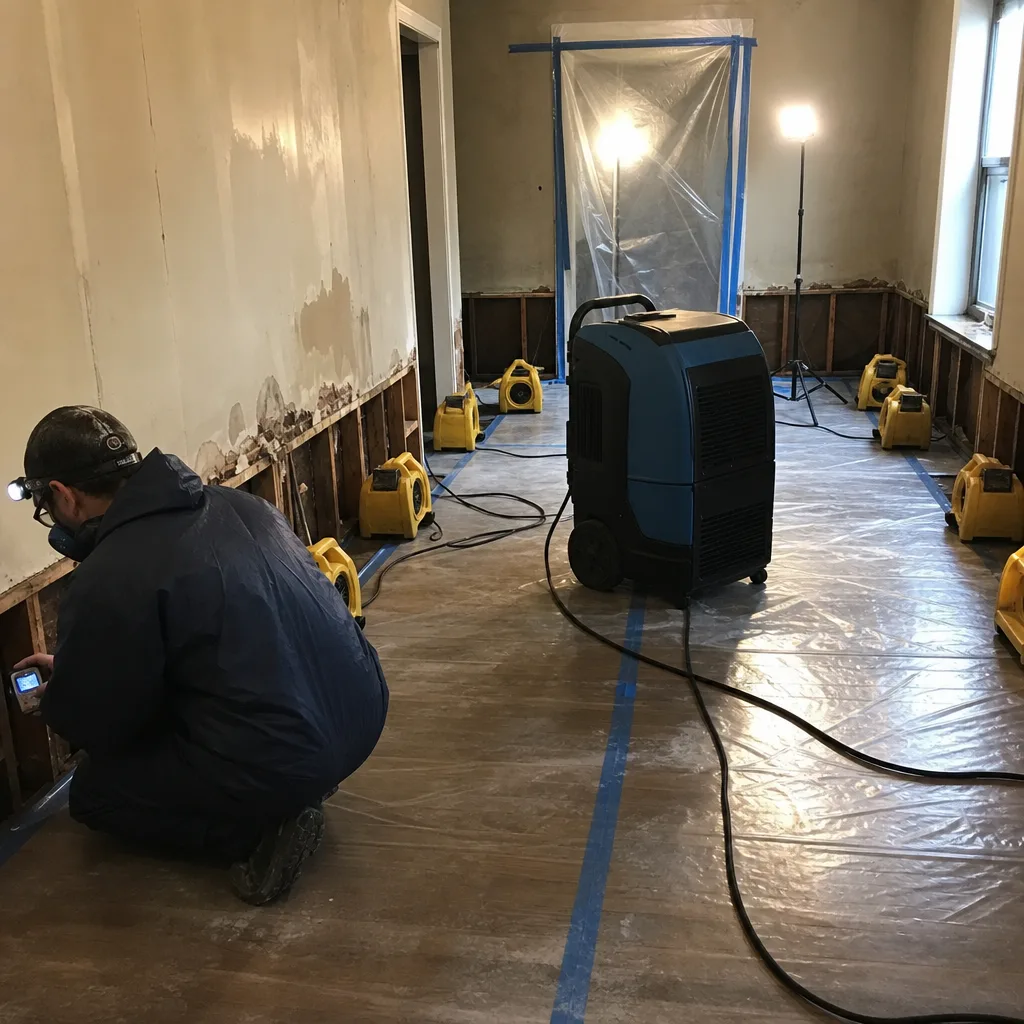
HEPA air scrubbers and negative air containment go up first, sealing off affected areas from the rest of the house. We shut down compromised electrical systems and address any immediate structural hazards like corroded lally columns.
Removal of Contaminated Materials
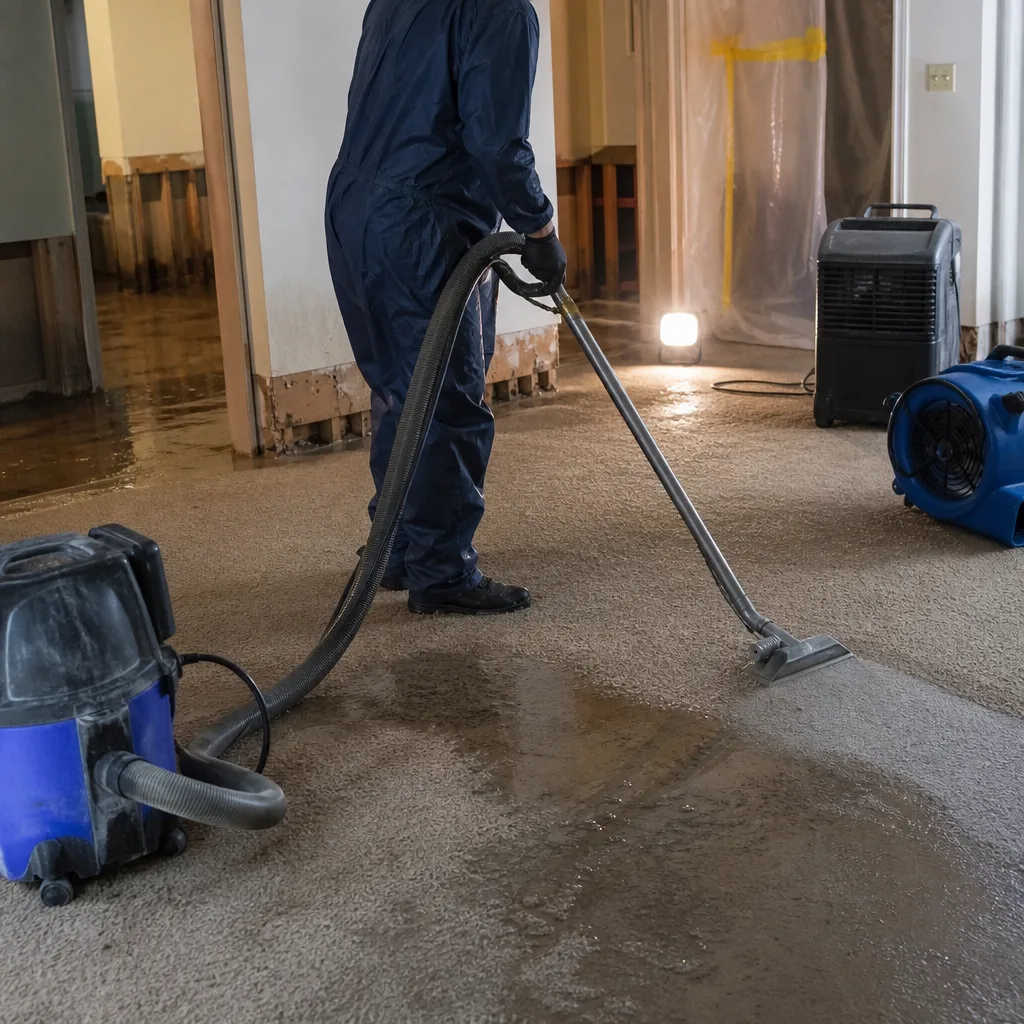
Porous materials that cannot be fully decontaminated, including saturated plaster sections, carpet, and compromised insulation, are removed under containment and packed out for regulated disposal. Salvageable custom millwork is photographed and set aside for off-site cleaning.
Cleaning, Sanitization & Drying
We clean remaining surfaces with EPA-registered disinfectants rated for bloodborne pathogens, then run moisture mapping with hygrometers and thermal imaging. Dri-Eaz dehumidifiers and Phoenix air movers bring affected cavities to dry standard, with daily readings logged.
Infectious Disease Treatment
For trauma scenes and infectious disease disinfection, we fog affected spaces with hospital-grade antimicrobial agents and run ATP and surface-protein testing to confirm decontamination before containment comes down.
Repairs & Restoration
The same crew that stripped and decontaminated the space reconstructs it: new plaster, refinished millwork, electrical panel replacement where saltwater corroded components, flooring, and paint. We hand you the full documentation log and the 90-Day Done Right Promise in writing.
Need Emergency Biohazard & Crime Scene Cleanup in Great Neck Now?
Crews minutes away, answering live 24 hours a day. The sooner we start, the less it costs.
Working With Your Insurance Company
Great Neck biohazard claims almost always involve flood insurance because so much of this peninsula sits in FEMA-designated Special Flood Hazard Areas. That means Write Your Own policies under NFIP, elevation certificates, and adjusters who may not understand how a trauma scene interacts with saltwater intrusion. We’ve handled hundreds of these claims. From the first hour, we photograph every surface, log moisture readings daily, and document the chain of contamination so your adjuster sees exactly what we saw. You never play messenger between us and the carrier. Curt Bowman and the team deal with the adjuster directly, and we bill the carrier directly. If the claim is denied or underpaid, we’ll tell you straight and walk you through options. No surprises on the bill means no surprises on the claim either.
What We Provide Your Insurer
- Thorough documentation of the loss
- Photos of all damage, room by room
- Moisture readings and drying logs
- A detailed, line-item scope of work
- Direct coordination with your carrier
Built for Great Neck’s Loss Calendar
Great Neck doesn’t have a single season for biohazard work. It has a calendar, and we’ve learned to read it. Nor’easter season runs October through March, and every storm that tracks up the Long Island Sound corridor pushes Category 3 bay water into waterfront basements around Kings Point and the village shoreline. When that water mixes with biological material, whether from a sewage backup or a trauma scene, the cleanup becomes a biohazard job with a flood-claim wrapper. Spring and summer bring groundwater intrusion in shallow-water-table neighborhoods; a modest rain event can push water through basement walls and into crawlspaces, where it sits and breeds pathogens. Year-round, we see unattended death scenes in aging homes, hoarding conditions in Gold Coast-era estates, and infectious disease disinfection in basements that never fully dried after the last storm. The point is simple: in Great Neck, biohazard work rarely starts with a single event. It starts with the event plus the house plus the water. We plan for all three.
Biohazard & Crime Scene Cleanup Across Great Neck’s Neighborhoods
Response routes matter in Great Neck because the peninsula’s geography is unforgiving: three sides of water, one land connection, and tight residential streets. Our crews know which routes cut through the Village of Great Neck Plaza, how to approach Kensington from Middle Neck Road without getting tangled in school traffic, and why the waterfront streets off East Shore Road near Kings Point take ten minutes longer at high tide on a rainy day. The housing stock changes block by block. In Kensington and Russell Gardens, we see 1920s and 1930s Tudor Revivals with fieldstone foundations and shallow basements that take on groundwater quickly. Around Saddle Rock and the waterfront, the Gold Coast-era estates sit closer to the shore and carry the saltwater-corrosion problems we described. On the inland side near Lake Success, homes are newer and better sealed, but private drives and gated access roads mean every crew arrival has to be coordinated. When you call us from anywhere in Great Neck, the dispatcher knows which crew is closest to your street, not just your town.
Specialized Biohazard & Crime Scene Cleanup Services We Offer in Great Neck
Crime Scene Cleanup
After law enforcement releases the scene, we take over. That means blood and bodily fluid cleanup to OSHA bloodborne pathogen standards, fingerprint dust removal, tear gas and chemical cleanup, and property restoration to pre-incident condition. In Great Neck’s older homes, this often includes removing contaminated plaster and refinishing original floors rather than just wiping surfaces down.
Trauma & Unattended Death Cleanup
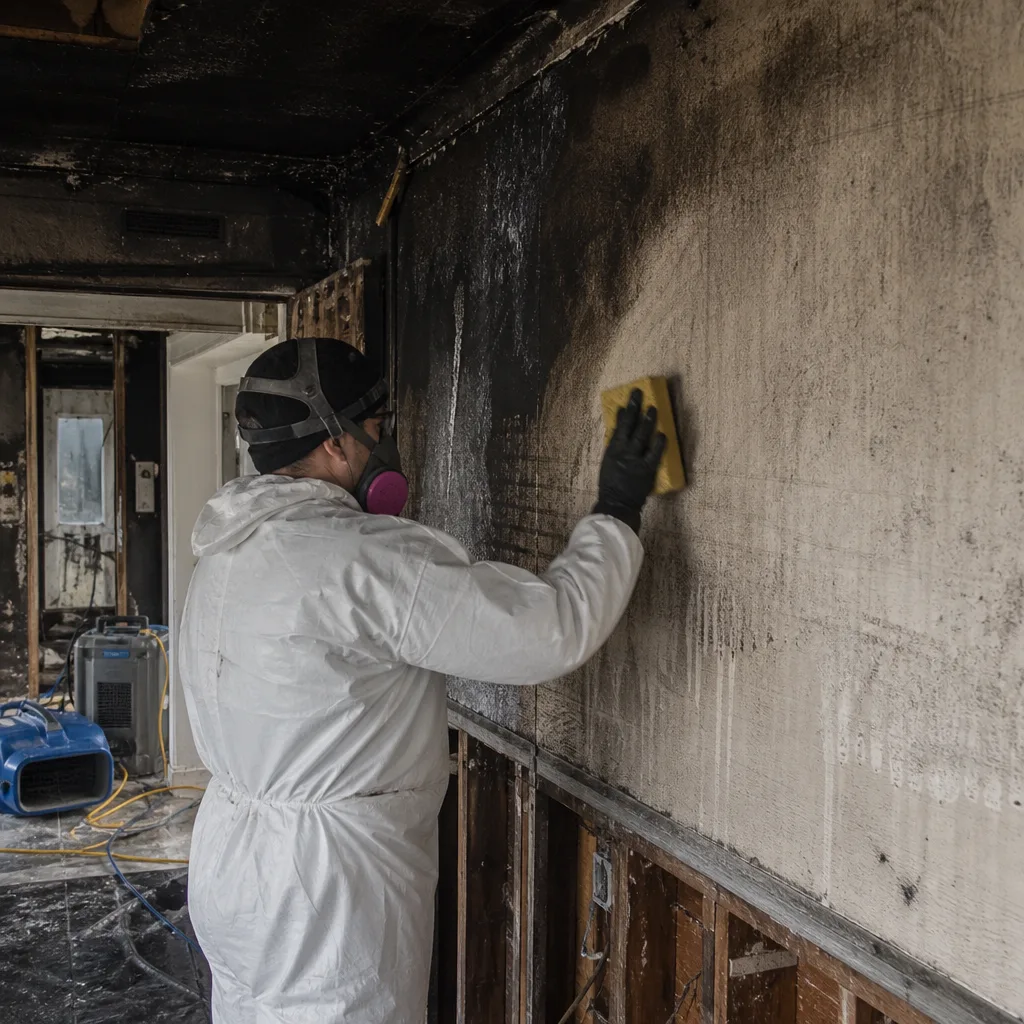
An unattended death in a 1920s Great Neck home with horsehair plaster walls requires more than surface cleaning. Decomposition fluids penetrate porous plaster, subflooring, and even adjacent rooms through balloon framing. We contain the affected area, remove saturated materials, decontaminate framing, and restore the space with materials that match the house. We handle this with the quiet professionalism the situation demands, and we never rush a family through decisions.
Hoarding Cleanup
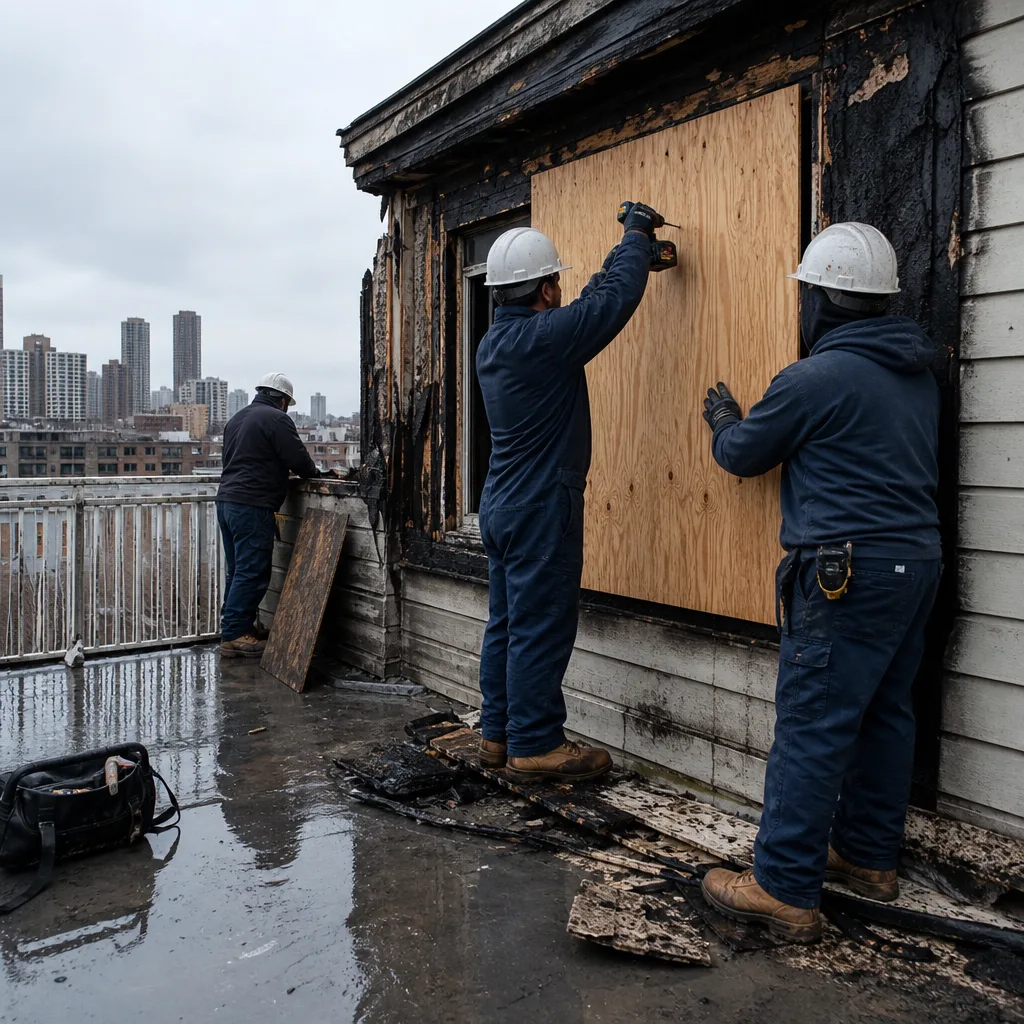
Hoarding cleanup in Great Neck’s larger Gold Coast-era estates often means working around antique furnishings, packed garages, and basements filled with decades of belongings, some water-damaged and moldy, some salvageable. We sort with the family’s input, document everything for insurance, remove contaminated debris, and deep-clean the entire envelope. When clutter blocks access to water-damaged areas, we clear enough working room to get containment and drying equipment onto the scene before tackling the full cleanup.
Blood & Bodily Fluid Cleanup
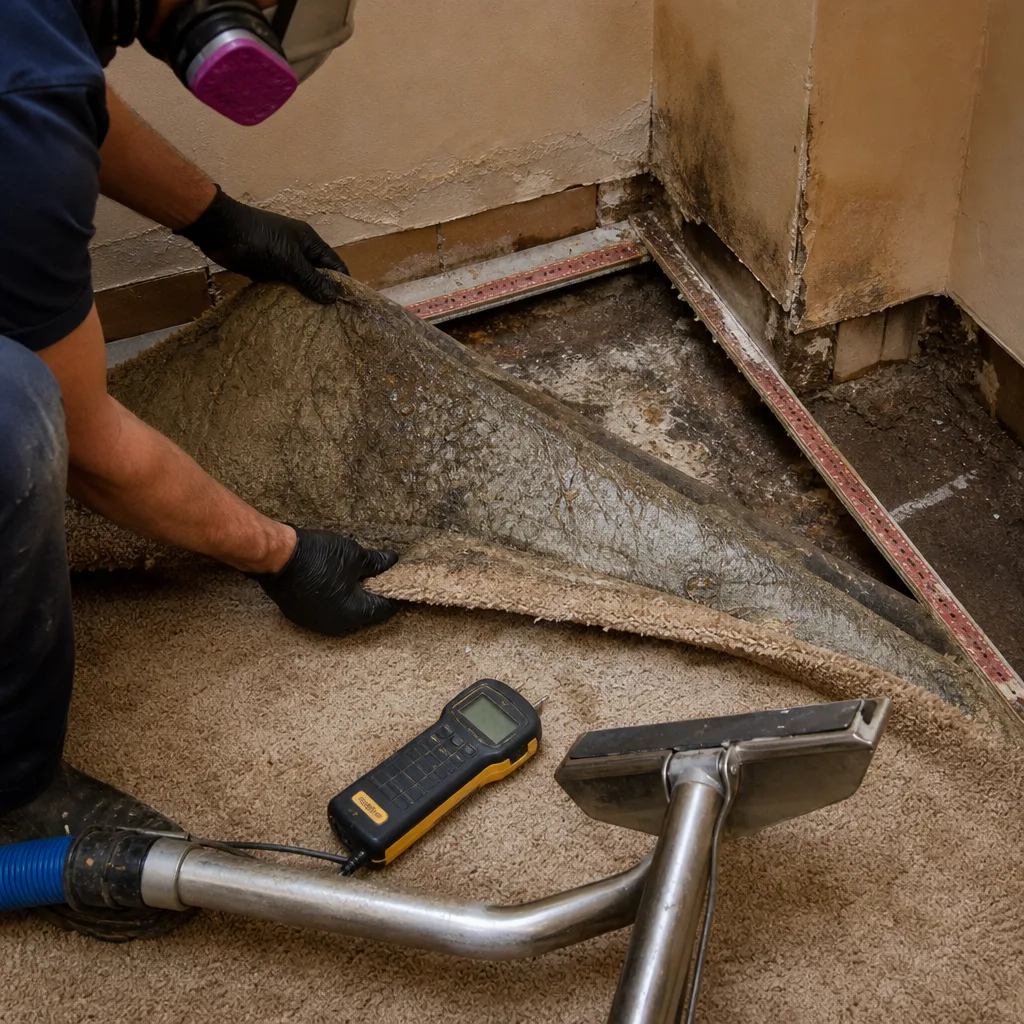
Every blood or bodily fluid cleanup we perform follows IICRC biohazard protocols: full containment, EPA-registered disinfectants, proper disposal of regulated waste, and clearance testing before the space is released. On Great Neck’s bay-side streets, we test for salinity contamination and treat salt-laced biological material as a Category 3 hazard, not a standard trauma scene.
Infectious Disease Disinfection
After a confirmed or suspected infectious disease exposure in a Great Neck home, we fog the affected spaces with hospital-grade antimicrobial agents, clean horizontal surfaces, and run post-treatment testing. In a basement with groundwater intrusion, we also address the moisture source because no disinfection holds in a space that’s still wicking contaminated water through the walls.
What happens when you call
- 1
A real person answersNo phone trees - you reach a local pro.
- 2
You get an upfront price rangeHonest numbers before anyone is dispatched.
- 3
A background-checked tech heads outLicensed & insured, dispatched right away.
- 4
You approve before work beginsNothing starts until you say go.
Biohazard & Crime Scene Cleanup Costs in Great Neck, NY
Honest numbers for Great Neck’s market: a straightforward crime scene cleanup in a single room typically runs $2,000 to $4,500. Trauma and unattended death cleanup, which requires more demolition and materials removal, runs $3,500 to $8,000 depending on how far decomposition has spread. Hoarding cleanup in a larger estate can run $4,000 to $12,000 or more when debris removal, structural access, and sorting time are factored. Infectious disease disinfection in a standard-size Great Neck home usually lands between $1,500 and $3,500, more if groundwater intrusion means simultaneous water mitigation. What moves the price: square footage, how much plaster and flooring comes out, whether joists and subfloor are contaminated, and whether we’re dealing with saltwater corrosion on electrical or structural steel. You’ll always get a free visual inspection and a written line-item scope before any work starts. We bill insurance directly, and if a scope is out of pocket, we tell you the number before we put a boot on the ground.
We Also Serve Cities Near Great Neck
Our crews run the same routes into Little Neck, Glen Oaks, Manhasset, and Bellerose. Same live dispatch, same 45-minute commitment, same written scope before work starts. The geography changes slightly, the standard never does.
Great Neck Biohazard & Crime Scene Cleanup Questions, Answered
Does biohazard cleanup in Great Neck have to follow different procedures for saltwater-contaminated blood or bodily fluids?
Yes, because saltwater changes how biological material interacts with building materials. Salt slows drying, accelerates corrosion on metal framing and electrical components, and binds contaminants to porous surfaces differently than freshwater. Our crews test salinity on any bay-side job and adjust the cleaning and drying protocol accordingly. If you’re on a waterfront street around Kings Point or the village, tell the dispatcher; we’ll arrive with the right testing gear from the first truck.
How do you handle an unattended death in a 1920s Great Neck home with horsehair plaster walls?
Horsehair plaster is more porous than modern drywall, so decomposition fluids penetrate deeper and travel farther through wall cavities and balloon framing. We often remove plaster down to the lathe in affected areas, treat the framing, and then rebuild with materials that match the home’s original character. We also check adjacent rooms because the open wall cavities in pre-war construction allow odors and residues to migrate.
Do I need a flood insurance adjuster involved before starting crime scene cleanup after a storm surge in Great Neck?
No, and waiting is the single most expensive mistake we see on the peninsula. The NFIP and Write Your Own carriers all allow emergency mitigation to begin before the adjuster arrives. We document everything from the first hour with photos and moisture logs, and we coordinate with your adjuster directly. Starting mitigation immediately is what protects the claim, not what jeopardizes it. Every 24 hours of delay lets contamination and saltwater wick further up original plaster and into millwork.
What makes infectious disease disinfection different in a Great Neck basement with groundwater intrusion?
Groundwater means the basement is a living moisture environment. You can fog and disinfect surfaces all day, but if water is still moving through the walls from a high water table, the contamination regenerates. We treat the disinfection and the moisture together: containment, HEPA air scrubbing, antimicrobial fogging, and then structural drying with Dri-Eaz dehumidifiers and Phoenix air movers until the basement hits dry standard. Only then do we release the space.
Can your crew do hoarding cleanup in a Gold Coast-era estate when the clutter blocks access to water-damaged areas?
Yes, and this is one of the hardest jobs in the trade. We work with the family to sort room by room, clear enough access to get containment and drying equipment where it needs to be, and then continue the full cleanup. Antique furnishings and custom millwork get photographed and evaluated for salvage before anything is discarded. We’ve handled estate cleanouts where the hoarding concealed years of slow water damage, and we treat each room as a combined biohazard and restoration project.
How fast can your crew actually get to a Great Neck address?
We commit to 45 minutes for emergencies, and we hit that mark because crews stage near the peninsula rather than running from Manhattan. For a trauma scene or active contamination, call (917) 924-4221 and the dispatcher will tell you exactly which truck is closest to your street and when it arrives.
Will insurance cover biohazard cleanup in Great Neck, or am I paying out of pocket?
It depends on the cause of loss. Storm-surge biohazard contamination on a property in a FEMA Special Flood Hazard Area is typically covered under your flood policy, not homeowners insurance. Crime scene cleanup is often covered under homeowners policies depending on the circumstances. Unattended death cleanup is frequently covered, though some policies have exclusions. We document everything, bill your carrier directly, and if something is excluded, we’ll tell you before the work starts. Call for an exact quote, free visual inspection included.
What should I do in the first 30 minutes after discovering a biohazard situation in my Great Neck home?
Do not enter the area, do not touch anything, and do not attempt cleanup. Close the door to the affected space if you can do so without entering it. If there’s standing storm-surge water, do not go near it, especially if the power is on or there’s any chance wires are submerged. Move family members and pets to a safe area, then call us at (917) 924-4221. The dispatcher will walk you through what happens next. Do not call the water damage after a biohazard event a “cleanup problem” and wait, because saltwater-contaminated biological material in a 1920s house does not wait, it spreads.
The One Mistake We See Too Often on the Great Neck Peninsula
Homeowners here call after a nor’easter, discover a sewage backup or a trauma scene in a flooded basement, and start looking for a generic “biohazard cleanup” company. What they actually need is a crew that understands Great Neck’s specific failure pattern: bay water, salt, shallow water table, pre-war construction, and an insurance claim that crosses flood and homeowners coverage. Inland crews miss the salinity. They dry too slowly. They miss the corrosion starting on lally columns and electrical panels. Then the homeowner calls us six months later with a mold problem in a house that was “professionally cleaned.” On a Kings Point waterfront street after a nor’easter pushed Category 3 bay water into a 1930s estate basement, our crew arrived to find saltwater had corroded the steel lally columns and main electrical panel. We ran moisture mapping across horsehair plaster walls, set containment and air movers, and removed contaminated contents before structural drying, then packed out salvageable custom millwork for off-site cleaning while the panel was replaced. That’s the standard. Every biohazard cleanup in Great Neck is a flood-claim cleanup, and we treat it that way from the first phone call.
Serving Great Neck, NY - Our Local Coverage Area
We’re based in the Great Neck area and know this community well. Use the map below to see our service coverage - if you’re nearby, we can almost certainly help.
Call Floodline Restoration Co. of Manhattan for Biohazard & Crime Scene Cleanup in Great Neck
If you’re dealing with a biohazard scene, unattended death, crime scene, or infectious disease exposure in Great Neck, call (917) 924-4221 now. A live dispatcher answers, a certified crew arrives within 45 minutes, and you get a written scope before any work starts. We’ve served this peninsula for years, we know its houses and its water, and we stand behind every job with the 90-Day Done Right Promise. Senior and veteran discounts are always available, and we bill your carrier directly. Done right, and backed in writing.
Written by Curt Bowman, Owner at Floodline Restoration Co. of Manhattan.