
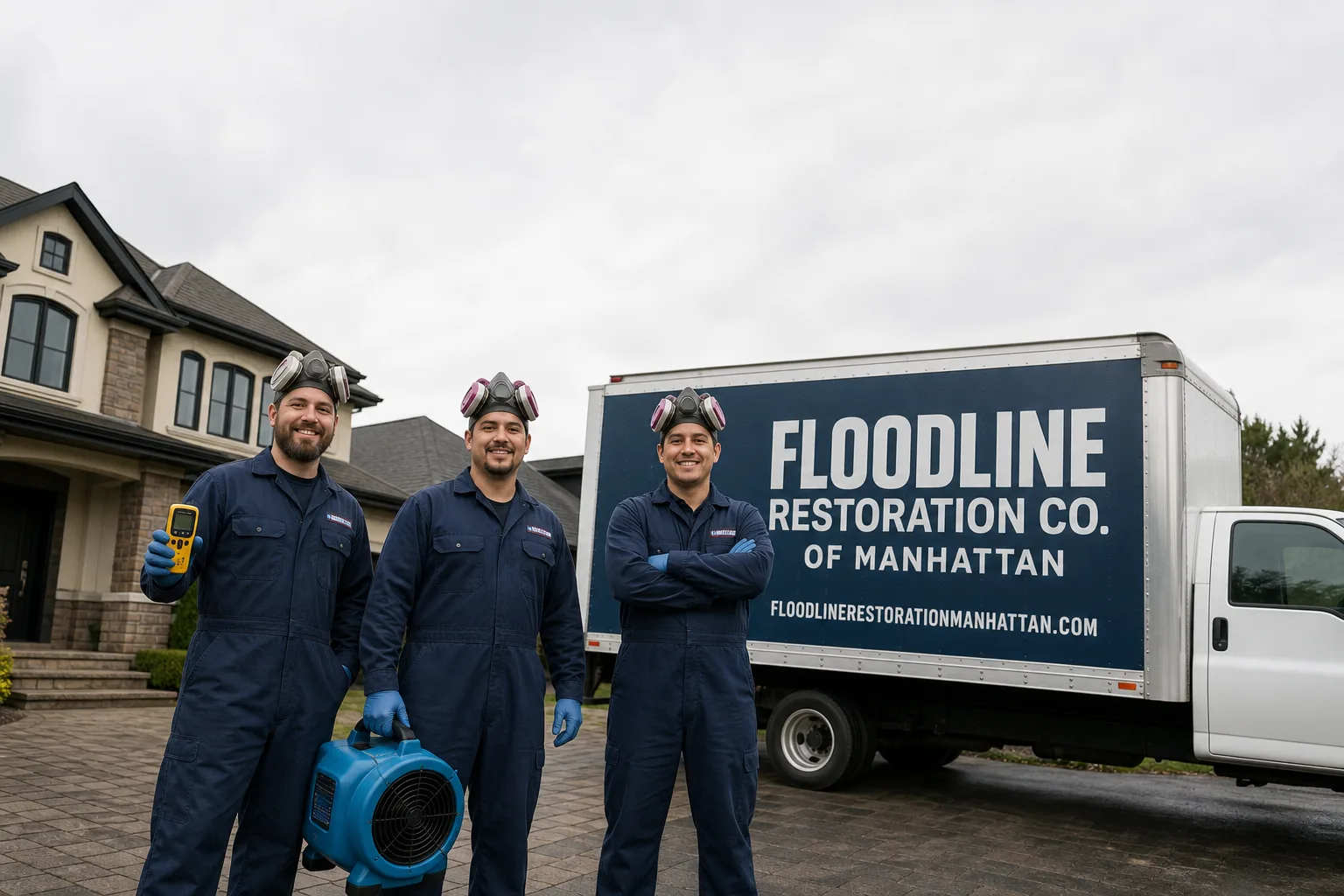
Free visual inspection and a written scope of work before any mitigation begins - photos, moisture readings, and drying logs go in your claim file
The scope we write is the scope we bill. Anything new gets shown to you, in writing, before we touch it.






 Before
 After
After Before
 After
After Before
 After
After24/7 Emergency Fire & Smoke Damage Restoration in Kensington
Fire and smoke damage in Kensington demands immediate attention, and we answer the phone at (917) 924-4221 around the clock with a live dispatcher, never a recording. The first hour after a fire determines how much plaster, millwork, and framing can be saved rather than torn out, because soot from burned synthetics turns acidic within days and etches permanently into original surfaces. A certified Floodline Restoration Co. crew can be on site in Kensington within 45 minutes of your call, starting containment and structural stabilization before the damage spreads into wall cavities and along old plumbing chases. We do a free visual inspection, explain exactly what we’re seeing, and hand you a written scope before any work begins.
Understanding Fire & Smoke Damage Restoration Severity in Kensington Properties
Fire jobs in Kensington fall into predictable severity bands, and the difference usually hinges on one thing: how the smoke traveled through the house’s original construction. Light kitchen fires leave protein soot that looks like a thin amber film on plaster but doesn’t penetrate deeply, while a hot, fast structural fire pushes smoke into the wall cavities, through lath-and-plaster keys, and along the galvanized supply lines that run inside older stud bays. Kensington homes built between the 1920s and 1950s have genuine plaster rather than drywall, which actually works in your favor: plaster is far more fire-resistant than modern gypsum board, but it also traps soot in its textured surface and requires soda-blasting or specialized sponge cleaning rather than simple repainting. The severity scale we use on every Kensington job starts with surface soot, moves to cavity migration, and tops out at structural charring that requires framing replacement. When smoke reaches the attic through balloon-framed walls, which many pre-war Kensington houses still have, the damage path follows channels that don’t exist in newer construction.
Why Kensington Property Owners Choose Floodline Restoration Co. of Manhattan
- 45-minute response commitment: Dispatch is coordinated from our New York City office, and crews serving Kensington are staged close enough to begin work inside the hour for true emergencies.
- 24/7 live answer: You’ll speak with a real dispatcher at 2 a.m., not a phone tree, and that person can put a certified tech on the line immediately.
- IICRC-certified crews: Our fire teams hold FSRT (Fire & Smoke Restoration Technician) certification, so material identification and soot type mapping lead the work, not guesswork.
- Free visual inspection: We’ll walk the property with you, identify what’s salvageable, and tell you straight what must come out before any contract is signed.
- Direct insurance billing: We document everything from the first hour, submit directly to your carrier, and handle the adjuster conversation so you don’t have to.
- One team, start to finish: The same Floodline crew that sets containment handles the structural rebuild, so no mid-job handoff to unknown subcontractors.
Our Fire & Smoke Damage Restoration Process
Inspection & Assessment
We map the fire’s path through your Kensington home, identifying soot type (protein, dry, or oily), smoke migration routes, and structural damage. Thermal imaging reads heat signatures behind plaster to find hidden charring in the stud bays.
Stabilization & Containment
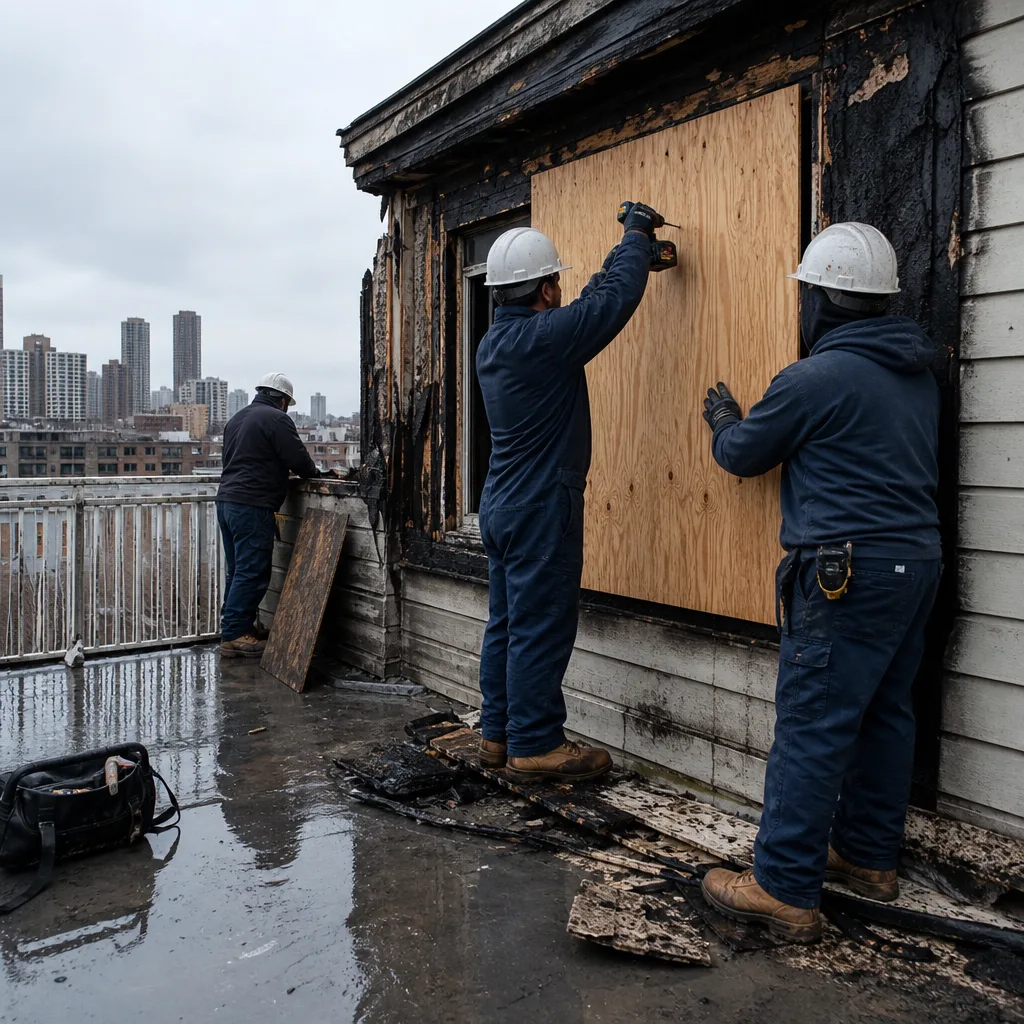
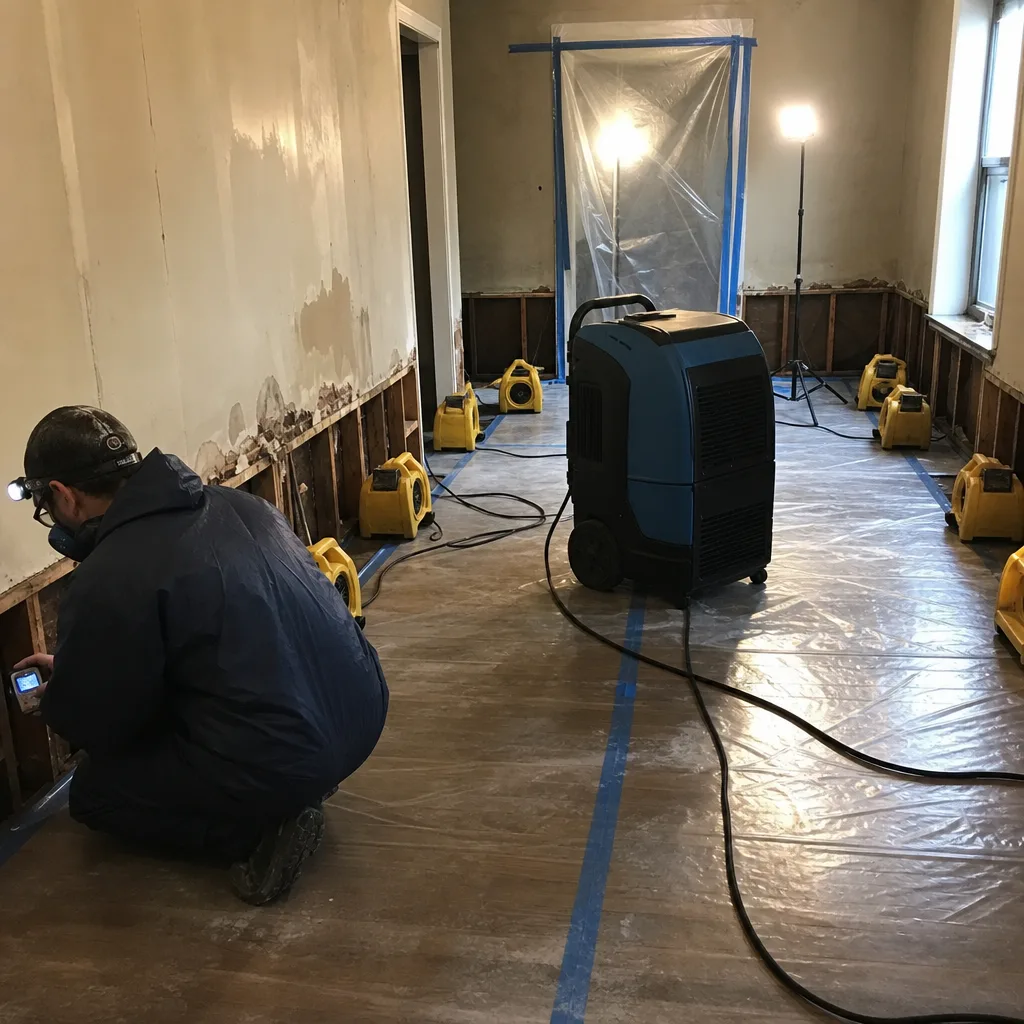
We board up openings with materials that meet Kensington village requirements and set negative-air containment with HEPA filtration so soot doesn’t migrate to clean rooms. This is the critical first move on every fire job.
Water Extraction & Structural Drying
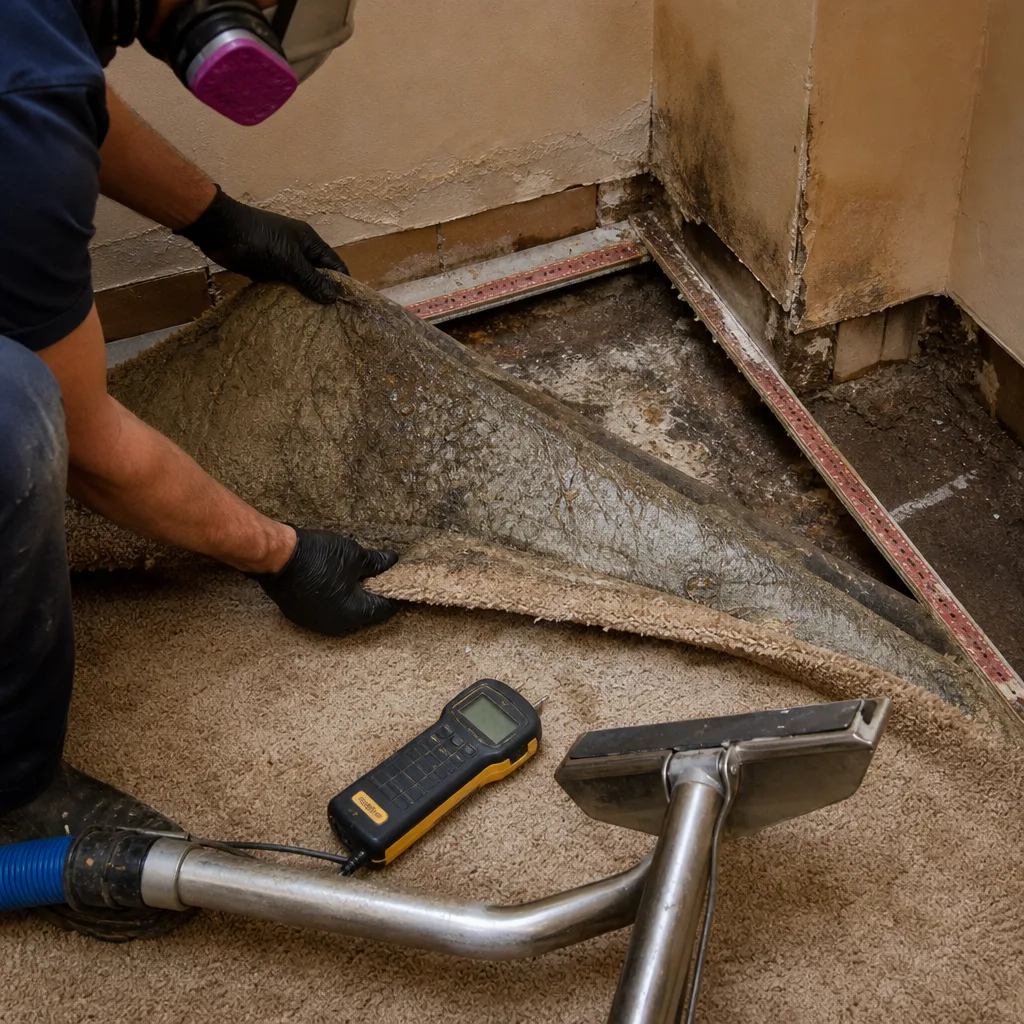
Firefighting water saturates plaster, flooring, and framing. Our crews use Dri-Eaz and Phoenix air movers with LGR dehumidifiers to pull moisture from lath, joists, and subflooring before mold has any chance to take hold.
Cleaning & Soot Removal
We match the cleaning method to the soot type and the surface: dry soot on original hardwood millwork gets vacuumed and dry-sponged, while oily soot from burned plastics needs wet cleaning with appropriate agents that won’t damage old finishes.
Odor Removal & Deodorization
Smoke odor in older Kensington homes lives behind plaster walls and inside cavity spaces, so we combine hydroxyl generators, thermal fogging, and cavity injection rather than just masking with ozone. The goal is elimination, not cover-up, and we verify with post-treatment air sampling.
Repairs & Restoration
From new lath-and-plaster patches matched to original texture to full structural framing replacement, our crews rebuild to Kensington’s village building code, not just insurance minimums. Period trim is milled to match, and slate roofing is sourced through local suppliers who stock historically appropriate materials.
Need Emergency Fire & Smoke Damage Restoration in Kensington Now?
Crews minutes away, answering live 24 hours a day. The sooner we start, the less it costs.
Working With Your Insurance Company
Fire claims in Kensington get complicated fast, partly because the village’s own permit process intersects with what your carrier will pay for period-accurate restoration. We’ve handled enough Kensington losses to know that adjusters don’t automatically understand why replacing original plaster costs more than drywall, or why the village requires like-for-like roofing materials. So we do the heavy lifting: we photograph every room before demo starts, document the condition of original millwork and masonry, and build the line-item scope around what Kensington’s building department actually requires. Curt Bowman, our founder, built the company on the principle that the homeowner should never play messenger between contractor and carrier, and that holds on every fire job we run in Kensington.
What We Provide Your Insurer
- Thorough documentation of the loss
- Photos of all damage, room by room
- Moisture readings and drying logs
- A detailed, line-item scope of work
- Direct coordination with your carrier
Built for Kensington’s Loss Calendar
Kensington’s fire losses follow a rhythm tied to the North Shore seasons. Winter is the big one: December through February, our crews respond to fires started by overtaxed heating systems in older homes, space heaters plugged into pre-war wiring, and chimney fires from fireplaces that haven’t been cleaned in decades. Nor’easters bring a different profile: downed trees on slate-roofed houses can pull the service entrance off the house, creating electrical fires at the panel, and storm-driven rain into compromised roof structures can cause wiring shorts. Spring and summer shift to kitchen fires, dryer-vent fires, and a steady stream of electrical fires from aging breaker panels in homes that still run on 60-amp service. Every one of those fires gets fought with water, and that water follows the same paths through original plaster and hardwood that a burst pipe would, which means structural drying is always part of the fire restoration equation in Kensington.
Fire & Smoke Damage Restoration Across Kensington’s Neighborhoods
Kensington is compact, but the restoration patterns shift block by block. The estate homes along Beverly Road and the streets feeding off it are the village’s oldest and grandest, with the heaviest concentration of slate roofs, original plaster, and pre-war masonry. When we work there, material matching drives the scope, and the village’s permit requirements are most exacting on these blocks. The mid-century colonials south of Route 25A were built with modified balloon framing and early sheetrock over plaster, which means fire travels differently through the wall systems, and cavity access for odor treatment requires a different approach than on true lath-and-plaster houses. Along Arleigh Road and the streets closer to the village line, we see a mix of older homes and post-war builds where original galvanized plumbing runs through exterior walls, a fire-damage complication that also leads to hidden water damage when the firefighting water contacts corroded joints. Our crews know the route from the New York City dispatch hub into each part of Kensington, so response times stay tight whether you’re off Beverly Road or down near the Great Neck border.
Specialized Fire & Smoke Damage Restoration Services We Offer in Kensington
Fire Damage Cleanup
Fire damage cleanup in Kensington starts with identifying what actually burned. Synthetic materials, old varnishes, and aging wiring all leave different residues, and cleaning original plaster or millwork requires methods that won’t etch or strip the finish. We start with thorough HEPA vacuuming of loose soot, then move to surface-specific cleaning that preserves what the house was built with.
Smoke & Soot Removal
Soot in a Kensington home rarely stays in the room where the fire started. It rides the air currents through balloon-framed wall cavities, settles on top of plaster crown moldings, and finds its way into closets, drawers, and ductwork. Our smoke and soot removal protocol includes cavity inspection, air scrubbing with HEPA filtration, and surface-by-surface cleaning matched to each material in the house.
Odor Removal & Deodorization
Smoke odor in older Kensington houses is stubborn because plaster, lath, and original hardwood are porous, meaning the smell embeds itself beyond the surface. We use hydroxyl generators for safe, continuous odor neutralization while the house is occupied, thermal fogging to reach deep into porous materials, and cavity injection to treat the spaces behind walls where smoke traveled.
Contents Cleaning & Pack-Out
This is the service that most preserves a Kensington family’s life during a fire restoration. We pack out salvageable belongings, inventory them with photo documentation, clean them off-site at our facility, and store them until the house is ready. Period furniture, artwork, and family heirlooms get special handling from technicians trained in contents restoration standards.
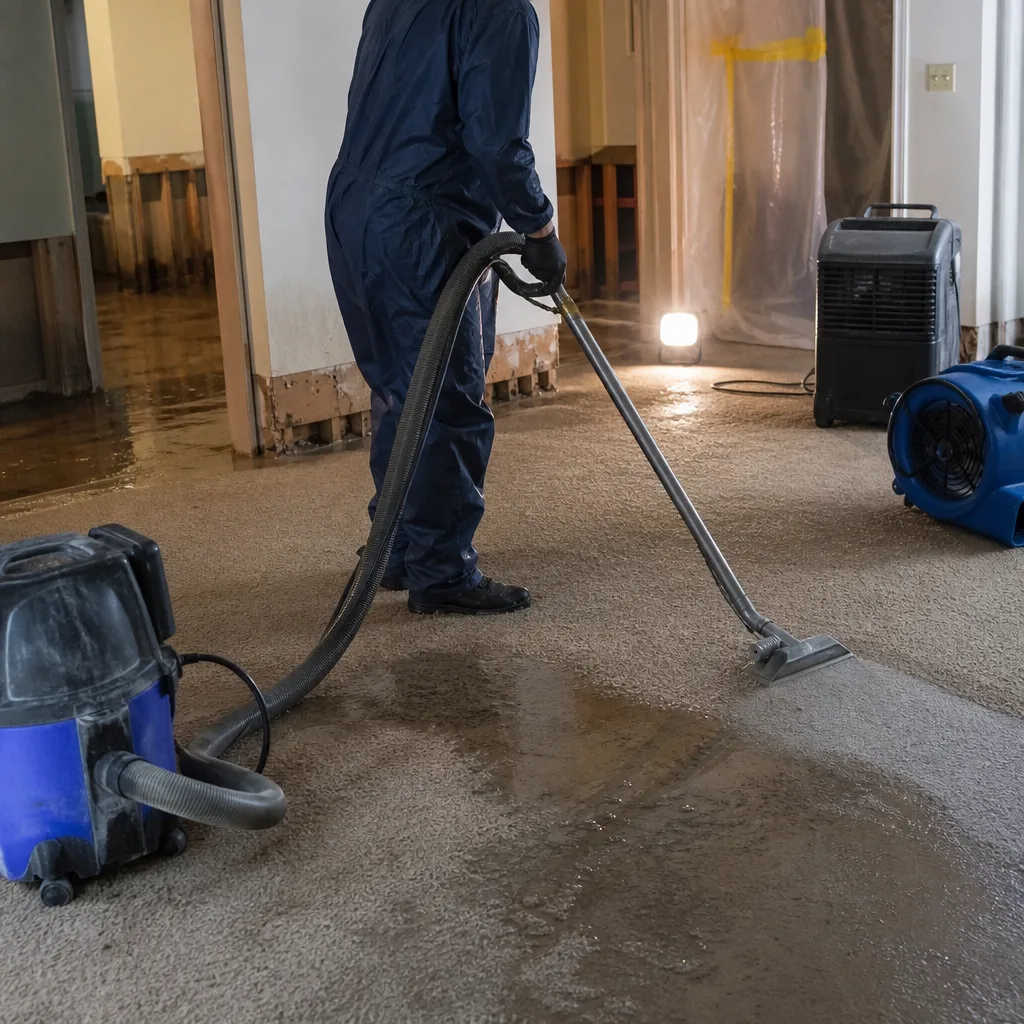
Emergency Board-Up & Tarping
Kensington’s village code requires approved materials for temporary board-up and roofing patches, and commodity plywood from a big-box store doesn’t always pass inspection. Our emergency crews carry materials that meet the village’s requirements, so your temporary patch doesn’t fail inspection and leave the framing exposed to the next nor’easter.
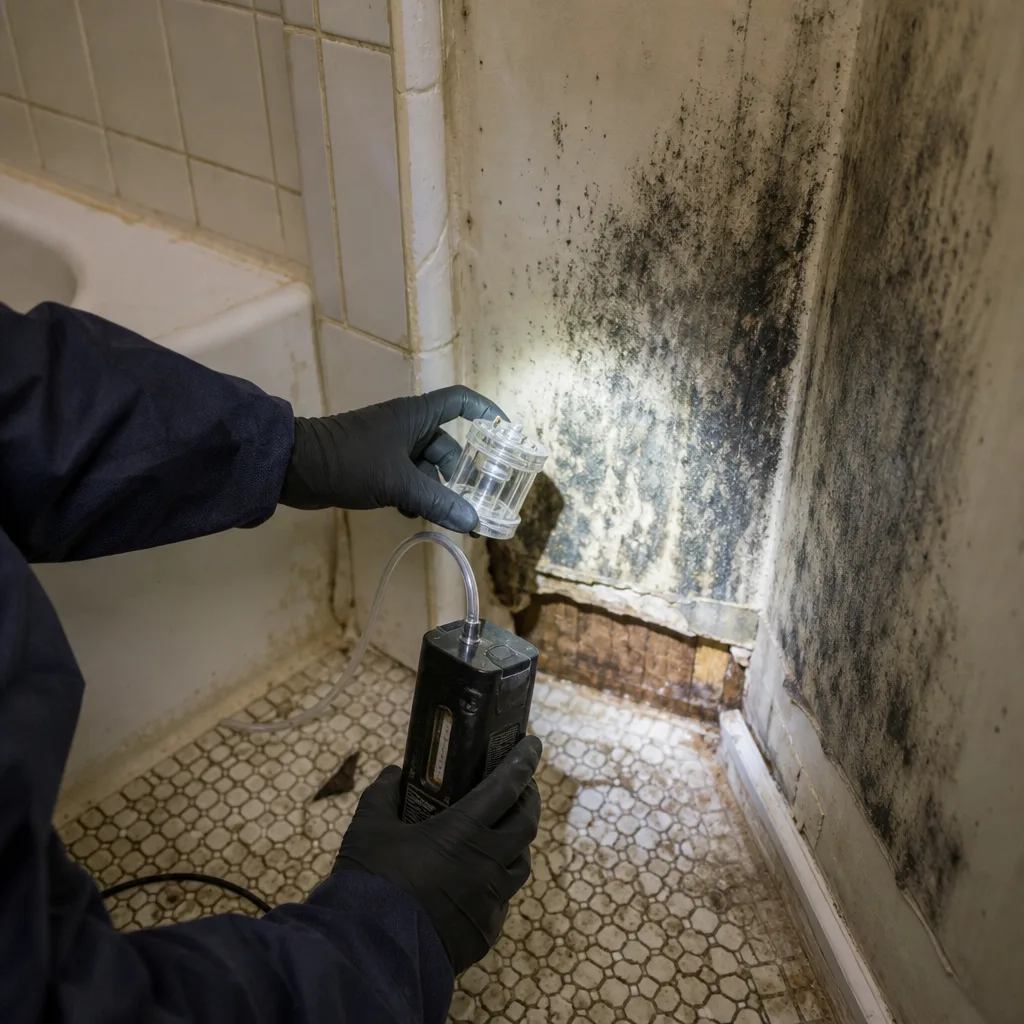
Structural Fire Repair
When fire has charred structural members in a Kensington home, the repair scope has to account for the village’s own permit and inspection process. We work directly with the building department to sequence tear-out and documentation so insurance coverage for period-accurate materials isn’t voided by premature demolition, then rebuild to the standard the house deserves.
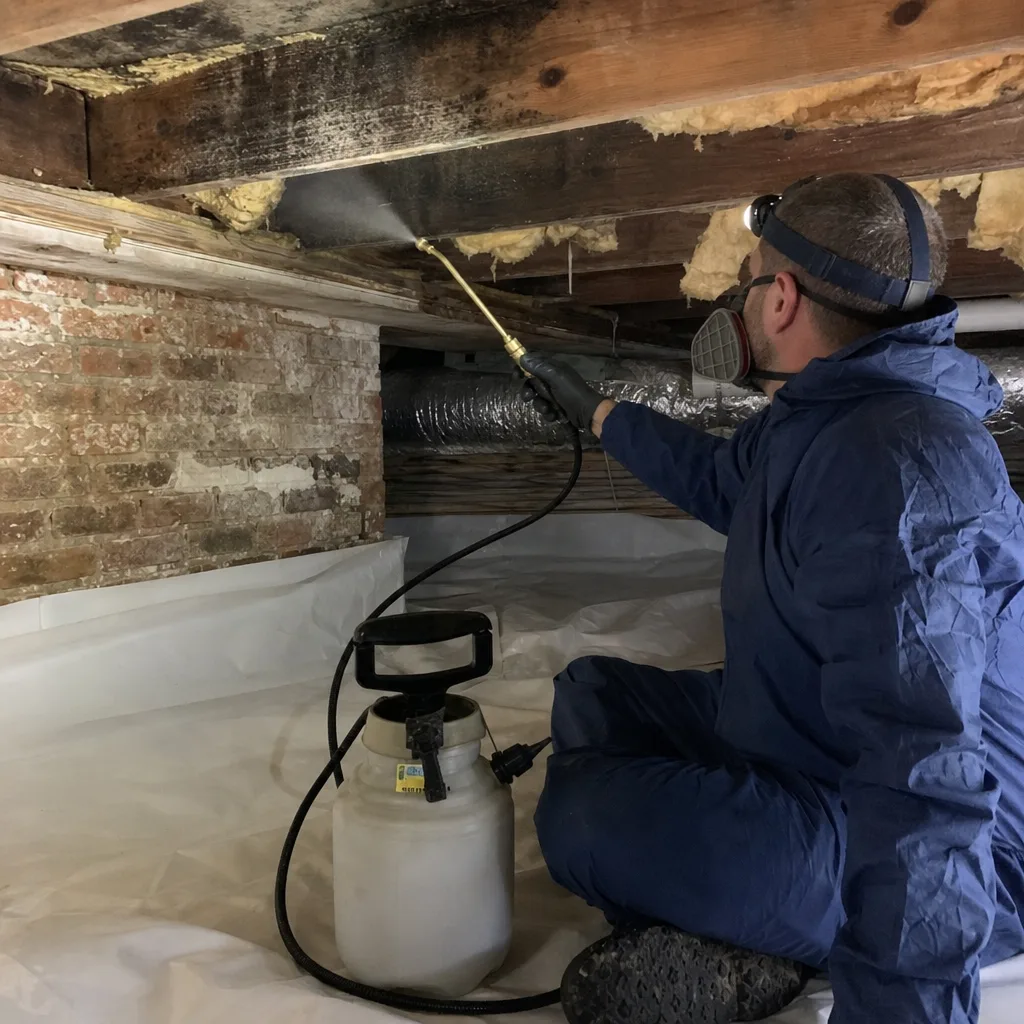
What happens when you call
- 1
A real person answersNo phone trees - you reach a local pro.
- 2
You get an upfront price rangeHonest numbers before anyone is dispatched.
- 3
A background-checked tech heads outLicensed & insured, dispatched right away.
- 4
You approve before work beginsNothing starts until you say go.
Fire & Smoke Damage Restoration Costs in Kensington, NY
Fire restoration costs in Kensington run higher than the Nassau County average for reasons that are specific to this village. Standard smoke and soot cleanup on a contained kitchen fire in a Kensington colonial typically runs $3,500 to $8,000, while a whole-house smoke migration job with cavity treatment and contents cleaning lands between $12,000 and $35,000. Structural fire repair involving framing, plaster restoration, and period millwork replacement starts around $25,000 and scales upward based on the extent of charring and the ceiling finishes involved. What moves the number most is whether original materials can be saved or must be replaced, and whether the village’s permit process requires documentation that adds to the pre-demolition timeline. Most residential fire policies in Kensington cover fire damage restoration, smoke and soot removal, and the water damage from firefighting efforts, but depreciation on older materials can leave a gap between the carrier’s check and the true cost of period-accurate restoration, which is exactly why we submit detailed line-item scopes directly to your adjuster from day one. The free visual inspection we do in Kensington is the fastest path to a firm number before any commitment.
We Also Serve Cities Near Kensington
Floodline Restoration Co. of Manhattan runs fire and smoke restoration crews in Kensington and the surrounding Long Island communities of Fairview, Harrison, East Bronx, and Hunts Point. Response times stay tight across the whole service area because dispatch runs from a central New York City hub with live operators around the clock.
Kensington Fire & Smoke Damage Restoration Questions, Answered
Does Kensington village require a separate permit for fire damage restoration, or can we just use a Nassau County permit like every other town?
Yes, the Incorporated Village of Kensington issues its own building permits and conducts its own inspections for structural fire restoration work, completely separate from Nassau County’s process. Contractors who assume a county permit is sufficient end up with stop-work orders, failed inspections, and insurance carriers that refuse to pay for undocumented demolition. Our team pulls the village permit before any structural work begins and sequences tear-out so the inspector can document the loss before original materials are removed.
Our 1920s Kensington home has plaster walls and original wood trim heavily smoke-damaged from a small fire. Can the plaster be saved, or is it all demolition?
In most Kensington homes we’ve restored, original plaster can absolutely be saved after fire damage if it’s structurally intact and the soot hasn’t been allowed to sit for weeks. Plaster is fire-resistant and often survives even hot fires, though the surface needs soda-blasting or specialized sponge cleaning rather than repainting. The key is starting work quickly, because soot turns acidic and etches into the plaster’s lime surface over time, which is when cleaning becomes impossible and resurfacing becomes the only option.
How does fire damage interact with Kensington’s old galvanized or copper supply lines during restoration?
Firefighting water floods the same cavities where older Kensington homes run galvanized and early copper supply lines, and Long Island’s hard water has often already corroded those pipes from the inside. The thermal shock of a fire can finish off failing joints, and our crews regularly find that a fire job uncovers leaking plumbing that the scope-of-work has to address before structural drying can be considered complete. We document these findings with photos and moisture readings for the adjuster, because the original fire loss typically covers the secondary plumbing damage.
How long can we wait before starting smoke odor removal in an old Kensington house before the smell becomes permanent?
Smoke odor in a pre-war Kensington home becomes progressively harder to remove the longer it sits, because the porous plaster, old-growth wood, and original finishes absorb the odor-causing particles deeper over time. We recommend starting treatment within 72 hours of the fire, but realistically, a few days won’t make the odor permanent in a plaster house; what matters more is keeping the house ventilated and avoiding repainting, which just encapsulates the odor and makes it harder to treat later. The homes where odor becomes permanent are the ones where someone painted over smoke residue before proper cleaning or cavity treatment happened.
What does category 1 water have to do with a fire job in Kensington?
Firefighting water starts as clean category 1 water, but as it saturates fire-damaged materials, it picks up soot, burned synthetic residues, and whatever was stored in the house, which degrades it rapidly toward category 2 or 3 contamination. Our drying crews treat fire-suppression water seriously on every Kensington job, running Dri-Eaz and Phoenix dehumidifiers with air movers to reach a true dry standard before any rebuild starts, because leaving that water in original plaster and hardwood for even a few days introduces mold into a house that has already suffered enough.
How fast can you actually get to Kensington for a fire emergency?
We commit to 45-minute response for emergencies in Kensington, and most calls come in well under that. A live dispatcher answers immediately at (917) 924-4221, confirms the address and the nature of the fire, and dispatches the nearest certified crew while you’re still on the phone. If it’s between midnight and 6 a.m., the same process applies; we don’t ask you to leave a message and wait for a callback.
Are your fire restoration technicians certified, or is this a handyman operation?
Every Floodline Restoration Co. technician on a Kensington fire job is background-checked, uniformed, and certified to IICRC FSRT (Fire & Smoke Restoration Technician) standards, with additional specialized training through RIA and IFA. The crew that sets containment on day one is the same crew that runs daily moisture readings, and the same crew that handles the rebuild, so you’re never handed off to an unfamiliar subcontractor.
Will our homeowners insurance cover the full cost of fire damage restoration in Kensington?
Most standard Kensington homeowners policies cover fire damage, smoke and soot removal, and the water damage from firefighting efforts, but the reimbursement amount depends on your policy’s replacement-cost language and whether original materials are properly documented. The gap we see in Kensington involves depreciation on period plaster, slate roofs, and original millwork, where the carrier offers a depreciated amount unless the scope-of-work proves like-for-like replacement is required. We submit line-item scopes with photos and material specifications directly to your adjuster, and we don’t bill you for the difference without discussing it in writing first. Call (917) 924-4221 and we’ll walk through what your policy says before we start.
Serving Kensington, NY - Our Local Coverage Area
We’re based in the Kensington area and know this community well. Use the map below to see our service coverage - if you’re nearby, we can almost certainly help.
Start With a Written Scope, Not a Sales Pitch
If you’ve had a fire in Kensington, the first call should be to a restoration company that understands this village’s houses and its permit office, not to a franchise that treats every Long Island job the same way. We’ve spent years learning what fires do to original plaster, how smoke travels through balloon framing, and what the Kensington building department expects before a single piece of lath comes out. Call (917) 924-4221 for a free visual inspection and a written scope of work from a company that’s full-cycle from extraction to rebuild, and that puts the 90-Day Done Right Promise in your hands in writing. A late-night kitchen fire in a 1930s Colonial on Beverly Road left the original plaster ceilings and oak millwork coated in smoke and soot; our crew set containment and stabilized structural drying before any demo, then worked with the village’s permit office to sequence the tear-out of charred lath and the pack-out of salvageable wood trim, returning that home to pre-loss condition without losing the period crown moldings the owners had fought to preserve. That’s the standard we bring to every Fire & Smoke Damage Restoration job in Kensington, and we stand behind it in writing.
Written by Curt Bowman, Owner at Floodline Restoration Co., serving Kensington with live 24/7 dispatch and full-cycle fire restoration backed by the 90-Day Done Right Promise.