
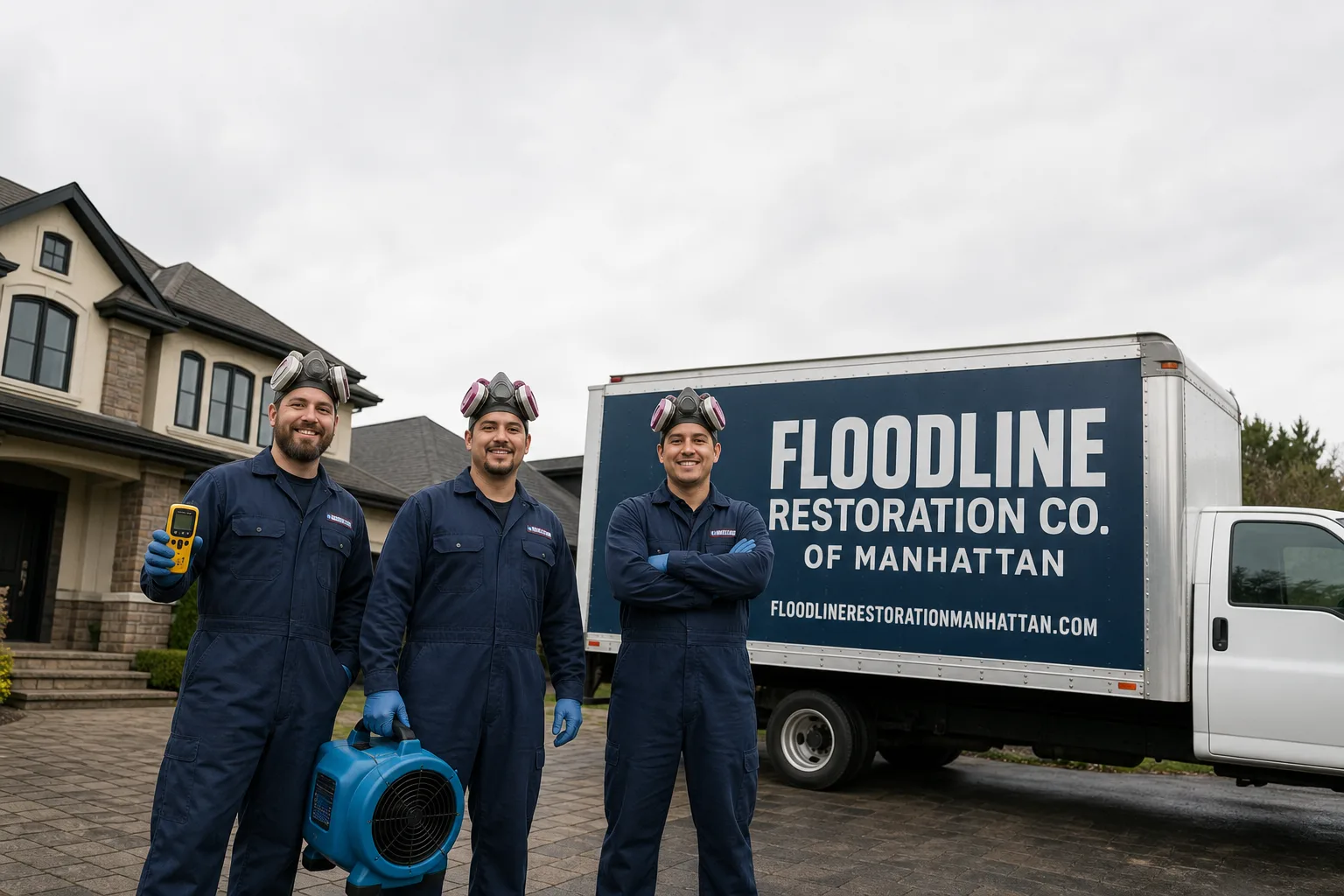
Free visual inspection and a written scope of work before any mitigation begins - photos, moisture readings, and drying logs go in your claim file
The scope we write is the scope we bill. Anything new gets shown to you, in writing, before we touch it.






 Before
 After
After Before
 After
After Before
 After
After24/7 Emergency Biohazard & Crime Scene Cleanup in Kensington
Biohazard and crime scene cleanup in Kensington requires immediate containment, not just cleaning. When blood, bodily fluids, or unattended-death contamination sits inside a 1920s plaster-and-lath home, it wicks into lime plaster, oak flooring, and the framing behind it within hours. Our live dispatchers answer at (917) 924-4221 around the clock, and we dispatch crews into the village the same visit. The first hour determines whether original hardwood and plaster can be saved or must be cut out under a village permit. We start with a free visual assessment, establish containment, and write a scope before any material gets removed.
Understanding Biohazard & Crime Scene Cleanup Severity in Kensington Properties
Biohazard contamination is classified by the same Category 1/2/3 framework the industry uses for water damage, because bodily fluids and decomposition fluids carry bloodborne pathogens, bacteria, and viruses that behave like Category 3 water: they saturate porous materials and keep migrating until a barrier stops them. In a Kensington colonial built in 1932, that barrier is often absent. Original plaster-and-lath walls have no vapor barrier. Wide-plank oak and maple flooring sits directly over open joist bays. When contamination enters a wall cavity or floor system, it travels along lath keys, plaster grounds, and old-growth framing until someone opens the assembly and physically removes the affected material. Soot and chemical residues from tear gas follow the same pattern: fine particulates press into plaster, textiles, and unfinished attic wood, and ordinary cleaning drives them deeper. Severity in Kensington is not just about what happened. It is about what the house is made of.
Why Kensington Property Owners Choose Floodline Restoration Co. of Manhattan
- 45-minute response commitment for Kensington calls. When you call from Beverly Road or Station Road, a live person answers and a crew starts moving toward you immediately. We do not put biohazard callers into an automated queue.
- 24/7 live answer from a real dispatcher, not a recording. At 2 a.m. on a Sunday, a person picks up. That person knows Kensington and can dispatch a crew that knows the village permit process.
- IICRC-certified crews trained to WRT, FSRT, and AMRT standards. Trauma and hoarding cleanup demands the Applied Microbial Remediation Technician credential, not just a general cleaning crew. Our technicians hold it and carry it into every Kensington job.
- Free visual inspection before any work is authorized. We do not begin demolition on a Kensington home without showing you exactly what we found, where the contamination ends, and what the village will want to see before we open walls.
- Direct insurance billing with adjuster communication handled by us. We photograph everything, log everything, and send the carrier a line-item scope. You do not carry paperwork between Floodline and your insurer.
- One team from containment through restoration. The same certified crew that sets up containment and removes contaminated plaster is the crew that restores the lime-plaster finish and refinishes the flooring. No mid-job handoff to a sub you have never met.
Our Biohazard & Crime Scene Cleanup Process
Inspection & Assessment
We start with a room-by-room walkthrough using thermal imaging and moisture readings to map where contamination has traveled inside walls, floors, and ceiling cavities. In Kensington homes with original plaster, this mapping step is done carefully, because the village building department may want to see evidence of contamination extent before any walls are opened.
Containment & Stabilization
HEPA-filtered negative air containment is set up before any material moves. We isolate the affected areas with 6-mil poly barriers and establish a dirty-to-clean workflow so pathogens do not migrate into the rest of the house through the plaster dust and forced-air systems common in older Kensington homes.
Removal & Structural Drying
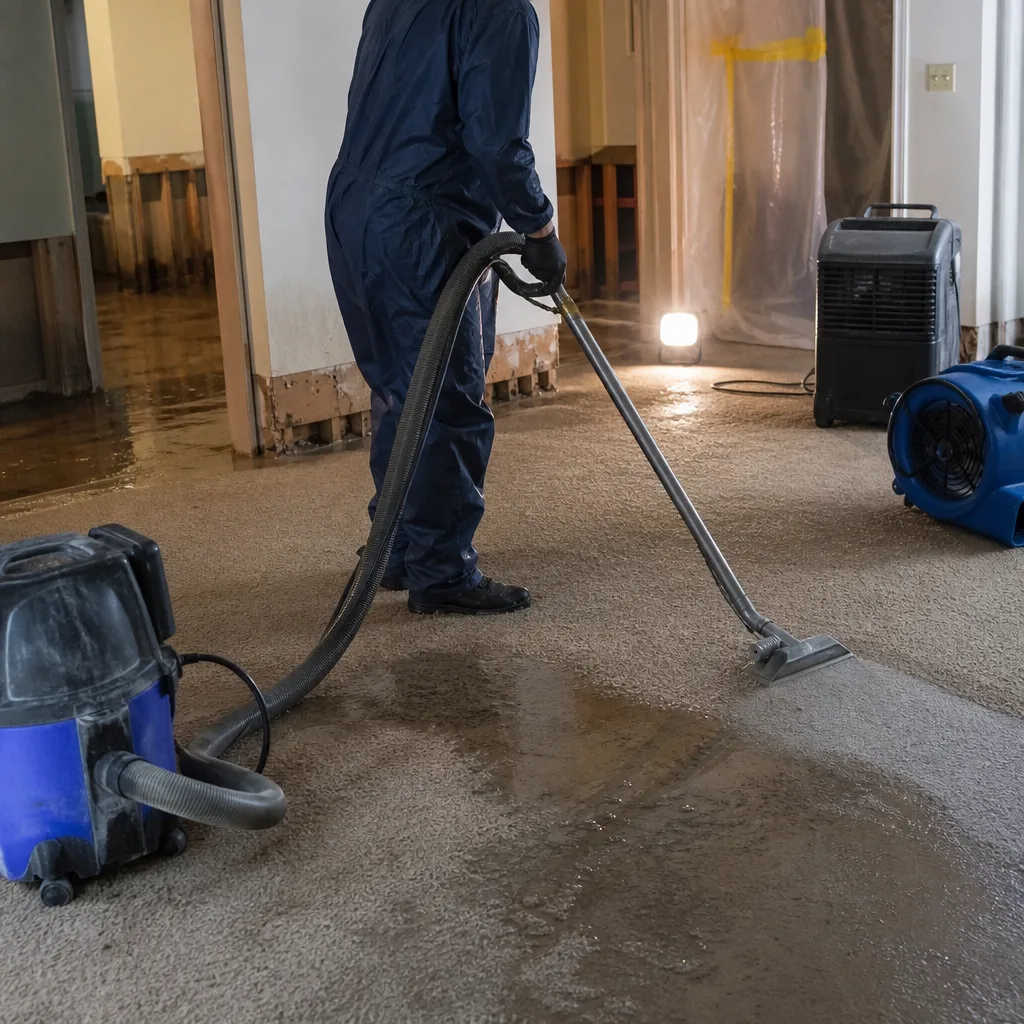
Contaminated plaster, lath, flooring, and soft goods are removed under containment and disposed of as regulated medical waste. Where water accompanied the biohazard, we run structural drying with Dri-Eaz, Phoenix, and XPOWER air movers plus LGR dehumidifiers until the framing reaches the dry standard, logging readings daily.
Cleaning & Sanitization
All remaining surfaces receive antimicrobial application and HEPA vacuuming. Hardwood floors that can be saved are treated floorboard by floorboard. Original millwork, plaster cove moldings, and stair railings are cleaned in place using methods that do not strip period finishes.
Specialty Treatment for Biohazard Residue
Odor control for decomposition and hoarding losses uses hydroxyl generators and thermal fogging sized to the room volume. Contaminated insulation inside wall cavities is bagged and removed. Tear gas residue is addressed with a separate agent-specific cleaning protocol, since standard antimicrobials do not neutralize it.
Repairs & Restoration
We rebuild what was removed. Plaster patches are lime-based to match original composition and breathability. Matching hardwood is sourced by species, width, and age. When the village inspector signs off, the job is done right and backed by our 90-Day Done Right Promise, in writing.
Need Emergency Biohazard & Crime Scene Cleanup in Kensington Now?
Crews minutes away, answering live 24 hours a day. The sooner we start, the less it costs.
Working With Your Insurance Company
Most trauma, unattended-death, and hoarding cleanup in Kensington is covered under the homeowner’s property policy, often under the “other structures” or “debris removal” provisions rather than the main dwelling coverage. That distinction matters, because carriers apply different limits and deductibles to each. We document from the first hour: photos before anything moves, moisture readings, material samples, and a written scope that separates emergency mitigation from restoration. Our team communicates directly with your adjuster and sends the estimate in the format the carrier accepts, so you are not translating trade language between us. Direct insurance billing means Floodline carries the claim while you focus on your family and your home.
What We Provide Your Insurer
- Thorough documentation of the loss
- Photos of all damage, room by room
- Moisture readings and drying logs
- A detailed, line-item scope of work
- Direct coordination with your carrier
Built for Kensington’s Loss Calendar
Biohazard and crime scene cleanup in Kensington does not follow a tidy seasonal calendar, but the village’s housing stock and coastal position push certain losses into predictable patterns. January and February bring frozen and burst supply lines inside uninsulated exterior walls of pre-war homes, and when a pipe fails in a vacant winter house, the resulting Category 3 water can sit for days before discovery, creating a combined water-biohazard mess. Nor’easter season from late fall through early spring drives wind-driven rain into aging slate and clay tile roofs, and old galvanized supply lines fail under pressure spikes. Summer humidity accelerates decomposition and odor migration, making rapid response after an unattended death more urgent. The tree canopy that makes Kensington’s streets feel like a village also drops limbs onto dormers and masonry during summer thunderstorms. We have crews who know this calendar and stock for it.
Biohazard & Crime Scene Cleanup Across Kensington’s Neighborhoods
Kensington is compact, but each section of the village has its own pattern of loss and its own permit history. The oldest homes, concentrated near Beverly Road and the village core off Station Road, are predominantly 1920s and 1930s colonials and Tudors with original plaster, slate roofs, and galvanized supply lines. These are the houses where a trauma or hoarding cleanup is most likely to require opening original walls under a village permit, and where the floor plans feed contamination through shared chimney bays and balloon framing. The streets closer to the Long Island Rail Road right-of-way see more rental turnover and more deferred maintenance, which means hoarding cases and unattended-death losses often surface after a neighbor calls in a concern. Homes along Arleigh Road and the northern edge of the village sit under heavier tree canopy, so storm-related water losses that introduce sewage or biological contamination are more common there. Wherever you are in Kensington, our crew knows the building types, the inspectors, and the right way to work in a village where original materials are protected.
Specialized Biohazard & Crime Scene Cleanup Services We Offer in Kensington
Trauma & Unattended Death Cleanup
Decomposition fluids behave like Category 3 water in a plaster-and-lath house, soaking into subflooring, joists, and plaster keys. In Kensington homes where original oak floors sit over open joist bays, contamination routinely spreads two or three joist bays beyond the visible stain. We contain, remove, and treat the full affected assembly, not just the visible area, and coordinate the village permit if walls or floors must be opened. Our team handles this with the gravity and discretion it deserves, and every job is performed by credentialled technicians who will not cut corners to finish faster.
Hoarding Cleanup
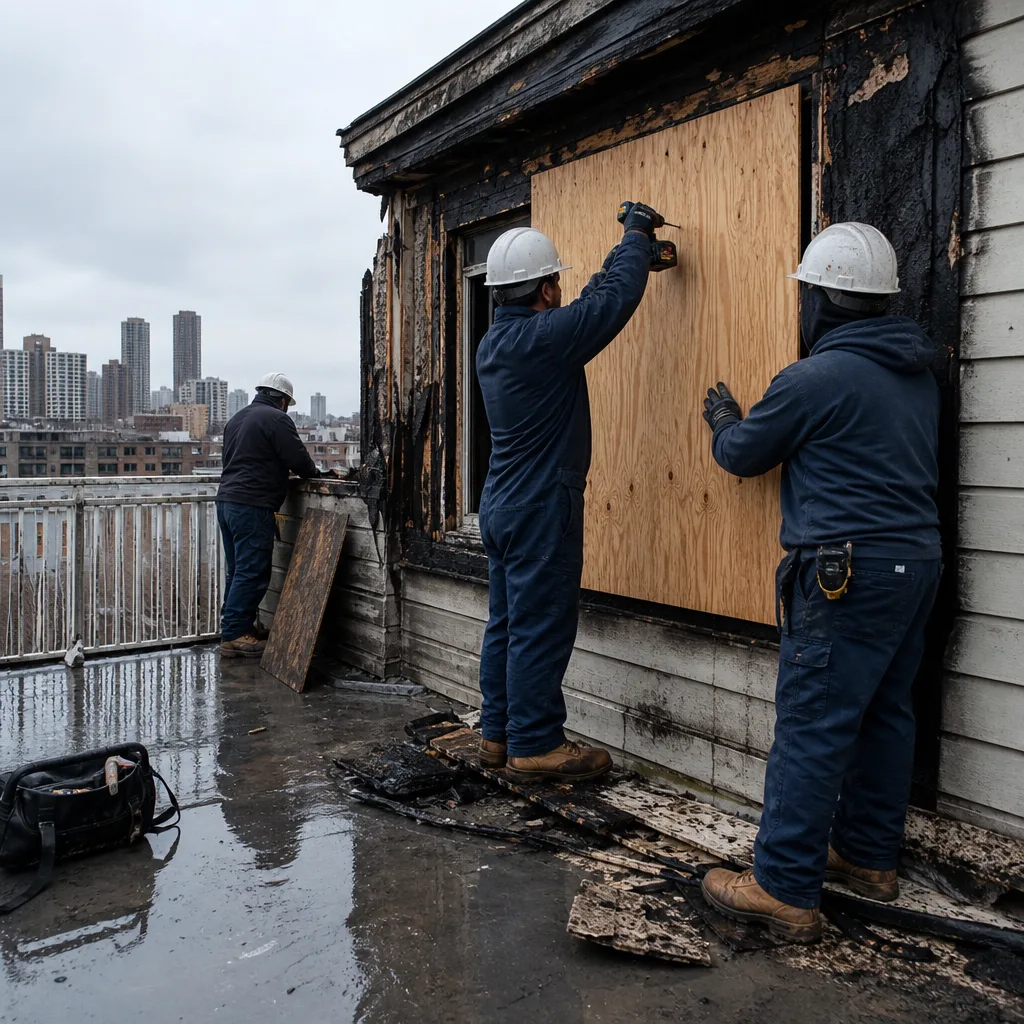
Hoarding losses in Kensington’s older homes are physically and bureaucratically complex. Original plaster walls often hide damaged lath, animal contamination, and blocked ventilation that the village building department wants inspected before cleanup proceeds. We separate salvageable items from debris, document everything for the insurer and for the family, and work at a pace that respects both the homeowner and the home’s construction. Our crews use HEPA air scrubbers to keep dust and spores from spreading through the forced-air system while rooms are emptied and surfaces treated.
Blood & Bodily Fluid Cleanup
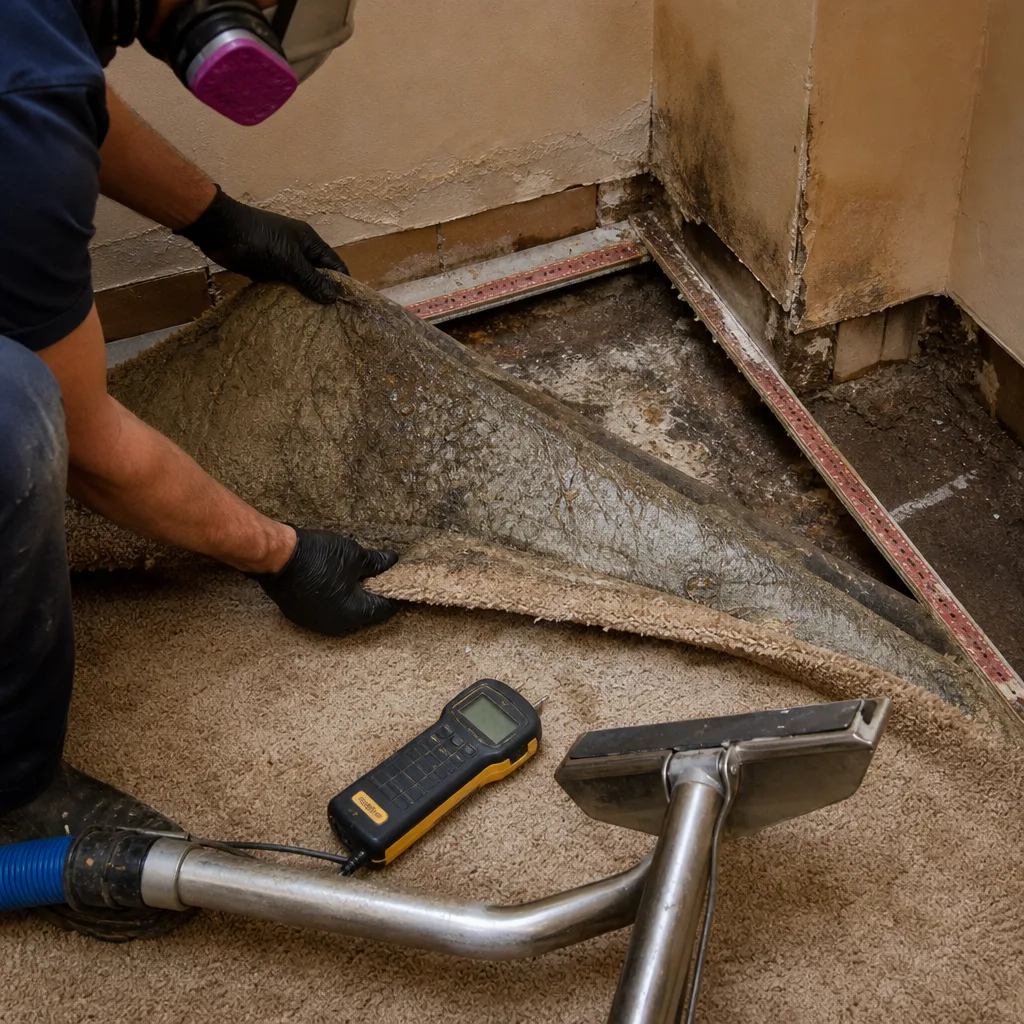
Bloodborne pathogens require both immediate containment and correct disposal as regulated medical waste. In a Kensington home, the hardest part is often the substrate: blood that has settled into wide-plank oak flooring or behind plaster cove molding cannot simply be wiped off. We extract visible contamination, remove saturated materials to the clean margin, and treat the remaining framing and flooring with antimicrobials appropriate to the material. If the village requires a permit for the removal, we handle that application before we cut.
Infectious Disease Disinfection
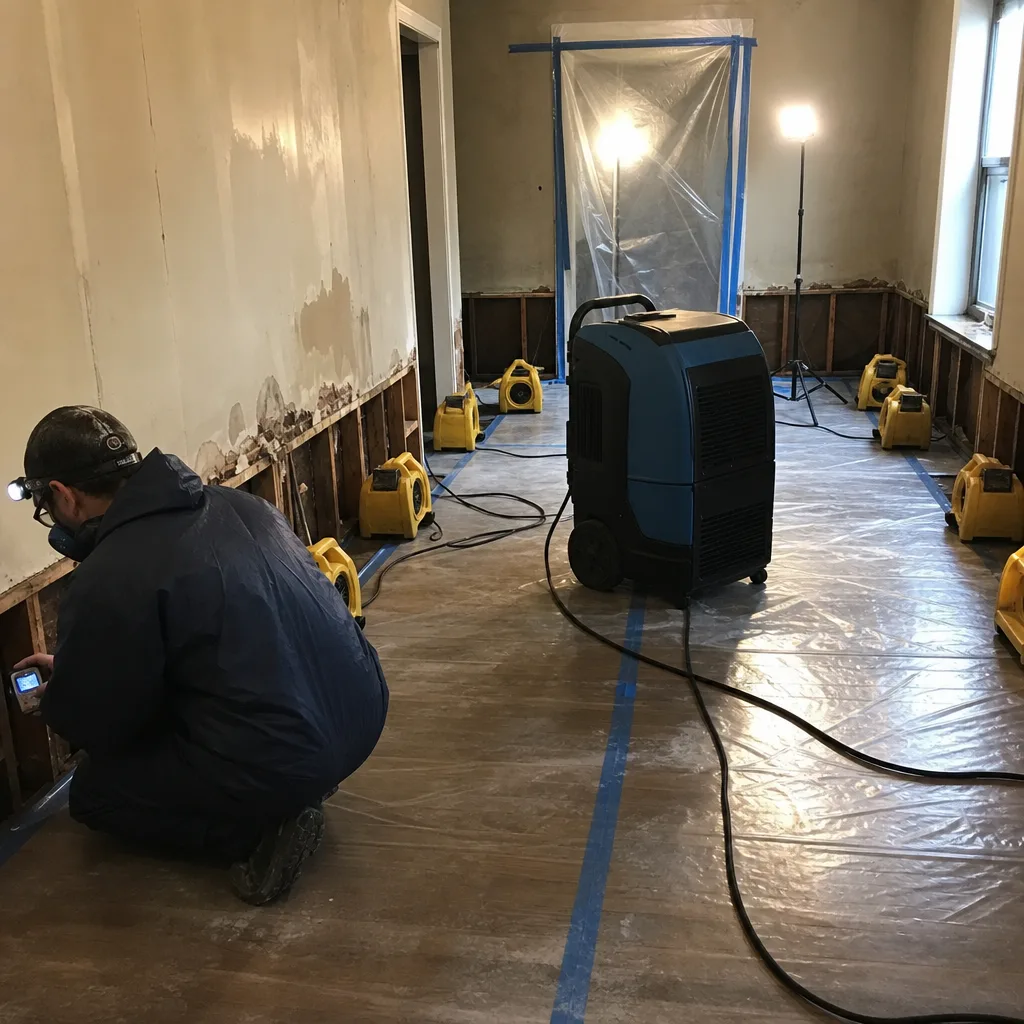
When a Kensington household faces a serious infectious disease event, the goal is to decontaminate surfaces without damaging the things that make the home worth saving. Original millwork, unpainted plaster, and solid hardwood all respond differently to disinfectants, and the wrong product can etch or discolor them permanently. We select agents and methods by material, use fogging and wiping protocols appropriate to the pathogen in question, and document clearance so you and your family can reoccupy with confidence.
Tear Gas & Chemical Cleanup
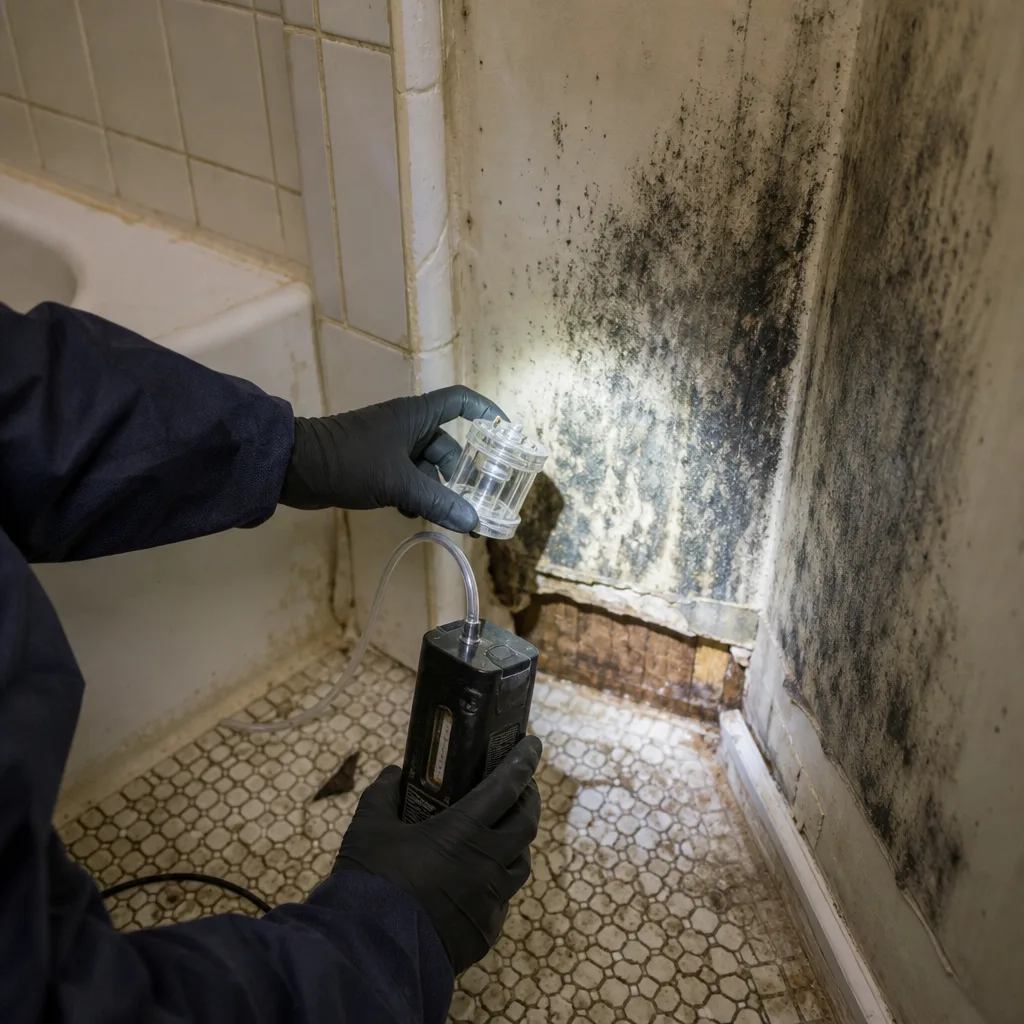
Tear gas residue is a fine, persistent particulate that penetrates plaster, textiles, and unfinished attic surfaces. Standard antimicrobial treatments do not neutralize it. Our crews use agent-specific decontamination, HEPA vacuuming, and ventilation protocols sized to the room volume, then test before we call the space clean. In Kensington homes with original plaster walls, this often means surface treatment rather than wall removal, which keeps the project smaller and avoids a village permit altogether if no structural material is opened.
What happens when you call
- 1
A real person answersNo phone trees - you reach a local pro.
- 2
You get an upfront price rangeHonest numbers before anyone is dispatched.
- 3
A background-checked tech heads outLicensed & insured, dispatched right away.
- 4
You approve before work beginsNothing starts until you say go.
Biohazard & Crime Scene Cleanup Costs in Kensington, NY
We do not want anyone in Kensington guessing at what a biohazard cleanup should cost, so here are real numbers for this market. A contained blood or bodily fluid cleanup in a single room typically runs $1,800 to $4,500, depending on whether flooring or plaster must be removed. Trauma and unattended-death cleanup in a Kensington home with original plaster and hardwood generally lands between $4,000 and $12,000 when structural opening, permit fees, and material matching are included. Hoarding cleanup spans widely, with most Kensington projects falling between $5,000 and $25,000 based on volume, contamination level, and whether the village requires wall or floor demolition. Infectious disease disinfection for a whole first floor usually runs $2,500 to $7,000. The variables that move the price are material removal depth, permit requirements, and whether the loss involved Category 3 water. Most of this work is covered by homeowner’s insurance, and we bill the carrier directly. The free visual inspection gives you a firm, line-item scope before anything is touched. Call (917) 924-4221 and we will come look.
We Also Serve Cities Near Kensington
Our Biohazard & Crime Scene Cleanup crews respond across the North Shore and into the Bronx, including Fairview, Harrison, East Bronx, and Hunts Point. If you are in a neighboring community and dealing with trauma, hoarding, or infectious disease loss, call the same number: (917) 924-4221.
Serving Kensington, NY - Our Local Coverage Area
We’re based in the Kensington area and know this community well. Use the map below to see our service coverage - if you’re nearby, we can almost certainly help.
Kensington Biohazard & Crime Scene Cleanup Questions, Answered
Does Kensington’s building department require a permit before removing plaster walls during a biohazard cleanup?
Yes. Kensington’s village building department requires its own permit whenever restoration disturbs original materials, including plaster removal for biohazard cleanup. We apply for that permit before we cut, and we time the work so the permit process does not stall containment. A contractor who skips this step is risking a stop-work order from the village.
How do you handle biohazard contamination inside original hardwood floors without destroying them?
We treat original hardwood floorboard by floorboard. Where contamination has not saturated through the tongue-and-groove, we clean, sand lightly, and apply antimicrobials that will not warp the wood. Where it has saturated, we remove only the affected boards and the subfloor beneath them, then source replacement boards matched by species, width, and age. The goal in Kensington is to save as much of the original floor as possible, not to replace a whole room with new oak.
What is the biggest risk when a Category 3 water leak also involves trauma or death in an older Kensington home?
The biggest risk is that contaminated water and bodily fluids migrate through the open joist bays and plaster key systems before anyone sees the full extent. In a pre-war Kensington house with balloon framing, contamination can travel from a second-floor bedroom down into first-floor walls and the basement ceiling in under 24 hours. That is why containment and mapping happen on the first visit, before any demolition.
Can hoarding cleanup in a Kensington house with plaster walls ever avoid full wall removal?
Often yes. If the plaster itself is intact and contamination is limited to surface-level debris, animal waste, and odors, we can clean in place with HEPA vacuuming, antimicrobial wiping, and odor treatment without opening walls. Wall removal is only necessary when contamination has penetrated the plaster, when lath is damaged, or when the village inspector requires opening to verify structural condition. We will show you the evidence before removing anything.
Do I need village approval for infectious disease disinfection if no walls are opened?
No. If the work is limited to surface cleaning, fogging, and disinfection, it does not disturb original materials and generally does not require a Kensington building permit. The permit trigger is material removal: cutting into plaster, removing lath, or opening floors. We will tell you upfront whether your job crosses that line.
How fast can a crew actually reach a Kensington home for a biohazard emergency?
Our commitment for Kensington calls is 45 minutes from the time a live dispatcher picks up. We have crews staged across the North Shore and into the Bronx, and biohazard calls get priority dispatch. In practice, most Kensington calls see a crew on site within the same hour. Call (917) 924-4221 and a person will answer.
Will my insurance cover biohazard and crime scene cleanup in Kensington?
Most homeowner’s policies in New York cover trauma, unattended-death, and hoarding cleanup under property or debris removal provisions, subject to your deductible and policy limits. Coverage is almost always tied to the covered loss that caused it, so documentation matters. We photograph everything from the first hour and bill your carrier directly, communicating with the adjuster on your behalf.
What should I do in the first 30 minutes after discovering a biohazard situation in my Kensington home?
Do not enter the affected area. Close doors to contain airflow, turn off forced-air heating or cooling if possible without walking through the contamination, and keep children, pets, and anyone immunocompromised well away. Call (917) 924-4221 and a live dispatcher will talk you through the next steps while a crew drives toward Kensington. Do not attempt to clean blood or bodily fluids yourself.
Written by Curt Bowman, Owner at Floodline Restoration Co. of Manhattan, serving Kensington and the surrounding North Shore communities.